
Articles | Volume 22, issue 10
https://doi.org/10.5194/cp-22-1863-2026
© Author(s) 2026. This work is distributed under
the Creative Commons Attribution 4.0 License.
the Creative Commons Attribution 4.0 License.
https://doi.org/10.5194/cp-22-1863-2026
© Author(s) 2026. This work is distributed under
the Creative Commons Attribution 4.0 License.
the Creative Commons Attribution 4.0 License.
Research article
| Highlight paper
| 
07 Oct 2026
Research article | Highlight paper |
| 07 Oct 2026
| 07 Oct 2026
Historical climate extremes in Europe and the connection between spring precipitation and summer heat
Laura Lipfert
Institute of Geography, University of Bern, Bern, Switzerland
Oeschger Centre for Climate Change Research, University of Bern, Bern, Switzerland
Ralf Hand
Institute of Geography, University of Bern, Bern, Switzerland
Oeschger Centre for Climate Change Research, University of Bern, Bern, Switzerland
Klima und Umwelt, Deutscher Wetterdienst DWD, Offenbach, Germany
Angela-Maria Burgdorf
Institute of Geography, University of Bern, Bern, Switzerland
Oeschger Centre for Climate Change Research, University of Bern, Bern, Switzerland
Christian Pfister
Oeschger Centre for Climate Change Research, University of Bern, Bern, Switzerland
Institute of History, University of Bern, Bern, Switzerland
Heinz Wanner
Institute of Geography, University of Bern, Bern, Switzerland
Oeschger Centre for Climate Change Research, University of Bern, Bern, Switzerland
Stefan Brönnimann
CORRESPONDING AUTHOR

Institute of Geography, University of Bern, Bern, Switzerland
Oeschger Centre for Climate Change Research, University of Bern, Bern, Switzerland
Related authors
Ralf Hand, Eric Samakinwa, Laura Lipfert, and Stefan Brönnimann
Geosci. Model Dev., 16, 4853–4866, https://doi.org/10.5194/gmd-16-4853-2023, https://doi.org/10.5194/gmd-16-4853-2023, 2023
Short summary
Short summary
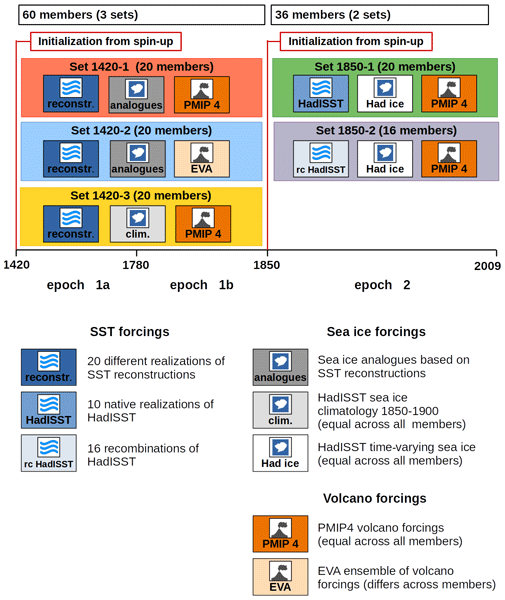
ModE-Sim is an ensemble of simulations with an atmosphere model. It uses observed sea surface temperatures, sea ice conditions, and volcanic aerosols for 1420 to 2009 as model input while accounting for uncertainties in these conditions. This generates several representations of the possible climate given these preconditions. Such a setup can be useful to understand the mechanisms that contribute to climate variability. This paper describes the setup of ModE-Sim and evaluates its performance.
Siyu Chen and Stefan Brönnimann
EGUsphere, https://doi.org/10.5194/egusphere-2026-5219, https://doi.org/10.5194/egusphere-2026-5219, 2026
This preprint is open for discussion and under review for Climate of the Past (CP).
Short summary
Short summary
We systematically digitize and categorize daily weather and climate information from the Guan Tingfen Diary in eastern China from 1815 to 1865. Comparisons with other climate datasets demonstrate the climatic value of these historical records. The digitized dataset provides new opportunities to investigate past climate variability, the intra-seasonal evolution of extreme events, potential signals of volcanic eruptions, and daily weather reconstruction.
Noemi Imfeld and Stefan Brönnimann
Earth Syst. Sci. Data, 18, 4019–4045, https://doi.org/10.5194/essd-18-4019-2026, https://doi.org/10.5194/essd-18-4019-2026, 2026
Short summary
Short summary
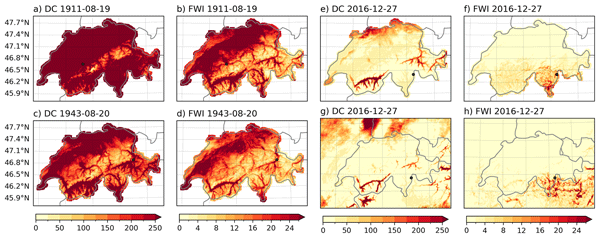
We extended the Swiss daily climate reconstructions from 1763 to 2020 to six additional variables at 1 × 1 km resolution using analogue resampling and data assimilation. Wind and temperature reconstructions show reasonable skill, while humidity and sunshine duration perform less well. Application to historical wildfire events demonstrates the data set's potential for impact studies. This is the first Swiss data set providing several variables at a high-resolution of 1 × 1 km and going back to 1763.
Christian Pfister, Stefan Brönnimann, Laurent Litzenburger, Peter Thejll, Andres Altwegg, Rudolf Brázdil, Andrea Kiss, Erich Landsteiner, Fredrik Charpentier Ljungqvist, and Thomas Pliemon
Clim. Past, 22, 541–559, https://doi.org/10.5194/cp-22-541-2026, https://doi.org/10.5194/cp-22-541-2026, 2026
Short summary
Short summary
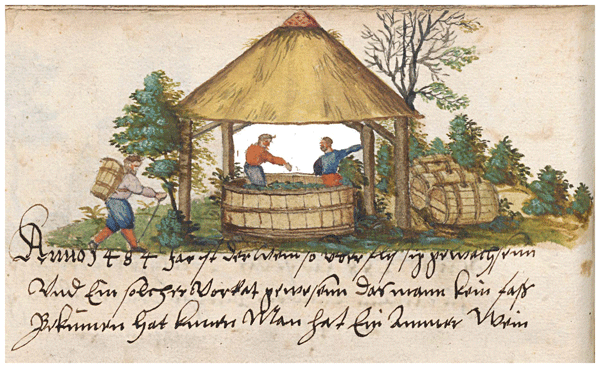
Narrative historical records of wine production in Central Europe date back to 1200. A study of taxes paid to authorities in the French-Luxembourg Moselle region, Germany, and the Swiss Plateau over the last few centuries shows that wine yields provide indirect indications of summer temperatures when the impact of heavy frosts is taken into account. This enables climate reconstructions based on tree rings to be refined and confirmed. Occasionally, poor harvests gave rise to witch hunts.

Peter Stucki, Stefan Brönnimann, Noemi Imfeld, Lucas Pfister, Conall E. Ruth, Yannis V. Schmutz, Yuri Brugnara, Martin Wegmann, Rajmund Przybylak, and Janusz Filipiak
Clim. Past, 22, 517–540, https://doi.org/10.5194/cp-22-517-2026, https://doi.org/10.5194/cp-22-517-2026, 2026
Short summary
Short summary
We test nine reconstructions of Europe’s hot summer of 1807, using weather records, reanalyses, machine-learning (ML), and data assimilation. Most approaches match observed temperature and pressure well. Approaches based on physics of atmospheric flow capture weather patterns well, while ML approaches better reflect station records. Ingestion of accurate records from new regions improves the reconstructions markedly. In all, the approaches provide new insights to pre-industrial extreme weather.
Peter W. Thorne, John M. Nicklas, John J. Kennedy, Bruce Calvert, Baylor Fox-Kemper, Mark T. Richardson, Adrian Simmons, Ed Hawkins, Robert Rhode, Kathryn Cowtan, Nerilie J. Abram, Axel Andersson, Simon Noone, Phillipe Marbaix, Nathan Lenssen, Dirk Olonscheck, Tristram Walsh, Stephen Outten, Ingo Bethke, Bjorn H. Samset, Chris Smith, Anna Pirani, Jan Fuglestvedt, Lavanya Rajamani, Richard A. Betts, Elizabeth C. Kent, Blair Trewin, Colin Morice, Tim Osborn, Samantha N. Burgess, Oliver Geden, Andrew Parnell, Piers M. Forster, Chris Hewitt, Zeke Hausfather, Valerie Masson-Delmotte, Jochem Marotzke, Nathan Gillett, Sonia I. Seneviratne, Gavin A. Schmidt, Duo Chan, Stefan Brönnimann, Andy Reisinger, Matthew Menne, Maisa Rojas Corradi, Christopher Kadow, Peter Huybers, David B. Stephenson, Emily Wallis, Joeri Rogelj, Andrew Schurer, Karen McKinnon, Panmao Zhai, Fatima Driouech, Wilfran Moufouma Okia, Saeed Vazifehkhah, Sophie Szopa, Christopher J. Merchant, Shoji Hirahara, Masayoshi Ishii, Francois A. Engelbrecht, Qingxiang Li, June-Yi Lee, Alex J. Cannon, Christophe Cassou, Karina von Schuckmann, Amir H. Delju, and Ellie Murtagh
Earth Syst. Sci. Data Discuss., https://doi.org/10.5194/essd-2025-825, https://doi.org/10.5194/essd-2025-825, 2026
Preprint under review for ESSD
Short summary
Short summary
We reassess the basis for determining the present level of long-term global warming. Unbiased estimates of both realised warming and anthropogenic warming are possible that approximate a 20-year retrospective mean. Our resulting estimates of 1.40 [1.23–1.58] °C (realised) and 1.34 [1.18–1.50] °C (anthropogenic) as at end of 2024 highlight the urgency of immediate, far-reaching and sustained climate mitigation actions if we are to meet the long term temperature goal of the Paris Agreement.
Siyu Chen and Stefan Brönnimann
EGUsphere, https://doi.org/10.5194/egusphere-2025-5326, https://doi.org/10.5194/egusphere-2025-5326, 2025
Short summary
Short summary
This study applies a Bayesian framework to reconstruct winter temperatures in southwestern China from 1700–1949 using documentary records and paleo-simulations. The reconstruction identifies major cold and warm winters, captures long-term climatic phases, and demonstrates how Bayesian methods integrate historical evidence with simulation priors to produce regional climate reconstructions from a perspective of probability.
Nicolás Duque-Gardeazabal, Andrew R. Friedman, and Stefan Brönnimann
Hydrol. Earth Syst. Sci., 29, 3277–3295, https://doi.org/10.5194/hess-29-3277-2025, https://doi.org/10.5194/hess-29-3277-2025, 2025
Short summary
Short summary
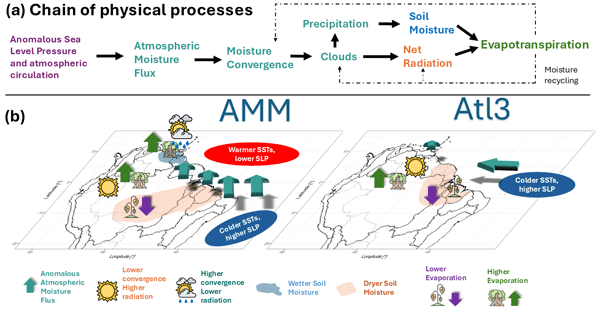
Understanding hydrological variability is essential for ecological conservation and sustainable development. Evapotranspiration influences the carbon cycle, and finding what causes its variability is important for ecosystems. This study shows that ENSO (El Niño–Southern Oscillation) influences not only South America’s rainfall, soil moisture, radiation, and evaporation but also other phenomena in the Atlantic Ocean. The impacts change regionally depending on the season analysed and have implications for heat extremes.
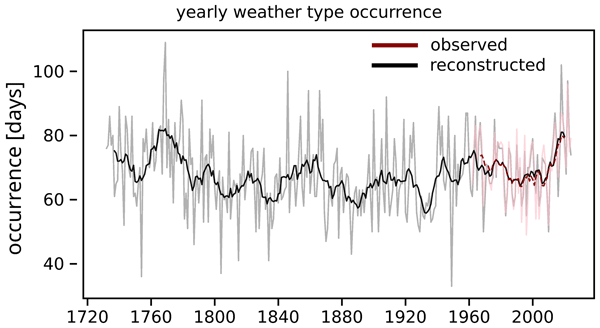
Lucas Pfister, Lena Wilhelm, Yuri Brugnara, Noemi Imfeld, and Stefan Brönnimann
Weather Clim. Dynam., 6, 571–594, https://doi.org/10.5194/wcd-6-571-2025, https://doi.org/10.5194/wcd-6-571-2025, 2025
Short summary
Short summary
Our work compares different machine learning approaches for creating long-term classifications of daily atmospheric circulation patterns using input data from surface meteorological observations. Our comparison reveals that a feedforward neural network performs best at this task. Using this model, we present a daily reconstruction of a commonly used weather type classification for central Europe that dates back to 1728.
Evelien J. C. van Dijk, Christoph C. Raible, Michael Sigl, Johann Jungclaus, and Heinz Wanner
Clim. Past Discuss., https://doi.org/10.5194/cp-2024-79, https://doi.org/10.5194/cp-2024-79, 2024
Manuscript not accepted for further review
Short summary
Short summary
The temperature in the past 4000 years consisted of warm and cold periods, initiated by external forcing. But, these periods are not consistent through time and space. We use climate models and reconstructions to study to which extent the periods are reflected in the European climate. We find that on local scales, the chaotic nature of the climate system is larger than the external forcing. This study shows that these periods have to be used very carefully when studying a local site.
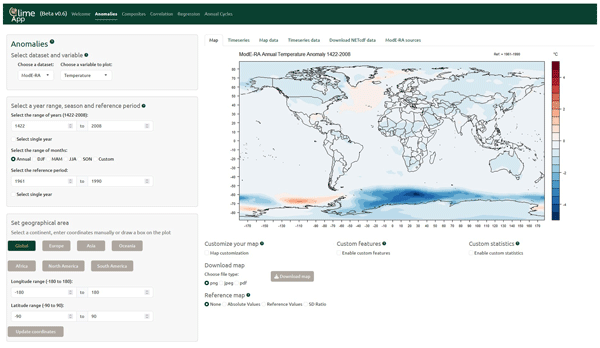
Richard Warren, Niklaus Emanuel Bartlome, Noémie Wellinger, Jörg Franke, Ralf Hand, Stefan Brönnimann, and Heli Huhtamaa
Clim. Past, 20, 2645–2662, https://doi.org/10.5194/cp-20-2645-2024, https://doi.org/10.5194/cp-20-2645-2024, 2024
Short summary
Short summary
This paper introduces the ClimeApp web application. The app provides quick access to the ModE-RA global climate reanalysis. Users can calculate and plot anomalies, composites, correlations, regressions and annual cycles across three different datasets and four climate variables. By re-examining the 1815 Tambora eruption, we demonstrate how combining results from different datasets and sources can help us investigate the historical palaeoclimate and integrate it into human history.
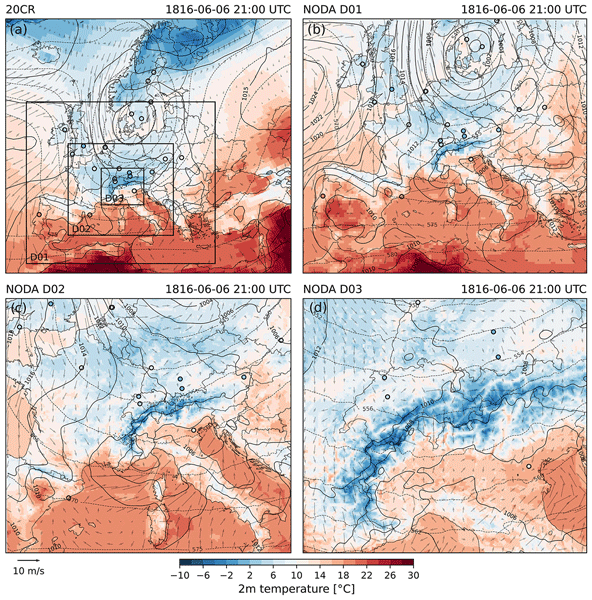
Peter Stucki, Lucas Pfister, Yuri Brugnara, Renate Varga, Chantal Hari, and Stefan Brönnimann
Clim. Past, 20, 2327–2348, https://doi.org/10.5194/cp-20-2327-2024, https://doi.org/10.5194/cp-20-2327-2024, 2024
Short summary
Short summary
In our work, we reconstruct the weather of the extremely cold and wet summer in 1816 using a weather forecasting model to obtain high-resolution, three-dimensional weather simulations. We refine our simulations with surface pressure and temperature observations, representing a novel approach for this period. Our results show that this approach yields detailed and accurate weather reconstructions, opening the door to analyzing past weather events and their impacts in detail.

Stefan Brönnimann, Janusz Filipiak, Siyu Chen, and Lucas Pfister
Clim. Past, 20, 2219–2235, https://doi.org/10.5194/cp-20-2219-2024, https://doi.org/10.5194/cp-20-2219-2024, 2024
Short summary
Short summary
The year 1740 was the coldest in central Europe since at least 1421. New monthly global climate reconstructions, together with daily weather reconstructions, allow a detailed view of this climatic event. Following several severe cold spells in January and February, a persistent circulation pattern with blocking over the British Isles caused northerly flow towards western Europe during a large part of the year. It was one of the strongest, arguably unforced excursions in European temperature.
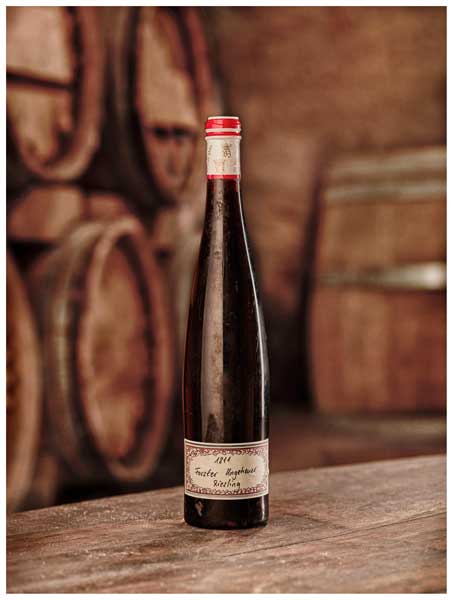
Christian Pfister, Stefan Brönnimann, Andres Altwegg, Rudolf Brázdil, Laurent Litzenburger, Daniele Lorusso, and Thomas Pliemon
Clim. Past, 20, 1387–1399, https://doi.org/10.5194/cp-20-1387-2024, https://doi.org/10.5194/cp-20-1387-2024, 2024
Short summary
Short summary
This bottle of Riesling from the traditional Bassermann Jordan winery in Deidesheim (Germany) is a relic of the premium wine harvested in 1811. It was named “Comet Wine” after the bright comet that year. The study shows that wine quality can be used to infer summer weather conditions over the past 600 years. After rainy summers with cold winds, wines turned sour, while long periods of high pressure led to excellent qualities. Since 1990, only good wines have been produced due to rapid warming.
Stefan Brönnimann, Yuri Brugnara, and Clive Wilkinson
Clim. Past, 20, 757–767, https://doi.org/10.5194/cp-20-757-2024, https://doi.org/10.5194/cp-20-757-2024, 2024
Short summary
Short summary
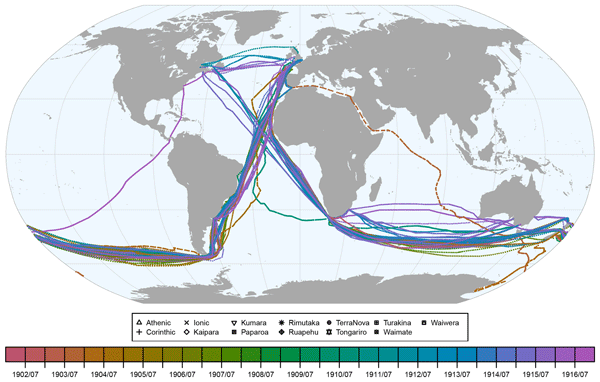
The early 20th century warming – the first phase of global warming in the 20th century – started from a peculiar cold state around 1910. We digitised additional ship logbooks for these years to study this specific climate state and found that it is real and likely an overlap of several climatic anomalies, including oceanic variability (La Niña) and volcanic eruptions.
Noemi Imfeld, Koen Hufkens, and Stefan Brönnimann
Clim. Past, 20, 659–682, https://doi.org/10.5194/cp-20-659-2024, https://doi.org/10.5194/cp-20-659-2024, 2024
Short summary
Short summary
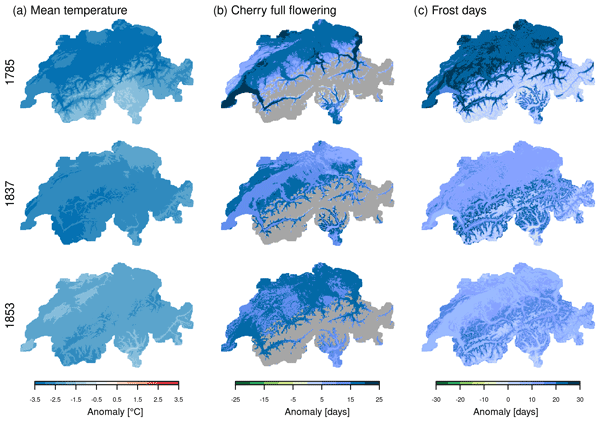
Climate and weather in spring are important because they can have far-reaching impacts, e.g. on plant growth, due to cold spells. Here, we study changes in climate and phenological indices for the period from 1763 to 2020 based on newly published reconstructed fields of daily temperature and precipitation for Switzerland. We look at three cases of extreme spring conditions, namely a warm spring in 1862, two frost events in 1873 and 1957, and three cold springs in 1785, 1837, and 1852.
Fredrik Charpentier Ljungqvist, Bo Christiansen, Jan Esper, Heli Huhtamaa, Lotta Leijonhufvud, Christian Pfister, Andrea Seim, Martin Karl Skoglund, and Peter Thejll
Clim. Past, 19, 2463–2491, https://doi.org/10.5194/cp-19-2463-2023, https://doi.org/10.5194/cp-19-2463-2023, 2023
Short summary
Short summary
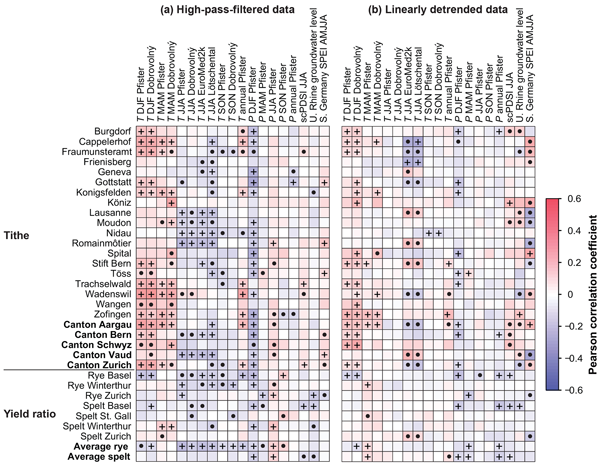
We study the climate signal in long harvest series from across Europe between the 16th and 18th centuries. The climate–harvest yield relationship is found to be relatively weak but regionally consistent and similar in strength and sign to modern climate–harvest yield relationships. The strongest climate–harvest yield patterns are a significant summer soil moisture signal in Sweden, a winter temperature and precipitation signal in Switzerland, and spring temperature signals in Spain.
Thomas Pliemon, Ulrich Foelsche, Christian Rohr, and Christian Pfister
Clim. Past, 19, 2237–2256, https://doi.org/10.5194/cp-19-2237-2023, https://doi.org/10.5194/cp-19-2237-2023, 2023
Short summary
Short summary
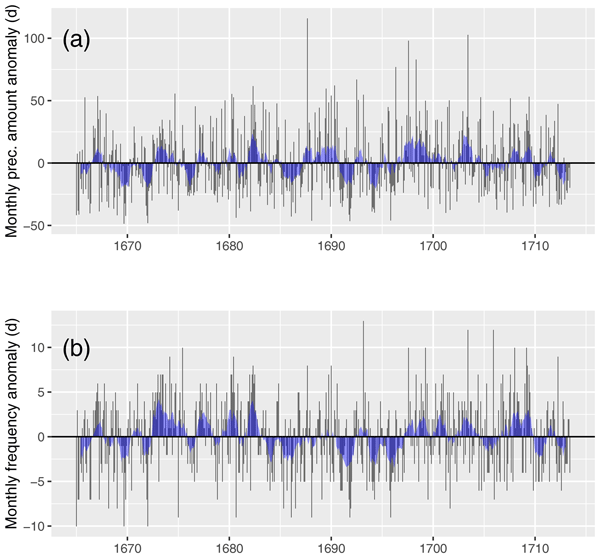
Louis Morin consistently recorded precipitation intensity and duration between 1665 and 1713. We use these records to reconstruct precipitation totals. This reconstruction is validated by several methods and then presented using precipitation indexes. What is exceptional about this dataset is the availability of a sub-daily resolution and the low number of missing data points over the entire observation period.
Rudolf Brázdil, Petr Dobrovolný, Christian Pfister, Katrin Kleemann, Kateřina Chromá, Péter Szabó, and Piotr Olinski
Clim. Past, 19, 1863–1890, https://doi.org/10.5194/cp-19-1863-2023, https://doi.org/10.5194/cp-19-1863-2023, 2023
Short summary
Short summary
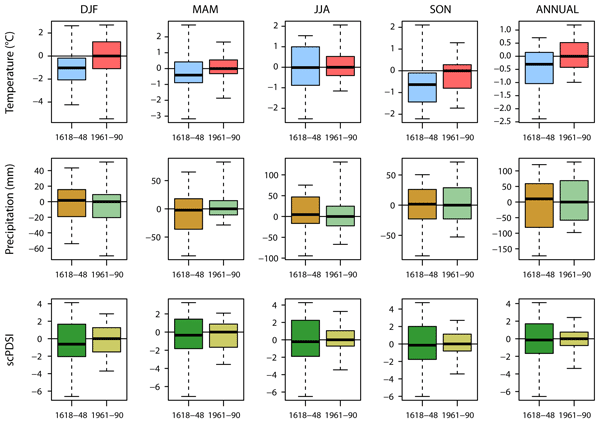
The Thirty Years' War (from 1618 to 1648 CE), an armed military conflict in Europe, brought extensive devastation to Europe. The paper analyses annual and seasonal temperature, precipitation, and drought patterns, as well as severe weather extremes, based particularly on documentary data, during this event in central Europe to demonstrate their broad impacts on human society and human responses in coincidence with weather and climate during this period of hardship.
Eric Samakinwa, Christoph C. Raible, Ralf Hand, Andrew R. Friedman, and Stefan Brönnimann
Clim. Past Discuss., https://doi.org/10.5194/cp-2023-67, https://doi.org/10.5194/cp-2023-67, 2023
Publication in CP not foreseen
Short summary
Short summary
In this study, we nudged a stand-alone ocean model MPI-OM to proxy-reconstructed SST. Based on these model simulations, we introduce new estimates of the AMOC variations during the period 1450–1780 through a 10-member ensemble simulation with a novel nudging technique. Our approach reaffirms the known mechanisms of AMOC variability and also improves existing knowledge of the interplay between the AMOC and the NAO during the AMOC's weak and strong phases.
Ralf Hand, Eric Samakinwa, Laura Lipfert, and Stefan Brönnimann
Geosci. Model Dev., 16, 4853–4866, https://doi.org/10.5194/gmd-16-4853-2023, https://doi.org/10.5194/gmd-16-4853-2023, 2023
Short summary
Short summary
ModE-Sim is an ensemble of simulations with an atmosphere model. It uses observed sea surface temperatures, sea ice conditions, and volcanic aerosols for 1420 to 2009 as model input while accounting for uncertainties in these conditions. This generates several representations of the possible climate given these preconditions. Such a setup can be useful to understand the mechanisms that contribute to climate variability. This paper describes the setup of ModE-Sim and evaluates its performance.
Stefan Brönnimann and Yuri Brugnara
Clim. Past, 19, 1435–1445, https://doi.org/10.5194/cp-19-1435-2023, https://doi.org/10.5194/cp-19-1435-2023, 2023
Short summary
Short summary
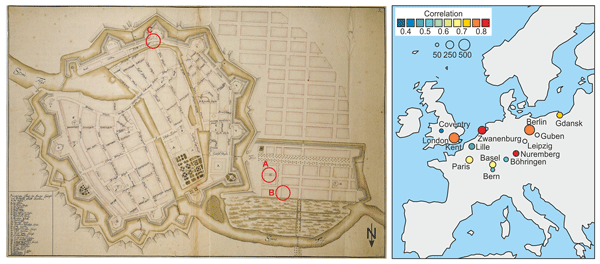
We present the weather diaries of the Kirch family from 1677–1774 containing weather observations made in Leipzig and Guben and, from 1701 onward, instrumental observations made in Berlin. We publish the imaged diaries (10 445 images) and the digitized measurements (from 1720 onward). This is one of the oldest and longest meteorological records from Germany. The digitized pressure data show good agreement with neighbouring stations, highlighting their potential for weather reconstruction.
Stefan Brönnimann
Clim. Past, 19, 1345–1357, https://doi.org/10.5194/cp-19-1345-2023, https://doi.org/10.5194/cp-19-1345-2023, 2023
Short summary
Short summary
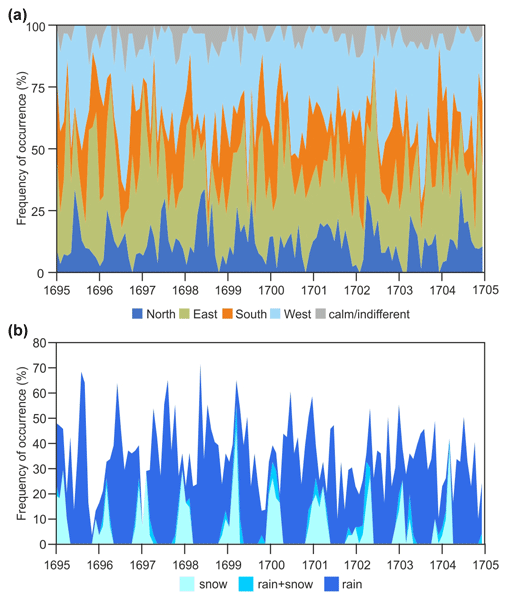
Weather reconstructions could help us to better understand the mechanisms leading to, and the impacts caused by, climatic changes. This requires daily weather information such as diaries. Here I present the weather diary by Georg Christoph Eimmart from Nuremberg covering the period 1695–1704. This was a particularly cold period in Europe, and the diary helps to better characterize this climatic anomaly.

Noemi Imfeld, Lucas Pfister, Yuri Brugnara, and Stefan Brönnimann
Clim. Past, 19, 703–729, https://doi.org/10.5194/cp-19-703-2023, https://doi.org/10.5194/cp-19-703-2023, 2023
Short summary
Short summary
Climate reconstructions give insights into monthly and seasonal climate variability of the past few hundred years. However, to understand past extreme weather events and to relate them to impacts, for example to periods of extreme floods, reconstructions on a daily timescale are needed. Here, we present a reconstruction of 258 years of high-resolution daily temperature and precipitation fields for Switzerland covering the period 1763 to 2020, which is based on instrumental measurements.
Moritz Buchmann, Gernot Resch, Michael Begert, Stefan Brönnimann, Barbara Chimani, Wolfgang Schöner, and Christoph Marty
The Cryosphere, 17, 653–671, https://doi.org/10.5194/tc-17-653-2023, https://doi.org/10.5194/tc-17-653-2023, 2023
Short summary
Short summary
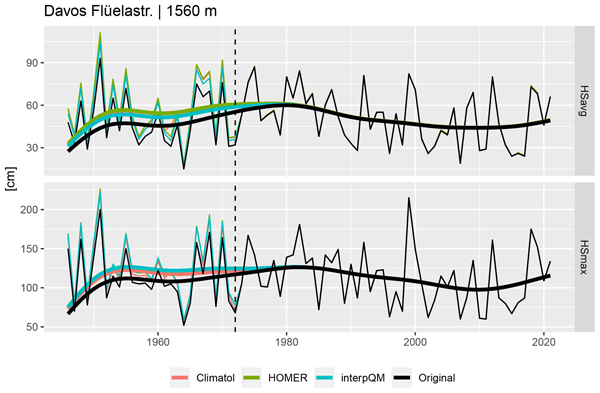
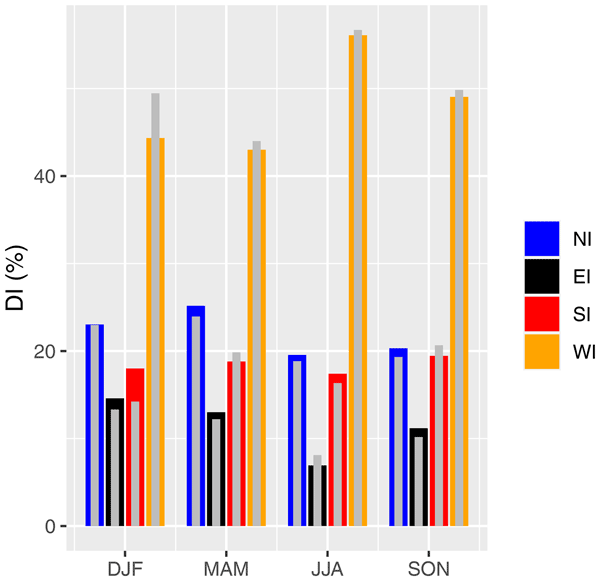
Our current knowledge of spatial and temporal snow depth trends is based almost exclusively on time series of non-homogenised observational data. However, like other long-term series from observations, they are susceptible to inhomogeneities that can affect the trends and even change the sign. To assess the relevance of homogenisation for daily snow depths, we investigated its impact on trends and changes in extreme values of snow indices between 1961 and 2021 in the Swiss observation network.
Jianquan Dong, Stefan Brönnimann, Tao Hu, Yanxu Liu, and Jian Peng
Earth Syst. Sci. Data, 14, 5651–5664, https://doi.org/10.5194/essd-14-5651-2022, https://doi.org/10.5194/essd-14-5651-2022, 2022
Short summary
Short summary
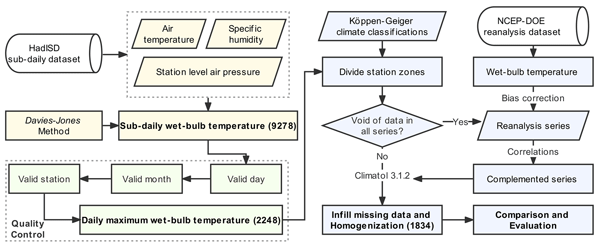
We produced a new dataset of global station-based daily maximum wet-bulb temperature (GSDM-WBT) through the calculation of wet-bulb temperature, data quality control, infilling missing values, and homogenization. The GSDM-WBT covers the complete daily series of 1834 stations from 1981 to 2020. The GSDM-WBT dataset handles stations with many missing values and possible inhomogeneities, which could better support the studies on global and regional humid heat events.
Duncan Pappert, Mariano Barriendos, Yuri Brugnara, Noemi Imfeld, Sylvie Jourdain, Rajmund Przybylak, Christian Rohr, and Stefan Brönnimann
Clim. Past, 18, 2545–2565, https://doi.org/10.5194/cp-18-2545-2022, https://doi.org/10.5194/cp-18-2545-2022, 2022
Short summary
Short summary
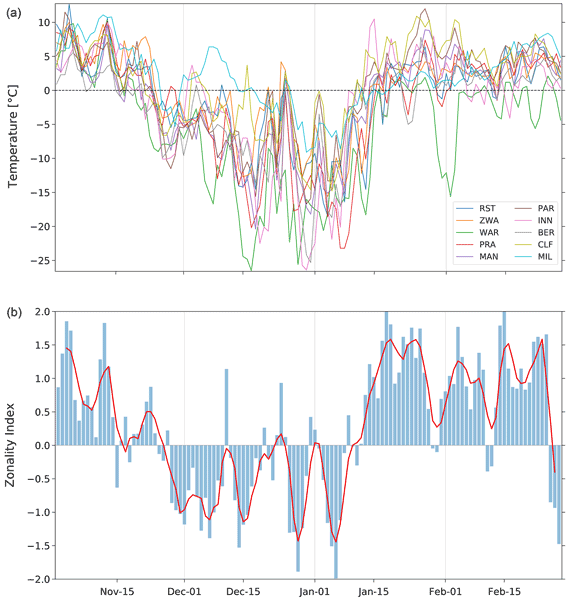
We present daily temperature and sea level pressure fields for Europe for the severe winter 1788/1789 based on historical meteorological measurements and an analogue reconstruction approach. The resulting reconstruction skilfully reproduces temperature and pressure variations over central and western Europe. We find intense blocking systems over northern Europe and several abrupt, strong cold air outbreaks, demonstrating that quantitative weather reconstruction of past extremes is possible.
Chantal Camenisch, Fernando Jaume-Santero, Sam White, Qing Pei, Ralf Hand, Christian Rohr, and Stefan Brönnimann
Clim. Past, 18, 2449–2462, https://doi.org/10.5194/cp-18-2449-2022, https://doi.org/10.5194/cp-18-2449-2022, 2022
Short summary
Short summary
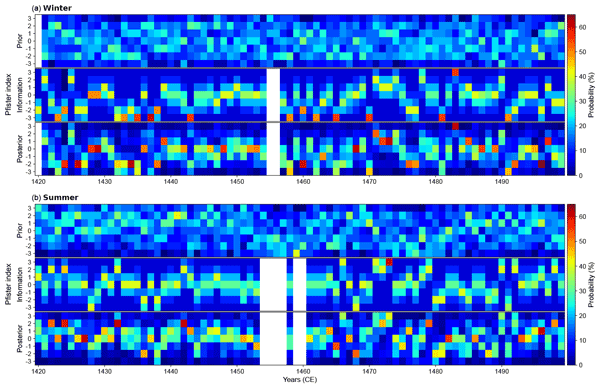
We present a novel approach to assimilate climate information contained in chronicles and annals from the 15th century to generate climate reconstructions of the Burgundian Low Countries, taking into account uncertainties associated with the descriptions of narrative sources. Our study aims to be a first step towards a more quantitative use of available information contained in historical texts, showing how Bayesian inference can help the climate community with this endeavor.
Yuri Brugnara, Chantal Hari, Lucas Pfister, Veronika Valler, and Stefan Brönnimann
Clim. Past, 18, 2357–2379, https://doi.org/10.5194/cp-18-2357-2022, https://doi.org/10.5194/cp-18-2357-2022, 2022
Short summary
Short summary
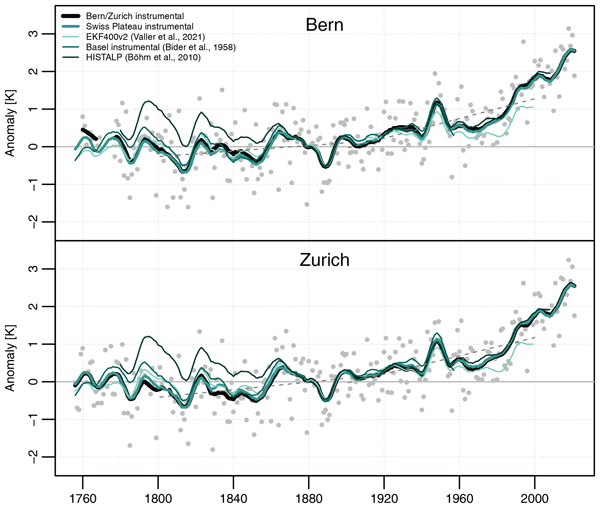
We digitized dozens of weather journals containing temperature measurements from in and around Bern and Zurich. They cover over a century before the creation of a national weather service in Switzerland. With these data we could create daily temperature series for the two cities that span the last 265 years. We found that the pre-industrial climate on the Swiss Plateau was colder than suggested by previously available instrumental data sets and about 2.5 °C colder than the present-day climate.
Thomas Pliemon, Ulrich Foelsche, Christian Rohr, and Christian Pfister
Clim. Past, 18, 1685–1707, https://doi.org/10.5194/cp-18-1685-2022, https://doi.org/10.5194/cp-18-1685-2022, 2022
Short summary
Short summary
We have digitized and analyzed meteorological variables (temperature, direction of the movement of the clouds, and cloud cover), which were noted by Louis Morin in the period 1665–1713 in Paris. This time period is characterized by cold winters and autumns and moderate springs and summers. A low frequency of westerlies in the winter months leads to a cooling. Morin's measurements seem to be trustworthy. Only cloud cover in quantitative terms should be taken with caution.
Gilles Delaygue, Stefan Brönnimann, and Philip D. Jones
Weather Clim. Dynam. Discuss., https://doi.org/10.5194/wcd-2022-33, https://doi.org/10.5194/wcd-2022-33, 2022
Revised manuscript not accepted
Short summary
Short summary
We test whether any association between solar activity and meteorological conditions in the north Atlantic – European sector could be detected. We find associations consistent with those found by previous studies, with a slightly better statistical significance, and with less methodological biases which have impaired previous studies. Our study should help strengthen the recognition of meteorological impacts of solar activity.
Moritz Buchmann, John Coll, Johannes Aschauer, Michael Begert, Stefan Brönnimann, Barbara Chimani, Gernot Resch, Wolfgang Schöner, and Christoph Marty
The Cryosphere, 16, 2147–2161, https://doi.org/10.5194/tc-16-2147-2022, https://doi.org/10.5194/tc-16-2147-2022, 2022
Short summary
Short summary
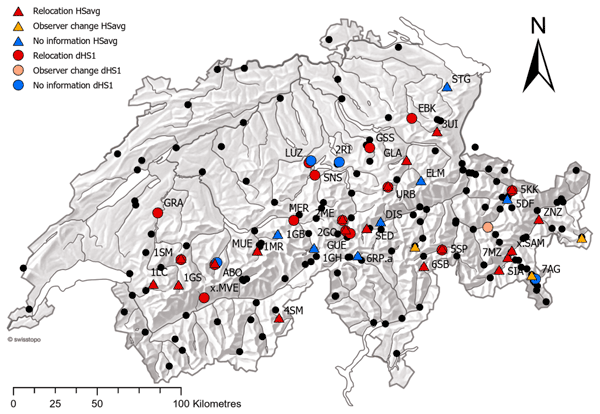
Knowledge about inhomogeneities in a data set is important for any subsequent climatological analysis. We ran three well-established homogenization methods and compared the identified break points. By only treating breaks as valid when detected by at least two out of three methods, we enhanced the robustness of our results. We found 45 breaks within 42 of 184 investigated series; of these 70 % could be explained by events recorded in the station history.
Stefan Brönnimann, Peter Stucki, Jörg Franke, Veronika Valler, Yuri Brugnara, Ralf Hand, Laura C. Slivinski, Gilbert P. Compo, Prashant D. Sardeshmukh, Michel Lang, and Bettina Schaefli
Clim. Past, 18, 919–933, https://doi.org/10.5194/cp-18-919-2022, https://doi.org/10.5194/cp-18-919-2022, 2022
Short summary
Short summary
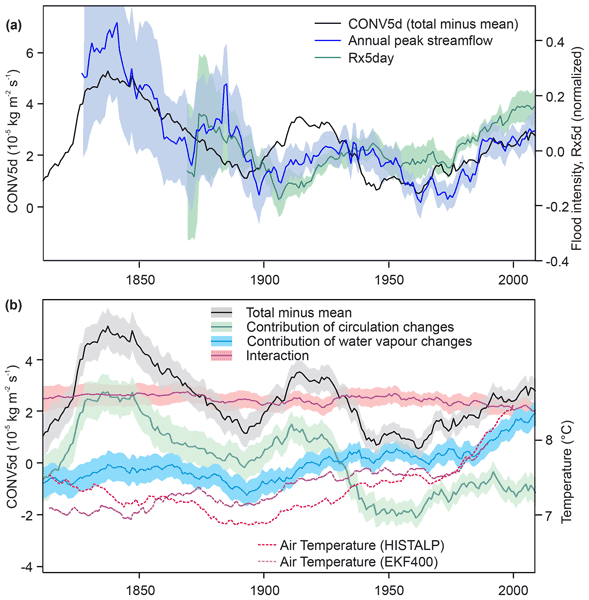
Floods in Europe vary on time scales of several decades. Flood-rich and flood-poor periods alternate. Recently floods have again become more frequent. Long time series of peak stream flow, precipitation, and atmospheric variables reveal that until around 1980, these changes were mostly due to changes in atmospheric circulation. However, in recent decades the role of increasing atmospheric moisture due to climate warming has become more important and is now the main driver of flood changes.
Daniel Steinfeld, Adrian Peter, Olivia Martius, and Stefan Brönnimann
EGUsphere, https://doi.org/10.5194/egusphere-2022-92, https://doi.org/10.5194/egusphere-2022-92, 2022
Preprint archived
Short summary
Short summary
We assess the performance of various fire weather indices to predict wildfire occurrence in Northern Switzerland. We find that indices responding readily to weather changes have the best performance during spring; in the summer and autumn seasons, indices that describe persistent hot and dry conditions perform best. We demonstrate that a logistic regression model trained on local historical fire activity can outperform existing fire weather indices.
Duncan Pappert, Yuri Brugnara, Sylvie Jourdain, Aleksandra Pospieszyńska, Rajmund Przybylak, Christian Rohr, and Stefan Brönnimann
Clim. Past, 17, 2361–2379, https://doi.org/10.5194/cp-17-2361-2021, https://doi.org/10.5194/cp-17-2361-2021, 2021
Short summary
Short summary
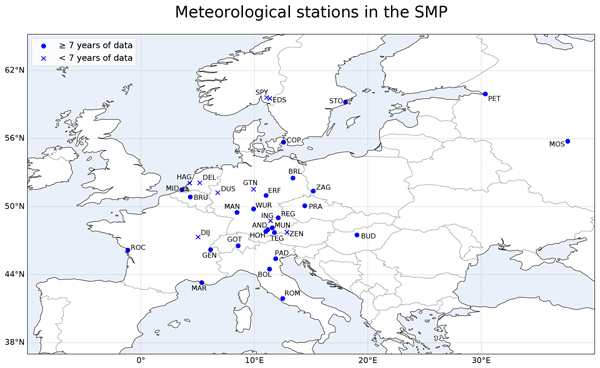
This paper presents temperature and pressure measurements from the 37 stations of the late 18th century network of the Societas Meteorologica Palatina, in addition to providing an inventory of the available observations, most of which have been digitised. The quality of the recovered series is relatively good, as demonstrated by two case studies. Early instrumental data such as these will help to explore past climate and weather extremes in Europe in greater detail.
Cited articles
Alexandre, P.: Le climat en Europe au Moyen Âge. Contribution à l'histoire des variations climatiques de 1000 à 1425, d'après les sources narratives de l'Europe occidentale, Éditions de l'École des Hautes Études en Sciences Sociales, Paris, https://excerpts.numilog.com/books/9782307442172.pdf (last access: 2 October 2026), 1987.
Böhnisch, A., Felsche, E., Mittermeier, M., Poschlod, B., and Ludwig, R.: Future patterns of compound dry and hot summers and their link to soil moisture droughts in Europe, Earths Future, 13, https://doi.org/10.1029/2024EF004916, 2025.
Brázdil, R., Řezníčková, L., Valášek, H., Kiss, A., and Kotyza, O.: Past locust outbreaks in the Czech Lands: do they indicate particular climatic patterns?, Theor. Appl. Climatol., 116, 343–357, https://doi.org/10.1007/s00704-013-0950-9, 2014.
Brázdil, R., Raška, P., Trnka, M., Zahradníček, P., Valášek, H., Dobrovolný, P., Řezníčková, L., Treml, P., and Stachon, Z.: The Central European drought of 1947: causes and consequences, Clim. Res., 70, 161–178, https://doi.org/10.3354/cr01387, 2016.
Brázdil, R., Demarée, G. R., Kiss, A., Dobrovolný, P., Chromá, K., Trnka, M., Dolák, L., Řezníčková, L., Zahradníček, P., Limanowka, D., and Jourdain, S.: The extreme drought of 1842 in Europe as described by both documentary data and instrumental measurements, Clim. Past, 15, 1861–1884, https://doi.org/10.5194/cp-15-1861-2019, 2019.
Brönnimann, S.: Blocking Frequency 1728–2020, BORIS Portal [data set], https://doi.org/10.48620/36384, 2025
Brönnimann, S., Franke, J., Nussbaumer, S. U., Zumbühl, H. J., Steiner, D., Trachsel, M., Hegerl, G. C., Schurer, A., Worni, M., Malik, A., Flückiger,J., and Raible, C. C.: Last phase of the Little Ice Age forced by volcanic eruptions, Nat. Geosci., 12, 650–656, 2019.
Brönnimann, S., Filipiak, J., Chen, S., and Pfister, L.: The weather of 1740, the coldest year in central Europe in 600 years, Clim. Past, 20, 2219–2235, https://doi.org/10.5194/cp-20-2219-2024, 2024.
Brönnimann, S., Franke, J., Valler, V., Hand, R., Samakinwa, E., Lundstad, E., Burgdorf, A.-M., Lipfert, L., Pfister, L., Imfeld, N., and Rohrer, M.: Past hydroclimate extremes in Europe driven by Atlantic Jet stream and recurrent weather patterns, Nat. Geosci., 18, 246–253, https://doi.org/10.1038/s41561-025-01654-y, 2025.
Bruneau, C.: La Chronique de Philippe de Vigneulles, Société d'histoire et d'archéologie de la Lorraine, Vol. 4, Metz, https://metz1500.univ-lorraine.fr/s/metz-1500/item/432 (last access: 2 October 2026), 1933.
Buisman, J.: Duizend jaar weer, wind en water in de Lage Landen, II, 1300–1450, edited by: van Engelen, A. F. V., ISBN 9051941439, 1996.
Cleveland, W. S.: Robust locally weighted regression and smoothing scatterplots, J. Am. Stat. Assoc., 74, 829–836, https://doi.org/10.2307/2286407, 1979.
Cook, B. I., Smerdon, J. E., Cook, E. R., Williams, A. P., Anchukaitis, K. J., Mankin, J. S., Allen, K., Andreu, L., Ault, T. R., Belmecheri, S., Coats, S., Coulthard, B., Fosu, B., Grierson, P., Griffin, D., Herrera, D. A., Ionita, M., Lehner, F., Leland, C., Marvel, K., Morales, M. S., Mishra, V., Ngoma, J., Nguyen, H. T. T., O’Donnell, A., Palmer, J., Rao, M. P., Rodriguez, M., Seager, R., Stahle, D. W., Stevenson, S., Thapa, U. K., Varuolo, A. M., and Wise, E. K.: Megadroughts in the Common Era and the Anthropocene, Nat. Rev. Earth Environ., 3, 741–757, 2022.
Dobrovolný, P., Moberg, A., Brázdil, R., Pfister, C., Glaser, R., and Böhm, R.: Monthly, seasonal and annual temperature reconstructions for Central Europe since AD 1500, Clim. Change, 101, 69–107, 2010.
Dobrovolný, P., Brázdil, R., Trnka, M., Kotyza, O., and Valášek, H.: Precipitation reconstruction for the Czech Lands, AD 1501–2010, Int. J. Climatol., https://doi.org/10.1002/joc.3957, 2014.
Fischer, E. M., Seneviratne, S. I., Lüthi, D., and Schär, C.: Contribution of land–atmosphere coupling to recent European summer heat waves, Geophys. Res. Lett., 34, https://doi.org/10.1029/2006GL029068, 2007.
Glaser, R.: Klimageschichte Mitteleuropas, Primus Verlag, Darmstadt, ISBN 978-3-89678-405-6, 2001.
Glaser, R. and Kahle, M.: Reconstructions of droughts in Germany since 1500 – combining hermeneutic information and instrumental records in historical and modern perspectives, Clim. Past, 16, 1207–1222, https://doi.org/10.5194/cp-16-1207-2020, 2020.
Halifa-Marín, A., Torres-Vázquez, M. A., Trigo, R., Vicente-Serrano, S. M., Turco, M., Jiménez-Guerrero, P., and Montávez, J. P.: Beyond the NAO: The East Atlantic Pattern's Role in Early 20th-Century Meteorological Droughts in Western Europe., Int. J. Climatol., 45, e70045, https://doi.org/10.1002/joc.70045, 2025.
Hand, R., Samakinwa, E., Lipfert, L., and Brönnimann, S.: ModE-Sim – a medium-sized atmospheric general circulation model (AGCM) ensemble to study climate variability during the modern era (1420 to 2009), Geosci. Model Dev., 16, 4853–4866, https://doi.org/10.5194/gmd-16-4853-2023, 2023.
Hersbach, H., Bell, B., Berrisford, P., Hirahara, S., Horányi, A., Muñoz-Sabater, J., Nicolas, J., Peubey, C., Radu, R., Schepers, D., Simmons, A., Soci, C., Abdalla, S., Abellan, X., Balsamo, G., Bechtold, P., Biavati, G., Bidlot, J., Bonavita, M., De Chiara, G., Dahlgren, P., Dee, D., Diamantakis, M., Dragani, R., Flemming, J., Forbes, R., Fuentes, M., Geer, A., Haimberger, L., Healy, S., Hogan, R.J., Hólm, E., Janisková, M., Keeley, S., Laloyaux, P., Lopez, P., Lupu, C., Radnoti, G., de Rosnay, P., Rozum, I., Vamborg, F., Villaume, S., and Thépaut, J.-N.: The ERA5 global reanalysis. Q. J. Roy. Meteor. Soc., 146, 1999–2049, https://doi.org/10.1002/qj.3803, 2020.
Hirschi, M., Seneviratne, S. I., Alexandrov, V., Boberg, F., Boroneant, C., Christensen, O.B., Formayer, H., Orlowsky, B., and Stepanek, P.: Observational evidence for soil-moisture impact on hot extremes in southeastern Europe, Nat. Geosci., 4, 17–21, https://doi.org/10.1038/ngeo1032, 2011.
Ivušić, S., Güttler, I., and Horvath, K.: Overview of mean and extreme precipitation climate changes across the Dinaric Alps in the latest EURO-CORDEX ensemble, Clim. Dynam., 62, 10785–10815, https://doi.org/10.1007/s00382-024-07476-9, 2024.
IPCC: Climate Change 2021: The Physical Science Basis, Cambridge University Press, https://doi.org/10.1017/9781009157896, 2021.
Jungclaus, J. H., Bard, E., Baroni, M., Braconnot, P., Cao, J., Chini, L. P., Egorova, T., Evans, M., González-Rouco, J. F., Goosse, H., Hurtt, G. C., Joos, F., Kaplan, J. O., Khodri, M., Klein Goldewijk, K., Krivova, N., LeGrande, A. N., Lorenz, S. J., Luterbacher, J., Man, W., Maycock, A. C., Meinshausen, M., Moberg, A., Muscheler, R., Nehrbass-Ahles, C., Otto-Bliesner, B. I., Phipps, S. J., Pongratz, J., Rozanov, E., Schmidt, G. A., Schmidt, H., Schmutz, W., Schurer, A., Shapiro, A. I., Sigl, M., Smerdon, J. E., Solanki, S. K., Timmreck, C., Toohey, M., Usoskin, I. G., Wagner, S., Wu, C.-J., Yeo, K. L., Zanchettin, D., Zhang, Q., and Zorita, E.: The PMIP4 contribution to CMIP6 – Part 3: The last millennium, scientific objective, and experimental design for the PMIP4 past1000 simulations, Geosci. Model Dev., 10, 4005–4033, https://doi.org/10.5194/gmd-10-4005-2017, 2017.
Labbé, T., Pfister, C., Brönnimann, S., Rousseau, D., Franke, J., and Bois, B.: The longest homogeneous series of grape harvest dates, Beaune 1354–2018, and its significance for the understanding of past and present climate, Clim. Past, 15, 1485–1501, https://doi.org/10.5194/cp-15-1485-2019, 2019.
Larchey, L.: Journal de Jehan Aubrion, bourgeois de Metz, avec sa continuation par Pierre Aubrion (1465–1512), Metz, 1857.
Lipfert, L., Hand, R., and Brönnimann, S.: A global assessment of heatwaves since 1850, Geophys. Res. Lett., 51, https://doi.org/10.1029/2023GL106212, 2024.
Lipfert, L., Hand, R., and Brönnimann, S.: Comparing 600 years of extremely hot Central European summers to future projections, Sci. Rep., https://doi.org/10.1038/s41598-026-45507-z, 2026.
Marchal, L.: La Chronique de Lorraine, Société d'Archéologie Lorraine, Nancy, 5, 336 pp., 1859.
McVicar, T. R., Roderick, M. L., Donohue, R. J., Li, L. T., Van Niel, T. G., Thomas, A., Grieser, J., Jhajharia, D., Himri, Y., Mahowald, N. M., Mescherskaya, A. V., Kruger, A. C., Rehman, S., and Dinpashoh, Y.: Global review and synthesis of trends in observed terrestrial near-surface wind speeds: Implications for evaporation, J. Hydrol., 416–417, 182–205, 2012.
Pardo, S. K. and Paredes-Fortuny, L.: Uneven evolution of regional European summer heatwaves under climate change, Weather Clim. Extremes, 43, 100648, https://doi.org/10.1016/j.wace.2024.100648, 2024.
Pfister, C.: Climate and economy in eighteenth-century Europe, J. Interdiscipl. Hist., 9, 223–243, 1978.
Pfister, C. and Wanner, H.: Climate and Society in Europe, Haupt, Bern, ISBN 978-3-258-08234-9, 2021.
Pfister, C., Rohr, C., and Jover, A. C. C.: Euro-Climhist: eine Datenplattform der Universität Bern zur Witterungs-, Klima- und Katastrophengeschichte, Wasser Energie Luft, 109, 45–48, 2017 (data available at: https://www.euroclimhist.unibe.ch/, last access: 14 April 2026).
Pfister, C., Brönnimann, S., Altwegg, A., Brázdil, R., Litzenburger, L., Lorusso, D., and Pliemon, T.: 600 years of wine must quality and April to August temperatures in western Europe 1420–2019, Clim. Past, 20, 1387–1399, https://doi.org/10.5194/cp-20-1387-2024, 2024.
Pfister, L., Wilhelm, L., Brugnara, Y., Imfeld, N., and Brönnimann, S.: Weather type reconstruction using machine learning approaches, Weather Clim. Dynam., 6, 571–594, https://doi.org/10.5194/wcd-6-571-2025, 2025.
Pfister, C., Brönnimann, S., Litzenburger, L., Thejll, P., Altwegg, A., Brázdil, R., Kiss, A., Landsteiner, E., Ljungqvist, F. C., and Pliemon, T.: Wine must yields as indicators of May to July climate in Central Europe, 1416–1988, Clim. Past, 22, 541–559, https://doi.org/10.5194/cp-22-541-2026, 2026.
Pliemon, T., Foelsche, U., Rohr, C., and Pfister, C.: Precipitation reconstructions for Paris based on the observations by Louis Morin, 1665–1713 CE, Clim. Past, 19, 2237–2256, https://doi.org/10.5194/cp-19-2237-2023, 2023.
Pribyl, K.: Farming, Famine and Plague, Springer, Cham, ISBN 978-3-319-85789-3, 2017.
Pribyl, K. and Cornes, R. C.: Droughts in medieval England (Part 1), Weather, 75, 168–172, https://doi.org/10.1002/wea.3599, 2019.
Pribyl, K. and Cornes, R. C.: Droughts in medieval England (Part 2), Weather, 75, 196–198, https://doi.org/10.1002/wea.3529, 2020.
Pribyl, K., Cornes, R., and Pfister, C.: Reconstructing medieval April–July mean temperatures in East Anglia, 1256–1431, Clim. Change, 113, 393–412, https://doi.org/10.1007/s10584-011-0327-y, 2012.
Przybylak, R., Oliński, P., Koprowski, M., Filipiak, J., Pospieszyńska, A., Chorążyczewski, W., Puchałka, R., and Dąbrowski, H. P.: Droughts in the area of Poland in recent centuries in the light of multi-proxy data, Clim. Past, 16, 627–661, https://doi.org/10.5194/cp-16-627-2020, 2020.
Quesada, B., Vautard, R., Yiou, P., Hirschi, M., and Seneviratne, S. I.: Asymmetric European summer heat predictability from wet and dry southern winters and springs, Nat. Clim. Change, 2, 736–741, https://doi.org/10.1038/nclimate1536, 2012.
Rohr, C.: Apocalyptic riders in the borderlands. Dealing with locust invasion, diseases and war in fifteenth- and sixteenth-century Eastern and Southern Austria, in: The Dance of Death in Late Medieval and Renaissance Europe, edited by: Kiss, A. and Pribyl, K., Taylor and Francis, 107–124, https://doi.org/10.4324/9780429491085, 2019.
Rohrer, M., Martius, O., Raible, C. C., and Brönnimann, S.: Sensitivity of blocks and cyclones in ERA5 to spatial resolution and definition, Geophys. Res. Lett., 47, e2019GL085582, https://doi.org/10.1029/2019GL085582, 2020.
Rousi, E., Fink, A. H., Andersen, L. S., Becker, F. N., Beobide-Arsuaga, G., Breil, M., Cozzi, G., Heinke, J., Jach, L., Niermann, D., Petrovic, D., Richling, A., Riebold, J., Steidl, S., Suarez-Gutierrez, L., Tradowsky, J. S., Coumou, D., Düsterhus, A., Ellsäßer, F., Fragkoulidis, G., Gliksman, D., Handorf, D., Haustein, K., Kornhuber, K., Kunstmann, H., Pinto, J. G., Warrach-Sagi, K., and Xoplaki, E.: The extremely hot and dry 2018 summer in central and northern Europe from a multi-faceted weather and climate perspective, Nat. Hazards Earth Syst. Sci., 23, 1699–1718, https://doi.org/10.5194/nhess-23-1699-2023, 2023.
Rousseau, D.: Les températures mensuelles en région parisienne de 1676 à 2008, La Météorologie, 8e série 67, 43–55, 2009.
Samakinwa, E., Valler, V., Hand, R., Neukom, R., Gómez-Navarro, J .J., Kennedy, J., Rayner, N. A., and Brönnimann, S.: An ensemble reconstruction of global monthly sea surface temperature and sea ice concentration 1000–1849, Sci. Data, 8, 261, https://doi.org/10.1038/s41597-021-01043-1, 2021.
Sato, M., Hansen, J. E., McCormick, M. P., and Pollack, J. B.: Stratospheric aerosol optical depths, 1850–1990, J. Geophys. Res.-Atmos., 98, 22987–22994, https://doi.org/10.1029/93JD02553, 1993.
Schorer, M.: Extreme Trockensommer in der Schweiz und ihre Folgen für Natur und Wirtschaft, Geographica Bernensia G40, Geographisches Institut der Universität Bern, https://doi.org/10.4480/GB2021.G40, 1992.
Seneviratne, S. I., Corti, T., Davin, E. L., Hirschi, M., Jaeger, E. B., Lehner, I., Orlowsky, B., and Teuling, A. J.: Soil moisture–climate interactions, Earth-Sci. Rev., 99, 125–161, 2010.
Slivinski, L. C., Compo, G. P., Whitaker, J. S., Sardeshmukh, P. D., Giese, B. S., McColl, C., Allan, R., Yin, X., Vose, R., Titchner, H., Kennedy, J., Spencer, L. J., Ashcroft, L., Brönnimann, S., Brunet, M., Camuffo, D., Cornes, R., Cram, T. A., Crouthamel, R., Domínguez-Castro, F., Freeman, J. E., Gergis, J., Hawkins, E., Jones, P. D., Jourdain, S., Kaplan, A., Kubota, H., Blancq, F. L., Lee, T.-C., Lorrey, A., Luterbacher, J., Maugeri, M., Mock, C. J., Moore, G. K., Przybylak, R., Pudmenzky, C., Reason, C., Slonosky, V. C., Smith, C. A., Tinz, B., Trewin, B., Valente, M. A., Wang, X. L., Wilkinson, C., Wood, K., and Wyszyński, P.: Towards a more reliable historical reanalysis: Improvements for version 3 of the Twentieth Century Reanalysis system, Q. J. Roy. Meteor. Soc., 145, 2876–2908, https://doi.org/10.1002/qj.3598, 2019.
Slonosky, V. C.: Wet winters, dry summers? Three centuries of precipitation data from Paris, Geophys. Res. Lett., 29, 1887, https://doi.org/10.1029/2001GL014302, 2002.
Stolz, W.: Die Hans Stolzsche Gebweilet Chronik, Zeugenbericht über den Bauernkrieg am Oberrhein, Stolz, Freiburg, 1979.
Tibaldi, S. and Molteni, F.: On the operational predictability of blocking, Tellus A, 42, 343–365, https://doi.org/10.3402/tellusa.v42i3.11882, 1990.
Titchner, H. A. and Rayner, N. A.: The Met Office Hadley Centre sea ice and sea surface temperature data set, version 2: 1. Sea ice concentrations, J. Geophys. Res.-Atmos., 119, 2864–2889, https://doi.org/10.1002/2013JD020316, 2014.
Titow, J.: Evidence of weather in the account rolls of the bishopric of Winchester 1209–1350, Econ. Hist. Rev., 12, 360–407, 1960.
Titow, J.: Le climat à travers les rôles de comptabilité de l'évêché de Winchester (1350–1450), Ann. Hist. Sci. Soc., 25, 312–350, https://doi.org/10.3406/ahess.1970.422220, 1970.
Träger-Chatterjee, C., Müller, R. W., and Bendix, J.: Analysis of extreme summers and prior late winter/spring conditions in central Europe, Nat. Hazards Earth Syst. Sci., 13, 1243–1257, https://doi.org/10.5194/nhess-13-1243-2013, 2013.
Valler, V., Franke, J., Brugnara, Y., Samakinwa, E., Hand, R., Burgdorf, A.-M., Lipfert, L., Friedman, A., Lundstad, E., and Brönnimann, S.: ModE-RA: a global monthly paleo-reanalysis of the modern era 1421 to 2008, Sci. Data, 11, 36, https://doi.org/10.1038/s41597-023-02733-8, 2024 (data available at: https://www.wdc-climate.de/ui/entry?acronym=ModE-RA, last access: 1 October 2026).
Vautard, R., Yiou, P., D'Andrea, F., de Noblet, N., Viovy, N., Cassou, C., Polcher, J., Ciais, P., Kageyama, M., and Fan, Y.: Summertime European heat and drought waves, Geophys. Res. Lett., 34, https://doi.org/10.1029/2006GL028001, 2007.
Wang, G., Dolman, A. J., and Alessandri, A.: A summer climate regime over Europe modulated by the North Atlantic Oscillation, Hydrol. Earth Syst. Sci., 15, 57–64, https://doi.org/10.5194/hess-15-57-2011, 2011.
Warren, R., Bartlome, N. E., Wellinger, N., Franke, J., Hand, R., Brönnimann, S., and Huhtamaa, H.: ClimeApp: data processing tool for monthly, global climate data from the ModE-RA palaeo-reanalysis, 1422 to 2008 CE, Clim. Past, 20, 2645–2662, https://doi.org/10.5194/cp-20-2645-2024, 2024.
Wilks, D. S.: Statistical Methods in the Atmospheric Sciences, Fourth Edn., Elsevier, ISBN 978-0128158234, 2020.
Editorial statement
This study presents a valuable long-term analysis of the relationship between dry springs and hot European summers. It combines documentary evidence, the 600-year ModE-RA reconstruction, and complementary model simulations and reanalyses. One of its particular strengths is the consistency of the identified relationship across different datasets and approaches. Southeastern Europe emerges as a key region where spring precipitation deficits are associated with subsequent summer warming and more intense heat waves. A detailed analysis of historical extremes, including the exceptional summer of 1473, illustrates the atmospheric and hydroclimatic processes involved. Notably, the regression analysis reveals that late-spring precipitation, especially in April and May, influences summer temperatures independently of atmospheric circulation. Overall, the manuscript offers a useful historical perspective on compound heat-drought hazards and provides relevant insights for understanding past climate extremes and present-day European climate risks.
This study presents a valuable long-term analysis of the relationship between dry springs and...
Short summary
We analyse the link between dry springs and hot summers in Europe over the past 600 years. Starting with a study of the heat summer of 1473, which followed dry spring conditions in Southeastern Europe, we use the ModE-RA data set family to statistically analyse the link. We find that the link is strongest in regions where evaporation is moisture-limited. Hot summers are preceded by increased blocking over north-central Europe and a positive East Atlantic pattern in spring.
We analyse the link between dry springs and hot summers in Europe over the past 600 years....


