
Articles | Volume 22, issue 7
https://doi.org/10.5194/cp-22-1291-2026
© Author(s) 2026. This work is distributed under
the Creative Commons Attribution 4.0 License.
the Creative Commons Attribution 4.0 License.
https://doi.org/10.5194/cp-22-1291-2026
© Author(s) 2026. This work is distributed under
the Creative Commons Attribution 4.0 License.
the Creative Commons Attribution 4.0 License.
Research article
| 
14 Jul 2026
Research article |
| 14 Jul 2026
| 14 Jul 2026
Ice core nitrogen isotopes archive dramatic changes in West Antarctic Ice Sheet thinning

British Antarctic Survey, High Cross, Madingley Road, Cambridge, CB3 0ET, United Kingdom
Thomas K. Bauska
British Antarctic Survey, High Cross, Madingley Road, Cambridge, CB3 0ET, United Kingdom
Amaëlle Landais
Laboratoire des Sciences du Climat et de l'Environnement, LSCE/IPSL, CEA-CNRS-UVSQ, Université Paris-Saclay, Gif-sur-Yvette, France
Carlos Martín
British Antarctic Survey, High Cross, Madingley Road, Cambridge, CB3 0ET, United Kingdom
Eric W. Wolff
Department of Earth Sciences, University of Cambridge, Downing Street, Cambridge, CB2 3EQ, United Kingdom
Related authors
Elizabeth R. Thomas, Diana O. Vladimirova, Dieter R. Tetzner, B. Daniel Emanuelsson, Nathan Chellman, Daniel A. Dixon, Hugues Goosse, Mackenzie M. Grieman, Amy C. F. King, Michael Sigl, Danielle G. Udy, Tessa R. Vance, Dominic A. Winski, V. Holly L. Winton, Nancy A. N. Bertler, Akira Hori, Chavarukonam M. Laluraj, Joseph R. McConnell, Yuko Motizuki, Kazuya Takahashi, Hideaki Motoyama, Yoichi Nakai, Franciéle Schwanck, Jefferson Cardia Simões, Filipe Gaudie Ley Lindau, Mirko Severi, Rita Traversi, Sarah Wauthy, Cunde Xiao, Jiao Yang, Ellen Mosely-Thompson, Tamara V. Khodzher, Ludmila P. Golobokova, and Alexey A. Ekaykin
Earth Syst. Sci. Data, 15, 2517–2532, https://doi.org/10.5194/essd-15-2517-2023, https://doi.org/10.5194/essd-15-2517-2023, 2023
Short summary
Short summary
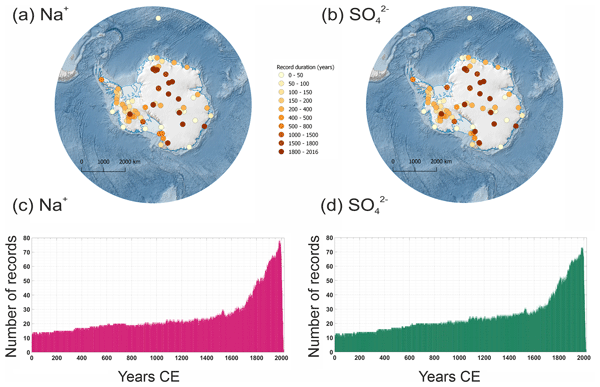
The concentration of sodium and sulfate measured in Antarctic ice cores is related to changes in both sea ice and winds. Here we have compiled a database of sodium and sulfate records from 105 ice core sites in Antarctica. The records span all, or part, of the past 2000 years. The records will improve our understanding of how winds and sea ice have changed in the past and how they have influenced the climate of Antarctica over the past 2000 years.
Helene M. Hoffmann, Mackenzie M. Grieman, Amy C. F. King, Jenna A. Epifanio, Kaden Martin, Diana Vladimirova, Helena V. Pryer, Emily Doyle, Axel Schmidt, Jack D. Humby, Isobel F. Rowell, Christoph Nehrbass-Ahles, Elizabeth R. Thomas, Robert Mulvaney, and Eric W. Wolff
Clim. Past, 18, 1831–1847, https://doi.org/10.5194/cp-18-1831-2022, https://doi.org/10.5194/cp-18-1831-2022, 2022
Short summary
Short summary
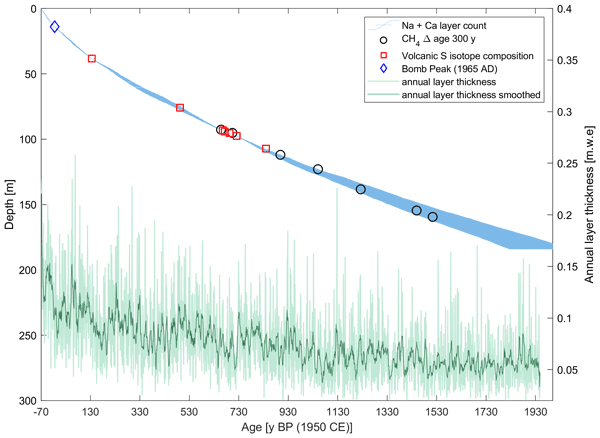
The WACSWAIN project (WArm Climate Stability of the West Antarctic ice sheet in the last INterglacial) investigates the fate of the West Antarctic Ice Sheet during the last warm period on Earth (115 000–130 000 years before present). Within this framework an ice core was recently drilled at Skytrain Ice Rise. In this study we present a stratigraphic chronology of that ice core based on absolute age markers and annual layer counting for the last 2000 years.
Alexander Mattin, Simon J. Barker, V. Holly L. Winton, Andrea Burke, William Hutchison, Patrick J. Sugden, Kirstin Krüger, Alexa R. Van Eaton, Larry G. Mastin, Michael Sigl, Eric W. Wolff, Shuji Fujita, Kumiko Goto-Azuma, Ikumi Oyabu, Motohiro Hirabayashi, Anders Svensson, Magali Verkerk, Colin J. N. Wilson, Stephen B. Piva, Nels A. Iverson, Nelia W. Dunbar, Helle A. Kjær, Nancy A. N. Bertler, Mirko Severi, Andrei V. Kurbatov, and Dominic A. Winski
EGUsphere, https://doi.org/10.5194/egusphere-2026-3434, https://doi.org/10.5194/egusphere-2026-3434, 2026
This preprint is open for discussion and under review for Climate of the Past (CP).
Short summary
Short summary
This study presents evidence of the ~25.3 Ōruanui supereruption preserved in Antarctic ice cores. Glaciochemical signals and volcanic ash were identified across multiple sites, revealing regional differences in volcanic transport, deposition, and preservation. Combining ice core records with climate model simulations, we show the eruption likely caused substantial short-term global cooling and atmospheric change but was unlikely to trigger long-term climate shifts.
Adrien Ooms, Mathieu Casado, Sonja Wahl, Thomas Laepple, Alexandra Zuhr, Pete Akers, Ghislain Picard, Laurent Arnaud, Joel Savarino, Kira Rehfeld, Barbara Stenni, Giuliano Dreossi, Mauro Masiol, Amaelle Landais, and Valérie Masson-Delmotte
EGUsphere, https://doi.org/10.5194/egusphere-2026-4801, https://doi.org/10.5194/egusphere-2026-4801, 2026
This preprint is open for discussion and under review for Climate of the Past (CP).
Short summary
Short summary
This work presents new insights in the archival process of multi-annual climatic signal in the near surface firn at Concordia Station, East-Antarctica, from the new data set of high resolution stable water isotope profiles measured in a snow trench. The dated isotopic profiles covering 20 years are compared against overlapping precipitation and surface snow observations. This highlights the strong contribution of stratigraphic noise and post depositional effects to individual trench profiles.
Thomas Lauwers, Elise Fourré, Niels Dutrievoz, Cécile Agosta, Olivier Jossoud, Bénédicte Minster, Frédéric Prié, Olivier Cattani, Valérie Masson-Delmotte, Mathieu Casado, Christophe Genthon, and Amaëlle Landais
Atmos. Meas. Tech., 19, 4743–4758, https://doi.org/10.5194/amt-19-4743-2026, https://doi.org/10.5194/amt-19-4743-2026, 2026
Short summary
Short summary
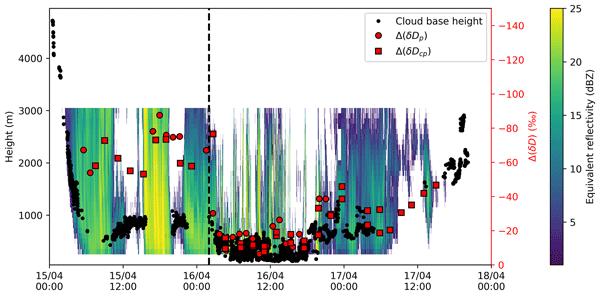
This study presents a new method to measure the isotopic composition of snowfall and atmospheric water vapor in Antarctica. With a single laser spectrometer, it enables continuous, high frequency observations without human intervention. Tests in East Antarctica show a very good agreement with conventionnal snow sampling. This new sampling method opens new opportunities to better understand snowfall formation, improve climate models, and refine the interpretation of ice core climate records.
Agnese Petteni, Mathieu Casado, Christophe Leroy-Dos Santos, Amaelle Landais, Niels Dutrievoz, Cécile Agosta, Pete D. Akers, Joel Savarino, Andrea Spolaor, Massimo Frezzotti, and Barbara Stenni
The Cryosphere, 20, 3581–3598, https://doi.org/10.5194/tc-20-3581-2026, https://doi.org/10.5194/tc-20-3581-2026, 2026
Short summary
Short summary
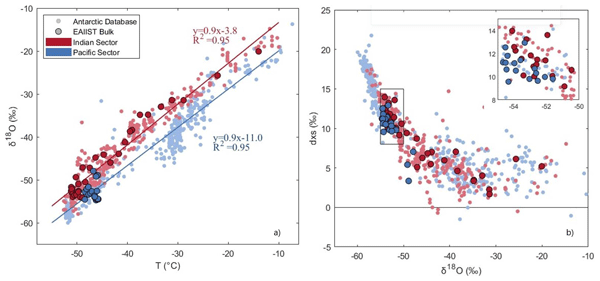
We investigated the isotopic composition of surface snow in a previously unexplored region of East Antarctica to understand how differences in air mass origin influence its variability. By comparing observations with model data, we validated the model and quantified the impact of post-depositional processes at the snow–atmosphere interface. Our results offer valuable insights for reconstructing past temperatures from ice cores.
Harry J. Davis, Robert G. Bingham, Carlos Martín, Elizabeth R. Thomas, Andrew S. Hein, and Anna E. Hogg
The Cryosphere, 20, 2735–2756, https://doi.org/10.5194/tc-20-2735-2026, https://doi.org/10.5194/tc-20-2735-2026, 2026
Short summary
Short summary
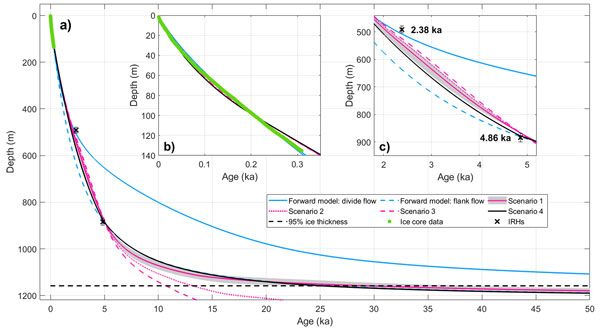
Ice in the southern Antarctic Peninsula is experiencing major ice changes today and predicting the rate at which this may continue is important. One way to address this knowledge gap would be to retrieve a past climate record from an ice core. We identify a suitable site using a model constrained by radar and shallow ice core data. We find a climate record spanning the Holocene can certainly be extracted here, but a potential continuous climate record here could extend back ~ 30 000 years.
Nicolas Bienville, Amaelle Landais, Sarah Fiorini, Clément Piel, Joana Sauze, Benoit Lemaire, Nicolas Geyskens, Frederic Prie, Olivier Jossoud, Clémence Paul, Justin Chaillot, Thomas Lauwers, Simon Chollet, Samuel Abiven, and Arnaud Dapoigny
EGUsphere, https://doi.org/10.5194/egusphere-2026-1369, https://doi.org/10.5194/egusphere-2026-1369, 2026
Short summary
Short summary
This study describes an instrumented system of 4 closed aquatic biological chambers that allows determination of the oxygen isotopic fractionation factors of aquatic biosphere in controlled realistic conditions. We validated our system with a freshwater algae species and determined its ¹⁸O/¹⁶O isotopic discrimination during respiration to be −30 ‰, in the upper range of previously published values.
Niklas Kappelt, Piers Larkman, Pascal Bohleber, Florian Adolphi, Marcus Christl, Christof Vockenhuber, Philip Gautschi, Eric Wolff, and Raimund Muscheler
EGUsphere, https://doi.org/10.5194/egusphere-2026-790, https://doi.org/10.5194/egusphere-2026-790, 2026
This preprint is open for discussion and under review for The Cryosphere (TC).
Short summary
Short summary
10Be is a radionuclide often measured in ice cores to reconstruct the solar magnetic field and geomagnetic field, as well as to date ice based on its half-life of 1.387 million years. Previous measurements in deep ice from Antarctica showed a decrease in concentrations with age. We analysed the influence of the sample preparation procedure and were able to show that the use of ion exchange columns can lead to decreasing concentrations, an effect which is amplified at greater depths and ages.
Héloïse Guilluy, Émilie Capron, Frédéric Parrenin, Vladimir Lipenkov, Jochen Schmitt, Patricia Martinerie, Zhipeng Wu, Qiuzhen Yin, Anna Maria Klüssendorf, Amaëlle Landais, Barbara Seth, Hubertus Fischer, and Dominique Raynaud
EGUsphere, https://doi.org/10.5194/egusphere-2026-953, https://doi.org/10.5194/egusphere-2026-953, 2026
Short summary
Short summary
Air bubbles in polar ice cores retain information about past climates over hundreds of thousands of years. The total air content (TAC) trapped within these bubbles varies with summer insolation cycles, making it a tool for dating ice cores. We present a multi-site update on TAC, combining new and published data. We confirm that insolation impacts bubble volume in East Antarctica, but surface climate changes can hide the insolation signal in the TAC record, impacting the TAC-derived chronologies.
Titouan Tcheng, Elise Fourré, Christophe Leroy-Dos Santos, Frédéric Parrenin, Emmanuel Le Meur, Frédéric Prié, Olivier Jossoud, Roxanne Jacob, Bénédicte Minster, Olivier Magand, Cécile Agosta, Niels Dutrievoz, Vincent Favier, Léa Baubant, Coralie Lassalle-Bernard, Mathieu Casado, Martin Werner, Alexandre Cauquoin, Laurent Arnaud, Bruno Jourdain, Ghislain Picard, Marie Bouchet, and Amaëlle Landais
The Cryosphere, 20, 1599–1618, https://doi.org/10.5194/tc-20-1599-2026, https://doi.org/10.5194/tc-20-1599-2026, 2026
Short summary
Short summary
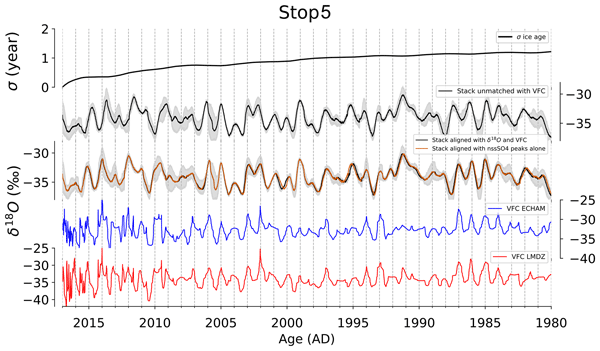
Studying Antarctic ice cores is crucial to assess past climate changes, as they hold historical climate data. This study examines multiple ice cores from three sites in coastal Adélie Land to see if combining cores improves data interpretability. It does at two sites, but at a third, wind-driven snow layer mixing limited benefits. We show that using multiple ice cores from one location can better uncover climate history, especially in areas with less wind disturbance.
Emma Samin, Amaëlle Landais, Elise Fourré, Mathieu Casado, Adrien Ooms, Niels Dutrievoz, Cécile Agosta, Valérie Masson-Delmotte, Thomas Combacal, Elsa Gautier, and Bénédicte Minster
EGUsphere, https://doi.org/10.5194/egusphere-2026-871, https://doi.org/10.5194/egusphere-2026-871, 2026
Short summary
Short summary
This study presents the water isotope profiles of two firn cores drilled at Little Dome C (LDC) in Antarctica and dated by identifying volcanic events, which enabled us to determine an accumulation rate at LDC of 24 mmwe.yr-1. Comparison of a virtual firn core model with these data allowed us to study the surface processes responsible for isotopic variability in firn. We therefore suggest that future models consider the mixing of the surface layer and re-quantify diffusion.
Vikram Goel, Carlos Martín, Kenichi Matsuoka, Bhanu Pratap, Geir Moholdt, Rahul Dey, Chavarukonam M. Laluraj, and Meloth Thamban
The Cryosphere, 20, 1363–1378, https://doi.org/10.5194/tc-20-1363-2026, https://doi.org/10.5194/tc-20-1363-2026, 2026
Short summary
Short summary
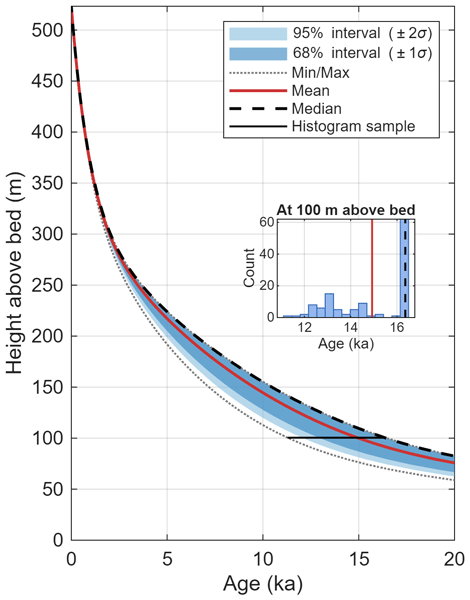
We identified an ideal site in coastal East Antarctica for extracting ice core that contain detailed climate records dating back 20 000 years. We surveyed two ice rises combining radar measurements with ice flow modeling to assess their suitability. One site emerged as optimal, offering well-preserved climate history with high temporal resolution. An ice core record from this site could help us understand historical interactions between sea ice, winds, and precipitation patterns in the region.
Niels Dutrievoz, Cécile Agosta, Cécile Davrinche, Amaëlle Landais, Sebastien Nguyen, Étienne Vignon, Inès Ollivier, Christophe Leroy-Dos Santos, Elise Fourré, Mathieu Casado, Jonathan Wille, Vincent Favier, Bénédicte Minster, and Frédéric Prié
The Cryosphere, 20, 1025–1046, https://doi.org/10.5194/tc-20-1025-2026, https://doi.org/10.5194/tc-20-1025-2026, 2026
Short summary
Short summary
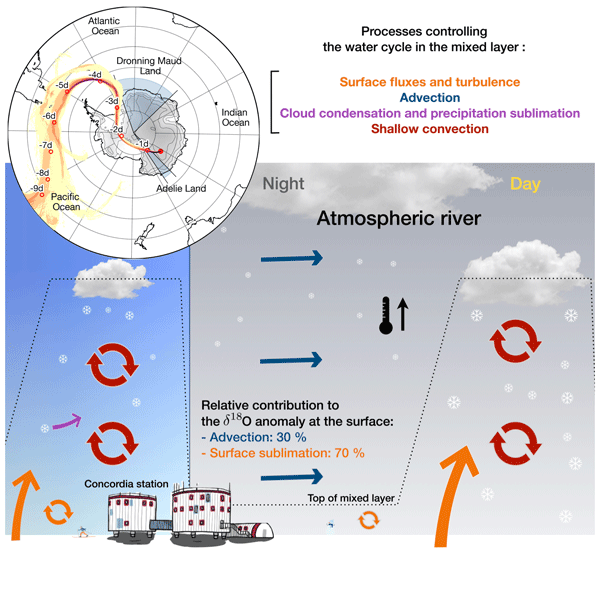
In December 2018, an atmospheric river event from the Atlantic reached Dome C, East Antarctica, causing a +18 °C warming, tripled water vapour, and a strong isotopic anomaly in water vapour (+ 17 ‰ for δ18O) at the surface. During the peak of the event, we found 70 % of the water vapour came from local snow sublimation, and 30 % from the atmospheric river itself, highlighting both long-range moisture advection and interactions between the boundary layer and the snowpack.
Felix S. L. Ng, Rachael H. Rhodes, Tyler J. Fudge, and Eric W. Wolff
The Cryosphere, 19, 5693–5717, https://doi.org/10.5194/tc-19-5693-2025, https://doi.org/10.5194/tc-19-5693-2025, 2025
Short summary
Short summary
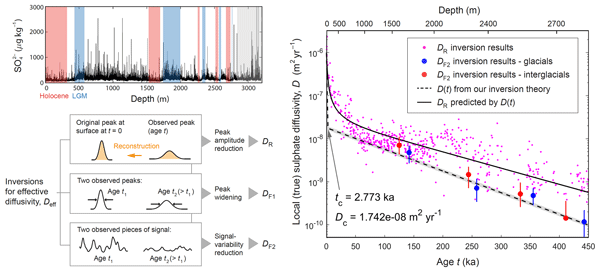
Impurity diffusion in ice destroys climate history. We give a new way to find the diffusion rate from ice-core records. Its use on sulphate of the European Project for Ice Coring in Antarctica Dome C core reveals rapid diffusion in snow (suggesting H2SO4 vapour diffusion in air pores) and slow diffusion in the ice below (involving signal relocation between crystal interfaces). We estimate a maximum sulphate diffusion length of 2 cm for the old ice sought by the coring projects on Little Dome C.
Frédéric Parrenin, Ailsa Chung, and Carlos Martín
Geosci. Model Dev., 18, 8203–8216, https://doi.org/10.5194/gmd-18-8203-2025, https://doi.org/10.5194/gmd-18-8203-2025, 2025
Short summary
Short summary
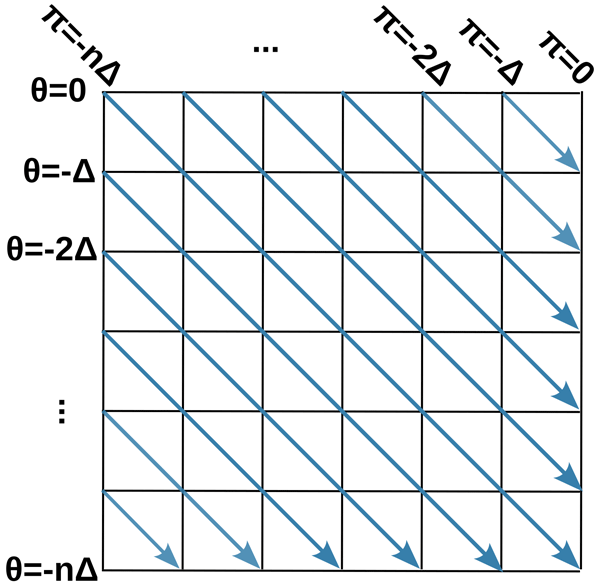
We developed a new numerical age solver for a pseudo-steady flow tube of an ice sheet. Thanks to a new coordinate system which tracks the trajectories and a change of the time variable, our scheme combines the advantages of Eulerian and Lagrangian schemes: no numerical diffusion and no dilution of tracers. Our model is so fast that it is easy to optimize its parameters. Our model is made available to the ice sheet community as an easy to use open-source software coded in python.
Inès Ollivier, Thomas Lauwers, Niels Dutrievoz, Cécile Agosta, Mathieu Casado, Elise Fourré, Christophe Genthon, Olivier Jossoud, Frédéric Prié, Hans Christian Steen-Larsen, and Amaëlle Landais
Earth Syst. Sci. Data, 17, 5655–5674, https://doi.org/10.5194/essd-17-5655-2025, https://doi.org/10.5194/essd-17-5655-2025, 2025
Short summary
Short summary
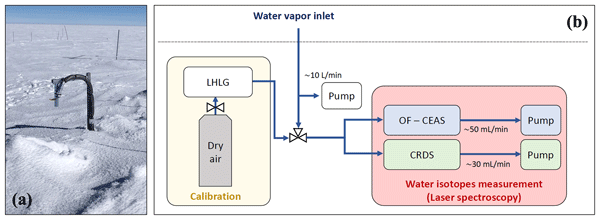
We present a novel 2.5-month record of the atmospheric water vapour isotopic composition during the austral summer 2023–2024 at Concordia Station on the Antarctic Plateau. We show that two independent laser spectrometers accurately record the diurnal variability of the atmospheric water vapour 𝛿18O, 𝛿D, and d-excess. We compare the measurements against outputs of the isotope-enabled general circulation model LMDZ6-iso to show how the data can be used to evaluate such models.
Álvaro Arenas-Pingarrón, Alex M. Brisbourne, Carlos Martín, Hugh F. J. Corr, Carl Robinson, Tom A. Jordan, and Paul V. Brennan
The Cryosphere, 19, 4657–4670, https://doi.org/10.5194/tc-19-4657-2025, https://doi.org/10.5194/tc-19-4657-2025, 2025
Short summary
Short summary
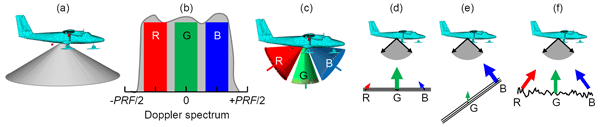
Synthetic Aperture Radar (SAR) imaging is essential for deep englacial observations. Each pixel is formed by averaging the radar echoes within an antenna beamwidth, but the echo diversity is lost after the average. We improve the SAR interpretation if three sub-images are formed with different sub-beamwidths: each is coloured in red, green, or blue, and they are overlapped, creating a coloured image. Interpreters will better identify the slopes of internal layers, crevasses, and layer roughness.
Robert G. Bingham, Julien A. Bodart, Marie G. P. Cavitte, Ailsa Chung, Rebecca J. Sanderson, Johannes C. R. Sutter, Olaf Eisen, Nanna B. Karlsson, Joseph A. MacGregor, Neil Ross, Duncan A. Young, David W. Ashmore, Andreas Born, Winnie Chu, Xiangbin Cui, Reinhard Drews, Steven Franke, Vikram Goel, John W. Goodge, A. Clara J. Henry, Antoine Hermant, Benjamin H. Hills, Nicholas Holschuh, Michelle R. Koutnik, Gwendolyn J.-M. C. Leysinger Vieli, Emma J. MacKie, Elisa Mantelli, Carlos Martín, Felix S. L. Ng, Falk M. Oraschewski, Felipe Napoleoni, Frédéric Parrenin, Sergey V. Popov, Therese Rieckh, Rebecca Schlegel, Dustin M. Schroeder, Martin J. Siegert, Xueyuan Tang, Thomas O. Teisberg, Kate Winter, Shuai Yan, Harry Davis, Christine F. Dow, Tyler J. Fudge, Tom A. Jordan, Bernd Kulessa, Kenichi Matsuoka, Clara J. Nyqvist, Maryam Rahnemoonfar, Matthew R. Siegfried, Shivangini Singh, Vjeran Višnjević, Rodrigo Zamora, and Alexandra Zuhr
The Cryosphere, 19, 4611–4655, https://doi.org/10.5194/tc-19-4611-2025, https://doi.org/10.5194/tc-19-4611-2025, 2025
Short summary
Short summary
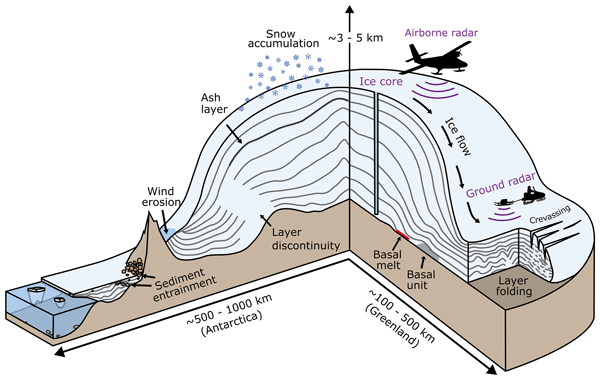
The ice sheets covering Antarctica have built up over millenia through successive snowfall events which become buried and preserved as internal surfaces of equal age detectable with ice-penetrating radar. This paper describes an international initiative working together on these archival data to build a comprehensive 3-D picture of how old the ice is everywhere across Antarctica and how this is being used to reconstruct past and to predict future ice and climate behaviour.
Agnese Petteni, Elise Fourré, Elsa Gautier, Azzurra Spagnesi, Roxanne Jacob, Pete D. Akers, Daniele Zannoni, Jacopo Gabrieli, Olivier Jossoud, Frédéric Prié, Amaëlle Landais, Titouan Tcheng, Barbara Stenni, Joel Savarino, Patrick Ginot, and Mathieu Casado
Atmos. Meas. Tech., 18, 5435–5455, https://doi.org/10.5194/amt-18-5435-2025, https://doi.org/10.5194/amt-18-5435-2025, 2025
Short summary
Short summary
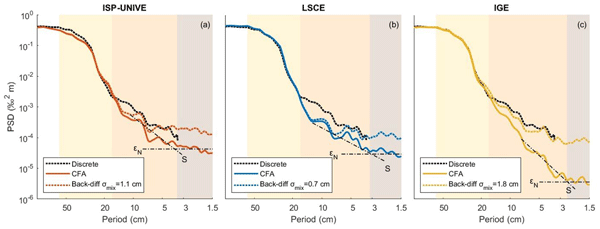
Our research compares three systems of continuous flow analysis coupled with cavity ring-down spectrometry (CFA-CRD) from Venice, Paris, and Grenoble laboratories for measuring water isotopes in ice cores, crucial for reconstructing past climate. We quantify each system’s mixing and measurement noise effects, which impact the achievable resolution of isotope continuous records. Our findings reveal specific configurations and procedures to enhance measurement accuracy, providing a framework to optimise water isotope analysis.
Niklas Kappelt, Eric Wolff, Marcus Christl, Christof Vockenhuber, Philip Gautschi, and Raimund Muscheler
Clim. Past, 21, 1585–1594, https://doi.org/10.5194/cp-21-1585-2025, https://doi.org/10.5194/cp-21-1585-2025, 2025
Short summary
Short summary
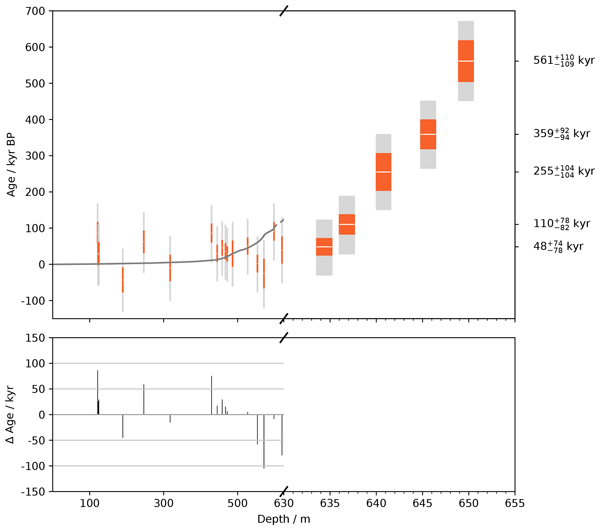
By measuring the radioactive decay of atmospherically produced 36Cl and 10Be in an ice core drilled in West Antarctica, we were able to determine the age of the deepest sample close to bedrock to be about 550 thousand years old. This means that the ice in this location, known as Skytrain Ice Rise, has survived several warm periods in the past, at least since marine isotope stage 11.
Ole Zeising, Álvaro Arenas-Pingarrón, Alex M. Brisbourne, and Carlos Martín
The Cryosphere, 19, 2355–2363, https://doi.org/10.5194/tc-19-2355-2025, https://doi.org/10.5194/tc-19-2355-2025, 2025
Short summary
Short summary
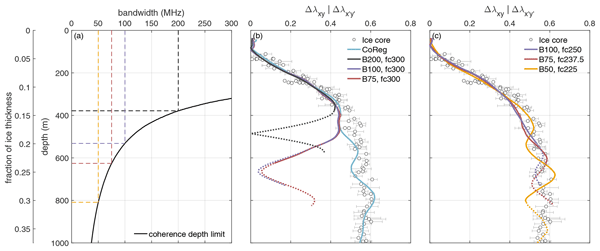
Ice crystal orientation influences how glacier ice deforms. Radar polarimetry is commonly used to study the bulk ice crystal orientation, but the often used coherence method only provides information of the shallow ice in fast-flowing areas. This study shows that reducing the bandwidth of high-bandwidth radar data significantly enhances the depth limit of the coherence method. This improvement helps us to better understand ice dynamics in fast-flowing ice streams.
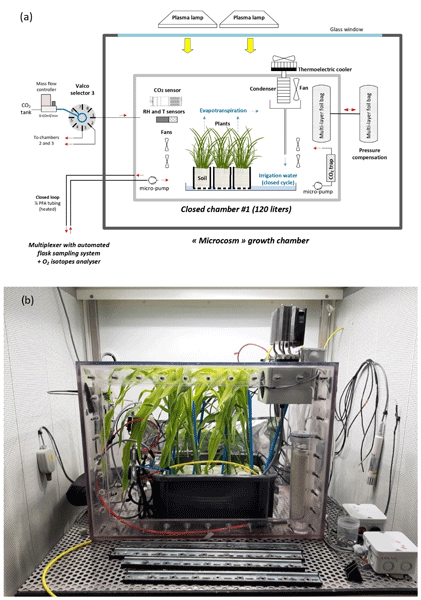
Clémence Paul, Clément Piel, Joana Sauze, Olivier Jossoud, Arnaud Dapoigny, Daniele Romanini, Frédéric Prié, Sébastien Devidal, Roxanne Jacob, Alexandru Milcu, and Amaëlle Landais
Geosci. Instrum. Method. Data Syst., 14, 91–101, https://doi.org/10.5194/gi-14-91-2025, https://doi.org/10.5194/gi-14-91-2025, 2025
Short summary
Short summary
Our study investigated the influence of plant processes on oxygen dynamics, crucial for paleoclimatology. By examining maize respiration and photosynthesis using advanced techniques, we enhanced our understanding of past climates through ice core analysis.
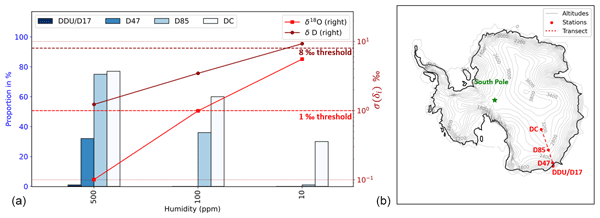
Thomas Lauwers, Elise Fourré, Olivier Jossoud, Daniele Romanini, Frédéric Prié, Giordano Nitti, Mathieu Casado, Kévin Jaulin, Markus Miltner, Morgane Farradèche, Valérie Masson-Delmotte, and Amaëlle Landais
Atmos. Meas. Tech., 18, 1135–1147, https://doi.org/10.5194/amt-18-1135-2025, https://doi.org/10.5194/amt-18-1135-2025, 2025
Short summary
Short summary
Water vapour isotopes are important tools to better understand processes governing the atmospheric hydrological cycle. In polar regions, their measurement helps to improve the interpretation of water isotopic records in ice cores. However, in situ water vapour isotopic monitoring is an important challenge, especially in dry places of East Antarctica. We present here an alternative laser spectroscopy technique adapted for such measurements, with a limit of detection down to 10 ppm humidity.
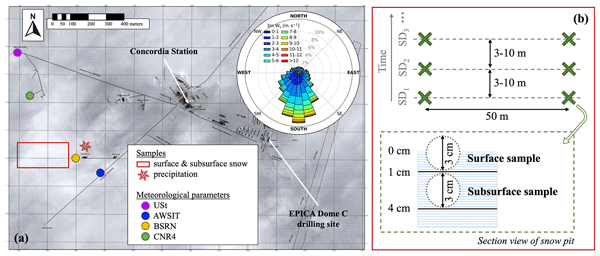
Inès Ollivier, Hans Christian Steen-Larsen, Barbara Stenni, Laurent Arnaud, Mathieu Casado, Alexandre Cauquoin, Giuliano Dreossi, Christophe Genthon, Bénédicte Minster, Ghislain Picard, Martin Werner, and Amaëlle Landais
The Cryosphere, 19, 173–200, https://doi.org/10.5194/tc-19-173-2025, https://doi.org/10.5194/tc-19-173-2025, 2025
Short summary
Short summary
The role of post-depositional processes taking place at the ice sheet's surface on the water stable isotope signal measured in polar ice cores is not fully understood. Using field observations and modelling results, we show that the original precipitation isotopic signal at Dome C, East Antarctica, is modified by post-depositional processes and provide the first quantitative estimation of their mean impact on the isotopic signal observed in the snow.
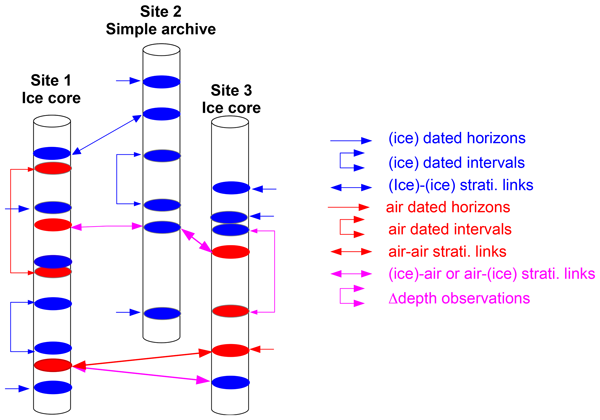
Frédéric Parrenin, Marie Bouchet, Christo Buizert, Emilie Capron, Ellen Corrick, Russell Drysdale, Kenji Kawamura, Amaëlle Landais, Robert Mulvaney, Ikumi Oyabu, and Sune Olander Rasmussen
Geosci. Model Dev., 17, 8735–8750, https://doi.org/10.5194/gmd-17-8735-2024, https://doi.org/10.5194/gmd-17-8735-2024, 2024
Short summary
Short summary
The Paleochrono-1.1 probabilistic dating model allows users to derive a common and optimized chronology for several paleoclimatic sites from various archives (ice cores, speleothems, marine cores, lake cores, etc.). It combines prior sedimentation scenarios with chronological information such as dated horizons, dated intervals, stratigraphic links and (for ice cores) Δdepth observations. Paleochrono-1.1 is available under an open-source license.
Clément Piel, Daniele Romanini, Morgane Farradèche, Justin Chaillot, Clémence Paul, Nicolas Bienville, Thomas Lauwers, Joana Sauze, Kévin Jaulin, Frédéric Prié, and Amaëlle Landais
Atmos. Meas. Tech., 17, 6647–6658, https://doi.org/10.5194/amt-17-6647-2024, https://doi.org/10.5194/amt-17-6647-2024, 2024
Short summary
Short summary
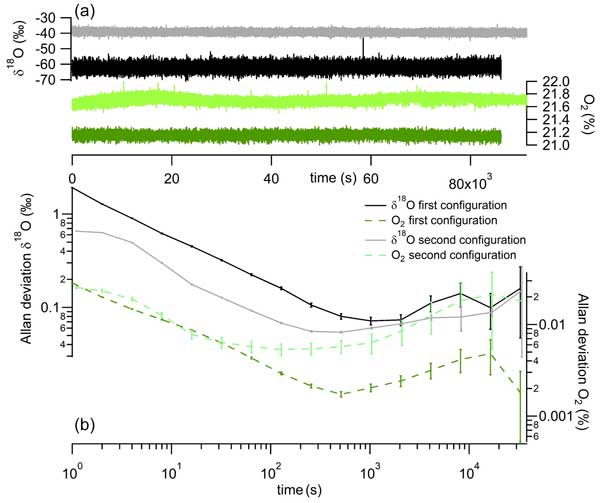
This paper introduces a new optical gas analyzer based on an optical-feedback cavity-enhanced absorption spectroscopy (OF-CEAS) technique enabling high-temporal-resolution and high-precision measurements of oxygen isotopes (δ18O) and dioxygen (O2) concentration of atmospheric O2 (respectively 0.06 ‰ and 0.002 % over 10 min integration). The results underscore the good agreement with isotope ratio mass spectrometry measurements and the ability of the instrument to monitor biological processes.
Helene Hoffmann, Jason Day, Rachael H. Rhodes, Mackenzie Grieman, Jack Humby, Isobel Rowell, Christoph Nehrbass-Ahles, Robert Mulvaney, Sally Gibson, and Eric Wolff
The Cryosphere, 18, 4993–5013, https://doi.org/10.5194/tc-18-4993-2024, https://doi.org/10.5194/tc-18-4993-2024, 2024
Short summary
Short summary
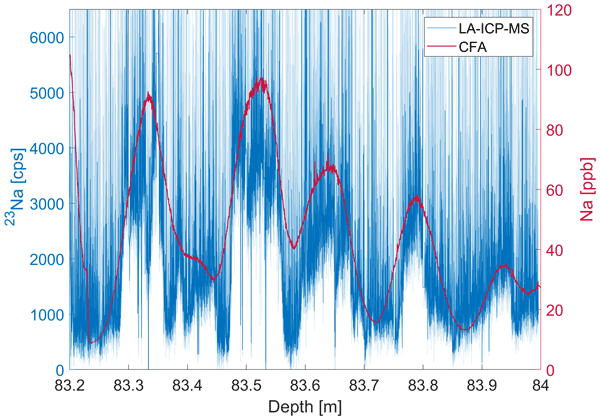
Ice cores are archives of past atmospheric conditions. In deep and old ice, the layers containing this information get thinned to the millimetre scale or below. We installed a setup for high-resolution (182 μm) chemical impurity measurements in ice cores using the laser ablation technique at the University of Cambridge. In a first application to the Skytrain ice core from Antarctica, we discuss the potential to detect fine-layered structures in ice up to an age of 26 000 years.
Rachael H. Rhodes, Yvan Bollet-Quivogne, Piers Barnes, Mirko Severi, and Eric W. Wolff
Clim. Past, 20, 2031–2043, https://doi.org/10.5194/cp-20-2031-2024, https://doi.org/10.5194/cp-20-2031-2024, 2024
Short summary
Short summary
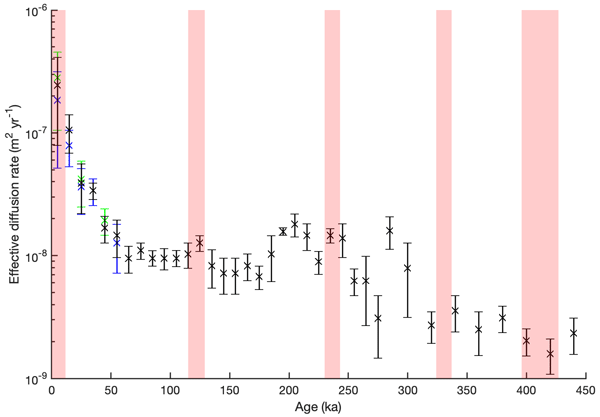
Some ionic components slowly move through glacier ice by diffusion, but the rate of this diffusion, its exact mechanism(s), and the factors that might influence it are poorly understood. In this study, we model how peaks in sulfate, deposited at Dome C on the Antarctic ice sheet after volcanic eruptions, change with depth and time. We find that the sulfate diffusion rate in ice is relatively fast in young ice near the surface, but the rate is markedly reduced over time.
Giuliano Dreossi, Mauro Masiol, Barbara Stenni, Daniele Zannoni, Claudio Scarchilli, Virginia Ciardini, Mathieu Casado, Amaëlle Landais, Martin Werner, Alexandre Cauquoin, Giampietro Casasanta, Massimo Del Guasta, Vittoria Posocco, and Carlo Barbante
The Cryosphere, 18, 3911–3931, https://doi.org/10.5194/tc-18-3911-2024, https://doi.org/10.5194/tc-18-3911-2024, 2024
Short summary
Short summary
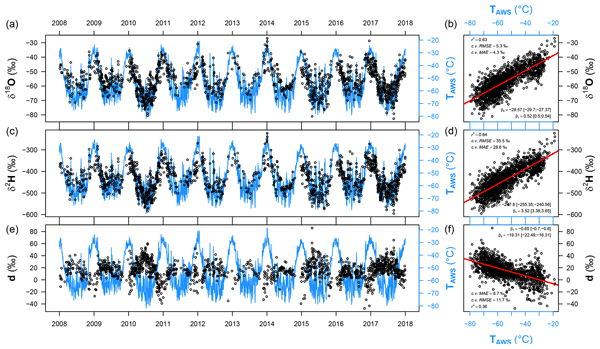
Oxygen and hydrogen stable isotopes have been extensively used to reconstruct past temperatures, with precipitation representing the input signal of the isotopic records in ice cores. We present a 10-year record of stable isotopes in daily precipitation at Concordia Station: this is the longest record for inland Antarctica and represents a benchmark for quantifying post-depositional processes and improving the paleoclimate interpretation of ice cores.
Romilly Harris Stuart, Amaëlle Landais, Laurent Arnaud, Christo Buizert, Emilie Capron, Marie Dumont, Quentin Libois, Robert Mulvaney, Anaïs Orsi, Ghislain Picard, Frédéric Prié, Jeffrey Severinghaus, Barbara Stenni, and Patricia Martinerie
The Cryosphere, 18, 3741–3763, https://doi.org/10.5194/tc-18-3741-2024, https://doi.org/10.5194/tc-18-3741-2024, 2024
Short summary
Short summary
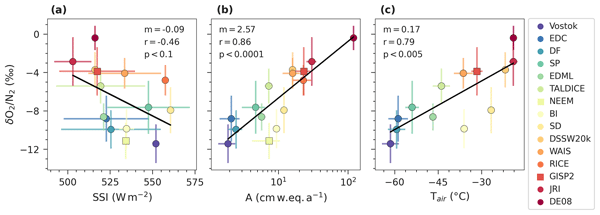
Ice core δO2/N2 records are useful dating tools due to their local insolation pacing. A precise understanding of the physical mechanism driving this relationship, however, remain ambiguous. By compiling data from 15 polar sites, we find a strong dependence of mean δO2/N2 on accumulation rate and temperature in addition to the well-documented insolation dependence. Snowpack modelling is used to investigate which physical properties drive the mechanistic dependence on these local parameters.
Mathieu Casado, Amaelle Landais, Tim Stoltmann, Justin Chaillot, Mathieu Daëron, Fréderic Prié, Baptiste Bordet, and Samir Kassi
Atmos. Meas. Tech., 17, 4599–4612, https://doi.org/10.5194/amt-17-4599-2024, https://doi.org/10.5194/amt-17-4599-2024, 2024
Short summary
Short summary
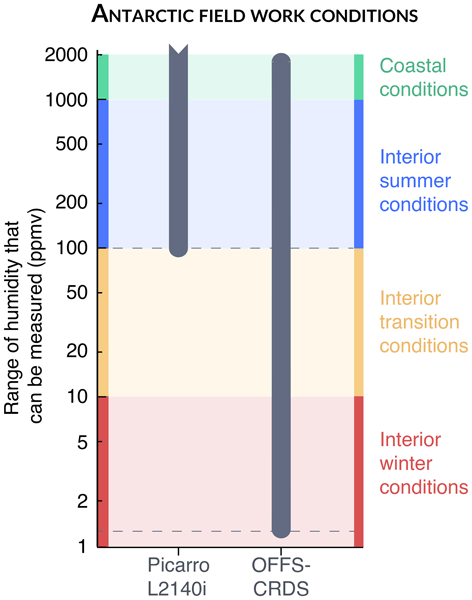
Measuring water isotopic composition in Antarctica is difficult because of the extremely cold temperature in winter. Here, we designed a new infrared spectrometer able to measure the vapour isotopic composition during more than 95 % of the year in the coldest locations of Antarctica, whereas current commercial instruments are only able to measure during the warm summer months in the interior.
Dorothea Elisabeth Moser, Elizabeth R. Thomas, Christoph Nehrbass-Ahles, Anja Eichler, and Eric Wolff
The Cryosphere, 18, 2691–2718, https://doi.org/10.5194/tc-18-2691-2024, https://doi.org/10.5194/tc-18-2691-2024, 2024
Short summary
Short summary
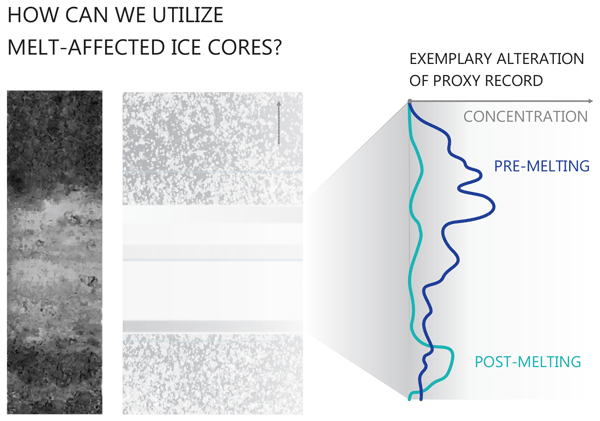
Increasing temperatures worldwide lead to more melting of glaciers and ice caps, even in the polar regions. This is why ice-core scientists need to prepare to analyse records affected by melting and refreezing. In this paper, we present a summary of how near-surface melt forms, what structural imprints it leaves in snow, how various signatures used for ice-core climate reconstruction are altered, and how we can still extract valuable insights from melt-affected ice cores.
Amaelle Landais, Cécile Agosta, Françoise Vimeux, Olivier Magand, Cyrielle Solis, Alexandre Cauquoin, Niels Dutrievoz, Camille Risi, Christophe Leroy-Dos Santos, Elise Fourré, Olivier Cattani, Olivier Jossoud, Bénédicte Minster, Frédéric Prié, Mathieu Casado, Aurélien Dommergue, Yann Bertrand, and Martin Werner
Atmos. Chem. Phys., 24, 4611–4634, https://doi.org/10.5194/acp-24-4611-2024, https://doi.org/10.5194/acp-24-4611-2024, 2024
Short summary
Short summary
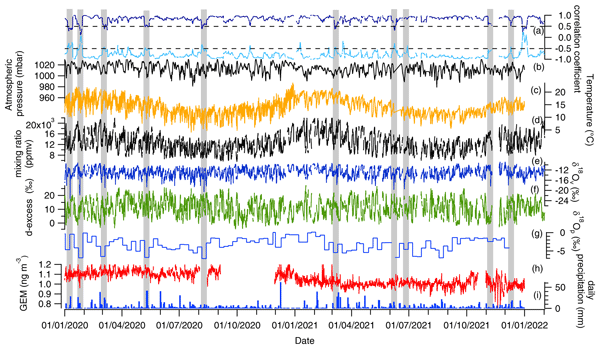
We have monitored water vapor isotopes since January 2020 on Amsterdam Island in the Indian Ocean. We show 11 periods associated with abrupt negative excursions of water vapor δ18Ο. Six of these events show a decrease in gaseous elemental mercury, suggesting subsidence of air from a higher altitude. Accurately representing the water isotopic signal during these cold fronts is a real challenge for the atmospheric components of Earth system models equipped with water isotopes.
Christophe Leroy-Dos Santos, Elise Fourré, Cécile Agosta, Mathieu Casado, Alexandre Cauquoin, Martin Werner, Benedicte Minster, Frédéric Prié, Olivier Jossoud, Leila Petit, and Amaëlle Landais
The Cryosphere, 17, 5241–5254, https://doi.org/10.5194/tc-17-5241-2023, https://doi.org/10.5194/tc-17-5241-2023, 2023
Short summary
Short summary
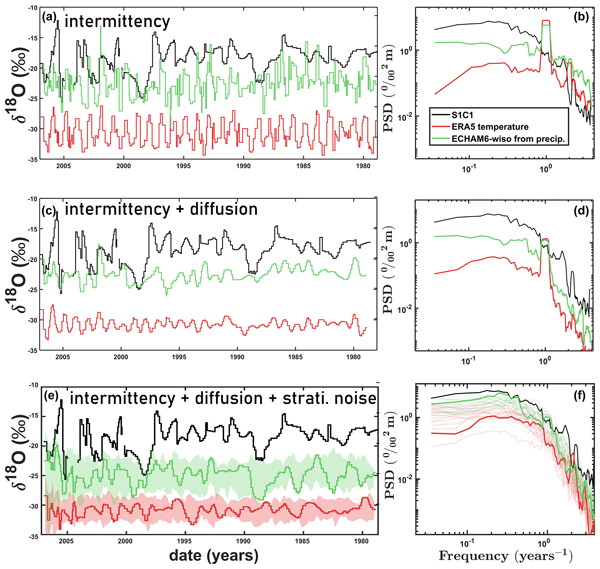
In the face of global warming, understanding the changing water cycle and temperatures in polar regions is crucial. These factors directly impact the balance of ice sheets in the Arctic and Antarctic. By studying the composition of water vapor, we gain insights into climate variations. Our 2-year study at Dumont d’Urville station, Adélie Land, offers valuable data to refine models. Additionally, we demonstrate how modeling aids in interpreting signals from ice core samples in the region.
Marie Bouchet, Amaëlle Landais, Antoine Grisart, Frédéric Parrenin, Frédéric Prié, Roxanne Jacob, Elise Fourré, Emilie Capron, Dominique Raynaud, Vladimir Ya Lipenkov, Marie-France Loutre, Thomas Extier, Anders Svensson, Etienne Legrain, Patricia Martinerie, Markus Leuenberger, Wei Jiang, Florian Ritterbusch, Zheng-Tian Lu, and Guo-Min Yang
Clim. Past, 19, 2257–2286, https://doi.org/10.5194/cp-19-2257-2023, https://doi.org/10.5194/cp-19-2257-2023, 2023
Short summary
Short summary
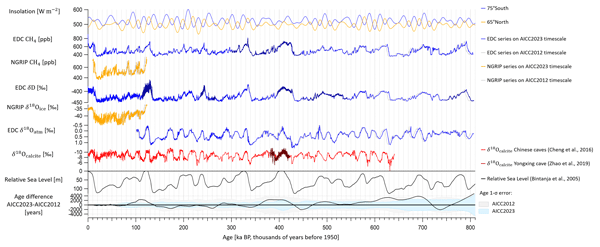
A new federative chronology for five deep polar ice cores retrieves 800 000 years of past climate variations with improved accuracy. Precise ice core timescales are key to studying the mechanisms linking changes in the Earth’s orbit to the diverse climatic responses (temperature and atmospheric greenhouse gas concentrations). To construct the chronology, new measurements from the oldest continuous ice core as well as glaciological modeling estimates were combined in a statistical model.
Ailsa Chung, Frédéric Parrenin, Daniel Steinhage, Robert Mulvaney, Carlos Martín, Marie G. P. Cavitte, David A. Lilien, Veit Helm, Drew Taylor, Prasad Gogineni, Catherine Ritz, Massimo Frezzotti, Charles O'Neill, Heinrich Miller, Dorthe Dahl-Jensen, and Olaf Eisen
The Cryosphere, 17, 3461–3483, https://doi.org/10.5194/tc-17-3461-2023, https://doi.org/10.5194/tc-17-3461-2023, 2023
Short summary
Short summary
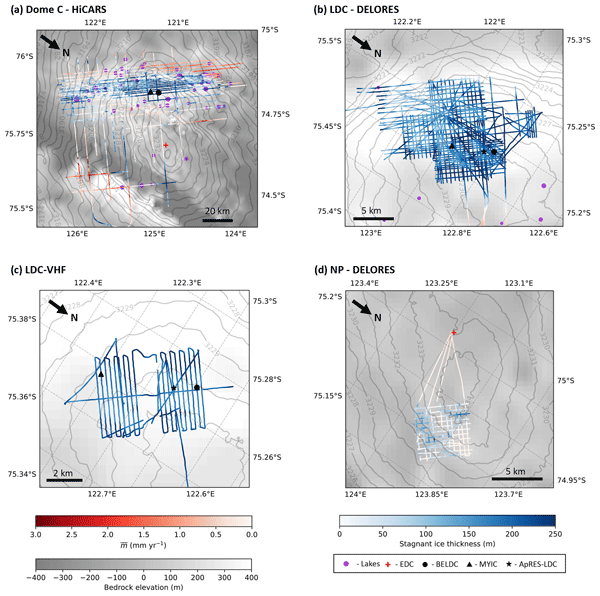
We combined a numerical model with radar measurements in order to determine the age of ice in the Dome C region of Antarctica. Our results show that at the current ice core drilling sites on Little Dome C, the maximum age of the ice is almost 1.5 Ma. We also highlight a new potential drill site called North Patch with ice up to 2 Ma. Finally, we explore the nature of a stagnant ice layer at the base of the ice sheet which has been independently observed and modelled but is not well understood.
Isobel Rowell, Carlos Martin, Robert Mulvaney, Helena Pryer, Dieter Tetzner, Emily Doyle, Hara Madhav Talasila, Jilu Li, and Eric Wolff
Clim. Past, 19, 1699–1714, https://doi.org/10.5194/cp-19-1699-2023, https://doi.org/10.5194/cp-19-1699-2023, 2023
Short summary
Short summary
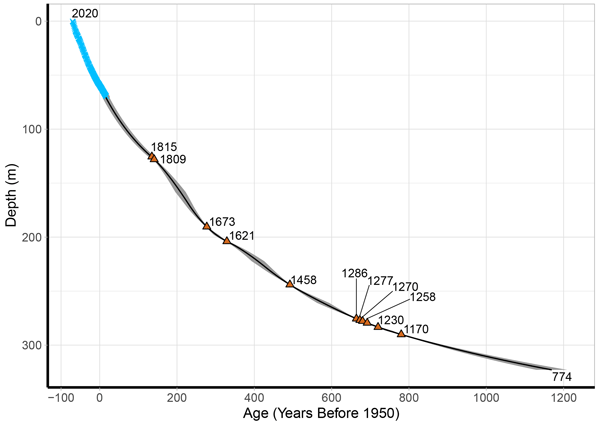
We present an age scale for a new type of ice core from a vulnerable region in West Antarctic, which is lacking in longer-term (greater than a few centuries) ice core records. The Sherman Island core extends to greater than 1 kyr. We provide modelling evidence for the potential of a 10 kyr long core. We show that this new type of ice core can be robustly dated and that climate records from this core will be a significant addition to existing regional climate records.
Elizabeth R. Thomas, Diana O. Vladimirova, Dieter R. Tetzner, B. Daniel Emanuelsson, Nathan Chellman, Daniel A. Dixon, Hugues Goosse, Mackenzie M. Grieman, Amy C. F. King, Michael Sigl, Danielle G. Udy, Tessa R. Vance, Dominic A. Winski, V. Holly L. Winton, Nancy A. N. Bertler, Akira Hori, Chavarukonam M. Laluraj, Joseph R. McConnell, Yuko Motizuki, Kazuya Takahashi, Hideaki Motoyama, Yoichi Nakai, Franciéle Schwanck, Jefferson Cardia Simões, Filipe Gaudie Ley Lindau, Mirko Severi, Rita Traversi, Sarah Wauthy, Cunde Xiao, Jiao Yang, Ellen Mosely-Thompson, Tamara V. Khodzher, Ludmila P. Golobokova, and Alexey A. Ekaykin
Earth Syst. Sci. Data, 15, 2517–2532, https://doi.org/10.5194/essd-15-2517-2023, https://doi.org/10.5194/essd-15-2517-2023, 2023
Short summary
Short summary
The concentration of sodium and sulfate measured in Antarctic ice cores is related to changes in both sea ice and winds. Here we have compiled a database of sodium and sulfate records from 105 ice core sites in Antarctica. The records span all, or part, of the past 2000 years. The records will improve our understanding of how winds and sea ice have changed in the past and how they have influenced the climate of Antarctica over the past 2000 years.
Aymeric P. M. Servettaz, Anaïs J. Orsi, Mark A. J. Curran, Andrew D. Moy, Amaelle Landais, Joseph R. McConnell, Trevor J. Popp, Emmanuel Le Meur, Xavier Faïn, and Jérôme Chappellaz
Clim. Past, 19, 1125–1152, https://doi.org/10.5194/cp-19-1125-2023, https://doi.org/10.5194/cp-19-1125-2023, 2023
Short summary
Short summary
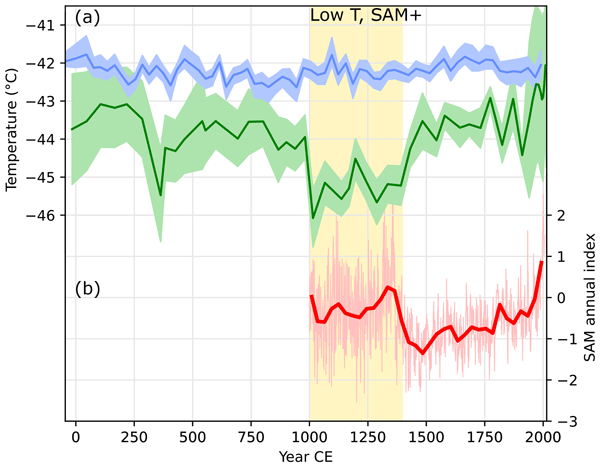
The temperature of the past 2000 years is still poorly known in vast parts of the East Antarctic plateau. In this study, we present temperature reconstructions based on water and gas stable isotopes from the Aurora Basin North ice core. Spatial and temporal significance of each proxy differs, and we can identify some cold periods in the snow temperature up to 2°C cooler in the 1000–1400 CE period, which could not be determined with water isotopes only.
Robert Mulvaney, Eric W. Wolff, Mackenzie M. Grieman, Helene H. Hoffmann, Jack D. Humby, Christoph Nehrbass-Ahles, Rachael H. Rhodes, Isobel F. Rowell, Frédéric Parrenin, Loïc Schmidely, Hubertus Fischer, Thomas F. Stocker, Marcus Christl, Raimund Muscheler, Amaelle Landais, and Frédéric Prié
Clim. Past, 19, 851–864, https://doi.org/10.5194/cp-19-851-2023, https://doi.org/10.5194/cp-19-851-2023, 2023
Short summary
Short summary
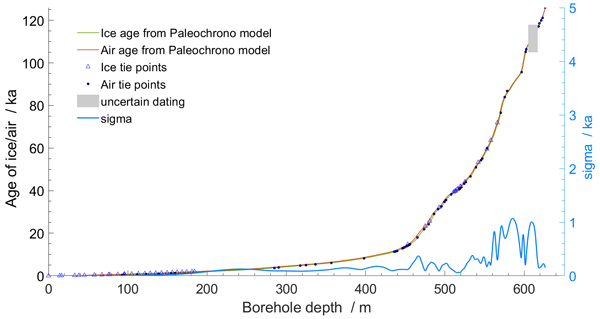
We present an age scale for a new ice core drilled at Skytrain Ice Rise, an ice rise facing the Ronne Ice Shelf in Antarctica. Various measurements in the ice and air phases are used to match the ice core to other Antarctic cores that have already been dated, and a new age scale is constructed. The 651 m ice core includes ice that is confidently dated to 117 000–126 000 years ago, in the last interglacial. Older ice is found deeper down, but there are flow disturbances in the deeper ice.
David A. Hodell, Simon J. Crowhurst, Lucas Lourens, Vasiliki Margari, John Nicolson, James E. Rolfe, Luke C. Skinner, Nicola C. Thomas, Polychronis C. Tzedakis, Maryline J. Mleneck-Vautravers, and Eric W. Wolff
Clim. Past, 19, 607–636, https://doi.org/10.5194/cp-19-607-2023, https://doi.org/10.5194/cp-19-607-2023, 2023
Short summary
Short summary
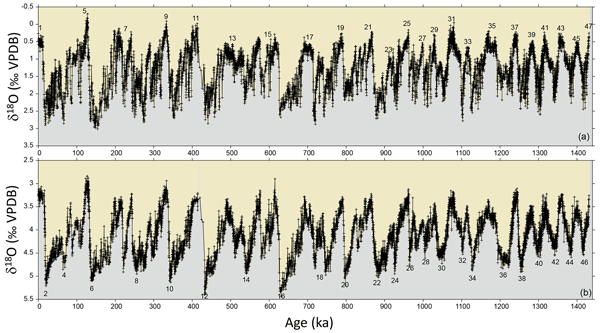
We produced a 1.5-million-year-long history of climate change at International Ocean Discovery Program Site U1385 of the Iberian margin, a well-known location for rapidly accumulating sediments on the seafloor. Our record demonstrates that longer-term orbital changes in Earth's climate were persistently overprinted by abrupt millennial-to-centennial climate variability. The occurrence of abrupt climate change is modulated by the slower variations in Earth's orbit and climate background state.
Clémence Paul, Clément Piel, Joana Sauze, Nicolas Pasquier, Frédéric Prié, Sébastien Devidal, Roxanne Jacob, Arnaud Dapoigny, Olivier Jossoud, Alexandru Milcu, and Amaëlle Landais
Biogeosciences, 20, 1047–1062, https://doi.org/10.5194/bg-20-1047-2023, https://doi.org/10.5194/bg-20-1047-2023, 2023
Short summary
Short summary
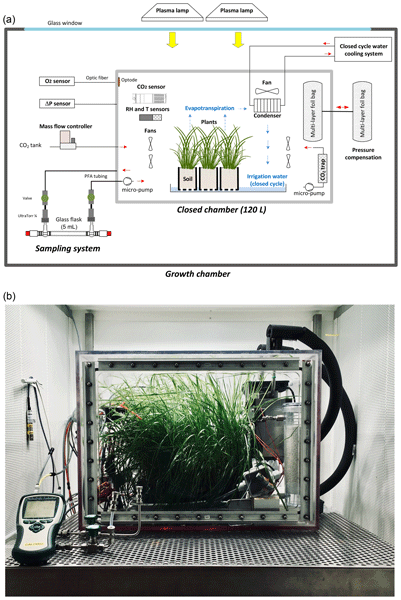
To improve the interpretation of the δ18Oatm and Δ17O of O2 in air bubbles in ice cores, we need to better quantify the oxygen fractionation coefficients associated with biological processes. We performed a simplified analogue of the terrestrial biosphere in a closed chamber. We found a respiration fractionation in agreement with the previous estimates at the microorganism scale, and a terrestrial photosynthetic fractionation was found. This has an impact on the estimation of the Dole effect.
Eric W. Wolff, Andrea Burke, Laura Crick, Emily A. Doyle, Helen M. Innes, Sue H. Mahony, James W. B. Rae, Mirko Severi, and R. Stephen J. Sparks
Clim. Past, 19, 23–33, https://doi.org/10.5194/cp-19-23-2023, https://doi.org/10.5194/cp-19-23-2023, 2023
Short summary
Short summary
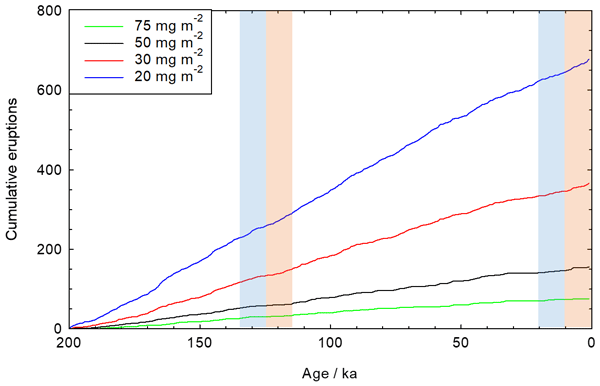
Large volcanic eruptions leave an imprint of a spike of sulfate deposition that can be measured in ice cores. Here we use a method that logs the number and size of large eruptions recorded in an Antarctic core in a consistent way through the last 200 000 years. The rate of recorded eruptions is variable but shows no trends. In particular, there is no increase in recorded eruptions during deglaciation periods. This is consistent with most recorded eruptions being from lower latitudes.

Antoine Grisart, Mathieu Casado, Vasileios Gkinis, Bo Vinther, Philippe Naveau, Mathieu Vrac, Thomas Laepple, Bénédicte Minster, Frederic Prié, Barbara Stenni, Elise Fourré, Hans Christian Steen-Larsen, Jean Jouzel, Martin Werner, Katy Pol, Valérie Masson-Delmotte, Maria Hoerhold, Trevor Popp, and Amaelle Landais
Clim. Past, 18, 2289–2301, https://doi.org/10.5194/cp-18-2289-2022, https://doi.org/10.5194/cp-18-2289-2022, 2022
Short summary
Short summary
This paper presents a compilation of high-resolution (11 cm) water isotopic records, including published and new measurements, for the last 800 000 years from the EPICA Dome C ice core, Antarctica. Using this new combined water isotopes (δ18O and δD) dataset, we study the variability and possible influence of diffusion at the multi-decadal to multi-centennial scale. We observe a stronger variability at the onset of the interglacial interval corresponding to a warm period.
Takahito Mitsui, Polychronis C. Tzedakis, and Eric W. Wolff
Clim. Past, 18, 1983–1996, https://doi.org/10.5194/cp-18-1983-2022, https://doi.org/10.5194/cp-18-1983-2022, 2022
Short summary
Short summary
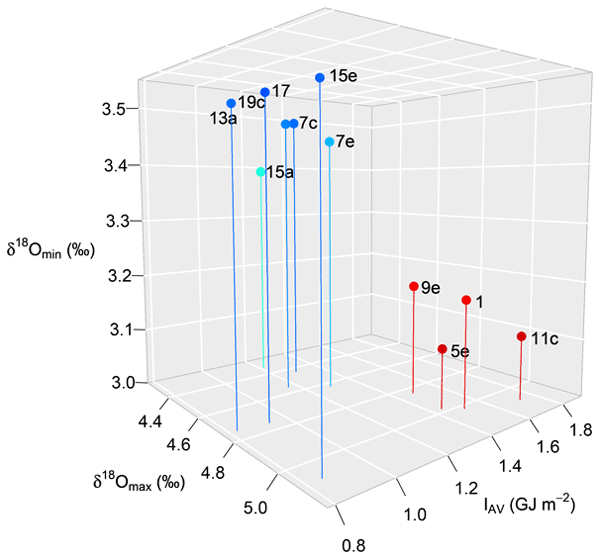
We provide simple quantitative models for the interglacial and glacial intensities over the last 800 000 years. Our results suggest that the memory of previous climate states and the time course of the insolation in both hemispheres are crucial for understanding interglacial and glacial intensities. In our model, the shift in interglacial intensities at the Mid-Brunhes Event (~430 ka) is ultimately attributed to the amplitude modulation of obliquity.
Helene M. Hoffmann, Mackenzie M. Grieman, Amy C. F. King, Jenna A. Epifanio, Kaden Martin, Diana Vladimirova, Helena V. Pryer, Emily Doyle, Axel Schmidt, Jack D. Humby, Isobel F. Rowell, Christoph Nehrbass-Ahles, Elizabeth R. Thomas, Robert Mulvaney, and Eric W. Wolff
Clim. Past, 18, 1831–1847, https://doi.org/10.5194/cp-18-1831-2022, https://doi.org/10.5194/cp-18-1831-2022, 2022
Short summary
Short summary
The WACSWAIN project (WArm Climate Stability of the West Antarctic ice sheet in the last INterglacial) investigates the fate of the West Antarctic Ice Sheet during the last warm period on Earth (115 000–130 000 years before present). Within this framework an ice core was recently drilled at Skytrain Ice Rise. In this study we present a stratigraphic chronology of that ice core based on absolute age markers and annual layer counting for the last 2000 years.
Eric W. Wolff, Hubertus Fischer, Tas van Ommen, and David A. Hodell
Clim. Past, 18, 1563–1577, https://doi.org/10.5194/cp-18-1563-2022, https://doi.org/10.5194/cp-18-1563-2022, 2022
Short summary
Short summary
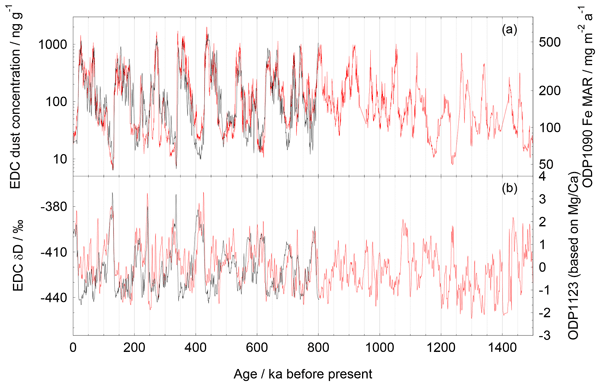
Projects are underway to drill ice cores in Antarctica reaching 1.5 Myr back in time. Dating such cores will be challenging. One method is to match records from the new core against datasets from existing marine sediment cores. Here we explore the options for doing this and assess how well the ice and marine records match over the existing 800 000-year time period. We are able to recommend a strategy for using marine data to place an age scale on the new ice cores.
M. Reza Ershadi, Reinhard Drews, Carlos Martín, Olaf Eisen, Catherine Ritz, Hugh Corr, Julia Christmann, Ole Zeising, Angelika Humbert, and Robert Mulvaney
The Cryosphere, 16, 1719–1739, https://doi.org/10.5194/tc-16-1719-2022, https://doi.org/10.5194/tc-16-1719-2022, 2022
Short summary
Short summary
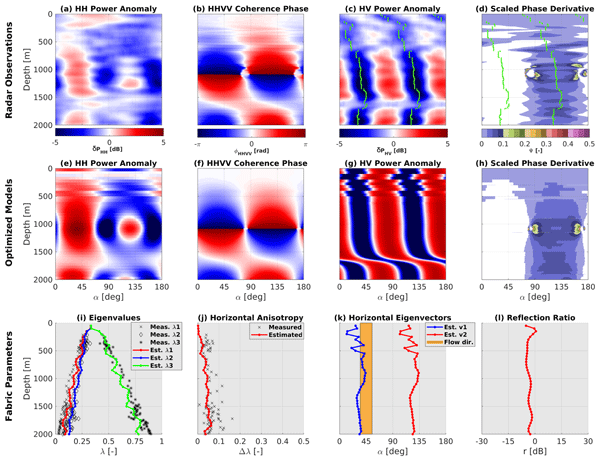
Radio waves transmitted through ice split up and inform us about the ice sheet interior and orientation of single ice crystals. This can be used to infer how ice flows and improve projections on how it will evolve in the future. Here we used an inverse approach and developed a new algorithm to infer ice properties from observed radar data. We applied this technique to the radar data obtained at two EPICA drilling sites, where ice cores were used to validate our results.
Laura Crick, Andrea Burke, William Hutchison, Mika Kohno, Kathryn A. Moore, Joel Savarino, Emily A. Doyle, Sue Mahony, Sepp Kipfstuhl, James W. B. Rae, Robert C. J. Steele, R. Stephen J. Sparks, and Eric W. Wolff
Clim. Past, 17, 2119–2137, https://doi.org/10.5194/cp-17-2119-2021, https://doi.org/10.5194/cp-17-2119-2021, 2021
Short summary
Short summary
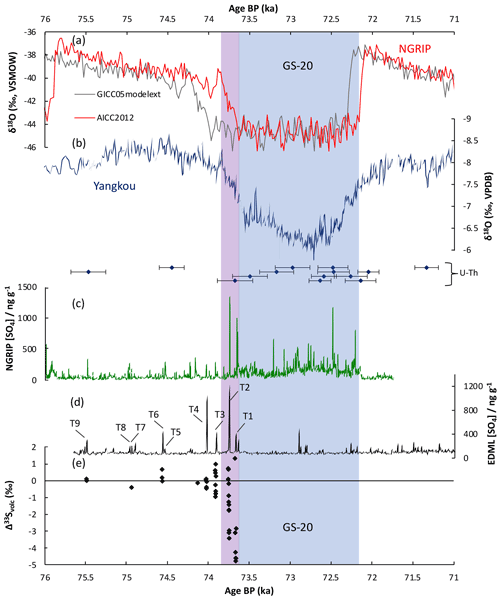
The ~ 74 ka eruption of Toba was one of the largest eruptions of the last 100 ka. We have measured the sulfur isotopic composition for 11 Toba eruption candidates in two Antarctic ice cores. Sulfur isotopes allow us to distinguish between large eruptions that have erupted material into the stratosphere and smaller ones that reach lower altitudes. Using this we have identified the events most likely to be Toba and place the eruption on the transition into a cold period in the Northern Hemisphere.
Cited articles
Albrecht, T., Winkelmann, R., and Levermann, A.: Glacial-cycle simulations of the Antarctic Ice Sheet with the Parallel Ice Sheet Model (PISM) – Part 1: Boundary conditions and climatic forcing, The Cryosphere, 14, 599–632, https://doi.org/10.5194/tc-14-599-2020, 2020a.
Albrecht, T., Winkelmann, R., and Levermann, A.: Glacial-cycle simulations of the Antarctic Ice Sheet with the Parallel Ice Sheet Model (PISM) – Part 2: Parameter ensemble analysis, The Cryosphere, 14, 633–656, https://doi.org/10.5194/tc-14-633-2020, 2020b.
Anderson, J. B., Conway, H., Bart, P. J., Witus, A. E., Greenwood, S. L., McKay, R. M., Hall, B. L., Ackert, R. P., Licht, K., Jakobsson, M., and Stone, J. O.: Ross Sea paleo-ice sheet drainage and deglacial history during and since the LGM, Quaternary Sci. Rev., 100, 31–54, https://doi.org/10.1016/j.quascirev.2013.08.020, 2014.
Bart, P. J. and Kratochvil, M.: A paleo-perspective on West Antarctic Ice Sheet retreat, Sci. Rep., 12, https://doi.org/10.1038/s41598-022-22450-3, 2022.
Bender, M., Sowers, T., and Lipenkov, V.: On the concentrations of O2, N2, and Ar in trapped gases from ice cores, J. Geophys. Res., 100, https://doi.org/10.1029/94jd02212, 1995.
Buizert, C., Adrian, B., Ahn, J., Albert, M., Alley, R. B., Baggenstos, D., Bauska, T. K., Bay, R. C., Bencivengo, B. B., Bentley, C. R., Brook, E. J., Chellman, N. J., Clow, G. D., Cole-Dai, J., Conway, H., Cravens, E., Cuffey, K. M., Dunbar, N. W., Edwards, J. S., Fegyveresi, J. M., Ferris, D. G., Fitzpatrick, J. J., Fudge, T. J., Gibson, C. J., Gkinis, V., Goetz, J. J., Gregory, S., Hargreaves, G. M., Iverson, N., Johnson, J. A., Jones, T. R., Kalk, M. L., Kippenhan, M. J., Koffman, B. G., Kreutz, K., Kuhl, T. W., Lebar, D. A., Lee, J. E., Marcott, S. A., Markle, B. R., Maselli, O. J., McConnell, J. R., McGwire, K. C., Mitchell, L. E., Mortensen, N. B., Neff, P. D., Nishiizumi, K., Nunn, R. M., Orsi, A. J., Pasteris, D. R., Pedro, J. B., Pettit, E. C., Price, P. B., Priscu, J. C., Rhodes, R. H., Rosen, J. L., Schauer, A. J., Schoenemann, S. W., Sendelbach, P. J., Severinghaus, J. P., Shturmakov, A. J., Sigl, M., Slawny, K. R., Souney, J. M., Sowers, T. A., Spencer, M. K., Steig, E. J., Taylor, K. C., Twickler, M. S., Vaughn, B. H., Voigt, D. E., Waddington, E. D., Welten, K. C., Wendricks, A. W., White, J. W. C., Winstrup, M., Wong, G. J., and Woodruff, T. E.: Precise interpolar phasing of abrupt climate change during the last ice age, Nature, 520, 661–665, https://doi.org/10.1038/nature14401, 2015.
Calonne, N., Milliancourt, L., Burr, A., Philip, A., Martin, C. L., Flin, F., and Geindreau, C.: Thermal Conductivity of Snow, Firn, and Porous Ice From 3-D Image-Based Computations, Geophys. Res. Lett., 46, 13079–13089, https://doi.org/10.1029/2019GL085228, 2019.
Capron, E., Landais, A., Buiron, D., Cauquoin, A., Chappellaz, J., Debret, M., Jouzel, J., Leuenberger, M., Martinerie, P., Masson-Delmotte, V., Mulvaney, R., Parrenin, F., and Prié, F.: Glacial–interglacial dynamics of Antarctic firn columns: Comparison between simulations and ice core air-δ15N measurements, Climate of the Past, 9, 983–999, https://doi.org/10.5194/cp-9-983-2013, 2013.
Colgan, W., H. Rajaram, W. Abdalati,C. McCutchan, R. Mottram, M. S. Moussavi, and Grigsby, S.: Glacier crevasses:Observations, models, and mass balance implications, Rev. Geophys., 54, 119–161, https://doi.org/10.1002/2015RG000504, 2016.
Eicher, O., Baumgartner, M., Schilt, A., Schmitt, J., Schwander, J., Stocker, T. F., and Fischer, H.: Climatic and insolation control on the high-resolution total air content in the NGRIP ice core, Clim. Past, 12, 1979–1993, https://doi.org/10.5194/cp-12-1979-2016, 2016.
Epifanio, J. A., Brook, E. J., Buizert, C., Pettit, E. C., Edwards, J. S., Fegyveresi, J. M., Sowers, T. A., Severinghaus, J. P., and Kahle, E. C.: Millennial and orbital-scale variability in a 54 000-year record of total air content from the South Pole ice core, The Cryosphere, 17, 4837–4851, https://doi.org/10.5194/tc-17-4837-2023, 2023.
Fudge, T. J., Steig, E. J., Markle, B. R., Schoenemann, S. W., Ding, Q., Taylor, K. C., McConnell, J. R., Brook, E. J., Sowers, T., White, J. W. C., Alley, R. B., Cheng, H., Clow, G. D., Cole-Dai, J., Conway, H., Cuffey, K. M., Edwards, J. S., Lawrence Edwards, R., Edwards, R., Fegyveresi, J. M., Ferris, D., Fitzpatrick, J. J., Johnson, J., Hargreaves, G., Lee, J. E., Maselli, O. J., Mason, W., McGwire, K. C., Mitchell, L. E., Mortensen, N., Neff, P., Orsi, A. J., Popp, T. J., Schauer, A. J., Severinghaus, J. P., Sigl, M., Spencer, M. K., Vaughn, B. H., Voigt, D. E., Waddington, E. D., Wang, X., and Wong, G. J.: Onset of deglacial warming in West Antarctica driven by local orbital forcing, Nature, 500, 440–444, https://doi.org/10.1038/nature12376, 2013.
Greene, C. A., Gwyther, D. E., and Blankenship, D. D.: Antarctic Mapping Tools for MATLAB, Comput. Geosci., 104, 151–157, https://doi.org/10.1016/j.cageo.2016.08.003, 2017.
Gregory, S. A., Albert, M. R., and Baker, I.: Impact of physical properties and accumulation rate on pore close-off in layered firn, The Cryosphere, 8, 91–105, https://doi.org/10.5194/tc-8-91-2014, 2014.
Grieman, M. M., Nehrbass-Ahles, C., Hoffmann, H. M., Bauska, T. K., King, A. C. F., Mulvaney, R., Rhodes, R. H., Rowell, I. F., Thomas, E. R., and Wolff, E. W.: Abrupt Holocene ice loss due to thinning and ungrounding in the Weddell Sea Embayment, Nat. Geosci., 17, 227–232, https://doi.org/10.1038/s41561-024-01375-8, 2024.
Herron, M. M. and Langway, C. C.: Firn Densification: An Empirical Model, J. Glaciol., 25, 373–385, https://doi.org/10.3189/s0022143000015239, 1980.
Hoffmann, H. M., Grieman, M. M., King, A. C. F., Epifanio, J. A., Martin, K., Vladimirova, D., Pryer, H. V., Doyle, E., Schmidt, A., Humby, J. D., Rowell, I. F., Nehrbass-Ahles, C., Thomas, E. R., Mulvaney, R., and Wolff, E. W.: The ST22 chronology for the Skytrain Ice Rise ice core – Part 1: A stratigraphic chronology of the last 2000 years, Clim. Past, 18, 1831–1847, https://doi.org/10.5194/cp-18-1831-2022, 2022.
Horlings, A. N., Christianson, K., Holschuh, N., Stevens, C. M., and Waddington, E. D.: Effect of horizontal divergence on estimates of firn-air content, J. Glaciol., 67, 287–296, https://doi.org/10.1017/jog.2020.105, 2021.
IPCC: Sections, in: Climate Change 2023: Synthesis Report, Contribution of Working Groups I, II and III to the Sixth Assessment Report of the Intergovernmental Panel on Climate Change, edited by: Core Writing Team, Lee, H., and Romero, J., IPCC, Geneva, Switzerland, 35–115, https://doi.org/10.59327/IPCC/AR6-9789291691647, 2023.
King, A. C. F., Bauska, T. K., Brook, E. J., Kalk, M., Nehrbass-Ahles, C., Wolff, E. W., Strawson, I., Rhodes, R. H., and Osman, M. B.: Reconciling ice core CO2 and land-use change following New World-Old World contact, Nat. Commun., 15, https://doi.org/10.1038/s41467-024-45894-9, 2024.
King, A. C. F., Bauska, T. K., Landais, A., and Wolff, E. W.: Nitrogen isotope measurements from Skytrain Ice Core from 5.8–8.5 ka, PANGAEA [data set], https://doi.org/10.1594/PANGAEA.995773, 2026.
Kingslake, J., Scherer, R. P., Albrecht, T., Coenen, J., Powell, R. D., Reese, R., Stansell, N. D., Tulaczyk, S., Wearing, M. G., and Whitehouse, P. L.: Extensive retreat and re-advance of the West Antarctic Ice Sheet during the Holocene, Nature, 558, 430–434, https://doi.org/10.1038/s41586-018-0208-x, 2018.
Lee, J. E., Brook, E. J., Bertler, N. A. N., Buizert, C., Baisden, T., Blunier, T., Ciobanu, V. G., Conway, H., Dahl-Jensen, D., Fudge, T. J., Hindmarsh, R., Keller, E. D., Parrenin, F., Severinghaus, J. P., Vallelonga, P., Waddington, E. D., and Winstrup, M.: An 83 000-year-old ice core from Roosevelt Island, Ross Sea, Antarctica, Clim. Past, 16, 1691–1713, https://doi.org/10.5194/cp-16-1691-2020, 2020.
Lliboutry, L.: A critical review of analytical approximate solutions for steady state velocities and temperatures in cold ice sheets, Z. Gletscherkde. Glazialgeol., 15, 135–148, 1979.
Martinerie, P., Raynaud, D., Etheridge, D. M., Barnola, J. M., and Mazaudier, D.: Physical and climatic parameters which influence the air content in polar ice, Earth Planet. Sc. Lett., 112, 1–13, https://doi.org/10.1016/0012-821X(92)90002-D, 1992.
Morgan, J. D., Buizert, C., Fudge, T. J., Kawamura, K., Severinghaus, J. P., and Trudinger, C. M.: Gas isotope thermometry in the South Pole and Dome Fuji ice cores provides evidence for seasonal rectification of ice core gas records, The Cryosphere, 16, 2947–2966, https://doi.org/10.5194/tc-16-2947-2022, 2022.
Morlighem, M., Rignot, E., Binder, T., Blankenship, D., Drews, R., Eagles, G., Eisen, O., Ferraccioli, F., Forsberg, R., Fretwell, P., Goel, V., Greenbaum, J. S., Gudmundsson, H., Guo, J., Helm, V., Hofstede, C., Howat, I., Humbert, A., Jokat, W., Karlsson, N. B., Lee, W. S., Matsuoka, K., Millan, R., Mouginot, J., Paden, J., Pattyn, F., Roberts, J., Rosier, S., Ruppel, A., Seroussi, H., Smith, E. C., Steinhage, D., Sun, B., Broeke, M. R. van den, Ommen, T. D. van, Wessem, M. van, and Young, D. A.: Deep glacial troughs and stabilizing ridges unveiled beneath the margins of the Antarctic ice sheet, Nat. Geosci., 13, 132–137, https://doi.org/10.1038/s41561-019-0510-8, 2020.
Mulvaney, R., Rix, J., Polfrey, S., Grieman, M., Martìn, C., Nehrbass-Ahles, C., Rowell, I., Tuckwell, R., and Wolff, E.: Ice drilling on Skytrain Ice Rise and Sherman Island, Antarctica, Ann. Glaciol., 62, 311–323, https://doi.org/10.1017/aog.2021.7, 2021.
Mulvaney, R., Wolff, E. W., Grieman, M. M., Hoffmann, H. H., Humby, J. D., Nehrbass-Ahles, C., Rhodes, R. H., Rowell, I. F., Parrenin, F., Schmidely, L., Fischer, H., Stocker, T. F., Christl, M., Muscheler, R., Landais, A., and Prié, F.: The ST22 chronology for the Skytrain Ice Rise ice core – Part 2: An age model to the last interglacial and disturbed deep stratigraphy, Clim. Past, 19, 851–864, https://doi.org/10.5194/cp-19-851-2023, 2023.
Nehrbass-Ahles, C., King, A., Hoffmann, H., Grieman, M., Rowell, I., Humby, J., Miller, S., Thomas, E., Bauska, T., Schmitt, 449 J., Mulvaney, R., and Wolff, E.: A high-accuracy Total Air Content setup: System performance and first results from Skytrain 450 Ice Rise, Antarctica, EGU General Assembly 2022, Vienna, Austria, 23–27 May 2022, EGU22-9210, 451 https://doi.org/10.5194/egusphere-egu22-9210, 2022.
Nicola, L., Notz, D., and Winkelmann, R.: Revisiting temperature sensitivity: how does Antarctic precipitation change with temperature?, The Cryosphere, 17, 2563–2583, https://doi.org/10.5194/tc-17-2563-2023, 2023.
Oraschewski, F. M. and Grinsted, A.: Modeling enhanced firn densification due to strain softening, The Cryosphere, 16, 2683–2700, https://doi.org/10.5194/tc-16-2683-2022, 2022.
Rhodes, R. H., Brook, E. J., Chiang, J. C. H., Blunier, T., Maselli, O. J., McConnell, J. R., Romanini, D., and Severinghaus, J. P.: Enhanced tropical methane production in response to iceberg discharge in the North Atlantic, Science, 348, 1016–1019, https://doi.org/10.1126/science.1262005, 2015.
Rosser, J. P., Winkelmann, R., and Wunderling, N.: Polar ice sheets are decisive contributors to uncertainty in climate tipping projections, Commun. Earth Environ., 5, https://doi.org/10.1038/s43247-024-01799-5, 2024.
Servettaz, A. P. M., Orsi, A. J., Curran, M. A. J., Moy, A. D., Landais, A., McConnell, J. R., Popp, T. J., Le Meur, E., Faïn, X., and Chappellaz, J.: A 2000-year temperature reconstruction on the East Antarctic plateau from argon–nitrogen and water stable isotopes in the Aurora Basin North ice core, Clim. Past, 19, 1125–1152, https://doi.org/10.5194/cp-19-1125-2023, 2023.
Severinghaus, J. P., Grachev, A., Luz, B., and Caillon, N.: A method for precise measurement of argon 40/36 and krypton/argon ratios in trapped air in polar ice with applications to past firn thickness and abrupt climate change in Greenland and at Siple Dome, Antarctica, Geochim. Cosmochim. Ac., 67, 325–343, https://doi.org/10.1016/S0016-7037(02)00965-1, 2003.
Stevens, C. M., Verjans, V., Lundin, J. M. D., Kahle, E. C., Horlings, A. N., Horlings, B. I., and Waddington, E. D.: The Community Firn Model (CFM) v1.0, Geosci. Model Dev., 13, 4355–4377, https://doi.org/10.5194/gmd-13-4355-2020, 2020.
Vaughan, D. G.: Relating the occurrence of crevasses to surface strain rates, J. Glaciol., 39, 255–266, https://doi.org/10.3189/s0022143000015926, 1993.
Short summary
We show how measurements of nitrogen isotopes in Antarctic ice core records can be used to show dramatic thinning of an ice sheet during ice mass changes in the Holocene. Combining such measurements with proxies for ice sheet elevation could be a powerful tool for constraining the history of ice dynamics at sites which are sensitive to rapid changes, and could contribute to constraining ice sheet models.
We show how measurements of nitrogen isotopes in Antarctic ice core records can be used to show...


