
Articles | Volume 21, issue 12
https://doi.org/10.5194/cp-21-2561-2025
© Author(s) 2025. This work is distributed under
the Creative Commons Attribution 4.0 License.
the Creative Commons Attribution 4.0 License.
https://doi.org/10.5194/cp-21-2561-2025
© Author(s) 2025. This work is distributed under
the Creative Commons Attribution 4.0 License.
the Creative Commons Attribution 4.0 License.
Research article
| 
08 Dec 2025
Research article |
| 08 Dec 2025
| 08 Dec 2025
Distinct winter North Atlantic climate responses to tropical and extratropical eruptions over the last millennium in PMIP simulations and reconstructions
Department of Geology, Lund University, Lund, Sweden
Cheng Shen
Regional Climate Group, Department of Earth Sciences, University of Gothenburg, Gothenburg, Sweden
Raimund Muscheler
Department of Geology, Lund University, Lund, Sweden

Department of Geology, Lund University, Lund, Sweden
Related authors
Jesper Sjolte and Qin Tao
Clim. Past, 22, 915–933, https://doi.org/10.5194/cp-22-915-2026, https://doi.org/10.5194/cp-22-915-2026, 2026
Short summary
Short summary
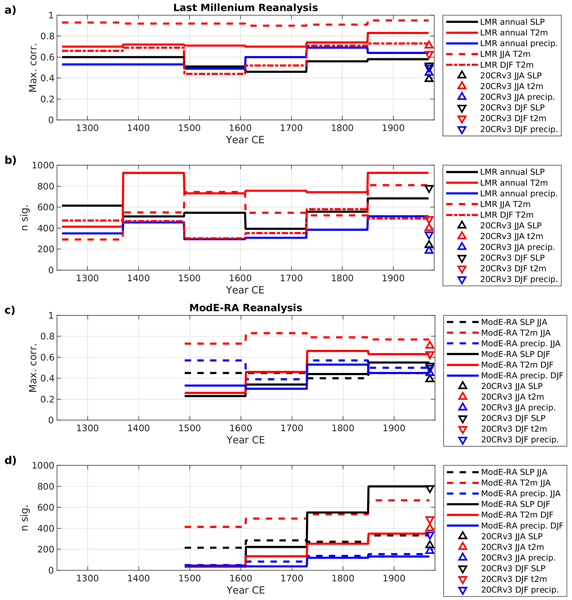
We have reconstructed past changes in North Atlantic climate by combining climate model output with tree-ring and ice core data. Our new data includes sea level pressure, temperature and precipitation on annual and seasonal time scales. The reconstruction captures changes in observed temperature over several hundred years across Greenland and Europe. This data can be used to study variations in climate and impacts of greenhouse gases, volcanic eruptions and variations in solar activity.
Vaughan T. J. Phillips, Sanne M. H. de Jong, Robert Garvey, Martin K. Skoglund, Torbjörn Ahlström, Fredrik Charpentier Ljungqvist, Mikael Pontarp, Joacim Rocklöv, Matthew Toohey, Jun-Ichi Yano, Helene Castenbrandt, Carl-Johan Fraenkel, Adam Linder, Henrik Sjödin, and Jesper Sjolte
EGUsphere, https://doi.org/10.5194/egusphere-2026-5195, https://doi.org/10.5194/egusphere-2026-5195, 2026
This preprint is open for discussion and under review for Climate of the Past (CP).
Short summary
Short summary
We investigate how volcanic eruptions may have amplified plague pandemics through climate-driven harvest failure and malnutrition. Using a model linking climate, food production, nutrition and disease, we find that the eruptions of 536 and 540 CE could have greatly increased mortality during the Justinianic Plague. The results suggest that food shortages and human movement were important in shaping the pandemic's severity and spread.
Jesper Sjolte and Qin Tao
Clim. Past, 22, 915–933, https://doi.org/10.5194/cp-22-915-2026, https://doi.org/10.5194/cp-22-915-2026, 2026
Short summary
Short summary
We have reconstructed past changes in North Atlantic climate by combining climate model output with tree-ring and ice core data. Our new data includes sea level pressure, temperature and precipitation on annual and seasonal time scales. The reconstruction captures changes in observed temperature over several hundred years across Greenland and Europe. This data can be used to study variations in climate and impacts of greenhouse gases, volcanic eruptions and variations in solar activity.
Hui-Shuang Yuan, Yang Xu, Zhi-Da Sun, Zi-Han Wang, Youli Chang, and Cheng Shen
EGUsphere, https://doi.org/10.5194/egusphere-2026-1947, https://doi.org/10.5194/egusphere-2026-1947, 2026
Short summary
Short summary
Near surface wind speed matters for weather, air quality, and wind energy. Using climate model experiments, we separate how different land-use changes affected wind speed across China from 1970 to 2014. We find that conversion of natural land to grazing land had the largest effect, fertilizer use was also important, and urbanization contributed less than often assumed. These results show that different land-use processes should be considered separately when assessing wind changes.
Cheng Shen, Hui-Shuang Yuan, Zhi-Bo Li, Jinling Piao, Youli Chang, and Deliang Chen
Earth Syst. Dynam., 16, 1959–1969, https://doi.org/10.5194/esd-16-1959-2025, https://doi.org/10.5194/esd-16-1959-2025, 2025
Short summary
Short summary
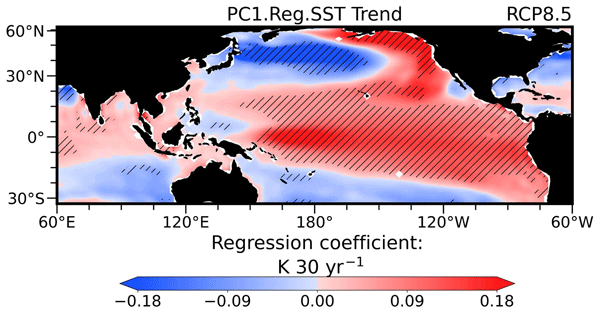
Near-surface wind speed affects air quality, water cycles, and wind energy, but its future changes in South Asia remain uncertain. This study explores how internal climate variability, particularly the Interdecadal Pacific Oscillation, affects wind speed trends in the region. Using advanced climate simulations, we show that accounting for this variability reduces uncertainty in future projections. Our findings could improve climate adaptation strategies and wind energy planning.
Zhi-Bo Li, Chao Liu, Cesar Azorin-Molina, Soon-Il An, Yang Zhao, Yang Xu, Jongsoo Shin, Deliang Chen, and Cheng Shen
Weather Clim. Dynam., 6, 1107–1117, https://doi.org/10.5194/wcd-6-1107-2025, https://doi.org/10.5194/wcd-6-1107-2025, 2025
Short summary
Short summary
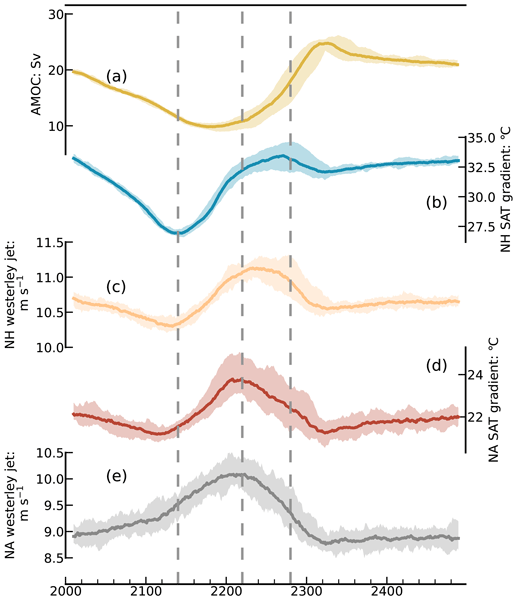
Our research explores how Northern Hemisphere near-surface wind speeds respond to the removal of CO2 from the atmosphere. Using advanced CESM (Community Earth System Model) simulations, we discovered that wind speeds react differently during periods of increased and decreased carbon dioxide levels. Different responses are attributed to changes in global surface temperature and AMOC (Atlantic Meridional Overturning Circulation). This study not only advances our understanding of climate dynamics but also aids in optimizing strategies for wind energy.
Niklas Kappelt, Eric Wolff, Marcus Christl, Christof Vockenhuber, Philip Gautschi, and Raimund Muscheler
Clim. Past, 21, 1585–1594, https://doi.org/10.5194/cp-21-1585-2025, https://doi.org/10.5194/cp-21-1585-2025, 2025
Short summary
Short summary
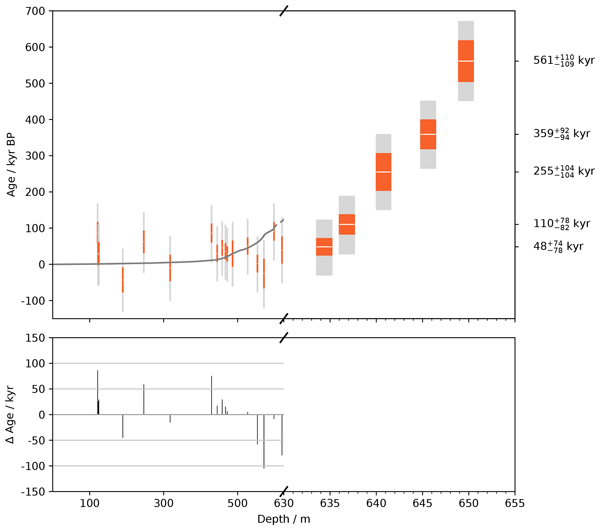
By measuring the radioactive decay of atmospherically produced 36Cl and 10Be in an ice core drilled in West Antarctica, we were able to determine the age of the deepest sample close to bedrock to be about 550 thousand years old. This means that the ice in this location, known as Skytrain Ice Rise, has survived several warm periods in the past, at least since marine isotope stage 11.
Yi Liu, Lihong Zhou, Yingzuo Qin, Cesar Azorin-Molina, Cheng Shen, Rongrong Xu, and Zhenzhong Zeng
Atmos. Meas. Tech., 17, 1123–1131, https://doi.org/10.5194/amt-17-1123-2024, https://doi.org/10.5194/amt-17-1123-2024, 2024
Short summary
Short summary
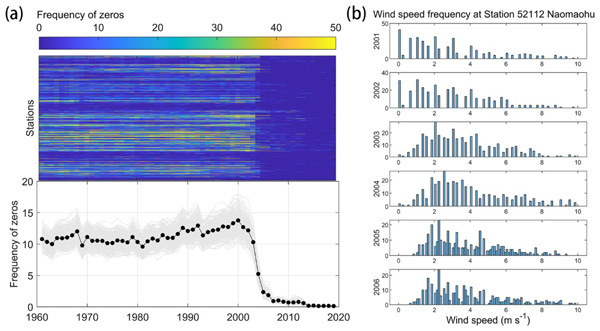
Our research analyzed China's wind speed data and addressed inconsistencies caused by factors like equipment changes and station relocations. After improving data quality, China's recent wind speed decrease reduced by 41 %, revealing an increasing trend. This emphasizes the importance of rigorous data processing for accurate trend assessments in various research fields.
Minjie Zheng, Hongyu Liu, Florian Adolphi, Raimund Muscheler, Zhengyao Lu, Mousong Wu, and Nønne L. Prisle
Geosci. Model Dev., 16, 7037–7057, https://doi.org/10.5194/gmd-16-7037-2023, https://doi.org/10.5194/gmd-16-7037-2023, 2023
Short summary
Short summary
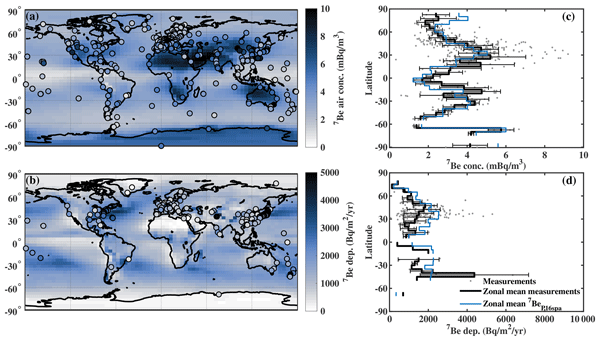
The radionuclides 7Be and 10Be are useful tracers for atmospheric transport studies. Here we use the GEOS-Chem to simulate 7Be and 10Be with different production rates: the default production rate in GEOS-Chem and two from the state-of-the-art beryllium production model. We demonstrate that reduced uncertainties in the production rates can enhance the utility of 7Be and 10Be as tracers for evaluating transport and scavenging processes in global models.
Chiara I. Paleari, Florian Mekhaldi, Tobias Erhardt, Minjie Zheng, Marcus Christl, Florian Adolphi, Maria Hörhold, and Raimund Muscheler
Clim. Past, 19, 2409–2422, https://doi.org/10.5194/cp-19-2409-2023, https://doi.org/10.5194/cp-19-2409-2023, 2023
Short summary
Short summary
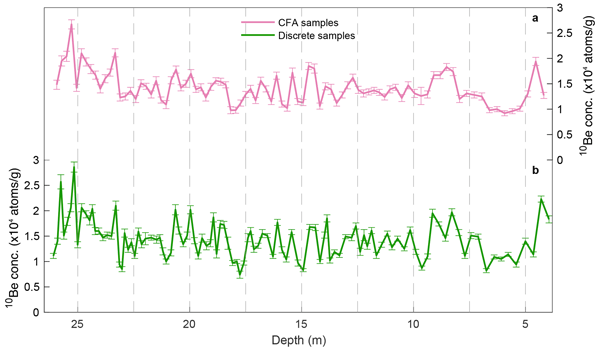
In this study, we test the use of excess meltwater from continuous flow analysis from a firn core from Greenland for the measurement of 10Be for solar activity reconstructions. We show that the quality of results is similar to the measurements on clean firn, which opens the possibility to obtain continuous 10Be records without requiring large amounts of clean ice. Furthermore, we investigate the possibility of identifying solar storm signals in 10Be records from Greenland and Antarctica.
Tobias Erhardt, Camilla Marie Jensen, Florian Adolphi, Helle Astrid Kjær, Remi Dallmayr, Birthe Twarloh, Melanie Behrens, Motohiro Hirabayashi, Kaori Fukuda, Jun Ogata, François Burgay, Federico Scoto, Ilaria Crotti, Azzurra Spagnesi, Niccoló Maffezzoli, Delia Segato, Chiara Paleari, Florian Mekhaldi, Raimund Muscheler, Sophie Darfeuil, and Hubertus Fischer
Earth Syst. Sci. Data, 15, 5079–5091, https://doi.org/10.5194/essd-15-5079-2023, https://doi.org/10.5194/essd-15-5079-2023, 2023
Short summary
Short summary
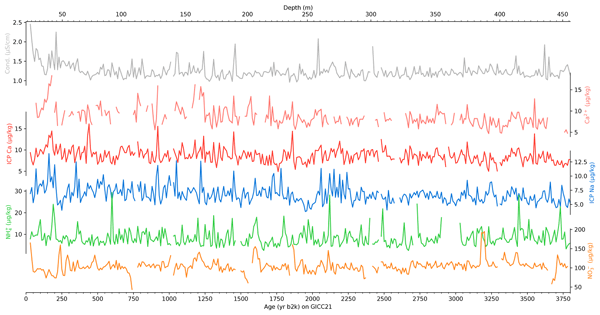
The presented paper provides a 3.8 kyr long dataset of aerosol concentrations from the East Greenland Ice coring Project (EGRIP) ice core. The data consists of 1 mm depth-resolution profiles of calcium, sodium, ammonium, nitrate, and electrolytic conductivity as well as decadal averages of these profiles. Alongside the data a detailed description of the measurement setup as well as a discussion of the uncertainties are given.
Giulia Sinnl, Florian Adolphi, Marcus Christl, Kees C. Welten, Thomas Woodruff, Marc Caffee, Anders Svensson, Raimund Muscheler, and Sune Olander Rasmussen
Clim. Past, 19, 1153–1175, https://doi.org/10.5194/cp-19-1153-2023, https://doi.org/10.5194/cp-19-1153-2023, 2023
Short summary
Short summary
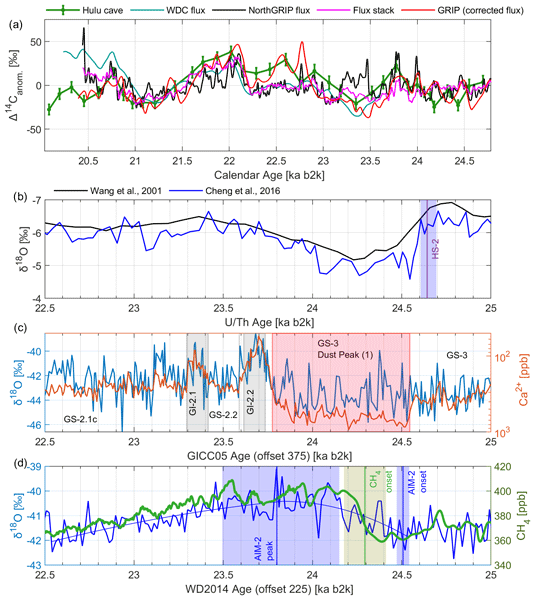
The record of past climate is preserved by several archives from different regions, such as ice cores from Greenland or Antarctica or speleothems from caves such as the Hulu Cave in China. In this study, these archives are aligned by taking advantage of the globally synchronous production of cosmogenic radionuclides. This produces a new perspective on the global climate in the period between 20 000 and 25 000 years ago.
Robert Mulvaney, Eric W. Wolff, Mackenzie M. Grieman, Helene H. Hoffmann, Jack D. Humby, Christoph Nehrbass-Ahles, Rachael H. Rhodes, Isobel F. Rowell, Frédéric Parrenin, Loïc Schmidely, Hubertus Fischer, Thomas F. Stocker, Marcus Christl, Raimund Muscheler, Amaelle Landais, and Frédéric Prié
Clim. Past, 19, 851–864, https://doi.org/10.5194/cp-19-851-2023, https://doi.org/10.5194/cp-19-851-2023, 2023
Short summary
Short summary
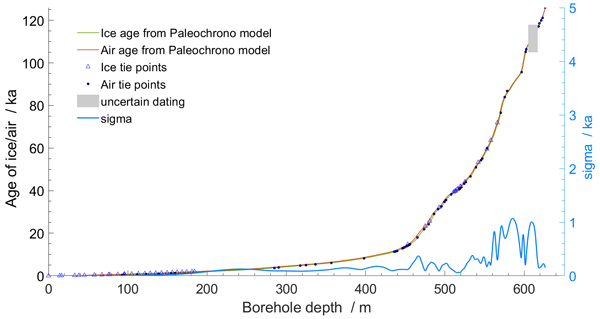
We present an age scale for a new ice core drilled at Skytrain Ice Rise, an ice rise facing the Ronne Ice Shelf in Antarctica. Various measurements in the ice and air phases are used to match the ice core to other Antarctic cores that have already been dated, and a new age scale is constructed. The 651 m ice core includes ice that is confidently dated to 117 000–126 000 years ago, in the last interglacial. Older ice is found deeper down, but there are flow disturbances in the deeper ice.
Hongyue Zhang, Jesper Sjolte, Zhengyao Lu, Jian Liu, Weiyi Sun, and Lingfeng Wan
Clim. Past, 19, 665–680, https://doi.org/10.5194/cp-19-665-2023, https://doi.org/10.5194/cp-19-665-2023, 2023
Short summary
Short summary
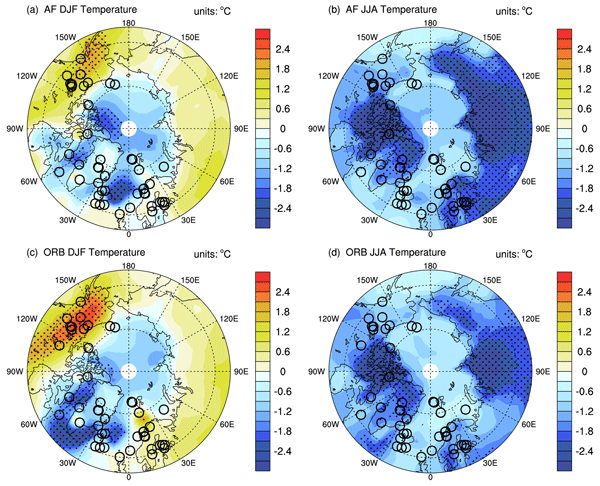
Based on proxy data and modeling, the Arctic temperature has an asymmetric cooling trend with more cooling over the Atlantic Arctic than the Pacific Arctic during the Holocene, dominated by orbital forcing. There is a seasonal difference in the asymmetric cooling trend, which is dominated by the DJF (December, January, and February) temperature variability. The Arctic dipole mode of sea level pressure and sea ice play a major role in asymmetric temperature changes.
Janica C. Bühler, Josefine Axelsson, Franziska A. Lechleitner, Jens Fohlmeister, Allegra N. LeGrande, Madhavan Midhun, Jesper Sjolte, Martin Werner, Kei Yoshimura, and Kira Rehfeld
Clim. Past, 18, 1625–1654, https://doi.org/10.5194/cp-18-1625-2022, https://doi.org/10.5194/cp-18-1625-2022, 2022
Short summary
Short summary
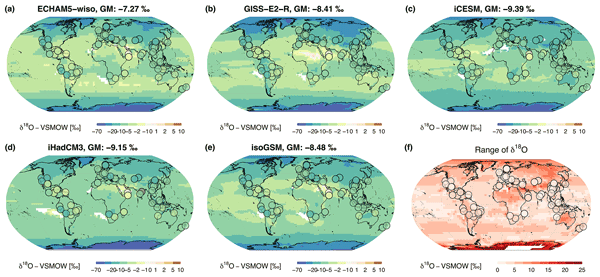
We collected and standardized the output of five isotope-enabled simulations for the last millennium and assess differences and similarities to records from a global speleothem database. Modeled isotope variations mostly arise from temperature differences. While lower-resolution speleothems do not capture extreme changes to the extent of models, they show higher variability on multi-decadal timescales. As no model excels in all comparisons, we advise a multi-model approach where possible.
Giulia Sinnl, Mai Winstrup, Tobias Erhardt, Eliza Cook, Camilla Marie Jensen, Anders Svensson, Bo Møllesøe Vinther, Raimund Muscheler, and Sune Olander Rasmussen
Clim. Past, 18, 1125–1150, https://doi.org/10.5194/cp-18-1125-2022, https://doi.org/10.5194/cp-18-1125-2022, 2022
Short summary
Short summary
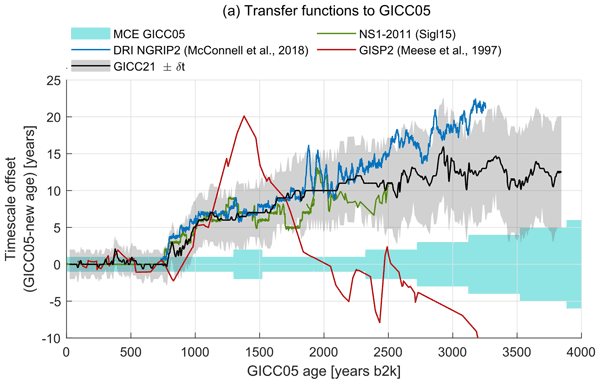
A new Greenland ice-core timescale, covering the last 3800 years, was produced using the machine learning algorithm StratiCounter. We synchronized the ice cores using volcanic eruptions and wildfires. We compared the new timescale to the tree-ring timescale, finding good alignment both between the common signatures of volcanic eruptions and of solar activity. Our Greenlandic timescales is safe to use for the Late Holocene, provided one uses our uncertainty estimate.
Cited articles
Baldwin, M. P. and Dunkerton, T. J.: Propagation of the Arctic Oscillation from the stratosphere to the troposphere, Journal of Geophysical Research-Atmospheres, 104, 30937–30946, https://doi.org/10.1029/1999JD900445, 1999.
Bittner, M., Schmidt, H., Timmreck, C., and Sienz, F.: Using a large ensemble of simulations to assess the Northern Hemisphere stratospheric dynamical response to tropical volcanic eruptions and its uncertainty, Geophys. Res. Lett., 43, 9324–9332, https://doi.org/10.1002/2016GL070587, 2016.
Bonnet, R., McKenna, C. M., and Maycock, A. C.: Model spread in multidecadal North Atlantic Oscillation variability connected to stratosphere–troposphere coupling, Weather Clim. Dynam., 5, 913–926, https://doi.org/10.5194/wcd-5-913-2024, 2024.
Brad Adams, J., Mann, M. E., and Ammann, C. M.: Proxy evidence for an El Niño-like response to volcanic forcing, Nature, 426, 274–278, https://doi.org/10.1038/nature02101, 2003.
Christiansen, B.: Volcanic Eruptions, Large-Scale Modes in the Northern Hemisphere, and the El Niño–Southern Oscillation, J. Climate, 21, 910–922, https://doi.org/10.1175/2007JCLI1657.1, 2008.
Comas-Bru, L. and McDermott, F.: Impacts of the EA and SCA patterns on the European twentieth century NAO-winter climate relationship, Quarterly Journal of the Royal Meteorological Society, 140, 354–363, https://doi.org/10.1002/qj.2158, 2014.
Crowley, T. J. and Unterman, M. B.: Technical details concerning development of a 1200 yr proxy index for global volcanism, Earth Syst. Sci. Data, 5, 187–197, https://doi.org/10.5194/essd-5-187-2013, 2013.
Driscoll, S., Bozzo, A., Gray, L. J., Robock, A., and Stenchikov, G.: Coupled Model Intercomparison Project 5 (CMIP5) simulations of climate following volcanic eruptions, Journal of Geophysical Research-Atmospheres, 117, https://doi.org/10.1029/2012JD017607, 2012.
Fischer, E. M., Luterbacher, J., Zorita, E., Tett, S. F. B., Casty, C., and Wanner, H.: European climate response to tropical volcanic eruptions over the last half millennium, Geophys. Res. Lett., 34, https://doi.org/10.1029/2006GL027992, 2007.
Franke, J., Valler, V., Brugnara, Y., and Brönnimann, S.: Ensemble Kalman Fitting Paleo-Reanalysis Version 2 (EKF400_v2), World Data Center for Climate (WDCC) at DKRZ [data set], https://doi.org/10.26050/WDCC/EKF400_v2.0, 2020.
Fuglestvedt, H. F., Zhuo, Z., Toohey, M., and Krüger, K.: Volcanic forcing of high-latitude Northern Hemisphere eruptions, npj Clim. Atmos. Sci., 7, 10, https://doi.org/10.1038/s41612-023-00539-4, 2024.
Fuglestvedt, H. F., Gabriel, I., Sigl, M., Thordarson, T., and Krüger, K.: Revisiting the 10th-Century Eldgjá Eruption: Modeling the Climatic and Environmental Impacts, Geophys. Res. Lett., 52, e2024GL110507, https://doi.org/10.1029/2024GL110507, 2025.
Gao, C., Robock, A., and Ammann, C.: Volcanic forcing of climate over the past 1500 years: An improved ice core-based index for climate models, Journal of Geophysical Research-Atmospheres, 113, https://doi.org/10.1029/2008JD010239, 2008.
Geng, X., Kug, J.-S., and Kosaka, Y.: Future changes in the wintertime ENSO-NAO teleconnection under greenhouse warming, npj Clim. Atmos. Sci., 7, 81, https://doi.org/10.1038/s41612-024-00627-z, 2024.
Hurrell, J. W., Kushnir, Y., Ottersen, G., and Visbeck, M. (Eds.): An Overview of the North Atlantic Oscillation, in: The North Atlantic Oscillation: Climatic Significance and Environmental Impact, American Geophysical Union (AGU), https://doi.org/10.1029/134GM01, 1–35, 2003.
Illing, S., Kadow, C., Pohlmann, H., and Timmreck, C.: Assessing the impact of a future volcanic eruption on decadal predictions, Earth Syst. Dynam., 9, 701–715, https://doi.org/10.5194/esd-9-701-2018, 2018.
Jungclaus, J. H., Bard, E., Baroni, M., Braconnot, P., Cao, J., Chini, L. P., Egorova, T., Evans, M., González-Rouco, J. F., Goosse, H., Hurtt, G. C., Joos, F., Kaplan, J. O., Khodri, M., Klein Goldewijk, K., Krivova, N., LeGrande, A. N., Lorenz, S. J., Luterbacher, J., Man, W., Maycock, A. C., Meinshausen, M., Moberg, A., Muscheler, R., Nehrbass-Ahles, C., Otto-Bliesner, B. I., Phipps, S. J., Pongratz, J., Rozanov, E., Schmidt, G. A., Schmidt, H., Schmutz, W., Schurer, A., Shapiro, A. I., Sigl, M., Smerdon, J. E., Solanki, S. K., Timmreck, C., Toohey, M., Usoskin, I. G., Wagner, S., Wu, C.-J., Yeo, K. L., Zanchettin, D., Zhang, Q., and Zorita, E.: The PMIP4 contribution to CMIP6 – Part 3: The last millennium, scientific objective, and experimental design for the PMIP4 past1000 simulations, Geosci. Model Dev., 10, 4005–4033, https://doi.org/10.5194/gmd-10-4005-2017, 2017.
Liu, F., Li, J., Wang, B., Liu, J., Li, T., Huang, G., and Wang, Z.: Divergent El Niño responses to volcanic eruptions at different latitudes over the past millennium, Clim. Dynam., 50, 3799–3812, https://doi.org/10.1007/s00382-017-3846-z, 2018.
Liu, F., Gao, C., Chai, J., Robock, A., Wang, B., Li, J., Zhang, X., Huang, G., and Dong, W.: Tropical volcanism enhanced the East Asian summer monsoon during the last millennium, Nat. Commun., 13, 3429, https://doi.org/10.1038/s41467-022-31108-7, 2022.
Luterbacher, J. and Pfister, C.: The year without a summer, Nat. Geosci., 8, 246–248, https://doi.org/10.1038/ngeo2404, 2015.
Marshall, L. R., Maters, E. C., Schmidt, A., Timmreck, C., Robock, A., and Toohey, M.: Volcanic effects on climate: recent advances and future avenues, Bull. Volcanol., 84, 54, https://doi.org/10.1007/s00445-022-01559-3, 2022.
Oman, L., Robock, A., Stenchikov, G., Schmidt, G. A., and Ruedy, R.: Climatic response to high-latitude volcanic eruptions, Journal of Geophysical Research-Atmospheres, 110, https://doi.org/10.1029/2004JD005487, 2005.
Ortega, P., Lehner, F., Swingedouw, D., Masson-Delmotte, V., Raible, C. C., Casado, M., and Yiou, P.: A model-tested North Atlantic Oscillation reconstruction for the past millennium, Nature, 523, 71–74, https://doi.org/10.1038/nature14518, 2015.
Paik, S., Min, S.-K., Son, S.-W., Lim, E.-P., McGregor, S., An, S.-I., Kug, J.-S., and Yeh, S.-W.: Impact of volcanic eruptions on extratropical atmospheric circulations: review, revisit and future directions, Environmental Research Letters, 18, 063003, https://doi.org/10.1088/1748-9326/acd5e6, 2023.
Pausata, F. S. R., Grini, A., Caballero, R., Hannachi, A., and Seland, Ø.: High-latitude volcanic eruptions in the Norwegian Earth System Model: the effect of different initial conditions and of the ensemble size, Tellus B-Chemical and Physical Meteorology, 67, 26728, https://doi.org/10.3402/tellusb.v67.26728, 2015a.
Pausata, F. S. R., Chafik, L., Caballero, R., and Battisti, D. S.: Impacts of high-latitude volcanic eruptions on ENSO and AMOC, Proceedings of the National Academy of Sciences USA, 112, 13784–13788, https://doi.org/10.1073/pnas.1509153112, 2015b.
Robock, A.: Volcanic eruptions and climate, Reviews of Geophysics, 38, 191–219, https://doi.org/10.1029/1998RG000054, 2000.
Robock, A. and Mao, J.: Winter warming from large volcanic eruptions, Geophys. Res. Lett., 19, 2405–2408, https://doi.org/10.1029/92GL02627, 1992.
Rodwell, M. J., Rowell, D. P., and Folland, C. K.: Oceanic forcing of the wintertime North Atlantic Oscillation and European climate, Nature, 398, 320–323, https://doi.org/10.1038/18648, 1999.
Schmidt, G. A., Jungclaus, J. H., Ammann, C. M., Bard, E., Braconnot, P., Crowley, T. J., Delaygue, G., Joos, F., Krivova, N. A., Muscheler, R., Otto-Bliesner, B. L., Pongratz, J., Shindell, D. T., Solanki, S. K., Steinhilber, F., and Vieira, L. E. A.: Climate forcing reconstructions for use in PMIP simulations of the last millennium (v1.0), Geosci. Model Dev., 4, 33–45, https://doi.org/10.5194/gmd-4-33-2011, 2011.
Schneider, D. P., Ammann, C. M., Otto-Bliesner, B. L., and Kaufman, D. S.: Climate response to large, high-latitude and low-latitude volcanic eruptions in the Community Climate System Model, Journal of Geophysical Research-Atmospheres, 114, https://doi.org/10.1029/2008JD011222, 2009.
Shen, C., Li, Z.-B., Liu, F., Chen, H. W., and Chen, D.: A robust reduction in near-surface wind speed after volcanic eruptions: Implications for wind energy generation, The Innovation, 6, 100734, https://doi.org/10.1016/j.xinn.2024.100734, 2025.
Shindell, D. T., Schmidt, G. A., Mann, M. E., and Faluvegi, G.: Dynamic winter climate response to large tropical volcanic eruptions since 1600, Journal of Geophysical Research-Atmospheres, 109, https://doi.org/10.1029/2003JD004151, 2004.
Sigl, M., Winstrup, M., McConnell, J. R., Welten, K. C., Plunkett, G., Ludlow, F., Büntgen, U., Caffee, M., Chellman, N., Dahl-Jensen, D., Fischer, H., Kipfstuhl, S., Kostick, C., Maselli, O. J., Mekhaldi, F., Mulvaney, R., Muscheler, R., Pasteris, D. R., Pilcher, J. R., Salzer, M., Schüpbach, S., Steffensen, J. P., Vinther, B. M., and Woodruff, T. E.: Timing and climate forcing of volcanic eruptions for the past 2,500 years, Nature, 523, 543–549, https://doi.org/10.1038/nature14565, 2015.
Sjolte, J., Sturm, C., Adolphi, F., Vinther, B. M., Werner, M., Lohmann, G., and Muscheler, R.: Solar and volcanic forcing of North Atlantic climate inferred from a process-based reconstruction, Clim. Past, 14, 1179–1194, https://doi.org/10.5194/cp-14-1179-2018, 2018.
Sjolte, J., Adolphi, F., Guðlaugsdòttir, H., and Muscheler, R.: Major Differences in Regional Climate Impact Between High- and Low-Latitude Volcanic Eruptions, Geophys. Res. Lett., 48, https://doi.org/10.1029/2020GL092017, 2021.
Sjolte, J., Tao, Q., and Muscheler, R.: Updated gridded reconstruction of sea level pressure, temperature, and precipitation during winter in the North Atlantic region covering 1241–1970 CE, Zenodo [data set], https://doi.org/10.5281/zenodo.8328301, 2023.
Slivinski, L. C., Compo, G. P., Whitaker, J. S., Sardeshmukh, P. D., Giese, B. S., McColl, C., Allan, R., Yin, X., Vose, R., Titchner, H., Kennedy, J., Spencer, L. J., Ashcroft, L., Brönnimann, S., Brunet, M., Camuffo, D., Cornes, R., Cram, T. A., Crouthamel, R., Domínguez-Castro, F., Freeman, J. E., Gergis, J., Hawkins, E., Jones, P. D., Jourdain, S., Kaplan, A., Kubota, H., Blancq, F. Le, Lee, T.-C., Lorrey, A., Luterbacher, J., Maugeri, M., Mock, C. J., Moore, G. W. K., Przybylak, R., Pudmenzky, C., Reason, C., Slonosky, V. C., Smith, C. A., Tinz, B., Trewin, B., Valente, M. A., Wang, X. L., Wilkinson, C., Wood, K., and Wyszyński, P.: Towards a more reliable historical reanalysis: Improvements for version 3 of the Twentieth Century Reanalysis system, Quarterly Journal of the Royal Meteorological Society, 145, 2876–2908, https://doi.org/10.1002/qj.3598, 2019.
Stenchikov, G., Robock, A., Ramaswamy, V., Schwarzkopf, M. D., Hamilton, K., and Ramachandran, S.: Arctic Oscillation response to the 1991 Mount Pinatubo eruption: Effects of volcanic aerosols and ozone depletion, Journal of Geophysical Research-Atmospheres, 107, ACL 28-1–ACL 28-16, https://doi.org/10.1029/2002JD002090, 2002.
Stenchikov, G., Hamilton, K., Stouffer, R. J., Robock, A., Ramaswamy, V., Santer, B., and Graf, H.-F.: Arctic Oscillation response to volcanic eruptions in the IPCC AR4 climate models, J. Geophys. Res., 111, D07107, https://doi.org/10.1029/2005JD006286, 2006.
Stephenson, D. B., Pavan, V., Collins, M., Junge, M. M., and Quadrelli, R.: North Atlantic Oscillation response to transient greenhouse gas forcing and the impact on European winter climate: a CMIP2 multi-model assessment, Clim. Dynam., 27, 401–420, https://doi.org/10.1007/s00382-006-0140-x, 2006.
Swingedouw, D., Mignot, J., Ortega, P., Khodri, M., Menegoz, M., Cassou, C., and Hanquiez, V.: Impact of explosive volcanic eruptions on the main climate variability modes, Glob. Planet. Change, 150, 24–45, https://doi.org/10.1016/j.gloplacha.2017.01.006, 2017.
Tao, Q., Sjolte, J., and Muscheler, R.: Persistent Model Biases in the Spatial Variability of Winter North Atlantic Atmospheric Circulation, Geophys. Res. Lett., 50, e2023GL105231, https://doi.org/10.1029/2023GL105231, 2023.
Tejedor, E., Polvani, L. M., Steiger, N. J., Vuille, M., and Smerdon, J. E.: No Evidence of Winter Warming in Eurasia Following Large, Low-Latitude Volcanic Eruptions during the Last Millennium, J. Climate, 37, 5653–5673, https://doi.org/10.1175/JCLI-D-23-0625.1, 2024.
Timmreck, C., Mann, G. W., Aquila, V., Hommel, R., Lee, L. A., Schmidt, A., Brühl, C., Carn, S., Chin, M., Dhomse, S. S., Diehl, T., English, J. M., Mills, M. J., Neely, R., Sheng, J., Toohey, M., and Weisenstein, D.: The Interactive Stratospheric Aerosol Model Intercomparison Project (ISA-MIP): motivation and experimental design, Geosci. Model Dev., 11, 2581–2608, https://doi.org/10.5194/gmd-11-2581-2018, 2018.
Toohey, M. and Sigl, M.: Volcanic stratospheric sulfur injections and aerosol optical depth from 500 BCE to 1900 CE, Earth Syst. Sci. Data, 9, 809–831, https://doi.org/10.5194/essd-9-809-2017, 2017.
Toohey, M., Krüger, K., Bittner, M., Timmreck, C., and Schmidt, H.: The impact of volcanic aerosol on the Northern Hemisphere stratospheric polar vortex: mechanisms and sensitivity to forcing structure, Atmos. Chem. Phys., 14, 13063–13079, https://doi.org/10.5194/acp-14-13063-2014, 2014.
Toohey, M., Krüger, K., Schmidt, H., Timmreck, C., Sigl, M., Stoffel, M., and Wilson, R.: Disproportionately strong climate forcing from extratropical explosive volcanic eruptions, Nat. Geosci., 12, 100–107, https://doi.org/10.1038/s41561-018-0286-2, 2019.
Valler, V., Franke, J., Brugnara, Y., and Brönnimann, S.: An updated global atmospheric paleo-reanalysis covering the last 400 years, Geosci. Data J., gdj3.121, https://doi.org/10.1002/gdj3.121, 2021.
Valler, V., Franke, J., Brugnara, Y., Burgdorf, A.-M., Lundstad, E., Hand, R., Samakinwa, E., Lipfert, L., Friedman, A. R., and Brönnimann, S.: ModE-RA – A global monthly paleo-reanalysis of the modern era (1421 to 2008): Set 1420-3_1850-1, World Data Center for Climate (WDCC) at DKRZ [data set], https://doi.org/10.26050/WDCC/ModE-RA_s14203-18501, 2023.
Valler, V., Franke, J., Brugnara, Y., Samakinwa, E., Hand, R., Lundstad, E., Burgdorf, A.-M., Lipfert, L., Friedman, A. R., and Brönnimann, S.: ModE-RA: a global monthly paleo-reanalysis of the modern era 1421 to 2008, Sci. Data, 11, 36, https://doi.org/10.1038/s41597-023-02733-8, 2024.
Wang, F., Arseneault, D., Boucher, É., Gennaretti, F., Lapointe, F., Yu, S., and Francus, P.: Volcanic Imprints in Last-Millennium Land Summer Temperatures in the Circum–North Atlantic Area, J. Climate, 36, 5923–5939, https://doi.org/10.1175/JCLI-D-23-0107.1, 2023.
Ward, B., Pausata, F. S. R., and Maher, N.: The sensitivity of the El Niño–Southern Oscillation to volcanic aerosol spatial distribution in the MPI Grand Ensemble, Earth Syst. Dynam., 12, 975–996, https://doi.org/10.5194/esd-12-975-2021, 2021.
Yukimoto, S., Adachi, Y., Hosaka, M., Sakami, T., Yoshimura, H., Hirabara, M., Tanaka, T. Y., Shindo, E., Tsujino, H., Deushi, M., Mizuta, R., Yabu, S., Obata, A., Nakano, H., Koshiro, T., Ose, T., and Kitoh, A.: A New Global Climate Model of the Meteorological Research Institute: MRI-CGCM3 — Model Description and Basic Performance, Journal of the Meteorological Society of Japan Ser. II, 90A, 23–64, https://doi.org/10.2151/jmsj.2012-A02, 2012.
Zambri, B. and Robock, A.: Winter warming and summer monsoon reduction after volcanic eruptions in Coupled Model Intercomparison Project 5 (CMIP5) simulations, Geophys. Res. Lett., 43, 10, 910–920, 928, https://doi.org/10.1002/2016GL070460, 2016.
Zambri, B., LeGrande, A. N., Robock, A., and Slawinska, J.: Northern Hemisphere winter warming and summer monsoon reduction after volcanic eruptions over the last millennium, Journal of Geophysical Research-Atmospheres, 122, 7971–7989, https://doi.org/10.1002/2017JD026728, 2017.
Zambri, B., Robock, A., Mills, M. J., and Schmidt, A.: Modeling the 1783–1784 Laki Eruption in Iceland: 1. Aerosol Evolution and Global Stratospheric Circulation Impacts, Journal of Geophysical Research-Atmospheres, 124, 6750–6769, https://doi.org/10.1029/2018JD029553, 2019a.
Zambri, B., Robock, A., Mills, M. J., and Schmidt, A.: Modeling the 1783–1784 Laki Eruption in Iceland: 2. Climate Impacts, Journal of Geophysical Research-Atmospheres, 124, 6770–6790, https://doi.org/10.1029/2018JD029554, 2019b.
Zanchettin, D., Khodri, M., Timmreck, C., Toohey, M., Schmidt, A., Gerber, E. P., Hegerl, G., Robock, A., Pausata, F. S. R., Ball, W. T., Bauer, S. E., Bekki, S., Dhomse, S. S., LeGrande, A. N., Mann, G. W., Marshall, L., Mills, M., Marchand, M., Niemeier, U., Poulain, V., Rozanov, E., Rubino, A., Stenke, A., Tsigaridis, K., and Tummon, F.: The Model Intercomparison Project on the climatic response to Volcanic forcing (VolMIP): experimental design and forcing input data for CMIP6, Geosci. Model Dev., 9, 2701–2719, https://doi.org/10.5194/gmd-9-2701-2016, 2016.
Zanchettin, D., Timmreck, C., Khodri, M., Schmidt, A., Toohey, M., Abe, M., Bekki, S., Cole, J., Fang, S.-W., Feng, W., Hegerl, G., Johnson, B., Lebas, N., LeGrande, A. N., Mann, G. W., Marshall, L., Rieger, L., Robock, A., Rubinetti, S., Tsigaridis, K., and Weierbach, H.: Effects of forcing differences and initial conditions on inter-model agreement in the VolMIP volc-pinatubo-full experiment, Geosci. Model Dev., 15, 2265–2292, https://doi.org/10.5194/gmd-15-2265-2022, 2022.
Zhang, Q., Berntell, E., Li, Q., and Ljungqvist, F. C.: Understanding the variability of the rainfall dipole in West Africa using the EC-Earth last millennium simulation, Clim. Dynam., 57, 93–107, https://doi.org/10.1007/s00382-021-05696-x, 2021.
Zhuo, Z., Gao, C., and Pan, Y.: Proxy evidence for China's monsoon precipitation response to volcanic aerosols over the past seven centuries, Journal of Geophysical Research-Atmospheres, 119, 6638–6652, https://doi.org/10.1002/2013JD021061, 2014.
Zhuo, Z., Kirchner, I., Pfahl, S., and Cubasch, U.: Climate impact of volcanic eruptions: the sensitivity to eruption season and latitude in MPI-ESM ensemble experiments, Atmos. Chem. Phys., 21, 13425–13442, https://doi.org/10.5194/acp-21-13425-2021, 2021.
Short summary
Using model simulations and reconstructions over the last millennium, we identify distinct North Atlantic Oscillation-related winter climate responses following tropical versus extratropical eruptions, with improved model-data agreement in simulations that use the latest volcanic forcing. Our paleoclimate data–model comparison provides new evidence of volcanic climate impacts, which are strongly dependent on the choice of forcing dataset, model configuration, and eruption event selection.
Using model simulations and reconstructions over the last millennium, we identify distinct North...


