
Articles | Volume 22, issue 11
https://doi.org/10.5194/cp-22-2153-2026
© Author(s) 2026. This work is distributed under
the Creative Commons Attribution 4.0 License.
the Creative Commons Attribution 4.0 License.
https://doi.org/10.5194/cp-22-2153-2026
© Author(s) 2026. This work is distributed under
the Creative Commons Attribution 4.0 License.
the Creative Commons Attribution 4.0 License.
Research article
| 
20 Nov 2026
Research article |
| 20 Nov 2026
| 20 Nov 2026
How abruptly did the Holocene Green Sahara end?
Martin Claussen
CORRESPONDING AUTHOR

Max-Planck-Institut für Meteorologie, Hamburg, 20146, Germany
Department of Earth System Sciences, Universität Hamburg, Hamburg, 20146, Germany
Anne Dallmeyer
Max-Planck-Institut für Meteorologie, Hamburg, 20146, Germany
Institute of Geophysics and Meteorology, University of Cologne, Cologne, 50969, Germany
Frank Darius
Physical Geography, Department of Earth Sciences, Freie Universität Berlin, Berlin, 12249, Germany
Philipp Hoelzmann
Physical Geography, Department of Earth Sciences, Freie Universität Berlin, Berlin, 12249, Germany
Michèle Dinies
Physical Geography, Department of Earth Sciences, Freie Universität Berlin, Berlin, 12249, Germany
Related authors
Mateo Duque-Villegas, Thomas Kleinen, Victor Brovkin, Anne Dallmeyer, Martin Claussen, and Uwe Mikolajewicz
EGUsphere, https://doi.org/10.5194/egusphere-2026-5687, https://doi.org/10.5194/egusphere-2026-5687, 2026
This preprint is open for discussion and under review for Climate of the Past (CP).
Short summary
Short summary
Rapid and vast land-cover changes could explain sudden excursions in atmospheric greenhouse gas concentrations of the last glacial cycle. We simulate trajectories of natural climate and land-cover changes over this period, and analyse the variability of the carbon cycle considering dynamic vegetation, ice sheets, and marine biogeochemistry. We find that the timescales of orbital precession and North Atlantic meltwater release pace terrestrial carbon dioxide and methane emissions.
Pin-Hsin Hu, Christian H. Reick, Reiner Schnur, Axel Kleidon, and Martin Claussen
Geosci. Model Dev., 19, 6357–6402, https://doi.org/10.5194/gmd-19-6357-2026, https://doi.org/10.5194/gmd-19-6357-2026, 2026
Short summary
Short summary
We introduce the new plant functional diversity model JeDi-BACH, a novel tool that integrates the Jena Diversity Model (JeDi) within the land component of the ICON Earth System Model. JeDi-BACH captures a richer set of plant trait variations based on environmental filtering and functional tradeoffs without a priori knowledge of the vegetation types. JeDi-BACH represents a significant advancement in modeling the complex interactions between plant functional diversity and climate.
Anne Dallmeyer, Nils Weitzel, Laura Schild, Ulrike Herzschuh, Thomas Kleinen, and Martin Claussen
Clim. Past, 22, 1125–1157, https://doi.org/10.5194/cp-22-1125-2026, https://doi.org/10.5194/cp-22-1125-2026, 2026
Short summary
Short summary
We compare pollen-based reconstructions of Northern Hemisphere tree cover over the last 20 000 years with simulations from the Max-Planck-Institute Earth System Model (MPI-ESM). The model captures broad forest trends but misses key regional patterns and the mid-Holocene forest peak. Testing climate drivers reveals mismatches in how temperature, water, and CO2 control forests, pointing to structural limits and the need for improved vegetation processes in models.
Mateo Duque-Villegas, Martin Claussen, Thomas Kleinen, Jürgen Bader, and Christian H. Reick
Clim. Past, 21, 773–794, https://doi.org/10.5194/cp-21-773-2025, https://doi.org/10.5194/cp-21-773-2025, 2025
Short summary
Short summary
We simulate the last glacial cycle with a comprehensive model of the Earth system and investigate vegetation cover change in northern Africa during the last four African Humid Periods (AHPs). We find a common pattern of vegetation change and relate it with climatic factors in order to discuss how vegetation might have evolved during even older AHPs. This scaling relationship we find according to past AHPs fails to account for projected changes in northern Africa under strong greenhouse gas warming.
Nora Farina Specht, Martin Claussen, and Thomas Kleinen
Clim. Past, 20, 1595–1613, https://doi.org/10.5194/cp-20-1595-2024, https://doi.org/10.5194/cp-20-1595-2024, 2024
Short summary
Short summary
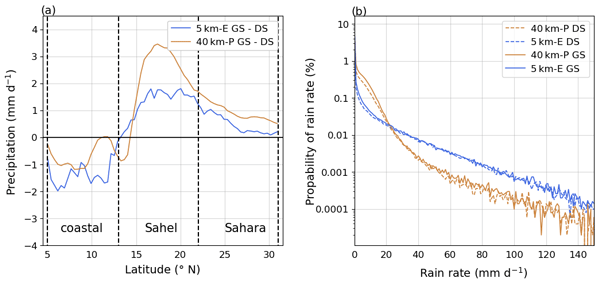
We close the terrestrial water cycle across the Sahara and Sahel by integrating a new endorheic-lake model into a climate model. A factor analysis of mid-Holocene simulations shows that both dynamic lakes and dynamic vegetation individually contribute to a precipitation increase over northern Africa that is collectively greater than that caused by the interaction between lake and vegetation dynamics. Thus, the lake–vegetation interaction causes a relative drying response across the entire Sahel.
Leonore Jungandreas, Cathy Hohenegger, and Martin Claussen
Clim. Past, 19, 637–664, https://doi.org/10.5194/cp-19-637-2023, https://doi.org/10.5194/cp-19-637-2023, 2023
Short summary
Short summary
Increasing the vegetation cover over mid-Holcocene North Africa expands the West African monsoon ∼ 4–5° further north. This northward shift of monsoonal precipitation is caused by interactions of the land surface with large-scale monsoon circulation and the coupling of soil moisture to precipitation. We highlight the importance of considering not only how soil moisture influences precipitation but also how different precipitation characteristics alter the soil hydrology via runoff generation.
Mateo Duque-Villegas, Martin Claussen, Victor Brovkin, and Thomas Kleinen
Clim. Past, 18, 1897–1914, https://doi.org/10.5194/cp-18-1897-2022, https://doi.org/10.5194/cp-18-1897-2022, 2022
Short summary
Short summary
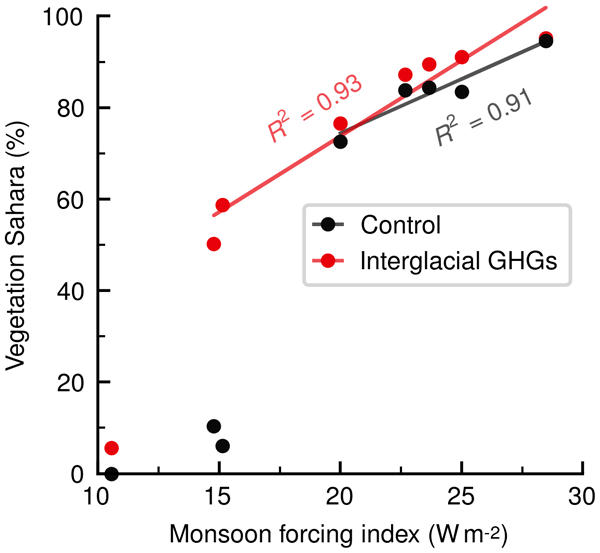
Using an Earth system model of intermediate complexity, we quantify contributions of the Earth's orbit, greenhouse gases (GHGs) and ice sheets to the strength of Saharan greening during late Quaternary African humid periods (AHPs). Orbital forcing is found as the dominant factor, having a critical threshold and accounting for most of the changes in the vegetation response. However, results suggest that GHGs may influence the orbital threshold and thus may play a pivotal role for future AHPs.
Nora Farina Specht, Martin Claussen, and Thomas Kleinen
Clim. Past, 18, 1035–1046, https://doi.org/10.5194/cp-18-1035-2022, https://doi.org/10.5194/cp-18-1035-2022, 2022
Short summary
Short summary
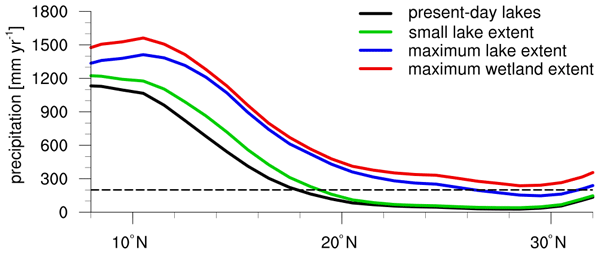
Palaeoenvironmental records only provide a fragmentary picture of the lake and wetland extent in North Africa during the mid-Holocene. Therefore, we investigate the possible range of mid-Holocene precipitation changes caused by an estimated small and maximum lake extent and a maximum wetland extent. Results show a particularly strong monsoon precipitation response to lakes and wetlands over the Western Sahara and an increased monsoon precipitation when replacing lakes with vegetated wetlands.
Jooyeop Lee, Martin Claussen, Jeongwon Kim, Je-Woo Hong, In-Sun Song, and Jinkyu Hong
Clim. Past, 18, 313–326, https://doi.org/10.5194/cp-18-313-2022, https://doi.org/10.5194/cp-18-313-2022, 2022
Short summary
Short summary
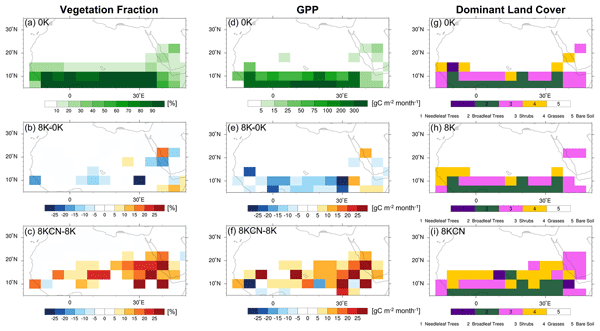
It is still a challenge to simulate the so–called Green Sahara (GS), which was a wet and vegetative Sahara region in the mid–Holocene, using current climate models. Our analysis shows that Holocene greening is simulated better if the amount of soil nitrogen and soil texture is properly modified for the humid and vegetative GS period. Future climate simulation needs to consider consequent changes in soil nitrogen and texture with changes in vegetation cover for proper climate simulations.

Anne Dallmeyer, Martin Claussen, Stephan J. Lorenz, Michael Sigl, Matthew Toohey, and Ulrike Herzschuh
Clim. Past, 17, 2481–2513, https://doi.org/10.5194/cp-17-2481-2021, https://doi.org/10.5194/cp-17-2481-2021, 2021
Short summary
Short summary
Using the comprehensive Earth system model, MPI-ESM1.2, we explore the global Holocene vegetation changes and interpret them in terms of the Holocene climate change. The model results reveal that most of the Holocene vegetation transitions seen outside the high northern latitudes can be attributed to modifications in the intensity of the global summer monsoons.
Mateo Duque-Villegas, Thomas Kleinen, Victor Brovkin, Anne Dallmeyer, Martin Claussen, and Uwe Mikolajewicz
EGUsphere, https://doi.org/10.5194/egusphere-2026-5687, https://doi.org/10.5194/egusphere-2026-5687, 2026
This preprint is open for discussion and under review for Climate of the Past (CP).
Short summary
Short summary
Rapid and vast land-cover changes could explain sudden excursions in atmospheric greenhouse gas concentrations of the last glacial cycle. We simulate trajectories of natural climate and land-cover changes over this period, and analyse the variability of the carbon cycle considering dynamic vegetation, ice sheets, and marine biogeochemistry. We find that the timescales of orbital precession and North Atlantic meltwater release pace terrestrial carbon dioxide and methane emissions.
Pin-Hsin Hu, Christian H. Reick, Reiner Schnur, Axel Kleidon, and Martin Claussen
Geosci. Model Dev., 19, 6357–6402, https://doi.org/10.5194/gmd-19-6357-2026, https://doi.org/10.5194/gmd-19-6357-2026, 2026
Short summary
Short summary
We introduce the new plant functional diversity model JeDi-BACH, a novel tool that integrates the Jena Diversity Model (JeDi) within the land component of the ICON Earth System Model. JeDi-BACH captures a richer set of plant trait variations based on environmental filtering and functional tradeoffs without a priori knowledge of the vegetation types. JeDi-BACH represents a significant advancement in modeling the complex interactions between plant functional diversity and climate.
Anne Dallmeyer, Nils Weitzel, Laura Schild, Ulrike Herzschuh, Thomas Kleinen, and Martin Claussen
Clim. Past, 22, 1125–1157, https://doi.org/10.5194/cp-22-1125-2026, https://doi.org/10.5194/cp-22-1125-2026, 2026
Short summary
Short summary
We compare pollen-based reconstructions of Northern Hemisphere tree cover over the last 20 000 years with simulations from the Max-Planck-Institute Earth System Model (MPI-ESM). The model captures broad forest trends but misses key regional patterns and the mid-Holocene forest peak. Testing climate drivers reveals mismatches in how temperature, water, and CO2 control forests, pointing to structural limits and the need for improved vegetation processes in models.
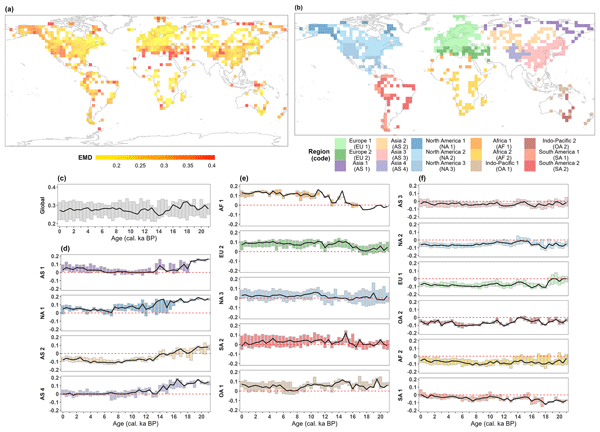
Chenzhi Li, Anne Dallmeyer, Jian Ni, Manuel Chevalier, Matteo Willeit, Andrei A. Andreev, Xianyong Cao, Laura Schild, Birgit Heim, Mareike Wieczorek, and Ulrike Herzschuh
Clim. Past, 21, 1001–1024, https://doi.org/10.5194/cp-21-1001-2025, https://doi.org/10.5194/cp-21-1001-2025, 2025
Short summary
Short summary
We present global megabiome dynamics and distributions derived from pollen-based reconstructions over the last 21 000 years, which are suitable for the evaluation of Earth-system-model-based paleo-megabiome simulations. We identified strong deviations between pollen- and model-derived megabiome distributions in the circum-Arctic and Tibetan Plateau areas during the Last Glacial Maximum and early deglaciation and in northern Africa and the Mediterranean region during the Holocene.
Mateo Duque-Villegas, Martin Claussen, Thomas Kleinen, Jürgen Bader, and Christian H. Reick
Clim. Past, 21, 773–794, https://doi.org/10.5194/cp-21-773-2025, https://doi.org/10.5194/cp-21-773-2025, 2025
Short summary
Short summary
We simulate the last glacial cycle with a comprehensive model of the Earth system and investigate vegetation cover change in northern Africa during the last four African Humid Periods (AHPs). We find a common pattern of vegetation change and relate it with climatic factors in order to discuss how vegetation might have evolved during even older AHPs. This scaling relationship we find according to past AHPs fails to account for projected changes in northern Africa under strong greenhouse gas warming.
Nora Farina Specht, Martin Claussen, and Thomas Kleinen
Clim. Past, 20, 1595–1613, https://doi.org/10.5194/cp-20-1595-2024, https://doi.org/10.5194/cp-20-1595-2024, 2024
Short summary
Short summary
We close the terrestrial water cycle across the Sahara and Sahel by integrating a new endorheic-lake model into a climate model. A factor analysis of mid-Holocene simulations shows that both dynamic lakes and dynamic vegetation individually contribute to a precipitation increase over northern Africa that is collectively greater than that caused by the interaction between lake and vegetation dynamics. Thus, the lake–vegetation interaction causes a relative drying response across the entire Sahel.
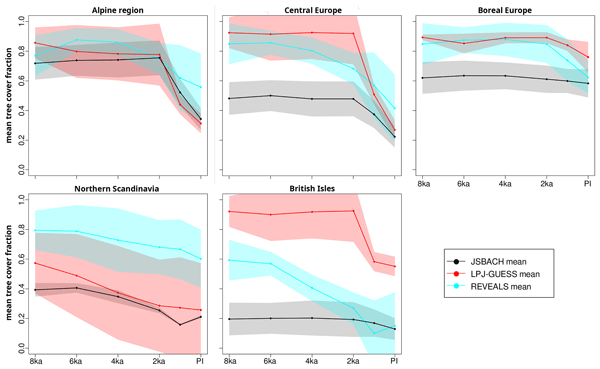
Anne Dallmeyer, Anneli Poska, Laurent Marquer, Andrea Seim, and Marie-José Gaillard
Clim. Past, 19, 1531–1557, https://doi.org/10.5194/cp-19-1531-2023, https://doi.org/10.5194/cp-19-1531-2023, 2023
Short summary
Short summary
We compare past tree cover changes in Europe during the last 8000 years simulated with two dynamic global vegetation models and inferred from pollen data. The major model–data mismatch is related to the much earlier onset of anthropogenic deforestation in the data compared to the prescribed land use in the models. We show that land use, and not climate, is the main driver of the Holocene forest decline. The model–data agreement depends on the model tuning, challenging model–data comparisons.
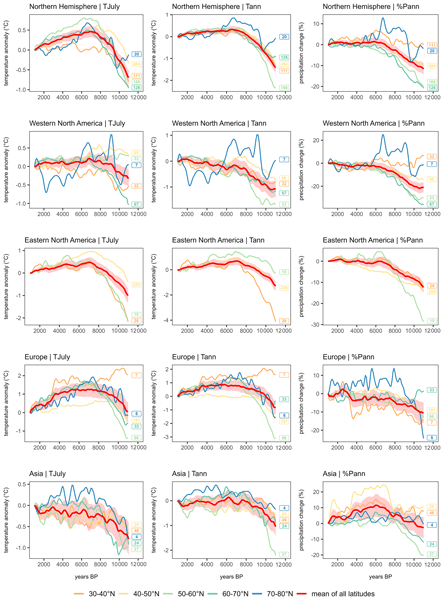
Ulrike Herzschuh, Thomas Böhmer, Manuel Chevalier, Raphaël Hébert, Anne Dallmeyer, Chenzhi Li, Xianyong Cao, Odile Peyron, Larisa Nazarova, Elena Y. Novenko, Jungjae Park, Natalia A. Rudaya, Frank Schlütz, Lyudmila S. Shumilovskikh, Pavel E. Tarasov, Yongbo Wang, Ruilin Wen, Qinghai Xu, and Zhuo Zheng
Clim. Past, 19, 1481–1506, https://doi.org/10.5194/cp-19-1481-2023, https://doi.org/10.5194/cp-19-1481-2023, 2023
Short summary
Short summary
A mismatch between model- and proxy-based Holocene climate change may partially originate from the poor spatial coverage of climate reconstructions. Here we investigate quantitative reconstructions of mean annual temperature and annual precipitation from 1908 pollen records in the Northern Hemisphere. Trends show strong latitudinal patterns and differ between (sub-)continents. Our work contributes to a better understanding of the global mean.
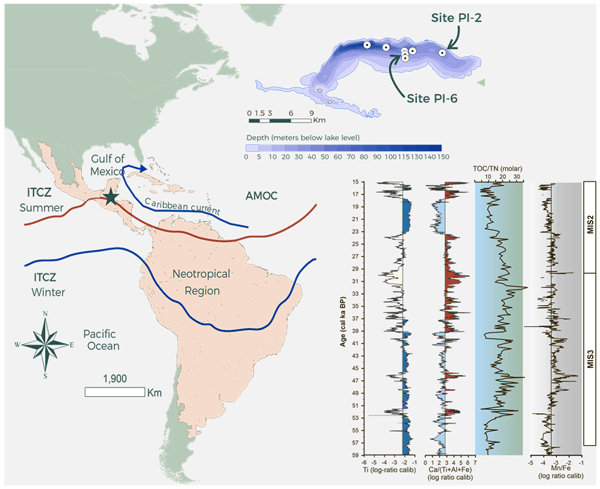
Rodrigo Martínez-Abarca, Michelle Abstein, Frederik Schenk, David Hodell, Philipp Hoelzmann, Mark Brenner, Steffen Kutterolf, Sergio Cohuo, Laura Macario-González, Mona Stockhecke, Jason Curtis, Flavio S. Anselmetti, Daniel Ariztegui, Thomas Guilderson, Alexander Correa-Metrio, Thorsten Bauersachs, Liseth Pérez, and Antje Schwalb
Clim. Past, 19, 1409–1434, https://doi.org/10.5194/cp-19-1409-2023, https://doi.org/10.5194/cp-19-1409-2023, 2023
Short summary
Short summary
Lake Petén Itzá, northern Guatemala, is one of the oldest lakes in the northern Neotropics. In this study, we analyzed geochemical and mineralogical data to decipher the hydrological response of the lake to climate and environmental changes between 59 and 15 cal ka BP. We also compare the response of Petén Itzá with other regional records to discern the possible climate forcings that influenced them. Short-term climate oscillations such as Greenland interstadials and stadials are also detected.
Ulrike Herzschuh, Thomas Böhmer, Chenzhi Li, Manuel Chevalier, Raphaël Hébert, Anne Dallmeyer, Xianyong Cao, Nancy H. Bigelow, Larisa Nazarova, Elena Y. Novenko, Jungjae Park, Odile Peyron, Natalia A. Rudaya, Frank Schlütz, Lyudmila S. Shumilovskikh, Pavel E. Tarasov, Yongbo Wang, Ruilin Wen, Qinghai Xu, and Zhuo Zheng
Earth Syst. Sci. Data, 15, 2235–2258, https://doi.org/10.5194/essd-15-2235-2023, https://doi.org/10.5194/essd-15-2235-2023, 2023
Short summary
Short summary
Climate reconstruction from proxy data can help evaluate climate models. We present pollen-based reconstructions of mean July temperature, mean annual temperature, and annual precipitation from 2594 pollen records from the Northern Hemisphere, using three reconstruction methods (WA-PLS, WA-PLS_tailored, and MAT). Since no global or hemispheric synthesis of quantitative precipitation changes are available for the Holocene so far, this dataset will be of great value to the geoscientific community.
Manuel Chevalier, Anne Dallmeyer, Nils Weitzel, Chenzhi Li, Jean-Philippe Baudouin, Ulrike Herzschuh, Xianyong Cao, and Andreas Hense
Clim. Past, 19, 1043–1060, https://doi.org/10.5194/cp-19-1043-2023, https://doi.org/10.5194/cp-19-1043-2023, 2023
Short summary
Short summary
Data–data and data–model vegetation comparisons are commonly based on comparing single vegetation estimates. While this approach generates good results on average, reducing pollen assemblages to single single plant functional type (PFT) or biome estimates can oversimplify the vegetation signal. We propose using a multivariate metric, the Earth mover's distance (EMD), to include more details about the vegetation structure when performing such comparisons.
Leonore Jungandreas, Cathy Hohenegger, and Martin Claussen
Clim. Past, 19, 637–664, https://doi.org/10.5194/cp-19-637-2023, https://doi.org/10.5194/cp-19-637-2023, 2023
Short summary
Short summary
Increasing the vegetation cover over mid-Holcocene North Africa expands the West African monsoon ∼ 4–5° further north. This northward shift of monsoonal precipitation is caused by interactions of the land surface with large-scale monsoon circulation and the coupling of soil moisture to precipitation. We highlight the importance of considering not only how soil moisture influences precipitation but also how different precipitation characteristics alter the soil hydrology via runoff generation.
Mateo Duque-Villegas, Martin Claussen, Victor Brovkin, and Thomas Kleinen
Clim. Past, 18, 1897–1914, https://doi.org/10.5194/cp-18-1897-2022, https://doi.org/10.5194/cp-18-1897-2022, 2022
Short summary
Short summary
Using an Earth system model of intermediate complexity, we quantify contributions of the Earth's orbit, greenhouse gases (GHGs) and ice sheets to the strength of Saharan greening during late Quaternary African humid periods (AHPs). Orbital forcing is found as the dominant factor, having a critical threshold and accounting for most of the changes in the vegetation response. However, results suggest that GHGs may influence the orbital threshold and thus may play a pivotal role for future AHPs.
Nora Farina Specht, Martin Claussen, and Thomas Kleinen
Clim. Past, 18, 1035–1046, https://doi.org/10.5194/cp-18-1035-2022, https://doi.org/10.5194/cp-18-1035-2022, 2022
Short summary
Short summary
Palaeoenvironmental records only provide a fragmentary picture of the lake and wetland extent in North Africa during the mid-Holocene. Therefore, we investigate the possible range of mid-Holocene precipitation changes caused by an estimated small and maximum lake extent and a maximum wetland extent. Results show a particularly strong monsoon precipitation response to lakes and wetlands over the Western Sahara and an increased monsoon precipitation when replacing lakes with vegetated wetlands.
Jooyeop Lee, Martin Claussen, Jeongwon Kim, Je-Woo Hong, In-Sun Song, and Jinkyu Hong
Clim. Past, 18, 313–326, https://doi.org/10.5194/cp-18-313-2022, https://doi.org/10.5194/cp-18-313-2022, 2022
Short summary
Short summary
It is still a challenge to simulate the so–called Green Sahara (GS), which was a wet and vegetative Sahara region in the mid–Holocene, using current climate models. Our analysis shows that Holocene greening is simulated better if the amount of soil nitrogen and soil texture is properly modified for the humid and vegetative GS period. Future climate simulation needs to consider consequent changes in soil nitrogen and texture with changes in vegetation cover for proper climate simulations.
Anne Dallmeyer, Martin Claussen, Stephan J. Lorenz, Michael Sigl, Matthew Toohey, and Ulrike Herzschuh
Clim. Past, 17, 2481–2513, https://doi.org/10.5194/cp-17-2481-2021, https://doi.org/10.5194/cp-17-2481-2021, 2021
Short summary
Short summary
Using the comprehensive Earth system model, MPI-ESM1.2, we explore the global Holocene vegetation changes and interpret them in terms of the Holocene climate change. The model results reveal that most of the Holocene vegetation transitions seen outside the high northern latitudes can be attributed to modifications in the intensity of the global summer monsoons.
Cited articles
Adkins, J., deMenocal, P., and Eshel, G.: The “African humid period” and the record of marine upwelling from excess230 Th in Ocean Drilling Program Hole 658C, Paleoceanography, 21, 2005PA001200, https://doi.org/10.1029/2005PA001200, 2006.
Albani, S., Mahowald, N. M., Winckler, G., Anderson, R. F., Bradtmiller, L. I., Delmonte, B., François, R., Goman, M., Heavens, N. G., Hesse, P. P., Hovan, S. A., Kang, S. G., Kohfeld, K. E., Lu, H., Maggi, V., Mason, J. A., Mayewski, P. A., McGee, D., Miao, X., Otto-Bliesner, B. L., Perry, A. T., Pourmand, A., Roberts, H. M., Rosenbloom, N., Stevens, T., and Sun, J.: Twelve thousand years of dust: the Holocene global dust cycle constrained by natural archives, Clim. Past, 11, 869–903, https://doi.org/10.5194/cp-11-869-2015, 2015.
Almásy, L. E.: Schwimmer in der Wüste: auf der Suche nach der Oase Zarzura Neuauflage des Werks “Unbekannte Sahara” von 1939, Neuauflage des Werks “Unbekannte Sahara” von 1939 mit... ergänzenden Kapiteln aus der ungarischen Ausgabe von 1934 sowie einem Geheimdokument über Almásys Operation Salam von 1942, Haymon, Innsbruck, ISBN: 3-85218-248-4, 1997.
Bader, J., Jungclaus, J., Krivova, N., Lorenz, S., Maycock, A., Raddatz, T., Schmidt, H., Toohey, M., Wu, C.-J., and Claussen, M.: Global temperature modes shed light on the Holocene temperature conundrum, Nat. Commun., 11, 4726, https://doi.org/10.1038/s41467-020-18478-6, 2020.
Ballouche, A. and Neumann, K.: A new contribution to the Holocene vegetation history of the West African Sahel: pollen from Oursi, Burkina Faso and charcoal from three sites in northeast Nigeria, Veg. Hist. Archaeobotany, 4, https://doi.org/10.1007/BF00198613, 1995.
Bathiany, S., Hidding, J., and Scheffer, M.: Edge Detection Reveals Abrupt and Extreme Climate Events, J. Clim., 33, 6399–6421, https://doi.org/10.1175/JCLI-D-19-0449.1, 2020.
Brierley, C., Manning, K., and Maslin, M.: Pastoralism may have delayed the end of the green Sahara, Nat. Commun., 9, 4018, https://doi.org/10.1038/s41467-018-06321-y, 2018.
Brovkin, V., Claussen, M., Petoukhov, V., and Ganopolski, A.: On the stability of the atmosphere-vegetation system in the Sahara/Sahel region, J. Geophys. Res.-Atmos., 103, 31613–31624, https://doi.org/10.1029/1998JD200006, 1998.
Brovkin, V., Raddatz, T., Reick, C. H., Claussen, M., and Gayler, V.: Global biogeophysical interactions between forest and climate, Geophys. Res. Lett., 36, 2009GL037543, https://doi.org/10.1029/2009GL037543, 2009.
Brovkin, V., Brook, E., Williams, J. W., Bathiany, S., Lenton, T. M., Barton, M., DeConto, R. M., Donges, J. F., Ganopolski, A., McManus, J., Praetorius, S., De Vernal, A., Abe-Ouchi, A., Cheng, H., Claussen, M., Crucifix, M., Gallopín, G., Iglesias, V., Kaufman, D. S., Kleinen, T., Lambert, F., Van Der Leeuw, S., Liddy, H., Loutre, M.-F., McGee, D., Rehfeld, K., Rhodes, R., Seddon, A. W. R., Trauth, M. H., Vanderveken, L., and Yu, Z.: Past abrupt changes, tipping points and cascading impacts in the Earth system, Nat. Geosci., 14, 550–558, https://doi.org/10.1038/s41561-021-00790-5, 2021.
Claussen, M.: Data related to “How abruptly did the Holocene Green Sahara end?” (1.0), Edmond [data set/code], https://doi.org/10.17617/3.A122WY, 2026.
Claussen, M., Kubatzki, C., Brovkin, V., Ganopolski, A., Hoelzmann, P., and Pachur, H.: Simulation of an abrupt change in Saharan vegetation in the Mid-Holocene, Geophys. Res. Lett., 26, 2037–2040, https://doi.org/10.1029/1999GL900494, 1999.
Claussen, M., Brovkin, V., Ganopolski, A., Kubatzki, C., and Petoukhov, V.: Climate Change in Northern Africa: The Past is Not the Future, Clim. Change, 57, 99–118, https://doi.org/10.1023/A:1022115604225, 2003.
Claussen, M., Dallmeyer, A., and Bader, J.: Theory and Modeling of the African Humid Period and the Green Sahara, Oxford University Press, https://doi.org/10.1093/acrefore/9780190228620.013.532, 2017.
D'Agostino, R., Bader, J., Bordoni, S., Ferreira, D., and Jungclaus, J.: Northern Hemisphere Monsoon Response to Mid-Holocene Orbital Forcing and Greenhouse Gas-Induced Global Warming, Geophys. Res. Lett., 46, 1591–1601, https://doi.org/10.1029/2018GL081589, 2019.
Dallmeyer, A., Claussen, M., Lorenz, S. J., and Shanahan, T.: The end of the African humid period as seen by a transient comprehensive Earth system model simulation of the last 8000 years, Clim. Past, 16, 117–140, https://doi.org/10.5194/cp-16-117-2020, 2020.
Dallmeyer, A., Claussen, M., Lorenz, S. J., Sigl, M., Toohey, M., and Herzschuh, U.: Holocene vegetation transitions and their climatic drivers in MPI-ESM1.2, Clim. Past, 17, 2481–2513, https://doi.org/10.5194/cp-17-2481-2021, 2021.
deMenocal, P., Ortiz, J., Guilderson, T., Adkins, J., Sarnthein, M., Baker, L., and Yarusinsky, M.: Abrupt onset and termination of the African Humid Period, Quat. Sci. Rev., 19, 347–361, https://doi.org/10.1016/S0277-3791(99)00081-5, 2000.
Dinerstein, E., Olson, D., Joshi, A., Vynne, C., Burgess, N. D., Wikramanayake, E., Hahn, N., Palminteri, S., Hedao, P., Noss, R., Hansen, M., Locke, H., Ellis, E. C., Jones, B., Barber, C. V., Hayes, R., Kormos, C., Martin, V., Crist, E., Sechrest, W., Price, L., Baillie, J. E. M., Weeden, D., Suckling, K., Davis, C., Sizer, N., Moore, R., Thau, D., Birch, T., Potapov, P., Turubanova, S., Tyukavina, A., De Souza, N., Pintea, L., Brito, J. C., Llewellyn, O. A., Miller, A. G., Patzelt, A., Ghazanfar, S. A., Timberlake, J., Klöser, H., Shennan-Farpón, Y., Kindt, R., Lillesø, J.-P. B., Van Breugel, P., Graudal, L., Voge, M., Al-Shammari, K. F., and Saleem, M.: An Ecoregion-Based Approach to Protecting Half the Terrestrial Realm, BioScience, 67, 534–545, https://doi.org/10.1093/biosci/bix014, 2017.
Dinies, M., Hoelzmann, P., Lebamda, J., Razanatsoa, E., Wotzka, H.-P., and Darius, F.: Ecological shifts from the Sahara to the Tropical rain forest: The past 6,000 years, in: Entangled Africa, 189–219, https://doi.org/10.34780/42s5am91, 2026.
Duffin, K. I. and Bunting, M. J.: Relative pollen productivity and fall speed estimates for southern African savanna taxa, Veg. Hist. Archaeobotany, 17, 507–525, https://doi.org/10.1007/s00334-007-0101-2, 2008.
Duque-Villegas, M., Claussen, M., Brovkin, V., and Kleinen, T.: Effects of orbital forcing, greenhouse gases and ice sheets on Saharan greening in past and future multi-millennia, Clim. Past, 18, 1897–1914, https://doi.org/10.5194/cp-18-1897-2022, 2022.
Egerer, S., Claussen, M., Reick, C., and Stanelle, T.: The link between marine sediment records and changes in Holocene Saharan landscape: simulating the dust cycle, Clim. Past, 12, 1009–1027, https://doi.org/10.5194/cp-12-1009-2016, 2016.
Egerer, S., Claussen, M., and Reick, C.: Rapid increase in simulated North Atlantic dust deposition due to fast change of northwest African landscape during the Holocene, Clim. Past, 14, 1051–1066, https://doi.org/10.5194/cp-14-1051-2018, 2018.
Eglinton, T. I., Eglinton, G., Dupont, L., Sholkovitz, E. R., Montluçon, D., and Reddy, C. M.: Composition, age, and provenance of organic matter in NW African dust over the Atlantic Ocean, Geochem. Geophys. Geosyst., 3, 1–27, https://doi.org/10.1029/2001GC000269, 2002.
Francus, P., Von Suchodoletz, H., Dietze, M., Donner, R. V., Bouchard, F., Roy, A., Fagot, M., Verschuren, D., and Kröpelin, S.: Varved sediments of Lake Yoa (Ounianga Kebir, Chad) reveal progressive drying of the Sahara during the last 6100 years, Sedimentology, 60, 911–934, https://doi.org/10.1111/j.1365-3091.2012.01370.x, 2013.
Gaillard, M.-J., Githumbi, E., Achoundong, G., Lézine, A.-M., Hély, C., Lebamba, J., Marquer, L., Mazier, F., Li, F., and Sugita, S.: The challenge of pollen-based quantitative reconstruction of Holocene plant cover in tropical regions: A pilot study in Cameroon, in: Quaternary Vegetation Dynamics – The African Pollen Database, CRC Press, London, 183–206, https://doi.org/10.1201/9781003162766-12, 2021.
Gajewski, K., Lézine, A.-M., Vincens, A., Delestan, A., and Sawada, M.: Modern climate–vegetation–pollen relations in Africa and adjacent areas, Quat. Sci. Rev., 21, 1611–1631, https://doi.org/10.1016/S0277-3791(01)00152-4, 2002.
Groner, V. P., Raddatz, T., Reick, C. H., and Claussen, M.: Plant functional diversity affects climate–vegetation interaction, Biogeosciences, 15, 1947–1968, https://doi.org/10.5194/bg-15-1947-2018, 2018.
Haynes, C. V., Eyles, C. H., Pavlish, L. A., Ritchie, J. C., and Rybak, M.: Holocene palaeoecology of the eastern Sahara; Selima Oasis, Quat. Sci. Rev., 8, 109–136, https://doi.org/10.1016/0277-3791(89)90001-2, 1989.
Hély, C., Lézine, A.-M., and contributors, A.: Holocene changes in African vegetation: tradeoff between climate and water availability, Clim. Past, 10, 681–686, https://doi.org/10.5194/cp-10-681-2014, 2014.
Higgins, S. I. and Scheiter, S.: Atmospheric CO2 forces abrupt vegetation shifts locally, but not globally, Nature, 488, 209–212, https://doi.org/10.1038/nature11238, 2012.
Hill, T. R., Duthie, T. J., and Bunting, J.: Pollen productivity estimates from KwaZulu-Natal Drakensberg, South Africa, in: Quaternary Vegetation Dynamics – The African Pollen Database, CRC Press, London, 259–274, https://doi.org/10.1201/9781003162766-16, 2021.
Hoelzmann, P., Gasse, F., Dupont, L. M., Salzmann, U., Staubwasser, M., Leuschner, D. C., and Sirocko, F.: Palaeoenvironmental changes in the arid and sub arid belt (Sahara-Sahel-Arabian Peninsula) from 150 kyr to present, in: Past Climate Variability through Europe and Africa, vol. 6, edited by: Battarbee, R. W., Gasse, F., and Stickley, C. E., Springer Netherlands, Dordrecht, 219–256, https://doi.org/10.1007/978-1-4020-2121-3_12, 2004.
Holmes, J. and Hoelzmann, P.: The Late Pleistocene-Holocene African Humid Period as Evident in Lakes, Oxford University Press, https://doi.org/10.1093/acrefore/9780190228620.013.531, 2017.
Hopcroft, P. O. and Valdes, P. J.: Paleoclimate-conditioning reveals a North Africa land–atmosphere tipping point, Proc. Natl. Acad. Sci. USA, 118, e2108783118, https://doi.org/10.1073/pnas.2108783118, 2021.
Hopcroft, P. O. and Valdes, P. J.: Green Sahara tipping points in transient climate model simulations of the Holocene, Environ. Res. Lett., 17, 085001, https://doi.org/10.1088/1748-9326/ac7c2b, 2022.
Hurtt, G. C., Chini, L., Sahajpal, R., Frolking, S., Bodirsky, B. L., Calvin, K., Doelman, J. C., Fisk, J., Fujimori, S., Klein Goldewijk, K., Hasegawa, T., Havlik, P., Heinimann, A., Humpenöder, F., Jungclaus, J., Kaplan, J. O., Kennedy, J., Krisztin, T., Lawrence, D., Lawrence, P., Ma, L., Mertz, O., Pongratz, J., Popp, A., Poulter, B., Riahi, K., Shevliakova, E., Stehfest, E., Thornton, P., Tubiello, F. N., van Vuuren, D. P., and Zhang, X.: Harmonization of global land use change and management for the period 850–2100 (LUH2) for CMIP6, Geosci. Model Dev., 13, 5425–5464, https://doi.org/10.5194/gmd-13-5425-2020, 2020.
Jahns, S.: A Holocene pollen diagram from El Atrun, northern Sudan, Veg. Hist. Archaeobotany, 4, 23–30, 1995.
Julier, A. C. M., Jardine, P. E., Adu-Bredu, S., Coe, A. L., Duah-Gyamfi, A., Fraser, W. T., Lomax, B. H., Malhi, Y., Moore, S., Owusu-Afriyie, K., and Gosling, W. D.: The modern pollen–vegetation relationships of a tropical forest–savannah mosaic landscape, Ghana, West Africa, Palynology, 42, 324–338, https://doi.org/10.1080/01916122.2017.1356392, 2018.
Kröpelin, S., Verschuren, D., Lézine, A.-M., Eggermont, H., Cocquyt, C., Francus, P., Cazet, J.-P., Fagot, M., Rumes, B., Russell, J. M., Darius, F., Conley, D. J., Schuster, M., Von Suchodoletz, H., and Engstrom, D. R.: Climate-Driven Ecosystem Succession in the Sahara: The Past 6000 Years, Science, 320, 765–768, https://doi.org/10.1126/science.1154913, 2008.
Kuper, R. and Kröpelin, S.: Climate-Controlled Holocene Occupation in the Sahara: Motor of Africa's Evolution, Science, 313, 803–807, https://doi.org/10.1126/science.1130989, 2006.
Le Houérou, H.-N.: Définition et limites bioclimatiques du Sahara, Sci. Chang. Planétaires Sécher., 1, 246–259, 1990.
Lemmonier, K. and Lézine, A.-M.: Timing and nature of the end of the African Humid Period in the Sahel: insight from pollen data, Palaeoecol. Afr., 35, 51–64, 2022.
Lézine, A.-M.: New pollen data from the Sahel, Senegal, Rev. Palaeobot. Palynol., 55, 141–154, https://doi.org/10.1016/0034-6667(88)90082-6, 1988a.
Lézine, A.-M.: Les variations de la couverture forestière mésophile d'Afrique occidentale au cours de l'Holocène, Comptes Rendus Académie Sci. Sér. II Mech. Phys. Chem. Space Sci. Earth Sci., 307, 439–445, 1988b.
Lézine, A.-M. and Edorh, T. M.: Modern pollen deposition in West African Sudanian environments, Rev. Palaeobot. Palynol., 67, 41–58, https://doi.org/10.1016/0034-6667(91)90015-U, 1991.
Lézine, A.-M. and Hooghiemstra, H.: Land-sea comparisons during the last glacial-interglacial transition: pollen records from West Tropical Africa, Palaeogeogr. Palaeoclimatol. Palaeoecol., 79, 313–331, https://doi.org/10.1016/0031-0182(90)90025-3, 1990.
Lézine, A.-M., Hély, C., Grenier, C., Braconnot, P., and Krinner, G.: Sahara and Sahel vulnerability to climate changes, lessons from Holocene hydrological data, Quat. Sci. Rev., 30, 3001–3012, https://doi.org/10.1016/j.quascirev.2011.07.006, 2011.
Linder, P., Lovett, J., Mutke, J., Barthlott, W., Jürgens, J., Rebelo, T., and Küper, W.: A numerical re-evaluation of the sub-Saharan Phytochoria of mainland Africa, Biol. Skr., 55, 229–252, 2005.
Liu, Z., Wang, Y., Gallimore, R., Notaro, M., and Prentice, I. C.: On the cause of abrupt vegetation collapse in North Africa during the Holocene: Climate variability vs. vegetation feedback, Geophys. Res. Lett., 33, 2006GL028062, https://doi.org/10.1029/2006GL028062, 2006.
Maley, J.: La sédimentation pollinique actuelle dans la zone du Lac Tchad (Afrique centrale), Pollen Spores, 14, 264–307, 1972.
Maley, J.: Mecanisme des changements climatiques aux basses latitudes, Palaeogeogr. Palaeoclimatol. Palaeoecol., 14, 193–227, https://doi.org/10.1016/0031-0182(73)90003-5, 1973.
Maley, J.: Etudes palynologiques dans le bassin du Tchad et paléoclimatologie de l'Afrique Nord-Tropicale de 30.000 ans à l'époque actuelle, Trav. Doc., 129, 586 p., ISBN: 2-7099-0592-2, 1981.
Maley, J.: Le bassin du Tchad au Quaternaire récent: formations sédimentaires, paléoenvironnements et préhistoire. La question des Paléotchads, Evol. Végétation Depuis Deux Millions D'années Errance, ISBN: 2-87772-278-3, 2004.
Maley, J. and Brenac, P.: Vegetation dynamics, palaeoenvironments and climatic changes in the forests of western Cameroon during the last 28,000 years B.P., Rev. Palaeobot. Palynol., 99, 157–187, https://doi.org/10.1016/S0034-6667(97)00047-X, 1998.
Mauritsen, T., Bader, J., Becker, T., Behrens, J., Bittner, M., Brokopf, R., Brovkin, V., Claussen, M., Crueger, T., Esch, M., Fast, I., Fiedler, S., Fläschner, D., Gayler, V., Giorgetta, M., Goll, D. S., Haak, H., Hagemann, S., Hedemann, C., Hohenegger, C., Ilyina, T., Jahns, T., Jimenéz-de-la-Cuesta, D., Jungclaus, J., Kleinen, T., Kloster, S., Kracher, D., Kinne, S., Kleberg, D., Lasslop, G., Kornblueh, L., Marotzke, J., Matei, D., Meraner, K., Mikolajewicz, U., Modali, K., Möbis, B., Müller, W. A., Nabel, J. E. M. S., Nam, C. C. W., Notz, D., Nyawira, S., Paulsen, H., Peters, K., Pincus, R., Pohlmann, H., Pongratz, J., Popp, M., Raddatz, T. J., Rast, S., Redler, R., Reick, C. H., Rohrschneider, T., Schemann, V., Schmidt, H., Schnur, R., Schulzweida, U., Six, K. D., Stein, L., Stemmler, I., Stevens, B., Von Storch, J., Tian, F., Voigt, A., Vrese, P., Wieners, K., Wilkenskjeld, S., Winkler, A., and Roeckner, E.: Developments in the MPI-M Earth System Model version 1.2 (MPI-ESM1.2) and Its Response to Increasing CO2, J. Adv. Model. Earth Syst., 11, 998–1038, https://doi.org/10.1029/2018MS001400, 2019.
McGee, D., deMenocal, P. B., Winckler, G., Stuut, J. B. W., and Bradtmiller, L. I.: The magnitude, timing and abruptness of changes in North African dust deposition over the last 20,000 yr, Earth Planet. Sci. Lett., 371–372, 163–176, https://doi.org/10.1016/j.epsl.2013.03.054, 2013.
Olson, D. M., Dinerstein, E., Wikramanayake, E. D., Burgess, N. D., Powell, G. V. N., Underwood, E. C., D'amico, J. A., Itoua, I., Strand, H. E., Morrison, J. C., Loucks, C. J., Allnutt, T. F., Ricketts, T. H., Kura, Y., Lamoreux, J. F., Wettengel, W. W., Hedao, P., and Kassem, K. R.: Terrestrial Ecoregions of the World: A New Map of Life on Earth, BioScience, 51, 933, https://doi.org/10.1641/0006-3568(2001)051[0933:TEOTWA]2.0.CO;2, 2001.
Pausata, F. S. R., Gaetani, M., Messori, G., Berg, A., Maia De Souza, D., Sage, R. F., and deMenocal, P. B.: The Greening of the Sahara: Past Changes and Future Implications, One Earth, 2, 235–250, https://doi.org/10.1016/j.oneear.2020.03.002, 2020.
Phelps, L. N., Chevalier, M., Shanahan, T. M., Aleman, J. C., Courtney-Mustaphi, C. J., Kiahtipes, C. A., Broennimann, O., Marchant, R., Shekeine, J., Quick, L. J., Davis, B. A. S., Metwally, A. A., Bamford, M., Neuman, F. H., Scott, L., Cordova, C., Burrough, S. L., Manning, K., and Guisan, A.: Pollen dataset for “Asymmetric response of forest and grassy biomes to climate variability across the African Humid Period: influenced by anthropogenic disturbance?,” PANGAEA [data set], https://doi.org/10.1594/PANGAEA.905309, 2019.
Quézel, P.: La végétation du Sahara, Gustav Fischer, Stuttgart, 333 pp., 1965.
Reick, C. H., Raddatz, T., Brovkin, V., and Gayler, V.: Representation of natural and anthropogenic land cover change in MPI-ESM, J. Adv. Model. Earth Syst., 5, 459–482, https://doi.org/10.1002/jame.20022, 2013.
Reick, C. H., Gayler, V., Goll, D., Hagemann, S., Heidkamp, M., Nabel, J. E. M. S., Raddatz, T., Roeckner, E., Schnur, R., and Wilkenskjeld, S.: JSBACH 3 – The land component of the MPI Earth System Model: documentation of version 3.2, 4990986, https://doi.org/10.17617/2.3279802, 2021.
Reynaud-Farrera, I., Maley, J., and Wirrmann, D.: Végétation et climat dans les forêts du Sud-Ouest Cameroun depuis 4770 ans BP: analyse pollinique des sédiments du Lac Ossa, CR Acad Sci Paris, 322, 749–755, https://www.researchgate.net/publication/32970399 (last access: 12 November 2026), 1996.
Ritchie, J. C.: A Holocene pollen record from Bir Atrun, northwest Sudan, Pollen Spores, 29, 391–410, 1987.
Ritchie, J. C.: Holocene pollen spectra from Oyo, northwestern Sudan: problems of interpretation in a hyperarid environment, The Holocene, 4, 9–15, https://doi.org/10.1177/095968369400400102, 1994.
Ritchie, J. C. and Haynes, C. V.: Holocene vegetation zonation in the eastern Sahara, Nature, 330, 645–647, https://doi.org/10.1038/330645a0, 1987.
Ritchie, J. C., Eyles, C. H., and Haynes, C. V.: Sediment and pollen evidence for an early to mid-Holocene humid period in the eastern Sahara, Nature, 314, 352–355, https://doi.org/10.1038/314352a0, 1985.
Rossignol-Strick, M.: Mediterranean Quaternary sapropels, an immediate response of the African monsoon to variation of insolation, Palaeogeogr. Palaeoclimatol. Palaeoecol., 49, 237–263, 1985.
Salzmann, U.: Pollenanalytical studies in NE-Nigeria: preliminary results from the Manga Grasslands and Lake Tilla, Biu Plateau, Berichte Sonderforschungsbereiches 268, 8, https://d-nb.info/1222462036/34 (last access: 12 October 2026), 1996.
Salzmann, U.: Are modern savannas degraded forests? – A Holocene pollen record from the Sudanian vagetation zone of NE Nigeria, Veg. Hist. Archaeobotany, 9, 1–15, https://doi.org/10.1007/BF01295010, 2000.
Salzmann, U. and Hoelzmann, P.: The Dahomey Gap: an abrupt climatically induced rain forest fragmentation in West Africa during the late Holocene, The Holocene, 15, 190–199, https://doi.org/10.1191/0959683605hl799rp, 2005.
Salzmann, U. and Waller, M.: The Holocene vegetational history of the Nigerian Sahel based on multiple pollen profiles, Rev. Palaeobot. Palynol., 100, 39–72, https://doi.org/10.1016/S0034-6667(97)00053-5, 1998.
Salzmann, U., Hoelzmann, P., and Morczinek, I.: Late Quaternary Climate and Vegetation of the Sudanian Zone of Northeast Nigeria, Quat. Res., 58, 73–83, https://doi.org/10.1006/qres.2002.2356, 2002.
Sayre, R. G., Comer, P., Hak, J., Josse, C., Bow, J., Warner, H., Larwanou, M., Kelbessa, E., Bekele, T., Kehl, H., Amena, R., Andriamasimanana, R., Ba, T., Benson, L., Boucher, T., Brown, M., Cress, J. J., Dassering, O., Friesen, B. A., Gachathi, F., Houcine, S., Keita, M., Khamala, E., Marangu, D., Mokua, F., Morou, B., Mucina, L., Mugisha, S., Mwavu, E., Rutherford, M., Sanou, P., Syampungani, S., Tomor, B., Vall, A. O. M., Vande Weghe, J. P., Wangui, E., and Waruingi, L.: A new map of standardized terrestrial ecosystems of Africa, African Geographical Review, https://ui.adsabs.harvard.edu/abs/2013agr..rept.....S (last access: 31 March 2026), 2013.
Scheiter, S., Moncrieff, G. R., Pfeiffer, M., and Higgins, S. I.: African biomes are most sensitive to changes in CO2 under recent and near-future CO2 conditions, Biogeosciences, 17, 1147–1167, https://doi.org/10.5194/bg-17-1147-2020, 2020.
Schulz, E.: Zwischen Syrte und Tschad. Der aktuelle Pollenniederschlag in der Sahara, Berl. Geogr. Stud., 30, ISSN: 0341-8537, 1990.
Shanahan, T. M., McKay, N. P., Hughen, K. A., Overpeck, J. T., Otto-Bliesner, B., Heil, C. W., King, J., Scholz, C. A., and Peck, J.: The time-transgressive termination of the African Humid Period, Nat. Geosci., 8, 140–144, https://doi.org/10.1038/ngeo2329, 2015.
Specht, N. F., Claussen, M., and Kleinen, T.: Dynamic interaction between lakes, climate, and vegetation across northern Africa during the mid-Holocene, Clim. Past, 20, 1595–1613, https://doi.org/10.5194/cp-20-1595-2024, 2024.
Sylvestre, F., Melles, M., Wennrich, V., Dinies, M., Chalié, F., Swingedouw, D., Dallmeyer, A., Shi, X., Claussen, M., Jaeschke, A., Cocquyt, C., Karls, J., Kuper, J., Mallaye, B., Mazur, J.-C., Paillès, C., Rirongarti, R., Rethemeyer, J., Ritter-Prinz, B., Schefuß, E., Viehberg, F., Wagner, B., Werner, M., Yacoub, A. N., and Kröpelin, S.: Decadal-scale droughts disrupted the African Humid Period in the Sahara, Nature, https://doi.org/10.1038/s41586-026-10336-7, 2026.
Tabares, X., Ratzmann, G., Kruse, S., Theuerkauf, M., Mapani, B., and Herzschuh, U.: Relative pollen productivity estimates of savanna taxa from southern Africa and their application to reconstruct shrub encroachment during the last century, The Holocene, 31, 1100–1111, https://doi.org/10.1177/09596836211003193, 2021.
The MathWorks Inc.: MATLAB version R2018a (version 9.4.0.813654), https://www.mathworks.com (last access: 17 February 2020), 2018.
Tierney, J. E. and deMenocal, P. B.: Abrupt Shifts in Horn of Africa Hydroclimate Since the Last Glacial Maximum, Science, 342, 843–846, https://doi.org/10.1126/science.1240411, 2013.
Tierney, J. E., Pausata, F. S. R., and deMenocal, P. B.: Rainfall regimes of the Green Sahara, Sci. Adv., 3, e1601503, https://doi.org/10.1126/sciadv.1601503, 2017.
Tossou, M. G.: Recherche palynologique sur la végétation Holocène du Sud-Bénin (Afrique de l'Ouest), Thèse de doctorat, Université de Lome (Togo), 133 pp., https://d-ist.univ-lome.tg:8082/opac_css/index.php?lvl=author_see&id=16183/ (last access: 16 November 2026), 2002.
Trauth, M. H., Foerster, V., Junginger, A., Asrat, A., Lamb, H. F., and Schaebitz, F.: Abrupt or gradual? Change point analysis of the late Pleistocene–Holocene climate record from Chew Bahir, southern Ethiopia, Quat. Res., 90, 321–330, https://doi.org/10.1017/qua.2018.30, 2018.
Vincens, A., Lézine, A.-M., Buchet, G., Lewden, D., and Le Thomas, A.: African pollen database inventory of tree and shrub pollen types, Rev. Palaeobot. Palynol., 145, 135–141, https://doi.org/10.1016/j.revpalbo.2006.09.004, 2007.
Waller, M. P., Street-Perrott, F. A., and Wang, H.: Holocene vegetation history of the Sahel: pollen, sedimentological and geochemical data from Jikariya Lake, north-eastern Nigeria, J. Biogeogr., 34, 1575–1590, https://doi.org/10.1111/j.1365-2699.2007.01721.x, 2007.
Walter, H. and Breckle, S.-W.: Ökologie der Erde. 1: Ökologische Grundlagen in globaler Sicht, Fischer, Stuttgart, ISBN: 978-3-437-20454-8, 1991.
White, F.: The vegetation of Africa: a descriptive memoir to accompany the Unesco/AETFAT/UNSO vegetation map of Africa, Unesco, Paris, 356 pp., ISBN: 978-92-3-101955-5, 1983.
Wright, D. K.: Humans as Agents in the Termination of the African Humid Period, Front. Earth Sci., 5, https://doi.org/10.3389/feart.2017.00004, 2017.
Yu, K., D'Odorico, P., Bhattachan, A., Okin, G. S., and Evan, A. T.: Dust-rainfall feedback in West African Sahel, Geophys. Res. Lett., 42, 7563–7571, https://doi.org/10.1002/2015GL065533, 2015.
Short summary
To move the long-standing debate of whether the vegetation changes in the Sahara during the last 8000 years occurred abruptly or gradually we propose a new quantitative metric. Our analysis of model and proxy data suggests the vegetation composition in the Holocene Sahara can undergo substantially more abrupt transitions than total vegetation cover, and a gradual expansion of the Sahara can be accompanied by abrupt, step-like transitions within local ecosystems.
To move the long-standing debate of whether the vegetation changes in the Sahara during the last...


Altmetrics
Final-revised paper
Preprint