
Articles | Volume 22, issue 4
https://doi.org/10.5194/cp-22-797-2026
© Author(s) 2026. This work is distributed under
the Creative Commons Attribution 4.0 License.
the Creative Commons Attribution 4.0 License.
https://doi.org/10.5194/cp-22-797-2026
© Author(s) 2026. This work is distributed under
the Creative Commons Attribution 4.0 License.
the Creative Commons Attribution 4.0 License.
Research article
| Highlight paper
| 
17 Apr 2026
Research article | Highlight paper |
| 17 Apr 2026
| 17 Apr 2026
Interplay of North Atlantic freshening and deep convection during the last deglaciation constrained by Iberian speleothems

Department of Earth and Planetary Sciences, Geological Institute, ETH Zurich, Switzerland
School of Earth and Environment, University of Leeds, UK
Carlos Pérez-Mejías
Institute of Global Environmental Change, Xi`an Jiaotong University, China
Ruza Ivanovic
School of Earth and Environment, University of Leeds, UK
Lauren Gregoire
School of Earth and Environment, University of Leeds, UK
Anna L. C. Hughes
Department of Geography, School of Environment, Education and Development, The University of Manchester, UK
Hai Cheng
Institute of Global Environmental Change, Xi`an Jiaotong University, China
Faculty of Geography, Yunnan Normal University, China
Heather Stoll
Department of Earth and Planetary Sciences, Geological Institute, ETH Zurich, Switzerland
Related authors
Sarah Rowan, Marc Luetscher, Negar Haghipour, Heather M. Stoll, Laura Endres, Sönke Szidat, and Franziska A. Lechleitner
EGUsphere, https://doi.org/10.5194/egusphere-2026-5813, https://doi.org/10.5194/egusphere-2026-5813, 2026
This preprint is open for discussion and under review for Biogeosciences (BG).
Short summary
Short summary
Soils and plants store three times as much carbon as the atmosphere but how carbon is lost to inland water bodies remains uncertain. We present two years of data from a cave system, revealing contrasting sources and ages of dissolved carbon pools, as well as strong seasonal dynamics. A speleothem (secondary cave carbonate deposit) allows us to trace these signatures back in time. Our findings highlight the complexity of belowground transport and transformation of carbon.
Nicolas Tapia, Laura Endres, Madalina Jaggi, and Heather Stoll
Biogeosciences, 22, 6861–6875, https://doi.org/10.5194/bg-22-6861-2025, https://doi.org/10.5194/bg-22-6861-2025, 2025
Short summary
Short summary
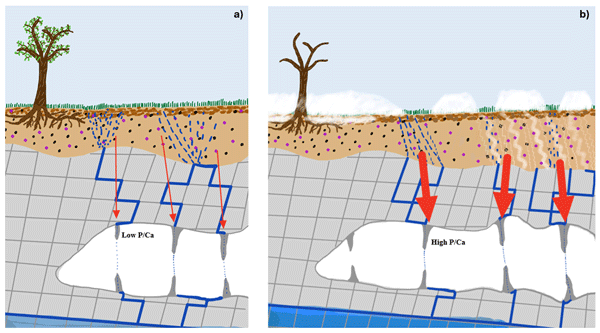
We use stalagmites to study past changes in the terrestrial P cycle. Our P records from multiple, coeval stalagmites from Northwest Spain show that the onsets of past abrupt cooling events are characterized by multi-century reproducible peaks in stalagmite P which reflect higher groundwater P/Ca concentrations and enhanced P export, potentially resulting from increased freeze-thaw frequency and more intense infiltration from snowmelt.
Nikita Kaushal, Franziska A. Lechleitner, Micah Wilhelm, Khalil Azennoud, Janica C. Bühler, Kerstin Braun, Yassine Ait Brahim, Andy Baker, Yuval Burstyn, Laia Comas-Bru, Jens Fohlmeister, Yonaton Goldsmith, Sandy P. Harrison, István G. Hatvani, Kira Rehfeld, Magdalena Ritzau, Vanessa Skiba, Heather M. Stoll, József G. Szűcs, Péter Tanos, Pauline C. Treble, Vitor Azevedo, Jonathan L. Baker, Andrea Borsato, Sakonvan Chawchai, Andrea Columbu, Laura Endres, Jun Hu, Zoltán Kern, Alena Kimbrough, Koray Koç, Monika Markowska, Belen Martrat, Syed Masood Ahmad, Carole Nehme, Valdir Felipe Novello, Carlos Pérez-Mejías, Jiaoyang Ruan, Natasha Sekhon, Nitesh Sinha, Carol V. Tadros, Benjamin H. Tiger, Sophie Warken, Annabel Wolf, Haiwei Zhang, and SISAL Working Group members
Earth Syst. Sci. Data, 16, 1933–1963, https://doi.org/10.5194/essd-16-1933-2024, https://doi.org/10.5194/essd-16-1933-2024, 2024
Short summary
Short summary
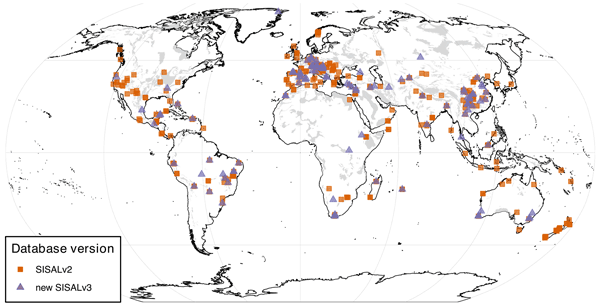
Speleothems are a popular, multi-proxy climate archive that provide regional to global insights into past hydroclimate trends with precise chronologies. We present an update to the SISAL (Speleothem Isotopes
Synthesis and AnaLysis) database, SISALv3, which, for the first time, contains speleothem trace element records, in addition to an update to the stable isotope records available in previous versions of the database, cumulatively providing data from 365 globally distributed sites.
Synthesis and AnaLysis) database, SISALv3, which, for the first time, contains speleothem trace element records, in addition to an update to the stable isotope records available in previous versions of the database, cumulatively providing data from 365 globally distributed sites.
Heather M. Stoll, Chris Day, Franziska Lechleitner, Oliver Kost, Laura Endres, Jakub Sliwinski, Carlos Pérez-Mejías, Hai Cheng, and Denis Scholz
Clim. Past, 19, 2423–2444, https://doi.org/10.5194/cp-19-2423-2023, https://doi.org/10.5194/cp-19-2423-2023, 2023
Short summary
Short summary
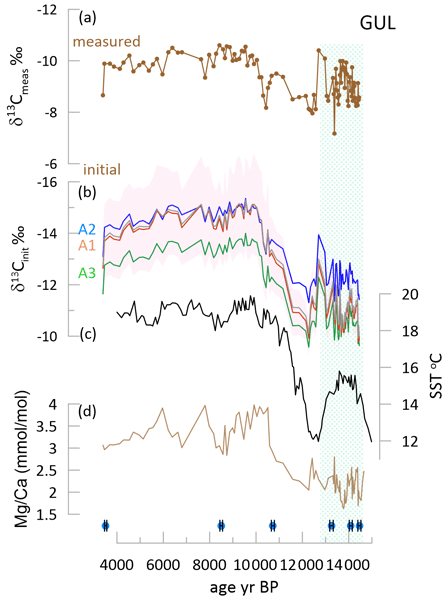
Stalagmites formed in caves provide valuable information about past changes in climate and vegetation conditions. In this contribution, we present a new method to better estimate past changes in soil and vegetation productivity using carbon isotopes and trace elements measured in stalagmites. Applying this method to other stalagmites should provide a better indication of past vegetation feedbacks to climate change.
Oliver Kost, Saúl González-Lemos, Laura Rodríguez-Rodríguez, Jakub Sliwinski, Laura Endres, Negar Haghipour, and Heather Stoll
Hydrol. Earth Syst. Sci., 27, 2227–2255, https://doi.org/10.5194/hess-27-2227-2023, https://doi.org/10.5194/hess-27-2227-2023, 2023
Short summary
Short summary
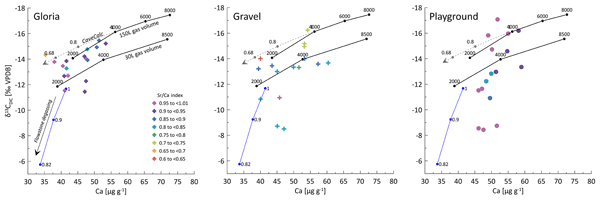
Cave monitoring studies including cave drip water are unique opportunities to sample water which has percolated through the soil and rock. The change in drip water chemistry is resolved over the course of 16 months, inferring seasonal and hydrological variations in soil and karst processes at the water–air and water–rock interface. Such data sets improve the understanding of hydrological and hydrochemical processes and ultimately advance the interpretation of geochemical stalagmite records.
Sarah Rowan, Marc Luetscher, Negar Haghipour, Heather M. Stoll, Laura Endres, Sönke Szidat, and Franziska A. Lechleitner
EGUsphere, https://doi.org/10.5194/egusphere-2026-5813, https://doi.org/10.5194/egusphere-2026-5813, 2026
This preprint is open for discussion and under review for Biogeosciences (BG).
Short summary
Short summary
Soils and plants store three times as much carbon as the atmosphere but how carbon is lost to inland water bodies remains uncertain. We present two years of data from a cave system, revealing contrasting sources and ages of dissolved carbon pools, as well as strong seasonal dynamics. A speleothem (secondary cave carbonate deposit) allows us to trace these signatures back in time. Our findings highlight the complexity of belowground transport and transformation of carbon.
Fernando Gázquez, Hubert Vonhof, Carlos Pérez-Mejías, Andrea Columbu, Alena Giesche, Hai Cheng, Alfredo Martínez-García, Brian DiMento, Eneko Iriarte, and José María Calaforra
EGUsphere, https://doi.org/10.5194/egusphere-2026-4435, https://doi.org/10.5194/egusphere-2026-4435, 2026
This preprint is open for discussion and under review for Climate of the Past (CP).
Short summary
Short summary
By studying mineral deposits formed in a cave in southern Spain, we reconstructed how climate changed between about 9,700 and 4,400 years ago. We found that a humid climate gradually gave way to much drier conditions, with the main transition occurring between 6,000 and 5,500 years ago. These results show how the end of a wet period in North Africa also affected southern Europe, improving our understanding of how regional climates respond to large-scale environmental change.
Celia Campa-Bousoño, Miguel Iglesias, Iñaki Vadillo, Lucía Ojeda, Jorge Pisonero, Hai Cheng, R. Lawrence Edwards, and Heather Stoll
EGUsphere, https://doi.org/10.5194/egusphere-2026-3717, https://doi.org/10.5194/egusphere-2026-3717, 2026
Short summary
Short summary
To understand how rainfall changed in southern Iberia during the shift from the Medieval Climate Anomaly to the Little Ice Age, we studied yearly layers preserved in a stalagmite from Ardales Cave, southern Spain. The record shows repeated shifts between wetter and drier periods, including major droughts around 1125, 1250, 1500, and 1560 CE. It also reveals intervals of more variable rainfall, suggesting changing influence from Atlantic and Mediterranean weather patterns.
Thomas Tanner, Ivan Hernandez-Almeida, Reto Wijker, Andrea K. Manirajan, Madeleine Santos, Peter Bijl, Tim van Peer, and Heather Stoll
EGUsphere, https://doi.org/10.5194/egusphere-2026-3415, https://doi.org/10.5194/egusphere-2026-3415, 2026
Short summary
Short summary
In this study, we examined the relationship between surface ocean temperature in the midlatitudes in both the Northern and Southern Hemispheres over a period of major Antarctic ice expansion 24 to 22 million years ago, a period when Antarctica was the only polar ice sheet. We find consistent cooling of the surface ocean in both hemispheres as ice was expanding, indicating a close coupling of global climate and polar ice caps.
Violet L. Patterson, Lauren J. Gregoire, Ruza F. Ivanovic, Niall Gandy, Stephen Cornford, Jonathan Owen, Sam Sherriff-Tadano, and Robin S. Smith
The Cryosphere, 20, 2589–2628, https://doi.org/10.5194/tc-20-2589-2026, https://doi.org/10.5194/tc-20-2589-2026, 2026
Short summary
Short summary
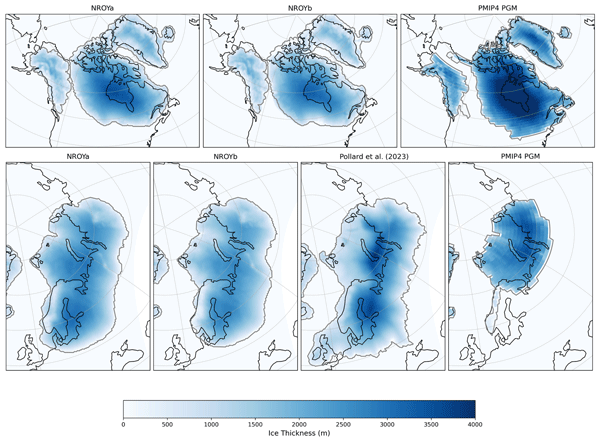
Simulations of the last two glacial periods are ran using a computer model in which the atmosphere and ice sheets interact. The model is able to produce ice sheet volumes, extents and dynamics in good agreement with data. Sensitivity analysis is undertaken and shows the Northern Hemisphere ice sheet size is particularly sensitive to the albedo of the ice in the model but the different ice sheets display different sensitivities to other processes.
Reto S. Wijker, Pere Aguiló-Nicolau, Madalina Jaggi, Jeroni Galmés, and Heather M. Stoll
Biogeosciences, 23, 1591–1608, https://doi.org/10.5194/bg-23-1591-2026, https://doi.org/10.5194/bg-23-1591-2026, 2026
Short summary
Short summary
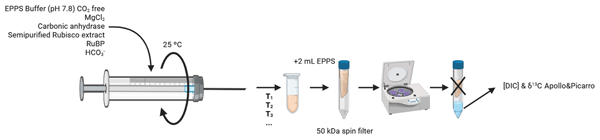
Photosynthetic organisms leave characteristic carbon isotope fingerprints that help scientists study Earth’s carbon cycle. We developed a simpler laboratory method to measure these isotope effects in Rubisco, the key enzyme fixing CO2. Applying this approach, we obtained the first measurement for Gephyrocapsa oceanica, a widespread marine alga that plays a major role in ocean carbon cycling.
Alexander J. Clark, Alba Gonzalez-Lanchas, Kyra Bachmakova, Madalina Jaggi, and Heather M. Stoll
J. Micropalaeontol., 44, 673–692, https://doi.org/10.5194/jm-44-673-2025, https://doi.org/10.5194/jm-44-673-2025, 2025
Short summary
Short summary
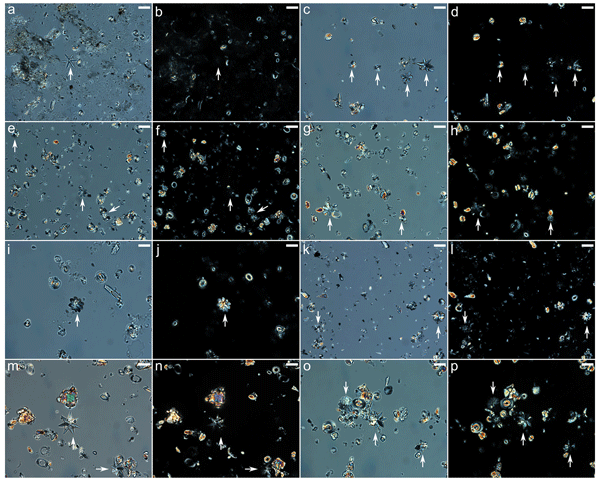
We quantified the thickness of early Eocene calcareous nannofossils and linked it to different depositional environment parameters. Discoasters and placoliths do not respond in the same manner. Carbonate content affects discoasters and induces overgrowth, but palaeowater depth affects placoliths and can induce dissolution. We also find that the ratio of non-overgrown to overgrown Discoaster multiradiatus is a potential quantitative placolith preservation indicator.
Nicolas Tapia, Laura Endres, Madalina Jaggi, and Heather Stoll
Biogeosciences, 22, 6861–6875, https://doi.org/10.5194/bg-22-6861-2025, https://doi.org/10.5194/bg-22-6861-2025, 2025
Short summary
Short summary
We use stalagmites to study past changes in the terrestrial P cycle. Our P records from multiple, coeval stalagmites from Northwest Spain show that the onsets of past abrupt cooling events are characterized by multi-century reproducible peaks in stalagmite P which reflect higher groundwater P/Ca concentrations and enhanced P export, potentially resulting from increased freeze-thaw frequency and more intense infiltration from snowmelt.
Heather M. Stoll, Clara Bolton, Madalina Jaggi, Alfredo Martinez-Garcia, and Stefano M. Bernasconi
Clim. Past, 21, 2189–2203, https://doi.org/10.5194/cp-21-2189-2025, https://doi.org/10.5194/cp-21-2189-2025, 2025
Short summary
Short summary
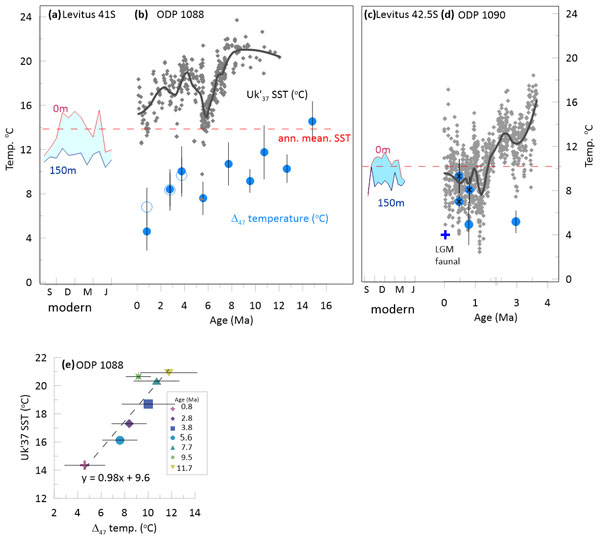
In periods of high atmospheric CO2 many proxies suggest more extreme past polar warming than is simulated by current coupled climate models. Providing new data on high latitude temperatures in the South Atlantic over the last 15 million years using clumped isotope thermometry, we show that absolute temperatures may not have been as warm as indicated by some biomarker based proxy climate records.
José Guitián, Samuel Phelps, Reto S. Wijker, Pratigya J. Polissar, Laura Arnold, and Heather M. Stoll
Clim. Past, 21, 2115–2132, https://doi.org/10.5194/cp-21-2115-2025, https://doi.org/10.5194/cp-21-2115-2025, 2025
Short summary
Short summary
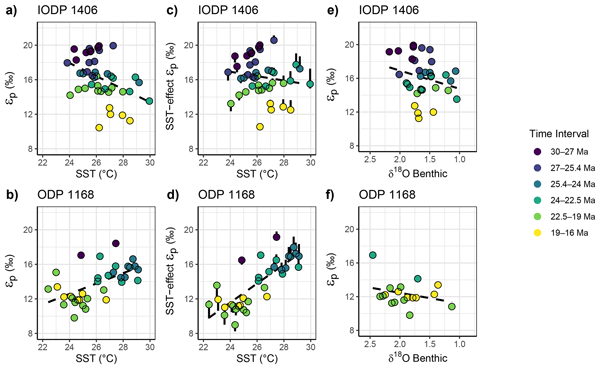
We reconstructed from sediments of different ocean sites phytoplankton carbon isotopic fractionation (εp), mainly linked to CO2 variations, during the Oligocene to early Miocene. Data confirm Cenozoic long-term CO2 record but show contrasting relationships with the sea surface temperatures evolution. We evaluate the role of non-CO2 environmental factors such as temperature and nutrients at each site εp, highlighting the complexity of interpreting climate dynamics and CO2 reconstructions.
Nikita Kaushal, Carlos Pérez-Mejías, and Heather M. Stoll
Clim. Past, 21, 1633–1660, https://doi.org/10.5194/cp-21-1633-2025, https://doi.org/10.5194/cp-21-1633-2025, 2025
Short summary
Short summary
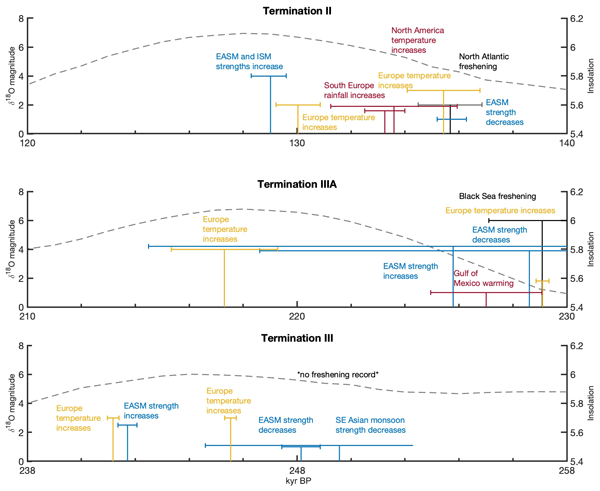
Terminations are large-magnitude rapid events triggered in the North Atlantic region that manifest across the global climate system. They provide key examples of climatic teleconnections and dynamics. In this study, we use the SISAL global speleothem database and find that there are sufficient climatic records from key locations to make speleothems a valuable archive for studying terminations and provide instances for more targeted work on speleothem research.
Takashi Obase, Laurie Menviel, Ayako Abe-Ouchi, Tristan Vadsaria, Ruza Ivanovic, Brooke Snoll, Sam Sherriff-Tadano, Paul J. Valdes, Lauren Gregoire, Marie-Luise Kapsch, Uwe Mikolajewicz, Nathaelle Bouttes, Didier Roche, Fanny Lhardy, Chengfei He, Bette Otto-Bliesner, Zhengyu Liu, and Wing-Le Chan
Clim. Past, 21, 1443–1463, https://doi.org/10.5194/cp-21-1443-2025, https://doi.org/10.5194/cp-21-1443-2025, 2025
Short summary
Short summary
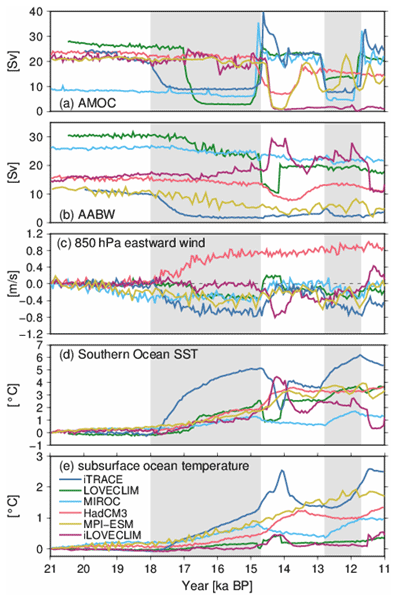
This study analyses transient simulations of the last deglaciation performed by six climate models to understand the processes driving high-southern-latitude temperature changes. We find that atmospheric CO2 and AMOC (Atlantic Meridional Overturning Circulation) changes are the primary drivers of the warming and cooling during the middle stage of the deglaciation. The analysis highlights the model's sensitivity of CO2 and AMOC to meltwater and the meltwater history of temperature changes at high southern latitudes.
Timothy J. Pollard, Jon D. Woodhead, Russell N. Drysdale, R. Lawrence Edwards, Xianglei Li, Ashlea N. Wainwright, Mathieu Pythoud, Hai Cheng, John C. Hellstrom, Ilaria Isola, Eleonora Regattieri, Giovanni Zanchetta, and Dylan S. Parmenter
Geochronology, 7, 335–355, https://doi.org/10.5194/gchron-7-335-2025, https://doi.org/10.5194/gchron-7-335-2025, 2025
Short summary
Short summary
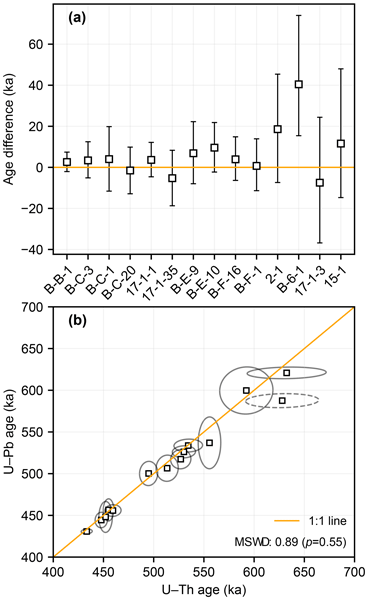
The uranium–thorium (U–Th) and uranium–lead (U–Pb) radiometric dating methods are both suitable for dating carbonate samples ranging in age from about 400 000 to 650 000 years. Here we test agreement between the two methods by dating speleothems (i.e. secondary cave mineral deposits) that are well-suited to both methods. We demonstrate excellent agreement between them and discuss their relative strengths and weaknesses.
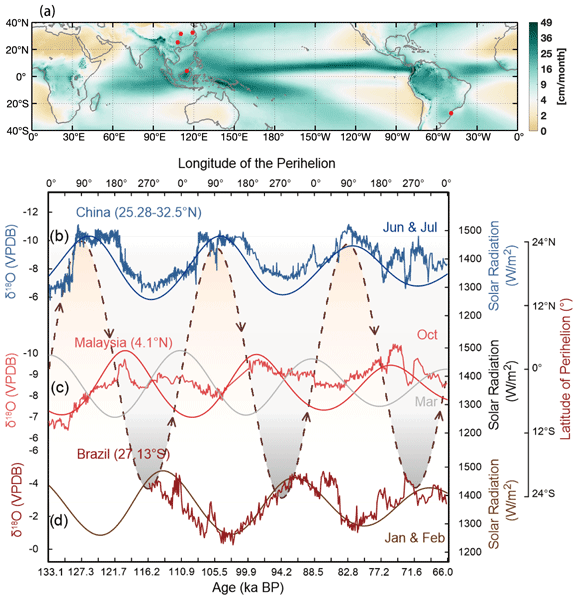
Hu Yang, Xiaoxu Shi, Xulong Wang, Qingsong Liu, Yi Zhong, Xiaodong Liu, Youbin Sun, Yanjun Cai, Fei Liu, Gerrit Lohmann, Martin Werner, Zhimin Jian, Tainã M. L. Pinho, Hai Cheng, Lijuan Lu, Jiping Liu, Chao-Yuan Yang, Qinghua Yang, Yongyun Hu, Xing Cheng, Jingyu Zhang, and Dake Chen
Clim. Past, 21, 1263–1279, https://doi.org/10.5194/cp-21-1263-2025, https://doi.org/10.5194/cp-21-1263-2025, 2025
Short summary
Short summary
For 1 century, the hemispheric summer insolation is proposed as a key pacemaker of astronomical climate change. However, an increasing number of geologic records reveal that the low-latitude hydrological cycle shows asynchronous precessional evolutions that are very often out of phase with the summer insolation. Here, we propose that the astronomically driven low-latitude hydrological cycle is not paced by summer insolation but by shifting perihelion.
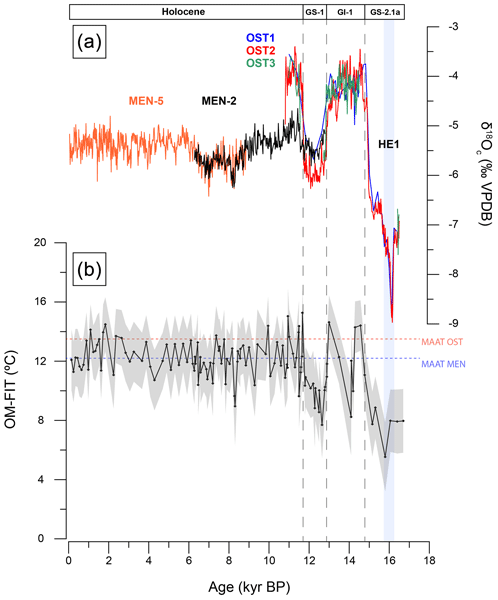
Juan Luis Bernal-Wormull, Ana Moreno, Yuri Dublyansky, Christoph Spötl, Reyes Giménez, Carlos Pérez-Mejías, Miguel Bartolomé, Martin Arriolabengoa, Eneko Iriarte, Isabel Cacho, Richard Lawrence Edwards, and Hai Cheng
Clim. Past, 21, 1235–1261, https://doi.org/10.5194/cp-21-1235-2025, https://doi.org/10.5194/cp-21-1235-2025, 2025
Short summary
Short summary
In this paper we present a record of temperature changes during the last deglaciation and the Holocene using isotopes of fluid inclusions in stalagmites from the northeastern region of the Iberian Peninsula. This innovative climate proxy for this study region provides a quantitative understanding of the abrupt temperature changes in southern Europe in the last 16 500 years before present.
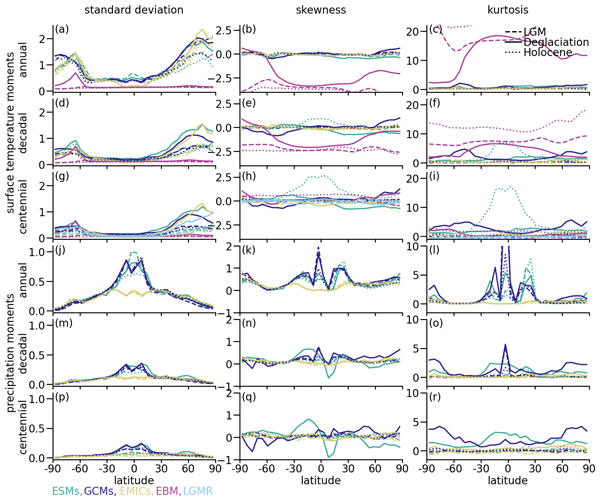
Elisa Ziegler, Nils Weitzel, Jean-Philippe Baudouin, Marie-Luise Kapsch, Uwe Mikolajewicz, Lauren Gregoire, Ruza Ivanovic, Paul J. Valdes, Christian Wirths, and Kira Rehfeld
Clim. Past, 21, 627–659, https://doi.org/10.5194/cp-21-627-2025, https://doi.org/10.5194/cp-21-627-2025, 2025
Short summary
Short summary
During the Last Deglaciation, global surface temperature rose by about 4–7 °C over several millennia. We show that changes in year-to-year up to century-to-century fluctuations of temperature and precipitation during the Deglaciation were mostly larger than during either the preceding or succeeding more stable periods in 15 climate model simulations. The analysis demonstrates how ice sheets, meltwater, and volcanism influence simulated variability to inform future simulation protocols.
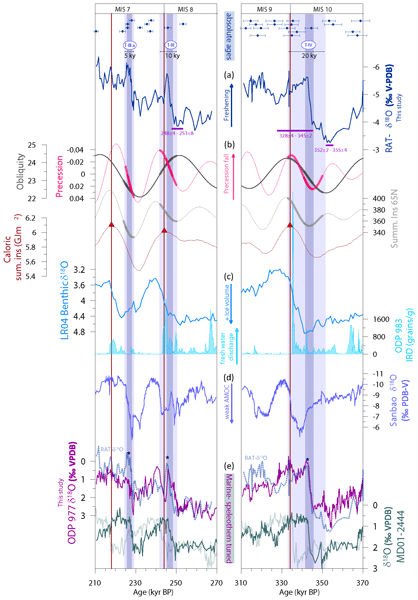
Judit Torner, Isabel Cacho, Heather Stoll, Ana Moreno, Joan O. Grimalt, Francisco J. Sierro, Joan J. Fornós, Hai Cheng, and R. Lawrence Edwards
Clim. Past, 21, 465–487, https://doi.org/10.5194/cp-21-465-2025, https://doi.org/10.5194/cp-21-465-2025, 2025
Short summary
Short summary
We offer a clearer view of the timing of three relevant past glacial terminations. By analyzing the climatic signal recorded in stalagmite and linking it with marine records, we revealed differences in the intensity and duration of the ice melting associated with these three key deglaciations. This study shows that some deglaciations began earlier than previously thought; this improves our understanding of natural climate processes, helping us to contextualize current climate change.
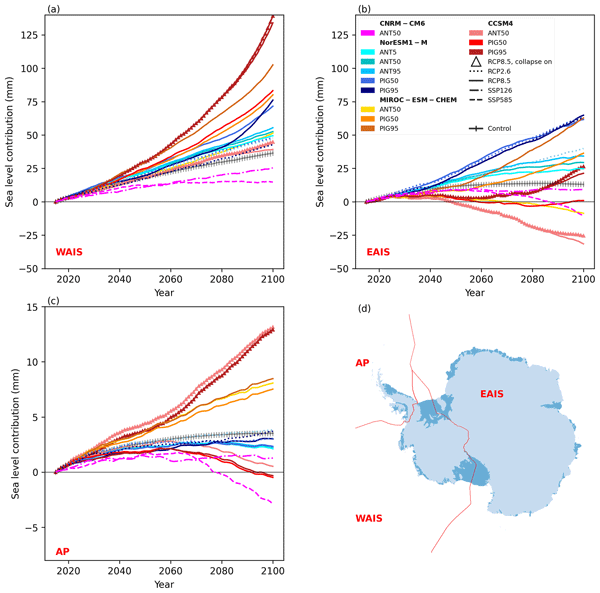
James F. O'Neill, Tamsin L. Edwards, Daniel F. Martin, Courtney Shafer, Stephen L. Cornford, Hélène L. Seroussi, Sophie Nowicki, Mira Adhikari, and Lauren J. Gregoire
The Cryosphere, 19, 541–563, https://doi.org/10.5194/tc-19-541-2025, https://doi.org/10.5194/tc-19-541-2025, 2025
Short summary
Short summary
We use an ice sheet model to simulate the Antarctic contribution to sea level over the 21st century under a range of future climates and varying how sensitive the ice sheet is to different processes. We find that ocean temperatures increase and more snow falls on the ice sheet under stronger warming scenarios. When the ice sheet is sensitive to ocean warming, ocean melt-driven loss exceeds snowfall-driven gains, meaning that the sea level contribution is greater with more climate warming.
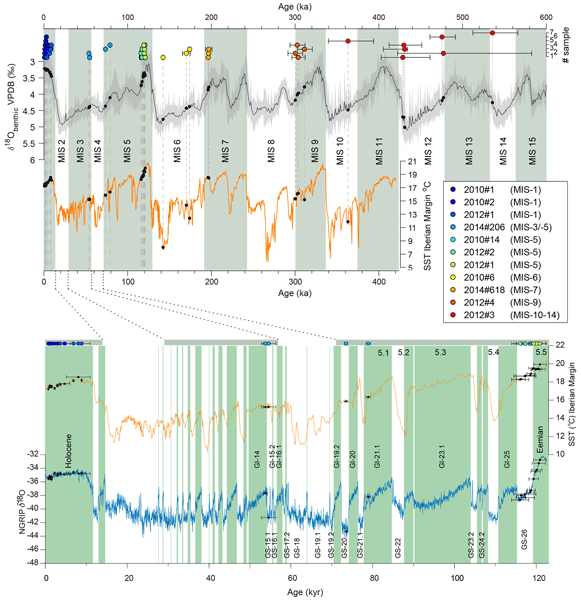
Hubert B. Vonhof, Sophie Verheyden, Dominique Bonjean, Stéphane Pirson, Michael Weber, Denis Scholz, John Hellstrom, Hai Cheng, Xue Jia, Kévin Di Modica, Gregory Abrams, Marjan A. P. van Nunen, Joost Ruiter, Michèlle van der Does, Daniel Böhl, and Jeroen H. J. L. van der Lubbe
Clim. Past, 20, 2741–2758, https://doi.org/10.5194/cp-20-2741-2024, https://doi.org/10.5194/cp-20-2741-2024, 2024
Short summary
Short summary
The sedimentary sequence in Scladina Cave (Belgium) is well-known for its rich archeological assemblages and its numerous faunal remains. Of particular interest is the presence of a nearly complete jaw bone of a Neanderthal child. In this study, we present new uranium series ages of stalagmites from the archeological sequence that allow more precise dating of the archeological finds. One key result is that the Neanderthal child may be slightly older than previously thought.
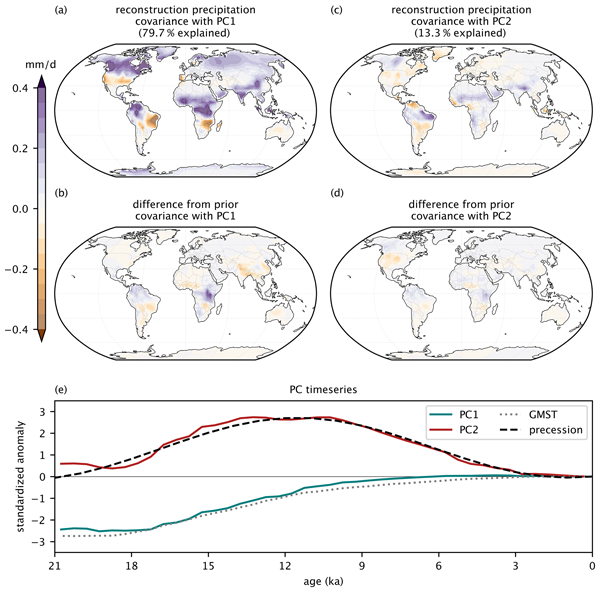
Christopher L. Hancock, Michael P. Erb, Nicholas P. McKay, Sylvia G. Dee, and Ruza F. Ivanovic
Clim. Past, 20, 2663–2684, https://doi.org/10.5194/cp-20-2663-2024, https://doi.org/10.5194/cp-20-2663-2024, 2024
Short summary
Short summary
We reconstruct global hydroclimate anomalies for the past 21 000 years using a data assimilation methodology blending observations recorded in lake sediments with the climate dynamics simulated by climate models. The reconstruction resolves data–model disagreement in east Africa and North America, and we find that changing global temperatures and associated circulation patterns, as well as orbital forcing, are the dominant controls on global precipitation over this interval.
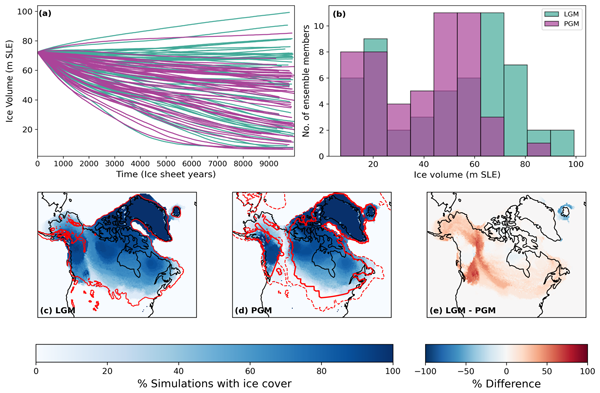
Violet L. Patterson, Lauren J. Gregoire, Ruza F. Ivanovic, Niall Gandy, Jonathan Owen, Robin S. Smith, Oliver G. Pollard, Lachlan C. Astfalck, and Paul J. Valdes
Clim. Past, 20, 2191–2218, https://doi.org/10.5194/cp-20-2191-2024, https://doi.org/10.5194/cp-20-2191-2024, 2024
Short summary
Short summary
Simulations of the last two glacial periods are run using a computer model in which the atmosphere and ice sheets interact. The results show that the initial conditions used in the simulations are the primary reason for the difference in simulated North American ice sheet volume between each period. Thus, the climate leading up to the glacial maxima and other factors, such as vegetation, are important contributors to the differences in the ice sheets at the Last and Penultimate glacial maxima.
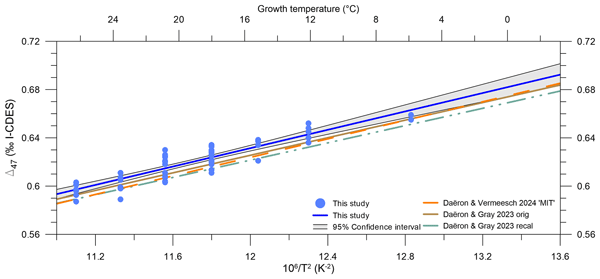
Alexander J. Clark, Ismael Torres-Romero, Madalina Jaggi, Stefano M. Bernasconi, and Heather M. Stoll
Clim. Past, 20, 2081–2101, https://doi.org/10.5194/cp-20-2081-2024, https://doi.org/10.5194/cp-20-2081-2024, 2024
Short summary
Short summary
Coccoliths are abundant in sediments across the world’s oceans, yet it is difficult to apply traditional carbon or oxygen isotope methodologies for temperature reconstructions. We show that our coccolith clumped isotope temperature calibration with well-constrained temperatures systematically differs from inorganic carbonate calibrations. We suggest the use of our well-constrained calibration for future coccolith carbonate temperature reconstructions.
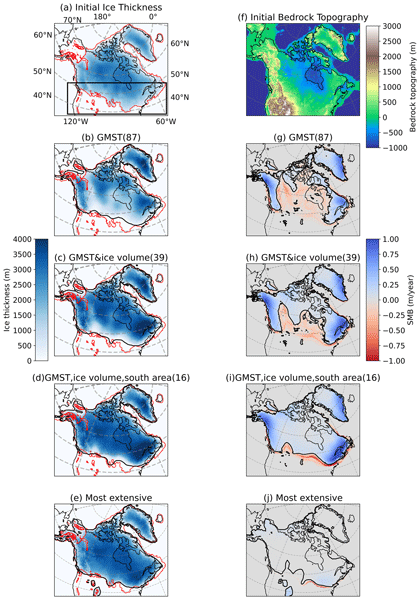
Sam Sherriff-Tadano, Ruza Ivanovic, Lauren Gregoire, Charlotte Lang, Niall Gandy, Jonathan Gregory, Tamsin L. Edwards, Oliver Pollard, and Robin S. Smith
Clim. Past, 20, 1489–1512, https://doi.org/10.5194/cp-20-1489-2024, https://doi.org/10.5194/cp-20-1489-2024, 2024
Short summary
Short summary
Ensemble simulations of the climate and ice sheets of the Last Glacial Maximum (LGM) are performed with a new coupled climate–ice sheet model. Results show a strong sensitivity of the North American ice sheet to the albedo scheme, while the Greenland ice sheet appeared more sensitive to basal sliding schemes. Our result implies a potential connection between the North American ice sheet at the LGM and the future Greenland ice sheet through the albedo scheme.
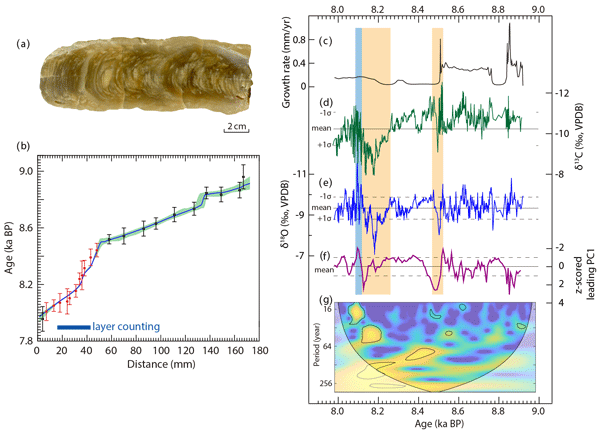
Pengzhen Duan, Hanying Li, Zhibang Ma, Jingyao Zhao, Xiyu Dong, Ashish Sinha, Peng Hu, Haiwei Zhang, Youfeng Ning, Guangyou Zhu, and Hai Cheng
Clim. Past, 20, 1401–1414, https://doi.org/10.5194/cp-20-1401-2024, https://doi.org/10.5194/cp-20-1401-2024, 2024
Short summary
Short summary
We use multi-proxy speleothem records to reveal a two droughts–one pluvial pattern during 8.5–8.0 ka. The different rebounded rainfall quantity after two droughts causes different behavior of δ13C, suggesting the dominant role of rainfall threshold on the ecosystem. A comparison of different records suggests the prolonged 8.2 ka event is a globally common phenomenon rather than a regional signal. The variability of the AMOC strength is mainly responsible for these climate changes.
Nikita Kaushal, Franziska A. Lechleitner, Micah Wilhelm, Khalil Azennoud, Janica C. Bühler, Kerstin Braun, Yassine Ait Brahim, Andy Baker, Yuval Burstyn, Laia Comas-Bru, Jens Fohlmeister, Yonaton Goldsmith, Sandy P. Harrison, István G. Hatvani, Kira Rehfeld, Magdalena Ritzau, Vanessa Skiba, Heather M. Stoll, József G. Szűcs, Péter Tanos, Pauline C. Treble, Vitor Azevedo, Jonathan L. Baker, Andrea Borsato, Sakonvan Chawchai, Andrea Columbu, Laura Endres, Jun Hu, Zoltán Kern, Alena Kimbrough, Koray Koç, Monika Markowska, Belen Martrat, Syed Masood Ahmad, Carole Nehme, Valdir Felipe Novello, Carlos Pérez-Mejías, Jiaoyang Ruan, Natasha Sekhon, Nitesh Sinha, Carol V. Tadros, Benjamin H. Tiger, Sophie Warken, Annabel Wolf, Haiwei Zhang, and SISAL Working Group members
Earth Syst. Sci. Data, 16, 1933–1963, https://doi.org/10.5194/essd-16-1933-2024, https://doi.org/10.5194/essd-16-1933-2024, 2024
Short summary
Short summary
Speleothems are a popular, multi-proxy climate archive that provide regional to global insights into past hydroclimate trends with precise chronologies. We present an update to the SISAL (Speleothem Isotopes
Synthesis and AnaLysis) database, SISALv3, which, for the first time, contains speleothem trace element records, in addition to an update to the stable isotope records available in previous versions of the database, cumulatively providing data from 365 globally distributed sites.
Synthesis and AnaLysis) database, SISALv3, which, for the first time, contains speleothem trace element records, in addition to an update to the stable isotope records available in previous versions of the database, cumulatively providing data from 365 globally distributed sites.
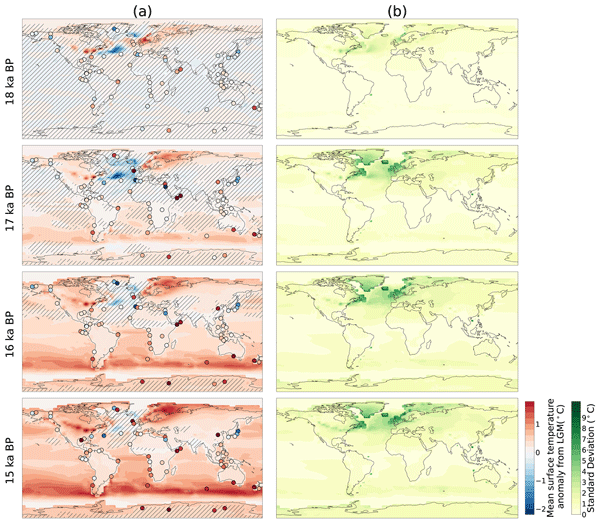
Brooke Snoll, Ruza Ivanovic, Lauren Gregoire, Sam Sherriff-Tadano, Laurie Menviel, Takashi Obase, Ayako Abe-Ouchi, Nathaelle Bouttes, Chengfei He, Feng He, Marie Kapsch, Uwe Mikolajewicz, Juan Muglia, and Paul Valdes
Clim. Past, 20, 789–815, https://doi.org/10.5194/cp-20-789-2024, https://doi.org/10.5194/cp-20-789-2024, 2024
Short summary
Short summary
Geological records show rapid climate change throughout the recent deglaciation. The drivers of these changes are still misunderstood but are often attributed to shifts in the Atlantic Ocean circulation from meltwater input. A cumulative effort to understand these processes prompted numerous simulations of this period. We use these to explain the chain of events and our collective ability to simulate them. The results demonstrate the importance of the meltwater amount used in the simulation.
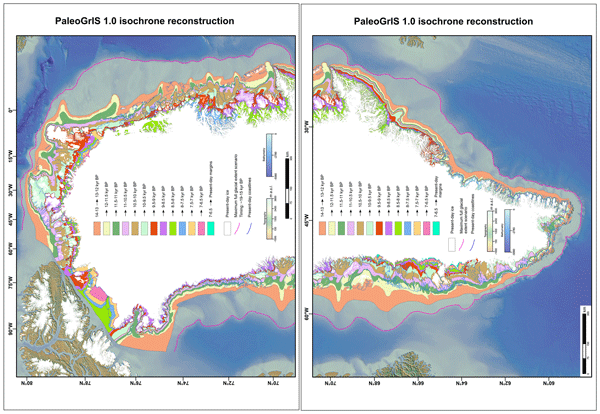
Tancrède P. M. Leger, Christopher D. Clark, Carla Huynh, Sharman Jones, Jeremy C. Ely, Sarah L. Bradley, Christiaan Diemont, and Anna L. C. Hughes
Clim. Past, 20, 701–755, https://doi.org/10.5194/cp-20-701-2024, https://doi.org/10.5194/cp-20-701-2024, 2024
Short summary
Short summary
Projecting the future evolution of the Greenland Ice Sheet is key. However, it is still under the influence of past climate changes that occurred over thousands of years. This makes calibrating projection models against current knowledge of its past evolution (not yet achieved) important. To help with this, we produced a new Greenland-wide reconstruction of ice sheet extent by gathering all published studies dating its former retreat and by mapping its past margins at the ice sheet scale.
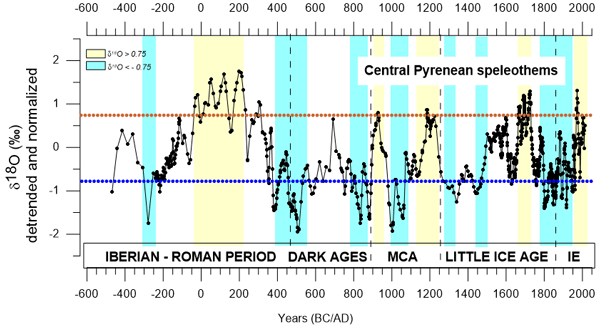
Miguel Bartolomé, Ana Moreno, Carlos Sancho, Isabel Cacho, Heather Stoll, Negar Haghipour, Ánchel Belmonte, Christoph Spötl, John Hellstrom, R. Lawrence Edwards, and Hai Cheng
Clim. Past, 20, 467–494, https://doi.org/10.5194/cp-20-467-2024, https://doi.org/10.5194/cp-20-467-2024, 2024
Short summary
Short summary
Reconstructing past temperatures at regional scales during the Common Era is necessary to place the current warming in the context of natural climate variability. We present a climate reconstruction based on eight stalagmites from four caves in the Pyrenees, NE Spain. These stalagmites were dated precisely and analysed for their oxygen isotopes, which appear dominated by temperature changes. Solar variability and major volcanic eruptions are the two main drivers of observed climate variability.
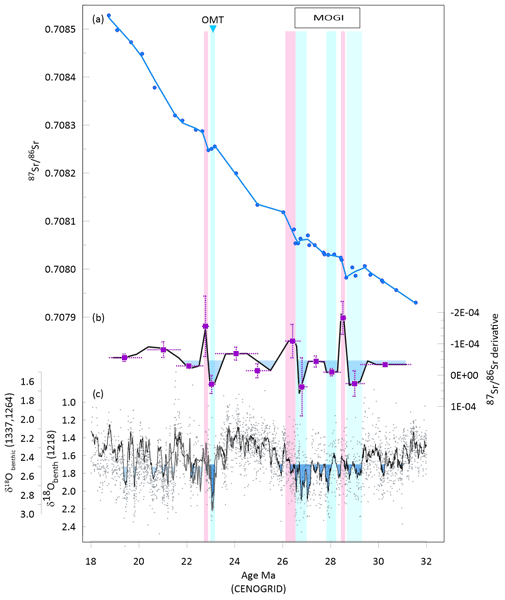
Heather M. Stoll, Leopoldo D. Pena, Ivan Hernandez-Almeida, José Guitián, Thomas Tanner, and Heiko Pälike
Clim. Past, 20, 25–36, https://doi.org/10.5194/cp-20-25-2024, https://doi.org/10.5194/cp-20-25-2024, 2024
Short summary
Short summary
The Oligocene and early Miocene periods featured dynamic glacial cycles on Antarctica. In this paper, we use Sr isotopes in marine carbonate sediments to document a change in the location and intensity of continental weathering during short periods of very intense Antarctic glaciation. Potentially, the weathering intensity of old continental rocks on Antarctica was reduced during glaciation. We also show improved age models for correlation of Southern Ocean and North Atlantic sediments.
Heather M. Stoll, Chris Day, Franziska Lechleitner, Oliver Kost, Laura Endres, Jakub Sliwinski, Carlos Pérez-Mejías, Hai Cheng, and Denis Scholz
Clim. Past, 19, 2423–2444, https://doi.org/10.5194/cp-19-2423-2023, https://doi.org/10.5194/cp-19-2423-2023, 2023
Short summary
Short summary
Stalagmites formed in caves provide valuable information about past changes in climate and vegetation conditions. In this contribution, we present a new method to better estimate past changes in soil and vegetation productivity using carbon isotopes and trace elements measured in stalagmites. Applying this method to other stalagmites should provide a better indication of past vegetation feedbacks to climate change.
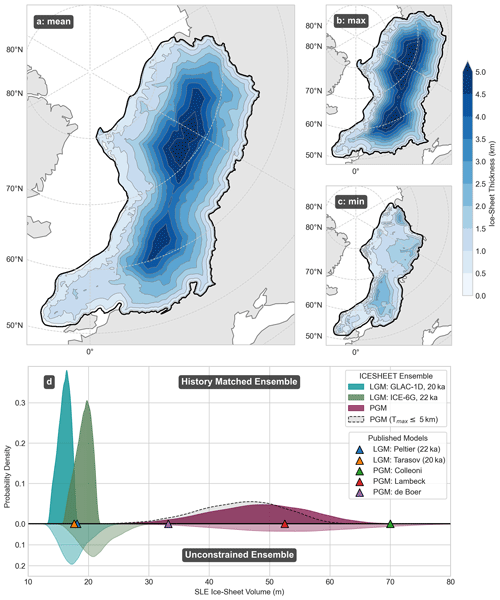
Oliver G. Pollard, Natasha L. M. Barlow, Lauren J. Gregoire, Natalya Gomez, Víctor Cartelle, Jeremy C. Ely, and Lachlan C. Astfalck
The Cryosphere, 17, 4751–4777, https://doi.org/10.5194/tc-17-4751-2023, https://doi.org/10.5194/tc-17-4751-2023, 2023
Short summary
Short summary
We use advanced statistical techniques and a simple ice-sheet model to produce an ensemble of plausible 3D shapes of the ice sheet that once stretched across northern Europe during the previous glacial maximum (140,000 years ago). This new reconstruction, equivalent in volume to 48 ± 8 m of global mean sea-level rise, will improve the interpretation of high sea levels recorded from the Last Interglacial period (120 000 years ago) that provide a useful perspective on the future.
Giselle Utida, Francisco W. Cruz, Mathias Vuille, Angela Ampuero, Valdir F. Novello, Jelena Maksic, Gilvan Sampaio, Hai Cheng, Haiwei Zhang, Fabio Ramos Dias de Andrade, and R. Lawrence Edwards
Clim. Past, 19, 1975–1992, https://doi.org/10.5194/cp-19-1975-2023, https://doi.org/10.5194/cp-19-1975-2023, 2023
Short summary
Short summary
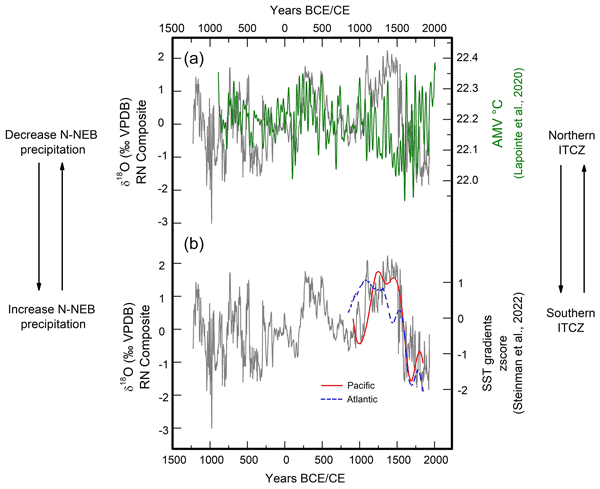
We reconstruct the Intertropical Convergence Zone (ITCZ) behavior during the past 3000 years over northeastern Brazil based on oxygen stable isotopes of stalagmites. Paleoclimate changes were mainly forced by the tropical South Atlantic and tropical Pacific sea surface temperature variability. We describe an ITCZ zonal behavior active around 1100 CE and the period from 1500 to 1750 CE. The dataset also records historical droughts that affected modern human population in this area of Brazil.
Charlotte Honiat, Gabriella Koltai, Yuri Dublyansky, R. Lawrence Edwards, Haiwei Zhang, Hai Cheng, and Christoph Spötl
Clim. Past, 19, 1177–1199, https://doi.org/10.5194/cp-19-1177-2023, https://doi.org/10.5194/cp-19-1177-2023, 2023
Short summary
Short summary
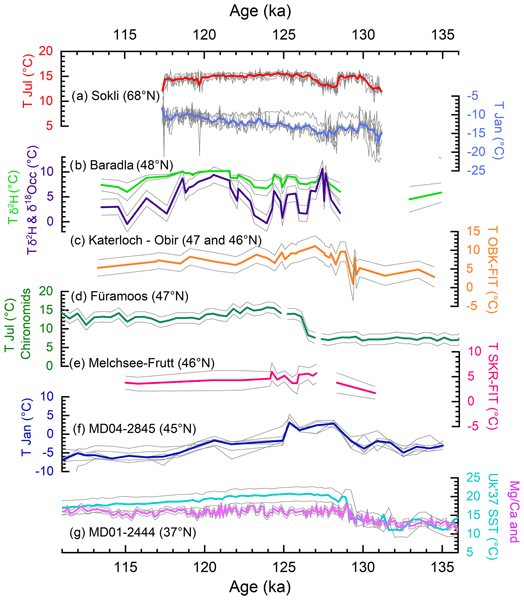
A look at the climate evolution during the last warm period may allow us to test ground for future climate conditions. We quantified the temperature evolution during the Last Interglacial using a tiny amount of water trapped in the crystals of precisely dated stalagmites in caves from the southeastern European Alps. Our record indicates temperatures up to 2 °C warmer than today and an unstable climate during the first half of the Last Interglacial.
Oliver Kost, Saúl González-Lemos, Laura Rodríguez-Rodríguez, Jakub Sliwinski, Laura Endres, Negar Haghipour, and Heather Stoll
Hydrol. Earth Syst. Sci., 27, 2227–2255, https://doi.org/10.5194/hess-27-2227-2023, https://doi.org/10.5194/hess-27-2227-2023, 2023
Short summary
Short summary
Cave monitoring studies including cave drip water are unique opportunities to sample water which has percolated through the soil and rock. The change in drip water chemistry is resolved over the course of 16 months, inferring seasonal and hydrological variations in soil and karst processes at the water–air and water–rock interface. Such data sets improve the understanding of hydrological and hydrochemical processes and ultimately advance the interpretation of geochemical stalagmite records.
Amanda Gerotto, Hongrui Zhang, Renata Hanae Nagai, Heather M. Stoll, Rubens César Lopes Figueira, Chuanlian Liu, and Iván Hernández-Almeida
Biogeosciences, 20, 1725–1739, https://doi.org/10.5194/bg-20-1725-2023, https://doi.org/10.5194/bg-20-1725-2023, 2023
Short summary
Short summary
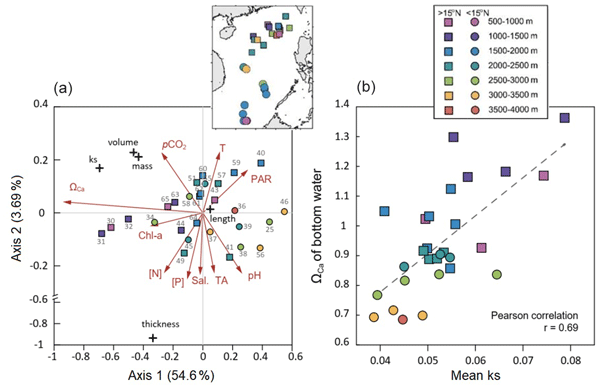
Based on the analysis of the response of coccolithophores’ morphological attributes in a laboratory dissolution experiment and surface sediment samples from the South China Sea, we proposed that the thickness shape (ks) factor of fossil coccoliths together with the normalized ks variation, which is the ratio of the standard deviation of ks (σ) over the mean ks (σ/ks), is a robust and novel proxy to reconstruct past changes in deep ocean carbon chemistry.
Suzanne Robinson, Ruza F. Ivanovic, Lauren J. Gregoire, Julia Tindall, Tina van de Flierdt, Yves Plancherel, Frerk Pöppelmeier, Kazuyo Tachikawa, and Paul J. Valdes
Geosci. Model Dev., 16, 1231–1264, https://doi.org/10.5194/gmd-16-1231-2023, https://doi.org/10.5194/gmd-16-1231-2023, 2023
Short summary
Short summary
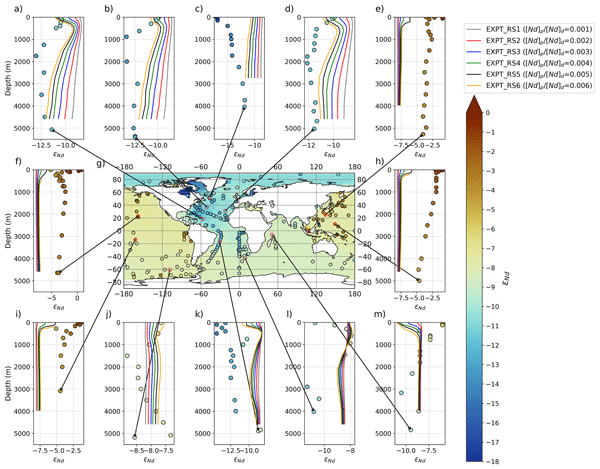
We present the implementation of neodymium (Nd) isotopes into the ocean model of FAMOUS (Nd v1.0). Nd fluxes from seafloor sediment and incorporation of Nd onto sinking particles represent the major global sources and sinks, respectively. However, model–data mismatch in the North Pacific and northern North Atlantic suggest that certain reactive components of the sediment interact the most with seawater. Our results are important for interpreting Nd isotopes in terms of ocean circulation.
Michael P. Erb, Nicholas P. McKay, Nathan Steiger, Sylvia Dee, Chris Hancock, Ruza F. Ivanovic, Lauren J. Gregoire, and Paul Valdes
Clim. Past, 18, 2599–2629, https://doi.org/10.5194/cp-18-2599-2022, https://doi.org/10.5194/cp-18-2599-2022, 2022
Short summary
Short summary
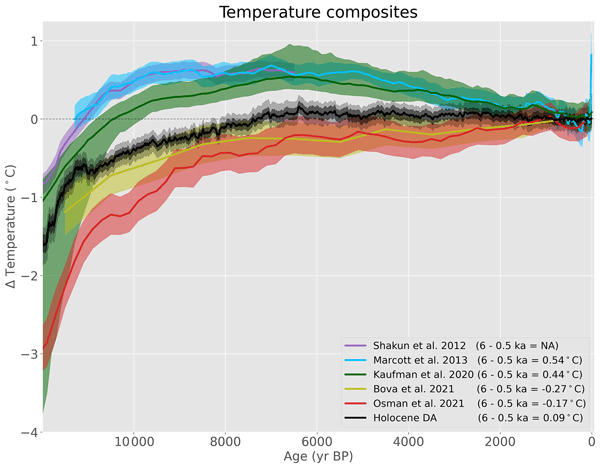
To look at climate over the past 12 000 years, we reconstruct spatial temperature using natural climate archives and information from model simulations. Our results show mild global mean warmth around 6000 years ago, which differs somewhat from past reconstructions. Undiagnosed seasonal biases in the data could explain some of the observed temperature change, but this still would not explain the large difference between many reconstructions and climate models over this period.
Jessica G. M. Crumpton-Banks, Thomas Tanner, Ivan Hernández Almeida, James W. B. Rae, and Heather Stoll
Biogeosciences, 19, 5633–5644, https://doi.org/10.5194/bg-19-5633-2022, https://doi.org/10.5194/bg-19-5633-2022, 2022
Short summary
Short summary
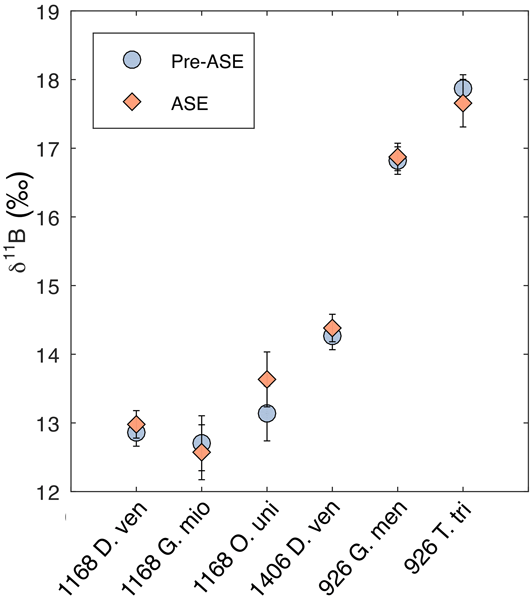
Past ocean carbon is reconstructed using proxies, but it is unknown whether preparing ocean sediment for one proxy might damage the data given by another. We have tested whether the extraction of an organic proxy archive from sediment samples impacts the geochemistry of tiny shells also within the sediment. We find no difference in shell geochemistry between samples which come from treated and untreated sediment. This will help us to maximize scientific return from valuable sediment samples.
Benjamin J. Stoker, Martin Margold, John C. Gosse, Alan J. Hidy, Alistair J. Monteath, Joseph M. Young, Niall Gandy, Lauren J. Gregoire, Sophie L. Norris, and Duane Froese
The Cryosphere, 16, 4865–4886, https://doi.org/10.5194/tc-16-4865-2022, https://doi.org/10.5194/tc-16-4865-2022, 2022
Short summary
Short summary
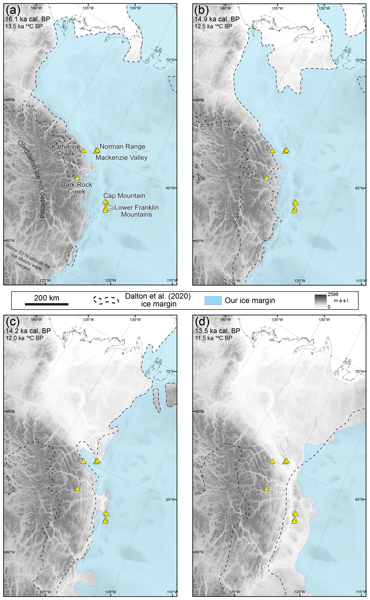
The Laurentide Ice Sheet was the largest ice sheet to grow and disappear in the Northern Hemisphere during the last glaciation. In northwestern Canada, it covered the Mackenzie Valley, blocking the migration of fauna and early humans between North America and Beringia and altering the drainage systems. We reconstruct the timing of ice sheet retreat in this region and the implications for the migration of early humans into North America, the drainage of glacial lakes, and past sea level rise.
José Guitián, Miguel Ángel Fuertes, José-Abel Flores, Iván Hernández-Almeida, and Heather Stoll
Biogeosciences, 19, 5007–5019, https://doi.org/10.5194/bg-19-5007-2022, https://doi.org/10.5194/bg-19-5007-2022, 2022
Short summary
Short summary
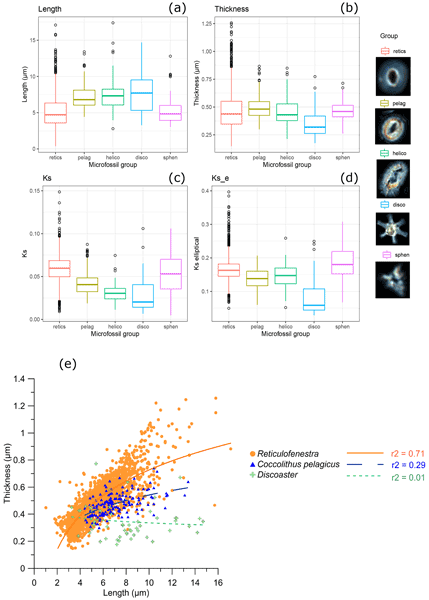
The effect of environmental conditions on the degree of calcification of marine phytoplankton remains unclear. This study implements a new microscopic approach to quantify the calcification of ancient coccolithophores, using North Atlantic sediments. Results show significant differences in the thickness and shape factor of coccoliths for samples with minimum dissolution, providing the first evaluation of phytoplankton physiology adaptation to million-year-scale variable environmental conditions.
Suzanne Robinson, Ruza Ivanovic, Lauren Gregoire, Lachlan Astfalck, Tina van de Flierdt, Yves Plancherel, Frerk Pöppelmeier, and Kazuyo Tachikawa
EGUsphere, https://doi.org/10.5194/egusphere-2022-937, https://doi.org/10.5194/egusphere-2022-937, 2022
Preprint archived
Short summary
Short summary
The neodymium (Nd) isotope (εNd) scheme in the ocean model of FAMOUS is used to explore a benthic Nd flux to seawater. Our results demonstrate that sluggish modern Pacific waters are sensitive to benthic flux alterations, whereas the well-ventilated North Atlantic displays a much weaker response. In closing, there are distinct regional differences in how seawater acquires its εNd signal, in part relating to the complex interactions of Nd addition and water advection.
Cited articles
Alley, R. B. and Clark, P. U.: The deglaciation of the Northern Hemisphere: a global perspective, Annu. Rev. Earth Pl. Sc., 27, 149–182, https://doi.org/10.1146/annurev.earth.27.1.149, 1999. a
Alvarez-Solas, J. and Ramstein, G.: On the triggering mechanism of Heinrich events, P. Natl. Acad. Sci. USA, 108, https://doi.org/10.1073/pnas.1116575108, 2011. a, b, c
Armstrong, E., Izumi, K., and Valdes, P.: Identifying the mechanisms of DO-scale oscillations in a GCM: a salt oscillator triggered by the Laurentide ice sheet, Clim. Dynam., 60, 3983–4001, https://doi.org/10.1007/s00382-022-06564-y, 2023. a
Barker, S. and Knorr, G.: Millennial scale feedbacks determine the shape and rapidity of glacial termination, Nat. Commun., 12, https://doi.org/10.1038/s41467-021-22388-6, 2021. a
Barker, S., Chen, J., Gong, X., Jonkers, L., Knorr, G., and Thornalley, D.: Icebergs not the trigger for North Atlantic cold events, Nature, 520, 333–336, https://doi.org/10.1038/nature14330, 2015. a
Batchelor, C. L., Margold, M., Krapp, M., Murton, D. K., Dalton, A. S., Gibbard, P. L., Stokes, C. R., Murton, J. B., and Manica, A.: The configuration of Northern Hemisphere ice sheets through the quaternary, Nat. Commun., 10, https://doi.org/10.1038/s41467-019-11601-2, 2019. a
Bellomo, K., Meccia, V. L., D'Agostino, R., Fabiano, F., Larson, S. M., Von Hardenberg, J., and Corti, S.: Impacts of a weakened AMOC on precipitation over the Euro-Atlantic region in the EC-Earth3 climate model, Clim. Dynam., 61, 3397–3416, https://doi.org/10.1007/s00382-023-06754-2, 2023. a
Bernal-Wormull, J., Moreno, A., Pérez-Mejías, C., Bartolomé, M., Aranburu, A., Arriolabengoa, M., Iriarte, E., Cacho, I., Spötl, C., Edwards, R., and Cheng, H.: Immediate temperature response in Northern Iberia to last deglacial changes in the North Atlantic, Geology, 49, 999–1003, https://doi.org/10.1130/G48660.1, 2021. a, b, c, d, e
Bethke, I., Li, C., and Nisancioglu, K. H.: Can we use ice sheet reconstructions to constrain meltwater for deglacial simulations?, Paleoceanography, 27, 2011PA002258, https://doi.org/10.1029/2011PA002258, 2012. a
Breitenbach, S. F., Lechleitner, F. A., Meyer, H., Diengdoh, G., Mattey, D., and Marwan, N.: Cave ventilation and rainfall signals in dripwater in a monsoonal setting – a monitoring study from NE India, Chem. Geol., 402, 111–124, https://doi.org/10.1016/j.chemgeo.2015.03.011, 2015. a
Broecker, W. S., Denton, G. H., Edwards, R. L., Cheng, H., Alley, R. B., and Putnam, A. E.: Putting the younger dryas cold event into context, Quaternary Sci. Rev., 29, 1078–1081, https://doi.org/10.1016/j.quascirev.2010.02.019, 2010. a
Buizert, C., Gkinis, V., Severinghaus, J. P., He, F., Lecavalier, B. S., Kindler, P., Leuenberger, M., Carlson, A. E., Vinther, B., Masson-Delmotte, V., White, J. W. C., Liu, Z., Otto-Bliesner, B., and Brook, E. J.: Greenland temperature response to climate forcing during the last deglaciation, Science, 345, 1177–1180, https://doi.org/10.1126/science.1254961, 2014. a
Cheng, H., Lawrence Edwards, R., Shen, C. C., Polyak, V. J., Asmerom, Y., Woodhead, J., Hellstrom, J., Wang, Y., Kong, X., Spötl, C., Wang, X., and Calvin Alexander, E.: Improvements in 230Th dating, 230Th and 234U half-life values, and U−Th isotopic measurements by multi-collector inductively coupled plasma mass spectrometry, Earth Planet. Sc. Lett., 371, 82–91, https://doi.org/10.1016/j.epsl.2013.04.006, 2013. a, b, c
Clark, C. D., Ely, J. C., Hindmarsh, R. C. A., Bradley, S., Ignéczi, A., Fabel, D., Ó Cofaigh, C., Chiverrell, R. C., Scourse, J., Benetti, S., Bradwell, T., Evans, D. J. A., Roberts, D. H., Burke, M., Callard, S. L., Medialdea, A., Saher, M., Small, D., Smedley, R. K., Gasson, E., Gregoire, L., Gandy, N., Hughes, A. L. C., Ballantyne, C., Bateman, M. D., Bigg, G. R., Doole, J., Dove, D., Duller, G. A. T., Jenkins, G. T. H., Livingstone, S. L., McCarron, S., Moreton, S., Pollard, D., Praeg, D., Sejrup, H. P., Van Landeghem, K. J. J., and Wilson, P.: Growth and retreat of the last British–Irish ice sheet, 31 000 to 15 000 years ago: the BRITICE-CHRONO reconstruction, Boreas, 51, 699–758, https://doi.org/10.1111/bor.12594, 2022. a
Clark, P. U., Shakun, J. D., Baker, P. A., Bartlein, P. J., Brewer, S., Brook, E., Carlson, A. E., Cheng, H., Kaufman, D. S., Liu, Z., Marchitto, T. M., Mix, A. C., Morrill, C., Otto-Bliesner, B. L., Pahnke, K., Russell, J. M., Whitlock, C., Adkins, J. F., Blois, J. L., Clark, J., Colman, S. M., Curry, W. B., Flower, B. P., He, F., Johnson, T. C., Lynch-Stieglitz, J., Markgraf, V., McManus, J., Mitrovica, J. X., Moreno, P. I., and Williams, J. W.: Global climate evolution during the last deglaciation, P. Natl. Acad. Sci. USA, 109, https://doi.org/10.1073/pnas.1116619109, 2012. a
Condron, A., Joyce, A. J., and Bradley, R. S.: Arctic sea ice export as a driver of deglacial climate, Geology, 48, 395–399, https://doi.org/10.1130/G47016.1, 2020. a
Coonin, A. N., Lau, H. C. P., and Coulson, S.: Meltwater pulse 1A sea-level-rise patterns explained by global cascade of ice loss, Nat. Geosci., 18, 254–259, https://doi.org/10.1038/s41561-025-01648-w, 2025. a
Cox, P. M.: Description of the TRIFFID dynamic global vegetation model, Hadley Centre Technical Note 24, https://www.researchgate.net/profile/Peter-Cox-3/publication/245877262_Description_of_the_TRIFFID_dynamic_global_vegetation_model/links/0c9605215c2aadfa24000000/Description-of-the-TRIFFID-dynamic-global-vegetation-model.pdf (last access: 13 April 2026) 2001. a
De Villiers, S., Greaves, M., and Elderfield, H.: An intensity ratio calibration method for the accurate determination of
Denton, G. H., Anderson, R. F., Toggweiler, J. R., Edwards, R. L., Schaefer, J. M., and Putnam, A. E.: The last glacial termination, Science, 328, 1652–1656, https://doi.org/10.1126/science.1184119, 2010. a
Denton, G. H., Putnam, A. E., Russell, J. L., Barrell, D. J., Schaefer, J. M., Kaplan, M. R., and Strand, P. D.: The Zealandia switch: ice age climate shifts viewed from Southern Hemisphere moraines, Quaternary Sci. Rev., 257, 106771, https://doi.org/10.1016/j.quascirev.2020.106771, 2021. a, b
Deschamps, P., Durand, N., Bard, E., Hamelin, B., Camoin, G., Thomas, A. L., Henderson, G. M., Okuno, J., and Yokoyama, Y.: Ice-sheet collapse and sea-level rise at the Bølling warming 14,600 years ago, Nature, 483, 559–564, https://doi.org/10.1038/nature10902, 2012. a
Endres, L.: Compute palaeo midpoints with an error-in-variables approach and MCMC ensemble, Zenodo [data set], https://doi.org/10.5281/zenodo.19348269, 2026. a
Endres, L., Pérez-Mejías, C., and Stoll, H.: Metadata, chronology and geochemical measurements of NISA speleothem “Glas” in SISAL submission format v15, ETH Zurich [data set], https://doi.org/10.3929/ethz-b-000726747, 2025. a
Fohlmeister, J., Voarintsoa, N. R. G., Lechleitner, F. A., Boyd, M., Brandtstätter, S., Jacobson, M. J., and Oster, J. L.: Main controls on the stable carbon isotope composition of speleothems, Geochim. Cosmochim. Ac., 279, 67–87, https://doi.org/10.1016/j.gca.2020.03.042, 2020. a
Fohlmeister, J., Sekhon, N., Columbu, A., Vettoretti, G., Weitzel, N., Rehfeld, K., Veiga-Pires, C., Ben-Yami, M., Marwan, N., and Boers, N.: Global reorganization of atmospheric circulation during Dansgaard–Oeschger cycles, P. Natl. Acad. Sci. USA, 120, e2302283120, https://doi.org/10.1073/pnas.2302283120, 2023. a
Gao, Y., Liu, Z., and Lu, Z.: Dynamic effect of last glacial maximum ice sheet topography on the East Asian summer monsoon, J. Climate, 33, 6929–6944, https://doi.org/10.1175/JCLI-D-19-0562.1, 2020. a
Gordon, C., Cooper, C., Senior, C. A., Banks, H., Gregory, J. M., Johns, T. C., Mitchell, J. F. B., and Wood, R. A.: The simulation of SST, sea ice extents and ocean heat transports in a version of the Hadley Centre coupled model without flux adjustments, Clim. Dynam., 16, 147–168, https://doi.org/10.1007/s003820050010, 2001. a
Gregoire, L. J., Otto-Bliesner, B., Valdes, P. J., and Ivanovic, R.: Abrupt Bølling warming and ice saddle collapse contributions to the meltwater pulse 1a rapid sea level rise, Geophys. Res. Lett., 43, 9130–9137, https://doi.org/10.1002/2016GL070356, 2016. a
Haslett, J. and Parnell, A.: A simple monotone process with application to radiocarbon-dated depth chronologies, J. Roy. Stat. Soc. C-App., 57, 399–418, https://doi.org/10.1111/j.1467-9876.2008.00623.x, 2008. a, b
He, C., Liu, Z., Otto-Bliesner, B. L., Brady, E., Zhu, C., Tomas, R., Clark, P., Zhu, J., Jahn, A., Gu, S., Zhang, J., Nusbaumer, J., Noone, D., Cheng, H., Wang, Y., Yan, M., and Bao, Y.: Hydroclimate footprint of Pan-Asian monsoon water isotope during the last deglaciation, Science Advances, 7, eabe2611, https://doi.org/10.1126/sciadv.abe2611, 2021a. a
Hodell, D. A., Nicholl, J. A., Bontognali, T. R., Danino, S., Dorador, J., Dowdeswell, J. A., Einsle, J., Kuhlmann, H., Martrat, B., Mleneck-Vautravers, M. J., Rodríguez-Tovar, F. J., and Röhl, U.: Anatomy of Heinrich Layer 1 and its role in the last deglaciation, Paleoceanography, 32, 284–303, https://doi.org/10.1002/2016PA003028, 2017. a, b, c, d, e
Hughes, A. L. C., Gyllencreutz, R., Lohne, Ø. S., Mangerud, J., and Svendsen, J. I.: The last Eurasian ice sheets – a chronological database and time-slice reconstruction, DATED-1, Boreas, 45, 1–45, https://doi.org/10.1111/bor.12142, 2016. a, b, c
Ivanovic, R. F., Gregoire, L. J., Kageyama, M., Roche, D. M., Valdes, P. J., Burke, A., Drummond, R., Peltier, W. R., and Tarasov, L.: Transient climate simulations of the deglaciation 21–9 thousand years before present (version 1) – PMIP4 Core experiment design and boundary conditions, Geosci. Model Dev., 9, 2563–2587, https://doi.org/10.5194/gmd-9-2563-2016, 2016. a, b, c, d
Ivanovic, R. F., Gregoire, L. J., Burke, A., Wickert, A. D., Valdes, P. J., Ng, H. C., Robinson, L. F., McManus, J. F., Mitrovica, J. X., Lee, L., and Dentith, J. E.: Acceleration of northern ice sheet melt induces AMOC slowdown and northern cooling in simulations of the early last deglaciation, Paleoceanography and Paleoclimatology, 33, 807–824, https://doi.org/10.1029/2017PA003308, 2018. a
Jackson, L. C., Kahana, R., Graham, T., Ringer, M. A., Woollings, T., Mecking, J. V., and Wood, R. A.: Global and European climate impacts of a Slowdown of the AMOC in a high resolution GCM, Clim. Dynam., 45, 3299–3316, https://doi.org/10.1007/s00382-015-2540-2, 2015. a, b
Jaffey, A. H., Flynn, K. F., Glendenin, L. E., Bentley, W. C., and Essling, A. M.: Precision measurement of half-lives and specific activities of 235U and 238U, Phys. Rev. C, 4, 1889–1906, https://doi.org/10.1103/physrevc.4.1889, 1971. a
Kapsch, M.-L., Mikolajewicz, U., Ziemen, F., and Schannwell, C.: Ocean response in transient simulations of the last deglaciation dominated by underlying ice-sheet reconstruction and method of meltwater distribution, Geophys. Res. Lett., 49, https://doi.org/10.1029/2021GL096767, 2022. a, b
Kaushal, N., Lechleitner, F. A., Wilhelm, M., Azennoud, K., Bühler, J. C., Braun, K., Ait Brahim, Y., Baker, A., Burstyn, Y., Comas-Bru, L., Fohlmeister, J., Goldsmith, Y., Harrison, S. P., Hatvani, I. G., Rehfeld, K., Ritzau, M., Skiba, V., Stoll, H. M., Szücs, J. G., Tanos, P., Treble, P. C., Azevedo, V., Baker, J. L., Borsato, A., Chawchai, S., Columbu, A., Endres, L., Hu, J., Kern, Z., Kimbrough, A., Koç, K., Markowska, M., Martrat, B., Masood Ahmad, S., Nehme, C., Novello, V. F., Pérez-Mejías, C., Ruan, J., Sekhon, N., Sinha, N., Tadros, C. V., Tiger, B. H., Warken, S., Wolf, A., Zhang, H., and SISAL Working Group members: SISALv3: a global speleothem stable isotope and trace element database, Earth Syst. Sci. Data, 16, 1933–1963, https://doi.org/10.5194/essd-16-1933-2024, 2024. a
Klockmann, M., Mikolajewicz, U., and Marotzke, J.: Two AMOC states in response to decreasing greenhouse gas concentrations in the coupled climate model MPI-ESM, J. Climate, 31, 7969–7984, https://doi.org/10.1175/JCLI-D-17-0859.1, 2018. a
Kost, O. and Stoll, H.: Marine aerosols in coastal areas and their impact on cave drip water – a monitoring study from Northern Spain, Atmos. Environ., 302, 119730, https://doi.org/10.1016/j.atmosenv.2023.119730, 2023. a
Kost, O., González-Lemos, S., Rodríguez-Rodríguez, L., Sliwinski, J., Endres, L., Haghipour, N., and Stoll, H.: Relationship of seasonal variations in drip water δ13CDIC, δ18O, and trace elements with surface and physical cave conditions of La Vallina cave, NW Spain, Hydrol. Earth Syst. Sci., 27, 2227–2255, https://doi.org/10.5194/hess-27-2227-2023, 2023. a
Kotov, S. and Pälike, H.: QAnalySeries – a Cross-Platform Time Series Tuning and Analysis Tool, ESS Open Archive [code], https://doi.org/10.1002/essoar.10500226.1, 2018. a, b
Lechleitner, F. A., Day, C. C., Kost, O., Wilhelm, M., Haghipour, N., Henderson, G. M., and Stoll, H. M.: Stalagmite carbon isotopes suggest deglacial increase in soil respiration in western Europe driven by temperature change, Clim. Past, 17, 1903–1918, https://doi.org/10.5194/cp-17-1903-2021, 2021. a, b, c
Li, H., Spötl, C., and Cheng, H.: A high-resolution speleothem proxy record of the late glacial in the European Alps: extending the NALPS19 record until the beginning of the holocene, J. Quaternary Sci., 36, 29–39, https://doi.org/10.1002/jqs.3255, 2021. a
Li, T., Robinson, L. F., MacGilchrist, G. A., Chen, T., Stewart, J. A., Burke, A., Wang, M., Li, G., Chen, J., and Rae, J. W. B.: Enhanced subglacial discharge from Antarctica during meltwater pulse 1A, Nat. Commun., 14, 7327, https://doi.org/10.1038/s41467-023-42974-0, 2023. a
Lin, Y., Hibbert, F. D., Whitehouse, P. L., Woodroffe, S. A., Purcell, A., Shennan, I., and Bradley, S. L.: A reconciled solution of meltwater pulse 1A sources using sea-level fingerprinting, Nat. Commun., 12, 2015, https://doi.org/10.1038/s41467-021-21990-y, 2021. a
Ludwig, P., Schaffernicht, E. J., Shao, Y., and Pinto, J. G.: Regional atmospheric circulation over Europe during the last glacial maximum and its links to precipitation, J. Geophys. Res., 121, 2130–2145, https://doi.org/10.1002/2015JD024444, 2016. a
Luetscher, M., Boch, R., Sodemann, H., Spötl, C., Cheng, H., Edwards, R. L., Frisia, S., Hof, F., and Müller, W.: North Atlantic storm track changes during the last glacial maximum recorded by Alpine speleothems, Nat. Commun., 6, 6344, https://doi.org/10.1038/ncomms7344, 2015. a, b, c
MacAyeal, D. R.: Binge/purge oscillations of the Laurentide ice sheet as a cause of the North Atlantic's Heinrich events, Paleoceanography, 8, 775–784, https://doi.org/10.1029/93PA02200, 1993. a
Marcott, S. A., Bauska, T. K., Buizert, C., Steig, E. J., Rosen, J. L., Cuffey, K. M., Fudge, T. J., Severinghaus, J. P., Ahn, J., Kalk, M. L., McConnell, J. R., Sowers, T., Taylor, K. C., White, J. W. C., and Brook, E. J.: Centennial-scale changes in the global carbon cycle during the last deglaciation, Nature, 514, 616–619, https://doi.org/10.1038/nature13799, 2014. a, b, c
Markle, B. R., Steig, E. J., Buizert, C., Schoenemann, S. W., Bitz, C. M., Fudge, T. J., Pedro, J. B., Ding, Q., Jones, T. R., White, J. W. C., and Sowers, T.: Global atmospheric teleconnections during Dansgaard–Oeschger events, Nat. Geosci., 10, 36–40, https://doi.org/10.1038/ngeo2848, 2017. a
McDermott, F., Schwarcz, H., and Rowe, P. J.: Isotopes in speleothems, in: Isotopes in palaeoenvironmental research (pp. 185–225), edited by: Leng, M. J., Springer Netherlands, https://doi.org/10.1007/1-4020-2504-1_05, 2006. a
Mcmanus, J. F., Francois, R., Gherardi, J.-M., Keigwin, L. D., and Brown-Leger, S.: Collapse and rapid resumption of Atlantic meridional circulation linked to deglacial climate changes, Nature, 428, 834–837, https://doi.org/10.1038/nature02494, 2004. a
Menviel, L. C., Skinner, L. C., Tarasov, L., and Tzedakis, P. C.: An ice–climate oscillatory framework for Dansgaard–Oeschger cycles, Nature Reviews Earth and Environment, 1, 677–693, https://doi.org/10.1038/s43017-020-00106-y, 2020. a
Mickler, P. J., Carlson, P., Banner, J. L., Breecker, D. O., Stern, L., and Guilfoyle, A.: Quantifying carbon isotope disequilibrium during in-cave evolution of drip water along discreet flow paths, Geochim. Cosmochim. Ac., 244, 182–196, https://doi.org/10.1016/j.gca.2018.09.027, 2019. a
Missiaen, L., Menviel, L. C., Meissner, K. J., Roche, D. M., Dutay, J.-C., Bouttes, N., Lhardy, F., Quiquet, A., Pichat, S., and Waelbroeck, C.: Modelling the impact of biogenic particle flux intensity and composition on sedimentary
Moreno, A., Iglesias, M., Azorin-Molina, C., Pérez-Mejías, C., Bartolomé, M., Sancho, C., Stoll, H., Cacho, I., Frigola, J., Osácar, C., Muñoz, A., Delgado-Huertas, A., Bladé, I., and Vimeux, F.: Measurement report: Spatial variability of northern Iberian rainfall stable isotope values – investigating atmospheric controls on daily and monthly timescales, Atmos. Chem. Phys., 21, 10159–10177, https://doi.org/10.5194/acp-21-10159-2021, 2021. a
Mühlinghaus, C., Scholz, D., and Mangini, A.: Modelling stalagmite growth and δ13C as a function of drip interval and temperature, Geochim. Cosmochim. Ac., 71, 2780–2790, https://doi.org/10.1016/j.gca.2007.03.018, 2007. a
Ng, H. C., Robinson, L. F., McManus, J. F., Mohamed, K. J., Jacobel, A. W., Ivanovic, R. F., Gregoire, L. J., and Chen, T.: Coherent deglacial changes in western Atlantic ocean circulation, Nat. Commun., 9, https://doi.org/10.1038/s41467-018-05312-3, 2018. a, b, c, d
Norris, S. L., Tarasov, L., Monteath, A. J., Gosse, J. C., Hidy, A. J., Margold, M., and Froese, D. G.: Rapid retreat of the southwestern Laurentide ice sheet during the Bølling-Allerød interval, Geology, 50, 417–421, https://doi.org/10.1130/G49493.1, 2022. a, b
North Greenland Ice Core Project members: High-resolution record of Northern Hemisphere climate extending into the last interglacial period, Nature, 431, 147–151, https://doi.org/10.1038/nature02805, 2004. a, b, c
Peck, V., Hall, I., Zahn, R., Elderfield, H., Grousset, F., Hemming, S., and Scourse, J.: High resolution evidence for linkages between NW European ice sheet instability and Atlantic meridional overturning circulation, Earth Planet. Sc. Lett., 243, 476–488, https://doi.org/10.1016/j.epsl.2005.12.023, 2006. a
Peck, V. L.: Sedimentology,
Pérez-Mejías, C., Moreno, A., Bernal-Wormull, J., Cacho, I., Osácar, M. C., Edwards, R. L., and Cheng, H.: Oldest dryas hydroclimate reorganization in the Eastern Iberian peninsula after the iceberg discharges of Heinrich event 1, Quaternary Res., 101, 67–83, https://doi.org/10.1017/qua.2020.112, 2021. a, b, c, d
Pope, V. D., Pope, V. D., Gallani, M. L., Rowntree, P. R., and Stratton, R. A.: The impact of new physical parametrizations in the Hadley Centre climate model: HadAM3, Clim. Dynam., 16, 123–146, https://doi.org/10.1007/s003820050009, 2000. a
Pöppelmeier, F., Jeltsch-Thömmes, A., Lippold, J., Joos, F., and Stocker, T. F.: Multi-proxy constraints on Atlantic circulation dynamics since the last ice age, Nat. Geosci., 16, 349–356, https://doi.org/10.1038/s41561-023-01140-3, 2023. a, b, c
Rashid, H., Saint-Ange, F., Barber, D., Smith, M., and Devalia, N.: Fine scale sediment structure and geochemical signature between eastern and western North Atlantic during Heinrich events 1 and 2, Quaternary Sci. Rev., 46, 136–150, https://doi.org/10.1016/j.quascirev.2012.04.026, 2012. a, b, c, d, e
Rasmussen, S. O., Bigler, M., Blockley, S. P., Blunier, T., Buchardt, S. L., Clausen, H. B., Cvijanovic, I., Dahl-Jensen, D., Johnsen, S. J., Fischer, H., Gkinis, V., Guillevic, M., Hoek, W. Z., Lowe, J. J., Pedro, J. B., Popp, T., Seierstad, I. K., Steffensen, J. P., Svensson, A. M., Vallelonga, P., Vinther, B. M., Walker, M. J., Wheatley, J. J., and Winstrup, M.: A stratigraphic framework for abrupt climatic changes during the last glacial period based on three synchronized Greenland ice-core records: refining and extending the INTIMATE event stratigraphy, Quaternary Sci. Rev., 106, 14–28, https://doi.org/10.1016/j.quascirev.2014.09.007, 2014. a
Rome, Y., Ivanovic, R., Valdes, P., and Tindall, J.: HadCM3 general circulation model forced simulations of oscillating last glacial maximum forced with deglacial meltwater. NERC EDS Centre for Environmental Data Analysis [data set], https://doi.org/10.5285/AFF921A9F2A34F008744342F0BAAA 9A5, 2022. a, b
Romé, Y. M., Ivanovic, R. F., Gregoire, L. J., Sherriff-Tadano, S., and Valdes, P. J.: Millennial-scale climate oscillations triggered by deglacial meltwater discharge in last glacial maximum simulations, Paleoceanography and Paleoclimatology, 37, e2022PA004451, https://doi.org/10.1029/2022PA004451, 2022. a, b, c, d, e, f, g, h, i, j, k, l, m, n
Romé, Y. M., Ivanovic, R. F., Gregoire, L. J., Sherriff-Tadano, S., and Valdes, P. J.: Abrupt Climate Changes during the Last Ice Age: A Study of Millennial-Scale Variability in Climate Simulations, PhD thesis, https://etheses.whiterose.ac.uk/id/eprint/34761/ (last access: 13 April 2026), 2024. a
Romé, Y. M., Ivanovic, R. F., Gregoire, L. J., Swingedouw, D., Sherriff-Tadano, S., and Börner, R.: Simulated millennial-scale climate variability driven by a convection–advection oscillator, Clim. Dynam., 63, 150, https://doi.org/10.1007/s00382-025-07630-x, 2025. a, b, c, d
Romero-Mujalli, G., Hartmann, J., Börker, J., Gaillardet, J., and Calmels, D.: Ecosystem controlled soil-rock pCO2 and carbonate weathering – constraints by temperature and soil water content, Chem. Geol., 527, 118634, https://doi.org/10.1016/j.chemgeo.2018.01.030, 2019. a
Rudzka, D., McDermott, F., Baldini, L., Fleitmann, D., Moreno, A., and Stoll, H.: The coupled δ13C-radiocarbon systematics of three late glacial/early holocene speleothems; insights into soil and cave processes at climatic transitions, Geochim. Cosmochim. Ac., 75, 4321–4339, https://doi.org/10.1016/j.gca.2011.05.022, 2011. a
Scheen, J., Lippold, J., Pöppelmeier, F., Süfke, F., and Stocker, T. F.: Promising regions for detecting the overturning circulation in Atlantic
Schindelin, J., Arganda-Carreras, I., Frise, E., Kaynig, V., Longair, M., Pietzsch, T., Preibisch, S., Rueden, C., Saalfeld, S., Schmid, B., Tinevez, J. Y., White, D. J., Hartenstein, V., Eliceiri, K., Tomancak, P., and Cardona, A.: Fiji: an open-source platform for biological-image analysis, Nat. Methods, 9, 676–682, https://doi.org/10.1038/nmeth.2019, 2012. a
Shakun, J. D., Clark, P. U., He, F., Marcott, S. A., Mix, A. C., Liu, Z., Otto-Bliesner, B., Schmittner, A., and Bard, E.: Global warming preceded by increasing carbon dioxide concentrations during the last deglaciation, Nature, 484, 49–54, https://doi.org/10.1038/nature10915, 2012. a, b, c
Sherriff-Tadano, S., Abe-Ouchi, A., Yoshimori, M., Oka, A., and Chan, W. L.: Influence of glacial ice sheets on the Atlantic meridional overturning circulation through surface wind change, Clim. Dynam., 50, 2881–2903, https://doi.org/10.1007/s00382-017-3780-0, 2018. a
Skinner, L. and Shackleton, N.: Deconstructing terminations I and II: revisiting the glacioeustatic paradigm based on deep-water temperature estimates, Quaternary Sci. Rev., 25, 3312–3321, https://doi.org/10.1016/j.quascirev.2006.07.005, 2006. a
Skinner, L. C., Waelbroeck, C., Scrivner, A. E., and Fallon, S. J.: Radiocarbon evidence for alternating northern and southern sources of ventilation of the deep Atlantic carbon pool during the last deglaciation, P. Natl. Acad. Sci. USA, 111, 5480–5484, https://doi.org/10.1073/pnas.1400668111, 2014. a
Sliwinski, J., Kost, O., Endres, L., Iglesias, M., Haghipour, N., González-Lemos, S., and Stoll, H.: Exploring soluble and colloidally transported trace elements in stalagmites: the strontium-yttrium connection, Geochim. Cosmochim. Ac., 343, 64–83, https://doi.org/10.1016/j.gca.2022.12.023, 2023. a
Snoll, B., Ivanovic, R., Gregoire, L., Sherriff-Tadano, S., Menviel, L., Obase, T., Abe-Ouchi, A., Bouttes, N., He, C., He, F., Kapsch, M., Mikolajewicz, U., Muglia, J., and Valdes, P.: A multi-model assessment of the early last deglaciation (PMIP4 LDv1): a meltwater perspective, Clim. Past, 20, 789–815, https://doi.org/10.5194/cp-20-789-2024, 2024. a, b, c, d, e, f
Stokes, C. R., Tarasov, L., and Dyke, A. S.: Dynamics of the North American ice sheet complex during its inception and build-up to the last glacial maximum, Quaternary Sci. Rev., 50, 86–104, https://doi.org/10.1016/j.quascirev.2012.07.009, 2012. a
Stokes, C. R., Tarasov, L., Blomdin, R., Cronin, T. M., Fisher, T. G., Gyllencreutz, R., Hättestrand, C., Heyman, J., Hindmarsh, R. C., Hughes, A. L., Jakobsson, M., Kirchner, N., Livingstone, S. J., Margold, M., Murton, J. B., Noormets, R., Peltier, W. R., Peteet, D. M., Piper, D. J., Preusser, F., Renssen, H., Roberts, D. H., Roche, D. M., Saint-Ange, F., Stroeven, A. P., and Teller, J. T.: On the reconstruction of palaeo-ice sheets: recent advances and future challenges, Quaternary Sci. Rev., 125, 15–49, https://doi.org/10.1016/j.quascirev.2015.07.016, 2015. a
Stoll, H., Mendez-Vicente, A., Gonzalez-Lemos, S., Moreno, A., Cacho, I., Cheng, H., and Edwards, R. L.: Interpretation of orbital scale variability in mid-latitude speleothem δ18O: significance of growth rate controlled kinetic fractionation effects, Quaternary Sci. Rev., 127, 215–228, https://doi.org/10.1016/j.quascirev.2015.08.025, 2015. a
Stoll, H. M., Cacho, I., Gasson, E., Sliwinski, J., Kost, O., Iglesias, M., Torner, J., Perez-mejias, C., Haghipour, N., Cheng, H., Edwards, R. L., and Moreno, A.: Rapid Northern Hemisphere ice sheet melting during the penultimate deglaciation, Nat. Commun., 13, https://doi.org/10.1038/s41467-022-31619-3, 2022. a, b, c, d, e, f
Stoll, H. M., Day, C., Lechleitner, F., Kost, O., Endres, L., Sliwinski, J., Pérez-Mejías, C., Cheng, H., and Scholz, D.: Distinguishing the combined vegetation and soil component of δ13C variation in speleothem records from subsequent degassing and prior calcite precipitation effects, Clim. Past, 19, 2423–2444, https://doi.org/10.5194/cp-19-2423-2023, 2023. a, b, c, d
Stríkis, N. M., Chiessi, C. M., Cruz, F. W., Vuille, M., Cheng, H., De Souza Barreto, E. A., Mollenhauer, G., Kasten, S., Karmann, I., Edwards, R. L., Bernal, J. P., and Sales, H. D. R.: Timing and structure of mega-SACZ events during Heinrich Stadial 1, Geophys. Res. Lett., 42, 5477, https://doi.org/10.1002/2015GL064048, 2015. a, b
Tapia, N., Endres, L., Jaggi, M., and Stoll, H.: Accelerated phosphorous leaching during abrupt climate transitions in a temperate Atlantic ecosystem in Northwest Spain recorded by stalagmite
Toucanne, S., Soulet, G., Freslon, N., Silva Jacinto, R., Dennielou, B., Zaragosi, S., Eynaud, F., Bourillet, J. F., and Bayon, G.: Millennial-scale fluctuations of the European ice sheet at the end of the last glacial, and their potential impact on global climate, Quaternary Sci. Rev., 123, 113–133, https://doi.org/10.1016/j.quascirev.2015.06.010, 2015. a, b, c, d, e, f, g, h, i
Trombini, I., Weitzel, N., Valdes, P. J., Baudouin, J.-P., Armstrong, E., and Rehfeld, K.: Atmospheric and oceanic pathways drive separate modes of Southern Hemisphere climate in simulations of spontaneous Dansgaard-Oeschger-type oscillations, Geophys. Res. Lett., 52, e2024GL111473, https://doi.org/10.1029/2024GL111473, 2025. a
Ullman, D. J., LeGrande, A. N., Carlson, A. E., Anslow, F. S., and Licciardi, J. M.: Assessing the impact of Laurentide Ice Sheet topography on glacial climate, Clim. Past, 10, 487–507, https://doi.org/10.5194/cp-10-487-2014, 2014. a
Valdes, P. J., Armstrong, E., Badger, M. P. S., Bradshaw, C. D., Bragg, F., Crucifix, M., Davies-Barnard, T., Day, J. J., Farnsworth, A., Gordon, C., Hopcroft, P. O., Kennedy, A. T., Lord, N. S., Lunt, D. J., Marzocchi, A., Parry, L. M., Pope, V., Roberts, W. H. G., Stone, E. J., Tourte, G. J. L., and Williams, J. H. T.: The BRIDGE HadCM3 family of climate models: HadCM3@Bristol v1.0, Geosci. Model Dev., 10, 3715–3743, https://doi.org/10.5194/gmd-10-3715-2017, 2017. a
Van Westen, R. M., Kliphuis, M., and Dijkstra, H. A.: Physics-based early warning signal shows that AMOC is on tipping course, Science Advances, 10, eadk1189, https://doi.org/10.1126/sciadv.adk1189, 2024. a, b, c, d
Warken, S. F., Vieten, R., Winter, A., Spötl, C., Miller, T. E., Jochum, K. P., Schröder-Ritzrau, A., Mangini, A., and Scholz, D.: Persistent link between Caribbean precipitation and Atlantic ocean circulation during the last glacial revealed by a speleothem record from Puerto Rico, Paleoceanography and Paleoclimatology, 35, https://doi.org/10.1029/2020pa003944, 2020. a, b
Wickert, A. D.: Wickert2023-LaurentideGulfOfMexico: Isotopic Evidence for Laurentide Ice Sheet Advance and Retreat since the Last Glacial Maximum and Synthetic Paleodrainage History, Zenodo [code], https://doi.org/10.5281/zenodo.7681780, 2023. a
Wickert, A. D., Williams, C., Gregoire, L. J., Callaghan, K. L., Ivanović, R. F., Valdes, P. J., Vetter, L., and Jennings, C. E.: Marine-calibrated chronology of southern Laurentide ice sheet advance and retreat: ∼2,000-year cycles paced by meltwater–climate feedback, Geophys. Res. Lett., 50, e2022GL100391, https://doi.org/10.1029/2022GL100391, 2023. a, b, c, d, e, f, g
Wunsch, C. and Heimbach, P.: How long to oceanic tracer and proxy equilibrium?, Quaternary Sci. Rev., 27, 637–651, https://doi.org/10.1016/j.quascirev.2008.01.006, 2008. a
Yokoyama, Y., Esat, T. M., Thompson, W. G., Thomas, A. L., Webster, J. M., Miyairi, Y., Sawada, C., Aze, T., Matsuzaki, H., Okuno, J., Fallon, S., Braga, J. C., Humblet, M., Iryu, Y., Potts, D. C., Fujita, K., Suzuki, A., and Kan, H.: Rapid glaciation and a two-step sea level plunge into the last glacial maximum, Nature, 559, 603–607, https://doi.org/10.1038/s41586-018-0335-4, 2018. a
Yu, J., Oppo, D. W., Jin, Z., Lacerra, M., Ji, X., Umling, N. E., Lund, D. C., McCave, N., Menviel, L., Shao, J., and Xu, C.: Millennial and centennial CO2 release from the Southern Ocean during the last deglaciation, Nat. Geosci., 15, 293–299, https://doi.org/10.1038/s41561-022-00910-9, 2022. a
Zhang, W., Wu, J., Wang, Y., Wang, Y., Cheng, H., Kong, X., and Duan, F.: A detailed East Asian monsoon history surrounding the “Mystery Interval” derived from three Chinese speleothem records, Quaternary Res., 82, 154–163, https://doi.org/10.1016/j.yqres.2014.01.010, 2014. a
Zhang, X., Prange, M., Merkel, U., and Schulz, M.: Spatial fingerprint and magnitude of changes in the Atlantic meridional overturning circulation during marine isotope stage 3, Geophys. Res. Lett., 42, 1903–1911, https://doi.org/10.1002/2014GL063003, 2015. a
Zhou, Y. and McManus, J. F.: Heinrich event ice discharge and the fate of the Atlantic meridional overturning circulation, Science, 384, 983–986, https://doi.org/10.1126/science.adh8369, 2024. a
Zhu, J., Liu, Z., Zhang, J., and Liu, W.: AMOC response to global warming: dependence on the background climate and response timescale, Clim. Dynam., 44, 3449–3468, https://doi.org/10.1007/s00382-014-2165-x, 2015. a
Zhu, J., Liu, Z., Brady, E. C., Otto-Bliesner, B. L., Marcott, S. A., Zhang, J., Wang, X., Nusbaumer, J., Wong, T. E., Jahn, A., and Noone, D.: Investigating the direct meltwater effect in terrestrial oxygen-isotope paleoclimate records using an isotope-enabled Earth system model, Geophys. Res. Lett., 44, https://doi.org/10.1002/2017GL076253, 2017. a, b, c
Ziemen, F. A., Kapsch, M.-L., Klockmann, M., and Mikolajewicz, U.: Heinrich events show two-stage climate response in transient glacial simulations, Clim. Past, 15, 153–168, https://doi.org/10.5194/cp-15-153-2019, 2019. a
Editorial statement
This study provides valuable insight into the timing of meltwater events and associated response of AMOC during the last deglaciation. The strength of the work lies in its precisely dated chronology from a northwest Iberian stalagmite, which overcomes the chronological limitations of North Atlantic sediment records. As highlighted by Reviewer 2 “this represents a substantial advance given the impasse in what is possible based on the less precise dates of sediment cores in this interval.” The analysis of multiple proxies within the same stalagmite allows the authors to directly compare the timing of surface ocean freshening relative to regional temperature changes. Their findings reinforce the hypothesis that the AMOC response to freshwater forcing is nonlinear and may involve threshold-like transitions that are dependent on background climate states. This has broader relevance to the ongoing debate surrounding future AMOC stability.
This study provides valuable insight into the timing of meltwater events and associated response...
Short summary
Stable isotope data of a precisely dated stalagmite from northwestern Iberia indicate gradual North Atlantic meltwater input during the last glacial maximum, followed by abrupt surges early in the last deglaciation. The first abrupt surge was decoupled from first cooling about 810 years later – unlike later events – which reveals that the Atlantic circulation’s sensitivity to meltwater is variable and related to the evolving background climate boundary conditions.
Stable isotope data of a precisely dated stalagmite from northwestern Iberia indicate gradual...


