
Articles | Volume 10, issue 3
https://doi.org/10.5194/cp-10-1221-2014
© Author(s) 2014. This work is distributed under
the Creative Commons Attribution 3.0 License.
the Creative Commons Attribution 3.0 License.
https://doi.org/10.5194/cp-10-1221-2014
© Author(s) 2014. This work is distributed under
the Creative Commons Attribution 3.0 License.
the Creative Commons Attribution 3.0 License.
Research article
| 
25 Jun 2014
Research article |
| 25 Jun 2014
Dependence of Eemian Greenland temperature reconstructions on the ice sheet topography
N. Merz
Climate and Environmental Physics, University of Bern, Bern, Switzerland
Oeschger Centre for Climate Change Research, University of Bern, Bern, Switzerland
A. Born
Climate and Environmental Physics, University of Bern, Bern, Switzerland
Oeschger Centre for Climate Change Research, University of Bern, Bern, Switzerland
C. C. Raible
Climate and Environmental Physics, University of Bern, Bern, Switzerland
Oeschger Centre for Climate Change Research, University of Bern, Bern, Switzerland
H. Fischer
Climate and Environmental Physics, University of Bern, Bern, Switzerland
Oeschger Centre for Climate Change Research, University of Bern, Bern, Switzerland
T. F. Stocker
Climate and Environmental Physics, University of Bern, Bern, Switzerland
Oeschger Centre for Climate Change Research, University of Bern, Bern, Switzerland
Related authors
No articles found.
Onno Doensen, Martina Messmer, Edgar Dolores-Tesillos, and Christoph C. Raible
EGUsphere, https://doi.org/10.5194/egusphere-2025-6315, https://doi.org/10.5194/egusphere-2025-6315, 2025
This preprint is open for discussion and under review for Weather and Climate Dynamics (WCD).
Short summary
Short summary
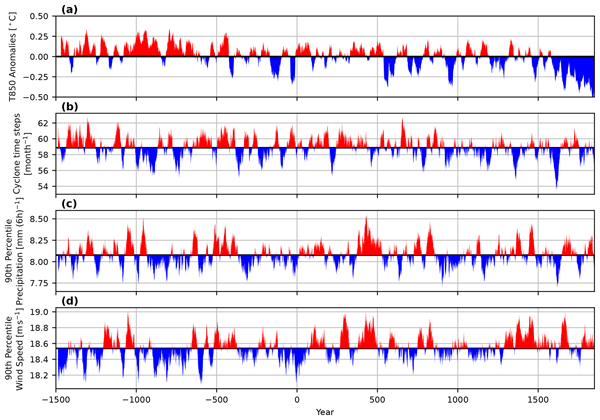
This study finds that while the total number of Mediterranean cyclones is set to decrease by the end of the century, the most extreme cyclones become more intense. Heavy precipitation cyclones intensify mainly in the western Mediterranean, while strong wind cyclones increase across the whole Mediterranean. These changes are partially driven by an increased moisture availability and more favourable dynamics.
Onno Doensen, Martina Messmer, Woon Mi Kim, and Christoph C. Raible
Clim. Past, 21, 1305–1322, https://doi.org/10.5194/cp-21-1305-2025, https://doi.org/10.5194/cp-21-1305-2025, 2025
Short summary
Short summary
Extratropical cyclones are crucial systems in the Mediterranean. While extensively studied, their late Holocene variability is poorly understood. Using a climate model spanning 3350-years, we find Mediterranean cyclones show significant multi-decadal variability. Extreme cyclones tend to be more extreme in the central Mediterranean in terms of wind speed. Our work creates a reference baseline to better understand the impact of climate change on Mediterranean cyclones.

Markus Adloff, Aurich Jeltsch-Thömmes, Frerk Pöppelmeier, Thomas F. Stocker, and Fortunat Joos
Clim. Past, 21, 571–592, https://doi.org/10.5194/cp-21-571-2025, https://doi.org/10.5194/cp-21-571-2025, 2025
Short summary
Short summary
We simulated how different processes affected the carbon cycle over the last eight glacial cycles. We found that the effects of interactive marine sediments enlarge the carbon fluxes that result from these processes, especially in the ocean, and alter various proxy signals. We provide an assessment of the directions of regional and global proxy changes that might be expected in response to different glacial–interglacial Earth system changes in the presence of interactive marine sediments.
Evelien J. C. van Dijk, Christoph C. Raible, Michael Sigl, Johann Jungclaus, and Heinz Wanner
Clim. Past Discuss., https://doi.org/10.5194/cp-2024-79, https://doi.org/10.5194/cp-2024-79, 2024
Manuscript not accepted for further review
Short summary
Short summary
The temperature in the past 4000 years consisted of warm and cold periods, initiated by external forcing. But, these periods are not consistent through time and space. We use climate models and reconstructions to study to which extent the periods are reflected in the European climate. We find that on local scales, the chaotic nature of the climate system is larger than the external forcing. This study shows that these periods have to be used very carefully when studying a local site.
Jakob Schwander, Thomas F. Stocker, Remo Walther, Samuel Marending, Tobias Erhardt, Chantal Zeppenfeld, and Jürg Jost
The Cryosphere, 18, 5613–5617, https://doi.org/10.5194/tc-18-5613-2024, https://doi.org/10.5194/tc-18-5613-2024, 2024
Short summary
Short summary
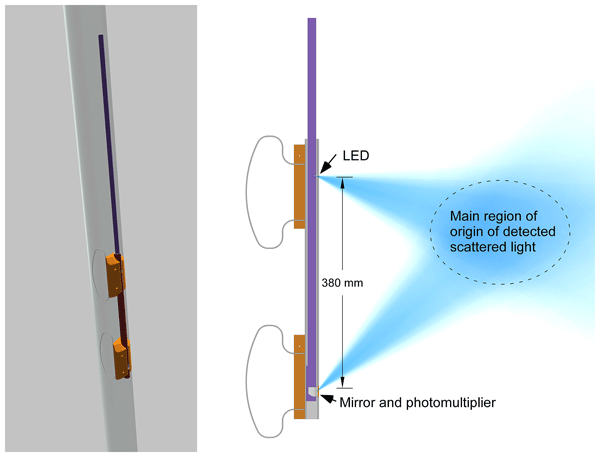
The RADIX (Rapid Access Drilling and Ice eXtraction) optical dust logger is part of the exploratory 20 mm drilling system at the University of Bern and is inserted into the hole after drilling. Temperature and attitude sensors were successfully tested but not the dust sensor, as no RADIX hole reached the required bubble-free ice. In 2023, we tested the logger with an adapter for the deep borehole of the East Greenland Ice-core Project and obtained a good Late Glacial–Early Holocene dust record.
Christian Wirths, Thomas F. Stocker, and Johannes C. R. Sutter
The Cryosphere, 18, 4435–4462, https://doi.org/10.5194/tc-18-4435-2024, https://doi.org/10.5194/tc-18-4435-2024, 2024
Short summary
Short summary
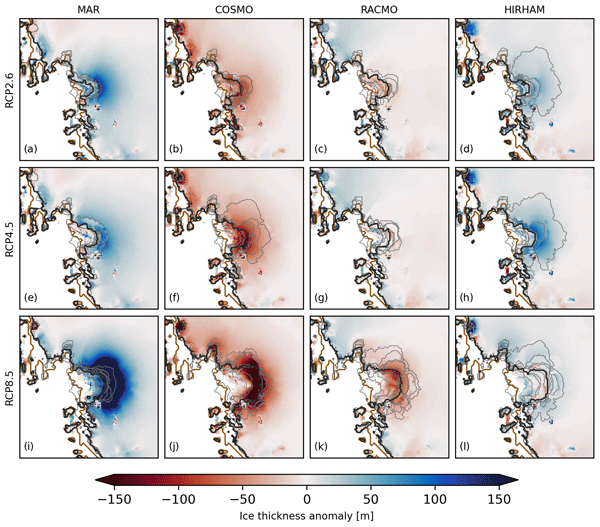
We investigated the influence of several regional climate models on the Antarctic Ice Sheet when applied as forcing for the Parallel Ice Sheet Model (PISM). Our study shows that the choice of regional climate model forcing results in uncertainties of around a tenth of those in future sea level rise projections and also affects the extent of grounding line retreat in West Antarctica.
Markus Adloff, Frerk Pöppelmeier, Aurich Jeltsch-Thömmes, Thomas F. Stocker, and Fortunat Joos
Clim. Past, 20, 1233–1250, https://doi.org/10.5194/cp-20-1233-2024, https://doi.org/10.5194/cp-20-1233-2024, 2024
Short summary
Short summary
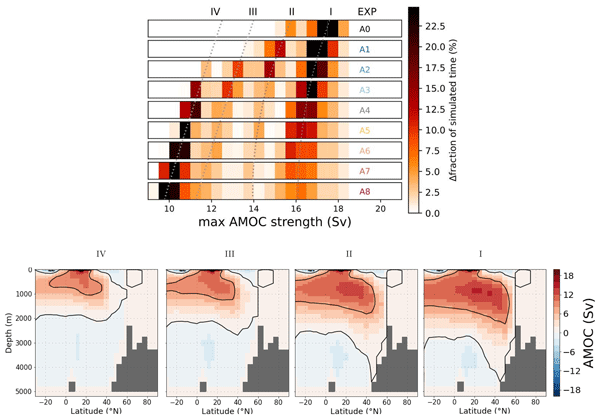
The Atlantic Meridional Overturning Circulation (AMOC) is an ocean current that transports heat into the North Atlantic. Over the ice age cycles, AMOC strength and its spatial pattern varied. We tested the role of heat forcing for these AMOC changes by simulating the temperature changes of the last eight glacial cycles. In our model, AMOC shifts between four distinct circulation modes caused by heat and salt redistributions that reproduce reconstructed long-term North Atlantic SST changes.
Bjorn Stevens, Stefan Adami, Tariq Ali, Hartwig Anzt, Zafer Aslan, Sabine Attinger, Jaana Bäck, Johanna Baehr, Peter Bauer, Natacha Bernier, Bob Bishop, Hendryk Bockelmann, Sandrine Bony, Guy Brasseur, David N. Bresch, Sean Breyer, Gilbert Brunet, Pier Luigi Buttigieg, Junji Cao, Christelle Castet, Yafang Cheng, Ayantika Dey Choudhury, Deborah Coen, Susanne Crewell, Atish Dabholkar, Qing Dai, Francisco Doblas-Reyes, Dale Durran, Ayoub El Gaidi, Charlie Ewen, Eleftheria Exarchou, Veronika Eyring, Florencia Falkinhoff, David Farrell, Piers M. Forster, Ariane Frassoni, Claudia Frauen, Oliver Fuhrer, Shahzad Gani, Edwin Gerber, Debra Goldfarb, Jens Grieger, Nicolas Gruber, Wilco Hazeleger, Rolf Herken, Chris Hewitt, Torsten Hoefler, Huang-Hsiung Hsu, Daniela Jacob, Alexandra Jahn, Christian Jakob, Thomas Jung, Christopher Kadow, In-Sik Kang, Sarah Kang, Karthik Kashinath, Katharina Kleinen-von Königslöw, Daniel Klocke, Uta Kloenne, Milan Klöwer, Chihiro Kodama, Stefan Kollet, Tobias Kölling, Jenni Kontkanen, Steve Kopp, Michal Koran, Markku Kulmala, Hanna Lappalainen, Fakhria Latifi, Bryan Lawrence, June Yi Lee, Quentin Lejeun, Christian Lessig, Chao Li, Thomas Lippert, Jürg Luterbacher, Pekka Manninen, Jochem Marotzke, Satoshi Matsouoka, Charlotte Merchant, Peter Messmer, Gero Michel, Kristel Michielsen, Tomoki Miyakawa, Jens Müller, Ramsha Munir, Sandeep Narayanasetti, Ousmane Ndiaye, Carlos Nobre, Achim Oberg, Riko Oki, Tuba Özkan-Haller, Tim Palmer, Stan Posey, Andreas Prein, Odessa Primus, Mike Pritchard, Julie Pullen, Dian Putrasahan, Johannes Quaas, Krishnan Raghavan, Venkatachalam Ramaswamy, Markus Rapp, Florian Rauser, Markus Reichstein, Aromar Revi, Sonakshi Saluja, Masaki Satoh, Vera Schemann, Sebastian Schemm, Christina Schnadt Poberaj, Thomas Schulthess, Cath Senior, Jagadish Shukla, Manmeet Singh, Julia Slingo, Adam Sobel, Silvina Solman, Jenna Spitzer, Philip Stier, Thomas Stocker, Sarah Strock, Hang Su, Petteri Taalas, John Taylor, Susann Tegtmeier, Georg Teutsch, Adrian Tompkins, Uwe Ulbrich, Pier-Luigi Vidale, Chien-Ming Wu, Hao Xu, Najibullah Zaki, Laure Zanna, Tianjun Zhou, and Florian Ziemen
Earth Syst. Sci. Data, 16, 2113–2122, https://doi.org/10.5194/essd-16-2113-2024, https://doi.org/10.5194/essd-16-2113-2024, 2024
Short summary
Short summary
To manage Earth in the Anthropocene, new tools, new institutions, and new forms of international cooperation will be required. Earth Virtualization Engines is proposed as an international federation of centers of excellence to empower all people to respond to the immense and urgent challenges posed by climate change.
Emmanuele Russo, Jonathan Buzan, Sebastian Lienert, Guillaume Jouvet, Patricio Velasquez Alvarez, Basil Davis, Patrick Ludwig, Fortunat Joos, and Christoph C. Raible
Clim. Past, 20, 449–465, https://doi.org/10.5194/cp-20-449-2024, https://doi.org/10.5194/cp-20-449-2024, 2024
Short summary
Short summary
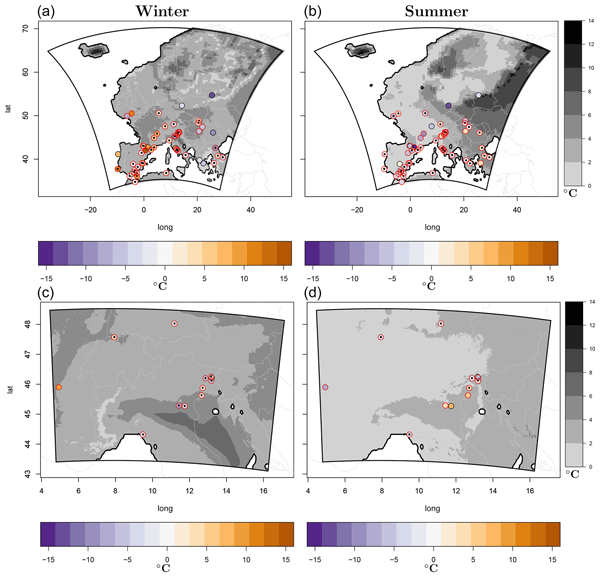
We present a series of experiments conducted for the Last Glacial Maximum (~21 ka) over Europe using the regional climate Weather Research and Forecasting model (WRF) at convection-permitting resolutions. The model, with new developments better suited to paleo-studies, agrees well with pollen-based climate reconstructions. This agreement is improved when considering different sources of uncertainty. The effect of convection-permitting resolutions is also assessed.
Woon Mi Kim, Santos J. González-Rojí, and Christoph C. Raible
Clim. Past, 19, 2511–2533, https://doi.org/10.5194/cp-19-2511-2023, https://doi.org/10.5194/cp-19-2511-2023, 2023
Short summary
Short summary
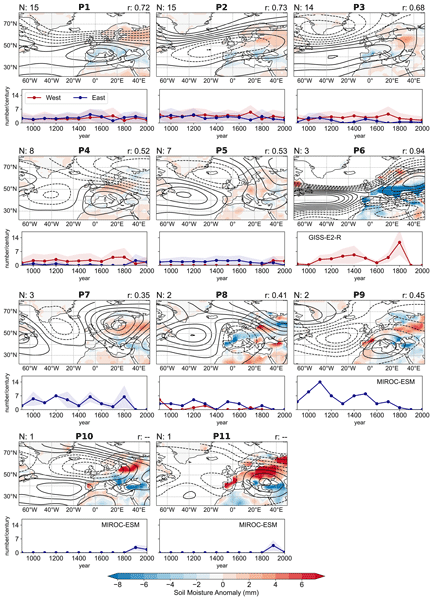
In this study, we investigate circulation patterns associated with Mediterranean droughts during the last millennium using global climate simulations. Different circulation patterns driven by internal interactions in the climate system contribute to the occurrence of droughts in the Mediterranean. The detected patterns are different between the models, and this difference can be a potential source of uncertainty in model–proxy comparison and future projections of Mediterranean droughts.
Eric Samakinwa, Christoph C. Raible, Ralf Hand, Andrew R. Friedman, and Stefan Brönnimann
Clim. Past Discuss., https://doi.org/10.5194/cp-2023-67, https://doi.org/10.5194/cp-2023-67, 2023
Publication in CP not foreseen
Short summary
Short summary
In this study, we nudged a stand-alone ocean model MPI-OM to proxy-reconstructed SST. Based on these model simulations, we introduce new estimates of the AMOC variations during the period 1450–1780 through a 10-member ensemble simulation with a novel nudging technique. Our approach reaffirms the known mechanisms of AMOC variability and also improves existing knowledge of the interplay between the AMOC and the NAO during the AMOC's weak and strong phases.
Robert Mulvaney, Eric W. Wolff, Mackenzie M. Grieman, Helene H. Hoffmann, Jack D. Humby, Christoph Nehrbass-Ahles, Rachael H. Rhodes, Isobel F. Rowell, Frédéric Parrenin, Loïc Schmidely, Hubertus Fischer, Thomas F. Stocker, Marcus Christl, Raimund Muscheler, Amaelle Landais, and Frédéric Prié
Clim. Past, 19, 851–864, https://doi.org/10.5194/cp-19-851-2023, https://doi.org/10.5194/cp-19-851-2023, 2023
Short summary
Short summary
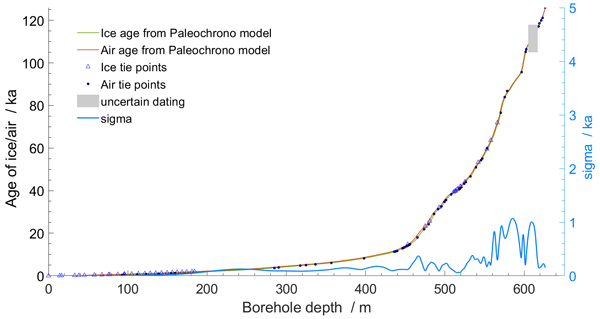
We present an age scale for a new ice core drilled at Skytrain Ice Rise, an ice rise facing the Ronne Ice Shelf in Antarctica. Various measurements in the ice and air phases are used to match the ice core to other Antarctic cores that have already been dated, and a new age scale is constructed. The 651 m ice core includes ice that is confidently dated to 117 000–126 000 years ago, in the last interglacial. Older ice is found deeper down, but there are flow disturbances in the deeper ice.
Jakob Schwander, Thomas F. Stocker, Remo Walther, and Samuel Marending
The Cryosphere, 17, 1151–1164, https://doi.org/10.5194/tc-17-1151-2023, https://doi.org/10.5194/tc-17-1151-2023, 2023
Short summary
Short summary
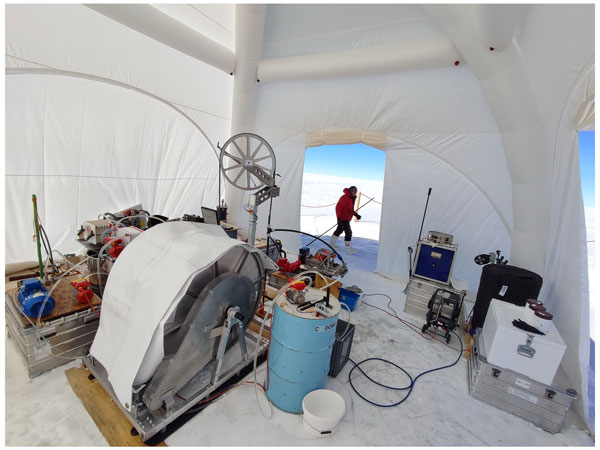
RADIX (Rapid Access Drilling and Ice eXtraction) is a fast-access ice-drilling system for prospecting future deep-drilling sites on glaciers and polar ice sheets. It consists of a 40 mm rapid firn drill, a 20 mm deep drill and a logger. The maximum depth range of RADIX is 3100 m by design. The nominal drilling speed is on the order of 40 m h-1. The 15 mm diameter logger provides data on the hole inclination and direction and measures temperature and dust in the ice surrounding the borehole.
Jonathan Robert Buzan, Emmanuele Russo, Woon Mi Kim, and Christoph C. Raible
EGUsphere, https://doi.org/10.5194/egusphere-2023-324, https://doi.org/10.5194/egusphere-2023-324, 2023
Preprint archived
Short summary
Short summary
Paleoclimate is used to test climate models to verify that simulations accurately project both future and past climate states. We present fully coupled climate sensitivity simulations of Preindustrial, Last Glacial Maximum, and the Quaternary climate periods. We show distinct climate states derived from non-linear responses to ice sheet heights and orbits. The implication is that as paleo proxy data become more reliable, they may constrain the specific climate states produced by climate models.
Patricio Velasquez, Martina Messmer, and Christoph C. Raible
Clim. Past, 18, 1579–1600, https://doi.org/10.5194/cp-18-1579-2022, https://doi.org/10.5194/cp-18-1579-2022, 2022
Short summary
Short summary
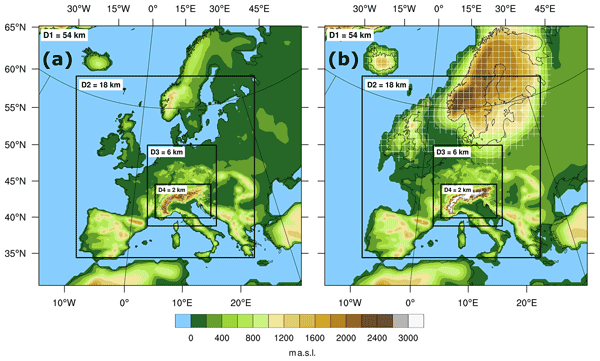
We investigate the sensitivity of the glacial Alpine hydro-climate to northern hemispheric and local ice-sheet changes. We perform sensitivity simulations of up to 2 km horizontal resolution over the Alps for glacial periods. The findings demonstrate that northern hemispheric and local ice-sheet topography are important role in regulating the Alpine hydro-climate and permits a better understanding of the Alpine precipitation patterns at glacial times.
Helen Mackay, Gill Plunkett, Britta J. L. Jensen, Thomas J. Aubry, Christophe Corona, Woon Mi Kim, Matthew Toohey, Michael Sigl, Markus Stoffel, Kevin J. Anchukaitis, Christoph Raible, Matthew S. M. Bolton, Joseph G. Manning, Timothy P. Newfield, Nicola Di Cosmo, Francis Ludlow, Conor Kostick, Zhen Yang, Lisa Coyle McClung, Matthew Amesbury, Alistair Monteath, Paul D. M. Hughes, Pete G. Langdon, Dan Charman, Robert Booth, Kimberley L. Davies, Antony Blundell, and Graeme T. Swindles
Clim. Past, 18, 1475–1508, https://doi.org/10.5194/cp-18-1475-2022, https://doi.org/10.5194/cp-18-1475-2022, 2022
Short summary
Short summary
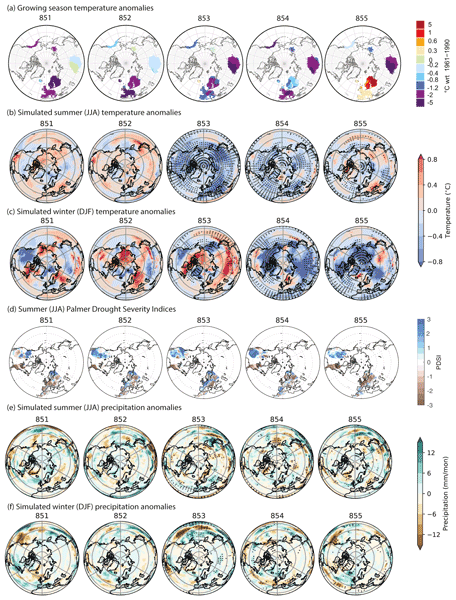
We assess the climatic and societal impact of the 852/3 CE Alaska Mount Churchill eruption using environmental reconstructions, historical records and climate simulations. The eruption is associated with significant Northern Hemisphere summer cooling, despite having only a moderate sulfate-based climate forcing potential; however, evidence of a widespread societal response is lacking. We discuss the difficulties of confirming volcanic impacts of a single eruption even when it is precisely dated.

Emmanuele Russo, Bijan Fallah, Patrick Ludwig, Melanie Karremann, and Christoph C. Raible
Clim. Past, 18, 895–909, https://doi.org/10.5194/cp-18-895-2022, https://doi.org/10.5194/cp-18-895-2022, 2022
Short summary
Short summary
In this study a set of simulations are performed with the regional climate model COSMO-CLM for Europe, for the mid-Holocene and pre-industrial periods. The main aim is to better understand the drivers of differences between models and pollen-based summer temperatures. Results show that a fundamental role is played by spring soil moisture availability. Additionally, results suggest that model bias is not stationary, and an optimal configuration could not be the best under different forcing.
Santos J. González-Rojí, Martina Messmer, Christoph C. Raible, and Thomas F. Stocker
Geosci. Model Dev., 15, 2859–2879, https://doi.org/10.5194/gmd-15-2859-2022, https://doi.org/10.5194/gmd-15-2859-2022, 2022
Short summary
Short summary
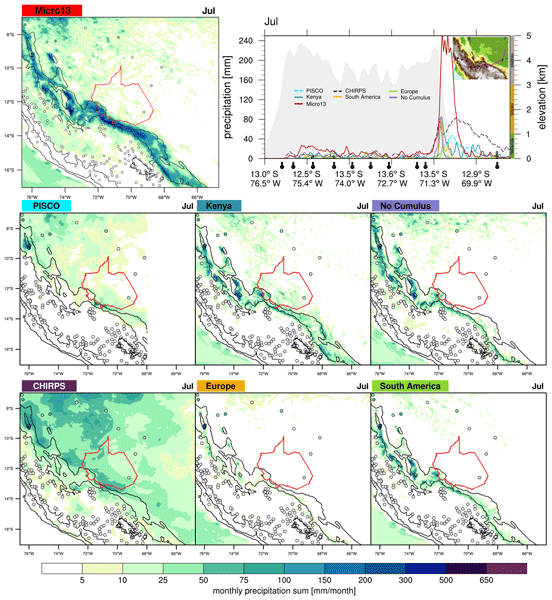
Different configurations of physics parameterizations of a regional climate model are tested over southern Peru at fine resolution. The most challenging regions compared to observational data are the slopes of the Andes. Model configurations for Europe and East Africa are not perfectly suitable for southern Peru. The experiment with the Stony Brook University microphysics scheme and the Grell–Freitas cumulus parameterization provides the most accurate results over Madre de Dios.
Tobias Erhardt, Matthias Bigler, Urs Federer, Gideon Gfeller, Daiana Leuenberger, Olivia Stowasser, Regine Röthlisberger, Simon Schüpbach, Urs Ruth, Birthe Twarloh, Anna Wegner, Kumiko Goto-Azuma, Takayuki Kuramoto, Helle A. Kjær, Paul T. Vallelonga, Marie-Louise Siggaard-Andersen, Margareta E. Hansson, Ailsa K. Benton, Louise G. Fleet, Rob Mulvaney, Elizabeth R. Thomas, Nerilie Abram, Thomas F. Stocker, and Hubertus Fischer
Earth Syst. Sci. Data, 14, 1215–1231, https://doi.org/10.5194/essd-14-1215-2022, https://doi.org/10.5194/essd-14-1215-2022, 2022
Short summary
Short summary
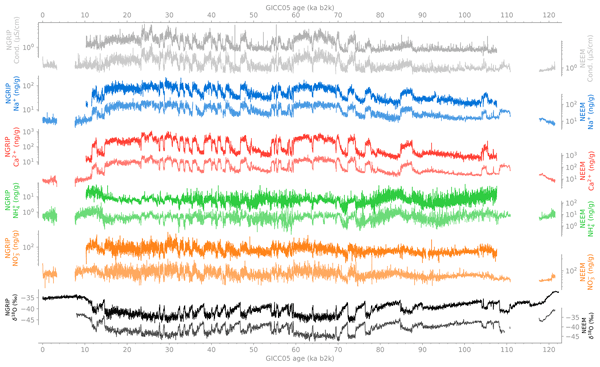
The datasets presented alongside this manuscript contain high-resolution concentration measurements of chemical impurities in deep ice cores, NGRIP and NEEM, from the Greenland ice sheet. The impurities originate from the deposition of aerosols to the surface of the ice sheet and are influenced by source, transport and deposition processes. Together, these records contain detailed, multi-parameter records of past climate variability over the last glacial period.
Jiamei Lin, Anders Svensson, Christine S. Hvidberg, Johannes Lohmann, Steffen Kristiansen, Dorthe Dahl-Jensen, Jørgen Peder Steffensen, Sune Olander Rasmussen, Eliza Cook, Helle Astrid Kjær, Bo M. Vinther, Hubertus Fischer, Thomas Stocker, Michael Sigl, Matthias Bigler, Mirko Severi, Rita Traversi, and Robert Mulvaney
Clim. Past, 18, 485–506, https://doi.org/10.5194/cp-18-485-2022, https://doi.org/10.5194/cp-18-485-2022, 2022
Short summary
Short summary
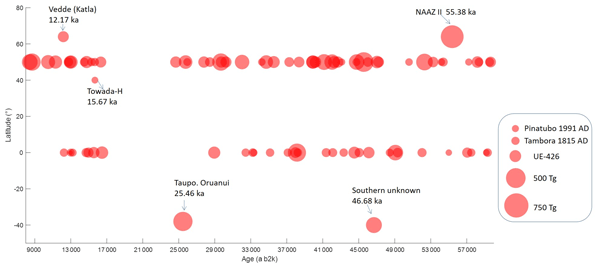
We employ acidity records from Greenland and Antarctic ice cores to estimate the emission strength, frequency and climatic forcing for large volcanic eruptions from the last half of the last glacial period. A total of 25 volcanic eruptions are found to be larger than any eruption in the last 2500 years, and we identify more eruptions than obtained from geological evidence. Towards the end of the glacial period, there is a notable increase in volcanic activity observed for Greenland.
Woon Mi Kim, Richard Blender, Michael Sigl, Martina Messmer, and Christoph C. Raible
Clim. Past, 17, 2031–2053, https://doi.org/10.5194/cp-17-2031-2021, https://doi.org/10.5194/cp-17-2031-2021, 2021
Short summary
Short summary
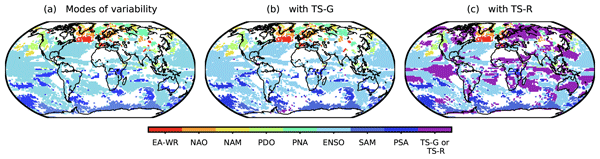
To understand the natural characteristics and future changes of the global extreme daily precipitation, it is necessary to explore the long-term characteristics of extreme daily precipitation. Here, we used climate simulations to analyze the characteristics and long-term changes of extreme precipitation during the past 3351 years. Our findings indicate that extreme precipitation in the past is associated with internal climate variability and regional surface temperatures.
Frerk Pöppelmeier, David J. Janssen, Samuel L. Jaccard, and Thomas F. Stocker
Biogeosciences, 18, 5447–5463, https://doi.org/10.5194/bg-18-5447-2021, https://doi.org/10.5194/bg-18-5447-2021, 2021
Short summary
Short summary
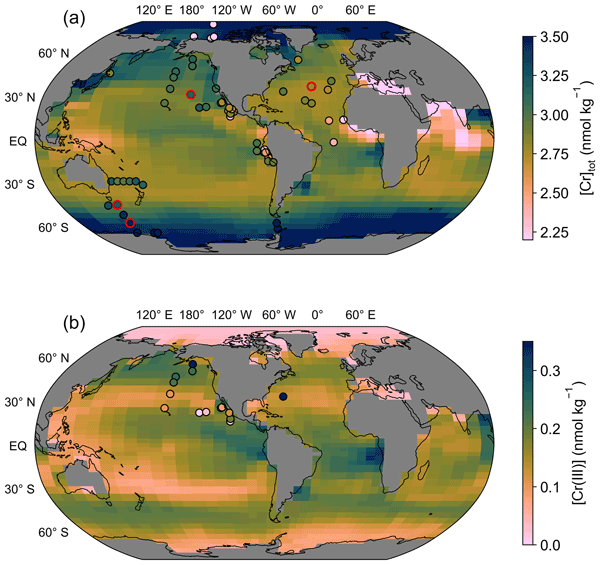
Chromium (Cr) is a redox-sensitive element that holds promise as a tracer of ocean oxygenation and biological activity. We here implemented the oxidation states Cr(III) and Cr(VI) in the Bern3D model to investigate the processes that shape the global Cr distribution. We find a Cr ocean residence time of 5–8 kyr and that the benthic source dominates the tracer budget. Further, regional model–data mismatches suggest strong Cr removal in oxygen minimum zones and a spatially variable benthic source.
Loïc Schmidely, Christoph Nehrbass-Ahles, Jochen Schmitt, Juhyeong Han, Lucas Silva, Jinwha Shin, Fortunat Joos, Jérôme Chappellaz, Hubertus Fischer, and Thomas F. Stocker
Clim. Past, 17, 1627–1643, https://doi.org/10.5194/cp-17-1627-2021, https://doi.org/10.5194/cp-17-1627-2021, 2021
Short summary
Short summary
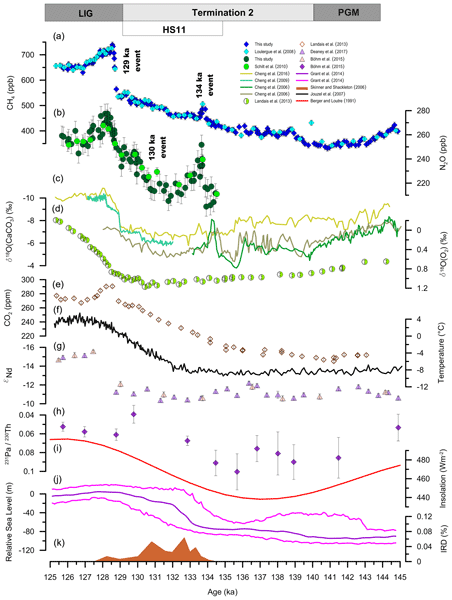
Using ancient gas trapped in polar glaciers, we reconstructed the atmospheric concentrations of methane and nitrous oxide over the penultimate deglaciation to study their response to major climate changes. We show this deglaciation to be characterized by modes of methane and nitrous oxide variability that are also found during the last deglaciation and glacial cycle.
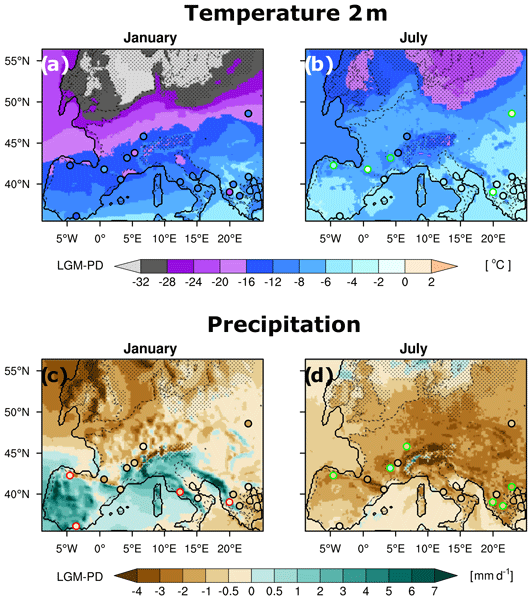
Patricio Velasquez, Jed O. Kaplan, Martina Messmer, Patrick Ludwig, and Christoph C. Raible
Clim. Past, 17, 1161–1180, https://doi.org/10.5194/cp-17-1161-2021, https://doi.org/10.5194/cp-17-1161-2021, 2021
Short summary
Short summary
This study assesses the importance of resolution and land–atmosphere feedbacks for European climate. We performed an asynchronously coupled experiment that combined a global climate model (~ 100 km), a regional climate model (18 km), and a dynamic vegetation model (18 km). Modelled climate and land cover agree reasonably well with independent reconstructions based on pollen and other paleoenvironmental proxies. The regional climate is significantly influenced by land cover.
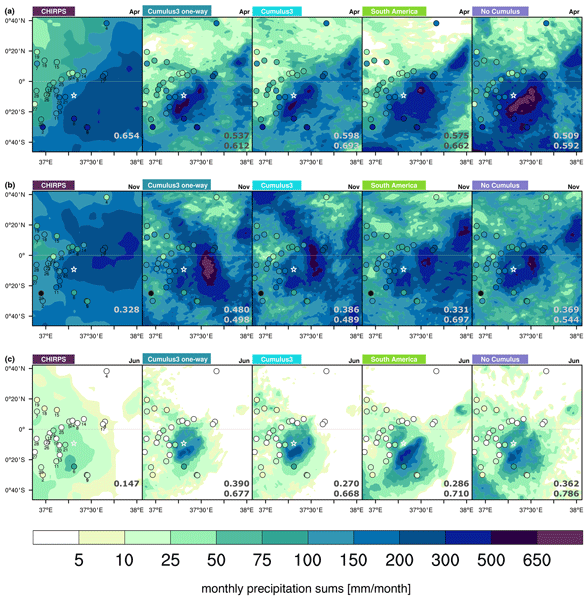
Martina Messmer, Santos J. González-Rojí, Christoph C. Raible, and Thomas F. Stocker
Geosci. Model Dev., 14, 2691–2711, https://doi.org/10.5194/gmd-14-2691-2021, https://doi.org/10.5194/gmd-14-2691-2021, 2021
Short summary
Short summary
Sensitivity experiments with the WRF model are run to find an optimal parameterization setup for precipitation around Mount Kenya at a scale that resolves convection (1 km). Precipitation is compared against many weather stations and gridded observational data sets. Both the temporal correlation of precipitation sums and pattern correlations show that fewer nests lead to a more constrained simulation with higher correlation. The Grell–Freitas cumulus scheme obtains the most accurate results.
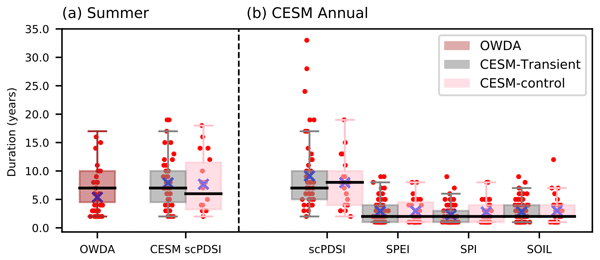
Woon Mi Kim and Christoph C. Raible
Clim. Past, 17, 887–911, https://doi.org/10.5194/cp-17-887-2021, https://doi.org/10.5194/cp-17-887-2021, 2021
Short summary
Short summary
The analysis of the dynamics of western central Mediterranean droughts for 850–2099 CE in the Community Earth System Model indicates that past Mediterranean droughts were driven by the internal variability. This internal variability is more important during the initial years of droughts. During the transition years, the longevity of droughts is defined by the land–atmosphere feedbacks. In the future, this land–atmosphere feedbacks are intensified, causing a constant dryness over the region.

Frerk Pöppelmeier, Jeemijn Scheen, Aurich Jeltsch-Thömmes, and Thomas F. Stocker
Clim. Past, 17, 615–632, https://doi.org/10.5194/cp-17-615-2021, https://doi.org/10.5194/cp-17-615-2021, 2021
Short summary
Short summary
The stability of the Atlantic Meridional Overturning Circulation (AMOC) critically depends on its mean state. We simulate the response of the AMOC to North Atlantic freshwater perturbations under different glacial boundary conditions. We find that a closed Bering Strait greatly increases the AMOC's sensitivity to freshwater hosing. Further, the shift from mono- to bistability strongly depends on the chosen boundary conditions, with weaker circulation states exhibiting more abrupt transitions.
Cited articles
Alley, R. B., Andrews, J. T., Brigham-Grette, J., Clarke, G. K. C., Cuffey, K. M., Fitzpatrick, J. J., Funder, S., Marshall, S. J., Miller, G. H., Mitrovica, J. X., Muhs, D. R., Otto-Bliesner, B. L., Polyak, L., and White, J. W. C.: History of the Greenland Ice Sheet: paleoclimatic insights, Quat. Sci. Rev., 29, 1728–1756, 2010.
Bakker, P., Stone, E. J., Charbit, S., Groger, M., Krebs-Kanzow, U., Ritz, S. P., Varma, V., Khon, V., Lunt, D. J., Mikolajewicz, U., Prange, M., Renssen, H., Schneider, B., and Schulz, M.: Last interglacial temperature evolution - a model inter-comparison, Clim. Past, 9, 605–619, https://doi.org/10.5194/cp-9-605-2013, 2013.
Berger, A. L.: Long-term Variations of Daily Insolation and Quaternary Climatic Changes, J. Atmos. Sci., 35, 2362–2367, 1978.
Born, A. and Nisancioglu, K. H.: Melting of Northern Greenland during the last interglaciation, Cryosphere, 6, 1239–1250, 2012.
CAPE Last Interglacial Project Members: Last Interglacial Arctic warmth confirms polar amplification of climate change, Quat. Sci. Rev., 25, 1383–1400, 2006.
Colville, E. J., Carlson, A. E., Beard, B. L., Hatfield, R. G., Stoner, J. S., Reyes, A. V., and Ullman, D. J.: Sr-Nd-Pb Isotope Evidence for Ice-Sheet Presence on Southern Greenland During the Last Interglacial, Science, 333, 620–623, 2011.
Cuffey, K. M. and Marshall, S. J.: Substantial contribution to sea-level rise during the last interglacial from the Greenland ice sheet, Nature, 404, 591–594, 2000.
Dansgaard, W., Clausen, H. B., Gundestrup, N., Johnsen, S. J., and Rygner, C.: Dating and climatic interpretation of two deep Greenland ice cores, in: Geophys. Monogr. Ser., 33, 71–76, 1985.
Ettema, J., van den Broeke, M. R., van Meijgaard, E., and van de Berg, W. J.: Climate of the Greenland ice sheet using a high-resolution climate model - Part 2: Near-surface climate and energy balance, Cryosphere, 4, 529–544, 2010.
Evans, K. J., Lauritzen, P. H., Mishra, S. K., Neale, R. B., Taylor, M. A., and Tribbia, J. J.: AMIP Simulation with the CAM4 Spectral Element Dynamical Core, J. Climate, 26, 689–709, 2013.
Fischer, N. and Jungclaus, J. H.: Effects of orbital forcing on atmosphere and ocean heat transports in Holocene and Eemian climate simulations with a comprehensive Earth system model, Clim. Past, 6, 155–168, https://doi.org/10.5194/cp-6-155-2010, 2010.
Gent, P. R., Danabasoglu, G., Donner, L. J., Holland, M. M., Hunke, E. C., Jayne, S. R., Lawrence, D. M., Neale, R. B., Rasch, P. J., Vertenstein, M., Worley, P. H., Yang, Z. L., and Zhang, M. H.: The Community Climate System Model Version 4, J. Climate, 24, 4973–4991, 2011.
Hakuba, M. Z., Folini, D., Wild, M., and Schar, C.: Impact of Greenland's topographic height on precipitation and snow accumulation in idealized simulations, J. Geophys. Res.-Atmos., 117, D09107, https://doi.org/10.1029/2011JD017052, 2012.
Heinemann, G. and Klein, T.: Modelling and observations of the katabatic flow dynamics over Greenland, Tellus A, 54, 542–554, 2002.
Helsen, M. M., van de Berg, W. J., van de Wal, R. S. W., van den Broeke, M. R., and Oerlemans, J.: Coupled regional climate-ice sheet simulation shows limited Greenland ice loss during the Eemian, Clim. Past, 9, 1773–1788, https://doi.org/10.5194/cp-9-1773-2013, 2013.
Hobbs, W. H.: The Greenland Glacial Anticyclone, J. Meteorol., 2, 143–153, 1945.
Hoch, S. W., Calanca, P., Philipona, R., and Ohmura, A.: Year-round observation of longwave radiative flux divergence in Greenland, J. Appl. Meteorol. Climatol., 46, 1469–1479, 2007.
Holtslag, A. and Boville, B.: Local versus nonlocal boundary-layer diffusion in a global climate model, J. Climate, 6, 1825–1842, 1993.
Holtslag, A. A. M., Svensson, G., Baas, P., Basu, S., Beare, B., Beljaars, A. C. M., Bosveld, F. C., Cuxart, J., Lindvall, J., Steeneveld, G. J., Tjernstrom, M., and Van de Wiel, B. J. H.: STABLE ATMOSPHERIC BOUNDARY LAYERS AND DIURNAL CYCLES Challenges for Weather and Climate Models, Bull. Am. Meteorol. Soc., 94, 1691–1706, 2013.
Hunke, E. C. and Lipscomb, W. H.: CICE: The Los Alamos Sea Ice Model. Documentation and Software User's Manual. Version 4.0, Los Alamos National Laboratory, Tech. Rep. LA-CC-06-012., 76 pp., 2008.
Jouzel, J., Masson-Delmotte, V., Cattani, O., Dreyfus, G., Falourd, S., Hoffmann, G., Minster, B., Nouet, J., Barnola, J. M., Chappellaz, J., Fischer, H., Gallet, J. C., Johnsen, S., Leuenberger, M., Loulergue, L., Luethi, D., Oerter, H., Parrenin, F., Raisbeck, G., Raynaud, D., Schilt, A., Schwander, J., Selmo, E., Souchez, R., Spahni, R., Stauffer, B., Steffensen, J. P., Stenni, B., Stocker, T. F., Tison, J. L., Werner, M., and Wolff, E. W.: Orbital and millennial Antarctic climate variability over the past 800,000 years, Science, 317, 793–796, 2007.
Junge, M. M., Blender, R., Fraedrich, K., Gayler, V., Luksch, U., and Lunkeit, F.: A world without Greenland: impacts on the Northern Hemisphere winter circulation in low- and high-resolution models, Clim. Dynam., 24, 297–307, 2005.
Kindler, P., Guillevic, M., Baumgartner, M., Schwander, J., Landais, A., and Leuenberger, M.: Temperature reconstruction from 10 to 120 kyr b2k from the NGRIP ice core, Clim. Past, 10, 887–902, https://doi.org/10.5194/cp-10-887-2014, 2014.
Kopp, R. E., Simons, F. J., Mitrovica, J. X., Maloof, A. C., and Oppenheimer, M.: Probabilistic assessment of sea level during the last interglacial stage, Nature, 462, 863–U51, 2009.
Kristjansson, J. E. and McInnes, H.: The impact of Greenland on cyclone evolution in the North Atlantic, Quart. J. Roy. Meteorol. Soc., 125, 2819–2834, 1999.
Kristjansson, J. E., Thorsteinsson, S., and Rosting, B.: Phase-locking of a rapidly developing extratropical cyclone by Greenland's orography, Quart. J. Roy. Meteorol. Soc., 135, 1986–1998, 2009.
Lunt, D. J., de Noblet-Ducoudre, N., and Charbit, S.: Effects of a melted greenland ice sheet on climate, vegetation, and the cryosphere, Clim. Dynam., 23, 679–694, 2004.
Merkel, U., Prange, M., and Schulz, M.: ENSO variability and teleconnections during glacial climates, Quat. Sci. Rev., 29, 86–100, 2010.
Merz, N., Raible, C. C., Fischer, H., Varma, V., Prange, M., and Stocker, T. F.: Greenland accumulation and its connection to the large-scale atmospheric circulation in ERA-Interim and paleoclimate simulations, Clim. Past, 9, 2433–2450, https://doi.org/10.5194/cp-9-2433-2013, 2013.
Neale, R. B., Richter, J. H., Conley, A. J., Park, S., Lauritzen, P. H., Gettelman, A., Rasch, P. J., Vavrus, J., S., Taylor, M. A., C., Zhang, M., and Lin, S.: Description of the NCAR Community Atmosphere Model (CAM4), National Center for Atmospheric Research Tech. Rep. NCAR/TN+STR, 194 pp., 2010.
Neale, R. B., Richter, J., Park, S., Lauritzen, P. H., Vavrus, S. J., Rasch, P. J., and Zhang, M.: The Mean Climate of the Community Atmosphere Model (CAM4) in Forced SST and Fully Coupled Experiments, J. Climate, 26, 5150–5168, https://doi.org/10.1175/JCLID-12-00236.1, 2013.
NEEM community members: Eemian interglacial reconstructed from a Greenland folded ice core, Nature, 493, 489–494, https://doi.org/10.1038/nature11789, 2013.
Nikolova, I., Yin, Q., Berger, A., Singh, U. K., and Karami, M. P.: The last interglacial (Eemian) climate simulated by LOVECLIM and CCSM3, Clim. Past, 9, 1789–1806, https://doi.org/10.5194/cp-9-1789-2013, 2013.
Oleson, K., Lawrence, D., Bonan, G., Flanner, M., Kluzek, E., Lawrence, P., Levis, S., Swenson, S., Thornton, P., Dai, A., Decker, M., Dickinson, R., Feddema, J., Heald, C., Hoffman, J.-F., Mahowald, N., Niu, G.-Y., Qian, T., Randerson, J., Running, S., Sakaguchi, K., Slater, A., Stockli, R., Wang, A., Yang, Z.-L., Zeng, X., and Zeng, X.: Technical Description of version 4.0 of the Community Land Model (CLM), National Center for Atmospheric Research Technical Note NCAR/TN-478+STR, 257 pp., https://doi.org/10.5065/D6FB50WZ, 2010.
Otto-Bliesner, B. L., Marsha, S. J., Overpeck, J. T., Miller, G. H., Hu, A. X., and Mem, C. L. I. P.: Simulating arctic climate warmth and icefield retreat in the last interglaciation, Science, 311, 1751–1753, 2006.
Overpeck, J. T., Otto-Bliesner, B. L., Miller, G. H., Muhs, D. R., Alley, R. B., and Kiehl, J. T.: Paleoclimatic evidence for future ice-sheet instability and rapid sea-level rise, Science, 311, 1747–1750, 2006.
Petersen, G. N., Kristjansoon, J. E., and Olafsson, H.: Numerical simulations of Greenland's impact on the Northern Hemisphere winter circulation, Tellus A, 56, 102–111, 2004.
Raynaud, D., Chappellaz, J., Ritz, C., and Martinerie, P.: Air content along the Greenland Ice Core Project core: A record of surface climatic parameters and elevation in central Greenland, J. Geophys. Res.-Oc., 102, 26607–26613, 1997.
Robinson, A., Calov, R., and Ganopolski, A.: Greenland ice sheet model parameters constrained using simulations of the Eemian Interglacial, Clim. Past, 7, 381–396, https://doi.org/10.5194/cp-7-381-2011, 2011.
Steffen, K. and Box, J.: Surface climatology of the Greenland ice sheet: Greenland climate network 1995-1999, J. Geophys. Res.-Atmos., 106, 33951–33964, 2001.
Stone, E. J., Lunt, D. J., Annan, J. D., and Hargreaves, J. C.: Quantification of the Greenland ice sheet contribution to Last Interglacial sea level rise, Clim. Past, 9, 621–639, https://doi.org/10.5194/cp-9-621-2013, 2013.
Toniazzo, T., Gregory, J. M., and Huybrechts, P.: Climatic impact of a Greenland deglaciation and its possible irreversibility, J. Climate, 17, 21–33, 2004.
van den Broeke, M., van As, D., Reijmer, C., and van De Wal, R.: Sensible heat exchange at the antarctic snow surface: A study with automatic weather stations, Int. J. Climatol., 25, 1081–1101, 2005.
Vizcaino, M., Lipscomb, W. H., Sacks, W. J., van Angelen, J. H., Wouters, B., and van den Broeke, M. R.: Greenland Surface Mass Balance as Simulated by the Community Earth System Model. Part I: Model Evaluation and 1850-2005 Results, J. Climate, 26, 7793–7812, 2013.
Willerslev, E., Cappellini, E., Boomsma, W., Nielsen, R., Hebsgaard, M. B., Brand, T. B., Hofreiter, M., Bunce, M., Poinar, H. N., Dahl-Jensen, D., Johnsen, S., Steffensen, J. P., Bennike, O., Schwenninger, J. L., Nathan, R., Armitage, S., de Hoog, C. J., Alfimov, V., Christl, M., Beer, J., Muscheler, R., Barker, J., Sharp, M., Penkman, K. E. H., Haile, J., Taberlet, P., Gilbert, M. T. P., Casoli, A., Campani, E., and Collins, M. J.: Ancient biomolecules from deep ice cores reveal a forested Southern Greenland, Science, 317, 111–114, 2007.
Yeager, S. G., Shields, C. A., Large, W. G., and Hack, J. J.: The low-resolution CCSM3, J. Climate, 19, 2545–2566, 2006.
Download
The requested paper has a corresponding corrigendum published. Please read the corrigendum first before downloading the article.
- Article
(3852 KB) - Metadata XML


