
Articles | Volume 22, issue 4
https://doi.org/10.5194/cp-22-845-2026
© Author(s) 2026. This work is distributed under
the Creative Commons Attribution 4.0 License.
the Creative Commons Attribution 4.0 License.
https://doi.org/10.5194/cp-22-845-2026
© Author(s) 2026. This work is distributed under
the Creative Commons Attribution 4.0 License.
the Creative Commons Attribution 4.0 License.
Research article
| 
20 Apr 2026
Research article |
| 20 Apr 2026
| 20 Apr 2026
Climate and ocean circulation changes toward a modern snowball Earth

Japan Agency for Marine-Earth Science and Technology, Showa-machi, Kanazawa, Yokohama, Kanagawa, 236-0001, Japan
Takanori Kodama
Earth-Life Science Institute (ELSI), Institute of Future Science, Institute of Science Tokyo, I7E-315, 2-12-1, Ookayama, Meguro, Tokyo, 152-8550, Japan
Takao Kawasaki
Atmosphere and Ocean Research Institute, The University of Tokyo, Kashiwa, Japan
Institute of Arctic Climate and Environment Research, Japan Agency for Marine Science and Technology, Yokohama, Kanagawa, Japan
Sam Sherriff-Tadano
University of the Ryukyus, Nishihara, Japan
Daisuke Takasuka
Department of Geophysics, Graduate School of Science, Tohoku University, Sendai, Japan
Ayako Abe-Ouchi
Atmosphere and Ocean Research Institute, The University of Tokyo, Kashiwa, Japan
Masakazu Fujii
National Institute of Polar Research, Tachikawa, Japan
The Graduate University for Advanced Studies, SOKENDAI, Kanagawa, Japan
Related authors
Takashi Obase, Laurie Menviel, Ayako Abe-Ouchi, Tristan Vadsaria, Ruza Ivanovic, Brooke Snoll, Sam Sherriff-Tadano, Paul J. Valdes, Lauren Gregoire, Marie-Luise Kapsch, Uwe Mikolajewicz, Nathaelle Bouttes, Didier Roche, Fanny Lhardy, Chengfei He, Bette Otto-Bliesner, Zhengyu Liu, and Wing-Le Chan
Clim. Past, 21, 1443–1463, https://doi.org/10.5194/cp-21-1443-2025, https://doi.org/10.5194/cp-21-1443-2025, 2025
Short summary
Short summary
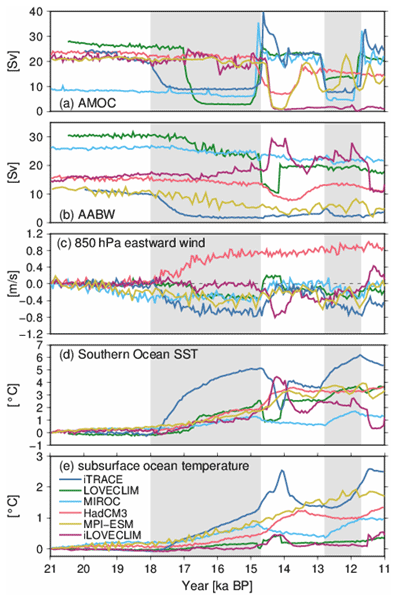
This study analyses transient simulations of the last deglaciation performed by six climate models to understand the processes driving high-southern-latitude temperature changes. We find that atmospheric CO2 and AMOC (Atlantic Meridional Overturning Circulation) changes are the primary drivers of the warming and cooling during the middle stage of the deglaciation. The analysis highlights the model's sensitivity of CO2 and AMOC to meltwater and the meltwater history of temperature changes at high southern latitudes.
Brooke Snoll, Ruza Ivanovic, Lauren Gregoire, Sam Sherriff-Tadano, Laurie Menviel, Takashi Obase, Ayako Abe-Ouchi, Nathaelle Bouttes, Chengfei He, Feng He, Marie Kapsch, Uwe Mikolajewicz, Juan Muglia, and Paul Valdes
Clim. Past, 20, 789–815, https://doi.org/10.5194/cp-20-789-2024, https://doi.org/10.5194/cp-20-789-2024, 2024
Short summary
Short summary
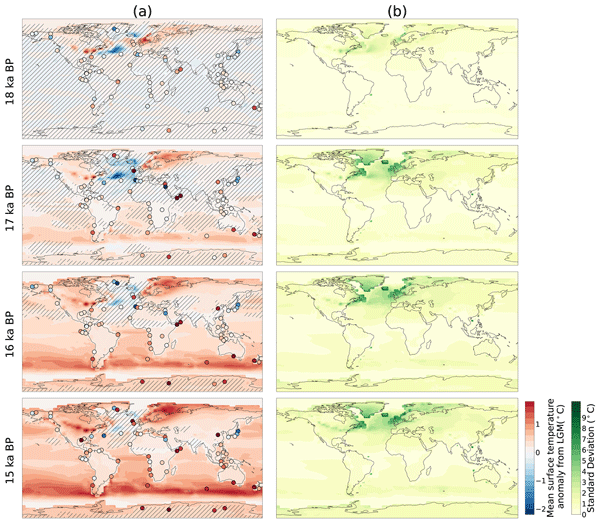
Geological records show rapid climate change throughout the recent deglaciation. The drivers of these changes are still misunderstood but are often attributed to shifts in the Atlantic Ocean circulation from meltwater input. A cumulative effort to understand these processes prompted numerous simulations of this period. We use these to explain the chain of events and our collective ability to simulate them. The results demonstrate the importance of the meltwater amount used in the simulation.
Hidetaka Kobayashi, Akira Oka, Takashi Obase, and Ayako Abe-Ouchi
Clim. Past, 20, 769–787, https://doi.org/10.5194/cp-20-769-2024, https://doi.org/10.5194/cp-20-769-2024, 2024
Short summary
Short summary
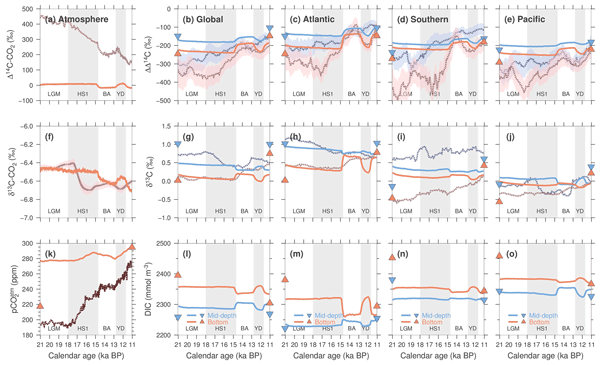
This study examines the transient response of the ocean carbon cycle to climate change since the last ice age by using an ocean general circulation model. Our carbon cycle model calculates atmospheric pCO2 changes that are consistent with ice core records but whose magnitude is underestimated. Our analysis of carbon isotopes suggests that improving the expression of activated ocean ventilation and suppressing biological productivity are critical in simulating atmospheric pCO2 changes.
Takashi Obase, Ayako Abe-Ouchi, Fuyuki Saito, Shun Tsutaki, Shuji Fujita, Kenji Kawamura, and Hideaki Motoyama
The Cryosphere, 17, 2543–2562, https://doi.org/10.5194/tc-17-2543-2023, https://doi.org/10.5194/tc-17-2543-2023, 2023
Short summary
Short summary
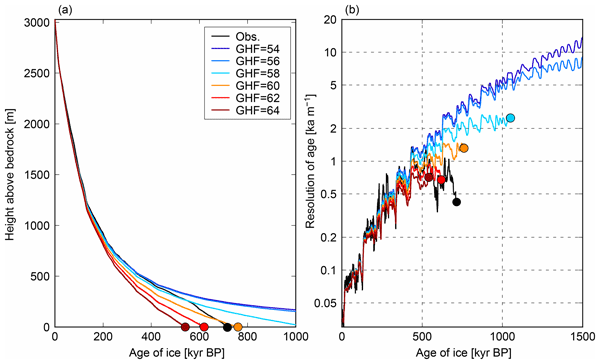
We use a one-dimensional ice-flow model to examine the most suitable core location near Dome Fuji (DF), Antarctica. This model computes the temporal evolution of age and temperature from past to present. We investigate the influence of different parameters of climate and ice sheet on the ice's basal age and compare the results with ground radar surveys. We find that the local ice thickness primarily controls the age because it is critical to the basal melting, which can eliminate the old ice.
Alexandre Cauquoin, Ayako Abe-Ouchi, Takashi Obase, Wing-Le Chan, André Paul, and Martin Werner
Clim. Past, 19, 1275–1294, https://doi.org/10.5194/cp-19-1275-2023, https://doi.org/10.5194/cp-19-1275-2023, 2023
Short summary
Short summary
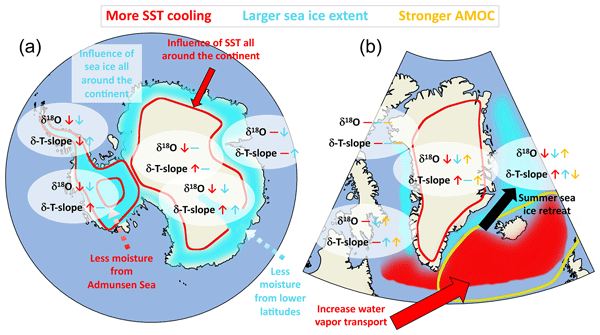
Stable water isotopes are tracers of climate processes occurring in the hydrological cycle. They are widely used to reconstruct the past variations of polar temperature before the instrumental era thanks to their measurements in ice cores. However, the relationship between measured isotopes and temperature has large uncertainties. In our study, we investigate how the sea surface conditions (temperature, sea ice, ocean circulation) impact this relationship for a cold to warm climate change.
Shun Tsutaki, Shuji Fujita, Kenji Kawamura, Ayako Abe-Ouchi, Kotaro Fukui, Hideaki Motoyama, Yu Hoshina, Fumio Nakazawa, Takashi Obase, Hiroshi Ohno, Ikumi Oyabu, Fuyuki Saito, Konosuke Sugiura, and Toshitaka Suzuki
The Cryosphere, 16, 2967–2983, https://doi.org/10.5194/tc-16-2967-2022, https://doi.org/10.5194/tc-16-2967-2022, 2022
Short summary
Short summary
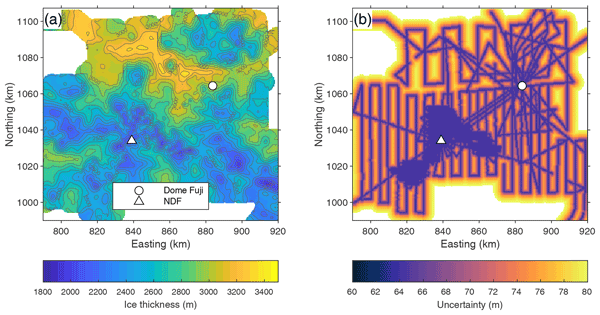
We constructed an ice thickness map across the Dome Fuji region, East Antarctica, from improved radar data and previous data that had been collected since the late 1980s. The data acquired using the improved radar systems allowed basal topography to be identified with higher accuracy. The new ice thickness data show the bedrock topography, particularly the complex terrain of subglacial valleys and highlands south of Dome Fuji, with substantially high detail.
Violet L. Patterson, Lauren J. Gregoire, Ruza F. Ivanovic, Niall Gandy, Stephen Cornford, Jonathan Owen, Sam Sherriff-Tadano, and Robin S. Smith
The Cryosphere, 20, 2589–2628, https://doi.org/10.5194/tc-20-2589-2026, https://doi.org/10.5194/tc-20-2589-2026, 2026
Short summary
Short summary
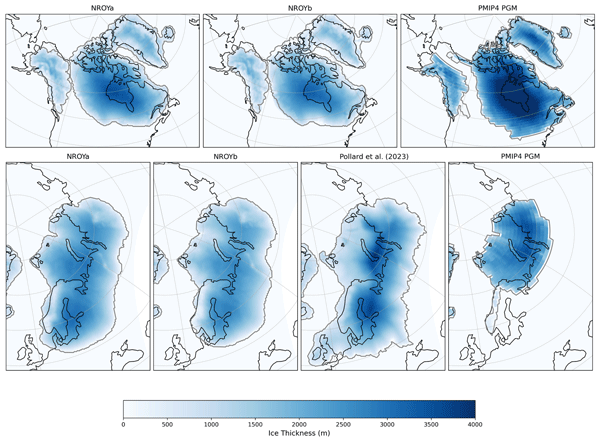
Simulations of the last two glacial periods are ran using a computer model in which the atmosphere and ice sheets interact. The model is able to produce ice sheet volumes, extents and dynamics in good agreement with data. Sensitivity analysis is undertaken and shows the Northern Hemisphere ice sheet size is particularly sensitive to the albedo of the ice in the model but the different ice sheets display different sensitivities to other processes.
Nozomi Arima, Masakazu Yoshimori, Ayako Abe-Ouchi, Ryouta O'ishi, Wing-Le Chan, Sam Sherriff-Tadano, and Tomoo Ogura
Clim. Past, 22, 891–913, https://doi.org/10.5194/cp-22-891-2026, https://doi.org/10.5194/cp-22-891-2026, 2026
Short summary
Short summary
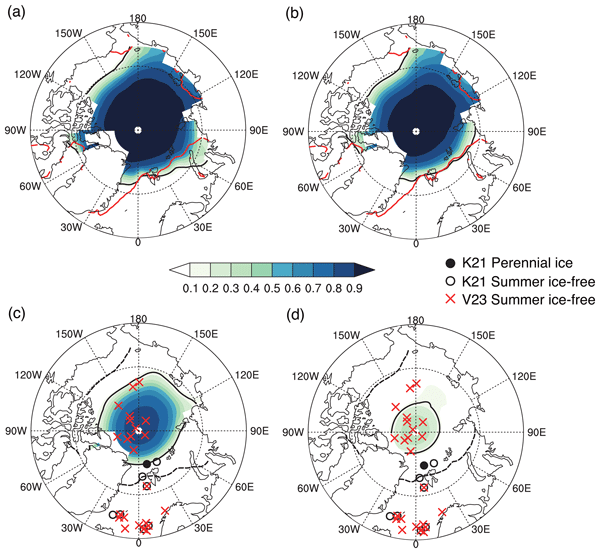
During the Last Interglacial period, spanning 129 000 to 116 000 years ago, the Arctic was considered warmer than during the preindustrial period. Many climate models do not simulate an ice-free Arctic Ocean in summer, as suggested by recent reconstructions. Here, we examine the importance of how the liquid or solid phase of cloud particles is determined in models. It is found that the representation of cloud phase indeed has a substantial impact on the simulation of summer sea ice cover.
Didier Swingedouw, Laura Jackson, Aixue Hu, Anastasia Romanou, Nicole C. Laureanti, Wilbert Weijer, Sina Loriani, Bette Otto-Bliesner, Ayako Abe-Ouchi, Lucas Almeida, Alessio Bellucci, Reyk Börner, Gokhan Danabasoglu, Donovan P. Dennis, Marion Devilliers, Sybren Drijfhout, Jonathan Donges, Friederike Fröb, Thomas L. Frölicher, Guillaume Gastineau, Heiko Goelzer, Chuncheng Guo, Urs Hofmann, Anna Höse, Colin Jones, Torben Koenigk, Ann Kristin Klose, Valerio Lembo, Jose Licon-Salaiz, Ken Mankoff, Virna Meccia, Irina Melnikova, Oliver Mehling, Laurie Menviel, Juliette Mignot, Jon I. Robson, Gavin A. Schmidt, Robin Smith, Yuchen Sun, Irene Trombini, Matteo Willeit, Richard Wood, Fanghua Wu, Lin Zhaohui, and Ricarda Winkelmann
EGUsphere, https://doi.org/10.5194/egusphere-2026-1698, https://doi.org/10.5194/egusphere-2026-1698, 2026
Short summary
Short summary
This study presents a plan for climate model experiments to better understand how changes in freshwater in the North Atlantic affect major ocean currents. We designed coordinated simulations to test their response to warming, added freshwater, and possible recovery after weakening. Comparing results across models and past climate evidence helps improve confidence in projections and assess risks of large ocean circulation changes.
Hans Segura, Xabier Pedruzo-Bagazgoitia, Philipp Weiss, Sebastian K. Müller, Thomas Rackow, Junhong Lee, Edgar Dolores-Tesillos, Imme Benedict, Matthias Aengenheyster, Razvan Aguridan, Gabriele Arduini, Alexander J. Baker, Jiawei Bao, Swantje Bastin, Eulàlia Baulenas, Tobias Becker, Sebastian Beyer, Hendryk Bockelmann, Nils Brüggemann, Lukas Brunner, Suvarchal K. Cheedela, Sushant Das, Jasper Denissen, Ian Dragaud, Piotr Dziekan, Madeleine Ekblom, Jan Frederik Engels, Monika Esch, Richard Forbes, Claudia Frauen, Lilli Freischem, Diego García-Maroto, Philipp Geier, Paul Gierz, Álvaro González-Cervera, Katherine Grayson, Matthew Griffith, Oliver Gutjahr, Helmuth Haak, Ioan Hadade, Kerstin Haslehner, Shabeh ul Hasson, Jan Hegewald, Lukas Kluft, Aleksei Koldunov, Nikolay Koldunov, Tobias Kölling, Shunya Koseki, Sergey Kosukhin, Josh Kousal, Peter Kuma, Arjun U. Kumar, Rumeng Li, Nicolas Maury, Maximilian Meindl, Sebastian Milinski, Kristian Mogensen, Bimochan Niraula, Jakub Nowak, Divya Sri Praturi, Ulrike Proske, Dian Putrasahan, René Redler, David Santuy, Domokos Sármány, Reiner Schnur, Patrick Scholz, Dmitry Sidorenko, Dorian Spät, Birgit Sützl, Daisuke Takasuka, Adrian Tompkins, Alejandro Uribe, Mirco Valentini, Menno Veerman, Aiko Voigt, Sarah Warnau, Fabian Wachsmann, Marta Wacławczyk, Nils Wedi, Karl-Hermann Wieners, Jonathan Wille, Marius Winkler, Yuting Wu, Florian Ziemen, Janos Zimmermann, Frida A.-M. Bender, Dragana Bojovic, Sandrine Bony, Simona Bordoni, Patrice Brehmer, Marcus Dengler, Emanuel Dutra, Saliou Faye, Erich Fischer, Chiel van Heerwaarden, Cathy Hohenegger, Heikki Järvinen, Markus Jochum, Thomas Jung, Johann H. Jungclaus, Noel S. Keenlyside, Daniel Klocke, Heike Konow, Martina Klose, Szymon Malinowski, Olivia Martius, Thorsten Mauritsen, Juan Pedro Mellado, Theresa Mieslinger, Elsa Mohino, Hanna Pawłowska, Karsten Peters-von Gehlen, Abdoulaye Sarré, Pajam Sobhani, Philip Stier, Lauri Tuppi, Pier Luigi Vidale, Irina Sandu, and Bjorn Stevens
Geosci. Model Dev., 18, 7735–7761, https://doi.org/10.5194/gmd-18-7735-2025, https://doi.org/10.5194/gmd-18-7735-2025, 2025
Short summary
Short summary
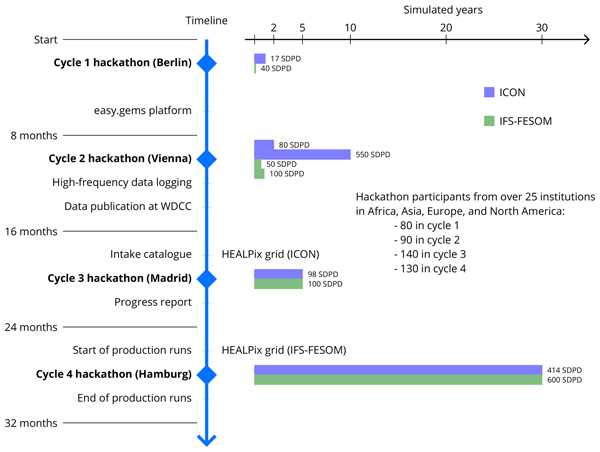
The Next Generation of Earth Modeling Systems project (nextGEMS) developed two Earth system models that use horizontal grid spacing of 10 km and finer, giving more fidelity to the representation of local phenomena, globally. In its fourth cycle, nextGEMS simulated the Earth System climate over the 2020–2049 period under the SSP3-7.0 scenario. Here, we provide an overview of nextGEMS, insights into the model development, and the realism of multi-decadal, kilometer-scale simulations.
Johanna Beckmann, Ronja Reese, Felicity S. McCormack, Sue Cook, Lawrence Bird, Dawid Gwyther, Daniel Richards, Matthias Scheiter, Yu Wang, Hélène Seroussi, Ayako Abe‐Ouchi, Torsten Albrecht, Jorge Alvarez‐Solas, Xylar S. Asay‐Davis, Jean‐Baptiste Barre, Constantijn J. Berends, Jorge Bernales, Javier Blasco, Justine Caillet, David M. Chandler, Violaine Coulon, Richard Cullather, Christophe Dumas, Benjamin K. Galton‐Fenzi, Julius Garbe, Fabien Gillet‐Chaulet, Rupert Gladstone, Heiko Goelzer, Nicholas R. Golledge, Ralf Greve, G. Hilmar Gudmundsson, Holly Kyeore Han, Trevor R. Hillebrand, Matthew J. Hoffman, Philippe Huybrechts, Nicolas C. Jourdain, Ann Kristin Klose, Petra M. Langebroek, Gunter R. Leguy, William H. Lipscomb, Daniel P. Lowry, Pierre Mathiot, Marisa Montoya, Mathieu Morlighem, Sophie Nowicki, Frank Pattyn, Antony J. Payne, Tyler Pelle, Aurélien Quiquet, Alexander Robinson, Leopekka Saraste, Erika G. Simon, Sainan Sun, Jake P. Twarog, Luke D. Trusel, Benoit Urruty, Jonas Van Breedam, Roderik S. W. van de Wal, Chen Zhao, and Thomas Zwinger
EGUsphere, https://doi.org/10.5194/egusphere-2025-4069, https://doi.org/10.5194/egusphere-2025-4069, 2025
Short summary
Short summary
Antarctica holds enough ice to raise sea levels by many meters, but its future is uncertain. Warm ocean water melts ice shelves from below, letting inland ice flow faster into the sea. By 2300, Antarctica could add 0.6–4.4 m to sea levels. Our study identifies two key factors—how strongly shelves melt and how the ice responds. These explain much of the range, and refining them in models may improve future predictions.
Takashi Obase, Laurie Menviel, Ayako Abe-Ouchi, Tristan Vadsaria, Ruza Ivanovic, Brooke Snoll, Sam Sherriff-Tadano, Paul J. Valdes, Lauren Gregoire, Marie-Luise Kapsch, Uwe Mikolajewicz, Nathaelle Bouttes, Didier Roche, Fanny Lhardy, Chengfei He, Bette Otto-Bliesner, Zhengyu Liu, and Wing-Le Chan
Clim. Past, 21, 1443–1463, https://doi.org/10.5194/cp-21-1443-2025, https://doi.org/10.5194/cp-21-1443-2025, 2025
Short summary
Short summary
This study analyses transient simulations of the last deglaciation performed by six climate models to understand the processes driving high-southern-latitude temperature changes. We find that atmospheric CO2 and AMOC (Atlantic Meridional Overturning Circulation) changes are the primary drivers of the warming and cooling during the middle stage of the deglaciation. The analysis highlights the model's sensitivity of CO2 and AMOC to meltwater and the meltwater history of temperature changes at high southern latitudes.
Thomas Rackow, Xabier Pedruzo-Bagazgoitia, Tobias Becker, Sebastian Milinski, Irina Sandu, Razvan Aguridan, Peter Bechtold, Sebastian Beyer, Jean Bidlot, Souhail Boussetta, Willem Deconinck, Michail Diamantakis, Peter Dueben, Emanuel Dutra, Richard Forbes, Rohit Ghosh, Helge F. Goessling, Ioan Hadade, Jan Hegewald, Thomas Jung, Sarah Keeley, Lukas Kluft, Nikolay Koldunov, Aleksei Koldunov, Tobias Kölling, Josh Kousal, Christian Kühnlein, Pedro Maciel, Kristian Mogensen, Tiago Quintino, Inna Polichtchouk, Balthasar Reuter, Domokos Sármány, Patrick Scholz, Dmitry Sidorenko, Jan Streffing, Birgit Sützl, Daisuke Takasuka, Steffen Tietsche, Mirco Valentini, Benoît Vannière, Nils Wedi, Lorenzo Zampieri, and Florian Ziemen
Geosci. Model Dev., 18, 33–69, https://doi.org/10.5194/gmd-18-33-2025, https://doi.org/10.5194/gmd-18-33-2025, 2025
Short summary
Short summary
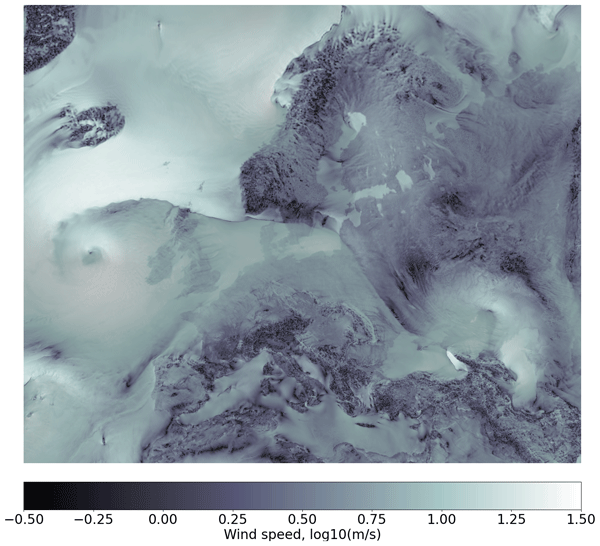
Detailed global climate model simulations have been created based on a numerical weather prediction model, offering more accurate spatial detail down to the scale of individual cities ("kilometre-scale") and a better understanding of climate phenomena such as atmospheric storms, whirls in the ocean, and cracks in sea ice. The new model aims to provide globally consistent information on local climate change with greater precision, benefiting environmental planning and local impact modelling.
Sam Sherriff-Tadano, Ruza Ivanovic, Lauren Gregoire, Charlotte Lang, Niall Gandy, Jonathan Gregory, Tamsin L. Edwards, Oliver Pollard, and Robin S. Smith
Clim. Past, 20, 1489–1512, https://doi.org/10.5194/cp-20-1489-2024, https://doi.org/10.5194/cp-20-1489-2024, 2024
Short summary
Short summary
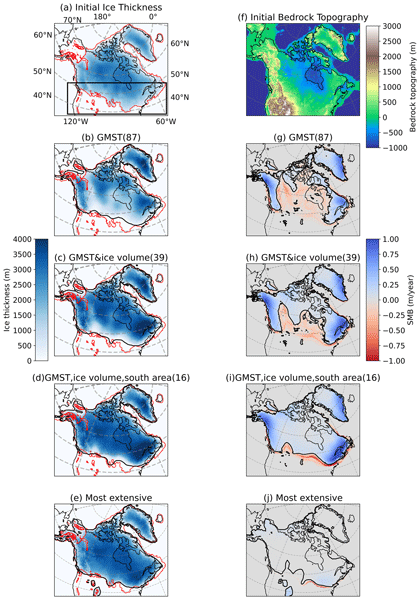
Ensemble simulations of the climate and ice sheets of the Last Glacial Maximum (LGM) are performed with a new coupled climate–ice sheet model. Results show a strong sensitivity of the North American ice sheet to the albedo scheme, while the Greenland ice sheet appeared more sensitive to basal sliding schemes. Our result implies a potential connection between the North American ice sheet at the LGM and the future Greenland ice sheet through the albedo scheme.
Julia E. Weiffenbach, Henk A. Dijkstra, Anna S. von der Heydt, Ayako Abe-Ouchi, Wing-Le Chan, Deepak Chandan, Ran Feng, Alan M. Haywood, Stephen J. Hunter, Xiangyu Li, Bette L. Otto-Bliesner, W. Richard Peltier, Christian Stepanek, Ning Tan, Julia C. Tindall, and Zhongshi Zhang
Clim. Past, 20, 1067–1086, https://doi.org/10.5194/cp-20-1067-2024, https://doi.org/10.5194/cp-20-1067-2024, 2024
Short summary
Short summary
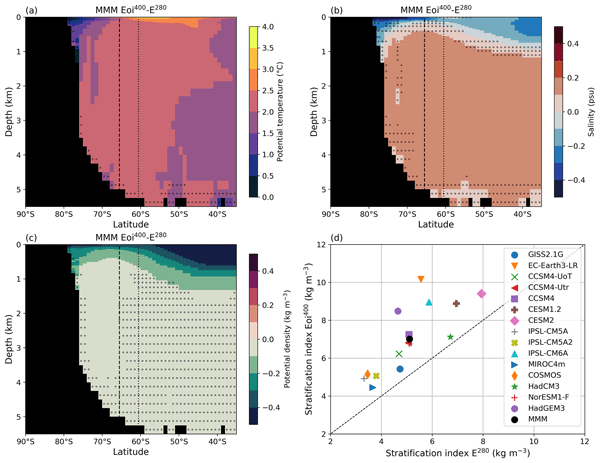
Elevated atmospheric CO2 concentrations and a smaller Antarctic Ice Sheet during the mid-Pliocene (~ 3 million years ago) cause the Southern Ocean surface to become fresher and warmer, which affects the global ocean circulation. The CO2 concentration and the smaller Antarctic Ice Sheet both have a similar and approximately equal impact on the Southern Ocean. The conditions of the Southern Ocean in the mid-Pliocene could therefore be analogous to those in a future climate with smaller ice sheets.
Brooke Snoll, Ruza Ivanovic, Lauren Gregoire, Sam Sherriff-Tadano, Laurie Menviel, Takashi Obase, Ayako Abe-Ouchi, Nathaelle Bouttes, Chengfei He, Feng He, Marie Kapsch, Uwe Mikolajewicz, Juan Muglia, and Paul Valdes
Clim. Past, 20, 789–815, https://doi.org/10.5194/cp-20-789-2024, https://doi.org/10.5194/cp-20-789-2024, 2024
Short summary
Short summary
Geological records show rapid climate change throughout the recent deglaciation. The drivers of these changes are still misunderstood but are often attributed to shifts in the Atlantic Ocean circulation from meltwater input. A cumulative effort to understand these processes prompted numerous simulations of this period. We use these to explain the chain of events and our collective ability to simulate them. The results demonstrate the importance of the meltwater amount used in the simulation.
Hidetaka Kobayashi, Akira Oka, Takashi Obase, and Ayako Abe-Ouchi
Clim. Past, 20, 769–787, https://doi.org/10.5194/cp-20-769-2024, https://doi.org/10.5194/cp-20-769-2024, 2024
Short summary
Short summary
This study examines the transient response of the ocean carbon cycle to climate change since the last ice age by using an ocean general circulation model. Our carbon cycle model calculates atmospheric pCO2 changes that are consistent with ice core records but whose magnitude is underestimated. Our analysis of carbon isotopes suggests that improving the expression of activated ocean ventilation and suppressing biological productivity are critical in simulating atmospheric pCO2 changes.
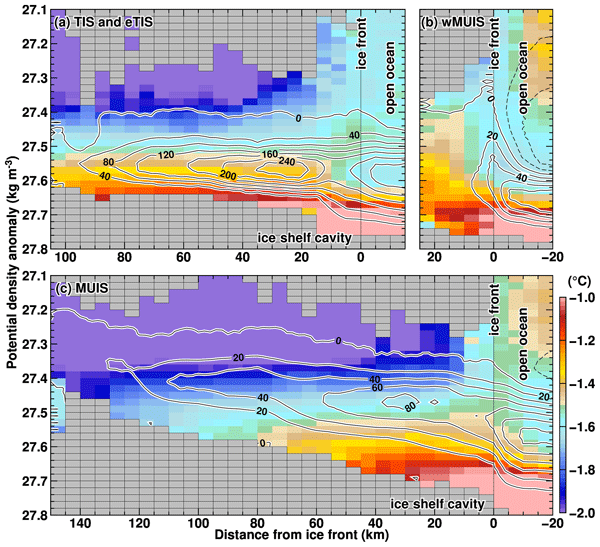
Kazuya Kusahara, Daisuke Hirano, Masakazu Fujii, Alexander D. Fraser, Takeshi Tamura, Kohei Mizobata, Guy D. Williams, and Shigeru Aoki
The Cryosphere, 18, 43–73, https://doi.org/10.5194/tc-18-43-2024, https://doi.org/10.5194/tc-18-43-2024, 2024
Short summary
Short summary
This study focuses on the Totten and Moscow University ice shelves, East Antarctica. We used an ocean–sea ice–ice shelf model to better understand regional interactions between ocean, sea ice, and ice shelf. We found that a combination of warm ocean water and local sea ice production influences the regional ice shelf basal melting. Furthermore, the model reproduced the summertime undercurrent on the upper continental slope, regulating ocean heat transport onto the continental shelf.
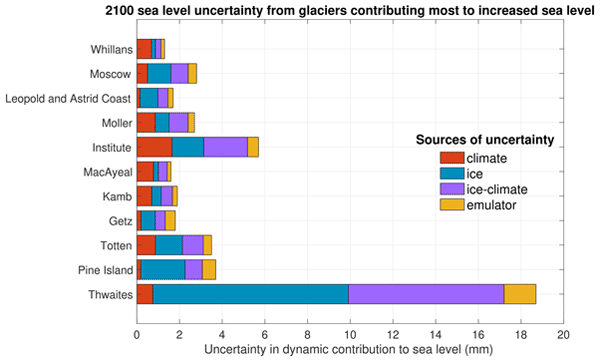
Hélène Seroussi, Vincent Verjans, Sophie Nowicki, Antony J. Payne, Heiko Goelzer, William H. Lipscomb, Ayako Abe-Ouchi, Cécile Agosta, Torsten Albrecht, Xylar Asay-Davis, Alice Barthel, Reinhard Calov, Richard Cullather, Christophe Dumas, Benjamin K. Galton-Fenzi, Rupert Gladstone, Nicholas R. Golledge, Jonathan M. Gregory, Ralf Greve, Tore Hattermann, Matthew J. Hoffman, Angelika Humbert, Philippe Huybrechts, Nicolas C. Jourdain, Thomas Kleiner, Eric Larour, Gunter R. Leguy, Daniel P. Lowry, Chistopher M. Little, Mathieu Morlighem, Frank Pattyn, Tyler Pelle, Stephen F. Price, Aurélien Quiquet, Ronja Reese, Nicole-Jeanne Schlegel, Andrew Shepherd, Erika Simon, Robin S. Smith, Fiammetta Straneo, Sainan Sun, Luke D. Trusel, Jonas Van Breedam, Peter Van Katwyk, Roderik S. W. van de Wal, Ricarda Winkelmann, Chen Zhao, Tong Zhang, and Thomas Zwinger
The Cryosphere, 17, 5197–5217, https://doi.org/10.5194/tc-17-5197-2023, https://doi.org/10.5194/tc-17-5197-2023, 2023
Short summary
Short summary
Mass loss from Antarctica is a key contributor to sea level rise over the 21st century, and the associated uncertainty dominates sea level projections. We highlight here the Antarctic glaciers showing the largest changes and quantify the main sources of uncertainty in their future evolution using an ensemble of ice flow models. We show that on top of Pine Island and Thwaites glaciers, Totten and Moscow University glaciers show rapid changes and a strong sensitivity to warmer ocean conditions.
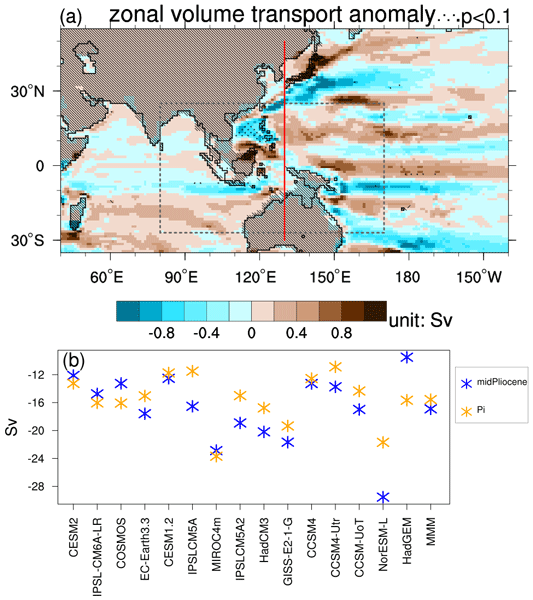
Xin Ren, Daniel J. Lunt, Erica Hendy, Anna von der Heydt, Ayako Abe-Ouchi, Bette Otto-Bliesner, Charles J. R. Williams, Christian Stepanek, Chuncheng Guo, Deepak Chandan, Gerrit Lohmann, Julia C. Tindall, Linda E. Sohl, Mark A. Chandler, Masa Kageyama, Michiel L. J. Baatsen, Ning Tan, Qiong Zhang, Ran Feng, Stephen Hunter, Wing-Le Chan, W. Richard Peltier, Xiangyu Li, Youichi Kamae, Zhongshi Zhang, and Alan M. Haywood
Clim. Past, 19, 2053–2077, https://doi.org/10.5194/cp-19-2053-2023, https://doi.org/10.5194/cp-19-2053-2023, 2023
Short summary
Short summary
We investigate the Maritime Continent climate in the mid-Piacenzian warm period and find it is warmer and wetter and the sea surface salinity is lower compared with preindustrial period. Besides, the fresh and warm water transfer through the Maritime Continent was stronger. In order to avoid undue influence from closely related models in the multimodel results, we introduce a new metric, the multi-cluster mean, which could reveal spatial signals that are not captured by the multimodel mean.
Takashi Obase, Ayako Abe-Ouchi, Fuyuki Saito, Shun Tsutaki, Shuji Fujita, Kenji Kawamura, and Hideaki Motoyama
The Cryosphere, 17, 2543–2562, https://doi.org/10.5194/tc-17-2543-2023, https://doi.org/10.5194/tc-17-2543-2023, 2023
Short summary
Short summary
We use a one-dimensional ice-flow model to examine the most suitable core location near Dome Fuji (DF), Antarctica. This model computes the temporal evolution of age and temperature from past to present. We investigate the influence of different parameters of climate and ice sheet on the ice's basal age and compare the results with ground radar surveys. We find that the local ice thickness primarily controls the age because it is critical to the basal melting, which can eliminate the old ice.
Alexandre Cauquoin, Ayako Abe-Ouchi, Takashi Obase, Wing-Le Chan, André Paul, and Martin Werner
Clim. Past, 19, 1275–1294, https://doi.org/10.5194/cp-19-1275-2023, https://doi.org/10.5194/cp-19-1275-2023, 2023
Short summary
Short summary
Stable water isotopes are tracers of climate processes occurring in the hydrological cycle. They are widely used to reconstruct the past variations of polar temperature before the instrumental era thanks to their measurements in ice cores. However, the relationship between measured isotopes and temperature has large uncertainties. In our study, we investigate how the sea surface conditions (temperature, sea ice, ocean circulation) impact this relationship for a cold to warm climate change.
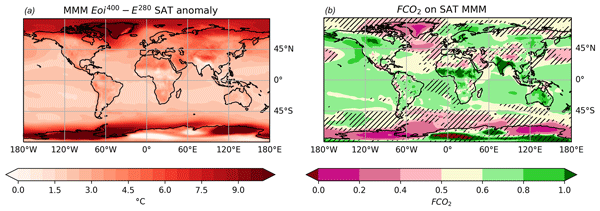
Lauren E. Burton, Alan M. Haywood, Julia C. Tindall, Aisling M. Dolan, Daniel J. Hill, Ayako Abe-Ouchi, Wing-Le Chan, Deepak Chandan, Ran Feng, Stephen J. Hunter, Xiangyu Li, W. Richard Peltier, Ning Tan, Christian Stepanek, and Zhongshi Zhang
Clim. Past, 19, 747–764, https://doi.org/10.5194/cp-19-747-2023, https://doi.org/10.5194/cp-19-747-2023, 2023
Short summary
Short summary
Warm climates of the Pliocene (~ 3 million years ago) are similar to projections of the near future. We find elevated concentrations of atmospheric carbon dioxide to be the most important forcing for driving changes in Pliocene surface air temperature, sea surface temperature, and precipitation. However, changes caused by the nature of Pliocene ice sheets and orography are also important, affecting the extent to which we can use the Pliocene as an analogue for our warmer future.
Ikumi Oyabu, Kenji Kawamura, Shuji Fujita, Ryo Inoue, Hideaki Motoyama, Kotaro Fukui, Motohiro Hirabayashi, Yu Hoshina, Naoyuki Kurita, Fumio Nakazawa, Hiroshi Ohno, Konosuke Sugiura, Toshitaka Suzuki, Shun Tsutaki, Ayako Abe-Ouchi, Masashi Niwano, Frédéric Parrenin, Fuyuki Saito, and Masakazu Yoshimori
Clim. Past, 19, 293–321, https://doi.org/10.5194/cp-19-293-2023, https://doi.org/10.5194/cp-19-293-2023, 2023
Short summary
Short summary
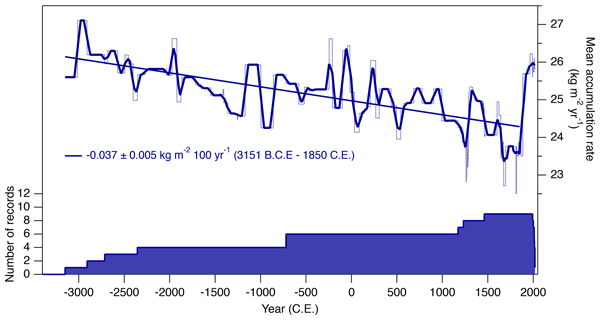
We reconstructed accumulation rate around Dome Fuji, Antarctica, over the last 5000 years from 15 shallow ice cores and seven snow pits. We found a long-term decreasing trend in the preindustrial period, which may be associated with secular surface cooling and sea ice expansion. Centennial-scale variations were also found, which may partly be related to combinations of volcanic, solar and greenhouse gas forcings. The most rapid and intense increases of accumulation rate occurred since 1850 CE.
Julia E. Weiffenbach, Michiel L. J. Baatsen, Henk A. Dijkstra, Anna S. von der Heydt, Ayako Abe-Ouchi, Esther C. Brady, Wing-Le Chan, Deepak Chandan, Mark A. Chandler, Camille Contoux, Ran Feng, Chuncheng Guo, Zixuan Han, Alan M. Haywood, Qiang Li, Xiangyu Li, Gerrit Lohmann, Daniel J. Lunt, Kerim H. Nisancioglu, Bette L. Otto-Bliesner, W. Richard Peltier, Gilles Ramstein, Linda E. Sohl, Christian Stepanek, Ning Tan, Julia C. Tindall, Charles J. R. Williams, Qiong Zhang, and Zhongshi Zhang
Clim. Past, 19, 61–85, https://doi.org/10.5194/cp-19-61-2023, https://doi.org/10.5194/cp-19-61-2023, 2023
Short summary
Short summary
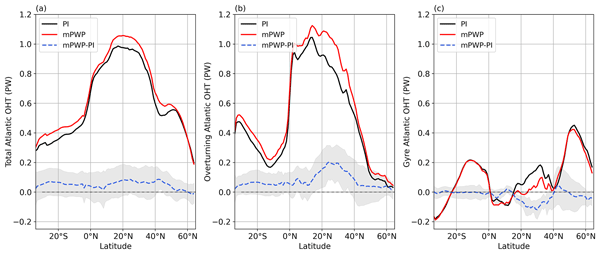
We study the behavior of the Atlantic Meridional Overturning Circulation (AMOC) in the mid-Pliocene. The mid-Pliocene was about 3 million years ago and had a similar CO2 concentration to today. We show that the stronger AMOC during this period relates to changes in geography and that this has a significant influence on ocean temperatures and heat transported northwards by the Atlantic Ocean. Understanding the behavior of the mid-Pliocene AMOC can help us to learn more about our future climate.
Shun Tsutaki, Shuji Fujita, Kenji Kawamura, Ayako Abe-Ouchi, Kotaro Fukui, Hideaki Motoyama, Yu Hoshina, Fumio Nakazawa, Takashi Obase, Hiroshi Ohno, Ikumi Oyabu, Fuyuki Saito, Konosuke Sugiura, and Toshitaka Suzuki
The Cryosphere, 16, 2967–2983, https://doi.org/10.5194/tc-16-2967-2022, https://doi.org/10.5194/tc-16-2967-2022, 2022
Short summary
Short summary
We constructed an ice thickness map across the Dome Fuji region, East Antarctica, from improved radar data and previous data that had been collected since the late 1980s. The data acquired using the improved radar systems allowed basal topography to be identified with higher accuracy. The new ice thickness data show the bedrock topography, particularly the complex terrain of subglacial valleys and highlands south of Dome Fuji, with substantially high detail.
Arthur M. Oldeman, Michiel L. J. Baatsen, Anna S. von der Heydt, Henk A. Dijkstra, Julia C. Tindall, Ayako Abe-Ouchi, Alice R. Booth, Esther C. Brady, Wing-Le Chan, Deepak Chandan, Mark A. Chandler, Camille Contoux, Ran Feng, Chuncheng Guo, Alan M. Haywood, Stephen J. Hunter, Youichi Kamae, Qiang Li, Xiangyu Li, Gerrit Lohmann, Daniel J. Lunt, Kerim H. Nisancioglu, Bette L. Otto-Bliesner, W. Richard Peltier, Gabriel M. Pontes, Gilles Ramstein, Linda E. Sohl, Christian Stepanek, Ning Tan, Qiong Zhang, Zhongshi Zhang, Ilana Wainer, and Charles J. R. Williams
Clim. Past, 17, 2427–2450, https://doi.org/10.5194/cp-17-2427-2021, https://doi.org/10.5194/cp-17-2427-2021, 2021
Short summary
Short summary
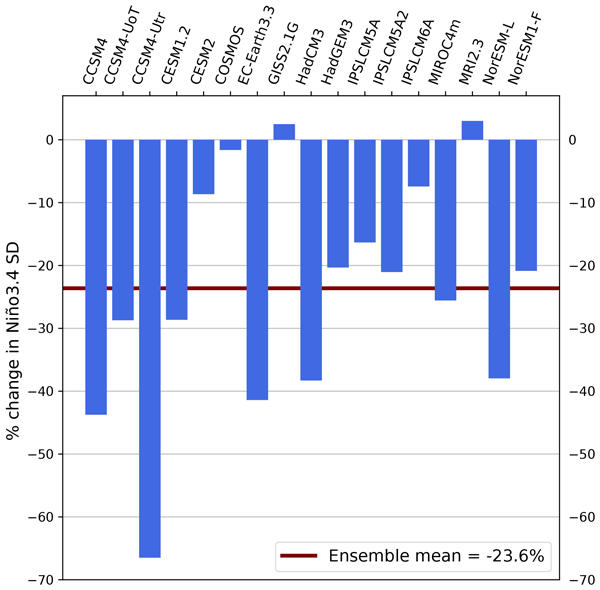
In this work, we have studied the behaviour of El Niño events in the mid-Pliocene, a period of around 3 million years ago, using a collection of 17 climate models. It is an interesting period to study, as it saw similar atmospheric carbon dioxide levels to the present day. We find that the El Niño events were less strong in the mid-Pliocene simulations, when compared to pre-industrial climate. Our results could help to interpret El Niño behaviour in future climate projections.
Cited articles
Abbot, D. S.: Resolved snowball earth clouds, J. Climate, 27, 4391–4402, https://doi.org/10.1175/JCLI-D-13-00738.1, 2014. a
Abbot, D. S., Voigt, A., and Koll, D.: The Jormungand global climate state and implications for Neoproterozoic glaciations, J. Geophys. Res.-Atmos., 116, 1–14, https://doi.org/10.1029/2011JD015927, 2011. a
Abbot, D. S., Voigt, A., Branson, M., Pierrehumbert, R. T., Pollard, D., Hir, G. L., and Koll, D. D.: Clouds and Snowball Earth deglaciation, Geophys. Res. Lett., 39, https://doi.org/10.1029/2012GL052861, 2012. a, b, c, d
Abe, Y., Abe-Ouchi, A., Sleep, N. H., and Zahnle, K. J.: Habitable Zone Limits for Dry Planets, Astrobiology, 11, 443–460, https://doi.org/10.1089/ast.2010.0545, 2011. a, b, c
Abe-Ouchi, A., Saito, F., Kawamura, K., Raymo, M. E., Okuno, J., Takahashi, K., and Blatter, H.: Insolation-driven 100,000-year glacial cycles and hysteresis of ice-sheet volume, Nature, 500, 190–193, https://doi.org/10.1038/nature12374, 2013. a
Ashkenazy, Y., Gildor, H., Losch, M., and Tziperman, E.: Ocean circulation under globally glaciated snowball earth conditions: Steady-state solutions, J. Phys. Oceanogr., 44, 24–43, https://doi.org/10.1175/JPO-D-13-086.1, 2014. a, b, c, d
Benn, D. I., Hir, G. L., Bao, H., Donnadieu, Y., Dumas, C., Fleming, E. J., Hambrey, M. J., McMillan, E. A., Petronis, M. S., Ramstein, G., Stevenson, C. T., Wynn, P. M., and Fairchild, I. J.: Orbitally forced ice sheet fluctuations during the Marinoan Snowball Earth glaciation, Nat. Geosci., 8, 704–707, https://doi.org/10.1038/ngeo2502, 2015. a, b, c
Braconnot, P., Otto-Bliesner, B., Harrison, S., Joussaume, S., Peterchmitt, J.-Y., Abe-Ouchi, A., Crucifix, M., Driesschaert, E., Fichefet, Th., Hewitt, C. D., Kageyama, M., Kitoh, A., Laine, A., Loutre, M.-F., Marti, O., Merkel, U., Ramstein, G., Valdes, P., Weber, S. L., Yu, Y., and Zhao, Y.: Results of PMIP2 coupled simulations of the Mid-Holocene and Last Glacial Maximum – Part 1: experiments and large-scale features, Clim. Past, 3, 261–277, https://doi.org/10.5194/cp-3-261-2007, 2007. a
Budyko, M. I.: The effect of solar radiation variations on the climate of the Earth, Tellus, 21, 611–619, 1969. a
Chan, W.-L. and Abe-Ouchi, A.: Pliocene Model Intercomparison Project (PlioMIP2) simulations using the Model for Interdisciplinary Research on Climate (MIROC4m), Clim. Past, 16, 1523–1545, https://doi.org/10.5194/cp-16-1523-2020, 2020. a
Donnadieu, Y., Fluteau, F., Ramstein, G., Ritz, C., and Besse, J.: Is there a conflict between the Neoproterozoic glacial deposits and the snowball Earth interpretation: An improved understanding with numerical modeling, Earth Planet. Sc. Lett., 208, 101–112, https://doi.org/10.1016/S0012-821X(02)01152-4, 2003. a, b
Donnadieu, Y., Ramstein, G., Fluteau, F., Roche, D., and Ganopolski, A.: The impact of atmospheric and oceanic heat transports on the sea-ice-albedo instability during the Neoproterozoic, Clim. Dynam., 22, 293–306, https://doi.org/10.1007/s00382-003-0378-5, 2004. a
Donnadleu, Y., Goddéris, Y., Ramstein, G., Nédélec, A., and Meert, J.: A 'snowball Earth' climate triggered by continental break-up through changes in runoff, Nature, 428, 303–306, https://doi.org/10.1038/nature02408, 2004. a
Eberhard, J., Bevan, O. E., Feulner, G., Petri, S., van Hunen, J., and Baldini, J. U. L.: Sensitivity of Neoproterozoic snowball-Earth inceptions to continental configuration, orbital geometry, and volcanism, Clim. Past, 19, 2203–2235, https://doi.org/10.5194/cp-19-2203-2023, 2023. a
Feulner, G. and Kienert, H.: Climate simulations of Neoproterozoic snowball Earth events: Similar critical carbon dioxide levels for the Sturtian and Marinoan glaciations, Earth Planet. Sc. Lett., 404, 200–205, https://doi.org/10.1016/j.epsl.2014.08.001, 2014. a
Gough, D. O.: Solar Interior Structure and Luminosity Variations, Sol. Phys., 74, 21–34, https://doi.org/10.1007/Bf00151270, 1981. a
Harland, W. B.: Evidence of Late Precambrian glaciation and its significance, in: Problems in Palaeoclimatology, Interscience, 119–149, 1964. a
Hasumi, H. and Emori, S.: K-1 coupled model (MIROC) description, K-1 technical report, Center for Climate System Research, Univ. of Tokyo, Tokyo, 2004. a
Higuchi, T., Abe-Ouchi, A., and Chan, W. L.: Differences Between Present-Day and Cretaceous Hydrological Cycle Responses to Rising CO2 Concentration, Geophys. Res. Lett., 48, e2021GL094341, https://doi.org/10.1029/2021GL094341, 2021. a
Hirahara, S., Ishii, M., and Fukuda, Y.: Centennial-scale sea surface temperature analysis and its uncertainty, J. Climate, 27, 57–75, https://doi.org/10.1175/JCLI-D-12-00837.1, 2014. a
Hoffman, P. F., Abbot, D. S., Ashkenazy, Y., Benn, D. I., Brocks, J. J., Cohen, P. A., Cox, G. M., Creveling, J. R., Donnadieu, Y., Erwin, D. H., Fairchild, I. J., Ferreira, D., Goodman, J. C., Halverson, G. P., Jansen, M. F., Le Hir, G., Love, G. D., Macdonald, F. A., Maloof, A. C., Partin, C. A., Ramstein, G., Rose, B. E. J., Rose, C. V., Peter, Sadler, M., Tziperman, E., Voigt, A., and Warren, S. G.: Snowball Earth climate dynamics and Cryogenian geology-geobiology, Science Advances, 3, e1600983, https://doi.org/10.1126/sciadv.1600983, 2017. a, b, c
Hu, Y., Yang, J., Ding, F., and Peltier, W. R.: Model-dependence of the CO2 threshold for melting the hard Snowball Earth, Clim. Past, 7, 17–25, https://doi.org/10.5194/cp-7-17-2011, 2011. a
Hyde, W. T., Crowley, T. J., Baum, S. K., and Peltier, W. R.: Neoproterozoic 'snowball earth' simulations with a coupled climate/ice-sheet model, Nature, 405, 425–429, https://doi.org/10.1038/35013005, 2000. a, b
Kageyama, M., Harrison, S. P., Kapsch, M.-L., Lofverstrom, M., Lora, J. M., Mikolajewicz, U., Sherriff-Tadano, S., Vadsaria, T., Abe-Ouchi, A., Bouttes, N., Chandan, D., Gregoire, L. J., Ivanovic, R. F., Izumi, K., LeGrande, A. N., Lhardy, F., Lohmann, G., Morozova, P. A., Ohgaito, R., Paul, A., Peltier, W. R., Poulsen, C. J., Quiquet, A., Roche, D. M., Shi, X., Tierney, J. E., Valdes, P. J., Volodin, E., and Zhu, J.: The PMIP4 Last Glacial Maximum experiments: preliminary results and comparison with the PMIP3 simulations, Clim. Past, 17, 1065–1089, https://doi.org/10.5194/cp-17-1065-2021, 2021. a
Kirschvink, J. L.: Late Proterozoic low-latitude global glaciation: The Snowball Earth, in The Proterozoic Biosphere: A Multidisciplinary Study, Cambridge Univ. Press, 51–52, ISBN 9780521366151, 1992. a
Kirschvink, J. L., Gaidos, E. J., Bertani, L. E., Beukes, N. J., Gutzmer, J., Maepa, L. N., and Steinberger, R. E.: Paleoproterozoic snowball Earth: Extreme climatic and geochemical global change and its biological consequences, P. Natl. Acad. Sci. USA, 97, 1400–1405, https://doi.org/10.1073/pnas.97.4.1400, 2000. a
Kodama, T., Genda, H., Leconte, J., and Abe-Ouchi, A.: The Onset of a Globally Ice-Covered State for a Land Planet, J. Geophys. Res.-Planet., 126, e2021JE006975, https://doi.org/10.1029/2021JE006975, 2021. a, b
Kuniyoshi, Y., Abe-Ouchi, A., Sherriff-Tadano, S., Chan, W. L., and Saito, F.: Effect of Climatic Precession on Dansgaard-Oeschger-Like Oscillations, Geophys. Res. Lett., 49, e2021GL095695, https://doi.org/10.1029/2021GL095695, 2022. a
Le Hir, G., Ramstein, G., Donnadieu, Y., and Pierrehumbert, R. T.: Investigating plausible mechanisms to trigger a deglaciation from a hard snowball Earth, C. R. Géosci., 339, 274–287, https://doi.org/10.1016/j.crte.2006.09.002, 2007. a
Le Hir, G. L. H., Donnadieu, Y., Goddéris, Y., Pierrehumbert, R. T., Halverson, G. P., Macouin, M., Nédélec, A., and Ramstein, G.: The snowball Earth aftermath: Exploring the limits of continental weathering processes, Earth Planet. Sc. Lett., 277, 453–463, https://doi.org/10.1016/j.epsl.2008.11.010, 2009. a
Liu, P., Liu, Y., Gu, S., Hoffman, P., and Li, S.: A Positive Cooling Feedback for the Neoproterozoic Snowball Earth Initiation Due To Weakening of Ocean Ventilation, Geophys. Res. Lett., 50, https://doi.org/10.1029/2022GL102020, 2023. a, b
Liu, Y. and Peltier, W. R.: A carbon cycle coupled climate model of Neoproterozoic glaciation: Influence of continental configuration on the formation of a “soft snowball”, J. Geophys. Res.-Atmos., 115, https://doi.org/10.1029/2009JD013082, 2010. a, b
Liu, Y., Peltier, W. R., Yang, J., and Vettoretti, G.: The initiation of Neoproterozoic “snowball” climates in CCSM3: the influence of paleocontinental configuration, Clim. Past, 9, 2555–2577, https://doi.org/10.5194/cp-9-2555-2013, 2013. a, b, c, d
Liu, Y., Peltier, W. R., Yang, J., Vettoretti, G., and Wang, Y.: Strong effects of tropical ice-sheet coverage and thickness on the hard snowball Earth bifurcation point, Clim. Dynam., 48, 3459–3474, https://doi.org/10.1007/s00382-016-3278-1, 2017. a
Liu, Y., Peltier, W. R., Yang, J., and Hu, Y.: Influence of surface topography on the critical carbon dioxide level required for the formation of a modern snowball Earth, J. Climate, 31, 8463–8479, https://doi.org/10.1175/JCLI-D-17-0821.1, 2018. a, b
Marotzke, J. and Botzet, M.: Present-day and ice-covered equilibrium states in a comprehensive climate model, Geophys. Res. Lett., 34, https://doi.org/10.1029/2006GL028880, 2007. a
Nozawa, T., Nagashima, T., Ogura, T., Yokohata, T., Okada, N., and Shiogama, H.: Climate Change Simulations with a Coupled Ocean-Atmosphere GCM Called the Model for Interdisciplinary Research on Climate: MIROC, CGER-Report, https://www.cger.nies.go.jp/publications/report/i073/I073.pdf (last access: 6 April 2026), 2007. a
Obase, T.: Model data for the figures of Obase et al. entitled “Climate and ocean circulation changes toward a modern snowball Earth”, Zenodo [data set], https://zenodo.org/records/19115445 (last access: 6 April 2026), 2026. a
Obase, T. and Abe-Ouchi, A.: Abrupt Bølling-Allerød Warming Simulated under Gradual Forcing of the Last Deglaciation, Geophys. Res. Lett., 46, 11397–11405, https://doi.org/10.1029/2019GL084675, 2019. a
O'ishi, R., Chan, W.-L., Abe-Ouchi, A., Sherriff-Tadano, S., Ohgaito, R., and Yoshimori, M.: PMIP4/CMIP6 last interglacial simulations using three different versions of MIROC: importance of vegetation, Clim. Past, 17, 21–36, https://doi.org/10.5194/cp-17-21-2021, 2021. a
Oka, A., Tajika, E., Abe-Ouchi, A., and Kubota, K.: Role of the ocean in controlling atmospheric CO2 concentration in the course of global glaciations, Clim. Dynam., 37, 1755–1770, https://doi.org/10.1007/s00382-010-0959-z, 2011. a, b, c
Peltier, W. R., Tarasov, L., Vettoretti, G., and Solheim, L. P.: Climate dynamics in deep time: Modeling the “snowball bifurcation” and assessing the plausibility of its occurrence, Blackwell Publishing Ltd, 146, 107–124, https://doi.org/10.1029/146GM10, ISBN 9781118666289, 2004. a
Peltier, W. R., Liu, Y., and Crowley, J. W.: Snowball Earth prevention by dissolved organic carbon remineralization, Nature, 450, 813–818, https://doi.org/10.1038/nature06354, 2007. a, b
Pierrehumbert, R. T.: High levels of atmospheric carbon dioxide necessary for the termination of global glaciation, Nature, 429, 646–649, https://doi.org/10.1038/nature02640, 2004. a
Pierrehumbert, R. T.: Climate dynamics of a hard snowball Earth, J. Geophys. Res.-Atmos., 110, 1–22, https://doi.org/10.1029/2004JD005162, 2005. a
Pollard, D. and Kasting, J. F.: Climate-ice sheet simulations of neoproterozoic glaciation before and after collapse to snowball earth, Blackwell Publishing Ltd, 146, 91–105, https://doi.org/10.1029/146GM09, ISBN 9781118666289, 2004. a, b
Pollard, D. and Kasting, J. F.: Snowball Earth: A thin-ice solution with flowing sea glaciers, J. Geophys. Res.-Oceans, 110, 1–16, https://doi.org/10.1029/2004JC002525, 2005. a, b
Pollard, D., Kasting, J. F., and Zugger, M. E.: Snowball Earth: Asynchronous coupling of sea-glacier flow with a global climate model, J. Geophys. Res., 122, 5157–5171, https://doi.org/10.1002/2017JD026621, 2017. a, b
Poulsen, C. J., Jacob, R. L., Pierrehumbert, R. T., and Huynh, T. T.: Testing paleogeographic controls on a Neoproterozoic snowball Earth, Geophys. Res. Lett., 29, 10-1–10-4, https://doi.org/10.1029/2001GL014352, 2002. a
Rose, B. E.: Stable “Waterbelt” climates controlled by tropical ocean heat transport: A nonlinear coupled climate mechanism of relevance to Snowball Earth, J. Geophys. Res., 120, 1404–1423, https://doi.org/10.1002/2014JD022659, 2015. a
Sellers, W. D.: A global climatic model based on the energy balance of the Earth–atmosphere system, J. Appl. Meteorol., 8, 392–400, 1969. a
Sherriff-Tadano, S., Abe-Ouchi, A., and Oka, A.: Impact of mid-glacial ice sheets on deep ocean circulation and global climate, Clim. Past, 17, 95–110, https://doi.org/10.5194/cp-17-95-2021, 2021. a
Tajika, E.: Faint young Sun and the carbon cycle: implication for the Proterozoic global glaciations, Earth Planet. Sc. Lett., 214, 443–453, https://doi.org/10.1016/S0012-821X(03)00396-0, 2003. a
Tziperman, E., Abbot, D. S., Ashkenazy, Y., Gildor, H., Pollard, D., Schoof, C. G., and Schrag, D. P.: Continental constriction and oceanic ice-cover thickness in a Snowball-Earth scenario, J. Geophys. Res.-Oceans, 117, https://doi.org/10.1029/2011JC007730, 2012. a
Voigt, A.: The dynamics of the Snowball Earth Hadley circulation for off-equatorial and seasonally varying insolation, Earth Syst. Dynam., 4, 425–438, https://doi.org/10.5194/esd-4-425-2013, 2013. a
Voigt, A. and Abbot, D. S.: Sea-ice dynamics strongly promote Snowball Earth initiation and destabilize tropical sea-ice margins, Clim. Past, 8, 2079–2092, https://doi.org/10.5194/cp-8-2079-2012, 2012. a
Voigt, A., Abbot, D. S., Pierrehumbert, R. T., and Marotzke, J.: Initiation of a Marinoan Snowball Earth in a state-of-the-art atmosphere-ocean general circulation model, Clim. Past, 7, 249–263, https://doi.org/10.5194/cp-7-249-2011, 2011. a, b, c
Wu, J., Liu, Y., and Zhao, Z.: How Should Snowball Earth Deglaciation Start, J. Geophys. Res.-Atmos., 126, e2020JD033833, https://doi.org/10.1029/2020JD033833, 2021. a
Yang, J., Peltier, W. R., and Hu, Y.: The initiation of modern “soft snowball” and “hard snowball” climates in CCSM3. Part I: The influences of solar luminosity, CO2 concentration, and the sea ice/snow Albedo parameterization, J. Climate, 25, 2711–2736, https://doi.org/10.1175/JCLI-D-11-00189.1, 2012a. a, b, c, d, e, f, g, h, i
Yang, J., Peltier, W. R., and Hu, Y.: The initiation of modern soft and hard Snowball Earth climates in CCSM4, Clim. Past, 8, 907–918, https://doi.org/10.5194/cp-8-907-2012, 2012c. a, b, c
Yang, J., Jansen, M. F., Macdonald, F. A., and Abbot, D. S.: Persistence of a freshwater surface ocean after a snowball Earth, Geology, 45, 615–618, https://doi.org/10.1130/G38920.1, 2017. a
Zhao, Z., Liu, Y., and Dai, H.: Sea-glacier retreating rate and climate evolution during the marine deglaciation of a snowball Earth, Global Planet. Change, 215, 103877, https://doi.org/10.1016/j.gloplacha.2022.103877, 2022. a, b
Short summary
In the past, Earth might have experienced its surface completely covered with ice. Using an atmosphere-ocean climate model, we examined the evolution in the ocean circulation from modern to the snowball Earth. We found that the deep ocean ocean circulation experienced drastic weakening before the snowball onset by salinity changes, and after that the ocean circulation resumed. The ocean circulation changes have implications for understanding climate system feedback on the past snowball events.
In the past, Earth might have experienced its surface completely covered with ice. Using an...


