
Articles | Volume 22, issue 4
https://doi.org/10.5194/cp-22-729-2026
© Author(s) 2026. This work is distributed under
the Creative Commons Attribution 4.0 License.
the Creative Commons Attribution 4.0 License.
https://doi.org/10.5194/cp-22-729-2026
© Author(s) 2026. This work is distributed under
the Creative Commons Attribution 4.0 License.
the Creative Commons Attribution 4.0 License.
Research article
| 
10 Apr 2026
Research article |
| 10 Apr 2026
| 10 Apr 2026
A model intercomparison of radiocarbon-based marine reservoir ages during the last 55 kyr including abrupt changes in the Atlantic Meridional Overturning Circulation

Alfred-Wegener-Institut Helmholtz-Zentrum für Polar- und Meeresforschung, P.O. Box 120161, 27515 Bremerhaven, Germany
Laurie Menviel
Climate Change Research Centre, Australian Centre for Excellence in Antarctic Science, University of New South Wales, Sydney, NSW, Australia
Frerk Pöppelmeier
Climate and Environmental Physics, Physics Institute and Oeschger Centre for Climate Change Research, University of Bern, Bern, Switzerland
Timothy J. Heaton
Department of Statistics, School of Mathematics, University of Leeds, Leeds, UK
Edouard Bard
CEREGE, Aix-Marseille University, CNRS, IRD, INRAE, Collège de France, Technopole de l’Arbois BP 80, Aix en Provence CEDEX 4, France
Luke C. Skinner
Godwin Laboratory for Palaeoclimate Research, Earth Sciences Department, University of Cambridge, Downing Street, CB2 3EQ Cambridge, UK
Related authors
Peter Köhler
Clim. Past, 21, 1043–1060, https://doi.org/10.5194/cp-21-1043-2025, https://doi.org/10.5194/cp-21-1043-2025, 2025
Short summary
Short summary
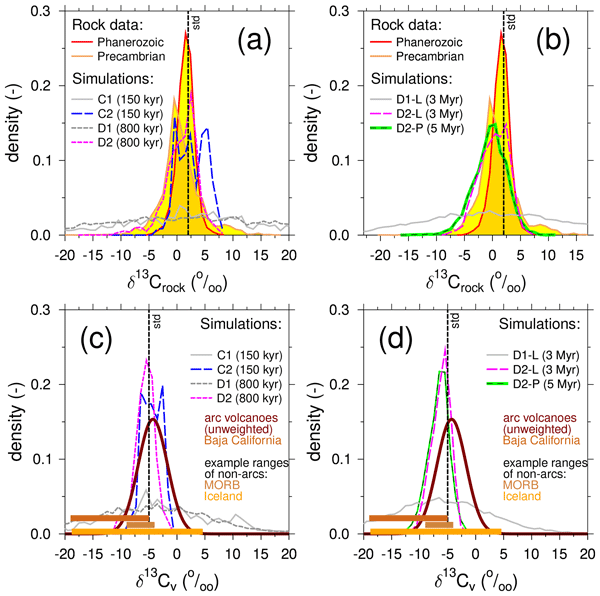
Using a carbon cycle model, I show that the 405 kyr periodicity found in marine δ13C during the last 5 million years and the offset in atmospheric δ13CO2 between the Last Glacial Maximum and the Penultimate Glacial Maximum are probably related to each other. They can be explained by variations in the δ13C signature of weathered carbonate rock or of volcanically degassed CO2, which vary mainly with obliquity (41 kyr), suggesting that Northern Hemispheric land ice sheets are their ultimate drivers.
Peter U. Clark, Jeremy D. Shakun, Yair Rosenthal, Chenyu Zhu, Patrick J. Bartlein, Jonathan M. Gregory, Peter Köhler, Zhengyu Liu, and Daniel P. Schrag
Clim. Past, 21, 973–1000, https://doi.org/10.5194/cp-21-973-2025, https://doi.org/10.5194/cp-21-973-2025, 2025
Short summary
Short summary
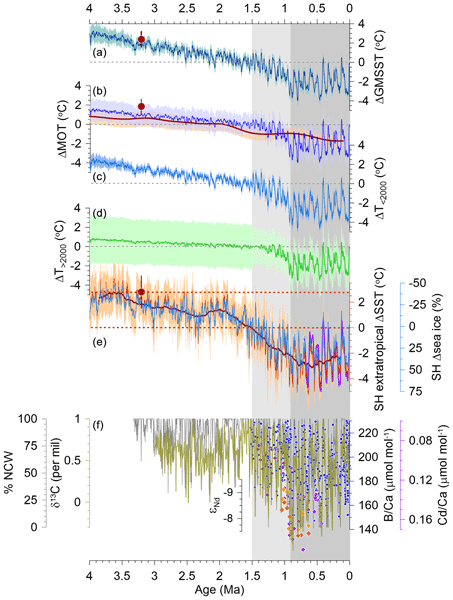
We reconstruct changes in mean ocean temperature (ΔMOT) over the last 4.5 Myr. We find that the ratio of ΔMOT to changes in global mean sea surface temperature was around 0.5 before the Middle Pleistocene transition but was 1 thereafter. We subtract our ΔMOT reconstruction from the global δ18O record to derive the δ18O of seawater. Finally, we develop a theoretical understanding of why the ratio of ΔMOT / ΔGMSST changed over the Plio-Pleistocene.
Ying Ye, Guy Munhoven, Peter Köhler, Martin Butzin, Judith Hauck, Özgür Gürses, and Christoph Völker
Geosci. Model Dev., 18, 977–1000, https://doi.org/10.5194/gmd-18-977-2025, https://doi.org/10.5194/gmd-18-977-2025, 2025
Short summary
Short summary
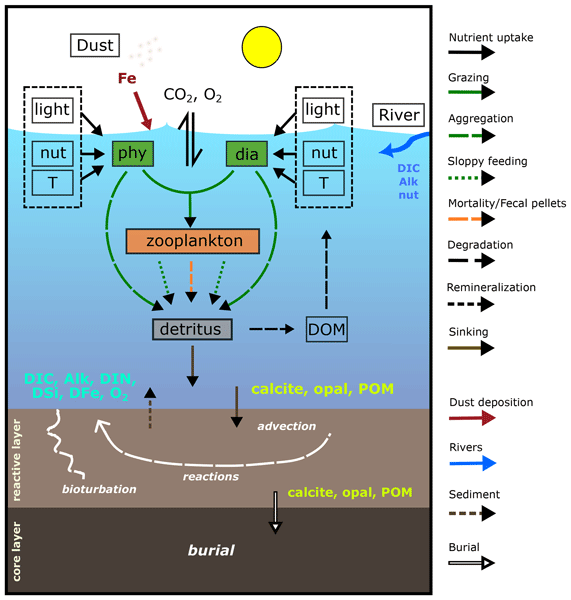
Many biogeochemistry models assume all material reaching the seafloor is remineralized and returned to solution, which is sufficient for studies on short-term climate change. Under long-term climate change, the carbon storage in sediments slows down carbon cycling and influences feedbacks in the atmosphere–ocean–sediment system. This paper describes the coupling of a sediment model to an ocean biogeochemistry model and presents results under the pre-industrial climate and under CO2 perturbation.
Peter Köhler and Stefan Mulitza
Clim. Past, 20, 991–1015, https://doi.org/10.5194/cp-20-991-2024, https://doi.org/10.5194/cp-20-991-2024, 2024
Short summary
Short summary
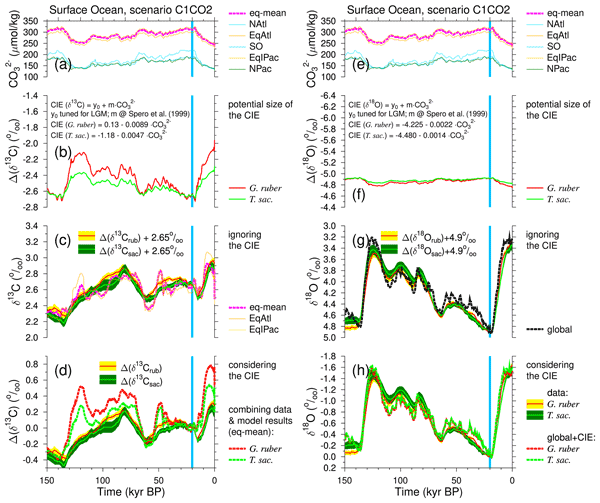
We constructed 160 kyr long mono-specific stacks of δ13C and of δ18O from the wider tropics from the planktic foraminifera G. ruber and/or T. sacculifer and compared them with carbon cycle simulations using the BICYCLE-SE model. In our stacks and our model-based interpretation, we cannot detect a species-specific isotopic fractionation during hard-shell formation as a function of carbonate chemistry in the surrounding seawater, something which is called a carbonate ion effect.
Martin Butzin, Ying Ye, Christoph Völker, Özgür Gürses, Judith Hauck, and Peter Köhler
Geosci. Model Dev., 17, 1709–1727, https://doi.org/10.5194/gmd-17-1709-2024, https://doi.org/10.5194/gmd-17-1709-2024, 2024
Short summary
Short summary
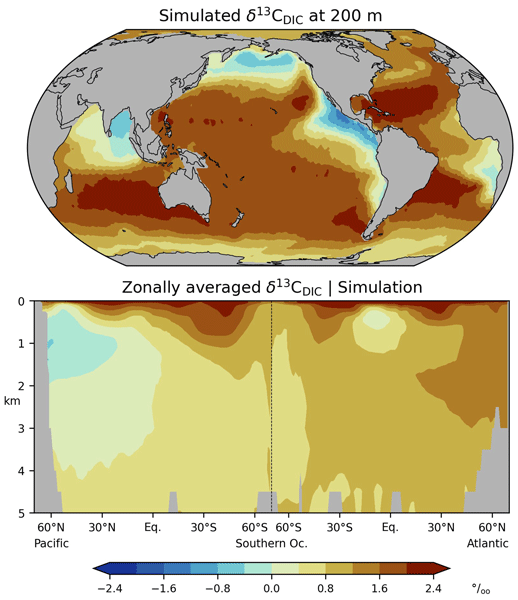
In this paper we describe the implementation of the carbon isotopes 13C and 14C into the marine biogeochemistry model FESOM2.1-REcoM3 and present results of long-term test simulations. Our model results are largely consistent with marine carbon isotope reconstructions for the pre-anthropogenic period, but also exhibit some discrepancies.
Luke Skinner, Francois Primeau, Aurich Jeltsch-Thömmes, Fortunat Joos, Peter Köhler, and Edouard Bard
Clim. Past, 19, 2177–2202, https://doi.org/10.5194/cp-19-2177-2023, https://doi.org/10.5194/cp-19-2177-2023, 2023
Short summary
Short summary
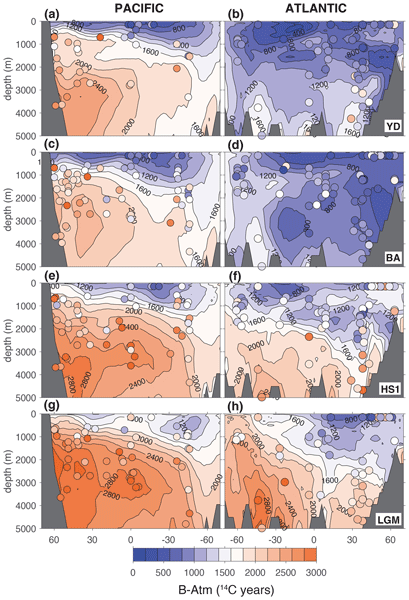
Radiocarbon is best known as a dating tool, but it also allows us to track CO2 exchange between the ocean and atmosphere. Using decades of data and novel mapping methods, we have charted the ocean’s average radiocarbon ″age” since the last Ice Age. Combined with climate model simulations, these data quantify the ocean’s role in atmospheric CO2 rise since the last Ice Age while also revealing that Earth likely received far more cosmic radiation during the last Ice Age than hitherto believed.
Claudia Hinrichs, Peter Köhler, Christoph Völker, and Judith Hauck
Biogeosciences, 20, 3717–3735, https://doi.org/10.5194/bg-20-3717-2023, https://doi.org/10.5194/bg-20-3717-2023, 2023
Short summary
Short summary
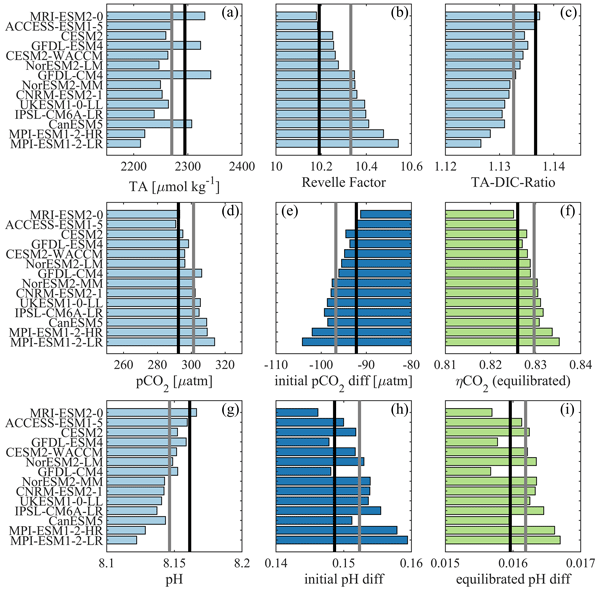
This study evaluated the alkalinity distribution in 14 climate models and found that most models underestimate alkalinity at the surface and overestimate it in the deeper ocean. It highlights the need for better understanding and quantification of processes driving alkalinity distribution and calcium carbonate dissolution and the importance of accounting for biases in model results when evaluating potential ocean alkalinity enhancement experiments.
Himadri Saini, David K. Hutchinson, Josephine R. Brown, Russell N. Drysdale, Yanxuan Du, and Laurie Menviel
Clim. Past, 22, 1457–1479, https://doi.org/10.5194/cp-22-1457-2026, https://doi.org/10.5194/cp-22-1457-2026, 2026
Short summary
Short summary
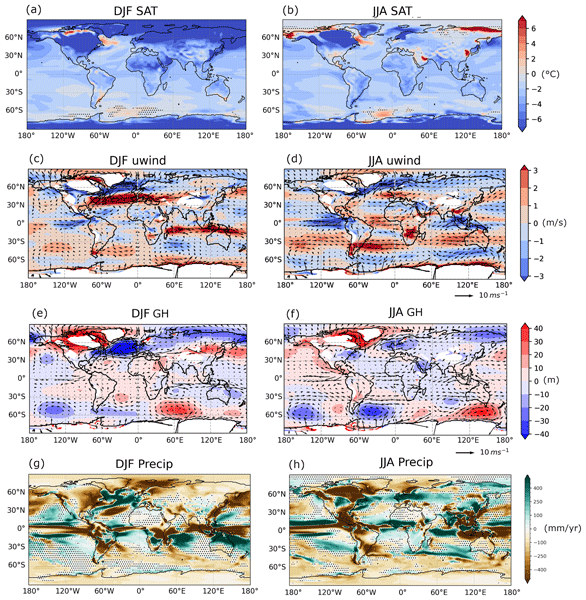
During the last ice age, Northern Hemisphere ice sheets reshaped global climate. They shifted North Atlantic winds southward, increasing summer rainfall across Eurasia. They also altered tropical and Southern Hemisphere weather patterns, affecting rainfall far beyond the ice-covered regions. Our results show that the height and shape of the ice sheets had a much greater influence on global wind and rainfall patterns than changes in Earth’s orbit, greenhouse gases, or surface reflectivity.
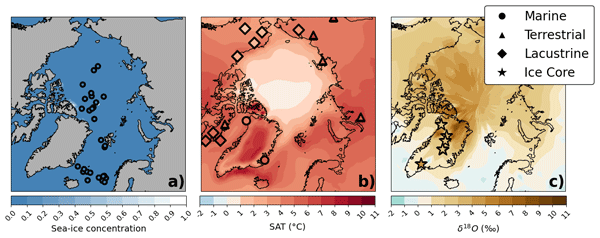
Louise C. Sime, Rachel Diamond, Christian Stepanek, Chris Brierley, David Schroeder, Masa Kageyama, Matthew Pollock, Irene Malmierca-Vallet, Ed Blockley, Alex West, Danny Feltham, Jeff Ridley, Pascale Braconnot, Charles J. R. Williams, Xiaoxu Shi, Bette L. Otto-Bliesner, Sophia I. Macarewich, Silvana Ramos Buarque, Qiong Zhang, Allegra LeGrande, Weipeng Zheng, Dabang Jiang, Polina Morozova, Chuncheng Guo, Zhongshi Zhang, Nicholas Yeung, Laurie Menviel, Sandeep Narayanasetti, Masakazu Yoshimori, Olivia Reeves, and Anni Zhao
Geosci. Model Dev., 19, 5881–5905, https://doi.org/10.5194/gmd-19-5881-2026, https://doi.org/10.5194/gmd-19-5881-2026, 2026
Short summary
Short summary
The Arctic may have lost its summer sea ice 127,000 years ago during a naturally warm period in Earth’s past. Climate models can be tested by recreating those conditions, with similar sunlight and greenhouse gas levels. Analysing the large sea ice changes in these simulations helps us understand how the Arctic might respond in the near future and improves how we test and trust our climate models.
Svetlana Radionovskaya, Mervyn Greaves, David J. R. Thornalley, and Luke C. Skinner
EGUsphere, https://doi.org/10.5194/egusphere-2026-3334, https://doi.org/10.5194/egusphere-2026-3334, 2026
Short summary
Short summary
We studied deep ocean conditions in the Northeast Atlantic during a transition into an ice age to understand how different climate states and forcings influence ocean circulation, using chemical signals preserved in tiny fossil shells. We found unexpectedly warm conditions and strong deep-water flow during rapid cold climatic events. These findings provide new insights into deep-water formation and ocean circulation under different climate states.
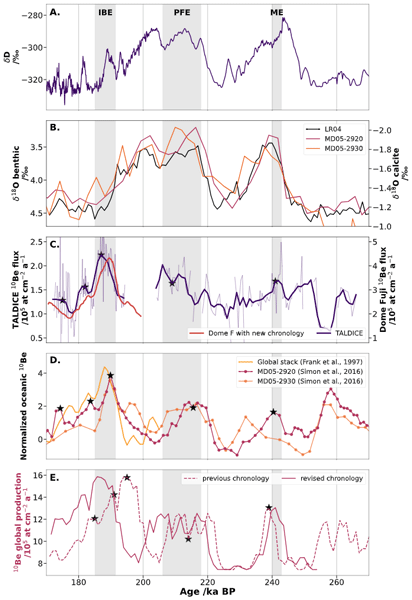
Alexis Lamothe, Edouard Bard, Nicolas Thouveny, Ellyn Auriol, Mirko Severi, Rita Traversi, Martine De Angelis, Frank Wilhelms, Robert Mulvaney, Fawzi Zaidi, Georges Aumaitre, Karim Keddadouche, and Mélanie Baroni
Geochronology, 8, 351–371, https://doi.org/10.5194/gchron-8-351-2026, https://doi.org/10.5194/gchron-8-351-2026, 2026
Short summary
Short summary
We studied changes in Earth's magnetic field between 170 000 and 270 000 years ago using beryllium data from Antarctic ice. Our results reveal three periods when the magnetic field weakened, including one major event with a rapid fall and gradual recovery. These findings help explain how Earth's magnetic field behaves during short-term disturbances and improve the timing of past climate and geological records.
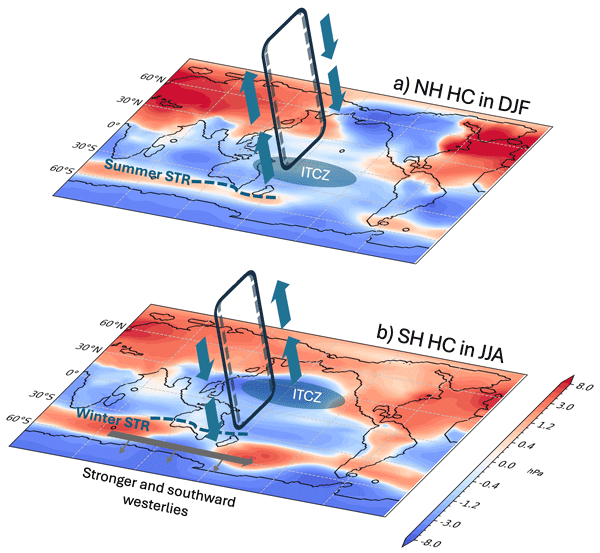
Yanxuan Du, Josephine R. Brown, Laurie Menviel, Himadri Saini, Russell N. Drysdale, David K. Hutchinson, and Calla N. Gould-Whaley
Clim. Past, 22, 1105–1124, https://doi.org/10.5194/cp-22-1105-2026, https://doi.org/10.5194/cp-22-1105-2026, 2026
Short summary
Short summary
This study examines the climate response to different magnitudes of Atlantic Meridional Overturning Circulation (AMOC) weakening under glacial conditions using the Australian Earth System Model. A potential threshold is identified between linear AMOC slowdown and nonlinear shutdown, driven by a critical change in ocean heat loss that induces a nonlinear atmospheric response governed by energetic constraints.
Didier Swingedouw, Laura Jackson, Aixue Hu, Anastasia Romanou, Nicole C. Laureanti, Wilbert Weijer, Sina Loriani, Bette Otto-Bliesner, Ayako Abe-Ouchi, Lucas Almeida, Alessio Bellucci, Reyk Börner, Gokhan Danabasoglu, Donovan P. Dennis, Marion Devilliers, Sybren Drijfhout, Jonathan Donges, Friederike Fröb, Thomas L. Frölicher, Guillaume Gastineau, Heiko Goelzer, Chuncheng Guo, Urs Hofmann, Anna Höse, Colin Jones, Torben Koenigk, Ann Kristin Klose, Valerio Lembo, Jose Licon-Salaiz, Ken Mankoff, Virna Meccia, Irina Melnikova, Oliver Mehling, Laurie Menviel, Juliette Mignot, Jon I. Robson, Gavin A. Schmidt, Robin Smith, Yuchen Sun, Irene Trombini, Matteo Willeit, Richard Wood, Fanghua Wu, Lin Zhaohui, and Ricarda Winkelmann
EGUsphere, https://doi.org/10.5194/egusphere-2026-1698, https://doi.org/10.5194/egusphere-2026-1698, 2026
Short summary
Short summary
This study presents a plan for climate model experiments to better understand how changes in freshwater in the North Atlantic affect major ocean currents. We designed coordinated simulations to test their response to warming, added freshwater, and possible recovery after weakening. Comparing results across models and past climate evidence helps improve confidence in projections and assess risks of large ocean circulation changes.
Markus Adloff, Frerk Pöppelmeier, Ashley Dinauer, Charlotte Laufkötter, and Fortunat Joos
EGUsphere, https://doi.org/10.5194/egusphere-2026-275, https://doi.org/10.5194/egusphere-2026-275, 2026
Short summary
Short summary
Carbon cycle models need to account for the recycling of marine particulate matter is recycled in the ocean to simulate marine biogeochemistry. Here, we show that a more complex representation than often-employed static exponential remineralisation profiles better captures key features of the marine biogeochemistry of a glacial ocean and alters the sensitivity of the marine carbon sink and marine oxygenation to warming.
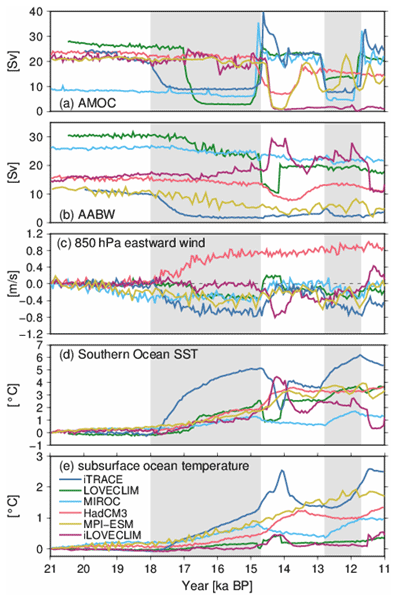
Takashi Obase, Laurie Menviel, Ayako Abe-Ouchi, Tristan Vadsaria, Ruza Ivanovic, Brooke Snoll, Sam Sherriff-Tadano, Paul J. Valdes, Lauren Gregoire, Marie-Luise Kapsch, Uwe Mikolajewicz, Nathaelle Bouttes, Didier Roche, Fanny Lhardy, Chengfei He, Bette Otto-Bliesner, Zhengyu Liu, and Wing-Le Chan
Clim. Past, 21, 1443–1463, https://doi.org/10.5194/cp-21-1443-2025, https://doi.org/10.5194/cp-21-1443-2025, 2025
Short summary
Short summary
This study analyses transient simulations of the last deglaciation performed by six climate models to understand the processes driving high-southern-latitude temperature changes. We find that atmospheric CO2 and AMOC (Atlantic Meridional Overturning Circulation) changes are the primary drivers of the warming and cooling during the middle stage of the deglaciation. The analysis highlights the model's sensitivity of CO2 and AMOC to meltwater and the meltwater history of temperature changes at high southern latitudes.
Zanna Chase, Karen E. Kohfeld, Amy Leventer, David Lund, Xavier Crosta, Laurie Menviel, Helen C. Bostock, Matthew Chadwick, Samuel L. Jaccard, Jacob Jones, Alice Marzocchi, Katrin J. Meissner, Elisabeth Sikes, Louise C. Sime, and Luke Skinner
EGUsphere, https://doi.org/10.5194/egusphere-2025-3504, https://doi.org/10.5194/egusphere-2025-3504, 2025
Short summary
Short summary
The impact of recent dramatic declines in Antarctic sea ice on the Earth system are uncertain. We reviewed how sea ice affects ocean circulation, ice sheets, winds, and the carbon cycle by considering theory and modern observations alongside paleo-proxy reconstructions. We found evidence for connections between sea ice and these systems but also conflicting results, which point to missing knowledge. Our work highlights the complex role of sea ice in the Earth system.
Bartholomé Duboc, Katrin J. Meissner, Laurie Menviel, Nicholas K. H. Yeung, Babette Hoogakker, Tilo Ziehn, and Matthew Chamberlain
Clim. Past, 21, 1093–1122, https://doi.org/10.5194/cp-21-1093-2025, https://doi.org/10.5194/cp-21-1093-2025, 2025
Short summary
Short summary
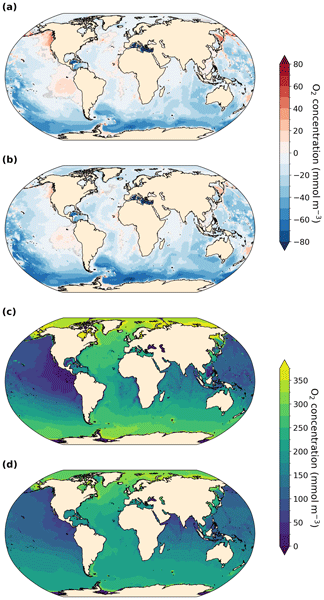
We use an earth system model to simulate ocean oxygen during two past warm periods, the Last Interglacial (∼ 129–115 ka) and Marine Isotope Stage (MIS) 9e (∼ 336–321 ka). The global ocean is overall less oxygenated compared to the preindustrial simulation. Large regions in the Mediterranean Sea are oxygen deprived in the Last Interglacial simulation, and to a lesser extent in the MIS 9e simulation, due to an intensification and expansion of the African monsoon and enhanced river runoff.
Gabriel M. Pontes, Pedro L. da Silva Dias, and Laurie Menviel
Clim. Past, 21, 1079–1091, https://doi.org/10.5194/cp-21-1079-2025, https://doi.org/10.5194/cp-21-1079-2025, 2025
Short summary
Short summary
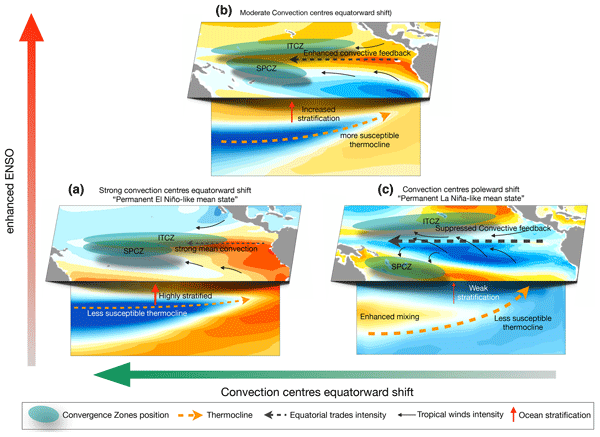
El Niño events are the main drivers of year-to-year climate variability. Understanding how El Niño activity is affected by different climate states is of great relevance to agriculture, water, ecosystem, and climate risk management. Through analysis of past and future climate simulations, we show that the El Niño–Southern Oscillation (ENSO) sensitivity to mean state changes is nonlinear and, to some extent, shaped by atmospheric CO2 levels.
Peter Köhler
Clim. Past, 21, 1043–1060, https://doi.org/10.5194/cp-21-1043-2025, https://doi.org/10.5194/cp-21-1043-2025, 2025
Short summary
Short summary
Using a carbon cycle model, I show that the 405 kyr periodicity found in marine δ13C during the last 5 million years and the offset in atmospheric δ13CO2 between the Last Glacial Maximum and the Penultimate Glacial Maximum are probably related to each other. They can be explained by variations in the δ13C signature of weathered carbonate rock or of volcanically degassed CO2, which vary mainly with obliquity (41 kyr), suggesting that Northern Hemispheric land ice sheets are their ultimate drivers.
Peter U. Clark, Jeremy D. Shakun, Yair Rosenthal, Chenyu Zhu, Patrick J. Bartlein, Jonathan M. Gregory, Peter Köhler, Zhengyu Liu, and Daniel P. Schrag
Clim. Past, 21, 973–1000, https://doi.org/10.5194/cp-21-973-2025, https://doi.org/10.5194/cp-21-973-2025, 2025
Short summary
Short summary
We reconstruct changes in mean ocean temperature (ΔMOT) over the last 4.5 Myr. We find that the ratio of ΔMOT to changes in global mean sea surface temperature was around 0.5 before the Middle Pleistocene transition but was 1 thereafter. We subtract our ΔMOT reconstruction from the global δ18O record to derive the δ18O of seawater. Finally, we develop a theoretical understanding of why the ratio of ΔMOT / ΔGMSST changed over the Plio-Pleistocene.

Markus Adloff, Aurich Jeltsch-Thömmes, Frerk Pöppelmeier, Thomas F. Stocker, and Fortunat Joos
Clim. Past, 21, 571–592, https://doi.org/10.5194/cp-21-571-2025, https://doi.org/10.5194/cp-21-571-2025, 2025
Short summary
Short summary
We simulated how different processes affected the carbon cycle over the last eight glacial cycles. We found that the effects of interactive marine sediments enlarge the carbon fluxes that result from these processes, especially in the ocean, and alter various proxy signals. We provide an assessment of the directions of regional and global proxy changes that might be expected in response to different glacial–interglacial Earth system changes in the presence of interactive marine sediments.
Ying Ye, Guy Munhoven, Peter Köhler, Martin Butzin, Judith Hauck, Özgür Gürses, and Christoph Völker
Geosci. Model Dev., 18, 977–1000, https://doi.org/10.5194/gmd-18-977-2025, https://doi.org/10.5194/gmd-18-977-2025, 2025
Short summary
Short summary
Many biogeochemistry models assume all material reaching the seafloor is remineralized and returned to solution, which is sufficient for studies on short-term climate change. Under long-term climate change, the carbon storage in sediments slows down carbon cycling and influences feedbacks in the atmosphere–ocean–sediment system. This paper describes the coupling of a sediment model to an ocean biogeochemistry model and presents results under the pre-industrial climate and under CO2 perturbation.
Ana-Cristina Mârza, Laurie Menviel, and Luke C. Skinner
Geochronology, 6, 503–519, https://doi.org/10.5194/gchron-6-503-2024, https://doi.org/10.5194/gchron-6-503-2024, 2024
Short summary
Short summary
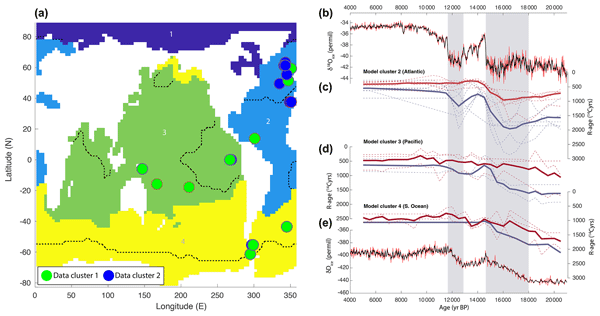
Radiocarbon serves as a powerful dating tool, but the calibration of marine radiocarbon dates presents significant challenges because the whole surface ocean cannot be represented by a single calibration curve. Here we use climate model outputs and data to assess a novel method for developing regional marine calibration curves. Our results are encouraging and point to a way forward for solving the marine radiocarbon age calibration problem without relying on model simulations of the past.
Markus Adloff, Frerk Pöppelmeier, Aurich Jeltsch-Thömmes, Thomas F. Stocker, and Fortunat Joos
Clim. Past, 20, 1233–1250, https://doi.org/10.5194/cp-20-1233-2024, https://doi.org/10.5194/cp-20-1233-2024, 2024
Short summary
Short summary
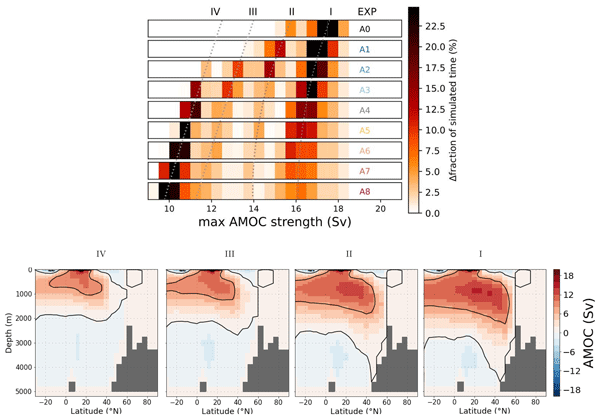
The Atlantic Meridional Overturning Circulation (AMOC) is an ocean current that transports heat into the North Atlantic. Over the ice age cycles, AMOC strength and its spatial pattern varied. We tested the role of heat forcing for these AMOC changes by simulating the temperature changes of the last eight glacial cycles. In our model, AMOC shifts between four distinct circulation modes caused by heat and salt redistributions that reproduce reconstructed long-term North Atlantic SST changes.
Peter Köhler and Stefan Mulitza
Clim. Past, 20, 991–1015, https://doi.org/10.5194/cp-20-991-2024, https://doi.org/10.5194/cp-20-991-2024, 2024
Short summary
Short summary
We constructed 160 kyr long mono-specific stacks of δ13C and of δ18O from the wider tropics from the planktic foraminifera G. ruber and/or T. sacculifer and compared them with carbon cycle simulations using the BICYCLE-SE model. In our stacks and our model-based interpretation, we cannot detect a species-specific isotopic fractionation during hard-shell formation as a function of carbonate chemistry in the surrounding seawater, something which is called a carbonate ion effect.
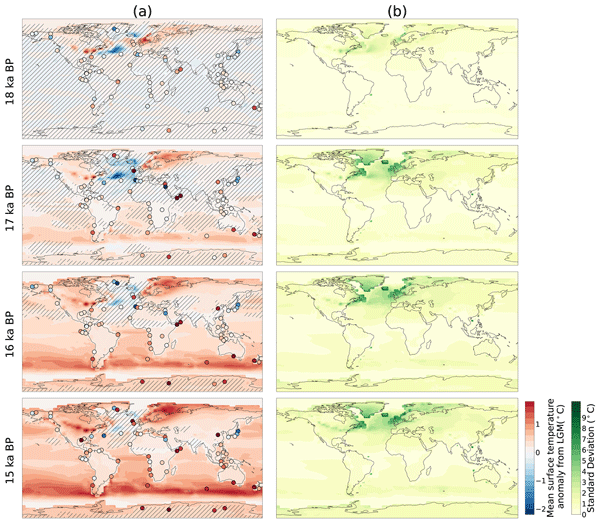
Brooke Snoll, Ruza Ivanovic, Lauren Gregoire, Sam Sherriff-Tadano, Laurie Menviel, Takashi Obase, Ayako Abe-Ouchi, Nathaelle Bouttes, Chengfei He, Feng He, Marie Kapsch, Uwe Mikolajewicz, Juan Muglia, and Paul Valdes
Clim. Past, 20, 789–815, https://doi.org/10.5194/cp-20-789-2024, https://doi.org/10.5194/cp-20-789-2024, 2024
Short summary
Short summary
Geological records show rapid climate change throughout the recent deglaciation. The drivers of these changes are still misunderstood but are often attributed to shifts in the Atlantic Ocean circulation from meltwater input. A cumulative effort to understand these processes prompted numerous simulations of this period. We use these to explain the chain of events and our collective ability to simulate them. The results demonstrate the importance of the meltwater amount used in the simulation.
Martin Butzin, Ying Ye, Christoph Völker, Özgür Gürses, Judith Hauck, and Peter Köhler
Geosci. Model Dev., 17, 1709–1727, https://doi.org/10.5194/gmd-17-1709-2024, https://doi.org/10.5194/gmd-17-1709-2024, 2024
Short summary
Short summary
In this paper we describe the implementation of the carbon isotopes 13C and 14C into the marine biogeochemistry model FESOM2.1-REcoM3 and present results of long-term test simulations. Our model results are largely consistent with marine carbon isotope reconstructions for the pre-anthropogenic period, but also exhibit some discrepancies.
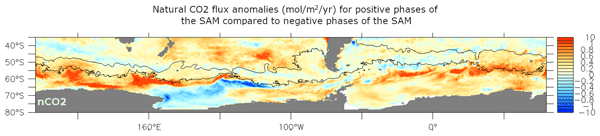
Laurie C. Menviel, Paul Spence, Andrew E. Kiss, Matthew A. Chamberlain, Hakase Hayashida, Matthew H. England, and Darryn Waugh
Biogeosciences, 20, 4413–4431, https://doi.org/10.5194/bg-20-4413-2023, https://doi.org/10.5194/bg-20-4413-2023, 2023
Short summary
Short summary
As the ocean absorbs 25% of the anthropogenic emissions of carbon, it is important to understand the impact of climate change on the flux of carbon between the ocean and the atmosphere. Here, we use a very high-resolution ocean, sea-ice, carbon cycle model to show that the capability of the Southern Ocean to uptake CO2 has decreased over the last 40 years due to a strengthening and poleward shift of the southern hemispheric westerlies. This trend is expected to continue over the coming century.
Luke Skinner, Francois Primeau, Aurich Jeltsch-Thömmes, Fortunat Joos, Peter Köhler, and Edouard Bard
Clim. Past, 19, 2177–2202, https://doi.org/10.5194/cp-19-2177-2023, https://doi.org/10.5194/cp-19-2177-2023, 2023
Short summary
Short summary
Radiocarbon is best known as a dating tool, but it also allows us to track CO2 exchange between the ocean and atmosphere. Using decades of data and novel mapping methods, we have charted the ocean’s average radiocarbon ″age” since the last Ice Age. Combined with climate model simulations, these data quantify the ocean’s role in atmospheric CO2 rise since the last Ice Age while also revealing that Earth likely received far more cosmic radiation during the last Ice Age than hitherto believed.
Claudia Hinrichs, Peter Köhler, Christoph Völker, and Judith Hauck
Biogeosciences, 20, 3717–3735, https://doi.org/10.5194/bg-20-3717-2023, https://doi.org/10.5194/bg-20-3717-2023, 2023
Short summary
Short summary
This study evaluated the alkalinity distribution in 14 climate models and found that most models underestimate alkalinity at the surface and overestimate it in the deeper ocean. It highlights the need for better understanding and quantification of processes driving alkalinity distribution and calcium carbonate dissolution and the importance of accounting for biases in model results when evaluating potential ocean alkalinity enhancement experiments.
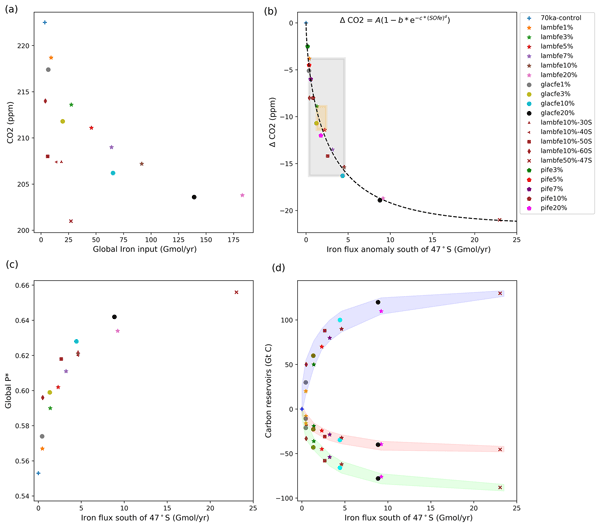
Himadri Saini, Katrin J. Meissner, Laurie Menviel, and Karin Kvale
Clim. Past, 19, 1559–1584, https://doi.org/10.5194/cp-19-1559-2023, https://doi.org/10.5194/cp-19-1559-2023, 2023
Short summary
Short summary
Understanding the changes in atmospheric CO2 during the last glacial cycle is crucial to comprehend the impact of climate change in the future. Previous research has hypothesised a key role of greater aeolian iron input into the Southern Ocean in influencing the global atmospheric CO2 levels by impacting the changes in the marine phytoplankton response. In our study, we test this iron hypothesis using climate modelling and constrain the impact of ocean iron supply on global CO2 decrease.
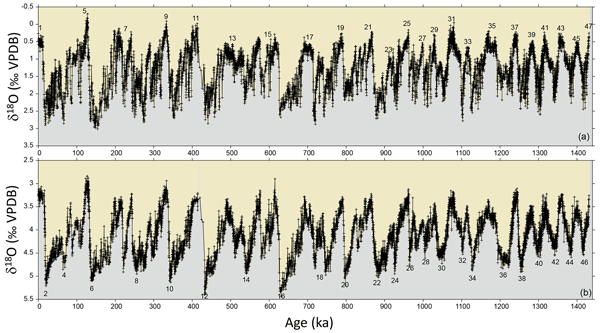
David A. Hodell, Simon J. Crowhurst, Lucas Lourens, Vasiliki Margari, John Nicolson, James E. Rolfe, Luke C. Skinner, Nicola C. Thomas, Polychronis C. Tzedakis, Maryline J. Mleneck-Vautravers, and Eric W. Wolff
Clim. Past, 19, 607–636, https://doi.org/10.5194/cp-19-607-2023, https://doi.org/10.5194/cp-19-607-2023, 2023
Short summary
Short summary
We produced a 1.5-million-year-long history of climate change at International Ocean Discovery Program Site U1385 of the Iberian margin, a well-known location for rapidly accumulating sediments on the seafloor. Our record demonstrates that longer-term orbital changes in Earth's climate were persistently overprinted by abrupt millennial-to-centennial climate variability. The occurrence of abrupt climate change is modulated by the slower variations in Earth's orbit and climate background state.
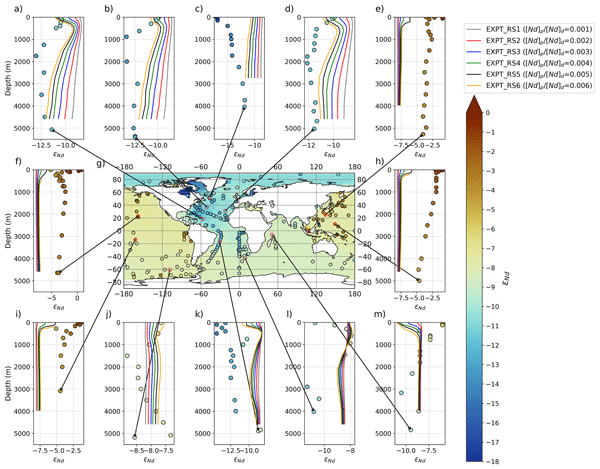
Suzanne Robinson, Ruza F. Ivanovic, Lauren J. Gregoire, Julia Tindall, Tina van de Flierdt, Yves Plancherel, Frerk Pöppelmeier, Kazuyo Tachikawa, and Paul J. Valdes
Geosci. Model Dev., 16, 1231–1264, https://doi.org/10.5194/gmd-16-1231-2023, https://doi.org/10.5194/gmd-16-1231-2023, 2023
Short summary
Short summary
We present the implementation of neodymium (Nd) isotopes into the ocean model of FAMOUS (Nd v1.0). Nd fluxes from seafloor sediment and incorporation of Nd onto sinking particles represent the major global sources and sinks, respectively. However, model–data mismatch in the North Pacific and northern North Atlantic suggest that certain reactive components of the sediment interact the most with seawater. Our results are important for interpreting Nd isotopes in terms of ocean circulation.
Suzanne Robinson, Ruza Ivanovic, Lauren Gregoire, Lachlan Astfalck, Tina van de Flierdt, Yves Plancherel, Frerk Pöppelmeier, and Kazuyo Tachikawa
EGUsphere, https://doi.org/10.5194/egusphere-2022-937, https://doi.org/10.5194/egusphere-2022-937, 2022
Preprint archived
Short summary
Short summary
The neodymium (Nd) isotope (εNd) scheme in the ocean model of FAMOUS is used to explore a benthic Nd flux to seawater. Our results demonstrate that sluggish modern Pacific waters are sensitive to benthic flux alterations, whereas the well-ventilated North Atlantic displays a much weaker response. In closing, there are distinct regional differences in how seawater acquires its εNd signal, in part relating to the complex interactions of Nd addition and water advection.
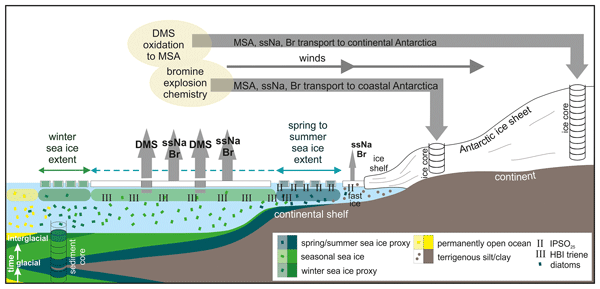
Xavier Crosta, Karen E. Kohfeld, Helen C. Bostock, Matthew Chadwick, Alice Du Vivier, Oliver Esper, Johan Etourneau, Jacob Jones, Amy Leventer, Juliane Müller, Rachael H. Rhodes, Claire S. Allen, Pooja Ghadi, Nele Lamping, Carina B. Lange, Kelly-Anne Lawler, David Lund, Alice Marzocchi, Katrin J. Meissner, Laurie Menviel, Abhilash Nair, Molly Patterson, Jennifer Pike, Joseph G. Prebble, Christina Riesselman, Henrik Sadatzki, Louise C. Sime, Sunil K. Shukla, Lena Thöle, Maria-Elena Vorrath, Wenshen Xiao, and Jiao Yang
Clim. Past, 18, 1729–1756, https://doi.org/10.5194/cp-18-1729-2022, https://doi.org/10.5194/cp-18-1729-2022, 2022
Short summary
Short summary
Despite its importance in the global climate, our knowledge of Antarctic sea-ice changes throughout the last glacial–interglacial cycle is extremely limited. As part of the Cycles of Sea Ice Dynamics in the Earth system (C-SIDE) Working Group, we review marine- and ice-core-based sea-ice proxies to provide insights into their applicability and limitations. By compiling published records, we provide information on Antarctic sea-ice dynamics over the past 130 000 years.
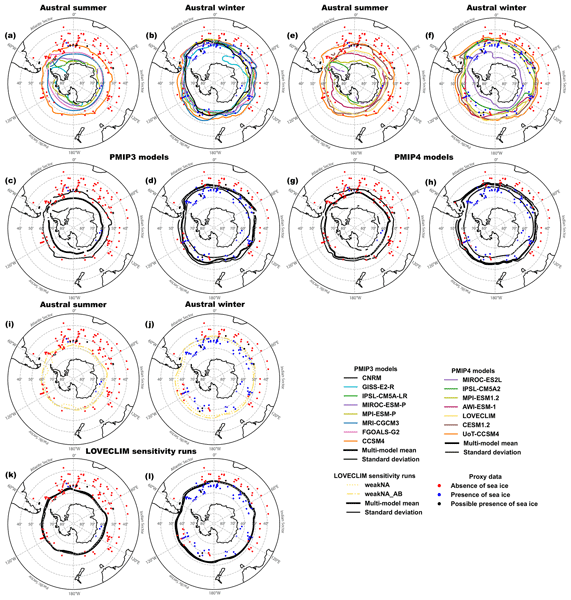
Ryan A. Green, Laurie Menviel, Katrin J. Meissner, Xavier Crosta, Deepak Chandan, Gerrit Lohmann, W. Richard Peltier, Xiaoxu Shi, and Jiang Zhu
Clim. Past, 18, 845–862, https://doi.org/10.5194/cp-18-845-2022, https://doi.org/10.5194/cp-18-845-2022, 2022
Short summary
Short summary
Climate models are used to predict future climate changes and as such, it is important to assess their performance in simulating past climate changes. We analyze seasonal sea-ice cover over the Southern Ocean simulated from numerical PMIP3, PMIP4 and LOVECLIM simulations during the Last Glacial Maximum (LGM). Comparing these simulations to proxy data, we provide improved estimates of LGM seasonal sea-ice cover. Our estimate of summer sea-ice extent is 20 %–30 % larger than previous estimates.
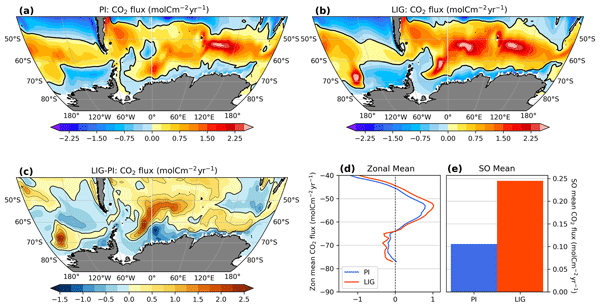
Dipayan Choudhury, Laurie Menviel, Katrin J. Meissner, Nicholas K. H. Yeung, Matthew Chamberlain, and Tilo Ziehn
Clim. Past, 18, 507–523, https://doi.org/10.5194/cp-18-507-2022, https://doi.org/10.5194/cp-18-507-2022, 2022
Short summary
Short summary
We investigate the effects of a warmer climate from the Earth's paleoclimate (last interglacial) on the marine carbon cycle of the Southern Ocean using a carbon-cycle-enabled state-of-the-art climate model. We find a 150 % increase in CO2 outgassing during this period, which results from competition between higher sea surface temperatures and weaker oceanic circulation. From this we unequivocally infer that the carbon uptake by the Southern Ocean will reduce under a future warming scenario.
Irene Schimmelpfennig, Joerg M. Schaefer, Jennifer Lamp, Vincent Godard, Roseanne Schwartz, Edouard Bard, Thibaut Tuna, Naki Akçar, Christian Schlüchter, Susan Zimmerman, and ASTER Team
Clim. Past, 18, 23–44, https://doi.org/10.5194/cp-18-23-2022, https://doi.org/10.5194/cp-18-23-2022, 2022
Short summary
Short summary
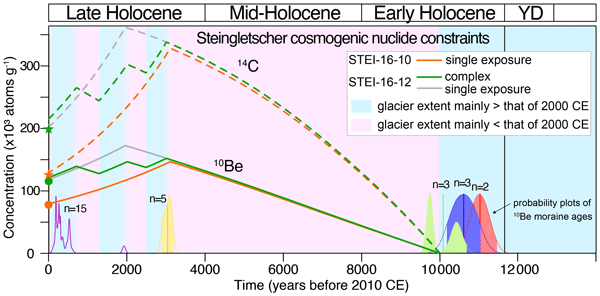
Small mountain glaciers advance and recede as a response to summer temperature changes. Dating of glacial landforms with cosmogenic nuclides allowed us to reconstruct the advance and retreat history of an Alpine glacier throughout the past ~ 11 000 years, the Holocene. The results contribute knowledge to the debate of Holocene climate evolution, indicating that during most of this warm period, summer temperatures were similar to or warmer than in modern times.
Frerk Pöppelmeier, David J. Janssen, Samuel L. Jaccard, and Thomas F. Stocker
Biogeosciences, 18, 5447–5463, https://doi.org/10.5194/bg-18-5447-2021, https://doi.org/10.5194/bg-18-5447-2021, 2021
Short summary
Short summary
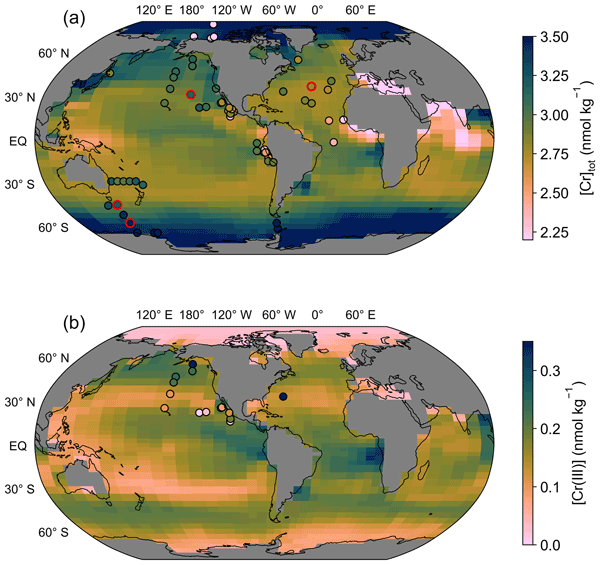
Chromium (Cr) is a redox-sensitive element that holds promise as a tracer of ocean oxygenation and biological activity. We here implemented the oxidation states Cr(III) and Cr(VI) in the Bern3D model to investigate the processes that shape the global Cr distribution. We find a Cr ocean residence time of 5–8 kyr and that the benthic source dominates the tracer budget. Further, regional model–data mismatches suggest strong Cr removal in oxygen minimum zones and a spatially variable benthic source.
Cited articles
Abe-Ouchi, A., Segawa, T., and Saito, F.: Climatic Conditions for modelling the Northern Hemisphere ice sheets throughout the ice age cycle, Clim. Past, 3, 423–438, https://doi.org/10.5194/cp-3-423-2007, 2007. a
Annan, J. D., Hargreaves, J. C., and Mauritsen, T.: A new global surface temperature reconstruction for the Last Glacial Maximum, Clim. Past, 18, 1883–1896, https://doi.org/10.5194/cp-18-1883-2022, 2022. a
Bard, E.: Correction of accelerator mass spectrometry 14C ages measured in planktonic foraminifera: Paleoceanographic implications, Paleoceanography, 3, 635–645, https://doi.org/10.1029/PA003i006p00635, 1988. a, b, c, d
Barker, S., Diz, P., Vantravers, M. J., Pike, J., Knorr, G., Hall, I. R., and Broecker, W. S.: Interhemispheric Atlantic seesaw response during the last deglaciation, Nature, 457, 1007–1102, https://doi.org/10.1038/nature07770, 2009. a
Bereiter, B., Eggleston, S., Schmitt, J., Nehrbass-Ahles, C., Stocker, T. F., Fischer, H., Kipfstuhl, S., and Chappellaz, J.: Revision of the EPICA Dome C CO2 record from 800 to 600 kyr before present, Geophys. Res. Lett., 42, 542–549, https://doi.org/10.1002/2014GL061957, 2015. a
Berger, A. L.: Long-term variations of daily insolation and Quaternary climatic changes, J. Atmos. Sci., 35, 2362–2367, https://doi.org/10.1175/1520-0469(1978)035<2362:LTVODI>2.0.CO;2, 1978. a, b
Bevington, P. R.: Data Reduction and Error Analysis for the Physical Sciences, McGraw Hill, ISBN10 0070051356, 1969. a
Blunier, T. and Brook, E. J.: Timing of millennial-scale climate change in Antarctica and Greenland during the last glacial period, Science, 291, 109–112, https://doi.org/10.1126/science.291.5501.109, 2001. a
Butzin, M., Prange, M., and Lohmann, G.: Radiocarbon simulations for the glacial ocean: the effects of wind stress, Southern Ocean sea ice and Heinrich events, Earth Planet. Sc. Lett., 235, 45–61, https://doi.org/10.1016/j.epsl.2005.03.003, 2005. a, b
Butzin, M., Heaton, T. J., Köhler, P., and Lohmann, G.: Marine radiocarbon reservoir ages simulated for IntCal20, link to model results in NetCDF format, Pangaea [data set], https://doi.org/10.1594/pangaea.902301, 2019. a
Cooper, A., Turney, C. S. M., Palmer, J., Hogg, A., McGlone, M., Wilmshurst, J., Lorrey, A. M., Heaton, T. J., Russell, J. M., McCracken, K., Anet, J. G., Rozanov, E., Friedel, M., Suter, I., Peter, T., Muscheler, R., Adolphi, F., Dosseto, A., Faith, J. T., Fenwick, P., Fogwill, C. J., Hughen, K., Lipson, M., Liu, J., Nowaczyk, N., Rainsley, E., Bronk Ramsey, C., Sebastianelli, P., Souilmi, Y., Stevenson, J., Thomas, Z., Tobler, R., and Zech, R.: A global environmental crisis 42 000 years ago, Science, 371, 811–818, https://doi.org/10.1126/science.abb8677, 2021. a
de Boyer-Montégut, C., Madec, G., Fischer, A. S., Lazar, A., and Iudicone, D.: Mixed layer depth over the global ocean: An examination of profile data and a profile-based climatology, J. Geophys. Res.-Oceans, 109, https://doi.org/10.1029/2004JC002378, 2004. a
de la Fuente, M., Skinner, L., Calvo, E., Pelejero, C., and Cacho, I.: Increased reservoir ages and poorly ventilated deep waters inferred in the glacial Eastern Equatorial Pacific, Nat. Commun., 6, 7420, https://doi.org/10.1038/ncomms8420, 2015. a
Goosse, H., Brovkin, V., Fichefet, T., Haarsma, R., Huybrechts, P., Jongma, J., Mouchet, A., Selten, F., Barriat, P.-Y., Campin, J.-M., Deleersnijder, E., Driesschaert, E., Goelzer, H., Janssens, I., Loutre, M.-F., Morales Maqueda, M. A., Opsteegh, T., Mathieu, P.-P., Munhoven, G., Pettersson, E. J., Renssen, H., Roche, D. M., Schaeffer, M., Tartinville, B., Timmermann, A., and Weber, S. L.: Description of the Earth system model of intermediate complexity LOVECLIM version 1.2, Geosci. Model. Dev., 3, 603–633, https://doi.org/10.5194/gmd-3-603-2010, 2010. a
Graven, H., Allison, C. E., Etheridge, D. M., Hammer, S., Keeling, R. F., Levin, I., Meijer, H. A. J., Rubino, M., Tans, P. P., Trudinger, C. M., Vaughn, B. H., and White, J. W. C.: Compiled records of carbon isotopes in atmospheric CO2 for historical simulations in CMIP6, Geosci. Model. Dev., 10, 4405–4417, https://doi.org/10.5194/gmd-10-4405-2017, 2017. a
Hajdas, I., Ascough, P., Garnett, M. H., Fallon, S. J., Pearson, C. L., Quarta, G., Spalding, K. L., Yamaguchi, H., and Yoneda, M.: Radiocarbon dating, Nature Reviews Methods Primers, 1, 62, https://doi.org/10.1038/s43586-021-00058-7, 2021. a
Heaton, T. J., Köhler, P., Butzin, M., Bard, E., Reimer, R. W., Austin, W. E., Ramsey, C. B., Grootes, P. M., Hughen, K. A., Kromer, B., Reimer, P. J., Adkins, J. F., Burke, A., Cook, M. S., Olsen, J., and Skinner, L. C.: Marine20 – the marine radiocarbon age calibration curve (0–55 000 cal BP), simulated data for IntCal20, Pangaea [data set], https://doi.org/10.1594/pangaea.914500, 2020a. a
Heaton, T. J., Köhler, P., Butzin, M., Bard, E., Reimer, R. W., Austin, W. E. N., Ramsey, C. B., Grootes, P. M., Hughen, K. A., Kromer, B., Reimer, P. J., Adkins, J., Burke, A., Cook, M. S., Olsen, J., and Skinner, L. C.: Marine20 – the marine radiocarbon age calibration curve (0–55 000 cal BP), Radiocarbon, 62, 779–820, https://doi.org/10.1017/RDC.2020.68, 2020b. a, b, c, d, e, f, g, h
Heaton, T. J., Bard, E., Ramsey, C. B., Butzin, M., Köhler, P., Muscheler, R., Reimer, P. J., and Wacker, L.: Radiocarbon: a key tracer for studying the Earth's dynamo, climate system and carbon cycle and Sun, Science, 374, eabd7096, https://doi.org/10.1126/science.abd7096, 2021. a
Heaton, T. J., Butzin, M., Bard, E., Bronk Ramsey, C., Hughen, K. A., Köhler, P., and Reimer, P. J.: Marine Radiocarbon Calibration in Polar Regions: A Simple Approximate Approach using Marine20, Radiocarbon, 65, 848–875, https://doi.org/10.1017/RDC.2023.42, 2023. a
Henry, L. G., McManus, J. F., Curry, W. B., Roberts, N. L., Piotrowski, A. M., and Keigwin, L. D.: North Atlantic ocean circulation and abrupt climate change during the last glaciation, Science, 353, 470–474, https://doi.org/10.1126/science.aaf5529, 2016. a
Key, R. M., Kozyr, A., Sabine, C. L., Lee, K., Wanninkhof, R., Bullister, J. L., Feely, R. A., Millero, F. J., Mordy, C., and Peng, T.-H.: A global ocean carbon climatology: results from global data analysis project (GLODAP), Global Biogeochem. Cy., 18, GB4031, https://doi.org/10.1029/2004GB002247, 2004. a
Kimoto, K.: Planktic Foraminifera, Springer Japan, Tokyo, 129–178, https://doi.org/10.1007/978-4-431-55130-0_7, 2015. a
Köhler, P. and Mulitza, S.: No detectable influence of the carbonate ion effect on changes in stable carbon isotope ratios (δ13C) of shallow dwelling planktic foraminifera over the past 160 kyr, Clim. Past, 20, 991–1015, https://doi.org/10.5194/cp-20-991-2024, 2024. a
Köhler, P. and Munhoven, G.: Late Pleistocene carbon cycle revisited by considering solid Earth processes, Paleoceanography and Paleoclimatology, 35, e2020PA004020, https://doi.org/10.1029/2020PA004020, 2020. a
Köhler, P., Muscheler, R., and Fischer, H.: A model-based interpretation of low frequency changes in the carbon cycle during the last 120 000 years and its implications for the reconstruction of atmospheric Δ14C, Geochem. Geophy. Geosy., 7, Q11N06, https://doi.org/10.1029/2005GC001228, 2006. a
Köhler, P., Adolphi, F., Butzin, M., and Muscheler, R.: Toward reconciling radiocarbon production rates with carbon cycle changes of the last 55 000 years, Paleoceanography and Paleoclimatology, 37, e2021PA004314, https://doi.org/10.1029/2021PA004314, 2022. a
Köhler, P., Skinner, L. C., and Adolphi, F.: Splines of reconstructed deep ocean 14C ages over that last 25 kyr and simulation results of the carbon and radiocarbon cycle across the last 55 kyr, Pangaea [data set], https://doi.org/10.1594/pangaea.967149, 2024b. a
Köhler, P., Menviel, L., Pöppelmeier, F., Heaton, T. J., Bard, E., and Skinner, L. C.: Simulation results of 2 EMICs for marine reservoir age determination using 14C during the last 55 kyr, Pangaea [data set], https://doi.org/10.1594/pangaea.987388, 2026. a
Lambert, F., Bigler, M., Steffensen, J. P., Hutterli, M., and Fischer, H.: Centennial mineral dust variability in high-resolution ice core data from Dome C, Antarctica, Clim. Past, 8, 609–623, https://doi.org/10.5194/cp-8-609-2012, 2012. a
Lisiecki, L. E. and Raymo, M. E.: A Pliocene-Pleistocene stack of 57 globally distributed benthic δ18O records, Paleoceanography, 20, PA1003, https://doi.org/10.1029/2004PA001071, 2005. a
Martrat, B., Grimalt, J. O., Shackleton, N. J., de Abreu, L., Hutterli, M. A., and Stocker, T. F.: Four climate cycles of recurring deep and surface water destabilizations on the Iberian Margin, Science, 317, 502–507, https://doi.org/10.1126/science.1139994, 2007. a, b, c
Mârza, A.-C., Menviel, L., and Skinner, L. C.: Towards the construction of regional marine radiocarbon calibration curves: an unsupervised machine learning approach, Geochronology, 6, 503–519, https://doi.org/10.5194/gchron-6-503-2024, 2024. a
Menking, J. A., Shackleton, S. A., Bauska, T. K., Buffen, A. M., Brook, E. J., Barker, S., Severinghaus, J. P., Dyonisius, M. N., and Petrenko, V. V.: Multiple carbon cycle mechanisms associated with the glaciation of Marine Isotope Stage 4, Nat. Commun., 13, 5443, https://doi.org/10.1038/s41467-022-33166-3, 2022. a
Menviel, L., Timmermann, A., Friedrich, T., and England, M. H.: Hindcasting the continuum of Dansgaard–Oeschger variability: mechanisms, patterns and timing, Clim. Past, 10, 63–77, https://doi.org/10.5194/cp-10-63-2014, 2014. a
Menviel, L., Capron, E., Govin, A., Dutton, A., Tarasov, L., Abe-Ouchi, A., Drysdale, R. N., Gibbard, P. L., Gregoire, L., He, F., Ivanovic, R. F., Kageyama, M., Kawamura, K., Landais, A., Otto-Bliesner, B. L., Oyabu, I., Tzedakis, P. C., Wolff, E., and Zhang, X.: The penultimate deglaciation: protocol for Paleoclimate Modelling Intercomparison Project (PMIP) phase 4 transient numerical simulations between 140 and 127 ka, version 1.0, Geosci. Model. Dev., 12, 3649–3685, https://doi.org/10.5194/gmd-12-3649-2019, 2019. a
Menviel, L., Govin, A., Avenas, A., Meissner, K. J., Grant, K. M., and Tzedakis, P. C.: Drivers of the evolution and amplitude of African Humid Periods, Communications Earth & Environment, 2, 237, https://doi.org/10.1038/s43247-021-00309-1, 2021. a
Menviel, L. C., Skinner, L. C., Tarasov, L., and Tzedakis, P. C.: An ice–climate oscillatory framework for Dansgaard–Oeschger cycles, Nature Reviews Earth & Environment, 1, 677–693, https://doi.org/10.1038/s43017-020-00106-y, 2020. a
NGRIP Members: High-resolution record of Northern Hemisphere climate extending into the last interglacial period, Nature, 431, 147–151, https://doi.org/10.1038/nature02805, 2004. a
Oeschger, H., Siegenthaler, U., Schotterer, U., and Gugelmann, A.: A box diffusion model to study the carbon dioxide exchange in nature, Tellus, 27, 168–192, https://doi.org/10.3402/tellusa.v27i2.9900, 1975. a
Orr, J. C., Najjar, R. G., Aumont, O., Bopp, L., Bullister, J. L., Danabasoglu, G., Doney, S. C., Dunne, J. P., Dutay, J.-C., Graven, H., Griffies, S. M., John, J. G., Joos, F., Levin, I., Lindsay, K., Matear, R. J., McKinley, G. A., Mouchet, A., Oschlies, A., Romanou, A., Schlitzer, R., Tagliabue, A., Tanhua, T., and Yool, A.: Biogeochemical protocols and diagnostics for the CMIP6 Ocean Model Intercomparison Project (OMIP), Geosci. Model. Dev., 10, 2169–2199, https://doi.org/10.5194/gmd-10-2169-2017, 2017. a
Parekh, P., Joos, F., and Müller, S. A.: A modeling assessment of the interplay between aeolian iron fluxes and iron-binding ligands in controlling carbon dioxide fluctuations during Antarctic warm events, Paleoceanography, 23, PA4202, https://doi.org/10.1029/2007PA001531, 2008. a
Pedro, J., Andersson, C., Vettoretti, G., Voelker, A., Waelbroeck, C., Dokken, T., Jensen, M., Rasmussen, S., Sessford, E., Jochum, M., and Nisancioglu, K.: Dansgaard-Oeschger and Heinrich event temperature anomalies in the North Atlantic set by sea ice, frontal position and thermocline structure, Quaternary Sci. Rev., 289, 107599, https://doi.org/10.1016/j.quascirev.2022.107599, 2022. a
Peltier, W. R.: Ice Age Paleotopography, Science, 265, https://doi.org/10.1126/science.265.5169.195, 1994. a
Peltier, W. R., Argus, D. F., and Drummond, R.: Space geodesy constrains ice age terminal deglaciation: The global ICE-6G_C (VM5a) model, J. Geophys. Res.-Sol. Ea., 120, 450–487, https://doi.org/10.1002/2014JB011176, 2015. a
Pöppelmeier, F., Jeltsch-Thömmes, A., Lippold, J., Joos, F., and Stocker, T. F.: Multi-proxy constraints on Atlantic circulation dynamics since the last ice age, Nat. Geosci., 16, 349–356, https://doi.org/10.1038/s41561-023-01140-3, 2023a. a, b
Pöppelmeier, F., Joos, F., and Stocker, T. F.: The Coupled Ice Sheet–Earth System Model Bern3D v3.0, J. Climate, 36, 7563–7582, https://doi.org/10.1175/JCLI-D-23-0104.1, 2023b. a, b, c, d
Rasmussen, S. O., Bigler, M., Blockley, S. P., Blunier, T., Buchardt, S. L., Clausen, H. B., Cvijanovic, I., Dahl-Jensen, D., Johnsen, S. J., Fischer, H., Gkinis, V., Guillevic, M., Hoek, W. Z., Lowe, J. J., Pedro, J. B., Popp, T., Seierstad, I. K., Steffensen, J. P., Svensson, A. M., Vallelonga, P., Vinther, B. M., Walker, M. J., Wheatley, J. J., and Winstrup, M.: A stratigraphic framework for abrupt climatic changes during the Last Glacial period based on three synchronized Greenland ice-core records: refining and extending the INTIMATE event stratigraphy, Quaternary Sci. Rev., 106, 14–28, https://doi.org/10.1016/j.quascirev.2014.09.007, 2014. a
Reimer, P. J. and Reimer, R. W.: A Marine Reservoir Correction Database and On-Line Interface, Radiocarbon, 43, 461–463, https://doi.org/10.1017/S0033822200038339, 2001. a, b
Reimer, P. J., Austin, W. E. N., Bard, E., Bayliss, A., Blackwell, P. G., Bronk Ramsey, C., Butzin, M., Cheng, H., Edwards, R. L., Friedrich, M., Grootes, P. M., Guilderson, T. P., Hajdas, I., Heaton, T. J., Hogg, A. G., Hughen, K. A., Kromer, B., Manning, S. W., Muscheler, R., Palmer, J. G., Pearson, C., van der Plicht, H., Reimer, R. W., Richards, D. A., Scott, E. M., Southon, J. R., Turney, C. S. M., Wacker, L., Adophi, F., Büntgen, U., Capano, M., Fahrni, S., Fogtmann-Schulz, A., Friedrich, R., Köhler, P., Kudsk, S., Miyake, F., Olsen, J., Reinig, F., Sakamoto, M., Sookdeo, A., and Talamo, S.: The IntCal20 Northern Hemisphere radiocarbon age calibration curve (0–55 cal kBP), Radiocarbon, 62, 725–757, https://doi.org/10.1017/RDC.2020.41, 2020. a, b, c, d, e, f
Rubin, S. I. and Key, R. M.: Separating natural and bomb-produced radiocarbon in the ocean: The potential alkalinity method, Global Biogeochem. Cy., 16, 52-1–52-19, https://doi.org/10.1029/2001GB001432, 2002. a
Siani, G., Michel, E., De Pol-Holz, R., DeVries, T., Lamy, F., Carel, M., Isguder, G., Dewilde, F., and Lourantou, A.: Carbon isotope records reveal precise timing of enhanced Southern Ocean upwelling during the last deglaciation, Nat. Commun., 4, 2758, https://doi.org/10.1038/ncomms3758, 2013. a
Simon, Q., Thouveny, N., Bourlès, D. L., Valet, J.-P., and Bassinot, F.: Cosmogenic 10Be production records reveal dynamics of geomagnetic dipole moment (GDM) over the Laschamp excursion (20–60 ka), Earth Planet. Sc. Lett., 550, 116547, https://doi.org/10.1016/j.epsl.2020.116547, 2020. a
Skinner, L., Primeau, F., Jeltsch-Thömmes, A., Joos, F., Köhler, P., and Bard, E.: Rejuvenating the ocean: mean ocean radiocarbon, CO2 release, and radiocarbon budget closure across the last deglaciation, Clim. Past, 19, 2177–2202, https://doi.org/10.5194/cp-19-2177-2023, 2023. a, b, c, d, e, f, g, h, i, j, k, l, m
Skinner, L. C. and Bard, E.: Radiocarbon as a Dating Tool and Tracer in Paleoceanography, Rev. Geophys., 60, e2020RG000720, https://doi.org/10.1029/2020RG000720, 2022. a, b, c
Skinner, L. C., Waelbroeck, C., Scrivner, A. E., and Fallon, S. J.: Radiocarbon evidence for alternating northern and southern sources of ventilation of the deep Atlantic carbon pool during the last deglaciation, P. Natl. Acad. Sci. USA, 111, 5480–5484, https://doi.org/10.1073/pnas.1400668111, 2014. a, b, c
Skinner, L. C., Muschitiello, F., and Scrivner, A. E.: Marine Reservoir Age Variability Over the Last Deglaciation: Implications for Marine Carbon Cycling and Prospects for Regional Radiocarbon Calibrations, Paleoceanography and Paleoclimatology, 34, 1807–1815, https://doi.org/10.1029/2019PA003667, 2019. a, b, c, d, e, f, g, h, i
Skinner, L. C., Freeman, E., Hodell, D., Waelbroeck, C., Vazquez Riveiros, N., and Scrivner, A. E.: Atlantic Ocean Ventilation Changes Across the Last Deglaciation and Their Carbon Cycle Implications, Paleoceanography and Paleoclimatology, 36, e2020PA004074, https://doi.org/10.1029/2020PA004074, 2021. a, b
Soulet, G., Skinner, L. C., Beaupré, S. R., and Galy, V.: A Note on Reporting of Reservoir 14C Disequilibria and Age Offsets, Radiocarbon, 58, 205–211, https://doi.org/10.1017/RDC.2015.22, 2016. a
Stern, J. V. and Lisiecki, L. E.: North Atlantic circulation and reservoir age changes over the past 41 000 years, Geophys. Res. Lett., 40, 3693–3697, https://doi.org/10.1002/grl.50679, 2013. a
Stocker, T. F. and Johnsen, S. J.: A minimum thermodynamic model for the bipolar seesaw, Paleoceanography, 18, 1087, https://doi.org/10.1029/2003PA000920, 2003. a
Stuiver, M. and Quay, P. D.: Atmospheric 14C changes resulting from fossil fuel CO2 release and cosmic ray flux variability, Earth Planet. Sc. Lett., 53, 349–362, https://doi.org/10.1016/0012-821X(81)90040-6, 1981. a
Stuiver, M., Pearson, G. W., and Braziunas, T.: Radiocarbon age calibration of marine samples back to 9000 cal yr BP, Radiocarbon, 28, 980–1021, https://doi.org/10.1017/S0033822200060264, 1986. a
Suess, H. E.: Radiocarbon Concentration in Modern Wood, Science, 122, 415–417, https://doi.org/10.1126/science.122.3166.415-a, 1955. a
Tierney, J. E., Zhu, J., King, J., Malevich, S. B., Hakim, G. J., and Poulsen, C. J.: Glacial cooling and climate sensitivity revisited, Nature, 584, 569–573, https://doi.org/10.1038/s41586-020-2617-x, 2020. a
Tschumi, T., Joos, F., and Parekh, P.: How important are Southern Hemisphere wind changes for low glacial carbon dioxide? A model study, Paleoceanography, 23, PA4208, https://doi.org/10.1029/2008PA001592, 2008. a
Wu, J., Mollenhauer, G., Stein, R., Köhler, P., Hefter, J., Fahl, K., Grotheer, H., Wei, B., and Nam, S.-I.: Deglacial release of petrogenic and permafrost carbon from the Canadian Arctic impacting the carbon cycle, Nat. Commun., 13, 7172, https://doi.org/10.1038/s41467-022-34725-4, 2022. a
Zhang, X., Lohmann, G., Knorr, G., and Purcell, C.: Abrupt glacial climate shifts controlled by ice sheet changes, Nature, 512, 290–294, https://doi.org/10.1038/nature13592, 2014. a
Short summary
Radiocarbon (14C) is decaying over time, which is used to determine the age of carbon-containing objects. Calibration curves are necessary to come from measured 14C values to calendar ages. We use different models in order to improve future calibration curves, especially around times of abrupt changes in the Atlantic meridional overturning circulation. We find that uncertainties during those times are underrepresented in present calibrations, especially in the Atlantic.
Radiocarbon (14C) is decaying over time, which is used to determine the age of carbon-containing...


