Articles | Volume 22, issue 3
https://doi.org/10.5194/cp-22-585-2026
© Author(s) 2026. This work is distributed under
the Creative Commons Attribution 4.0 License.
https://doi.org/10.5194/cp-22-585-2026
© Author(s) 2026. This work is distributed under
the Creative Commons Attribution 4.0 License.
New isoprenoid GDGT index as a water mass and temperature proxy in the Southern Ocean

Institute of Low Temperature Science, Hokkaido University, Sapporo, 060-0819, Japan
Faculty of Environmental Earth Science, Hokkaido University, Sapporo, 060-0810, Japan
now at: Antarctic Research Centre, Victoria University of Wellington, Wellington, 6140, New Zealand
Osamu Seki
CORRESPONDING AUTHOR
Institute of Low Temperature Science, Hokkaido University, Sapporo, 060-0819, Japan
Faculty of Environmental Earth Science, Hokkaido University, Sapporo, 060-0810, Japan
Masanobu Yamamoto
Faculty of Environmental Earth Science, Hokkaido University, Sapporo, 060-0810, Japan
Bella Duncan
Earth Science New Zealand, Lower Hutt, 5011, New Zealand
now at: Antarctic Research Centre, Victoria University of Wellington, Wellington, 6140, New Zealand
Related authors
No articles found.
Emma M. de Jong, Xavier Crosta, Sebastian Naeher, Bella Duncan, Johan Etourneau, Jae Il Lee, Robert McKay, and V. Holly L. Winton
EGUsphere, https://doi.org/10.5194/egusphere-2025-5553, https://doi.org/10.5194/egusphere-2025-5553, 2025
This preprint is open for discussion and under review for Biogeosciences (BG).
Short summary
Short summary
This study examines chemical and biological traces (biomarkers) of microscopic algae in Antarctic sediments. We show how sea ice conditions and different phytoplankton communities influence the types of biomarkers preserved on the seafloor, and how these records reveal an overall increase in sea ice duration in the Ross Sea over the past 200 years.
Peter K. Bijl, Kasia K. Śliwińska, Bella Duncan, Arnaud Huguet, Sebastian Naeher, Ronnakrit Rattanasriampaipong, Claudia Sosa-Montes de Oca, Alexandra Auderset, Melissa A. Berke, Bum Soo Kim, Nina Davtian, Tom Dunkley Jones, Desmond D. Eefting, Felix J. Elling, Pierrick Fenies, Gordon N. Inglis, Lauren O'Connor, Richard D. Pancost, Francien Peterse, Addison Rice, Appy Sluijs, Devika Varma, Wenjie Xiao, and Yi Ge Zhang
Biogeosciences, 22, 6465–6508, https://doi.org/10.5194/bg-22-6465-2025, https://doi.org/10.5194/bg-22-6465-2025, 2025
Short summary
Short summary
Many academic laboratories worldwide process environmental samples for analysis of membrane lipid molecules of archaea, for the reconstruction of past environmental conditions. However, the sample workup scheme involves many steps, each of which has a risk of contamination or bias, affecting the results. This paper reviews steps involved in sampling, extraction and analysis of lipids, interpretation and archiving of the data. This ensures reproducible, reusable, comparable and consistent data.
Bella J. Duncan, Robert McKay, Richard Levy, Joseph G. Prebble, Timothy Naish, Osamu Seki, Christoph Kraus, Heiko Moossen, G. Todd Ventura, Denise K. Kulhanek, and James Bendle
EGUsphere, https://doi.org/10.5194/egusphere-2024-4021, https://doi.org/10.5194/egusphere-2024-4021, 2025
This preprint is open for discussion and under review for Climate of the Past (CP).
Short summary
Short summary
We use plant wax compound specific stable isotopes to investigate how ancient Antarctic vegetation adapted to glacial conditions 23 million years ago. We find plants became less water efficient to prioritise photosynthesis during short, harsh growing seasons. Ecosystem changes also included enhanced aridity, and a shift to a stunted, low elevation vegetation. This shows the adaptability of ancient Antarctic vegetation under atmospheric CO2 conditions comparable to modern.
Mutsumi Iizuka, Takuya Itaki, Osamu Seki, Ryosuke Makabe, Motoha Ojima, and Shigeru Aoki
J. Micropalaeontol., 43, 37–53, https://doi.org/10.5194/jm-43-37-2024, https://doi.org/10.5194/jm-43-37-2024, 2024
Short summary
Short summary
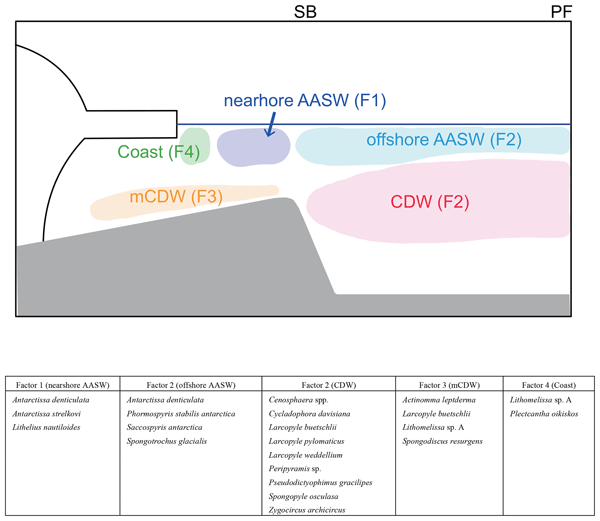
Radiolarian fossils are valuable tools for understanding water mass distribution. However, they have not been used in the high-latitude Southern Ocean due to unclear radiolarian assemblages. Our study identifies four assemblages related to water masses and ice edge environments in the high-latitude Southern Ocean, offering insights for water mass reconstruction in this region.
Georgia R. Grant, Jonny H. T. Williams, Sebastian Naeher, Osamu Seki, Erin L. McClymont, Molly O. Patterson, Alan M. Haywood, Erik Behrens, Masanobu Yamamoto, and Katelyn Johnson
Clim. Past, 19, 1359–1381, https://doi.org/10.5194/cp-19-1359-2023, https://doi.org/10.5194/cp-19-1359-2023, 2023
Short summary
Short summary
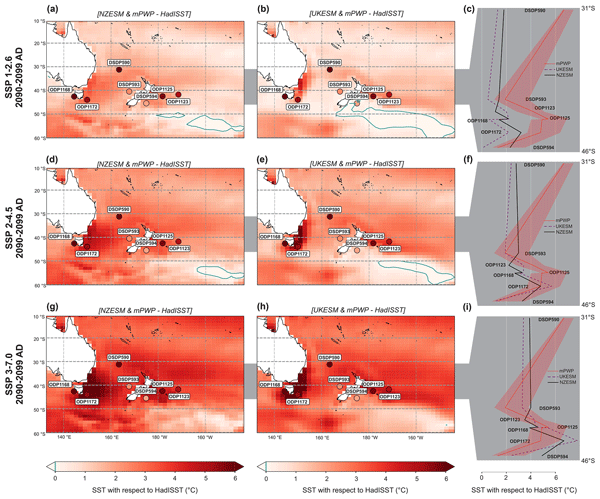
Regional warming will differ from global warming, and climate models perform poorly in the Southern Ocean. We reconstruct sea surface temperatures in the south-west Pacific during the mid-Pliocene, a time 3 million years ago that represents the long-term outcomes of 3 °C warming, which is expected for the future. Comparing these results to climate model simulations, we show that the south-west Pacific region will warm by 1 °C above the global average if atmospheric CO2 remains above 350 ppm.
Frida S. Hoem, Luis Valero, Dimitris Evangelinos, Carlota Escutia, Bella Duncan, Robert M. McKay, Henk Brinkhuis, Francesca Sangiorgi, and Peter K. Bijl
Clim. Past, 17, 1423–1442, https://doi.org/10.5194/cp-17-1423-2021, https://doi.org/10.5194/cp-17-1423-2021, 2021
Short summary
Short summary
We present new offshore palaeoceanographic reconstructions for the Oligocene (33.7–24.4 Ma) in the Ross Sea, Antarctica. Our study of dinoflagellate cysts and lipid biomarkers indicates warm-temperate sea surface conditions. We posit that warm surface-ocean conditions near the continental shelf during the Oligocene promoted increased precipitation and heat delivery towards Antarctica that led to dynamic terrestrial ice sheet volumes in the warmer climate state of the Oligocene.
Osamu Seki and James Bendle
Clim. Past Discuss., https://doi.org/10.5194/cp-2021-62, https://doi.org/10.5194/cp-2021-62, 2021
Manuscript not accepted for further review
Short summary
Short summary
The reconstruction of CO2 levels in the past is a crucial objective in palaeoclimate research. However, estimates of CO2 level markedly differ among the data. We revised reported alkenone δ13C based CO2 records from the Pliocene to Pleistocene based on a refined approach. Our approach significantly reduced the large offsets between reported alkenone δ13C CO2 records, confirming that better constraints on environmental variables are key aspects for improving alkenone δ13C based CO2 estimates.
Cited articles
Abelmann, A., Gersonde, R., Knorr, G., Zhang, X., Chapligin, B., Maier, E., Esper, O., Friedrichsen, H., Lohmann, G., Meyer, H., and Tiedemann, R.: The seasonal sea-ice zone in the glacial Southern Ocean as a carbon sink, Nat. Commun., 6, 8136, https://doi.org/10.1038/ncomms9136, 2015.
Ai, X. E., Studer, A. S., Sigman, D. M., Martínez-García, A., Fripiat, F., Thöle, L. M., Michel, E., Gottschalk, J., Arnold, L., Moretti, S., Schmitt, M., Oleynik, S., Jaccard, S. L., and Haug, G. H.: Southern Ocean upwelling, Earth's obliquity, and glacial-interglacial atmospheric CO2 change, Science, 370, 1348–1352, https://doi.org/10.1126/science.abd2115, 2020.
Ai, X. E., Thöle, L. M., Auderset, A., Schmitt, M., Moretti, S., Studer, A. S., Michel, E., Wegmann, M., Mazaud, A., Bijl, P. K., Sigman, D. M., Martínez-García, A., and Jaccard, S. L.: The southward migration of the Antarctic Circumpolar Current enhanced oceanic degassing of carbon dioxide during the last two deglaciations, Commun. Earth Environ., 5, 58, https://doi.org/10.1038/s43247-024-01216-x, 2024.
Alonso-Sáez, L., Andersson, A., Heinrich, F., and Bertilsson, S.: High archaeal diversity in Antarctic circumpolar deep waters, Env. Microbiol. Rep., 3, 689–697, https://doi.org/10.1111/j.1758-2229.2011.00282.x, 2011.
Bale, N. J., Palatinszky, M., Irene, W., Rijpstra, C., Herbold, C. W., Wagner, M., Sinninghe Damsté, J. S., and Atomi, H.: Membrane lipid composition of the moderately thermophilic ammonia-oxidizing archaeon “Candidatus Nitrosotenuis uzonensis” at Different Growth Temperatures, Appl. Environ. Microbiol., 85, e01332-19, https://doi.org/10.1128/AEM.01332-19, 2019.
Bianchi, C. and Gersonde, R.: The Southern Ocean surface between Marine Isotope Stages 6 and 5d: Shape and timing of climate changes, Palaeogeogr. Palaeoclimatol. Palaeoecol., 187, 151–177, https://doi.org/10.1016/S0031-0182(02)00516-3, 2002.
Bijl, P. K., Śliwińska, K. K., Duncan, B., Huguet, A., Naeher, S., Rattanasriampaipong, R., Sosa-Montes de Oca, C., Auderset, A., Berke, M. A., Kim, B. S., Davtian, N., Dunkley Jones, T., Eefting, D. D., Elling, F. J., Fenies, P., Inglis, G. N., O'Connor, L., Pancost, R. D., Peterse, F., Rice, A., Sluijs, A., Varma, D., Xiao, W., and Zhang, Y. G.: Reviews and syntheses: Best practices for the application of marine GDGTs as proxy for paleotemperatures: sampling, processing, analyses, interpretation, and archiving protocols, Biogeosciences, 22, 6465–6508, https://doi.org/10.5194/bg-22-6465-2025, 2025.
Blaga, C. I., Reichart, GJ., Heiri, O., and Sinninghe Damsté, J. S.: Tetraether membrane lipid distributions in water-column particulate matter and sediments: a study of 47 European lakes along a north–south transect, J. Paleolimnol., 41, 523–540, https://doi.org/10.1007/s10933-008-9242-2, 2009.
Boyer, T. P., García, H. E., Locarnini, R. A., Zweng, M. M., Mishonov, A. V., Reagan, J. R., Weathers, K. A., Baranova, O. K., Paver, C. R., Seidov, D., and Smolyar, I. V.: World Ocean Atlas: Temperature, salinity, and oxygen, NOAA National Centers for Environmental Information [data set], https://repository.library.noaa.gov/view/noaa/49137 (last access: 28 January 2026), 2018.
Brochier-Armanet, C., Boussau, B., Gribaldo, S., and Forterre, P.: Mesophilic Crenarchaeota: proposal for a third archaeal phylum, the Thaumarchaeota, Nat. Rev. Microbiol., 6, 245–252, https://doi.org/10.1038/nrmicro1852, 2008.
Carter, L., McCave, I. N., and Williams, M. J. M.: Circulation and Water Masses of the Southern Ocean: A Review, in: Developments in Earth and Environmental Sciences, Vol. 8, edited by: Florindo, F. and Siegert, M., Elsevier, 85–114, https://doi.org/10.1016/S1571-9197(08)00004-9, 2008.
Carter, L., Bostock-Lyman, H., and Bowen, M.: Water masses, circulation and change in the modern Southern Ocean, in: Antarctic Climate Evolution, 2nd edn., edited by: Florindo, F., Siegert, M., De Santis, L., and Naish, T., Elsevier, 165–197, https://doi.org/10.1016/B978-0-12-819109-5.00003-7, 2022.
Chadwick, M., Allen, C. S., Sime, L. C., and Hillenbrand, C. D.: Analysing the timing of peak warming and minimum winter sea-ice extent in the Southern Ocean during MIS 5e, Quat. Sci. Rev., 229, 106134, https://doi.org/10.1016/j.quascirev.2019.106134, 2020.
Chandler, D. and Langebroek, P.: Southern Ocean sea surface temperature synthesis: Part 1. Evaluation of temperature proxies at glacial-interglacial time scales, Quat. Sci. Rev., 271, 107191, https://doi.org/10.1016/j.quascirev.2021.107191, 2021.
Chapman, C. C., Lea, M.-A., Meyer, A., Sallée, J.-B., and Hindell, M.: Defining Southern Ocean fronts and their influence on biological and physical processes in a changing climate, Nat. Clim. Chang., 10, 209–219, https://doi.org/10.1038/s41558-020-0705-4, 2020.
Church, M. J., DeLong, E. F., Ducklow, H. W., Karner, M. B., Preston, C. M., and Karl, D. M.: Abundance and distribution of planktonic Archaea and Bacteria in the waters west of the Antarctic Peninsula, Limnol. Oceanogr., 48, 1893–1902, https://doi.org/10.4319/lo.2003.48.5.1893, 2003.
Civel-Mazens, M., Crosta, X., Cortese, G., Michel, E., Mazaud, A., Ther, O., Ikehara, M., and Itaki, T.: Antarctic Polar Front migrations in the Kerguelen Plateau region, Southern Ocean, over the past 360 kyrs, Glob. Planet. Chang., 202, 103526, https://doi.org/10.1016/j.gloplacha.2021.103526, 2021.
Dai, M., Luo, Y., Achterberg, E. P., Browning, T. J., Cai, Y., Cao, Z., Chai, F., Chen, B., Church, M. J., Ci, D., Du, C., Gao, K., Guo, X., Hu, Z., Kao, S., Laws, E. A., Lee, Z., Lin, H., Liu, Q., Liu, X., Luo, W., Meng, F., Shang, S., Shi, D., Saito, H., Song, L., Wan, X. S., Wang, Y., Wang, W., Wen, Z., Xiu, P., Zhang, J., Zhang, R., and Zhou, K.: Upper ocean biogeochemistry of the oligotrophic North Pacific Subtropical Gyre: from nutrient sources to carbon export, Reviews of Geophysics, 61, e2022RG000800, https://doi.org/10.1029/2022RG000800, 2023.
de Bar, M. W., Rampen, S. W., Hopmans, E. C., Sinninghe Damsté, J. S., and Schouten, S.: Constraining the applicability of organic paleotemperature proxies for the last 90 Myrs, Org. Geochem., 128, 122–136, https://doi.org/10.1016/j.orggeochem.2018.12.005, 2019.
DeConto, R. M. and Pollard, D.: Contribution of Antarctica to past and future sea-level rise, Nature, 531, 591–597, https://doi.org/10.1038/nature17145, 2016.
Dunkley Jones, T., Eley, Y. L., Thomson, W., Greene, S. E., Mandel, I., Edgar, K., and Bendle, J. A.: OPTiMAL: a new machine learning approach for GDGT-based palaeothermometry, Clim. Past, 16, 2599–2617, https://doi.org/10.5194/cp-16-2599-2020, 2020.
Etourneau, J., Sgubin, G., Crosta, X., Swingedouw, D., Willmott, V., Barbara, L., Houssais, M. N., Schouten, S., Sinninghe Damsté, J. S., Goosse, H., Escutia, C., Crespin, J., Massé, G., and Kim, J. H.: Ocean temperature impact on ice shelf extent in the eastern Antarctic Peninsula, Nat. Commun., 10, 304, https://doi.org/10.1038/s41467-018-08195-6, 2019.
Feucher, C., Maze, G., and Mercier, H.: Subtropical mode water and permanent pycnocline properties in the world ocean, J. Geophys. Res.-Oceans, 124, 1139–1154, https://doi.org/10.1029/2018JC014526, 2019.
Fietz, S., Ho, S. L., Huguet, C., Rosell-Melé, A., and Martínez-García, A.: Appraising GDGT-based seawater temperature indices in the Southern Ocean, Org. Geochem., 102, 93–105, https://doi.org/10.1016/j.orggeochem.2016.10.003, 2016.
Fietz, S., Ho, S. L., and Huguet, C.: Archaeal membrane lipid-based paleothermometry for applications in polar oceans, Oceanography, 33, 104–114, https://doi.org/10.5670/oceanog.2020.207, 2020.
Gabriel, J. L. and Chong, P. L. G.: Molecular modeling of archaebacterial bipolar tetraether lipid membranes, Chem. Phys. Lipids, 105, 193–200, https://doi.org/10.1016/S0009-3084(00)00126-2, 2000.
GEBCO Bathymetric Compilation Group: GEBCO 2023_Grid, British Oceanographic Data Centre [data set], https://doi.org/10.5285/f98b053b-0cbc-6c23-e053-6c86abc0af7b, 2023.
Gersonde, R., Crosta, X., Abelmann, A., and Armand, L.: Sea-surface temperature and sea ice distribution of the Southern Ocean at the EPILOG Last Glacial Maximum – A circum-Antarctic view based on siliceous microfossil records, Quat. Sci. Rev., 24, 869–896, https://doi.org/10.1016/j.quascirev.2004.07.015, 2005.
Hagemann, J. R., Lembke-Jene, L., Lamy, F., Vorrath, M.-E., Kaiser, J., Müller, J., Arz, H. W., Hefter, J., Jaeschke, A., Ruggieri, N., and Tiedemann, R.: Upper-ocean temperature characteristics in the subantarctic southeastern Pacific based on biomarker reconstructions, Clim. Past, 19, 1825–1845, https://doi.org/10.5194/cp-19-1825-2023, 2023.
Hanna, E., Topál, D., Box, J. E., Buzzard, S., Christie, F. D. W., Hvidberg, C., Morlighem, M., De Santis, L., Silvano, A., Colleoni, F., Sasgen, I., Banwell, A. F., van den Broeke, M. R., DeConto, R., De Rydt, J., Goelzer, H., Gossart, A., Gudmundsson, G. H., Lindbäck, K., Miles, B., Mottram, R., Pattyn, F., Reese, R., Rignot, E., Srivastava, A., Sun, S., Toller, J., Tuckett, P. A., and Ultee, L.: Short- and long-term variability of the Antarctic and Greenland ice sheets, Nat. Rev. Earth Environ., 5, 193–210, https://doi.org/10.1038/s43017-023-00509-7, 2024.
Hernández, E. A., Piquet, A. M.-T., Lopez, J. L., Buma, A. G. J., and Mac Cormack, W. P.: Marine archaeal community structure from Potter Cove, Antarctica: high temporal and spatial dominance of the phylum Thaumarchaeota, Polar Biol., 38, 117–130, https://doi.org/10.1007/s00300-014-1569-8, 2015.
Hernández-Sánchez, M. T., Woodward, E. M. S., Taylor, K. W. R., Henderson, G. M., and Pancost, R. D.: Variations in GDGT distributions through the water column in the South East Atlantic Ocean, Geochim. Cosmochim. Acta, 132, 337–348, https://doi.org/10.1016/j.gca.2014.02.009, 2014.
Ho, S. L. and Laepple, T.: Flat meridional temperature gradient in the early Eocene in the subsurface rather than surface ocean, Nat. Geosci., 9, 606–610, https://doi.org/10.1038/ngeo2763, 2016.
Ho, S. L., Mollenhauer, G., Fietz, S., Martínez-Garcia, A., Lamy, F., Rueda, G., Schipper, K., Méheust, M., Rosell-Melé, A., Stein, R., and Tiedemann, R.: Appraisal of TEX86 and thermometries in subpolar and polar regions, Geochim. Cosmochim. Acta, 131, 213–226, https://doi.org/10.1016/J.GCA.2014.01.001, 2014.
Holland, D. M., Nicholls, K. W., and Basinski, A.: The Southern Ocean and its interaction with the Antarctic Ice Sheet, Science, 367, 1326–1330, https://doi.org/10.1126/science.aaz5491, 2020.
Hopmans, E. C., Schouten, S., Pancost, R. D., Van Der Meer, M. T. J., and Sinninghe Damsté, J. S.: Analysis of intact tetraether lipids in archaeal cell material and sediments by high performance liquid chromatography/atmospheric pressure chemical ionization mass spectrometry, Rapid Commun. Mass Spectrom., 14, 585–589, https://doi.org/10.1002/(SICI)1097-0231(20000415)14:7<585::AID-RCM913>3.0.CO;2-N, 2000.
Hopmans, E. C., Weijers, J. W. H., Schefuß, E., Herfort, L., Sinninghe Damsté, J. S., and Schouten, S.: A novel proxy for terrestrial organic matter in sediments based on branched and isoprenoid tetraether lipids, Earth Planet. Sci. Lett., 224, 107–116, https://doi.org/10.1016/j.epsl.2004.05.012, 2004.
Huguet, C., Hopmans, E. C., Febo-Ayala, W., Thompson, D. H., Sinninghe Damsté, J. S., and Schouten, S.: An improved method to determine the absolute abundance of glycerol dibiphytanyl glycerol tetraether lipids, Org. Geochem., 37, 1036–1041, https://doi.org/10.1016/j.orggeochem.2006.05.008, 2006.
Ishii, H.: HanaIshii-ANT/Southern-Ocean-isoGDGT-dataset-for-new-AIZ-index: Initial dataset release for Ishii et al., Zenodo [data set], https://doi.org/10.5281/zenodo.17060619, 2025.
Jaeschke, A., Wengler, M., Hefter, J., Ronge, T. A., Geibert, W., Mollenhauer, G., Gersonde, R., and Lamy, F.: A biomarker perspective on dust, productivity, and sea surface temperature in the Pacific sector of the Southern Ocean, Geochim. Cosmochim. Acta, 204, 120–139, https://doi.org/10.1016/j.gca.2017.01.045, 2017.
Kalanetra, K. M., Bano, N., and Hollibaugh, J. T.: Ammonia-oxidizing Archaea in the Arctic Ocean and Antarctic coastal waters, Environ. Microbiol., 11, 2434–2445, https://doi.org/10.1111/j.1462-2920.2009.01974.x, 2009.
Kim, J. G., Park, S.-J., Quan, Z.-X., Jung, M.-Y., Cha, I.-T., Kim, S.-J., Kim, K.-H., Yang, E.-J., Kim, Y.-N., Lee, S.-H., and Rhee, S.-K.: Unveiling abundance and distribution of planktonic Bacteria and Archaea in a polynya in Amundsen Sea, Antarctica, Environ. Microbiol., 16, 1566–1578, https://doi.org/10.1111/1462-2920.12287, 2014.
Kim, J. H., Schouten, S., Hopmans, E. C., Donner, B., and Sinninghe Damsté, J. S.: Global sediment core-top calibration of the TEX86 paleothermometer in the ocean, Geochim. Cosmochim. Acta, 72, 1154–1173, https://doi.org/10.1016/j.gca.2007.12.010, 2008.
Kim, J. H., van der Meer, J., Schouten, S., Helmke, P., Willmott, V., Sangiorgi, F., Koç, N., Hopmans, E. C., and Damsté, J. S. S.: New indices and calibrations derived from the distribution of crenarchaeal isoprenoid tetraether lipids: Implications for past sea surface temperature reconstructions, Geochim. Cosmochim. Acta, 74, 4639–4654, https://doi.org/10.1016/j.gca.2010.05.027, 2010.
Kim, J. H., Crosta, X., Willmott, V., Renssen, H., Bonnin, J., Helmke, P., Schouten, S., and Sinninghe Damsté, J. S.: Holocene subsurface temperature variability in the eastern Antarctic continental margin, Geophys. Res. Lett., 39, L06705, https://doi.org/10.1029/2012GL051157, 2012.
Kolody, B. C., Sachdeva, R., Zheng, H., Füssy, Z., Tsang, E., Sonnerup, R. E., Purkey, S. G., Allen, E. E., Banfield, J. F., and Allen, A. E.: Overturning circulation structures the microbial functional seascape of the South Pacific, Science, 389, 176–182, https://doi.org/10.1126/science.adv6903, 2025.
Lamping, N., Müller, J., Hefter, J., Mollenhauer, G., Haas, C., Shi, X., Vorrath, M.-E., Lohmann, G., and Hillenbrand, C.-D.: Evaluation of lipid biomarkers as proxies for sea ice and ocean temperatures along the Antarctic continental margin, Clim. Past, 17, 2305–2326, https://doi.org/10.5194/cp-17-2305-2021, 2021.
Liu, R., Han, Z., Zhao, J., Zhang, H., Li, D., Ren, J., Pan, J., and Zhang, H.: Distribution and source of glycerol dialkyl glycerol tetraethers (GDGTs) and the applicability of gdgt-based temperature proxies in surface sediments of Prydz Bay, East Antarctica, Polar Res., 39, https://doi.org/10.33265/polar.v39.3557, 2020.
Liu, Z., Pagani, M., Zinniker, D., DeConto, R., Huber, M., Brinkhuis, H., Shah, S. R., Leckie, R. M., and Pearson, A.: Global cooling during the Eocene-Oligocene climate transition, Science, 323, 1187–1190, https://doi.org/10.1126/science.1166368, 2009.
Locarnini, R. A., Mishonov, A. V., Antonov, J. I., Boyer, T. P., Garcia, H. E., Baranova, O. K., Zweng, M. M., and Johnson, D. R.: World Ocean Atlas 2009, Volume 1: Temperature, U. S. Government Printing Office [data set], http://www.nodc.noaa.gov/OC5/indprod.html (last access: 28 January 2026), 2010.
Matsuoka, K., Skoglund, A., Roth, G., de Pomereu, J., Griffiths, H., Headland, R., Herried, B., Katsumata, K., Le Brocq, A., Licht, K., Morgan, F., Neff, P., Ritz, C., Scheinert, M., Tamura, T., Van de Putte, A., van den Broeke, M., von Deschwanden, A., Deschamps-Berger, C., and Melvær, Y.: Quantarctica, Norwegian Polar Institute [data set], https://doi.org/10.21334/NPOLAR.2018.8516E961, 2018.
Merbt, S. N., Stahl, D. A., Casamayor, E. O., Martí, E., Nicol, G. W., and Prosser, J. I.: Differential photoinhibition of bacterial and archaeal ammonia oxidation, FEMS Microbiol. Lett., 327, 41–46, https://doi.org/10.1111/j.1574-6968.2011.02457.x, 2012.
O'Brien, C. L., Foster, G. L., Martínez-Botí, M. A., Abell, R., Rae, J. W. B., and Pancost, R. D.: High sea surface temperatures in tropical warm pools during the Pliocene, Nat. Geosci., 7, 606–611, https://doi.org/10.1038/ngeo2194, 2014.
Orsi, A. H., Whitworth, T., and Nowlin, W. D.: On the meridional extent and fronts of the Antarctic Circumpolar Current, Deep Sea Res. Part I, 42, 641–673, https://doi.org/10.1016/0967-0637(95)00021-W, 1995.
Pancost, R. D., Hopmans, E. C., and Sinninghe Damsté, J. S.: Archaeal lipids in Mediterranean cold seeps: molecular proxies for anaerobic methane oxidation, Geochim. Cosmochim. Acta, 65, 1611–1627, https://doi.org/10.1016/S0016-7037(00)00562-7, 2001.
Park, E., Hefter, J., Fischer, G., Iversen, M. H., Ramondenc, S., Nöthig, E.-M., and Mollenhauer, G.: Seasonality of archaeal lipid flux and GDGT-based thermometry in sinking particles of high-latitude oceans: Fram Strait (79° N) and Antarctic Polar Front (50° S), Biogeosciences, 16, 2247–2268, https://doi.org/10.5194/bg-16-2247-2019, 2019.
Pearson, A. and Ingalls, A. E.: Assessing the use of archaeal lipids as marine environmental proxies, Annu. Rev. Earth Planet. Sci., 41, 359–384, https://doi.org/10.1146/annurev-earth-050212-123947, 2013.
Pitcher, A., Rychlik, N., Hopmans, E. C., Spieck, E., Rijpstra, W. I. C., Ossebaar, J., Schouten, S., Wagner, M., and Sinninghe Damsté, J. S.: Crenarchaeol dominates the membrane lipids of Candidatus Nitrososphaera gargensis, a thermophilic Group I.1b Archaeon, ISME J., 4, 542–552, https://doi.org/10.1038/ismej.2009.138, 2010.
Pollard, R. T., Lucas, M. I., and Read, J. F.: Physical controls on biogeochemical zonation in the Southern Ocean, Deep Sea Res. Part II, 49, 3289–3305, https://doi.org/10.1016/S0967-0645(02)00084-X, 2002.
Qin, W., Carlson, L. T., Armbrust, E. V., Devol, A. H., Moffett, J. W., Stahl, D. A., and Ingalls, A. E.: Confounding effects of oxygen and temperature on the TEX86 signature of marine Thaumarchaeota, Proc. Natl. Acad. Sci. USA, 112, 10979–10984, https://doi.org/10.1073/pnas.1501568112, 2015.
Raes, E. J., Bodrossy, L., Van De Kamp, J., Bissett, A., Ostrowski, M., Brown, M. V., Sow, S. L. S., Sloyan, B., and Waite, A. M.: Oceanographic boundaries constrain microbial diversity gradients in the South Pacific Ocean, Proc. Natl. Acad. Sci. USA, 115, https://doi.org/10.1073/pnas.1719335115, 2018.
Rattanasriampaipong, R., Zhang, Y. G., Pearson, A., Hedlund, B. P., and Zhang, S.: Archaeal lipids trace ecology and evolution of marine ammonia-oxidizing archaea, Proc. Natl. Acad. Sci. USA, 119, e2123193119, https://doi.org/10.1073/pnas.2123193119, 2022.
Rintoul, S. R.: The global influence of localized dynamics in the Southern Ocean, Nature, 558, 209–218, https://doi.org/10.1038/s41586-018-0182-3, 2018.
Schouten, S., Hopmans, E. C., Schefuß, E., and Sinninghe Damsté, J. S.: Distributional variations in marine crenarchaeotal membrane lipids: a new tool for reconstructing ancient sea water temperatures?, Earth Planet. Sci. Lett., 204, 205–206, https://doi.org/10.1016/s0012-821x(03)00193-6, 2002.
Schouten, S., Huguet, C., Hopmans, E. C., Kienhuis, M. V. M., and Sinninghe Damsté, J. S.: Analytical Methodology for TEX86 Paleothermometry by High-Performance Liquid Chromatography/Atmospheric Pressure Chemical Ionization-Mass Spectrometry, Anal. Chem., 79, 2940–2944, https://doi.org/10.1021/ac062339v, 2007.
Schouten, S., Hopmans, E. C., and Sinninghe Damsté, J. S.: The organic geochemistry of glycerol dialkyl glycerol tetraether lipids: A review, Org. Geochem., 54, 19–61, https://doi.org/10.1016/j.orggeochem.2012.09.006, 2013.
Shevenell, A. E., Ingalls, A. E., Domack, E. W., and Kelly, and C.: Holocene Southern Ocean surface temperature variability west of the Antarctic Peninsula, Nature, 470, 250–254, https://doi.org/10.1038/nature09751, 2011.
Signori, C. N., Thomas, F., Enrich-Prast, A., Pollery, R. C. G., and Sievert, S. M.: Microbial diversity and community structure across environmental gradients in Bransfield Strait, Western Antarctic Peninsula, Front. Microbiol., 5, https://doi.org/10.3389/fmicb.2014.00647, 2014.
Sinninghe Damsté, J. S., Ossebaar, J., Schouten, S., and Verschuren, D.: Distribution of tetraether lipids in the 25-ka sedimentary record of Lake Challa: Extracting reliable TEX86 and MBT/CBT palaeotemperatures from an equatorial African lake, Quat. Sci. Rev., 50, 43–54, https://doi.org/10.1016/j.quascirev.2012.07.001, 2012.
Sow, S. L. S., Brown, M. V., Clarke, L. J., Bissett, A., van de Kamp, J., Trull, T. W., Raes, E. J., Seymour, J. R., Bramucci, A. R., Ostrowski, M., Boyd, P. W., Deagle, B. E., Pardo, P. C., Sloyan, B. M., and Bodrossy, L.: Biogeography of Southern Ocean prokaryotes: a comparison of the Indian and Pacific sectors, Environ. Microbiol., 24, 2449–2466, https://doi.org/10.1111/1462-2920.15906, 2022.
Spencer-Jones, C. L., McClymont, E. L., Bale, N. J., Hopmans, E. C., Schouten, S., Müller, J., Abrahamsen, E. P., Allen, C., Bickert, T., Hillenbrand, C.-D., Mawbey, E., Peck, V., Svalova, A., and Smith, J. A.: Archaeal intact polar lipids in polar waters: a comparison between the Amundsen and Scotia seas, Biogeosciences, 18, 3485–3504, https://doi.org/10.5194/bg-18-3485-2021, 2021.
Taylor, K. W. R., Huber, M., Hollis, C. J., Hernandez-Sanchez, M. T., and Pancost, R. D.: Re-evaluating modern and Palaeogene GDGT distributions: Implications for SST reconstructions, Glob. Planet. Chang., 108, 158–174, https://doi.org/10.1016/j.gloplacha.2013.06.011, 2013.
Tierney, J. E. and Tingley, M. P.: A Bayesian, spatially-varying calibration model for the TEX86 proxy, Geochim. Cosmochim. Acta 127, 83–106, https://doi.org/10.1016/j.gca.2013.11.026, 2014.
Uemura, R., Motoyama, H., Masson-Delmotte, V., Jouzel, J., Kawamura, K., Goto-Azuma, K., Fujita, S., Kuramoto, T., Hirabayashi, M., Miyake, T., Ohno, H., Fujita, K., Abe-Ouchi, A., Iizuka, Y., Horikawa, S., Igarashi, M., Suzuki, K., Suzuki, T., and Fujii, Y.: Asynchrony between Antarctic temperature and CO2 associated with obliquity over the past 720,000 years, Nat. Commun., 9, 961, https://doi.org/10.1038/s41467-018-03328-3, 2018.
Varma, D., Hättig, K., van der Meer, M. T. J., Reichart, G. J., and Schouten, S.: Constraining water depth influence on organic paleotemperature proxies using sedimentary archives, Paleoceanogr. Paleoclimatol., 38, e2022PA004533, https://doi.org/10.1029/2022PA004533, 2023.
Varma, D., Hopmans, E. C., Van Kemenade, Z. R., Kusch, S., Berg, S., Bale, N. J., Sangiorgi, F., Reichart, G.-J., Sinninghe Damsté, J. S., and Schouten, S.: Evaluating isoprenoidal hydroxylated GDGT-based temperature proxies in surface sediments from the global ocean, Geochim. Cosmochim. Acta, 370, 113–127, https://doi.org/10.1016/j.gca.2023.12.019, 2024.
Weber, M. E., Raymo, M. E., Peck, V. L., and Williams, T.: Expedition 382 preliminary report: iceberg alley and subantarctic ice and ocean dynamics, International Ocean Discovery Program, https://doi.org/10.14379/iodp.pr.382.2019, 2019.
Wuchter, C., Schouten, S., Coolen, M. J. L., and Sinninghe Damsté, J. S.: Temporal and spatial variation in tetraether membrane lipids of marine Crenarchaeota in particulate organic matter: Implications for TEX86 paleothermometry, Paleoceanogr. Paleoclimatol, 20, PA3013, https://doi.org/10.1029/2004PA001110, 2005.
Xu, Y., Wu, W., Xiao, W., Ge, H., Wei, Y., Yin, X., Yao, H., Lipp, J. S., Pan, B., and Hinrichs, K.: Intact ether lipids in trench sediments related to archaeal community and environmental conditions in the deepest ocean, J. Geophys. Res.-Biogeosciences, 125, e2019JG005431, https://doi.org/10.1029/2019JG005431, 2020.
Yang, H. and Zhu, J.: Equilibrium thermal response timescale of global oceans, Geophys. Res. Lett., 38, L14711, https://doi.org/10.1029/2011GL048076, 2011.
Zhang, Y. G., Zhang, C. L., Liu, X. L., Li, L., Hinrichs, K. U., and Noakes, J. E.: Methane Index: A tetraether archaeal lipid biomarker indicator for detecting the instability of marine gas hydrates, Earth Planet. Sci. Lett., 307, 525–534, https://doi.org/10.1016/j.epsl.2011.05.031, 2011.
Zhao, S., Bao, R., Zhou, L., Liu, M., Sun, X., Gao, Z., Zhou, Y., Wang, N., Wang, Y., Chen, J., Xing, L., and Zhang, C.: Temperature-dependent spatial and temporal trends in archaeal lipid distributions, Commun. Earth Environ., 6, 619, https://doi.org/10.1038/s43247-025-02450-7, 2025.
Short summary
We explore the utility of the archaeal-derived lipid biomarker as paleoenvironmental proxies in the Southern Ocean. Based on a reanalysis of the Southern Ocean dataset, we propose a new indicator for reconstructing zonal water mass movements in the Southern Ocean and temperatures in the Antarctic Zone. Applying this method to late Pleistocene sediment cores validates its reliability, confirming a valuable new tool for reconstructing the paleoenvironment of the Southern Ocean.
We explore the utility of the archaeal-derived lipid biomarker as paleoenvironmental proxies in...