
Articles | Volume 22, issue 2
https://doi.org/10.5194/cp-22-247-2026
© Author(s) 2026. This work is distributed under
the Creative Commons Attribution 4.0 License.
the Creative Commons Attribution 4.0 License.
https://doi.org/10.5194/cp-22-247-2026
© Author(s) 2026. This work is distributed under
the Creative Commons Attribution 4.0 License.
the Creative Commons Attribution 4.0 License.
Research article
| 
05 Feb 2026
Research article |
| 05 Feb 2026
| 05 Feb 2026
Past Ocean surface density from planktonic foraminifera calcite δ18O
Thibaut Caley
CORRESPONDING AUTHOR

Univ. Bordeaux, CNRS, Bordeaux INP, EPOC, UMR 5805, 33600 Pessac, France
Niclas Rieger
Institut de Ciències del Mar (ICM) – CSIC, Pg. Marítim de la Barceloneta 37, Barcelona, Spain
Centre de Recerca Matemàtica (CRM), Departament de Física, Bellaterra, Spain
Martin Werner
Alfred Wegener Institute Helmholtz Centre for Polar and Marine Research, Bremerhaven, Germany
Claire Waelbroeck
LOCEAN/IPSL, Sorbonne Université – CNRS-IRD-MNHN, Paris, France
Héloise Barathieu
Univ. Bordeaux, CNRS, Bordeaux INP, EPOC, UMR 5805, 33600 Pessac, France
Tamara Happé
Institute for Environmental Studies, Vrije Universiteit Amsterdam, Amsterdam, the Netherlands
Didier M. Roche
Laboratoire des Sciences du Climat et de l'Environnement (LSCE), CEA, CNRS, UVSQ, Université Paris-Saclay, Gif-sur-Yvette, France
Institut Pierre-Simon Laplace (IPSL), Université de Versailles Saint-Quentin en Yvelines, Guyancourt, France
Earth and Climate Cluster, Faculty of Earth and Life Sciences, Vrije Universiteit Amsterdam, Amsterdam, the Netherlands
Related authors
Héloïse Barathieu, Thibaut Caley, Masa Kageyama, Didier Swingedouw, and Pascale Braconnot
EGUsphere, https://doi.org/10.5194/egusphere-2026-254, https://doi.org/10.5194/egusphere-2026-254, 2026
Short summary
Short summary
This study evaluates climate model simulations of the Last Glacial Maximum using ocean surface density reconstructions from foraminiferal shells δ¹⁸O. Models capture global patterns but regional climate changes are less well simulated, especially in the North Indian Ocean. Tropical differences between reconstructions and model simulations are mainly driven by changes in ocean salinity linked to precipitation.
Thomas Extier, Thibaut Caley, and Didier M. Roche
Geosci. Model Dev., 17, 2117–2139, https://doi.org/10.5194/gmd-17-2117-2024, https://doi.org/10.5194/gmd-17-2117-2024, 2024
Short summary
Short summary
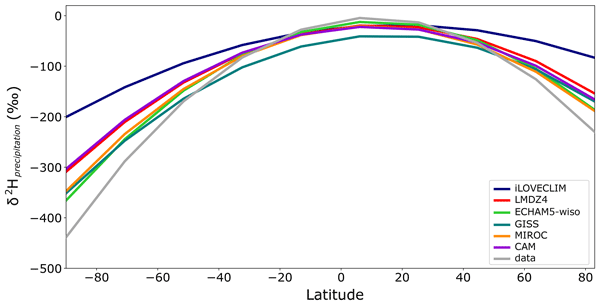
Stable water isotopes are used to infer changes in the hydrological cycle for different time periods in climatic archive and climate models. We present the implementation of the δ2H and δ17O water isotopes in the coupled climate model iLOVECLIM and calculate the d- and 17O-excess. Results of a simulation under preindustrial conditions show that the model correctly reproduces the water isotope distribution in the atmosphere and ocean in comparison to data and other global circulation models.
Xiaoxu Shi, Xiya Liu, Jiping Liu, Martin Werner, Hu Yang, Francisco W. Cruz, Chaoyuan Yang, and Gerrit Lohmann
EGUsphere, https://doi.org/10.5194/egusphere-2026-3894, https://doi.org/10.5194/egusphere-2026-3894, 2026
This preprint is open for discussion and under review for Climate of the Past (CP).
Short summary
Short summary
Cave stalagmites record the oxygen isotope of past rainfall and are used to reconstruct how monsoons changed, but due to the complexity of isotope impacting factors, what these records tell us is debated. We performed a 8300-year simulation with an isotope-enabled climate model, and show that rainfall amount is the key stable driver across global monsoons, while temperature and moisture pathways vary with region and time. Single-site records are noisy, but regional averages recover the signal.
Yigang Liu, Jing Gao, Martin Werner, Alexandre Cauquoin, and Ke Li
EGUsphere, https://doi.org/10.5194/egusphere-2026-2351, https://doi.org/10.5194/egusphere-2026-2351, 2026
This preprint is open for discussion and under review for Geoscientific Model Development (GMD).
Short summary
Short summary
In this study, we provide the first systematic evaluation of ECHAM6-wiso's ability to simulate water vapor stable isotope ratios (δ18Ov) in the near-surface atmosphere over the Tibetan Plateau. In summary, these results underscore the critical role of resolved atmospheric circulation in stable isotope simulations. Our findings highlight the necessity of high-resolution isotopic datasets to refine moisture source attribution and water-cycle dynamics in complex alpine environments.
Titouan Tcheng, Elise Fourré, Christophe Leroy-Dos Santos, Frédéric Parrenin, Emmanuel Le Meur, Frédéric Prié, Olivier Jossoud, Roxanne Jacob, Bénédicte Minster, Olivier Magand, Cécile Agosta, Niels Dutrievoz, Vincent Favier, Léa Baubant, Coralie Lassalle-Bernard, Mathieu Casado, Martin Werner, Alexandre Cauquoin, Laurent Arnaud, Bruno Jourdain, Ghislain Picard, Marie Bouchet, and Amaëlle Landais
The Cryosphere, 20, 1599–1618, https://doi.org/10.5194/tc-20-1599-2026, https://doi.org/10.5194/tc-20-1599-2026, 2026
Short summary
Short summary
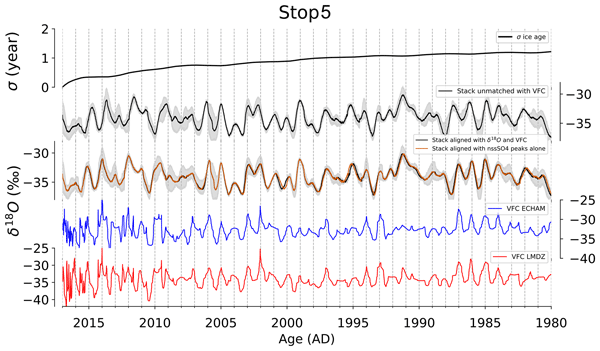
Studying Antarctic ice cores is crucial to assess past climate changes, as they hold historical climate data. This study examines multiple ice cores from three sites in coastal Adélie Land to see if combining cores improves data interpretability. It does at two sites, but at a third, wind-driven snow layer mixing limited benefits. We show that using multiple ice cores from one location can better uncover climate history, especially in areas with less wind disturbance.
Jan Nitzbon, Moritz Langer, Luca Alexander Müller-Ißberner, Elisabeth Dietze, and Martin Werner
Clim. Past, 22, 377–403, https://doi.org/10.5194/cp-22-377-2026, https://doi.org/10.5194/cp-22-377-2026, 2026
Short summary
Short summary
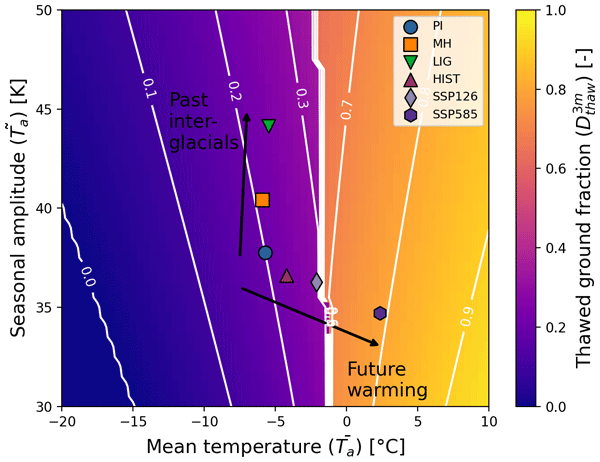
Using model simulations, we show that the larger temperature seasonality of the mid Holocene and the last interglacial climates led to marked surficial permafrost thaw during warm summers, while cold winters allowed for permafrost persistence at depth. We argue that past interglacial climates have limited suitability as analogues for future permafrost dynamics, for which we anticipate a trajectory of unprecedented thaw magnitude since at least MIS (Marine Isotope Stage) 11c.
Gilles Reverdin, Claire Waelbroeck, Lola Goeme, Antje Voelker, and Hans-Christian Steen-Larsen
EGUsphere, https://doi.org/10.5194/egusphere-2026-851, https://doi.org/10.5194/egusphere-2026-851, 2026
Short summary
Short summary
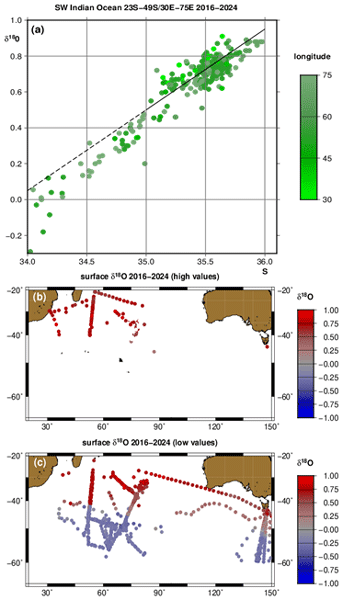
The distributions of water isotopic properties (δ18O, δ2H, deuterium excess) as a function of salinity are studied in the surface Atlantic Ocean and southwest Indian Ocean using the CISE-LOCEAN data base. Large spatial gradients are found as well as a seasonal variability in the North Atlantic sub-polar gyre and in the equatorial Atlantic. Spatially-averaged seasonal cycles are established in these regions, as well as at the BATS site (31°50’ N, 64°10’ W), with weak interannual variability.
Jean-Baptiste Brenner, Aurélien Quiquet, Didier M. Roche, Didier Paillard, and Pradeebane Vaittinada Ayar
Geosci. Model Dev., 19, 1075–1101, https://doi.org/10.5194/gmd-19-1075-2026, https://doi.org/10.5194/gmd-19-1075-2026, 2026
Short summary
Short summary
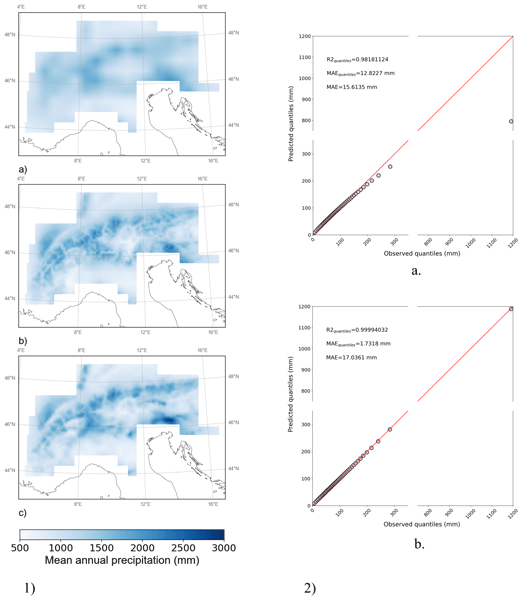
Due to the limited spatial and temporal coverage of observations, global models are essential tools to study climate. However, long-term climate data at fine spatial scale are difficult to obtain because of elevated computational costs such algorithms involve. This paper presents a simple model based on the description of climate/topography interactions to generate local precipitation fields at low cost. The objective is to provide a flexible and easy to use method for paleoclimate studies.
Héloïse Barathieu, Thibaut Caley, Masa Kageyama, Didier Swingedouw, and Pascale Braconnot
EGUsphere, https://doi.org/10.5194/egusphere-2026-254, https://doi.org/10.5194/egusphere-2026-254, 2026
Short summary
Short summary
This study evaluates climate model simulations of the Last Glacial Maximum using ocean surface density reconstructions from foraminiferal shells δ¹⁸O. Models capture global patterns but regional climate changes are less well simulated, especially in the North Indian Ocean. Tropical differences between reconstructions and model simulations are mainly driven by changes in ocean salinity linked to precipitation.
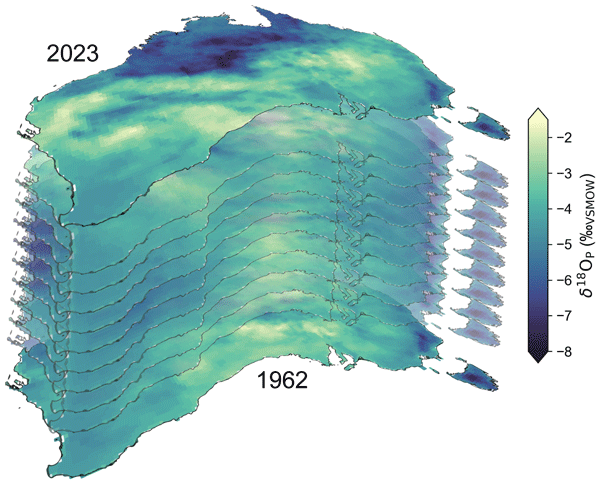
Georgina Falster, Gab Abramowitz, Sanaa Hobeichi, Catherine Hughes, Pauline Treble, Nerilie J. Abram, Michael I. Bird, Alexandre Cauquoin, Bronwyn Dixon, Russell Drysdale, Chenhui Jin, Niels Munksgaard, Bernadette Proemse, Jonathan J. Tyler, Martin Werner, and Carol V. Tadros
Hydrol. Earth Syst. Sci., 30, 289–315, https://doi.org/10.5194/hess-30-289-2026, https://doi.org/10.5194/hess-30-289-2026, 2026
Short summary
Short summary
We used a random forest approach to produce estimates of monthly precipitation stable isotope variability from 1962–2023, at high resolution across the entire Australian continent. Comprehensive skill and sensitivity testing shows that our random forest models skilfully predict precipitation isotope values in places and times that observations are not available. We make all outputs freely available, facilitating use in fields from ecology and hydrology to archaeology and forensic science.
Emeline Clermont, Ji-Woong Yang, Didier M. Roche, and Thomas Extier
EGUsphere, https://doi.org/10.5194/egusphere-2025-5230, https://doi.org/10.5194/egusphere-2025-5230, 2026
Short summary
Short summary
The triple isotopic composition of atmospheric oxygen (17Δ) is used to reconstruct past global biospheric productivity. We present the first implementation of the oceanic contribution (17Δocean) in the intermediate-complexity model iLOVECLIM. Photosynthesis, respiration, and air-sea gas exchange are represented under preindustrial conditions. Model results agree with observations, providing a future key tool to study marine biogeochemical processes and past ocean biospheric productivity.
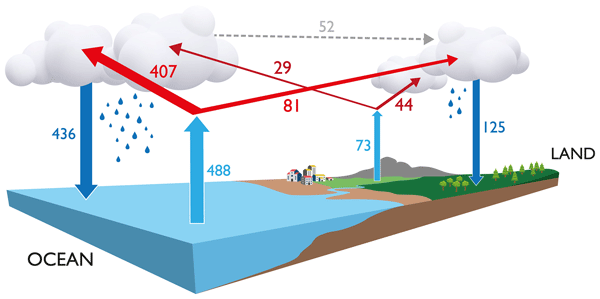
Alison J. McLaren, Louise C. Sime, Simon Wilson, Jeff Ridley, Qinggang Gao, Merve Gorguner, Giorgia Line, Martin Werner, and Paul Valdes
Geosci. Model Dev., 18, 8129–8142, https://doi.org/10.5194/gmd-18-8129-2025, https://doi.org/10.5194/gmd-18-8129-2025, 2025
Short summary
Short summary
We describe a new development in a state-of-the-art computer atmosphere model, which follows the movement of the model’s water. This provides an efficient way to track all the model's rain and snow back to the average location of the evaporative source, as shown in a present-day simulation. The new scheme can be used in simulations of the future to predict how sources of regional rain or snowfall might change owing to human actions, providing useful information for water management purposes.
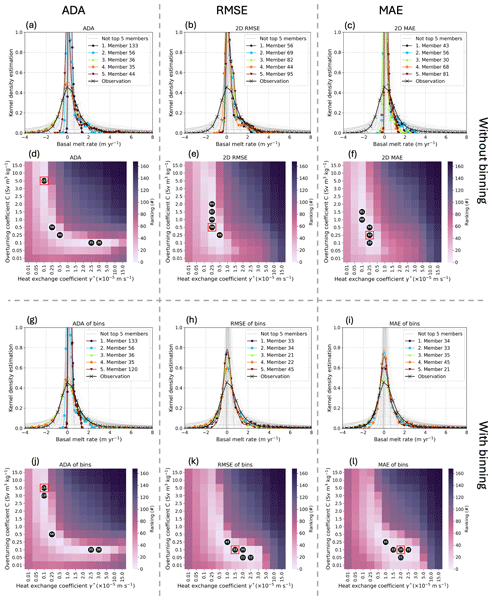
Maxence Menthon, Pepijn Bakker, Aurélien Quiquet, Didier M. Roche, and Ronja Reese
Geosci. Model Dev., 18, 7297–7320, https://doi.org/10.5194/gmd-18-7297-2025, https://doi.org/10.5194/gmd-18-7297-2025, 2025
Short summary
Short summary
Here, we implement a basal ice shelf melt module (PICO – Postdam Ice-shelf Cavity mOdel) in an ice sheet model (GRISLI) and test six simple statistical methods to calibrate this module. We show that calculating the mean absolute error of bins best fits the observational datasets under multiple conditions and without using temperature corrections. Additionally, we show that calibration at a smaller scale than all Antarctic ice shelves is not needed. Finally, we assess the impact with future projections until 2300.
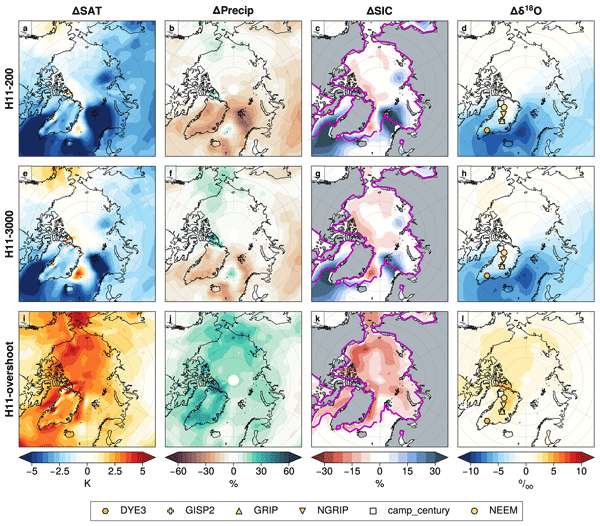
Louise C. Sime, Rahul Sivankutty, Irene Malmierca-Vallet, Sentia Goursaud Oger, Allegra N. LeGrande, Erin L. McClymont, Agatha de Boer, Alexandre Cauquoin, and Martin Werner
Clim. Past, 21, 1725–1753, https://doi.org/10.5194/cp-21-1725-2025, https://doi.org/10.5194/cp-21-1725-2025, 2025
Short summary
Short summary
We used climate models to study how stable water isotopes in ice cores changed in the Arctic and Antarctica during the warm Last Interglacial (LIG) period. Whilst standard simulations underestimate polar warming, when the effects of ice sheet meltwater from the preceding deglaciation are included, there is a much better match with observations. Findings suggest that previous estimates of LIG Arctic warming were too high. Understanding these past polar changes can help improve future predictions.
Daniele Zannoni, Hans Christian Steen-Larsen, Harald Sodemann, Iris Thurnherr, Cyrille Flamant, Patrick Chazette, Julien Totems, Martin Werner, and Myriam Raybaut
Atmos. Chem. Phys., 25, 9471–9495, https://doi.org/10.5194/acp-25-9471-2025, https://doi.org/10.5194/acp-25-9471-2025, 2025
Short summary
Short summary
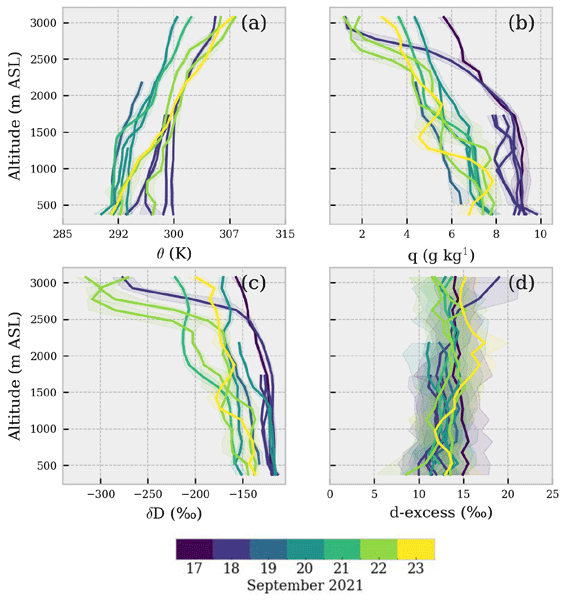
High-resolution airborne observations reveal that mixing between the free troposphere and surface evapotranspiration flux primarily modulates the water vapor isotopic composition in the lower troposphere. Water vapor isotope structure variations occur on the scale of hundreds of meters, underlining the utility of stable isotopes for studying microscale atmospheric dynamics. This study also provides the basis for better validation of water vapor isotope remote sensing retrievals with surface observations.
Takashi Obase, Laurie Menviel, Ayako Abe-Ouchi, Tristan Vadsaria, Ruza Ivanovic, Brooke Snoll, Sam Sherriff-Tadano, Paul J. Valdes, Lauren Gregoire, Marie-Luise Kapsch, Uwe Mikolajewicz, Nathaelle Bouttes, Didier Roche, Fanny Lhardy, Chengfei He, Bette Otto-Bliesner, Zhengyu Liu, and Wing-Le Chan
Clim. Past, 21, 1443–1463, https://doi.org/10.5194/cp-21-1443-2025, https://doi.org/10.5194/cp-21-1443-2025, 2025
Short summary
Short summary
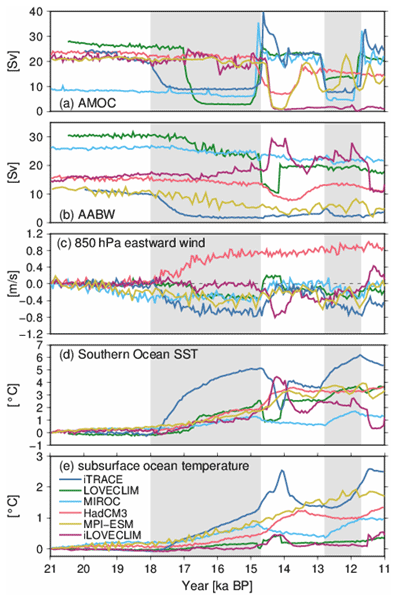
This study analyses transient simulations of the last deglaciation performed by six climate models to understand the processes driving high-southern-latitude temperature changes. We find that atmospheric CO2 and AMOC (Atlantic Meridional Overturning Circulation) changes are the primary drivers of the warming and cooling during the middle stage of the deglaciation. The analysis highlights the model's sensitivity of CO2 and AMOC to meltwater and the meltwater history of temperature changes at high southern latitudes.
Hu Yang, Xiaoxu Shi, Xulong Wang, Qingsong Liu, Yi Zhong, Xiaodong Liu, Youbin Sun, Yanjun Cai, Fei Liu, Gerrit Lohmann, Martin Werner, Zhimin Jian, Tainã M. L. Pinho, Hai Cheng, Lijuan Lu, Jiping Liu, Chao-Yuan Yang, Qinghua Yang, Yongyun Hu, Xing Cheng, Jingyu Zhang, and Dake Chen
Clim. Past, 21, 1263–1279, https://doi.org/10.5194/cp-21-1263-2025, https://doi.org/10.5194/cp-21-1263-2025, 2025
Short summary
Short summary
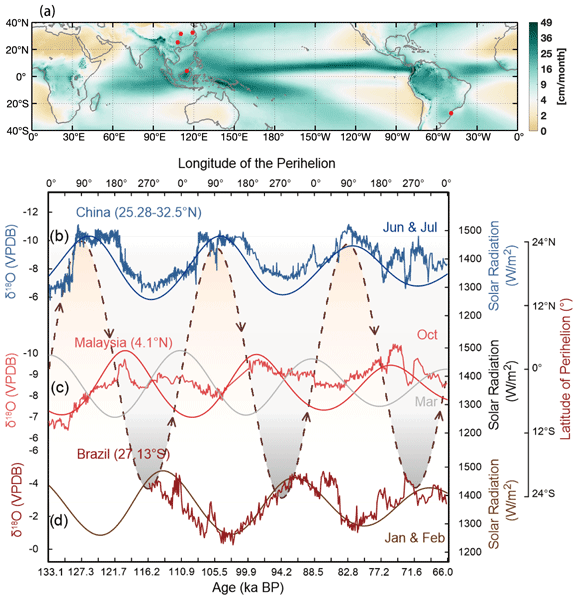
For 1 century, the hemispheric summer insolation is proposed as a key pacemaker of astronomical climate change. However, an increasing number of geologic records reveal that the low-latitude hydrological cycle shows asynchronous precessional evolutions that are very often out of phase with the summer insolation. Here, we propose that the astronomically driven low-latitude hydrological cycle is not paced by summer insolation but by shifting perihelion.
Louise Abot, Aurélien Quiquet, and Claire Waelbroeck
Clim. Past, 21, 1123–1142, https://doi.org/10.5194/cp-21-1123-2025, https://doi.org/10.5194/cp-21-1123-2025, 2025
Short summary
Short summary
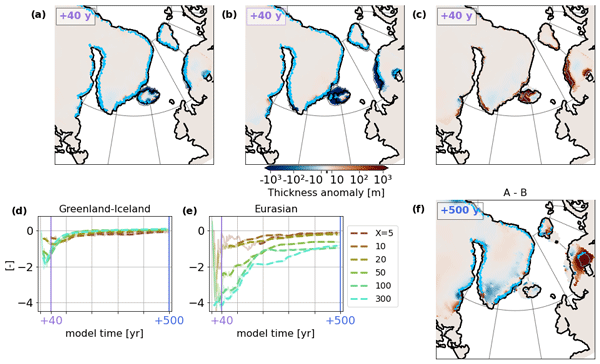
This modeling study examines how the Northern Hemisphere ice sheets interact with oceans during the last glacial period. Amplified melting beneath the ice shelves results in increased freshwater release, cooling the Northern Hemisphere and slowing ocean circulation. Freshwater release and localized ocean cooling dampen ice discharges, showing complex feedback at the interface. This study emphasizes the need for additional modeling studies to clarify the role of the ocean in past abrupt events.
Gilles Reverdin, Claire Waelbroeck, Antje H. L. Voelker, and Hanno Meyer
Ocean Sci., 21, 567–575, https://doi.org/10.5194/os-21-567-2025, https://doi.org/10.5194/os-21-567-2025, 2025
Short summary
Short summary
Water isotopes in the ocean trace the freshwater exchanges between the ocean, the atmosphere, and the cryosphere and are used to investigate processes of the hydrological cycle. We illustrate offsets in seawater isotopic composition between different datasets that are larger than the expected variability that one often wants to explore. This highlights the need to share seawater isotopic composition samples dedicated to specific intercomparison of data produced in different laboratories.
Qinggang Gao, Emilie Capron, Louise C. Sime, Rachael H. Rhodes, Rahul Sivankutty, Xu Zhang, Bette L. Otto-Bliesner, and Martin Werner
Clim. Past, 21, 419–440, https://doi.org/10.5194/cp-21-419-2025, https://doi.org/10.5194/cp-21-419-2025, 2025
Short summary
Short summary
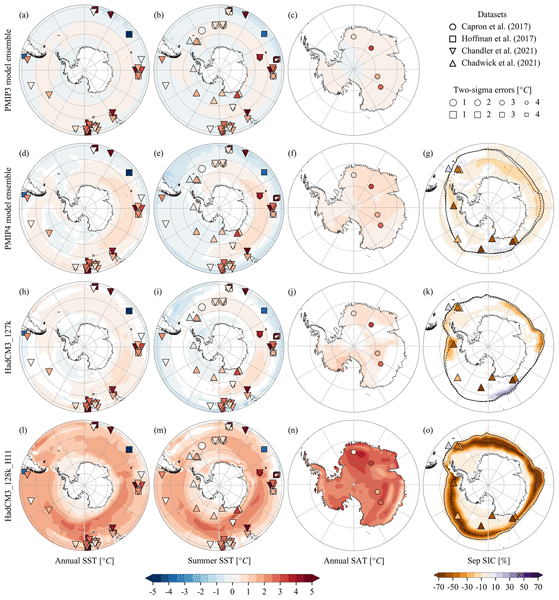
Marine sediment and ice core records suggest a warmer Southern Ocean and Antarctica at the early last interglacial, ~127 000 years ago. However, when only forced by orbital parameters and greenhouse gas concentrations during that period, state-of-the-art climate models do not reproduce the magnitude of warming. Here we show that much of the warming at southern middle to high latitudes can be reproduced by a UK climate model, HadCM3, with a 3000-year freshwater forcing over the North Atlantic.
Inès Ollivier, Hans Christian Steen-Larsen, Barbara Stenni, Laurent Arnaud, Mathieu Casado, Alexandre Cauquoin, Giuliano Dreossi, Christophe Genthon, Bénédicte Minster, Ghislain Picard, Martin Werner, and Amaëlle Landais
The Cryosphere, 19, 173–200, https://doi.org/10.5194/tc-19-173-2025, https://doi.org/10.5194/tc-19-173-2025, 2025
Short summary
Short summary
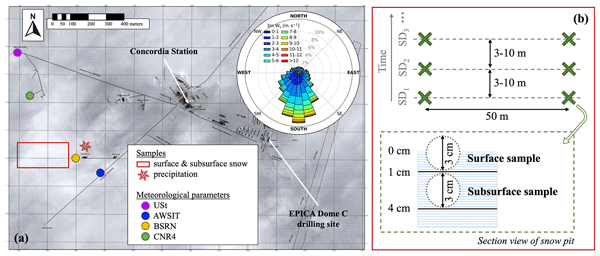
The role of post-depositional processes taking place at the ice sheet's surface on the water stable isotope signal measured in polar ice cores is not fully understood. Using field observations and modelling results, we show that the original precipitation isotopic signal at Dome C, East Antarctica, is modified by post-depositional processes and provide the first quantitative estimation of their mean impact on the isotopic signal observed in the snow.
Thi-Khanh-Dieu Hoang, Aurélien Quiquet, Christophe Dumas, Andreas Born, and Didier M. Roche
Clim. Past, 21, 27–51, https://doi.org/10.5194/cp-21-27-2025, https://doi.org/10.5194/cp-21-27-2025, 2025
Short summary
Short summary
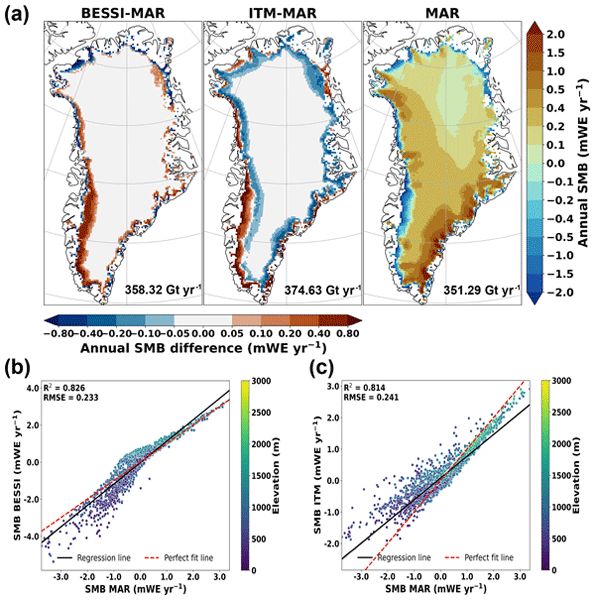
To improve the simulation of surface mass balance (SMB) that influences the advance–retreat of ice sheets, we run a snow model, the BErgen Snow SImulator (BESSI), with transient climate forcing obtained from an Earth system model, iLOVECLIM, over Greenland and Antarctica during the Last Interglacial (LIG; 130–116 ka). Compared to the simple existing SMB scheme of iLOVECLIM, BESSI gives more details about SMB processes with higher physics constraints while maintaining a low computational cost.
Giuliano Dreossi, Mauro Masiol, Barbara Stenni, Daniele Zannoni, Claudio Scarchilli, Virginia Ciardini, Mathieu Casado, Amaëlle Landais, Martin Werner, Alexandre Cauquoin, Giampietro Casasanta, Massimo Del Guasta, Vittoria Posocco, and Carlo Barbante
The Cryosphere, 18, 3911–3931, https://doi.org/10.5194/tc-18-3911-2024, https://doi.org/10.5194/tc-18-3911-2024, 2024
Short summary
Short summary
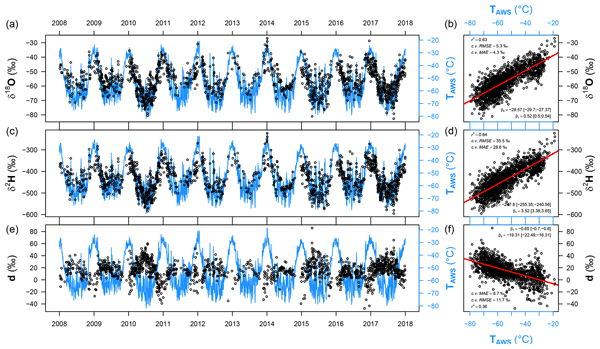
Oxygen and hydrogen stable isotopes have been extensively used to reconstruct past temperatures, with precipitation representing the input signal of the isotopic records in ice cores. We present a 10-year record of stable isotopes in daily precipitation at Concordia Station: this is the longest record for inland Antarctica and represents a benchmark for quantifying post-depositional processes and improving the paleoclimate interpretation of ice cores.
Aurélien Quiquet and Didier M. Roche
Clim. Past, 20, 1365–1385, https://doi.org/10.5194/cp-20-1365-2024, https://doi.org/10.5194/cp-20-1365-2024, 2024
Short summary
Short summary
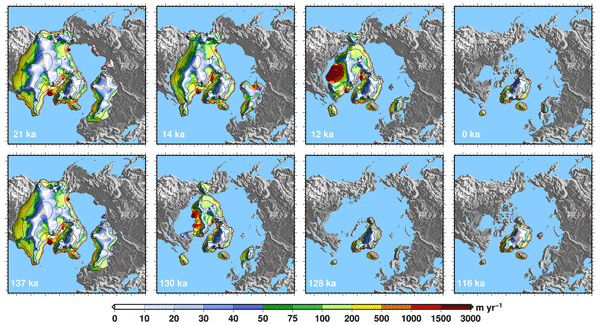
In this work, we use the same experimental protocol to simulate the last two glacial terminations with a coupled ice sheet–climate model. Major differences among the two terminations are that the ice sheets retreat earlier and the Atlantic oceanic circulation is more prone to collapse during the penultimate termination. However, for both terminations the pattern of ice retreat is similar, and this retreat is primarily explained by orbital forcing changes and greenhouse gas concentration changes.
Amaelle Landais, Cécile Agosta, Françoise Vimeux, Olivier Magand, Cyrielle Solis, Alexandre Cauquoin, Niels Dutrievoz, Camille Risi, Christophe Leroy-Dos Santos, Elise Fourré, Olivier Cattani, Olivier Jossoud, Bénédicte Minster, Frédéric Prié, Mathieu Casado, Aurélien Dommergue, Yann Bertrand, and Martin Werner
Atmos. Chem. Phys., 24, 4611–4634, https://doi.org/10.5194/acp-24-4611-2024, https://doi.org/10.5194/acp-24-4611-2024, 2024
Short summary
Short summary
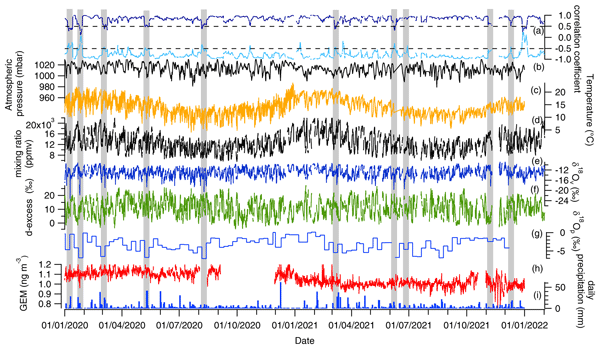
We have monitored water vapor isotopes since January 2020 on Amsterdam Island in the Indian Ocean. We show 11 periods associated with abrupt negative excursions of water vapor δ18Ο. Six of these events show a decrease in gaseous elemental mercury, suggesting subsidence of air from a higher altitude. Accurately representing the water isotopic signal during these cold fronts is a real challenge for the atmospheric components of Earth system models equipped with water isotopes.
Moein Mellat, Amy R. Macfarlane, Camilla F. Brunello, Martin Werner, Martin Schneebeli, Ruzica Dadic, Stefanie Arndt, Kaisa-Riikka Mustonen, Jeffrey M. Welker, and Hanno Meyer
EGUsphere, https://doi.org/10.5194/egusphere-2024-719, https://doi.org/10.5194/egusphere-2024-719, 2024
Preprint archived
Short summary
Short summary
Our research, utilizing data from the Arctic MOSAiC expedition, reveals how snow on Arctic sea ice changes due to weather conditions. By analyzing snow samples collected over a year, we found differences in snow layers that tell us about their origins and how they've been affected by the environment. We discovered variations in snow and vapour that reflect the influence of weather patterns and surface processes like wind and sublimation.
Thomas Extier, Thibaut Caley, and Didier M. Roche
Geosci. Model Dev., 17, 2117–2139, https://doi.org/10.5194/gmd-17-2117-2024, https://doi.org/10.5194/gmd-17-2117-2024, 2024
Short summary
Short summary
Stable water isotopes are used to infer changes in the hydrological cycle for different time periods in climatic archive and climate models. We present the implementation of the δ2H and δ17O water isotopes in the coupled climate model iLOVECLIM and calculate the d- and 17O-excess. Results of a simulation under preindustrial conditions show that the model correctly reproduces the water isotope distribution in the atmosphere and ocean in comparison to data and other global circulation models.
Qinggang Gao, Louise C. Sime, Alison J. McLaren, Thomas J. Bracegirdle, Emilie Capron, Rachael H. Rhodes, Hans Christian Steen-Larsen, Xiaoxu Shi, and Martin Werner
The Cryosphere, 18, 683–703, https://doi.org/10.5194/tc-18-683-2024, https://doi.org/10.5194/tc-18-683-2024, 2024
Short summary
Short summary
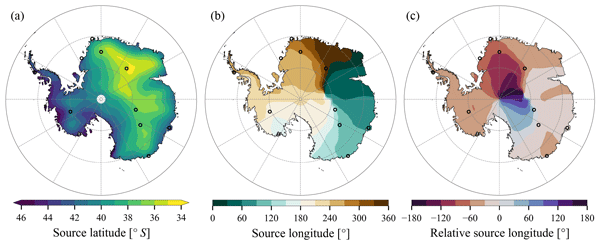
Antarctic precipitation is a crucial component of the climate system. Its spatio-temporal variability impacts sea level changes and the interpretation of water isotope measurements in ice cores. To better understand its climatic drivers, we developed water tracers in an atmospheric model to identify moisture source conditions from which precipitation originates. We find that mid-latitude surface winds exert an important control on moisture availability for Antarctic precipitation.
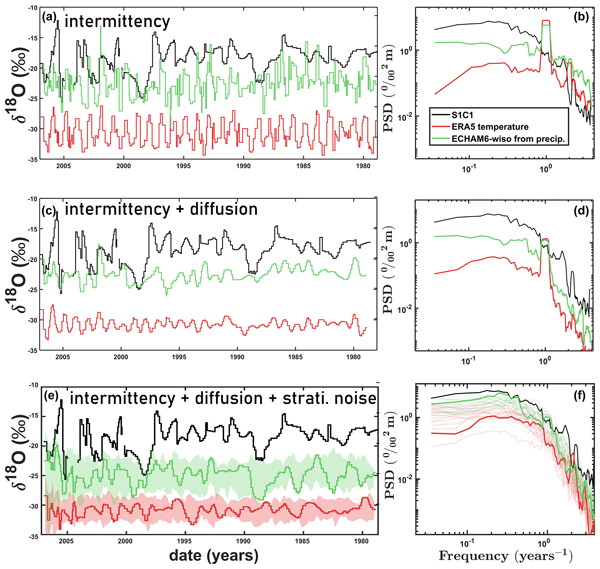
Christophe Leroy-Dos Santos, Elise Fourré, Cécile Agosta, Mathieu Casado, Alexandre Cauquoin, Martin Werner, Benedicte Minster, Frédéric Prié, Olivier Jossoud, Leila Petit, and Amaëlle Landais
The Cryosphere, 17, 5241–5254, https://doi.org/10.5194/tc-17-5241-2023, https://doi.org/10.5194/tc-17-5241-2023, 2023
Short summary
Short summary
In the face of global warming, understanding the changing water cycle and temperatures in polar regions is crucial. These factors directly impact the balance of ice sheets in the Arctic and Antarctic. By studying the composition of water vapor, we gain insights into climate variations. Our 2-year study at Dumont d’Urville station, Adélie Land, offers valuable data to refine models. Additionally, we demonstrate how modeling aids in interpreting signals from ice core samples in the region.
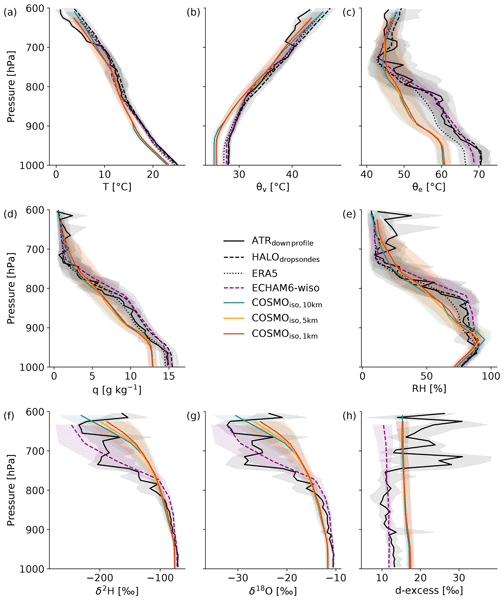
Leonie Villiger, Marina Dütsch, Sandrine Bony, Marie Lothon, Stephan Pfahl, Heini Wernli, Pierre-Etienne Brilouet, Patrick Chazette, Pierre Coutris, Julien Delanoë, Cyrille Flamant, Alfons Schwarzenboeck, Martin Werner, and Franziska Aemisegger
Atmos. Chem. Phys., 23, 14643–14672, https://doi.org/10.5194/acp-23-14643-2023, https://doi.org/10.5194/acp-23-14643-2023, 2023
Short summary
Short summary
This study evaluates three numerical simulations performed with an isotope-enabled weather forecast model and investigates the coupling between shallow trade-wind cumulus clouds and atmospheric circulations on different scales. We show that the simulations reproduce key characteristics of shallow trade-wind clouds as observed during the field experiment EUREC4A and that the spatial distribution of stable-water-vapour isotopes is shaped by the overturning circulation associated with these clouds.
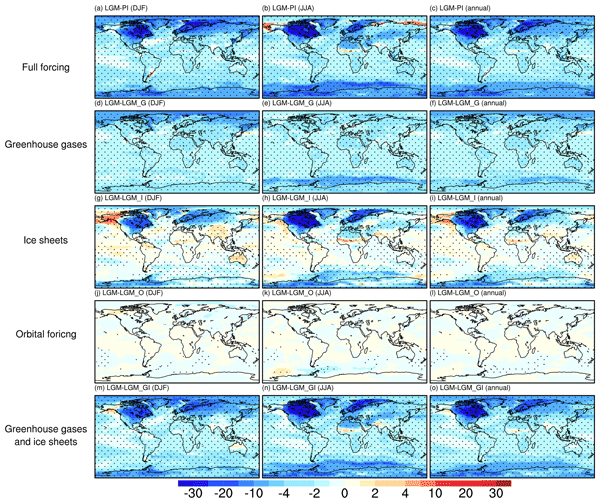
Xiaoxu Shi, Martin Werner, Hu Yang, Roberta D'Agostino, Jiping Liu, Chaoyuan Yang, and Gerrit Lohmann
Clim. Past, 19, 2157–2175, https://doi.org/10.5194/cp-19-2157-2023, https://doi.org/10.5194/cp-19-2157-2023, 2023
Short summary
Short summary
The Last Glacial Maximum (LGM) marks the most recent extremely cold and dry time period of our planet. Using AWI-ESM, we quantify the relative importance of Earth's orbit, greenhouse gases (GHG) and ice sheets (IS) in determining the LGM climate. Our results suggest that both GHG and IS play important roles in shaping the LGM temperature. Continental ice sheets exert a major control on precipitation, atmospheric dynamics, and the intensity of El Niño–Southern Oscillation.
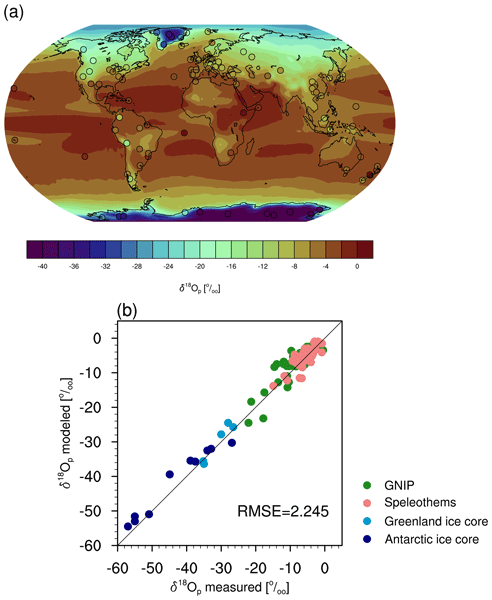
Xiaoxu Shi, Alexandre Cauquoin, Gerrit Lohmann, Lukas Jonkers, Qiang Wang, Hu Yang, Yuchen Sun, and Martin Werner
Geosci. Model Dev., 16, 5153–5178, https://doi.org/10.5194/gmd-16-5153-2023, https://doi.org/10.5194/gmd-16-5153-2023, 2023
Short summary
Short summary
We developed a new climate model with isotopic capabilities and simulated the pre-industrial and mid-Holocene periods. Despite certain regional model biases, the modeled isotope composition is in good agreement with observations and reconstructions. Based on our analyses, the observed isotope–temperature relationship in polar regions may have a summertime bias. Using daily model outputs, we developed a novel isotope-based approach to determine the onset date of the West African summer monsoon.
Alexandre Cauquoin, Ayako Abe-Ouchi, Takashi Obase, Wing-Le Chan, André Paul, and Martin Werner
Clim. Past, 19, 1275–1294, https://doi.org/10.5194/cp-19-1275-2023, https://doi.org/10.5194/cp-19-1275-2023, 2023
Short summary
Short summary
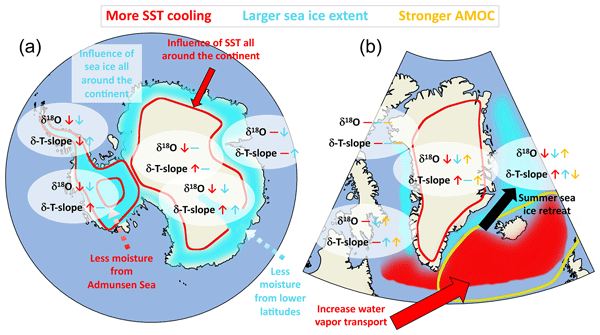
Stable water isotopes are tracers of climate processes occurring in the hydrological cycle. They are widely used to reconstruct the past variations of polar temperature before the instrumental era thanks to their measurements in ice cores. However, the relationship between measured isotopes and temperature has large uncertainties. In our study, we investigate how the sea surface conditions (temperature, sea ice, ocean circulation) impact this relationship for a cold to warm climate change.
Nathaelle Bouttes, Fanny Lhardy, Aurélien Quiquet, Didier Paillard, Hugues Goosse, and Didier M. Roche
Clim. Past, 19, 1027–1042, https://doi.org/10.5194/cp-19-1027-2023, https://doi.org/10.5194/cp-19-1027-2023, 2023
Short summary
Short summary
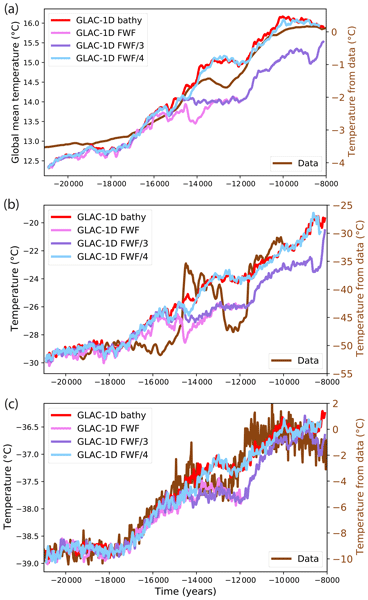
The last deglaciation is a period of large warming from 21 000 to 9000 years ago, concomitant with ice sheet melting. Here, we evaluate the impact of different ice sheet reconstructions and different processes linked to their changes. Changes in bathymetry and coastlines, although not often accounted for, cannot be neglected. Ice sheet melt results in freshwater into the ocean with large effects on ocean circulation, but the timing cannot explain the observed abrupt climate changes.
Claire Waelbroeck, Jerry Tjiputra, Chuncheng Guo, Kerim H. Nisancioglu, Eystein Jansen, Natalia Vázquez Riveiros, Samuel Toucanne, Frédérique Eynaud, Linda Rossignol, Fabien Dewilde, Elodie Marchès, Susana Lebreiro, and Silvia Nave
Clim. Past, 19, 901–913, https://doi.org/10.5194/cp-19-901-2023, https://doi.org/10.5194/cp-19-901-2023, 2023
Short summary
Short summary
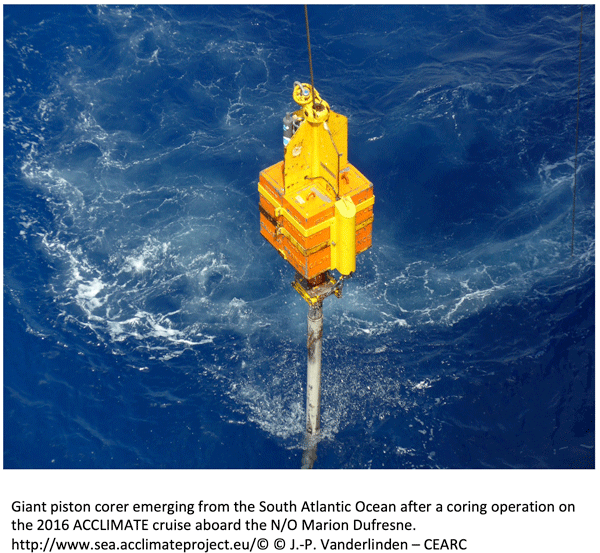
The precise geometry and extent of Atlantic circulation changes that accompanied rapid climate changes of the last glacial period are still unknown. Here, we combine carbon isotopic records from 18 Atlantic sediment cores with numerical simulations and decompose the carbon isotopic change across a cold-to-warm transition into remineralization and circulation components. Our results show that the replacement of southern-sourced by northern-sourced water plays a dominant role below ~ 3000 m depth.
Frank Arthur, Didier M. Roche, Ralph Fyfe, Aurélien Quiquet, and Hans Renssen
Clim. Past, 19, 87–106, https://doi.org/10.5194/cp-19-87-2023, https://doi.org/10.5194/cp-19-87-2023, 2023
Short summary
Short summary
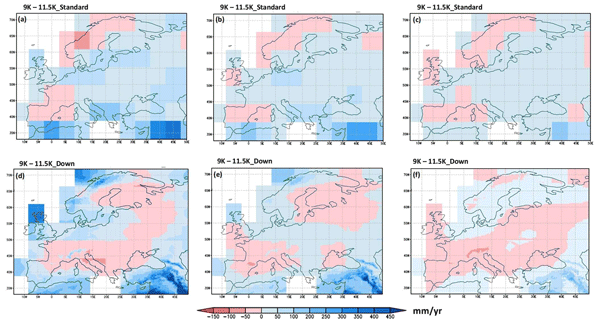
This paper simulates transcient Holocene climate in Europe by applying an interactive downscaling to the standard version of the iLOVECLIM model. The results show that downscaling presents a higher spatial variability in better agreement with proxy-based reconstructions as compared to the standard model, particularly in the Alps, the Scandes, and the Mediterranean. Our downscaling scheme is numerically cheap, which can perform kilometric multi-millennial simulations suitable for future studies.
Jiajia Wang, Hongxi Pang, Shuangye Wu, Spruce W. Schoenemann, Ryu Uemura, Alexey Ekaykin, Martin Werner, Alexandre Cauquoin, Sentia Goursaud Oger, Summer Rupper, and Shugui Hou
Earth Syst. Sci. Data Discuss., https://doi.org/10.5194/essd-2022-384, https://doi.org/10.5194/essd-2022-384, 2022
Revised manuscript not accepted
Short summary
Short summary
Stable water isotopic observations in surface snow over Antarctica provide a basis for validating isotopic models and interpreting Antarctic ice core records. This study presents a new compilation of Antarctic surface snow isotopic dataset based on published and unpublished sources. The database has a wide range of potential applications in studying spatial distribution of water isotopes, model validation, and reconstruction and interpretation of Antarctic ice core records.
Pepijn Bakker, Hugues Goosse, and Didier M. Roche
Clim. Past, 18, 2523–2544, https://doi.org/10.5194/cp-18-2523-2022, https://doi.org/10.5194/cp-18-2523-2022, 2022
Short summary
Short summary
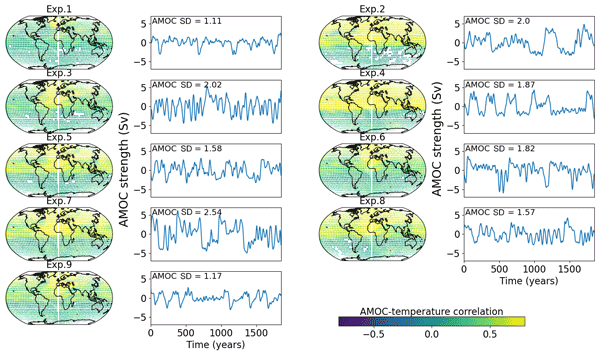
Natural climate variability plays an important role in the discussion of past and future climate change. Here we study centennial temperature variability and the role of large-scale ocean circulation variability using different climate models, geological reconstructions and temperature observations. Unfortunately, uncertainties in models and geological reconstructions are such that more research is needed before we can describe the characteristics of natural centennial temperature variability.
Huan Li, Hans Renssen, and Didier M. Roche
Clim. Past, 18, 2303–2319, https://doi.org/10.5194/cp-18-2303-2022, https://doi.org/10.5194/cp-18-2303-2022, 2022
Short summary
Short summary
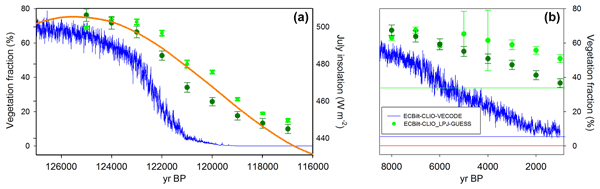
In past warm periods, the Sahara region was covered by vegetation. In this paper we study transitions from this
greenstate to the desert state we find today. For this purpose, we have used a global climate model coupled to a vegetation model to perform transient simulations. We analyzed the model results to assess the effect of vegetation shifts on the abruptness of the transition. We find that the vegetation feedback was more efficient during the last interglacial than during the Holocene.

Antoine Grisart, Mathieu Casado, Vasileios Gkinis, Bo Vinther, Philippe Naveau, Mathieu Vrac, Thomas Laepple, Bénédicte Minster, Frederic Prié, Barbara Stenni, Elise Fourré, Hans Christian Steen-Larsen, Jean Jouzel, Martin Werner, Katy Pol, Valérie Masson-Delmotte, Maria Hoerhold, Trevor Popp, and Amaelle Landais
Clim. Past, 18, 2289–2301, https://doi.org/10.5194/cp-18-2289-2022, https://doi.org/10.5194/cp-18-2289-2022, 2022
Short summary
Short summary
This paper presents a compilation of high-resolution (11 cm) water isotopic records, including published and new measurements, for the last 800 000 years from the EPICA Dome C ice core, Antarctica. Using this new combined water isotopes (δ18O and δD) dataset, we study the variability and possible influence of diffusion at the multi-decadal to multi-centennial scale. We observe a stronger variability at the onset of the interglacial interval corresponding to a warm period.
Janica C. Bühler, Josefine Axelsson, Franziska A. Lechleitner, Jens Fohlmeister, Allegra N. LeGrande, Madhavan Midhun, Jesper Sjolte, Martin Werner, Kei Yoshimura, and Kira Rehfeld
Clim. Past, 18, 1625–1654, https://doi.org/10.5194/cp-18-1625-2022, https://doi.org/10.5194/cp-18-1625-2022, 2022
Short summary
Short summary
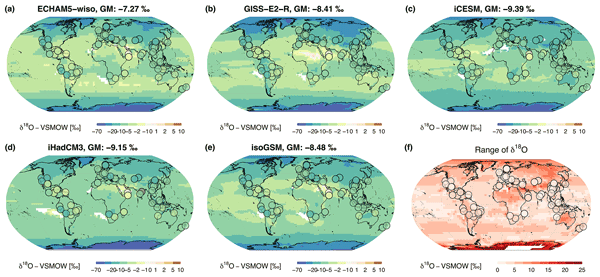
We collected and standardized the output of five isotope-enabled simulations for the last millennium and assess differences and similarities to records from a global speleothem database. Modeled isotope variations mostly arise from temperature differences. While lower-resolution speleothems do not capture extreme changes to the extent of models, they show higher variability on multi-decadal timescales. As no model excels in all comparisons, we advise a multi-model approach where possible.
Gilles Reverdin, Claire Waelbroeck, Catherine Pierre, Camille Akhoudas, Giovanni Aloisi, Marion Benetti, Bernard Bourlès, Magnus Danielsen, Jérôme Demange, Denis Diverrès, Jean-Claude Gascard, Marie-Noëlle Houssais, Hervé Le Goff, Pascale Lherminier, Claire Lo Monaco, Herlé Mercier, Nicolas Metzl, Simon Morisset, Aïcha Naamar, Thierry Reynaud, Jean-Baptiste Sallée, Virginie Thierry, Susan E. Hartman, Edward W. Mawji, Solveig Olafsdottir, Torsten Kanzow, Anton Velo, Antje Voelker, Igor Yashayaev, F. Alexander Haumann, Melanie J. Leng, Carol Arrowsmith, and Michael Meredith
Earth Syst. Sci. Data, 14, 2721–2735, https://doi.org/10.5194/essd-14-2721-2022, https://doi.org/10.5194/essd-14-2721-2022, 2022
Short summary
Short summary
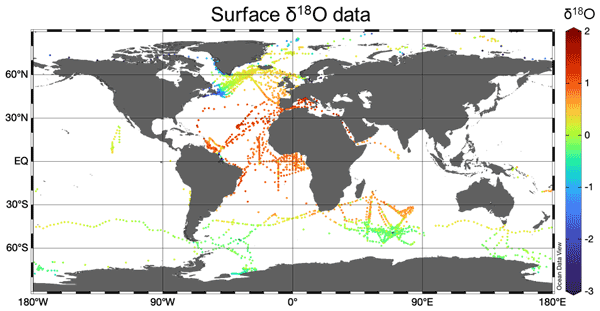
The CISE-LOCEAN seawater stable isotope dataset has close to 8000 data entries. The δ18O and δD isotopic data measured at LOCEAN have uncertainties of at most 0.05 ‰ and 0.25 ‰, respectively. Some data were adjusted to correct for evaporation. The internal consistency indicates that the data can be used to investigate time and space variability to within 0.03 ‰ and 0.15 ‰ in δ18O–δD17; comparisons with data analyzed in other institutions suggest larger differences with other datasets.
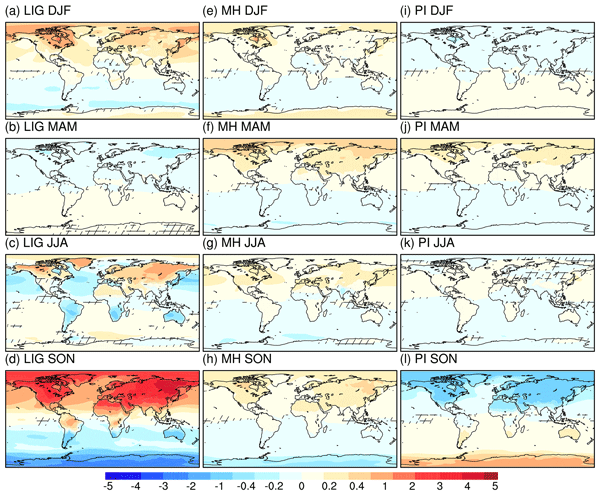
Xiaoxu Shi, Martin Werner, Carolin Krug, Chris M. Brierley, Anni Zhao, Endurance Igbinosa, Pascale Braconnot, Esther Brady, Jian Cao, Roberta D'Agostino, Johann Jungclaus, Xingxing Liu, Bette Otto-Bliesner, Dmitry Sidorenko, Robert Tomas, Evgeny M. Volodin, Hu Yang, Qiong Zhang, Weipeng Zheng, and Gerrit Lohmann
Clim. Past, 18, 1047–1070, https://doi.org/10.5194/cp-18-1047-2022, https://doi.org/10.5194/cp-18-1047-2022, 2022
Short summary
Short summary
Since the orbital parameters of the past are different from today, applying the modern calendar to the past climate can lead to an artificial bias in seasonal cycles. With the use of multiple model outputs, we found that such a bias is non-ignorable and should be corrected to ensure an accurate comparison between modeled results and observational records, as well as between simulated past and modern climates, especially for the Last Interglacial.
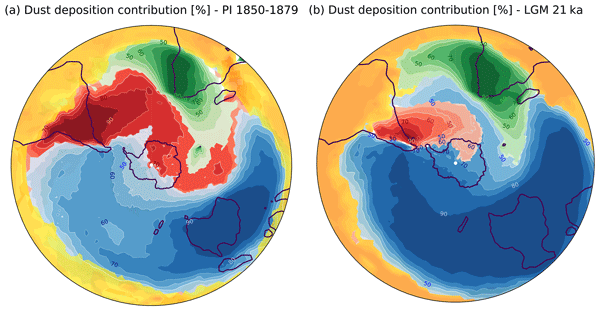
Stephan Krätschmer, Michèlle van der Does, Frank Lamy, Gerrit Lohmann, Christoph Völker, and Martin Werner
Clim. Past, 18, 67–87, https://doi.org/10.5194/cp-18-67-2022, https://doi.org/10.5194/cp-18-67-2022, 2022
Short summary
Short summary
We use an atmospheric model coupled to an aerosol model to investigate the global mineral dust cycle with a focus on the Southern Hemisphere for warmer and colder climate states and compare our results to observational data. Our findings suggest that Australia is the predominant source of dust deposited over Antarctica during the last glacial maximum. In addition, we find that the southward transport of dust from all sources to Antarctica happens at lower altitudes in colder climates.
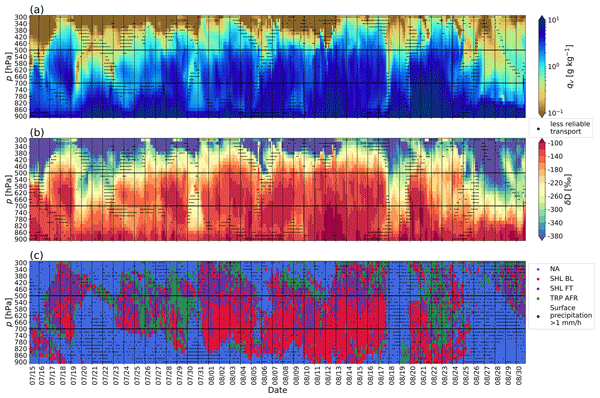
Fabienne Dahinden, Franziska Aemisegger, Heini Wernli, Matthias Schneider, Christopher J. Diekmann, Benjamin Ertl, Peter Knippertz, Martin Werner, and Stephan Pfahl
Atmos. Chem. Phys., 21, 16319–16347, https://doi.org/10.5194/acp-21-16319-2021, https://doi.org/10.5194/acp-21-16319-2021, 2021
Short summary
Short summary
We use high-resolution numerical isotope modelling and Lagrangian backward trajectories to identify moisture transport pathways and governing physical and dynamical processes that affect the free-tropospheric humidity and isotopic variability over the eastern subtropical North Atlantic. Furthermore, we conduct a thorough isotope modelling validation with aircraft and remote-sensing observations of water vapour isotopes.
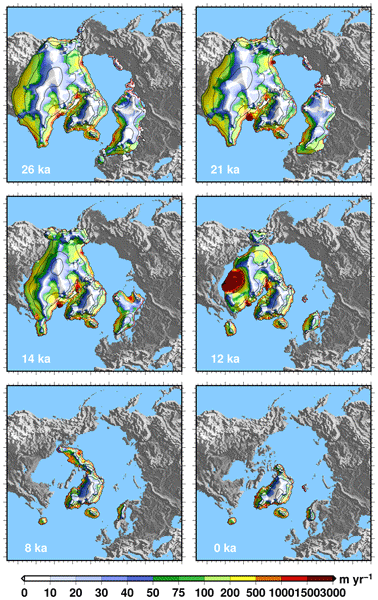
Aurélien Quiquet, Didier M. Roche, Christophe Dumas, Nathaëlle Bouttes, and Fanny Lhardy
Clim. Past, 17, 2179–2199, https://doi.org/10.5194/cp-17-2179-2021, https://doi.org/10.5194/cp-17-2179-2021, 2021
Short summary
Short summary
In this paper we discuss results obtained with a set of coupled ice-sheet–climate model experiments for the last 26 kyrs. The model displays a large sensitivity of the oceanic circulation to the amount of the freshwater flux resulting from ice sheet melting. Ice sheet geometry changes alone are not enough to lead to abrupt climate events, and rapid warming at high latitudes is here only reported during abrupt oceanic circulation recoveries that occurred when accounting for freshwater flux.
Saeid Bagheri Dastgerdi, Melanie Behrens, Jean-Louis Bonne, Maria Hörhold, Gerrit Lohmann, Elisabeth Schlosser, and Martin Werner
The Cryosphere, 15, 4745–4767, https://doi.org/10.5194/tc-15-4745-2021, https://doi.org/10.5194/tc-15-4745-2021, 2021
Short summary
Short summary
In this study, for the first time, water vapour isotope measurements in Antarctica for all seasons of a year are performed. Local temperature is identified as the main driver of δ18O and δD variability. A similar slope of the temperature–δ18O relationship in vapour and surface snow points to the water vapour isotope content as a potential key driver. This dataset can be used as a new dataset to evaluate the capability of isotope-enhanced climate models.
Cited articles
Adkins, J. F., Mclntyre, K., and Schrag, D.: The salinity, temperature and δ18O of the glacial deep ocean, Science 298, 1769–1773, 2002.
Ayache, M., Dutay, J.-C., Mouchet, A., Tachikawa, K., Risi, C., and Ramstein, G.: Modelling the water isotope distribution in the Mediterranean Sea using a high-resolution oceanic model (NEMO-MED12-watiso v1.0): evaluation of model results against in situ observations, Geosci. Model Dev., 17, 6627–6655, https://doi.org/10.5194/gmd-17-6627-2024, 2024.
Barathieu, H., Caley, T., Kageyama, M., Swingedouw, D., and Braconnot, P.: Using ocean surface paleo-density to evaluate PMIP3 and PMIP4 Last Glacial Maximum climate simulations, EGUsphere [preprint], https://doi.org/10.5194/egusphere-2026-254, 2026.
Bemis, B. E., Spero, H. J., Bijma, J., and Lea, D. W.: Reevaluation of the oxygen isotopic composition of planktonic foraminifera: experimental results and revised paleotemperature equations, Paleoceanography, 13, 150–160, 1998.
Bijma, J., Spero, H. J., and Lea, D. W.: Reassessing foraminiferal stable isotope geochemistry: Impact of the oceanic carbonate system (experimental results), in: Use of Proxies in Paleoceanography, edited by: Fischer, G. and Wefer, G., Springer, Berlin, Heidelberg, 489–512, ISBN 978-3-540-66340-9, https://doi.org/10.1007/978-3-642-58646-0, 1999.
Billups, K. and Schrag, D. P.: Surface ocean density gradients during the Last Glacial Maximum, Paleoceanography, 15, 110–123, 2000.
Caley, T. and Roche, D. M.: δ18O water isotope in the iLOVECLIM model (version 1.0) – Part 3: A palaeo-perspective based on present-day data–model comparison for oxygen stable isotopes in carbonates, Geosci. Model Dev., 6, 1505–1516, https://doi.org/10.5194/gmd-6-1505-2013, 2013.
Caley, T. and Roche, D. M.: Modeling water isotopologues during the last glacial: Implications for quantitative paleosalinity reconstruction, Paleoceanography, 30, 739–750, https://doi.org/10.1002/2014PA002720, 2015.
Caley, T. and Waelbroeck, C.: LGM and LH δ18Oc dataset of Caley et al. “Past Ocean surface density from planktonic foraminifera calcite δ18O”, Zenodo [data set], https://doi.org/10.5281/zenodo.18162496, 2026.
Caley, T., Roche, D. M., Waelbroeck, C., and Michel, E.: Oxygen stable isotopes during the Last Glacial Maximum climate: perspectives from data-model (iLOVECLIM) comparison, Clim. Past, 10, 1939–1955, https://doi.org/10.5194/cp-10-1939-2014, 2014.
Caley, T., Rieger, N., Werner, M., Waelbroeck, C., Barathieu, H., Happé, T., and Roche, D. M.: Author comment to reviewer 2 for Caley et al. “Past Ocean surface density from planktonic foraminifera calcite δ18O”, EGUsphere [preprint], https://doi.org/10.5194/egusphere-2025-2459, 2025.”, https://doi.org/10.5194/egusphere-2025-2459-AC2, 2025a.
Caley, T., Rieger, N., Werner, M., Waelbroeck, C., Barathieu, H., Happé, T., and Roche, D. M.: Author comment to reviewer 1 for Caley et al. “Past Ocean surface density from planktonic foraminifera calcite δ18O”, EGUsphere [preprint], https://doi.org/10.5194/egusphere-2025-2459, 2025, https://doi.org/10.5194/egusphere-2025-2459-AC1, 2025b.
Craig, H. and Gordon, L. I.: Deuterium and oxygen 18 variations in the ocean and the marine atmosphere, in: Stable Isotopes in Oceanographic Studies and Paleotemperatures, edited by: Tongiorgi, E., Lab. Geol. Nucl., Pisa, Italy, 9–130, 1965.
Droghei, R., Nardelli, B. B., and Santoleri, R.: Combining In Situ and Satellite Observations to Retrieve Salinity and Density at the Ocean Surface, J. Atmos. Ocean. Tech., 33, 1211–1223, https://doi.org/10.1175/JTECH-D-15-0194.1, 2016.
Droghei, R., Buongiorno Nardelli, B., and Santoleri, R.: A new global sea surface salinity and density dataset from multivariate observations (1993–2016), Front. Mar. Science, 5, https://doi.org/10.3389/fmars.2018.00084, 2018a.
Droghei, R., Buongiorno Nardelli, B., and Santoleri, R.: Multi Observation Global Ocean Sea Surface Salinity and Sea Surface Density from Droghei et al. 2018 “A new global sea surface salinity and density dataset from multivariate observations (1993–2016)”, EU Copernicus Marine Service Information (CMEMS), Marine Data Store (MDS) [data set], https://doi.org/10.48670/moi-00051, 2018b.
Duplessy, J. C., Lalou, C., and Vinot, A. C.: Differential Isotopic Fractionation in Benthic Foraminifera and Paleotemperatures Reassessed, Science, 168, 250–251, https://doi.org/10.1126/science.168.3928.250, 1970.
Duplessy, J. C., Labeyrie, L., Anne, Maitre, F., Duprat, J., and Sarnthein, M.: Surface salinity reconstruction of the North Atlantic Ocean during the LGM, Oceanolog. Acta, 14, 311–324, 1991.
Duplessy, J. C., Labeyrie, L., and Waelbroeck, C.: Constraints on the ocean oxygen isotopic enrichment between the Last Glacial Maximum and the Holocene: Paleoceanographic implications, Quaternary Sci. Rev., 21, 315–330, 2002.
Extier, T., Caley, T., and Roche, D. M.: Modelling water isotopologues (1H2H16O, 1H
Gelman, A., Hwang, J., and Vehtari, A.: Understanding predictive information criteria for Bayesian models, Stat. Comput., 24, 997–1016, https://doi.org/10.1007/s11222-013-9416-2, 2014.
Gibson, K. A., Thunell, R. C., Machain-Castillo, M. L., Fehrenbacher, J., Spero, H. J., Wejnert, K., Nava-Fernández, X., and Tappa, E. J.: Evaluating controls on planktonic foraminiferal geochemistry in the Eastern Tropical North Pacific, Earth Planet. Sc. Lett., 452, 90–103, 2016.
Gierz, P., Werner, M., and Lohmann, G.: Simulating climate and stable water isotopes during the Last Interglacial using a coupled climate-isotope model, J. Adv. Model. Earth Syst., 9, 2027–2045, https://doi.org/10.1002/2017MS001056, 2017.
Goosse, H., Brovkin, V., Fichefet, T., Haarsma, R., Huybrechts, P., Jongma, J., Mouchet, A., Selten, F., Barriat, P.-Y., Campin, J.-M., Deleersnijder, E., Driesschaert, E., Goelzer, H., Janssens, I., Loutre, M.-F., Morales Maqueda, M. A., Opsteegh, T., Mathieu, P.-P., Munhoven, G., Pettersson, E. J., Renssen, H., Roche, D. M., Schaeffer, M., Tartinville, B., Timmermann, A., and Weber, S. L.: Description of the Earth system model of intermediate complexity LOVECLIM version 1.2, Geosci. Model Dev., 3, 603–633, https://doi.org/10.5194/gmd-3-603-2010, 2010.
Hamilton, C. P., Spero, H. J., Bijma, J., and Lea, D. W.: Geochemical investigation of gametogenic calcite addition in the planktonic foraminifera Orbulina universa, Mar. Micropaleontol., 68, 256–267, 2008.
Jungclaus, J. H., Keenlyside, N., Botzet, M., Haak, H., Luo, J. J., Latif, M., Marotzke, J., Mikolajewicz, U., and Roeckner, E.: Ocean circulation and tropical variability in the coupled model ECHAM5/MPI-OM, J. Climate, 19, 3952–3972, 2006.
Kageyama, M., Harrison, S. P., Kapsch, M.-L., Lofverstrom, M., Lora, J. M., Mikolajewicz, U., Sherriff-Tadano, S., Vadsaria, T., Abe-Ouchi, A., Bouttes, N., Chandan, D., Gregoire, L. J., Ivanovic, R. F., Izumi, K., LeGrande, A. N., Lhardy, F., Lohmann, G., Morozova, P. A., Ohgaito, R., Paul, A., Peltier, W. R., Poulsen, C. J., Quiquet, A., Roche, D. M., Shi, X., Tierney, J. E., Valdes, P. J., Volodin, E., and Zhu, J.: The PMIP4 Last Glacial Maximum experiments: preliminary results and comparison with the PMIP3 simulations, Clim. Past, 17, 1065–1089, https://doi.org/10.5194/cp-17-1065-2021, 2021.
Kim, S.-T. and O'Neil, J. R.: Equilibrium and nonequilibrium oxygen isotope effects in synthetic carbonates, Geochim. Cosmochim. Ac., 61, 3461–3475, 1997.
Köhler, P. and Mulitza, S.: No detectable influence of the carbonate ion effect on changes in stable carbon isotope ratios (δ13C) of shallow dwelling planktic foraminifera over the past 160 kyr, Clim. Past, 20, 991–1015, https://doi.org/10.5194/cp-20-991-2024, 2024.
Kruschke, J.: Doing Bayesian data analysis: A tutorial with R, JAGS, and Stan, Academic Press, Cambridge, Massachusetts, USA, ISBN 9780124058880, 2014.
Labeyrie, L. D., Duplessy, J. C., and Blanc, P. L.: Variations in mode of formation and temperature of oceanic deep waters over the past 125,000 years, Nature, 327, 477–482, https://doi.org/10.1038/327477a0, 1987.
LeGrande, A. N. and Schmidt, G. A.: Water isotopologues as a quantitative paleosalinity proxy, Paleoceanography, 26, PA3225, https://doi.org/10.1029/2010pa002043, 2011.
LeGrande, A. N., Lynch-Stieglitz, J., and Farmer, E. C.: Oxygen isotopic composition of Globorotalia truncatulinoides as a proxy for intermediate depth density, Paleoceanography, 19, PA4025, https://doi.org/10.1029/2004PA001045, 2004.
Lisiecki, L. E. and Raymo, M. E.: A Pliocene-Pleistocene stack of 57 globally distributed benthic δ18O records, Paleoceanography, 20, PA1003, https://doi.org/10.1029/2004PA001071, 2005.
Locarnini, R., Mishonov, A., Baranova, O., Boyer, T., Zweng, M., Garcia, H., Reagan, J., Seidov, D., Weathers, K., Paver, C., and Smolyar, I.: Temperature, in: World Ocean Atlas 2018, Vol. 1, NOAA Atlas NESDIS 81, edited by: Mishonov, A., NOAA, https://doi.org/10.25923/e5rn-9711, 2018.
Lombard, F., Labeyrie, L., Michel, E., Spero, H. J., and Lea, D. W.: Modelling the temperature dependent growth rates of planktic foraminifera, Mar. Micropaleontol., 70, 1–7, 2009.
Lynch-Stieglitz, J., Curry, W. B., and Slowey, N.: A Geostrophic Transport Estimate for the Florida Current from the Oxygen Isotope Composition of Benthic Foraminifera, Paleoceanography, 14, 360–373, https://doi.org/10.1029/1999pa900001, 1999.
Lynch-Stieglitz, J., Adkins, J. F., Curry, W. B., Dokken, T., Hall, I. R., Herguera, J. C., Hirschi, J. J.-M., Ivanova, E. V., Kissel, C., Marchal, O., Marchitto, T. M., McCave, I. N., Mc-Manus, J. F., Mulitza, S., Ninnemann, U., Peeters, F., Yu, E.-F., and Zahn, R.: Atlantic Meridional Overturning Circulation During the Last Glacial Maximum, Science, 316, 66, https://doi.org/10.1126/science.1137127, 2007.
Malevich, S. B., Vetter, L., and Tierney, J. E.: Global core top calibration of δ18O in planktic foraminifera to sea surface temperature, Paleoceanogr. Paleoclimatol., 34, 1292–1315, 2019.
MARGO Project Members: Constraints on the magnitude and patterns of ocean cooling at the Last Glacial Maximum, Nat. Geosci., 2, 127–132, https://doi.org/10.1038/NGEO411, 2009.
McElreath, R.: Statistical rethinking: A bayesian course with examples in R and Stan, Chapman and Hall/CRC, https://doi.org/10.1201/9781315372495, 2018.
Peeters, F. J. C., Brummer, G.-J. A., and Ganssen, G.: The effect of upwelling on the distribution and stable isotope composition of Globigerina bulloides and Globigerinoides ruber (planktic foraminifera) in modern surface waters of the NW Arabian Sea, Global Planet. Change, 34, 269–291, 2002.
Ravelo, A. C. and Fairbanks, R. G.: Oxygen Isotopic Composition of Multiple Species of Planktonic Foraminifera: Recorders of the Modern Photic Zone Temperature Gradient, Paleoceanography, 7, 815–831, 1992.
Rieger, N. and Caley, T.: Predicting surface density σT from δ18Oc (v1.0.0) from Caley et al. “Past Ocean surface density from planktonic foraminifera calcite δ18O”, Zenodo [code], https://doi.org/10.5281/zenodo.18313774, 2026.
Roche, D. M.: δ18O water isotope in the iLOVECLIM model (version 1.0) – Part 1: Implementation and verification, Geosci. Model Dev., 6, 1481–1491, https://doi.org/10.5194/gmd-6-1481-2013, 2013.
Roche, D. M. and Caley, T.: δ18O water isotope in the iLOVECLIM model (version 1.0) – Part 2: Evaluation of model results against observed δ18O in water samples, Geosci. Model Dev., 6, 1493–1504, https://doi.org/10.5194/gmd-6-1493-2013, 2013.
Roche, D. M., Waelbroeck, C., Metcalfe, B., and Caley, T.: FAME (v1.0): a simple module to simulate the effect of planktonic foraminifer species-specific habitat on their oxygen isotopic content, Geosci. Model Dev., 11, 3587–3603, https://doi.org/10.5194/gmd-11-3587-2018, 2018.
Rohling, E. J.: Paleosalinity: confidence limits and future applications, Mar. Geol., 163, 1–11, 2000.
Schiebel, R. and Hemleben, C.: Planktic Foraminifers in the Modern Ocean, Springer-Verlag, Berlin, Heidelberg, 358 pp., https://doi.org/10.1007/978-3-662-50297-6, 2017.
Schmidt, G. A.: Error analysis of paleosalinity calculations, Paleoceanography, 14, 422–429, 1999.
Schrag, D. P., DePaolo, D. J., and Richter, F. M.: Reconstructing past sea surface temperatures: Correcting for diagenesis of bulk marine carbonate, Geochim. Cosmochim. Ac., 59, 2265–2278, https://doi.org/10.1016/0016-7037(95)00105-9, 1995.
Schrag, D. P., Hampt, G., and Murray, D. W.: Pore fluid constraints on the temperature and oxygen isotopic composition of the glacial ocean, Science, 272, 1930–1932, 1996.
Schrag, D. P., Adkins, J. F., McIntyre, K., Alexander, J. L., Hodell, D. A., Charles, C. D., and McManus, J. F.: The oxygen isotopic composition of seawater during the Last Glacial Maximum, Quaternary Sci. Rev., 21, 331–342, 2002.
Shackleton, N. J.: Attainment of isotopic equilibrium between ocean water and the benthonic foraminifera geuns Uvigerina: Isotopic changes in the ocean during the last glacial, Colloq. Int. du Cent. Natl. la Rech. Sci., 219, 203–210, 1974.
Shi, X., Cauquoin, A., Lohmann, G., Jonkers, L., Wang, Q., Yang, H., Sun, Y., and Werner, M.: Simulated stable water isotopes during the mid-Holocene and pre-industrial periods using AWI-ESM-2.1-wiso, Geosci. Model Dev., 16, 5153–5178, https://doi.org/10.5194/gmd-16-5153-2023, 2023.
Spero, H. J. and Lea, D. W.: Intraspecific stable isotope variability in the planktic foraminifera Globigerinoides sacculifer: Results from laboratory experiments, Mar. Micropaleontol., 22, 221–234, 1993.
Spero, H. J. and Lea, D. W.: Experimental determination of stable isotope variability in Globigerina bulloides: Implications for paleoceanographic reconstruction, Mar. Micropaleontol., 28, 231–246, https://doi.org/10.1016/0377-8398(96)00003-5, 1996.
Spero, H. J., Bijma, J., Lea, D. W., and Bemis, B. E.: Effect of seawater carbonate concentration on foraminiferal carbon and oxygen isotopes, Nature, 390, 497–500, 1997.
Tierney, J. E., Poulsen, C. J., Montañez, I. P., Bhattacharya, T., Feng, R., Ford, H. L., Hönisch, B., Inglis, G. N., Petersen, S. V., Sagoo, N., and Tabor, C. R.: Past climates inform our future, Science, 370, eaay3701, https://doi.org/10.1126/science.aay3701, 2020a.
Tierney, J. E., Zhu, J., King, J., Malevich, S. B., Hakim, G. J., and Poulsen, C. J.: Glacial cooling and climate sensitivity revisited, Nature, 584, 569–573, 2020b.
Tierney, J. E., Zhu, J., King, J., Malevich, S. B., Hakim, G. J., and Poulsen, C. J.: Supplement to Tierney et al. 2020 “Glacial cooling and climate sensitivity revisited”, PANGAEA [data set], https://doi.org/10.1594/PANGAEA.920596, 2020c.
Urey, H. C.: The thermodynamic properties of isotopic substances, J. Chem. Soc., 562–581, https://doi.org/10.1039/JR9470000562, 1947.
Vehtari, A., Gelman, A., and Gabry, J.: Practical Bayesian model evaluation using leave-one-out cross-validation and WAIC, Stat. Comput., 27, 1413–1432, https://doi.org/10.1007/s11222-016-9696-4, 2017.
Vehtari, A., Gelman, A., Simpson, D., Carpenter, B., and Bürkner, P.-C.: Rank-Normalization, Folding, and Localization: An Improved
Waelbroeck, C., Mulitza, S., Spero, H., Dokken, T., Kiefer, T., and Cortijo, E.: A global compilation of Late Holocene planktic foraminiferal δ18O: Relationship between surface water temperature and δ18O, Quaternary Sci. Rev., 24, 853–878, 2005.
Waelbroeck, C., Kiefer, T., Dokken, T., Chen, M. T., Spero, H. J., Jung, S., Weinelt, M., Kucera, M., and Paul, A.: Constraints on surface seawater oxygen isotope change between the Last Glacial Maximum and the Late Holocene, Quaternary Sci. Rev., 105, 102–111, https://doi.org/10.1016/j.quascirev.2014.09.020, 2014a.
Waelbroeck, C., Kiefer, T., Dokken, T., Chen, M. T., Spero, H. J., Jung, S., Weinelt, M., Kucera, M., and Paul, A., and MARGO Project Members: Supplement to Waelbroeck et al. 2014 “Constraints on surface seawater oxygen isotope change between the Last Glacial Maximum and the Late Holocene”, PANGAEA [data set], https://doi.org/10.1594/PANGAEA.894229, 2014b.
Werner, M., Haese, B., Xu, X., Zhang, X., Butzin, M., and Lohmann, G.: Glacial—interglacial changes in H
Williams, D. F., Bé, A. W., and Fairbanks, R. G.: Seasonal oxygen isotopic variations in living planktonic foraminifera off Bermuda, Science, 206, 447–449, 1979.
Zeebe, R. E.: An explanation of the effect of seawater carbonate concentration on foraminiferal oxygen isotopes, Geochim. Cosmochim. Ac., 63, 2001–2007, https://doi.org/10.1016/S0016-7037(99)00091-5, 1999.
Zweng, M., Reagan, J., Seidov, D., Boyer, T., Locarnini, R., Garcia, H., Mishonov, A., Baranova, O., Weathers, K., Paver, C., and Smolyar, I.: Salinity, in: World Ocean Atlas 2018, Vol. 2, NOAA Atlas NESDIS 82, edited by: Mishonov, A., NOAA, https://doi.org/10.25923/9pgv-1224, 2018.
Short summary
Density of seawater is a critical property that controls ocean dynamics. We developed the use of the δ18Oc of planktonic foraminifera as a surface paleodensity proxy for the ocean using Bayesian regression models calibrated to mean annual surface density. We reconstructed annual surface density during the last glacial maximum and late Holocene time periods. These results will be used to evaluate numerical climate models in their ability to simulate past ocean surface density.
Density of seawater is a critical property that controls ocean dynamics. We developed the use of...


