
Articles | Volume 22, issue 9
https://doi.org/10.5194/cp-22-1757-2026
© Author(s) 2026. This work is distributed under
the Creative Commons Attribution 4.0 License.
the Creative Commons Attribution 4.0 License.
https://doi.org/10.5194/cp-22-1757-2026
© Author(s) 2026. This work is distributed under
the Creative Commons Attribution 4.0 License.
the Creative Commons Attribution 4.0 License.
Research article
| 
28 Sep 2026
Research article |
| 28 Sep 2026
| 28 Sep 2026
Holocene-like summer climate during Marine Isotope Stage 11 in northwestern Greenland
John Michael N. Aguilar
Department of Earth Sciences, University at Buffalo, The State University of New York, Buffalo, NY, 14260, USA
Department of Chemistry, University at Buffalo, The State University of New York, Buffalo, NY, 14260, USA

Department of Earth Sciences, University at Buffalo, The State University of New York, Buffalo, NY, 14260, USA
Diana S. Aga
Department of Chemistry, University at Buffalo, The State University of New York, Buffalo, NY, 14260, USA
Paul R. Bierman
Rubenstein School of the Environment and Natural Resources, University of Vermont, Burlington, VT 05401, USA
Gund Institute for Environment, University of Vermont, Burlington, VT 05401, USA
Jason P. Briner
Department of Earth Sciences, University at Buffalo, The State University of New York, Buffalo, NY, 14260, USA
Isla S. Castañeda
Department of Earth, Geographic and Climate Sciences, University of Massachusetts, Amherst, MA 01002, USA
Andrew J. Christ
Rubenstein School of the Environment and Natural Resources, University of Vermont, Burlington, VT 05401, USA
currently at: U.S. Reinsurance Analytics, Aon plc, Denver, CO 80206, USA
Related authors
No articles found.
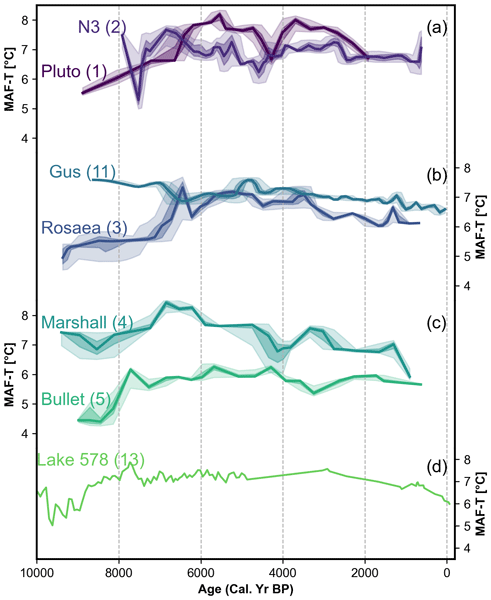
Sudip Acharya, Allison A. Cluett, Amy L. Grogan, Jason P. Briner, Isla S. Castañeda, and Elizabeth K. Thomas
Clim. Past, 22, 1401–1421, https://doi.org/10.5194/cp-22-1401-2026, https://doi.org/10.5194/cp-22-1401-2026, 2026
Short summary
Short summary
We generated five new and compiled previously published Holocene temperature timeseries from southwestern Greenland. We found temperature maxima between 7500 and 5000 years ago, with temperatures approx. 2–5 °C higher than 1994–2024. Afterward, temperatures gradually cooled towards the present, following maximum summer insolation. Local variations in the magnitude and timing of the thermal maximum are related to topography and proximity to the ice sheet and the ocean.
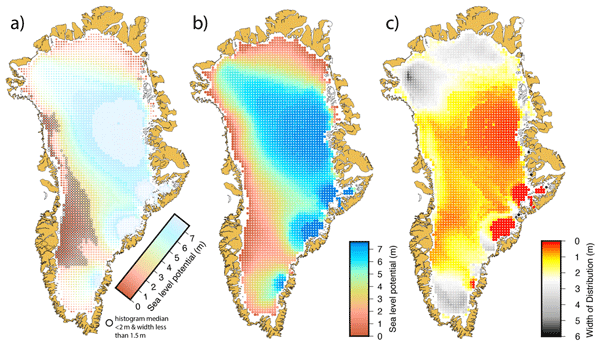
Benjamin A. Keisling, Joerg M. Schaefer, Robert M. DeConto, Jason P. Briner, Nicolás E. Young, Caleb K. Walcott-George, Gisela Winckler, Allie Balter-Kennedy, and Sridhar Anandakrishnan
The Cryosphere, 20, 2961–2976, https://doi.org/10.5194/tc-20-2961-2026, https://doi.org/10.5194/tc-20-2961-2026, 2026
Short summary
Short summary
Understanding how much the Greenland ice sheet melted in response to past warmth helps better predicting future sea-level change. Here we present a framework called sea-level potential for using numerical ice-sheet model simulations to provide constraints on how much mass the ice sheet loses before different areas become ice-free. As observations from subglacial archives become more abundant, this framework can guide future subglacial sampling efforts.
Rebecca G. Topness, Elizabeth K. Thomas, Michaela Fendrock, and Gerard A. Otiniano
EGUsphere, https://doi.org/10.5194/egusphere-2026-2322, https://doi.org/10.5194/egusphere-2026-2322, 2026
Short summary
Short summary
Lake models are powerful tools for disentangling complex past climate data preserved in sediments. These models can be hard to set-up for lakes that are not well-observed. We improve an existing model with code to simulate water runoff and establish guidelines for setting-up the model when data are scarce. Using our workflow, more scientists can apply this tool to more lakes and gain a better understanding of the climate histories stored in their sediments.
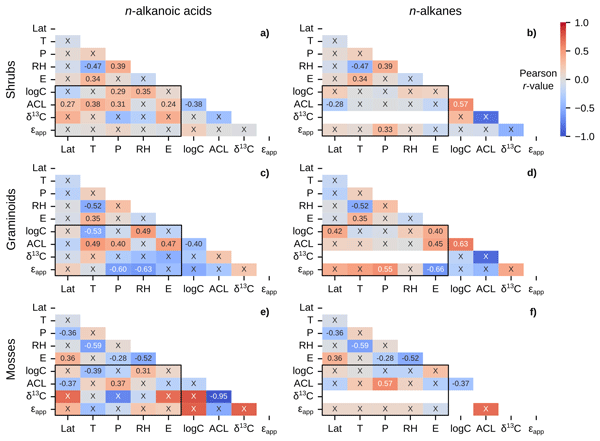
Kurt R. Lindberg, Elizabeth K. Thomas, Martha K. Raynolds, Helga Bültmann, and Jonathan H. Raberg
Biogeosciences, 23, 2503–2523, https://doi.org/10.5194/bg-23-2503-2026, https://doi.org/10.5194/bg-23-2503-2026, 2026
Short summary
Short summary
Plant waxes are an important tool for inferring past changes in vegetation and the water cycle. However, the mechanisms governing plant wax production and stable isotope values are not well understood in the Arctic. We found that terrestrial Arctic plant waxes are not significantly influenced by environmental parameters including latitude, temperature, precipitation amount, humidity, and elevation. These findings agree with our understanding of plant waxes in other regions of the world.
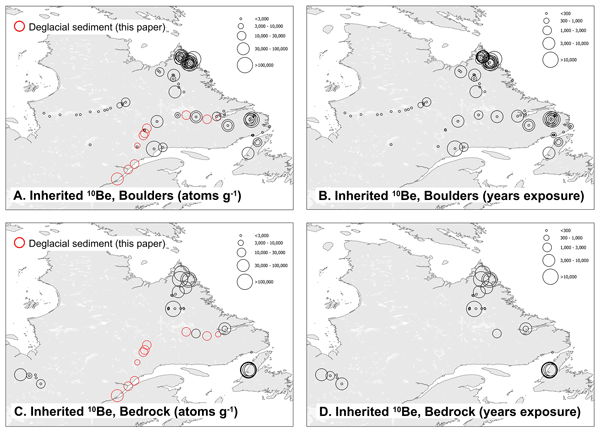
Peyton M. Cavnar, Paul R. Bierman, Jeremy D. Shakun, Lee B. Corbett, Danielle LeBlanc, Gillian L. Galford, Pierre-Olivier Couette, Jean-Francois Ghienne, Patrick Lajeunesse, Jérôme van der Woerd, and Marc Caffee
Geochronology, 8, 119–141, https://doi.org/10.5194/gchron-8-119-2026, https://doi.org/10.5194/gchron-8-119-2026, 2026
Short summary
Short summary
To investigate the Laurentide Ice Sheet’s erosivity before and during the Last Glacial Maximum, we sampled sand deposited by ice in eastern Canada before final deglaciation. We also sampled modern river sand. The 26Al and 10Be measured in glacial deposited sediments suggests that ice remained during some Pleistocene warm periods and was an inefficient eroder. Similar concentrations of 26Al and 10Be in modern sand suggests that most modern river sediment is sourced from glacial deposits.
Jacob T. H. Anderson, Nicolás E. Young, Allie Balter-Kennedy, Karlee K. Prince, Caleb K. Walcott-George, Brandon L. Graham, Joanna Charton, Jason P. Briner, and Joerg M. Schaefer
Clim. Past, 21, 2263–2281, https://doi.org/10.5194/cp-21-2263-2025, https://doi.org/10.5194/cp-21-2263-2025, 2025
Short summary
Short summary
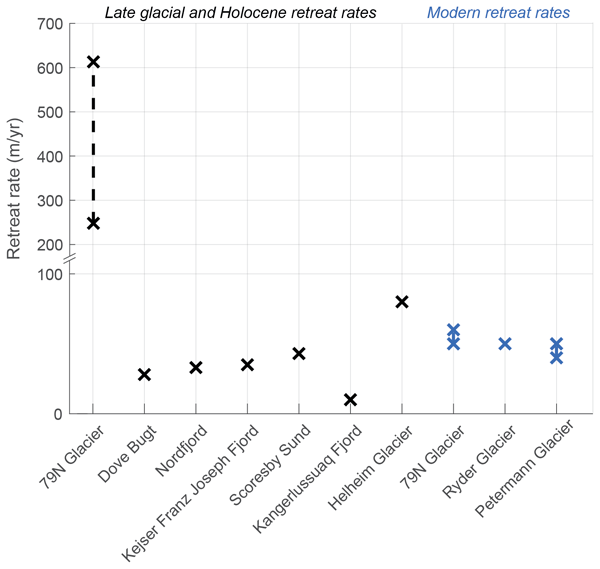
We investigated retreat of the Greenland Ice Sheet during the last deglaciation by dating glacial deposits exposed as the ice margin retreated. Our results from eastern and northeastern Greenland reveal ice margin retreat rates of 43 m/yr and 28 m/yr at two marine-terminating outlet glaciers. These retreat rates are consistent with late glacial and Holocene estimates across East Greenland, and are comparable to modern retreat rates observed in northeastern and northwestern Greenland.
Joseph P. Tulenko, Sophie A. Goliber, Renette Jones-Ivey, Justin Quinn, Abani Patra, Kristin Poinar, Sophie Nowicki, Beata M. Csatho, and Jason P. Briner
The Cryosphere, 19, 4327–4333, https://doi.org/10.5194/tc-19-4327-2025, https://doi.org/10.5194/tc-19-4327-2025, 2025
Short summary
Short summary
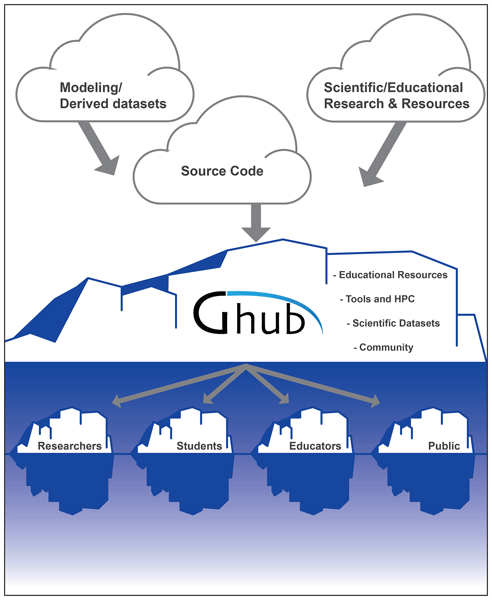
Ghub is an online platform that hosts tools, datasets, and educational resources related to ice sheet science. These resources are provided by ice sheet researchers and allow other researchers, students, educators, and interested members of the general public to analyze, visualize, and download datasets that researchers use to study past and present ice sheet behavior. We describe how users can interact with Ghub, showcase some available resources, and describe the future of the Ghub project.
Evan R. Collins, Troy M. Ferland, Isla S. Castañeda, R. Bernhart Owen, Tim K. Lowenstein, Andrew S. Cohen, Robin W. Renaut, Molly D. O'Beirne, and Josef P. Werne
Biogeosciences, 22, 3931–3948, https://doi.org/10.5194/bg-22-3931-2025, https://doi.org/10.5194/bg-22-3931-2025, 2025
Short summary
Short summary
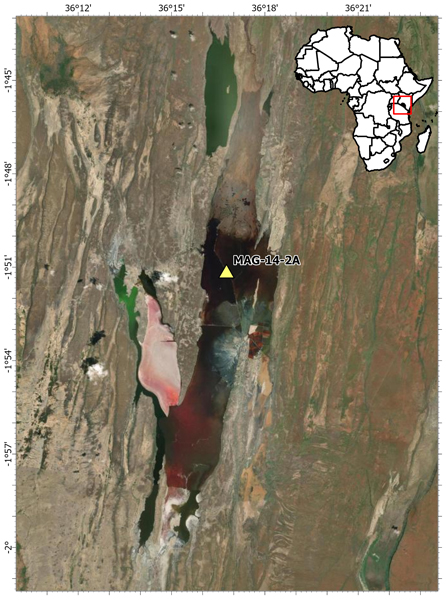
Archaeal molecular fossils (tetraethers) have been used around the globe to track changes in climate. Little is known about the archaeal response to environmental change in soda lakes, especially lakes influenced by hydrothermal inputs. For the first time in Lake Magadi, we show tetraethers tracking abrupt changes in methane and non-methane producers due to hydrothermal inputs to the lake. This study provides insight into the role of hydrothermal water and methane production in soda lakes.
Catherine M. Collins, Nicolas Perdrial, Pierre-Henri Blard, Nynke Keulen, William C. Mahaney, Halley Mastro, Juliana Souza, Donna M. Rizzo, Yves Marrocchi, Paul C. Knutz, and Paul R. Bierman
Clim. Past, 21, 1359–1381, https://doi.org/10.5194/cp-21-1359-2025, https://doi.org/10.5194/cp-21-1359-2025, 2025
Short summary
Short summary
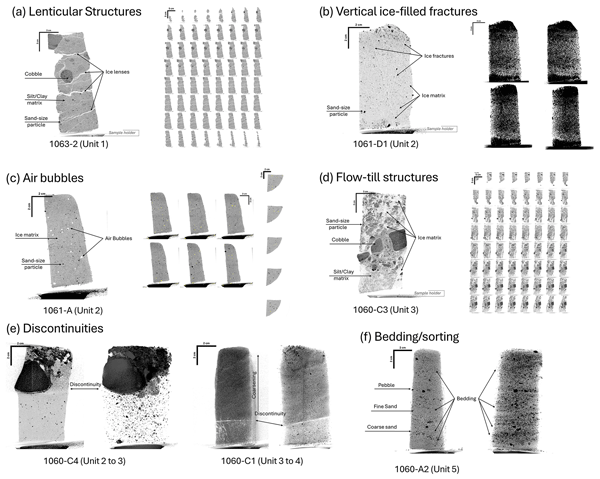
The Camp Century subglacial core stores information about past climates and glacial and interglacial processes in northwestern Greenland. In this study, we investigated the core archive, making large-scale observations using computed tomography (CT) scans and micron-scale observations observing physical and chemical characteristics of individual grains. We find evidence of past ice-free conditions, weathering processes during warmer periods, and past glaciations.
Christopher T. Halsted, Paul R. Bierman, Alexandru T. Codilean, Lee B. Corbett, and Marc W. Caffee
Geochronology, 7, 213–228, https://doi.org/10.5194/gchron-7-213-2025, https://doi.org/10.5194/gchron-7-213-2025, 2025
Short summary
Short summary
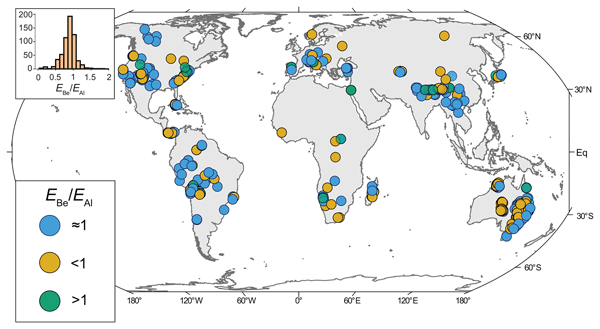
Sediment generation on hillslopes and transport through river networks are complex processes that influence landscape evolution. In this study, we compiled sand from 766 river basins and measured its subtle radioactivity to unravel timelines of sediment routing around the world. With these data, we empirically confirm that sediment from large lowland basins in tectonically stable regions typically experiences long periods of burial, while sediment moves rapidly through small upland basins.
Caleb K. Walcott-George, Allie Balter-Kennedy, Jason P. Briner, Joerg M. Schaefer, and Nicolás E. Young
The Cryosphere, 19, 2067–2086, https://doi.org/10.5194/tc-19-2067-2025, https://doi.org/10.5194/tc-19-2067-2025, 2025
Short summary
Short summary
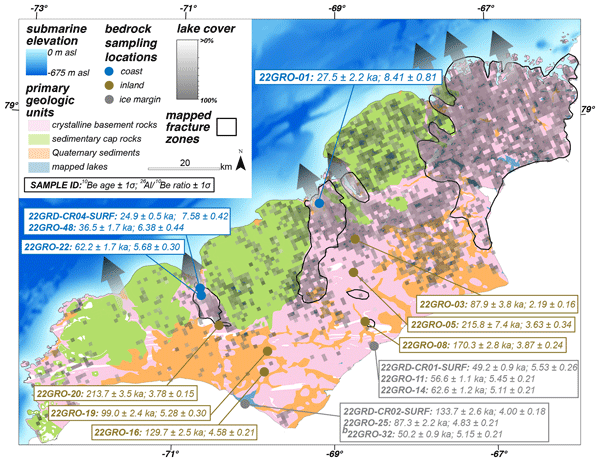
Understanding the history and drivers of Greenland Ice Sheet change is important for forecasting future ice sheet retreat. We combined geologic mapping and cosmogenic nuclide measurements to investigate how the Greenland Ice Sheet formed the landscape of Inglefield Land, northwestern Greenland. We found that Inglefield Land was covered by warm- and cold-based ice during multiple glacial cycles and that much of Inglefield Land is an ancient landscape.
Paul R. Bierman, Andrew J. Christ, Catherine M. Collins, Halley M. Mastro, Juliana Souza, Pierre-Henri Blard, Stefanie Brachfeld, Zoe R. Courville, Tammy M. Rittenour, Elizabeth K. Thomas, Jean-Louis Tison, and François Fripiat
The Cryosphere, 18, 4029–4052, https://doi.org/10.5194/tc-18-4029-2024, https://doi.org/10.5194/tc-18-4029-2024, 2024
Short summary
Short summary
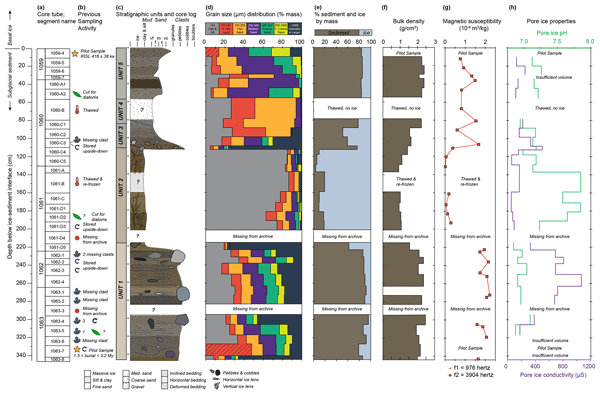
In 1966, the U.S. Army drilled through the Greenland Ice Sheet at Camp Century, Greenland; they recovered 3.44 m of frozen material. Here, we decipher the material’s history. Water, flowing during a warm interglacial when the ice sheet melted from northwest Greenland, deposited the upper material which contains fossil plant and insect parts. The lower material, separated by more than a meter of ice with some sediment, is till, deposited by the ice sheet during a prior cold period.
Marie Bergelin, Greg Balco, Lee B. Corbett, and Paul R. Bierman
Geochronology, 6, 491–502, https://doi.org/10.5194/gchron-6-491-2024, https://doi.org/10.5194/gchron-6-491-2024, 2024
Short summary
Short summary
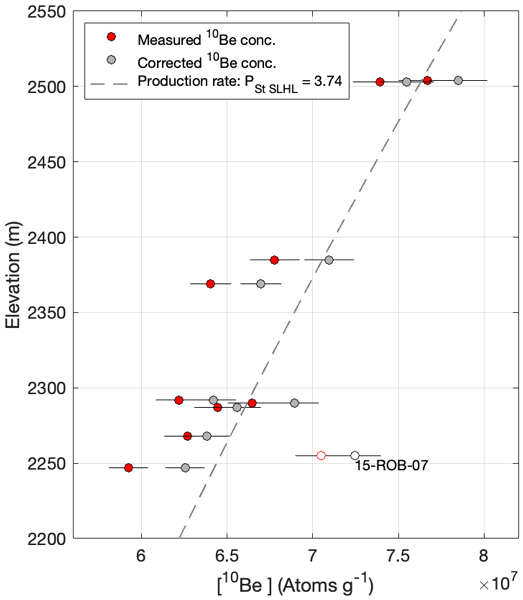
Cosmogenic nuclides, such as 10Be, are rare isotopes produced in rocks when exposed at Earth's surface and are valuable for understanding surface processes and landscape evolution. However, 10Be is usually measured in quartz minerals. Here we present advances in efficiently extracting and measuring 10Be in the pyroxene mineral. These measurements expand the use of 10Be as a dating tool for new rock types and provide opportunities to understand landscape processes in areas that lack quartz.
Karlee K. Prince, Jason P. Briner, Caleb K. Walcott, Brooke M. Chase, Andrew L. Kozlowski, Tammy M. Rittenour, and Erica P. Yang
Geochronology, 6, 409–427, https://doi.org/10.5194/gchron-6-409-2024, https://doi.org/10.5194/gchron-6-409-2024, 2024
Short summary
Short summary
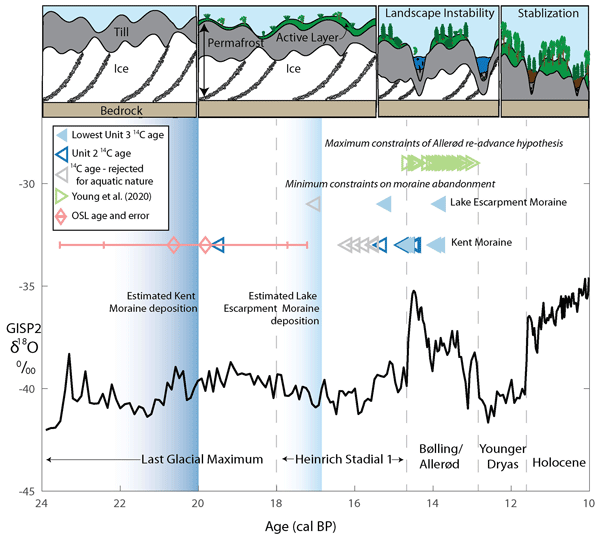
We fill a spatial data gap in the ice sheet retreat history of the Laurentide Ice Sheet after the Last Glacial Maximum and investigate a hypothesis that the ice sheet re-advanced into western New York, USA, at ~13 ka. With radiocarbon and optically stimulated luminescence (OSL) dating, we find that ice began retreating from its maximum extent after 20 ka, but glacial ice persisted in glacial landforms until ~15–14 ka when they finally stabilized. We find no evidence of a re-advance at ~13 ka.
Joseph P. Tulenko, Jason P. Briner, Nicolás E. Young, and Joerg M. Schaefer
Clim. Past, 20, 625–636, https://doi.org/10.5194/cp-20-625-2024, https://doi.org/10.5194/cp-20-625-2024, 2024
Short summary
Short summary
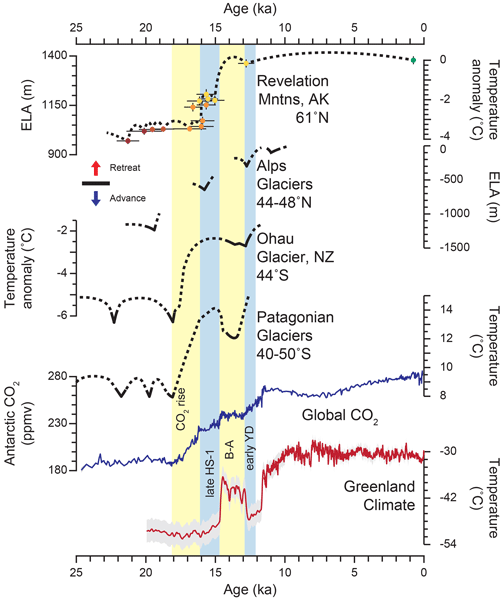
We take advantage of a site in Alaska – where climate records are limited and a former alpine glacier deposited a dense sequence of moraines spanning the full deglaciation – to construct a proxy summer temperature record. Building on age constraints for moraines in the valley, we reconstruct paleo-glacier surfaces and estimate the summer temperatures (relative to the Little Ice Age) for each moraine. The record suggests that the influence of North Atlantic climate forcing extended to Alaska.
Vera Dorothee Meyer, Jürgen Pätzold, Gesine Mollenhauer, Isla S. Castañeda, Stefan Schouten, and Enno Schefuß
Clim. Past, 20, 523–546, https://doi.org/10.5194/cp-20-523-2024, https://doi.org/10.5194/cp-20-523-2024, 2024
Short summary
Short summary
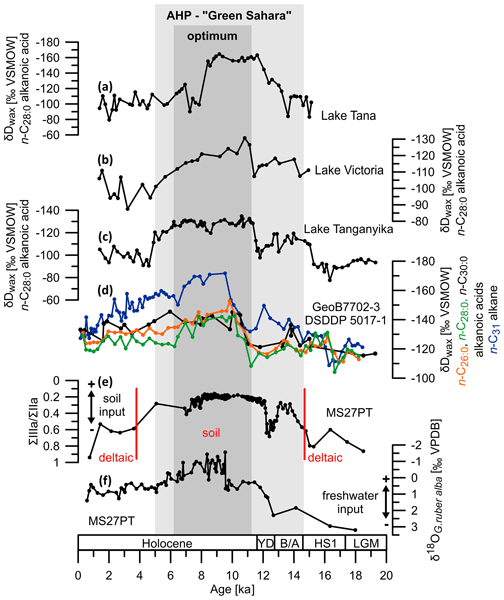
The climatic factors sustaining vegetation in the Sahara during the African humid period (AHP) are still not fully understood. Using biomarkers in a marine sediment core from the eastern Mediterranean, we infer variations in Mediterranean (winter) and monsoonal (summer) rainfall in the Nile river watershed around the AHP. We find that winter and summer rain enhanced during the AHP, suggesting that Mediterranean moisture supported the monsoon in sustaining the “green Sahara”.
Caleb K. Walcott, Jason P. Briner, Joseph P. Tulenko, and Stuart M. Evans
Clim. Past, 20, 91–106, https://doi.org/10.5194/cp-20-91-2024, https://doi.org/10.5194/cp-20-91-2024, 2024
Short summary
Short summary
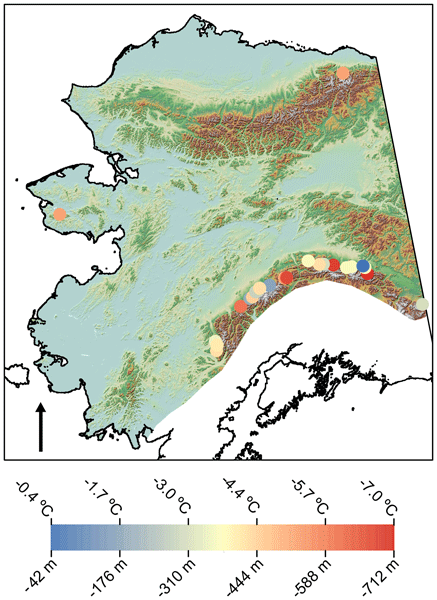
Available data suggest that Alaska was not as cold as many of the high-latitude areas of the Northern Hemisphere during the Last Ice Age. These results come from isolated climate records, climate models, and data synthesis projects. We used the extents of mountain glaciers during the Last Ice Age and Little Ice Age to show precipitation gradients across Alaska and provide temperature data from across the whole state. Our findings support a relatively warm Alaska during the Last Ice Age.
Eric W. Portenga, David J. Ullman, Lee B. Corbett, Paul R. Bierman, and Marc W. Caffee
Geochronology, 5, 413–431, https://doi.org/10.5194/gchron-5-413-2023, https://doi.org/10.5194/gchron-5-413-2023, 2023
Short summary
Short summary
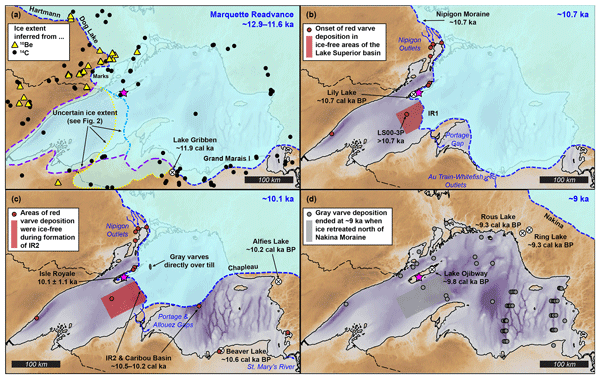
New exposure ages of glacial erratics on moraines on Isle Royale – the largest island in North America's Lake Superior – show that the Laurentide Ice Sheet did not retreat from the island nor the south shores of Lake Superior until the early Holocene, which is later than previously thought. These new ages unify regional ice retreat histories from the mainland, the Lake Superior lake-bottom stratigraphy, underwater moraines, and meltwater drainage pathways through the Laurentian Great Lakes.
Gifford H. Miller, Simon L. Pendleton, Alexandra Jahn, Yafang Zhong, John T. Andrews, Scott J. Lehman, Jason P. Briner, Jonathan H. Raberg, Helga Bueltmann, Martha Raynolds, Áslaug Geirsdóttir, and John R. Southon
Clim. Past, 19, 2341–2360, https://doi.org/10.5194/cp-19-2341-2023, https://doi.org/10.5194/cp-19-2341-2023, 2023
Short summary
Short summary
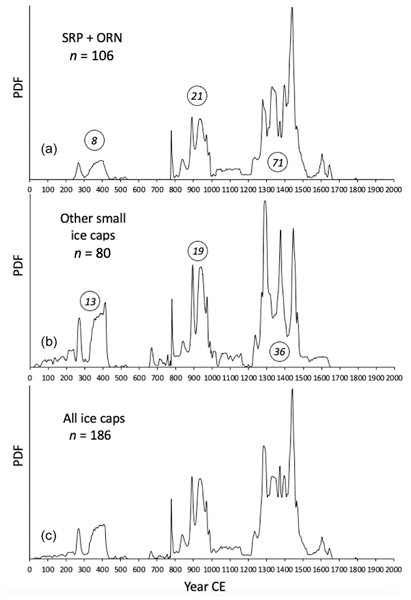
Receding Arctic ice caps reveal moss killed by earlier ice expansions; 186 moss kill dates from 71 ice caps cluster at 250–450, 850–1000 and 1240–1500 CE and continued expanding 1500–1880 CE, as recorded by regions of sparse vegetation cover, when ice caps covered > 11 000 km2 but < 100 km2 at present. The 1880 CE state approached conditions expected during the start of an ice age; climate models suggest this was only reversed by anthropogenic alterations to the planetary energy balance.
Brandon L. Graham, Jason P. Briner, Nicolás E. Young, Allie Balter-Kennedy, Michele Koppes, Joerg M. Schaefer, Kristin Poinar, and Elizabeth K. Thomas
The Cryosphere, 17, 4535–4547, https://doi.org/10.5194/tc-17-4535-2023, https://doi.org/10.5194/tc-17-4535-2023, 2023
Short summary
Short summary
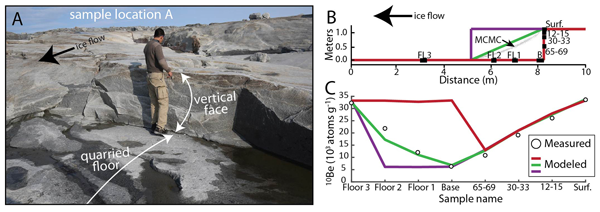
Glacial erosion is a fundamental process operating on Earth's surface. Two processes of glacial erosion, abrasion and plucking, are poorly understood. We reconstructed rates of abrasion and quarrying in Greenland. We derive a total glacial erosion rate of 0.26 ± 0.16 mm per year. We also learned that erosion via these two processes is about equal. Because the site is similar to many other areas covered by continental ice sheets, these results may be applied to many places on Earth.
Adrian M. Bender, Richard O. Lease, Lee B. Corbett, Paul R. Bierman, Marc W. Caffee, James V. Jones, and Doug Kreiner
Earth Surf. Dynam., 10, 1041–1053, https://doi.org/10.5194/esurf-10-1041-2022, https://doi.org/10.5194/esurf-10-1041-2022, 2022
Short summary
Short summary
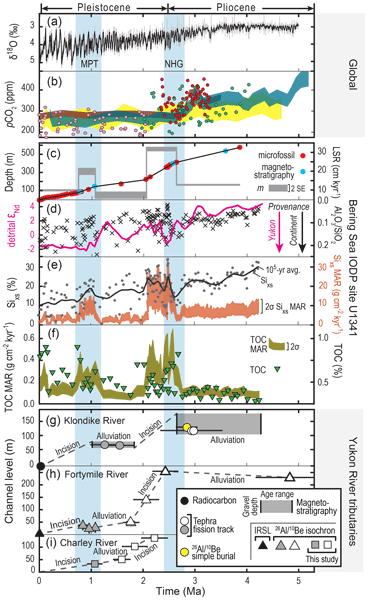
To understand landscape evolution in the mineral resource-rich Yukon River basin (Alaska and Canada), we mapped and cosmogenic isotope-dated river terraces along the Charley River. Results imply widespread Yukon River incision that drove increased Bering Sea sedimentation and carbon sequestration during global climate changes 2.6 and 1 million years ago. Such erosion may have fed back to late Cenozoic climate change by reducing atmospheric carbon as observed in many records worldwide.
Jason P. Briner, Caleb K. Walcott, Joerg M. Schaefer, Nicolás E. Young, Joseph A. MacGregor, Kristin Poinar, Benjamin A. Keisling, Sridhar Anandakrishnan, Mary R. Albert, Tanner Kuhl, and Grant Boeckmann
The Cryosphere, 16, 3933–3948, https://doi.org/10.5194/tc-16-3933-2022, https://doi.org/10.5194/tc-16-3933-2022, 2022
Short summary
Short summary
The 7.4 m of sea level equivalent stored as Greenland ice is getting smaller every year. The uncertain trajectory of ice loss could be better understood with knowledge of the ice sheet's response to past climate change. Within the bedrock below the present-day ice sheet is an archive of past ice-sheet history. We analyze all available data from Greenland to create maps showing where on the ice sheet scientists can drill, using currently available drills, to obtain sub-ice materials.
Marie Bergelin, Jaakko Putkonen, Greg Balco, Daniel Morgan, Lee B. Corbett, and Paul R. Bierman
The Cryosphere, 16, 2793–2817, https://doi.org/10.5194/tc-16-2793-2022, https://doi.org/10.5194/tc-16-2793-2022, 2022
Short summary
Short summary
Glacier ice contains information on past climate and can help us understand how the world changes through time. We have found and sampled a buried ice mass in Antarctica that is much older than most ice on Earth and difficult to date. Therefore, we developed a new dating application which showed the ice to be 3 million years old. Our new dating solution will potentially help to date other ancient ice masses since such old glacial ice could yield data on past environmental conditions on Earth.
Mae Kate Campbell, Paul R. Bierman, Amanda H. Schmidt, Rita Sibello Hernández, Alejandro García-Moya, Lee B. Corbett, Alan J. Hidy, Héctor Cartas Águila, Aniel Guillén Arruebarrena, Greg Balco, David Dethier, and Marc Caffee
Geochronology, 4, 435–453, https://doi.org/10.5194/gchron-4-435-2022, https://doi.org/10.5194/gchron-4-435-2022, 2022
Short summary
Short summary
We used cosmogenic radionuclides in detrital river sediment to measure erosion rates of watersheds in central Cuba; erosion rates are lower than rock dissolution rates in lowland watersheds. Data from two different cosmogenic nuclides suggest that some basins may have a mixed layer deeper than is typically modeled and could have experienced significant burial after or during exposure. We conclude that significant mass loss may occur at depth through chemical weathering processes.

Joshua K. Cuzzone, Nicolás E. Young, Mathieu Morlighem, Jason P. Briner, and Nicole-Jeanne Schlegel
The Cryosphere, 16, 2355–2372, https://doi.org/10.5194/tc-16-2355-2022, https://doi.org/10.5194/tc-16-2355-2022, 2022
Short summary
Short summary
We use an ice sheet model to determine what influenced the Greenland Ice Sheet to retreat across a portion of southwestern Greenland during the Holocene (about the last 12 000 years). Our simulations, constrained by observations from geologic markers, show that atmospheric warming and ice melt primarily caused the ice sheet to retreat rapidly across this domain. We find, however, that iceberg calving at the interface where the ice meets the ocean significantly influenced ice mass change.
Caleb K. Walcott, Jason P. Briner, James F. Baichtal, Alia J. Lesnek, and Joseph M. Licciardi
Geochronology, 4, 191–211, https://doi.org/10.5194/gchron-4-191-2022, https://doi.org/10.5194/gchron-4-191-2022, 2022
Short summary
Short summary
We present a record of ice retreat from the northern Alexander Archipelago, Alaska. During the last ice age (~ 26 000–19 000 years ago), these islands were covered by the Cordilleran Ice Sheet. We tested whether islands were ice-free during the last ice age for human migrants moving from Asia to the Americas. We found that these islands became ice-free between ~ 15 100 years ago and ~ 16 000 years ago, and thus these islands were not suitable for human habitation during the last ice age.

Leah A. VanLandingham, Eric W. Portenga, Edward C. Lefroy, Amanda H. Schmidt, Paul R. Bierman, and Alan J. Hidy
Geochronology, 4, 153–176, https://doi.org/10.5194/gchron-4-153-2022, https://doi.org/10.5194/gchron-4-153-2022, 2022
Short summary
Short summary
This study presents erosion rates of the George River and seven of its tributaries in northeast Tasmania, Australia. These erosion rates are the first measures of landscape change over millennial timescales for Tasmania. We demonstrate that erosion is closely linked to a topographic rainfall gradient across George River. Our findings may be useful for efforts to restore ecological health to Georges Bay by determining a pre-disturbance level of erosion and sediment delivery to this estuary.
Andrew J. Christ, Paul R. Bierman, Jennifer L. Lamp, Joerg M. Schaefer, and Gisela Winckler
Geochronology, 3, 505–523, https://doi.org/10.5194/gchron-3-505-2021, https://doi.org/10.5194/gchron-3-505-2021, 2021
Short summary
Short summary
Cosmogenic nuclide surface exposure dating is commonly used to constrain the timing of past glacier extents. However, Antarctic exposure age datasets are often scattered and difficult to interpret. We compile new and existing exposure ages of a glacial deposit with independently known age constraints and identify surface processes that increase or reduce the likelihood of exposure age scatter. Then we present new data for a previously unmapped and undated older deposit from the same region.
Melisa A. Diaz, Lee B. Corbett, Paul R. Bierman, Byron J. Adams, Diana H. Wall, Ian D. Hogg, Noah Fierer, and W. Berry Lyons
Earth Surf. Dynam., 9, 1363–1380, https://doi.org/10.5194/esurf-9-1363-2021, https://doi.org/10.5194/esurf-9-1363-2021, 2021
Short summary
Short summary
We collected soil surface samples and depth profiles every 5 cm (up to 30 cm) from 11 ice-free areas along the Shackleton Glacier, a major outlet glacier of the East Antarctic Ice Sheet (EAIS), and measured meteoric beryllium-10 and nitrate concentrations to understand the relationship between salts and beryllium-10. This relationship can help inform wetting history, landscape disturbance, and exposure duration.
Cited articles
Acharya, S., Cluett, A. A., Grogan, A. L., Briner, J. P., Castañeda, I. S., and Thomas, E. K.: Holocene temperatures in southwestern Greenland controlled by topography, ice sheet proximity, and oceanic conditions, Clim. Past, 22, 1401–1421, https://doi.org/10.5194/cp-22-1401-2026, 2026.
Aebly, F. A. and Fritz, S. C.: Palaeohydrology of Kangerlussuaq (Sondre Stromfjord), West Greenland during the last ∼ 8000 years, Holocene, 19, 91–104, https://doi.org/10.1177/0959683608096601, 2009.
Aguilar, J. M., Thomas, E. K., Briner, J. P., Christ, A., Bierman, P. R., and Castañeda, I. S.: NOAA/WDS Paleoclimatology – Camp Century Northwestern Greenland, Fatty Acids and GDGTs, Early and Mid-Pleistocene, NOAA National Centers for Environmental Information [data set], https://doi.org/10.25921/8cqa-7a14 2025.
Aguilar, J. M., Thomas, E., Briner, J., Bierman, P., Castañeda, I., Christ, A., and Aga, D.: Camp Century Leaf Wax and GDGT Proxy Data and Comparative Greenland Paleoclimate Records, Zenodo [data set], https://doi.org/10.5281/zenodo.22776307, 2026.
Akers, P. D., Kopec, B. G., Klein, E. S., Bailey, H., and Welker, J. M.: The Pivotal Role of Evaporation in Lake Water Isotopic Variability Across Space and Time in a High Arctic Periglacial Landscape, Water Resour. Res., 60, e2023WR036121, https://doi.org/10.1029/2023WR036121, 2024.
Andersen, K. K., Azuma, N., Barnola, J. M., Bigler, M., Biscaye, P., Caillon, N., Chappellaz, J., Clausen, H. B., Dahl-Jensen, D., Fischer, H., Flückiger, J., Fritzsche, D., Fujii, Y., Goto-Azuma, K., Grønvold, K., Gundestrup, N. S., Hansson, M., Huber, C., Hvidberg, C. S., Johnsen, S. J., Jonsell, U., Jouzel, J., Kipfstuhl, S., Landais, A., Leuenberger, M., Lorrain, R., Masson-Delmotte, V., Miller, H., Motoyama, H., Narita, H., Popp, T., Rasmussen, S. O., Raynaud, D., Rothlisberger, R., Ruth, U., Samyn, D., Schwander, J., Shoji, H., Siggard-Andersen, M. L., Steffensen, J. P., Stocker, T., Sveinbjörnsdóttir, A. E., Svensson, A., Takata, M., Tison, J. L., Thorsteinsson, T., Watanabe, O., Wilhelms, F., White, J. W. C., and North Greenland Ice Core Project, M.: High-resolution record of Northern Hemisphere climate extending into the last interglacial period, Nature, 431, 147–151, https://doi.org/10.1038/nature02805, 2004.
Anderson, N. J. and Leng, M. J.: Increased aridity during the early Holocene in West Greenland inferred from stable isotopes in laminated-lake sediments, Quaternary Sci. Rev., 23, 841–849, https://doi.org/10.1016/j.quascirev.2003.06.013, 2004.
Aschwanden, A., Fahnestock, M. A., Truffer, M., Brinkerhoff, D. J., Hock, R., Khroulev, C., Mottram, R., and Khan, S. A.: Contribution of the Greenland Ice Sheet to sea level over the next millennium, Sci. Adv., 5, eaav9396, https://doi.org/10.1126/sciadv.aav9396, 2019.
Atti, S., Bennike, O., and Weckström, K.: Cladocerans and diatoms from an Early Pleistocene interglacial deposit at Pingorsuit, North-West Greenland, J. Paleolimnol., 72, 331–341, https://doi.org/10.1007/s10933-024-00333-z, 2024.
Axford, Y., Losee, S., Briner, J. P., Francis, D. R., Langdon, P. G., and Walker, I. R.: Holocene temperature history at the western Greenland Ice Sheet margin reconstructed from lake sediments, Quaternary Sci. Rev., 59, 87–100, https://doi.org/10.1016/j.quascirev.2012.10.024, 2013.
Axford, Y., Levy, L. B., Kelly, M. A., Francis, D. R., Hall, B. L., Langdon, P. G., and Lowell, T. V.: Timing and magnitude of early to middle Holocene warming in East Greenland inferred from chironomids, Boreas, 46, 678–687, https://doi.org/10.1111/bor.12247, 2017.
Axford, Y., Lasher, G. E., Kelly, M. A., Osterberg, E. C., Landis, J., Schellinger, G. C., Pfeiffer, A., Thompson, E., and Francis, D. R.: Holocene temperature history of northwest Greenland – With new ice cap constraints and chironomid assemblages from Deltasø, Quaternary Sci. Rev., 215, 160–172, https://doi.org/10.1016/j.quascirev.2019.05.011, 2019.
Axford, Y., de Vernal, A., and Osterberg, E. C.: Past Warmth and Its Impacts During the Holocene Thermal Maximum in Greenland, Annu. Rev. Earth Pl. Sc., 49, 279–307, https://doi.org/10.1146/annurev-earth-081420-063858, 2021.
Balascio, N. L., D'Andrea, W. J., Bradley, R. S., and Perren, B. B.: Biogeochemical evidence for hydrologic changes during the Holocene in a lake sediment record from southeast Greenland, Holocene, 23, 1428–1439, https://doi.org/10.1177/0959683613493938, 2013.
Bekryaev, R. V., Polyakov, I. V., and Alexeev, V. A.: Role of Polar Amplification in Long-Term Surface Air Temperature Variations and Modern Arctic Warming, J. Climate, 23, 3888–3906, https://doi.org/10.1175/2010JCLI3297.1, 2010.
Bennike, O.: The Kap København Formation: stratigraphy and palaeobotany of a Plio-Pleistocene sequence in Peary Land, North Greenland, Meddelelser om Grønland, Geoscience, 23, 85, https://doi.org/10.7146/moggeosci.v23i.141978, 1990.
Bennike, O. and Böcher, J.: Early Weichselian interstadial land biotas at Thule, Northwest Greenland, Boreas, 21, 111–118, https://doi.org/10.1111/j.1502-3885.1992.tb00019.x, 1992.
Bennike, O. and Böcher, J.: Land biotas of the last interglacial/glacial cycle on Jameson Land, East Greenland, Boreas, 23, 479–487, https://doi.org/10.1111/j.1502-3885.1994.tb00615.x, 1994.
Bennike, O., Abrahamsen, N., Bak, M., Israelson, C., Konradi, P., Matthiessen, J., and Witkowski, A.: A multi-proxy study of Pliocene sediments from Île de France, North-East Greenland, Palaeogeogr. Palaeocl., 186, 1–23, https://doi.org/10.1016/S0031-0182(02)00439-X, 2002.
Bennike, O., Knudsen, K. L., Abrahamsen, N., Böcher, J., Cremer, H., and Wagner, B.: Early Pleistocene sediments on Store Koldewey, northeast Greenland, Boreas, 39, 603–619, https://doi.org/10.1111/j.1502-3885.2010.00147.x, 2010.
Bennike, O., Colgan, W., Hedenäs, L., Heiri, O., Lemdahl, G., Wiberg-Larsen, P., Ribeiro, S., Pronzato, R., Manconi, R., and Bjørk, A. A.: An Early Pleistocene interglacial deposit at Pingorsuit, North-West Greenland, Boreas, 52, 27–41, https://doi.org/10.1111/bor.12596, 2023.
Bierman, P. R., Mastro, H. M., Peteet, D. M., Corbett, L. B., Steig, E. J., Halsted, C. T., Caffee, M. M., Hidy, A. J., Balco, G., Bennike, O., and Rock, B.: Plant, insect, and fungi fossils under the center of Greenland's ice sheet are evidence of ice-free times, P. Natl. Acad. Sci. USA, 121, e2407465121, https://doi.org/10.1073/pnas.2407465121, 2024a.
Bierman, P. R., Christ, A. J., Collins, C. M., Mastro, H. M., Souza, J., Blard, P.-H., Brachfeld, S., Courville, Z. R., Rittenour, T. M., Thomas, E. K., Tison, J.-L., and Fripiat, F.: Scientific history, sampling approach, and physical characterization of the Camp Century subglacial material, a rare archive from beneath the Greenland Ice Sheet, The Cryosphere, 18, 4029–4052, https://doi.org/10.5194/tc-18-4029-2024, 2024b.
Bowen, G. J.: The Online Isotopes in Precipitation Calculator, version 3.1., http://www.waterisotopes.org (last access: 23 April 2026), 2017.
Bowen, G. J., Wassenaar, L. I., and Hobson, K. A.: Global application of stable hydrogen and oxygen isotopes to wildlife forensics, Oecologia, 143, 337–348, https://doi.org/10.1007/s00442-004-1813-y, 2005.
Box, J. E., Yang, L., Bromwich, D. H., and Bai, L.-S.: Greenland Ice Sheet Surface Air Temperature Variability: 1840–2007, J. Climate, 22, 4029–4049, https://doi.org/10.1175/2009JCLI2816.1, 2009.
Brandes, C., Steffen, H., Steffen, R., Li, T., and Wu, P.: Effects of the Last Quaternary Glacial Forebulge on Vertical Land Movement, Sea-Level Change, and Lithospheric Stresses, Rev. Geophys., 63, e2024RG000852, https://doi.org/10.1029/2024RG000852, 2025.
Briner, J. P. and Bennike, O.: An early Neoglacial moraine at Sanddalen, NE Greenland, B. Geol. Soc. Denmark, 74, 219–225, https://doi.org/10.37570/bgsd-2025-74-12, 2025.
Briner, J. P., Stewart, H. A. M., Young, N. E., Philipps, W., and Losee, S.: Using proglacial-threshold lakes to constrain fluctuations of the Jakobshavn Isbræ ice margin, western Greenland, during the Holocene, Quaternary Sci. Rev., 29, 3861–3874, https://doi.org/10.1016/j.quascirev.2010.09.005, 2010.
Briner, J. P., Kaufman, D. S., Bennike, O., and Kosnik, M. A.: Amino acid ratios in reworked marine bivalve shells constrain Greenland Ice Sheet history during the Holocene, Geology, 42, 75–78, https://doi.org/10.1130/g34843.1, 2014.
Briner, J. P., McKay, N. P., Axford, Y., Bennike, O., Bradley, R. S., de Vernal, A., Fisher, D., Francus, P., Fréchette, B., Gajewski, K., Jennings, A., Kaufman, D. S., Miller, G., Rouston, C., and Wagner, B.: Holocene climate change in Arctic Canada and Greenland, Quaternary Sci. Rev., 147, 340–364, https://doi.org/10.1016/j.quascirev.2016.02.010, 2016.
Brodersen, K. P. and Bennike, O.: Interglacial Chironomidae (Diptera) from Thule, Northwest Greenland: matching modern analogues to fossil assemblages, Boreas, 32, 560–565, https://doi.org/10.1111/j.1502-3885.2003.tb01235.x, 2003.
Buizert, C., Keisling, B. A., Box, J. E., He, F., Carlson, A. E., Sinclair, G., and DeConto, R. M.: Greenland-Wide Seasonal Temperatures During the Last Deglaciation, Geophys. Res. Lett., 45, 1905–1914, https://doi.org/10.1002/2017GL075601, 2018.
Bullister, J. L., Rhein, M., and Mauritzen, C.: Chapter 10 – Deepwater Formation, in: International Geophysics, edited by: Siedler, G., Griffies, S. M., Gould, J., and Church, J. A., Academic Press, 227–253, https://doi.org/10.1016/B978-0-12-391851-2.00010-6, 2013.
Callard, S. L., Ó Cofaigh, C., Lloyd, J. M., A. Smith, J., Gebhardt, C. A., Kanzow, T., and Roberts, D. H.: Ocean driven retreat of the Northeast Greenland Ice Stream following the Last Glacial Maximum, Nat. Commun., 16, 10961, https://doi.org/10.1038/s41467-025-66671-2, 2025.
Caron, L., Ivins, E. R., Larour, E., Adhikari, S., Nilsson, J., and Blewitt, G.: GIA Model Statistics for GRACE Hydrology, Cryosphere, and Ocean Science, Geophys. Res. Lett., 45, 2203–2212, https://doi.org/10.1002/2017GL076644, 2018.
Chen, Z.-M., Zeng, Z.-L., Ding, M.-H., and Wang, Y.-Q.: Comprehensive evaluation of multi-source reanalysis datasets for surface atmospheric parameters over the Greenland Ice Sheet, Advances in Climate Change Research, 17, 48–64, https://doi.org/10.1016/j.accre.2025.10.007, 2026.
Chiasson-Poirier, G., Franssen, J., Lafrenière, M. J., Fortier, D., and Lamoureux, S. F.: Seasonal evolution of active layer thaw depth and hillslope-stream connectivity in a permafrost watershed, Water Resour. Res., 56, e2019WR025828, https://doi.org/10.1029/2019WR025828, 2020.
Christ, A. J., Bierman, P. R., Schaefer, J. M., Dahl-Jensen, D., Steffensen, J. P., Corbett, L. B., Peteet, D. M., Thomas, E. K., Steig, E. J., Rittenour, T. M., Tison, J.-L., Blard, P.-H., Perdrial, N., Dethier, D. P., Lini, A., Hidy, A. J., Caffee, M. W., and Southon, J.: A multimillion-year-old record of Greenland vegetation and glacial history preserved in sediment beneath 1.4 km of ice at Camp Century, P. Natl. Acad. Sci. USA, 118, e2021442118, https://doi.org/10.1073/pnas.2021442118, 2021.
Christ, A. J., Rittenour, T. M., Bierman, P. R., Keisling, B. A., Knutz, P. C., Thomsen, T. B., Keulen, N., Fosdick, J. C., Hemming, S. R., Tison, J.-L., Blard, P.-H., Steffensen, J. P., Caffee, M. W., Corbett, L. B., Dahl-Jensen, D., Dethier, D. P., Hidy, A. J., Perdrial, N., Peteet, D. M., Steig, E. J., and Thomas, E. K.: Deglaciation of northwestern Greenland during Marine Isotope Stage 11, Science, 381, 330–335, https://doi.org/10.1126/science.ade4248, 2023.
Clark, I. D. and Fritz, P.: Environmental Isotopes in Hydrogeology, 1st edn., CRC Press, Boca Raton, FL, https://doi.org/10.1201/9781482242911, 1997.
Cluett, A. A. and Thomas, E. K.: Resolving combined influences of inflow and evaporation on western Greenland lake water isotopes to inform paleoclimate inferences, J. Paleolimnol., 63, 251–268, https://doi.org/10.1007/s10933-020-00114-4, 2020.
Cluett, A. A. and Thomas, E. K.: Summer warmth of the past six interglacials on Greenland, P. Natl. Acad. Sci. USA, 118, e2022916118, https://doi.org/10.1073/pnas.2022916118, 2021.
Cluett, A. A., Thomas, E. K., Evans, S. M., and Keys, P. W.: Seasonal Variations in Moisture Origin Explain Spatial Contrast in Precipitation Isotope Seasonality on Coastal Western Greenland, J. Geophys. Res.-Biogeo., 126, https://doi.org/10.1029/2020JD033543, 2021.
Cluett, A. A., Thomas, E. K., McKay, N. P., Cowling, O. C., Castañeda, I. S., and Morrill, C.: Lake Dynamics Modulate the Air Temperature Variability Recorded by Sedimentary Aquatic Biomarkers: A Holocene Case Study From Western Greenland, J. Geophys. Res.-Biogeo., 128, e2022JG007106, https://doi.org/10.1029/2022JG007106, 2023.
Collins, C. M., Perdrial, N., Blard, P.-H., Keulen, N., Mahaney, W. C., Mastro, H., Souza, J., Rizzo, D. M., Marrocchi, Y., Knutz, P. C., and Bierman, P. R.: Characterization of the 1966 Camp Century subglacial core: a multiscale analysis, Clim. Past, 21, 1359–1381, https://doi.org/10.5194/cp-21-1359-2025, 2025.
Creel, R. C., Kopp, R. E., Dutton, A., Zhou, Y., Raymo, M. E., Britt, C. J., and DeConto, R. M.: North American ice sheet persistence into past interglacials should inform future projections, Nat. Commun., 17, 2280, https://doi.org/10.1038/s41467-026-70032-y, 2026.
Cronauer, S. L., Briner, J. P., Kelley, S. E., Zimmerman, S. R. H., and Morlighem, M.: 10Be dating reveals early-middle Holocene age of the Drygalski Moraines in central West Greenland, Quaternary Sci. Rev., 147, 59–68, https://doi.org/10.1016/j.quascirev.2015.08.034, 2016.
Dansgaard, W.: Stable isotopes in precipitation, Tellus, 16, 436–468, https://doi.org/10.1111/j.2153-3490.1964.tb00181.x, 1964.
Dansgaard, W., Johnsen, S. J., Møller, J., and Langway, C. C.: One Thousand Centuries of Climatic Record from Camp Century on the Greenland Ice Sheet, Science, 166, 377–381, https://doi.org/10.1126/science.166.3903.377, 1969.
Dansgaard, W., Clausen, H. B., Gundestrup, N., Hammer, C. U., Johnsen, S. F., Kristinsdottir, P. M., and Reeh, N.: A New Greenland Deep Ice Core, Science, 218, 1273–1277, https://doi.org/10.1126/science.218.4579.1273, 1982.
Dearing Crampton-Flood, E., Tierney, J. E., Peterse, F., Kirkels, F. M. S. A., and Sinninghe Damsté, J. S.: BayMBT: A Bayesian calibration model for branched glycerol dialkyl glycerol tetraethers in soils and peats, Geochim. Cosmochim. Ac., 268, 142–159, https://doi.org/10.1016/j.gca.2019.09.043, 2020.
De Jonge, C., Hopmans, E. C., Zell, C. I., Kim, J.-H., Schouten, S., and Sinninghe Damsté, J. S.: Occurrence and abundance of 6-methyl branched glycerol dialkyl glycerol tetraethers in soils: Implications for palaeoclimate reconstruction, Geochim. Cosmochim. Ac., 141, 97–112, https://doi.org/10.1016/j.gca.2014.06.013, 2014.
De Jonge, C., Stadnitskaia, A., Fedotov, A., and Sinninghe Damsté, J. S.: Impact of riverine suspended particulate matter on the branched glycerol dialkyl glycerol tetraether composition of lakes: The outflow of the Selenga River in Lake Baikal (Russia), Org. Geochem., 83–84, 241–252, https://doi.org/10.1016/j.orggeochem.2015.04.004, 2015.
De Jonge, C., Radujković, D., Sigurdsson, B. D., Weedon, J. T., Janssens, I., and Peterse, F.: Lipid biomarker temperature proxy responds to abrupt shift in the bacterial community composition in geothermally heated soils, Org. Geochem., 137, 103897, https://doi.org/10.1016/j.orggeochem.2019.07.006, 2019.
De Jonge, C., Kuramae, E. E., Radujković, D., Weedon, J. T., Janssens, I. A., and Peterse, F.: The influence of soil chemistry on branched tetraether lipids in mid- and high latitude soils: Implications for brGDGT- based paleothermometry, Geochim. Cosmochim. Ac., 310, 95–112, https://doi.org/10.1016/j.gca.2021.06.037, 2021.
de Vernal, A. and Hillaire-Marcel, C.: Natural Variability of Greenland Climate, Vegetation, and Ice Volume During the Past Million Years, Science, 320, 1622–1625, https://doi.org/10.1126/science.1153929, 2008.
Ding, S., Kohlhepp, B., Trumbore, S., Küsel, K., Totsche, K.-U., Pohnert, G., Gleixner, G., and Schwab, V. F.: In situ production of core and intact bacterial and archaeal tetraether lipids in groundwater, Org. Geochem., 126, 1–12, https://doi.org/10.1016/j.orggeochem.2018.10.005, 2018.
Dion-Kirschner, H., McFarlin, J. M., Masterson, A. L., Axford, Y., and Osburn, M. R.: Modern constraints on the sources and climate signals recorded by sedimentary plant waxes in west Greenland, Geochim. Cosmochim. Ac., 286, 336–354, https://doi.org/10.1016/j.gca.2020.07.027, 2020.
Donohoe, A. and Battisti, D. S.: The Seasonal Cycle of Atmospheric Heating and Temperature, J. Climate, 26, 4962–4980, https://doi.org/10.1175/JCLI-D-12-00713.1, 2013.
Downs, J., Johnson, J., Briner, J., Young, N., Lesnek, A., and Cuzzone, J.: Western Greenland ice sheet retreat history reveals elevated precipitation during the Holocene thermal maximum, The Cryosphere, 14, 1121–1137, https://doi.org/10.5194/tc-14-1121-2020, 2020.
Dugerdil, L., Ménot, G., Peyron, O., Jouffroy-Bapicot, I., Ansanay-Alex, S., Antheaume, I., Behling, H., Boldgiv, B., Develle, A.-L., Grossi, V., Magail, J., Makou, M., Robles, M., Unkelbach, J., Vannière, B., and Joannin, S.: Late Holocene Mongolian climate and environment reconstructions from brGDGTs, NPPs and pollen transfer functions for Lake Ayrag: Paleoclimate implications for Arid Central Asia, Quaternary Sci. Rev., 273, 107235, https://doi.org/10.1016/j.quascirev.2021.107235, 2021.
Dwyer, J. G., Biasutti, M., and Sobel, A. H.: Projected Changes in the Seasonal Cycle of Surface Temperature, J. Climate, 25, 6359–6374, https://doi.org/10.1175/JCLI-D-11-00741.1, 2012.
Ellehoj, M. D., Steen-Larsen, H. C., Johnsen, S. J., and Madsen, M. B.: Ice-vapor equilibrium fractionation factor of hydrogen and oxygen isotopes: Experimental investigations and implications for stable water isotope studies, Rapid Commun. Mass Sp., 27, 2149–2158, https://doi.org/10.1002/rcm.6668, 2013.
Fausto, R. S., Ahlstrøm, A. P., Van As, D., Bøggild, C. E., and Johnsen, S. J.: A new present-day temperature parameterization for Greenland, J. Glaciol., 55, 95–105, https://doi.org/10.3189/002214309788608985, 2009.
Francis, D. R., Wolfe, A. P., Walker, I. R., and Miller, G. H.: Interglacial and Holocene temperature reconstructions based on midge remains in sediments of two lakes from Baffin Island, Nunavut, Arctic Canada, Palaeogeogr. Palaeocl., 236, 107–124, https://doi.org/10.1016/j.palaeo.2006.01.005, 2006.
Fyke, J., Sergienko, O., Löfverström, M., Price, S., and Lenaerts, J. T. M.: An Overview of Interactions and Feedbacks Between Ice Sheets and the Earth System, Rev. Geophys., 56, 361–408, https://doi.org/10.1029/2018RG000600, 2018.
Gat, J. R.: Oxygen And Hydrogen Isotopes In The Hydrologic Cycle, Annu. Rev. Earth Pl. Sc., 24, 225–262, https://doi.org/10.1146/annurev.earth.24.1.225, 1996.
Gibb, O. T., Steinhauer, S., Fréchette, B., de Vernal, A., and Hillaire-Marcel, C.: Diachronous evolution of sea surface conditions in the Labrador Sea and Baffin Bay since the last deglaciation, Holocene, 25, 1882–1897, https://doi.org/10.1177/0959683615591352, 2015.
Gimeno, L., Eiras-Barca, J., Durán-Quesada, A. M., Dominguez, F., van der Ent, R., Sodemann, H., Sánchez-Murillo, R., Nieto, R., and Kirchner, J. W.: The residence time of water vapour in the atmosphere, Nat. Rev. Earth Environ., 2, 558–569, https://doi.org/10.1038/s43017-021-00181-9, 2021.
Gorbey, D. B., Thomas, E. K., Sauer, P. E., Raynolds, M. K., Miller, G. H., Corcoran, M. C., Cowling, O. C., Crump, S. E., Lovell, K., and Raberg, J. H.: Modern Eastern Canadian Arctic Lake Water Isotopes Exhibit Latitudinal Patterns in Inflow Seasonality and Minimal Evaporative Enrichment, Paleoceanography and Paleoclimatology, 37, e2021PA004384, https://doi.org/10.1029/2021PA004384, 2022.
Grootes, P. M. and Stuiver, M.: Oxygen 18/16 variability in Greenland snow and ice with 10−3- to 105-year time resolution, J. Geophys. Res.-Oceans, 102, 26455–26470, https://doi.org/10.1029/97JC00880, 1997.
Grootes, P. M. and Stuiver, M.: GISP2 Oxygen Isotope Data (1 year averages), PANGAEA [data set], https://doi.org/10.1594/PANGAEA.55532, 1999.
Guo, J., Glendell, M., Meersmans, J., Kirkels, F., Middelburg, J. J., and Peterse, F.: Assessing branched tetraether lipids as tracers of soil organic carbon transport through the Carminowe Creek catchment (southwest England), Biogeosciences, 17, 3183–3201, https://doi.org/10.5194/bg-17-3183-2020, 2020.
Guo, X., Zhao, L., Gladstone, R. M., Sun, S., and Moore, J. C.: Simulated retreat of Jakobshavn Isbræ during the 21st century, The Cryosphere, 13, 3139–3153, https://doi.org/10.5194/tc-13-3139-2019, 2019.
Halffman, R., Lembrechts, J., Radujković, D., De Gruyter, J., Nijs, I., and De Jonge, C.: Soil chemistry, temperature and bacterial community composition drive brGDGT distributions along a subarctic elevation gradient, Org. Geochem., 163, 104346, https://doi.org/10.1016/j.orggeochem.2021.104346, 2022.
Hansen, B. L. and Langway, C. C.: Deep core drilling in ice and core analysis at Camp Century, Greenland, 1961–66, Antarct. J. US, 1, 207–208, 1966.
Harning, D. J., Raberg, J. H., McFarlin, J. M., Axford, Y., Florian, C. R., Ólafsdóttir, K. B., Kopf, S., Sepúlveda, J., Miller, G. H., and Geirsdóttir, Á.: Spatiotemporal variation of modern lake, stream, and soil water isotopes in Iceland, Hydrol. Earth Syst. Sci., 28, 4275–4293, https://doi.org/10.5194/hess-28-4275-2024, 2024.
Harning, D. J., Sacco, S., Raberg, J. H., Ardenghi, N., Sepúlveda, J., Shapiro, B., Miller, G. H., and Geirsdóttir, Á.: Both redox potential and climate control molecular proxies in Icelandic Holocene lake sediments, Commun. Earth Environ., 6, 763, https://doi.org/10.1038/s43247-025-02701-7, 2025.
Hatfield, R. G., Reyes, A. V., Stoner, J. S., Carlson, A. E., Beard, B. L., Winsor, K., and Welke, B.: Interglacial responses of the southern Greenland ice sheet over the last 430 000 years determined using particle-size specific magnetic and isotopic tracers, Earth Planet. Sc. Lett., 454, 225–236, https://doi.org/10.1016/j.epsl.2016.09.014, 2016.
He, C., Liu, Z., Otto-Bliesner, B. L., Brady, E. C., Zhu, C., Tomas, R., Buizert, C., and Severinghaus, J. P.: Abrupt Heinrich Stadial 1 cooling missing in Greenland oxygen isotopes, Sci. Adv., 7, eabh1007, https://doi.org/10.1126/sciadv.abh1007, 2021.
Hedenäs, L.: Bryophytes from the last interglacial/glacial cycle, Jameson Land, East Greenland, Boreas, 23, 488–494, https://doi.org/10.1111/j.1502-3885.1994.tb00616.x, 1994.
Hedenäs, L. and Bennike, O.: Moss Remains from the Last Interglacial at Thule, NW Greenland, Lindbergia, 28, 52–58, 2003.
Herbert, T. D., Peterson, L. C., Lawrence, K. T., and Liu, Z.: Tropical Ocean Temperatures Over the Past 3.5 Million Years, Science, 328, 1530–1534, https://doi.org/10.1126/science.1185435, 2010.
Hersbach, H., Bell, B., Berrisford, P., Hirahara, S., Horányi, A., Muñoz-Sabater, J., Nicolas, J., Peubey, C., Radu, R., Schepers, D., Simmons, A., Soci, C., Abdalla, S., Abellan, X., Balsamo, G., Bechtold, P., Biavati, G., Bidlot, J., Bonavita, M., De Chiara, G., Dahlgren, P., Dee, D., Diamantakis, M., Dragani, R., Flemming, J., Forbes, R., Fuentes, M., Geer, A., Haimberger, L., Healy, S., Hogan, R. J., Hólm, E., Janisková, M., Keeley, S., Laloyaux, P., Lopez, P., Lupu, C., Radnoti, G., de Rosnay, P., Rozum, I., Vamborg, F., Villaume, S., and Thépaut, J.-N.: The ERA5 global reanalysis, Q. J. Roy. Meteor. Soc., 146, 1999–2049, https://doi.org/10.1002/qj.3803, 2020.
Holland, D. M., Thomas, R. H., de Young, B., Ribergaard, M. H., and Lyberth, B.: Acceleration of Jakobshavn Isbræ triggered by warm subsurface ocean waters, Nat. Geosci., 1, 659–664, https://doi.org/10.1038/ngeo316, 2008.
Hollister, K. V., Thomas, E. K., Raynolds, M. K., Bültmann, H., Raberg, J. H., Miller, G. H., and Sepúlveda, J.: Aquatic and Terrestrial Plant Contributions to Sedimentary Plant Waxes in a Modern Arctic Lake Setting, J. Geophys. Res.-Biogeo., 127, e2022JG006903, https://doi.org/10.1029/2022JG006903, 2022.
Holschuh, N., Christianson, K., Dienstfrey, W., Hills, B., Hoffman, A. O., Paden, J., Winter, K., and Zuraw, R.: Entrained debris records regrowth of the Greenland Ice Sheet after the last interglacial, Nat. Geosci., 19, 573–580, https://doi.org/10.1038/s41561-026-01950-1, 2026.
Holtzman, H., Thomas, E. K., Erb, M., Marshall, L., Castañeda, I. S., Kaufman, D., McKay, N. P., and Melles, M.: Early Holocene Atmospheric Circulation Changes Over Northern Europe Based on Isotopic and Biomarker Evidence From Kola Peninsula, Paleoceanography and Paleoclimatology, 40, e2024PA005076, https://doi.org/10.1029/2024PA005076, 2025.
IAEA/WMO: Global Network of Isotopes in Precipitation (GNIP) Database, https://nucleus.iaea.org/wiser (last access: 23 April 2026), 2015.
Irvalı, N., Galaasen, E. V., Ninnemann, U. S., Rosenthal, Y., Born, A., and Kleiven, H. F.: A low climate threshold for south Greenland Ice Sheet demise during the Late Pleistocene, P. Natl. Acad. Sci. USA, 117, 190–195, https://doi.org/10.1073/pnas.1911902116, 2020.
Jansen, E., Fronval, T., Rack, F., and Channell, J. E. T.: Pliocene-Pleistocene ice rafting history and cyclicity in the Nordic Seas during the last 3.5 Myr, Paleoceanography, 15, 709–721, https://doi.org/10.1029/1999PA000435, 2000.
Jensen, C. D.: Weather Observations from Greenland 1958–2024: Observational Data with Description, Danish Meteorological Institute (DMI), Copenhagen, Denmark, DMI Report 25-08, 2025.
Johnsen, S. J., Clausen, H. B., Dansgaard, W., Gundestrup, N. S., Hammer, C. U., Andersen, U., Andersen, K. K., Hvidberg, C. S., Dahl-Jensen, D., Steffensen, J. P., Shoji, H., Sveinbjörnsdóttir, Á. E., White, J., Jouzel, J., and Fisher, D.: The δ18O record along the Greenland Ice Core Project deep ice core and the problem of possible Eemian climatic instability, J. Geophys. Res.-Oceans, 102, 26397–26410, https://doi.org/10.1029/97JC00167, 1997.
Kjellman, S. E., Thomas, E. K., and Schomacker, A.: Arctic and sub-Arctic lake water δ2H and δ18O along a coastal-inland transect: Implications for interpreting water isotope proxy records, J. Hydrol., 607, 127556, https://doi.org/10.1016/j.jhydrol.2022.127556, 2022.
Kleinen, T., Hildebrandt, S., Prange, M., Rachmayani, R., Müller, S., Bezrukova, E., Brovkin, V., and Tarasov, P. E.: The climate and vegetation of Marine Isotope Stage 11 – Model results and proxy-based reconstructions at global and regional scale, Quatern. Int., 348, 247–265, https://doi.org/10.1016/j.quaint.2013.12.028, 2014.
Kobashi, T., Menviel, L., Jeltsch-Thömmes, A., Vinther, B. M., Box, J. E., Muscheler, R., Nakaegawa, T., Pfister, P. L., Döring, M., Leuenberger, M., Wanner, H., and Ohmura, A.: Volcanic influence on centennial to millennial Holocene Greenland temperature change, Sci. Rep., 7, 1441, https://doi.org/10.1038/s41598-017-01451-7, 2017.
Koerner, R. and Russell, R. D.: δ18O variations in snow on the Devon Island ice cap, Northwest Territories, Canada, Can. J. Earth Sci., 16, 1419–1427, https://doi.org/10.1139/e79-126, 1979.
Konecky, B. L., McKay, N. P., Churakova (Sidorova), O. V., Comas-Bru, L., Dassié, E. P., DeLong, K. L., Falster, G. M., Fischer, M. J., Jones, M. D., Jonkers, L., Kaufman, D. S., Leduc, G., Managave, S. R., Martrat, B., Opel, T., Orsi, A. J., Partin, J. W., Sayani, H. R., Thomas, E. K., Thompson, D. M., Tyler, J. J., Abram, N. J., Atwood, A. R., Cartapanis, O., Conroy, J. L., Curran, M. A., Dee, S. G., Deininger, M., Divine, D. V., Kern, Z., Porter, T. J., Stevenson, S. L., von Gunten, L., and Iso2k Project Members: The Iso2k database: a global compilation of paleo-δ18O and δ2H records to aid understanding of Common Era climate, Earth Syst. Sci. Data, 12, 2261–2288, https://doi.org/10.5194/essd-12-2261-2020, 2020.
Kusch, S., Bennike, O., Wagner, B., Lenz, M., Steffen, I., and Rethemeyer, J.: Holocene environmental history in high-Arctic North Greenland revealed by a combined biomarker and macrofossil approach, Boreas, 48, 273–286, https://doi.org/10.1111/bor.12377, 2019.
Larsen, H. C., Saunders, A. D., Clift, P. D., Beget, J., Wei, W., and Spezzaferri, S.: Seven Million Years of Glaciation in Greenland, Science, 264, 952–955, https://doi.org/10.1126/science.264.5161.952, 1994.
Larsen, N. K., Kjær, K. H., Lecavalier, B., Bjørk, A. A., Colding, S., Huybrechts, P., Jakobsen, K. E., Kjeldsen, K. K., Knudsen, K.-L., Odgaard, B. V., and Olsen, J.: The response of the southern Greenland ice sheet to the Holocene thermal maximum, Geology, 43, 291–294, https://doi.org/10.1130/g36476.1, 2015.
Lasher, G. E., Axford, Y., McFarlin, J. M., Kelly, M. A., Osterberg, E. C., and Berkelhammer, M. B.: Holocene temperatures and isotopes of precipitation in Northwest Greenland recorded in lacustrine organic materials, Quaternary Sci. Rev., 170, 45–55, https://doi.org/10.1016/j.quascirev.2017.06.016, 2017.
Lawrence, K. T., Herbert, T. D., Brown, C. M., Raymo, M. E., and Haywood, A. M.: High-amplitude variations in North Atlantic sea surface temperature during the early Pliocene warm period, Paleoceanography, 24, https://doi.org/10.1029/2008PA001669, 2009.
Lawrence, K. T., Sosdian, S., White, H. E., and Rosenthal, Y.: North Atlantic climate evolution through the Plio-Pleistocene climate transitions, Earth Planet. Sc. Lett., 300, 329–342, https://doi.org/10.1016/j.epsl.2010.10.013, 2010.
Lecavalier, B. S., Milne, G. A., Simpson, M. J. R., Wake, L., Huybrechts, P., Tarasov, L., Kjeldsen, K. K., Funder, S., Long, A. J., Woodroffe, S., Dyke, A. S., and Larsen, N. K.: A model of Greenland ice sheet deglaciation constrained by observations of relative sea level and ice extent, Quaternary Sci. Rev., 102, 54–84, https://doi.org/10.1016/j.quascirev.2014.07.018, 2014.
Lee, J.-Y., Marotzke, J., Bala, G., Cao, L., Corti, S., Dunne, J. P., Engelbrecht, F., Fischer, E., Fyfe, J. C., Jones, C., Maycock, A., Mutemi, J., Ndiaye, O., Panickal, S., and Zhou, T.: Future Global Climate: Scenario-based Projections and Near-term Information, in: Climate Change 2021 – The Physical Science Basis: Working Group I Contribution to the Sixth Assessment Report of the Intergovernmental Panel on Climate Change, edited by: Masson-Delmotte, V., Zhai, P., Pirani, A., Connors, S. L., Péan, C., Berger, S., Caud, N., Chen, Y., Goldfarb, L., Gomis, M. I., Huang, M., Leitzell, K., Lonnoy, E., Matthews, J. B. R., Maycock, T. K., Waterfield, T., Yelekçi, O., Yu, R., and Zhou, B., Cambridge University Press, Cambridge, 553–672, https://doi.org/10.1017/9781009157896.006, 2023.
Majoube, M.: Fractionnement en oxygène 18 et en deutérium entre l'eau et sa vapeur, J. Chim. Phys., 68, 1423–1436, 1971.
Martin, K. C., Buizert, C., Brook, E., Williams, O. L., Edwards, J. S., Riddell-Young, B., Fudge, T. J., Mederbel, F., Beaudette, R., Severinghaus, J., Oyabu, I., Kawamura, K., Kirk, M., Koldtoft, I., Steffensen, J. P., and Blunier, T.: Greenland Ice Cores Reveal a South-To-North Difference in Holocene Thermal Maximum Timings, Geophys. Res. Lett., 51, e2024GL111405, https://doi.org/10.1029/2024GL111405, 2024.
Martínez-Sosa, P., Tierney, J. E., Stefanescu, I. C., Dearing Crampton-Flood, E., Shuman, B. N., and Routson, C.: A global Bayesian temperature calibration for lacustrine brGDGTs, Geochim. Cosmochim. Ac., 305, 87–105, https://doi.org/10.1016/j.gca.2021.04.038, 2021.
Martínez-Sosa, P., Tierney, J. E., Pérez-Angel, L. C., Stefanescu, I. C., Guo, J., Kirkels, F., Sepúlveda, J., Peterse, F., Shuman, B. N., and Reyes, A. V.: Development and Application of the Branched and Isoprenoid GDGT Machine Learning Classification Algorithm (BIGMaC) for Paleoenvironmental Reconstruction, Paleoceanography and Paleoclimatology, 38, e2023PA004611, https://doi.org/10.1029/2023PA004611, 2023.
McFarlin, J. M., Axford, Y., Osburn, M. R., Kelly, M. A., Osterberg, E. C., and Farnsworth, L. B.: Pronounced summer warming in northwest Greenland during the Holocene and Last Interglacial, P. Natl. Acad. Sci. USA, 115, 6357–6362, https://doi.org/10.1073/pnas.1720420115, 2018.
McFarlin, J. M., Axford, Y., Kusch, S., Masterson, A. L., Lasher, G. E., and Osburn, M. R.: Aquatic plant wax hydrogen and carbon isotopes in Greenland lakes record shifts in methane cycling during past Holocene warming, Sci. Adv., 9, eadh9704, https://doi.org/10.1126/sciadv.adh9704, 2023.
Melles, M., Brigham-Grette, J., Minyuk, P. S., Nowaczyk, N. R., Wennrich, V., DeConto, R. M., Anderson, P. M., Andreev, A. A., Coletti, A., Cook, T. L., Haltia-Hovi, E., Kukkonen, M., Lozhkin, A. V., Rosén, P., Tarasov, P., Vogel, H., and Wagner, B.: 2.8 Million Years of Arctic Climate Change from Lake El'gygytgyn, NE Russia, Science, 337, 315–320, https://doi.org/10.1126/science.1222135, 2012.
Miller, G. H., Alley, R. B., Brigham-Grette, J., Fitzpatrick, J. J., Polyak, L., Serreze, M. C., and White, J. W. C.: Arctic amplification: can the past constrain the future?, Quaternary Sci. Rev., 29, 1779–1790, https://doi.org/10.1016/j.quascirev.2010.02.008, 2010.
Morlighem, M., Williams, C. N., Rignot, E., An, L., Arndt, J. E., Bamber, J. L., Catania, G., Chauché, N., Dowdeswell, J. A., Dorschel, B., Fenty, I., Hogan, K., Howat, I., Hubbard, A., Jakobsson, M., Jordan, T. M., Kjeldsen, K. K., Millan, R., Mayer, L., Mouginot, J., Noël, B. P. Y., O'Cofaigh, C., Palmer, S., Rysgaard, S., Seroussi, H., Siegert, M. J., Slabon, P., Straneo, F., van den Broeke, M. R., Weinrebe, W., Wood, M., and Zinglersen, K. B.: BedMachine v3: Complete Bed Topography and Ocean Bathymetry Mapping of Greenland From Multibeam Echo Sounding Combined With Mass Conservation, Geophys. Res. Lett., 44, 11051–11061, https://doi.org/10.1002/2017GL074954, 2017.
Mostue, I. A., Hofer, S., Storelvmo, T., and Fettweis, X.: Cloud- and ice-albedo feedbacks drive greater Greenland Ice Sheet sensitivity to warming in CMIP6 than in CMIP5, The Cryosphere, 18, 475–488, https://doi.org/10.5194/tc-18-475-2024, 2024.
Naafs, B. D. A., Gallego-Sala, A. V., Inglis, G. N., and Pancost, R. D.: Refining the global branched glycerol dialkyl glycerol tetraether (brGDGT) soil temperature calibration, Org. Geochem., 106, 48–56, https://doi.org/10.1016/j.orggeochem.2017.01.009, 2017a.
Naafs, B. D. A., Inglis, G. N., Zheng, Y., Amesbury, M. J., Biester, H., Bindler, R., Blewett, J., Burrows, M. A., del Castillo Torres, D., Chambers, F. M., Cohen, A. D., Evershed, R. P., Feakins, S. J., Gałka, M., Gallego-Sala, A., Gandois, L., Gray, D. M., Hatcher, P. G., Honorio Coronado, E. N., Hughes, P. D. M., Huguet, A., Könönen, M., Laggoun-Défarge, F., Lähteenoja, O., Lamentowicz, M., Marchant, R., McClymont, E., Pontevedra-Pombal, X., Ponton, C., Pourmand, A., Rizzuti, A. M., Rochefort, L., Schellekens, J., De Vleeschouwer, F., and Pancost, R. D.: Introducing global peat-specific temperature and pH calibrations based on brGDGT bacterial lipids, Geochim. Cosmochim. Ac., 208, 285–301, https://doi.org/10.1016/j.gca.2017.01.038, 2017b.
Nowicki, S. M. J., Payne, A., Larour, E., Seroussi, H., Goelzer, H., Lipscomb, W., Gregory, J., Abe-Ouchi, A., and Shepherd, A.: Ice Sheet Model Intercomparison Project (ISMIP6) contribution to CMIP6, Geosci. Model Dev., 9, 4521–4545, https://doi.org/10.5194/gmd-9-4521-2016, 2016.
Nusbaumer, J., Wong, T. E., Bardeen, C., and Noone, D.: Evaluating hydrological processes in the Community Atmosphere Model Version 5 (CAM5) using stable isotope ratios of water, J. Adv. Model. Earth Sy., 9, 949–977, https://doi.org/10.1002/2016MS000839, 2017.
O'Connor, K. F., Berke, M. A., and Ziolkowski, L. A.: Hydrogen isotope fractionation in modern plants along a boreal-tundra transect in Alaska, Org. Geochem., 147, 104064, https://doi.org/10.1016/j.orggeochem.2020.104064, 2020.
Otiniano, G. A., Porter, T. J., Phillips, M. A., Juutinen, S., Weckström, J. B., and Heikkilä, M. P.: Reconstructing warm-season temperatures using brGDGTs and assessing biases in Holocene temperature records in northern Fennoscandia, Quaternary Sci. Rev., 329, 108555, https://doi.org/10.1016/j.quascirev.2024.108555, 2024.
Paxman, G. J. G., Austermann, J., and Hollyday, A.: Total isostatic response to the complete unloading of the Greenland and Antarctic Ice Sheets, Sci. Rep., 12, 11399, https://doi.org/10.1038/s41598-022-15440-y, 2022.
Perner, K., Moros, M., Jennings, A., Lloyd, J., and Knudsen, K.: Holocene palaeoceanographic evolution off West Greenland, Holocene, 23, 374–387, https://doi.org/10.1177/0959683612460785, 2013.
Raberg, J. H., Harning, D. J., Crump, S. E., de Wet, G., Blumm, A., Kopf, S., Geirsdóttir, Á., Miller, G. H., and Sepúlveda, J.: Revised fractional abundances and warm-season temperatures substantially improve brGDGT calibrations in lake sediments, Biogeosciences, 18, 3579–3603, https://doi.org/10.5194/bg-18-3579-2021, 2021.
Raberg, J. H., Crump, S. E., de Wet, G., Harning, D. J., Miller, G. H., Geirsdóttir, Á., and Sepúlveda, J.: BrGDGT lipids in cold regions reflect summer soil temperature and seasonal soil water chemistry, Geochim. Cosmochim. Ac., 369, 111–125, https://doi.org/10.1016/j.gca.2024.01.034, 2024.
Raberg, J. H., de Wet, G. A., Geirsdóttir, Á., Sepúlveda, J., and Miller, G. H.: Oxygen Depletion in Lake Waters May Skew brGDGT-Inferred Temperatures by More Than 10 °C, Geophys. Res. Lett., 52, e2024GL113562, https://doi.org/10.1029/2024GL113562, 2025.
Raymo, M., Ruddiman, W. F., and Clement, B.: Pliocene-Pleistocene Paleoceanography of the North Atlantic at Deep Sea Drilling Project Site 609, Initial reports DSDP, Leg 94, Norfolk, Virginia to St. John's, Newfoundland, Part 2, 94, 895–901, https://doi.org/10.2973/dsdp.proc.94.125.1987, 1987.
Raymo, M. E., Ruddiman, W. F., Backman, J., Clement, B. M., and Martinson, D. G.: Late Pliocene variation in northern hemisphere ice sheets and North Atlantic deep water circulation, Paleoceanography, 4, 413–446, https://doi.org/10.1029/PA004i004p00413, 1989.
Reyes, A. V., Carlson, A. E., Beard, B. L., Hatfield, R. G., Stoner, J. S., Winsor, K., Welke, B., and Ullman, D. J.: South Greenland ice-sheet collapse during Marine Isotope Stage 11, Nature, 510, 525–528, https://doi.org/10.1038/nature13456, 2014.
Robinson, A., Alvarez-Solas, J., Calov, R., Ganopolski, A., and Montoya, M.: MIS-11 duration key to disappearance of the Greenland ice sheet, Nat. Commun., 8, 16008, https://doi.org/10.1038/ncomms16008, 2017.
Sachse, D., Billault, I., Bowen, G. J., Chikaraishi, Y., Dawson, T. E., Feakins, S. J., Freeman, K. H., Magill, C. R., McInerney, F. A., Meer, M. T. J. v. d., Polissar, P., Robins, R. J., Sachs, J. P., Schmidt, H.-L., Sessions, A. L., White, J. W. C., West, J. B., and Kahmen, A.: Molecular Paleohydrology: Interpreting the Hydrogen-Isotopic Composition of Lipid Biomarkers from Photosynthesizing Organisms, Annu. Rev. Earth Pl. Sc., 40, 221–249, https://doi.org/10.1146/annurev-earth-042711-105535, 2012.
Schaefer, J. M., Finkel, R. C., Balco, G., Alley, R. B., Caffee, M. W., Briner, J. P., Young, N. E., Gow, A. J., and Schwartz, R.: Greenland was nearly ice-free for extended periods during the Pleistocene, Nature, 540, 252–255, https://doi.org/10.1038/nature20146, 2016.
Schneider, T., Castañeda, I. S., Zhao, B., Krüger, S., Salacup, J. M., and Bradley, R. S.: Tracing Holocene temperatures and human impact in a Greenlandic Lake: Novel insights from hyperspectral imaging and lipid biomarkers, Quaternary Sci. Rev., 339, 108851, https://doi.org/10.1016/j.quascirev.2024.108851, 2024.
Schüpbach, S., Fischer, H., Bigler, M., Erhardt, T., Gfeller, G., Leuenberger, D., Mini, O., Mulvaney, R., Abram, N. J., Fleet, L., Frey, M. M., Thomas, E., Svensson, A., Dahl-Jensen, D., Kettner, E., Kjaer, H., Seierstad, I., Steffensen, J. P., Rasmussen, S. O., Vallelonga, P., Winstrup, M., Wegner, A., Twarloh, B., Wolff, K., Schmidt, K., Goto-Azuma, K., Kuramoto, T., Hirabayashi, M., Uetake, J., Zheng, J., Bourgeois, J., Fisher, D., Zhiheng, D., Xiao, C., Legrand, M., Spolaor, A., Gabrieli, J., Barbante, C., Kang, J. H., Hur, S. D., Hong, S. B., Hwang, H. J., Hong, S., Hansson, M., Iizuka, Y., Oyabu, I., Muscheler, R., Adolphi, F., Maselli, O., McConnell, J., and Wolff, E. W.: Greenland records of aerosol source and atmospheric lifetime changes from the Eemian to the Holocene, Nat. Commun., 9, 1476, https://doi.org/10.1038/s41467-018-03924-3, 2018.
Shackleton, N. J., Backman, J., Zimmerman, H., Kent, D. V., Hall, M. A., Roberts, D. G., Schnitker, D., Baldauf, J. G., Desprairies, A., Homrighausen, R., Huddlestun, P., Keene, J. B., Kaltenback, A. J., Krumsiek, K. A. O., Morton, A. C., Murray, J. W., and Westberg-Smith, J.: Oxygen isotope calibration of the onset of ice-rafting and history of glaciation in the North Atlantic region, Nature, 307, 620–623, https://doi.org/10.1038/307620a0, 1984.
Sinninghe Damsté, J. S., Hopmans, E. C., Pancost, R. D., Schouten, S., and Geenevasen, J. A. J.: Newly discovered non-isoprenoid glycerol dialkyl glycerol tetraether lipids in sediments, Chem. Commun., 1683–1684, https://doi.org/10.1039/B004517I, 2000.
Smith, B., Fricker, H. A., Gardner, A. S., Medley, B., Nilsson, J., Paolo, F. S., Holschuh, N., Adusumilli, S., Brunt, K., Csatho, B., Harbeck, K., Markus, T., Neumann, T., Siegfried, M. R., and Zwally, H. J.: Pervasive ice sheet mass loss reflects competing ocean and atmosphere processes, Science, 368, 1239–1242, https://doi.org/10.1126/science.aaz5845, 2020.
Sodemann, H., Masson-Delmotte, V., Schwierz, C., Vinther, B. M., and Wernli, H.: Interannual variability of Greenland winter precipitation sources: 2. Effects of North Atlantic Oscillation variability on stable isotopes in precipitation, J. Geophys. Res.-Atmos., 113, https://doi.org/10.1029/2007JD009416, 2008.
Sommers, A. N., Otto-Bliesner, B. L., Lipscomb, W. H., Lofverstrom, M., Shafer, S. L., Bartlein, P. J., Brady, E. C., Kluzek, E., Leguy, G., Thayer-Calder, K., and Tomas, R. A.: Retreat and Regrowth of the Greenland Ice Sheet During the Last Interglacial as Simulated by the CESM2-CISM2 Coupled Climate–Ice Sheet Model, Paleoceanography and Paleoclimatology, 36, e2021PA004272, https://doi.org/10.1029/2021PA004272, 2021.
St. John, K. E. K. and Krissek, L. A.: The late Miocene to Pleistocene ice-rafting history of southeast Greenland, Boreas, 31, 28–35, https://doi.org/10.1111/j.1502-3885.2002.tb01053.x, 2002.
Stuiver, M. and Grootes, P. M.: GISP2 Oxygen Isotope Ratios, Quaternary Res., 53, 277–284, https://doi.org/10.1006/qres.2000.2127, 2000.
Tabone, I., Robinson, A., Montoya, M., and Alvarez-Solas, J.: Holocene thinning in central Greenland controlled by the Northeast Greenland Ice Stream, Nat. Commun., 15, 6434, https://doi.org/10.1038/s41467-024-50772-5, 2024.
Thomas, E., Briner, J., Ryan-Henry, J., and Huang, Y.: A major increase in winter snowfall during the middle Holocene on western Greenland caused by reduced sea ice in Baffin Bay and the Labrador Sea: Holocene Sea Ice Loss Caused More Snow, Geophys. Res. Lett., 43, https://doi.org/10.1002/2016GL068513, 2016.
Thomas, E. K., Castañeda, I. S., McKay, N. P., Briner, J. P., Salacup, J. M., Nguyen, K. Q., and Schweinsberg, A. D.: A Wetter Arctic Coincident With Hemispheric Warming 8000 Years Ago, Geophys. Res. Lett., 45, 10637–10647, https://doi.org/10.1029/2018GL079517, 2018.
Thomas, E. K., Hollister, K. V., Cluett, A. A., and Corcoran, M. C.: Reconstructing Arctic Precipitation Seasonality Using Aquatic Leaf Wax δ2H in Lakes With Contrasting Residence Times, Paleoceanography and Paleoclimatology, 35, e2020PA003886, https://doi.org/10.1029/2020PA003886, 2020.
Thomas, E. K., Cluett, A. A., Erb, M. P., McKay, N. P., Briner, J. P., Castañeda, I. S., Corcoran, M. C., Cowling, O. C., Gorbey, D. B., Lindberg, K. R., Prince, K. K., and Salacup, J.: Early Holocene Laurentide Ice Sheet Retreat Influenced Summer Atmospheric Circulation in Baffin Bay, Geophys. Res. Lett., 50, e2023GL103428, https://doi.org/10.1029/2023GL103428, 2023.
Tipple, B. J., Berke, M. A., Doman, C. E., Khachaturyan, S., and Ehleringer, J. R.: Leaf-wax n-alkanes record the plant–water environment at leaf flush, P. Natl. Acad. Sci. USA, 110, 2659–2664, https://doi.org/10.1073/pnas.1213875110, 2013.
Vinther, B. M., Buchardt, S. L., Clausen, H. B., Dahl-Jensen, D., Johnsen, S. J., Fisher, D. A., Koerner, R. M., Raynaud, D., Lipenkov, V., Andersen, K. K., Blunier, T., Rasmussen, S. O., Steffensen, J. P., and Svensson, A. M.: Holocene thinning of the Greenland ice sheet, Nature, 461, 385–388, https://doi.org/10.1038/nature08355, 2009.
Walcott-George, C. K., Balter-Kennedy, A., Briner, J. P., Schaefer, J. M., and Young, N. E.: Glacial erosion and history of Inglefield Land, northwestern Greenland, The Cryosphere, 19, 2067–2086, https://doi.org/10.5194/tc-19-2067-2025, 2025.
Wang, H., An, Z., Lu, H., Zhao, Z., and Liu, W.: Calibrating bacterial tetraether distributions towards in situ soil temperature and application to a loess-paleosol sequence, Quaternary Sci. Rev., 231, 106172, https://doi.org/10.1016/j.quascirev.2020.106172, 2020.
Weidick, A. and Bennike, O.: Quaternary glaciation history and glaciology of Jakobshavn Isbræ and the Disko Bugt region, West Greenland: a review, GEUS Bulletin, 14, 1–78, https://doi.org/10.34194/geusb.v14.4985, 2007.
Zhang, W., Wang, Y., Smeets, P. C. J. P., Reijmer, C. H., Huai, B., Wang, J., and Sun, W.: Estimating near-surface climatology of multi-reanalyses over the Greenland Ice Sheet, Atmos. Res., 259, 105676, https://doi.org/10.1016/j.atmosres.2021.105676, 2021.
Zhao, B., Castañeda, I. S., Bradley, R. S., Salacup, J. M., de Wet, G. A., Daniels, W. C., and Schneider, T.: Development of an in situ branched GDGT calibration in Lake 578, southern Greenland, Org. Geochem., 152, 104168, https://doi.org/10.1016/j.orggeochem.2020.104168, 2021.
Zhao, B., Russell, J. M., Tsai, V. C., Blaus, A., Parish, M. C., Liang, J., Wilk, A., Du, X., and Bush, M. B.: Evaluating global temperature calibrations for lacustrine branched GDGTs: Seasonal variability, paleoclimate implications, and future directions, Quaternary Sci. Rev., 310, 108124, https://doi.org/10.1016/j.quascirev.2023.108124, 2023.
Short summary
As the Arctic warms, the Greenland Ice Sheet is losing mass, with implications for global sea levels. We analyzed biomarkers from sediments beneath 1387 m of ice at Camp Century, Greenland, deposited when the ice sheet was smaller. Reconstructed summer temperature and precipitation isotopes from ~ 400 000 years ago show summers ~ 4.7 °C warmer than today, with more local moisture from reduced ice. This result highlights that both how warm and how long warming lasts matter to reduce ice loss.
As the Arctic warms, the Greenland Ice Sheet is losing mass, with implications for global sea...


