
Articles | Volume 22, issue 8
https://doi.org/10.5194/cp-22-1507-2026
© Author(s) 2026. This work is distributed under
the Creative Commons Attribution 4.0 License.
the Creative Commons Attribution 4.0 License.
https://doi.org/10.5194/cp-22-1507-2026
© Author(s) 2026. This work is distributed under
the Creative Commons Attribution 4.0 License.
the Creative Commons Attribution 4.0 License.
Research article
| 
10 Aug 2026
Research article |
| 10 Aug 2026
| 10 Aug 2026
Advancing Last Glacial Maximum paleoclimate reconstructions in Europe using pollen data: a multi-method (mega)biomization approach
Gabriel Fénisse
CORRESPONDING AUTHOR

Centre de Recherches Pétrographiques et Géochimiques UMR 7358, 15 Rue Notre Dame des Pauvres, 54500 Vandoeuvre-lès Nancy, France
Manuel Chevalier
Institute of Geosciences, Sect. Meteorology, Rheinische Friedrich-Wilhelms-Universität Bonn, Auf dem Hügel 20, 53121 Bonn, Germany
Odile Peyron
Institut des Sciences de l'Evolution-Montpellier (ISEM), University of Montpellier, UMR 5554 CNRS, EPHE, IRD, Montpellier, France
David Vincent Bekaert
Centre de Recherches Pétrographiques et Géochimiques UMR 7358, 15 Rue Notre Dame des Pauvres, 54500 Vandoeuvre-lès Nancy, France
Pierre-Henri Blard
Centre de Recherches Pétrographiques et Géochimiques UMR 7358, 15 Rue Notre Dame des Pauvres, 54500 Vandoeuvre-lès Nancy, France
Laboratoire de Glaciologie, Département de Géosciences, Environnement et Société, ULB, Brussels, Belgium
Related authors
Gabriel Fénisse, Aurélien Quiquet, Masa Kageyama, Pierre-Henri Blard, and David Vincent Bekaert
EGUsphere, https://doi.org/10.5194/egusphere-2026-3988, https://doi.org/10.5194/egusphere-2026-3988, 2026
Short summary
Short summary
We study how European temperatures changed since the Last Glacial Maximum using climate models. We compare several global models and a simplified model. Results show that winter temperature changes, together with sensitivity experiments on greenhouse gases, ice-sheet properties, ocean circulation, vegetation, and radiative processes, explain most model differences. The largest disagreements occur near former ice sheets. This highlights key uncertainties in past climate estimates.
Pedro Doll, Shaun Robert Eaves, Ben Matthew Kennedy, Pierre-Henri Blard, Alexander Robert Lee Nichols, Graham Sloan Leonard, Dougal Bruce Townsend, Jim William Cole, Chris Edward Conway, Sacha Baldwin, Gabriel Fénisse, Laurent Zimmermann, and Bouchaïb Tibari
Geochronology, 6, 365–395, https://doi.org/10.5194/gchron-6-365-2024, https://doi.org/10.5194/gchron-6-365-2024, 2024
Short summary
Short summary
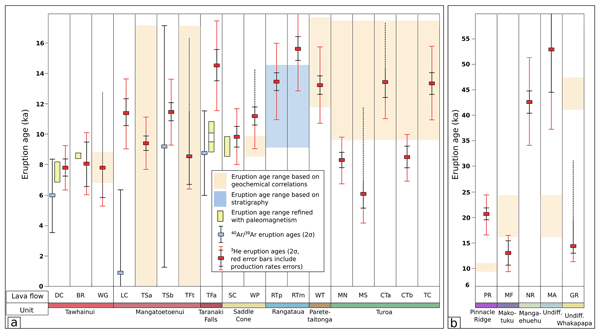
In this study, we use cosmogenic-sourced 3He to determine the eruption ages of 23 lava flows at Mt Ruapehu, Aotearoa New Zealand, and we show how this method can help overcome challenges associated with traditional dating methods in young lavas. Comparison with other methods demonstrates the accuracy of our data and the method's reliability. The new eruption ages allowed us to identify periods of quasi-simultaneous activity from different volcanic vents during the last 20 000 years.
Maé Catrain, Séverine Fauquette, Odile Peyron, Nathalie Combourieu-Nebout, Vincent Lebreton, Morgane Fischer-Fries, Mary Robles, Viviane Bout-Roumazeilles, Patricia Richard, Marion Delattre, Lionel Dubost, Sébastien Joannin, Amandine Viala, Yul Altolaguirre, Jean-Pierre Suc, Jeanne Lepelletier, and Marie-Hélène Moncel
Clim. Past, 22, 1631–1653, https://doi.org/10.5194/cp-22-1631-2026, https://doi.org/10.5194/cp-22-1631-2026, 2026
Short summary
Short summary
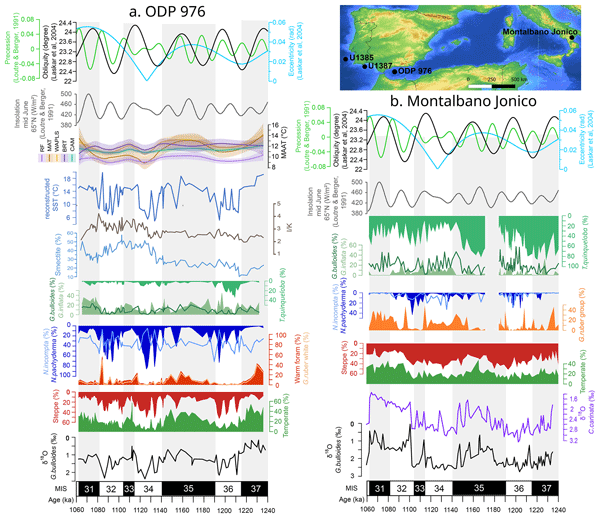
This multiproxy study investigates changes in climate cyclicity at Early-Middle Pleistocene Transition. Clay mineralogy analysis highlights a sudden change in oceanic and atmospheric circulation in the Alboran Basin around 1140 ka. Pollen, foraminifera and faunal data suggest that the climate and vegetation of this region are more likely to be influenced by variations in precipitation, hinting at major differences between the Iberian Peninsula and southern Italy.
Gabriel Fénisse, Aurélien Quiquet, Masa Kageyama, Pierre-Henri Blard, and David Vincent Bekaert
EGUsphere, https://doi.org/10.5194/egusphere-2026-3988, https://doi.org/10.5194/egusphere-2026-3988, 2026
Short summary
Short summary
We study how European temperatures changed since the Last Glacial Maximum using climate models. We compare several global models and a simplified model. Results show that winter temperature changes, together with sensitivity experiments on greenhouse gases, ice-sheet properties, ocean circulation, vegetation, and radiative processes, explain most model differences. The largest disagreements occur near former ice sheets. This highlights key uncertainties in past climate estimates.
Nicolás Acuña Reyes, Léo Martin, Adrien Gilbert, Vincent Jomelli, Antoine Rabatel, Simon Filhol, Deborah Verfaillie, Pierre-Henri Blard, and Jérôme Lavé
EGUsphere, https://doi.org/10.5194/egusphere-2026-2638, https://doi.org/10.5194/egusphere-2026-2638, 2026
Short summary
Short summary
Glacier landforms are often used to reconstruct past climate, but the same glacier shape can result from different combinations of temperature and snowfall. Using computer simulations of glaciers in the Bolivian Andes, we show that climate reconstructions based on a single glacier can lead to large uncertainties. By combining several neighboring glaciers, we estimate temperatures about 0.8°C cooler during the Little Ice Age and 1.3°C cooler during the Early Holocene (~10,000 years ago).
Nicolas Harrichhausen, Léo Marconato, Laurence Audin, Pierre Lacan, Stéphane Baize, Hervé Jomard, Alexandra Alvarado, James Hollingsworth, Pierre-Henri Blard, Patricia Ann Mothes, Frédérique Rolandone, and Iván Dario Ortiz Martin
Solid Earth, 17, 763–787, https://doi.org/10.5194/se-17-763-2026, https://doi.org/10.5194/se-17-763-2026, 2026
Short summary
Short summary
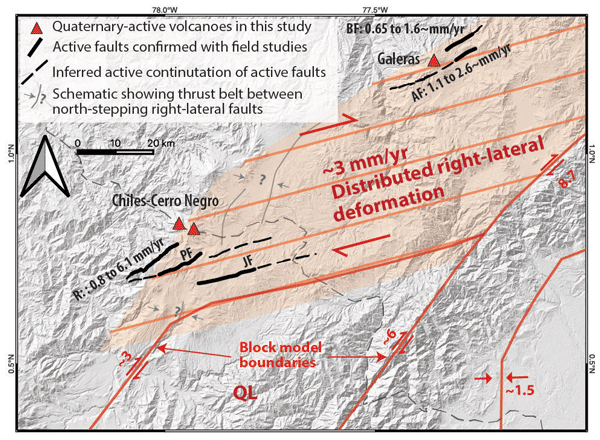
Tectonic plates can be broken into smaller blocks with deformation concentrated at their boundaries. We use remote sensing and field studies to investigate how faulting accommodates deformation at the northern boundary of the Quito-Latacunga microblock (Ecuador & Colombia). We show this boundary is a wide zone characterized by several parallel faults capable of hosting moderate to large (<M7) earthquakes, such as the one in 2022, and which may be influenced by nearby volcanism.
Liz Charton, Nathalie Combourieu-Nebout, Adele Bertini, Odile Peyron, Mary Robles, Vincent Lebreton, and Marie-Hélène Moncel
Clim. Past, 22, 747–781, https://doi.org/10.5194/cp-22-747-2026, https://doi.org/10.5194/cp-22-747-2026, 2026
Short summary
Short summary
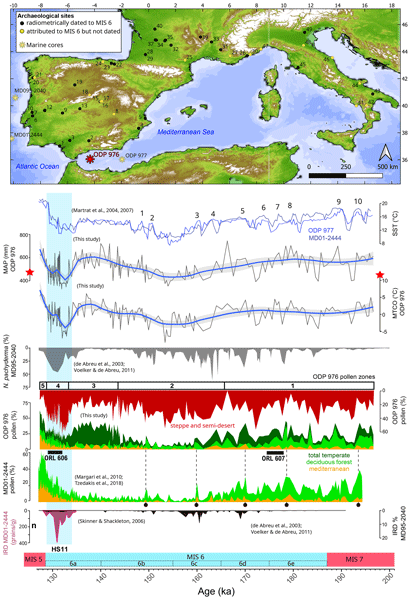
New high-resolution pollen data and pollen-inferred climatic reconstructions from the Alboran Sea reveal rapid climate oscillations during Marine Isotope Stage 6 (187–130 ka BP) in the southwestern Mediterranean. Three main phases show shifts from cool-humid to cold-arid and then wetter conditions, with Heinrich Stadial 11 marking severe cooling and steppe expansion. Neanderthals persisted regionally, though HS11 may have contributed to population decline and the end of the Lower Palaeolithic.
Lucas Dugerdil, Sébastien Joannin, Odile Peyron, Shafag Bayramova, Xiaozhong Huang, Fahu Chen, Dilfuza Egamberdieva, Jakhongir Alimov, Bazartseren Boldgiv, Amy Cromartie, Juzhi Hou, Lilit Sahakyan, Khachatur Meliksetian, Salomé Ansanay-Alex, Rafig Safarov, Imran Muradi, Shabnam Isayeva, Shehla Mirzayeva, Elshan Abdullayev, Sayyara Ibadullayeva, Parvana Garakhani, and Guillemette Ménot
Biogeosciences, 23, 1013–1042, https://doi.org/10.5194/bg-23-1013-2026, https://doi.org/10.5194/bg-23-1013-2026, 2026
Short summary
Short summary
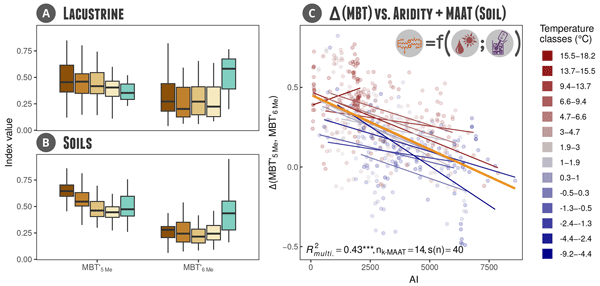
Branched glycerol dialkyl glycerol tetraethers (brGDGTs) are bacterial lipids preserved in soils and sediments, used as climate proxies. This study presents the Arid Central Asian brGDGT surface database to assess their reliability in drylands. Results show that salinity, sample type, pH, and aridity strongly influence brGDGT signals, limiting temperature reconstructions. Refined calibrations improve reconstruction accuracy, and methylation index differences may indicate aridity variations.
Lisa Ardoin, Catherine Larose, Jean-Louis Tison, Christoph Keuschnig, Vasileios Gkinis, Saïda El Amri, Pierre-Henry Blard, Paul Bierman, Thomas Blunier, Dorthe Dahl-Jensen, Charlotte Maistriau, Jørgen-Peder Steffensen, Thomas Röckmann, and François Fripiat
EGUsphere, https://doi.org/10.5194/egusphere-2025-6204, https://doi.org/10.5194/egusphere-2025-6204, 2026
Short summary
Short summary
We investigated gas dynamics at the ice–bed interface of two Greenland ice cores to assess methane and carbon dioxide behaviour beneath ice sheets. At Camp Century, methane diffuses into the ice and is partly oxidized. At GRIP, methane remains preserved despite oxygen. These contrasts suggest that methane oxidation is controlled by local basal conditions, including ice thickness and substrate availability.
Amy Cromartie, Cindy De Jonge, Guillemette Ménot, Mary Robles, Lucas Dugerdil, Odile Peyron, Marta Rodrigo-Gámiz, Jon Camuera, Maria Jose Ramos-Roman, Gonzalo Jiménez-Moreno, Claude Colombié, Lilit Sahakyan, and Sébastien Joannin
Biogeosciences, 22, 7687–7708, https://doi.org/10.5194/bg-22-7687-2025, https://doi.org/10.5194/bg-22-7687-2025, 2025
Short summary
Short summary
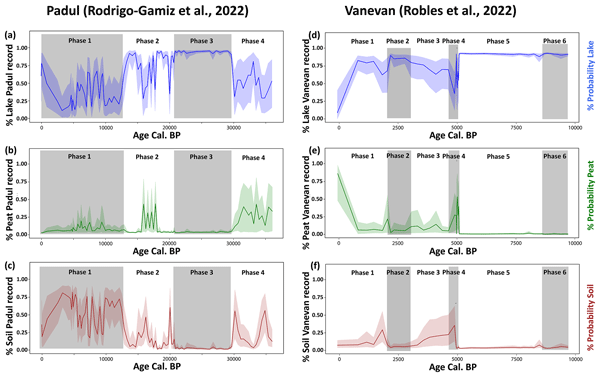
BrGDGT (branched glycerol dialkyl glycerol tetraethers) are a molecular biomarker utilized for paleotemperature reconstructions. One issue, however, with utilizing brGDGTs is that the distribution differs in relation to sediment environments (i.e., peat, lake, soil). We utilize the probability estimate outputs from five machine learning algorithms and a new modern brGDGT database to track provenance change and apply these models to two downcore records utilizing pollen, non-pollen polymorphs, and XRF (X-ray fluorescence) to confirm the models’ accuracy.
Léa d'Oliveira, Sébastien Joannin, Guillemette Ménot, Nathalie Combourieu-Nebout, Lucas Dugerdil, Marion Blache, Mary Robles, Assunta Florenzano, Alessia Masi, Anna Maria Mercuri, Laura Sadori, Marie Balasse, and Odile Peyron
Clim. Past, 21, 2331–2359, https://doi.org/10.5194/cp-21-2331-2025, https://doi.org/10.5194/cp-21-2331-2025, 2025
Short summary
Short summary
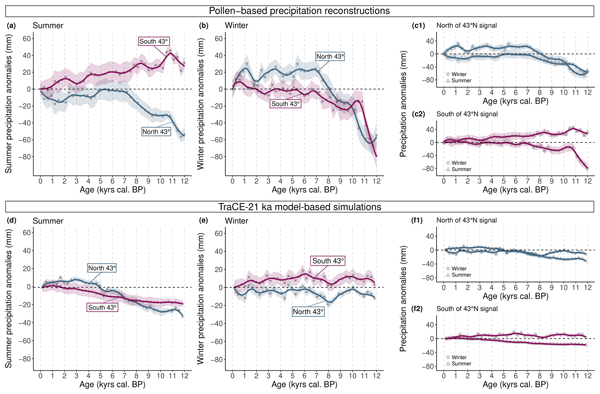
We studied climate change in the central Mediterranean during the Holocene by analysing 38 pollen records. Several methods were used to obtain reliable results on seasonal temperatures and precipitation. Our results show that, during the Holocene, summer temperatures were colder in the south and warmer in the north, with wetter winters and drier summers, especially in the south. Unlike winter conditions, summer ones did not follow variations in insolation, suggesting other factors.
Mary Robles, Valérie Andrieu, Pierre Rochette, Séverine Fauquette, François Demory, Oktay Parlak, Eliane Charrat, Belinda Gambin, and Mehmet Cihat Alçiçek
Clim. Past, 21, 2299–2329, https://doi.org/10.5194/cp-21-2299-2025, https://doi.org/10.5194/cp-21-2299-2025, 2025
Short summary
Short summary
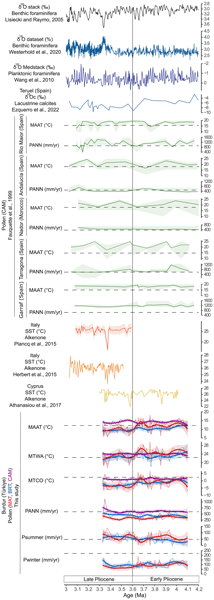
This study aims to characterize the vegetation and lake dynamics based on pollen and Non-Pollen Palynomorph (NPP) proxies, to quantitatively reconstruct climate changes using a multimethod approach and to morphologically characterize the large pollen grains of Poaceae (Cerealia-type).
Catherine M. Collins, Nicolas Perdrial, Pierre-Henri Blard, Nynke Keulen, William C. Mahaney, Halley Mastro, Juliana Souza, Donna M. Rizzo, Yves Marrocchi, Paul C. Knutz, and Paul R. Bierman
Clim. Past, 21, 1359–1381, https://doi.org/10.5194/cp-21-1359-2025, https://doi.org/10.5194/cp-21-1359-2025, 2025
Short summary
Short summary
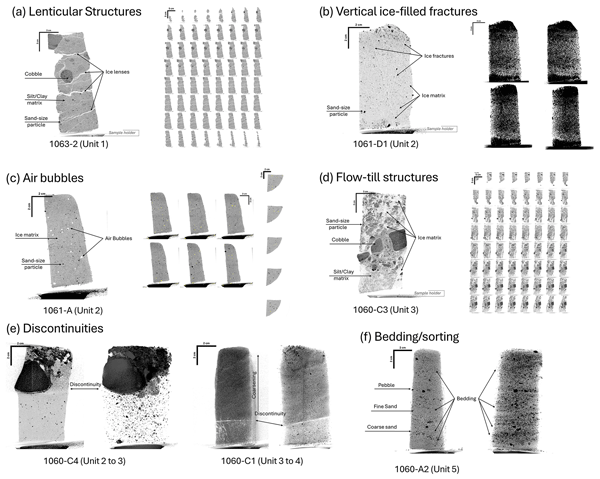
The Camp Century subglacial core stores information about past climates and glacial and interglacial processes in northwestern Greenland. In this study, we investigated the core archive, making large-scale observations using computed tomography (CT) scans and micron-scale observations observing physical and chemical characteristics of individual grains. We find evidence of past ice-free conditions, weathering processes during warmer periods, and past glaciations.
Lucy Timbrell, James Blinkhorn, Margherita Colucci, Michela Leonardi, Manuel Chevalier, Andrea Vittorio Pozzi, Matt Grove, Eleanor Scerri, and Andrea Manica
Clim. Past, 21, 1185–1208, https://doi.org/10.5194/cp-21-1185-2025, https://doi.org/10.5194/cp-21-1185-2025, 2025
Short summary
Short summary
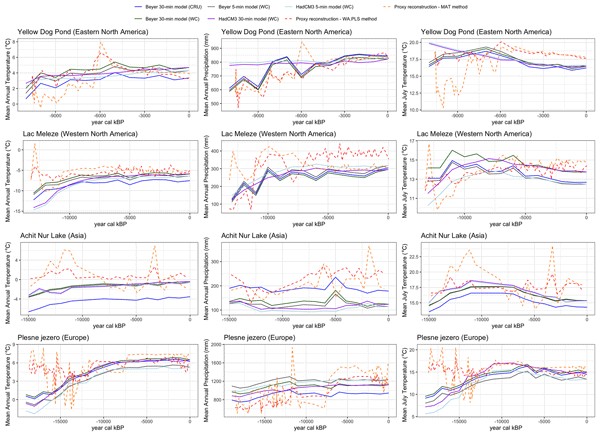
Scientists study past climate change using proxies (e.g. pollen) and models. Proxies offer detailed snapshots but are limited in number, while models provide broader coverage but at low resolution. Models are typically downscaled to 30 arcmin, but it is unclear if this is sufficient. We found that increasing models to 5 arcmin does not improve their coherence with climate reconstructed from pollen data. Optimal model resolution depends on research need, balancing detail with error.
Chenzhi Li, Anne Dallmeyer, Jian Ni, Manuel Chevalier, Matteo Willeit, Andrei A. Andreev, Xianyong Cao, Laura Schild, Birgit Heim, Mareike Wieczorek, and Ulrike Herzschuh
Clim. Past, 21, 1001–1024, https://doi.org/10.5194/cp-21-1001-2025, https://doi.org/10.5194/cp-21-1001-2025, 2025
Short summary
Short summary
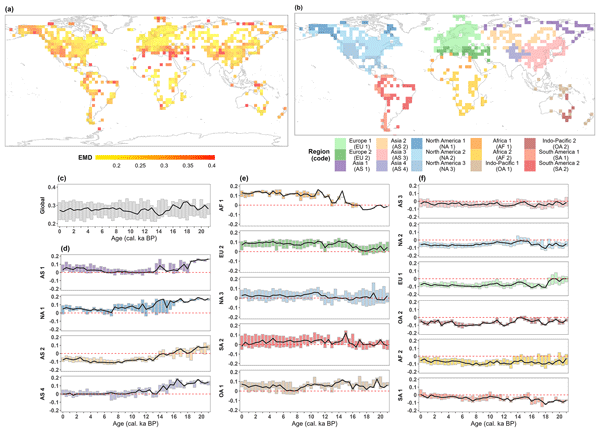
We present global megabiome dynamics and distributions derived from pollen-based reconstructions over the last 21 000 years, which are suitable for the evaluation of Earth-system-model-based paleo-megabiome simulations. We identified strong deviations between pollen- and model-derived megabiome distributions in the circum-Arctic and Tibetan Plateau areas during the Last Glacial Maximum and early deglaciation and in northern Africa and the Mediterranean region during the Holocene.
Dael Sassoon, Nathalie Combourieu-Nebout, Odile Peyron, Adele Bertini, Francesco Toti, Vincent Lebreton, and Marie-Hélène Moncel
Clim. Past, 21, 489–515, https://doi.org/10.5194/cp-21-489-2025, https://doi.org/10.5194/cp-21-489-2025, 2025
Short summary
Short summary
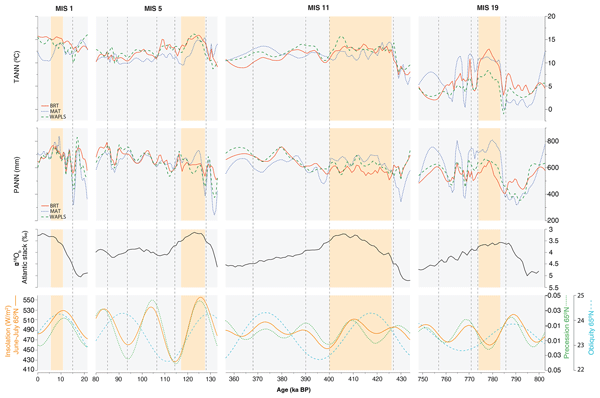
Climatic reconstructions of Marine Isotope Stages (MISs) 19, 11, and 5 and the current interglacial (MIS 1) based on pollen data from a marine core (Alboran Sea) show that, compared with MIS 1, MIS 19 was colder and highly variable, MIS 11 was longer and more stable, and MIS 5 was warmer. There is no real equivalent to the current interglacial, but past interglacials give insights into the sensitivity of the southwestern Mediterranean to global climatic changes in conditions similar to MIS 1.
Paul R. Bierman, Andrew J. Christ, Catherine M. Collins, Halley M. Mastro, Juliana Souza, Pierre-Henri Blard, Stefanie Brachfeld, Zoe R. Courville, Tammy M. Rittenour, Elizabeth K. Thomas, Jean-Louis Tison, and François Fripiat
The Cryosphere, 18, 4029–4052, https://doi.org/10.5194/tc-18-4029-2024, https://doi.org/10.5194/tc-18-4029-2024, 2024
Short summary
Short summary
In 1966, the U.S. Army drilled through the Greenland Ice Sheet at Camp Century, Greenland; they recovered 3.44 m of frozen material. Here, we decipher the material’s history. Water, flowing during a warm interglacial when the ice sheet melted from northwest Greenland, deposited the upper material which contains fossil plant and insect parts. The lower material, separated by more than a meter of ice with some sediment, is till, deposited by the ice sheet during a prior cold period.
Pedro Doll, Shaun Robert Eaves, Ben Matthew Kennedy, Pierre-Henri Blard, Alexander Robert Lee Nichols, Graham Sloan Leonard, Dougal Bruce Townsend, Jim William Cole, Chris Edward Conway, Sacha Baldwin, Gabriel Fénisse, Laurent Zimmermann, and Bouchaïb Tibari
Geochronology, 6, 365–395, https://doi.org/10.5194/gchron-6-365-2024, https://doi.org/10.5194/gchron-6-365-2024, 2024
Short summary
Short summary
In this study, we use cosmogenic-sourced 3He to determine the eruption ages of 23 lava flows at Mt Ruapehu, Aotearoa New Zealand, and we show how this method can help overcome challenges associated with traditional dating methods in young lavas. Comparison with other methods demonstrates the accuracy of our data and the method's reliability. The new eruption ages allowed us to identify periods of quasi-simultaneous activity from different volcanic vents during the last 20 000 years.
Fabio Oriani, Gregoire Mariethoz, and Manuel Chevalier
Earth Syst. Sci. Data, 16, 731–742, https://doi.org/10.5194/essd-16-731-2024, https://doi.org/10.5194/essd-16-731-2024, 2024
Short summary
Short summary
Modern and fossil pollen data contain precious information for reconstructing the climate and environment of the past. However, these data are only achieved for single locations with no continuity in space. We present here a systematic atlas of 194 digital maps containing the spatial estimation of contemporary pollen presence over Europe. This dataset constitutes a free and ready-to-use tool to study climate, biodiversity, and environment in time and space.
Léa d'Oliveira, Lucas Dugerdil, Guillemette Ménot, Allowen Evin, Serge D. Muller, Salomé Ansanay-Alex, Julien Azuara, Colline Bonnet, Laurent Bremond, Mehmet Shah, and Odile Peyron
Clim. Past, 19, 2127–2156, https://doi.org/10.5194/cp-19-2127-2023, https://doi.org/10.5194/cp-19-2127-2023, 2023
Short summary
Short summary
In southern Europe, Holocene climate variability is characterized by a strong heterogeneity whose patterns are still poorly understood. Here, a multi-proxy approach (pollen and biomarkers) is applied to the Canroute sequence to reconstruct the climatic variation over the last 15 000 years in southern Massif Central, France. Results reveal that reconstructions of regional climate trends notably differ depending on proxies and sites, notably concerning the presence of a Holocene thermal maximum.
Ulrike Herzschuh, Thomas Böhmer, Manuel Chevalier, Raphaël Hébert, Anne Dallmeyer, Chenzhi Li, Xianyong Cao, Odile Peyron, Larisa Nazarova, Elena Y. Novenko, Jungjae Park, Natalia A. Rudaya, Frank Schlütz, Lyudmila S. Shumilovskikh, Pavel E. Tarasov, Yongbo Wang, Ruilin Wen, Qinghai Xu, and Zhuo Zheng
Clim. Past, 19, 1481–1506, https://doi.org/10.5194/cp-19-1481-2023, https://doi.org/10.5194/cp-19-1481-2023, 2023
Short summary
Short summary
A mismatch between model- and proxy-based Holocene climate change may partially originate from the poor spatial coverage of climate reconstructions. Here we investigate quantitative reconstructions of mean annual temperature and annual precipitation from 1908 pollen records in the Northern Hemisphere. Trends show strong latitudinal patterns and differ between (sub-)continents. Our work contributes to a better understanding of the global mean.
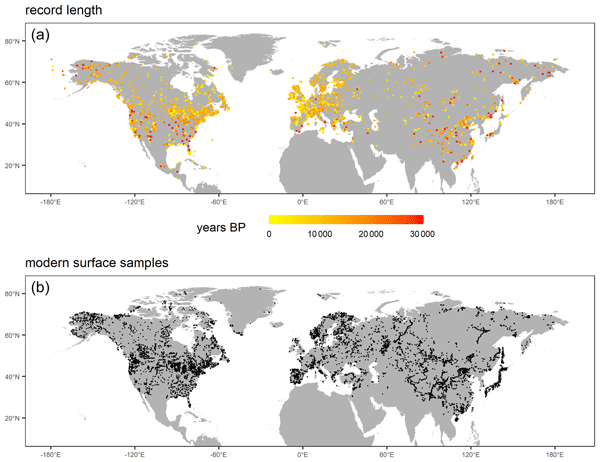
Ulrike Herzschuh, Thomas Böhmer, Chenzhi Li, Manuel Chevalier, Raphaël Hébert, Anne Dallmeyer, Xianyong Cao, Nancy H. Bigelow, Larisa Nazarova, Elena Y. Novenko, Jungjae Park, Odile Peyron, Natalia A. Rudaya, Frank Schlütz, Lyudmila S. Shumilovskikh, Pavel E. Tarasov, Yongbo Wang, Ruilin Wen, Qinghai Xu, and Zhuo Zheng
Earth Syst. Sci. Data, 15, 2235–2258, https://doi.org/10.5194/essd-15-2235-2023, https://doi.org/10.5194/essd-15-2235-2023, 2023
Short summary
Short summary
Climate reconstruction from proxy data can help evaluate climate models. We present pollen-based reconstructions of mean July temperature, mean annual temperature, and annual precipitation from 2594 pollen records from the Northern Hemisphere, using three reconstruction methods (WA-PLS, WA-PLS_tailored, and MAT). Since no global or hemispheric synthesis of quantitative precipitation changes are available for the Holocene so far, this dataset will be of great value to the geoscientific community.
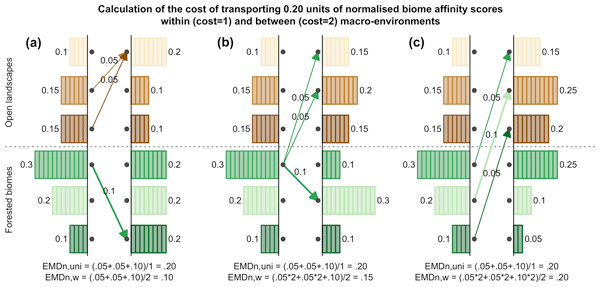
Manuel Chevalier, Anne Dallmeyer, Nils Weitzel, Chenzhi Li, Jean-Philippe Baudouin, Ulrike Herzschuh, Xianyong Cao, and Andreas Hense
Clim. Past, 19, 1043–1060, https://doi.org/10.5194/cp-19-1043-2023, https://doi.org/10.5194/cp-19-1043-2023, 2023
Short summary
Short summary
Data–data and data–model vegetation comparisons are commonly based on comparing single vegetation estimates. While this approach generates good results on average, reducing pollen assemblages to single single plant functional type (PFT) or biome estimates can oversimplify the vegetation signal. We propose using a multivariate metric, the Earth mover's distance (EMD), to include more details about the vegetation structure when performing such comparisons.
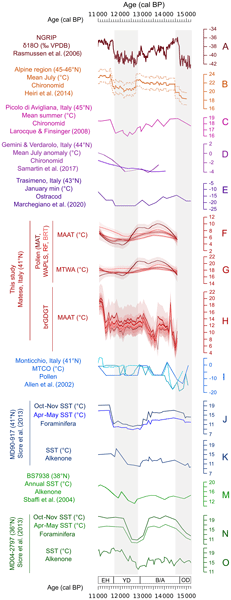
Mary Robles, Odile Peyron, Guillemette Ménot, Elisabetta Brugiapaglia, Sabine Wulf, Oona Appelt, Marion Blache, Boris Vannière, Lucas Dugerdil, Bruno Paura, Salomé Ansanay-Alex, Amy Cromartie, Laurent Charlet, Stephane Guédron, Jacques-Louis de Beaulieu, and Sébastien Joannin
Clim. Past, 19, 493–515, https://doi.org/10.5194/cp-19-493-2023, https://doi.org/10.5194/cp-19-493-2023, 2023
Short summary
Short summary
Quantitative climate reconstructions based on pollen and brGDGTs reveal, for the Late Glacial, a warm Bølling–Allerød and a marked cold Younger Dryas in Italy, showing no latitudinal differences in terms of temperatures across Italy. In terms of precipitation, no latitudinal differences are recorded during the Bølling–Allerød, whereas 40–42° N appears as a key junction point between wetter conditions in southern Italy and drier conditions in northern Italy during the Younger Dryas.
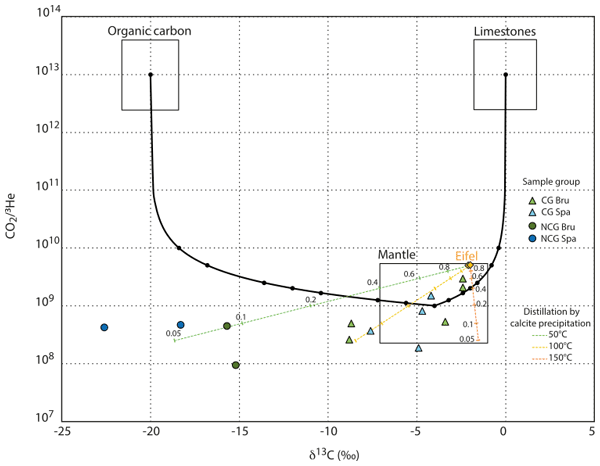
Agathe Defourny, Pierre-Henri Blard, Laurent Zimmermann, Patrick Jobé, Arnaud Collignon, Frédéric Nguyen, and Alain Dassargues
Hydrol. Earth Syst. Sci., 26, 2637–2648, https://doi.org/10.5194/hess-26-2637-2022, https://doi.org/10.5194/hess-26-2637-2022, 2022
Short summary
Short summary
The Belgian city of Spa is known worldwide for its ferruginous and naturally sparkling groundwater springs that gave their name to the bathing tradition commonly called
spa. However, the origin of the dissolved CO2 they contain was still a matter of debate. Thanks to new analysis on groundwater samples, particularly carbon and helium isotopes together with dissolved gases, this study has demonstrated that the volcanic origin of the CO2 is presumably from the neighboring Eifel volcanic fields.
Manuel Chevalier
Clim. Past, 18, 821–844, https://doi.org/10.5194/cp-18-821-2022, https://doi.org/10.5194/cp-18-821-2022, 2022
Short summary
Short summary
This paper introduces a new R package to perform quantitative climate reconstructions from palaeoecological datasets. The package includes calibration data for several commonly used terrestrial (e.g. pollen) and marine (e.g. foraminifers) climate proxies to enable its use in various environments globally. In addition, the built-in graphical diagnostic tools simplify the evaluation and interpretations of the results. No coding skills are required to use crestr.
Cited articles
Arslanov, K. A., Dolukhanov, P. M., and Gei, N. A.: Climate, Black Sea levels and human settlements in Caucasus Littoral 50,000–9000 BP, Quatern. Int., 167–168, 121–127, https://doi.org/10.1016/j.quaint.2007.02.013, 2007.
Bartlein, P. J., Harrison, S. P., Brewer, S., Connor, S., Davis, B. A. S., Gajewski, K., Guiot, J., Harrison-Prentice, T. I., Henderson, A., Peyron, O., Prentice, I. C., Scholze, M., Seppä, H., Shuman, B., Sugita, S., Thompson, R. S., Viau, A. E., Williams, J., and Wu, H.: Pollen-based continental climate reconstructions at 6 and 21 ka: a global synthesis, Clim. Dynam. 37, 775–802, https://doi.org/10.1007/s00382-010-0904-1, 2011.
Bigelow, N. H., Brubaker, L. B., Edwards, M. E., Harrison, S. P., Prentice, I. C., Anderson, P. M., Andreev, A. A., Bartlein, P. J., Christensen, T. R., Cramer, W., Kaplan, J. O., Lozhkin, A. V., Matveyeva, N. V., Murray, D. F., McGuire, A. D., Razzhivin, V. Y., Ritchie, J. C., Smith, B., Walker, D. A., Gajewski, K., Wolf, V., Holmqvist, B. H., Igarashi, Y., Kremenetskii, K., Paus, A., Pisaric, M. F. J., and Volkova, V. S.: Climate change and Arctic ecosystems: 1. Vegetation changes north of 55° N between the last glacial maximum, mid‐Holocene, and present, J. Geophys. Res.-Atmos., 108, 2002JD002558, https://doi.org/10.1029/2002JD002558, 2003.
Binney, H., Edwards, M., Macias-Fauria, M., Lozhkin, A., Anderson, P., Kaplan, J. O., Andreev, A., Bezrukova, E., Blyakharchuk, T., Jankovska, V., Khazina, I., Krivonogov, S., Kremenetski, K., Nield, J., Novenko, E., Ryabogina, N., Solovieva, N., Willis, K., and Zernitskaya, V.: Vegetation of Eurasia from the last glacial maximum to present: Key biogeographic patterns, Quaternary Sci. Rev., 157, 80–97, https://doi.org/10.1016/j.quascirev.2016.11.022, 2017.
Birks, H. J. B.: Quantitative palaeoenvironmental reconstructions, Statistical Modelling of Quaternary Science Data, Quaternary Research Association, Cambridge, Technical Guide No. 5, 161–254, ISBN 0907780121, 1995.
Birks, H. J. B.: Numerical tools in palaeolimnology: progress, potentialities and problems, J. Paleolimnol., 20, 307–332, https://doi.org/10.1023/A:1008038808690, 1998.
Birks, H. J. B. and Seppä, H.: Pollen-based reconstructions of late–Quaternary climate in Europe – progress, problems, and pitfalls, Acta Palaeobotanica, 44, 317–334, 2004
Blaauw, M., Wohlfarth, B., Christen, J. A., Ampel, L., Veres, D., Hughen, K. A., Preusser, F., and Svensson, A.: Were last glacial climate events simultaneous between Greenland and France? A quantitative comparison using non‐tuned chronologies, J. Quat. Sci., 25, 387–394, https://doi.org/10.1002/jqs.1330, 2010.
Bonatti, E.: Pollen sequence in the lake sediments, in: Lanula: an Account of the History and Development of the Lago di Monterosi, Latium, Italy, edited by: Hutchinson, G. E., T. Am. Philos. Soc., 60, 26–31, https://doi.org/10.2307/1005996, 1970.
Bottema, S.: Pollen analytical investigations in Thessaly (Greece), Palaeohistoria, 21, 19–40, 1979.
Braconnot, P., Harrison, S. P., Kageyama, M., Bartlein, P. J., Masson-Delmotte, V., Abe-Ouchi, A., Otto-Bliesner, B., and Zhao, Y.: Evaluation of climate models using palaeoclimatic data, Nat. Clim. Change, 2, 417–424, https://doi.org/10.1038/nclimate1456, 2012.
Brewer, S., Guiot, J., Sánchez-Goñi, M. F., and Klotz, S.: The climate in Europe during the Eemian: a multi-method approach using pollen data, Quaternary Sci. Rev., 27, 2303–2315, https://doi.org/10.1016/j.quascirev.2008.08.029, 2008.
Cao, X. and Tian, F.: Pollen-based biome reconstruction in R, Zenodo [code], https://doi.org/10.5281/zenodo.7523423, 2021.
Cao, X., Tian, F., Dallmeyer, A., and Herzschuh, U.: Northern Hemisphere biome changes (>30° N) since 40 cal ka BP and their driving factors inferred from model-data comparisons, Quaternary Sci. Rev., 220, 291–309, https://doi.org/10.1016/j.quascirev.2019.07.034, 2019.
Cao, X., Tian, F., Herzschuh, U., Ni, J., Xu, Q., Li, W., Zhang, Y., Luo, M., and Chen, F.: Human activities have reduced plant diversity in eastern China over the last two millennia, Glob. Change Biol., 28, 4962–4976, https://doi.org/10.1111/gcb.16274, 2022.
Carrión, J. S. and Dupré-Olivier, M.: Late Quaternary vegetational history of Navarrés, eastern Spain. A two core approach, New Phytol., 134, 177–191, https://doi.org/10.1111/j.1469-8137.1996.tb01157.x, 1996.
Charton, L., Combourieu-Nebout, N., Bertini, A., Lebreton, V., Peyron, O., Robles, M., Sassoon, D., and Moncel, M.-H.: Vegetation and climate changes during the Middle to Upper Palaeolithic transition in the southwestern Mediterranean: What happened to the last Neanderthals during Heinrich stadial 4?, Quaternary Sci. Rev., 359, 109345, https://doi.org/10.1016/j.quascirev.2025.109345, 2025.
Chen, Y., Ni, J., and Herzschuh, U.: Quantifying modern biomes based on surface pollen data in China, Global Planet. Change, 74, 114–131, https://doi.org/10.1016/j.gloplacha.2010.09.002, 2010.
Chevalier, M.: Enabling possibilities to quantify past climate from fossil assemblages at a global scale, Glob. Planet. Change, 175, 27–35, https://doi.org/10.1016/j.gloplacha.2019.01.016, 2019.
Chevalier, M.: crestr: an R package to perform probabilistic climate reconstructions from palaeoecological datasets, Clim. Past, 18, 821–844, https://doi.org/10.5194/cp-18-821-2022, 2022.
Chevalier, M. and Chase, B. M.: Southeast African records reveal a coherent shift from high- to low-latitude forcing mechanisms along the east African margin across last glacial–interglacial transition, Quaternary Sci. Rev., 125, 117–130, https://doi.org/10.1016/j.quascirev.2015.07.009, 2015.
Chevalier, M. and Chase, B. M.: Determining the drivers of long‐term aridity variability: a southern African case study, J. Quaternary Sci., 31, 143–151, https://doi.org/10.1002/jqs.2850, 2016.
Chevalier, M., Cheddadi, R., and Chase, B. M.: CREST (Climate REconstruction SofTware): a probability density function (PDF)-based quantitative climate reconstruction method, Clim. Past, 10, 2081–2098, https://doi.org/10.5194/cp-10-2081-2014, 2014.
Chevalier, M., Davis, B. A. S., Heiri, O., Seppä, H., Chase, B. M., Gajewski, K., Lacourse, T., Telford, R. J., Finsinger, W., Guiot, J., Kühl, N., Maezumi, S. Y., Tipton, J. R., Carter, V. A., Brussel, T., Phelps, L. N., Dawson, A., Zanon, M., Vallé, F., Nolan, C., Mauri, A., De Vernal, A., Izumi, K., Holmström, L., Marsicek, J., Goring, S., Sommer, P. S., Chaput, M., and Kupriyanov, D.: Pollen-based climate reconstruction techniques for late Quaternary studies, Earth-Sci. Rev., 210, 103384, https://doi.org/10.1016/j.earscirev.2020.103384, 2020.
Chevalier, M., Chase, B. M., Quick, L. J., Dupont, L. M., and Johnson, T. C.: Temperature change in subtropical southeastern Africa during the past 790,000 yr, Geology, 49, 71–75, https://doi.org/10.1130/G47841.1, 2021.
Cleator, S. F., Harrison, S. P., Nichols, N. K., Prentice, I. C., and Roulstone, I.: A new multivariable benchmark for Last Glacial Maximum climate simulations, Clim. Past, 16, 699–712, https://doi.org/10.5194/cp-16-699-2020, 2020.
Cruz-Silva, E., Harrison, S. P., Marinova, E., and Prentice, I. C.: A new method based on surface‐sample pollen data for reconstructing palaeovegetation patterns, J. Biogeogr., 49, 1381–1396, https://doi.org/10.1111/jbi.14448, 2022.
Dallmeyer, A., Claussen, M., and Brovkin, V.: Harmonising plant functional type distributions for evaluating Earth system models, Clim. Past, 15, 335–366, https://doi.org/10.5194/cp-15-335-2019, 2019.
Damblon, F.: L'enregistrement palynologique de la sequence pléistocène et holocène de la grotte Walou, in: La grotte Walou à Trooz (Belgique), edited by: Draily, C., Pirson, S., and Toussaint, M., Service public de Wallonie (Etudes et Documents, Archéologie, 21), 84–129, https://www.academia.edu/23006376/Draily_C_Toussaint_M_and_Pirson_S_Dir_2011_La_grotte_Walou_ E0_Trooz_Belgique_Fouilles_de_1996_E0_2004_Volume_ 2_Les_sciences_de_la_vie_et_les_datations_Monographie_ Etudes_et_documents_ArchE9ologie_21_Namur_Service_ public_de_Wallonie_241_p (last access: 25 July 2024), 2011.
Daniau, A.-L., Desprat, S., Aleman, J. C., Bremond, L., Davis, B., Fletcher, W., Marlon, J. R., Marquer, L., Montade, V., Morales-Molino, C., Naughton, F., Rius, D., and Urrego, D. H.: Terrestrial plant microfossils in palaeoenvironmental studies, pollen, microcharcoal and phytolith. Towards a comprehensive understanding of vegetation, fire and climate changes over the past one million years, Rev. Micropaléontologie, 63, 1–35, https://doi.org/10.1016/j.revmic.2019.02.001, 2019.
Davis, B. A. S., Brewer, S., Stevenson, A. C., and Guiot, J.: The temperature of Europe during the Holocene reconstructed from pollen data, Quaternary Sci. Rev., 22, 1701–1716, https://doi.org/10.1016/S0277-3791(03)00173-2, 2003.
Davis, B. A. S., Fasel, M., Kaplan, J. O., Russo, E., and Burke, A.: The climate and vegetation of Europe, northern Africa, and the Middle East during the Last Glacial Maximum (21 000 yr BP) based on pollen data, Clim. Past, 20, 1939–1988, https://doi.org/10.5194/cp-20-1939-2024, 2024.
de Beaulieu, J.-L. and Reille, M.: A long Upper Pleistocene pollen record from Les Echets, near Lyon, France, Boreas, 13, 111–132, https://doi.org/10.1111/j.1502-3885.1984.tb00066.x, 1984.
d'Oliveira, L., Dugerdil, L., Ménot, G., Evin, A., Muller, S. D., Ansanay-Alex, S., Azuara, J., Bonnet, C., Bremond, L., Shah, M., and Peyron, O.: Reconstructing 15 000 years of southern France temperatures from coupled pollen and molecular (branched glycerol dialkyl glycerol tetraether) markers (Canroute, Massif Central), Clim. Past, 19, 2127–2156, https://doi.org/10.5194/cp-19-2127-2023, 2023.
d'Oliveira, L., Joannin, S., Ménot, G., Combourieu-Nebout, N., Dugerdil, L., Blache, M., Robles, M., Florenzano, A., Masi, A., Mercuri, A. M., Sadori, L., Balasse, M., and Peyron, O.: Holocene climate dynamics in the central Mediterranean inferred from pollen data, Clim. Past, 21, 2331–2359, https://doi.org/10.5194/cp-21-2331-2025, 2025.
Dugerdil, L., Ménot, G., Peyron, O., Jouffroy-Bapicot, I., Ansanay-Alex, S., Antheaume, I., Behling, H., Boldgiv, B., Develle, A.-L., Grossi, V., Magail, J., Makou, M., Robles, M., Unkelbach, J., Vannière, B., and Joannin, S.: Late Holocene Mongolian climate and environment reconstructions from brGDGTs, NPPs and pollen transfer functions for Lake Ayrag: Paleoclimate implications for Arid Central Asia, Quaternary Sci. Rev., 273, 107235, https://doi.org/10.1016/j.quascirev.2021.107235, 2021.
Dugerdil, L., Peyron, O., Violle, C., Joannin, S., Ménot, G., Denelle, P., Bruelheide, H., Chytrý, M., Field, R., Hatim, M. Z., Gholizadeh, H., Dolezal, J., Pillar, V. D., Shaltout, K. H., Schrodt, F., and Garnier, E.: Functional Signatures of Surface Pollen and Vegetation Are Broadly Similar: Good News for Past Reconstructions of Vegetation, J. Biogeogr., 52, e15100, https://doi.org/10.1111/jbi.15100, 2025.
Duprat-Oualid, F., Rius, D., Bégeot, C., Magny, M., Millet, L., Wulf, S., and Appelt, O.: Vegetation response to abrupt climate changes in Western Europe from 45 to 14.7k cal a BP: the Bergsee lacustrine record (Black Forest, Germany), J. Quat. Sci., 32, 1008–1021, https://doi.org/10.1002/jqs.2972, 2017.
Dupré Ollivier, M.: Palinologiìa y paleoambiente – nuevos datos españoles referencias, Universidad de Valencia, 160 pp., ISBN 84-7795-000-8, 1988.
Ehlers, J., Giddard, P. L., and Hughes, P. D.: Quaternary Glaciations – Extent and Chronology A Closer Look, Elsevier, ISBN 9780444534477, https://doi.org/10.18814/epiiugs/2008/v31i2/004, 2011.
Fénisse, G., Chevalier, M., Peyron, O., Bekaert, D. V., and Blard, P.-H.: Supplementary materials for the article “Advancing paleoclimate reconstruction of the Last Glacial Maximum in Europe using pollen data: a multi-method (mega)biomization approach” by Fénisse G., Chevalier M., Peyron O., Bekaert D. V., Blard P.-H., OTELO [data set], https://doi.org/10.24396/ORDAR-265, 2026.
Follieri, M., Magri, D., and Sadori, L.: Pollen stratigraphical synthesis from Valle di Castiglione (Roma), Quatern. Int., 3–4, 81–84, https://doi.org/10.1016/1040-6182(89)90076-1, 1989.
Gebhardt, C., Kühl, N., Hense, A., and Litt, T.: Reconstruction of Quaternary temperature fields by dynamically consistent smoothing, Clim. Dynam., 30, 421–437, https://doi.org/10.1007/s00382-007-0299-9, 2008.
Geng, J., Wu, H., Zhang, W., Li, Q., and Yu, Y.: Evolution of global vegetation patterns since the last glacial maximum, Quatern. Int., 729, 109780, https://doi.org/10.1016/j.quaint.2025.109780, 2025.
Giardini, M.: Late Quaternary vegetation history at Stracciacappa (Rome, central Italy), Veg. Hist. Archaeobot., 16, 301–316, https://doi.org/10.1007/s00334-006-0037-y, 2007.
Guido, M. A., Molinari, C., Moneta, V., Branch, N., Black, S., Simmonds, M., Stastney, P., and Montanari, C.: Climate and vegetation dynamics of the Northern Apennines (Italy) during the Late Pleistocene and Holocene, Quaternary Sci. Rev., 231, 106206, https://doi.org/10.1016/j.quascirev.2020.106206, 2020.
Guiot, J.: Methodology of the last climatic cycle reconstruction in France from pollen data. Palaeogeogr. Palaeoclimatol. Palaeoecol. 80, 49–69, https://doi.org/10.1016/0031-0182(90)90033-4, 1990.
Guiot, J., Pons, A., De Beaulieu, J. L., and Reille, M.: A 140,000-year continental climate reconstruction from two European pollen records, Nature, 338, 309–313, https://doi.org/10.1038/338309a0, 1989.
Guiot, J., Reille, M., De Beaulieu, J. L., and Pons, A.: Calibration of the climatic signal in a new pollen sequence from La Grande Pile, Clim. Dynam., 6, 259–264, https://doi.org/10.1007/BF00193539, 1992.
Guiot, J., Harrison, S., and Prentice, I. C.: Reconstructing of Holocene precipitation patterns in Europe using pollen and lake-level Data, Quaternary Res., 40, 139–149, https://doi.org/10.1006/qres.1993.1066, 1993.
Guiot, J., Torre, F., Jolly, D., Peyron, O., Boreux, J. J., and Cheddadi, R.: Inverse vegetation modeling by Monte Carlo sampling to reconstruct palaeoclimates under changed precipitation seasonality and CO2 conditions: application to glacial climate in Mediterranean region, Ecol. Model., 127, 119–140, https://doi.org/10.1016/S0304-3800(99)00219-7, 2000.
Harrison, S. P., Prentice, I. C., Barboni, D., Kohfeld, K. E., Ni, J., and Sutra, J.-P.: Ecophysiological and bioclimatic foundations for a global plant functional classification, J. Veg. Sci., 21, 300–317, https://doi.org/10.1111/j.1654-1103.2009.01144.x, 2010.
Harrison, S. P., Bartlein, P. J., Brewer, S., Prentice, I. C., Boyd, M., Hessler, I., Holmgren, K., Izumi, K., and Willis, K.: Climate model benchmarking with glacial and mid-Holocene climates, Clim. Dynam., 43, 671–688, https://doi.org/10.1007/s00382-013-1922-6, 2014.
Haywood, A. M., Dowsett, H. J., Valdes, P. J., Lunt, D. J., Francis, J. E., and Sellwood, B. W.: Introduction. Pliocene climate, processes and problems, Philos. T. R. Soc. A, 367, 3–17, https://doi.org/10.1098/rsta.2008.0205, 2009.
Hengl, T., Walsh, M. G., Sanderman, J., Wheeler, I., Harrison, S. P., and Prentice, I. C.: Global mapping of potential natural vegetation: an assessment of machine learning algorithms for estimating land potential, PeerJ, 6, e5457, https://doi.org/10.7717/peerj.5457, 2018.
Hersbach, H., Bell, B., Berrisford, P., Hirahara, S., Horányi, A., Muñoz-Sabater, J., Nicolas, J., Peubey, C., Radu, R., Schepers, D., Simmons, A., Soci, C., Abdalla, S., Abellan, X., Balsamo, G., Bechtold, P., Biavati, G., Bidlot, J., Bonavita, M., De Chiara, G., Dahlgren, P., Dee, D., Diamantakis, M., Dragani, R., Flemming, J., Forbes, R., Fuentes, M., Geer, A., Haimberger, L., Healy, S., Hogan, R. J., Hólm, E., Janisková, M., Keeley, S., Laloyaux, P., Lopez, P., Lupu, C., Radnoti, G., De Rosnay, P., Rozum, I., Vamborg, F., Villaume, S., and Thépaut, J.: The ERA5 global reanalysis, Q. J. R. Meteorol. Soc., 146, 1999–2049, https://doi.org/10.1002/qj.3803, 2020.
Herzschuh, U., Böhmer, T., Chevalier, M., Dallmeyer, A., Li, C., Cao, X., Hébert, R., Peyron, O., Nazarova, L., Novenko, E. Y., Park, J., Rudaya, N. A., Schlütz, F., Shumilovskikh, L. S., Tarasov, P. E., Wang, Y., Wen, R., Xu, Q., and Zheng, Z.: Regional pollen-based Holocene temperature and precipitation patterns depart from the Northern Hemisphere mean trends, EGUsphere [preprint], https://doi.org/10.5194/egusphere-2022-127, 2022.
Herzschuh, U., Böhmer, T., Li, C., Chevalier, M., Hébert, R., Dallmeyer, A., Cao, X., Bigelow, N. H., Nazarova, L., Novenko, E. Y., Park, J., Peyron, O., Rudaya, N. A., Schlütz, F., Shumilovskikh, L. S., Tarasov, P. E., Wang, Y., Wen, R., Xu, Q., and Zheng, Z.: LegacyClimate 1.0: a dataset of pollen-based climate reconstructions from 2594 Northern Hemisphere sites covering the last 30 kyr and beyond, Earth Syst. Sci. Data, 15, 2235–2258, https://doi.org/10.5194/essd-15-2235-2023, 2023.
Hughes, P. D., Gibbard, P. L., and Ehlers, J.: Timing of glaciation during the last glacial cycle: evaluating the concept of a global `Last Glacial Maximum' (LGM), Earth-Sci. Rev., 125, 171–198, https://doi.org/10.1016/j.earscirev.2013.07.003, 2013.
Izumi, K., Bartlein, P. J., and Harrison, S. P.: Consistent large‐scale temperature responses in warm and cold climates, Geophys. Res. Lett, 40, 1817–1823, https://doi.org/10.1002/grl.50350, 2013.
Jalut, G., Marti, J. M., Fontugne, M., Delibrias, G., Vilaplana, J. M., and Julia, R.: Glacial to interglacial vegetation changes in the northern and southern Pyrénées: Deglaciation, vegetation cover and chronology, Quaternary Sci. Rev., 11, 449–480, https://doi.org/10.1016/0277-3791(92)90027-6, 1992.
Jost, A., Lunt, D., Kageyama, M., Abe-Ouchi, A., Peyron, O., Valdes, P. J., and Ramstein, G.: High-resolution simulations of the last glacial maximum climate over Europe: a solution to discrepancies with continental palaeoclimatic reconstructions?, Clim. Dynam., 24, 577–590, https://doi.org/10.1007/s00382-005-0009-4, 2005.
Joussaume, S., Taylor, K. E., Braconnot, P., Mitchell, J. F. B., Kutzbach, J. E., Harrison, S. P., Prentice, I. C., Broccoli, A. J., Abe-Ouchi, A., Bartlein, P. J., Bonfils, C., Dong, B., Guiot, J., Herterich, K., Hewitt, C. D., Jolly, D., Kim, J. W., Kislov, A., Kitoh, A., Loutre, M. F., Masson, V., McAvaney, B., McFarlane, N., De Noblet, N., Peltier, W. R., Peterschmitt, J. Y., Pollard, D., Rind, D., Royer, J. F., Schlesinger, M. E., Syktus, J., Thompson, S., Valdes, P., Vettoretti, G., Webb, R. S., and Wyputta, U.: Monsoon changes for 6000 years ago: Results of 18 simulations from the Paleoclimate Modeling Intercomparison Project (PMIP), Geophys. Res. Lett., 26, 859–862, https://doi.org/10.1029/1999GL900126, 1999.
Juggins, S.: Quantitative reconstructions in palaeolimnology: new paradigm or sick science?, Quaternary Sci. Rev., 64, 20–32, https://doi.org/10.1016/j.quascirev.2012.12.014, 2013.
Juggins, S.: Rioja: Analysis of Quaternary Science Data, http://www.staff.ncl.ac.uk/stephen.juggins/ (last access: 23 January 2026), 2020.
Kageyama, M., Harrison, S. P., Kapsch, M.-L., Lofverstrom, M., Lora, J. M., Mikolajewicz, U., Sherriff-Tadano, S., Vadsaria, T., Abe-Ouchi, A., Bouttes, N., Chandan, D., Gregoire, L. J., Ivanovic, R. F., Izumi, K., LeGrande, A. N., Lhardy, F., Lohmann, G., Morozova, P. A., Ohgaito, R., Paul, A., Peltier, W. R., Poulsen, C. J., Quiquet, A., Roche, D. M., Shi, X., Tierney, J. E., Valdes, P. J., Volodin, E., and Zhu, J.: The PMIP4 Last Glacial Maximum experiments: preliminary results and comparison with the PMIP3 simulations, Clim. Past, 17, 1065–1089, https://doi.org/10.5194/cp-17-1065-2021, 2021.
Kaplan, J. O., Bigelow, N. H., Prentice, I. C., Harrison, S. P., Bartlein, P. J., Christensen, T. R., Cramer, W., Matveyeva, N. V., McGuire, A. D., Murray, D. F., Razzhivin, V. Y., Smith, B., Walker, D. A., Anderson, P. M., Andreev, A. A., Brubaker, L. B., Edwards, M. E., and Lozhkin, A. V.: Climate change and Arctic ecosystems: 2. Modeling, paleodata‐model comparisons, and future projections, J. Geophys. Res.-Atmos., 108, 2002JD002559, https://doi.org/10.1029/2002JD002559, 2003.
Kaplan, J. O., Pfeiffer, M., Kolen, J. C. A., and Davis, B. A. S.: Large Scale Anthropogenic Reduction of Forest Cover in Last Glacial Maximum Europe, PLOS ONE 11, e0166726, https://doi.org/10.1371/journal.pone.0166726, 2016.
Kern, O. A., Koutsodendris, A., and Pross, J.: Palynological data for the Late Glacial and Holocene (14.5–0 ka BP) from Füramoos, Southern Germany, Data Brief, 39, 107650, https://doi.org/10.1016/j.dib.2021.107650, 2021.
Kern, O. A., Maier, A., and Vercauteren, N.: Landscape reconstructions for Europe during the late Last Glacial (60–20 ka BP): a pollen-based REVEALS approach, Earth Syst. Sci. Data, 17, 5997–6023, https://doi.org/10.5194/essd-17-5997-2025, 2025.
Kühl, N. and Litt, T.: Quantitative time series reconstruction of Eemian temperature at three European sites using pollen data, Veg. Hist. Archaeobot., 12, 205–214, https://doi.org/10.1007/s00334-003-0019-2, 2003.
Kühl, N., Gebhardt, C., Litt, T., and Hense, A.: Probability Density Functions as Botanical-Climatological Transfer Functions for Climate Reconstruction, Quaternary Res., 58, 381–392, https://doi.org/10.1006/qres.2002.2380, 2002.
Kühl, N., Moschen, R., Wagner, S., Brewer, S., and Peyron, O.: A multiproxy record of late Holocene natural and anthropogenic environmental change from the Sphagnum peat bog Dürres Maar, Germany: implications for quantitative climate reconstructions based on pollen, J. Quat. Sci., 25, 675–688, https://doi.org/10.1002/jqs.1342, 2010.
Küster, H.: Postglaziale Vegetationsgeschichte Südbayerns, Geobotanische Studien zur Prähistorischen Landschaftskunde, Akademie Verlag, Berlin, ISBN 978-3-05-501592-2, 1995.
Li, C., Dallmeyer, A., Ni, J., Chevalier, M., Willeit, M., Andreev, A. A., Cao, X., Schild, L., Heim, B., Wieczorek, M., and Herzschuh, U.: Global biome changes over the last 21 000 years inferred from model–data comparisons, Clim. Past, 21, 1001–1024, https://doi.org/10.5194/cp-21-1001-2025, 2025a.
Li, C., Ni, J., Böhmer, T., Cao, X., Zhou, B., Liao, M., Li, K., Schild, L., Wieczorek, M., Heim, B., and Herzschuh, U.: LegacyPollen2.0: an updated global taxonomically and temporally standardized fossil pollen dataset of 3680 palynological records, PANGAEA [data set], https://doi.org/10.1594/PANGAEA.965907, 2025b.
Liu, M., Prentice, I. C., Ter Braak, C. J. F., and Harrison, S. P.: An improved statistical approach for reconstructing past climates from biotic assemblages, P. Roy. Soc. A, 476, 20200346, https://doi.org/10.1098/rspa.2020.0346, 2020.
Magri, D.: Late Quaternary vegetation history at Lagaccione near Lago di Bolsena (central Italy), Rev. Palaeobot. Palyno., 106, 171–208, https://doi.org/10.1016/S0034-6667(99)00006-8, 1999.
Magri, D. and Sadori, L.: Late Pleistocene and Holocene pollen stratigraphy at Lago di Vico, central Italy, Veg. Hist. Archaeobot, 8, 8, 247–260, https://doi.org/10.1007/BF01291777, 1999.
Magyari, E., Jakab, G., Rudner, E., and Sümegi, P.: Palynological and plant macrofossil data on Late Pleistocene short-term climatic oscillations in NE-Hungary, Acta Palaeobot. Suppl., 2, 491–502, 1999.
Magyari, E. K., Kuneš, P., Jakab, G., Sümegi, P., Pelánková, B., Schäbitz, F., Braun, M., and Chytrý, M.: Late Pleniglacial vegetation in eastern-central Europe: Are there modern analogues in Siberia?, Quaternary Sci. Rev., 95, 60–79, https://doi.org/10.1016/j.quascirev.2014.04.020, 2014.
Magyari, E. K., Pál, I., Vincze, I., Veres, D., Jakab, G., Braun, M., Szalai, Z., Szabó, Z., and Korponai, J.: Warm Younger Dryas summers and early late glacial spread of temperate deciduous trees in the Pannonian Basin during the last glacial termination (20–9 kyr cal BP), Quaternary Sci. Rev., 225, 105980, https://doi.org/10.1016/j.quascirev.2019.105980, 2019.
Margari, V., Gibbard, P. L., Bryant, C. L., and Tzedakis, P. C.: Character of vegetational and environmental changes in southern Europe during the last glacial period; evidence from Lesvos Island, Greece, Quaternary Sci. Rev., 28, 1317–1339, https://doi.org/10.1016/j.quascirev.2009.01.008, 2009.
Marinova, E., Harrison, S. P., Bragg, F., Connor, S., de Laet, V., Leroy, S. A. G., Mudie, P., Atanassova, J., Bozilova, E., Caner, H., Cordova, C., Djamali, M., Filipova-Marinova, M., Gerasimenko, N., Jahns, S., Kouli, K., Kotthoff, U., Kvavadze, E., Lazarova, M., Novenko, E., Ramezani, E., Röpke, A., Shumilovskikh, L., Tanţǎu, I., and Tonkov, S.: Pollen-derived biomes in the Eastern Mediterranean–Black Sea–Caspian-Corridor, J. Biogeogr., 45, 484–499, https://doi.org/10.1111/jbi.13128, 2019.
Martin, C., Ménot, G., Thouveny, N., Peyron, O., Andrieu-Ponel, V., Montade, V., Davtian, N., Reille, M., and Bard, E.: Early Holocene Thermal Maximum recorded by branched tetraethers and pollen in Western Europe (Massif Central, France), Quaternary Sci. Rev., 228, 106109, https://doi.org/10.1016/j.quascirev.2019.106109, 2020.
Mauri, A., Davis, B. A. S., Collins, P. M., and Kaplan, J. O.: The influence of atmospheric circulation on the mid-Holocene climate of Europe: a data–model comparison, Clim. Past, 10, 1925–1938, https://doi.org/10.5194/cp-10-1925-2014, 2014.
Mauri, A., Davis, B. A. S., Collins, P. M., and Kaplan, J. O.: The climate of Europe during the Holocene: a gridded pollen-based reconstruction and its multi-proxy evaluation, Quaternary Sci. Rev., 112, 109–127, https://doi.org/10.1016/j.quascirev.2015.01.013, 2015.
Miebach, A., Niestrath, P., Roeser, P., and Litt, T.: Impacts of climate and humans on the vegetation in northwestern Turkey: palynological insights from Lake Iznik since the Last Glacial, Clim. Past, 12, 575–593, https://doi.org/10.5194/cp-12-575-2016, 2016.
Miola, A., Bondesan, A., Corain, L., Favaretto, S., Mozzi, P., Piovan, S., and Sostizzo, I.: Wetlands in the Venetian Po Plain (northeastern Italy) during the Last Glacial Maximum: Interplay between vegetation, hydrology and sedimentary environment, Rev. Palaeobot. Palyno., 141, 53–81, https://doi.org/10.1016/j.revpalbo.2006.03.016, 2006.
Monegato, G., Ravazzi, C., Donegana, M., Pini, R., Calderoni, G., and Wick, L.: Evidence of a two-fold glacial advance during the last glacial maximum in the Tagliamento end moraine system (eastern Alps), Quaternary Res., 68, 284–302, https://doi.org/10.1016/j.yqres.2007.07.002, 2007.
Netzel, T., Miebach, A., Litt, T., and Hense, A.: New probabilistic methods for quantitative climate reconstructions applied to palynological data from Lake Kinneret, Clim. Past, 21, 357–380, https://doi.org/10.5194/cp-21-357-2025, 2025.
Overpeck, J. T., Webb, T., and Prentice, I. C.: Quantitative Interpretation of Fossil Pollen Spectra: Dissimilarity Coefficients and the Method of Modern Analogs, Quaternary Res., 23, 87–108, https://doi.org/10.1016/0033-5894(85)90074-2, 1985.
Paganelli, A.: Evolution of vegetation and climate in the Veneto-Po Plain during the Late-Glacial and Early Holocene using pollen-stratigraphical data, Alp. Mediterr. Quat., 9, 581–589, 1996.
Peltier, W. R. and Solheim, L. P.: The climate of the Earth at Last Glacial Maximum: statistical equilibrium state and a mode of internal variability, Quaternary Sci. Rev., 23, 335–357, https://doi.org/10.1016/j.quascirev.2003.07.003, 2004.
Pérez-Obiol, R. P. and Julia, R.: Climatic change on the Iberian Peninsula recorded in a 30,000-year pollen record from Lake Banyoles, Quaternary Res., 41, 91–98, 1994.
Peyron, O., Guiot, J., Cheddadi, R., Tarasov, P., Reille, M., De Beaulieu, J.-L., Bottema, S., and Andrieu, V.: Climatic Reconstruction in Europe for 18,000 YR B.P. from Pollen Data, Quaternary Res., 49, 183–196, https://doi.org/10.1006/qres.1997.1961, 1998.
Peyron, O., Bégeot, C., Brewer, S., Heiri, O., Magny, M., Millet, L., Ruffaldi, P., Van Campo, E., and Yu, G.: Late-Glacial climatic changes in Eastern France (Lake Lautrey) from pollen, lake-levels, and chironomids, Quaternary Res., 64, 197–211, https://doi.org/10.1016/j.yqres.2005.01.006, 2005.
Peyron, O., Goring, S., Dormoy, I., Kotthoff, U., Pross, J., de Beaulieu, J.-L., Drescher-Schneider, R., Vannière, B., and Magny, M.: Holocene seasonality changes in the central Mediterranean region reconstructed from the pollen sequences of Lake Accesa (Italy) and Tenaghi Philippon (Greece), The Holocene, 21, 131–146, https://doi.org/10.1177/0959683610384162, 2011.
Peyron, O., Magny, M., Goring, S., Joannin, S., de Beaulieu, J.-L., Brugiapaglia, E., Sadori, L., Garfi, G., Kouli, K., Ioakim, C., and Combourieu-Nebout, N.: Contrasting patterns of climatic changes during the Holocene across the Italian Peninsula reconstructed from pollen data, Clim. Past, 9, 1233–1252, https://doi.org/10.5194/cp-9-1233-2013, 2013.
Pini, R., Ravazzi, C., and Donegana, D.: Pollen stratigraphy, vegetation and climate history of the last 215 ka in the Azzano Decimo core (plain of Friuli, north-eastern Italy), Quaternary Sci. Rev., 28, 1268–1290, https://doi.org/10.1016/j.quascirev.2008.12.017, 2009.
Prentice, I. C. and Webb III, T.: BIOME 6000: reconstructing global mid‐Holocene vegetation patterns from palaeoecological records, J. Biogeogr., 25, 997–1005, https://doi.org/10.1046/j.1365-2699.1998.00235.x, 1998.
Prentice, I. C., Cramer, W., Harrison, S. P., Leemans, R., Monserud, R. A., and Solomon, A. M.: Special Paper: A Global Biome Model Based on Plant Physiology and Dominance, Soil Properties and Climate, J. Biogeogr., 19, 117, https://doi.org/10.2307/2845499, 1992.
Prentice, I. C., Guiot, J., Huntley, B., Jolly, D., and Cheddadi, R.: Reconstructing biomes from palaeoecological data: a general method and its application to European pollen data at 0 and 6 ka, Clim. Dynam., 12, 185–194, https://doi.org/10.1007/BF00211617, 1996.
Prentice, I. C., Harrison, S. P., and Jolly, D.: The climate and biomes of europe at 6000 yr bp: comparison of model simulations and pollen-based reconstructions, Quaternary Sci. Rev., 17, 659-668, https://doi.org/10.1016/S0277-3791(98)00016-X, 1998.
Prentice, I. C., Jolly, D., and BIOME 6000 participants: Mid-Holocene and glacial-maximum vegetation geography of the northern continents and Africa, Journal of Biogeogr., 27, 507–519, https://doi.org/10.1046/j.1365-2699.2000.00425.x, 2000.
Prentice, I. C., Villegas-Diaz, R., and Harrison, S. P.: Accounting for atmospheric carbon dioxide variations in pollen-based reconstruction of past hydroclimates, Glob. Planet. Change, 211, 103790, https://doi.org/10.1016/j.gloplacha.2022.103790, 2022.
Ramstein, G., Kageyama, M., Guiot, J., Wu, H., Hély, C., Krinner, G., and Brewer, S.: How cold was Europe at the Last Glacial Maximum? A synthesis of the progress achieved since the first PMIP model-data comparison, Clim. Past, 3, 331–339, https://doi.org/10.5194/cp-3-331-2007, 2007.
Reille, M. and Andrieu, V.: The late Pleistocene and Holocene in the Lourdes Basin, Western Pyrénées, France: new pollen analytical and chronological data, Veg. Hist. Archaeobot., 4, 1–21, https://doi.org/10.1007/BF00198611, 1995.
Reimer, P. J., Austin, W. E. N., Bard, E., Bayliss, A., Blackwell, P. G., Bronk Ramsey, C., Butzin, M., Cheng, H., Edwards, R. L., Friedrich, M., Grootes, P. M., Guilderson, T. P., Hajdas, I., Heaton, T. J., Hogg, A. G., Hughen, K. A., Kromer, B., Manning, S. W., Muscheler, R., Palmer, J. G., Pearson, C., Van Der Plicht, J., Reimer, R. W., Richards, D. A., Scott, E. M., Southon, J. R., Turney, C. S. M., Wacker, L., Adolphi, F., Büntgen, U., Capano, M., Fahrni, S. M., Fogtmann-Schulz, A., Friedrich, R., Köhler, P., Kudsk, S., Miyake, F., Olsen, J., Reinig, F., Sakamoto, M., Sookdeo, A., and Talamo, S.: The IntCal20 Northern Hemisphere Radiocarbon Age Calibration Curve (0–55 cal kBP), Radiocarbon, 62, 725–757, https://doi.org/10.1017/RDC.2020.41, 2020.
Robles, M., Peyron, O., Ménot, G., Brugiapaglia, E., Wulf, S., Appelt, O., Blache, M., Vannière, B., Dugerdil, L., Paura, B., Ansanay-Alex, S., Cromartie, A., Charlet, L., Guédron, S., de Beaulieu, J.-L., and Joannin, S.: Climate changes during the Late Glacial in southern Europe: new insights based on pollen and brGDGTs of Lake Matese in Italy, Clim. Past, 19, 493–515, https://doi.org/10.5194/cp-19-493-2023, 2023.
Sadori, L., Koutsodendris, A., Panagiotopoulos, K., Masi, A., Bertini, A., Combourieu-Nebout, N., Francke, A., Kouli, K., Joannin, S., Mercuri, A. M., Peyron, O., Torri, P., Wagner, B., Zanchetta, G., Sinopoli, G., and Donders, T. H.: Pollen-based paleoenvironmental and paleoclimatic change at Lake Ohrid (south-eastern Europe) during the past 500 ka, Biogeosciences, 13, 1423–1437, https://doi.org/10.5194/bg-13-1423-2016, 2016.
Salonen, J. S., Korpela, M., Williams, J. W., and Luoto, M.: Machine-learning based reconstructions of primary and secondary climate variables from North American and European fossil pollen data, Sci. Rep., 9, 15805, https://doi.org/10.1038/s41598-019-52293-4, 2019.
Sánchez Goñi, M. F., Desprat, S., Daniau, A.-L., Bassinot, F. C., Polanco-Martínez, J. M., Harrison, S. P., Allen, J. R. M., Anderson, R. S., Behling, H., Bonnefille, R., Burjachs, F., Carrión, J. S., Cheddadi, R., Clark, J. S., Combourieu-Nebout, N., Mustaphi, Colin. J. Courtney, Debusk, G. H., Dupont, L. M., Finch, J. M., Fletcher, W. J., Giardini, M., González, C., Gosling, W. D., Grigg, L. D., Grimm, E. C., Hayashi, R., Helmens, K., Heusser, L. E., Hill, T., Hope, G., Huntley, B., Igarashi, Y., Irino, T., Jacobs, B., Jiménez-Moreno, G., Kawai, S., Kershaw, A. P., Kumon, F., Lawson, I. T., Ledru, M.-P., Lézine, A.-M., Liew, P. M., Magri, D., Marchant, R., Margari, V., Mayle, F. E., McKenzie, G. M., Moss, P., Müller, S., Müller, U. C., Naughton, F., Newnham, R. M., Oba, T., Pérez-Obiol, R., Pini, R., Ravazzi, C., Roucoux, K. H., Rucina, S. M., Scott, L., Takahara, H., Tzedakis, P. C., Urrego, D. H., van Geel, B., Valencia, B. G., Vandergoes, M. J., Vincens, A., Whitlock, C. L., Willard, D. A., and Yamamoto, M.: The ACER pollen and charcoal database: a global resource to document vegetation and fire response to abrupt climate changes during the last glacial period, Earth Syst. Sci. Data, 9, 679–695, https://doi.org/10.5194/essd-9-679-2017, 2017.
Sassoon, D., Combourieu-Nebout, N., Peyron, O., Bertini, A., Toti, F., Lebreton, V., and Moncel, M.-H.: Pollen-based climatic reconstructions for the interglacial analogues of MIS 1 (MIS 19, 11, and 5) in the southwestern Mediterranean: insights from ODP Site 976, Clim. Past, 21, 489–515, https://doi.org/10.5194/cp-21-489-2025, 2025.
Satkunas, J. and Grigienė, A.: Eemian-Weichselian palaeoenvironmental record from the Mickūnai glacial depression (Eastern Lithuania), Geologija, 54, 35–51, https://doi.org/10.6001/geologija.v54i2.2482, 2012.
Seguinot, J., Ivy-Ochs, S., Jouvet, G., Huss, M., Funk, M., and Preusser, F.: Modelling last glacial cycle ice dynamics in the Alps, The Cryosphere, 12, 3265–3285, https://doi.org/10.5194/tc-12-3265-2018, 2018.
Šeirienė, V., Kühl, N., and Kisielienė, D.: Quantitative reconstruction of climate variability during the Eemian (Merkinė) and Weichselian (Nemunas) in Lithuania, Quaternary Res., 82, 229–235, https://doi.org/10.1016/j.yqres.2014.04.004, 2014.
Seltzer, A. M., Blard, P.-H., Sherwood, S. C., and Kageyama, M.: Terrestrial amplification of past, present, and future climate change, Sci. Adv., 9, eadf8119, https://doi.org/10.1126/sciadv.adf8119, 2023.
Sinopoli, G., Masi, A., Regattieri, E., Wagner, B., Francke, A., Peyron, O., and Sadori, L.: Palynology of the Last Interglacial Complex at Lake Ohrid: palaeoenvironmental and palaeoclimatic inferences, Quaternary Sci. Rev., 180, 177–192, https://doi.org/10.1016/j.quascirev.2017.11.013, 2018.
Sirocko, F., Knapp, H., Dreher, F., Förster, M. W., Albert, J., Brunck, H., Veres, D., Dietrich, S., Zech, M., Hambach, U., Röhner, M., Rudert, S., Schwiebus, K., Adams, C., and Sigl, P.: The ELSA-Vegetation-Stack: Reconstruction of Landscape Evolution Zones (LEZ) from laminated Eifel maar sediments of the last 60,000 years, Global Planet. Change, 142, 108–135, https://doi.org/10.1016/j.gloplacha.2016.03.005, 2016.
Strahl, J.: Zur Pollenstratigraphie des Weichselspätglazials von Berlin-Brandenburg [On the palynostratigraphy of the Late Weichselian in Berlin-Brandenburg], Brand. Geowissensch. Beitr., 12, 87–112, 2005.
Tarasov, P. E., Cheddadi, R., Guiot, J., Bottema, S., Peyron, O., Belmonte, J., Ruiz-Sanchez, V., Saadi, F., and Brewer, S.: A method to determine warm and cool steppe biomes from pollen data; application to the Mediterranean and Kazakhstan regions, J. Quaternary Sci., 13, 335–344, https://doi.org/10.1002/(SICI)1099-1417(199807/08)13:4<335::AID-JQS375>3.0.CO;2-A, 1998.
Tarasov, P. E., Peyron, O., Guiot, J., Brewer, S., Volkova, V. S., Bezusko, L. G., Dorofeyuk, N. I., Kvavadze, E. V., Osipova, I. M., and Panova, N. K.: Last Glacial Maximum climate of the former Soviet Union and Mongolia reconstructed from pollen and plant macrofossil data, Clim. Dynam., 15, 227–240, https://doi.org/10.1007/s003820050278, 1999.
Tarasov, P. E., Volkova, V. S., Webb III, T., Guiot, J., Andreev, A. A., Bezusko, L. G., Bykova, G. V., Dorofeyuk, N. I., Kvavadze, E. V., Osipova, I. M., Panova, N. K., and Sevastyanov, D. V.: Last glacial maximum biomes reconstructed from pollen and plant macrofossil data from northern Eurasia, J. Biogeogr., 27, 609–620, https://doi.org/10.1046/j.1365-2699.2000.00429.x, 2000.
Tarasov, P. E., Müller, S., Zech, M., Andreeva, D., Diekmann, B., and Leipe, C.: Last glacial vegetation reconstructions in the extreme-continental eastern Asia: Potentials of pollen and n-alkane biomarker analyses, Quatern. Int., 290–291, 253–263, https://doi.org/10.1016/j.quaint.2012.04.007, 2013.
Ter Braak, C. J. F. and Juggins, S.: Weighted averaging partial least squares regression (WA-PLS): an improved method for reconstructing environmental variables from species assemblages, Hydrobiologia, 485–502, https://doi.org/10.1007/BF00028046, 1993.
Ter Braak, C. J. F. and Looman, W. N. C.: Weighted Averaging, Logistic Regression and the Gaussian Response Model. Vegetation, 65, 1, 3–11, JSTOR, http://www.jstor.org.bases-doc.univ-lorraine.fr/stable/20037257 add (last access: 23 January 2026), 1986.
Tonkov, S., Lazarova, M., Bozilova, E., Ivanov, D., and Snowball, I.: A 30,000-year pollen record from Mire Kupena, Western Rhodopes Mountains (south Bulgaria), Rev. Palaeobot. Palyno., 209, 41–51, https://doi.org/10.1016/j.revpalbo.2014.06.002, 2014.
Trasune, L., Väliranta, M., Stivrins, N., Amon, L., Schenk, F., and Salonen, J. S.: A comparison of plant macrofossil-based quantitative climate reconstruction methods: A case study of the lateglacial Baltic States, Quaternary Sci. Rev., 33, 108811, https://doi.org/10.1016/j.quascirev.2024.108811, 2024.
Tzedakis, P. C., Frogley, M. R., Lawson, I. T., Preece, R. C., Cacho, I., and de Abreu, L.: Ecological thresholds and patterns of millennial-scale climate variability: The response of vegetation in Greece during the last glacial period, Geology, 32, 109–112, https://doi.org/10.1130/G20118.1, 2004.
Valero-Garcés, B. L., González-Sampériz, P., Navas, A., Machin, J., Delgado-Huertas, A., Pena-Monné, J. L., Sancho-Marcén, C., Stevenson, T., and Davis, B.: Paleohydrological fluctuations and steppe vegetation during the last glacial maximum in the central Ebro valley (NE Spain), Quatern. Int., 122, 43–55, https://doi.org/10.1016/j.quaint.2004.01.030, 2004.
Vegas-Vilarrúbia, T., González-Sampériz, P., Morellón, M., GilRomera, G., Pérez-Sanz, A., and Valero-Garcés, B.: Diatom and vegetation responses to late glacial and early holocene climate changes at lake estanya (southern pyrenees, NE spain), Palaeogeogr. Palaeocl., 392, 335–349, https://doi.org/10.1016/j.palaeo.2013.09.011, 2013.
Viau, A. E. and Gajewski, K.: Reconstructing Millennial-Scale, Regional Paleoclimates of Boreal Canada during the Holocene, J. Climate, 22, 316–330, https://doi.org/10.1175/2008JCLI2342.1, 2009.
Watts, W. A., Allen, J. R. M., and Huntley, B.: Vegetation history and palaeoclimate of the last glacial period at Lago grande di Monticchio, southern Italy, Quaternary Sci. Rev., 15, 133–153, https://doi.org/10.1016/0277-3791(95)00093-3, 1996.
Williams, J. W. and Shuman, B.: Obtaining accurate and precise environmental reconstructions from the modern analog technique and North American surface pollen dataset, Quaternary Sci. Rev., 27, 669–687, https://doi.org/10.1016/j.quascirev.2008.01.004, 2008.
Williams, J. W., Grimm, E. C., Blois, J. L., Charles, D. F., Davis, E. B., Goring, S. J., Graham, R. W., Smith, A. J., Anderson, M., Arroyo-Cabrales, J., Ashworth, A. C., Betancourt, J. L., Bills, B. W., Booth, R. K., Buckland, P. I., Curry, B. B., Giesecke, T., Jackson, S. T., Latorre, C., Nichols, J., Purdum, T., Roth, Robert E., Stryker, M., and Takahara, H.: The Neotoma Paleoecology Database, a multiproxy, international, community-curated data resource, Quaternary Res., 89, 156–177, https://doi.org/10.1017/qua.2017.105, 2018.
Wu, H., Guiot, J., Brewer, S., and Guo, Z.: Climatic changes in Eurasia and Africa at the last glacial maximum and mid-Holocene: reconstruction from pollen data using inverse vegetation modelling, Clim. Dynam., 29, 211–229, https://doi.org/10.1007/s00382-007-0231-3, 2007.
Xu, Q., Cao, X., Tian, F., Zhang, S., Li, Y., Li, M., Li, J., Liu, Y., and Liang, J.: Relative pollen productivities of typical steppe species in northern China and their potential in past vegetation reconstruction, Sci. China Earth Sci., 57, 1254–1266, https://doi.org/10.1007/s11430-013-4738-7, 2014.
Xu, Q., Zhang, S., Gaillard, M., Li, M., Cao, X., Tian, F., and Li, F.: Studies of modern pollen assemblages for pollen dispersal- deposition- preservation process understanding and for pollen-based reconstructions of past vegetation, climate, and human impact: A review based on case studies in China, Quaternary Sci. Rev., 149, 151–166, https://doi.org/10.1016/j.quascirev.2016.07.017, 2016.
Zumaque, J., De Vernal, A., Fréchette, B., Guiot, J., Sánchez-Goñi, M. F., Barhoumi, C., Peyron, O., Peros, M., Burke, A., Camuera, J., Jiménez-Moreno, G., and Ramos-Román, M. J.: Decoupled winter and summer climate changes in southern Europe during the Dansgaard-Oeschger cycles, Quaternary Sci. Rev., https://doi.org/10.1016/j.quascirev.2025.109273, 2025.
Short summary
Fossil pollen offers insights into past climates, yet results differ depending on reconstruction methods. By comparing multiple approaches across Europe during the Last Glacial Maximum, we highlight how method choice influences outcomes. Our work introduces a new methodological framework that reduces biases and improves the reliability of climate reconstructions.
Fossil pollen offers insights into past climates, yet results differ depending on reconstruction...


