
Articles | Volume 22, issue 6
https://doi.org/10.5194/cp-22-1159-2026
© Author(s) 2026. This work is distributed under
the Creative Commons Attribution 4.0 License.
the Creative Commons Attribution 4.0 License.
https://doi.org/10.5194/cp-22-1159-2026
© Author(s) 2026. This work is distributed under
the Creative Commons Attribution 4.0 License.
the Creative Commons Attribution 4.0 License.
Research article
| Highlight paper
| 
10 Jun 2026
Research article | Highlight paper |
| 10 Jun 2026
| 10 Jun 2026
Quantitative climate reconstruction from sedimentary ancient DNA: framework, validation and application
Ulrike Herzschuh
CORRESPONDING AUTHOR

Polar Terrestrial Environmental Systems, Alfred Wegener Institute Helmholtz Centre for Polar and Marine Research, Telegrafenberg A45, 14473 Potsdam, Germany
Institute of Environmental Science and Geography, University of Potsdam, Karl-Liebknecht-Str. 24–25, 14476 Potsdam, Germany
Institute of Biochemistry and Biology, University of Potsdam, Karl-Liebknecht-Str. 24–25, 14476 Potsdam, Germany
Thomas Böhmer
Polar Terrestrial Environmental Systems, Alfred Wegener Institute Helmholtz Centre for Polar and Marine Research, Telegrafenberg A45, 14473 Potsdam, Germany
Weihan Jia
Polar Terrestrial Environmental Systems, Alfred Wegener Institute Helmholtz Centre for Polar and Marine Research, Telegrafenberg A45, 14473 Potsdam, Germany
Simeon Lisovski
Polar Terrestrial Environmental Systems, Alfred Wegener Institute Helmholtz Centre for Polar and Marine Research, Telegrafenberg A45, 14473 Potsdam, Germany
Related authors
Laura Schild, Simeon Lisovski, Peter Ewald, Julia Walsch, Danu Caus, and Ulrike Herzschuh
EGUsphere, https://doi.org/10.5194/egusphere-2026-4084, https://doi.org/10.5194/egusphere-2026-4084, 2026
Short summary
Short summary
This study presents a method for turning fossil pollen records into detailed maps of past land cover. Applied to Alaska and western Canada, it reconstructs vegetation change across 119 time periods at 300 m resolution. The maps show mostly stable recent landscapes, stronger changes around 10,000 years ago, and increasing uncertainty further back in time. The dataset helps study long-term ecosystem responses to climate change.
Hongyu Lu, Kathleen R. Stoof-Leichsenring, Josefine Friederike Weiß, Bernhard Diekmann, Heike H. Zimmermann, Lester Lembke-Jene, and Ulrike Herzschuh
EGUsphere, https://doi.org/10.5194/egusphere-2026-3670, https://doi.org/10.5194/egusphere-2026-3670, 2026
This preprint is open for discussion and under review for Biogeosciences (BG).
Short summary
Short summary
Marine sediments preserve organic material transported from land, but identifying its origin remains challenging. We analyzed ancient plant DNA preserved in marine sediments from the North Pacific. The DNA records revealed regional vegetation histories and information about the geographic origin of plant material transported from land to sea. Our results highlight the potential of ancient DNA for studying land–ocean carbon connections in high-latitude regions.
Anne Dallmeyer, Nils Weitzel, Laura Schild, Ulrike Herzschuh, Thomas Kleinen, and Martin Claussen
Clim. Past, 22, 1125–1157, https://doi.org/10.5194/cp-22-1125-2026, https://doi.org/10.5194/cp-22-1125-2026, 2026
Short summary
Short summary
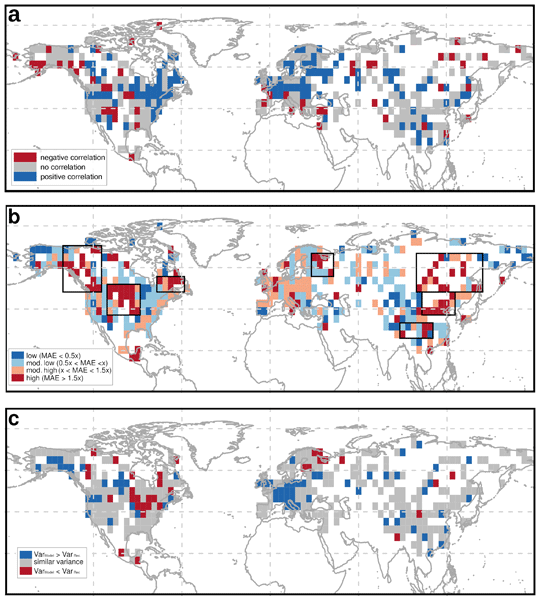
We compare pollen-based reconstructions of Northern Hemisphere tree cover over the last 20 000 years with simulations from the Max-Planck-Institute Earth System Model (MPI-ESM). The model captures broad forest trends but misses key regional patterns and the mid-Holocene forest peak. Testing climate drivers reveals mismatches in how temperature, water, and CO2 control forests, pointing to structural limits and the need for improved vegetation processes in models.
Ingolf Kühn, Christian Hecht, Ulrike Herzschuh, and Dirk Scherler
Web Ecol., 25, 157–168, https://doi.org/10.5194/we-25-157-2025, https://doi.org/10.5194/we-25-157-2025, 2025
Short summary
Short summary
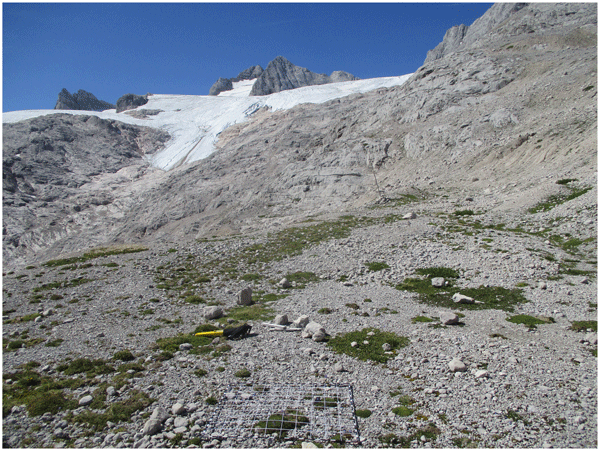
Since 1850, glaciers have retreated in the Alps, providing ground for vegetation succession. Such systems were studied intensively in other parts of the Alps, but excluding the Northern Limestone Alps. Hence, we initiated a long-term research programme, which we introduce here. Initial findings show an increase in plant species richness and cover with age since deglaciation. This is, however, by far slower than observed elsewhere in the Alps, likely due to the specific geology and geomorphology.
Izabella A. Baisheva, Birgit Heim, Jorge García Molinos, Amelie Stieg, Hanno Meyer, Ramesh Glückler, Kathleen R. Stoof-Leichsenring, Antje Eulenburg, Pier Paul Overduin, Evgenii S. Zakharov, Aital V. Egorov, Paraskovya V. Davydova, Lena A. Ushnitskaya, Sardana N. Levina, Ruslan M. Gorodnichev, Robert Jackisch, Antonie Haas, Stefan Kruse, Luidmila A. Pestryakova, and Ulrike Herzschuh
EGUsphere, https://doi.org/10.5194/egusphere-2025-4114, https://doi.org/10.5194/egusphere-2025-4114, 2025
Short summary
Short summary
Our study provides a new comprehensive assessment of the limnological state of 66 lakes in the Central Yakutian alaas landscapes and the Verkhoyansk mountain range. Our analyses suggest that specific lake-type properties within the thermokarst lake sequence seem to drive inorganic, organic, and isotopic lake hydrochemistry. Future warming may lead to less diversification within lake macrophyte assemblages in old alaas lakes.
Lutz Schirrmeister, Margret C. Fuchs, Thomas Opel, Andrei Andreev, Frank Kienast, Andrea Schneider, Larisa Nazarova, Larisa Frolova, Svetlana Kuzmina, Tatiana Kuznetsova, Vladimir Tumskoy, Heidrun Matthes, Gerrit Lohmann, Guido Grosse, Viktor Kunitsky, Hanno Meyer, Heike H. Zimmermann, Ulrike Herzschuh, Thomas Böhmer, Stuart Umbo, Sevi Modestou, Sebastian F. M. Breitenbach, Anfisa Pismeniuk, Georg Schwamborn, Stephanie Kusch, and Sebastian Wetterich
Clim. Past, 21, 1143–1184, https://doi.org/10.5194/cp-21-1143-2025, https://doi.org/10.5194/cp-21-1143-2025, 2025
Short summary
Short summary
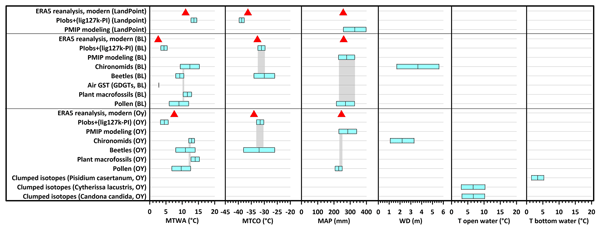
Geochronological, cryolithological, paleoecological, and modeling data reconstruct the Last Interglacial (LIG) climate around the New Siberian Islands and reveal significantly warmer conditions compared to today. The critical challenges in predicting future ecosystem responses lie in the fact that the land–ocean distribution during the LIG was markedly different from today, affecting the degree of continentality, which played a major role in modulating climate and ecosystem dynamics.
Chenzhi Li, Anne Dallmeyer, Jian Ni, Manuel Chevalier, Matteo Willeit, Andrei A. Andreev, Xianyong Cao, Laura Schild, Birgit Heim, Mareike Wieczorek, and Ulrike Herzschuh
Clim. Past, 21, 1001–1024, https://doi.org/10.5194/cp-21-1001-2025, https://doi.org/10.5194/cp-21-1001-2025, 2025
Short summary
Short summary
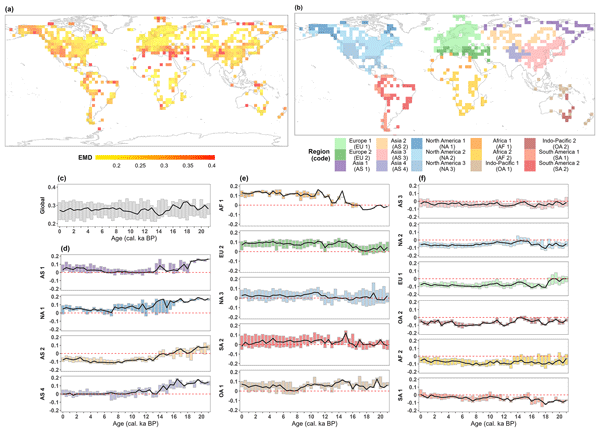
We present global megabiome dynamics and distributions derived from pollen-based reconstructions over the last 21 000 years, which are suitable for the evaluation of Earth-system-model-based paleo-megabiome simulations. We identified strong deviations between pollen- and model-derived megabiome distributions in the circum-Arctic and Tibetan Plateau areas during the Last Glacial Maximum and early deglaciation and in northern Africa and the Mediterranean region during the Holocene.
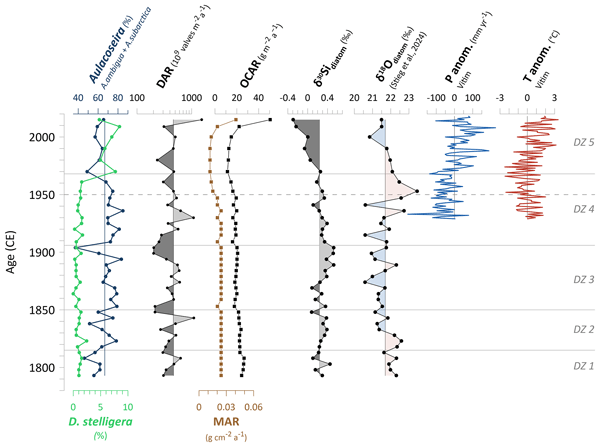
Amelie Stieg, Boris K. Biskaborn, Ulrike Herzschuh, Andreas Marent, Jens Strauss, Dorothee Wilhelms-Dick, Luidmila A. Pestryakova, and Hanno Meyer
Biogeosciences, 22, 2327–2350, https://doi.org/10.5194/bg-22-2327-2025, https://doi.org/10.5194/bg-22-2327-2025, 2025
Short summary
Short summary
Globally, lake ecosystems have undergone significant shifts since the 1950s due to human activities. This study presents a unique ~220-year sediment record from a remote Siberian boreal lake, providing a multiproxy perspective on climate warming and anthropogenic air pollution. Analyses of diatom assemblages, diatom silicon isotopes, and carbon and nitrogen sediment proxies reveal complex biogeochemical interactions, highlighting anthropogenic influences even on remote water resources.
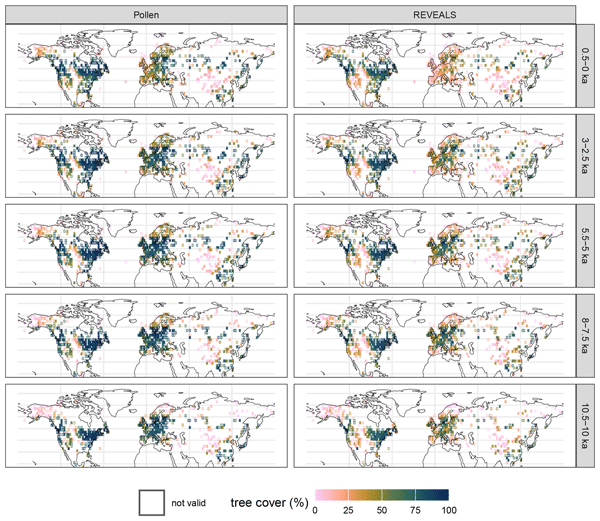
Laura Schild, Peter Ewald, Chenzhi Li, Raphaël Hébert, Thomas Laepple, and Ulrike Herzschuh
Earth Syst. Sci. Data, 17, 2007–2033, https://doi.org/10.5194/essd-17-2007-2025, https://doi.org/10.5194/essd-17-2007-2025, 2025
Short summary
Short summary
This study reconstructed vegetation and tree cover in the Northern Hemisphere from a harmonized dataset of pollen counts from sediment and peat cores for the past 14 000 years. A model was applied to correct for differences in pollen production between different plants, and modern remote-sensing forest cover was used to validate the reconstructed tree cover. Accurate data on past vegetation are invaluable for the investigation of vegetation–climate dynamics and the validation of vegetation models.
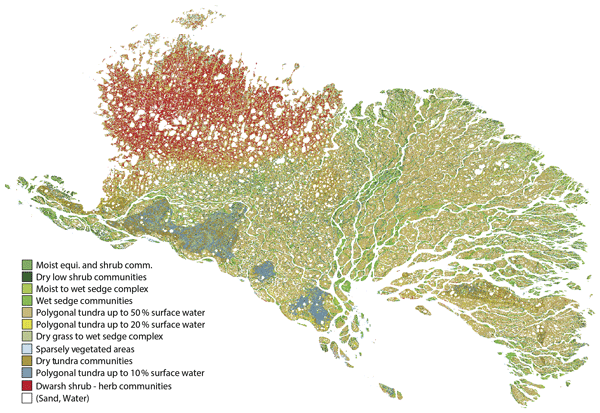
Simeon Lisovski, Alexandra Runge, Iuliia Shevtsova, Nele Landgraf, Anne Morgenstern, Ronald Reagan Okoth, Matthias Fuchs, Nikolay Lashchinskiy, Carl Stadie, Alison Beamish, Ulrike Herzschuh, Guido Grosse, and Birgit Heim
Earth Syst. Sci. Data, 17, 1707–1730, https://doi.org/10.5194/essd-17-1707-2025, https://doi.org/10.5194/essd-17-1707-2025, 2025
Short summary
Short summary
The Lena Delta is the largest river delta in the Arctic and represents a biodiversity hotspot. Here, we describe multiple field datasets and a detailed habitat classification map for the Lena Delta. We present context and methods of these openly available datasets and show how they can improve our understanding of the rapidly changing Arctic tundra system.
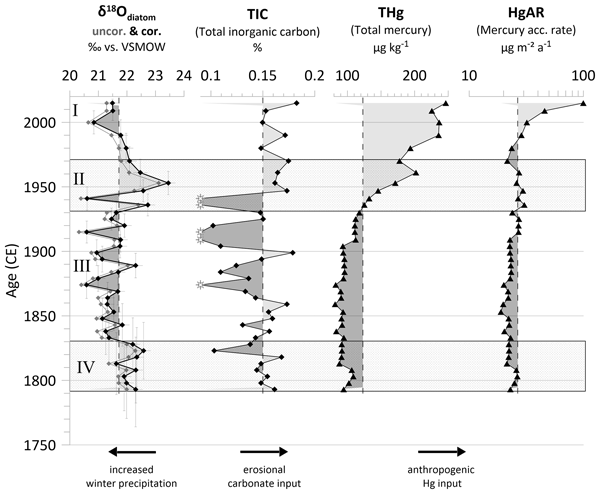
Amelie Stieg, Boris K. Biskaborn, Ulrike Herzschuh, Jens Strauss, Luidmila Pestryakova, and Hanno Meyer
Clim. Past, 20, 909–933, https://doi.org/10.5194/cp-20-909-2024, https://doi.org/10.5194/cp-20-909-2024, 2024
Short summary
Short summary
Siberia is impacted by recent climate warming and experiences extreme hydroclimate events. We present a 220-year-long sub-decadal stable oxygen isotope record of diatoms from Lake Khamra. Our analysis identifies winter precipitation as the key process impacting the isotope variability. Two possible hydroclimatic anomalies were found to coincide with significant changes in lake internal conditions and increased wildfire activity in the region.
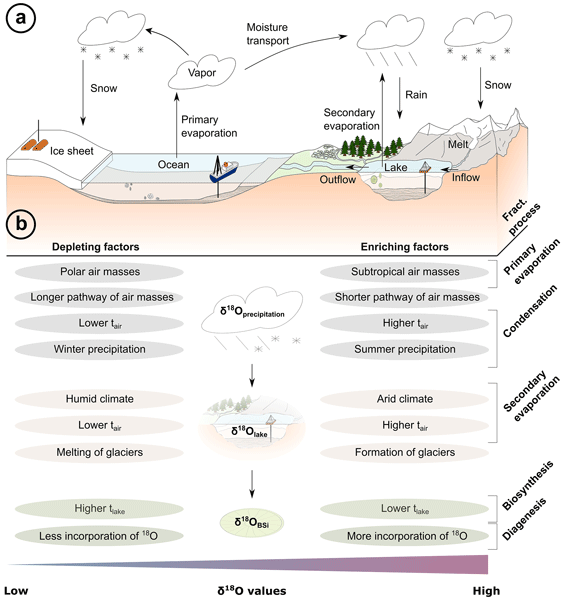
Philip Meister, Anne Alexandre, Hannah Bailey, Philip Barker, Boris K. Biskaborn, Ellie Broadman, Rosine Cartier, Bernhard Chapligin, Martine Couapel, Jonathan R. Dean, Bernhard Diekmann, Poppy Harding, Andrew C. G. Henderson, Armand Hernandez, Ulrike Herzschuh, Svetlana S. Kostrova, Jack Lacey, Melanie J. Leng, Andreas Lücke, Anson W. Mackay, Eniko Katalin Magyari, Biljana Narancic, Cécile Porchier, Gunhild Rosqvist, Aldo Shemesh, Corinne Sonzogni, George E. A. Swann, Florence Sylvestre, and Hanno Meyer
Clim. Past, 20, 363–392, https://doi.org/10.5194/cp-20-363-2024, https://doi.org/10.5194/cp-20-363-2024, 2024
Short summary
Short summary
This paper presents the first comprehensive compilation of diatom oxygen isotope records in lake sediments (δ18OBSi), supported by lake basin parameters. We infer the spatial and temporal coverage of δ18OBSi records and discuss common hemispheric trends on centennial and millennial timescales. Key results are common patterns for hydrologically open lakes in Northern Hemisphere extratropical regions during the Holocene corresponding to known climatic epochs, i.e. the Holocene Thermal Maximum.
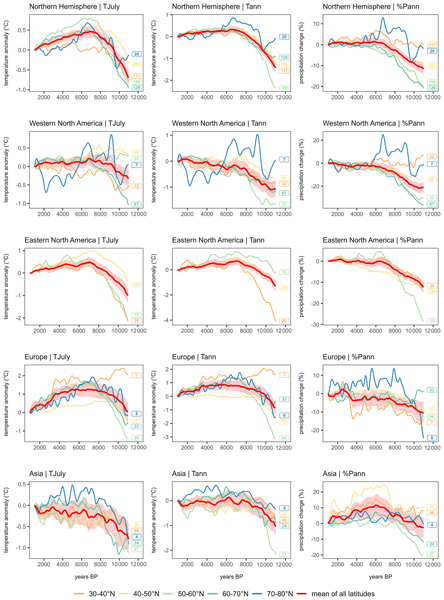
Ulrike Herzschuh, Thomas Böhmer, Manuel Chevalier, Raphaël Hébert, Anne Dallmeyer, Chenzhi Li, Xianyong Cao, Odile Peyron, Larisa Nazarova, Elena Y. Novenko, Jungjae Park, Natalia A. Rudaya, Frank Schlütz, Lyudmila S. Shumilovskikh, Pavel E. Tarasov, Yongbo Wang, Ruilin Wen, Qinghai Xu, and Zhuo Zheng
Clim. Past, 19, 1481–1506, https://doi.org/10.5194/cp-19-1481-2023, https://doi.org/10.5194/cp-19-1481-2023, 2023
Short summary
Short summary
A mismatch between model- and proxy-based Holocene climate change may partially originate from the poor spatial coverage of climate reconstructions. Here we investigate quantitative reconstructions of mean annual temperature and annual precipitation from 1908 pollen records in the Northern Hemisphere. Trends show strong latitudinal patterns and differ between (sub-)continents. Our work contributes to a better understanding of the global mean.
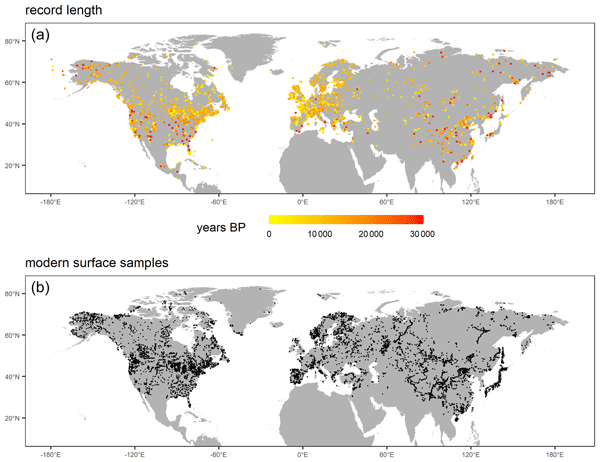
Ulrike Herzschuh, Thomas Böhmer, Chenzhi Li, Manuel Chevalier, Raphaël Hébert, Anne Dallmeyer, Xianyong Cao, Nancy H. Bigelow, Larisa Nazarova, Elena Y. Novenko, Jungjae Park, Odile Peyron, Natalia A. Rudaya, Frank Schlütz, Lyudmila S. Shumilovskikh, Pavel E. Tarasov, Yongbo Wang, Ruilin Wen, Qinghai Xu, and Zhuo Zheng
Earth Syst. Sci. Data, 15, 2235–2258, https://doi.org/10.5194/essd-15-2235-2023, https://doi.org/10.5194/essd-15-2235-2023, 2023
Short summary
Short summary
Climate reconstruction from proxy data can help evaluate climate models. We present pollen-based reconstructions of mean July temperature, mean annual temperature, and annual precipitation from 2594 pollen records from the Northern Hemisphere, using three reconstruction methods (WA-PLS, WA-PLS_tailored, and MAT). Since no global or hemispheric synthesis of quantitative precipitation changes are available for the Holocene so far, this dataset will be of great value to the geoscientific community.
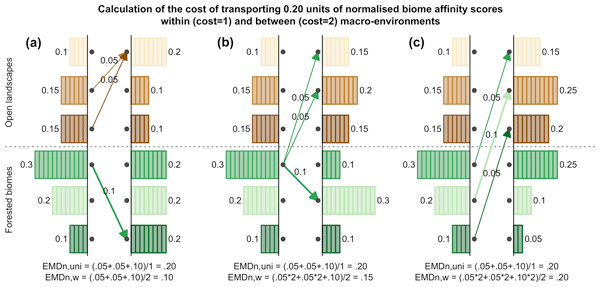
Manuel Chevalier, Anne Dallmeyer, Nils Weitzel, Chenzhi Li, Jean-Philippe Baudouin, Ulrike Herzschuh, Xianyong Cao, and Andreas Hense
Clim. Past, 19, 1043–1060, https://doi.org/10.5194/cp-19-1043-2023, https://doi.org/10.5194/cp-19-1043-2023, 2023
Short summary
Short summary
Data–data and data–model vegetation comparisons are commonly based on comparing single vegetation estimates. While this approach generates good results on average, reducing pollen assemblages to single single plant functional type (PFT) or biome estimates can oversimplify the vegetation signal. We propose using a multivariate metric, the Earth mover's distance (EMD), to include more details about the vegetation structure when performing such comparisons.
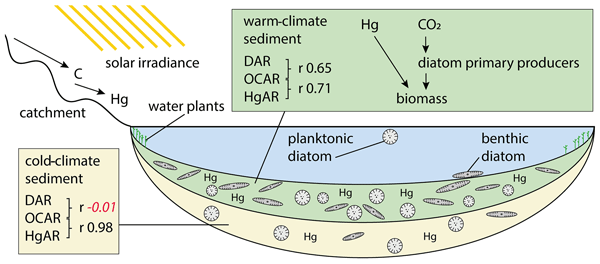
Boris K. Biskaborn, Amy Forster, Gregor Pfalz, Lyudmila A. Pestryakova, Kathleen Stoof-Leichsenring, Jens Strauss, Tim Kröger, and Ulrike Herzschuh
Biogeosciences, 20, 1691–1712, https://doi.org/10.5194/bg-20-1691-2023, https://doi.org/10.5194/bg-20-1691-2023, 2023
Short summary
Short summary
Lake sediment from the Russian Arctic was studied for microalgae and organic matter chemistry dated back to the last glacial 28 000 years. Species and chemistry responded to environmental changes such as the Younger Dryas cold event and the Holocene thermal maximum. Organic carbon accumulation correlated with rates of microalgae deposition only during warm episodes but not during the cold glacial.
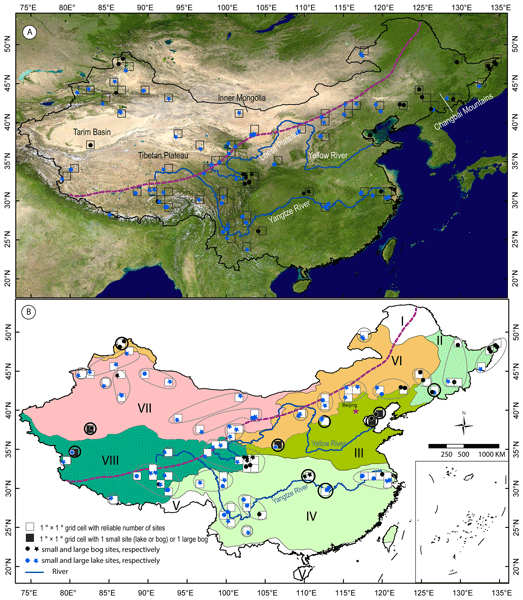
Furong Li, Marie-José Gaillard, Xianyong Cao, Ulrike Herzschuh, Shinya Sugita, Jian Ni, Yan Zhao, Chengbang An, Xiaozhong Huang, Yu Li, Hongyan Liu, Aizhi Sun, and Yifeng Yao
Earth Syst. Sci. Data, 15, 95–112, https://doi.org/10.5194/essd-15-95-2023, https://doi.org/10.5194/essd-15-95-2023, 2023
Short summary
Short summary
The objective of this study is present the first gridded and temporally continuous quantitative plant-cover reconstruction for temperate and northern subtropical China over the last 12 millennia. The reconstructions are based on 94 pollen records and include estimates for 27 plant taxa, 10 plant functional types, and 3 land-cover types. The dataset is suitable for palaeoclimate modelling and the evaluation of simulated past vegetation cover and anthropogenic land-cover change from models.
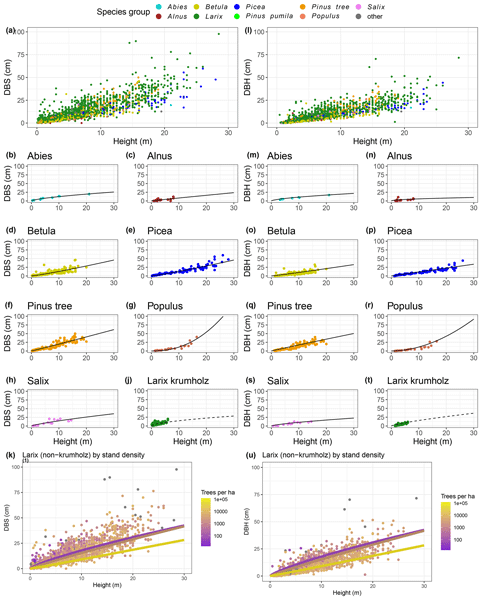
Timon Miesner, Ulrike Herzschuh, Luidmila A. Pestryakova, Mareike Wieczorek, Evgenii S. Zakharov, Alexei I. Kolmogorov, Paraskovya V. Davydova, and Stefan Kruse
Earth Syst. Sci. Data, 14, 5695–5716, https://doi.org/10.5194/essd-14-5695-2022, https://doi.org/10.5194/essd-14-5695-2022, 2022
Short summary
Short summary
We present data which were collected on expeditions to the northeast of the Russian Federation. One table describes the 226 locations we visited during those expeditions, and the other describes 40 289 trees which we recorded at these locations. We found out that important information on the forest cannot be predicted precisely from satellites. Thus, for anyone interested in distant forests, it is important to go to there and take measurements or use data (as presented here).

Femke van Geffen, Birgit Heim, Frederic Brieger, Rongwei Geng, Iuliia A. Shevtsova, Luise Schulte, Simone M. Stuenzi, Nadine Bernhardt, Elena I. Troeva, Luidmila A. Pestryakova, Evgenii S. Zakharov, Bringfried Pflug, Ulrike Herzschuh, and Stefan Kruse
Earth Syst. Sci. Data, 14, 4967–4994, https://doi.org/10.5194/essd-14-4967-2022, https://doi.org/10.5194/essd-14-4967-2022, 2022
Short summary
Short summary
SiDroForest is an attempt to remedy data scarcity regarding vegetation data in the circumpolar region, whilst providing adjusted and labeled data for machine learning and upscaling practices. SiDroForest contains four datasets that include SfM point clouds, individually labeled trees, synthetic tree crowns and labeled Sentinel-2 patches that provide insights into the vegetation composition and forest structure of two important vegetation transition zones in Siberia, Russia.
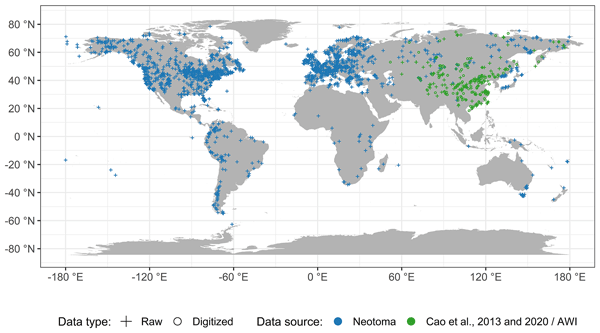
Ulrike Herzschuh, Chenzhi Li, Thomas Böhmer, Alexander K. Postl, Birgit Heim, Andrei A. Andreev, Xianyong Cao, Mareike Wieczorek, and Jian Ni
Earth Syst. Sci. Data, 14, 3213–3227, https://doi.org/10.5194/essd-14-3213-2022, https://doi.org/10.5194/essd-14-3213-2022, 2022
Short summary
Short summary
Pollen preserved in environmental archives such as lake sediments and bogs are extensively used for reconstructions of past vegetation and climate. Here we present LegacyPollen 1.0, a dataset of 2831 fossil pollen records from all over the globe that were collected from publicly available databases. We harmonized the names of the pollen taxa so that all datasets can be jointly investigated. LegacyPollen 1.0 is available as an open-access dataset.
Ramesh Glückler, Rongwei Geng, Lennart Grimm, Izabella Baisheva, Ulrike Herzschuh, Kathleen R. Stoof-Leichsenring, Stefan Kruse, Andrei Andreev, Luidmila Pestryakova, and Elisabeth Dietze
EGUsphere, https://doi.org/10.5194/egusphere-2022-395, https://doi.org/10.5194/egusphere-2022-395, 2022
Preprint archived
Short summary
Short summary
Despite rapidly intensifying wildfire seasons in Siberian boreal forests, little is known about long-term relationships between changes in vegetation and shifts in wildfire activity. Using lake sediment proxies, we reconstruct such environmental changes over the past 10,800 years in Central Yakutia. We find that a more open forest may facilitate increased amounts of vegetation burning. The present-day dense larch forest might yet be mediating the current climate-driven wildfire intensification.
Chenzhi Li, Alexander K. Postl, Thomas Böhmer, Xianyong Cao, Andrew M. Dolman, and Ulrike Herzschuh
Earth Syst. Sci. Data, 14, 1331–1343, https://doi.org/10.5194/essd-14-1331-2022, https://doi.org/10.5194/essd-14-1331-2022, 2022
Short summary
Short summary
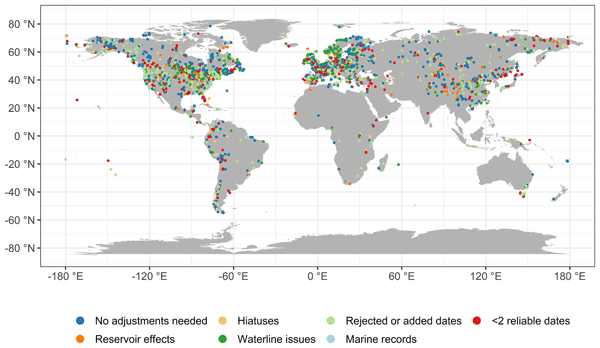
Here we present a global chronology framework of 2831 palynological records, including globally harmonized chronologies covering up to 273 000 years. A comparison with the original chronologies reveals a major improvement according to our assessment. Our chronology framework and revised chronologies will interest a broad geoscientific community, as it provides the opportunity to make use in synthesis studies of, for example, pollen-based vegetation and climate change.
Stefan Kruse, Simone M. Stuenzi, Julia Boike, Moritz Langer, Josias Gloy, and Ulrike Herzschuh
Geosci. Model Dev., 15, 2395–2422, https://doi.org/10.5194/gmd-15-2395-2022, https://doi.org/10.5194/gmd-15-2395-2022, 2022
Short summary
Short summary
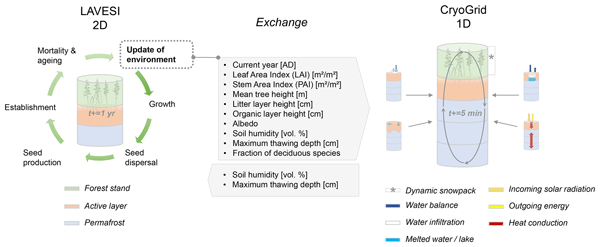
We coupled established models for boreal forest (LAVESI) and permafrost dynamics (CryoGrid) in Siberia to investigate interactions of the diverse vegetation layer with permafrost soils. Our tests showed improved active layer depth estimations and newly included species growth according to their species-specific limits. We conclude that the new model system can be applied to simulate boreal forest dynamics and transitions under global warming and disturbances, expanding our knowledge.

Anne Dallmeyer, Martin Claussen, Stephan J. Lorenz, Michael Sigl, Matthew Toohey, and Ulrike Herzschuh
Clim. Past, 17, 2481–2513, https://doi.org/10.5194/cp-17-2481-2021, https://doi.org/10.5194/cp-17-2481-2021, 2021
Short summary
Short summary
Using the comprehensive Earth system model, MPI-ESM1.2, we explore the global Holocene vegetation changes and interpret them in terms of the Holocene climate change. The model results reveal that most of the Holocene vegetation transitions seen outside the high northern latitudes can be attributed to modifications in the intensity of the global summer monsoons.
Laura Schild, Simeon Lisovski, Peter Ewald, Julia Walsch, Danu Caus, and Ulrike Herzschuh
EGUsphere, https://doi.org/10.5194/egusphere-2026-4084, https://doi.org/10.5194/egusphere-2026-4084, 2026
Short summary
Short summary
This study presents a method for turning fossil pollen records into detailed maps of past land cover. Applied to Alaska and western Canada, it reconstructs vegetation change across 119 time periods at 300 m resolution. The maps show mostly stable recent landscapes, stronger changes around 10,000 years ago, and increasing uncertainty further back in time. The dataset helps study long-term ecosystem responses to climate change.
Hongyu Lu, Kathleen R. Stoof-Leichsenring, Josefine Friederike Weiß, Bernhard Diekmann, Heike H. Zimmermann, Lester Lembke-Jene, and Ulrike Herzschuh
EGUsphere, https://doi.org/10.5194/egusphere-2026-3670, https://doi.org/10.5194/egusphere-2026-3670, 2026
This preprint is open for discussion and under review for Biogeosciences (BG).
Short summary
Short summary
Marine sediments preserve organic material transported from land, but identifying its origin remains challenging. We analyzed ancient plant DNA preserved in marine sediments from the North Pacific. The DNA records revealed regional vegetation histories and information about the geographic origin of plant material transported from land to sea. Our results highlight the potential of ancient DNA for studying land–ocean carbon connections in high-latitude regions.
Anne Dallmeyer, Nils Weitzel, Laura Schild, Ulrike Herzschuh, Thomas Kleinen, and Martin Claussen
Clim. Past, 22, 1125–1157, https://doi.org/10.5194/cp-22-1125-2026, https://doi.org/10.5194/cp-22-1125-2026, 2026
Short summary
Short summary
We compare pollen-based reconstructions of Northern Hemisphere tree cover over the last 20 000 years with simulations from the Max-Planck-Institute Earth System Model (MPI-ESM). The model captures broad forest trends but misses key regional patterns and the mid-Holocene forest peak. Testing climate drivers reveals mismatches in how temperature, water, and CO2 control forests, pointing to structural limits and the need for improved vegetation processes in models.
Ingolf Kühn, Christian Hecht, Ulrike Herzschuh, and Dirk Scherler
Web Ecol., 25, 157–168, https://doi.org/10.5194/we-25-157-2025, https://doi.org/10.5194/we-25-157-2025, 2025
Short summary
Short summary
Since 1850, glaciers have retreated in the Alps, providing ground for vegetation succession. Such systems were studied intensively in other parts of the Alps, but excluding the Northern Limestone Alps. Hence, we initiated a long-term research programme, which we introduce here. Initial findings show an increase in plant species richness and cover with age since deglaciation. This is, however, by far slower than observed elsewhere in the Alps, likely due to the specific geology and geomorphology.
Izabella A. Baisheva, Birgit Heim, Jorge García Molinos, Amelie Stieg, Hanno Meyer, Ramesh Glückler, Kathleen R. Stoof-Leichsenring, Antje Eulenburg, Pier Paul Overduin, Evgenii S. Zakharov, Aital V. Egorov, Paraskovya V. Davydova, Lena A. Ushnitskaya, Sardana N. Levina, Ruslan M. Gorodnichev, Robert Jackisch, Antonie Haas, Stefan Kruse, Luidmila A. Pestryakova, and Ulrike Herzschuh
EGUsphere, https://doi.org/10.5194/egusphere-2025-4114, https://doi.org/10.5194/egusphere-2025-4114, 2025
Short summary
Short summary
Our study provides a new comprehensive assessment of the limnological state of 66 lakes in the Central Yakutian alaas landscapes and the Verkhoyansk mountain range. Our analyses suggest that specific lake-type properties within the thermokarst lake sequence seem to drive inorganic, organic, and isotopic lake hydrochemistry. Future warming may lead to less diversification within lake macrophyte assemblages in old alaas lakes.
Lutz Schirrmeister, Margret C. Fuchs, Thomas Opel, Andrei Andreev, Frank Kienast, Andrea Schneider, Larisa Nazarova, Larisa Frolova, Svetlana Kuzmina, Tatiana Kuznetsova, Vladimir Tumskoy, Heidrun Matthes, Gerrit Lohmann, Guido Grosse, Viktor Kunitsky, Hanno Meyer, Heike H. Zimmermann, Ulrike Herzschuh, Thomas Böhmer, Stuart Umbo, Sevi Modestou, Sebastian F. M. Breitenbach, Anfisa Pismeniuk, Georg Schwamborn, Stephanie Kusch, and Sebastian Wetterich
Clim. Past, 21, 1143–1184, https://doi.org/10.5194/cp-21-1143-2025, https://doi.org/10.5194/cp-21-1143-2025, 2025
Short summary
Short summary
Geochronological, cryolithological, paleoecological, and modeling data reconstruct the Last Interglacial (LIG) climate around the New Siberian Islands and reveal significantly warmer conditions compared to today. The critical challenges in predicting future ecosystem responses lie in the fact that the land–ocean distribution during the LIG was markedly different from today, affecting the degree of continentality, which played a major role in modulating climate and ecosystem dynamics.
Chenzhi Li, Anne Dallmeyer, Jian Ni, Manuel Chevalier, Matteo Willeit, Andrei A. Andreev, Xianyong Cao, Laura Schild, Birgit Heim, Mareike Wieczorek, and Ulrike Herzschuh
Clim. Past, 21, 1001–1024, https://doi.org/10.5194/cp-21-1001-2025, https://doi.org/10.5194/cp-21-1001-2025, 2025
Short summary
Short summary
We present global megabiome dynamics and distributions derived from pollen-based reconstructions over the last 21 000 years, which are suitable for the evaluation of Earth-system-model-based paleo-megabiome simulations. We identified strong deviations between pollen- and model-derived megabiome distributions in the circum-Arctic and Tibetan Plateau areas during the Last Glacial Maximum and early deglaciation and in northern Africa and the Mediterranean region during the Holocene.
Amelie Stieg, Boris K. Biskaborn, Ulrike Herzschuh, Andreas Marent, Jens Strauss, Dorothee Wilhelms-Dick, Luidmila A. Pestryakova, and Hanno Meyer
Biogeosciences, 22, 2327–2350, https://doi.org/10.5194/bg-22-2327-2025, https://doi.org/10.5194/bg-22-2327-2025, 2025
Short summary
Short summary
Globally, lake ecosystems have undergone significant shifts since the 1950s due to human activities. This study presents a unique ~220-year sediment record from a remote Siberian boreal lake, providing a multiproxy perspective on climate warming and anthropogenic air pollution. Analyses of diatom assemblages, diatom silicon isotopes, and carbon and nitrogen sediment proxies reveal complex biogeochemical interactions, highlighting anthropogenic influences even on remote water resources.
Laura Schild, Peter Ewald, Chenzhi Li, Raphaël Hébert, Thomas Laepple, and Ulrike Herzschuh
Earth Syst. Sci. Data, 17, 2007–2033, https://doi.org/10.5194/essd-17-2007-2025, https://doi.org/10.5194/essd-17-2007-2025, 2025
Short summary
Short summary
This study reconstructed vegetation and tree cover in the Northern Hemisphere from a harmonized dataset of pollen counts from sediment and peat cores for the past 14 000 years. A model was applied to correct for differences in pollen production between different plants, and modern remote-sensing forest cover was used to validate the reconstructed tree cover. Accurate data on past vegetation are invaluable for the investigation of vegetation–climate dynamics and the validation of vegetation models.
Simeon Lisovski, Alexandra Runge, Iuliia Shevtsova, Nele Landgraf, Anne Morgenstern, Ronald Reagan Okoth, Matthias Fuchs, Nikolay Lashchinskiy, Carl Stadie, Alison Beamish, Ulrike Herzschuh, Guido Grosse, and Birgit Heim
Earth Syst. Sci. Data, 17, 1707–1730, https://doi.org/10.5194/essd-17-1707-2025, https://doi.org/10.5194/essd-17-1707-2025, 2025
Short summary
Short summary
The Lena Delta is the largest river delta in the Arctic and represents a biodiversity hotspot. Here, we describe multiple field datasets and a detailed habitat classification map for the Lena Delta. We present context and methods of these openly available datasets and show how they can improve our understanding of the rapidly changing Arctic tundra system.
Amelie Stieg, Boris K. Biskaborn, Ulrike Herzschuh, Jens Strauss, Luidmila Pestryakova, and Hanno Meyer
Clim. Past, 20, 909–933, https://doi.org/10.5194/cp-20-909-2024, https://doi.org/10.5194/cp-20-909-2024, 2024
Short summary
Short summary
Siberia is impacted by recent climate warming and experiences extreme hydroclimate events. We present a 220-year-long sub-decadal stable oxygen isotope record of diatoms from Lake Khamra. Our analysis identifies winter precipitation as the key process impacting the isotope variability. Two possible hydroclimatic anomalies were found to coincide with significant changes in lake internal conditions and increased wildfire activity in the region.
Philip Meister, Anne Alexandre, Hannah Bailey, Philip Barker, Boris K. Biskaborn, Ellie Broadman, Rosine Cartier, Bernhard Chapligin, Martine Couapel, Jonathan R. Dean, Bernhard Diekmann, Poppy Harding, Andrew C. G. Henderson, Armand Hernandez, Ulrike Herzschuh, Svetlana S. Kostrova, Jack Lacey, Melanie J. Leng, Andreas Lücke, Anson W. Mackay, Eniko Katalin Magyari, Biljana Narancic, Cécile Porchier, Gunhild Rosqvist, Aldo Shemesh, Corinne Sonzogni, George E. A. Swann, Florence Sylvestre, and Hanno Meyer
Clim. Past, 20, 363–392, https://doi.org/10.5194/cp-20-363-2024, https://doi.org/10.5194/cp-20-363-2024, 2024
Short summary
Short summary
This paper presents the first comprehensive compilation of diatom oxygen isotope records in lake sediments (δ18OBSi), supported by lake basin parameters. We infer the spatial and temporal coverage of δ18OBSi records and discuss common hemispheric trends on centennial and millennial timescales. Key results are common patterns for hydrologically open lakes in Northern Hemisphere extratropical regions during the Holocene corresponding to known climatic epochs, i.e. the Holocene Thermal Maximum.
Ulrike Herzschuh, Thomas Böhmer, Manuel Chevalier, Raphaël Hébert, Anne Dallmeyer, Chenzhi Li, Xianyong Cao, Odile Peyron, Larisa Nazarova, Elena Y. Novenko, Jungjae Park, Natalia A. Rudaya, Frank Schlütz, Lyudmila S. Shumilovskikh, Pavel E. Tarasov, Yongbo Wang, Ruilin Wen, Qinghai Xu, and Zhuo Zheng
Clim. Past, 19, 1481–1506, https://doi.org/10.5194/cp-19-1481-2023, https://doi.org/10.5194/cp-19-1481-2023, 2023
Short summary
Short summary
A mismatch between model- and proxy-based Holocene climate change may partially originate from the poor spatial coverage of climate reconstructions. Here we investigate quantitative reconstructions of mean annual temperature and annual precipitation from 1908 pollen records in the Northern Hemisphere. Trends show strong latitudinal patterns and differ between (sub-)continents. Our work contributes to a better understanding of the global mean.
Ulrike Herzschuh, Thomas Böhmer, Chenzhi Li, Manuel Chevalier, Raphaël Hébert, Anne Dallmeyer, Xianyong Cao, Nancy H. Bigelow, Larisa Nazarova, Elena Y. Novenko, Jungjae Park, Odile Peyron, Natalia A. Rudaya, Frank Schlütz, Lyudmila S. Shumilovskikh, Pavel E. Tarasov, Yongbo Wang, Ruilin Wen, Qinghai Xu, and Zhuo Zheng
Earth Syst. Sci. Data, 15, 2235–2258, https://doi.org/10.5194/essd-15-2235-2023, https://doi.org/10.5194/essd-15-2235-2023, 2023
Short summary
Short summary
Climate reconstruction from proxy data can help evaluate climate models. We present pollen-based reconstructions of mean July temperature, mean annual temperature, and annual precipitation from 2594 pollen records from the Northern Hemisphere, using three reconstruction methods (WA-PLS, WA-PLS_tailored, and MAT). Since no global or hemispheric synthesis of quantitative precipitation changes are available for the Holocene so far, this dataset will be of great value to the geoscientific community.
Manuel Chevalier, Anne Dallmeyer, Nils Weitzel, Chenzhi Li, Jean-Philippe Baudouin, Ulrike Herzschuh, Xianyong Cao, and Andreas Hense
Clim. Past, 19, 1043–1060, https://doi.org/10.5194/cp-19-1043-2023, https://doi.org/10.5194/cp-19-1043-2023, 2023
Short summary
Short summary
Data–data and data–model vegetation comparisons are commonly based on comparing single vegetation estimates. While this approach generates good results on average, reducing pollen assemblages to single single plant functional type (PFT) or biome estimates can oversimplify the vegetation signal. We propose using a multivariate metric, the Earth mover's distance (EMD), to include more details about the vegetation structure when performing such comparisons.
Boris K. Biskaborn, Amy Forster, Gregor Pfalz, Lyudmila A. Pestryakova, Kathleen Stoof-Leichsenring, Jens Strauss, Tim Kröger, and Ulrike Herzschuh
Biogeosciences, 20, 1691–1712, https://doi.org/10.5194/bg-20-1691-2023, https://doi.org/10.5194/bg-20-1691-2023, 2023
Short summary
Short summary
Lake sediment from the Russian Arctic was studied for microalgae and organic matter chemistry dated back to the last glacial 28 000 years. Species and chemistry responded to environmental changes such as the Younger Dryas cold event and the Holocene thermal maximum. Organic carbon accumulation correlated with rates of microalgae deposition only during warm episodes but not during the cold glacial.
Furong Li, Marie-José Gaillard, Xianyong Cao, Ulrike Herzschuh, Shinya Sugita, Jian Ni, Yan Zhao, Chengbang An, Xiaozhong Huang, Yu Li, Hongyan Liu, Aizhi Sun, and Yifeng Yao
Earth Syst. Sci. Data, 15, 95–112, https://doi.org/10.5194/essd-15-95-2023, https://doi.org/10.5194/essd-15-95-2023, 2023
Short summary
Short summary
The objective of this study is present the first gridded and temporally continuous quantitative plant-cover reconstruction for temperate and northern subtropical China over the last 12 millennia. The reconstructions are based on 94 pollen records and include estimates for 27 plant taxa, 10 plant functional types, and 3 land-cover types. The dataset is suitable for palaeoclimate modelling and the evaluation of simulated past vegetation cover and anthropogenic land-cover change from models.
Timon Miesner, Ulrike Herzschuh, Luidmila A. Pestryakova, Mareike Wieczorek, Evgenii S. Zakharov, Alexei I. Kolmogorov, Paraskovya V. Davydova, and Stefan Kruse
Earth Syst. Sci. Data, 14, 5695–5716, https://doi.org/10.5194/essd-14-5695-2022, https://doi.org/10.5194/essd-14-5695-2022, 2022
Short summary
Short summary
We present data which were collected on expeditions to the northeast of the Russian Federation. One table describes the 226 locations we visited during those expeditions, and the other describes 40 289 trees which we recorded at these locations. We found out that important information on the forest cannot be predicted precisely from satellites. Thus, for anyone interested in distant forests, it is important to go to there and take measurements or use data (as presented here).
Femke van Geffen, Birgit Heim, Frederic Brieger, Rongwei Geng, Iuliia A. Shevtsova, Luise Schulte, Simone M. Stuenzi, Nadine Bernhardt, Elena I. Troeva, Luidmila A. Pestryakova, Evgenii S. Zakharov, Bringfried Pflug, Ulrike Herzschuh, and Stefan Kruse
Earth Syst. Sci. Data, 14, 4967–4994, https://doi.org/10.5194/essd-14-4967-2022, https://doi.org/10.5194/essd-14-4967-2022, 2022
Short summary
Short summary
SiDroForest is an attempt to remedy data scarcity regarding vegetation data in the circumpolar region, whilst providing adjusted and labeled data for machine learning and upscaling practices. SiDroForest contains four datasets that include SfM point clouds, individually labeled trees, synthetic tree crowns and labeled Sentinel-2 patches that provide insights into the vegetation composition and forest structure of two important vegetation transition zones in Siberia, Russia.
Ulrike Herzschuh, Chenzhi Li, Thomas Böhmer, Alexander K. Postl, Birgit Heim, Andrei A. Andreev, Xianyong Cao, Mareike Wieczorek, and Jian Ni
Earth Syst. Sci. Data, 14, 3213–3227, https://doi.org/10.5194/essd-14-3213-2022, https://doi.org/10.5194/essd-14-3213-2022, 2022
Short summary
Short summary
Pollen preserved in environmental archives such as lake sediments and bogs are extensively used for reconstructions of past vegetation and climate. Here we present LegacyPollen 1.0, a dataset of 2831 fossil pollen records from all over the globe that were collected from publicly available databases. We harmonized the names of the pollen taxa so that all datasets can be jointly investigated. LegacyPollen 1.0 is available as an open-access dataset.
Ramesh Glückler, Rongwei Geng, Lennart Grimm, Izabella Baisheva, Ulrike Herzschuh, Kathleen R. Stoof-Leichsenring, Stefan Kruse, Andrei Andreev, Luidmila Pestryakova, and Elisabeth Dietze
EGUsphere, https://doi.org/10.5194/egusphere-2022-395, https://doi.org/10.5194/egusphere-2022-395, 2022
Preprint archived
Short summary
Short summary
Despite rapidly intensifying wildfire seasons in Siberian boreal forests, little is known about long-term relationships between changes in vegetation and shifts in wildfire activity. Using lake sediment proxies, we reconstruct such environmental changes over the past 10,800 years in Central Yakutia. We find that a more open forest may facilitate increased amounts of vegetation burning. The present-day dense larch forest might yet be mediating the current climate-driven wildfire intensification.
Chenzhi Li, Alexander K. Postl, Thomas Böhmer, Xianyong Cao, Andrew M. Dolman, and Ulrike Herzschuh
Earth Syst. Sci. Data, 14, 1331–1343, https://doi.org/10.5194/essd-14-1331-2022, https://doi.org/10.5194/essd-14-1331-2022, 2022
Short summary
Short summary
Here we present a global chronology framework of 2831 palynological records, including globally harmonized chronologies covering up to 273 000 years. A comparison with the original chronologies reveals a major improvement according to our assessment. Our chronology framework and revised chronologies will interest a broad geoscientific community, as it provides the opportunity to make use in synthesis studies of, for example, pollen-based vegetation and climate change.
Stefan Kruse, Simone M. Stuenzi, Julia Boike, Moritz Langer, Josias Gloy, and Ulrike Herzschuh
Geosci. Model Dev., 15, 2395–2422, https://doi.org/10.5194/gmd-15-2395-2022, https://doi.org/10.5194/gmd-15-2395-2022, 2022
Short summary
Short summary
We coupled established models for boreal forest (LAVESI) and permafrost dynamics (CryoGrid) in Siberia to investigate interactions of the diverse vegetation layer with permafrost soils. Our tests showed improved active layer depth estimations and newly included species growth according to their species-specific limits. We conclude that the new model system can be applied to simulate boreal forest dynamics and transitions under global warming and disturbances, expanding our knowledge.
Anne Dallmeyer, Martin Claussen, Stephan J. Lorenz, Michael Sigl, Matthew Toohey, and Ulrike Herzschuh
Clim. Past, 17, 2481–2513, https://doi.org/10.5194/cp-17-2481-2021, https://doi.org/10.5194/cp-17-2481-2021, 2021
Short summary
Short summary
Using the comprehensive Earth system model, MPI-ESM1.2, we explore the global Holocene vegetation changes and interpret them in terms of the Holocene climate change. The model results reveal that most of the Holocene vegetation transitions seen outside the high northern latitudes can be attributed to modifications in the intensity of the global summer monsoons.
Cited articles
Alsos, I. G., Sjögren, P., Edwards, M. E., Landvik, J. Y., Gielly, L., Forwick, M., Coissac, E., Brown, A. G., Jakobsen, L. V., Føreid, M. K., and Pedersen, M. W.: Sedimentary ancient DNA from Lake Skartjørna, Svalbard: Assessing the resilience of arctic flora to Holocene climate change, The Holocene, 26, 627–642, https://doi.org/10.1177/0959683615612563, 2016.
Alsos, I. G., Lammers, Y., Yoccoz, N. G., Jørgensen, T., Sjögren, P., Gielly, L., and Edwards, M. E.: Plant DNA metabarcoding of lake sediments: How does it represent the contemporary vegetation, PLoS ONE, 13, e0195403, https://doi.org/10.1371/journal.pone.0195403, 2018.
Alsos, I. G., Prasad, D., Nikolaus, D., Gilles, N., Anne, K., Føreid, M. K., and Consortium, P.: Postglacial species arrival and diversity buildup of northern ecosystems took millennia, Science Advances, https://doi.org/10.1126/sciadv.abo7434, 2022.
Alsos, I. G., Boussange, V., Rijal, D. P., Beaulieu, M., Brown, A. G., Herzschuh, U., Svenning, J.-C., and Pellissier, L.: Using ancient sedimentary DNA to forecast ecosystem trajectories under climate change, Philosophical Transactions of the Royal Society B, https://doi.org/10.1098/rstb.2023.0017, 2024.
Birks, H. H.: Plant macrofossils, in: Tracking Environmental Change Using Lake Sediments, edited by: Smol, J. P., Birks, H. J. B., and Last, W. M., 3, Kluwer Academic Publishers, Dordrecht, 49–74, https://doi.org/10.1007/0-306-47668-1, 2001.
Birks, H. J. B.: Quantitative palaeoenvironmental reconstructions, in: Statistical Modelling of Quaternary Science Data, edited by: Maddy, D. and Brew, J. S., Technical Guide 5, Quaternary Research Association, Cambridge, 161–254, https://www.uib.no/sites/w3.uib.no/files/w2/95/95birks_qpr_in_maddybrew_1.pdf (last access: 12 March 2026), 1995.
Birks, H. J. B.: Contributions of Quaternary botany to modern ecology and biogeography, Plant Ecology & Diversity, 12, 189–385, https://doi.org/10.1080/17550874.2019.1646831, 2019.
Birks, H. J. B. and Seppä, H.: Pollen-based reconstructions of late-Quaternary climate in Europe – progress, problems, and pitfalls, Acta Palaeobotanica, 44, 317–334, 2004.
Birks, H. J. B., Heiri, O., Seppä, H., and Bjune, A. E.: Strengths and weaknesses of quantitative climate reconstructions based on Late-Quaternary biological proxies, The Open Ecology Journal, 3, 68–110, 2010.
Biskaborn, B. K., Herzschuh, U., Bolshiyanov, D., Savelieva, L., and Diekmann, B.: Environmental variability in northeastern Siberia during the last ∼ 13 300 yr inferred from lake diatoms and sediment–geochemical parameters, Palaeogeography, Palaeoclimatology, Palaeoecology, 329–330, 22–36, https://doi.org/10.1016/j.palaeo.2012.02.003, 2012.
Bova, S., Rosenthal, Y., Liu, Z., Godad, S. P., and Yan, M.: Seasonal origin of the thermal maxima at the Holocene and the last interglacial, Nature, 589, 548–553, https://doi.org/10.1038/s41586-020-03155-x, 2021.
Capo, E., Giguet-Covex, C., Rouillard, A., Nota, K., Heintzman, P. D., Vuillemin, A., Ariztegui, D., Arnaud, F., Belle, S., Bertilsson, S., Bigler, C., Bindler, R., Brown, A. G., Clarke, C. L., Crump, S. E., Debroas, D., Englund, G., Ficetola, G. F., Garner, R. E., Gauthier, J., Gregory-Eaves, I., Heinecke, L., Herzschuh, U., Ibrahim, A., Kisand, V., Kjær, K. H., Lammers, Y., Littlefair, J., Messager, E., Monchamp, M.-E., Olajos, F., Orsi, W., Pedersen, M. W., Rijal, D. P., Rydberg, J., Spanbauer, T., Stoof-Leichsenring, K. R., Taberlet, P., Talas, L., Thomas, C., Walsh, D. A., Wang, Y., Willerslev, E., Van Woerkom, A., Zimmermann, H. H., Coolen, M. J. L., Epp, L. S., Domaizon, I., G. Alsos, I., and Parducci, L.: Lake Sedimentary DNA Research on Past Terrestrial and Aquatic Biodiversity: Overview and Recommendations, Quaternary, 4, 6, https://doi.org/10.3390/quat4010006, 2021.
Chevalier, M.: crestr: an R package to perform probabilistic climate reconstructions from palaeoecological datasets, Climate of the Past, 18, 821–844, https://doi.org/10.5194/cp-18-821-2022, 2022.
Chevalier, M.: crestr: A R package to apply the climate reconstruction CREST, R package version 1.4.4, GitHub [code], https://github.com/mchevalier2/crestr (last access: 22 December 2025), 2025.
Chevalier, M., Cheddadi, R., and Chase, B. M.: CREST (Climate REconstruction SofTware): a probability density function (PDF)-based quantitative climate reconstruction method, Climate of the Past, 10, 2081–2098, https://doi.org/10.5194/cp-10-2081-2014, 2014.
Chevalier, M., Davis, B. A. S., Heiri, O., Seppä, H., Chase, B. M., Gajewski, K., Lacourse, T., Telford, R. J., Finsinger, W., Guiot, J., Kühl, N., Maezumi, S. Y., Tipton, J. R., Carter, V. A., Brussel, T., Phelps, L. N., Dawson, A., Zanon, M., Vallé, F., Nolan, C., Mauri, A., De Vernal, A., Izumi, K., Holmström, L., Marsicek, J., Goring, S., Sommer, P. S., Chaput, M., and Kupriyanov, D.: Pollen-based climate reconstruction techniques for late Quaternary studies, Earth-Science Reviews, 210, 103384, https://doi.org/10.1016/j.earscirev.2020.103384, 2020.
Cohen, A. S.: Paleolimnology: The History and Evolution of Lake Systems, Oxford University Press, Oxford, https://doi.org/10.1669/0883-1351(2004)019<0184:BR>2.0.CO;2, 2003.
Courtin, J., Andreev, A. A., Raschke, E., Bala, S., Biskaborn, B. K., Liu, S., Zimmermann, H., Diekmann, B., Stoof-Leichsenring, K. R., Pestryakova, L. A., and Herzschuh, U.: Vegetation Changes in Southeastern Siberia During the Late Pleistocene and the Holocene, Frontiers in Ecology and Evolution, 9, 625096, https://doi.org/10.3389/fevo.2021.625096, 2021.
Courtin, J., Stoof-Leichsenring, K. R., Lisovski, S., Liu, Y., Alsos, I. G., Biskaborn, B. K., Diekmann, B., Melles, M., Wagner, B., Pestryakova, L., Russell, J., Huang, Y., and Herzschuh, U.: Potential plant extinctions with the loss of the Pleistocene mammoth steppe, Nature Communications, 16, 645, https://doi.org/10.1038/s41467-024-55542-x, 2025.
Dallmeyer, A., Kleinen, T., Claussen, M., Weitzel, N., Cao, X., and Herzschuh, U.: The deglacial forest conundrum, Nature Communications, 13, 6035, https://doi.org/10.1038/s41467-022-33646-6, 2022.
De Jonge, C., Hopmans, E. C., Zell, C. I., Kim, J.-H., Schouten, S., and Sinninghe Damsté, J. S.: Occurrence and abundance of 6-methyl branched glycerol dialkyl glycerol tetraethers in soils: Implications for palaeoclimate reconstruction, Geochimica et Cosmochimica Acta, 141, 97–112, https://doi.org/10.1016/j.gca.2014.06.013, 2014.
Eggermont, H. and Heiri, O.: The chironomid-temperature relationship: expression in nature and palaeoenvironmental implications, Biological Reviews, 87, 430–456, https://doi.org/10.1111/j.1469-185X.2011.00206.x, 2012.
Elbrecht, V. and Leese, F.: Can DNA-Based Ecosystem Assessments Quantify Species Abundance? Testing Primer Bias and Biomass – Sequence Relationships with an Innovative Metabarcoding Protocol, PLoS ONE, 10, e0130324, https://doi.org/10.1371/journal.pone.0130324, 2015.
Elith, J. and Leathwick, J. R.: Species Distribution Models: Ecological explanation and prediction across space and time, Annual Review of Ecology, Evolution and Systematics, 40, 677–697, https://doi.org/10.1146/annurev.ecolsys.110308.120159, 2009.
Fick, S. E. and Hijmans, R. J.: WorldClim 2: new 1-km spatial resolution climate surfaces for global land areas, International Journal of Climatology, https://doi.org/10.1002/joc.5086, 2017.
GBIF.org (derived dataset, 7 May 2025): Filtered export of GBIF occurrence data, GBIF.org [data set], https://doi.org/10.15468/dd.3nyb7n, 2025.
Giguet-Covex, C., Ficetola, G. F., Walsh, K., Poulenard, J., Bajard, M., Fouinat, L., Sabatier, P., Gielly, L., Messager, E., Develle, A. L., David, F., Taberlet, P., Brisset, E., Guiter, F., Sinet, R., and Arnaud, F.: New insights on lake sediment DNA from the catchment: importance of taphonomic and analytical issues on the record quality, Scientific Reports, 9, 14676, https://doi.org/10.1038/s41598-019-50339-1, 2019.
Heiri, O. and Lotter, A. F.: How does taxonomic resolution affect chironomid-based temperature reconstruction?, Journal of Paleolimnology, 44, 589–601, https://doi.org/10.1007/s10933-010-9439-z, 2010.
Herzschuh, U., Birks, H. J. B., Mischke, S., Zhang, C., and Böhner, J.: A modern pollen–climate calibration set based on lake sediments from the Tibetan Plateau and its application to a Late Quaternary pollen record from the Qilian Mountains, Journal of Biogeography, 37, 752–766, https://doi.org/10.1111/j.1365-2699.2009.02245.x, 2010.
Herzschuh, U., Li, C., Böhmer, T., Postl, A. K., Heim, B., Andreev, A. A., Cao, X., Wieczorek, M., and Ni, J.: LegacyPollen 1.0: a taxonomically harmonized global late Quaternary pollen dataset of 2831 records with standardized chronologies, Earth System Science Data, 14, 3213–3227, https://doi.org/10.5194/essd-14-3213-2022, 2022.
Herzschuh, U., Böhmer, T., Chevalier, M., Hébert, R., Dallmeyer, A., Li, C., Cao, X., Peyron, O., Nazarova, L., Novenko, E. Y., Park, J., Rudaya, N. A., Schlütz, F., Shumilovskikh, L. S., Tarasov, P. E., Wang, Y., Wen, R., Xu, Q., and Zheng, Z.: Regional pollen-based Holocene temperature and precipitation patterns depart from the Northern Hemisphere mean trends, Climate of the Past, 19, 1481–1506, https://doi.org/10.5194/cp-19-1481-2023, 2023a.
Herzschuh, U., Böhmer, T., Li, C., Chevalier, M., Hébert, R., Dallmeyer, A., Cao, X., Bigelow, N. H., Nazarova, L., Novenko, E. Y., Park, J., Peyron, O., Rudaya, N. A., Schlütz, F., Shumilovskikh, L. S., Tarasov, P. E., Wang, Y., Wen, R., Xu, Q., and Zheng, Z.: LegacyClimate 1.0: a dataset of pollen-based climate reconstructions from 2594 Northern Hemisphere sites covering the last 30 kyr and beyond, Earth System Science Data, 15, 2235–2258, https://doi.org/10.5194/essd-15-2235-2023, 2023b.
Herzschuh, U., Böhmer, T., Jia, W., and Lisovski, S.: Quantitative climate reconstruction from sedimentary ancient DNA: framework, validation and application, Zenodo [code, data set], https://doi.org/10.5281/zenodo.17312185, 2025.
Hijmans, R. J., Phillips, S., Leathwick, J., and Elith, J.: dismo: Species Distribution Modeling, R package version 1.3-16, https://cran.r-project.org/web/packages/dismo (last access: 22 December 2025), 2024.
Hirzel, A. H., Le Lay, G., Helfer, V., Randin, C., and Guisan, A.: Evaluating the ability of habitat suitability models to predict species presences, Ecological Modelling, 199, 142–152, https://doi.org/10.1016/j.ecolmodel.2006.05.017, 2006.
Hu, Y., Si-Moussi, S., and Thuiller, W.: Introduction to deep learning methods for multi-species predictions, Methods in Ecology and Evolution, 16, 228–246, https://doi.org/10.1111/2041-210X.14466, 2025.
Jia, W., Anslan, S., Chen, F., Cao, X., Dong, H., Dulias, K., Gu, Z., Heinecke, L., Jiang, H., Kruse, S., Kang, W., Li, K., Liu, S., Liu, X., Liu, Y., Ni, J., Schwalb, A., Stoof-Leichsenring, K. R., Shen, W., Tian, F., Wang, J., Wang, Y., Wang, Y., Xu, H., Yang, X., Zhang, D., and Herzschuh, U.: Sedimentary ancient DNA reveals past ecosystem and biodiversity changes on the Tibetan Plateau: Overview and prospects, Quaternary Science Reviews, 293, 107703, https://doi.org/10.1016/j.quascirev.2022.107703, 2022.
Juggins, S.: Quantitative reconstructions in palaeolimnology: new paradigm or sick science?, Quaternary Science Reviews, 64, 20–32, https://doi.org/10.1016/j.quascirev.2012.12.014, 2013.
Juggins, S.: rioja: Analysis of Quaternary Science Data, R package version 1.0-7, https://cran.r-project.org/web/packages/rioja (last access: 22 December 2025), 2024.
Kanz, C.: The EMBL Nucleotide Sequence Database, Nucleic Acids Research, 33, D29–D33, https://doi.org/10.1093/nar/gki098, 2004.
Kass, J. M., Muscarella, R., Galante, P. J., Bohl, C., Buitrago-Pinilla, G. E., Boria, R. A., Soley-Guardia, M., and Anderson, R. P.: ENMeval: Automated Tuning and Evaluations of Ecological Niche Models, R package version 2.0.5.2, https://cran.r-project.org/web/packages/ENMeval (last access: 22 December 2025), 2025.
Klemm, J., Herzschuh, U., Pisaric, M. F. J., Telford, R. J., Heim, B., and Pestryakova, L. A.: A pollen-climate transfer function from the tundra and taiga vegetation in Arctic Siberia and its applicability to a Holocene record, Palaeogeography, Palaeoclimatology, Palaeoecology, 386, 702–713, https://doi.org/10.1016/j.palaeo.2013.06.033, 2013.
Kühl, N., Gebhardt, C., Litt, T., and Hense, A.: Probability Density Functions as Botanical-Climatological Transfer Functions for Climate Reconstruction, Quaternary Research, 58, 381–392, https://doi.org/10.1006/qres.2002.2380, 2002.
Leng, M. J. and Marshall, J. D.: Palaeoclimate interpretation of stable isotope data from lake sediment archives, Quaternary Science Reviews, 23, 811–831, https://doi.org/10.1016/j.quascirev.2003.06.012, 2004.
Li, K., Stoof-Leichsenring, K. R., Liu, S., Jia, W., Liao, M., Liu, X., Ni, J., and Herzschuh, U.: Plant sedimentary DNA as a proxy for vegetation reconstruction in eastern and northern Asia, Ecological Indicators, 132, 108303, https://doi.org/10.1016/j.ecolind.2021.108303, 2021.
Lisovski, S. and Schwenkler, R.: GBIF data of plantae occurrences in the Arctic, Zenodo [data set], https://doi.org/10.5281/zenodo.15355018, 2025.
Liu, C., Newell, G., and White, M.: On the selection of thresholds for predicting species occurrence with presence-only data, Ecology and Evolution, 6, 337–348, https://doi.org/10.1002/ece3.1878, 2016.
Liu, S., Kruse, S., Scherler, D., Ree, R. H., Zimmermann, H. H., Stoof-Leichsenring, K. R., Epp, L. S., Mischke, S., and Herzschuh, U.: Sedimentary ancient DNA reveals a threat of warming-induced alpine habitat loss to Tibetan Plateau plant diversity, Nature Communications, 12, 2995, https://doi.org/10.1038/s41467-021-22986-4, 2021.
Liu, Z., Zhu, J., Rosenthal, Y., Zhang, X., Otto-Bliesner, B. L., Timmermann, A., Smith, R. S., Lohmann, G., Zheng, W., and Elison Timm, O.: The Holocene temperature conundrum, Proceedings of the National Academy of Science USA, 111, https://doi.org/10.1073/pnas.1407229111, 2014.
Mayfield, R. J., Rijal, D. P., Heintzman, P. D., Langdon, P. G., Karger, D. N., Brown, A. G., and Alsos, I. G.: Holocene summer temperature reconstruction from plant sedaDNA and chironomids from the northern boreal forest, Quaternary Science Reviews, 345, 109045, https://doi.org/10.1016/j.quascirev.2024.109045, 2024.
Medeiros, A. S., Chipman, M. L., Francis, D. R., Hamerlík, L., Langdon, P., Puleo, P. J. K., Schellinger, G., Steigleder, R., Walker, I. R., Woodroffe, S., and Axford, Y.: A continental-scale chironomid training set for reconstructing Arctic temperatures, Quaternary Science Reviews, 294, 107728, https://doi.org/10.1016/j.quascirev.2022.107728, 2022.
Meister, P., Alexandre, A., Bailey, H., Barker, P., Biskaborn, B. K., Broadman, E., Cartier, R., Chapligin, B., Couapel, M., Dean, J. R., Diekmann, B., Harding, P., Henderson, A. C. G., Hernandez, A., Herzschuh, U., Kostrova, S. S., Lacey, J., Leng, M. J., Lücke, A., Mackay, A. W., Magyari, E. K., Narancic, B., Porchier, C., Rosqvist, G., Shemesh, A., Sonzogni, C., Swann, G. E. A., Sylvestre, F., and Meyer, H.: A global compilation of diatom silica oxygen isotope records from lake sediment – trends and implications for climate reconstruction, Climate of the Past, 20, 363–392, https://doi.org/10.5194/cp-20-363-2024, 2024.
Meyer, C., Weigelt, P., and Kreft, H.: Multidimensional biases, gaps and uncertainties in global plant occurrence information, Ecology Letters, 19, 992–1006, https://doi.org/10.1111/ele.12624, 2016.
Meyer, D., Dimitriadou, E., Hornik, K., Weingessel, A., Leisch, F., Chang, C.-C., and Lin, C.-C.: e1071: Misc Functions of the Department of Statistics, Probability Theory Group (Formerly: E1071), TU Wien, R package version 1.7-16, https://cran.r-project.org/web/packages/e1071 (last access: 22 December 2025), 2024.
Müller, S., Tarasov, P. E., Andreev, A. A., Tütken, T., Gartz, S., and Diekmann, B.: Late Quaternary vegetation and environments in the Verkhoyansk Mountains region (NE Asia) reconstructed from a 50-kyr fossil pollen record from Lake Billyakh, Quaternary Science Reviews, 29, 2071–2086, https://doi.org/10.1016/j.quascirev.2010.04.024, 2010.
Nazarova, L., Self, A. E., Brooks, S. J., Van Hardenbroek, M., Herzschuh, U., and Diekmann, B.: Northern Russian chironomid-based modern summer temperature data set and inference models, Global and Planetary Change, 134, 10–25, https://doi.org/10.1016/j.gloplacha.2014.11.015, 2015.
Niemeyer, B., Epp, L. S., Stoof-Leichsenring, K. R., Pestryakova, L. A., and Herzschuh, U.: A comparison of sedimentary DNA and pollen from lake sediments in recording vegetation composition at the Siberian treeline, Molecular Ecology Resources, 17, https://doi.org/10.1111/1755-0998.12689, 2017.
OpenAI: ChatGPT (GPT-4) [Large language model], https://chat.openai.com/ (last access: 22 December 2025), 2024.
Overpeck, J. T., Webb, T., and Prentice, I. C.: Quantitative interpretation of fossil pollen spectra: dissimilarity coefficients and the method of modern analogs, Quaternary Research, 23, 87–108, https://doi.org/10.1016/0033-5894(85)90074-2, 1985.
Parducci, L., Bennett, K. D., Ficetola, G. F., Alsos, I. G., Suyama, Y., Wood, J. R., and Pedersen, M. W.: Ancient plant DNA in lake sediments, New Phytologist, 214, 924–942, https://doi.org/10.1111/nph.14470, 2017.
Phillips, S. J., Anderson, R. P., and Schapire, R. E.: Maximum entropy modeling of species geographic distributions, Ecological Modelling, 190, 231–259, https://doi.org/10.1016/j.ecolmodel.2005.03.026, 2006.
Prentice, I. C.: Pollen representation, source area, and basin size: toward a unified theory of pollen analysis, Quaternary Research, 23, 76–86, https://doi.org/10.1016/0033-5894(85)90073-0, 1985.
Prentice, I. C., Villegas-Diaz, R., and Harrison, S. P.: Accounting for atmospheric carbon dioxide variations in pollen-based reconstruction of past hydroclimates, Global and Planetary Change, 211, 103790, https://doi.org/10.1016/j.gloplacha.2022.103790, 2022.
R Core Team: R: A language and environment for statistical computing. R Foundation for Statistical Computing, Vienna, Austria, https://www.R-project.org/ (last access: 1 May 2025), 2022.
Salonen, J. S., Korpela, M., Williams, J. W., and Luoto, M.: Machine-learning based reconstructions of primary and secondary climate variables from North American and European fossil pollen data, Scientific Repprts, 9, 15805, https://doi.org/10.1038/s41598-019-52293-4, 2019.
Schmidt, G. A., Annan, J. D., Bartlein, P. J., Cook, B. I., Guilyardi, E., Hargreaves, J. C., Harrison, S. P., Kageyama, M., LeGrande, A. N., Konecky, B., Lovejoy, S., Mann, M. E., Masson-Delmotte, V., Risi, C., Thompson, D., Timmermann, A., Tremblay, L.-B., and Yiou, P.: Using palaeo-climate comparisons to constrain future projections in CMIP5, Climate of the Past, 10, 221–250, https://doi.org/10.5194/cp-10-221-2014, 2014.
Senay, S. D., Worner, S. P., and Ikeda, T.: Novel Three-Step Pseudo-Absence Selection Technique for Improved Species Distribution Modelling, PLoS ONE, 8, e71218, https://doi.org/10.1371/journal.pone.0071218, 2013.
Seppä, H., Birks, H. J. B., Odland, A., and Poska, A.: A modern pollen–climate calibration set from northern Europe: developing and testing a tool for palaeoclimatological reconstructions, Journal of Biogeography, 31, 251–267, https://doi.org/10.1111/j.1365-2699.2004.00923.x, 2004.
Simpson, G. L., Oksanen, J., and Maechler, M.: analogue: Analogue and Weighted Averaging Methods for Palaeoecology, R package version 0.18.0, https://cran.r-project.org/web/packages/analogue (last access: 22 December 2025), 2025.
Soininen, E. M., Gauthier, G., Bilodeau, F., Berteaux, D., Gielly, L., Taberlet, P., Gussarova, G., Bellemain, E., Hassel, K., Stenøien, H. K., Epp, L., Schrøder-Nielsen, A., Brochmann, C., and Yoccoz, N. G.: Highly Overlapping Winter Diet in Two Sympatric Lemming Species Revealed by DNA Metabarcoding, PLoS ONE, 10, e0115335, https://doi.org/10.1371/journal.pone.0115335, 2015.
Soley-Guardia, M., Alvarado-Serrano, D. F., and Anderson, R. P.: Top ten hazards to avoid when modeling species distributions: a didactic guide of assumptions, problems, and recommendations, Ecography, 2024, e06852, https://doi.org/10.1111/ecog.06852, 2024.
Sønstebø, J. H., Gielly, L., Brysting, A. K., Elven, R., Edwards, M., Haile, J., Willerslev, E., Coissac, E., Rioux, D., Sannier, J., Taberlet, P., and Brochmann, C.: Using next-generation sequencing for molecular reconstruction of past Arctic vegetation and climate, Molecular Ecology Resources, 10, 1009–1018, https://doi.org/10.1111/j.1755-0998.2010.02855.x, 2010.
Stoof-Leichsenring, K., Liu, S., Jia, W., Li, K., Pestryakova, L., Mischke, S., Cao, X., Liu, X., Ni, J., Neuhaus, S., and Herzschuh, U.: Plant diversity in sedimentary DNA obtained from high-latitude (Siberia) and high-elevation lakes (China), Biodiversity Data Journal, 8, e57089, https://doi.org/10.3897/BDJ.8.e57089, 2020.
Stoof-Leichsenring, K. R., Huang, S., Liu, S., Jia, W., Li, K., Liu, X., Pestryakova, L. A., and Herzschuh, U.: Sedimentary DNA identifies modern and past macrophyte diversity and its environmental drivers in high-latitude and high-elevation lakes in Siberia and China, Limnology & Oceanography, 67, 1126–1141, https://doi.org/10.1002/lno.12061, 2022.
Sugita, S.: Theory of quantitative reconstruction of vegetation I: pollen from large sites REVEALS regional vegetation composition, The Holocene, 17, 229–241, https://doi.org/10.1177/0959683607075837, 2007.
Taberlet, P., Coissac, E., Pompanon, F., Gielly, L., Miquel, C., Valentini, A., Vermat, T., Corthier, G., Brochmann, C., and Willerslev, E.: Power and limitations of the chloroplast trnL (UAA) intron for plant DNA barcoding, Nucleic Acids Research, 35, e14, https://doi.org/10.1093/nar/gkl938, 2007.
ter Braak, C. and Juggins, S.: Weighted averaging partial least squares regression (WA-PLS): an improved method for reconstructing environmental variables from species assemblages, Hydrobiologia, 269/270, https://doi.org/10.1007/BF00028046, 1993.
Thuiller, W., Lafourcade, B., Engler, R., and Araújo, M. B.: BIOMOD – a platform for ensemble forecasting of species distributions, Ecography, 32, 369–373, https://doi.org/10.1111/j.1600-0587.2008.05742.x, 2009.
Tian, F., Cao, X., Dallmeyer, A., Zhao, Y., Ni, J., and Herzschuh, U.: Pollen-climate relationships in time (9 ka, 6 ka, 0 ka) and space (upland vs. lowland) in eastern continental Asia, Quaternary Science Reviews, 156, 1–11, https://doi.org/10.1016/j.quascirev.2016.11.027, 2017.
Timmermann, A., Raia, P., Mondanaro, A., Zollikofer, C. P. E., Ponce De León, M., Zeller, E., and Yun, K.-S.: Past climate change effects on human evolution, Nature Reviews: Earth & Environment, 5, 701–716, https://doi.org/10.1038/s43017-024-00584-4, 2024.
Ushio, M., Murata, K., Sado, T., Nishiumi, I., Takeshita, M., Iwasaki, W., and Miya, M.: Demonstration of the potential of environmental DNA as a tool for the detection of avian species, Scientific Reports, 8, https://doi.org/10.1038/s41598-018-22817-5, 2018.
Warren, D. L. and Seifert, S. N.: Ecological niche modeling in Maxent: the importance of model complexity and the performance of model selection criteria, Ecological Applications, 21, 335–342, https://doi.org/10.1890/10-1171.1, 2011.
Wieczorek, M. and Herzschuh, U.: Compilation of relative pollen productivity (RPP) estimates and taxonomically harmonised RPP datasets for single continents and Northern Hemisphere extratropics, Earth System Science Data, 12, 3515–3528, https://doi.org/10.5194/essd-12-3515-2020, 2020.
Willerslev, E., Davison, J., Moora, M., Zobel, M., Coissac, E., Edwards, M. E., Lorenzen, E. D., Vestergård, M., Gussarova, G., Haile, J., Craine, J., Gielly, L., Boessenkool, S., Epp, L. S., Pearman, P. B., Cheddadi, R., Murray, D., Bråthen, K. A., Yoccoz, N., Binney, H., Cruaud, C., Wincker, P., Goslar, T., Alsos, I. G., Bellemain, E., Brysting, A. K., Elven, R., Sønstebø, J. H., Murton, J., Sher, A., Rasmussen, M., Rønn, R., Mourier, T., Cooper, A., Austin, J., Möller, P., Froese, D., Zazula, G., Pompanon, F., Rioux, D., Niderkorn, V., Tikhonov, A., Savvinov, G., Roberts, R. G., MacPhee, R. D. E., Gilbert, M. T. P., Kjær, K. H., Orlando, L., Brochmann, C., and Taberlet, P.: Fifty thousand years of Arctic vegetation and megafaunal diet, Nature, 506, 47–51, https://doi.org/10.1038/nature12921, 2014.
Editorial statement
The manuscript by Herzschuh et al. presents a novel approach for deriving quantitative summer temperature estimates from Lake sediments. This method has the potential to substantially improve terrestrial temperature reconstructions and thereby advance our understanding of past continental climate change.
The manuscript by Herzschuh et al. presents a novel approach for deriving quantitative summer...
Short summary
We introduce a new climate proxy based on plant DNA preserved in lake sediments. Validated with a large surface sample dataset and applied to a sediment record, this method provides more accurate and robust reconstructions of past climate change than traditional vegetation proxies like pollen, likely due to a higher taxonomic resolution and more localized signal.
We introduce a new climate proxy based on plant DNA preserved in lake sediments. Validated with...


