
Articles | Volume 21, issue 12
https://doi.org/10.5194/cp-21-2601-2025
© Author(s) 2025. This work is distributed under
the Creative Commons Attribution 4.0 License.
the Creative Commons Attribution 4.0 License.
https://doi.org/10.5194/cp-21-2601-2025
© Author(s) 2025. This work is distributed under
the Creative Commons Attribution 4.0 License.
the Creative Commons Attribution 4.0 License.
Research article
| 
17 Dec 2025
Research article |
| 17 Dec 2025
| 17 Dec 2025
Modelling the impact of palaeogeographical changes on weathering and CO2 during the Cretaceous–Eocene period
Nick R. Hayes
CORRESPONDING AUTHOR

School of Earth Sciences, University of Bristol, Wills Memorial Building, Queens Road, Bristol, UK, BS8 1RJ
Environment Agency, Horizon House, Deanery Road, Bristol, UK, BS1 5TL
Daniel J. Lunt
School of Geographical Sciences, University of Bristol, University Road, Bristol, UK, BS8 1SS
Yves Goddéris
Géosciences Environnement Toulouse, CNRS – Université Paul Sabatier – IRD, 31400 Toulouse, France
Richard D. Pancost
School of Earth Sciences, University of Bristol, Wills Memorial Building, Queens Road, Bristol, UK, BS8 1RJ
Organic Geochemistry Unit, School of Earth Sciences, Cabot Institute for the Environment, University of Bristol, Bristol, BS8 1RJ, UK
Heather Buss
School of Earth Sciences, University of Bristol, Wills Memorial Building, Queens Road, Bristol, UK, BS8 1RJ
Related authors
No articles found.
Natalie J. Burls, Nicky M. Wright, R. Paul Acosta, Catherine D. Bradshaw, Edward Gasson, Lennert B. Stap, Gilles Ramstein, Anna Ruth W. Halberstadt, Agatha M. De Boer, Funda Akgün, David J. Cantrill, Manuel Casas-Gallego, Nela Doláková, Boglarka Erdei, Alex Farnsworth, Sarah Feakins, Ran Feng, Tamara Fletcher, Frédéric Fluteau, J. A. Mattias Green, Anna S. von der Heydt, Matthew Huber, David K. Hutchinson, Dimiter Ivanov, Mine Sezgül Kayseri-Özer, Gregor Knorr, Marianna Kováčová, Caroline H. Lear, Allegra N. LeGrande, Shufeng Li, Xiaoqing Liu, Daniel J. Lunt, Katrin Meissner, Yunfa Miao, Trusha J. Naik, Javier B. Navarro, Joseph B. Novak, Diana Ochoa, Guy J.G. Paxman, Matthew J. Pound, James W. B. Rae, Tammo Reichgelt, Martin Renoult, Francesca Sangiorgi, Anta-Clarisse Sarr, Diane Segalla, Pierre Sepulchre, Amelia Shevenell, Sebastian Steinig, Eivind Straume, Caroline A. E. Strömberg, Clay Tabor, Torsten Utescher, Julia E. Weiffenbach, Elżbieta Worobiec, Yurui Zhang, Feng Zhu, Jiang Zhu, Alexandra Auderset, Florence Colleoni, Aisling Dolan, Rachel Havranek, Ann Holbourn, Nicholas Herold, Daeun Lee, James W. Marschalek, Bryce Mitsunaga, Sevi Modestou, Lina Perez-Angel, Mae Saslaw, Sinda Sosdian, Elena Stiles, Yong Sun, Ning Tan, Zhongshi Zhang, and Yan Zhao
EGUsphere, https://doi.org/10.5194/egusphere-2026-3595, https://doi.org/10.5194/egusphere-2026-3595, 2026
This preprint is open for discussion and under review for Geoscientific Model Development (GMD).
Short summary
Short summary
Simulating warm paleoclimates increases our understanding of the mechanisms that drive climatic change and tipping points. The Miocene Epoch, specifically the Miocene Climatic Optimum, has been identified as a particularly valuable past warm climate to simulate, meriting the design of a coordinated Miocene Model Intercomparison Project. Here we synthesize the latest available literature and present the experimental design for coordinated Miocene simulations and sensitivity studies.
Daniel J. Lunt, Nicky M. Wright, Bram Vaes, Ulrich Salzmann, James W. B. Rae, Thomas Hickler, David K. Hutchinson, Julia Brugger, Jiang Zhu, Sebastian Steinig, A. Nele Meckler, Gordon N. Inglis, David Evans, Agatha M. de Boer, Bette L. Otto-Bliesner, Natalie Burls, Yurui Zhang, Appy Sluijs, Tammo Reichgelt, Igor Niezgodzki, Katrin Meissner, Jean-Baptiste Ladant, Fanni D. Kelemen, Matthew Huber, David R. Greenwood, Mattias Green, Flavia Boscolo-Galazzo, Manuel Tobias Blau, and Michiel Baatsen
Geosci. Model Dev., 19, 6143–6166, https://doi.org/10.5194/gmd-19-6143-2026, https://doi.org/10.5194/gmd-19-6143-2026, 2026
Short summary
Short summary
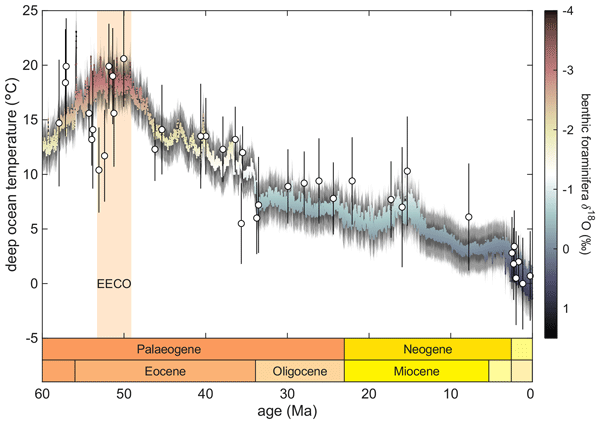
The early Eocene, about 50 million years ago, was a super-warm period of Earth's history, with high concentrations of carbon dioxide in the atmosphere. Here, we provide a framework and experimental design for climate modellers to carry out a coordinated project, simulating this period. This is the second phase of this project, and here we provide updated maps of the Earth's mountains and ocean floor, and vegetation, to enable more accurate modelling.
Mike Vreeken, Megan N. Jenkins, Siwei Mai, Rebecca H. Peel, Yiming Zhang, Toby A. Halamka, Amelia Oakeshott, Simon M. K. Cheung, Panteleimon Prokopiou, Sam Rangdale, Jerome Blewett, D. Paola Alarcon Prado, Juan C. Benavides, Frank Kansiime, Ellen Kayendeke, Carol Kagaba Kairumba, B. David A. Naafs, Casey Bryce, Angela V. Gallego-Sala, and Richard D. Pancost
EGUsphere, https://doi.org/10.5194/egusphere-2026-3069, https://doi.org/10.5194/egusphere-2026-3069, 2026
Short summary
Short summary
The stability of carbon stored in tropical peat systems is linked to molecular composition of peat. We studied the molecular composition of peatland plants, litter, and peat at several depths using seven representative tropical peatlands, and two temperate peatlands as comparison. Most sites show that deeper peat have relatively more harder-to-degrade molecules, such as lignin, against easy-to-degrade molecules. But a fingerprint of the original plant material persists regardless of degradation.
Amar Mistry, Dan Lunt, and Xin Ren
The Cryosphere, 19, 6989–7012, https://doi.org/10.5194/tc-19-6989-2025, https://doi.org/10.5194/tc-19-6989-2025, 2025
Short summary
Short summary
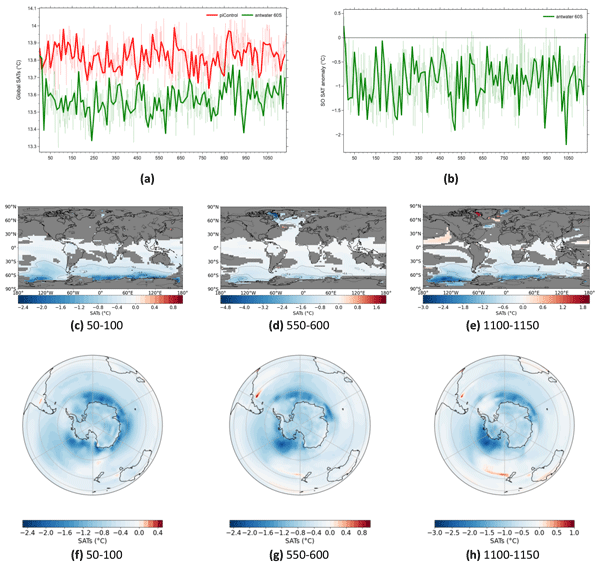
The Antarctic Ice Sheet is melting and adding fresh water into the Southern Ocean, affecting the global climate system. Here, we conduct model experiments in which water is input into the Southern Ocean. We find a significant response of the climate system to this meltwater; however, the manner in which the Antarctic Ice Sheet loses mass does not strongly control this response. The implications are that Antarctic meltwater should be included in future climate model projections.
Loïc Sablon, Pierre Maffre, Yves Goddéris, Paul J. Valdes, Justin Gérard, Jarno J. C. Huygh, Anne-Christine Da Silva, and Michel Crucifix
Geosci. Model Dev., 18, 10095–10117, https://doi.org/10.5194/gmd-18-10095-2025, https://doi.org/10.5194/gmd-18-10095-2025, 2025
Short summary
Short summary
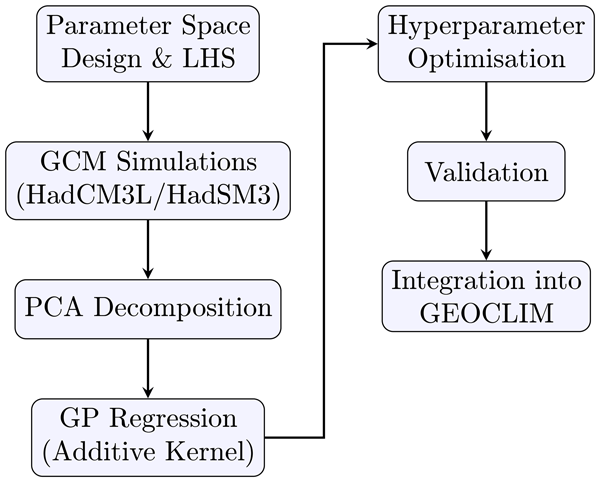
We propose an innovative climate modelling framework that combines statistical methods with climate simulations to study Earth's environmental systems. The model captures how orbital changes and carbon dioxide levels influence climate atmospheric dynamics, offering a detailed and efficient way to explore long-term processes. This tool provides new opportunities to investigate Earth's climate history and its implications for future changes.
Peter K. Bijl, Kasia K. Śliwińska, Bella Duncan, Arnaud Huguet, Sebastian Naeher, Ronnakrit Rattanasriampaipong, Claudia Sosa-Montes de Oca, Alexandra Auderset, Melissa A. Berke, Bum Soo Kim, Nina Davtian, Tom Dunkley Jones, Desmond D. Eefting, Felix J. Elling, Pierrick Fenies, Gordon N. Inglis, Lauren O'Connor, Richard D. Pancost, Francien Peterse, Addison Rice, Appy Sluijs, Devika Varma, Wenjie Xiao, and Yi Ge Zhang
Biogeosciences, 22, 6465–6508, https://doi.org/10.5194/bg-22-6465-2025, https://doi.org/10.5194/bg-22-6465-2025, 2025
Short summary
Short summary
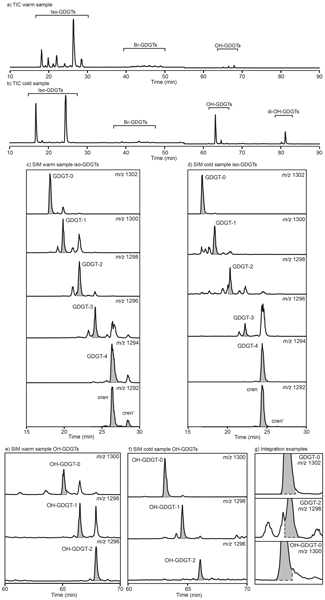
Many academic laboratories worldwide process environmental samples for analysis of membrane lipid molecules of archaea, for the reconstruction of past environmental conditions. However, the sample workup scheme involves many steps, each of which has a risk of contamination or bias, affecting the results. This paper reviews steps involved in sampling, extraction and analysis of lipids, interpretation and archiving of the data. This ensures reproducible, reusable, comparable and consistent data.
Pierre Maffre, Yves Goddéris, Guillaume Le Hir, Élise Nardin, Anta-Clarisse Sarr, and Yannick Donnadieu
Geosci. Model Dev., 18, 6367–6413, https://doi.org/10.5194/gmd-18-6367-2025, https://doi.org/10.5194/gmd-18-6367-2025, 2025
Short summary
Short summary
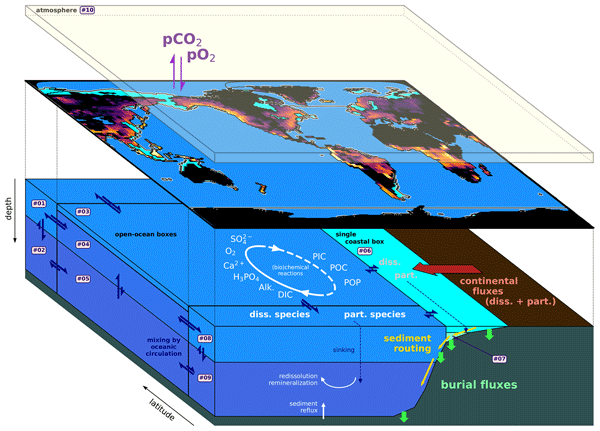
A new version (v7) of the numerical model GEOCLIM is presented here. GEOCLIM models the evolution of ocean and atmosphere chemical composition on multi-million-year timescales, including carbon and oxygen cycles, CO2, and climate. GEOCLIM is associated with a climate model, and a new procedure to link the climate model to GEOCLIM is presented here. GEOCLIM is applied here to investigate the evolution of ocean oxygenation following Earth's orbital parameter variations around 94 million years ago.
Johan Liakka, Natalie S. Lord, Alan Kennedy-Asser, Daniel J. Lunt, Charles J. R. Williams, and Jens-Ove Näslund
Adv. Geosci., 65, 71–81, https://doi.org/10.5194/adgeo-65-71-2024, https://doi.org/10.5194/adgeo-65-71-2024, 2024
Short summary
Short summary
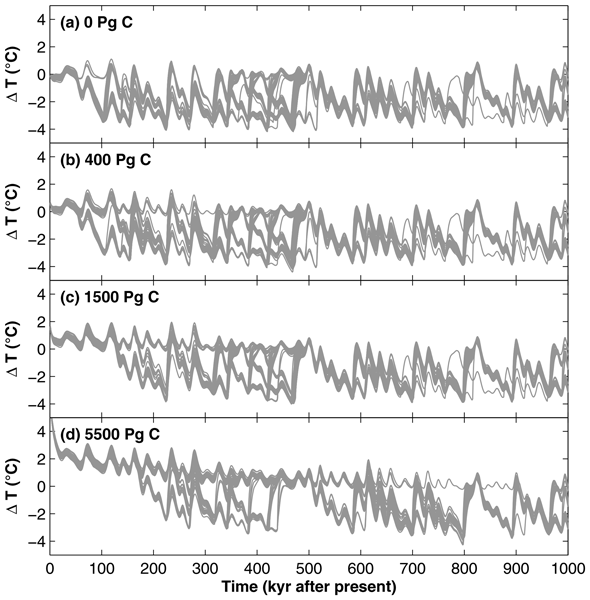
Future glaciations can affect the long-term safety of deep geological repositories for nuclear waste. This study introduces a simple method to assess frequency and duration of ice sheets over the next one million years at locations with past glaciations. The method considers uncertainties in human-caused CO2 emissions and climate change. It is easy to implement for any nuclear waste management organization that need to consider impacts of future ice sheets on long-term safety.
Yixuan Xie, Daniel J. Lunt, and Paul J. Valdes
Clim. Past, 20, 2561–2585, https://doi.org/10.5194/cp-20-2561-2024, https://doi.org/10.5194/cp-20-2561-2024, 2024
Short summary
Short summary
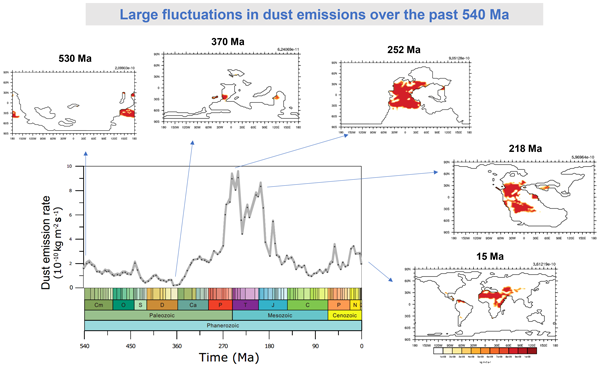
Desert dust plays a crucial role in the climate system; while it is relatively well studied for the present day, we still lack knowledge on how it was in the past and on its underlying mechanism in the multi-million-year timescale of Earth’s history. For the first time, we simulate dust emissions using the newly developed DUSTY1.0 model over the past 540 million years with a temporal resolution of ~5 million years. We find that palaeogeography is the primary control of these variations.
Dongyu Zheng, Andrew S. Merdith, Yves Goddéris, Yannick Donnadieu, Khushboo Gurung, and Benjamin J. W. Mills
Geosci. Model Dev., 17, 5413–5429, https://doi.org/10.5194/gmd-17-5413-2024, https://doi.org/10.5194/gmd-17-5413-2024, 2024
Short summary
Short summary
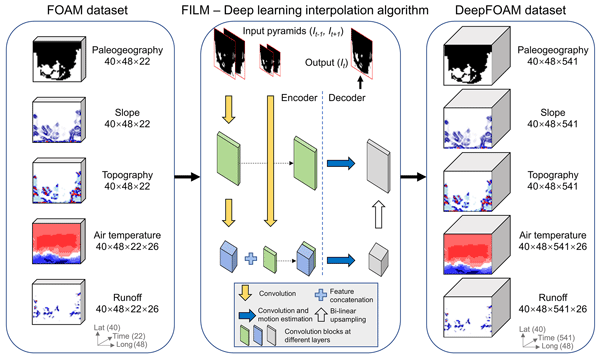
This study uses a deep learning method to upscale the time resolution of paleoclimate simulations to 1 million years. This improved resolution allows a climate-biogeochemical model to more accurately predict climate shifts. The method may be critical in developing new fully continuous methods that are able to be applied over a moving continental surface in deep time with high resolution at reasonable computational expense.
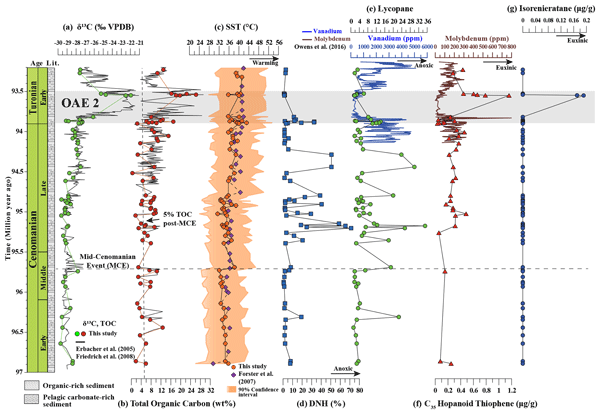
Mohd Al Farid Abraham, Bernhard David A. Naafs, Vittoria Lauretano, Fotis Sgouridis, and Richard D. Pancost
Clim. Past, 19, 2569–2580, https://doi.org/10.5194/cp-19-2569-2023, https://doi.org/10.5194/cp-19-2569-2023, 2023
Short summary
Short summary
Oceanic Anoxic Event 2 (OAE 2), about 93.5 million years ago, is characterized by widespread deoxygenated ocean and massive burial of organic-rich sediments. Our results show that the marine deoxygenation at the equatorial Atlantic that predates the OAE 2 interval was driven by global warming and associated with the nutrient status of the site, with factors like temperature-modulated upwelling and hydrology-induced weathering contributing to enhanced nutrient delivery over various timescales.
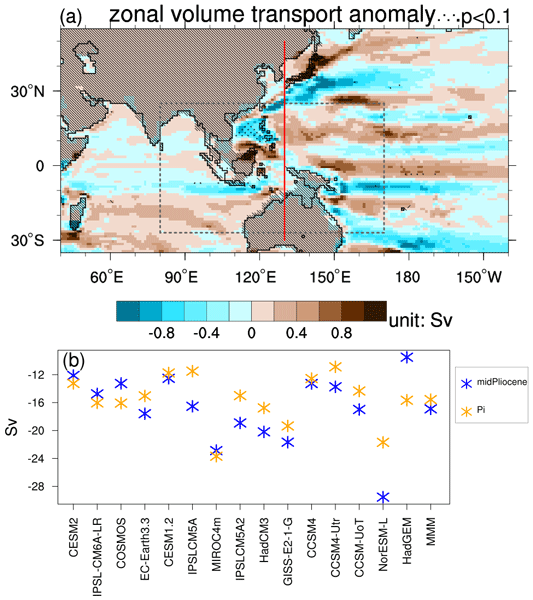
Xin Ren, Daniel J. Lunt, Erica Hendy, Anna von der Heydt, Ayako Abe-Ouchi, Bette Otto-Bliesner, Charles J. R. Williams, Christian Stepanek, Chuncheng Guo, Deepak Chandan, Gerrit Lohmann, Julia C. Tindall, Linda E. Sohl, Mark A. Chandler, Masa Kageyama, Michiel L. J. Baatsen, Ning Tan, Qiong Zhang, Ran Feng, Stephen Hunter, Wing-Le Chan, W. Richard Peltier, Xiangyu Li, Youichi Kamae, Zhongshi Zhang, and Alan M. Haywood
Clim. Past, 19, 2053–2077, https://doi.org/10.5194/cp-19-2053-2023, https://doi.org/10.5194/cp-19-2053-2023, 2023
Short summary
Short summary
We investigate the Maritime Continent climate in the mid-Piacenzian warm period and find it is warmer and wetter and the sea surface salinity is lower compared with preindustrial period. Besides, the fresh and warm water transfer through the Maritime Continent was stronger. In order to avoid undue influence from closely related models in the multimodel results, we introduce a new metric, the multi-cluster mean, which could reveal spatial signals that are not captured by the multimodel mean.
Caitlyn R. Witkowski, Vittoria Lauretano, Alex Farnsworth, Shufeng Li, Shi-Hu Li, Jan Peter Mayser, B. David A. Naafs, Robert A. Spicer, Tao Su, He Tang, Zhe-Kun Zhou, Paul J. Valdes, and Richard D. Pancost
EGUsphere, https://doi.org/10.5194/egusphere-2023-373, https://doi.org/10.5194/egusphere-2023-373, 2023
Preprint archived
Short summary
Short summary
Untangling the complex tectonic evolution in the Tibetan region can help us understand its impacts on climate, the Asian monsoon system, and the development of major biodiversity hotspots. We show that this “missing link” site between high elevation Tibet and low elevation coastal China had a dynamic environment but no temperature change, meaning its been at its current-day elevation for the past 34 million years.
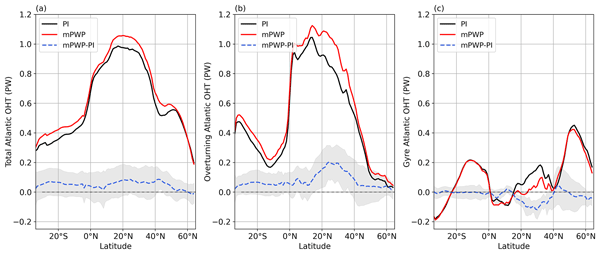
Julia E. Weiffenbach, Michiel L. J. Baatsen, Henk A. Dijkstra, Anna S. von der Heydt, Ayako Abe-Ouchi, Esther C. Brady, Wing-Le Chan, Deepak Chandan, Mark A. Chandler, Camille Contoux, Ran Feng, Chuncheng Guo, Zixuan Han, Alan M. Haywood, Qiang Li, Xiangyu Li, Gerrit Lohmann, Daniel J. Lunt, Kerim H. Nisancioglu, Bette L. Otto-Bliesner, W. Richard Peltier, Gilles Ramstein, Linda E. Sohl, Christian Stepanek, Ning Tan, Julia C. Tindall, Charles J. R. Williams, Qiong Zhang, and Zhongshi Zhang
Clim. Past, 19, 61–85, https://doi.org/10.5194/cp-19-61-2023, https://doi.org/10.5194/cp-19-61-2023, 2023
Short summary
Short summary
We study the behavior of the Atlantic Meridional Overturning Circulation (AMOC) in the mid-Pliocene. The mid-Pliocene was about 3 million years ago and had a similar CO2 concentration to today. We show that the stronger AMOC during this period relates to changes in geography and that this has a significant influence on ocean temperatures and heat transported northwards by the Atlantic Ocean. Understanding the behavior of the mid-Pliocene AMOC can help us to learn more about our future climate.
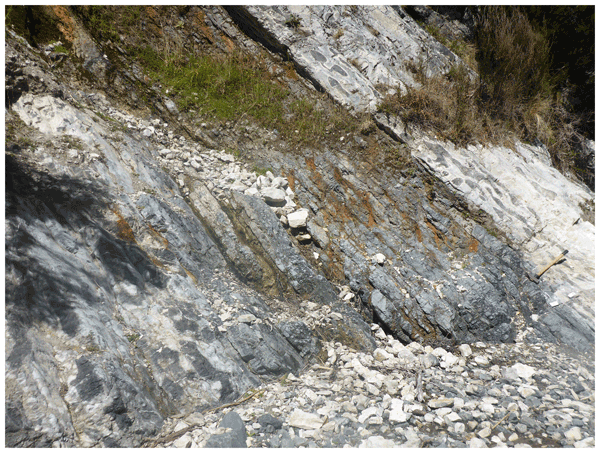
Christopher J. Hollis, Sebastian Naeher, Christopher D. Clowes, B. David A. Naafs, Richard D. Pancost, Kyle W. R. Taylor, Jenny Dahl, Xun Li, G. Todd Ventura, and Richard Sykes
Clim. Past, 18, 1295–1320, https://doi.org/10.5194/cp-18-1295-2022, https://doi.org/10.5194/cp-18-1295-2022, 2022
Short summary
Short summary
Previous studies of Paleogene greenhouse climates identified short-lived global warming events, termed hyperthermals, that provide insights into global warming scenarios. Within the same time period, we have identified a short-lived cooling event in the late Paleocene, which we term a hypothermal, that has potential to provide novel insights into the feedback mechanisms at work in a greenhouse climate.
Zixuan Han, Qiong Zhang, Qiang Li, Ran Feng, Alan M. Haywood, Julia C. Tindall, Stephen J. Hunter, Bette L. Otto-Bliesner, Esther C. Brady, Nan Rosenbloom, Zhongshi Zhang, Xiangyu Li, Chuncheng Guo, Kerim H. Nisancioglu, Christian Stepanek, Gerrit Lohmann, Linda E. Sohl, Mark A. Chandler, Ning Tan, Gilles Ramstein, Michiel L. J. Baatsen, Anna S. von der Heydt, Deepak Chandan, W. Richard Peltier, Charles J. R. Williams, Daniel J. Lunt, Jianbo Cheng, Qin Wen, and Natalie J. Burls
Clim. Past, 17, 2537–2558, https://doi.org/10.5194/cp-17-2537-2021, https://doi.org/10.5194/cp-17-2537-2021, 2021
Short summary
Short summary
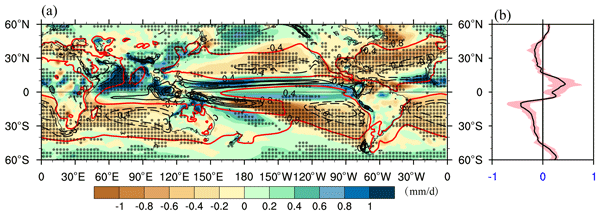
Understanding the potential processes responsible for large-scale hydrological cycle changes in a warmer climate is of great importance. Our study implies that an imbalance in interhemispheric atmospheric energy during the mid-Pliocene could have led to changes in the dynamic effect, offsetting the thermodynamic effect and, hence, altering mid-Pliocene hydroclimate cycling. Moreover, a robust westward shift in the Pacific Walker circulation can moisten the northern Indian Ocean.
Arthur M. Oldeman, Michiel L. J. Baatsen, Anna S. von der Heydt, Henk A. Dijkstra, Julia C. Tindall, Ayako Abe-Ouchi, Alice R. Booth, Esther C. Brady, Wing-Le Chan, Deepak Chandan, Mark A. Chandler, Camille Contoux, Ran Feng, Chuncheng Guo, Alan M. Haywood, Stephen J. Hunter, Youichi Kamae, Qiang Li, Xiangyu Li, Gerrit Lohmann, Daniel J. Lunt, Kerim H. Nisancioglu, Bette L. Otto-Bliesner, W. Richard Peltier, Gabriel M. Pontes, Gilles Ramstein, Linda E. Sohl, Christian Stepanek, Ning Tan, Qiong Zhang, Zhongshi Zhang, Ilana Wainer, and Charles J. R. Williams
Clim. Past, 17, 2427–2450, https://doi.org/10.5194/cp-17-2427-2021, https://doi.org/10.5194/cp-17-2427-2021, 2021
Short summary
Short summary
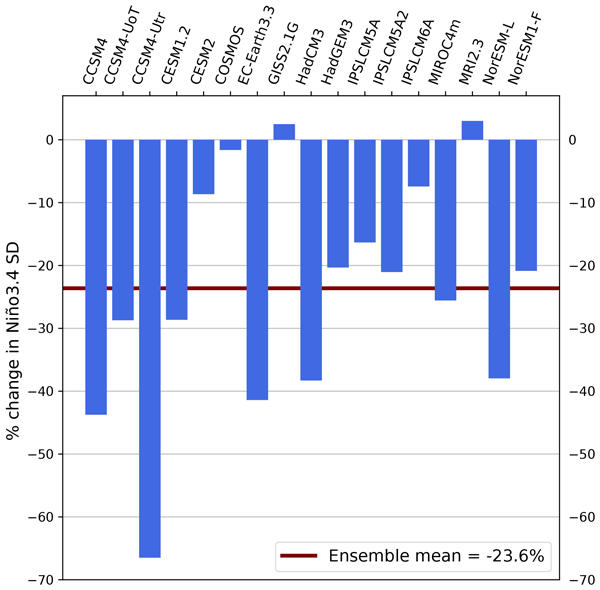
In this work, we have studied the behaviour of El Niño events in the mid-Pliocene, a period of around 3 million years ago, using a collection of 17 climate models. It is an interesting period to study, as it saw similar atmospheric carbon dioxide levels to the present day. We find that the El Niño events were less strong in the mid-Pliocene simulations, when compared to pre-industrial climate. Our results could help to interpret El Niño behaviour in future climate projections.
Katherine A. Crichton, Andy Ridgwell, Daniel J. Lunt, Alex Farnsworth, and Paul N. Pearson
Clim. Past, 17, 2223–2254, https://doi.org/10.5194/cp-17-2223-2021, https://doi.org/10.5194/cp-17-2223-2021, 2021
Short summary
Short summary
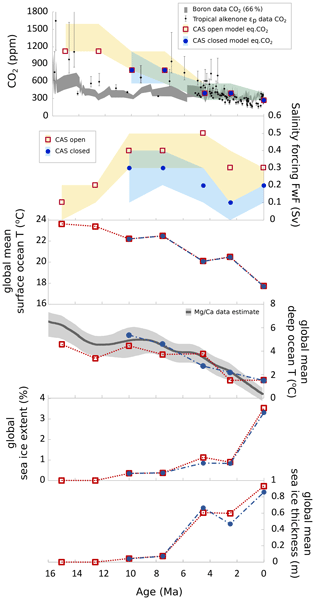
The middle Miocene (15 Ma) was a period of global warmth up to 8 °C warmer than present. We investigate changes in ocean circulation and heat distribution since the middle Miocene and the cooling to the present using the cGENIE Earth system model. We create seven time slices at ~2.5 Myr intervals, constrained with paleo-proxy data, showing a progressive reduction in atmospheric CO2 and a strengthening of the Atlantic Meridional Overturning Circulation.
Charles J. R. Williams, Alistair A. Sellar, Xin Ren, Alan M. Haywood, Peter Hopcroft, Stephen J. Hunter, William H. G. Roberts, Robin S. Smith, Emma J. Stone, Julia C. Tindall, and Daniel J. Lunt
Clim. Past, 17, 2139–2163, https://doi.org/10.5194/cp-17-2139-2021, https://doi.org/10.5194/cp-17-2139-2021, 2021
Short summary
Short summary
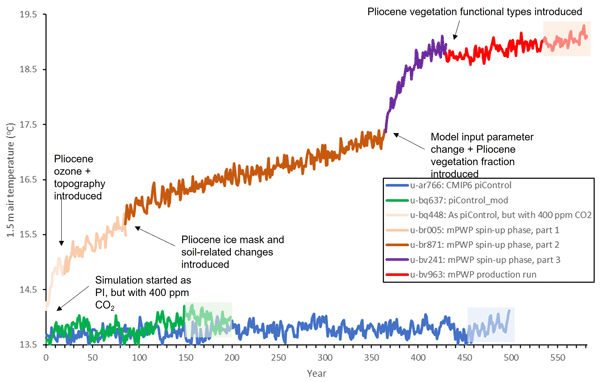
Computer simulations of the geological past are an important tool to improve our understanding of climate change. We present results from a simulation of the mid-Pliocene (approximately 3 million years ago) using the latest version of the UK’s climate model. The simulation reproduces temperatures as expected and shows some improvement relative to previous versions of the same model. The simulation is, however, arguably too warm when compared to other models and available observations.
Cited articles
Anagnostou, E., John, E. H., Edgar, K. M., Foster, G. L., Ridgwell, A., Inglis, G. N., Pancost, R. D., Lunt, D. J., and Pearson, P. N.: Changing atmospheric CO2 concentration was the primary driver of early Cenozoic climate, Nature, 533, 380–384, https://doi.org/10.1038/nature17423, 2016. a, b, c
Barron, E. J., Hay, W. W., and Thompson, S.: The hydrologic cycle: A major variable during earth history, Palaeogeogr. Palaeocl., 75, 157–174, https://doi.org/10.1016/0031-0182(89)90175-2, 1989. a, b
Bazilevskaya, E., Lebedeva, M., Pavich, M., Rother, G., Parkinson, D. Y., Cole, D., and Brantley, S. L.: Where fast weathering creates thin regolith and slow weathering creates thick regolith, Earth Surf. Proc. Land., 38, 847–858, https://doi.org/10.1002/esp.3369, 2013. a
Berner, R. A.: Atmospheric carbon dioxide levels over Phanerozoic time, Science, 249, 1382–1386, 1990. a
Berner, R. A.: A Model for Atmospheric Co2 over Phanerozoic Time, Am. J. Sci., 291, 339–376, https://doi.org/10.2475/ajs.291.4.339, 1991. a
Berner, R. A. and Kothavala, Z.: GEOCARB III: A revised model of atmospheric CO2 over phanerozoic time, Am. J. Sci., 301, 182–204, https://doi.org/10.2475/ajs.301.2.182, 2001. a, b
Bouttes, N., Paillard, D., Roche, D. M., Brovkin, V., and Bopp, L.: Last Glacial Maximum CO2 and δ13C successfully reconciled, Geophys. Res. Lett., 38, https://doi.org/10.1029/2010GL044499, 2011. a
Bufe, A., Rugenstein, J. K., and Hovius, N.: CO2 drawdown from weathering is maximized at moderate erosion rates, Science, 383, 1075–1080, 2024. a
The Cenozoic CO2 Proxy Integration Project (CenCO2PIP) Consortium, Hönisch, B., Royer, D. L., et al.: Toward a Cenozoic history of atmospheric CO2, Science, 382, eadi5177, https://doi.org/10.1126/science.adi5177, 2023. a, b, c, d
Cox, P., Betts, R., Bunton, C., Essery, R., Rowntree, P., and Smith, J.: The impact of new land surface physics on the GCM simulation of climate and climate sensitivity, Clim. Dynam., 15, 183–203, 1999. a
Cox, P. M., Betts, R. A., Betts, A., Jones, C. D., Spall, S. A., and Totterdell, I. J.: Modelling vegetation and the carbon cycle as interactive elements of the climate system, in: International Geophysics, Elsevier, 83, 259–279, https://doi.org/10.1016/S0074-6142(02)80172-3, 2002. a
Dessert, C., Dupré, B., Gaillardet, J., François, L. M., and Allègre, C. J.: Basalt weathering laws and the impact of basalt weathering on the global carbon cycle, Chem. Geol., 202, 257–273, https://doi.org/10.1016/j.chemgeo.2002.10.001, 2003. a, b, c, d
Donnadieu, Y., Goddéris, Y., Pierrehumbert, R., Dromart, G., Fluteau, F., and Jacob, R.: A GEOCLIM simulation of climatic and biogeochemical consequences of Pangea breakup, Geochem. Geophy. Geosy., 7, https://doi.org/10.1029/2006GC001278, 2006. a
Donnadieu, Y., Goddéris, Y., and Bouttes, N.: Exploring the climatic impact of the continental vegetation on the Mezosoic atmospheric CO2 and climate history, Clim. Past, 5, 85–96, https://doi.org/10.5194/cp-5-85-2009, 2009. a, b
Farnsworth, A., Lunt, D., O'Brien, C., Foster, G., Inglis, G., Markwick, P., Pancost, R. D., and Robinson, S. A.: Climate sensitivity on geological timescales controlled by nonlinear feedbacks and ocean circulation, Geophys. Res. Lett., 46, https://doi.org/10.1029/2019GL083574, 2019. a, b, c
Gabet, E. J. and Mudd, S. M.: A theoretical model coupling chemical weathering rates with denudation rates, Geology, 37, 151–154, https://doi.org/10.1130/g25270a.1, 2009. a, b
Gibbs, M. T. and Kump, L. R.: Global Chemical Erosion during the Last Glacial Maximum and the Present – Sensitivity to Changes in Lithology and Hydrology, Paleoceanography, 9, 529–543, https://doi.org/10.1029/94pa01009, 1994. a
Gibbs, M. T., Bluth, G. J., Fawcett, P. J., and Kump, L. R.: Global chemical erosion over the last 250 my; variations due to changes in paleogeography, paleoclimate, and paleogeology, Am. J. Sci., 299, 611–651, 1999. a
Goddéris, Y. and Joachimski, M. M.: Global change in the Late Devonian: modelling the Frasnian–Famennian short-term carbon isotope excursions, Palaeogeogr. Palaeocl., 202, 309–329, https://doi.org/10.1016/s0031-0182(03)00641-2, 2004. a
Goddéris, Y., Donnadieu, Y., Le Hir, G., Lefebvre, V., and Nardin, E.: The role of palaeogeography in the Phanerozoic history of atmospheric CO2 and climate, Earth-Sci. Rev., 128, 122–138, https://doi.org/10.1016/j.earscirev.2013.11.004, 2014. a, b, c, d, e, f, g, h, i, j, k, l, m, n, o, p, q, r, s, t, u, v, w, x, y, z, aa, ab
Goddéris, Y., Donnadieu, Y., Carretier, S., Aretz, M., Dera, G., Macouin, M., and Regard, V.: Onset and ending of the late Palaeozoic ice age triggered by tectonically paced rock weathering, Natu. Geosci., 10, 382–386, https://doi.org/10.1038/ngeo2931, 2017. a, b, c, d
Gordon, C., Cooper, C., Senior, C. A., Banks, H., Gregory, J. M., Johns, T. C., Mitchell, J. F. B., and Wood, R. A.: The simulation of SST, sea ice extents and ocean heat transports in a version of the Hadley Centre coupled model without flux adjustments, Clim. Dynam., 16, 147–168, https://doi.org/10.1007/s003820050010, 2000. a
Gregory, D., Smith, R. N. B., and Cox, P.: Unified Model Documentation Paper 25: Canopy, Surface and Soil Hydrology, 1994. a
Gyllenhaal, E., Engberts, C., Markwick, P., Smith, L., and Patzkowsky, M.: The Fujia-Ziegler model - a new semi-quantitative technique for estimating palaeoclimate from palaeogeographic maps, Palaeogeogr. Palaeocl., 86, 41–66, 1991. a
Hayes, N. R.: Critically Evaluating the Role of the Deep Subsurface in the “chemical Weathering Thermostat”, PhD thesis, University of Bristol, https://research-information.bris.ac.uk/ws/portalfiles/portal/219744470/Final_Copy_2019_10_01_Hayes_N_PhD.pdf (last access: 12 December 2025), 2019. a
Hayes, N. R., Buss, H. L., Moore, O. W., Krám, P., and Pancost, R. D.: Controls on granitic weathering fronts in contrasting climates, Chem. Geol., 535, 119450, https://doi.org/10.1016/j.chemgeo.2019.119450, 2020. a
Hilton, R. G. and West, A. J.: Mountains, erosion and the carbon cycle, Nature Reviews Earth & Environment, 1, 284–299, 2020. a
Huber, M. and Caballero, R.: The early Eocene equable climate problem revisited, Clim. Past, 7, 603–633, https://doi.org/10.5194/cp-7-603-2011, 2011. a, b, c
Humphreys, E., Hessler, E., Dueker, K., Farmer, G. L., Erslev, E., and Atwater, T.: How Laramide-Age Hydration of North American Lithosphere by the Farallon Slab Controlled Subsequent Activity in the Western United States, Int. Geol. Rev., 45, 575–595, https://doi.org/10.2747/0020-6814.45.7.575, 2003. a
Hutchinson, D. K., Coxall, H. K., Lunt, D. J., Steinthorsdottir, M., de Boer, A. M., Baatsen, M., von der Heydt, A., Huber, M., Kennedy-Asser, A. T., Kunzmann, L., Ladant, J.-B., Lear, C. H., Moraweck, K., Pearson, P. N., Piga, E., Pound, M. J., Salzmann, U., Scher, H. D., Sijp, W. P., Śliwińska, K. K., Wilson, P. A., and Zhang, Z.: The Eocene–Oligocene transition: a review of marine and terrestrial proxy data, models and model–data comparisons, Clim. Past, 17, 269–315, https://doi.org/10.5194/cp-17-269-2021, 2021. a
Jagniecki, E. A., Lowenstein, T. K., Jenkins, D. M., and Demicco, R. V.: Eocene atmospheric CO2 from the nahcolite proxy, Geology, 43, 1075–1078, https://doi.org/10.1130/g36886.1, 2015. a, b
Keating-Bitonti, C. R., Ivany, L. C., Affek, H. P., Douglas, P., and Samson, S. D.: Warm, not super-hot, temperatures in the early Eocene subtropics, Geology, 39, 771–774, https://doi.org/10.1130/g32054.1, 2011. a, b
Kent, D. V. and Muttoni, G.: Modulation of Late Cretaceous and Cenozoic climate by variable drawdown of atmospheric pCO2 from weathering of basaltic provinces on continents drifting through the equatorial humid belt, Clim. Past, 9, 525–546, https://doi.org/10.5194/cp-9-525-2013, 2013. a
Kump, L. R. and Arthur, M. A.: Global chemical erosion during the Cenozoic: Weatherability balances the budgets, in: Tectonic uplift and climate change, Springer, 399–426, ISBN 978-1-4615-5935-1, 1997. a
Lee, C.-T. A. and Lackey, J. S.: Global continental arc flare-ups and their relation to long-term greenhouse conditions, Elements, 11, 125–130, 2015. a
Lee, C.-T. A., Thurner, S., Paterson, S., and Cao, W.: The rise and fall of continental arcs: Interplays between magmatism, uplift, weathering, and climate, Earth Planet. Sc. Lett., 425, 105–119, 2015. a
Lefebvre, V., Donnadieu, Y., Goddéris, Y., Fluteau, F., and Hubert-Théou, L.: Was the Antarctic glaciation delayed by a high degassing rate during the early Cenozoic?, Earth Planet. Sc. Lett., 371-372, 203–211, https://doi.org/10.1016/j.epsl.2013.03.049, 2013. a, b, c
Lunt, D. J., Valdes, P. J., Jones, T. D., Ridgwell, A., Haywood, A. M., Schmidt, D. N., Marsh, R., and Maslin, M.: CO2-driven ocean circulation changes as an amplifier of Paleocene-Eocene thermal maximum hydrate destabilization, Geology, 38, 875–878, https://doi.org/10.1130/g31184.1, 2010. a
Lunt, D. J., Ridgwell, A., Sluijs, A., Zachos, J., Hunter, S., and Haywood, A.: A model for orbital pacing of methane hydrate destabilization during the Palaeogene, Nat. Geosci., 4, 775–778, https://doi.org/10.1038/ngeo1266, 2011. a
Lunt, D. J., Dunkley Jones, T., Heinemann, M., Huber, M., LeGrande, A., Winguth, A., Loptson, C., Marotzke, J., Roberts, C. D., Tindall, J., Valdes, P., and Winguth, C.: A model–data comparison for a multi-model ensemble of early Eocene atmosphere–ocean simulations: EoMIP, Clim. Past, 8, 1717–1736, https://doi.org/10.5194/cp-8-1717-2012, 2012. a, b, c, d
Lunt, D. J., Bragg, F., Chan, W.-L., Hutchinson, D. K., Ladant, J.-B., Morozova, P., Niezgodzki, I., Steinig, S., Zhang, Z., Zhu, J., Abe-Ouchi, A., Anagnostou, E., de Boer, A. M., Coxall, H. K., Donnadieu, Y., Foster, G., Inglis, G. N., Knorr, G., Langebroek, P. M., Lear, C. H., Lohmann, G., Poulsen, C. J., Sepulchre, P., Tierney, J. E., Valdes, P. J., Volodin, E. M., Dunkley Jones, T., Hollis, C. J., Huber, M., and Otto-Bliesner, B. L.: DeepMIP: model intercomparison of early Eocene climatic optimum (EECO) large-scale climate features and comparison with proxy data, Clim. Past, 17, 203–227, https://doi.org/10.5194/cp-17-203-2021, 2021. a
Maffre, P.: piermafrost/GEOCLIM: crisis-v1 (crisis-v1), Zenodo [code and data set], https://doi.org/10.5281/zenodo.16406861, 2025. a
Maffre, P., Swanson-Hysell, N., and Goddéris, Y.: Limited Carbon Cycle Response to Increased Sulfide Weathering due to Oxygen Feedback, Geophys. Res. Lett., e2021GL094589, https://doi.org/10.1029/2021GL094589, 2021. a
Maffre, P., Goddéris, Y., Le Hir, G., Nardin, É., Sarr, A.-C., and Donnadieu, Y.: GEOCLIM7, an Earth system model for multi-million-year evolution of the geochemical cycles and climate, Geosci. Model Dev., 18, 6367–6413, https://doi.org/10.5194/gmd-18-6367-2025, 2025. a
Maher, K.: The dependence of chemical weathering rates on fluid residence time, Earth Planet. Sc. Lett., 294, 101–110, https://doi.org/10.1016/j.epsl.2010.03.010, 2010. a, b
Markwick, P. J. and Valdes, P. J.: Palaeo-digital elevation models for use as boundary conditions in coupled ocean–atmosphere GCM experiments: a Maastrichtian (late Cretaceous) example, Palaeogeogr., Palaeocl., 213, 37–63, 2004. a
Müller, R. D., Mather, B., Dutkiewicz, A., Keller, T., Merdith, A., Gonzalez, C. M., Gorczyk, W., and Zahirovic, S.: Evolution of Earth's tectonic carbon conveyor belt, Nature, 605, 629–639, 2022. a
NHayes-EA: NHayes-EA/Hayes_et_al_GEOCLIM: Hayes_et_al_GEOCLIM (v1.1.1). Zenodo [data set], https://doi.org/10.5281/zenodo.17650846, 2025. a
Porada, P., Lenton, T., Pohl, A., Weber, B., Mander, L., Donnadieu, Y., Beer, C., Pöschl, U., and Kleidon, A.: High potential for weathering and climate effects of non-vascular vegetation in the Late Ordovician, Nat. Commun., 7, 12113, https://doi.org/10.1038/ncomms12113, 2016. a
Royer, D. L.: CO2-forced climate thresholds during the Phanerozoic, Geochim. Cosmochim. Ac., 70, 5665–5675, 2006. a
Schellart, W. P.: Overriding plate shortening and extension above subduction zones: A parametric study to explain formation of the Andes Mountains, Geol. Soc. Am. Bull., 120, 1441–1454, https://doi.org/10.1130/b26360.1, 2008. a
Strakhov, N. M.: Principles of Lithogenesis, Consultants Bureau, New York, 1st English edn., ISBN10: 0050012320, ISBN13: 978-0050012321, 1967. a
Tajika, E.: Climate change during the last 150 million years: reconstruction from a carbon cycle model, Earth Planet. Sc. Lett., 160, 695–707, https://doi.org/10.1016/S0012-821x(98)00121-6, 1998. a
Valdes, P. J., Armstrong, E., Badger, M. P. S., Bradshaw, C. D., Bragg, F., Crucifix, M., Davies-Barnard, T., Day, J. J., Farnsworth, A., Gordon, C., Hopcroft, P. O., Kennedy, A. T., Lord, N. S., Lunt, D. J., Marzocchi, A., Parry, L. M., Pope, V., Roberts, W. H. G., Stone, E. J., Tourte, G. J. L., and Williams, J. H. T.: The BRIDGE HadCM3 family of climate models: HadCM3@Bristol v1.0, Geosci. Model Dev., 10, 3715–3743, https://doi.org/10.5194/gmd-10-3715-2017, 2017. a, b, c
Von der Heydt, A. and Dijkstra, H.: Effect of ocean gateways on global ocean circulation in the late Oligocene and early Miocene, Paleoceanography, 21, 1–18, https://doi.org/10.1029/2005PA001149, 2006. a
Walker, J. C. G., Hays, P. B., and Kasting, J. F.: A negative feedback mechanism for the long-term stabilization of earth's surface temperature, J. Geophys. Res., 86, https://doi.org/10.1029/JC086iC10p09776, 1981. a, b, c
West, A. J.: Thickness of the chemical weathering zone and implications for erosional and climatic drivers of weathering and for carbon-cycle feedbacks, Geology, 40, 811–814, https://doi.org/10.1130/g33041.1, 2012. a
Zhou, J., Poulsen, C. J., Rosenbloom, N., Shields, C., and Briegleb, B.: Vegetation-climate interactions in the warm mid-Cretaceous, Clim. Past, 8, 565–576, https://doi.org/10.5194/cp-8-565-2012, 2012. a
Short summary
The breakdown of volcanic rocks by water helps balance the climate of the Earth by sequestering atmospheric CO2. The rate of CO2 sequestration is referred to as "weatherability". Our modelling study finds that continental position strongly impacts CO2 concentrations, that runoff strongly controls weatherability, that changes in weatherability may explain long-term trends in atmospheric CO2 concentrations, and that even relatively localised changes in weatherability may have global impacts.
The breakdown of volcanic rocks by water helps balance the climate of the Earth by sequestering...


