
Articles | Volume 22, issue 4
https://doi.org/10.5194/cp-22-825-2026
© Author(s) 2026. This work is distributed under
the Creative Commons Attribution 4.0 License.
the Creative Commons Attribution 4.0 License.
https://doi.org/10.5194/cp-22-825-2026
© Author(s) 2026. This work is distributed under
the Creative Commons Attribution 4.0 License.
the Creative Commons Attribution 4.0 License.
Research article
| Highlight paper
| 
17 Apr 2026
Research article | Highlight paper |
| 17 Apr 2026
| 17 Apr 2026
Growth and decay of the Iceland Ice Sheet through the last glacial cycle

Department of Physics and Physical Oceanography, Memorial University of Newfoundland, St. John's, NL, Canada
Lev Tarasov
Department of Physics and Physical Oceanography, Memorial University of Newfoundland, St. John's, NL, Canada
Ívar Örn Benediktsson
Institute of Earth Sciences, University of Iceland, Reykjavík, Iceland
Joseph M. Licciardi
Department of Earth Sciences, University of New Hampshire, Durham, USA
Related authors
No articles found.
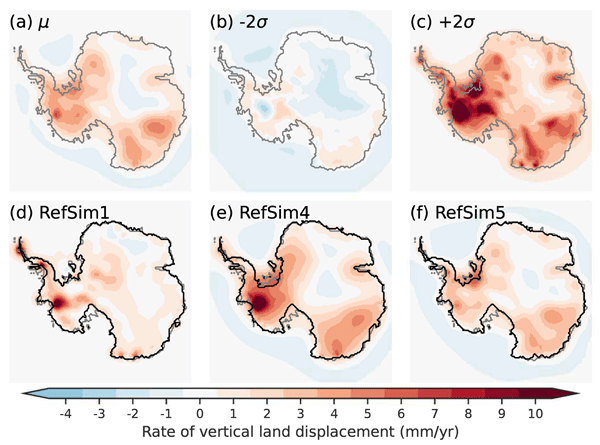
Benoit S. Lecavalier and Lev Tarasov
The Cryosphere, 19, 6673–6689, https://doi.org/10.5194/tc-19-6673-2025, https://doi.org/10.5194/tc-19-6673-2025, 2025
Short summary
Short summary
To simulate the past evolution of the Antarctic ice sheet (AIS) during past warm and cold periods, a modelling analysis was performed that compared thousands of AIS simulations to a large collection of field observations. As the AIS changes, so does the surface load which leads to crustal deformation, gravitational and sea-level change. The present-day rate of bedrock deformation due to past AIS changes is used with satellite observations to infer AIS changes due to contemporary climate change.
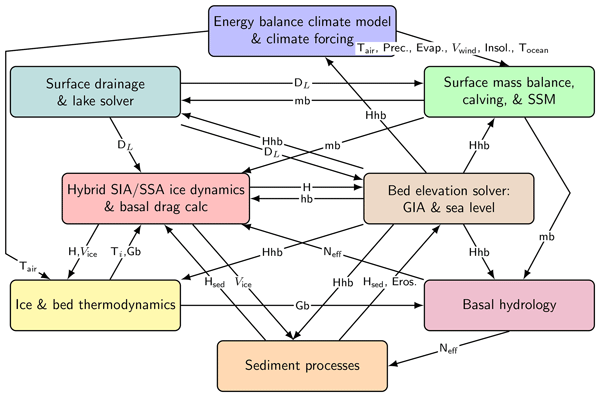
Lev Tarasov, Benoit S. Lecavalier, Kevin Hank, and David Pollard
Geosci. Model Dev., 18, 9565–9603, https://doi.org/10.5194/gmd-18-9565-2025, https://doi.org/10.5194/gmd-18-9565-2025, 2025
Short summary
Short summary
We document the glacial system model (GSM), a 3D glaciological ice sheet systems model specifically designed for large ensemble modelling in glacial cycle contexts. The model is distinguished by the breadth of relevant processes represented for this context. This ranges from meltwater surface drainage with proglacial lake formation to state-of-the-art subglacial sediment production/transport/deposition. The other key distinguishing design feature is attention to addressing process uncertainties.
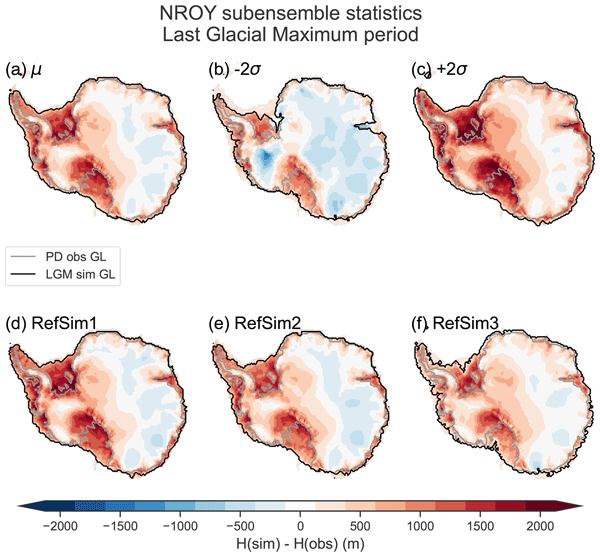
Benoit S. Lecavalier and Lev Tarasov
The Cryosphere, 19, 919–953, https://doi.org/10.5194/tc-19-919-2025, https://doi.org/10.5194/tc-19-919-2025, 2025
Short summary
Short summary
We present the evolution of the Antarctic Ice Sheet (AIS) over the last 200 kyr by means of a history-matching analysis where an updated observational database constrained ~ 10 000 model simulations. During peak glaciation at the Last Glacial Maximum (LGM), the best-fitting sub-ensemble of AIS simulations reached an excess grounded ice volume relative to the present of 9.2 to 26.5 m equivalent sea level relative to the present. The LGM AIS volume can help resolve the LGM missing-ice problem.
Marilena Sophie Geng, Lev Tarasov, and April Sue Dalton
EGUsphere, https://doi.org/10.5194/egusphere-2025-495, https://doi.org/10.5194/egusphere-2025-495, 2025
Preprint archived
Short summary
Short summary
We used a fully coupled ice-climate model to simulate the last two glacial inceptions, and compare the ensemble simulated ice sheet evolution to limited geological data. Our results show that Northern Hemisphere ice sheets grew rapidly, sometimes merging in ways not previously assumed and that capturing one glacial inception does not guarantee capturing another. These findings improve our understanding of ice-age dynamics and highlight challenges in predicting past and future climate evolution.
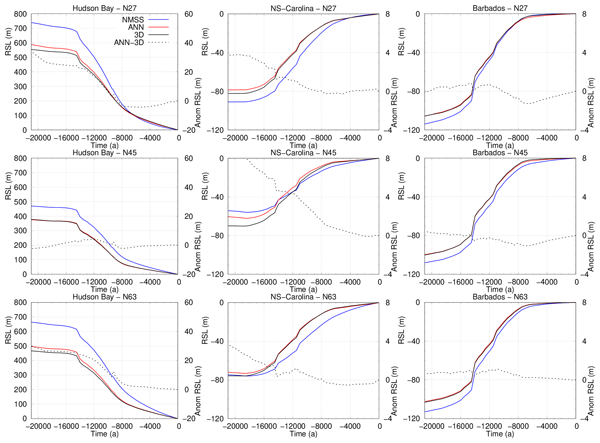
Ryan Love, Glenn A. Milne, Parviz Ajourlou, Soran Parang, Lev Tarasov, and Konstantin Latychev
Geosci. Model Dev., 17, 8535–8551, https://doi.org/10.5194/gmd-17-8535-2024, https://doi.org/10.5194/gmd-17-8535-2024, 2024
Short summary
Short summary
A relatively recent advance in glacial isostatic adjustment modeling has been the development of models that include 3D Earth structure, as opposed to 1D structure. However, a major limitation is the computational expense. We have developed a method using artificial neural networks to emulate the influence of 3D Earth models to affordably constrain the viscosity parameter space. Our results indicate that the misfits are of a scale such that useful predictions of relative sea level can be made.
Kevin Hank and Lev Tarasov
Clim. Past, 20, 2499–2524, https://doi.org/10.5194/cp-20-2499-2024, https://doi.org/10.5194/cp-20-2499-2024, 2024
Short summary
Short summary
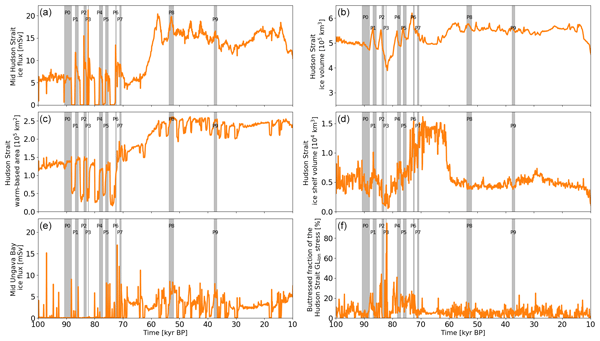
The ice-rafted debris signature of Heinrich events in marine sedimentary cores is usually attributed to massive ice discharge from the Laurentide Ice Sheet. However, the driving mechanism of this pulsed discharge remains unclear. We compare three previously proposed hypotheses and examine the role of relevant system processes. We find ice stream surge cycling is the most likely mechanism, but its character is sensitive to both the geothermal heat flux and the form of the basal drag law.
Alia J. Lesnek, Joseph M. Licciardi, Alan J. Hidy, and Tyler S. Anderson
Geochronology, 6, 475–489, https://doi.org/10.5194/gchron-6-475-2024, https://doi.org/10.5194/gchron-6-475-2024, 2024
Short summary
Short summary
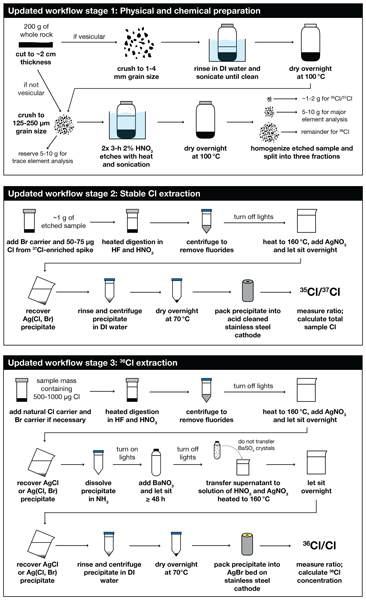
We present an improved workflow for extracting and measuring chlorine isotopes in rocks and minerals. Experiments on seven geologic samples demonstrate that our workflow provides reliable results while offering several distinct advantages over traditional methods. Most notably, our workflow reduces the amount of isotopically enriched chlorine spike used per rock sample by up to 95 %, which will allow researchers to analyze more samples using their existing laboratory supplies.
Matthew Drew and Lev Tarasov
EGUsphere, https://doi.org/10.5194/egusphere-2024-620, https://doi.org/10.5194/egusphere-2024-620, 2024
Preprint withdrawn
Short summary
Short summary
We model the sediment-ice-climate system over North America for the last 2.58 Myr showing that ice sheets are capable of excavating features the size of the Hudson bay. This work provides a basis for reconstructing past landscapes important to climate modelling efforts, helping us to understand past earth system change.
Brian R. Crow, Lev Tarasov, Michael Schulz, and Matthias Prange
Clim. Past, 20, 281–296, https://doi.org/10.5194/cp-20-281-2024, https://doi.org/10.5194/cp-20-281-2024, 2024
Short summary
Short summary
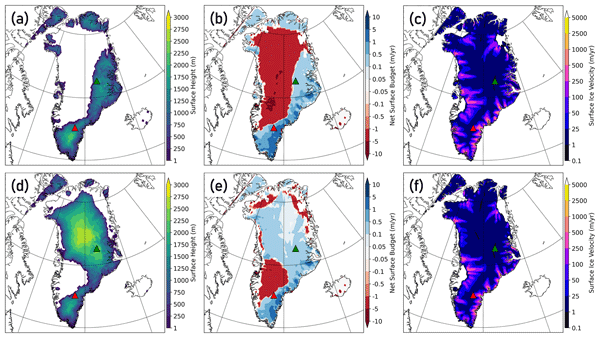
An abnormally warm period around 400,000 years ago is thought to have resulted in a large melt event for the Greenland Ice Sheet. Using a sequence of climate model simulations connected to an ice model, we estimate a 50 % melt of Greenland compared to today. Importantly, we explore how the exact methodology of connecting the temperatures and precipitation from the climate model to the ice sheet model can influence these results and show that common methods could introduce errors.
Matthew Drew and Lev Tarasov
The Cryosphere, 17, 5391–5415, https://doi.org/10.5194/tc-17-5391-2023, https://doi.org/10.5194/tc-17-5391-2023, 2023
Short summary
Short summary
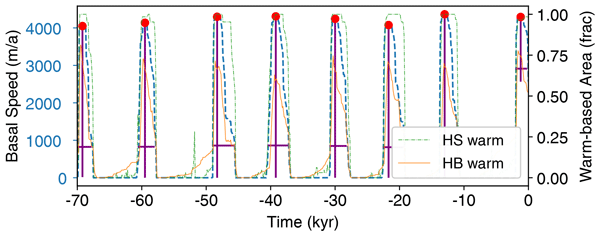
The interaction of fast-flowing regions of continental ice sheets with their beds governs how quickly they slide and therefore flow. The coupling of fast ice to its bed is controlled by the pressure of meltwater at its base. It is currently poorly understood how the physical details of these hydrologic systems affect ice speedup. Using numerical models we find, surprisingly, that they largely do not, except for the duration of the surge. This suggests that cheap models are sufficient.
Ryan Love, Lev Tarasov, Heather Andres, Alan Condron, Xu Zhang, and Gerrit Lohmann
EGUsphere, https://doi.org/10.5194/egusphere-2023-2225, https://doi.org/10.5194/egusphere-2023-2225, 2023
Preprint archived
Short summary
Short summary
Freshwater injection into bands across the North Atlantic are a mainstay of climate modelling when investigating topics such as climate change or the role of glacial runoff in the glacial climate system. However, this approach is unrealistic and results in a systematic bias in the climate response to a given flux of freshwater. We evaluate the magnitude of this bias by comparison to two other approaches for introducing freshwater into a coupled climate model setup for glacial conditions.
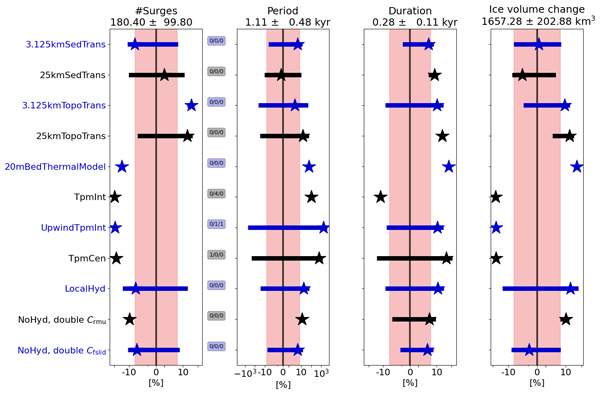
Kevin Hank, Lev Tarasov, and Elisa Mantelli
Geosci. Model Dev., 16, 5627–5652, https://doi.org/10.5194/gmd-16-5627-2023, https://doi.org/10.5194/gmd-16-5627-2023, 2023
Short summary
Short summary
Physically meaningful modeling of geophysical system instabilities is numerically challenging, given the potential effects of purely numerical artifacts. Here we explore the sensitivity of ice stream surge activation to numerical and physical model aspects. We find that surge characteristics exhibit a resolution dependency but converge at higher horizontal grid resolutions and are significantly affected by the incorporation of bed thermal and sub-glacial hydrology models.
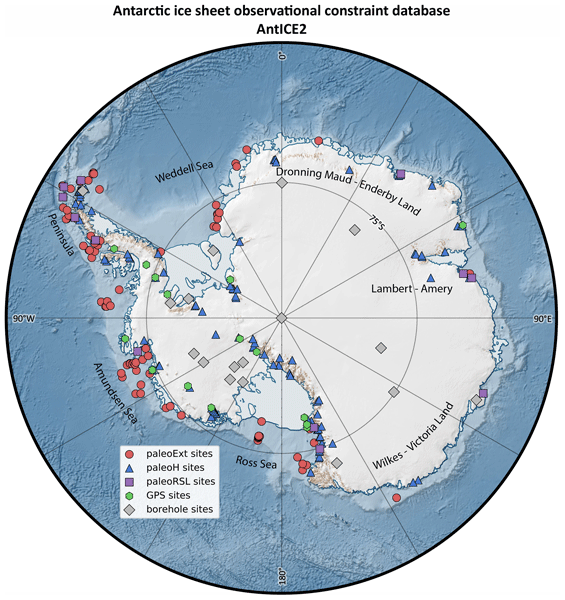
Benoit S. Lecavalier, Lev Tarasov, Greg Balco, Perry Spector, Claus-Dieter Hillenbrand, Christo Buizert, Catherine Ritz, Marion Leduc-Leballeur, Robert Mulvaney, Pippa L. Whitehouse, Michael J. Bentley, and Jonathan Bamber
Earth Syst. Sci. Data, 15, 3573–3596, https://doi.org/10.5194/essd-15-3573-2023, https://doi.org/10.5194/essd-15-3573-2023, 2023
Short summary
Short summary
The Antarctic Ice Sheet Evolution constraint database version 2 (AntICE2) consists of a large variety of observations that constrain the evolution of the Antarctic Ice Sheet over the last glacial cycle. This includes observations of past ice sheet extent, past ice thickness, past relative sea level, borehole temperature profiles, and present-day bedrock displacement rates. The database is intended to improve our understanding of past Antarctic changes and for ice sheet model calibrations.
Lev Tarasov and Michael Goldstein
EGUsphere, https://doi.org/10.5194/egusphere-2022-1410, https://doi.org/10.5194/egusphere-2022-1410, 2023
Preprint archived
Short summary
Short summary
This overview: 1. Illustrates how current climate and/or ice sheet model-based inferences about the past tend to have little interpretable value about the real world given inadequate accounting of uncertainties. 2. Explains Bayesian inference to a non-statistical community. 3. Sketches out some tractable inferential steps for computationally expensive models in a way that meaningfully accounts for uncertainties. 4. Lays out some steps for the community to move forward.
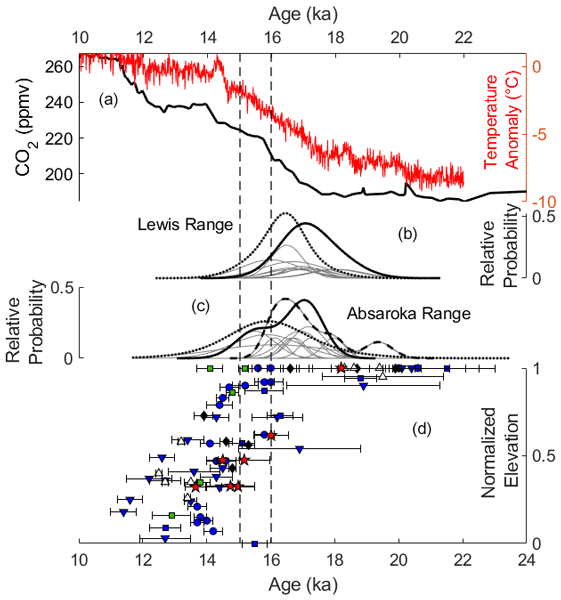
Brendon J. Quirk, Elizabeth Huss, Benjamin J. C. Laabs, Eric Leonard, Joseph Licciardi, Mitchell A. Plummer, and Marc W. Caffee
Clim. Past, 18, 293–312, https://doi.org/10.5194/cp-18-293-2022, https://doi.org/10.5194/cp-18-293-2022, 2022
Short summary
Short summary
Glaciers in the northern Rocky Mountains began retreating 17 000 to 18 000 years ago, after the end of the most recent global ice volume maxima. Climate in the region during this time was likely 10 to 8.5° colder than modern with less than or equal to present amounts of precipitation. Glaciers across the Rockies began retreating at different times but eventually exhibited similar patterns of retreat, suggesting a common mechanism influencing deglaciation.
Lev Tarasov and Michael Goldstein
Clim. Past Discuss., https://doi.org/10.5194/cp-2021-145, https://doi.org/10.5194/cp-2021-145, 2021
Revised manuscript not accepted
Short summary
Short summary
This review: 1. Illustrates how current climate and/or ice sheet model-based inferences about the past tend to have limited interpretable value about the real world given inadequate accounting of uncertainties. 2. Explains Bayesian inference to a non-statistical community. 3. Sketches out tractable Bayesian inference for computationally expensive models in a way that meaningfully accounts for uncertainties. 4. Lays out some steps for the community to move forward.
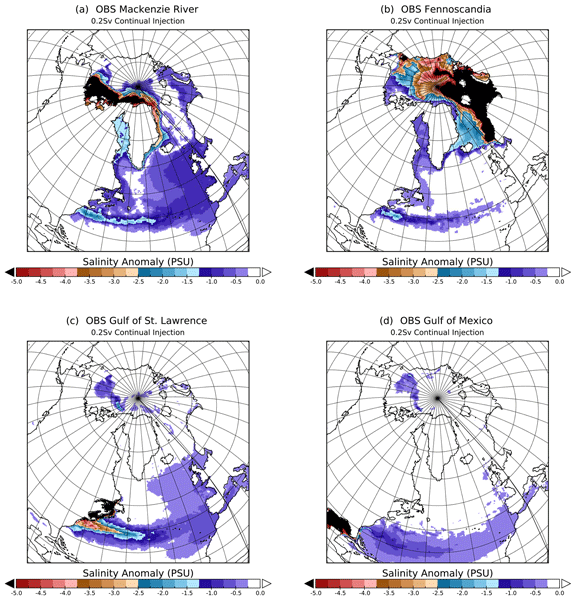
Ryan Love, Heather J. Andres, Alan Condron, and Lev Tarasov
Clim. Past, 17, 2327–2341, https://doi.org/10.5194/cp-17-2327-2021, https://doi.org/10.5194/cp-17-2327-2021, 2021
Short summary
Short summary
Freshwater, in the form of glacial runoff, is hypothesized to play a critical role in centennial- to millennial-scale climate variability and climate transitions. We track the routing of glaciologically constrained freshwater volumes in glacial ocean simulations. Our simulations capture important generally not well-represented small-scale features (boundary currents, eddies). We show that the dilution of freshwater as it is transported to key climate regions reduces the freshening to 20 %–60 %.
Cited articles
Andrews, J. T. and Helgadóttir, G.: Late Quaternary ice cap extent and deglaciation, Hunafloaall, Northwest Iceland: Evidence from marine cores, Arct. Antarct. Alpine Res., 35, 218–232, 2003. a
Andrews, J. T., Hardardóttir, J., Helgadóttir, G., Jennings, A. E., Geirsdóttir, Á., Sveinbjörnsdóttir, Á. E., Schoolfield, S., Kristjánsdóttir, G. B., Smith, L. M., Thors, K., and Syvitski, J. P.: The N and W Iceland Shelf: insights into Last Glacial Maximum ice extent and deglaciation based on acoustic stratigraphy and basal radiocarbon AMS dates, Quaternary Sci. Rev., 19, 619–631, 2000. a, b, c
Andrews, J. T., Kihl, R., Kristjansdottir, G. B., Smith, L., Helgadottir, G., Geirsdottir, A., and Jennings, A. E.: Holocene sediment properties of the East Greenland and Iceland continental shelves bordering Denmark Strait (64–68 N), North Atlantic, Sedimentology, 49, 5–24, 2002. a
Andrews, J. T., Cabedo-Sanz, P., Jennings, A. E., Ólafsdóttir, S., Belt, S. T., and Geirsdóttir: Sea ice, ice-rafting, and ocean climate across Denmark Strait during rapid deglaciation (∼16–12 cal ka BP) of the Iceland and East Greenland shelves, J. Quaternary Sci., 33, 112–130, https://doi.org/10.1002/jqs.3007, 2018. a, b, c
Aradóttir, N., Benediktsson, Í. Ö., Ingólfsson, Ó., Brynjólfsson, S., Farnsworth, W. R., Benjamínsdóttir, M. M., and Ríkhar∂sdóttir, L. B.: Ice-stream shutdown during deglaciation: Evidence from crevasse-squeeze ridges of the Iceland Ice Sheet, Earth Surf. Process. Landf., 48, 2412–2430, https://doi.org/10.1002/esp.5636, 2023. a
Aradóttir, N., Benediktsson, Í. Ö., Helgadóttir, E. G., Ingólfsson, Ó., Brynjólfsson, S., and Farnsworth, W. R.: Ribbed moraines formed during deglaciation of the Icelandic Ice Sheet: implications for ice-stream dynamics, Boreas, 54, 328–350, https://doi.org/10.1111/bor.12690, 2024. a
Auriac, A., Spaans, K., Sigmundsson, F., Hooper, A., Schmidt, P., and Lund, B.: Iceland rising: Solid Earth response to ice retreat inferred from satellite radar interferometry and visocelastic modeling, J. Geophys. Res.-Solid Earth, 118, 1331–1344, 2013. a
Balco, G., Stone, J. O., Lifton, N. A., and Dunai, T. J.: A complete and easily accessible means of calculating surface exposure ages or erosion rates from 10Be and 26Al measurements, Quaternary Geochronol., 3, 174–195, https://doi.org/10.1016/j.quageo.2007.12.001, 2008. a
Bell, R. E. and Seroussi, H.: History, mass loss, structure, and dynamic behavior of the Antarctic Ice Sheet, Science, 367, 1321–1325, https://doi.org/10.1126/science.aaz5489, 2020. a
Benediktsson, Í. Ö., Brynjólfsson, S., and Ásbjörnsdóttir, L.: Iceland: Glacial landforms and raised shorelines from the Bølling–Allerød interstadial, European Glacial Landscapes: The Last Deglaciation, pp. 331–339, https://doi.org/10.1016/B978-0-323-91899-2.00051-6, 2023c. a, b, c
Benediktsson, Í. Ö., Brynjólfsson, S., Ásbjörnsdóttir, L., and Farnsworth, W. R.: Holocene glacial history and landforms of Iceland, pp. 193–224, 2024. a
Black, J., Miller, G., Geirsdóttir, Á., Manley, W., and Björnsson, H.: Sediment thickness and Holocene erosion rates derived from a seismic survey of Hvítárvatn, central Iceland, Jökull, 54, 37–56, https://doi.org/10.33799/jokull2004.54.037, 2004. a
Bourgeois, O., Dauteuil, O., and Van Vliet-Lanoë, B.: Geothermal control on flow patterns in the last glacial maximum ice sheet of Iceland, Earth Surf. Process. Landf., 25, 59–76, https://doi.org/10.1002/(SICI)1096-9837(200001)25:1<59::AID-ESP48>3.0.CO;2-T, 2000. a, b
Braconnot, P., Harrison, S. P., Kageyama, M., Bartlein, P. J., Masson-Delmotte, V., Abe-Ouchi, A., Otto-Bliesner, B., and Zhao, Y.: Evaluation of climate models using palaeoclimatic data, Nat. Clim. Change, 2, 417–424, https://doi.org/10.1038/nclimate1456, 2012. a
Buck, W. R.: The role of fresh water in driving ice shelf crevassing, rifting and calving, Earth Planet. Sci. Lett., 624, 118444, https://doi.org/10.1016/j.epsl.2023.118444, 2023. a
Chesley, T.: Mineralogy, sediment, foraminiferal history of Djupall, Iceland: reconstructing a past record, Ph.D. thesis, University of Colorado, Department of Geological Sciences, University of Colorado at Boulder, Boulder, Colorado, 62 pp., 2005. a
Coulon, V., Klose, A. K., Kittel, C., Edwards, T., Turner, F., Winkelmann, R., and Pattyn, F.: Disentangling the drivers of future Antarctic ice loss with a historically calibrated ice-sheet model, The Cryosphere, 18, 653–681, https://doi.org/10.5194/tc-18-653-2024, 2024. a, b
DeConto, R. M. and Pollard, D.: Contribution of Antarctica to past and future sea-level rise, Nature, 531, 591–597, https://doi.org/10.1038/nature17145, 2016. a
DeConto, R. M., Pollard, D., Alley, R. B., Velicogna, I., Gasson, E., Gomez, N., Sadai, S., Condron, A., Gilford, D. M., Ashe, E. L., Kopp, R. E., Li, D., and Dutton, A.: The Paris Climate Agreement and future sea-level rise from Antarctica, Nature, 593, 83–89, https://doi.org/10.1038/s41586-021-03427-0, 2021. a
Dowdeswell, J. A., Evans, J., and Ó Cofaigh, C.: Submarine landforms and shallow acoustic stratigraphy of a 400 km-long fjord-shelf-slope transect, Kangerlussuaq margin, East Greenland, Quaternary Sci. Rev., 29, 3359–3369, https://doi.org/10.1016/j.quascirev.2010.06.006, 2010. a
Drew, M. and Tarasov, L.: Surging of a Hudson Strait-scale ice stream: subglacial hydrology matters but the process details mostly do not, The Cryosphere, 17, 5391–5415, https://doi.org/10.5194/tc-17-5391-2023, 2023. a
Eason, D. E., Sinton, J. M., Grönvold, K., and Kurz, M. D.: Effects of deglaciation on the petrology and eruptive history of the Western Volcanic Zone, Iceland, Bull. Volcanol., 77, 47, https://doi.org/10.1007/s00445-015-0916-0, 2015. a
Farinotti, D., Huss, M., Fürst, J. J., Landmann, J., Machguth, H., Maussion, F., and Pandit, A.: A consensus estimate for the ice thickness distribution of all glaciers on Earth, Nat. Geosci., https://doi.org/10.1038/s41561-019-0300-3, 2019. a, b, c, d
Flóvenz, Ó. G. and Saemundsson, K.: Heat flow and geothermal processes in Iceland, Tectonophysics, 225, 123–138, https://doi.org/10.1016/0040-1951(93)90253-G, 1993. a, b, c
Funder, S., Kjeldsen, K. K., Kjær, K. H., and O Cofaigh, C.: The Greenland Ice Sheet During the Past 300,000 Years: A Review, Develop. Quaternary Sci., 15, 699–713, https://doi.org/10.1016/B978-0-444-53447-7.00050-7, 2011. a
Geirsdóttir, Á.: Extent and chronology of glaciations in Iceland; a brief overview of the glacial history, Develop. Quaternary Sci., 2, 175–182, https://doi.org/10.1016/S1571-0866(04)80067-8, 2004. a
Geirsdóttir, Á.: Pliocene and pleistocene glaciations of Iceland. A brief overview of the glacial history., Develop. Quaternary Sci., 15, 199–210, https://doi.org/10.1016/B978-0-444-53447-7.00016-7, 2011. a
Geirsdóttir, Á., Andrews, J. T., Ólafsdóttir, S., Helgadótti, G., and Hardardóttir, J.: A 36K̇y record of iceberg rafting and sedimentation from north-west Iceland, Polar Res., 21, 291–298, https://doi.org/10.1111/j.1751-8369.2002.tb00083.x, 2002. a
Geirsdóttir, Á., Miller, G. H., Axford, Y., and Sædís Ólafsdóttir: Holocene and latest Pleistocene climate and glacier fluctuations in Iceland, Quaternary Sci. Rev., 28, 2107–2118, https://doi.org/10.1016/j.quascirev.2009.03.013, 2009. a
Geng, M. S., Tarasov, L., and Dalton, A. S.: A comparison of the last two glacial inceptions (MIS 7/5) via fully coupled transient ice and climate modeling, EGUsphere [preprint], https://doi.org/10.5194/egusphere-2025-495, 2025. a, b, c
Goffin, A. A., Tarasov, L., Benediktsson, Í. Ö., and Licciardi, J.: Iceland ice sheet paleo-constraint database, Zenodo [data set], https://doi.org/10.5281/zenodo.19453940, 2026. a, b
Hank, K. and Tarasov, L.: The comparative role of physical system processes in Hudson Strait ice stream cycling: a comprehensive model-based test of Heinrich event hypotheses, Clim. Past, 20, 2499–2524, https://doi.org/10.5194/cp-20-2499-2024, 2024. a, b
Harning, D. J., Geirsdóttir, Á., Andrews, J. T., Barth, A. M., and Jónsdóttir, I.: ICEland-1: A geochronological database for reconstructing Late Quaternary glacier, relative sea level, and paleoclimate patterns in Iceland, Earth Syst. Sci. Data Discuss. [preprint], https://doi.org/10.5194/essd-2026-100, in review, 2026. a
He, F.: Simulating transient climate evolution of the last deglaciation with CCSM3, University of Wisconsin, 179, 403–420, https://www.google.com/url?sa=t&source=web&rct=j&opi=89978449&url=https://www.cgd.ucar.edu/sites/default/files/trace/He_PhD_dissertation_UW_2011.pdf&ved=2ahUKEwi8xqO2yOqTAxVVg_0HHXeRL4sQFnoECBgQAQ&usg=AOvVaw0oHgH2pSZdUehgtDnBjA7n (last access: 14 April 2026), 2011. a
Hoppe, G.: Grímsey and the Maximum Extent of the Last Glaciation of Iceland, Geogr. Ann. A, 50, 16, https://doi.org/10.2307/520869, 1968. a
Hubbard, A.: The validation and sensitivity of a model of the Icelandic ice sheet, Quaternary Sci. Rev., 25, 2297–2313, https://doi.org/10.1016/j.quascirev.2006.04.005, 2006. a
Hubbard, A., Sugden, D., Dugmore, A., Norddahl, H., and Pétursson, H. G.: A modelling insight into the Icelandic Last Glacial Maximum ice sheet, Quaternary Sci. Rev., 25, 2283–2296, https://doi.org/10.1016/j.quascirev.2006.04.001, 2006. a, b
King, M. D., Howat, I. M., Candela, S. G., Noh, M. J., Jeong, S., Noël, B. P., van den Broeke, M. R., Wouters, B., and Negrete, A.: Dynamic ice loss from the Greenland Ice Sheet driven by sustained glacier retreat, Commun. Earth Environ., 1, https://doi.org/10.1038/s43247-020-0001-2, 2020. a
Klose, A. K., Coulon, V., Pattyn, F., and Winkelmann, R.: The long-term sea-level commitment from Antarctica, The Cryosphere, 18, 4463–4492, https://doi.org/10.5194/tc-18-4463-2024, 2024. a
Kucera, M., Rosell-Melé, A., Schneider, R., Waelbroeck, C., and Weinelt, M.: Multiproxy approach for the reconstruction of the glacial ocean surface (MARGO), Quaternary Sci. Rev., 24, 813–819, https://doi.org/10.1016/j.quascirev.2004.07.017, 2005. a
Lai, C.-Y., Kingslake, J., Wearing, M. G., Chen, P.-H. C., Gentine, P., Li, H., Spergel, J. J., and van Wessem, J. M.: Vulnerability of Antarctica’s ice shelves to meltwater-driven fracture, Nature, 584, 574–578, 2020. a
Le Breton, E., Dauteuil, O., and Biessy, G.: Post-glacial rebound of Iceland during the Holocene, J. Geol. Soc., 167, 417–432, 2010. a
Licciardi, J. M., Kurz, M. D., and Curtice, J. M.: Cosmogenic 3He production rates from Holocene lava flows in Iceland, Earth Planet. Sci. Lett., 246, 251–264, https://doi.org/10.1016/j.epsl.2006.03.016, 2006. a, b
Lifton, N., Sato, T., and Dunai, T. J.: Scaling in situ cosmogenic nuclide production rates using analytical approximations to atmospheric cosmic-ray fluxes, Earth Planet. Sci. Lett., 386, 149–160, https://doi.org/10.1016/j.epsl.2013.10.052, 2014. a
Lin, J., Svensson, A., Hvidberg, C. S., Lohmann, J., Kristiansen, S., Dahl-Jensen, D., Steffensen, J. P., Rasmussen, S. O., Cook, E., Kjær, H. A., Vinther, B. M., Fischer, H., Stocker, T., Sigl, M., Bigler, M., Severi, M., Traversi, R., and Mulvaney, R.: Magnitude, frequency and climate forcing of global volcanism during the last glacial period as seen in Greenland and Antarctic ice cores (60–9 ka), Clim. Past, 18, 485–506, https://doi.org/10.5194/cp-18-485-2022, 2022. a
Liu, Z., Otto-Bliesner, B. L., He, F., Brady, E. C., Tomas, R., Clark, P. U., Carlson, A. E., Lynch-Stieglitz, J., Curry, W., Brook, E., Erickson, D., Jacob, R., Kutzbach, J., and Cheng, J.: Transient simulation of last deglaciation with a new mechanism for bolling-allerod warming, Science, 325, 310–314, https://doi.org/10.1126/science.1171041, 2009. a, b, c
Müller-Michaelis, A. and Uenzelmann-Neben, G.: Development of the Western Boundary Undercurrent at Eirik Drift related to changing climate since the early Miocene, Deep-Sea Res. I, 93, 21–34, https://doi.org/10.1016/j.dsr.2014.07.010, 2014. a
Norđdahl, H. and Ingólfsson, Ó.: Collapse of the Icelandic ice sheet controlled by sea-level rise?, Arktos, 1, https://doi.org/10.1007/s41063-015-0020-x, 2015. a, b
Norđdahl, H. and Pétursson, H. G.: 3. Relative sea-level changes in Iceland: new aspects of the Weichselian deglaciation of Iceland, Develop. Quaternary Sci., 5, 25–78, https://doi.org/10.1016/S1571-0866(05)80005-3, 2005. a, b, c
Paterson, W. S.: The physics of glaciers. 3rd edition, The physics of glaciers, 3rd edn., https://doi.org/10.1029/95eo00203, 1994. a
Patton, H., Hubbard, A., Bradwell, T., and Schomacker, A.: The configuration, sensitivity and rapid retreat of the Late Weichselian Icelandic ice sheet, Earth-Sci. Rev., 166, 223–245, https://doi.org/10.1016/j.earscirev.2017.02.001, 2017. a, b, c, d
Pattyn, F. and Morlighem, M.: The uncertain future of the Antarctic Ice Sheet, Science, 367, 1331–1335, 2020. a
Payne, A. J., Nowicki, S., Abe-Ouchi, A., Agosta, C., Alexander, P., Albrecht, T., Asay-Davis, X., Aschwanden, A., Barthel, A., Bracegirdle, T. J., Calov, R., Chambers, C., Choi, Y., Cullather, R., Cuzzone, J., Dumas, C., Edwards, T. L., Felikson, D., Fettweis, X., Galton-Fenzi, B. K., Goelzer, H., Gladstone, R., Golledge, N. R., Gregory, J. M., Greve, R., Hattermann, T., Hoffman, M. J., Humbert, A., Huybrechts, P., Jourdain, N. C., Kleiner, T., Munneke, P. K., Larour, E., Le clec'h, S., Lee, V., Leguy, G., Lipscomb, W. H., Little, C. M., Lowry, D. P., Morlighem, M., Nias, I., Pattyn, F., Pelle, T., Price, S. F., Quiquet, A., Reese, R., Rückamp, M., Schlegel, N. J., Seroussi, H., Shepherd, A., Simon, E., Slater, D., Smith, R. S., Straneo, F., Sun, S., Tarasov, L., Trusel, L. D., Van Breedam, J., van de Wal, R., van den Broeke, M., Winkelmann, R., Zhao, C., Zhang, T., and Zwinger, T.: Future Sea Level Change Under Coupled Model Intercomparison Project Phase 5 and Phase 6 Scenarios From the Greenland and Antarctic Ice Sheets, Geophys. Res. Lett., 48, https://doi.org/10.1029/2020GL091741, 2021. a
Principato, S. M., Geirsdóttir, Á., Jóhannsdóttir, G. E., and Andrews, J. T.: Late Quaternary glacial and deglacial history of eastern Vestfirdir, Iceland using cosmogenic isotope (36Cl) exposure ages and marine cores, J. Quaternary Sci., 21, 271–285, https://doi.org/10.1002/jqs.978, 2006. a
Principato, S. M., Moyer, A. N., Hampsch, A. G., and Ipsen, H. A.: Using GIS and streamlined landforms to interpret palaeo-ice flow in northern Iceland, Boreas, 45, 470–482, https://doi.org/10.1111/bor.12164, 2016. a, b, c
Quillmann, U., Marchitto, T. M., Jennings, A. E., Andrews, J. T., and Friestad, B. F.: Cooling and freshening at 8.2 ka on the NW Iceland Shelf recorded in paired δ 18O and Mg/Ca measurements of the benthic foraminifer Cibicides lobatulus, Quaternary Res. (United States), 78, 528–539, https://doi.org/10.1016/j.yqres.2012.08.003, 2012. a
Riddle, M., Craven, M., Goldsworthy, P., and Carsey, F.: A diverse benthic assemblage 100 km from open water under the Amery Ice Shelf, Antarctica, Paleoceanography, 22, https://doi.org/10.1029/2006PA001327, 2007. a
Rignot, E., Casassa, G., Gogineni, P., Krabill, W., Rivera, A., and Thomas, R.: Accelerated ice discharge from the Antarctic Peninsula following the collapse of Larsen B ice shelf, Geophys. Res. Lett., 31, https://doi.org/10.1029/2004GL020697, 2004. a
Ritz, C., Edwards, T. L., Durand, G., Payne, A. J., Peyaud, V., and Hindmarsh, R. C. A.: Potential sea-level rise from Antarctic ice-sheet instability constrained by observations, Nature, 528, 115–118, https://doi.org/10.1038/nature16147, 2015. a
Robel, A. A., Seroussi, H., and Roe, G. H.: Marine ice sheet instability amplifies and skews uncertainty in projections of future sea-level rise, P. Natl. Acad. Sci. USA, 116, 14887–14892, https://doi.org/10.1073/pnas.1904822116, 2019. a, b
Sejrup, H. P., Hjelstuen, B. O., Patton, H., Esteves, M., Winsborrow, M., Rasmussen, T. L., Andreassen, K., and Hubbard, A.: The role of ocean and atmospheric dynamics in the marine-based collapse of the last Eurasian Ice Sheet, Commun. Earth Environ., 3, 119, https://doi.org/10.1038/s43247-022-00447-0, 2022. a
Sigfúsdóttir, T., Benediktsson, Í. Ö., and Phillips, E.: Active retreat of a Late Weichselian marine-terminating glacier: an example from Melasveit, western Iceland, Boreas, 47, 813–836, https://doi.org/10.1111/bor.12306, 2018. a
Stokes, C. R., Margold, M., Clark, C. D., and Tarasov, L.: Ice stream activity scaled to ice sheet volume during Laurentide Ice Sheet deglaciation, Nature, 530, 322–326, https://doi.org/10.1038/nature16947, 2016. a, b, c
Straume, E. O., Gaina, C., Medvedev, S., Hochmuth, K., Gohl, K., Whittaker, J. M., Abdul Fattah, R., Doornenbal, J. C., and Hopper, J. R.: GlobSed: Updated Total Sediment Thickness in the World's Oceans, Geochem. Geophys. Geosyst., 20, 1756–1772, https://doi.org/10.1029/2018GC008115, 2019. a
Tarasov, L.: The glacial systems model (GSM) Version 25G, code archive, Zenodo [code], https://doi.org/10.5281/zenodo.17364330, 2025. a
Tarasov, L. and Goldstein, M.: Assessing uncertainty in past ice and climate evolution: overview, stepping-stones, and challenges, Clim. Past Discuss. [preprint], https://doi.org/10.5194/cp-2021-145, 2021. a
Tarasov, L., Lecavalier, B. S., Hank, K., and Pollard, D.: The glacial systems model (GSM) Version 25G, Geosci. Model Dev., 18, 9565–9603, https://doi.org/10.5194/gmd-18-9565-2025, 2025. a, b, c, d
van Bemmelen, R. W. and Rutten, M. G.: Tablemountains of northern Iceland, Brill Archive, https://books.google.ca/books?hl=en&lr=&id=ucwUAAAAIAAJ&oi=fnd&pg=PA1&ots=9mLVPsgYjy&sig=87YJftgNaXCb9eGkvXnRTL4_I_M&redir_esc=y#v=onepage&q&f=false (last access: 14 April 2026), 1955. a
Van der Veen, C.: Fracture mechanics approach to penetration of surface crevasses on glaciers, Cold Reg. Sci. Technol., 27, 31–47, 1998. a
van Wessem, J. M., van de Berg, W. J., Noël, B. P. Y., van Meijgaard, E., Amory, C., Birnbaum, G., Jakobs, C. L., Krüger, K., Lenaerts, J. T. M., Lhermitte, S., Ligtenberg, S. R. M., Medley, B., Reijmer, C. H., van Tricht, K., Trusel, L. D., van Ulft, L. H., Wouters, B., Wuite, J., and van den Broeke, M. R.: Modelling the climate and surface mass balance of polar ice sheets using RACMO2 – Part 2: Antarctica (1979–2016), The Cryosphere, 12, 1479–1498, https://doi.org/10.5194/tc-12-1479-2018, 2018. a
Vasskog, K., Langebroek, P. M., Andrews, J. T., Nilsen, J. E. Ø., and Nesje, A.: The Greenland Ice Sheet during the last glacial cycle: Current ice loss and contribution to sea-level rise from a palaeoclimatic perspective, Earth-Sci. Rev., 150, 45–67, https://doi.org/10.1016/j.earscirev.2015.07.006, 2015. a
Weertman, J.: Can a water-filled crevasse reach the bottom surface of a glacier? Proceedings of Cambridge Symposium on the Hydrology of Glaciers, 95, pp. 139–145, International Association of Hydrological Sciences, Cambridge, UK, 1973. a
Wuite, J., Rott, H., Hetzenecker, M., Floricioiu, D., De Rydt, J., Gudmundsson, G. H., Nagler, T., and Kern, M.: Evolution of surface velocities and ice discharge of Larsen B outlet glaciers from 1995 to 2013, The Cryosphere, 9, 957–969, https://doi.org/10.5194/tc-9-957-2015, 2015. a
Xiao, X., Zhao, M., Knudsen, K. L., Sha, L., Eiríksson, J., Gudmundsdóttir, E., Jiang, H., and Guo, Z.: Deglacial and Holocene sea–ice variability north of Iceland and response to ocean circulation changes, Earth Planet. Sci. Lett., 472, 14–24, https://doi.org/10.1016/j.epsl.2017.05.006, 2017. a, b
Editorial statement
The expansion of the glacial ice shield on Iceland and its lateral expansion is a big unknown in paleoclimate and paleoceanography. Its expansion into the Denmark Strait region has major implication on the water mass exchange across the Strait, in particular for the outlfow of Denmark Strait Overflow Water. This modeling study is bringing exciting new insights and constrains on the behavior of the Iceland ice cap throughout the last glacial cycle.
The expansion of the glacial ice shield on Iceland and its lateral expansion is a big unknown in...
Short summary
We simulated the Icelandic Ice Sheet over the last 120 kyr using an ice sheet model constrained by geological data with robust uncertainty assessment. At the Last Glacial Maximum, ice reached the continental shelf break, with a potential ice bridge connecting to the Greenland Ice Sheet. Model consistency with geological constraints during deglaciation is only possible with meltwater-driven ice fracture at the ice sheet margin, destabilizing the marine ice sheet and accelerating its collapse.
We simulated the Icelandic Ice Sheet over the last 120 kyr using an ice sheet model constrained...


