
Articles | Volume 22, issue 3
https://doi.org/10.5194/cp-22-505-2026
© Author(s) 2026. This work is distributed under
the Creative Commons Attribution 4.0 License.
the Creative Commons Attribution 4.0 License.
https://doi.org/10.5194/cp-22-505-2026
© Author(s) 2026. This work is distributed under
the Creative Commons Attribution 4.0 License.
the Creative Commons Attribution 4.0 License.
Research article
| 
05 Mar 2026
Research article |
| 05 Mar 2026
| 05 Mar 2026
Role of paleogeography on large-scale circulation during the early Eocene
Fanni Dóra Kelemen
CORRESPONDING AUTHOR
Institute for Atmospheric and Environmental Sciences, Goethe University Frankfurt, Frankfurt am Main, Germany
Richard Lohmann
Institute for Atmospheric and Environmental Sciences, Goethe University Frankfurt, Frankfurt am Main, Germany
Jiang Zhu
NSF National Center for Atmospheric Research, Boulder, Colorado, USA
Bodo Ahrens
Institute for Atmospheric and Environmental Sciences, Goethe University Frankfurt, Frankfurt am Main, Germany
Related authors
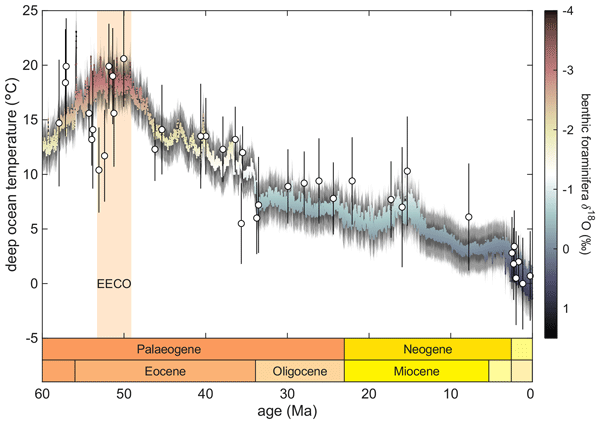
Daniel J. Lunt, Nicky M. Wright, Bram Vaes, Ulrich Salzmann, James W. B. Rae, Thomas Hickler, David K. Hutchinson, Julia Brugger, Jiang Zhu, Sebastian Steinig, A. Nele Meckler, Gordon N. Inglis, David Evans, Agatha M. de Boer, Bette L. Otto-Bliesner, Natalie Burls, Yurui Zhang, Appy Sluijs, Tammo Reichgelt, Igor Niezgodzki, Katrin Meissner, Jean-Baptiste Ladant, Fanni D. Kelemen, Matthew Huber, David R. Greenwood, Mattias Green, Flavia Boscolo-Galazzo, Manuel Tobias Blau, and Michiel Baatsen
Geosci. Model Dev., 19, 6143–6166, https://doi.org/10.5194/gmd-19-6143-2026, https://doi.org/10.5194/gmd-19-6143-2026, 2026
Short summary
Short summary
The early Eocene, about 50 million years ago, was a super-warm period of Earth's history, with high concentrations of carbon dioxide in the atmosphere. Here, we provide a framework and experimental design for climate modellers to carry out a coordinated project, simulating this period. This is the second phase of this project, and here we provide updated maps of the Earth's mountains and ocean floor, and vegetation, to enable more accurate modelling.
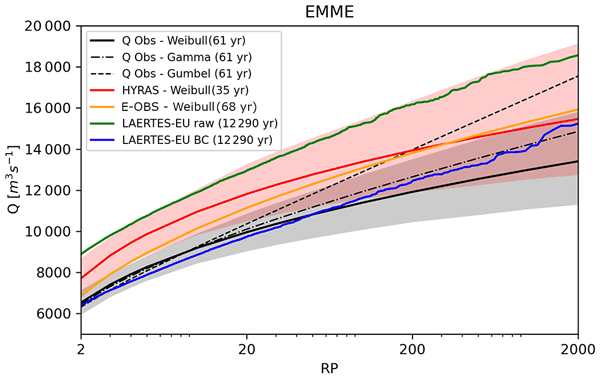
Florian Ehmele, Lisa-Ann Kautz, Hendrik Feldmann, Yi He, Martin Kadlec, Fanni D. Kelemen, Hilke S. Lentink, Patrick Ludwig, Desmond Manful, and Joaquim G. Pinto
Nat. Hazards Earth Syst. Sci., 22, 677–692, https://doi.org/10.5194/nhess-22-677-2022, https://doi.org/10.5194/nhess-22-677-2022, 2022
Short summary
Short summary
For various applications, it is crucial to have profound knowledge of the frequency, severity, and risk of extreme flood events. Such events are characterized by very long return periods which observations can not cover. We use a large ensemble of regional climate model simulations as input for a hydrological model. Precipitation data were post-processed to reduce systematic errors. The representation of precipitation and discharge is improved, and estimates of long return periods become robust.
Natalie J. Burls, Nicky M. Wright, R. Paul Acosta, Catherine D. Bradshaw, Edward Gasson, Lennert B. Stap, Gilles Ramstein, Anna Ruth W. Halberstadt, Agatha M. De Boer, Funda Akgün, David J. Cantrill, Manuel Casas-Gallego, Nela Doláková, Boglarka Erdei, Alex Farnsworth, Sarah Feakins, Ran Feng, Tamara Fletcher, Frédéric Fluteau, J. A. Mattias Green, Anna S. von der Heydt, Matthew Huber, David K. Hutchinson, Dimiter Ivanov, Mine Sezgül Kayseri-Özer, Gregor Knorr, Marianna Kováčová, Caroline H. Lear, Allegra N. LeGrande, Shufeng Li, Xiaoqing Liu, Daniel J. Lunt, Katrin Meissner, Yunfa Miao, Trusha J. Naik, Javier B. Navarro, Joseph B. Novak, Diana Ochoa, Guy J.G. Paxman, Matthew J. Pound, James W. B. Rae, Tammo Reichgelt, Martin Renoult, Francesca Sangiorgi, Anta-Clarisse Sarr, Diane Segalla, Pierre Sepulchre, Amelia Shevenell, Sebastian Steinig, Eivind Straume, Caroline A. E. Strömberg, Clay Tabor, Torsten Utescher, Julia E. Weiffenbach, Elżbieta Worobiec, Yurui Zhang, Feng Zhu, Jiang Zhu, Alexandra Auderset, Florence Colleoni, Aisling Dolan, Rachel Havranek, Ann Holbourn, Nicholas Herold, Daeun Lee, James W. Marschalek, Bryce Mitsunaga, Sevi Modestou, Lina Perez-Angel, Mae Saslaw, Sinda Sosdian, Elena Stiles, Yong Sun, Ning Tan, Zhongshi Zhang, and Yan Zhao
EGUsphere, https://doi.org/10.5194/egusphere-2026-3595, https://doi.org/10.5194/egusphere-2026-3595, 2026
This preprint is open for discussion and under review for Geoscientific Model Development (GMD).
Short summary
Short summary
Simulating warm paleoclimates increases our understanding of the mechanisms that drive climatic change and tipping points. The Miocene Epoch, specifically the Miocene Climatic Optimum, has been identified as a particularly valuable past warm climate to simulate, meriting the design of a coordinated Miocene Model Intercomparison Project. Here we synthesize the latest available literature and present the experimental design for coordinated Miocene simulations and sensitivity studies.
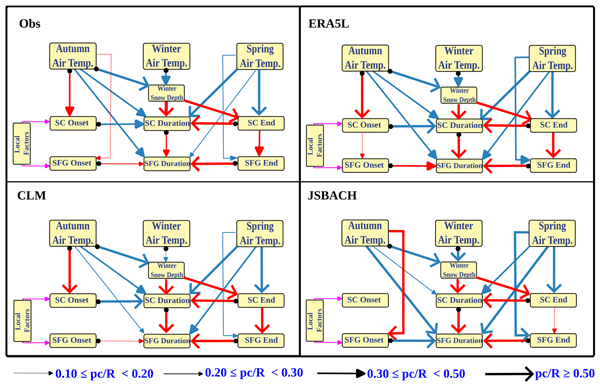
Mittal Parmar, Kristina Fröhlich, Antonella Sanna, Tobias Stacke, Marianna Benassi, Zhicheng Luo, Daniele Peano, and Bodo Ahrens
The Cryosphere, 20, 4157–4184, https://doi.org/10.5194/tc-20-4157-2026, https://doi.org/10.5194/tc-20-4157-2026, 2026
Short summary
Short summary
Seasonally frozen ground strongly influences land–atmosphere interactions, yet its simulation remains uncertain in land surface models. This study evaluates 2 standalone LSM simulations forced by reanalysis data (1986-2022) and validates results against reference observations at 26 Russian sites. Results show contrasting biases linked to snow insulation and freeze–thaw processes, highlighting the need for improved snow and soil parameterizations.
Daniel J. Lunt, Nicky M. Wright, Bram Vaes, Ulrich Salzmann, James W. B. Rae, Thomas Hickler, David K. Hutchinson, Julia Brugger, Jiang Zhu, Sebastian Steinig, A. Nele Meckler, Gordon N. Inglis, David Evans, Agatha M. de Boer, Bette L. Otto-Bliesner, Natalie Burls, Yurui Zhang, Appy Sluijs, Tammo Reichgelt, Igor Niezgodzki, Katrin Meissner, Jean-Baptiste Ladant, Fanni D. Kelemen, Matthew Huber, David R. Greenwood, Mattias Green, Flavia Boscolo-Galazzo, Manuel Tobias Blau, and Michiel Baatsen
Geosci. Model Dev., 19, 6143–6166, https://doi.org/10.5194/gmd-19-6143-2026, https://doi.org/10.5194/gmd-19-6143-2026, 2026
Short summary
Short summary
The early Eocene, about 50 million years ago, was a super-warm period of Earth's history, with high concentrations of carbon dioxide in the atmosphere. Here, we provide a framework and experimental design for climate modellers to carry out a coordinated project, simulating this period. This is the second phase of this project, and here we provide updated maps of the Earth's mountains and ocean floor, and vegetation, to enable more accurate modelling.
Francesco De Rovere, Giulia Bonino, Ronan McAdam, Enrico Scoccimarro, Samuel Somot, Iván Manuel Parras-Berrocal, Bodo Ahrens, Vladimir Djurdjevic, Laurent Li, and Simona Masina
EGUsphere, https://doi.org/10.5194/egusphere-2026-2752, https://doi.org/10.5194/egusphere-2026-2752, 2026
Short summary
Short summary
Marine heatwaves in the Mediterranean Sea are intensifying, posing growing threats to marine life and coastal communities. We evaluated whether high-resolution regional climate models better capture these extremes compared to the global models driving them. Regional models reliably improve sea surface temperature patterns and marine heatwave duration, but struggle more with heatwave intensity. Higher resolution alone is not enough, advances in other aspects of model design are equally needed.
Paul Voit, Marie Hundhausen, Larisa Seregina, Hendrik Feldmann, Bodo Ahrens, and Maik Heistermann
EGUsphere, https://doi.org/10.5194/egusphere-2026-1229, https://doi.org/10.5194/egusphere-2026-1229, 2026
Short summary
Short summary
Extreme rainfall is expected to increase with a warming climate. However, it remains unclear how this will impact future floods. This study utilizes an ensemble of 6 new datasets, containing the future projected rainfall, and compares the simulated flash floods of the past (1971–2000) and future (2071–2100) under the RCP8.5 scenario for the German part of the Danube catchment. Our results indicate an increase of 100-yr flood return levels of 30 % across all subcatchments under this scenario.
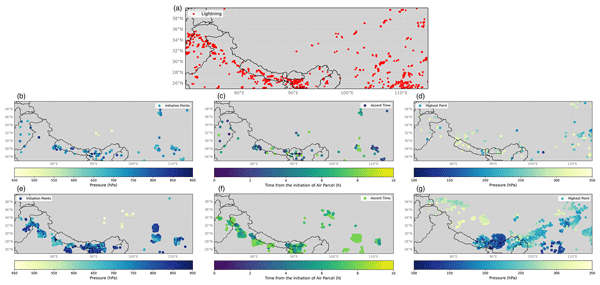
Prashant Singh and Bodo Ahrens
Atmos. Chem. Phys., 25, 17869–17888, https://doi.org/10.5194/acp-25-17869-2025, https://doi.org/10.5194/acp-25-17869-2025, 2025
Short summary
Short summary
Intense deep convective clouds (e.g. lightning events) can rapidly move water vapour and other gases into the upper troposphere. The Third Pole region, especially the Himalayas, frequently experiences such storms. ICON (Icosahedral Nonhydrostatic )-CLM (climate limited-area mode) (3.3 km) and ERA5 reanalysis data (30 km), these convective events can lift water vapour into the upper troposphere but rarely into the lower stratosphere in the Third Pole. After reaching the upper troposphere, the water vapour tends to move horizontally away from the region.
Zhicheng Luo, Danny Risto, and Bodo Ahrens
The Cryosphere, 19, 6547–6576, https://doi.org/10.5194/tc-19-6547-2025, https://doi.org/10.5194/tc-19-6547-2025, 2025
Short summary
Short summary
Climate models face challenges in accurately simulating cold regions' soil temperatures and snow conditions. By comparing different models, we found that the land surface models have a strong impact on simulation errors. Additionally, they struggle to account for snow’s insulating effect on the ground properly. Our findings highlight the need for improving frozen soil simulation, which is crucial for understanding the climate impacts of frozen soil.
Tancrède P. M. Leger, Jeremy C. Ely, Christopher D. Clark, Sarah L. Bradley, Rosie E. Archer, and Jiang Zhu
The Cryosphere, 19, 5719–5761, https://doi.org/10.5194/tc-19-5719-2025, https://doi.org/10.5194/tc-19-5719-2025, 2025
Short summary
Short summary
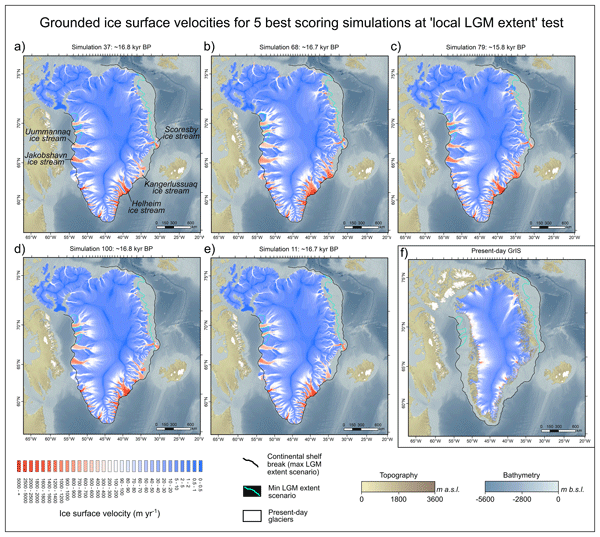
This study uses state-of-the-art computer simulations to better constrain the Greenland-Ice-Sheet's evolution over the past 24,000 years. By comparing model results with geological data, it reveals when and why the ice sheet grew and shrank, helping to improve future predictions of sea level rise and climate change.
Christian Czakay, Larisa Tarasova, and Bodo Ahrens
EGUsphere, https://doi.org/10.5194/egusphere-2025-3532, https://doi.org/10.5194/egusphere-2025-3532, 2025
Short summary
Short summary
In this study, we simulated streamflow in German river catchments for climate projections using a deep learning model. Flood-generating processes were identified using explainable artificial intelligence. In the median, the models project mostly less rain-on-snow floods in Germany in the future and an overall lower importance of snowmelt. The average and strongest rain-on-snow floods will have a higher magnitude. The trends found for the individual climate models can vary considerably.
Richard Lohmann, Christopher Purr, and Bodo Ahrens
EGUsphere, https://doi.org/10.5194/egusphere-2025-3670, https://doi.org/10.5194/egusphere-2025-3670, 2025
Short summary
Short summary
This study investigates the relationship between atmospheric blocking and the extreme events heatwaves, heavy rainfall and calm events in Germany in atmospheric reanalyses and CMIP6 climate simulations. In the reanalyses, the statistical relationship is more pronounced between blocking and calms than between blocking and heavy precipitation. In the simulated future climate, the frequency of the three extreme event types increases with nearly unchanged relationship of blocking with the extremes.
Xiaodong Zhang, Brett J. Tipple, Jiang Zhu, William D. Rush, Christian A. Shields, Joseph B. Novak, and James C. Zachos
Clim. Past, 20, 1615–1626, https://doi.org/10.5194/cp-20-1615-2024, https://doi.org/10.5194/cp-20-1615-2024, 2024
Short summary
Short summary
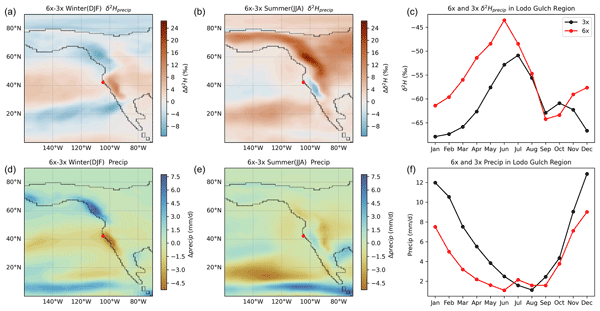
This study is motivated by the current anthropogenic-warming-forced transition in regional hydroclimate. We use observations and model simulations during the Paleocene–Eocene Thermal Maximum (PETM) to constrain the regional/local hydroclimate response. Our findings, based on multiple observational evidence within the context of model output, suggest a transition toward greater aridity and precipitation extremes in central California during the PETM.
Julia Campbell, Christopher J. Poulsen, Jiang Zhu, Jessica E. Tierney, and Jeremy Keeler
Clim. Past, 20, 495–522, https://doi.org/10.5194/cp-20-495-2024, https://doi.org/10.5194/cp-20-495-2024, 2024
Short summary
Short summary
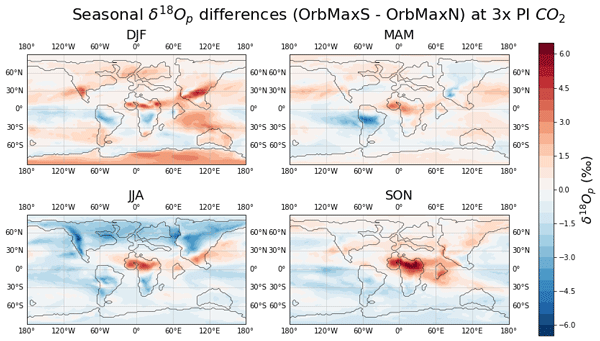
In this study, we use climate modeling to investigate the relative impact of CO2 and orbit on Early Eocene (~ 55 million years ago) climate and compare our modeled results to fossil records to determine the context for the Paleocene–Eocene Thermal Maximum, the most extreme hyperthermal in the Cenozoic. Our conclusions consider limitations and illustrate the importance of climate models when interpreting paleoclimate records in times of extreme warmth.
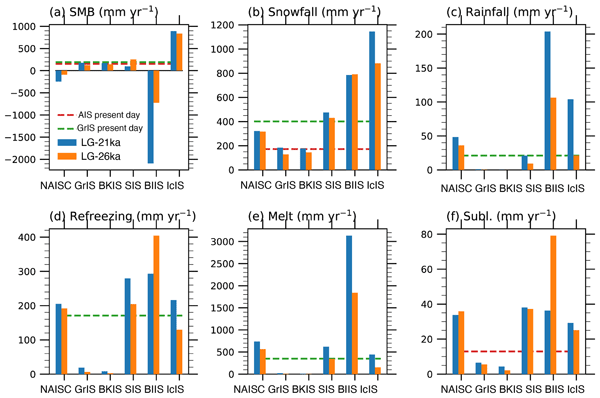
Sarah L. Bradley, Raymond Sellevold, Michele Petrini, Miren Vizcaino, Sotiria Georgiou, Jiang Zhu, Bette L. Otto-Bliesner, and Marcus Lofverstrom
Clim. Past, 20, 211–235, https://doi.org/10.5194/cp-20-211-2024, https://doi.org/10.5194/cp-20-211-2024, 2024
Short summary
Short summary
The Last Glacial Maximum (LGM) was the most recent period with large ice sheets in Europe and North America. We provide a detailed analysis of surface mass and energy components for two time periods that bracket the LGM: 26 and 21 ka BP. We use an earth system model which has been adopted for modern ice sheets. We find that all Northern Hemisphere ice sheets have a positive surface mass balance apart from the British and Irish ice sheets and the North American ice sheet complex.
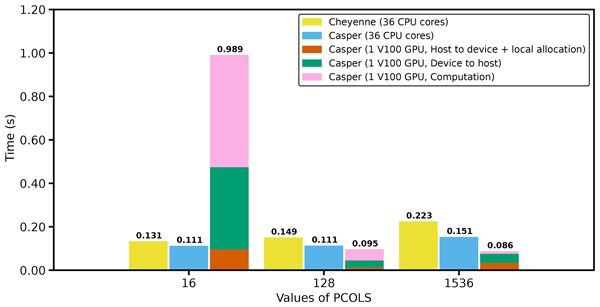
Andrew Gettelman, Hugh Morrison, Trude Eidhammer, Katherine Thayer-Calder, Jian Sun, Richard Forbes, Zachary McGraw, Jiang Zhu, Trude Storelvmo, and John Dennis
Geosci. Model Dev., 16, 1735–1754, https://doi.org/10.5194/gmd-16-1735-2023, https://doi.org/10.5194/gmd-16-1735-2023, 2023
Short summary
Short summary
Clouds are a critical part of weather and climate prediction. In this work, we document updates and corrections to the description of clouds used in several Earth system models. These updates include the ability to run the scheme on graphics processing units (GPUs), changes to the numerical description of precipitation, and a correction to the ice number. There are big improvements in the computational performance that can be achieved with GPU acceleration.
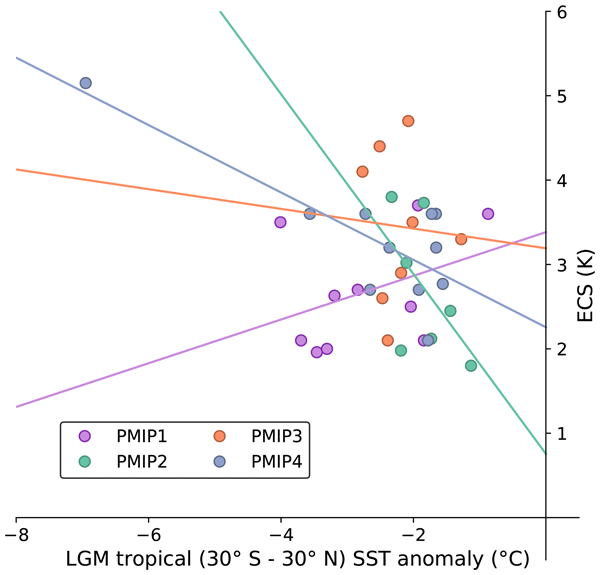
Martin Renoult, Navjit Sagoo, Jiang Zhu, and Thorsten Mauritsen
Clim. Past, 19, 323–356, https://doi.org/10.5194/cp-19-323-2023, https://doi.org/10.5194/cp-19-323-2023, 2023
Short summary
Short summary
The relationship between the Last Glacial Maximum and the sensitivity of climate models to a doubling of CO2 can be used to estimate the true sensitivity of the Earth. However, this relationship has varied in successive model generations. In this study, we assess multiple processes at the Last Glacial Maximum which weaken this relationship. For example, how models respond to the presence of ice sheets is a large contributor of uncertainty.
Praveen Kumar Pothapakula, Amelie Hoff, Anika Obermann-Hellhund, Timo Keber, and Bodo Ahrens
Earth Syst. Dynam. Discuss., https://doi.org/10.5194/esd-2022-24, https://doi.org/10.5194/esd-2022-24, 2022
Preprint withdrawn
Short summary
Short summary
The Vb-cyclones simulated with a coupled regional climate model with two different driving data sets are compared against each other in historical period, thereafter the future climate predictions were analyzed. The Vb-cyclones in two simulations agree well in terms of their occurrence, intensity and track in two simulations, though there are discrepancies in seasonal cycles and their process linking Mediterranean Sea in historical period. So significant changes were observed in the future.
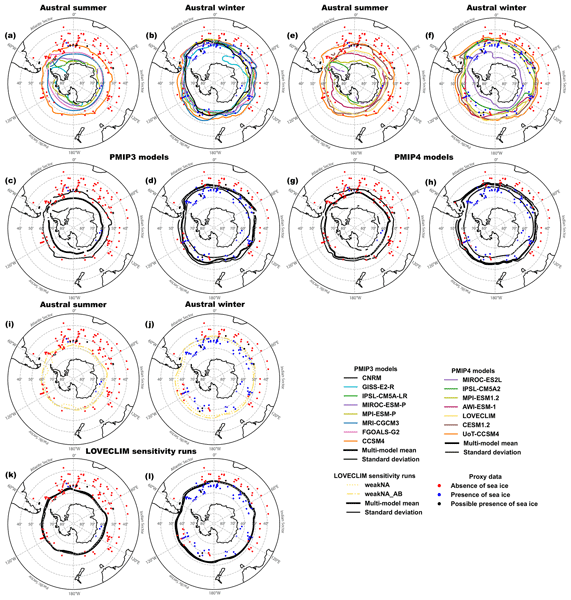
Ryan A. Green, Laurie Menviel, Katrin J. Meissner, Xavier Crosta, Deepak Chandan, Gerrit Lohmann, W. Richard Peltier, Xiaoxu Shi, and Jiang Zhu
Clim. Past, 18, 845–862, https://doi.org/10.5194/cp-18-845-2022, https://doi.org/10.5194/cp-18-845-2022, 2022
Short summary
Short summary
Climate models are used to predict future climate changes and as such, it is important to assess their performance in simulating past climate changes. We analyze seasonal sea-ice cover over the Southern Ocean simulated from numerical PMIP3, PMIP4 and LOVECLIM simulations during the Last Glacial Maximum (LGM). Comparing these simulations to proxy data, we provide improved estimates of LGM seasonal sea-ice cover. Our estimate of summer sea-ice extent is 20 %–30 % larger than previous estimates.
Florian Ehmele, Lisa-Ann Kautz, Hendrik Feldmann, Yi He, Martin Kadlec, Fanni D. Kelemen, Hilke S. Lentink, Patrick Ludwig, Desmond Manful, and Joaquim G. Pinto
Nat. Hazards Earth Syst. Sci., 22, 677–692, https://doi.org/10.5194/nhess-22-677-2022, https://doi.org/10.5194/nhess-22-677-2022, 2022
Short summary
Short summary
For various applications, it is crucial to have profound knowledge of the frequency, severity, and risk of extreme flood events. Such events are characterized by very long return periods which observations can not cover. We use a large ensemble of regional climate model simulations as input for a hydrological model. Precipitation data were post-processed to reduce systematic errors. The representation of precipitation and discharge is improved, and estimates of long return periods become robust.
Silje Lund Sørland, Roman Brogli, Praveen Kumar Pothapakula, Emmanuele Russo, Jonas Van de Walle, Bodo Ahrens, Ivonne Anders, Edoardo Bucchignani, Edouard L. Davin, Marie-Estelle Demory, Alessandro Dosio, Hendrik Feldmann, Barbara Früh, Beate Geyer, Klaus Keuler, Donghyun Lee, Delei Li, Nicole P. M. van Lipzig, Seung-Ki Min, Hans-Jürgen Panitz, Burkhardt Rockel, Christoph Schär, Christian Steger, and Wim Thiery
Geosci. Model Dev., 14, 5125–5154, https://doi.org/10.5194/gmd-14-5125-2021, https://doi.org/10.5194/gmd-14-5125-2021, 2021
Short summary
Short summary
We review the contribution from the CLM-Community to regional climate projections following the CORDEX framework over Europe, South Asia, East Asia, Australasia, and Africa. How the model configuration, horizontal and vertical resolutions, and choice of driving data influence the model results for the five domains is assessed, with the purpose of aiding the planning and design of regional climate simulations in the future.
Cited articles
Agustsdottir, A. M., Barron, E. J., Bice, K. L., Colarusso, L. A., Cookman, J. L., Cosgrove, B. A., De Lurio, J. L., Dutton, J. F., Frakes, B. J., Frakes, L. A., Moy, C. J., Olszewski, T. D., Pancost, R. D., Poulsen, C. J., Ruffner, C. M., Sheldon, D. G., and White, T. S.: Storm activity in ancient climates 1. Sensitivity of severe storms to climate forcing factors on geologic timescales, Journal of Geophysical Research Atmospheres, 104, 27277–27293, 1999. a
Akhmetiev, M. A., Zaporozhets, N. I., Benyamovskiy, V. N., Aleksandrova, G. N., Iakovleva, A. I., and Oreshkina, T. V.: The Paleogene History Of The Western Siberian Seaway-A Connection Of The Peri-Tethys To The Arctic Ocean, Austrian Journal of Earth Sciences, 105, https://www.geologie.or.at/images/OEGG/geol-ges/mitteilungen/mitt-105-1.html (last access: March 2026), 2012. a
Barriopedro, D., García-Herrera, R., and Trigo, R. M.: Application of blocking diagnosis methods to General Circulation Models. Part I: a novel detection scheme, Clim. Dynam., 35, 1373–1391, https://doi.org/10.1007/s00382-010-0767-5, 2010. a
Cenozoic CO2 Proxy Integration Project (CenCO2PIP) Consortium, Hönisch, B., Royer, D. L., Breecker, D. O., Polissar, P. J., Bowen, G. J., Henehan, M. J., Cui, Y., Steinthorsdottir, M., McElwain, J. C., Kohn, M. J., Pearson, A., Phelps, S. R., Uno, K. T., Ridgwell, A., Anagnostou, E., Austermann, J., Badger, M. P. S., Barclay, R. S., Bijl, P. K., Chalk, T. B., Scotese, C. R., de la Vega, E., DeConto, R. M., Dyez, K. A., Ferrini, V., Franks, P. J., Giulivi, C. F., Gutjahr, M., Harper, D. T., Haynes, L. L., Huber, M., Snell, K. E., Keisling, B. A., Konrad, W., Lowenstein, T. K., Malinverno, A., Guillermic, M., Mejía, L. M., Milligan, J. N., Morton, J. J., Nordt, L., Whiteford, R., Roth-Nebelsick, A., Rugenstein, J. K. C., Schaller, M. F., Sheldon, N. D., Sosdian, S., Wilkes, E. B., Witkowski, C. R., Zhang, Y. G., Anderson, L., Beerling, D. J., Bolton, C., Cerling, T. E., Cotton, J. M., Da, J., Ekart, D. D., Foster, G. F., Greenwood, D. R., Hyland, E. G., Jagniecki, E. A., Jasper, J. P., Kowalczyk, J. B., Kunzmann, L., Kürschner, W. M., Lawrence, C. E., Lear, C. H., Martínez-Botí, M. A., Maxbauer, D. P., Montagna, P., Naafs, B. D. A., Rae, J. W. B., Raitzsch, M., Retallack, G. J., Ring, S. J., Seki, O., Sepúlveda, J., Sinha, A., Tesfamichael, T. F., Tripati, A., van der Burgh, J., Yu, J., Zachos, J. C., and Zhang, L.: Toward a Cenozoic history of atmospheric CO2, Science, 382, eadi5177, https://doi.org/10.1126/science.adi5177, 2023. a
Davini, P., Cagnazzo, C., Gualdi, S., and Navarra, A.: Bidimensional diagnostics, variability, and trends of Northern Hemisphere blocking, J. Climate, 25, 6496–6509, https://doi.org/10.1175/JCLI-D-12-00032.1, 2012. a, b
Evans, D., Sagoo, N., Renema, W., Cotton, L. J., Müller, W., Todd, J. A., Saraswati, P. K., Stassen, P., Ziegler, M., Pearson, P. N., Valdes, P. J., and Affek, H. P.: Eocene greenhouse climate revealed by coupled clumped isotope-Mg/Ca thermometry, Proceedings of the National Academy of Sciences, 115, 1174–1179, 2018. a
Frieling, J., Iakovleva, A. I., Reichart, G.-J., Aleksandrova, G. N., Gnibidenko, Z. N., Schouten, S., and Sluijs, A.: Paleocene–Eocene warming and biotic response in the epicontinental West Siberian Sea, Geology, 42, 767–770, 2014. a
Herold, N., Buzan, J., Seton, M., Goldner, A., Green, J. A. M., Müller, R. D., Markwick, P., and Huber, M.: A suite of early Eocene (∼ 55 Ma) climate model boundary conditions, Geosci. Model Dev., 7, 2077–2090, https://doi.org/10.5194/gmd-7-2077-2014, 2014. a, b, c
Inglis, G. N., Bragg, F., Burls, N. J., Cramwinckel, M. J., Evans, D., Foster, G. L., Huber, M., Lunt, D. J., Siler, N., Steinig, S., Tierney, J. E., Wilkinson, R., Anagnostou, E., de Boer, A. M., Dunkley Jones, T., Edgar, K. M., Hollis, C. J., Hutchinson, D. K., and Pancost, R. D.: Global mean surface temperature and climate sensitivity of the early Eocene Climatic Optimum (EECO), Paleocene–Eocene Thermal Maximum (PETM), and latest Paleocene, Clim. Past, 16, 1953–1968, https://doi.org/10.5194/cp-16-1953-2020, 2020. a
Kadow, C., Illing, S., Lucio-Eceiza, E. E., Bergemann, M., Ramadoss, M., Sommer, P. S., Kunst, O., Schartner, T., Pankatz, K., Grieger, J., Schuster, M., Richling, A., Thiemann, H., Kirchner, I., Rust, H. W., Ludwig, T., Cubasch, U., and Ulbrich, U.: Introduction to Freva – a Free Evaluation System Framework for earth system modeling, J. Open Res. Software, 9, 13, https://doi.org/10.5334/jors.253, 2021. a
Kelemen, F. D.: CESM1.2 simulation data for the paper “Role of paleogeography on large-scale circulation during the early Eocene”, Zenodo [data set], https://doi.org/10.5281/zenodo.17246902, 2025. a
Kelemen, F. D., Bartholy, J., and Pongracz, R.: Multivariable cyclone analysis in the Mediterranean region, Időjárás, 119, 159–184, 2015. a
Kelemen, F. D., Steinig, S., de Boer, A., Zhu, J., Chan, W.-L., Niezgodzki, I., Hutchinson, D. K., Knorr, G., Abe-Ouchi, A., and Ahrens, B.: Meridional heat transport in the DeepMIP Eocene ensemble: Non-CO2 and CO2 effects, Paleoceanography and Paleoclimatology, 38, e2022PA004607, https://doi.org/10.1029/2022PA004607, 2023. a, b, c, d, e, f
Lohmann, R., Purr, C., and Ahrens, B.: Northern Hemisphere atmospheric blocking in CMIP6 climate projections using a hybrid index, J. Climate, https://doi.org/10.1175/JCLI-D-23-0589.1, 2024. a, b
Lunt, D. J., Huber, M., Anagnostou, E., Baatsen, M. L. J., Caballero, R., DeConto, R., Dijkstra, H. A., Donnadieu, Y., Evans, D., Feng, R., Foster, G. L., Gasson, E., von der Heydt, A. S., Hollis, C. J., Inglis, G. N., Jones, S. M., Kiehl, J., Kirtland Turner, S., Korty, R. L., Kozdon, R., Krishnan, S., Ladant, J.-B., Langebroek, P., Lear, C. H., LeGrande, A. N., Littler, K., Markwick, P., Otto-Bliesner, B., Pearson, P., Poulsen, C. J., Salzmann, U., Shields, C., Snell, K., Stärz, M., Super, J., Tabor, C., Tierney, J. E., Tourte, G. J. L., Tripati, A., Upchurch, G. R., Wade, B. S., Wing, S. L., Winguth, A. M. E., Wright, N. M., Zachos, J. C., and Zeebe, R. E.: The DeepMIP contribution to PMIP4: experimental design for model simulations of the EECO, PETM, and pre-PETM (version 1.0), Geosci. Model Dev., 10, 889–901, https://doi.org/10.5194/gmd-10-889-2017, 2017. a
Lunt, D. J., Bragg, F., Chan, W.-L., Hutchinson, D. K., Ladant, J.-B., Morozova, P., Niezgodzki, I., Steinig, S., Zhang, Z., Zhu, J., Abe-Ouchi, A., Anagnostou, E., de Boer, A. M., Coxall, H. K., Donnadieu, Y., Foster, G., Inglis, G. N., Knorr, G., Langebroek, P. M., Lear, C. H., Lohmann, G., Poulsen, C. J., Sepulchre, P., Tierney, J. E., Valdes, P. J., Volodin, E. M., Dunkley Jones, T., Hollis, C. J., Huber, M., and Otto-Bliesner, B. L.: DeepMIP: model intercomparison of early Eocene climatic optimum (EECO) large-scale climate features and comparison with proxy data, Clim. Past, 17, 203–227, https://doi.org/10.5194/cp-17-203-2021, 2021. a, b, c, d
Mei, J., Wen, X., Yu, F., and Yan, Y.: The C-shaped landmass: A key driver of monsoon formation, Geophysical Research Letters, 52, e2024GL112127, https://doi.org/10.1029/2024GL112127, 2025. a
Ramstein, G.: Climates of the earth and cryosphere evolution, Surveys in Geophysics, 32, 329–350, 2011. a
Scher, H. D., Whittaker, J. M., Williams, S. E., Latimer, J. C., Kordesch, W. E., and Delaney, M. L.: Onset of Antarctic Circumpolar Current 30 million years ago as Tasmanian Gateway aligned with westerlies, Nature, 523, 580–583, 2015. a
Shaw, T. A., Miyawaki, O., and Donohoe, A.: Stormier Southern Hemisphere induced by topography and ocean circulation, Proceedings of the National Academy of Sciences, 119, e2123512119, https://doi.org/10.1073/pnas.2123512119, 2022. a
Shellito, C. J., Lamarque, J.-F., and Sloan, L. C.: Early Eocene Arctic climate sensitivity to pCO2 and basin geography, Geophysical Research Letters, 36, https://doi.org/10.1029/2009GL037248, 2009. a
Wang, P.: Cenozoic Deformation and the History of Sea-Land Interactions in Asia, in: Continent‐Ocean Interactions Within East Asian Marginal Seas, edited by: Clift, P., Kuhnt, W. and Hayes, D., American Geophysical Union (AGU), 1–22, ISBN 9781118666067, https://doi.org/10.1029/149GM01, 2004. a
Zhang, Y., de Boer, A. M., Lunt, D. J., Hutchinson, D. K., Ross, P., van de Flierdt, T., Sexton, P., Coxall, H. K., Steinig, S., Ladant, J.-B., Zhu, J., Donnadieu, Y., Zhang, Z., Chan, W.-L., Abe-Ouchi, A., Niezgodzki, I., Lohmann, G., Knorr, G., Poulsen, C. J., and Huber, M.: Early Eocene ocean meridional overturning circulation: The roles of atmospheric forcing and strait geometry, Paleoceanography and Paleoclimatology, 37, e2021PA004329, https://doi.org/10.1029/2021PA004329, 2022. a, b, c
Zhu, J., Poulsen, C. J., and Tierney, J. E.: Simulation of Eocene extreme warmth and high climate sensitivity through cloud feedbacks, Science Advances, 5, eaax1874, https://doi.org/10.1126/sciadv.aax1874, 2019. a, b
Zhu, J., Poulsen, C. J., and Tierney, J. E.: CESM1.2 simulation data for “Simulation of Eocene extreme warmth and high climate sensitivity through cloud feedbacks”, Zenodo [data set], https://doi.org/10.5281/zenodo.2642535, 2024. a
Short summary
The arrangement of continents and oceans strongly affects climate by shaping large-scale circulation patterns. We study, how early Eocene geography (53.5 Ma) influenced mid-latitude storms and persistent high-pressure systems, focusing on the West Siberian Sea and absent Antarctic Circumpolar Current. The climate model simulation of the early Eocene, shows a more balanced hemispheric distribution, through increased northern and decreased southern mid-latitude storm activity compared to today.
The arrangement of continents and oceans strongly affects climate by shaping large-scale...


