
Articles | Volume 22, issue 2
https://doi.org/10.5194/cp-22-205-2026
© Author(s) 2026. This work is distributed under
the Creative Commons Attribution 4.0 License.
the Creative Commons Attribution 4.0 License.
https://doi.org/10.5194/cp-22-205-2026
© Author(s) 2026. This work is distributed under
the Creative Commons Attribution 4.0 License.
the Creative Commons Attribution 4.0 License.
Research article
| 
02 Feb 2026
Research article |
| 02 Feb 2026
| 02 Feb 2026
A global analysis of pollen-based reconstructions of land climate changes during Dansgaard–Oeschger events
Mengmeng Liu
CORRESPONDING AUTHOR

Georgina Mace Centre for the Living Planet, Department of Life Sciences, Imperial College London, Silwood Park Campus, Buckhurst Road, Ascot SL5 7PY, UK
Department of Geography and Environmental Science, University of Reading, Reading, RG6 6AB, UK
Iain Colin Prentice
Georgina Mace Centre for the Living Planet, Department of Life Sciences, Imperial College London, Silwood Park Campus, Buckhurst Road, Ascot SL5 7PY, UK
Sandy P. Harrison
Department of Geography and Environmental Science, University of Reading, Reading, RG6 6AB, UK
Related authors
Mengmeng Liu, Yicheng Shen, Penelope González-Sampériz, Graciela Gil-Romera, Cajo J. F. ter Braak, Iain Colin Prentice, and Sandy P. Harrison
Clim. Past, 19, 803–834, https://doi.org/10.5194/cp-19-803-2023, https://doi.org/10.5194/cp-19-803-2023, 2023
Short summary
Short summary
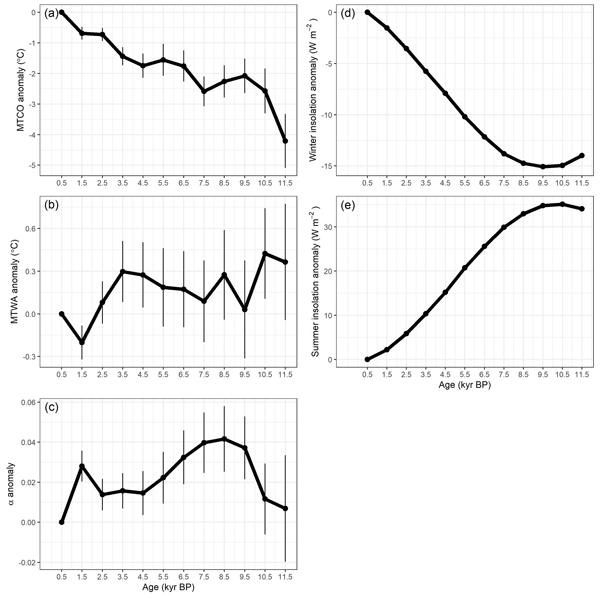
We reconstructed the Holocene climates in the Iberian Peninsula using a large pollen data set and found that the west–east moisture gradient was much flatter than today. We also found that the winter was much colder, which can be expected from the low winter insolation during the Holocene. However, summer temperature did not follow the trend of summer insolation, instead, it was strongly correlated with moisture.
Yicheng Shen, Luke Sweeney, Mengmeng Liu, Jose Antonio Lopez Saez, Sebastián Pérez-Díaz, Reyes Luelmo-Lautenschlaeger, Graciela Gil-Romera, Dana Hoefer, Gonzalo Jiménez-Moreno, Heike Schneider, I. Colin Prentice, and Sandy P. Harrison
Clim. Past, 18, 1189–1201, https://doi.org/10.5194/cp-18-1189-2022, https://doi.org/10.5194/cp-18-1189-2022, 2022
Short summary
Short summary
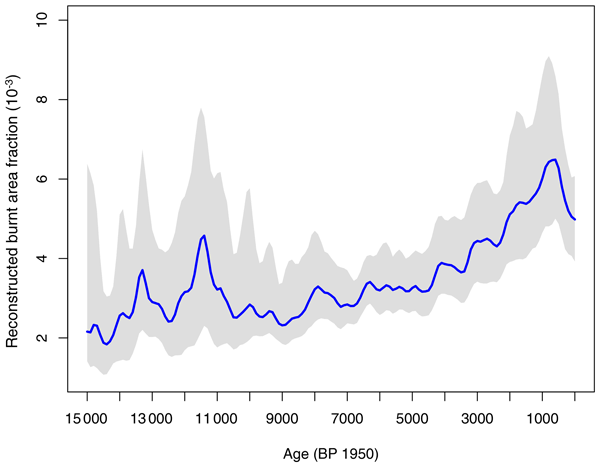
We present a method to reconstruct burnt area using a relationship between pollen and charcoal abundances and the calibration of charcoal abundance using modern observations of burnt area. We use this method to reconstruct changes in burnt area over the past 12 000 years from sites in Iberia. We show that regional changes in burnt area reflect known changes in climate, with a high burnt area during warming intervals and low burnt area when the climate was cooler and/or wetter than today.
Joseph Ovwemuvwose, Ian Colin Prentice, and Heather Graven
Biogeosciences, 23, 5593–5605, https://doi.org/10.5194/bg-23-5593-2026, https://doi.org/10.5194/bg-23-5593-2026, 2026
Short summary
Short summary
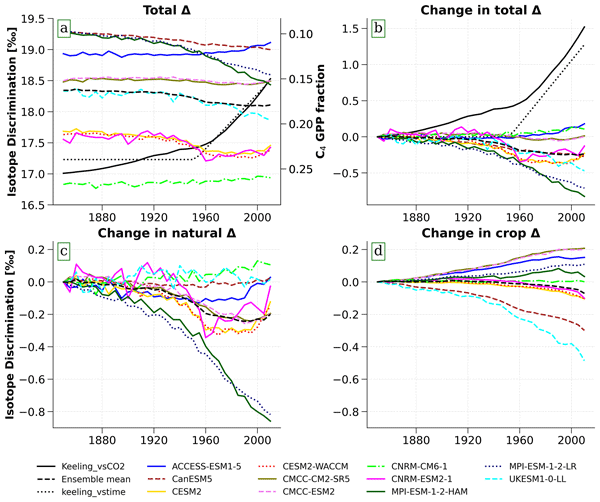
This work examines the roles of cropland representation and the treatment of photosynthetic pathways in the uncertainties of carbon flux simulations in Earth System Models (ESMs). Our results show that reducing these uncertainties will require improvements in the representation of C3 and C4 crops and natural vegetation area coverage, as well as the theories underpinning the simulation of their carbon uptake processes, specifically the implementation of photosynthetic pathways.
Wenyao Gan, Martin Best, Pier Luigi Vidale, I. Colin Prentice, and Sandy P. Harrison
EGUsphere, https://doi.org/10.5194/egusphere-2026-2804, https://doi.org/10.5194/egusphere-2026-2804, 2026
This preprint is open for discussion and under review for Geoscientific Model Development (GMD).
Short summary
Short summary
Plants dynamically adjust their photosynthetic capacity as environmental conditions change, but most land models represent this with fixed parameters set separately for each plant type. We added a simple optimality-based photosynthesis scheme to the Joint UK Land Environment Simulator, allowing photosynthetic capacity to acclimate, and tested it against flux-tower observations together with the standard setups. The new scheme improves simulated carbon uptake without worsening energy fluxes.
Matthew Forrest, Mateus Dantas de Paula, Filipe Gomes de Almeida, Sandy P. Harrison, I. Colin Prentice, and Thomas Hickler
EGUsphere, https://doi.org/10.5194/egusphere-2026-3273, https://doi.org/10.5194/egusphere-2026-3273, 2026
This preprint is open for discussion and under review for Geoscientific Model Development (GMD).
Short summary
Short summary
Global photosynthesis on land is a large flow of carbon in the Earth system which underpins food production and ecosystems. It is particularly important to know how it responds to climate change, but current vegetation models do not agree on this. We implemented a new photosynthesis model based on recent theoretical advances into a vegetation model. We found that it improved the representation of photosynthesis when compared both to global data from satellites and detailed site measurements.
Jiahe Zheng, Zhengsen Xu, Rossella Arcucci, Sandy P. Harrison, Lincoln Linlin Xu, and Sibo Cheng
Nat. Hazards Earth Syst. Sci., 26, 2871–2895, https://doi.org/10.5194/nhess-26-2871-2026, https://doi.org/10.5194/nhess-26-2871-2026, 2026
Short summary
Short summary
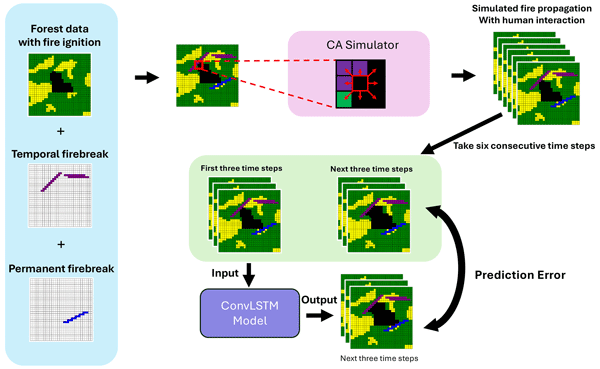
We introduce the first AI model that predicts wildfire spread with the placement of both permanent and temporary firebreaks. Our spatiotemporal model learns from simulation data to capture how fire interacts with changing suppression efforts over time. Our model runs fast enough for near real-time use and performs well across different wildfire events. This approach could lead to better tools for helping decision-makers understand where and when firebreaks are most effective.
Amin Hassan, Iain Colin Prentice, and Xu Liang
Hydrol. Earth Syst. Sci., 30, 317–341, https://doi.org/10.5194/hess-30-317-2026, https://doi.org/10.5194/hess-30-317-2026, 2026
Short summary
Short summary
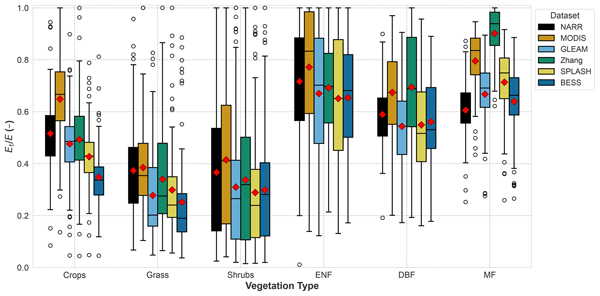
Evapotranspiration is evaporation that occurs from plants, soil, and water bodies, but determining these components is difficult. We developed a new method that uses measurements such as streamflow and rainfall to determine the portion of plant evaporation. We found differences among vegetation types and climate conditions, and showed that plant water use peaks in moderately dry regions. The results improve understanding of plant-water interactions and can help improve water and climate models.
Jierong Zhao, Boya Zhou, Sandy P. Harrison, and Colin Prentice
Earth Syst. Dynam., 16, 1655–1669, https://doi.org/10.5194/esd-16-1655-2025, https://doi.org/10.5194/esd-16-1655-2025, 2025
Short summary
Short summary
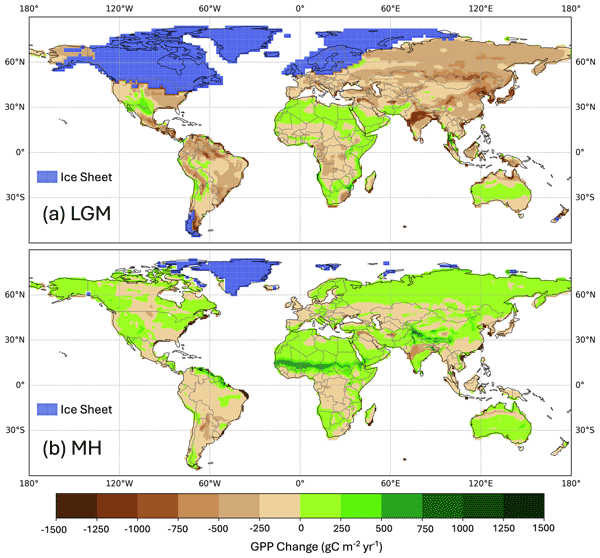
We used eco-evolutionary optimality modelling to examine how climate and CO2 impacted vegetation at the Last Glacial Maximum (LGM; 21 000 years ago) and the mid-Holocene (MH; 6000 years ago). Low CO2 at the LGM was as important as climate in reducing tree cover and productivity and in increasing C4 plant abundance. Climate had positive effects on MH vegetation, but the low CO2 was a constraint on plant growth. These results show it is important to consider changing CO2 to model ecosystem changes.
Luke Sweeney, Sandy P. Harrison, and Marc Vander Linden
Biogeosciences, 22, 4903–4922, https://doi.org/10.5194/bg-22-4903-2025, https://doi.org/10.5194/bg-22-4903-2025, 2025
Short summary
Short summary
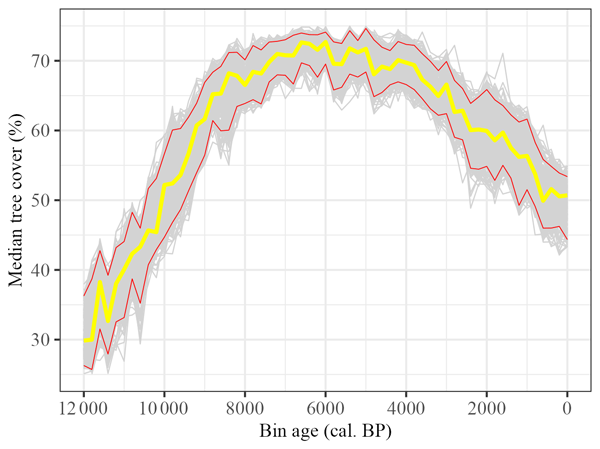
Changes in tree cover across Europe during the Holocene are reconstructed from fossil pollen data using a model developed with modern observations of tree cover and modern pollen assemblages. There is a rapid increase in tree cover after the last glacial period, with maximum cover during the mid-Holocene and a decline thereafter; the timing of the maximum and the speed of the increase and subsequent decrease vary regionally, likely reflecting differences in climate trajectories and human influence.
Kieran M. R. Hunt and Sandy P. Harrison
Clim. Past, 21, 1–26, https://doi.org/10.5194/cp-21-1-2025, https://doi.org/10.5194/cp-21-1-2025, 2025
Short summary
Short summary
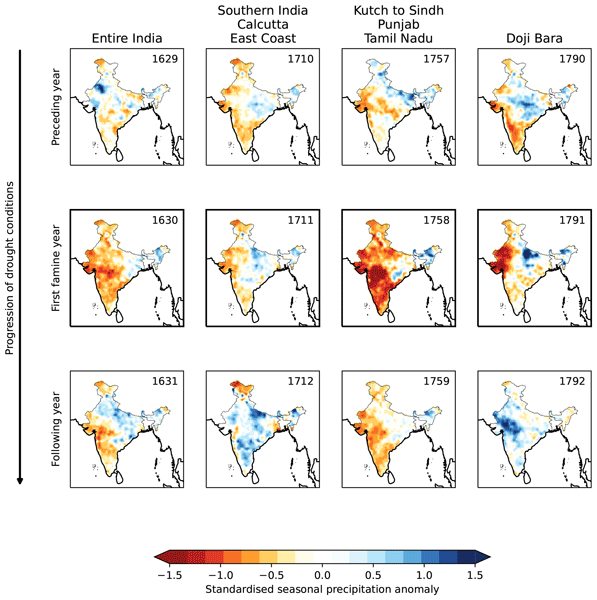
In this study, we train machine learning models on tree rings, speleothems, and instrumental rainfall to estimate seasonal monsoon rainfall over India over the last 500 years. Our models highlight multidecadal droughts in the mid-17th and 19th centuries, and we link these to historical famines. Using techniques from explainable AI (artificial intelligence), we show that our models use known relationships between local hydroclimate and the monsoon circulation.
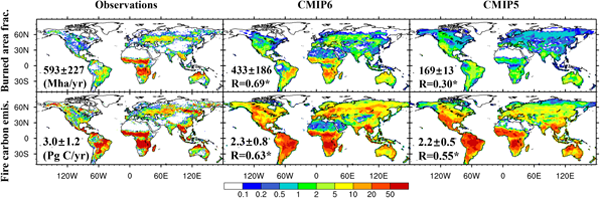
Fang Li, Xiang Song, Sandy P. Harrison, Jennifer R. Marlon, Zhongda Lin, L. Ruby Leung, Jörg Schwinger, Virginie Marécal, Shiyu Wang, Daniel S. Ward, Xiao Dong, Hanna Lee, Lars Nieradzik, Sam S. Rabin, and Roland Séférian
Geosci. Model Dev., 17, 8751–8771, https://doi.org/10.5194/gmd-17-8751-2024, https://doi.org/10.5194/gmd-17-8751-2024, 2024
Short summary
Short summary
This study provides the first comprehensive assessment of historical fire simulations from 19 Earth system models in phase 6 of the Coupled Model Intercomparison Project (CMIP6). Most models reproduce global totals, spatial patterns, seasonality, and regional historical changes well but fail to simulate the recent decline in global burned area and underestimate the fire response to climate variability. CMIP6 simulations address three critical issues of phase-5 models.
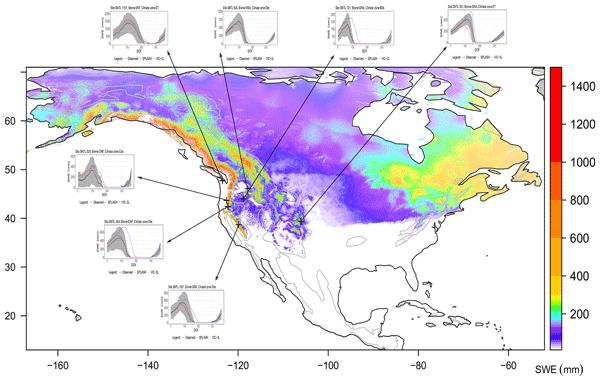
David Sandoval, Iain Colin Prentice, and Rodolfo L. B. Nóbrega
Geosci. Model Dev., 17, 4229–4309, https://doi.org/10.5194/gmd-17-4229-2024, https://doi.org/10.5194/gmd-17-4229-2024, 2024
Short summary
Short summary
Numerous estimates of water and energy balances depend on empirical equations requiring site-specific calibration, posing risks of "the right answers for the wrong reasons". We introduce novel first-principles formulations to calculate key quantities without requiring local calibration, matching predictions from complex land surface models.
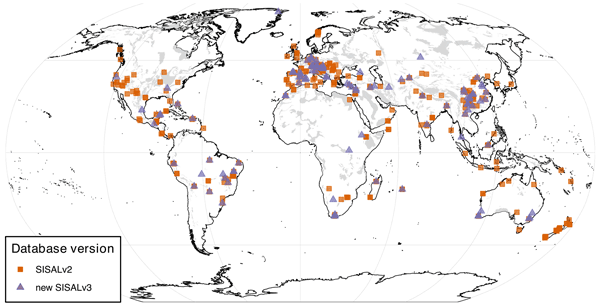
Nikita Kaushal, Franziska A. Lechleitner, Micah Wilhelm, Khalil Azennoud, Janica C. Bühler, Kerstin Braun, Yassine Ait Brahim, Andy Baker, Yuval Burstyn, Laia Comas-Bru, Jens Fohlmeister, Yonaton Goldsmith, Sandy P. Harrison, István G. Hatvani, Kira Rehfeld, Magdalena Ritzau, Vanessa Skiba, Heather M. Stoll, József G. Szűcs, Péter Tanos, Pauline C. Treble, Vitor Azevedo, Jonathan L. Baker, Andrea Borsato, Sakonvan Chawchai, Andrea Columbu, Laura Endres, Jun Hu, Zoltán Kern, Alena Kimbrough, Koray Koç, Monika Markowska, Belen Martrat, Syed Masood Ahmad, Carole Nehme, Valdir Felipe Novello, Carlos Pérez-Mejías, Jiaoyang Ruan, Natasha Sekhon, Nitesh Sinha, Carol V. Tadros, Benjamin H. Tiger, Sophie Warken, Annabel Wolf, Haiwei Zhang, and SISAL Working Group members
Earth Syst. Sci. Data, 16, 1933–1963, https://doi.org/10.5194/essd-16-1933-2024, https://doi.org/10.5194/essd-16-1933-2024, 2024
Short summary
Short summary
Speleothems are a popular, multi-proxy climate archive that provide regional to global insights into past hydroclimate trends with precise chronologies. We present an update to the SISAL (Speleothem Isotopes
Synthesis and AnaLysis) database, SISALv3, which, for the first time, contains speleothem trace element records, in addition to an update to the stable isotope records available in previous versions of the database, cumulatively providing data from 365 globally distributed sites.
Synthesis and AnaLysis) database, SISALv3, which, for the first time, contains speleothem trace element records, in addition to an update to the stable isotope records available in previous versions of the database, cumulatively providing data from 365 globally distributed sites.
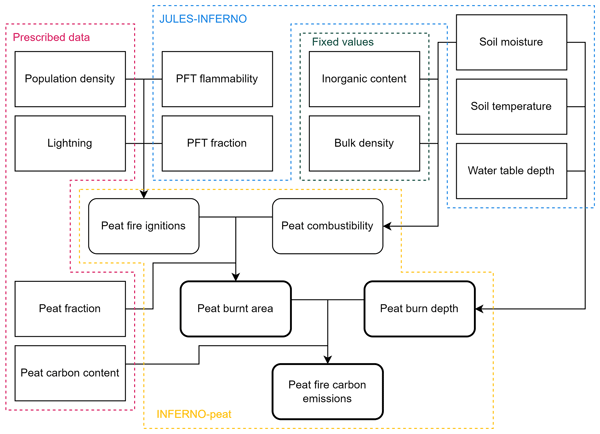
Katie R. Blackford, Matthew Kasoar, Chantelle Burton, Eleanor Burke, Iain Colin Prentice, and Apostolos Voulgarakis
Geosci. Model Dev., 17, 3063–3079, https://doi.org/10.5194/gmd-17-3063-2024, https://doi.org/10.5194/gmd-17-3063-2024, 2024
Short summary
Short summary
Peatlands are globally important stores of carbon which are being increasingly threatened by wildfires with knock-on effects on the climate system. Here we introduce a novel peat fire parameterization in the northern high latitudes to the INFERNO global fire model. Representing peat fires increases annual burnt area across the high latitudes, alongside improvements in how we capture year-to-year variation in burning and emissions.
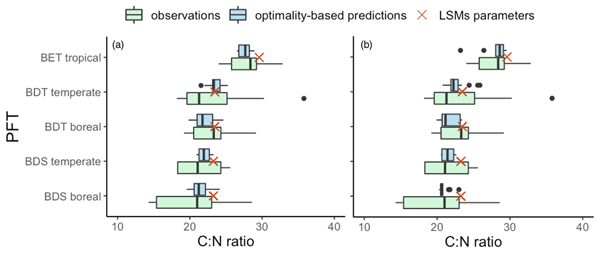
Huiying Xu, Han Wang, Iain Colin Prentice, and Sandy P. Harrison
Biogeosciences, 20, 4511–4525, https://doi.org/10.5194/bg-20-4511-2023, https://doi.org/10.5194/bg-20-4511-2023, 2023
Short summary
Short summary
Leaf carbon (C) and nitrogen (N) are crucial elements in leaf construction and physiological processes. This study reconciled the roles of phylogeny, species identity, and climate in stoichiometric traits at individual and community levels. The variations in community-level leaf N and C : N ratio were captured by optimality-based models using climate data. Our results provide an approach to improve the representation of leaf stoichiometry in vegetation models to better couple N with C cycling.
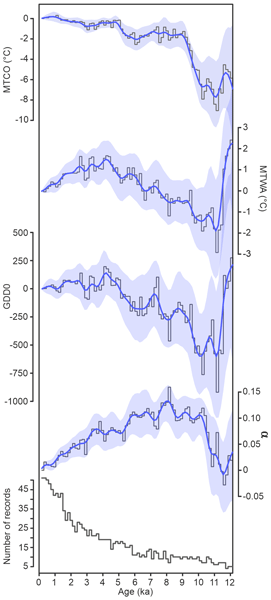
Esmeralda Cruz-Silva, Sandy P. Harrison, I. Colin Prentice, Elena Marinova, Patrick J. Bartlein, Hans Renssen, and Yurui Zhang
Clim. Past, 19, 2093–2108, https://doi.org/10.5194/cp-19-2093-2023, https://doi.org/10.5194/cp-19-2093-2023, 2023
Short summary
Short summary
We examined 71 pollen records (12.3 ka to present) in the eastern Mediterranean, reconstructing climate changes. Over 9000 years, winters gradually warmed due to orbital factors. Summer temperatures peaked at 4.5–5 ka, likely declining because of ice sheets. Moisture increased post-11 kyr, remaining high from 10–6 kyr before a slow decrease. Climate models face challenges in replicating moisture transport.
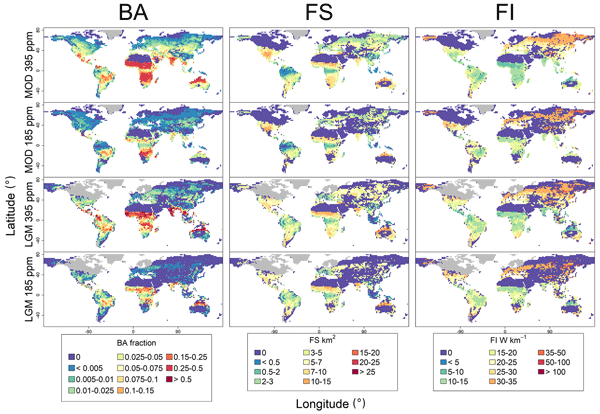
Olivia Haas, Iain Colin Prentice, and Sandy P. Harrison
Biogeosciences, 20, 3981–3995, https://doi.org/10.5194/bg-20-3981-2023, https://doi.org/10.5194/bg-20-3981-2023, 2023
Short summary
Short summary
We quantify the impact of CO2 and climate on global patterns of burnt area, fire size, and intensity under Last Glacial Maximum (LGM) conditions using three climate scenarios. Climate change alone did not produce the observed LGM reduction in burnt area, but low CO2 did through reducing vegetation productivity. Fire intensity was sensitive to CO2 but strongly affected by changes in atmospheric dryness. Low CO2 caused smaller fires; climate had the opposite effect except in the driest scenario.
Giulia Mengoli, Sandy P. Harrison, and I. Colin Prentice
EGUsphere, https://doi.org/10.5194/egusphere-2023-1261, https://doi.org/10.5194/egusphere-2023-1261, 2023
Preprint archived
Short summary
Short summary
Soil water availability affects plant carbon uptake by reducing leaf area and/or by closing stomata, which reduces its efficiency. We present a new formulation of how climatic dryness reduces both maximum carbon uptake and the soil-moisture threshold below which it declines further. This formulation illustrates how plants adapt their water conservation strategy to thrive in dry climates, and is step towards a better representation of soil-moisture effects in climate models.
Mengmeng Liu, Yicheng Shen, Penelope González-Sampériz, Graciela Gil-Romera, Cajo J. F. ter Braak, Iain Colin Prentice, and Sandy P. Harrison
Clim. Past, 19, 803–834, https://doi.org/10.5194/cp-19-803-2023, https://doi.org/10.5194/cp-19-803-2023, 2023
Short summary
Short summary
We reconstructed the Holocene climates in the Iberian Peninsula using a large pollen data set and found that the west–east moisture gradient was much flatter than today. We also found that the winter was much colder, which can be expected from the low winter insolation during the Holocene. However, summer temperature did not follow the trend of summer insolation, instead, it was strongly correlated with moisture.
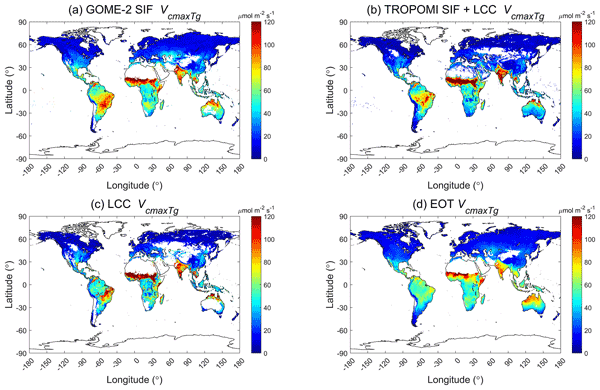
Jing M. Chen, Rong Wang, Yihong Liu, Liming He, Holly Croft, Xiangzhong Luo, Han Wang, Nicholas G. Smith, Trevor F. Keenan, I. Colin Prentice, Yongguang Zhang, Weimin Ju, and Ning Dong
Earth Syst. Sci. Data, 14, 4077–4093, https://doi.org/10.5194/essd-14-4077-2022, https://doi.org/10.5194/essd-14-4077-2022, 2022
Short summary
Short summary
Green leaves contain chlorophyll pigments that harvest light for photosynthesis and also emit chlorophyll fluorescence as a byproduct. Both chlorophyll pigments and fluorescence can be measured by Earth-orbiting satellite sensors. Here we demonstrate that leaf photosynthetic capacity can be reliably derived globally using these measurements. This new satellite-based information overcomes a bottleneck in global ecological research where such spatially explicit information is currently lacking.
Yicheng Shen, Luke Sweeney, Mengmeng Liu, Jose Antonio Lopez Saez, Sebastián Pérez-Díaz, Reyes Luelmo-Lautenschlaeger, Graciela Gil-Romera, Dana Hoefer, Gonzalo Jiménez-Moreno, Heike Schneider, I. Colin Prentice, and Sandy P. Harrison
Clim. Past, 18, 1189–1201, https://doi.org/10.5194/cp-18-1189-2022, https://doi.org/10.5194/cp-18-1189-2022, 2022
Short summary
Short summary
We present a method to reconstruct burnt area using a relationship between pollen and charcoal abundances and the calibration of charcoal abundance using modern observations of burnt area. We use this method to reconstruct changes in burnt area over the past 12 000 years from sites in Iberia. We show that regional changes in burnt area reflect known changes in climate, with a high burnt area during warming intervals and low burnt area when the climate was cooler and/or wetter than today.
Sandy P. Harrison, Roberto Villegas-Diaz, Esmeralda Cruz-Silva, Daniel Gallagher, David Kesner, Paul Lincoln, Yicheng Shen, Luke Sweeney, Daniele Colombaroli, Adam Ali, Chéïma Barhoumi, Yves Bergeron, Tatiana Blyakharchuk, Přemysl Bobek, Richard Bradshaw, Jennifer L. Clear, Sambor Czerwiński, Anne-Laure Daniau, John Dodson, Kevin J. Edwards, Mary E. Edwards, Angelica Feurdean, David Foster, Konrad Gajewski, Mariusz Gałka, Michelle Garneau, Thomas Giesecke, Graciela Gil Romera, Martin P. Girardin, Dana Hoefer, Kangyou Huang, Jun Inoue, Eva Jamrichová, Nauris Jasiunas, Wenying Jiang, Gonzalo Jiménez-Moreno, Monika Karpińska-Kołaczek, Piotr Kołaczek, Niina Kuosmanen, Mariusz Lamentowicz, Martin Lavoie, Fang Li, Jianyong Li, Olga Lisitsyna, José Antonio López-Sáez, Reyes Luelmo-Lautenschlaeger, Gabriel Magnan, Eniko Katalin Magyari, Alekss Maksims, Katarzyna Marcisz, Elena Marinova, Jenn Marlon, Scott Mensing, Joanna Miroslaw-Grabowska, Wyatt Oswald, Sebastián Pérez-Díaz, Ramón Pérez-Obiol, Sanna Piilo, Anneli Poska, Xiaoguang Qin, Cécile C. Remy, Pierre J. H. Richard, Sakari Salonen, Naoko Sasaki, Hieke Schneider, William Shotyk, Migle Stancikaite, Dace Šteinberga, Normunds Stivrins, Hikaru Takahara, Zhihai Tan, Liva Trasune, Charles E. Umbanhowar, Minna Väliranta, Jüri Vassiljev, Xiayun Xiao, Qinghai Xu, Xin Xu, Edyta Zawisza, Yan Zhao, Zheng Zhou, and Jordan Paillard
Earth Syst. Sci. Data, 14, 1109–1124, https://doi.org/10.5194/essd-14-1109-2022, https://doi.org/10.5194/essd-14-1109-2022, 2022
Short summary
Short summary
We provide a new global data set of charcoal preserved in sediments that can be used to examine how fire regimes have changed during past millennia and to investigate what caused these changes. The individual records have been standardised, and new age models have been constructed to allow better comparison across sites. The data set contains 1681 records from 1477 sites worldwide.
Cited articles
Abe-Ouchi, A., Segawa, T., and Saito, F.: Climatic Conditions for modelling the Northern Hemisphere ice sheets throughout the ice age cycle, Clim. Past, 3, 423–438, https://doi.org/10.5194/cp-3-423-2007, 2007.
Adolphi, F., Bronk Ramsey, C., Erhardt, T., Edwards, R. L., Cheng, H., Turney, C. S. M., Cooper, A., Svensson, A., Rasmussen, S. O., Fischer, H., and Muscheler, R.: Connecting the Greenland ice-core and U∕Th timescales via cosmogenic radionuclides: testing the synchroneity of Dansgaard–Oeschger events, Clim. Past, 14, 1755–1781, https://doi.org/10.5194/cp-14-1755-2018, 2018.
Alshehri, M., Coenen, F., and Dures, K.: Effective sub-sequence-based dynamic time warping, in: Artificial Intelligence XXXVI, SGAI 2019, Lecture Notes in Computer Science, edited by: Bramer, M. and Petridis, M., Springer, Cham, p. 11927, https://doi.org/10.1007/978-3-030-34885-4_23, 2019.
Ampel, L., Bigler, C., Wohlfarth, B., Risberg, J., Lotter, A. F., and Veres, D.: Modest summer temperature variability during DO cycles in western Europe, Quat. Sci. Rev., 29, 1322–1327, https://doi.org/10.1016/j.quascirev.2010.03.002, 2010.
Bartlein, P. J., Harrison, S. P., Brewer, S., Connor, S., Davis, B. A. S., Gajewski, K., Guiot, J., Harrison-Prentice, T. I., Henderson, A., Peyron, O., Prentice, I. C., Scholze, M., Seppä, H., Shuman, B., Sugita, S., Thompson, R. S., Viau, A. E., Williams, J., and Wu, H.: Pollen-based continental climate reconstructions at 6 and 21 ka: A global synthesis, Clim. Dyn., 37, 775–802, https://doi.org/10.1007/s00382-010-0904-1, 2011.
Bereiter, B., Eggleston, S., Schmitt, J., Nehrbass-Ahles, C., Stocker, T. F., Fischer, H., Kipfstuhl, S., and Chappellaz, J.: Revision of the EPICA Dome C CO2 record from 800 to 600 kyr before present, Geophys. Res. Lett., 42, 542–549, https://doi.org/10.1002/2014GL061957, 2015.
Boucher-Lalonde, V., Morin, A., and Currie, D. J.: How are tree species distributed in climatic space? A simple and general pattern, Glob. Ecol. Biogeogr., 21, 1157–1166, https://doi.org/10.1111/j.1466-8238.2012.00764.x, 2012.
Burstyn, Y., Gazit, A., and Dvir, O.: Hierarchical dynamic time warping methodology for aggregating multiple geological time series, Comput. Geosci., 150, 104704, https://doi.org/10.1016/j.cageo.2021.104704, 2021.
Camuera, J., Ramos-Román, M. J., Jiménez-Moreno, G., García-Alix, A., Ilvonen, L., Ruha, L., Gil-Romera, G., González-Sampériz, P., and Seppä, H.: Past 200 kyr hydroclimate variability in the western Mediterranean and its connection to the African Humid Periods, Sci. Rep., 12, 9050, https://doi.org/10.1038/s41598-022-12047-1, 2022.
Cao, X., Tian, F., Andreev, A. A., Anderson, P. M., Lozhkin, A. V, Bezrukova, E. V, Ni, J., Rudaya, N., Stobbe, A., Wieczorek, M., and Herzschuh, U.: A taxonomically harmonized and temporally standardized fossil pollen dataset from Siberia covering the last 40 ka, PANGAEA [data set], https://doi.org/10.1594/PANGAEA.898616, 2019.
Cao, X., Tian, F., Andreev, A., Anderson, P. M., Lozhkin, A. V., Bezrukova, E., Ni, J., Rudaya, N., Stobbe, A., Wieczorek, M., and Herzschuh, U.: A taxonomically harmonized and temporally standardized fossil pollen dataset from Siberia covering the last 40 kyr, Earth Syst. Sci. Data, 12, 119–135, https://doi.org/10.5194/essd-12-119-2020, 2020.
Chevalier, M., Davis, B. A. S., Heiri, O., Seppä, H., Chase, B. M., Gajewski, K., Lacourse, T., Telford, R. J., Finsinger, W., Guiot, J., Kühl, N., Maezumi, S. Y., Tipton, J. R., Carter, V. A., Brussel, T., Phelps, L. N., Dawson, A., Zanon, M., Vallé, F., Nolan, C., Mauri, A., de Vernal, A., Izumi, K., Holmström, L., Marsicek, J., Goring, S., Sommer, P. S., Chaput, M., and Kupriyanov, D.: Pollen-based climate reconstruction techniques for late Quaternary studies, Earth-Science Rev., 210, 103384, https://doi.org/10.1016/j.earscirev.2020.103384, 2020.
Corrick, E. C., Drysdale, R. N., Hellstrom, J. C., Capron, E., Rasmussen, S. O., Zhang, X., Fleitmann, D., Couchoud, I., and Wolff, E.: Synchronous timing of abrupt climate changes during the last glacial period, Science, 369, 963–969, https://doi.org/10.1126/science.aay5538, 2020.
Crisp, M. D. and Cook, L. G.: Phylogenetic niche conservatism: What are the underlying evolutionary and ecological causes?, New Phytol., 196, 681–694, https://doi.org/10.1111/j.1469-8137.2012.04298.x, 2012.
Dansgaard, W., Johnsen, S. J., Clausen, H. B., Dahl-Jensen, D., Gundestrup, N. S., Hammer, C. U., Hvidberg, C. S., Steffensen, J. P., Sveinbjörnsdottir, A. E., Jouzel, J., and Bond, G.: Evidence for general instability of past climate from a 250-kyr ice-core record, Nature, 364, 218–220, https://doi.org/10.1038/364218a0, 1993.
Davis, T. W., Prentice, I. C., Stocker, B. D., Thomas, R. T., Whitley, R. J., Wang, H., Evans, B. J., Gallego-Sala, A. V., Sykes, M. T., and Cramer, W.: Simple process-led algorithms for simulating habitats (SPLASH v.1.0): robust indices of radiation, evapotranspiration and plant-available moisture, Geosci. Model Dev., 10, 689–708, https://doi.org/10.5194/gmd-10-689-2017, 2017.
Denniston, R. F., Asmerom, Y., Polyak, V., Dorale, J. A., Carpenter, S. J., Trodick, C., Hoye, B., and Gonzaìlez, L. A.: Synchronous millennial-scale climatic changes in the Great Basin and the North Atlantic during the last interglacial, Geology, 35, 619–622, https://doi.org/10.1130/G23445A.1, 2007.
Dima, M., Lohmann, G., and Knorr, G.: North Atlantic versus global control on Dansgaard–Oeschger events, Geophys. Res. Lett., 45, 12991–12998, https://doi.org/10.1029/2018GL080035, 2018.
Doblas-Reyes, F. J., Sörensson, A. A., Almazroui, M., Dosio, A., Gutowski, W. J., Haarsma, R., Hamdi, R., Hewitson, B., Kwon, W.-T., Lamptey, B. L., Maraun, D., Stephenson, T. S., Takayabu, I., Terray, L., Turner, A., and Zuo, Z.: Linking global to regional climate change, in: Climate Change 2021 – The Physical Science Basis: Working Group I Contribution to the Sixth Assessment Report of the Intergovernmental Panel on Climate Change, edited by: Masson-Delmotte, V., Zhai, P., Pirani, A., Connors, S. L., Péan, C., Berger, S., Caud, N., Chen, Y., Goldfarb, L., Gomis, M. I., Huang, M., Leitzell, K., Lonnoy, E., Matthews, J. B. R., Maycock, T. K., Waterfield, T., Yelekçi, O., Yu, R., and Zhou, B., Cambridge University Press, Cambridge, United Kingdom and New York, NY, USA, 1363–1512, https://doi.org/10.1017/9781009157896.012, 2021.
Dugerdil, L., Joannin, S., Peyron, O., Jouffroy-Bapicot, I., Vannière, B., Boldgiv, B., Unkelbach, J., Behling, H., and Ménot, G.: Climate reconstructions based on GDGT and pollen surface datasets from Mongolia and Baikal area: calibrations and applicability to extremely cold–dry environments over the Late Holocene, Clim. Past, 17, 1199–1226, https://doi.org/10.5194/cp-17-1199-2021, 2021.
Dugerdil, L., Peyron, O., Ménot, G., Egamberdieva, D., Alimov, J., Leroy, S. A. G., Garnier, E., Nowak, A., and Joannin, S.: First paleoenvironmental calibrations for modern pollen rain of Tajikistan and Uzbekistan: A case study of pollen – vegetation functional biogeography of Arid Central Asia, Glob. Planet. Change, 252, 104857, https://doi.org/10.1016/j.gloplacha.2025.104857, 2025.
Farquhar, G. D.: Carbon dioxide and vegetation, Science, 278, 1411, https://doi.org/10.1126/science.278.5342.1411, 1997.
Fleitmann, D., Cheng, H., Badertscher, S., Edwards, R. L., Mudelsee, M., Göktürk, O. M., Fankhauser, A., Pickering, R., Raible, C. C., Matter, A., Kramers, J., and Tüysüz, O.: Timing and climatic impact of Greenland interstadials recorded in stalagmites from northern Turkey, Geophys. Res. Lett., 36, https://doi.org/10.1029/2009GL040050, 2009.
Fletcher, M.-S. and Thomas, I.: A quantitative Late Quaternary temperature reconstruction from western Tasmania, Australia, Quat. Sci. Rev., 29, 2351–2361, https://doi.org/10.1016/j.quascirev.2010.06.012, 2010.
Fletcher, W. J., Sánchez Goñi, M. F., Allen, J. R. M., Cheddadi, R., Combourieu-Nebout, N., Huntley, B., Lawson, I., Londeix, L., Magri, D., Margari, V., Müller, U. C., Naughton, F., Novenko, E., Roucoux, K., and Tzedakis, P. C.: Millennial-scale variability during the last glacial in vegetation records from Europe, Quat. Sci. Rev., 29, 2839–2864, https://doi.org/10.1016/j.quascirev.2009.11.015, 2010.
Flückiger, J., Knutti, R., White, J. W. C., and Renssen, H.: Modeled seasonality of glacial abrupt climate events, Clim. Dyn., 31, 633–645, https://doi.org/10.1007/s00382-008-0373-y, 2008.
Fohlmeister, J., Sekhon, N., Columbu, A., Vettoretti, G., Weitzel, N., Rehfeld, K., Veiga-Pires, C., Ben-Yami, M., Marwan, N., and Boers, N.: Global reorganization of atmospheric circulation during Dansgaard–Oeschger cycles, Proc. Natl. Acad. Sci., 120, e2302283120, https://doi.org/10.1073/pnas.2302283120, 2023.
Garreta, V., Miller, P. A., Guiot, J., Hély, C., Brewer, S., Sykes, M. T., and Litt, T.: A method for climate and vegetation reconstruction through the inversion of a dynamic vegetation model, Clim. Dyn., 35, 371–389, https://doi.org/10.1007/s00382-009-0629-1, 2010.
Gerhart, L. M. and Ward, J. K.: Plant responses to low [CO2] of the past, New Phytol., 188, 674–695, https://doi.org/10.1111/j.1469-8137.2010.03441.x, 2010.
Giorgino, T.: Computing and visualizing Dynamic Time Warping alignments in R: The dtw package, J. Stat. Softw., 31, 1–24, https://doi.org/10.18637/jss.v031.i07, 2009.
Grigg, L. D. and Whitlock, C.: Patterns and causes of millennial-scale climate change in the Pacific Northwest during Marine Isotope Stages 2 and 3, Quat. Sci. Rev., 21, 2067–2083, https://doi.org/10.1016/S0277-3791(02)00017-3, 2002.
Grimm, E. C., Watts, W. A., Jacobson, G. L., Hansen, B. C. S., Almquist, H. R., and Dieffenbacher-Krall, A. C.: Evidence for warm wet Heinrich events in Florida, Quat. Sci. Rev., 25, 2197–2211, https://doi.org/10.1016/j.quascirev.2006.04.008, 2006.
Grygar, T., Kadlec, J., Pruner, P., Swann, G., Bezdička, P., Hradil, D., Lang, K., Novotna, K., and Oberhänsli, H.: Paleoenvironmental record in Lake Baikal sediments: Environmental changes in the last 160 ky, Palaeogeogr. Palaeoclimatol. Palaeoecol., 237, 240–254, https://doi.org/10.1016/j.palaeo.2005.12.007, 2006.
Guiot, J., de Beaulieu, J. L., Cheddadi, R., David, F., Ponel, P., and Reille, M.: The climate in Western Europe during the last Glacial/Interglacial cycle derived from pollen and insect remains, Palaeogeogr. Palaeoclimatol. Palaeoecol., 103, 73–93, https://doi.org/10.1016/0031-0182(93)90053-L, 1993.
Guiot, J., Torre, F., Jolly, D., Peyron, O., Boreux, J. J., and Cheddadi, R.: Inverse vegetation modeling by Monte Carlo sampling to reconstruct palaeoclimates under changed precipitation seasonality and CO2 conditions: Application to glacial climate in Mediterranean region, Ecol. Modell., 127, 119–140, https://doi.org/10.1016/S0304-3800(99)00219-7, 2000.
Guiot, J., Wu, H. B., Garreta, V., Hatté, C., and Magny, M.: A few prospective ideas on climate reconstruction: from a statistical single proxy approach towards a multi-proxy and dynamical approach, Clim. Past, 5, 571–583, https://doi.org/10.5194/cp-5-571-2009, 2009.
Harris, I., Osborn, T. J., Jones, P., and Lister, D.: Version 4 of the CRU TS monthly high-resolution gridded multivariate climate dataset, Sci. Data, 7, 109, https://doi.org/10.1038/s41597-020-0453-3, 2020.
Harrison, S. P.: Climate reconstructions for the SMPDS v1 modern pollen data set, Univ. Read., Zenodo [data set], https://doi.org/10.5281/zenodo.3605003, 2020.
Harrison, S. P. and Sanchez Goñi, M. F.: Global patterns of vegetation response to millennial-scale variability and rapid climate change during the last glacial period, Quat. Sci. Rev., 29, 2957–2980, https://doi.org/10.1016/j.quascirev.2010.07.016, 2010.
Harrison, S., Egbudom, M.-A., and Villegas-Diaz, R.: The SPECIAL Modern Pollen Data Set for Climate Reconstructions, version 3 (SMPDSv3), University of Reading [data set], https://doi.org/10.17864/1947.001473, 2025a.
Harrison, S., Egbudom, M.-A., and Liu, M.: ACER2: The Abrupt Climate Changes and Environmental Responses Database (version 2), University of Reading [data set], https://doi.org/10.17864/1947.001449, 2025b.
Harrison, S. P., Bartlein, P. J., Cruz-Silva, E., Haas, O., Jackson, S. T., Kaushal, N., Liu, M., Magri, D., Robson, D., Vettoretti, G., and Prentice, I. C.: Palaeoclimate perspectives on contemporary climate change, Ann. Rev. Environ. Resour., 50, https://doi.org/10.1146/annurev-environ-112922-110121, 2025c.
Harvey, P. H. and Pagel, M. D.: The comparative method in evolutionary biology, Oxford University Press, https://doi.org/10.1093/oso/9780198546412.001.0001, 1991.
Hatfield, J. L. and Dold, C.: Water-use efficiency: Advances and challenges in a changing climate, Front. Plant Sci., 10, https://doi.org/10.3389/fpls.2019.00103, 2019.
Herzschuh, U., Böhmer, T., Li, C., Chevalier, M., Hébert, R., Dallmeyer, A., Cao, X., Bigelow, N. H., Nazarova, L., Novenko, E. Y., Park, J., Peyron, O., Rudaya, N. A., Schlütz, F., Shumilovskikh, L. S., Tarasov, P. E., Wang, Y., Wen, R., Xu, Q., and Zheng, Z.: LegacyClimate 1.0: a dataset of pollen-based climate reconstructions from 2594 Northern Hemisphere sites covering the last 30 kyr and beyond, Earth Syst. Sci. Data, 15, 2235–2258, https://doi.org/10.5194/essd-15-2235-2023, 2023.
Huber, C., Leuenberger, M., Spahni, R., Flückiger, J., Schwander, J., Stocker, T. F., Johnsen, S., Landais, A., and Jouzel, J.: Isotope calibrated Greenland temperature record over Marine Isotope Stage 3 and its relation to CH4, Earth Planet. Sci. Lett., 243, 504–519, https://doi.org/10.1016/j.epsl.2006.01.002, 2006.
Huntley, B., Bartlein, P. J., and Prentice, I. C.: Climatic control of the distribution and abundance of Beech (Fagus L.) in Europe and North America, J. Biogeogr., 16, 551–560, https://doi.org/10.2307/2845210, 1989.
Huntley, B., Watts, W. A., Allen, J. R. M., and Zolitschka, B.: Palaeoclimate, chronology and vegetation history of the Weichselian Lateglacial: comparative analysis of data from three cores at Lago Grande di Monticchio, southern Italy, Quat. Sci. Rev., 18, 945–960, https://doi.org/10.1016/S0277-3791(99)00007-4, 1999.
IPCC: Climate change 2022: Impacts, adaptation and vulnerability. Contribution of working group II to the sixth assessment report of the Intergovernmental Panel on Climate Change, edited by: Pörtner, H.-O., Roberts, D. C., Tignor, M., Poloczanska, E. S., Mintenbeck, K., Alegría, A., Craig, M., Langsdorf, S., Löschke, S., Möller, V., Okem, A., and Rama, B., Cambridge University Press, Cambridge University Press, Cambridge, UK and New York, NY, USA, https://doi.org/10.1017/9781009325844, 2022.
Izumi, K. and Bartlein, P. J.: North American paleoclimate reconstructions for the Last Glacial Maximum using an inverse modeling through iterative forward modeling approach applied to pollen data, Geophys. Res. Lett., 43, 10965–10972, https://doi.org/10.1002/2016GL070152, 2016.
Izumi, K., Armstrong, E., and Valdes, P.: Global footprints of dansgaard-oeschger oscillations in a GCM, Quat. Sci. Rev., 305, 108016, https://doi.org/10.1016/j.quascirev.2023.108016, 2023.
Jiang, K., Wang, Q., Dimitrov, D., Luo, A., Xu, X., Su, X., Liu, Y., Li, Y., Li, Y., and Wang, Z.: Evolutionary history and global angiosperm species richness–climate relationships, Glob. Ecol. Biogeogr., 32, 1059–1072, https://doi.org/10.1111/geb.13687, 2023.
Jiménez-Moreno, G., Anderson, R. S., Desprat, S., Grigg, L. D., Grimm, E. C., Heusser, L. E., Jacobs, B. F., López-Martínez, C., Whitlock, C. L., and Willard, D. A.: Millennial-scale variability during the last glacial in vegetation records from North America, Quat. Sci. Rev., 29, 2865–2881, https://doi.org/10.1016/j.quascirev.2009.12.013, 2010.
Kindler, P., Guillevic, M., Baumgartner, M., Schwander, J., Landais, A., and Leuenberger, M.: Temperature reconstruction from 10 to 120 kyr b2k from the NGRIP ice core, Clim. Past, 10, 887–902, https://doi.org/10.5194/cp-10-887-2014, 2014.
Lapellegerie, P., Millet, L., Rius, D., Duprat-Oualid, F., Luoto, T., and Heiri, O.: Chironomid-inferred summer temperature during the Last Glacial Maximum in the Southern Black Forest, Central Europe, Quat. Sci. Rev., 345, 109016, https://doi.org/10.1016/j.quascirev.2024.109016, 2024.
Lee, J.-Y., Marotzke, J., Bala, G., Cao, L., Corti, S., Dunne, J. P., Engelbrecht, F., Fischer, E., Fyfe, J. C., Jones, C., Maycock, A., Mutemi, J., Ndiaye, O., Panickal, S., and Zhou, T.: Future global climate: Scenario-based projections and near-term information, in Climate change 2021: The physical science basis. Contribution of working group I to the sixth assessment report of the Intergovernmental Panel on Climate Change, edited by: Masson-Delmotte, V., Zhai, P., Pirani, A., Connors, S. L., Péan, C., Berger, S., Caud, N., Chen, Y., Goldfarb, L., Gomis, M. I., Huang, M., Leitzell, K., Lonnoy, E., Matthews, J. B. R., Maycock, T. K., Waterfield, T., Yelekçi, O., Yu, R., and Zhou, B., Cambridge University Press, Cambridge, United Kingdom and New York, NY, USA, 553–672, https://doi.org/10.1017/9781009157896.006, 2021.
Li, C., Ni, J., Böhmer, T., Cao, X., Zhou, B., Liao, M., Li, K., Schild, L., Wieczorek, M., Heim, B., and Herzschuh, U.: LegacyPollen2.0: an updated global taxonomically and temporally standardized fossil pollen dataset of 3680 palynological records, PANGAEA [data set], https://doi.org/10.1594/PANGAEA.965907, 2025.
Liu, M.: DO climate reconstruction, Zenodo [data set and code], https://doi.org/10.5281/zenodo.18218890, 2026.
Liu, M., Prentice, I. C., ter Braak, C. J. F., and Harrison, S. P.: An improved statistical approach for reconstructing past climates from biotic assemblages, Proc. R. Soc. A Math., 476, 20200346, https://doi.org/10.1098/rspa.2020.0346, 2020.
Liu, M., Prentice, I. C., Menviel, L., and Harrison, S. P.: Past rapid warmings as a constraint on greenhouse-gas climate feedbacks, Commun. Earth Environ., 3, 196, https://doi.org/10.1038/s43247-022-00536-0, 2022.
Liu, M., Shen, Y., González-Sampériz, P., Gil-Romera, G., ter Braak, C. J. F., Prentice, I. C., and Harrison, S. P.: Holocene climates of the Iberian Peninsula: pollen-based reconstructions of changes in the west–east gradient of temperature and moisture, Clim. Past, 19, 803–834, https://doi.org/10.5194/cp-19-803-2023, 2023.
Malmierca-Vallet, I., Sime, L. C., and the D–O community members: Dansgaard–Oeschger events in climate models: review and baseline Marine Isotope Stage 3 (MIS3) protocol, Clim. Past, 19, 915–942, https://doi.org/10.5194/cp-19-915-2023, 2023.
Martrat, B., Grimalt, J. O., Shackleton, N. J., de Abreu, L., Hutterli, M. A., and Stocker, T. F.: Four climate cycles of recurring deep and surface water destabilizations on the Iberian margin, Science, 317, 502–507, https://doi.org/10.1126/science.1139994, 2007.
Menviel, L., Timmermann, A., Friedrich, T., and England, M. H.: Hindcasting the continuum of Dansgaard–Oeschger variability: mechanisms, patterns and timing, Clim. Past, 10, 63–77, https://doi.org/10.5194/cp-10-63-2014, 2014.
Menviel, L., Skinner, L. C., Tarasov, L., and Tzedakis, P. C.: An ice–climate oscillatory framework for Dansgaard–Oeschger cycles, Nat. Rev. Earth Environ., 1, 677–693, https://doi.org/10.1038/s43017-020-00106-y, 2020.
Newnham, R. M., Alloway, B. V, Holt, K. A., Butler, K., Rees, A. B. H., Wilmshurst, J. M., Dunbar, G., and Hajdas, I.: Last Glacial pollen–climate reconstructions from Northland, New Zealand, J. Quat. Sci., 32, 685–703, https://doi.org/10.1002/jqs.2955, 2017.
Peterson, A. T.: Ecological niche conservatism: A time-structured review of evidence, J. Biogeogr., 38, 817–827, https://doi.org/10.1111/j.1365-2699.2010.02456.x, 2011.
Pini, R., Furlanetto, G., Vallé, F., Badino, F., Wick, L., Anselmetti, F. S., Bertuletti, P., Fusi, N., Morlock, M. A., Delmonte, B., Harrison, S. P., Maggi, V., and Ravazzi, C.: Linking North Atlantic and Alpine Last Glacial Maximum climates via a high-resolution pollen-based subarctic forest steppe record, Quat. Sci. Rev., 294, 107759, https://doi.org/10.1016/j.quascirev.2022.107759, 2022.
Prentice, I. C. and Harrison, S. P.: Ecosystem effects of CO2 concentration: evidence from past climates, Clim. Past, 5, 297–307, https://doi.org/10.5194/cp-5-297-2009, 2009.
Prentice, I. C., Cleator, S. F., Huang, Y. H., Harrison, S. P., and Roulstone, I.: Reconstructing ice-age palaeoclimates: Quantifying low-CO2 effects on plants, Glob. Planet. Change, 149, 166–176, https://doi.org/10.1016/j.gloplacha.2016.12.012, 2017.
Prentice, I. C., Villegas-Diaz, R., and Harrison, S. P.: Accounting for atmospheric carbon dioxide variations in pollen-based reconstruction of past hydroclimates, Glob. Planet. Change, 211, 103790, https://doi.org/10.1016/j.gloplacha.2022.103790, 2022a.
Prentice, I. C., Villegas-Diaz, R., and Harrison, S. P.: codos: CO2 correction tools, Zenodo [code], https://doi.org/10.5281/zenodo.5083309, 2022b.
Prud'homme, C., Fischer, P., Jöris, O., Gromov, S., Vinnepand, M., Hatté, C., Vonhof, H., Moine, O., Vött, A., and Fitzsimmons, K. E.: Millennial-timescale quantitative estimates of climate dynamics in central Europe from earthworm calcite granules in loess deposits, Commun. Earth Environ., 3, 267, https://doi.org/10.1038/s43247-022-00595-3, 2022.
Qian, H. and Ricklefs, R. E.: Geographical distribution and ecological conservatism of disjunct genera of vascular plants in eastern Asia and eastern North America, J. Ecol., 92, 253–265, https://doi.org/10.1111/j.0022-0477.2004.00868.x, 2004.
Sánchez Goñi, M., Cacho, I., Turon, J., Guiot, J., Sierro, F., Peypouquet, J., Grimalt, J., and Shackleton, N.: Synchroneity between marine and terrestrial responses to millennial scale climatic variability during the last glacial period in the Mediterranean region, Clim. Dyn., 19, 95–105, https://doi.org/10.1007/s00382-001-0212-x, 2002.
Sánchez Goñi, M. F., Landais, A., Fletcher, W. J., Naughton, F., Desprat, S., and Duprat, J.: Contrasting impacts of Dansgaard–Oeschger events over a western European latitudinal transect modulated by orbital parameters, Quat. Sci. Rev., 27, 1136–1151, https://doi.org/10.1016/j.quascirev.2008.03.003, 2008.
Sánchez Goñi, M. F., Desprat, S., Daniau, A.-L., Bassinot, F. C., Polanco-Martínez, J. M., Harrison, S. P., Allen, J. R. M., Anderson, R. S., Behling, H., Bonnefille, R., Burjachs, F., Carrión, J. S., Cheddadi, R., Clark, J. S., Combourieu-Nebout, N., Mustaphi, Colin. J. Courtney, Debusk, G. H., Dupont, L. M., Finch, J. M., Fletcher, W. J., Giardini, M., González, C., Gosling, W. D., Grigg, L. D., Grimm, E. C., Hayashi, R., Helmens, K., Heusser, L. E., Hill, T., Hope, G., Huntley, B., Igarashi, Y., Irino, T., Jacobs, B., Jiménez-Moreno, G., Kawai, S., Kershaw, A. P., Kumon, F., Lawson, I. T., Ledru, M.-P., Lézine, A.-M., Liew, P. M., Magri, D., Marchant, R., Margari, V., Mayle, F. E., McKenzie, G. M., Moss, P., Müller, S., Müller, U. C., Naughton, F., Newnham, R. M., Oba, T., Pérez-Obiol, R., Pini, R., Ravazzi, C., Roucoux, K. H., Rucina, S. M., Scott, L., Takahara, H., Tzedakis, P. C., Urrego, D. H., van Geel, B., Valencia, B. G., Vandergoes, M. J., Vincens, A., Whitlock, C. L., Willard, D. A., and Yamamoto, M.: The ACER pollen and charcoal database: a global resource to document vegetation and fire response to abrupt climate changes during the last glacial period, Earth Syst. Sci. Data, 9, 679–695, https://doi.org/10.5194/essd-9-679-2017, 2017.
Sinopoli, G., Peyron, O., Masi, A., Holtvoeth, J., Francke, A., Wagner, B., and Sadori, L.: Pollen-based temperature and precipitation changes in the Ohrid Basin (western Balkans) between 160 and 70 ka, Clim. Past, 15, 53–71, https://doi.org/10.5194/cp-15-53-2019, 2019.
Stockhecke, M., Timmermann, A., Kipfer, R., Haug, G. H., Kwiecien, O., Friedrich, T., Menviel, L., Litt, T., Pickarski, N., and Anselmetti, F. S.: Millennial to orbital-scale variations of drought intensity in the Eastern Mediterranean, Quat. Sci. Rev., 133, 77–95, https://doi.org/10.1016/j.quascirev.2015.12.016, 2016.
Timm, O., Timmermann, A., Abe-Ouchi, A., Saito, F., and Segawa, T.: On the definition of seasons in paleoclimate simulations with orbital forcing, Paleoceanography, 23, https://doi.org/10.1029/2007PA001461, 2008.
Turner, M. G., Wei, D., Prentice, I. C., and Harrison, S. P.: The impact of methodological decisions on climate reconstructions using WA-PLS, Quat. Res., 99, 341–356, https://doi.org/10.1017/qua.2020.44, 2020.
Újvári, G., Bernasconi, S. M., Stevens, T., Kele, S., Páll-Gergely, B., Surányi, G., and Demény, A.: Stadial-interstadial temperature and aridity variations in east central Europe preceding the Last Glacial Maximum, Paleoceanogr. Paleoclimatology, 36, e2020PA004170, https://doi.org/10.1029/2020PA004170, 2021.
Van Meerbeeck, C. J., Renssen, H., Roche, D. M., Wohlfarth, B., Bohncke, S. J. P., Bos, J. A. A., Engels, S., Helmens, K. F., Sánchez-Goñi, M. F., Svensson, A., and Vandenberghe, J.: The nature of MIS 3 stadial–interstadial transitions in Europe: New insights from model–data comparisons, Quat. Sci. Rev., 30, 3618–3637, https://doi.org/10.1016/j.quascirev.2011.08.002, 2011.
Veres, D., Bazin, L., Landais, A., Toyé Mahamadou Kele, H., Lemieux-Dudon, B., Parrenin, F., Martinerie, P., Blayo, E., Blunier, T., Capron, E., Chappellaz, J., Rasmussen, S. O., Severi, M., Svensson, A., Vinther, B., and Wolff, E. W.: The Antarctic ice core chronology (AICC2012): an optimized multi-parameter and multi-site dating approach for the last 120 thousand years, Clim. Past, 9, 1733–1748, https://doi.org/10.5194/cp-9-1733-2013, 2013.
Vettoretti, G. and Peltier, W. R.: Interhemispheric air temperature phase relationships in the nonlinear Dansgaard–Oeschger oscillation, Geophys. Res. Lett., 42, 1180–1189, https://doi.org/10.1002/2014GL062898, 2015.
Voelker, A. H. L.: Global distribution of centennial-scale records for Marine Isotope Stage (MIS) 3: a database, Quat. Sci. Rev., 21, 1185–1212, https://doi.org/10.1016/S0277-3791(01)00139-1, 2002.
Wang, C., Wang, M., Zhu, S., Wu, X., Yang, S., Yan, Y., and Wen, Y.: Multiple ecological niche modeling reveals niche conservatism and divergence in East Asian Yew (Taxus), Plants, 14, https://doi.org/10.3390/plants14071094, 2025.
Wang, H., Prentice, I. C., and Ni, J.: Data-based modelling and environmental sensitivity of vegetation in China, Biogeosciences, 10, 5817–5830, https://doi.org/10.5194/bg-10-5817-2013, 2013.
Wang, Y. J., Cheng, H., Edwards, R. L., An, Z. S., Wu, J. Y., Shen, C.-C., and Dorale, J. A.: A high-resolution absolute-dated Late Pleistocene monsoon record from Hulu Cave, China, Science, 294, 2345–2348, https://doi.org/10.1126/science.1064618, 2001.
Warken, S. F., Scholz, D., Spötl, C., Jochum, K. P., Pajón, J. M., Bahr, A., and Mangini, A.: Caribbean hydroclimate and vegetation history across the last glacial period, Quat. Sci. Rev., 218, 75–90, https://doi.org/10.1016/j.quascirev.2019.06.019, 2019.
Wei, D., Prentice, I. C., and Harrison, S. P.: The climatic space of European pollen taxa, Ecology, 101, e03055, https://doi.org/10.1002/ecy.3055, 2020.
Wei, D., González-Sampériz, P., Gil-Romera, G., Harrison, S. P., and Prentice, I. C.: Seasonal temperature and moisture changes in interior semi-arid Spain from the last interglacial to the Late Holocene, Quat. Res., 101, 143–155, https://doi.org/10.1017/qua.2020.108, 2021.
Wiens, J. and Graham, C.: Niche conservatism: Integrating evolution, ecology, and conservation biology, Annu. Rev. Ecol. Evol. Syst., 36, 519–539, https://doi.org/10.1146/annurev.ecolsys.36.102803.095431, 2005.
Wiens, J., Ackerly, D., Allen, A., Anacker, B., Buckley, L., Cornell, H., Damschen, E., Davies, J., Grytnes, J. A., Harrison, S., Hawkins, B., Holt, R., Mccain, C., and Stephens, P.: Niche conservatism as an emerging principle in ecology and conservation biology, Ecol. Lett., 13, 1310–1324, https://doi.org/10.1111/j.1461-0248.2010.01515.x, 2010.
Wolff, E. W., Chappellaz, J., Blunier, T., Rasmussen, S. O., and Svensson, A.: Millennial-scale variability during the last glacial: The ice core record, Quat. Sci. Rev., 29, 2828–2838, https://doi.org/10.1016/j.quascirev.2009.10.013, 2010.
Woodward, F. I.: Climate and Plant Distribution, Cambridge University Press, Cambridge, UK, ISBN 0-521-23766-1, 1987.
Wu, H., Guiot, J., Brewer, S., and Guo, Z.: Climatic changes in Eurasia and Africa at the last glacial maximum and mid-Holocene: Reconstruction from pollen data using inverse vegetation modelling, Clim. Dyn., 29, 211–229, https://doi.org/10.1007/s00382-007-0231-3, 2007.
Yin, X., Jarvie, S., Guo, W.-Y., Deng, T., Mao, L., Zhang, M., Chu, C., Qian, H., Svenning, J.-C., and He, F.: Niche overlap and divergence times support niche conservatism in eastern Asia–eastern North America disjunct plants, Glob. Ecol. Biogeogr., 30, 1990–2003, https://doi.org/10.1111/geb.13360, 2021.
Zander, P. D., Böhl, D., Sirocko, F., Auderset, A., Haug, G. H., and Martínez-García, A.: Reconstruction of warm-season temperatures in central Europe during the past 60 000 years from lacustrine branched glycerol dialkyl glycerol tetraethers (brGDGTs), Clim. Past, 20, 841–864, https://doi.org/10.5194/cp-20-841-2024, 2024.
Zhou, B.-R., Liao, M.-N., Li, K., Xu, D.-Y., Chen, H.-Y., Ni, J., Cao, X.-Y., Kong, Z.-C., Xu, Q.-H., Zhang, Y., Herzschuh, U., Cai, Y.-L., Chen, B.-S., Chen, J.-A., Chen, L.-K., Cheng, B., Gao, Y., Huang, X.-Z., Li, S.-F., Li, W.-Y., Liu, K.-B., Liu, G.-X., Liu, P.-M., Liu, X.-Q., Ma, C.-M., Song, C.-Q., Sun, X.-J., Tang, L.-Y., Wang, M.-H., Wang, Y.-B., Xu, J.-S., Yan, S., Yang, X.-D., Yao, Y.-F., Ye, C.-Y., Zhang, Z.-Y., Zhao, Z.-Y., Zheng, Z., and Zhu, C.: A fossil pollen dataset of China, Chinese J. Plant Ecol., 47, 1453–1463, https://www.plant-ecology.com (last access: 25 January 2026), 2023.
Zorzi, C., Desprat, S., Clément, C., Thirumalai, K., Oliviera, D., Anupama, K., Prasad, S., and Martinez, P.: When eastern India oscillated between desert versus savannah-dominated vegetation, Geophys. Res. Lett., 49, e2022GL099417, https://doi.org/10.1029/2022GL099417, 2022.
Zumaque, J., de Vernal, A., Fréchette, B., Guiot, J., Sánchez-Goñi, M. F., Barhoumi, C., Peyron, O., Peros, M., Burke, A., Camuera, J., Jiménez-Moreno, G., and Ramos-Román, M. J.: Decoupled winter and summer climate changes in southern Europe during the Dansgaard–Oeschger cycles, Quat. Sci. Rev., 359, 109273, https://doi.org/10.1016/j.quascirev.2025.109273, 2025.
Short summary
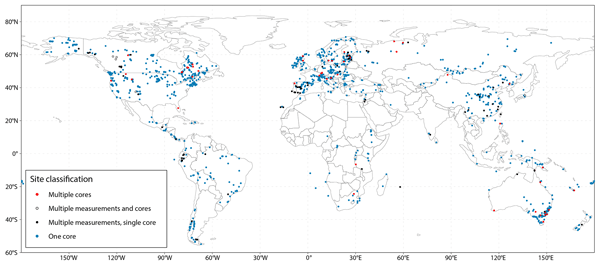
Dansgaard-Oeschger events were large and rapid climate transitions that occurred multiple times during the last glacial period. We reconstructed the global pattern during these events using fossil pollen records, and found a north-south antiphasing of temperature change, and reduced seasonality in the northern extratropics.
Dansgaard-Oeschger events were large and rapid climate transitions that occurred multiple times...


