
Articles | Volume 22, issue 5
https://doi.org/10.5194/cp-22-1003-2026
© Author(s) 2026. This work is distributed under
the Creative Commons Attribution 4.0 License.
the Creative Commons Attribution 4.0 License.
https://doi.org/10.5194/cp-22-1003-2026
© Author(s) 2026. This work is distributed under
the Creative Commons Attribution 4.0 License.
the Creative Commons Attribution 4.0 License.
Research article
| 
13 May 2026
Research article |
| 13 May 2026
| 13 May 2026
Spatially contrasted response of Devonian anoxia to astronomical forcing

Université catholique de Louvain (UCLouvain), Earth and Life Institute (ELI), 1348 Louvain-la-Neuve, Belgium
Alexandre Pohl
Université Bourgogne Europe, CNRS, Biogéosciences UMR 6282, 21000 Dijon, France
Loïc Sablon
Université catholique de Louvain (UCLouvain), Earth and Life Institute (ELI), 1348 Louvain-la-Neuve, Belgium
Jarno Huygh
University of Liège, SediCClim Department of Geology, Sart Tilman, 4000 Liége, Belgium
Anne-Christine Da Silva
University of Liège, SediCClim Department of Geology, Sart Tilman, 4000 Liége, Belgium
Michel Crucifix
Université catholique de Louvain (UCLouvain), Earth and Life Institute (ELI), 1348 Louvain-la-Neuve, Belgium
Related authors
Jarno J. C. Huygh, Carlton E. Brett, James J. Zambito IV, Ian J. Forsythe, Loïc Sablon, Justin Gérard, Michel Crucifix, and Anne-Christine Da Silva
EGUsphere, https://doi.org/10.5194/egusphere-2026-2034, https://doi.org/10.5194/egusphere-2026-2034, 2026
This preprint is open for discussion and under review for Climate of the Past (CP).
Short summary
Short summary
We analyzed rocks from the Sherburne Formation (New York, USA) to investigate how Milankovitch cycles influenced climate ~380 million years ago. The record shows strong precession, obliquity, and eccentricity signals, including nonlinear interactions. These patterns reveal pantropical teleconnections and demonstrate that Devonian climate was highly sensitive to orbital forcing.
Loïc Sablon, Pierre Maffre, Yves Goddéris, Paul J. Valdes, Justin Gérard, Jarno J. C. Huygh, Anne-Christine Da Silva, and Michel Crucifix
Geosci. Model Dev., 18, 10095–10117, https://doi.org/10.5194/gmd-18-10095-2025, https://doi.org/10.5194/gmd-18-10095-2025, 2025
Short summary
Short summary
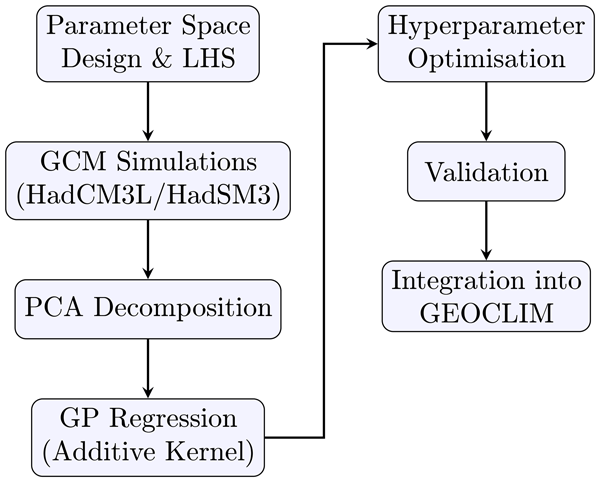
We propose an innovative climate modelling framework that combines statistical methods with climate simulations to study Earth's environmental systems. The model captures how orbital changes and carbon dioxide levels influence climate atmospheric dynamics, offering a detailed and efficient way to explore long-term processes. This tool provides new opportunities to investigate Earth's climate history and its implications for future changes.
Justin Gérard, Loïc Sablon, Jarno J. C. Huygh, Anne-Christine Da Silva, Alexandre Pohl, Christian Vérard, and Michel Crucifix
Clim. Past, 21, 239–260, https://doi.org/10.5194/cp-21-239-2025, https://doi.org/10.5194/cp-21-239-2025, 2025
Short summary
Short summary
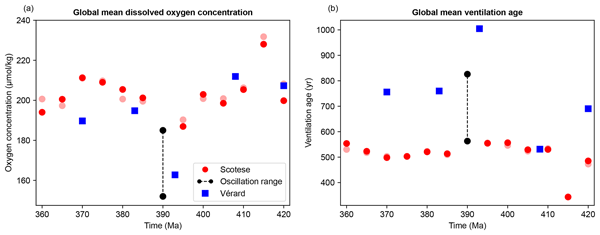
We used cGENIE, a climate model, to explore how changes in continental configuration, CO2 levels, and orbital configuration affected ocean oxygen levels during the Devonian period (419–359 million years ago). Key factors contributing to ocean anoxia were identified, highlighting the influence of continental configurations, atmospheric conditions, and orbital changes. Our findings offer new insights into the causes and prolonged durations of Devonian ocean anoxic events.
Justin Gérard and Michel Crucifix
Earth Syst. Dynam., 15, 293–306, https://doi.org/10.5194/esd-15-293-2024, https://doi.org/10.5194/esd-15-293-2024, 2024
Short summary
Short summary
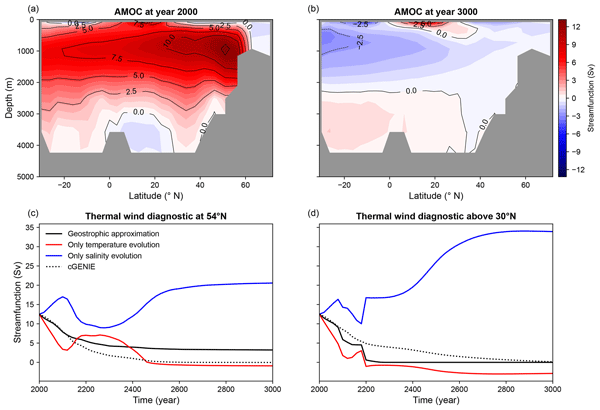
We used cGENIE, a climate model, to investigate the Atlantic Meridional Overturning Circulation (AMOC) slowdown under a warming scenario. We apply a diagnostic that was used in a previous study (Levang and Schmitt, 2020) to separate the temperature from salinity contribution to this slowdown. We find that, in our model, the initial slowdown of the AMOC was driven by temperature and that salinity takes the lead for the termination of the circulation.
Thomas W. Wong Hearing, Alexandre Pohl, Thomas M. Vandyk, Benjamin H. Tindal, Frédéric Fluteau, Alexander G. Liu, Thomas H. P. Harvey, and Mark Williams
EGUsphere, https://doi.org/10.5194/egusphere-2026-3617, https://doi.org/10.5194/egusphere-2026-3617, 2026
Short summary
Short summary
Earth's climate switches between icehouse and greenhouse states, with and without polar ice sheets, but from 740 to 635 million years ago Earth may have been in a 'snowball' glaciation. We looked at the rock record of the Ediacaran Period, just after this time, which has the first records of complex animal fossils. By combining geological data with climate and ice sheet computer models we show that the Ediacaran climate state was like recent ‘normal’ icehouse states, not a 'snowball' condition.
Jarno J. C. Huygh, Carlton E. Brett, James J. Zambito IV, Ian J. Forsythe, Loïc Sablon, Justin Gérard, Michel Crucifix, and Anne-Christine Da Silva
EGUsphere, https://doi.org/10.5194/egusphere-2026-2034, https://doi.org/10.5194/egusphere-2026-2034, 2026
This preprint is open for discussion and under review for Climate of the Past (CP).
Short summary
Short summary
We analyzed rocks from the Sherburne Formation (New York, USA) to investigate how Milankovitch cycles influenced climate ~380 million years ago. The record shows strong precession, obliquity, and eccentricity signals, including nonlinear interactions. These patterns reveal pantropical teleconnections and demonstrate that Devonian climate was highly sensitive to orbital forcing.
Loïc Sablon, Pierre Maffre, Yves Goddéris, Paul J. Valdes, Justin Gérard, Jarno J. C. Huygh, Anne-Christine Da Silva, and Michel Crucifix
Geosci. Model Dev., 18, 10095–10117, https://doi.org/10.5194/gmd-18-10095-2025, https://doi.org/10.5194/gmd-18-10095-2025, 2025
Short summary
Short summary
We propose an innovative climate modelling framework that combines statistical methods with climate simulations to study Earth's environmental systems. The model captures how orbital changes and carbon dioxide levels influence climate atmospheric dynamics, offering a detailed and efficient way to explore long-term processes. This tool provides new opportunities to investigate Earth's climate history and its implications for future changes.
Victor Couplet and Michel Crucifix
EGUsphere, https://doi.org/10.5194/egusphere-2025-4959, https://doi.org/10.5194/egusphere-2025-4959, 2025
Short summary
Short summary
Some parts of the Earth system, like ice sheets or the Amazon rainforest, may start changing on their own once pushed past a limit, even if the original pressure stops. A major concern is whether these “tipping elements” can trigger one another, setting off domino-like cascades. Here we use a simple climate model to investigate this possibility. We show that strong emission cuts are needed to lower the risk of triggering such cascades.
Takahito Mitsui, Peter Ditlevsen, Niklas Boers, and Michel Crucifix
Earth Syst. Dynam., 16, 1569–1584, https://doi.org/10.5194/esd-16-1569-2025, https://doi.org/10.5194/esd-16-1569-2025, 2025
Short summary
Short summary
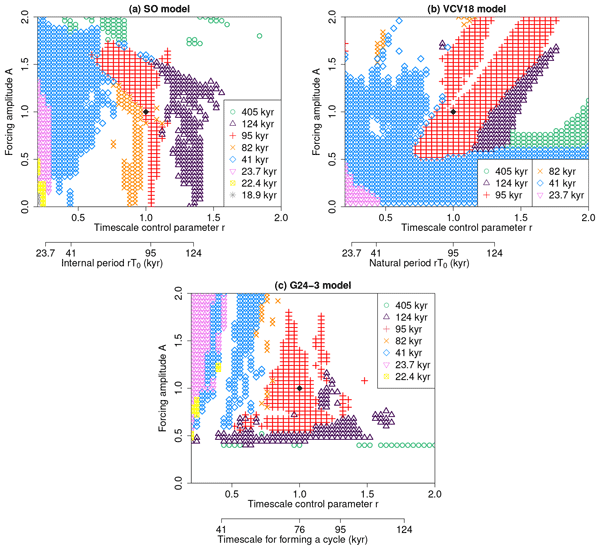
The late Pleistocene glacial cycles are dominated by a 100-kyr periodicity, rather than other major astronomical periods like 19, 23, 41, or 400 kyr. Various models propose distinct mechanisms to explain this, but their diversity may obscure the key factor behind the 100-kyr periodicity. We propose a timescale-matching hypothesis, suggesting that the ice-sheet climate system responds to astronomical forcing at ∼100 kyr because its intrinsic timescale is closer to 100 kyr than to other periods.
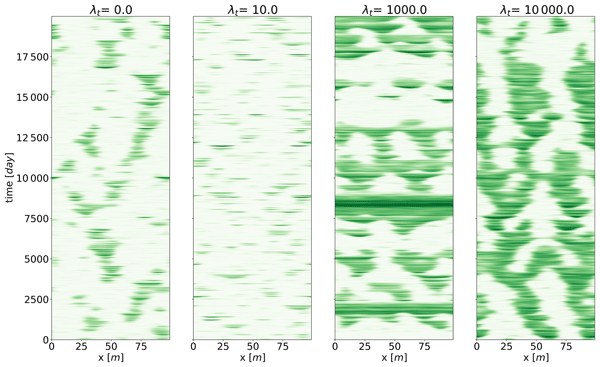
Lilian Vanderveken and Michel Crucifix
Nonlin. Processes Geophys., 32, 189–200, https://doi.org/10.5194/npg-32-189-2025, https://doi.org/10.5194/npg-32-189-2025, 2025
Short summary
Short summary
Vegetation patterns in semi-arid regions arise from interactions between plants and environmental factors. This study uses a numerical model to explore how vegetation responds to changes in rainfall and random disturbances. We identify key timescales that influence resilience, showing that ecosystems rely on both stable and unstable states to adapt. These findings offer insights into the resilience mechanisms that help ecosystems maintain stability under environmental stress.
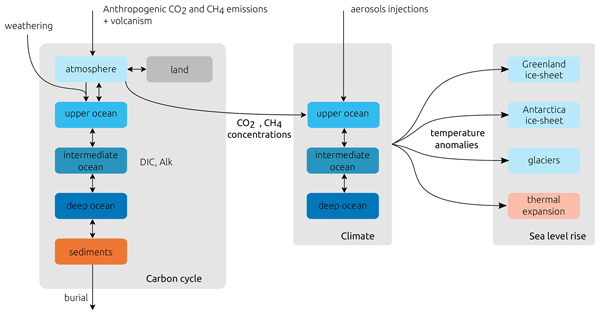
Victor Couplet, Marina Martínez Montero, and Michel Crucifix
Geosci. Model Dev., 18, 3081–3129, https://doi.org/10.5194/gmd-18-3081-2025, https://doi.org/10.5194/gmd-18-3081-2025, 2025
Short summary
Short summary
We present SURFER v3.0, a simple climate model designed to estimate the impact of CO2 and CH4 emissions on global temperatures, sea levels, and ocean pH. We added new carbon cycle processes and calibrated the model to observations and results from more complex models, enabling use over timescales ranging from decades to millions of years. SURFER v3.0 is fast, transparent, and easy to use, making it an ideal tool for policy assessments and suitable for educational purposes.
Justin Gérard, Loïc Sablon, Jarno J. C. Huygh, Anne-Christine Da Silva, Alexandre Pohl, Christian Vérard, and Michel Crucifix
Clim. Past, 21, 239–260, https://doi.org/10.5194/cp-21-239-2025, https://doi.org/10.5194/cp-21-239-2025, 2025
Short summary
Short summary
We used cGENIE, a climate model, to explore how changes in continental configuration, CO2 levels, and orbital configuration affected ocean oxygen levels during the Devonian period (419–359 million years ago). Key factors contributing to ocean anoxia were identified, highlighting the influence of continental configurations, atmospheric conditions, and orbital changes. Our findings offer new insights into the causes and prolonged durations of Devonian ocean anoxic events.
Justin Gérard and Michel Crucifix
Earth Syst. Dynam., 15, 293–306, https://doi.org/10.5194/esd-15-293-2024, https://doi.org/10.5194/esd-15-293-2024, 2024
Short summary
Short summary
We used cGENIE, a climate model, to investigate the Atlantic Meridional Overturning Circulation (AMOC) slowdown under a warming scenario. We apply a diagnostic that was used in a previous study (Levang and Schmitt, 2020) to separate the temperature from salinity contribution to this slowdown. We find that, in our model, the initial slowdown of the AMOC was driven by temperature and that salinity takes the lead for the termination of the circulation.
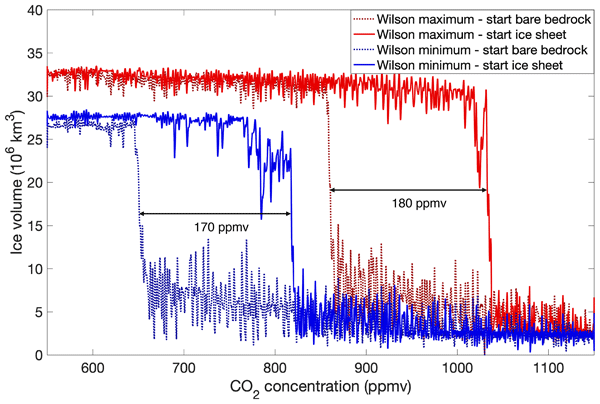
Jonas Van Breedam, Philippe Huybrechts, and Michel Crucifix
Clim. Past, 19, 2551–2568, https://doi.org/10.5194/cp-19-2551-2023, https://doi.org/10.5194/cp-19-2551-2023, 2023
Short summary
Short summary
We investigated the different boundary conditions to allow ice sheet growth and ice sheet decline of the Antarctic ice sheet when it appeared ∼38–34 Myr ago. The thresholds for ice sheet growth and decline differ because of the different climatological conditions above an ice sheet (higher elevation and higher albedo) compared to a bare topography. We found that the ice–albedo feedback and the isostasy feedback respectively ease and delay the transition from a deglacial to glacial state.
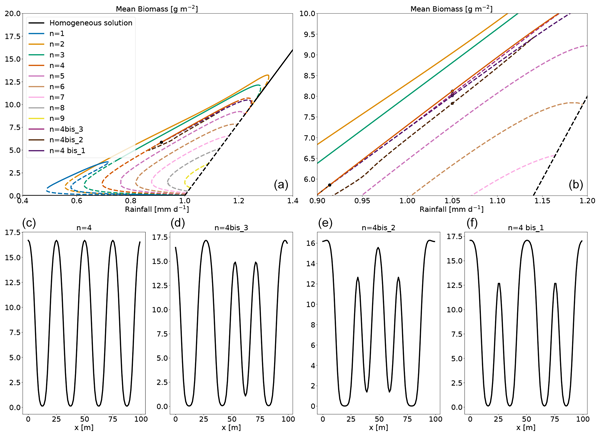
Lilian Vanderveken, Marina Martínez Montero, and Michel Crucifix
Nonlin. Processes Geophys., 30, 585–599, https://doi.org/10.5194/npg-30-585-2023, https://doi.org/10.5194/npg-30-585-2023, 2023
Short summary
Short summary
In semi-arid regions, hydric stress affects plant growth. In these conditions, vegetation patterns develop and effectively allow for vegetation to persist under low water input. The formation of patterns and the transition between patterns can be studied with small models taking the form of dynamical systems. Our study produces a full map of stable and unstable solutions in a canonical vegetation model and shows how they determine the transitions between different patterns.
Mikhail Y. Verbitsky and Michel Crucifix
Clim. Past, 19, 1793–1803, https://doi.org/10.5194/cp-19-1793-2023, https://doi.org/10.5194/cp-19-1793-2023, 2023
Short summary
Short summary
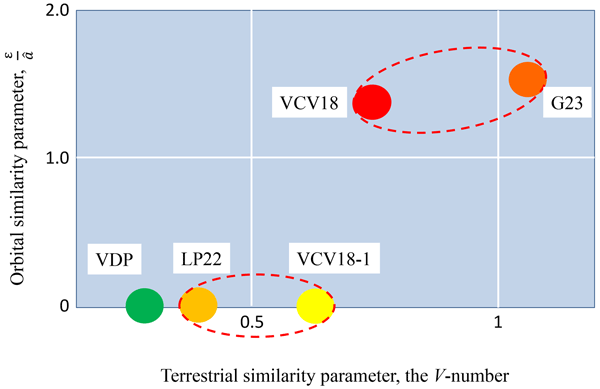
Are phenomenological dynamical paleoclimate models physically similar to Nature? We demonstrated that though they may be very accurate in reproducing empirical time series, this is not sufficient to claim physical similarity with Nature until similarity parameters are considered. We suggest that the diagnostics of physical similarity should become a standard procedure before a phenomenological model can be utilized for interpretations of historical records or future predictions.
Marina Martínez Montero, Michel Crucifix, Victor Couplet, Nuria Brede, and Nicola Botta
Geosci. Model Dev., 15, 8059–8084, https://doi.org/10.5194/gmd-15-8059-2022, https://doi.org/10.5194/gmd-15-8059-2022, 2022
Short summary
Short summary
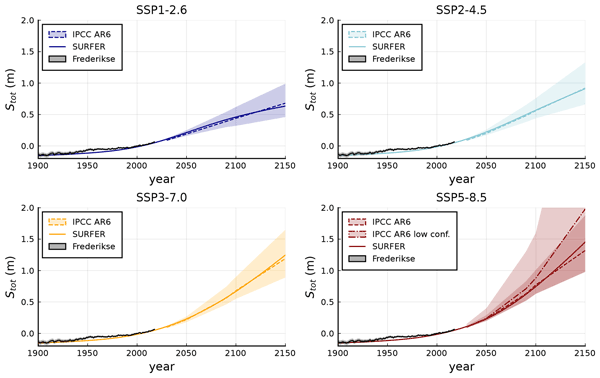
We present SURFER, a lightweight model that links CO2 emissions and geoengineering to ocean acidification and sea level rise from glaciers, ocean thermal expansion and Greenland and Antarctic ice sheets. The ice sheet module adequately describes the tipping points of both Greenland and Antarctica. SURFER is understandable, fast, accurate up to several thousands of years, capable of emulating results obtained by state of the art models and well suited for policy analyses.
Jonas Van Breedam, Philippe Huybrechts, and Michel Crucifix
Geosci. Model Dev., 14, 6373–6401, https://doi.org/10.5194/gmd-14-6373-2021, https://doi.org/10.5194/gmd-14-6373-2021, 2021
Short summary
Short summary
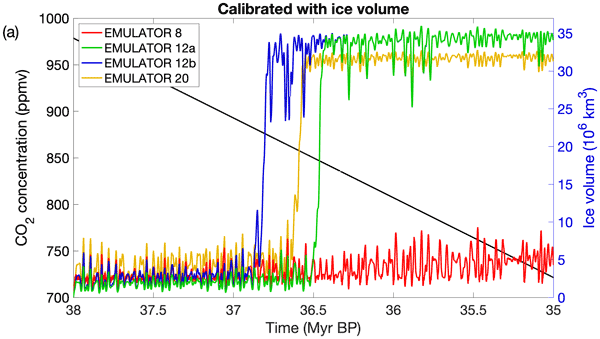
Ice sheets are an important component of the climate system and interact with the atmosphere through albedo variations and changes in the surface height. On very long timescales, it is impossible to directly couple ice sheet models with climate models and other techniques have to be used. Here we present a novel coupling method between ice sheets and the atmosphere by making use of an emulator to simulate ice sheet–climate interactions for several million years.
Cited articles
Adloff, M., Ridgwell, A., Monteiro, F. M., Parkinson, I. J., Dickson, A. J., Pogge von Strandmann, P. A. E., Fantle, M. S., and Greene, S. E.: Inclusion of a suite of weathering tracers in the cGENIE Earth system model – muffin release v.0.9.23, Geosci. Model Dev., 14, 4187–4223, https://doi.org/10.5194/gmd-14-4187-2021, 2021. a
Algeo, T. J. and Scheckler, S. E.: Terrestrial-marine teleconnections in the Devonian: links between the evolution of land plants, weathering processes, and marine anoxic events, Phil. Trans. R. Soc. Lond. B Math. Phys. Sci., 353, 113–130, https://doi.org/10.1098/rstb.1998.0195, 1998. a
Becker, R., Marshall, J., Da Silva, A.-C., Agterberg, F., Gradstein, F., and Ogg, J.: The Devonian Period, in: Geologic Time Scale 2020, pp. 733–810, Elsevier, ISBN 978-0-12-824360-2, https://doi.org/10.1016/B978-0-12-824360-2.00022-X, 2020. a, b
Benitez-Nelson, C. R.: The biogeochemical cycling of phosphorus in marine systems, Earth-Sci. Rev., 51, 109–135, https://doi.org/10.1016/S0012-8252(00)00018-0, 2000. a
Berger, A. and Loutre, M. F.: Insolation values for the climate of the last 10 million years, Quat. Sci. Rev., 10, 297–317, https://doi.org/10.1016/0277-3791(91)90033-Q, 1991. a
Bond, D. P. and Wignall, P. B.: The role of sea-level change and marine anoxia in the Frasnian–Famennian (Late Devonian) mass extinction, Palaeogeogr. Palaeoclimatol. Palaeoecol., 263, 107–118, https://doi.org/10.1016/j.palaeo.2008.02.015, 2008. a
Bradley, J. A., Hülse, D., LaRowe, D. E., and Arndt, S.: Transfer efficiency of organic carbon in marine sediments, Nat. Commun., 13, 7297, https://doi.org/10.1038/s41467-022-35112-9, 2022. a
Bretherton, C. S., Widmann, M., Dymnikov, V. P., Wallace, J. M., and Bladé, I.: The effective number of spatial degrees of freedom of a time-varying field, J. Clim., 12, 1990–2009, 1999. a
Brugger, J., Hofmann, M., Petri, S., and Feulner, G.: On the Sensitivity of the Devonian Climate to Continental Configuration, Vegetation Cover, Orbital Configuration, CO 2 Concentration, and Insolation, Paleoceanogr. Paleoclimatol., 34, 1375–1398, https://doi.org/10.1029/2019PA003562, 2019. a
Cao, L., Eby, M., Ridgwell, A., Caldeira, K., Archer, D., Ishida, A., Joos, F., Matsumoto, K., Mikolajewicz, U., Mouchet, A., Orr, J. C., Plattner, G.-K., Schlitzer, R., Tokos, K., Totterdell, I., Tschumi, T., Yamanaka, Y., and Yool, A.: The role of ocean transport in the uptake of anthropogenic CO2, Biogeosciences, 6, 375–390, https://doi.org/10.5194/bg-6-375-2009, 2009. a, b
Carmichael, S. K., Waters, J. A., Königshof, P., Suttner, T. J., and Kido, E.: Paleogeography and paleoenvironments of the Late Devonian Kellwasser event: A review of its sedimentological and geochemical expression, Glob. Planet. Change, 183, 102984, https://doi.org/10.1016/j.gloplacha.2019.102984, 2019. a, b, c
Cermeño, P., Garcìa-Comas, C., Pohl, A., Williams, S., Benton, M. J., Chaudhary, C., Le Gland, G., Müller, R. D., Ridgwell, A., and Vallina, S. M.: Post-extinction recovery of the Phanerozoic oceans and biodiversity hotspots, Nature, 607, 507–511, https://www.nature.com/articles/s41586-022-04932-6 (last access: 4 May 2026), 2022. a
Chen, B., Ma, X., Mills, B. J., Qie, W., Joachimski, M. M., Shen, S., Wang, C., Xu, H., and Wang, X.: Devonian paleoclimate and its drivers: A reassessment based on a new conodont δ18O record from South China, Earth-Sci. Rev., 222, 103 814, https://doi.org/10.1016/j.earscirev.2021.103814, 2021. a
Chen, D., Wang, J., Racki, G., Li, H., Wang, C., Ma, X., and Whalen, M. T.: Large sulphur isotopic perturbations and oceanic changes during the Frasnian–Famennian transition of the Late Devonian, J. Geol. Soc., 170, 465–476, https://doi.org/10.1144/jgs2012-037, 2013. a, b
Claussen, M., Mysak, L., Weaver, A., Crucifix, M., Fichefet, T., Loutre, M.-F., Weber, S., Alcamo, J., Alexeev, V., Berger, A., Calov, R., Ganopolski, A., Goosse, H., Lohmann, G., Lunkeit, F., Mokhov, I., Petoukhov, V., Stone, P., and Wang, Z.: Earth system models of intermediate complexity: closing the gap in the spectrum of climate system models, Clim. Dyn., 18, 579–586, https://doi.org/10.1007/s00382-001-0200-1, 2002. a
Colbourn, G., Ridgwell, A., and Lenton, T. M.: The Rock Geochemical Model (RokGeM) v0.9, Geosci. Model Dev., 6, 1543–1573, https://doi.org/10.5194/gmd-6-1543-2013, 2013. a, b, c
Crichton, K. A., Wilson, J. D., Ridgwell, A., and Pearson, P. N.: Calibration of temperature-dependent ocean microbial processes in the cGENIE.muffin (v0.9.13) Earth system model, Geosci. Model Dev., 14, 125–149, https://doi.org/10.5194/gmd-14-125-2021, 2021. a
Crucifix, M.: Generation of sample climatic precession and obliquity solutions for running climate experiments over the Devonian, Zenodo [code], https://doi.org/10.5281/zenodo.14894811, 2025. a
Da Silva, A.-C., Sinnesael, M., Claeys, P., Davies, J. H. F. L., De Winter, N. J., Percival, L. M. E., Schaltegger, U., and De Vleeschouwer, D.: Anchoring the Late Devonian mass extinction in absolute time by integrating climatic controls and radio-isotopic dating, Sci. Rep., 10, 12940, https://doi.org/10.1038/s41598-020-69097-6, 2020. a
Dahl, T. W., Harding, M. A., Brugger, J., Feulner, G., Norrman, K., Lomax, B. H., and Junium, C. K.: Low atmospheric CO2 levels before the rise of forested ecosystems, Nat. Commun., 13, 7616, https://doi.org/10.1038/s41467-022-35085-9, 2022. a
De Vleeschouwer, D., Da Silva, A. C., Boulvain, F., Crucifix, M., and Claeys, P.: Precessional and half-precessional climate forcing of Mid-Devonian monsoon-like dynamics, Clim. Past, 8, 337–351, https://doi.org/10.5194/cp-8-337-2012, 2012. a
De Vleeschouwer, D., Rakociński, M., Racki, G., Bond, D. P., Sobień, K., and Claeys, P.: The astronomical rhythm of Late-Devonian climate change (Kowala section, Holy Cross Mountains, Poland), Earth Planet. Sci. Lett., 365, 25–37, https://doi.org/10.1016/j.epsl.2013.01.016, 2013. a
De Vleeschouwer, D., Crucifix, M., Bounceur, N., and Claeys, P.: The impact of astronomical forcing on the Late Devonian greenhouse climate, Glob. Planet. Change, 120, 65–80, https://doi.org/10.1016/j.gloplacha.2014.06.002, 2014. a
De Vleeschouwer, D., Da Silva, A.-C., Sinnesael, M., Chen, D., Day, J. E., Whalen, M. T., Guo, Z., and Claeys, P.: Timing and pacing of the Late Devonian mass extinction event regulated by eccentricity and obliquity, Nat. Commun., 8, 2268, https://doi.org/10.1038/s41467-017-02407-1, 2017. a, b, c, d
Dopieralska, J.: Reconstructing seawater circulation on the Moroccan shelf of Gondwana during the Late Devonian: Evidence from Nd isotope composition of conodonts, Geochem. Geophys. Geosyst., 10, https://doi.org/10.1029/2008GC002247, 2009. a
Dunne, J. P., Sarmiento, J. L., and Gnanadesikan, A.: A synthesis of global particle export from the surface ocean and cycling through the ocean interior and on the seafloor, Global Biogeochem. Cycles, 21, https://doi.org/10.1029/2006GB002907, 2007. a, b, c
Edwards, N. R. and Marsh, R.: Uncertainties due to transport-parameter sensitivity in an efficient 3-D ocean-climate model, Clim. Dyn., 24, 415–433, https://doi.org/10.1007/s00382-004-0508-8, 2005. a
Farhat, M., Auclair-Desrotour, P., Boué, G., and Laskar, J.: The resonant tidal evolution of the Earth-Moon distance, A&A, 665, L1, https://doi.org/10.1051/0004-6361/202243445, 2022. a, b
Frankignoulle, M. and Gattuso, J.-P.: Air-sea CO2 exchange in coastal ecosystems, in: Interactions of C, N, P and S biogeochemical cycles and global change, edited by: Wollast, R., Mackenzie, F. T., and Chou, L., pp. 233–248, Springer, Berlin, Heidelberg, Germany, https://doi.org/10.1007/978-3-642-76064-8_9, 1993. a
Garcia, H. E., Wang, Z., Bouchard, C., Cross, S. L., Paver, C. R., Reagan, J. R., Boyer, T. P., Locarnini, R. A., Mishonov, A. V., Baranova, O. K., et al.: World Ocean Atlas 2023, Volume 3: Dissolved Oxygen, Apparent Oxygen Utilization, Dissolved Oxygen Saturation and 30-year Climate Normal, National Centers for Environmental Information (US), https://doi.org/10.25923/rb67-ns53, 2024. a
Gough, D.: Solar interior structure and luminosity variations, in: Physics of Solar Variations: Proceedings of the 14th ESLAB Symposium held in Scheveningen, The Netherlands, 16–19 September, 1980, pp. 21–34, Springer, https://doi.org/10.1007/978-94-010-9633-1_4, 1981. a
Granot, R.: Palaeozoic oceanic crust preserved beneath the eastern Mediterranean, Nat. Geosci., 9, 701–705, https://doi.org/10.1038/ngeo2784, 2016. a
Gérard, J.: Oxygen anomaly evolution under astronomical forcing, Copernicus Publications, TIB AV-Portal [video], https://doi.org/10.5446/73022, 2026. a
Gérard, J. and Crucifix, M.: Diagnosing the causes of AMOC slowdown in a coupled model: a cautionary tale, Earth Syst. Dynam., 15, 293–306, https://doi.org/10.5194/esd-15-293-2024, 2024. a
Gérard, J., Sablon, L., Huygh, J. J. C., Da Silva, A.-C., Pohl, A., Vérard, C., and Crucifix, M.: Exploring the mechanisms of Devonian oceanic anoxia: impact of ocean dynamics, palaeogeography, and orbital forcing, Clim. Past, 21, 239–260, https://doi.org/10.5194/cp-21-239-2025, 2025. a, b, c, d, e, f
Haddad, E. E., Boyer, D. L., Droser, M. L., Lee, B. K., Lyons, T. W., and Love, G. D.: Ichnofabrics and chemostratigraphy argue against persistent anoxia during the Upper Kellwasser Event in New York State, Palaeogeogr. Palaeoclimatol. Palaeoecol., 490, 178–190, https://doi.org/10.1016/j.palaeo.2017.10.025, 2018. a
Hedhli, M., Grasby, S., Henderson, C., and Davis, B.: Multiple diachronous “Black Seas” mimic global ocean anoxia during the latest Devonian, Geology, 51, 973–977, https://doi.org/10.1130/G51394.1, 2023. a
Huang, C., Joachimski, M. M., and Gong, Y.: Did climate changes trigger the Late Devonian Kellwasser Crisis? Evidence from a high-resolution conodont δ18OPO4 record from South China, Earth Planet. Sci. Lett., 495, 174–184, https://doi.org/10.1016/j.epsl.2018.05.016, 2018. a
Hülse, D., Arndt, S., Daines, S., Regnier, P., and Ridgwell, A.: OMEN-SED 1.0: a novel, numerically efficient organic matter sediment diagenesis module for coupling to Earth system models, Geosci. Model Dev., 11, 2649–2689, https://doi.org/10.5194/gmd-11-2649-2018, 2018. a
Huygh, J. J. C., Algeo, T. J., Sageman, B. B., Arts, M. C., Ver Straeten, C. A., Over, D. J., Gérard, J., Sablon, L., Crucifix, M., and Da Silva, A.-C.: Astronomical control on marine anoxia during the Kellwasser Crisis and Rhinestreet Event (Appalachian Basin, New York, USA), Glob. Planet. Change, https://doi.org/10.1016/j.gloplacha.2025.105216, 2025. a, b, c, d
Ingall, E. and Jahnke, R.: Evidence for enhanced phosphorus regeneration from marine sediments overlain by oxygen depleted waters, Geochim. Cosmochim. Acta, 58, 2571–2575, https://doi.org/10.1016/0016-7037(94)90033-7, 1994. a
Joachimski, M. M. and Buggisch, W.: Conodont apatite δ18O signatures indicate climatic cooling as a trigger of the Late Devonian mass extinction, Geology, 30, 711–714, https://doi.org/10.1130/0091-7613(2002)030<0711:CAOSIC>2.0.CO;2, 2002. a
Kabanov, P., Hauck, T. E., Gouwy, S. A., Grasby, S. E., and Van Der Boon, A.: Oceanic anoxic events, photic-zone euxinia, and controversy of sea-level fluctuations during the Middle-Late Devonian, Earth-Sci. Rev., 241, 104415, https://doi.org/10.1016/j.earscirev.2023.104415, 2023. a, b
Kaiser, S. I., Aretz, M., and Becker, R. T.: The global Hangenberg Crisis (Devonian–Carboniferous transition): review of a first-order mass extinction, Geol. Soc. Spec. Publ., 423, 387–437, https://doi.org/10.1144/SP423.9, 2016. a
Kiessling, W., Flügel, E., and Golonka, J.: Patterns of Phanerozoic carbonate platform sedimentation, Lethaia, 36, 195–226, https://doi.org/10.1080/00241160310004648, 2003. a
Krause, A. J., Mills, B. J., Zhang, S., Planavsky, N. J., Lenton, T. M., and Poulton, S. W.: Stepwise oxygenation of the Paleozoic atmosphere, Nat. Commun., 9, 4081, https://doi.org/10.1038/s41467-018-06383-y, 2018. a, b
Laridon, A., Couplet, V., Gérard, J., Thiery, W., and Crucifix, M.: Connecting complex and simplified models of tipping elements: a nonlinear two-forcing emulator for the Atlantic meridional overturning circulation, Open Res. Eur., 5, 87, https://doi.org/10.12688/openreseurope.19479.2, 2025. a
Laskar, J. and Robutel, P.: The chaotic obliquity of the planets, Nature, 361, 608–612, https://doi.org/10.1038/361608a0, 1993. a
Laskar, J., Robutel, P., Joutel, F., Gastineau, M., Correia, A. C., and Levrard, B.: A long-term numerical solution for the insolation quantities of the Earth, A&A, 428, 261–285, https://doi.org/10.1051/0004-6361:20041335, 2004. a
Laskar, J., Fienga, A., Gastineau, M., and Manche, H.: La2010: a new orbital solution for the long-term motion of the Earth, A&A, 532, A89, https://doi.org/10.1051/0004-6361/201116836, 2011. a, b
Lunt, D. J., Williamson, M. S., Valdes, P. J., Lenton, T. M., and Marsh, R.: Comparing transient, accelerated, and equilibrium simulations of the last 30 000 years with the GENIE-1 model, Clim. Past, 2, 221–235, https://doi.org/10.5194/cp-2-221-2006, 2006. a
Ma, K., Hinnov, L., Zhang, X., and Gong, Y.: Astronomical climate changes trigger Late Devonian bio- and environmental events in South China, Glob. Planet. Change, 215, 103 874, https://doi.org/10.1016/j.gloplacha.2022.103874, 2022. a, b
Ma, X., Gong, Y., Chen, D., Racki, G., Chen, X., and Liao, W.: The Late Devonian Frasnian–Famennian Event in South China – patterns and causes of extinctions, sea level changes, and isotope variations, Palaeogeogr. Palaeoclimatol. Palaeoecol., 448, 224–244, https://doi.org/10.1016/j.palaeo.2015.10.047, 2016. a
Maffre, P., Goddéris, Y., Le Hir, G., Nardin, É., Sarr, A.-C., and Donnadieu, Y.: GEOCLIM7, an Earth system model for multi-million-year evolution of the geochemical cycles and climate, Geosci. Model Dev., 18, 6367–6413, https://doi.org/10.5194/gmd-18-6367-2025, 2025. a, b
Marsh, R., Müller, S. A., Yool, A., and Edwards, N. R.: Incorporation of the C-GOLDSTEIN efficient climate model into the GENIE framework: “eb_go_gs” configurations of GENIE, Geosci. Model Dev., 4, 957–992, https://doi.org/10.5194/gmd-4-957-2011, 2011. a
Marsh, R., Sóbester, A., Hart, E. E., Oliver, K. I. C., Edwards, N. R., and Cox, S. J.: An optimally tuned ensemble of the “eb_go_gs” configuration of GENIE: parameter sensitivity and bifurcations in the Atlantic overturning circulation, Geosci. Model Dev., 6, 1729–1744, https://doi.org/10.5194/gmd-6-1729-2013, 2013. a
Martinez, M. and Dera, G.: Orbital pacing of carbon fluxes by a 9-My eccentricity cycle during the Mesozoic, P. Natl. Acad. Sci. USA, 112, 12 604–12 609, https://doi.org/10.1073/pnas.1419946112, 2015. a
Naidoo-Bagwell, A. A., Monteiro, F. M., Hendry, K. R., Burgan, S., Wilson, J. D., Ward, B. A., Ridgwell, A., and Conley, D. J.: A diatom extension to the cGEnIE Earth system model – EcoGEnIE 1.1, Geosci. Model Dev., 17, 1729–1748, https://doi.org/10.5194/gmd-17-1729-2024, 2024. a
Paschall, O., Carmichael, S. K., Königshof, P., Waters, J. A., Ta, P. H., Komatsu, T., and Dombrowski, A.: The Devonian-Carboniferous boundary in Vietnam: Sustained ocean anoxia with a volcanic trigger for the Hangenberg Crisis?, Glob. Planet. Change, 175, 64–81, https://doi.org/10.1016/j.gloplacha.2019.01.021, 2019. a
Percival, L., Bond, D., Rakociński, M., Marynowski, L., Hood, A., Adatte, T., Spangenberg, J., and Föllmi, K.: Phosphorus-cycle disturbances during the Late Devonian anoxic events, Glob. Planet. Change, 184, 103070, https://doi.org/10.1016/j.gloplacha.2019.103070, 2020. a
Pier, J. Q., Brisson, S. K., Beard, J. A., Hren, M. T., and Bush, A. M.: Accelerated mass extinction in an isolated biota during Late Devonian climate changes, Sci. Rep., 11, 24366, https://doi.org/10.1038/s41598-021-03510-6, 2021. a
Pohl, A., Ridgwell, A., Stockey, R. G., Thomazo, C., Keane, A., Vennin, E., and Scotese, C. R.: Continental configuration controls ocean oxygenation during the Phanerozoic, Nature, 608, 523–527, https://doi.org/10.1038/s41586-022-05018-z, 2022. a, b
Racki, G.: A volcanic scenario for the Frasnian–Famennian major biotic crisis and other Late Devonian global changes: more answers than questions?, Glob. Planet. Change, 189, 103174, https://doi.org/10.1016/j.gloplacha.2020.103174, 2020. a
Rahmstorf, S., Crucifix, M., Ganopolski, A., Goosse, H., Kamenkovich, I., Knutti, R., Lohmann, G., Marsh, R., Mysak, L. A., Wang, Z., and Weaver, A. J.: Thermohaline circulation hysteresis: A model intercomparison, Geophys. Res. Lett., 32, 2005GL023655, https://doi.org/10.1029/2005GL023655, 2005. a
Reershemius, T. and Planavsky, N. J.: What controls the duration and intensity of ocean anoxic events in the Paleozoic and the Mesozoic?, Earth-Sci. Rev., 221, 103787, https://doi.org/10.1016/j.earscirev.2021.103787, 2021. a
Reinhard, C. T., Olson, S. L., Kirtland Turner, S., Pälike, C., Kanzaki, Y., and Ridgwell, A.: Oceanic and atmospheric methane cycling in the cGENIE Earth system model – release v0.9.14, Geosci. Model Dev., 13, 5687–5706, https://doi.org/10.5194/gmd-13-5687-2020, 2020. a
Ridgwell, A.: A Mid Mesozoic Revolution in the regulation of ocean chemistry, Mar. Geol., 217, 339–357, https://doi.org/10.1016/j.margeo.2004.10.036, 2005. a
Ridgwell, A.: derpycode/muffingen: v0.9.24, Zenodo [code], https://doi.org/10.5281/zenodo.7545809, 2023. a
Ridgwell, A. and Hargreaves, J.: Regulation of atmospheric CO2 by deep-sea sediments in an Earth system model, Global Biogeochem. Cycles, 21, https://doi.org/10.1029/2006GB002764, 2007. a, b, c
Ridgwell, A., Hargreaves, J. C., Edwards, N. R., Annan, J. D., Lenton, T. M., Marsh, R., Yool, A., and Watson, A.: Marine geochemical data assimilation in an efficient Earth System Model of global biogeochemical cycling, Biogeosciences, 4, 87–104, https://doi.org/10.5194/bg-4-87-2007, 2007. a, b, c, d, e, f
Ridgwell, A, Hülse, D., Peterson, C., Ward, B., Ted, evansmn, and Jones, R.: derpycode/muffindoc: v0.24-574-NSF (v0.24-574-NSF), Zenodo [code], https://doi.org/10.5281/zenodo.13377225, 2024. a
Ridgwell, A., Reinhard, C., van de Velde, S., Adloff, M., Monteiro, F., Vervoort, P., Camillalxy, Ward, B., Kanzaki, Y., Hülse, D., Wilson, J., Li, M., InkyANB, and Kirtland Turner, S.: derpycode/cgenie.muffin: v0.9.72 (v0.9.72), Zenodo [code], https://doi.org/10.5281/zenodo.19682719, 2026. a
Ruttenberg, K.: The global phosphorus cycle, Treatise Geochem., 8, 585–643, https://doi.org/10.1016/B0-08-043751-6/08153-6, 2003. a
Sablon, L., Maffre, P., Goddéris, Y., Valdes, P. J., Gérard, J., Huygh, J. J. C., Da Silva, A.-C., and Crucifix, M.: An emulator-based modelling framework for studying astronomical controls on ocean anoxia with an application to the Devonian, Geosci. Model Dev., 18, 10095–10117, https://doi.org/10.5194/gmd-18-10095-2025, 2025. a, b, c, d, e, f, g, h, i, j, k, l, m, n, o, p, q
Sarr, A., Donnadieu, Y., Laugié, M., Ladant, J., Suchéras‐Marx, B., and Raisson, F.: Ventilation Changes Drive Orbital-Scale Deoxygenation Trends in the Late Cretaceous Ocean, Geophys. Res. Lett., 49, e2022GL099830, https://doi.org/10.1029/2022GL099830, 2022. a, b, c
Schmidtko, S., Stramma, L., and Visbeck, M.: Decline in global oceanic oxygen content during the past five decades, Nature, 542, 335–339, https://doi.org/10.1038/nature21399, 2017. a
Sharaf, S. G. and Boudnikova, N. A.: Secular variations of elements of the Earth's orbit which influences the climates of the geological past, Tr. Inst. Theor. Astron. Leningrad, 11, 231–261, 1967. a
Sharoni, S. and Halevy, I.: Rates of seafloor and continental weathering govern Phanerozoic marine phosphate levels, Nat. Geosci., 16, 75–81, https://doi.org/10.1038/s41561-022-01075-1, 2023. a
S̆idlichovský, M. and Nesvorný, D.: Frequency Modified Fourier Transform and its Application to Asteroids, Celest. Mech. Dyn. Astron., 65, 137–148, https://doi.org/10.1007/978-94-011-5510-6_9, 1997. a
Smart, M. S., Filippelli, G., Gilhooly, W. P., Ozaki, K., Reinhard, C. T., Marshall, J. E. A., and Whiteside, J. H.: The Expansion of Land Plants during the Late Devonian Contributed to the Marine Mass Extinction, Commun. Earth Environ., 4, 1–13, https://doi.org/10.1038/s43247-023-01087-8, 2023. a, b
Song, H., Song, H., Algeo, T. J., Tong, J., Romaniello, S. J., Zhu, Y., Chu, D., Gong, Y., and Anbar, A. D.: Uranium and carbon isotopes document global-ocean redox-productivity relationships linked to cooling during the Frasnian-Famennian mass extinction, Geology, 45, 887–890, https://doi.org/10.1130/G39393.1, 2017. a
Stappard, D. A., Wilson, J. D., Yool, A., and Tyrrell, T.: NutGEnIE 1.0: nutrient cycle extensions to the cGEnIE Earth system model to examine the long-term influence of nutrients on oceanic primary production, Geosci. Model Dev., 18, 6805–6834, https://doi.org/10.5194/gmd-18-6805-2025, 2025. a
Tostevin, R. and Mills, B. J.: Reconciling proxy records and models of Earth's oxygenation during the Neoproterozoic and Palaeozoic, Interface Focus, 10, 20190137, https://doi.org/10.1098/rsfs.2019.0137, 2020. a
Valdes, P. J., Armstrong, E., Badger, M. P. S., Bradshaw, C. D., Bragg, F., Crucifix, M., Davies-Barnard, T., Day, J. J., Farnsworth, A., Gordon, C., Hopcroft, P. O., Kennedy, A. T., Lord, N. S., Lunt, D. J., Marzocchi, A., Parry, L. M., Pope, V., Roberts, W. H. G., Stone, E. J., Tourte, G. J. L., and Williams, J. H. T.: The BRIDGE HadCM3 family of climate models: HadCM3@Bristol v1.0, Geosci. Model Dev., 10, 3715–3743, https://doi.org/10.5194/gmd-10-3715-2017, 2017. a, b
Valdes, P. J., Scotese, C. R., and Lunt, D. J.: Deep ocean temperatures through time, Clim. Past, 17, 1483–1506, https://doi.org/10.5194/cp-17-1483-2021, 2021. a, b
van de Velde, S. J., Hülse, D., Reinhard, C. T., and Ridgwell, A.: Iron and sulfur cycling in the cGENIE.muffin Earth system model (v0.9.21), Geosci. Model Dev., 14, 2713–2745, https://doi.org/10.5194/gmd-14-2713-2021, 2021. a
Vérard, C.: Panalesis: towards global synthetic palaeogeographies using integration and coupling of manifold models, Geol. Mag., 156, 320–330, https://doi.org/10.1017/S0016756817001042, 2019. a
Vervoort, P., Kirtland Turner, S., Rochholz, F., and Ridgwell, A.: Earth system model analysis of how astronomical forcing is imprinted onto the marine geological record: The role of the inorganic (carbonate) carbon cycle and feedbacks, Paleoceanogr. Paleoclimatol., 39, e2023PA004826, https://doi.org/10.1029/2023PA004826, 2024. a, b
Wallmann, K.: Phosphorus imbalance in the global ocean?, Global Biogeochem. Cycles, 24, https://doi.org/10.1029/2009GB003643, 2010. a, b, c
Ward, B. A., Wilson, J. D., Death, R. M., Monteiro, F. M., Yool, A., and Ridgwell, A.: EcoGEnIE 1.0: plankton ecology in the cGEnIE Earth system model, Geosci. Model Dev., 11, 4241–4267, https://doi.org/10.5194/gmd-11-4241-2018, 2018. a
Wichern, N. M. A., Bialik, O. M., Nohl, T., Percival, L. M. E., Becker, R. T., Kaskes, P., Claeys, P., and De Vleeschouwer, D.: Astronomically paced climate and carbon cycle feedbacks in the lead-up to the Late Devonian Kellwasser Crisis, Clim. Past, 20, 415–448, https://doi.org/10.5194/cp-20-415-2024, 2024. a, b
Wilde, P. and Berry, W.: Destabilization of the oceanic density structure and its significance to marine “extinction” events, Palaeogeogr. Palaeoclimatol. Palaeoecol., 48, 143–162, https://doi.org/10.1016/0031-0182(84)90041-5, 1984. a
Zeebe, R. E. and Lantink, M. L.: A Secular Solar System Resonance that Disrupts the Dominant Cycle in Earth's Orbital Eccentricity (g2 – g5): Implications for Astrochronology, AJ, 167, 204, https://doi.org/10.3847/1538-3881/ad32cf, 2024. a
Zelinka, M. D., Myers, T. A., McCoy, D. T., Po-Chedley, S., Caldwell, P. M., Ceppi, P., Klein, S. A., and Taylor, K. E.: Causes of higher climate sensitivity in CMIP6 models, Geophys. Res. Lett., 47, e2019GL085782, https://doi.org/10.1029/2019GL085782, 2020. a
Short summary
We studied how changes in Earth’s orbit affected ocean oxygen during the Devonian, a time of repeated environmental crises and extinctions. Using computer simulations, we show that certain orbital cycles, especially eccentricity maxima, exacerbate oxygen loss in the oceans, while obliquity also played a key role at high latitudes. The results also help explain why records from different places show contrasting signals and provide new insight into how natural climate cycles can affect ocean life.
We studied how changes in Earth’s orbit affected ocean oxygen during the Devonian, a time of...


