
Articles | Volume 22, issue 4
https://doi.org/10.5194/cp-22-879-2026
© Author(s) 2026. This work is distributed under
the Creative Commons Attribution 4.0 License.
the Creative Commons Attribution 4.0 License.
https://doi.org/10.5194/cp-22-879-2026
© Author(s) 2026. This work is distributed under
the Creative Commons Attribution 4.0 License.
the Creative Commons Attribution 4.0 License.
Research article
| 
22 Apr 2026
Research article |
| 22 Apr 2026
| 22 Apr 2026
Weakened Miocene temperature response to orbital forcing compared to the modern-day

State Key Laboratory of Marine Environmental Science, College of Ocean & Earth Sciences, Xiamen University, Xiamen, China
Jilin Wei
State Key Laboratory of Earth System Numerical Modeling and Application, Institute of Atmospheric Physics, Chinese Academy of Sciences, Beijing, China
College of Earth and Planetary Sciences, University of Chinese Academy of Sciences, Beijing, China
Zhen Li
State Key Laboratory of Marine Environmental Science, College of Ocean & Earth Sciences, Xiamen University, Xiamen, China
Nan Dai
State Key Laboratory of Marine Environmental Science, College of Ocean & Earth Sciences, Xiamen University, Xiamen, China
Weipeng Zheng
State Key Laboratory of Earth System Numerical Modeling and Application, Institute of Atmospheric Physics, Chinese Academy of Sciences, Beijing, China
College of Earth and Planetary Sciences, University of Chinese Academy of Sciences, Beijing, China
Earth System Numerical Simulation Science Center, Institute of Atmospheric Physics, Chinese Academy of Sciences, Beijing, China
Qiuzhen Yin
Earth and Climate Research Center, Earth and Life Institute, Université catholique de Louvain, Louvain-la-Neuve, Belgium
Agatha M. de Boer
Department of Geological Sciences, Bolin Centre for Climate Research, Stockholm University, Stockholm, Sweden
Zhengguo Shi
State Key Laboratory of Loess Science, Institute of Earth Environment, Chinese Academy of Sciences, Xi'an, China
Institute of Global Environmental Change, Xi'an Jiaotong University, Xi'an, China
Lixia Zhang
State Key Laboratory of Earth System Numerical Modeling and Application, Institute of Atmospheric Physics, Chinese Academy of Sciences, Beijing, China
Related authors
Natalie J. Burls, Nicky M. Wright, R. Paul Acosta, Catherine D. Bradshaw, Edward Gasson, Lennert B. Stap, Gilles Ramstein, Anna Ruth W. Halberstadt, Agatha M. De Boer, Funda Akgün, David J. Cantrill, Manuel Casas-Gallego, Nela Doláková, Boglarka Erdei, Alex Farnsworth, Sarah Feakins, Ran Feng, Tamara Fletcher, Frédéric Fluteau, J. A. Mattias Green, Anna S. von der Heydt, Matthew Huber, David K. Hutchinson, Dimiter Ivanov, Mine Sezgül Kayseri-Özer, Gregor Knorr, Marianna Kováčová, Caroline H. Lear, Allegra N. LeGrande, Shufeng Li, Xiaoqing Liu, Daniel J. Lunt, Katrin Meissner, Yunfa Miao, Trusha J. Naik, Javier B. Navarro, Joseph B. Novak, Diana Ochoa, Guy J.G. Paxman, Matthew J. Pound, James W. B. Rae, Tammo Reichgelt, Martin Renoult, Francesca Sangiorgi, Anta-Clarisse Sarr, Diane Segalla, Pierre Sepulchre, Amelia Shevenell, Sebastian Steinig, Eivind Straume, Caroline A. E. Strömberg, Clay Tabor, Torsten Utescher, Julia E. Weiffenbach, Elżbieta Worobiec, Yurui Zhang, Feng Zhu, Jiang Zhu, Alexandra Auderset, Florence Colleoni, Aisling Dolan, Rachel Havranek, Ann Holbourn, Nicholas Herold, Daeun Lee, James W. Marschalek, Bryce Mitsunaga, Sevi Modestou, Lina Perez-Angel, Mae Saslaw, Sinda Sosdian, Elena Stiles, Yong Sun, Ning Tan, Zhongshi Zhang, and Yan Zhao
EGUsphere, https://doi.org/10.5194/egusphere-2026-3595, https://doi.org/10.5194/egusphere-2026-3595, 2026
This preprint is open for discussion and under review for Geoscientific Model Development (GMD).
Short summary
Short summary
Simulating warm paleoclimates increases our understanding of the mechanisms that drive climatic change and tipping points. The Miocene Epoch, specifically the Miocene Climatic Optimum, has been identified as a particularly valuable past warm climate to simulate, meriting the design of a coordinated Miocene Model Intercomparison Project. Here we synthesize the latest available literature and present the experimental design for coordinated Miocene simulations and sensitivity studies.
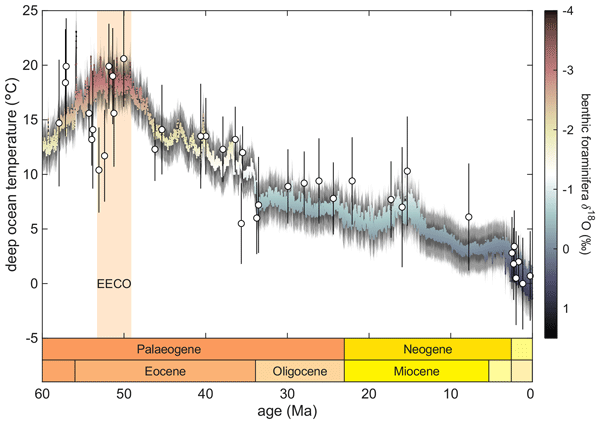
Daniel J. Lunt, Nicky M. Wright, Bram Vaes, Ulrich Salzmann, James W. B. Rae, Thomas Hickler, David K. Hutchinson, Julia Brugger, Jiang Zhu, Sebastian Steinig, A. Nele Meckler, Gordon N. Inglis, David Evans, Agatha M. de Boer, Bette L. Otto-Bliesner, Natalie Burls, Yurui Zhang, Appy Sluijs, Tammo Reichgelt, Igor Niezgodzki, Katrin Meissner, Jean-Baptiste Ladant, Fanni D. Kelemen, Matthew Huber, David R. Greenwood, Mattias Green, Flavia Boscolo-Galazzo, Manuel Tobias Blau, and Michiel Baatsen
Geosci. Model Dev., 19, 6143–6166, https://doi.org/10.5194/gmd-19-6143-2026, https://doi.org/10.5194/gmd-19-6143-2026, 2026
Short summary
Short summary
The early Eocene, about 50 million years ago, was a super-warm period of Earth's history, with high concentrations of carbon dioxide in the atmosphere. Here, we provide a framework and experimental design for climate modellers to carry out a coordinated project, simulating this period. This is the second phase of this project, and here we provide updated maps of the Earth's mountains and ocean floor, and vegetation, to enable more accurate modelling.
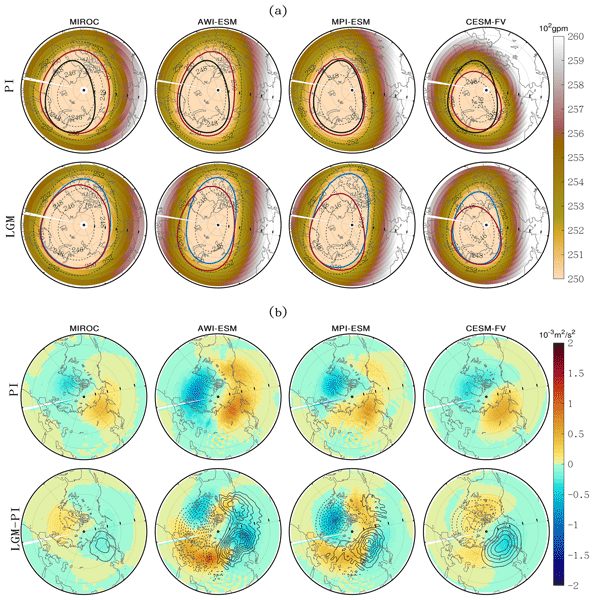
Yurui Zhang, Hans Renssen, Heikki Seppä, Zhen Li, and Xingrui Li
Clim. Past, 21, 67–77, https://doi.org/10.5194/cp-21-67-2025, https://doi.org/10.5194/cp-21-67-2025, 2025
Short summary
Short summary
The upper and lower atmospheres interact. The polar regions, with high-speed, cyclonically rotating winds, provide a window through which upper winds affect surface weather and climate variability. By analysing climate model results, we found that ice sheets induced anomalous upward wave propagation and stretched the rotating winds towards North America, increasing the likelihood of cold-air outbreaks at the mid-latitudes. This accounts for the enhanced winter cooling at these latitudes.
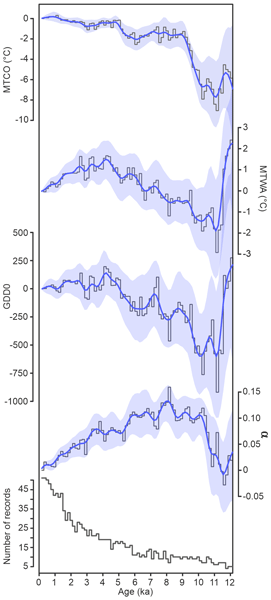
Esmeralda Cruz-Silva, Sandy P. Harrison, I. Colin Prentice, Elena Marinova, Patrick J. Bartlein, Hans Renssen, and Yurui Zhang
Clim. Past, 19, 2093–2108, https://doi.org/10.5194/cp-19-2093-2023, https://doi.org/10.5194/cp-19-2093-2023, 2023
Short summary
Short summary
We examined 71 pollen records (12.3 ka to present) in the eastern Mediterranean, reconstructing climate changes. Over 9000 years, winters gradually warmed due to orbital factors. Summer temperatures peaked at 4.5–5 ka, likely declining because of ice sheets. Moisture increased post-11 kyr, remaining high from 10–6 kyr before a slow decrease. Climate models face challenges in replicating moisture transport.
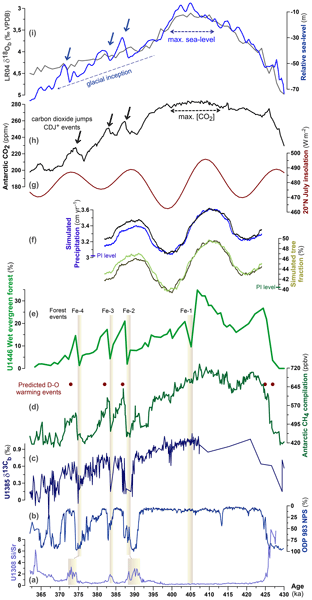
Dulce Oliveira, Stéphanie Desprat, Qiuzhen Yin, Coralie Zorzi, Zhipeng Wu, Krishnamurthy Anupama, Srinivasan Prasad, Montserrat Alonso-García, and Philippe Martinez
Clim. Past, 22, 1691–1709, https://doi.org/10.5194/cp-22-1691-2026, https://doi.org/10.5194/cp-22-1691-2026, 2026
Short summary
Short summary
We present an unprecedented record of Indian summer monsoon (ISM)-induced vegetation changes for Marine Isotope Stage (MIS) 11, a key interglacial. Site U1446 pollen data and models show that ISM-vegetation shifts stem from an interplay of dominant forcings based on boundary conditions. Insolation is the main driver during MIS 11c interglacial conditions, akin to future scenarios, while ice volume and CO₂ prevail in the glacial inception. Superimposed changes are marked by prominent forest contractions and expansions.

Mehdi Pasha Karami, Torben Koenigk, Shiyu Wang, René Navarro Labastida, Tim Kruschke, Aude Carréric, Pablo Ortega, Klaus Wyser, Ramon Fuentes Franco, Agatha M. de Boer, Marie Sicard, and Aitor Aldama Campino
Earth Syst. Dynam., 17, 1151–1176, https://doi.org/10.5194/esd-17-1151-2026, https://doi.org/10.5194/esd-17-1151-2026, 2026
Short summary
Short summary
This study uses a high-resolution global climate model to simulate future climate, with a particular focus on the Arctic and North Atlantic. The model projects a nearly ice-free Arctic by 2040. The paper also introduces a framework to diagnose deep-water formation (DWF) in the Labrador, Irminger, and Greenland Seas and to quantify their regional contributions to the Atlantic Meridional Overturning Circulation (AMOC), revealing how different ocean regions contribute to the weakening of AMOC in a warming climate.
Natalie J. Burls, Nicky M. Wright, R. Paul Acosta, Catherine D. Bradshaw, Edward Gasson, Lennert B. Stap, Gilles Ramstein, Anna Ruth W. Halberstadt, Agatha M. De Boer, Funda Akgün, David J. Cantrill, Manuel Casas-Gallego, Nela Doláková, Boglarka Erdei, Alex Farnsworth, Sarah Feakins, Ran Feng, Tamara Fletcher, Frédéric Fluteau, J. A. Mattias Green, Anna S. von der Heydt, Matthew Huber, David K. Hutchinson, Dimiter Ivanov, Mine Sezgül Kayseri-Özer, Gregor Knorr, Marianna Kováčová, Caroline H. Lear, Allegra N. LeGrande, Shufeng Li, Xiaoqing Liu, Daniel J. Lunt, Katrin Meissner, Yunfa Miao, Trusha J. Naik, Javier B. Navarro, Joseph B. Novak, Diana Ochoa, Guy J.G. Paxman, Matthew J. Pound, James W. B. Rae, Tammo Reichgelt, Martin Renoult, Francesca Sangiorgi, Anta-Clarisse Sarr, Diane Segalla, Pierre Sepulchre, Amelia Shevenell, Sebastian Steinig, Eivind Straume, Caroline A. E. Strömberg, Clay Tabor, Torsten Utescher, Julia E. Weiffenbach, Elżbieta Worobiec, Yurui Zhang, Feng Zhu, Jiang Zhu, Alexandra Auderset, Florence Colleoni, Aisling Dolan, Rachel Havranek, Ann Holbourn, Nicholas Herold, Daeun Lee, James W. Marschalek, Bryce Mitsunaga, Sevi Modestou, Lina Perez-Angel, Mae Saslaw, Sinda Sosdian, Elena Stiles, Yong Sun, Ning Tan, Zhongshi Zhang, and Yan Zhao
EGUsphere, https://doi.org/10.5194/egusphere-2026-3595, https://doi.org/10.5194/egusphere-2026-3595, 2026
This preprint is open for discussion and under review for Geoscientific Model Development (GMD).
Short summary
Short summary
Simulating warm paleoclimates increases our understanding of the mechanisms that drive climatic change and tipping points. The Miocene Epoch, specifically the Miocene Climatic Optimum, has been identified as a particularly valuable past warm climate to simulate, meriting the design of a coordinated Miocene Model Intercomparison Project. Here we synthesize the latest available literature and present the experimental design for coordinated Miocene simulations and sensitivity studies.
Trusha Naik, Agatha de Boer, and Martin Renoult
EGUsphere, https://doi.org/10.5194/egusphere-2026-3841, https://doi.org/10.5194/egusphere-2026-3841, 2026
Short summary
Short summary
This study tested whether changes in the height of the Tibetan Plateau and the Rocky Mountains affected deep ocean circulation during the Miocene. They found that lowering the Rocky Mountains strengthened deep water formation in the Pacific by a small amount, while changes to the Tibetan Plateau had little effect. However, neither change produced today's Atlantic-dominated circulation, suggesting other tectonic changes and ocean gateway shifts were also needed.
Daniel J. Lunt, Nicky M. Wright, Bram Vaes, Ulrich Salzmann, James W. B. Rae, Thomas Hickler, David K. Hutchinson, Julia Brugger, Jiang Zhu, Sebastian Steinig, A. Nele Meckler, Gordon N. Inglis, David Evans, Agatha M. de Boer, Bette L. Otto-Bliesner, Natalie Burls, Yurui Zhang, Appy Sluijs, Tammo Reichgelt, Igor Niezgodzki, Katrin Meissner, Jean-Baptiste Ladant, Fanni D. Kelemen, Matthew Huber, David R. Greenwood, Mattias Green, Flavia Boscolo-Galazzo, Manuel Tobias Blau, and Michiel Baatsen
Geosci. Model Dev., 19, 6143–6166, https://doi.org/10.5194/gmd-19-6143-2026, https://doi.org/10.5194/gmd-19-6143-2026, 2026
Short summary
Short summary
The early Eocene, about 50 million years ago, was a super-warm period of Earth's history, with high concentrations of carbon dioxide in the atmosphere. Here, we provide a framework and experimental design for climate modellers to carry out a coordinated project, simulating this period. This is the second phase of this project, and here we provide updated maps of the Earth's mountains and ocean floor, and vegetation, to enable more accurate modelling.
Louise C. Sime, Rachel Diamond, Christian Stepanek, Chris Brierley, David Schroeder, Masa Kageyama, Matthew Pollock, Irene Malmierca-Vallet, Ed Blockley, Alex West, Danny Feltham, Jeff Ridley, Pascale Braconnot, Charles J. R. Williams, Xiaoxu Shi, Bette L. Otto-Bliesner, Sophia I. Macarewich, Silvana Ramos Buarque, Qiong Zhang, Allegra LeGrande, Weipeng Zheng, Dabang Jiang, Polina Morozova, Chuncheng Guo, Zhongshi Zhang, Nicholas Yeung, Laurie Menviel, Sandeep Narayanasetti, Masakazu Yoshimori, Olivia Reeves, and Anni Zhao
Geosci. Model Dev., 19, 5881–5905, https://doi.org/10.5194/gmd-19-5881-2026, https://doi.org/10.5194/gmd-19-5881-2026, 2026
Short summary
Short summary
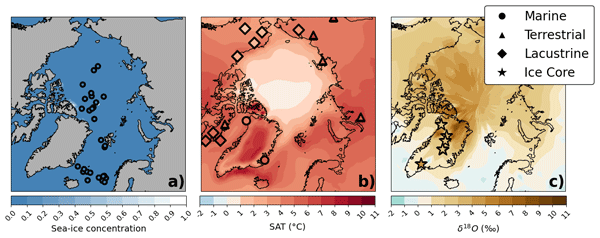
The Arctic may have lost its summer sea ice 127,000 years ago during a naturally warm period in Earth’s past. Climate models can be tested by recreating those conditions, with similar sunlight and greenhouse gas levels. Analysing the large sea ice changes in these simulations helps us understand how the Arctic might respond in the near future and improves how we test and trust our climate models.
Martin Renoult, Agatha de Boer, Ellen Berntell, and Trusha Jagdish Naik
Clim. Past, 22, 1203–1222, https://doi.org/10.5194/cp-22-1203-2026, https://doi.org/10.5194/cp-22-1203-2026, 2026
Short summary
Short summary
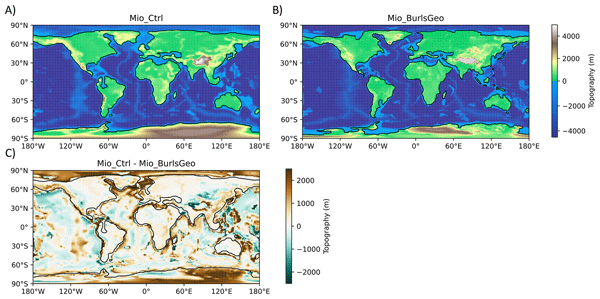
During the mid-Miocene (~16 to 14 million years ago), Earth was much warmer with CO2 levels similar to what is expected for our future. Here, we perform simulations with a new geography of the mid-Miocene, which include changes in ice coverage, land and sea distribution, solar energy and CO2 concentrations. Despite high CO2 concentrations, our mid-Miocene is too cold compared to geological reconstructions, but shows great potential to understand future climate change and its sensitivity to CO2.
Chengwei Ji, Qin Wen, Zhengyu Liu, Jian Liu, Deliang Chen, Liang Ning, Mi Yan, and Qiuzhen Yin
Atmos. Chem. Phys., 26, 5861–5878, https://doi.org/10.5194/acp-26-5861-2026, https://doi.org/10.5194/acp-26-5861-2026, 2026
Short summary
Short summary
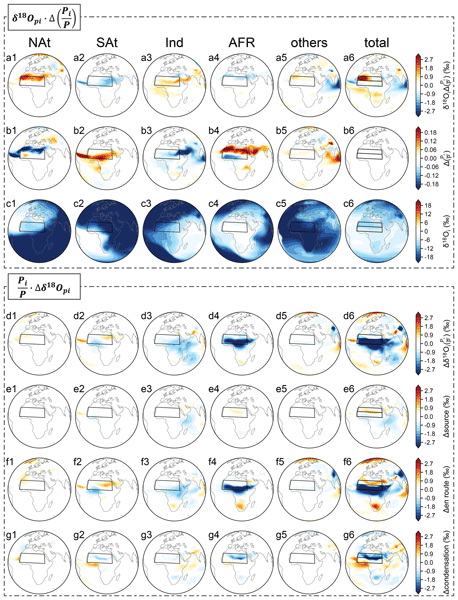
Geologist commonly use speleothem δ18Oc records to reconstruct past North African monsoon variability based on “amount effect” relationship between δ18Oc and monsoon rainfall. However, the interpretation of these records has been challenged in recent years. Here, we use isotope-enabled climate model to simulate climate change during the past 150,000 years. We find that changes in δ18Op across North African region are caused by multiple atmospheric processes, rather than by “amount effect”.
Jianing Guo, Xiaoning Xie, Gunnar Myhre, Drew Shindell, Alf Kirkevåg, Trond Iversen, Apostolos Voulgarakis, Toshihiko Takemura, Ke Shang, Xinzhou Li, Zhengguo Shi, Yangang Liu, Xiaodong Liu, and Hong Yan
Atmos. Chem. Phys., 26, 5169–5184, https://doi.org/10.5194/acp-26-5169-2026, https://doi.org/10.5194/acp-26-5169-2026, 2026
Short summary
Short summary
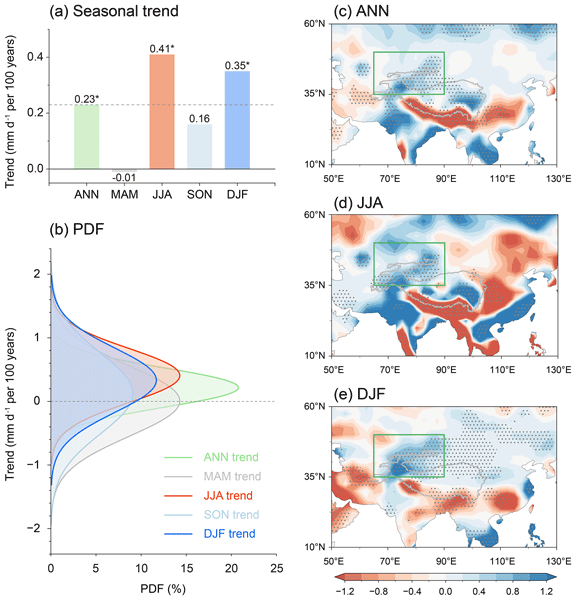
Central Asia has grown wetter in recent decades, but the drivers differ by season. We analyzed observations and climate model experiments to understand these changes and their future. Our analysis reveals that greenhouse gases from human activities drive winter wetting, whereas aerosol from Asia urbanization and industrialization enhances summer precipitation. As future reductions in air pollution, the region may experience drier summers and create new risks for regional water resources.
Héloïse Guilluy, Émilie Capron, Frédéric Parrenin, Vladimir Lipenkov, Jochen Schmitt, Patricia Martinerie, Zhipeng Wu, Qiuzhen Yin, Anna Maria Klüssendorf, Amaëlle Landais, Barbara Seth, Hubertus Fischer, and Dominique Raynaud
EGUsphere, https://doi.org/10.5194/egusphere-2026-953, https://doi.org/10.5194/egusphere-2026-953, 2026
Short summary
Short summary
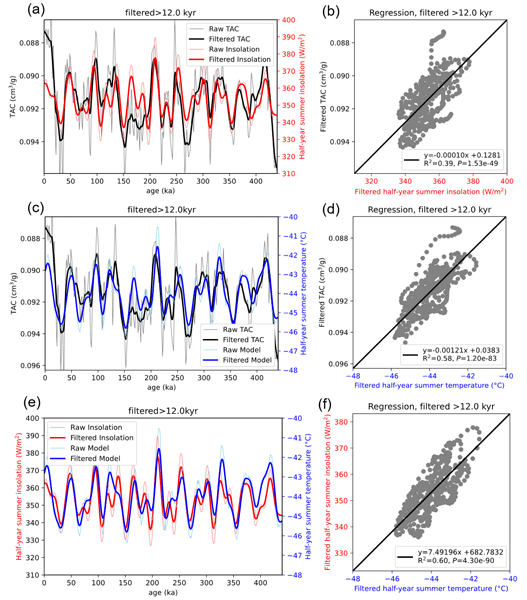
Air bubbles in polar ice cores retain information about past climates over hundreds of thousands of years. The total air content (TAC) trapped within these bubbles varies with summer insolation cycles, making it a tool for dating ice cores. We present a multi-site update on TAC, combining new and published data. We confirm that insolation impacts bubble volume in East Antarctica, but surface climate changes can hide the insolation signal in the TAC record, impacting the TAC-derived chronologies.
Louise C. Sime, Rahul Sivankutty, Irene Malmierca-Vallet, Sentia Goursaud Oger, Allegra N. LeGrande, Erin L. McClymont, Agatha de Boer, Alexandre Cauquoin, and Martin Werner
Clim. Past, 21, 1725–1753, https://doi.org/10.5194/cp-21-1725-2025, https://doi.org/10.5194/cp-21-1725-2025, 2025
Short summary
Short summary
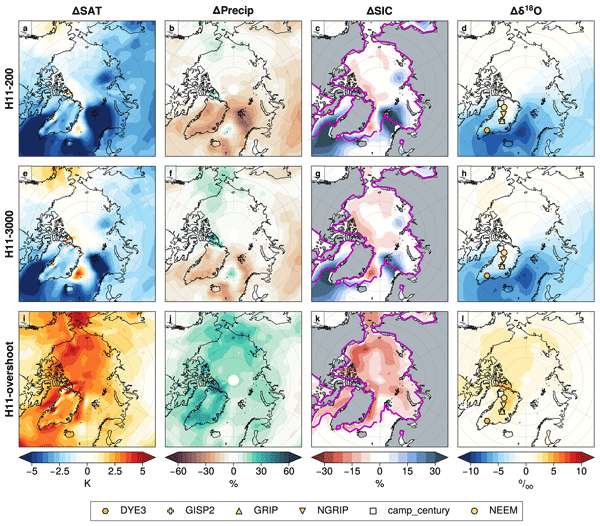
We used climate models to study how stable water isotopes in ice cores changed in the Arctic and Antarctica during the warm Last Interglacial (LIG) period. Whilst standard simulations underestimate polar warming, when the effects of ice sheet meltwater from the preceding deglaciation are included, there is a much better match with observations. Findings suggest that previous estimates of LIG Arctic warming were too high. Understanding these past polar changes can help improve future predictions.
Yurui Zhang, Hans Renssen, Heikki Seppä, Zhen Li, and Xingrui Li
Clim. Past, 21, 67–77, https://doi.org/10.5194/cp-21-67-2025, https://doi.org/10.5194/cp-21-67-2025, 2025
Short summary
Short summary
The upper and lower atmospheres interact. The polar regions, with high-speed, cyclonically rotating winds, provide a window through which upper winds affect surface weather and climate variability. By analysing climate model results, we found that ice sheets induced anomalous upward wave propagation and stretched the rotating winds towards North America, increasing the likelihood of cold-air outbreaks at the mid-latitudes. This accounts for the enhanced winter cooling at these latitudes.
Dominique Raynaud, Qiuzhen Yin, Emilie Capron, Zhipeng Wu, Frédéric Parrenin, André Berger, and Vladimir Lipenkov
Clim. Past, 20, 1269–1282, https://doi.org/10.5194/cp-20-1269-2024, https://doi.org/10.5194/cp-20-1269-2024, 2024
Short summary
Short summary
There is a lack of reconstructions from Antarctic ice cores of the temperature during the summer, a critical season in terms of solar energy received, preventing a good understanding of the link between Antarctic past climate and astronomically induced insolation changes. Here, the variations in total air content in an Antarctic ice core are found to be correlated to local summer temperatures simulated with a climate model. This tracer can be used to reconstruct past local summer temperatures.
Esmeralda Cruz-Silva, Sandy P. Harrison, I. Colin Prentice, Elena Marinova, Patrick J. Bartlein, Hans Renssen, and Yurui Zhang
Clim. Past, 19, 2093–2108, https://doi.org/10.5194/cp-19-2093-2023, https://doi.org/10.5194/cp-19-2093-2023, 2023
Short summary
Short summary
We examined 71 pollen records (12.3 ka to present) in the eastern Mediterranean, reconstructing climate changes. Over 9000 years, winters gradually warmed due to orbital factors. Summer temperatures peaked at 4.5–5 ka, likely declining because of ice sheets. Moisture increased post-11 kyr, remaining high from 10–6 kyr before a slow decrease. Climate models face challenges in replicating moisture transport.
He Fu, Jianing Guo, Chenguang Deng, Heng Liu, Jie Wu, Zhengguo Shi, Cailing Wang, and Xiaoning Xie
Geosci. Model Dev. Discuss., https://doi.org/10.5194/gmd-2023-158, https://doi.org/10.5194/gmd-2023-158, 2023
Preprint withdrawn
Short summary
Short summary
A Residual in Residual Dense Block based network model (RRDBNet) is designed for statistical downscaling of precipitation in the middle reaches of the Yellow River. RRDBNet has a good performance on precipitation simulations, well reproducing the spatial-temporal characteristics of high-resolution precipitation. RRDBNet has substantial improvements in extreme precipitation compared with generalized linear regression model and two deep learning-based models.
Louise C. Sime, Rahul Sivankutty, Irene Vallet-Malmierca, Agatha M. de Boer, and Marie Sicard
Clim. Past, 19, 883–900, https://doi.org/10.5194/cp-19-883-2023, https://doi.org/10.5194/cp-19-883-2023, 2023
Short summary
Short summary
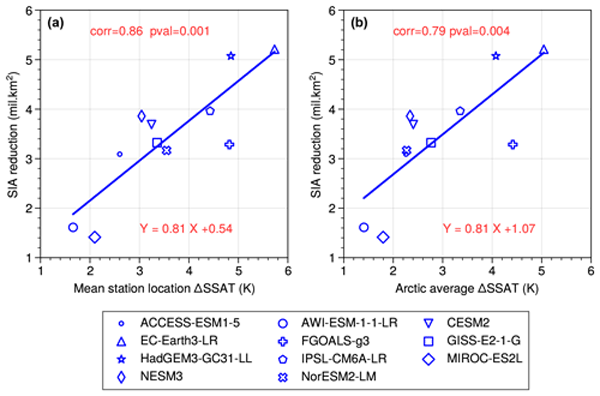
It is not known if the Last Interglacial (LIG) experienced Arctic summers that were sea ice free: models show a wide spread in LIG Arctic temperature and sea ice results. Evaluation against sea ice markers is hampered by few observations. Here, an assessment of 11 climate model simulations against summer temperatures shows that the most skilful models have a 74 %–79 % reduction in LIG sea ice. The measurements of LIG areas indicate a likely mix of ice-free and near-ice-free LIG summers.
Kasia K. Śliwińska, Helen K. Coxall, David K. Hutchinson, Diederik Liebrand, Stefan Schouten, and Agatha M. de Boer
Clim. Past, 19, 123–140, https://doi.org/10.5194/cp-19-123-2023, https://doi.org/10.5194/cp-19-123-2023, 2023
Short summary
Short summary
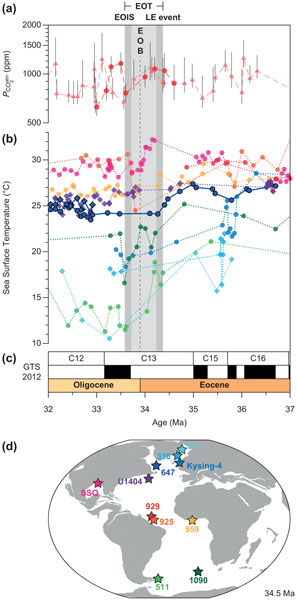
We provide a sea surface temperature record from the Labrador Sea (ODP Site 647) based on organic geochemical proxies across the late Eocene and early Oligocene. Our study reveals heterogenic cooling of the Atlantic. The cooling of the North Atlantic is difficult to reconcile with the active Atlantic Meridional Overturning Circulation (AMOC). We discuss possible explanations like uncertainty in the data, paleogeography and atmospheric CO2 boundary conditions, model weaknesses, and AMOC activity.
Xiaoxu Shi, Martin Werner, Carolin Krug, Chris M. Brierley, Anni Zhao, Endurance Igbinosa, Pascale Braconnot, Esther Brady, Jian Cao, Roberta D'Agostino, Johann Jungclaus, Xingxing Liu, Bette Otto-Bliesner, Dmitry Sidorenko, Robert Tomas, Evgeny M. Volodin, Hu Yang, Qiong Zhang, Weipeng Zheng, and Gerrit Lohmann
Clim. Past, 18, 1047–1070, https://doi.org/10.5194/cp-18-1047-2022, https://doi.org/10.5194/cp-18-1047-2022, 2022
Short summary
Short summary
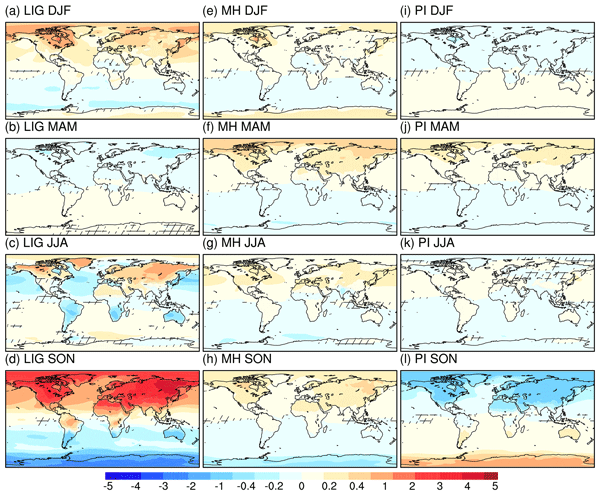
Since the orbital parameters of the past are different from today, applying the modern calendar to the past climate can lead to an artificial bias in seasonal cycles. With the use of multiple model outputs, we found that such a bias is non-ignorable and should be corrected to ensure an accurate comparison between modeled results and observational records, as well as between simulated past and modern climates, especially for the Last Interglacial.
Liang Guo, Laura J. Wilcox, Massimo Bollasina, Steven T. Turnock, Marianne T. Lund, and Lixia Zhang
Atmos. Chem. Phys., 21, 15299–15308, https://doi.org/10.5194/acp-21-15299-2021, https://doi.org/10.5194/acp-21-15299-2021, 2021
Short summary
Short summary
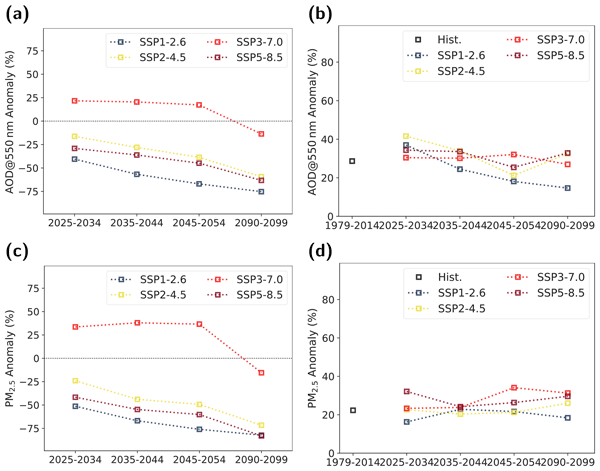
Severe haze remains serious over Beijing despite emissions decreasing since 2008. Future haze changes in four scenarios are studied. The pattern conducive to haze weather increases with the atmospheric warming caused by the accumulation of greenhouse gases. However, the actual haze intensity, measured by either PM2.5 or optical depth, decreases with aerosol emissions. We show that only using the weather pattern index to predict the future change of Beijing haze is insufficient.
Cited articles
Acosta, R. P., Burls, N. J., Pound, M. J., Bradshaw, C. D., De Boer, A. M., Herold, N., Huber, M., Liu, X., Donnadieu, Y., Farnsworth, A., Frigola, A., Lunt, D. J., von der Heydt, A. S., Hutchinson, D. K., Knorr, G., Lohmann, G., Marzocchi, A., Prange, M., Sarr, A. C., Li, X., and Zhang, Z.: A Model-Data Comparison of the Hydrological Response to Miocene Warmth: Leveraging the MioMIP1 Opportunistic Multi-Model Ensemble, Paleoceanography and Paleoclimatology, 39, e2023PA004726, https://doi.org/10.1029/2023PA004726, 2024.
Battisti, D. S., Ding, Q., and Roe, G. H.: Coherent pan-Asian climatic and isotopic response to orbital forcing of tropical insolation, J. Geophys. Res.-Atmos., 119, https://doi.org/10.1002/2014jd021960, 2014.
Berger, A.: Long-Term Variations of Daily Insolation and Quaternary Climatic Changes, J. Atmos. Sci., 35, 2362–2367, https://doi.org/10.1175/1520-0469(1978)035<2362:LTVODI>2.0.CO;2, 1978.
Berger, A., Yin, Q., and Wu, Z.: Length of astronomical seasons, total and average insolation over seasons, Quaternary Sci. Rev., 334, 108620, https://doi.org/10.1016/j.quascirev.2024.108620, 2024.
Bloch-Johnson, J., Rugenstein, M., Stolpe, M. B., Rohrschneider, T., Zheng, Y., and Gregory, J. M.: Climate Sensitivity Increases Under Higher CO2 Levels Due to Feedback Temperature Dependence, Geophys. Res. Lett., 48, https://doi.org/10.1029/2020gl089074, 2021.
Bosmans, J. H. C., Erb, M. P., Dolan, A. M., Drijfhout, S. S., Tuenter, E., Hilgen, F. J., Edge, D., Pope, J. O., and Lourens, L. J.: Response of the Asian summer monsoons to idealized precession and obliquity forcing in a set of GCMs, Quaternary Sci. Rev., 188, 121–135, https://doi.org/10.1016/j.quascirev.2018.03.025, 2018.
Bova, S., Rosenthal, Y., Liu, Z., Godad, S. P., and Yan, M.: Seasonal origin of the thermal maxima at the Holocene and the last interglacial, Nature, 589, 548–553, https://doi.org/10.1038/s41586-020-03155-x, 2021.
Brierley, C. M., Zhao, A., Harrison, S. P., Braconnot, P., Williams, C. J. R., Thornalley, D. J. R., Shi, X., Peterschmitt, J.-Y., Ohgaito, R., Kaufman, D. S., Kageyama, M., Hargreaves, J. C., Erb, M. P., Emile-Geay, J., D'Agostino, R., Chandan, D., Carré, M., Bartlein, P. J., Zheng, W., Zhang, Z., Zhang, Q., Yang, H., Volodin, E. M., Tomas, R. A., Routson, C., Peltier, W. R., Otto-Bliesner, B., Morozova, P. A., McKay, N. P., Lohmann, G., Legrande, A. N., Guo, C., Cao, J., Brady, E., Annan, J. D., and Abe-Ouchi, A.: Large-scale features and evaluation of the PMIP4-CMIP6 midHolocene simulations, Clim. Past, 16, 1847–1872, https://doi.org/10.5194/cp-16-1847-2020, 2020.
Burls, N. J., Bradshaw, C. D., De Boer, A. M., Herold, N., Huber, M., Pound, M., Donnadieu, Y., Farnsworth, A., Frigola, A., Gasson, E., von der Heydt, A. S., Hutchinson, D. K., Knorr, G., Lawrence, K. T., Lear, C. H., Li, X., Lohmann, G., Lunt, D. J., Marzocchi, A., Prange, M., Riihimaki, C. A., Sarr, A. C., Siler, N., and Zhang, Z.: Simulating Miocene Warmth: Insights From an Opportunistic Multi-Model Ensemble (MioMIP1), Paleoceanography and Paleoclimatology, 36, https://doi.org/10.1029/2020pa004054, 2021.
Dai, G., Zhang, Z., Otterå, O. H., Langebroek, P. M., Yan, Q., Zhang, R., and Zhu, Z.: Winter Insolation Modulates Boreal Tropical Monsoonal Temperatures in the Late Pleistocene, J. Geophys. Res.-Atmos., 129, https://doi.org/10.1029/2023jd040577, 2024.
De Vleeschouwer, D., Vahlenkamp, M., Crucifix, M., and Pälike, H.: Alternating Southern and Northern Hemisphere climate response to astronomical forcing during the past 35 m.y., Geology, 45, 375–378, https://doi.org/10.1130/g38663.1, 2017.
Frigola, A., Prange, M., and Schulz, M.: A dynamic ocean driven by changes in CO2 and Antarctic ice-sheet in the middle Miocene, Palaeogeogr. Palaeocl., 579, 110591, https://doi.org/10.1016/j.palaeo.2021.110591, 2021.
Goldner, A., Herold, N., and Huber, M.: The challenge of simulating the warmth of the mid-Miocene climatic optimum in CESM1, Clim. Past, 10, 523–536, https://doi.org/10.5194/cp-10-523-2014, 2014.
Halberstadt, A. R. W., Chorley, H., Levy, R. H., Naish, T., DeConto, R. M., Gasson, E., and Kowalewski, D. E.: CO2 and tectonic controls on Antarctic climate and ice-sheet evolution in the mid-Miocene, Earth Planet. Sc. Lett., 564, 116908, https://doi.org/10.1016/j.epsl.2021.116908, 2021.
Harzhauser, M., Piller, W. E., Müllegger, S., Grunert, P., and Micheels, A.: Changing seasonality patterns in Central Europe from Miocene Climate Optimum to Miocene Climate Transition deduced from the Crassostrea isotope archive, Global Planet. Change, 76, 77–84, https://doi.org/10.1016/j.gloplacha.2010.12.003, 2011.
Hays, J. D., Imbrie, J., and Shackleton, N. J.: Variations in the Earth's Orbit: Pacemaker of the Ice Ages, Science, 194, 1121–1132, https://doi.org/10.1126/science.194.4270.1121, 1976.
Heinemann, M., Jungclaus, J. H., and Marotzke, J.: Warm Paleocene/Eocene climate as simulated in ECHAM5/MPI-OM, Clim. Past, 5, 785–802, https://doi.org/10.5194/cp-5-785-2009, 2009.
Herold, N., Yin, Q. Z., Karami, M. P., and Berger, A.: Modelling the climatic diversity of the warm interglacials, Quaternary Sci. Rev., 56, 126–141, https://doi.org/10.1016/j.quascirev.2012.08.020, 2012.
Hoelzmann, P., Keding, B., Berke, H., Kröpelin, S., and Kruse, H.-J.: Environmental change and archaeology: lake evolution and human occupation in the Eastern Sahara during the Holocene, Palaeogeogr. Palaeocl., 169, 193–217, https://doi.org/10.1016/S0031-0182(01)00211-5, 2001.
Holbourn, A., Kuhnt, W., Schulz, M., Flores, J.-A., and Andersen, N.: Orbitally-paced climate evolution during the middle Miocene “Monterey” carbon-isotope excursion, Earth Planet. Sc. Lett., 261, 534–550, https://doi.org/10.1016/j.epsl.2007.07.026, 2007.
Holbourn, A., Kuhnt, W., Clemens, S., Prell, W., and Andersen, N.: Middle to late Miocene stepwise climate cooling: Evidence from a high-resolution deep water isotope curve spanning 8 million years, Paleoceanography, 28, 688–699, https://doi.org/10.1002/2013pa002538, 2013.
Holbourn, A., Kuhnt, W., Clemens, S. C., Kochhann, K. G. D., Johnck, J., Lubbers, J., and Andersen, N.: Late Miocene climate cooling and intensification of southeast Asian winter monsoon, Nat. Commun., 9, 1584, https://doi.org/10.1038/s41467-018-03950-1, 2018.
Huntington, T. G.: Evidence for intensification of the global water cycle: Review and synthesis, J. Hydrol., 319, 83–95, https://doi.org/10.1016/j.jhydrol.2005.07.003, 2006.
Kemp, A. E. S., Grigorov, I., Pearce, R. B., and Naveira Garabato, A. C.: Migration of the Antarctic Polar Front through the mid-Pleistocene transition: evidence and climatic implications, Quaternary Sci. Rev., 29, 1993–2009, https://doi.org/10.1016/j.quascirev.2010.04.027, 2010.
Laepple, T. and Lohmann, G.: Seasonal cycle as template for climate variability on astronomical timescales, Paleoceanography, 24, https://doi.org/10.1029/2008pa001674, 2009.
Laepple, T., Shakun, J., He, F., and Marcott, S.: Concerns of assuming linearity in the reconstruction of thermal maxima, Nature, 607, E12–E14, https://doi.org/10.1038/s41586-022-04831-w, 2022.
Levy, R. H., Meyers, S. R., Naish, T. R., Golledge, N. R., McKay, R. M., Crampton, J. S., DeConto, R. M., De Santis, L., Florindo, F., Gasson, E. G. W., Harwood, D. M., Luyendyk, B. P., Powell, R. D., Clowes, C., and Kulhanek, D. K.: Antarctic ice-sheet sensitivity to obliquity forcing enhanced through ocean connections, Nat. Geosci., 12, 132–137, https://doi.org/10.1038/s41561-018-0284-4, 2019.
Li, L. Y., Yongqiang, Tang, Y., Lin, P., Xie, J., Song, M., Dong, L., Zhou, T., Liu, L., Wang, L., Pu, Y., Chen, X., Chen, L., Xie, Z., Liu, H., Zhang, L., Huang, X., Feng, T., Zheng, W., Xia, K., Liu, H., Liu, J., Wang, Y., Wang, L., Jia, B., Xie, F., Wang, B., Zhao, S., Yu, Z., Zhao, B., and Wei, J.: The Flexible Global Ocean–Atmosphere–Land System Model Grid-Point Version 3 (FGOALS-g3): Description and Evaluation, J. Adv. Model. Earth Sy., 12, https://doi.org/10.1029/2019ms002012, 2020.
Lin, P., Zhao, B., Wei, J., Liu, H., Zhang, W., Chen, X., Jiang, J., Ding, M., Man, W., Jiang, J., Zhang, X., Ding, Y., Bai, W., Jin, C., Yu, Z., Li, Y., Zheng, W., and Zhou, T.: The Super-large Ensemble Experiments of CAS FGOALS-g3, Adv. Atmos. Sci., 39, 1746–1765, https://doi.org/10.1007/s00376-022-1439-1, 2022.
Liu, F., Du, J., Huang, E., Ma, W., Ma, X., Lourens, L. J., and Tian, J.: Accelerated marine carbon cycling forced by tectonic degassing over the Miocene Climate Optimum, Sci. Bull. (Beijing), 69, 823–832, https://doi.org/10.1016/j.scib.2023.12.052, 2024.
Lunt, D. J., Valdes, P. J., Haywood, A., and Rutt, I. C.: Closure of the Panama Seaway during the Pliocene: implications for climate and Northern Hemisphere glaciation, Clim. Dynam., 30, 1–18, https://doi.org/10.1007/s00382-007-0265-6, 2008.
Lunt, D. J., Haywood, A. M., Schmidt, G. A., Salzmann, U., Valdes, P. J., Dowsett, H. J., and Loptson, C. A.: On the causes of mid-Pliocene warmth and polar amplification, Earth Planet. Sc. Lett., 321–322, 128–138, https://doi.org/10.1016/j.epsl.2011.12.042, 2012.
Marsicek, J., Shuman, B. N., Bartlein, P. J., Shafer, S. L., and Brewer, S.: Reconciling divergent trends and millennial variations in Holocene temperatures, Nature, 554, 92–96, https://doi.org/10.1038/nature25464, 2018.
Milanković, M.: Canon of insolation and the ice-age problem Belgrade, 1941, Kanon der Erdbestrahlung und seine Anwendung auf das Eiszeitenproblem, Jerusalem, xxiii, 484 p., 1941.
Naish, T., Powell, R., Levy, R., Wilson, G., Scherer, R., Talarico, F., Krissek, L., Niessen, F., Pompilio, M., Wilson, T., Carter, L., DeConto, R., Huybers, P., McKay, R., Pollard, D., Ross, J., Winter, D., Barrett, P., Browne, G., Cody, R., Cowan, E., Crampton, J., Dunbar, G., Dunbar, N., Florindo, F., Gebhardt, C., Graham, I., Hannah, M., Hansaraj, D., Harwood, D., Helling, D., Henrys, S., Hinnov, L., Kuhn, G., Kyle, P., Laufer, A., Maffioli, P., Magens, D., Mandernack, K., McIntosh, W., Millan, C., Morin, R., Ohneiser, C., Paulsen, T., Persico, D., Raine, I., Reed, J., Riesselman, C., Sagnotti, L., Schmitt, D., Sjunneskog, C., Strong, P., Taviani, M., Vogel, S., Wilch, T., and Williams, T.: Obliquity-paced Pliocene West Antarctic ice sheet oscillations, Nature, 458, 322–328, https://doi.org/10.1038/nature07867, 2009.
Reichgelt, T., Baumgartner, A., Feng, R., and Willard, D. A.: Poleward amplification, seasonal rainfall and forest heterogeneity in the Miocene of the eastern USA, Global Planet. Change, 222, https://doi.org/10.1016/j.gloplacha.2023.104073, 2023.
Sarr, A.-C., Donnadieu, Y., Bolton, C. T., Ladant, J.-B., Licht, A., Fluteau, F., Laugié, M., Tardif, D., and Dupont-Nivet, G.: Neogene South Asian monsoon rainfall and wind histories diverged due to topographic effects, Nat. Geosci., 15, 314–319, https://doi.org/10.1038/s41561-022-00919-0, 2022.
Setty, S., Cramwinckel, M. J., van Nes, E. H., van de Leemput, I. A., Dijkstra, H. A., Lourens, L. J., Scheffer, M., and Sluijs, A.: Loss of Earth system resilience during early Eocene transient global warming events, Science Advances, 9, eade5466, https://doi.org/10.1126/sciadv.ade5466, 2023.
Steinthorsdottir, M., Coxall, H. K., de Boer, A. M., Huber, M., Barbolini, N., Bradshaw, C. D., Burls, N. J., Feakins, S. J., Gasson, E., Henderiks, J., Holbourn, A. E., Kiel, S., Kohn, M. J., Knorr, G., Kürschner, W. M., Lear, C. H., Liebrand, D., Lunt, D. J., Mörs, T., Pearson, P. N., Pound, M. J., Stoll, H., and Strömberg, C. A. E.: The Miocene: The Future of the Past, Paleoceanography and Paleoclimatology, 36, https://doi.org/10.1029/2020pa004037, 2021.
Tian, J., Yang, M., Lyle, M. W., Wilkens, R., and Shackford, J. K.: Obliquity and long eccentricity pacing of the Middle Miocene climate transition, Geochem. Geophy. Geosy., 14, 1740–1755, https://doi.org/10.1002/ggge.20108, 2013.
van Peer, T. E., Liebrand, D., Taylor, V. E., Brzelinski, S., Wolf, I., Bornemann, A., Friedrich, O., Bohaty, S. M., Xuan, C., Lippert, P. C., and Wilson, P. A.: Eccentricity pacing and rapid termination of the early Antarctic ice ages, Nat. Commun., 15, 10600, https://doi.org/10.1038/s41467-024-54186-1, 2024.
Wang, Y., Yu, Z., Lin, P., Liu, H., Jin, J., Li, L., Tang, Y., Dong, L., Chen, K., Li, Y., Yang, Q., Ding, M., Meng, Y., Zhao, B., Wei, J., Ma, J., and Sun, Z.: FGOALS-g3 Model Datasets for CMIP6 Flux-Anomaly-Forced Model Intercomparison Project, Adv. Atmos. Sci., 37, 1093–1101, https://doi.org/10.1007/s00376-020-2045-8, 2020.
Wei, J., Liu, H., Zhao, Y., Lin, P., Yu, Z., Li, L., Xie, J., and Duan, A.: Simulation of the climate and ocean circulations in the Middle Miocene Climate Optimum by a coupled model FGOALS-g3, Palaeogeogr. Palaeocl., 617, https://doi.org/10.1016/j.palaeo.2023.111509, 2023.
Westerhold, T., Marwan, N., Drury, A. J., Liebrand, D., Agnini, C., Anagnostou, E., Barnet, J. S. K., Bohaty, S. M., De Vleeschouwer, D., Florindo, F., Frederichs, T., Hodell, D. A., Holbourn, A. E., Kroon, D., Lauretano, V., Littler, K., Lourens, L. J., Lyle, M., Pälike, H., Röhl, U., Tian, J., Wilkens, R. H., Wilson, P. A., and Zachos, J. C.: An astronomically dated record of Earth's climate and its predictability over the last 66 million years, Science, 369, 1383–1387, https://doi.org/10.1126/science.aba6853, 2020.
Yin, Q. and Berger, A.: Individual contribution of insolation and CO2 to the interglacial climates of the past 800 000 years, Clim. Dynam., 38, 709–724, https://doi.org/10.1007/s00382-011-1013-5, 2012.
Yin, Q.: Insolation-induced mid-Brunhes transition in Southern Ocean ventilation and deep-ocean temperature, Nature, 494, 222–225, https://doi.org/10.1038/nature11790, 2013.
Zhang, Y.: Miocene_orb, OSF [data set], https://doi.org/10.17605/OSF.IO/ZRC48, 2025.
Zhang, Z., Ramstein, G., Schuster, M., Li, C., Contoux, C., and Yan, Q.: Aridification of the Sahara desert caused by Tethys Sea shrinkage during the Late Miocene, Nature, 513, 401–404, https://doi.org/10.1038/nature13705, 2014.
Zheng, W., Yu, Y., Luan, Y., Zhao, S., He, B., Dong, L., Song, M., Lin, P., and Liu, H.: CAS-FGOALS Datasets for the Two Interglacial Epochs of the Holocene and the Last Interglacial in PMIP4, Adv. Atmos. Sci., 37, 1034–1044, https://doi.org/10.1007/s00376-020-9290-8, 2020.
Short summary
This study examines how the warm Miocene (~23–5 Ma) climate responded to orbital changes compared with modern day. Simulations show weaker Miocene temperature responses with distinct spatial patterns. High latitudes were less sensitive due to weaker albedo feedback, while tropical Africa cooled more strongly from an enhanced water cycle. The Southern Ocean warmed under low insolation as winter sea ice shrank. These findings highlight how background climate states shape orbital climate responses.
This study examines how the warm Miocene (~23–5 Ma) climate responded to orbital changes...


