Articles | Volume 22, issue 4
https://doi.org/10.5194/cp-22-783-2026
© Author(s) 2026. This work is distributed under
the Creative Commons Attribution 4.0 License.
https://doi.org/10.5194/cp-22-783-2026
© Author(s) 2026. This work is distributed under
the Creative Commons Attribution 4.0 License.
Information loss in palaeoecological data from process and observer error
School of Environment, University of Auckland, 23 Symonds Street, Auckland 1010, New Zealand
present address: Department of Geography, University of Wisconsin-Madison, Science Hall, Madison, WI, 53703, USA
George L. W. Perry
School of Environment, University of Auckland, 23 Symonds Street, Auckland 1010, New Zealand
Janet M. Wilmshurst
Manaaki Whenua – Landcare Research, 76 Gerald Street, Lincoln 7608, New Zealand
Related authors
No articles found.
Finnbar Lee, Ian A. K. Kusabs, George L. W. Perry, and Calum MacNeil
Web Ecol., 25, 221–239, https://doi.org/10.5194/we-25-221-2025, https://doi.org/10.5194/we-25-221-2025, 2025
Short summary
Short summary
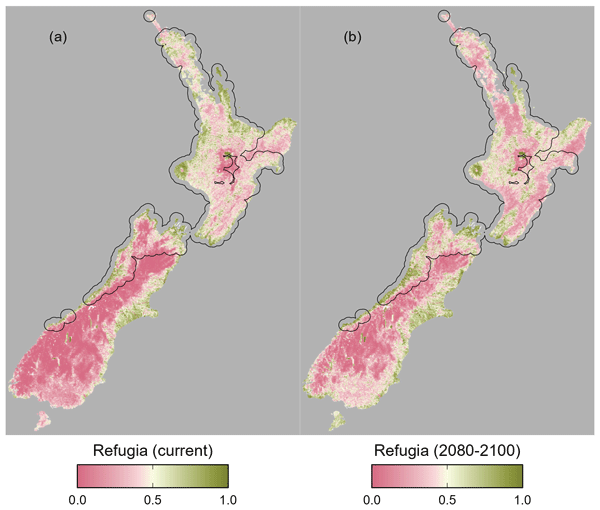
Climate change may reduce available habitat for native species, while simultaneously increasing suitable habitat for invasive species.To identify climate refugia that are both suitable for native species and unsuitable for invasive species, we propose a refugia habitat identification metric based on ecological niche modelling. We demonstrate the utility of the metric via a case study of a freshwater crayfish which is threatened by both climate change and the invasive brown bullhead catfish.
Emma Rehn, Haidee Cadd, Scott Mooney, Tim J. Cohen, Henry Munack, Alexandru T. Codilean, Matthew Adeleye, Kristen K. Beck, Mark Constantine IV, Chris Gouramanis, Johanna M. Hanson, Penelope J. Jones, A. Peter Kershaw, Lydia Mackenzie, Maame Maisie, Michela Mariani, Kia Matley, David McWethy, Keely Mills, Patrick Moss, Nicholas R. Patton, Cassandra Rowe, Janelle Stevenson, John Tibby, and Janet Wilmshurst
Earth Syst. Sci. Data, 17, 2681–2692, https://doi.org/10.5194/essd-17-2681-2025, https://doi.org/10.5194/essd-17-2681-2025, 2025
Short summary
Short summary
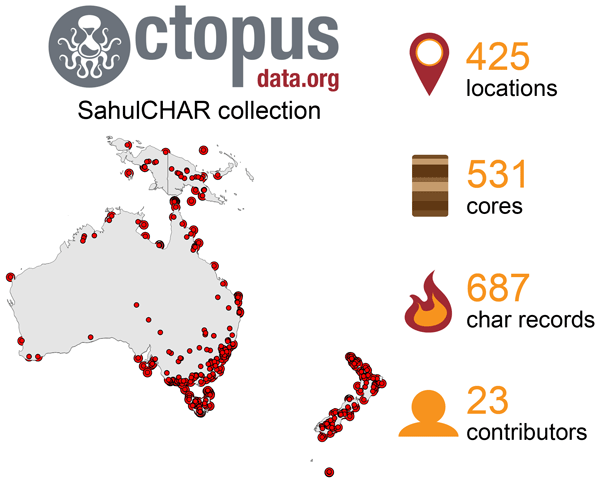
This paper presents SahulCHAR, a new collection of palaeofire (ancient fire) records from Australia, New Guinea, and New Zealand. SahulCHAR version 1 contains 687 records of sedimentary charcoal or black carbon, including digitized data, records from existing databases, and original author-submitted data. SahulCHAR is a much-needed update to past charcoal compilations that will also provide greater representation of records from this region in future global syntheses to understand past fire.
Thomas R. Etherington, George L. W. Perry, and Janet M. Wilmshurst
Earth Syst. Sci. Data, 14, 2817–2832, https://doi.org/10.5194/essd-14-2817-2022, https://doi.org/10.5194/essd-14-2817-2022, 2022
Short summary
Short summary
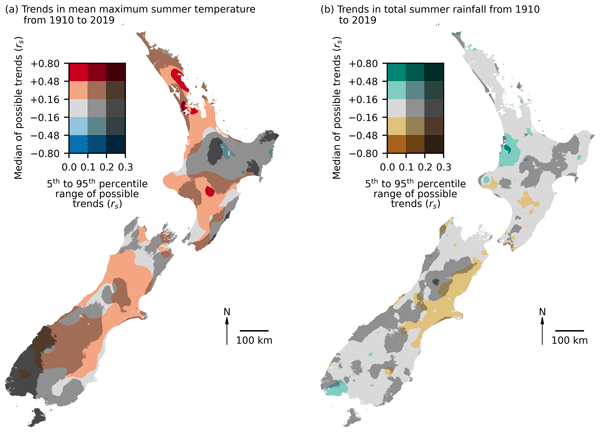
Long time series of temperature and rainfall grids are fundamental to understanding how these variables affects environmental or ecological patterns and processes. We present a History of Open Temperature and Rainfall with Uncertainty in New Zealand (HOTRUNZ) that is an open-access dataset that provides monthly 1 km resolution grids of rainfall and mean, minimum, and maximum daily temperatures with associated uncertainties for New Zealand from 1910 to 2019.
Cited articles
Adesanya Adeleye, M., Charles Andrew, S., Gallagher, R., van der Kaars, S., De Deckker, P., Hua, Q., and Haberle, S. G.: On the timing of megafaunal extinction and associated floristic consequences in Australia through the lens of functional palaeoecology, Quat. Sci. Rev., 316, 108263, https://doi.org/10.1016/j.quascirev.2023.108263, 2023.
Asena, Q.: QuinnAsena/information_loss_code: v0.0.0 (v0.0.0), Zenodo [code], https://doi.org/10.5281/zenodo.18200665, 2026.
Asena, Q., Young, N., and Pletzer, A.: UoA-eResearch/fisheR: v1.0.0 (v1.0.0), Zenodo [code], https://doi.org/10.5281/zenodo.8052806, 2023.
Asena, Q., Perry, G. L., and Wilmshurst, J. M.: Is the past recoverable from the data? Pseudoproxy modelling of uncertainties in palaeoecological data, The Holocene, 09596836241247304, https://doi.org/10.1177/09596836241247304, 2024.
Benito, B. M., Gil-Romera, G., and Birks, H. J. B.: Ecological Memory at Millennial Time-Scales: The Importance of Data Constraints, Species Longevity and Niche Features, Ecography, 43, 1–10, https://doi.org/10.1111/ecog.04772, 2020.
Birks, J. B. H., Lotter, A. F., Juggins, S., and Smol, J. P.: Tracking environmental change using lake sediments: data handling and numerical techniques, Springer Science & Business Media, 751 pp., ISBN 978-94-007-2745-8, 2012.
Blaauw, M.: Out of tune: the dangers of aligning proxy archives, Quat. Sci. Rev., 36, 38–49, https://doi.org/10.1016/j.quascirev.2010.11.012, 2012.
Blaauw, M., Bennett, K. D., and Christen, J. A.: Random walk simulations of fossil proxy data, The Holocene, 20, 645–649, https://doi.org/10.1177/0959683609355180, 2010.
Blaauw, M., Christen, J. A., Bennett, K. D., and Reimer, P. J.: Double the dates and go for Bayes – Impacts of model choice, dating density and quality on chronologies, Quat. Sci. Rev., 188, 58–66, https://doi.org/10.1016/J.QUASCIREV.2018.03.032, 2018.
Blaauw, M., Christen, J. A., and Aquino-López, M. A.: A review of statistics in palaeoenvironmental research, J. Agric. Biol. Environ. Stat., 25, 17–31, https://doi.org/10.1007/s13253-019-00374-2, 2020.
Bothe, O., Wagner, S., and Zorita, E.: Simple noise estimates and pseudoproxies for the last 21 000 years, Earth Syst. Sci. Data, 11, 1129–1152, https://doi.org/10.5194/essd-11-1129-2019, 2019.
Cabezas, H. and Fath, B. D.: Towards a theory of sustainable systems, Fluid Phase Equilibria, 194–197, 3–14, https://doi.org/10.1016/S0378-3812(01)00677-X, 2002.
Christiansen, B., Schmith, T., and Thejll, P.: A surrogate ensemble study of climate reconstruction methods: Stochasticity and robustness, J. Clim., 22, 951–976, https://doi.org/10.1175/2008JCLI2301.1, 2009.
Clements, C. F. and Ozgul, A.: Including trait-based early warning signals helps predict population collapse, Nat. Commun., 7, https://doi.org/10.1038/ncomms10984, 2016.
De'ath, G.: Principal curves: a new technique for indirect and direct gradient analysis, Ecology, 80, 2237–2253, https://doi.org/10.1890/0012-9658(1999)080[2237:PCANTF]2.0.CO;2, 1999.
Dormann, C. F., McPherson, J. M., Araújo, M. B., Bivand, R., Bolliger, J., Carl, G., Davies, R. G., Hirzel, A., Jetz, W., Kissling, W. D., Kühn, I., Ohlemüller, R., Peres-Neto, P. R., Reineking, B., Schröder, B., Schurr, F. M., and Wilson, R.: Methods to Account for Spatial Autocorrelation in the Analysis of Species Distributional Data: A Review, Ecography, 30, 609–628, https://doi.org/10.1111/j.2007.0906-7590.05171.x, 2007.
Eason, T. and Cabezas, H.: Evaluating the Sustainability of a Regional System Using Fisher Information in the San Luis Basin, Colorado, J. Environ. Manage., 94, 41–49, https://doi.org/10.1016/j.jenvman.2011.08.003, 2012.
Eason, T., Garmestani, A. S., Stow, C. A., Rojo, C., Alvarez-Cobelas, M., and Cabezas, H.: Managing for resilience: an information theory-based approach to assessing ecosystems, J. Appl. Ecol., 53, 656–665, https://doi.org/10.1111/1365-2664.12597, 2016.
Evans, M. N., Tolwinski-Ward, S. E., Thompson, D. M., and Anchukaitis, K. J.: Applications of proxy system modeling in high resolution paleoclimatology, Quat. Sci. Rev., 76, 16–28, https://doi.org/10.1016/j.quascirev.2013.05.024, 2013.
Fisher, R. A.: On the Mathematical Foundations of Theoretical Statistics, Philos. Trans. R. Soc. Lond. Ser. Contain. Pap. Math. Phys. Character, 222, 309–368, 1922.
Goring, S., Lacourse, T., Pellatt, M. G., and Mathewes, R. W.: Pollen assemblage richness does not reflect regional plant species richness: a cautionary tale, J. Ecol., 101, 1137–1145, https://doi.org/10.1111/1365-2745.12135, 2013.
Hastie, T. and Stuetzle, W.: Principal curves, J. Am. Stat. Assoc., 84, 502–516, https://doi.org/10.1080/01621459.1989.10478797, 1989.
Jackson, S. T.: Looking forward from the past: history, ecology, and conservation, Front. Ecol. Environ., 5, 455–455, https://doi.org/10.1890/1540-9295(2007)5[455:LFFTPH]2.0.CO;2, 2007.
Karunanithi, A. T., Cabezas, H., Frieden, B. R., and Pawlowski, C. W.: Detection and assessment of ecosystem regime shifts from Fisher information, Ecol. Soc., 13, https://www.jstor.org/stable/26267924 (last access: 18 February 2020), 2008.
Killick, R. and Eckley, I. A.: Changepoint: An r Package for Changepoint Analysis, J. Stat. Softw., 58, 1–19, https://doi.org/10.18637/jss.v058.i03, 2014.
Kim, D.-W., Protopapas, P., Byun, Y.-I., Alcock, C., Khardon, R., and Trichas, M.: Quasi-Stellar Object Selection Algorithm Using Time Variability and Machine Learning: Selection of 1620 Quasi-Stellar Object Candidates from Macho Large Magellanic Cloud Database, Astrophys. J., 735, 68, https://doi.org/10.1088/0004-637X/735/2/68, 2011.
Kosnik, M. A. and Kowalewski, M.: Understanding modern extinctions in marine ecosystems: the role of palaeoecological data, Biol. Lett., 12, https://doi.org/10.1098/rsbl.2015.0951, 2016.
Liu, Y., Brewer, S., Booth, R. K., Minckley, T. A., and Jackson, S. T.: Temporal density of pollen sampling affects age determination of the mid-Holocene hemlock (Tsuga) decline, Quat. Sci. Rev., 45, 54–59, https://doi.org/10.1016/j.quascirev.2012.05.001, 2012.
Mann, M. E. and Rutherford, S.: Climate reconstruction using “Pseudoproxies”, Geophys. Res. Lett., 29, 139-1–139-4, https://doi.org/10.1029/2001GL014554, 2002.
Mayer, A. L., Pawlowski, C. W., and Cabezas, H.: Fisher Information and dynamic regime changes in ecological systems, Ecol. Model., 195, 72–82, https://doi.org/10.1016/j.ecolmodel.2005.11.011, 2006.
Nun, I., Protopapas, P., Sim, B., Zhu, M., Dave, R., Castro, N., and Pichara, K.: FATS: Feature analysis for time series, arXiv [preprint], https://doi.org/10.48550/arXiv.1506.00010, 2015.
Parnell, A. C., Haslett, J., Allen, J. R. M., Buck, C. E., and Huntley, B.: A flexible approach to assessing synchroneity of past events using Bayesian reconstructions of sedimentation history, Quat. Sci. Rev., 27, 1872–1885, https://doi.org/10.1016/j.quascirev.2008.07.009, 2008.
Payne, R. and Gehrels, M.: The formation of tephra layers in peatlands: An experimental approach, CATENA, 81, 12–23, https://doi.org/10.1016/j.catena.2009.12.001, 2010.
Peck, S. L.: Simulation as experiment: a philosophical reassessment for biological modeling, Trends Ecol. Evol., 19, 530–534, https://doi.org/10.1016/j.tree.2004.07.019, 2004.
Plumpton, H., Whitney, B., and Mayle, F.: Ecosystem turnover in palaeoecological records: The sensitivity of pollen and phytolith proxies to detecting vegetation change in southwestern Amazonia, The Holocene, 29, 1720–1730, https://doi.org/10.1177/0959683619862021, 2019.
R Core Team: R: a language and environment for statistical computing, Version 4.0.1, https://cran.r-project.org/ (last access: 7 November 2023), 2020.
Reitalu, T., Gerhold, P., Poska, A., Pärtel, M., Väli, V., and Veski, S.: Novel insights into post-glacial vegetation change: functional and phylogenetic diversity in pollen records, J. Veg. Sci., 26, 911–922, https://doi.org/10.1111/jvs.12300, 2015.
Richards, J. W., Starr, D. L., Butler, N. R., Bloom, J. S., Brewer, J. M., Crellin-Quick, A., Higgins, J., Kennedy, R., and Rischard, M.: On Machine-Learned Classification of Variable Stars with Sparse and Noisy Time-Series Data, Astrophys. J., 733, 10, https://doi.org/10.1088/0004-637X/733/1/10, 2011.
Roberts, C. P., Twidwell, D., Burnett, J. L., Donovan, V. M., Wonkka, C. L., Bielski, C. L., Garmestani, A. S., Angeler, D. G., Eason, T., Allred, B. W., Jones, M. O., Naugle, D. E., Sundstrom, S. M., and Allen, C. R.: Early Warnings for State Transitions, Rangel. Ecol. Manag., 71, 659–670, https://doi.org/10.1016/j.rama.2018.04.012, 2018.
Simpson, G. L.: Analogue methods in palaeolimnology, edited by: Birks, H. J. B., Lotter, A. F., Juggins, S., and Smol, J. P., Track. Environ. Change Using Lake Sediments 5 Data Handl. Numer. Tech., 249–327, https://doi.org/10.1007/978-94-007-2745-8_15, 2012.
Simpson, G. L. and Oksanen, J.: Analogue matching and Modern Analogue Technique transfer function models, Version 0.17-4, https://doi.org/10.32614/CRAN.package.analogue, 2020.
Smerdon, J. E.: Climate models as a test bed for climate reconstruction methods: pseudoproxy experiments, WIREs Clim. Change, 3, 63–77, https://doi.org/10.1002/wcc.149, 2012.
Sokolovsky, K. V., Gavras, P., Karampelas, A., Antipin, S. V., Bellas-Velidis, I., Benni, P., Bonanos, A. Z., Burdanov, A. Y., Derlopa, S., Hatzidimitriou, D., Khokhryakova, A. D., Kolesnikova, D. M., Korotkiy, S. A., Lapukhin, E. G., Moretti, M. I., Popov, A. A., Pouliasis, E., Samus, N. N., Spetsieri, Z., Veselkov, S. A., Volkov, K. V., Yang, M., and Zubareva, A. M.: Comparative Performance of Selected Variability Detection Techniques in Photometric Time Series, Mon. Not. R. Astron. Soc., 464, 274–292, https://doi.org/10.1093/mnras/stw2262, 2017.
Spanbauer, T. L., Allen, C. R., Angeler, D. G., Eason, T., Fritz, S. C., Garmestani, A. S., Nash, K. L., and Stone, J. R.: Prolonged instability prior to a regime shift, PLoS ONE, 9, https://doi.org/10.1371/journal.pone.0108936, 2014.
Spanbauer, T. L., Allen, C. R., Angeler, D. G., Eason, T., Fritz, S. C., Garmestani, A. S., Nash, K. L., Stone, J. R., Stow, C. A., and Sundstrom, S. M.: Body size distributions signal a regime shift in a lake ecosystem, Proc. R. Soc. B Biol. Sci., 283, https://doi.org/10.1098/rspb.2016.0249, 2016.
Taranu, Z. E., Carpenter, S. R., Frossard, V., Jenny, J.-P., Thomas, Z., Vermaire, J. C., and Perga, M.-E.: Can we detect ecosystem critical transitions and signals of changing resilience from paleo-ecological records?, Ecosphere, 9, https://doi.org/10.1002/ecs2.2438, 2018.
Telford, R. J., Heegaard, E., and Birks, H. J. B.: All age-depth models are wrong: but how badly?, Quat. Sci. Rev., 23, 1–5, https://doi.org/10.1016/J.QUASCIREV.2003.11.003, 2004.
Williams, J. W., Blois, J. L., and Shuman, B. N.: Extrinsic and intrinsic forcing of abrupt ecological change: case studies from the late Quaternary, J. Ecol., 99, 664–677, https://doi.org/10.1111/j.1365-2745.2011.01810.x, 2011.
Wilmshurst, J. M., McGlone, M. S., and Charman, D. J.: Holocene vegetation and climate change in southern New Zealand: linkages between forest composition and quantitative surface moisture reconstructions from an ombrogenous bog, J. Quat. Sci., 17, 653–666, https://doi.org/10.1002/jqs.689, 2002.
Zurell, D., Berger, U., Cabral, J. S., Jeltsch, F., Meynard, C. N., Münkemüller, T., Nehrbass, N., Pagel, J., Reineking, B., Schröder, B., and Grimm, V.: The virtual ecologist approach: simulating data and observers, Oikos, 119, 622–635, https://doi.org/10.1111/j.1600-0706.2009.18284.x, 2010.
Short summary
Palaeoecology provides crucial information into past changes in climate and ecosystems. However, uncertainties from environmental processes and laboratory methods affect our inferences from the data. We use a virtual ecological approach to quantifying uncertainties by simulating proxy data and systematically introducing sources of uncertainty. Better understanding the effects of uncertainty can help shape study designs before a project is carried out and make robust inferences palaeoproxy data.
Palaeoecology provides crucial information into past changes in climate and ecosystems. However,...