
Articles | Volume 22, issue 11
https://doi.org/10.5194/cp-22-2201-2026
© Author(s) 2026. This work is distributed under
the Creative Commons Attribution 4.0 License.
https://doi.org/10.5194/cp-22-2201-2026
© Author(s) 2026. This work is distributed under
the Creative Commons Attribution 4.0 License.
Research article
| 
27 Nov 2026
Research article |
| 27 Nov 2026
Fidelity and stratigraphy of the Antarctic Allan Hills old ice archive from continuous flow analysis

College of Earth, Ocean and Atmospheric Sciences, Oregon State University, Corvallis, OR, USA
Asmita Banerjee
College of Earth, Ocean and Atmospheric Sciences, Oregon State University, Corvallis, OR, USA
Christo Buizert
College of Earth, Ocean and Atmospheric Sciences, Oregon State University, Corvallis, OR, USA
Edward Brook
College of Earth, Ocean and Atmospheric Sciences, Oregon State University, Corvallis, OR, USA
Michael Kalk
College of Earth, Ocean and Atmospheric Sciences, Oregon State University, Corvallis, OR, USA
Lindsey Davidge
Department of Earth and Space Sciences, University of Washington, Seattle, WA, USA
Andrew J. Schauer
Department of Earth and Space Sciences, University of Washington, Seattle, WA, USA
Eric J. Steig
Department of Earth and Space Sciences, University of Washington, Seattle, WA, USA
Noah Brown
Department of Earth and Space Sciences, University of Washington, Seattle, WA, USA
Liam Kirkpatrick
Department of Earth and Space Sciences, University of Washington, Seattle, WA, USA
John-Morgan Manos
Department of Earth and Space Sciences, University of Washington, Seattle, WA, USA
Jacob I. Chalif
Department of Earth and Planetary Sciences, Dartmouth College, Hanover, New Hampshire, USA
Erich Osterberg
Department of Earth and Planetary Sciences, Dartmouth College, Hanover, New Hampshire, USA
Miranda H. Miranda
Department of Earth System Science, University of California-Irvine, Irvine, CA, USA
Eric Saltzman
Department of Earth System Science, University of California-Irvine, Irvine, CA, USA
Yuzhen Yan
State Key Laboratory of Marine Geology, Tongji University, Shanghai, China
Valens Hishamunda
Department of Geosciences, Princeton University, Princeton, NJ, USA
John Higgins
Department of Geosciences, Princeton University, Princeton, NJ, USA
Sierra Streit
Scripps Institution of Oceanography, La Jolla, CA, USA
Related authors
No articles found.
Gerard A. Otiniano, Elizabeth K. Thomas, Olivia J. Truax, Eric J. Steig, Anne de Vernal, Sudip Acharya, Jason P. Briner, Joshua K. Cuzzone, Sam Z. Mark, and Greg Hakim
EGUsphere, https://doi.org/10.5194/egusphere-2026-5983, https://doi.org/10.5194/egusphere-2026-5983, 2026
This preprint is open for discussion and under review for Climate of the Past (CP).
Short summary
Short summary
We combined 38 proxy time series to understand how Greenland’s summer temperature varied over the past 10, 000 years. Our results show that northern and eastern Greenland warmed earlier than western and southern regions. Climate reconstruction products capture the timing of warmth better than its regional differences. Together, these time series reveal clear regional patterns, helping us to investigate the drivers of past climate change and test how well climate reconstructions represent them.
Liam R. Kirkpatrick, Jacob I. Chalif, Derek Brandis, Austin Carter, Alissa Choi, Lindsey Davidge, Michael J. Handley, Romilly Harris Stuart, Valens Hishamunda, Ursula A. Jongebloed, Michael Kalk, Elena V. Korotkikh, Haley Lowes-Bicay, Julia Marks-Peterson, Andrew J. Schauer, Nicolas Stoll, Lilly Tipton, Sarah Aarons, Edward Brook, Christo Buizert, Jihong Cole-Dai, John Higgins, Bess G. Koffman, Erich C. Osterberg, Eric J. Steig, Sarah Shackleton, and Tyler Jeffrey Fudge
EGUsphere, https://doi.org/10.5194/egusphere-2026-5607, https://doi.org/10.5194/egusphere-2026-5607, 2026
This preprint is open for discussion and under review for The Cryosphere (TC).
Short summary
Short summary
Ice cores from the Allan Hills, Antarctica preserve important information about the last six million years of Earth’s climate history. However, interpreting these cores is complex given the unique history of this ice. Here, we employ a new method that enables high-resolution sampling even across tilted layers to characterize 1.3–1.8-million-year-old ice samples. Our findings provide new constraints on abrupt age transitions and the incorporation of material from beneath the glacier in this ice.
Julia Marks-Peterson, Edward J. Brook, Jenna A. Epifanio, Emily Rice, Jeff Severinghaus, Murat Aydin, Samantha Gass, Jon S. Edwards, Austin Carter, Christo Buizert, John A. Higgins, Sarah A. Shackleton, Jacob D. Morgan, Michael Kalk, Ross Beaudette, Andrei Kurbatov, and Eric Saltzman
EGUsphere, https://doi.org/10.5194/egusphere-2026-5793, https://doi.org/10.5194/egusphere-2026-5793, 2026
This preprint is open for discussion and under review for Climate of the Past (CP).
Short summary
Short summary
A new ice core from the Allan Hills Blue Ice Area, Antarctica provides a continuous record from ~149 to 116 thousand years ago, spanning a glacial-interglacial transition. We create a gas-age scale for the core and present new records of greenhouse gases that show very good agreement with other Antarctic cores. Additionally, site-specific measurements suggest the core has a similar source region to discontinuous old ice nearby, making it a valuable analogue for interpreting complex archives.
Aaron Chesler, Dominic Winski, Karl Kreutz, Bess Koffman, Erich Osterberg, David Ferris, Zayta Thundercloud, Jihong Cole-Dai, Mark Wells, Aaron Putnam, and Katherine Anderson
Clim. Past, 22, 1741–1756, https://doi.org/10.5194/cp-22-1741-2026, https://doi.org/10.5194/cp-22-1741-2026, 2026
Short summary
Short summary
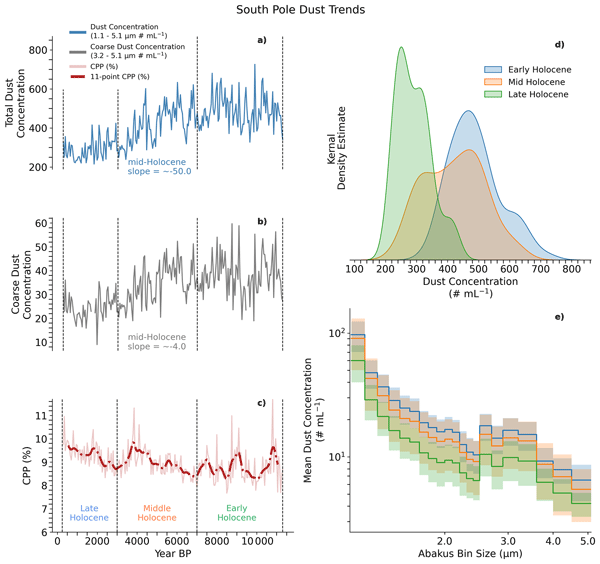
The Southern Hemisphere Westerly Winds impact global climate and Antarctic ice sheet stability; however, there are few complete records over the past 12 000 years. We use a new mineral dust record from a South Pole ice core and identify a decrease in particle concentration and an increase in coarse particle percentage over the past ~ 11 000 years. Together with other records, our data suggests a southward shift in the winds starting ~ 6500 years ago related to warming in the Southern Hemisphere.
Alissa Choi, Austin J. Carter, Julia Marks-Peterson, Sarah Shackleton, John A. Higgins, Edward J. Brook, Liam Kirkpatrick, Jacob I. Chalif, and Sarah M. Aarons
EGUsphere, https://doi.org/10.5194/egusphere-2026-2434, https://doi.org/10.5194/egusphere-2026-2434, 2026
Short summary
Short summary
We investigated the particle mass concentration, size distribution, and mineralogy of an ice core drilled from the Allan Hills, Antarctica to assess the preservation of dust records in Blue Ice Areas (BIAs) with complex flow histories. We find potential evidence of alteration including entrainment of basal sediment in the deepest ice, biasing towards interglacial dust concentrations, and chemical weathering. Thus, accurate reconstruction of climate signals in BIAs requires a multiproxy approach.
Lison Soussaintjean, Jochen Schmitt, Joël Savarino, J. Andy Menking, Edward J. Brook, Barbara Seth, Vladimir Lipenkov, Thomas Röckmann, and Hubertus Fischer
Biogeosciences, 23, 3939–3963, https://doi.org/10.5194/bg-23-3939-2026, https://doi.org/10.5194/bg-23-3939-2026, 2026
Short summary
Short summary
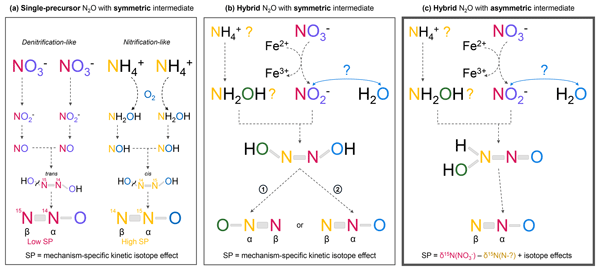
Nitrous oxide (N2O) produced in dust-rich Antarctic ice complicates the reconstruction of past atmospheric levels from ice core records. Using isotope analysis, we show that N2O forms from two nitrogen precursors, one being nitrate. For the first time, we demonstrate that the site preference (SP) of N2O reflects the isotopic difference between these precursors, not the production pathway, which challenges the common interpretation of SP.
Eric S. Saltzman, Miranda H. Miranda, John D. Patterson, and Murat Aydin
Atmos. Meas. Tech., 18, 7865–7873, https://doi.org/10.5194/amt-18-7865-2025, https://doi.org/10.5194/amt-18-7865-2025, 2025
Short summary
Short summary
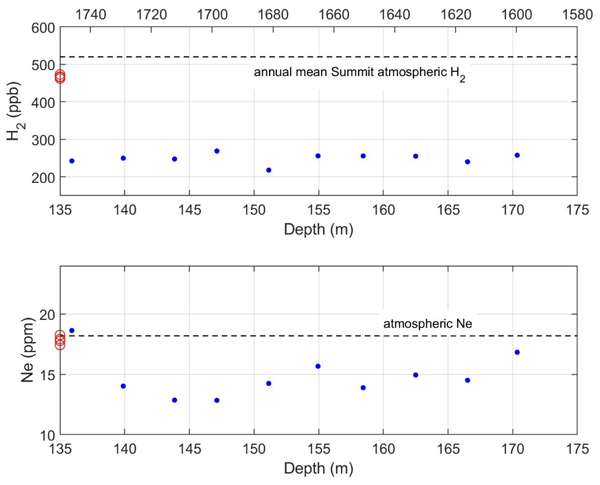
This study describes a system for analysis of hydrogen (H2) and neon (Ne) in polar ice core samples in the field immediately after drilling. The motivation is to reconstruct the atmospheric history of H2 to improve understanding of global H2 biogeochemistry and how it has varied over time. This knowledge will help inform models used to project future atmospheric levels of H2 and assess the climate impacts of widespread utilization of H2 as an energy source.
Blanca Alvarez Caraveo, Maxence Guillermic, Alan Downey-Wall, Louise P. Cameron, Jill N. Sutton, John A. Higgins, Justin B. Ries, Katie Lotterhos, and Robert A. Eagle
Biogeosciences, 22, 2831–2851, https://doi.org/10.5194/bg-22-2831-2025, https://doi.org/10.5194/bg-22-2831-2025, 2025
Short summary
Short summary
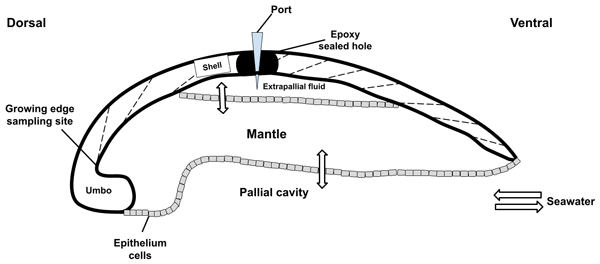
We studied the geochemistry of two bivalves: Crassostrea virginica and Arctica islandica. We examined the effects of three ocean acidification conditions (ambient, moderate, and high) on the geochemistry of C. virginica. We show that bivalves have high physiological control over the internal calcifying fluid, presenting a challenge in using elemental proxies for reconstructing seawater parameters.
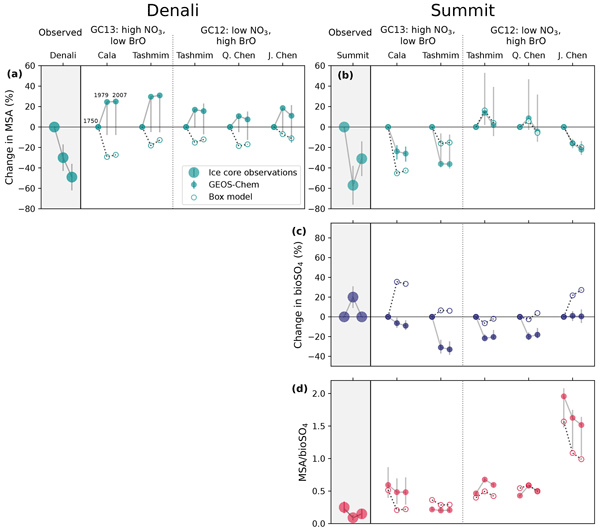
Ursula A. Jongebloed, Jacob I. Chalif, Linia Tashmim, William C. Porter, Kelvin H. Bates, Qianjie Chen, Erich C. Osterberg, Bess G. Koffman, Jihong Cole-Dai, Dominic A. Winski, David G. Ferris, Karl J. Kreutz, Cameron P. Wake, and Becky Alexander
Atmos. Chem. Phys., 25, 4083–4106, https://doi.org/10.5194/acp-25-4083-2025, https://doi.org/10.5194/acp-25-4083-2025, 2025
Short summary
Short summary
Marine phytoplankton emit dimethyl sulfide (DMS), which forms methanesulfonic acid (MSA) and sulfate. MSA concentrations in ice cores decreased over the industrial era, which has been attributed to pollution-driven changes in DMS chemistry. We use a model to investigate DMS chemistry compared to observations of DMS, MSA, and sulfate. We find that modeled DMS, MSA, and sulfate are influenced by pollution-sensitive oxidant concentrations, characterization of DMS chemistry, and other variables.
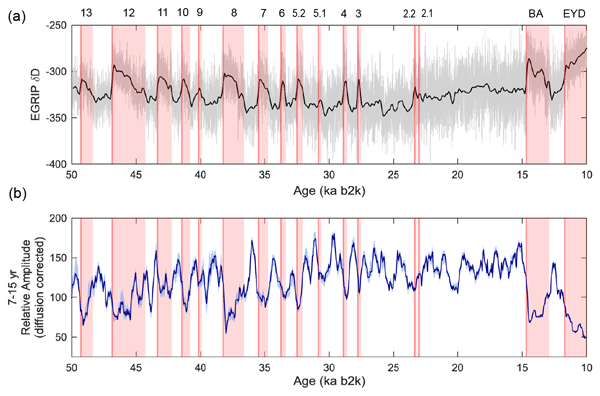
Chloe A. Brashear, Tyler R. Jones, Valerie Morris, Bruce H. Vaughn, William H. G. Roberts, William B. Skorski, Abigail G. Hughes, Richard Nunn, Sune Olander Rasmussen, Kurt M. Cuffey, Bo M. Vinther, Todd Sowers, Christo Buizert, Vasileios Gkinis, Christian Holme, Mari F. Jensen, Sofia E. Kjellman, Petra M. Langebroek, Florian Mekhaldi, Kevin S. Rozmiarek, Jonathan W. Rheinlænder, Margit H. Simon, Giulia Sinnl, Silje Smith-Johnsen, and James W. C. White
Clim. Past, 21, 529–546, https://doi.org/10.5194/cp-21-529-2025, https://doi.org/10.5194/cp-21-529-2025, 2025
Short summary
Short summary
We use a series of spectral techniques to quantify the strength of high-frequency climate variability in northeastern Greenland to 50 000 ka before present. Importantly, we find that variability consistently decreases hundreds of years prior to Dansgaard–Oeschger warming events. Model simulations suggest a change in North Atlantic sea ice behavior contributed to this pattern, thus providing new information on the conditions which preceded abrupt climate change during the Last Glacial Period.
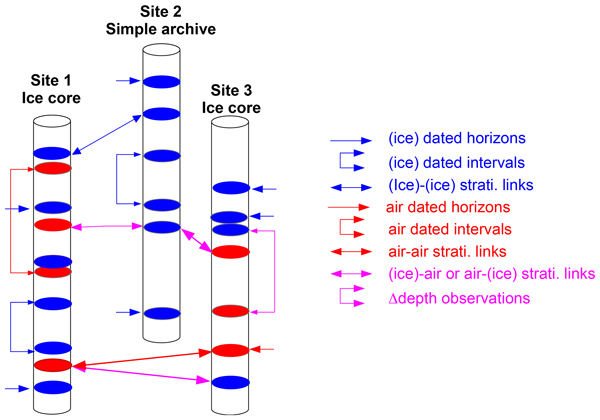
Frédéric Parrenin, Marie Bouchet, Christo Buizert, Emilie Capron, Ellen Corrick, Russell Drysdale, Kenji Kawamura, Amaëlle Landais, Robert Mulvaney, Ikumi Oyabu, and Sune Olander Rasmussen
Geosci. Model Dev., 17, 8735–8750, https://doi.org/10.5194/gmd-17-8735-2024, https://doi.org/10.5194/gmd-17-8735-2024, 2024
Short summary
Short summary
The Paleochrono-1.1 probabilistic dating model allows users to derive a common and optimized chronology for several paleoclimatic sites from various archives (ice cores, speleothems, marine cores, lake cores, etc.). It combines prior sedimentation scenarios with chronological information such as dated horizons, dated intervals, stratigraphic links and (for ice cores) Δdepth observations. Paleochrono-1.1 is available under an open-source license.
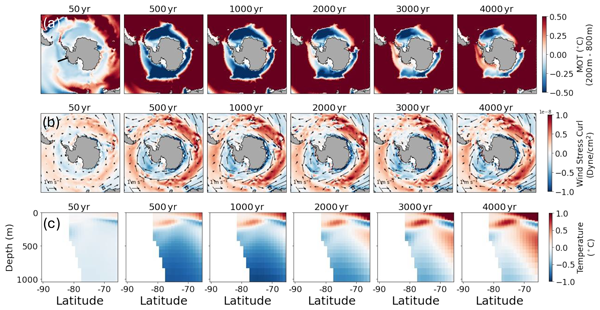
Mira Berdahl, Gunter R. Leguy, William H. Lipscomb, Bette L. Otto-Bliesner, Esther C. Brady, Robert A. Tomas, Nathan M. Urban, Ian Miller, Harriet Morgan, and Eric J. Steig
Clim. Past, 20, 2349–2371, https://doi.org/10.5194/cp-20-2349-2024, https://doi.org/10.5194/cp-20-2349-2024, 2024
Short summary
Short summary
Studying climate conditions near the Antarctic ice sheet (AIS) during Earth’s past warm periods informs us about how global warming may influence AIS ice loss. Using a global climate model, we investigate climate conditions near the AIS during the Last Interglacial (129 to 116 kyr ago), a period with warmer global temperatures and higher sea level than today. We identify the orbital and freshwater forcings that could cause ice loss and probe the mechanisms that lead to warmer climate conditions.
Murat Aydin, Melinda R. Nicewonger, Gregory L. Britten, Dominic Winski, Mary Whelan, John D. Patterson, Erich Osterberg, Christopher F. Lee, Tara Harder, Kyle J. Callahan, David Ferris, and Eric S. Saltzman
Clim. Past, 20, 1885–1917, https://doi.org/10.5194/cp-20-1885-2024, https://doi.org/10.5194/cp-20-1885-2024, 2024
Short summary
Short summary
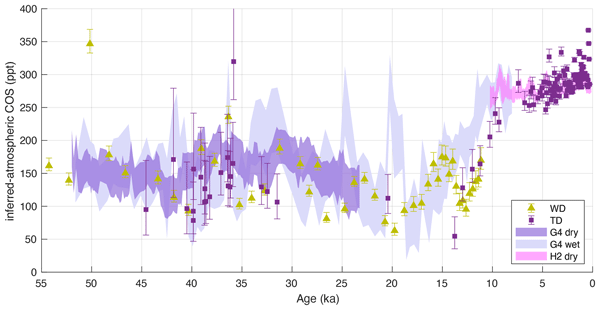
We present a new ice core carbonyl sulfide (COS) record from the South Pole, Antarctica, yielding a 52 000-year atmospheric record after correction for production in the ice sheet. The results display a large increase in atmospheric COS concurrent with the last deglaciation. The deglacial COS rise results from an overall strengthening of atmospheric COS sources, implying a large increase in ocean sulfur gas emissions. Atmospheric sulfur gases have negative climate feedbacks.
Romilly Harris Stuart, Amaëlle Landais, Laurent Arnaud, Christo Buizert, Emilie Capron, Marie Dumont, Quentin Libois, Robert Mulvaney, Anaïs Orsi, Ghislain Picard, Frédéric Prié, Jeffrey Severinghaus, Barbara Stenni, and Patricia Martinerie
The Cryosphere, 18, 3741–3763, https://doi.org/10.5194/tc-18-3741-2024, https://doi.org/10.5194/tc-18-3741-2024, 2024
Short summary
Short summary
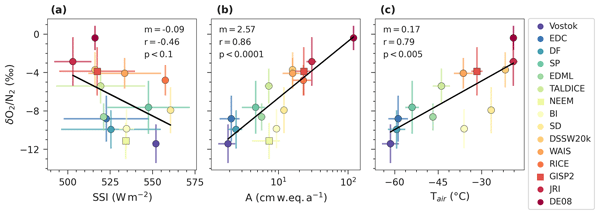
Ice core δO2/N2 records are useful dating tools due to their local insolation pacing. A precise understanding of the physical mechanism driving this relationship, however, remain ambiguous. By compiling data from 15 polar sites, we find a strong dependence of mean δO2/N2 on accumulation rate and temperature in addition to the well-documented insolation dependence. Snowpack modelling is used to investigate which physical properties drive the mechanistic dependence on these local parameters.
Vasilii V. Petrenko, Segev BenZvi, Michael Dyonisius, Benjamin Hmiel, Andrew M. Smith, and Christo Buizert
The Cryosphere, 18, 3439–3451, https://doi.org/10.5194/tc-18-3439-2024, https://doi.org/10.5194/tc-18-3439-2024, 2024
Short summary
Short summary
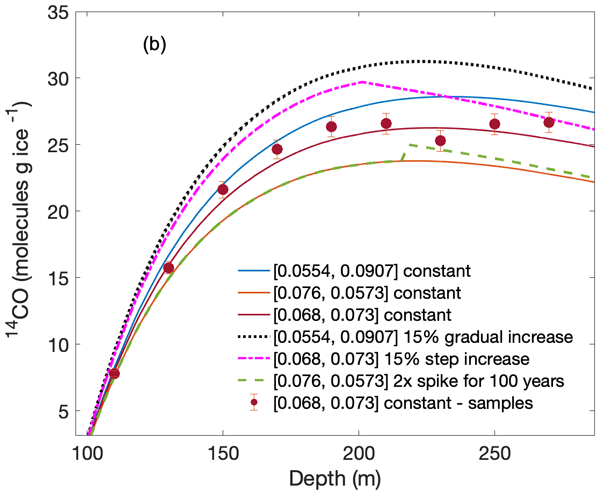
This manuscript presents the concept for a new proxy for past variations in the galactic cosmic ray flux (GCR). Past variations in GCR flux are important to understand for interpretation of records of isotopes produced by cosmic rays; these records are used for reconstructing solar variations and past land ice extent. The proxy involves using measurements of 14CO in ice cores, which should provide an uncomplicated and precise estimate of past GCR flux variations for the past few thousand years.
Benjamin Hmiel, Vasilii V. Petrenko, Christo Buizert, Andrew M. Smith, Michael N. Dyonisius, Philip Place, Bin Yang, Quan Hua, Ross Beaudette, Jeffrey P. Severinghaus, Christina Harth, Ray F. Weiss, Lindsey Davidge, Melisa Diaz, Matthew Pacicco, James A. Menking, Michael Kalk, Xavier Faïn, Alden Adolph, Isaac Vimont, and Lee T. Murray
The Cryosphere, 18, 3363–3382, https://doi.org/10.5194/tc-18-3363-2024, https://doi.org/10.5194/tc-18-3363-2024, 2024
Short summary
Short summary
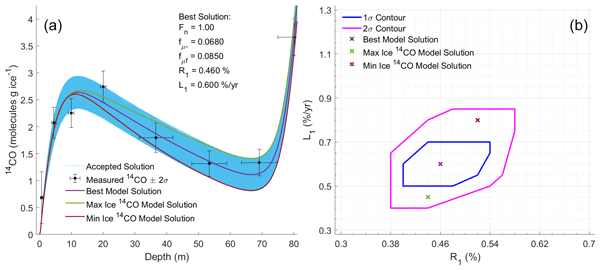
The main aim of this research is to improve understanding of carbon-14 that is produced by cosmic rays in ice sheets. Measurements of carbon-14 in ice cores can provide a range of useful information (age of ice, past atmospheric chemistry, past cosmic ray intensity). Our results show that almost all (>99 %) of carbon-14 that is produced in the upper layer of ice sheets is rapidly lost to the atmosphere. Our results also provide better estimates of carbon-14 production rates in deeper ice.
Ian E. McDowell, Kaitlin M. Keegan, S. McKenzie Skiles, Christopher P. Donahue, Erich C. Osterberg, Robert L. Hawley, and Hans-Peter Marshall
The Cryosphere, 18, 1925–1946, https://doi.org/10.5194/tc-18-1925-2024, https://doi.org/10.5194/tc-18-1925-2024, 2024
Short summary
Short summary
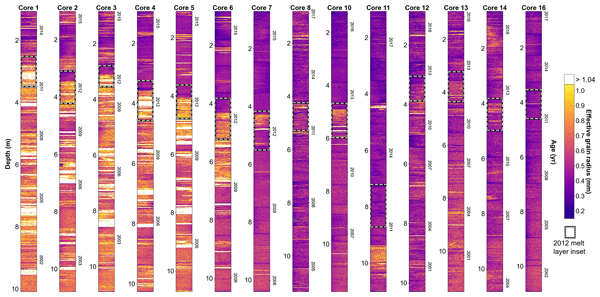
Accurate knowledge of firn grain size is crucial for many ice sheet research applications. Unfortunately, collecting detailed measurements of firn grain size is difficult. We demonstrate that scanning firn cores with a near-infrared imager can quickly produce high-resolution maps of both grain size and ice layer distributions. We map grain size and ice layer stratigraphy in 14 firn cores from Greenland and document changes to grain size and ice layer content from the extreme melt summer of 2012.
John D. Patterson, Murat Aydin, Andrew M. Crotwell, Gabrielle Pétron, Jeffery P. Severinghaus, Paul B. Krummel, Ray L. Langenfelds, Vasilii V. Petrenko, and Eric S. Saltzman
Clim. Past, 19, 2535–2550, https://doi.org/10.5194/cp-19-2535-2023, https://doi.org/10.5194/cp-19-2535-2023, 2023
Short summary
Short summary
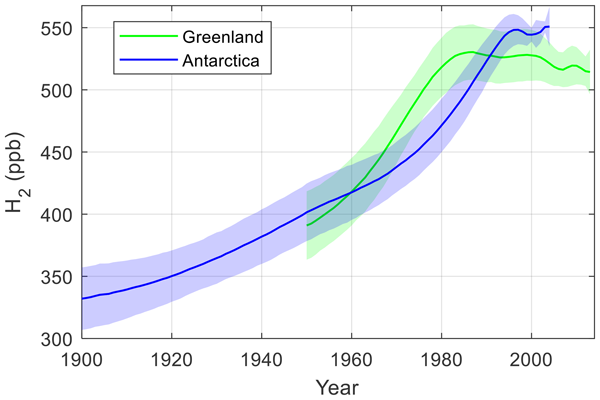
Atmospheric levels of molecular hydrogen (H2) can impact climate and air quality. Constraining past changes to atmospheric H2 is useful for understanding how H2 cycles through the Earth system and predicting the impacts of increasing anthropogenic emissions under the
hydrogen economy. Here, we use the aging air found in the polar snowpack to reconstruct H2 levels over the past 100 years. We find that H2 levels increased by 30 % over Greenland and 60 % over Antarctica during the 20th century.
Jenna A. Epifanio, Edward J. Brook, Christo Buizert, Erin C. Pettit, Jon S. Edwards, John M. Fegyveresi, Todd A. Sowers, Jeffrey P. Severinghaus, and Emma C. Kahle
The Cryosphere, 17, 4837–4851, https://doi.org/10.5194/tc-17-4837-2023, https://doi.org/10.5194/tc-17-4837-2023, 2023
Short summary
Short summary
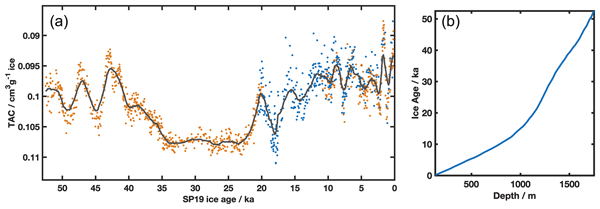
The total air content (TAC) of polar ice cores has long been considered a potential proxy for past ice sheet elevation. This study presents a high-resolution record of TAC from the South Pole ice core. The record reveals orbital- and millennial-scale variability that cannot be explained by elevation changes. The orbital- and millennial-scale changes are likely a product of firn grain metamorphism near the surface of the ice sheet, due to summer insolation changes or local accumulation changes.
Xavier Faïn, David M. Etheridge, Kévin Fourteau, Patricia Martinerie, Cathy M. Trudinger, Rachael H. Rhodes, Nathan J. Chellman, Ray L. Langenfelds, Joseph R. McConnell, Mark A. J. Curran, Edward J. Brook, Thomas Blunier, Grégory Teste, Roberto Grilli, Anthony Lemoine, William T. Sturges, Boris Vannière, Johannes Freitag, and Jérôme Chappellaz
Clim. Past, 19, 2287–2311, https://doi.org/10.5194/cp-19-2287-2023, https://doi.org/10.5194/cp-19-2287-2023, 2023
Short summary
Short summary
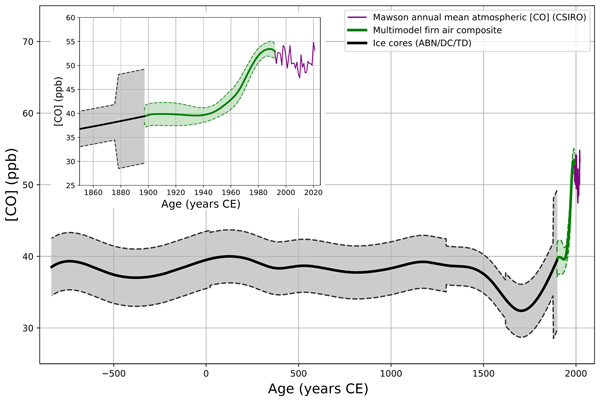
We report on a 3000-year record of carbon monoxide (CO) levels in the Southern Hemisphere's high latitudes by combining ice core and firn air measurements with modern direct atmospheric samples. Antarctica [CO] remained stable (–835 to 1500 CE), decreased during the Little Ice Age, and peaked around 1985 CE. Such evolution reflects stable biomass burning CO emissions before industrialization, followed by growth from CO anthropogenic sources, which decline after 1985 due to improved combustion.
Gemma K. O'Connor, Paul R. Holland, Eric J. Steig, Pierre Dutrieux, and Gregory J. Hakim
The Cryosphere, 17, 4399–4420, https://doi.org/10.5194/tc-17-4399-2023, https://doi.org/10.5194/tc-17-4399-2023, 2023
Short summary
Short summary
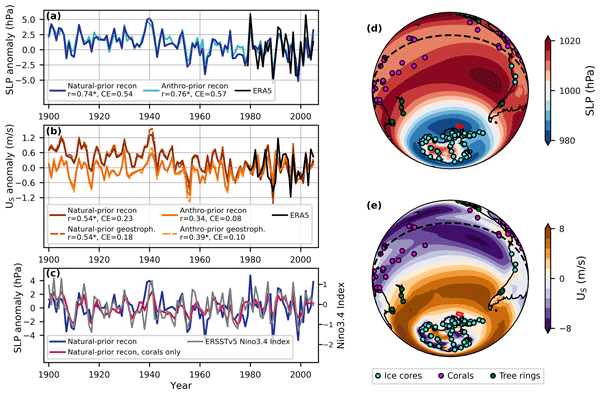
Glaciers in West Antarctica are rapidly melting, but the causes are unknown due to limited observations. A leading hypothesis is that an unusually large wind event in the 1940s initiated the ocean-driven melting. Using proxy reconstructions (e.g., using ice cores) and climate model simulations, we find that wind events similar to the 1940s event are relatively common on millennial timescales, implying that ocean variability or climate trends are also necessary to explain the start of ice loss.
Ling Fang, Theo M. Jenk, Dominic Winski, Karl Kreutz, Hanna L. Brooks, Emma Erwin, Erich Osterberg, Seth Campbell, Cameron Wake, and Margit Schwikowski
The Cryosphere, 17, 4007–4020, https://doi.org/10.5194/tc-17-4007-2023, https://doi.org/10.5194/tc-17-4007-2023, 2023
Short summary
Short summary
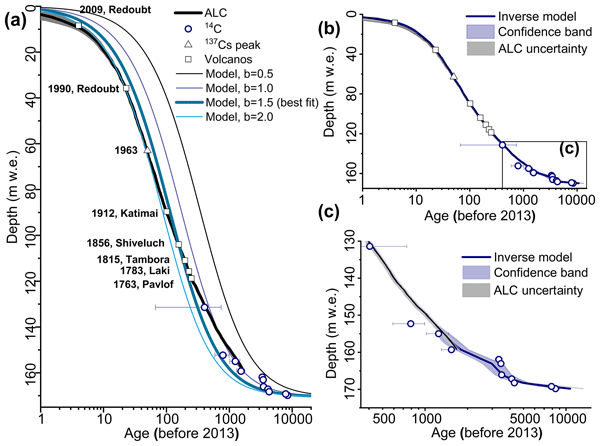
Understanding the behavior of ocean–atmosphere teleconnections in the North Pacific during warm intervals can aid in predicting future warming scenarios. However, majority ice core records from Alaska–Yukon region only provide data for the last few centuries. This study introduces a continuous chronology for Denali ice core from Begguya, Alaska, using multiple dating methods. The early-Holocene-origin Denali ice core will facilitate future investigations of hydroclimate in the North Pacific.
Benoit S. Lecavalier, Lev Tarasov, Greg Balco, Perry Spector, Claus-Dieter Hillenbrand, Christo Buizert, Catherine Ritz, Marion Leduc-Leballeur, Robert Mulvaney, Pippa L. Whitehouse, Michael J. Bentley, and Jonathan Bamber
Earth Syst. Sci. Data, 15, 3573–3596, https://doi.org/10.5194/essd-15-3573-2023, https://doi.org/10.5194/essd-15-3573-2023, 2023
Short summary
Short summary
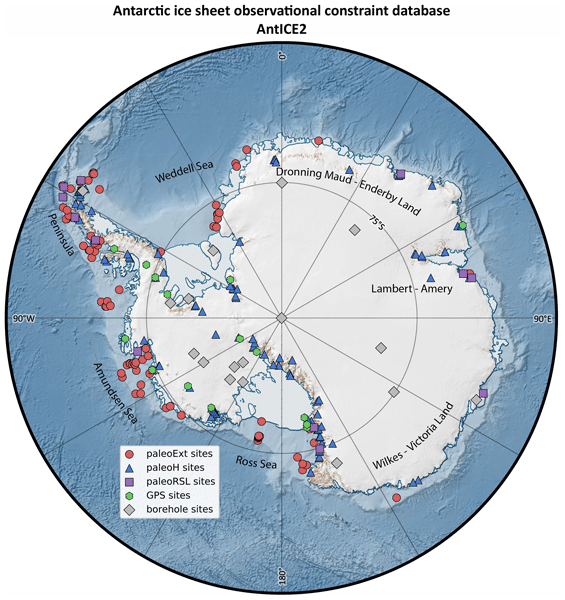
The Antarctic Ice Sheet Evolution constraint database version 2 (AntICE2) consists of a large variety of observations that constrain the evolution of the Antarctic Ice Sheet over the last glacial cycle. This includes observations of past ice sheet extent, past ice thickness, past relative sea level, borehole temperature profiles, and present-day bedrock displacement rates. The database is intended to improve our understanding of past Antarctic changes and for ice sheet model calibrations.
Michaela Mühl, Jochen Schmitt, Barbara Seth, James E. Lee, Jon S. Edwards, Edward J. Brook, Thomas Blunier, and Hubertus Fischer
Clim. Past, 19, 999–1025, https://doi.org/10.5194/cp-19-999-2023, https://doi.org/10.5194/cp-19-999-2023, 2023
Short summary
Short summary
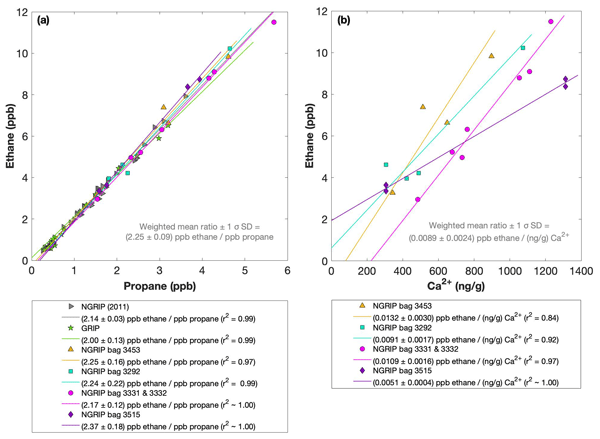
Our ice core measurements show that methane, ethane, and propane concentrations are significantly elevated above their past atmospheric background for Greenland ice samples containing mineral dust. The underlying co-production process happens during the classical discrete wet extraction of air from the ice sample and affects previous reconstructions of the inter-polar difference of methane as well as methane stable isotope records derived from dust-rich Greenland ice.
Christo Buizert, Sarah Shackleton, Jeffrey P. Severinghaus, William H. G. Roberts, Alan Seltzer, Bernhard Bereiter, Kenji Kawamura, Daniel Baggenstos, Anaïs J. Orsi, Ikumi Oyabu, Benjamin Birner, Jacob D. Morgan, Edward J. Brook, David M. Etheridge, David Thornton, Nancy Bertler, Rebecca L. Pyne, Robert Mulvaney, Ellen Mosley-Thompson, Peter D. Neff, and Vasilii V. Petrenko
Clim. Past, 19, 579–606, https://doi.org/10.5194/cp-19-579-2023, https://doi.org/10.5194/cp-19-579-2023, 2023
Short summary
Short summary
It is unclear how different components of the global atmospheric circulation, such as the El Niño effect, respond to large-scale climate change. We present a new ice core gas proxy, called krypton-86 excess, that reflects past storminess in Antarctica. We present data from 11 ice cores that suggest the new proxy works. We present a reconstruction of changes in West Antarctic storminess over the last 24 000 years and suggest these are caused by north–south movement of the tropical rain belt.
Aaron Chesler, Dominic Winski, Karl Kreutz, Bess Koffman, Erich Osterberg, David Ferris, Zayta Thundercloud, Joseph Mohan, Jihong Cole-Dai, Mark Wells, Michael Handley, Aaron Putnam, Katherine Anderson, and Natalie Harmon
Clim. Past, 19, 477–492, https://doi.org/10.5194/cp-19-477-2023, https://doi.org/10.5194/cp-19-477-2023, 2023
Short summary
Short summary
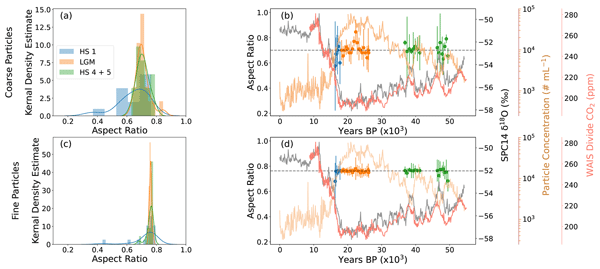
Ice core microparticle data typically use geometry assumptions to calculate particle mass and flux. We use dynamic particle imaging, a novel technique for ice core dust analyses, combined with traditional laser particle counting and Coulter counter techniques to assess particle shape in the South Pole Ice Core (SPC14) spanning 50–16 ka. Our results suggest that particles are dominantly ellipsoidal in shape and that spherical assumptions overestimate particle mass and flux.
Michael N. Dyonisius, Vasilii V. Petrenko, Andrew M. Smith, Benjamin Hmiel, Peter D. Neff, Bin Yang, Quan Hua, Jochen Schmitt, Sarah A. Shackleton, Christo Buizert, Philip F. Place, James A. Menking, Ross Beaudette, Christina Harth, Michael Kalk, Heidi A. Roop, Bernhard Bereiter, Casey Armanetti, Isaac Vimont, Sylvia Englund Michel, Edward J. Brook, Jeffrey P. Severinghaus, Ray F. Weiss, and Joseph R. McConnell
The Cryosphere, 17, 843–863, https://doi.org/10.5194/tc-17-843-2023, https://doi.org/10.5194/tc-17-843-2023, 2023
Short summary
Short summary
Cosmic rays that enter the atmosphere produce secondary particles which react with surface minerals to produce radioactive nuclides. These nuclides are often used to constrain Earth's surface processes. However, the production rates from muons are not well constrained. We measured 14C in ice with a well-known exposure history to constrain the production rates from muons. 14C production in ice is analogous to quartz, but we obtain different production rates compared to commonly used estimates.
Paul R. Holland, Gemma K. O'Connor, Thomas J. Bracegirdle, Pierre Dutrieux, Kaitlin A. Naughten, Eric J. Steig, David P. Schneider, Adrian Jenkins, and James A. Smith
The Cryosphere, 16, 5085–5105, https://doi.org/10.5194/tc-16-5085-2022, https://doi.org/10.5194/tc-16-5085-2022, 2022
Short summary
Short summary
The Antarctic Ice Sheet is losing ice, causing sea-level rise. However, it is not known whether human-induced climate change has contributed to this ice loss. In this study, we use evidence from climate models and palaeoclimate measurements (e.g. ice cores) to suggest that the ice loss was triggered by natural climate variations but is now sustained by human-forced climate change. This implies that future greenhouse-gas emissions may influence sea-level rise from Antarctica.
Lindsey Davidge, Eric J. Steig, and Andrew J. Schauer
Atmos. Meas. Tech., 15, 7337–7351, https://doi.org/10.5194/amt-15-7337-2022, https://doi.org/10.5194/amt-15-7337-2022, 2022
Short summary
Short summary
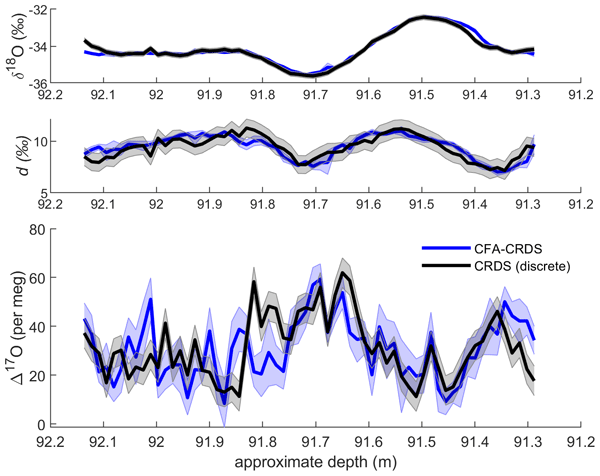
We describe a continuous-flow analysis (CFA) method to measure Δ17O by laser spectroscopy, and we show that centimeter-scale information can be measured reliably in ice cores by this method. We present seasonally resolved Δ17O data from Greenland and demonstrate that the measurement precision is not reduced by the CFA process. Our results encourage the development and use of CFA methods for Δ17O, and they identify calibration strategies as a target for method improvement.
Jinhwa Shin, Jinho Ahn, Jai Chowdhry Beeman, Hun-Gyu Lee, Jaemyeong Mango Seo, and Edward J. Brook
Clim. Past, 18, 2063–2075, https://doi.org/10.5194/cp-18-2063-2022, https://doi.org/10.5194/cp-18-2063-2022, 2022
Short summary
Short summary
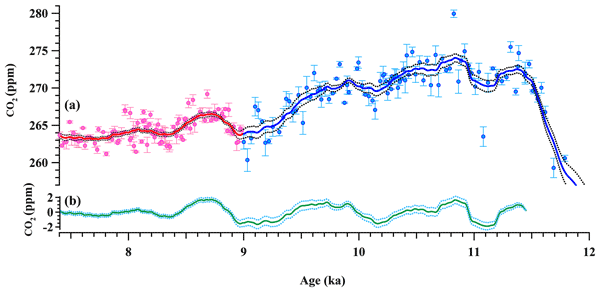
We present a new and highly resolved atmospheric CO2 record from the Siple Dome ice core, Antarctica, over the early Holocene (11.7–7.4 ka). Atmospheric CO2 decreased by ~10 ppm from 10.9 to 7.3 ka, but the decrease was punctuated by local minima at 11.1, 10.1, 9.1, and 8.3 ka. We found millennial CO2 variability of 2–6 ppm, and the millennial CO2 variations correlate with proxies for solar forcing and local climate in the Southern Ocean, North Atlantic, and eastern equatorial Pacific.
Jacob D. Morgan, Christo Buizert, Tyler J. Fudge, Kenji Kawamura, Jeffrey P. Severinghaus, and Cathy M. Trudinger
The Cryosphere, 16, 2947–2966, https://doi.org/10.5194/tc-16-2947-2022, https://doi.org/10.5194/tc-16-2947-2022, 2022
Short summary
Short summary
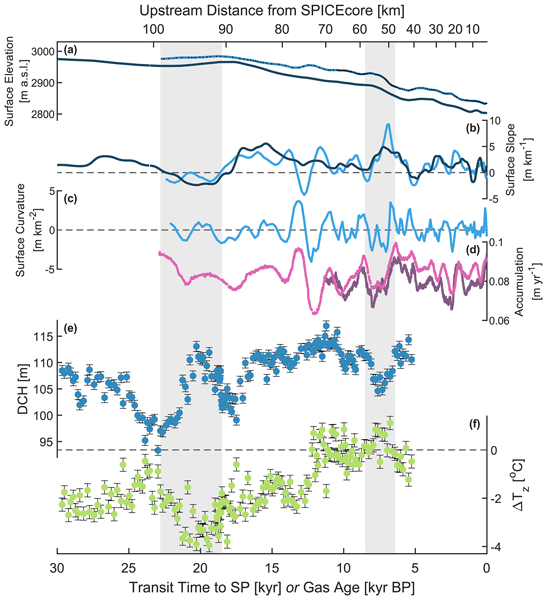
The composition of air bubbles in Antarctic ice cores records information about past changes in properties of the snowpack. We find that, near the South Pole, thinner snowpack in the past is often due to steeper surface topography, in which faster winds erode the snow and deposit it in flatter areas. The slope and wind seem to also cause a seasonal bias in the composition of air bubbles in the ice core. These findings will improve interpretation of other ice cores from places with steep slopes.
Bradley R. Markle and Eric J. Steig
Clim. Past, 18, 1321–1368, https://doi.org/10.5194/cp-18-1321-2022, https://doi.org/10.5194/cp-18-1321-2022, 2022
Short summary
Short summary
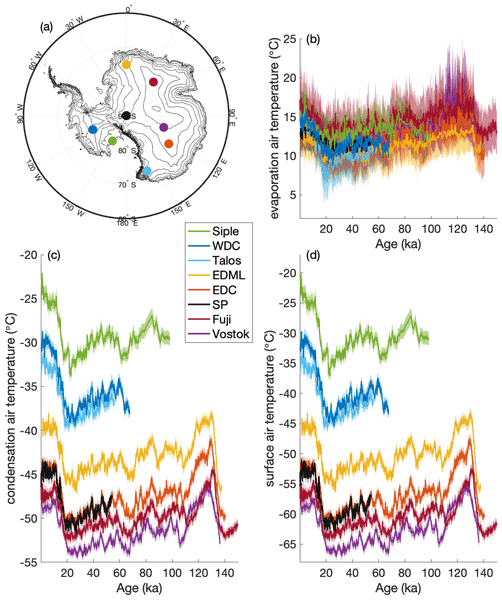
The geochemistry preserved in polar ice can provide detailed histories of Earth’s climate over millennia. Here we use the stable isotope ratios of ice from many Antarctic ice cores to reconstruct temperature variability of Antarctica and the midlatitude Southern Hemisphere over tens of thousands of years. We improve upon existing methods to estimate temperature from the geochemical measurements and investigate the patterns of climate change in the past.
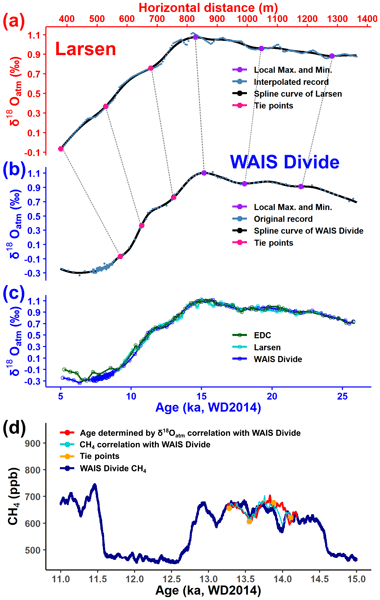
Giyoon Lee, Jinho Ahn, Hyeontae Ju, Florian Ritterbusch, Ikumi Oyabu, Christo Buizert, Songyi Kim, Jangil Moon, Sambit Ghosh, Kenji Kawamura, Zheng-Tian Lu, Sangbum Hong, Chang Hee Han, Soon Do Hur, Wei Jiang, and Guo-Min Yang
The Cryosphere, 16, 2301–2324, https://doi.org/10.5194/tc-16-2301-2022, https://doi.org/10.5194/tc-16-2301-2022, 2022
Short summary
Short summary
Blue-ice areas (BIAs) have several advantages for reconstructing past climate. However, the complicated ice flow in the area hinders constraining the age. We applied state-of-the-art techniques and found that the ages cover the last deglaciation period. Our study demonstrates that the BIA in northern Victoria Land may help reconstruct the past climate during the termination of the last glacial period.
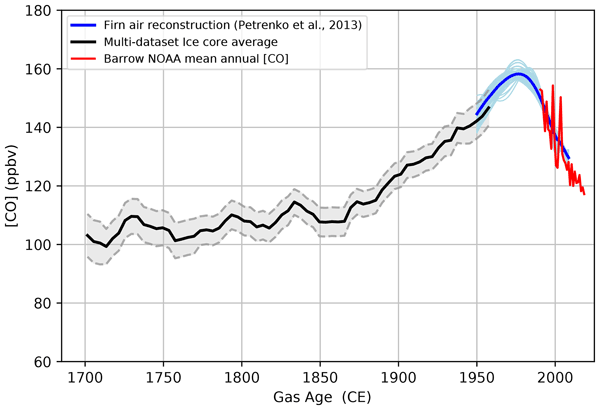
Xavier Faïn, Rachael H. Rhodes, Philip Place, Vasilii V. Petrenko, Kévin Fourteau, Nathan Chellman, Edward Crosier, Joseph R. McConnell, Edward J. Brook, Thomas Blunier, Michel Legrand, and Jérôme Chappellaz
Clim. Past, 18, 631–647, https://doi.org/10.5194/cp-18-631-2022, https://doi.org/10.5194/cp-18-631-2022, 2022
Short summary
Short summary
Carbon monoxide (CO) is a regulated pollutant and one of the key components determining the oxidizing capacity of the atmosphere. In this study, we analyzed five ice cores from Greenland at high resolution for CO concentrations by coupling laser spectrometry with continuous melting. By combining these new datasets, we produced an upper-bound estimate of past atmospheric CO abundance since preindustrial times for the Northern Hemisphere high latitudes, covering the period from 1700 to 1957 CE.
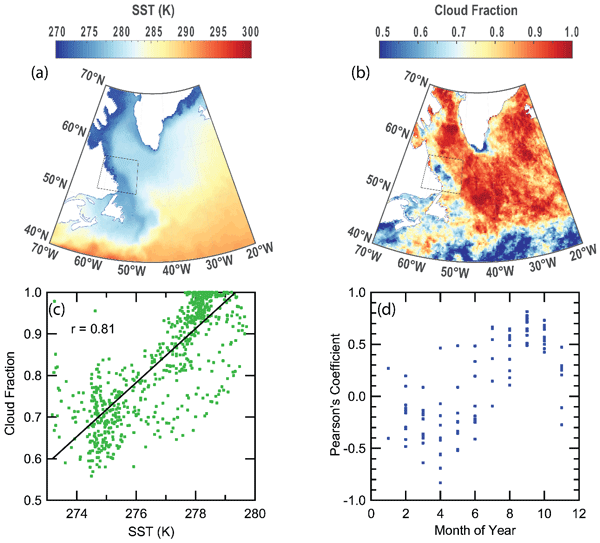
Kevin J. Sanchez, Bo Zhang, Hongyu Liu, Matthew D. Brown, Ewan C. Crosbie, Francesca Gallo, Johnathan W. Hair, Chris A. Hostetler, Carolyn E. Jordan, Claire E. Robinson, Amy Jo Scarino, Taylor J. Shingler, Michael A. Shook, Kenneth L. Thornhill, Elizabeth B. Wiggins, Edward L. Winstead, Luke D. Ziemba, Georges Saliba, Savannah L. Lewis, Lynn M. Russell, Patricia K. Quinn, Timothy S. Bates, Jack Porter, Thomas G. Bell, Peter Gaube, Eric S. Saltzman, Michael J. Behrenfeld, and Richard H. Moore
Atmos. Chem. Phys., 22, 2795–2815, https://doi.org/10.5194/acp-22-2795-2022, https://doi.org/10.5194/acp-22-2795-2022, 2022
Short summary
Short summary
Atmospheric particle concentrations impact clouds, which strongly impact the amount of sunlight reflected back into space and the overall climate. Measurements of particles over the ocean are rare and expensive to collect, so models are necessary to fill in the gaps by simulating both particle and clouds. However, some measurements are needed to test the accuracy of the models. Here, we measure changes in particles in different weather conditions, which are ideal for comparison with models.
Cited articles
Albani, S., Delmonte, B., Maggi, V., Baroni, C., Petit, J.-R., Stenni, B., Mazzola, C., and Frezzotti, M.: Interpreting last glacial to Holocene dust changes at Talos Dome (East Antarctica): implications for atmospheric variations from regional to hemispheric scales, Clim. Past, 8, 741–750, https://doi.org/10.5194/cp-8-741-2012, 2012.
Baccolo, G., Delmonte, B., Di Stefano, E., Cibin, G., Crotti, I., Frezzotti, M., Hampai, D., Iizuka, Y., Marcelli, A., and Maggi, V.: Deep ice as a geochemical reactor: insights from iron speciation and mineralogy of dust in the Talos Dome ice core (East Antarctica), The Cryosphere, 15, 4807–4822, https://doi.org/10.5194/tc-15-4807-2021, 2021a.
Baccolo, G., Delmonte, B., Niles, P.B., Cibin, G., Di Stefano, E., Hampai, D., Keller, L., Maggi, V., Marcelli, A., Michalski, J., Snead, C., and Frezzotti, M.: Jarosite formation in deep Antarctic ice provides a window into acidic, water-limited weathering on Mars, Nat. Commun., 12, https://doi.org/10.1038/s41467-020-20705-z, 2021b.
Baggenstos, D., Bauska, T. K., Severinghaus, J. P., Lee, J. E., Schaefer, H., Buizert, C., Brook, E. J., Shackleton, S., and Petrenko, V. V.: Atmospheric gas records from Taylor Glacier, Antarctica, reveal ancient ice with ages spanning the entire last glacial cycle, Clim. Past, 13, 943–958, https://doi.org/10.5194/cp-13-943-2017, 2017.
Baggenstos, D., Severinghaus, J. P., Mulvaney, R., McConnell, J. R., Sigl, M., Maselli, O., Petit, J. R., Grente, B., and Steig, E. J.: A horizontal ice core from Taylor Glacier, its implications for Antarctic climate history, and an improved Taylor Dome ice core time scale, Paleoceanogr. Paleocl., 33, 778–794, https://doi.org/10.1029/2017PA003297, 2018.
Bender, M. L., Barnett, B., Dreyfus, G., Jouzel, J., and Porcelli, D.: The contemporary degassing rate of 40Ar from the solid Earth, P. Natl. Acad. Sci. USA, 105, 8232–8237, https://doi.org/10.1073/pnas.0711679105, 2008.
Berends, C. J., Köhler, P., Lourens, L. J., and van de Wal, R. S. W.: On the cause of the mid-Pleistocene transition, Rev. Geophys., 59, https://doi.org/10.1029/2020RG000727, 2021.
Bintanja, R.: On the glaciological, meteorological, and climatological significance of Antarctic blue ice areas, Rev. Geophys., 37, 337–359, https://doi.org/10.1029/1999RG900007, 1999.
Bouchet, M., Landais, A., Grisart, A., Parrenin, F., Prié, F., Jacob, R., Fourré, E., Capron, E., Raynaud, D., Lipenkov, V. Y., Loutre, M.-F., Extier, T., Svensson, A., Legrain, E., Martinerie, P., Leuenberger, M., Jiang, W., Ritterbusch, F., Lu, Z.-T., and Yang, G.-M.: The Antarctic Ice Core Chronology 2023 (AICC2023) chronological framework and associated timescale for the European Project for Ice Coring in Antarctica (EPICA) Dome C ice core, Clim. Past, 19, 2257–2286, https://doi.org/10.5194/cp-19-2257-2023, 2023.
Burton, L. E., Oldeman, A. M., Haywood, A. M., Tindall, J. C., Dolan, A. M., Hill, D. J., von der Heydt, A., and Baatsen, M. L. J.: An assessment of the Pliocene as an analogue for our warmer future, Global Planet. Change, 252, 104860, https://doi.org/10.1016/j.gloplacha.2025.104860, 2025.
Carter, A. J., Aarons, S. M., Schnaubelt, J. C., Tabor, C. R., Higgins, J. A., Shackleton, S. A., Epifanio, J. A., Morgan, J. D., Koornneef, J. M., Davies, G. R., Gabrielli, P., Choi, A., Severinghaus, J. P., Brook, E. J., Introne, D. S., Marks-Peterson, J. C., and Sutter, J.: Diminished Ross Ice Shelf and West Antarctic Ice Sheet during Last Interglacial warming, Nat. Geosci., 19, 691–698, https://doi.org/10.1038/s41561-026-01988-1, 2026.
Chesler, A., Winski, D., Kreutz, K., Koffman, B., Osterberg, E., Ferris, D., Thundercloud, Z., Mohan, J., Cole-Dai, J., Wells, M., Handley, M., Putnam, A., Anderson, K., and Harmon, N.: Non-spherical microparticle shape in Antarctica during the last glacial period affects dust volume-related metrics, Clim. Past, 19, 477–492, https://doi.org/10.5194/cp-19-477-2023, 2023.
Choi, A., Carter, A. J., Marks-Peterson, J., Shackleton, S., Higgins, J. A., Brook, E. J., Kirkpatrick, L., Chalif, J. I., and Aarons, S. M.: Dust Record from Allan Hills Blue Ice: Towards Extending the Archive to 4000 ka, EGUsphere [preprint], https://doi.org/10.5194/egusphere-2026-2434, 2026.
Clark, P. U., Archer, D., Pollard, D., Blum, J. D., Rial, J. A., Brovkin, V., Mix, A. C., Pisias, N. G., and Roy, M.: The middle Pleistocene transition: characteristics, mechanisms, and implications for long-term changes in atmospheric pCO2, Quaternary Sci. Rev., 25, 3150–3184, https://doi.org/10.1016/j.quascirev.2006.07.008, 2006.
Crotti, I., Quiquet, A., Landais, A., Stenni, B., Wilson, D. J., Severi, M., Mulvaney, R., Wilhelms, F., Barbante, C., and Frezzotti, M.: Wilkes subglacial basin ice sheet response to Southern Ocean warming during late Pleistocene interglacials, Nat. Commun., 13, https://doi.org/10.1038/s41467-022-32847-3, 2022.
Davidge, L., Steig, E. J., and Schauer, A. J.: Improving continuous-flow analysis of triple oxygen isotopes in ice cores: insights from replicate measurements, Atmos. Meas. Tech., 15, 7337–7351, https://doi.org/10.5194/amt-15-7337-2022, 2022.
EPICA community members: Eight glacial cycles from an Antarctic ice core, Nature, 429, 623–628, https://doi.org/10.1038/nature02599, 2004.
Epifanio, J. A., Brook, E. J., Buizert, C., Edwards, J. S., Sowers, T. A., Kahle, E. C., Severinghaus, J. P., Steig, E. J., Winski, D. A., Osterberg, E. C., Fudge, T. J., Aydin, M., Hood, E., Kalk, M., Kreutz, K. J., Ferris, D. G., and Kennedy, J. A.: The SP19 chronology for the South Pole Ice Core – Part 2: gas chronology, Δage, and smoothing of atmospheric records, Clim. Past, 16, 2431–2444, https://doi.org/10.5194/cp-16-2431-2020, 2020.
Fitzpatrick, J. J., Voigt, D. E., Fegyveresi, J. M., Stevens, N. T., Spencer, M. K., Cole-Dai, J., Alley, R. B., Jardine, G. E., Cravens, E. D., Wilen, L. A., Fudge, T. J., and McConnell, J. R.: Physical properties of the WAIS Divide ice core, J. Glaciol., 60, 1140–1154, https://doi.org/10.3189/2014JoG14J100, 2014.
Ford, B. H. L. and Chalk, T. B.: The Mid-Pleistocene enigma, Oceanography, 33, 101–103, 2020.
Gkinis, V., Popp, T. J., Blunier, T., Bigler, M., Schüpbach, S., Kettner, E., and Johnsen, S. J.: Water isotopic ratios from a continuously melted ice core sample, Atmos. Meas. Tech., 4, 2531–2542, https://doi.org/10.5194/amt-4-2531-2011, 2011.
Grinsted, A., Moore, J., Spikes, V. B., and Sinisalo, A.: Dating Antarctic blue ice areas using a novel ice flow model, Geophys. Res. Lett., 30, https://doi.org/10.1029/2003GL017957, 2003.
Haywood, A. M., Tindall, J. C., Dowsett, H. J., Dolan, A. M., Foley, K. M., Hunter, S. J., Hill, D. J., Chan, W.-L., Abe-Ouchi, A., Stepanek, C., Lohmann, G., Chandan, D., Peltier, W. R., Tan, N., Contoux, C., Ramstein, G., Li, X., Zhang, Z., Guo, C., Nisancioglu, K. H., Zhang, Q., Li, Q., Kamae, Y., Chandler, M. A., Sohl, L. E., Otto-Bliesner, B. L., Feng, R., Brady, E. C., von der Heydt, A. S., Baatsen, M. L. J., and Lunt, D. J.: The Pliocene Model Intercomparison Project Phase 2: large-scale climate features and climate sensitivity, Clim. Past, 16, 2095–2123, https://doi.org/10.5194/cp-16-2095-2020, 2020.
Higgins, J. A., Kurbatov, A. V., Spaulding, N. E., Brook, E., Introne, D. S., Chimiak, L. M., Yan, Y., Mayewski, P. A., and Bender, M. L.: Atmospheric composition 1 million years ago from blue ice in the Allan Hills, Antarctica, P. Natl. Acad. Sci. USA, 112, 6887–6891, https://doi.org/10.1073/pnas.1420232112, 2015.
Hishamunda, V., Higgins, J. A., Kirkpatrick, L., and Steig, E. J.: 40Ar-atm and d18O data for Allan Hills ice cores ALHIC 2301, ALHIC 2302, ALHIC 2201, U.S. Antarctic Program Data Center, https://doi.org/10.15784/602044, 2026.
Hu, J., Yan, Y., Yeung, L. Y., and Dee, S. G.: Sublimation origin of negative deuterium excess observed in snow and ice samples from McMurdo Dry Valleys and Allan Hills blue ice areas, East Antarctica, J. Geophys. Res.-Atmos., 127, https://doi.org/10.1029/2021JD035950, 2022.
Hudak, A.: Continuous Flow Analysis of ALHIC 2201 and 2302: water isotopes, methane, and dust: U.S. Antarctic Program (USAP) Data Center [data set], https://doi.org/10.15784/602046, 2026.
Jones, T. R., White, J. W. C., Steig, E. J., Vaughn, B. H., Morris, V., Gkinis, V., Markle, B. R., and Schoenemann, S. W.: Improved methodologies for continuous-flow analysis of stable water isotopes in ice cores, Atmos. Meas. Tech., 10, 617–632, https://doi.org/10.5194/amt-10-617-2017, 2017.
Kirkpatrick, L., Carter, A., Marks-Peterson, J., Shackleton, S., and Fudge, T. J.: Three-dimensional multitrack electrical conductivity method for interpretation of complex ice core stratigraphy, J. Glaciol., https://doi.org/10.1017/jog.2025.10081, 2025.
Kuhl, T. W., Johnson, J. A., Shturmakov, A. J., Goetz, J. J., Gibson, C. J., and Lebar, D. A.: A new large-diameter ice-core drill: the Blue Ice Drill, Ann. Glaciol., 55, 1–6, https://doi.org/10.3189/2014AoG68A009, 2014.
Lambert, F., Delmonte, B., Petit, J. R., Bigler, M., Kaufmann, P. R., Hutterli, M. A., Stocker, T. F., Ruth, U., Steffensen, J. P., and Maggi, V.: Dust-climate couplings over the past 800,000 years from the EPICA Dome C ice core, Nature, 452, 616–619, https://doi.org/10.1038/nature06763, 2008.
Lambert, F., Bigler, M., Steffensen, J. P., Hutterli, M., and Fischer, H.: Centennial mineral dust variability in high-resolution ice core data from Dome C, Antarctica, Clim. Past, 8, 609–623, https://doi.org/10.5194/cp-8-609-2012, 2012.
Landais, A., Masson-Delmotte, V., Stenni, B., Selmo, E., Roche, D. M., Jouzel, J., Lambert, F., Guillevic, M., Bazin, L., Arzel, O., Vinther, B., Gkinis, V., and Popp, T.: A review of the bipolar see–saw from synchronized and high resolution ice core water stable isotope records from Greenland and East Antarctica, Quaternary Sci. Rev., 114, 18–32, https://doi.org/10.1016/j.quascirev.2015.01.031, 2015.
Landais, A., Stenni, B., Masson-Delmotte, V., Jouzel, J., Cauquoin, A., Fourré, E., Minster, B., Selmo, E., Extier, T., Werner, M., Vimeux, F., Uemura, R., Crotti, I., and Grisart, A.: Interglacial Antarctic–Southern Ocean climate decoupling due to moisture source area shifts, Nat. Geosci., 14, 918–923, https://doi.org/10.1038/s41561-021-00856-4, 2021.
Lee, J. E., Edwards, J. S., Schmitt, J., Fischer, H., Bock, M., and Brook, E. J.: Excess methane in Greenland ice cores associated with high dust concentrations, Geochim. Cosmochim. Ac., 270, 409–430, https://doi.org/10.1016/j.gca.2019.11.020, 2020.
Lisiecki, L. E. and Raymo, M. E.: A Pliocene-Pleistocene stack of 57 globally distributed benthic δ18O records, Paleoceanography, 20, PA1003, https://doi.org/10.1029/2004PA001071, 2005.
Loulergue, L., Schilt, A., Spahni, R., Masson-Delmotte, V., Blunier, T., Lemieux, B., Barnola, J.-M., Raynaud, D., Stocker, T. F., and Chappellaz, J.: Orbital and millennial-scale features of atmospheric CH4 over the past 800,000 years, Nature, 453, 383–386, https://doi.org/10.1038/nature06950, 2008.
Markle, B. R. and Steig, E. J.: Temperature-dependent feedbacks drive the pattern of Antarctic temperature change, P. Natl. Acad. Sci. USA, 123, e2513383123, https://doi.org/10.1073/pnas.2513383123, 2026.
Marks-Peterson, J., Shackleton, S., Higgins, J., Severinghaus, J., Yan, Y., Buizert, C., Kalk, M., Beaudette, R., Hishamunda, V., Eves, D., Carter, A., Kurbatov, A., Epifanio, J., Morgan, J., Nesbitt, I., Bender, M., and Brook, E.: Broadly stable atmospheric CO2 and CH4 levels over the past 3 million years, Nature, 651, 647–652, https://doi.org/10.1038/s41586-025-10032-y, 2026.
Masson-Delmotte, V., Hou, S., Ekaykin, A., Jouzel, J., Aristarain, A., Bernardo, R. T., Bromwich, D., Cattani, O., Delmotte, M. M., Falourd, S., Frezzotti, M., Gallée, H., Genoni, L., Isaksson, E., Landais, A., Helsen, M. M., Hoffmann, G., Lopez, J., Morgan, V., Motoyama, H., Noone, D., Oerter, H., Petit, J. R., Royer, A., Uemura, R., Schmidt, G. A., Schlosser, E., Simões, J. C., Steig, E. J., Stenni, B., Stievenard, M., van den Broeke, M. R., van de Wal, R. S. W., van de Berg, W. J., Vimeux, F., and White, J. W. C.: A review of Antarctic surface snow isotopic composition: observations, atmospheric circulation, and isotopic modeling, J. Climate, 21, 3359–3387, https://doi.org/10.1175/2007JCLI2139.1, 2008.
Morse, D. L., Waddington, E. D., and Steig, E. J.: Ice age storm trajectories inferred from radar stratigraphy at Taylor Dome, Antarctica, Geophys. Res. Lett., 25, 3383–3386, https://doi.org/10.1029/98GL52486, 1998.
Mühl, M., Schmitt, J., Seth, B., Lee, J. E., Edwards, J. S., Brook, E. J., Blunier, T., and Fischer, H.: Methane, ethane, and propane production in Greenland ice core samples and a first isotopic characterization of excess methane, Clim. Past, 19, 999–1025, https://doi.org/10.5194/cp-19-999-2023, 2023.
Nesbitt, I. M. and Brook, E. J.: I-165-M GPR field report 2019–2020, U.S. Antarctic Program (USAP) Data Center, https://doi.org/10.15784/601669, 2023.
Osterberg, E. C., Handley, M. J., Sneed, S. B., Mayewski, P. A., and Kreutz, K. J.: Continuous ice core melter system with discrete sampling for major ion, trace element, and stable isotope analyses, Environ. Sci. Technol., 40, 3355–3361, https://doi.org/10.1021/es052536w, 2006.
Voosen, P.: Hunt begins for ancient Antarctic ice, Science, 374, 388–389, 2021.
Rhodes, R. H., Faïn, X., Stowasser, C., Blunier, T., Chappellaz, J., McConnell, J. R., Romanini, D., Mitchell, L. E., and Brook, E. J.: Continuous methane measurements from a late Holocene Greenland ice core: atmospheric and in-situ signals, Earth Planet. Sc. Lett., 368, 9–19, https://doi.org/10.1016/j.epsl.2013.02.034, 2013.
Rhodes, R. H., Brook, E. J., Chiang, J. C. H., Blunier, T., Maselli, O. J., McConnell, J. R., Romanini, D., and Severinghaus, J. P.: Enhanced tropical methane production in response to iceberg discharge in the North Atlantic, Science, 348, 1016–1019, https://doi.org/10.1126/science.1262005, 2015.
Scarchilli, C., Frezzotti, M., and Ruti, P.M.: Snow precipitation at four ice core sites in East Antarctica: provenance, seasonality and blocking factors, Clim. Dynam., 37, 2107–2125, https://doi.org/10.1007/s00382-010-0946-4, 2011.
Schauer, A. J., Schoenemann, S. W., and Steig, E. J.: Routine high-precision analysis of triple water-isotope ratios using cavity ring-down spectroscopy, Rapid Commun. Mass Spectrom., 2059–2069, https://doi.org/10.1002/rcm.7682, 2016.
Scherer, P., Schultz, L., Neupert, U., Knauer, M., Neumann, S., Leya, I., Michel, R., Mokos, J., Lipschutz, M. E., Metzler, K., Suter, M., and Kubik, P. W.: Allan Hills 88019: an Antarctic H-chondrite with a very long terrestrial age, Meteorit. Planet. Sci., 32, 769–773, https://doi.org/10.1111/j.1945-5100.1997.tb01567.x, 1997.
Schoenemann, S. W., Schauer, A. J., and Steig, E. J.: Measurement of SLAP2 and GISP δ17O and proposed VSMOW-SLAP normalization for δ17O and 17Oexcess, Rapid Commun. Mass Spectrom., 27, 582–590, https://doi.org/10.1002/rcm.6486, 2013.
Severinghaus, J., Wolff, E. W., and Brook, E. J.: Searching for the oldest ice, Eos, 91, 357–368, 2010.
Shackleton, S., Hishamunda, V., Davidge, L., Brook, E., Peterson, J. M., Carter, A., Aarons, S., Kurbatov, A., Introne, D., Yan, Y., Nesbitt, I. M., Buizert, C., Steig, E. J., Schauer, A. J., Morgan, J., Neff, P. D., Epifanio, J. A., Severinghaus, J., Bender, M., and Higgins, J. A.: Miocene and Pliocene ice and air from the Allan Hills blue ice area, East Antarctica, P. Natl. Acad. Sci. USA, 122, https://doi.org/10.1073/pnas.2502681122, 2025.
Shackleton, S., Hishamunda, V., Yan, Y., Carter, A., Morgan, J., Severinghaus, J., Aarons, S., Marks-Peterson, J., Epifanio, J., Buizert, C., Brook, E., Kurbatov, A. V., Bender, M. L., and Higgins, J.: Global ocean heat content over the past 3 million years, Nature, 651, 653–657, https://doi.org/10.1038/s41586-026-10116-3, 2026.
Simonsen, M. F., Cremonesi, L., Baccolo, G., Bosch, S., Delmonte, B., Erhardt, T., Kjær, H. A., Potenza, M., Svensson, A., and Vallelonga, P.: Particle shape accounts for instrumental discrepancy in ice core dust size distributions, Clim. Past, 14, 601–608, https://doi.org/10.5194/cp-14-601-2018, 2018.
Spaulding, N. E., Spikes, V. B., Hamilton, G. S., Mayewski, P. A., Dunbar, N. W., Harvey, R. P., Schutt, J., and Kurbatov, A. V.: Ice motion and mass balance at the Allan Hills blue-ice area, Antarctica, with implications for paleoclimate reconstructions, J. Glaciol., 58, 399–406, https://doi.org/10.3189/2012JoG11J176, 2012.
Spaulding, N. E., Higgins, J. A., Kurbatov, A. V., Bender, M. L., Arcone, S. A., Campbell, S., Dunbar, N. W., Chimiak, L. M., Introne, D. S., and Mayewski, P. A.: Climate archives from 90 to 250 ka in horizontal and vertical ice cores from the Allan Hills blue ice area, Antarctica, Quaternary Res., 80, 562–574, https://doi.org/10.1016/j.yqres.2013.07.004, 2013.
Steig, E. J., Morse, D. L., Waddington, E. D., Stuiver, M., Grootes, P. M., Mayewski, P. A., Twickler, M. S., and Whitlow, S. I.: Wisconsinan and Holocene climate history from an ice core at Taylor Dome, Western Ross Embayment, Antarctica, Geogr. Ann. A, 82, 213–235, https://doi.org/10.1111/j.0435-3676.2000.00122.x, 2000.
Steig, E. J., Gkinis, V., Schauer, A. J., Schoenemann, S. W., Samek, K., Hoffnagle, J., Dennis, K. J., and Tan, S. M.: Calibrated high-precision 17O-excess measurements using cavity ring-down spectroscopy with laser-current-tuned cavity resonance, Atmos. Meas. Tech., 7, 2421–2435, https://doi.org/10.5194/amt-7-2421-2014, 2014.
Stowasser, C., Buizert, C., Gkinis, V., Chappellaz, J., Schüpbach, S., Bigler, M., Faïn, X., Sperlich, P., Baumgartner, M., Schilt, A., and Blunier, T.: Continuous measurements of methane mixing ratios from ice cores, Atmos. Meas. Tech., 5, 999–1013, https://doi.org/10.5194/amt-5-999-2012, 2012.
Tierney, J. E., King, J., Osman, M. B., Abell, J. T., Burls, N. J., Erfani, E., Cooper, V. T., and Feng, R.: Pliocene warmth and patterns of climate change inferred from paleoclimate data assimilation, AGU Adv., 6, https://doi.org/10.1029/2024AV001356, 2025.
Turney, C., Fogwill, C., Van Ommen, T. D., Moy, A. D., Etheridge, D., Rubino, M., Curran, M. A. J., and Rivera, A.: Late Pleistocene and early Holocene change in the Weddell Sea: a new climate record from the Patriot Hills, Ellsworth Mountains, West Antarctica, J. Quaternary Sci., 28, 697–704, https://doi.org/10.1002/jqs.2668, 2013.
Whillans, I. M. and Cassidy, W. A.: Catch a falling star: meteorites and old ice, Science, 222, 55–57, 1983.
Winski, D. A., Fudge, T. J., Ferris, D. G., Osterberg, E. C., Fegyveresi, J. M., Cole-Dai, J., Thundercloud, Z., Cox, T. S., Kreutz, K. J., Ortman, N., Buizert, C., Epifanio, J., Brook, E. J., Beaudette, R., Severinghaus, J., Sowers, T., Steig, E. J., Kahle, E. C., Jones, T. R., Morris, V., Aydin, M., Nicewonger, M. R., Casey, K. A., Alley, R. B., Waddington, E. D., Iverson, N. A., Dunbar, N. W., Bay, R. C., Souney, J. M., Sigl, M., and McConnell, J. R.: The SP19 chronology for the South Pole Ice Core – Part 1: volcanic matching and annual layer counting, Clim. Past, 15, 1793–1808, https://doi.org/10.5194/cp-15-1793-2019, 2019.
Yan, Y., Bender, M. L., Brook, E. J., Clifford, H. M., Kemeny, P. C., Kurbatov, A. V., Mackay, S., Mayewski, P. A., Ng, J., Severinghaus, J. P., and Higgins, J. A.: Two-million-year-old snapshots of atmospheric gases from Antarctic ice, Nature, 574, 663–666, https://doi.org/10.1038/s41586-019-1692-3, 2019.
Yan, Y., Spaulding, N. E., Bender, M. L., Brook, E. J., Higgins, J. A., Kurbatov, A. V., and Mayewski, P. A.: Enhanced moisture delivery into Victoria Land, East Antarctica, during the early Last Interglacial: implications for West Antarctic Ice Sheet stability, Clim. Past, 17, 1841–1855, https://doi.org/10.5194/cp-17-1841-2021, 2021.
Short summary
The Allan Hills contains the oldest known ice, extending records millions of years. However, this area along the Transantarctic Mountains margin results in stratigraphically discontinuous ice core records. Here, we investigate high-resolution geochemical records to better constrain biases and stratigraphic complexities, and find these records exhibit reduced variance, some degree of interglacial bias, with varying behaviours across ice cores at the Allan Hills.
The Allan Hills contains the oldest known ice, extending records millions of years. However,...


Altmetrics
Final-revised paper
Preprint