
Articles | Volume 22, issue 10
https://doi.org/10.5194/cp-22-1781-2026
© Author(s) 2026. This work is distributed under
the Creative Commons Attribution 4.0 License.
the Creative Commons Attribution 4.0 License.
https://doi.org/10.5194/cp-22-1781-2026
© Author(s) 2026. This work is distributed under
the Creative Commons Attribution 4.0 License.
the Creative Commons Attribution 4.0 License.
Research article
| 
01 Oct 2026
Research article |
| 01 Oct 2026
| 01 Oct 2026
Ocean warming caused by Late Ordovician glacial onset in a coupled climate-ice sheet simulation
Yudong Sun
Department of Atmospheric and Oceanic Sciences, School of Physics, Peking University, Beijing, 100871, China
Yonggang Liu
Department of Atmospheric and Oceanic Sciences, School of Physics, Peking University, Beijing, 100871, China
Jiacheng Wu
Department of Atmospheric and Oceanic Sciences, School of Physics, Peking University, Beijing, 100871, China
Kai Man
Department of Atmospheric and Oceanic Sciences, School of Physics, Peking University, Beijing, 100871, China
Haonan Yu
Department of Atmospheric and Oceanic Sciences, School of Physics, Peking University, Beijing, 100871, China
Shuai Yuan
Department of Atmospheric and Oceanic Sciences, School of Physics, Peking University, Beijing, 100871, China
Yizhang Liu
Department of Atmospheric and Oceanic Sciences, School of Physics, Peking University, Beijing, 100871, China
Department of Atmospheric and Oceanic Sciences, School of Physics, Peking University, Beijing, 100871, China
Qi Cui
Department of Atmospheric and Oceanic Sciences, School of Physics, Peking University, Beijing, 100871, China
Qiang Wei
CORRESPONDING AUTHOR

Institute of Tibetan Plateau Research, Chinese Academy of Sciences, Beijing, 100101, China
Department of Atmospheric and Oceanic Sciences, School of Physics, Peking University, Beijing, 100871, China
Related authors
No articles found.
Jiaxi Zhao, Yonggang Liu, and Yongyun Hu
Geosci. Model Dev., 19, 6857–6878, https://doi.org/10.5194/gmd-19-6857-2026, https://doi.org/10.5194/gmd-19-6857-2026, 2026
Short summary
Short summary
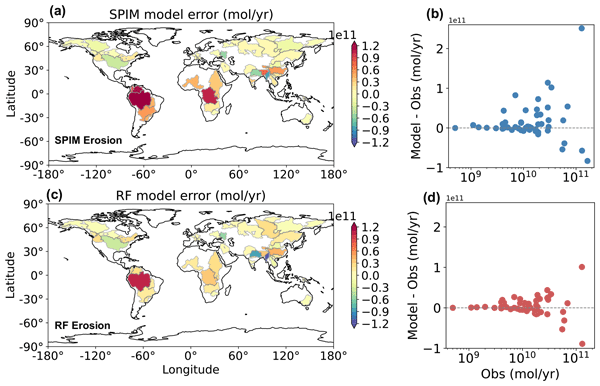
By using artificial intelligence and geological measurements, we built a machine learning model that accurately shows how landscapes erode. With this module included we developed a new silicate weatherig model, named MErSiM v1.0, which corrected a major overestimation of weathering flux in models simulating Earth’s long-term carbon cycle. This revealed that Earth's natural ability to remove atmospheric carbon dioxide is profoundly weaker under intense warming than previously understood.
Qi Cui, Qifan Lin, Jiaqi Guo, Yonggang Liu, Yue Liu, Xiujuan Bao, Xiang Li, Zhibo Li, Haoyue Zuo, Shuai Yuan, Yihui Chen, Shiyan Zhang, Jian Zhang, and Yongyun Hu
EGUsphere, https://doi.org/10.5194/egusphere-2026-3925, https://doi.org/10.5194/egusphere-2026-3925, 2026
This preprint is open for discussion and under review for Climate of the Past (CP).
Short summary
Short summary
Atmospheric dust affects Earth's climate and ocean life, yet its long-term history remained unclear. Using the Earth system model CESM 1.2.2, coupled with the vegetation model BIOME4, we reconstructed changes in global dust activity over the past 540 million years, examining how land plants, shifting continental configurations, and evolving climate jointly controlled the global dust cycle and its impact on climate.
Anni Zhao, Chris Brierley, Venni Arra-Kastrati, Xiaoxu Shi, and Yongyun Hu
Clim. Past, 22, 689–708, https://doi.org/10.5194/cp-22-689-2026, https://doi.org/10.5194/cp-22-689-2026, 2026
Short summary
Short summary
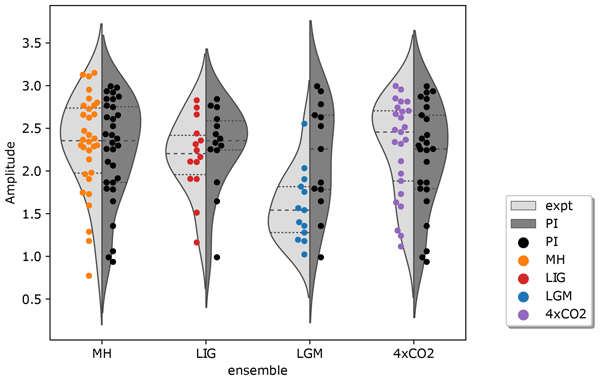
The North Atlantic Oscillation has large impacts on the European climate, whose future behaviour remains uncertain. We assess the NAO response in three past experiments (midHolocene, lig127k, lgm) and an abrupt quadrupled CO2 experiment (abrupt4xCO2). Our results show that NAO weakens (enhances) in response to cooling (warming), while it is not sensitive to orbital configurations. The associated teleconnections change consistently with the theory and are sensitive to the change in NAO amplitude.
Ziying Yang, Jiping Liu, Mirong Song, Yongyun Hu, Qinghua Yang, Ke Fan, Rune Grand Graversen, and Lu Zhou
The Cryosphere, 19, 6381–6402, https://doi.org/10.5194/tc-19-6381-2025, https://doi.org/10.5194/tc-19-6381-2025, 2025
Short summary
Short summary
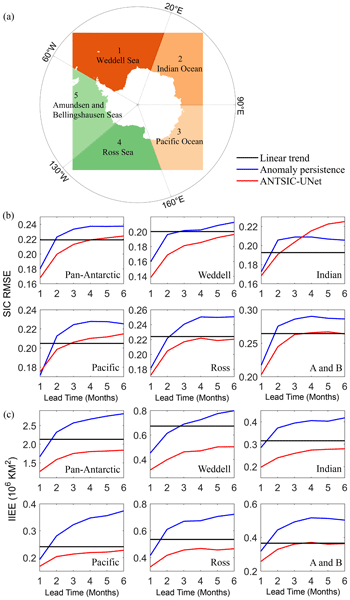
Antarctic sea ice has changed rapidly in recent years. Here we developed a deep learning model trained by multiple climate variables for extended seasonal Antarctic sea ice prediction. Our model shows high predictive skills up to 6 months in advance, particularly in predicting extreme events. It also shows skillful predictions at the sea ice edge and year-to-year sea ice changes. Variable importance analyses suggest what variables are more important for prediction at different lead times.
Hu Yang, Xiaoxu Shi, Xulong Wang, Qingsong Liu, Yi Zhong, Xiaodong Liu, Youbin Sun, Yanjun Cai, Fei Liu, Gerrit Lohmann, Martin Werner, Zhimin Jian, Tainã M. L. Pinho, Hai Cheng, Lijuan Lu, Jiping Liu, Chao-Yuan Yang, Qinghua Yang, Yongyun Hu, Xing Cheng, Jingyu Zhang, and Dake Chen
Clim. Past, 21, 1263–1279, https://doi.org/10.5194/cp-21-1263-2025, https://doi.org/10.5194/cp-21-1263-2025, 2025
Short summary
Short summary
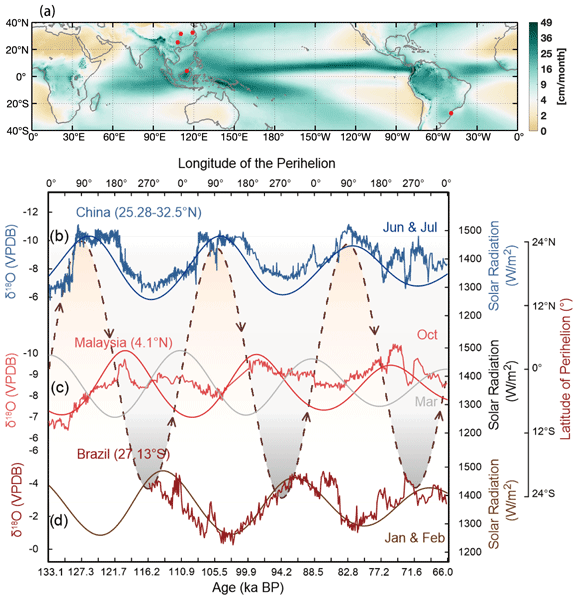
For 1 century, the hemispheric summer insolation is proposed as a key pacemaker of astronomical climate change. However, an increasing number of geologic records reveal that the low-latitude hydrological cycle shows asynchronous precessional evolutions that are very often out of phase with the summer insolation. Here, we propose that the astronomically driven low-latitude hydrological cycle is not paced by summer insolation but by shifting perihelion.
Kai Man, Xichen Li, Jürg Luterbacher, Lei Geng, Naiming Yuan, Yurong Hou, Yonghao Wang, and Yujie Miao
EGUsphere, https://doi.org/10.5194/egusphere-2025-1381, https://doi.org/10.5194/egusphere-2025-1381, 2025
Preprint archived
Short summary
Short summary
The West Antarctic Ice Sheet shows opposing snow accumulation trends: decreasing in the west and increasing in the east. Our study reveals that tropical ocean temperature shifts – Pacific cooling and Atlantic warming – drive changes in winds and moisture, boosting snowfall in the east while reducing it in the west. Using ice cores and models, we highlight how distant ocean changes shape Antarctic Ice Sheet, crucial for predicting future sea level rise.
Anni Zhao, Ran Feng, Chris M. Brierley, Jian Zhang, and Yongyun Hu
Clim. Past, 20, 1195–1211, https://doi.org/10.5194/cp-20-1195-2024, https://doi.org/10.5194/cp-20-1195-2024, 2024
Short summary
Short summary
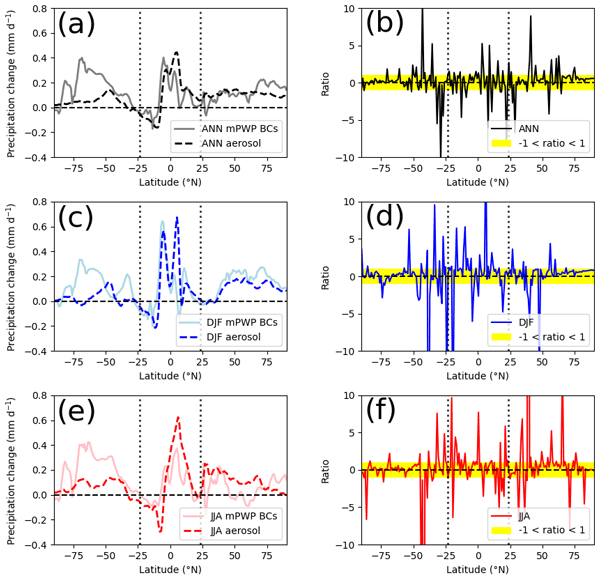
We analyse simulations with idealised aerosol scenarios to examine the importance of aerosol forcing on mPWP precipitation and how aerosol uncertainty could explain the data–model mismatch. We find further warming, a narrower and stronger ITCZ, and monsoon domain rainfall change after removal of industrial emissions. Aerosols have more impacts on tropical precipitation than the mPWP boundary conditions. This highlights the importance of prescribed aerosol scenarios in simulating mPWP climate.
Haoyue Zuo, Yonggang Liu, Gaojun Li, Zhifang Xu, Liang Zhao, Zhengtang Guo, and Yongyun Hu
Geosci. Model Dev., 17, 3949–3974, https://doi.org/10.5194/gmd-17-3949-2024, https://doi.org/10.5194/gmd-17-3949-2024, 2024
Short summary
Short summary
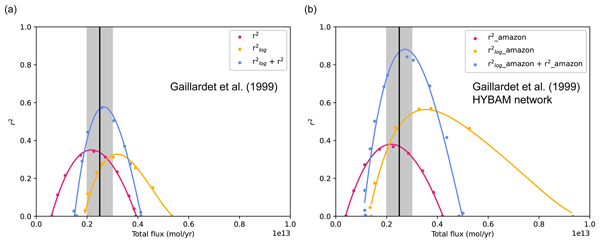
Compared to the silicate weathering fluxes measured at large river basins, the current models tend to systematically overestimate the fluxes over the tropical region, which leads to an overestimation of the global total weathering flux. The most possible cause of such bias is found to be the overestimation of tropical surface erosion, which indicates that the tropical vegetation likely slows down physical erosion significantly. We propose a way of taking this effect into account in models.
Cited articles
Bergmann, K. D., Macdonald, F. A., and Swanson-Hysell, N. L.: The Causes and Consequences of Ordovician Cooling, Annu. Rev. Earth Pl. Sc., 53, 651–685, https://doi.org/10.1146/annurev-earth-040523-114630, 2025.
Berner, R. A.: GEOCARB II, a revised model of atmospheric CO2 over Phanerozoic time, Am. J. Sci., 294, 56–91, https://doi.org/10.2475/ajs.294.1.56, 1994.
Caputo, M. and Crowell, J.: Migration of glacial centers across Gondwana during Paleozoic Era, Geol. Soc. Am. Bull., 96, https://doi.org/10.1130/0016-7606(1985)96<1020:MOGCAG>2.0.CO;2, 1985.
Cocks, L. R. M. and Torsvik, T. H.: Ordovician palaeogeography and climate change, Gondwana Res., 100, 53–72, https://doi.org/10.1016/j.gr.2020.09.008, 2021.
Connolley, W. M.: The Antarctic Temperature Inversion, Int. J. Climatol., 16, 1333–1342, https://doi.org/10.1002/(SICI)1097-0088(199612)16:12<1333::AID-JOC96>3.0.CO;2-6, 1996.
Crowley, T. J. and Baum, S. K.: Toward reconciliation of Late Ordovician (∼ 440 Ma) glaciation with very high CO2 levels, J. Geophys. Res.-Atmos., 96, 22597–22610, https://doi.org/10.1029/91JD02449, 1991.
Crowley, T. J. and Baum, S. K.: Reconciling Late Ordovician (440 Ma) glaciation with very high (14X) CO2 levels, J. Geophys. Res.-Atmos., 100, 1093–1101, https://doi.org/10.1029/94JD02521, 1995.
Crowley, T. J., Mengel, J. G., and Short, D. A.: Gondwanaland's seasonal cycle, Nature, 329, 803–807, https://doi.org/10.1038/329803a0, 1987.
Dabard, M. P., Loi, A., Paris, F., Ghienne, J. F., Pistis, M., and Vidal, M.: Sea-level curve for the Middle to early Late Ordovician in the Armorican Massif (western France): Icehouse third-order glacio-eustatic cycles, Paleogeogr. Paleocl., 436, 96–111, https://doi.org/10.1016/j.palaeo.2015.06.038, 2015.
Delabroye, A. and Vecoli, M.: The end-Ordovician glaciation and the Hirnantian Stage: A global review and questions about Late Ordovician event stratigraphy, Earth-Sci. Rev., 98, 269–282, https://doi.org/10.1016/j.earscirev.2009.10.010, 2010.
Finnegan, S., Bergmann, K., Eiler, J. M., Jones, D. S., Fike, D. A., Eisenman, I., Hughes, N. C., Tripati, A. K., and Fischer, W. W.: The Magnitude and Duration of Late Ordovician–Early Silurian Glaciation, Science, 331, 903–906, https://doi.org/10.1126/science.1200803, 2011.
Fyke, J., Sergienko, O., Löfverström, M., Price, S., and Lenaerts, J. T. M.: An Overview of Interactions and Feedbacks Between Ice Sheets and the Earth System, Rev. Geophys., 56, 361–408, https://doi.org/10.1029/2018RG000600, 2018.
Gong, X., Zhang, X., Lohmann, G., Wei, W., Zhang, X., and Pfeiffer, M.: Higher Laurentide and Greenland ice sheets strengthen the North Atlantic ocean circulation, Clim. Dyn., 45, 139–150, https://doi.org/10.1007/s00382-015-2502-8, 2015.
Gregoire, L. J., Otto-Bliesner, B., Valdes, P. J., and Ivanovic, R.: Abrupt Bølling warming and ice saddle collapse contributions to the Meltwater Pulse 1a rapid sea level rise, Geophys. Res. Lett., 43, 9130–9137, https://doi.org/10.1002/2016GL070356, 2016.
Gregoire, L. J., Ivanovic, R. F., Maycock, A. C., Valdes, P. J., and Stevenson, S.: Holocene lowering of the Laurentide ice sheet affects North Atlantic gyre circulation and climate, Clim. Dyn., 51, 3797–3813, https://doi.org/10.1007/s00382-018-4111-9, 2018.
Grossman, E. L. and Joachimski, M. M.: Ocean temperatures through the Phanerozoic reassessed, Sci. Rep., 12, 8938, https://doi.org/10.1038/s41598-022-11493-1, 2022.
Hakuba, M. Z., Folini, D., Wild, M., and Schär, C.: Impact of Greenland's topographic height on precipitation and snow accumulation in idealized simulations, J. Geophys. Res.-Atmos., 117, https://doi.org/10.1029/2011JD017052, 2012.
Hanna, E., Huybrechts, P., Cappelen, J., Steffen, K., Bales, R. C., Burgess, E., McConnell, J. R., Peder Steffensen, J., Van den Broeke, M., Wake, L., Bigg, G., Griffiths, M., and Savas, D.: Greenland Ice Sheet surface mass balance 1870 to 2010 based on Twentieth Century Reanalysis, and links with global climate forcing, J. Geophys. Res.-Atmos., 116, https://doi.org/10.1029/2011JD016387, 2011.
Held, I. M., Ting, M., and Wang, H.: Northern Winter Stationary Waves: Theory and Modeling, J. Climate, 15, 2125–2144, https://doi.org/10.1175/1520-0442(2002)015<2125:NWSWTA>2.0.CO;2, 2002.
Herrmann, A. D., Haupt, B. J., Patzkowsky, M. E., Seidov, D., and Slingerland, R. L.: Response of Late Ordovician paleoceanography to changes in sea level, continental drift, and atmospheric pCO2: potential causes for long-term cooling and glaciation, Paleogeogr. Paleocl., 210, 385–401, https://doi.org/10.1016/j.palaeo.2004.02.034, 2004.
Holmden, C., Mitchell, C. E., LaPorte, D. F., Patterson, W. P., Melchin, M. J., and Finney, S. C.: Nd isotope records of late Ordovician sea-level change – Implications for glaciation frequency and global stratigraphic correlation, Paleogeogr. Paleocl., 386, 131–144, https://doi.org/10.1016/j.palaeo.2013.05.014, 2013.
Horton, D. E., Poulsen, C. J., and Pollard, D.: Orbital and CO2 forcing of late Paleozoic continental ice sheets, Geophys. Res. Lett., 34, https://doi.org/10.1029/2007GL031188, 2007.
Horton, D. E., Poulsen, C. J., and Pollard, D.: Influence of high-latitude vegetation feedbacks on late Palaeozoic glacial cycles, Nat. Geosci., 3, 572–577, https://doi.org/10.1038/ngeo922, 2010.
Hurrell, J. W., Holland, M. M., Gent, P. R., Ghan, S., Kay, J. E., Kushner, P. J., Lamarque, J.-F., Large, W. G., Lawrence, D., Lindsay, K., Lipscomb, W. H., Long, M. C., Mahowald, N., Marsh, D. R., Neale, R. B., Rasch, P., Vavrus, S., Vertenstein, M., Bader, D., Collins, W. D., Hack, J. J., Kiehl, J., and Marshall, S.: The Community Earth System Model: A Framework for Collaborative Research, B. Am. Meteorol. Soc., 94, 1339–1360, https://doi.org/10.1175/BAMS-D-12-00121.1, 2013.
Isson, T. and Rauzi, S.: Oxygen isotope ensemble reveals Earth's seawater, temperature, and carbon cycle history, Science, 383, 666–670, https://doi.org/10.1126/science.adg1366, 2024.
Klockmann, M., Mikolajewicz, U., Kleppin, H., and Marotzke, J.: Coupling of the Subpolar Gyre and the Overturning Circulation During Abrupt Glacial Climate Transitions, Geophys. Res. Lett., 47, https://doi.org/10.1029/2020GL090361, 2020.
Larour, E., Morlighem, M., Seroussi, H., Schiermeier, J., and Rignot, E.: Ice flow sensitivity to geothermal heat flux of Pine Island Glacier, Antarctica, J. Geophys. Res.-Earth, 117, https://doi.org/10.1029/2012JF002371, 2012.
Lear, C. H., Elderfield, H., and Wilson, P. A.: Compiled Bottom Water Temperatures and oxygen isotope ratios, PANGAEA [data set], https://doi.org/10.1594/PANGAEA.913866, 2020.
Lécuyer, C., Amiot, R., Touzeau, A., and Trotter, J.: Calibration of the phosphate δ18O thermometer with carbonate–water oxygen isotope fractionation equations, Chem. Geol., 347, 217–226, https://doi.org/10.1016/j.chemgeo.2013.03.008, 2013.
Lee, H.-I., Mitchell, J. L., Lora, J. M., and Tripati, A.: Influence of Stationary Waves on Precipitation Change in North American Summer during the Last Glacial Maximum, J. Climate, 36, 3165–3182, https://doi.org/10.1175/JCLI-D-21-0886.1, 2023.
Li, X., Hu, Y., Guo, J., Lan, J., Lin, Q., Bao, X., Yuan, S., Wei, M., Li, Z., Man, K., Yin, Z., Han, J., Zhang, J., Zhu, C., Zhao, Z., Liu, Y., Yang, J., and Nie, J.: A high-resolution climate simulation dataset for the past 540 million years, Sci. Data, 9, 371, https://doi.org/10.1038/s41597-022-01490-4, 2022.
Liakka, J. and Lofverstrom, M.: Arctic warming induced by the Laurentide Ice Sheet topography, Clim. Past, 14, 887–900, https://doi.org/10.5194/cp-14-887-2018, 2018.
Liakka, J., Löfverström, M., and Colleoni, F.: The impact of the North American glacial topography on the evolution of the Eurasian ice sheet over the last glacial cycle, Clim. Past, 12, 1225–1241, https://doi.org/10.5194/cp-12-1225-2016, 2016.
Liu, P., Liu, Y., Peng, Y., Lamarque, J.-F., Wang, M., and Hu, Y.: Large influence of dust on the Precambrian climate, Nat. Commun., 11, 4427, https://doi.org/10.1038/s41467-020-18258-2, 2020.
Löfverström, M. and Liakka, J.: On the limited ice intrusion in Alaska at the LGM, Geophys. Res. Lett., 43, 11,030–11,038, https://doi.org/10.1002/2016GL071012, 2016.
Lowry, D. P., Poulsen, C. J., Horton, D. E., Torsvik, T. H., and Pollard, D.: Thresholds for Paleozoic ice sheet initiation, Geology, 42, 627–630, https://doi.org/10.1130/G35615.1, 2014.
Man, K., Wei, Q., Tan, N., Zhang, Z., Li, X., and Liu, Y.: Modeling the Cenozoic evolution of the Antarctic Ice Sheet-Influence of the uncertainty in climate forcing, Quaternary Sci., 43, 911–924, https://doi.org/10.11928/j.issn.1001-7410.2023.04.01, 2023.
Miller, K. G., Browning, J. V., Schmelz, W. J., Kopp, R. E., Mountain, G. S., and Wright, J. D.: Cenozoic sea-level and cryospheric evolution from deep-sea geochemical and continental margin records, Sci. Adv., 6, https://doi.org/10.1126/sciadv.aaz1346, 2020.
Montañez, I. P. and Poulsen, C. J.: The Late Paleozoic Ice Age: An Evolving Paradigm, Annu. Rev. Earth Planet. Sci., 41, 629–656, https://doi.org/10.1146/annurev.earth.031208.100118, 2013.
Oerlemans, J.: Some basic experiments with a vertically-integrated ice sheet model, Tellus, 33, 1–11, https://doi.org/10.1111/j.2153-3490.1981.tb01726.x, 1981.
Parish, T. R. and Cassano, J. J.: Diagnosis of the Katabatic Wind Influence on the Wintertime Antarctic Surface Wind Field from Numerical Simulations, Mon. Weather Rev., 131, 1128–1139, https://doi.org/10.1175/1520-0493(2003)131<1128:DOTKWI>2.0.CO;2, 2003.
Pausata, F. S. R., Li, C., Wettstein, J. J., Kageyama, M., and Nisancioglu, K. H.: The key role of topography in altering North Atlantic atmospheric circulation during the last glacial period, Clim. Past, 7, 1089–1101, https://doi.org/10.5194/cp-7-1089-2011, 2011.
Pohl, A., Donnadieu, Y., Le Hir, G., Ladant, J.-B., Dumas, C., Alvarez-Solas, J., and Vandenbroucke, T. R. A.: Glacial onset predated Late Ordovician climate cooling, Paleoceanography, 31, 800–821, https://doi.org/10.1002/2016PA002928, 2016.
Pohl, A., Lu, Z., Lu, W., Stockey, R. G., Elrick, M., Li, M., Desrochers, A., Shen, Y., He, R., Finnegan, S., and Ridgwell, A.: Vertical decoupling in Late Ordovician anoxia due to reorganization of ocean circulation, Nat. Geosci., 14, 868–873, https://doi.org/10.1038/s41561-021-00843-9, 2021.
Pollard, D.: A retrospective look at coupled ice sheet–climate modeling, Climatic Change, 100, 173–194, https://doi.org/10.1007/s10584-010-9830-9, 2010.
Pollard, D. and DeConto, R. M.: Description of a hybrid ice sheet-shelf model, and application to Antarctica, Geosci. Model Dev., 5, 1273–1295, https://doi.org/10.5194/gmd-5-1273-2012, 2012.
Railsback, L. B., Anderson, T. F., Ackerly, S. C., and Cisne, J. L.: Paleoceanographic modeling of temperature-salinity profiles from stable isotopic data, Paleoceanography, 4, 585–591, https://doi.org/10.1029/PA004i005p00585, 1989.
Rasmussen, C. M. Ø., Ullmann, C. V., Jakobsen, K. G., Lindskog, A., Hansen, J., Hansen, T., Eriksson, M. E., Dronov, A., Frei, R., Korte, C., Nielsen, A. T., and Harper, D. A. T.: Onset of main Phanerozoic marine radiation sparked by emerging Mid Ordovician icehouse, Sci. Rep., 6, 18884, https://doi.org/10.1038/srep18884, 2016.
Reeh, N.: Parameterization of Melt Rate and Surface Temperature in the Greenland Ice Sheet, Polarforschung, 59, 113–128, https://doi.org/10.2312/polarforschung.59.3.113, 1991.
Robinson, A. and Goelzer, H.: The importance of insolation changes for paleo ice sheet modeling, The Cryosphere, 8, 1419–1428, https://doi.org/10.5194/tc-8-1419-2014, 2014.
Saupe, E. E., Qiao, H., Donnadieu, Y., Farnsworth, A., Kennedy-Asser, A. T., Ladant, J.-B., Lunt, D. J., Pohl, A., Valdes, P., and Finnegan, S.: Extinction intensity during Ordovician and Cenozoic glaciations explained by cooling and palaeogeography, Nat. Geosci., 13, 65–70, https://doi.org/10.1038/s41561-019-0504-6, 2020.
Scherrenberg, M. D. W., Berends, C. J., Stap, L. B., and van de Wal, R. S. W.: Modelling feedbacks between the Northern Hemisphere ice sheets and climate during the last glacial cycle, Clim. Past, 19, 399–418, https://doi.org/10.5194/cp-19-399-2023, 2023.
Scotese, C. R. and Wright, N. M.: PALEOMAP Paleodigital Elevation Models (PaleoDEMS) for the Phanerozoic, Zenodo [data set], https://doi.org/10.5281/zenodo.5460860, 2018.
Scotese, C. R., Song, H., Mills, B. J. W., and van der Meer, D. G.: Phanerozoic paleotemperatures: The earth's changing climate during the last 540 million years, Earth-Sci. Rev., 215, 103503, https://doi.org/10.1016/j.earscirev.2021.103503, 2021.
Sheehan, P. M.: History of marine biodiversity, Geol. J., 36, 231–249, https://doi.org/10.1002/gj.890, 2001.
Sun, Y.: Data associated with: “Ocean warming caused by Late Ordovician glacial onset in a coupled climate-ice sheet simulation”, Zenodo [data set], https://doi.org/10.5281/zenodo.21478985, 2026.
Sun, Y., Farnsworth, A., Joachimski, M. M., Wignall, P. B., Krystyn, L., Bond, D. P. G., Ravidà, D. C. G., and Valdes, P. J.: Mega El Niño instigated the end-Permian mass extinction, Science, 385, 1189–1195, https://doi.org/10.1126/science.ado2030, 2024.
Thornton, P. E., Lamarque, J.-F., Rosenbloom, N. A., and Mahowald, N. M.: Influence of carbon-nitrogen cycle coupling on land model response to CO2 fertilization and climate variability, Global Biogeochem. Cy., 21, https://doi.org/10.1029/2006GB002868, 2007.
Torsvik, T. H. and Cocks, L. R. M.: Earth History and Palaeogeography, Cambridge University Press, Cambridge, https://doi.org/10.1017/9781316225523, 2016.
Trotter, J. A., Williams, I. S., Barnes, C. R., Lécuyer, C., and Nicoll, R. S.: Did Cooling Oceans Trigger Ordovician Biodiversification? Evidence from Conodont Thermometry, Science, 321, 550–554, https://doi.org/10.1126/science.1155814, 2008.
Vandenbroucke, T. R. A., Armstrong, H. A., Williams, M., Zalasiewicz, J. A., and Sabbe, K.: Ground-truthing Late Ordovician climate models using the paleobiogeography of graptolites, Paleoceanography, 24, https://doi.org/10.1029/2008PA001720, 2009.
Veizer, J. and Prokoph, A.: Temperatures and oxygen isotopic composition of Phanerozoic oceans, Earth-Sci. Rev., 146, 92–104, https://doi.org/10.1016/j.earscirev.2015.03.008, 2015.
Vihma, T., Tuovinen, E., and Savijärvi, H.: Interaction of katabatic winds and near-surface temperatures in the Antarctic, J. Geophys. Res.-Atmos., 116, https://doi.org/10.1029/2010JD014917, 2011.
Vizcaíno, M., Mikolajewicz, U., Jungclaus, J., and Schurgers, G.: Climate modification by future ice sheet changes and consequences for ice sheet mass balance, Clim. Dyn., 34, 301–324, https://doi.org/10.1007/s00382-009-0591-y, 2010.
Wake, L. and Marshall, S.: Assessment of current methods of positive degree-day calculation using in situ observations from glaciated regions, J. Glaciol., 61, 329–344, https://doi.org/10.3189/2015JoG14J116, 2015.
Warthen, S. T.: Attempting to Recreate the Late Ordovician Glaciation with the University of Victoria Earth System Climate Model, The Ohio State University, http://rave.ohiolink.edu/etdc/view?acc_num=osu1465828293 (last access: 23 September 2026), 2016.
Wei, Q., Liu, Y., Yan, Q., Yao, T., Wang, M., Huang, H., and Hu, Y.: The Glacier-Climate Interaction Over the Tibetan Plateau and Its Surroundings During the Last Glacial Maximum, Geophys. Res. Lett., 50, https://doi.org/10.1029/2023GL103538, 2023.
Yun, K.-S., Timmermann, A., Lee, S.-S., Willeit, M., Ganopolski, A., and Jadhav, J.: A transient coupled general circulation model (CGCM) simulation of the past 3 million years, Clim. Past, 19, 1951–1974, https://doi.org/10.5194/cp-19-1951-2023, 2023.
Zhang, M., Liu, Y., Zhu, J., Wang, Z., and Liu, Z.: Impact of Dust on Climate and AMOC During the Last Glacial Maximum Simulated by CESM1.2, Geophys. Res. Lett., 49, e2021GL096672, https://doi.org/10.1029/2021GL096672, 2022.
Zhu, J., Liu, Z., Zhang, X., Eisenman, I., and Liu, W.: Linear weakening of the AMOC in response to receding glacial ice sheets in CCSM3, Geophys. Res. Lett., 41, 6252–6258, https://doi.org/10.1002/2014GL060891, 2014.
Zhu, J., Poulsen, C. J., and Tierney, J. E.: Simulation of Eocene extreme warmth and high climate sensitivity through cloud feedbacks, Sci. Adv., 5, eaax1874, https://doi.org/10.1126/sciadv.aax1874, 2019.
Zhu, J., Poulsen, C. J., Otto-Bliesner, B. L., Liu, Z., Brady, E. C., and Noone, D. C.: Simulation of early Eocene water isotopes using an Earth system model and its implication for past climate reconstruction, Earth Planet. Sci. Lett., 537, 116164, https://doi.org/10.1016/j.epsl.2020.116164, 2020.
Short summary
This study investigates the dramatic global cooling during the Late Ordovician, 440 million years ago. Our simulations reveal a powerful feedback loop: as the ice sheet grew, it generated strong, cold winds flowing down its slopes. These winds further cooled the continents, causing the ice sheet to expand even more. The super ice sheet led to a substantial global temperature drop of about 1.5 °C. Interestingly, while continents froze, the oceans warmed.
This study investigates the dramatic global cooling during the Late Ordovician, 440 million...


