
Articles | Volume 22, issue 1
https://doi.org/10.5194/cp-22-173-2026
© Author(s) 2026. This work is distributed under
the Creative Commons Attribution 4.0 License.
the Creative Commons Attribution 4.0 License.
https://doi.org/10.5194/cp-22-173-2026
© Author(s) 2026. This work is distributed under
the Creative Commons Attribution 4.0 License.
the Creative Commons Attribution 4.0 License.
Research article
| 
21 Jan 2026
Research article |
| 21 Jan 2026
| 21 Jan 2026
A continuous 6000 a age depth relationship for the remainder of the Weißseespitze summit glacier based on 39Ar and 14C dating
David Wachs
CORRESPONDING AUTHOR

Institute of Environmental Physics, Heidelberg University, Heidelberg, Germany
Kirchhoff-Institute for Physics, Heidelberg University, Heidelberg, Germany
Azzurra Spagnesi
Department of Environmental Sciences, Informatics and Statistics, Ca' Foscari University of Venice, Venice, Italy
Institute for Interdisciplinary Mountain Research of the Austrian Academy of Sciences, Innsbruck, Austria
Pascal Bohleber
Alfred Wegener Institute Helmholtz Centre for Polar and Marine Research, Bremerhaven, Germany
Goethe University Frankfurt am Main, Frankfurt am Main, Germany
Andrea Fischer
Institute for Interdisciplinary Mountain Research of the Austrian Academy of Sciences, Innsbruck, Austria
Martin Stocker-Waldhuber
Institute for Interdisciplinary Mountain Research of the Austrian Academy of Sciences, Innsbruck, Austria
Alexander Junkermann
Kirchhoff-Institute for Physics, Heidelberg University, Heidelberg, Germany
Carl Kindermann
Institute of Environmental Physics, Heidelberg University, Heidelberg, Germany
Linus Langenbacher
Institute of Environmental Physics, Heidelberg University, Heidelberg, Germany
Niclas Mandaric
Kirchhoff-Institute for Physics, Heidelberg University, Heidelberg, Germany
Joshua Marks
Institute of Environmental Physics, Heidelberg University, Heidelberg, Germany
Department of Lake Research, Helmholtz Centre for Environmental Research – UFZ, Magdeburg, Germany
Florian Meienburg
Institute of Environmental Physics, Heidelberg University, Heidelberg, Germany
Kirchhoff-Institute for Physics, Heidelberg University, Heidelberg, Germany
Theo M. Jenk
PSI Center for Energy and Environmental Sciences, Villigen PSI, Switzerland
Oeschger Centre for Climate Change Research, University of Bern, Bern, Switzerland
Markus K. Oberthaler
Kirchhoff-Institute for Physics, Heidelberg University, Heidelberg, Germany
Werner Aeschbach
Institute of Environmental Physics, Heidelberg University, Heidelberg, Germany
Heidelberg Center for the Environment, Heidelberg University, Heidelberg, Germany
Related authors
Michelle Marie Worek, David Wachs, Anja Eichler, Matthias Huss, Raphael Moser, Sabina Brütsch, Sönke Szidat, Margit Schwikowski, and Theo Manuel Jenk
EGUsphere, https://doi.org/10.5194/egusphere-2026-3356, https://doi.org/10.5194/egusphere-2026-3356, 2026
Short summary
Short summary
To assess whether current glacier loss in the Alps is unprecedented, we drilled ice cores from the Tödi summit glacier in Switzerland. We dated the ice with radionuclides and modelling, finding that the surface ice is from about 1960, and the deepest ice is 10,000 years old. Our results show that summit glaciers can preserve very old ice through warm periods, indicating local factors matter more than elevation, and some cold-based glaciers at risk of melting may preserve ancient climate data.

François Burgay, Haley Derrod, Tobias Erhardt, Federico Scoto, Delia Segato, Niccolò Maffezzoli, Federico Dallo, Daniele Zannoni, Azzurra Spagnesi, Helle-Astrid Kjær, Hubertus Fischer, Cristiano Varin, Carlo Barbante, and Andrea Spolaor
Clim. Past, 22, 1675–1689, https://doi.org/10.5194/cp-22-1675-2026, https://doi.org/10.5194/cp-22-1675-2026, 2026
Short summary
Short summary
Ice-core measurements from Greenland suggest that atmospheric iron deposition played a smaller role than previously thought in regulating marine productivity in the iron-limited North Pacific. Despite a strong increase in total iron deposition, the fraction of iron more likely to be available to phytoplankton rose only modestly, pointing to sea-ice extent and sedimentary iron remobilization as potentially more important factors during the last glacial transition.
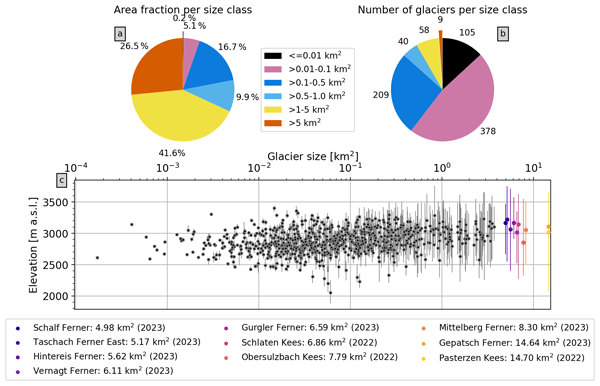
Lea Hartl, Jakob Abermann, Ayla Akgün, Giulia Bertolotti, Tobias Bolch, Svenja Conzelmann, Codrut-Andrei Diaconu, Iris Hansche, Anne Hartig, Anna Haut, Kay Helfricht, Bernhard Hynek, Marie Sophie Kaucher, Andreas Kellerer-Pirklbauer, Ann Christin Kogel, Julie Krippes, Marcela Violeta Lauria, Christoph Mayer, Jan-Christoph Otto, Rainer Prinz, Sina Prölß, Lorenzo Rieg, Lea Schönleber, Gabriele Schwaizer, Bernd Seiser, Martin Stocker-Waldhuber, Markus Strudl, Martin Verhounik, and Harald Zandler
The Cryosphere, 20, 5157–5180, https://doi.org/10.5194/tc-20-5157-2026, https://doi.org/10.5194/tc-20-5157-2026, 2026
Short summary
Short summary
We mapped glacier outlines in Austria using recent, high resolution imagery. The resulting glacier inventory provides an update on glacier area in Austria in 2021-2023. More than 30% of glacier area was lost and 95 glaciers have disappeared since the mid-2000s. Glacier recession is accelerating and regular updates to glacier inventories are needed to understand downstream changes to the hydrological system, quantify glacier mass loss, and support planning and adaptation measures.
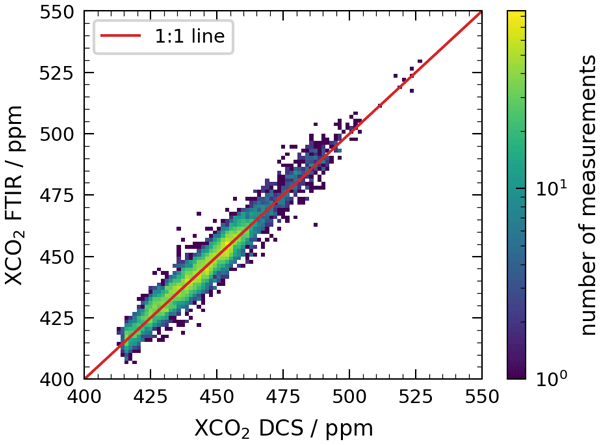
Tobias D. Schmitt, Romain Dubroeucq, Moritz Sindram, André Butz, Thomas Pfeifer, and Markus K. Oberthaler
Atmos. Meas. Tech., 19, 5717–5728, https://doi.org/10.5194/amt-19-5717-2026, https://doi.org/10.5194/amt-19-5717-2026, 2026
Short summary
Short summary
Urban areas account for a substantial share of global greenhouse gas emissions, yet measuring these emissions precisely is challenging due to spatial variability. This study implemented an advanced laser measurement technique, to directly average this spatial variability by measuring over a 3.1 km path, using only commercial parts. The high measurement precision and reliable operation, demonstrates that this technique is now accessible to the broader atmospheric measurement community.
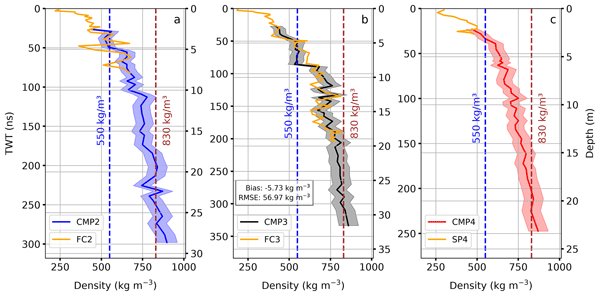
Akash M. Patil, Christoph Mayer, Theo M. Jenk, Astrid Lambrecht, Thorsten Seehaus, Alexander R. Groos, and Michelle Worek
The Cryosphere, 20, 4927–4955, https://doi.org/10.5194/tc-20-4927-2026, https://doi.org/10.5194/tc-20-4927-2026, 2026
Short summary
Short summary
Our study focused on understanding how a warming climate affects the Aletsch Glacier accumulation area. We used multi-year radar measurements and direct firn‑core analyses to estimate changes in density and compaction rate of snow-to-ice over a year. Our results show that the upper layers of the glacier are changing faster due to stronger summer melt in the lower parts of the accumulation zone. Our findings help to improve firn densification models and glacier mass-balance estimation.
Geunwoo Lee, Tobias Erhardt, Piers Larkman, Chantal Zeppenfeld, Sarah Jackson, Jochen Schmitt, Barbara Delmonte, Giovanni Baccolo, Catherine Ritz, Frank Wilhelms, Dorthe Dahl-Jensen, Kevin Michael Nikolaus, Pascal Bohleber, and Hubertus Fischer
EGUsphere, https://doi.org/10.5194/egusphere-2026-4574, https://doi.org/10.5194/egusphere-2026-4574, 2026
This preprint is open for discussion and under review for The Cryosphere (TC).
Short summary
Short summary
Deep ice cores preserve records of past climate, but chemical reactions inside the ice can blur these signals over time. To find out how, we studied millions of dust particles in a deep Antarctic ice core. We found that, over long timescales, dust dissolves and reforms into new minerals within tiny pockets of liquid, trapping chemical elements. Warm temperatures speed up this process. Accounting for it helps scientists interpret ancient climate records from deep ice more reliably.
Michelle Marie Worek, David Wachs, Anja Eichler, Matthias Huss, Raphael Moser, Sabina Brütsch, Sönke Szidat, Margit Schwikowski, and Theo Manuel Jenk
EGUsphere, https://doi.org/10.5194/egusphere-2026-3356, https://doi.org/10.5194/egusphere-2026-3356, 2026
Short summary
Short summary
To assess whether current glacier loss in the Alps is unprecedented, we drilled ice cores from the Tödi summit glacier in Switzerland. We dated the ice with radionuclides and modelling, finding that the surface ice is from about 1960, and the deepest ice is 10,000 years old. Our results show that summit glaciers can preserve very old ice through warm periods, indicating local factors matter more than elevation, and some cold-based glaciers at risk of melting may preserve ancient climate data.
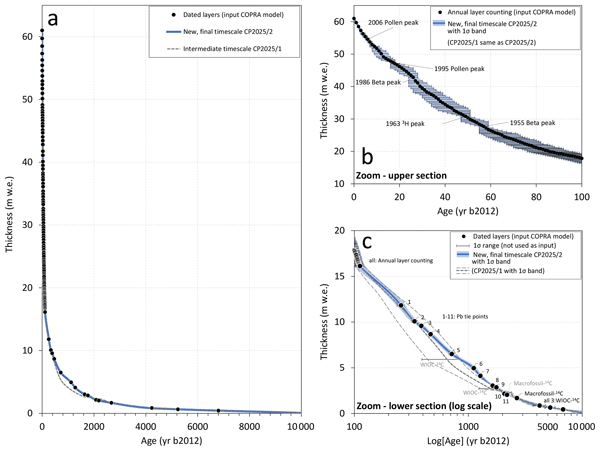
Paolo Gabrielli, Theo M. Jenk, Michele Bertó, Giuliano Dreossi, Daniela Festi, Werner Kofler, Mai Winstrup, Klaus Oeggl, Margit Schwikowski, Barbara Stenni, and Carlo Barbante
Clim. Past, 22, 1037–1055, https://doi.org/10.5194/cp-22-1037-2026, https://doi.org/10.5194/cp-22-1037-2026, 2026
Short summary
Short summary
A low latitude-high altitude Alpine ice core record was obtained in 2011 from the glacier Alto dell’Ortles (Eastern Alps, Italy) and provided evidence of one of the oldest Alpine ice core records spanning the last ~7000 years, back to the last Northern Hemisphere Climatic Optimum. Here we provide a new Alto dell’Ortles chronology of improved accuracy that will allow to constrain Holocene climatic and environmental histories emerging from this high-altitude glacial archive of Central Europe.
Niklas Kappelt, Piers Larkman, Pascal Bohleber, Florian Adolphi, Marcus Christl, Christof Vockenhuber, Philip Gautschi, Eric Wolff, and Raimund Muscheler
EGUsphere, https://doi.org/10.5194/egusphere-2026-790, https://doi.org/10.5194/egusphere-2026-790, 2026
This preprint is open for discussion and under review for The Cryosphere (TC).
Short summary
Short summary
10Be is a radionuclide often measured in ice cores to reconstruct the solar magnetic field and geomagnetic field, as well as to date ice based on its half-life of 1.387 million years. Previous measurements in deep ice from Antarctica showed a decrease in concentrations with age. We analysed the influence of the sample preparation procedure and were able to show that the use of ion exchange columns can lead to decreasing concentrations, an effect which is amplified at greater depths and ages.
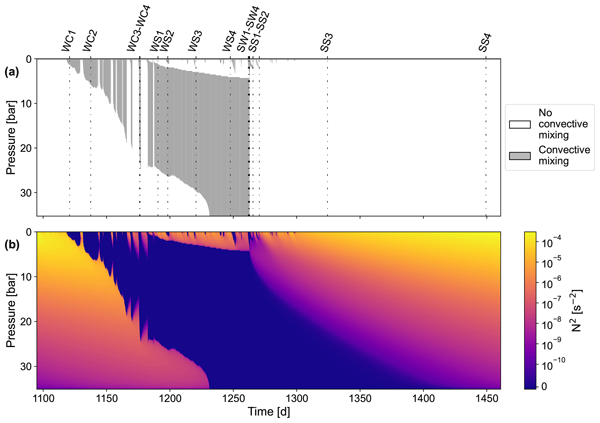
Joshua Marks, Kazuhisa A. Chikita, and Bertram Boehrer
Hydrol. Earth Syst. Sci., 30, 1503–1521, https://doi.org/10.5194/hess-30-1503-2026, https://doi.org/10.5194/hess-30-1503-2026, 2026
Short summary
Short summary
Water quality of lakes depends on deep convection. In many lakes, this is affected by thermobaricity, the temperature dependence of the compressibility of water. We created a numerical approach to demonstrate and emphasize the implementation of this effect in numerical lake models. We conceptually present the purely one dimensional thermobaric deep convection induced by denser water created by vertical cabbeling across the temperature of maximum density at a certain depth in the water column.
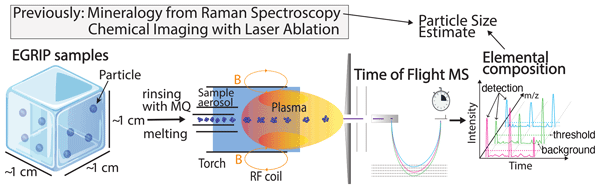
Nicolas Stoll, David Clases, Raquel Gonzalez de Vega, Matthias Elinkmann, Piers Larkman, and Pascal Bohleber
The Cryosphere, 20, 663–682, https://doi.org/10.5194/tc-20-663-2026, https://doi.org/10.5194/tc-20-663-2026, 2026
Short summary
Short summary
We analyse 8 samples from the East Greenland Ice-core Project (EGRIP) ice core, Greenland, using an underexplored method: single particle time of flight analysis. For the first time, we investigated thousands of particles from different climatic stages while applying a new approach to estimate particle sizes based on prior data. We characterise particles and clusters providing new insights on trace elements in ice sheets. This approach has enormous potential for analysing million-year-old ice.
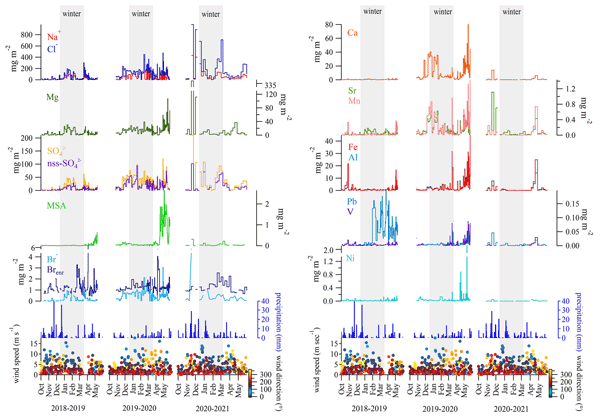
Azzurra Spagnesi, Elena Barbaro, Matteo Feltracco, Federico Scoto, Marco Vecchiato, Massimiliano Vardè, Mauro Mazzola, François Burgay, Federica Bruschi, Clara Jule Marie Hoppe, Allison Bailey, Andrea Gambaro, Carlo Barbante, and Andrea Spolaor
Atmos. Chem. Phys., 25, 16215–16232, https://doi.org/10.5194/acp-25-16215-2025, https://doi.org/10.5194/acp-25-16215-2025, 2025
Short summary
Short summary
Svalbard is ideal for studying how warming affects snow’s seasonal chemistry. By comparing the snow chemical composition of the 2019–2020 season with 2018–2019 and 2020–2021, we provide an overview of the seasonal and interannual variability of several chemical species on the Svalbard snowpack, furnishing insights into the interplay between short-term meteorological variability and the long-term climatic impacts of climate changes.
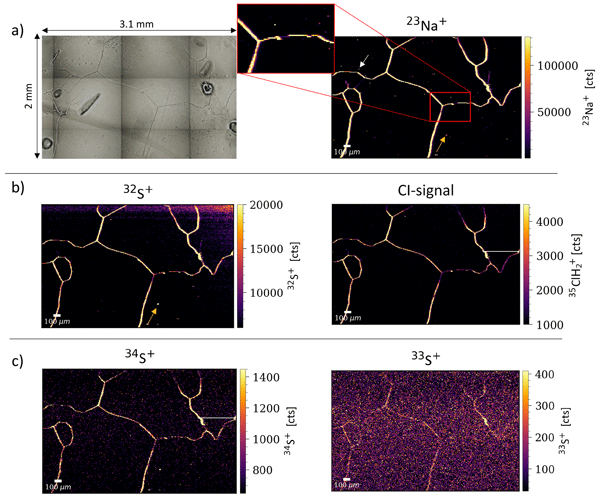
Pascal Bohleber, Nicolas Stoll, Piers Larkman, Rachael H. Rhodes, and David Clases
The Cryosphere, 19, 5485–5498, https://doi.org/10.5194/tc-19-5485-2025, https://doi.org/10.5194/tc-19-5485-2025, 2025
Short summary
Short summary
To avoid misinterpretation of impurity signals in ice cores, post-depositional changes need to be identified. Peak broadening with depth observed especially for S was previously related to diffusion in ice veins, but the exact physical mechanisms remain unclear. Our two-dimensional impurity maps by laser ablation inductively coupled plasma mass spectrometry were extended for the first time to S and Cl and support a view on diffusion not only through veins but also along grain boundaries.
Agnese Petteni, Elise Fourré, Elsa Gautier, Azzurra Spagnesi, Roxanne Jacob, Pete D. Akers, Daniele Zannoni, Jacopo Gabrieli, Olivier Jossoud, Frédéric Prié, Amaëlle Landais, Titouan Tcheng, Barbara Stenni, Joel Savarino, Patrick Ginot, and Mathieu Casado
Atmos. Meas. Tech., 18, 5435–5455, https://doi.org/10.5194/amt-18-5435-2025, https://doi.org/10.5194/amt-18-5435-2025, 2025
Short summary
Short summary
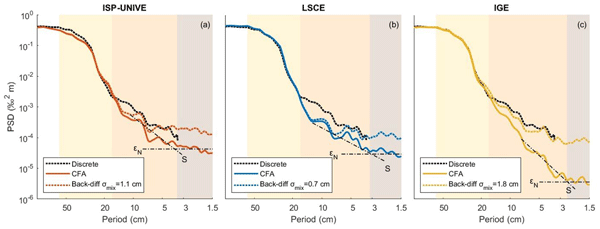
Our research compares three systems of continuous flow analysis coupled with cavity ring-down spectrometry (CFA-CRD) from Venice, Paris, and Grenoble laboratories for measuring water isotopes in ice cores, crucial for reconstructing past climate. We quantify each system’s mixing and measurement noise effects, which impact the achievable resolution of isotope continuous records. Our findings reveal specific configurations and procedures to enhance measurement accuracy, providing a framework to optimise water isotope analysis.
Lea Hartl, Federico Covi, Martin Stocker-Waldhuber, Anna Baldo, Davide Fugazza, Biagio Di Mauro, and Kathrin Naegeli
The Cryosphere, 19, 3329–3353, https://doi.org/10.5194/tc-19-3329-2025, https://doi.org/10.5194/tc-19-3329-2025, 2025
Short summary
Short summary
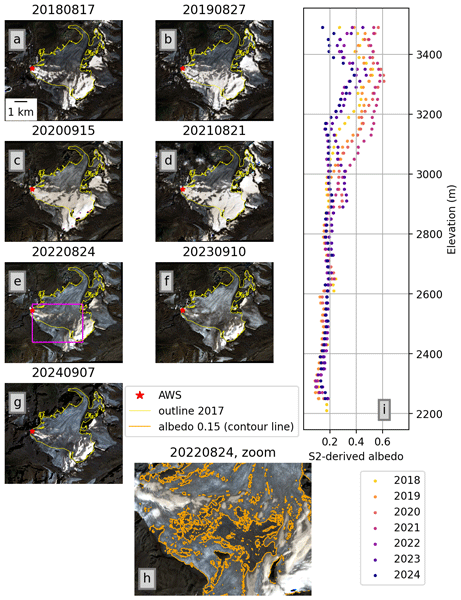
Glacier albedo determines how much solar radiation is absorbed by the glacier surface and is a key driver of glacier melt. Alpine glaciers are losing their snow and firn cover, and the underlying darker ice is becoming exposed. This means that more solar radiation is absorbed by the ice, which leads to increased melt. To quantify these processes, we explore data from a high-elevation, on-ice weather station that measures albedo and combine this information with satellite imagery.
Lea Hartl, Bernd Seiser, Martin Stocker-Waldhuber, Anna Baldo, Marcela Violeta Lauria, and Andrea Fischer
Earth Syst. Sci. Data, 16, 4077–4101, https://doi.org/10.5194/essd-16-4077-2024, https://doi.org/10.5194/essd-16-4077-2024, 2024
Short summary
Short summary
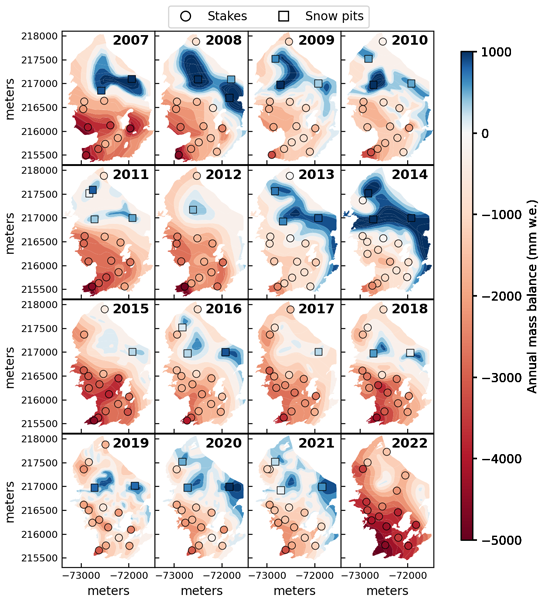
Glaciers in the Alps are receding at unprecedented rates. To understand how this affects the hydrology and ecosystems of the affected regions, it is important to measure glacier mass balance and ensure that records of field surveys are kept in standardized formats and well-documented. We describe glaciological measurements of ice ablation and snow accumulation gathered at Mullwitzkees and Venedigerkees, two glaciers in the Austrian Alps, since 2007 and 2012, respectively.
Tobias Erhardt, Camilla Marie Jensen, Florian Adolphi, Helle Astrid Kjær, Remi Dallmayr, Birthe Twarloh, Melanie Behrens, Motohiro Hirabayashi, Kaori Fukuda, Jun Ogata, François Burgay, Federico Scoto, Ilaria Crotti, Azzurra Spagnesi, Niccoló Maffezzoli, Delia Segato, Chiara Paleari, Florian Mekhaldi, Raimund Muscheler, Sophie Darfeuil, and Hubertus Fischer
Earth Syst. Sci. Data, 15, 5079–5091, https://doi.org/10.5194/essd-15-5079-2023, https://doi.org/10.5194/essd-15-5079-2023, 2023
Short summary
Short summary
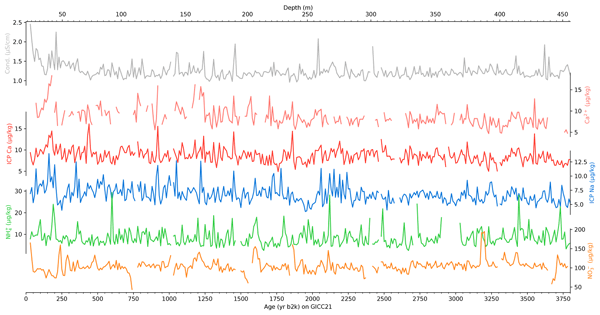
The presented paper provides a 3.8 kyr long dataset of aerosol concentrations from the East Greenland Ice coring Project (EGRIP) ice core. The data consists of 1 mm depth-resolution profiles of calcium, sodium, ammonium, nitrate, and electrolytic conductivity as well as decadal averages of these profiles. Alongside the data a detailed description of the measurement setup as well as a discussion of the uncertainties are given.
Ling Fang, Theo M. Jenk, Dominic Winski, Karl Kreutz, Hanna L. Brooks, Emma Erwin, Erich Osterberg, Seth Campbell, Cameron Wake, and Margit Schwikowski
The Cryosphere, 17, 4007–4020, https://doi.org/10.5194/tc-17-4007-2023, https://doi.org/10.5194/tc-17-4007-2023, 2023
Short summary
Short summary
Understanding the behavior of ocean–atmosphere teleconnections in the North Pacific during warm intervals can aid in predicting future warming scenarios. However, majority ice core records from Alaska–Yukon region only provide data for the last few centuries. This study introduces a continuous chronology for Denali ice core from Begguya, Alaska, using multiple dating methods. The early-Holocene-origin Denali ice core will facilitate future investigations of hydroclimate in the North Pacific.
Azzurra Spagnesi, Pascal Bohleber, Elena Barbaro, Matteo Feltracco, Fabrizio De Blasi, Giuliano Dreossi, Martin Stocker-Waldhuber, Daniela Festi, Jacopo Gabrieli, Andrea Gambaro, Andrea Fischer, and Carlo Barbante
EGUsphere, https://doi.org/10.5194/egusphere-2023-1625, https://doi.org/10.5194/egusphere-2023-1625, 2023
Preprint archived
Short summary
Short summary
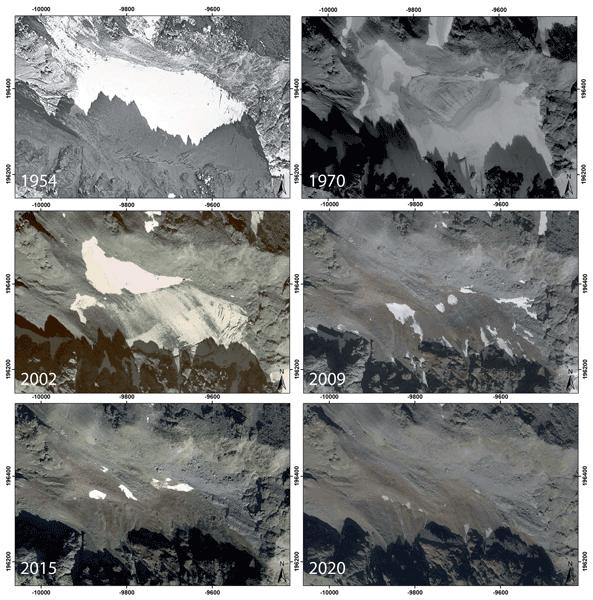
We present new data from a 10 m ice core drilled in 2019 and a 8.4 m parallel ice core drilled in 2021 at the summit of Weißseespitze glacier. In a new combination of proxies, we discuss profiles of stable water isotopes, major ion chemistry as well as a full profile of microcharcoal and levoglucosan. We find that the chemical and isotopic signals are preserved, despite the ongoing surface mass loss. This is not be to expected considering what has been found at other glaciers at similar locations.
Anja Eichler, Michel Legrand, Theo M. Jenk, Susanne Preunkert, Camilla Andersson, Sabine Eckhardt, Magnuz Engardt, Andreas Plach, and Margit Schwikowski
The Cryosphere, 17, 2119–2137, https://doi.org/10.5194/tc-17-2119-2023, https://doi.org/10.5194/tc-17-2119-2023, 2023
Short summary
Short summary
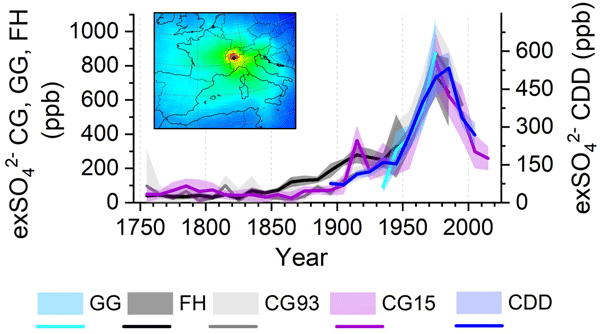
We investigate how a 250-year history of the emission of air pollutants (major inorganic aerosol constituents, black carbon, and trace species) is preserved in ice cores from four sites in the European Alps. The observed uniform timing in species-dependent longer-term concentration changes reveals that the different ice-core records provide a consistent, spatially representative signal of the pollution history from western European countries.
Lea Hartl, Thomas Zieher, Magnus Bremer, Martin Stocker-Waldhuber, Vivien Zahs, Bernhard Höfle, Christoph Klug, and Alessandro Cicoira
Earth Surf. Dynam., 11, 117–147, https://doi.org/10.5194/esurf-11-117-2023, https://doi.org/10.5194/esurf-11-117-2023, 2023
Short summary
Short summary
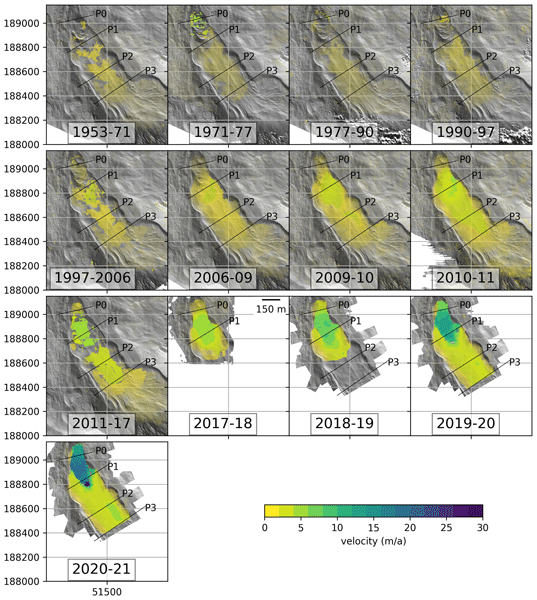
The rock glacier in Äußeres Hochebenkar (Austria) moved faster in 2021–2022 than it has in about 70 years of monitoring. It is currently destabilizing. Using a combination of different data types and methods, we show that there have been two cycles of destabilization at Hochebenkar and provide a detailed analysis of velocity and surface changes. Because our time series are very long and show repeated destabilization, this helps us better understand the processes of rock glacier destabilization.
Wangbin Zhang, Shugui Hou, Shuang-Ye Wu, Hongxi Pang, Sharon B. Sneed, Elena V. Korotkikh, Paul A. Mayewski, Theo M. Jenk, and Margit Schwikowski
The Cryosphere, 16, 1997–2008, https://doi.org/10.5194/tc-16-1997-2022, https://doi.org/10.5194/tc-16-1997-2022, 2022
Short summary
Short summary
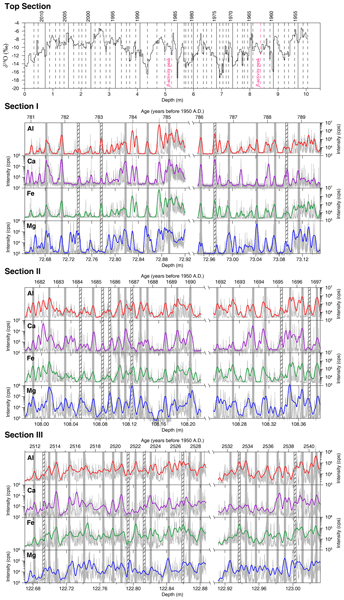
This study proposes a quantitative method to reconstruct annual precipitation records at the millennial timescale from the Tibetan ice cores through combining annual layer identification based on LA-ICP-MS measurement with an ice flow model. The reliability of this method is assessed by comparing our results with other reconstructed and modeled precipitation series for the Tibetan Plateau. The assessment shows that the method has a promising performance.
Paolo Gabrielli, Theo Manuel Jenk, Michele Bertó, Giuliano Dreossi, Daniela Festi, Werner Kofler, Mai Winstrup, Klaus Oeggl, Margit Schwikowski, Barbara Stenni, and Carlo Barbante
Clim. Past Discuss., https://doi.org/10.5194/cp-2022-20, https://doi.org/10.5194/cp-2022-20, 2022
Revised manuscript not accepted
Short summary
Short summary
We present a methodology that reduces the chronological uncertainty of an Alpine ice core record from the glacier Alto dell’Ortles, Italy. This chronology will allow the constraint of the Holocene climatic and environmental histories emerging from this archive of Central Europe. This method will allow to obtain accurate chronologies also from other ice cores from-low latitude/high-altitude glaciers that typically suffer from larger dating uncertainties compared with well dated polar records.
Andrea Fischer, Gabriele Schwaizer, Bernd Seiser, Kay Helfricht, and Martin Stocker-Waldhuber
The Cryosphere, 15, 4637–4654, https://doi.org/10.5194/tc-15-4637-2021, https://doi.org/10.5194/tc-15-4637-2021, 2021
Short summary
Short summary
Eastern Alpine glaciers have been receding since the Little Ice Age maximum, but until now the majority of glacier margins could be delineated unambiguously. Today the outlines of totally debris-covered glacier ice are fuzzy and raise the discussion if these features are still glaciers. We investigated the fate of glacier remnants with high-resolution elevation models, analyzing also thickness changes in buried ice. In the past 13 years, the 46 glaciers of Silvretta lost one-third of their area.
Cited articles
Arck, Y., Meienburg, F., Wachs, D., Beyersdorfer, S., Kersting, A., Schmidt, M., Oberthaler, M., and Aeschbach, W.: Sampling and Purification Methods for Dating by Atom Trap Trace Analysis in Various Environmental Applications, ACS Earth Space Chem., 9, 1927–1937, https://doi.org/10.1021/acsearthspacechem.5c00128, 2025.
Auer, I., Böhm, R., Jurkovic, A., Lipa, W., Orlik, A., Potzmann, R., Schöner, W., Ungersböck, M., Matulla, C., Briffa, K., Jones, P., Efthymiadis, D., Brunetti, M., Nanni, T., Maugeri, M., Mercalli, L., Mestre, O., Moisselin, J.-M., Begert, M., Müller-Westermeier, G., Kveton, V., Bochnicek, O., Stastny, P., Lapin, M., Szalai, S., Szentimrey, T., Cegnar, T., Dolinar, M., Gajic-Capka, M., Zaninovic, K., Majstorovic, Z., and Nieplova, E.: HISTALP – historical instrumental climatological surface time series of the Greater Alpine Region, Int. J. Climatol., 27, 17–46, https://doi.org/10.1002/joc.1377, 2007.
Bohleber, P.: Alpine Ice Cores as Climate and Environmental Archives, in: Oxford Research Encyclopedia of Climate Science, Oxford University Press, https://doi.org/10.1093/acrefore/9780190228620.013.743, 2019.
Bohleber, P., Erhardt, T., Spaulding, N., Hoffmann, H., Fischer, H., and Mayewski, P.: Temperature and mineral dust variability recorded in two low-accumulation Alpine ice cores over the last millennium, Clim. Past, 14, 21–37, https://doi.org/10.5194/cp-14-21-2018, 2018.
Bohleber, P., Schwikowski, M., Stocker-Waldhuber, M., Fang, L., and Fischer, A.: New glacier evidence for ice-free summits during the life of the Tyrolean Iceman, Scientific Reports, 10, 20513, https://doi.org/10.1038/s41598-020-77518-9, 2020.
Bolzan, J. F.: Ice flow at the Dome C ice divide based on a deep temperature profile, J. Geophys. Res., 90, 8111–8124, https://doi.org/10.1029/JD090iD05p08111, 1985.
DEAP Collaboration: Direct Measurement of the 39Ar Half-life from 3.4 Years of Data with the DEAP-3600 Detector, arXiv [preprint], https://doi.org/10.48550/arXiv.2501.13196, 22 January 2025.
Ebser, S., Kersting, A., Stöven, T., Feng, Z., Ringena, L., Schmidt, M., Tanhua, T., Aeschbach, W., and Oberthaler, M. K.: 39Ar dating with small samples provides new key constraints on ocean ventilation, Nat. Commun., 9, 5046, https://doi.org/10.1038/s41467-018-07465-7, 2018.
EPICA community members: Eight glacial cycles from an Antarctic ice core, Nature, 429, 623–628, https://doi.org/10.1038/nature02599, 2004.
Feng, Z., Bohleber, P., Ebser, S., Ringena, L., Schmidt, M., Kersting, A., Hopkins, P., Hoffmann, H., Fischer, A., Aeschbach, W., and Oberthaler, M. K.: Dating glacier ice of the last millennium by quantum technology, P. Natl. Acad. Sci. USA, 116, 8781–8786, https://doi.org/10.1073/pnas.1816468116, 2019.
Festi, D., Schwikowski, M., Maggi, V., Oeggl, K., and Jenk, T. M.: Significant mass loss in the accumulation area of the Adamello glacier indicated by the chronology of a 46 m ice core, The Cryosphere, 15, 4135–4143, https://doi.org/10.5194/tc-15-4135-2021, 2021.
Fischer, A., Stocker-Waldhuber, M., Frey, M., and Bohleber, P.: Contemporary mass balance on a cold Eastern Alpine ice cap as a potential link to the Holocene climate, Sci. Rep., 12, 1331, https://doi.org/10.1038/s41598-021-04699-2, 2022.
Gabrielli, P., Barbante, C., Bertagna, G., Bertó, M., Binder, D., Carton, A., Carturan, L., Cazorzi, F., Cozzi, G., Dalla Fontana, G., Davis, M., De Blasi, F., Dinale, R., Dragà, G., Dreossi, G., Festi, D., Frezzotti, M., Gabrieli, J., Galos, S. P., Ginot, P., Heidenwolf, P., Jenk, T. M., Kehrwald, N., Kenny, D., Magand, O., Mair, V., Mikhalenko, V., Lin, P. N., Oeggl, K., Piffer, G., Rinaldi, M., Schotterer, U., Schwikowski, M., Seppi, R., Spolaor, A., Stenni, B., Tonidandel, D., Uglietti, C., Zagorodnov, V., Zanoner, T., and Zennaro, P.: Age of the Mt. Ortles ice cores, the Tyrolean Iceman and glaciation of the highest summit of South Tyrol since the Northern Hemisphere Climatic Optimum, The Cryosphere, 10, 2779–2797, https://doi.org/10.5194/tc-10-2779-2016, 2016.
Golovko, V. V.: Application of the most frequent value method for 39Ar half-life determination, Eur. Phys. J. C, 83, 930, https://doi.org/10.1140/epjc/s10052-023-12113-6, 2023.
Gu, J.-Q., Tong, A. L., Yang, G.-M., Hu, S.-M., Jiang, W., Lu, Z.-T., Purtschert, R., and Ritterbusch, F.: Reconstruction of the atmospheric 39Ar/Ar history, Chem. Geol., 583, 120480, https://doi.org/10.1016/j.chemgeo.2021.120480, 2021.
Hartl, L., Covi, F., Stocker-Waldhuber, M., Baldo, A., Fugazza, D., Di Mauro, B., and Naegeli, K.: Loss of accumulation zone exposes dark ice and drives increased ablation at Weißseespitze, Austria, The Cryosphere, 19, 3329–3353, https://doi.org/10.5194/tc-19-3329-2025, 2025a.
Hartl, L., Schmitt, P., Schuster, L., Helfricht, K., Abermann, J., and Maussion, F.: Recent observations and glacier modeling point towards near-complete glacier loss in western Austria (Ötztal and Stubai mountain range) if 1.5 °C is not met, The Cryosphere, 19, 1431–1452, https://doi.org/10.5194/tc-19-1431-2025, 2025b.
Hou, S., Jenk, T. M., Jiang, W., Zhang, W., Hu, H., Feng, X., Li, H., Wu, S.-Y., Pang, H., Yu, J., Huang, R., Lu, Z.-T., Yang, G.-M., Bender, M., and Schwikowski, M.: A radiometric timescale challenges the chronology of the iconic 1992 Guliya ice core, Science Advances, 11, eadx8837, https://doi.org/10.1126/sciadv.adx8837, 2025.
Jenk, T. M., Szidat, S., Bolius, D., Sigl, M., Gäggeler, H. W., Wacker, L., Ruff, M., Barbante, C., Boutron, C. F., and Schwikowski, M.: A novel radiocarbon dating technique applied to an ice core from the Alps indicating late Pleistocene ages, J. Geophys. Res.-Atmos., 114, D14305, https://doi.org/10.1029/2009JD011860, 2009.
Legrand, M., McConnell, J. R., Preunkert, S., Wachs, D., Chellman, N. J., Rehfeld, K., Bergametti, G., Wensman, S. M., Aeschbach, W., Oberthaler, M. K., and Friedrich, R.: Alpine ice core record of large changes in dust, sea-salt, and biogenic aerosol over Europe during deglaciation, PNAS Nexus, 4, pgaf186, https://doi.org/10.1093/pnasnexus/pgaf186, 2025.
Lu, Z.-T., Schlosser, P., Smethie, W. M., Sturchio, N. C., Fischer, T. P., Kennedy, B. M., Purtschert, R., Severinghaus, J. P., Solomon, D. K., Tanhua, T., and Yokochi, R.: Tracer applications of noble gas radionuclides in the geosciences, Earth-Sci. Rev., 138, 196–214, https://doi.org/10.1016/j.earscirev.2013.09.002, 2014.
Nye, J. F.: The distribution of stress and velocity in glaciers and ice-sheets, P. Roy. Soc. Lond. A Mat., 239, 113–133, https://doi.org/10.1098/rspa.1957.0026, 1957.
Nye, J. F.: Correction Factor for Accumulation Measured by the Thickness of the Annual Layers in an Ice Sheet, J. Glaciol., 4, 785–788, https://doi.org/10.3189/S0022143000028367, 1963.
Ramsey, C. B.: Radiocarbon Calibration and Analysis of Stratigraphy: The OxCal Program, Radiocarbon, 37, 425–430, https://doi.org/10.1017/S0033822200030903, 1995.
Raymond, C. F.: Deformation in the Vicinity of Ice Divides, J. Glaciol., 29, 357–373, https://doi.org/10.3189/S0022143000030288, 1983.
Reimer, P. J., Bard, E., Bayliss, A., Beck, J. W., Blackwell, P. G., Ramsey, C. B., Buck, C. E., Cheng, H., Edwards, R. L., Friedrich, M., Grootes, P. M., Guilderson, T. P., Haflidason, H., Hajdas, I., Hatté, C., Heaton, T. J., Hoffmann, D. L., Hogg, A. G., Hughen, K. A., Kaiser, K. F., Kromer, B., Manning, S. W., Niu, M., Reimer, R. W., Richards, D. A., Scott, E. M., Southon, J. R., Staff, R. A., Turney, C. S. M., and Plicht, J. van der: IntCal13 and Marine13 Radiocarbon Age Calibration Curves 0–50,000 Years cal BP, Radiocarbon, 55, 1869–1887, https://doi.org/10.2458/azu_js_rc.55.16947, 2013.
Ritterbusch, F., Tian, L., Tong, A.-M., Gu, J.-Q., Jiang, W., Lu, Z.-T., Shao, L., Tang, M.-X., Yang, G.-M., Zhang, M.-J., and Zhao, L.: A Tibetan ice core covering the past 1,300 years radiometrically dated with 39Ar, P. Natl. Acad. Sci. USA, 119, e2200835119, https://doi.org/10.1073/pnas.2200835119, 2022.
Spagnesi, A., Bohleber, P., Barbaro, E., Feltracco, M., De Blasi, F., Dreossi, G., Stocker-Waldhuber, M., Festi, D., Gabrieli, J., Gambaro, A., Fischer, A., and Barbante, C.: Preservation of chemical and isotopic signatures within the Weißseespitze millennial old ice cap (Eastern Alps), despite the ongoing ice loss, Front. Earth Sci., 11, 1322411, https://doi.org/10.3389/feart.2023.1322411, 2023.
Stocker-Waldhuber, M., Seiser, B., and Fischer, A.: Ice thickness data Weißseespitze/Austria, PANGAEA [data set], https://doi.org/10.1594/PANGAEA.939817, 2022a.
Stocker-Waldhuber, M., Seiser, B., and Fischer, A.: Meteorological data Weißseespitze/Austria, 2017 et seq, PANGAEA [data set], https://doi.org/10.1594/PANGAEA.939830, 2022b.
Stocker-Waldhuber, M., Hartl, L., Seiser, B., Bertolotti, G., Gschwentner, A., and Fischer, A.: Point mass balance (floating date) Weißseespitze (Tyrol, Austria) 2017 et seq, PANGAEA [data set], https://doi.org/10.1594/PANGAEA.982344, 2025.
Thompson, L. G., Mosley-Thompson, E., Davis, M. E., Bolzan, J. F., Dai, J., Klein, L., Gundestrup, N., Yao, T., Wu, X., and Xie, Z.: Glacial Stage Ice-Core Records from the Subtropical Dunde Ice Cap, China, Ann. Glaciol., 14, 288–297, https://doi.org/10.3189/S0260305500008776, 1990.
Virtanen, P., Gommers, R., Oliphant, T. E., Haberland, M., Reddy, T., Cournapeau, D., Burovski, E., Peterson, P., Weckesser, W., Bright, J., van der Walt, S. J., Brett, M., Wilson, J., Millman, K. J., Mayorov, N., Nelson, A. R. J., Jones, E., Kern, R., Larson, E., Carey, C. J., Polat, İ., Feng, Y., Moore, E. W., VanderPlas, J., Laxalde, D., Perktold, J., Cimrman, R., Henriksen, I., Quintero, E. A., Harris, C. R., Archibald, A. M., Ribeiro, A. H., Pedregosa, F., and van Mulbregt, P.: SciPy 1.0: fundamental algorithms for scientific computing in Python, Nat. Methods, 17, 261–272, https://doi.org/10.1038/s41592-019-0686-2, 2020.
Wachs, D., Spagnesi, A., Bohleber, P., Fischer, A., Stocker-Waldhuber, M., Junkermann, A., Kindermann, C., Langenbacher, L., Mandaric, N., Marks, J., Meienburg, F., Jenk, T. M., Oberthaler, M., and Aeschbach, W.: dataset Wachs et al., 2025 “A continuous 6000 year age depth relationship for the remainder of the Weißseespitze summit glacier based on 39Ar and 14C dating”, Zenodo [data set], https://doi.org/10.5281/zenodo.16528315, 2025.
Wagenbach, D., Preunkert, S., Schäfer, J., Jung, W., and Tomadin, L.: Northward Transport of Saharan Dust Recorded in a Deep Alpine Ice Core, in: The Impact of Desert Dust Across the Mediterranean, edited by: Guerzoni, S. and Chester, R., Springer Netherlands, Dordrecht, 291–300, https://doi.org/10.1007/978-94-017-3354-0_29, 1996.
Wagenbach, D., Bohleber, P., and Preunkert, S.: Cold, alpine ice bodies revisited: what may we learn from their impurity and isotope content?, Geogr. Ann. A, 94, 245–263, https://doi.org/10.1111/j.1468-0459.2012.00461.x, 2012.
Short summary
This study presents an age profile of the summit glacier of Weißseespitze in the Austrian Alps. The ages were obtained by combining 14C dating with the novel atom trap trace analysis for 39Ar. The data was used to constrain glacier age models. The results show that the surface ice is ~400 a old due to recent ice loss. The remaining ice continuously covers ages up to 6000 a. This work underscores the utility of 39Ar dating in glaciology, enabling precise reconstruction of age-depth relationships.
This study presents an age profile of the summit glacier of Weißseespitze in the Austrian Alps....


