
Articles | Volume 22, issue 9
https://doi.org/10.5194/cp-22-1691-2026
© Author(s) 2026. This work is distributed under
the Creative Commons Attribution 4.0 License.
the Creative Commons Attribution 4.0 License.
https://doi.org/10.5194/cp-22-1691-2026
© Author(s) 2026. This work is distributed under
the Creative Commons Attribution 4.0 License.
the Creative Commons Attribution 4.0 License.
Research article
| 
15 Sep 2026
Research article |
| 15 Sep 2026
| 15 Sep 2026
Complex interplay of forcings drives Indian vegetation and summer monsoon variability during MIS 11
Dulce Oliveira
CORRESPONDING AUTHOR

Centre of Marine Sciences (CCMAR/CIMAR LA), Universidade do Algarve, 8005-139 Faro, Portugal
Divisão de Geologia e Georecursos Marinhos, Instituto Português do Mar e da Atmosfera (IPMA), 1495-165 Algés, Portugal
Université de Bordeaux, CNRS, Bordeaux INP, UMR 5805 EPOC, 33600 Pessac, France
Stéphanie Desprat
Université de Bordeaux, CNRS, Bordeaux INP, UMR 5805 EPOC, 33600 Pessac, France
Ecole Pratique des Hautes Etudes (EPHE), PSL University, Paris, France
Qiuzhen Yin
Earth and Climate Research Center, Earth and Life Institute, Université Catholique de Louvain, Louvain-la-Neuve, Belgium
Coralie Zorzi
Centre of Marine Sciences (CCMAR/CIMAR LA), Universidade do Algarve, 8005-139 Faro, Portugal
Divisão de Geologia e Georecursos Marinhos, Instituto Português do Mar e da Atmosfera (IPMA), 1495-165 Algés, Portugal
Zhipeng Wu
Earth and Climate Research Center, Earth and Life Institute, Université Catholique de Louvain, Louvain-la-Neuve, Belgium
Krishnamurthy Anupama
French Institute of Pondicherry (IFP), Laboratory of Palynology & Paleoecology, UAR 3330 / CNRS-MAEE, 605001 Pondicherry, India
Srinivasan Prasad
French Institute of Pondicherry (IFP), Laboratory of Palynology & Paleoecology, UAR 3330 / CNRS-MAEE, 605001 Pondicherry, India
Montserrat Alonso-García
Faculty of Sciences, Department of Geology (Paleontology), Universidad de Salamanca, 37008 Salamanca, Spain
Philippe Martinez
Université de Bordeaux, CNRS, Bordeaux INP, UMR 5805 EPOC, 33600 Pessac, France
Related authors
Sandra Domingues Gomes, William Fletcher, Abi Stone, Teresa Rodrigues, Andreia Rebotim, Dulce Oliveira, Maria Sánchez Goñi, Fátima Abrantes, and Filipa Naughton
Biogeosciences, 22, 6631–6650, https://doi.org/10.5194/bg-22-6631-2025, https://doi.org/10.5194/bg-22-6631-2025, 2025
Short summary
Short summary
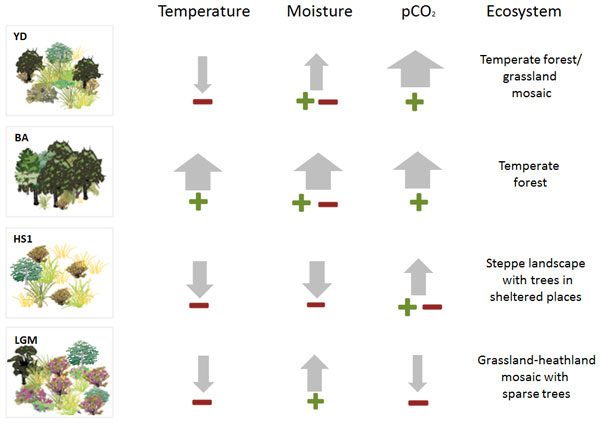
Our study explores how rising CO2 at the end of the last ice age impacted vegetation in the Iberian Peninsula. By analyzing pollen and ocean temperatures in marine sediments, we found that higher CO2 helped forests expand, even in cool or dry conditions. This shows that CO2 played a key role in shaping ecosystems during climate shifts. Understanding this past response helps us see how different factors interact and provides insights into how today’s ecosystems might adapt to rapidly rising CO2.
Chengwei Ji, Qin Wen, Zhengyu Liu, Jian Liu, Deliang Chen, Liang Ning, Mi Yan, and Qiuzhen Yin
Atmos. Chem. Phys., 26, 5861–5878, https://doi.org/10.5194/acp-26-5861-2026, https://doi.org/10.5194/acp-26-5861-2026, 2026
Short summary
Short summary
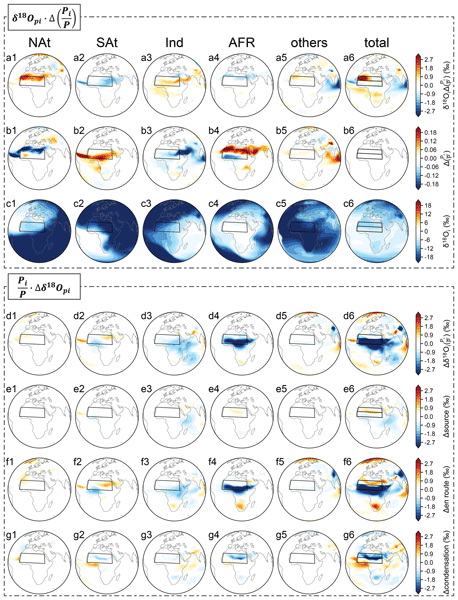
Geologist commonly use speleothem δ18Oc records to reconstruct past North African monsoon variability based on “amount effect” relationship between δ18Oc and monsoon rainfall. However, the interpretation of these records has been challenged in recent years. Here, we use isotope-enabled climate model to simulate climate change during the past 150,000 years. We find that changes in δ18Op across North African region are caused by multiple atmospheric processes, rather than by “amount effect”.
Yurui Zhang, Jilin Wei, Zhen Li, Nan Dai, Weipeng Zheng, Qiuzhen Yin, Agatha M. de Boer, Zhengguo Shi, and Lixia Zhang
Clim. Past, 22, 879–889, https://doi.org/10.5194/cp-22-879-2026, https://doi.org/10.5194/cp-22-879-2026, 2026
Short summary
Short summary
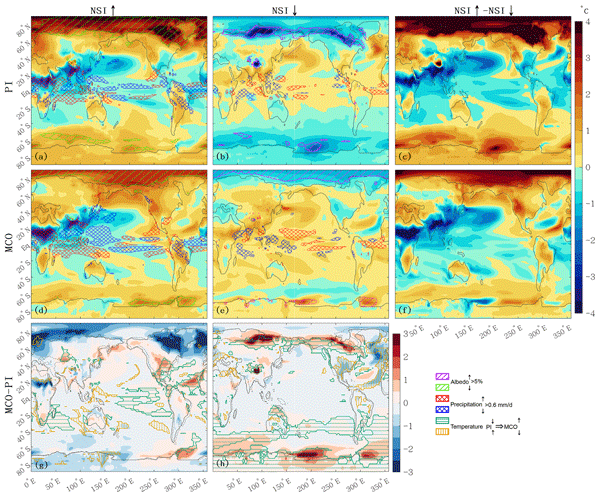
This study examines how the warm Miocene (~23–5 Ma) climate responded to orbital changes compared with modern day. Simulations show weaker Miocene temperature responses with distinct spatial patterns. High latitudes were less sensitive due to weaker albedo feedback, while tropical Africa cooled more strongly from an enhanced water cycle. The Southern Ocean warmed under low insolation as winter sea ice shrank. These findings highlight how background climate states shape orbital climate responses.
Héloïse Guilluy, Émilie Capron, Frédéric Parrenin, Vladimir Lipenkov, Jochen Schmitt, Patricia Martinerie, Zhipeng Wu, Qiuzhen Yin, Anna Maria Klüssendorf, Amaëlle Landais, Barbara Seth, Hubertus Fischer, and Dominique Raynaud
EGUsphere, https://doi.org/10.5194/egusphere-2026-953, https://doi.org/10.5194/egusphere-2026-953, 2026
Short summary
Short summary
Air bubbles in polar ice cores retain information about past climates over hundreds of thousands of years. The total air content (TAC) trapped within these bubbles varies with summer insolation cycles, making it a tool for dating ice cores. We present a multi-site update on TAC, combining new and published data. We confirm that insolation impacts bubble volume in East Antarctica, but surface climate changes can hide the insolation signal in the TAC record, impacting the TAC-derived chronologies.
Sandra Domingues Gomes, William Fletcher, Abi Stone, Teresa Rodrigues, Andreia Rebotim, Dulce Oliveira, Maria Sánchez Goñi, Fátima Abrantes, and Filipa Naughton
Biogeosciences, 22, 6631–6650, https://doi.org/10.5194/bg-22-6631-2025, https://doi.org/10.5194/bg-22-6631-2025, 2025
Short summary
Short summary
Our study explores how rising CO2 at the end of the last ice age impacted vegetation in the Iberian Peninsula. By analyzing pollen and ocean temperatures in marine sediments, we found that higher CO2 helped forests expand, even in cool or dry conditions. This shows that CO2 played a key role in shaping ecosystems during climate shifts. Understanding this past response helps us see how different factors interact and provides insights into how today’s ecosystems might adapt to rapidly rising CO2.
Lukas Jonkers, Tonke Strack, Montserrat Alonso-Garcia, Simon D'haenens, Robert Huber, Michal Kucera, Iván Hernández-Almeida, Chloe L. C. Jones, Brett Metcalfe, Rajeev Saraswat, Lóránd Silye, Sanjay K. Verma, Muhamad Naim Abd Malek, Gerald Auer, Cátia F. Barbosa, Maria A. Barcena, Karl-Heinz Baumann, Flavia Boscolo-Galazzo, Joeven Austine S. Calvelo, Lucilla Capotondi, Martina Caratelli, Jorge Cardich, Humberto Carvajal-Chitty, Markéta Chroustová, Helen K. Coxall, Renata M. de Mello, Anne de Vernal, Paula Diz, Kirsty M. Edgar, Helena L. Filipsson, Ángela Fraguas, Heather L. Furlong, Giacomo Galli, Natalia L. García Chapori, Robyn Granger, Jeroen Groeneveld, Adil Imam, Rebecca Jackson, David Lazarus, Julie Meilland, Marína Molčan Matejová, Raphael Morard, Caterina Morigi, Sven N. Nielsen, Diana Ochoa, Maria Rose Petrizzo, Andrés S. Rigual-Hernández, Marina C. Rillo, Matthew L. Staitis, Gamze Tanık, Raúl Tapia, Nishant Vats, Bridget S. Wade, and Anna E. Weinmann
J. Micropalaeontol., 44, 145–168, https://doi.org/10.5194/jm-44-145-2025, https://doi.org/10.5194/jm-44-145-2025, 2025
Short summary
Short summary
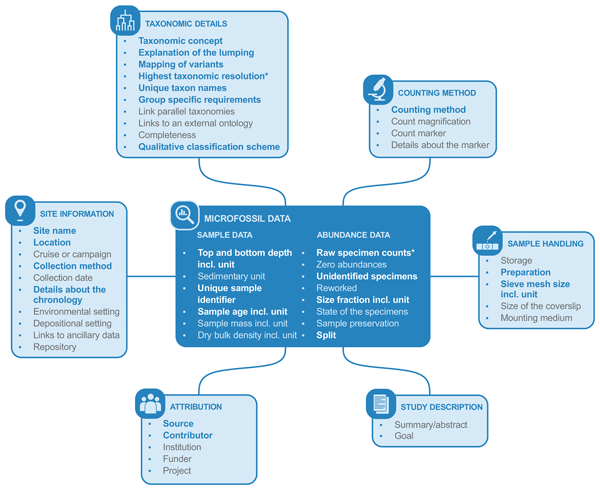
Our study provides guidelines improving the reuse of marine microfossil assemblage data, which are valuable for understanding past ecosystems and environmental change. Based on a survey of 113 researchers, we identified key data attributes required for effective reuse. Analysis of a selection of datasets available online reveals a gap between the attributes scientists consider essential and the data currently available, highlighting the need for clearer data documentation and sharing practices.
Dominique Raynaud, Qiuzhen Yin, Emilie Capron, Zhipeng Wu, Frédéric Parrenin, André Berger, and Vladimir Lipenkov
Clim. Past, 20, 1269–1282, https://doi.org/10.5194/cp-20-1269-2024, https://doi.org/10.5194/cp-20-1269-2024, 2024
Short summary
Short summary
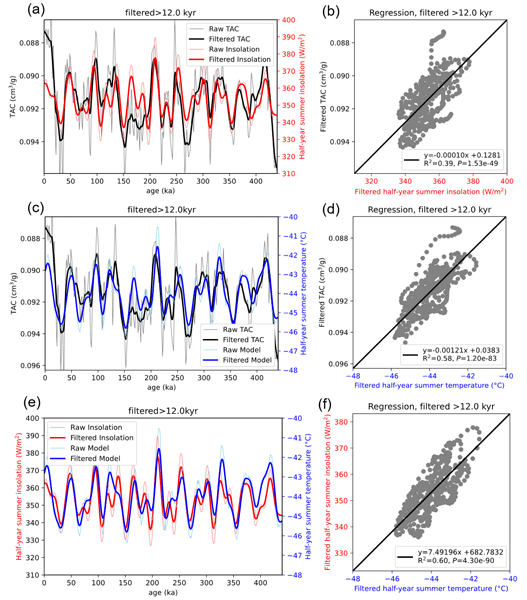
There is a lack of reconstructions from Antarctic ice cores of the temperature during the summer, a critical season in terms of solar energy received, preventing a good understanding of the link between Antarctic past climate and astronomically induced insolation changes. Here, the variations in total air content in an Antarctic ice core are found to be correlated to local summer temperatures simulated with a climate model. This tracer can be used to reconstruct past local summer temperatures.
Montserrat Alonso-Garcia, Jesus Reolid, Francisco J. Jimenez-Espejo, Or M. Bialik, Carlos A. Alvarez Zarikian, Juan Carlos Laya, Igor Carrasquiera, Luigi Jovane, John J. G. Reijmer, Gregor P. Eberli, and Christian Betzler
Clim. Past, 20, 547–571, https://doi.org/10.5194/cp-20-547-2024, https://doi.org/10.5194/cp-20-547-2024, 2024
Short summary
Short summary
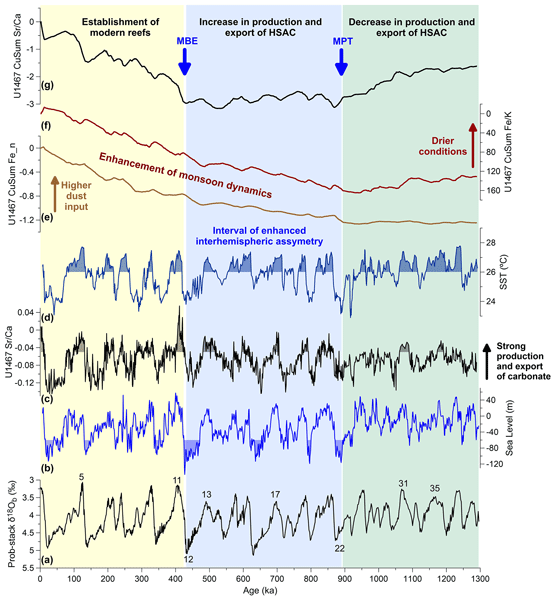
The Maldives Inner Sea (northern Indian Ocean) offers an excellent study site to explore the impact of climate and sea-level changes on carbonate platforms. The sediments from International Ocean Discovery Program (IODP) Site U1467 have been studied to determine the drivers of carbonate production in the atolls over the last 1.3 million years. Even though sea level is important, the intensity of the summer monsoon and the Indian Ocean dipole probably modulated the production at the atolls.
Cited articles
Alonso-Garcia, M., Rodrigues, T., Abrantes, F., Padilha, M., Alvarez-Zarikian, C. A., Kunkelova, T., Wright, J. D., and Betzler, C.: Sea-surface temperature, productivity and hydrological changes in the Northern Indian Ocean (Maldives) during the interval ∼575–175 ka (MIS 14 to 7), Palaeogeogr. Palaeocl., 536, 109376, https://doi.org/10.1016/j.palaeo.2019.109376, 2019.
Anupama, K., Ramesh, B. R., and Bonnefille, R.: Modern pollen rain from the Biligirirangan–Melagiri hills of southern eastern Ghats, India, Rev. Palaeobot. Palynol., 108, 175–196, https://doi.org/10.1016/S0034-6667(99)00039-1, 2000.
Barboni, D.: Signal pollinique et climat de mousson en Inde du Sud, PhD thesis, Aix-Marseille 3, https://theses.fr/2000AIX30080 (last access: 21 July 2026), 2000.
Barboni, D. and Bonnefille, R.: Precipitation signal in pollen rain from tropical forests, South India, Rev. Palaeobot. Palynol., 114, 239–258, https://doi.org/10.1016/S0034-6667(01)00057-4, 2001.
Barboni, D., Bonnefille, R., Prasad, S., and Ramesh, B.: Variation in modern pollen from tropical evergreen forests and the monsoon seasonality gradient in SW India, J. Veg. Sci., 14, 551–562, https://doi.org/10.1111/j.1654-1103.2003.tb02182.x, 2003.
Barker, S., Knorr, G., Edwards, R. L., Parrenin, F., Putnam, A. E., Skinner, L. C., Wolff, E., and Ziegler, M.: 800,000 years of abrupt climate variability, Science, 334, 347–351, https://doi.org/10.1126/science.1203580, 2011.
Barker, S., Chen, J., Gong, X., Jonkers, L., Knorr, G., and Thornalley, D.: Icebergs not the trigger for North Atlantic cold events, Nature, 520, 333–336, https://doi.org/10.1038/nature14330, 2015.
Barker, S., Knorr, G., Conn, S., Lordsmith, S., Newman, D., and Thornalley, D.: Early interglacial legacy of deglacial climate instability, Paleoceanogr. Paleoclimatol., 34, 1455–1475, https://doi.org/10.1029/2019PA003661, 2019.
Basumatary, S. K., Bera, S. K., Sangma, S. N., and Marak, G.: Modern pollen deposition in relation to vegetation and climate of Balpakram valley, Meghalaya, northeast India: Implications for Indo-Burma palaeoecological contexts, Quat. Int., 325, 30–40, https://doi.org/10.1016/j.quaint.2013.08.013, 2014.
Batchelor, C. J., McGee, D., Shakun, J. D., Woodhead, J., Jost, A. B., and Arnold, S.: Insights into changing interglacial conditions in subarctic Canada from MIS 11 through MIS 5e from seasonally resolved speleothem records, Geophys. Res. Lett., 51, e2024GL108459, https://doi.org/10.1029/2024GL108459, 2024.
Baumgartner, M., Schilt, A., Eicher, O., Schmitt, J., Schwander, J., Spahni, R., Fischer, H., and Stocker, T. F.: High-resolution interpolar difference of atmospheric methane around the Last Glacial Maximum, Biogeosciences, 9, 3961–3977, https://doi.org/10.5194/bg-9-3961-2012, 2012.
Bennett, K. D.: Psimpoll and Pscomb software, Queen’s University Belfast, https://research-portal.st-andrews.ac.uk/en/datasets/psimpoll-and-pscomb (last access: 21 July 2026), 2008.
Berger, A. and Loutre, M. F.: Insolation values for the climate of the last 10 million years, Quaternary Sci. Rev., 10, 297–317, https://doi.org/10.1016/0277-3791(91)90033-Q, 1991.
Berger, A. and Loutre, M. F.: An exceptionally long interglacial ahead? Science, 297, 1287–1288, 2002.
Bhadra, S. R. and Saraswat, R.: A strong influence of the mid-Pleistocene transition on the monsoon and associated productivity in the Indian Ocean, Quaternary Sci. Rev., 295, 107761, https://doi.org/10.1016/j.quascirev.2022.107761, 2022.
Birks, H. J. B. and Birks, H. H.: Quaternary Palaeoecology, Edward Arnold, London, 289 pp., ISBN 0-7131-2781-3, 1980.
Bock, M., Schmitt, J., Beck, J., Seth, B., Chappellaz, J., and Fischer, H.: Glacial/interglacial wetland, biomass burning, and geologic methane emissions constrained by dual stable isotopic CH4 ice core records, P. Natl. Acad. Sci. USA, 114, E5778–E5786, https://doi.org/10.1073/pnas.1613883114, 2017.
Bolton, C. T., Clemens, S. C., Kodama, K., Ikehara, M., Medina-Elizalde, M., Paterson, G. A., and Chang, L.: A 500,000 year record of Indian summer monsoon dynamics recorded by eastern equatorial Indian Ocean upper water-column structure, Paleoceanogr., 28, 386–400, https://doi.org/10.1002/palo.20036, 2013.
Bonnefille, R., Anupama, K., Barboni, D., Pascal, J., Prasad, S., and Sutra, J. P.: Modern pollen spectra from tropical South India and Sri Lanka: Altitudinal distribution, J. Biogeogr., 26, 1255–1280, https://doi.org/10.1046/j.1365-2699.1999.00359.x, 1999.
Brönnimann, S.: Impact of El Niño–Southern Oscillation on European climate, Rev. Geophys., 45, RG3003, https://doi.org/10.1029/2006RG000199, 2007.
Brovkin, V., Ganapolski, A., and Svirezhev, Y.: A continuous climate vegetation classification for use in climate-biosphere studies, Ecol. Model., 101, 251–261, 1997.
Caley, T., Malaizé, B., Zaragosi, S., Rossignol, L., Bourget, J., Eynaud, F., Martinez, P., Giraudeau, J., Charlier, K., and Ellouz-Zimmermann, N.: New Arabian Sea records help decipher orbital timing of Indo-Asian monsoon, Earth Planet. Sci. Lett., 308, 433–444, https://doi.org/10.1016/j.epsl.2011.06.019, 2011.
Candy, I., Schreve, D. C., Sherriff, J., and Tye, G. J.: Marine Isotope Stage 11: Palaeoclimates, palaeoenvironments and its role as an analogue for the current interglacial, Earth-Sci. Rev., 128, 18–51, https://doi.org/10.1016/j.earscirev.2013.09.006, 2014.
Candy, I., Oliveira, D., Parkes, D., Sherriff, J., and Thornalley, D.: Marine Isotope Stage 11c in Europe: Recent advances in marine–terrestrial correlations and their implications for interglacial stratigraphy – A review, Boreas, https://doi.org/10.1111/bor.12656, 2024.
Cerling, T. E., Ehleringer, J. R., and Harris, J. M.: Carbon dioxide starvation, the development of C4 ecosystems, and mammalian evolution, Philos. Trans. R. Soc. Lond. B, 353, 159–171, https://doi.org/10.1098/rstb.1998.0207, 1998.
Champion, H. G. and Seth, S. K.: A Revised Survey of the Forest Types of India, Manager of Publications, Government of India, New Delhi, 404 pp., https://archive.org/details/revisedsurveyoff0000sirh (last access: 21 July 2026), 1968.
Cheng, H., Edwards, R. L., Sinha, A., Spötl, C., Yi, L., Chen, S., and Kelly, M.: The Asian monsoon over the past 640,000 years and ice age terminations, Nature, 534, 640–646, https://doi.org/10.1038/nature18591, 2016.
Cheng, H., Li, H., Sha, L., Sinha, A., Shi, Z., Yin, Q., Lu, Z., Zhao, D., Cai, Y., Hu, Y., Hao, Q., Tian, J., Kathayat, G., Dong, X., Zhao, J., and Zhang, H.: Milankovitch theory and monsoon, Innov., 3, 100338, https://doi.org/10.1016/j.xinn.2022.100338, 2022.
Chiang, J. C. H. and Bitz, C. M.: Influence of high latitude ice cover on the marine intertropical convergence zone, Clim. Dyn., 25, 477–496, https://doi.org/10.1007/s00382-005-0040-5, 2005.
Clemens, S. C. and Prell, W. L.: A 350,000-year summer-monsoon multi-proxy stack from the Owen Ridge, Northern Arabian Sea, Mar. Geol., 201, 35–51, https://doi.org/10.1016/S0025-3227(03)00207-X, 2003.
Clemens, S. C., Holbourn, A., Kubota, Y., Lee, K. E., Liu, Z., Chen, G., Nelson, A., and Fox-Kemper, B.: Precession-band variance missing from East Asian monsoon runoff, Nat. Commun., 9, https://doi.org/10.1038/s41467-018-05814-0, 2018.
Clemens, S. C., Yamamoto, M., Thirumalai, K., Giosan, L., Richey, J. N., Nilsson-Kerr, K., Rosenthal, Y., Anand, P., and McGrath, S. M.: Remote and local drivers of Pleistocene South Asian summer monsoon precipitation: A test for future predictions, Sci. Adv., 7, eabg3848, https://doi.org/10.1126/sciadv.abg3848, 2021.
Clément, C., Martinez, P., Yin, Q., Clemens, S., Thirumalai, K., Prasad, S., Anupama, K., Su, Q., Lyu, A., Grémare, A., and Desprat, S.: Greening of India and revival of the South Asian summer monsoon in a warmer world, Commun. Earth Environ. 5, 685, https://doi.org/10.1038/s43247-024-01781-1, 2024.
Desprat, S., Sánchez Goñi, M. F., Turon, J. L., McManus, J. F., Loutre, M. F., Malaizé, B., and Peyron, O.: Is vegetation responsible for glacial inception during periods of muted insolation changes?, Quaternary Sci. Rev., 24, 1361–1374, https://doi.org/10.1016/j.quascirev.2005.01.001, 2005.
Desprat, S., Oliveira, D., Naughton, F., and Sánchez Goñi, M. F.: L'étude du pollen des séquences sédimentaires marines pour la compréhension du climat: L'exemple des périodes chaudes passées, Quaternaire, 28, 259–269, https://doi.org/10.4000/quaternaire.8102, 2017.
de Vernal, A. and Hillaire-Marcel, C.: Natural variability of Greenland climate, vegetation, and ice volume during the past million years, Science, 320, 1622–1625, https://doi.org/10.1126/science.1153929, 2008.
Dong, B. and Sutton, R. T.: Enhancement of ENSO variability by a weakened Atlantic thermohaline circulation in a coupled GCM, J. Climate, 20, 4920–4939, https://doi.org/10.1175/JCLI4284.1, 2007.
Droxler, A. W., Alley, R. B., Howard, W. R., Poore, R. Z., and Burckle, L. H.: Introduction: Unique and exceptionally long interglacial Marine Isotope Stage 11: Window into Earth’s warm future climate, in: Earth's Climate and Orbital Eccentricity: The Marine Isotope Stage 11 Question, edited by: Droxler, A. W., Poore, R. Z., and Burckle, L. H., Geophys. Monogr. Ser., 137, 1–14, https://doi.org/10.1029/137GM01, 2003.
Dupont, L. M. and Agwu, C. O. C.: Latitudinal shifts of forest and savanna in NW Africa during the Brunhes chron: Further marine palynological results from site M16415 (9° N, 19° W), Veg. Hist. Archaeobot., 1, 163–175, https://doi.org/10.1007/BF00195279, 1992.
Dupont, L. M., Marret, F., and Winn, K.: Land-sea correlation by means of terrestrial and marine palynomorphs from the equatorial East Atlantic: Phasing of SE trade winds and oceanic productivity, Palaeogeogr. Palaeocl., 142, 51–84, https://doi.org/10.1016/S0031-0182(98)00045-2, 1998.
Dutt, S., Gupta, A. K., Clemens, S. C., Cheng, H., Singh, R. K., Kathayat, G., and Edwards, R. L.: Abrupt changes in Indian summer monsoon strength during 33,800 to 5,500 years B.P., Geophys. Res. Lett., 42, 5526–5532, https://doi.org/10.1002/2015GL064015, 2015.
Dutton, A., Carlson, A. E., Long, A. J., Milne, G. A., Clark, P. U., DeConto, R., Horton, B. P., Rahmstorf, S., and Raymo, M. E.: Sea-level rise due to polar ice-sheet mass loss during past warm periods, Science, 349, aaa4019, https://doi.org/10.1126/science.aaa4019, 2015.
Ehleringer, J. R., Cerling, T. E., and Helliker, B. R.: C4 photosynthesis, atmospheric CO2, and climate, Oecologia, 112, 285–299, https://doi.org/10.1007/s004420050311, 1997.
Fairchild, I. J. and Baker, A.: Speleothem Science: From Process to Past Environments, Wiley-Blackwell, Chichester, UK, 432 pp., https://doi.org/10.1002/9781444361094, 2012.
Fawcett, P. J., Werne, J. P., Anderson, R. S., Heikoop, J. M., Brown, E. T., Berke, M. A., Smith, S. J., Goff, F., Donohoo-Hurley, L., Cisneros-Dozal, L. M., Schouten, S., Sinninghe Damsté, J. S., Huang, Y., Toney, J., Fessenden, J., WoldeGabriel, G., Atudorei, V., Geissman, J. W., and Allen, C. D.: Extended megadroughts in the southwestern United States during Pleistocene interglacials, Nature, 470, 518–521, https://doi.org/10.1038/nature09839, 2011.
Gadgil, S.: The Indian monsoon and its variability, Annu. Rev. Earth Planet. Sci., 31, 429–467, https://doi.org/10.1146/annurev.earth.31.100901.141251, 2003.
Gadgil, S.: The monsoon system: Land–sea breeze or the ITCZ?, J. Earth Syst. Sci., 127, 1, https://doi.org/10.1007/s12040-017-0916-x, 2018.
Gadgil, S., Rajeevan, M., and Francis, P. A.: Monsoon variability: Links to major oscillations over the equatorial Pacific and Indian Oceans, Curr. Sci., 93, 182–194, 2007.
Galaasen, E. V., Ninnemann, U. S., Kessler, A., Irvalı, N., Rosenthal, Y., Tjiputra, J., Bouttes, N., Roche, D. M., Kleiven, H. (Kikki) F., and Hodell, D. A.: Interglacial instability of North Atlantic Deep Water ventilation, Science, 367, 1485–1489, https://doi.org/10.1126/science.aay6381, 2020.
Gao, X., Hao, Q., Wang, L., Song, Y., Ge, J., Wu, H., Xu, B., Han, L., Fu, Y., Wu, X., Deng, C., and Guo, Z.: Changes in monsoon precipitation in East Asia under a 2 °C interglacial warming, Sci. Adv., 10, eadm7694, https://doi.org/10.1126/sciadv.adm7694, 2024.
Gebregiorgis, D., Hathorne, E. C., Giosan, L., Clemens, S., Nürnberg, D., and Frank, M.: Southern Hemisphere forcing of South Asian monsoon precipitation over the past ∼1 million years, Nat. Commun., 9, 4702, https://doi.org/10.1038/s41467-018-07076-2, 2018.
Georget, M., Castéra, M.-H., Devaux, L., Turon, J.-L., Desprat, S., and Sanchez Goni, M. F.: Protocol for pollen and dinocyst analysis in marine sediments, Protocols.io, https://doi.org/10.17504/protocols.io.x54v92qz4l3e/v1, 2025.
Goosse, H., Brovkin, V., Fichefet, T., Haarsma, R., Huybrechts, P., Jongma, J., Mouchet, A., Selten, F., Barriat, P.-Y., Campin, J.-M., Deleersnijder, E., Driesschaert, E., Goelzer, H., Janssens, I., Loutre, M.-F., Morales Maqueda, M. A., Opsteegh, T., Mathieu, P.-P., Munhoven, G., Pettersson, E. J., Renssen, H., Roche, D. M., Schaeffer, M., Tartinville, B., Timmermann, A., and Weber, S. L.: Description of the Earth system model of intermediate complexity LOVECLIM version 1.2, Geosci. Model Dev., 3, 603–633, https://doi.org/10.5194/gmd-3-603-2010, 2010.
Gosling, W. D., Miller, C. S., and Livingstone, D. A.: Atlas of the tropical West African pollen flora, Rev. Palaeobot. Palynol., 199, 1–135, https://doi.org/10.1016/j.revpalbo.2013.01.003, 2013.
Goswami, B. B. and An, S.-I.: An assessment of the ENSO-monsoon teleconnection in a warming climate, npj Clim. Atmos. Sci., 6, 82, https://doi.org/10.1038/s41612-023-00411-5, 2023.
Goswami, B. N. and Chakravorty, S.: Dynamics of the Indian Summer Monsoon Climate, in: Oxford Research Encyclopedia of Climate Science, Oxford University Press, https://doi.org/10.1093/acrefore/9780190228620.013.613, 2017.
Govin, A., Capron, E., Tzedakis, P. C., Verheyden, S., Ghaleb, B., Hillaire-Marcel, C., St-Onge, G., Stoner, J. S., Bassinot, F., Bazin, L., Blunier, T., Combourieu-Nebout, N., El Ouahabi, A., Genty, D., Gersonde, R., Jimenez-Amat, P., Landais, A., Martrat, B., Masson-Delmotte, V., Parrenin, F., Seidenkrantz, M.-S., Veres, D., Waelbroeck, C., and Zahn, R.: Sequence of events from the onset to the demise of the Last Interglacial: Evaluating strengths and limitations of chronologies used in climatic archives, Quaternary Sci. Rev., 129, 1–36, https://doi.org/10.1016/j.quascirev.2015.09.018, 2015.
Grant, K. M., Rohling, E. J., Bronk Ramsey, C., Cheng, H., Edwards, R. L., Florindo, F., Heslop, D., Marra, F., Roberts, A. P., Tamisiea, M. E., and Williams, F.: Sea-level variability over five glacial cycles, Nat. Commun., 5, 5076, https://doi.org/10.1038/ncomms6076, 2014.
Gunnell, Y.: Relief and climate in South Asia: The influence of the western ghats on the current climate pattern of peninsular India, Int. J. Climatol., 17, 1169–1182, https://doi.org/10.1002/(SICI)1097-0088(199709)17:11<1169::AID-JOC189>3.0.CO;2-W, 1997.
Guo, Z., Zhou, X., and Wu, H.: Glacial-interglacial water cycle, global monsoon and atmospheric methane changes, Clim. Dyn., 39, 1073–1092, https://doi.org/10.1007/s00382-011-1147-5, 2012.
Hamilton, N.: smoother: Functions Relating to the Smoothing of Numerical Data, R package version 1.1, https://CRAN.R-project.org/package=smoother (last access: 21 July 2026), 2015.
Harrison, S. P. and Prentice, C. I.: Climate and CO2 controls on global vegetation distribution at the last glacial maximum: analysis based on palaeovegetation data, biome modelling and palaeoclimate simulations, Global Change Biol., 9, 983–1004, https://doi.org/10.1046/j.1365-2486.2003.00640.x, 2003.
Hayashi, R., Sagawa, T., Irino, T., and Tada, R.: Orbital-scale vegetation-ocean-atmosphere linkages in western Japan during the last 550 ka based on a pollen record from the IODP site U1427 in the Japan Sea, Quaternary Sci. Rev., 267, 107103, https://doi.org/10.1016/j.quascirev.2021.107103, 2021.
Hes, G., Sánchez Goñi, M. F., and Bouttes, N.: Impact of terrestrial biosphere on the atmospheric CO2 concentration across Termination V, Clim. Past, 18, 1429–1451, https://doi.org/10.5194/cp-18-1429-2022, 2022.
Hodell, D. A., Channell, J. E. T., Curtis, J. H., Romero, O. E., and Röhl, U.: Onset of “Hudson Strait” Heinrich events in the eastern North Atlantic at the end of the middle Pleistocene transition (∼640 ka)?, Paleoceanography, 23, 1–16, https://doi.org/10.1029/2008PA001591, 2008.
Hodell, D. A., Crowhurst, S. J., Lourens, L., Margari, V., Nicolson, J., Rolfe, J. E., Skinner, L. C., Thomas, N. C., Tzedakis, P. C., Mleneck-Vautravers, M. J., and Wolff, E. W.: A 1.5-million-year record of orbital and millennial climate variability in the North Atlantic, Clim. Past, 19, 607–636, https://doi.org/10.5194/cp-19-607-2023, 2023.
Hrudya, P. H., Varikoden, H., and Vishnu, R.: A review on the Indian summer monsoon rainfall, variability and its association with ENSO and IOD, Meteorol. Atmos. Phys., 133, 1–14, https://doi.org/10.1007/s00703-020-00734-5, 2021.
Hu, H.-M., Marino, G., Pérez-Mejías, C., Spötl, C., Yokoyama, Y., Yu, J., Rohling, E., Kano, A., Ludwig, P., Pinto, J. G., Michel, V., Valensi, P., Zhang, X., Jiang, X., Mii, H.-S., Chien, W.-Y., Tsai, H.-C., Sung, W.-H., Hsu, C.-H., Starnini, E., Zunino, M., and Shen, C.-C.: Sustained North Atlantic warming drove anomalously intense MIS 11c interglacial, Nat. Commun., 15, 5933, https://doi.org/10.1038/s41467-024-50207-1, 2024.
Hu, J., Emile-Geay, J., Tabor, C., Nusbaumer, J., and Partin, J.: Deciphering oxygen isotope records from Chinese speleothems with an isotope-enabled climate model, Paleoceanogr. Paleoclimatol., 34, 2098–2112, https://doi.org/10.1029/2019PA003741, 2019.
IPCC: Climate Change 2022: Impacts, Adaptation, and Vulnerability. Contribution of Working Group II to the Sixth Assessment Report of the Intergovernmental Panel on Climate Change, edited by: Pörtner, H.-O., Roberts, D. C., Tignor, M., Poloczanska, E. S., Mintenbeck, K., Alegría, A., Craig, M., Langsdorf, S., Löschke, S., Möller, V., Okem, A., and Rama, B., Cambridge Univ. Press, 3056 pp., https://doi.org/10.1017/9781009325844, 2022.
Jalihal, C., Bosmans, J. H. C., Srinivasan, J., and Chakraborty, A.: The response of tropical precipitation to Earth's precession: the role of energy fluxes and vertical stability, Clim. Past, 15, 449–462, https://doi.org/10.5194/cp-15-449-2019, 2019.
Jouzel, J., Masson-Delmotte, V., Cattani, O., Dreyfus, G., Falourd, S., Hoffmann, G., Minster, B., Nouet, J., Barnola, J. M., Chappellaz, J., Fischer, H., Gallet, J. C., Johnsen, S., Leuenberger, M., Loulergue, L., Luethi, D., Oerter, H., Parrenin, F., Raisbeck, G., Raynaud, D., Schilt, A., Schwander, J., Selmo, E., Souchez, R., Spahni, R., Stauffer, B., Steffensen, J. P., Stenni, B., Stocker, T. F., Tison, J. L., Werner, M., and Wolff, E. W.: Orbital and millennial Antarctic climate variability over the past 800,000 years, Science, 317, 793–796, https://doi.org/10.1126/science.1141038, 2007.
Juggins, S.: rioja: Analysis of Quaternary Science Data, R package, https://CRAN.R-project.org/package=rioja (last access: 21 July 2026), 2009.
Kageyama, M., Harrison, S. P., Kapsch, M.-L., Lofverstrom, M., Lora, J. M., Mikolajewicz, U., Sherriff-Tadano, S., Vadsaria, T., Abe-Ouchi, A., Bouttes, N., Chandan, D., Gregoire, L. J., Ivanovic, R. F., Izumi, K., LeGrande, A. N., Lhardy, F., Lohmann, G., Morozova, P. A., Ohgaito, R., Paul, A., Peltier, W. R., Poulsen, C. J., Quiquet, A., Roche, D. M., Shi, X., Tierney, J. E., Valdes, P. J., Volodin, E., and Zhu, J.: The PMIP4 Last Glacial Maximum experiments: preliminary results and comparison with the PMIP3 simulations, Clim. Past, 17, 1065–1089, https://doi.org/10.5194/cp-17-1065-2021, 2021.
Kandiano, E. S., van der Meer, M. T. J., Schouten, S., Fahl, K., Sinninghe Damsté, J. S., and Bauch, H. A.: Response of the North Atlantic surface and intermediate ocean structure to climate warming of MIS 11, Sci. Rep., 7, 46192, https://doi.org/10.1038/srep46192, 2017.
Kathayat, G., Cheng, H., Sinha, A., Spötl, C., Edwards, R. L., Zhang, H., Li, X., Yi, L., Ning, Y., Cai, Y., Liu, W. L., and Breitenbach, S. F. M.: Indian monsoon variability on millennial-orbital timescales, Sci. Rep., 6, https://doi.org/10.1038/srep24374, 2016.
Katzenberger, A., Schewe, J., Pongratz, J., and Levermann, A.: Robust increase of Indian monsoon rainfall and its variability under future warming in CMIP6 models, Earth Syst. Dynam., 12, 367–386, https://doi.org/10.5194/esd-12-367-2021, 2021.
Katzenberger, A., Levermann, A., Schewe, J., and Pongratz, J.: Intensification of very wet monsoon seasons in India under global warming, Geophys. Res. Lett., 49, e2022GL098856, https://doi.org/10.1029/2022GL098856, 2022.
Kirschke, S., Bousquet, P., Ciais, P., et al.: Three decades of global methane sources and sinks, Nat. Geosci., 6, 813–823, https://doi.org/10.1038/ngeo1955, 2013.
Kleinen, T., Hildebrandt, S., Prange, M., Rachmayani, R., Müller, S., Bezrukova, E., Brovkin, V., and Tarasov, P. E.: The climate and vegetation of Marine Isotope Stage 11: Model results and proxy-based reconstructions at global and regional scale, Quat. Int., 348, 247–265, https://doi.org/10.1016/j.quaint.2013.12.028, 2014.
Kottek, M., Grieser, J., Beck, C., Rudolf, B., and Rubel, F.: World Map of the Köppen-Geiger climate classification updated, metz, 15, 259–263, https://doi.org/10.1127/0941-2948/2006/0130, 2006.
Kousis, I., Koutsodendris, A., Peyron, O., Leicher, N., Francke, A., Wagner, B., Giaccio, B., Knipping, M., and Pross, J.: Centennial-scale vegetation dynamics and climate variability in SE Europe during Marine Isotope Stage 11 based on a pollen record from Lake Ohrid, Quaternary Sci. Rev., 190, 20–38, https://doi.org/10.1016/j.quascirev.2018.04.027, 2018.
Krishnamurthy, V. and Goswami, B. N.: Indian Monsoon–ENSO relationship on interdecadal timescale, J. Climate, 13, 579–595, 2000.
Kumar, K. K., Rajagopalan, B., and Cane, M. A.: On the weakening relationship between the Indian monsoon and ENSO, Science, 284, 2156–2159, 1999.
Kutzbach, J. E.: Monsoon climate of the early Holocene: climate experiment with the Earth's orbital parameters for 9000 years ago, Science, 214, 59–61, 1981.
Kutzbach, J. E., Liu, X. D., Liu, Z. Y., and Chen, G. S.: Simulation of the evolutionary response of global summer monsoons to orbital forcing over the past 280,000 years, Clim. Dyn., 30, 567–579, https://doi.org/10.1007/s00382-007-0308-z, 2008.
Legris, P.: La végétation de l’Inde: écologie et flore, Travaux de la Section Scientifique et Technique, no. 6, Institut Français de Pondichéry, 596 pp., https://www.ifpindia.org/bookstore/tsst6/ (last access: 21 July 2026), 1963.
Lisiecki, L. E. and Raymo, M. E.: A Pliocene-Pleistocene stack of 57 globally distributed benthic δ18O records, Paleoceanography, 20, PA1003, https://doi.org/10.1029/2004PA001071, 2005.
Liu, Y., Wu, Y., Lin, Z., Zhang, Y., Zhu, J., and Yi, C.: Simulated Impact of the Tibetan Glacier Expansion on the Eurasian Climate and Glacial Surface Mass Balance during the Last Glacial Maximum, J. Climate 33, 6491–6509, https://doi.org/10.1175/JCLI-D-19-0763.1, 2020a.
Liu, G., Li, X., Chiang, H.-W., Cheng, H., Yuan, S., Chawchai, S., He, S., Lu, Y., Aung, L. T., Maung, P. M., Tun, W. N., Oo, K. M., and Wang, X.: On the glacial-interglacial variability of the Asian monsoon in speleothem δ18O records, Sci. Adv., 6, eaay8189, https://doi.org/10.1126/sciadv.aay8189, 2020b.
Liu, W., Wang, G., Yu, M., Chen, H., Jiang, Y., Yang, M., and Shi, Y.: Projecting the future vegetation–climate system over East Asia and its RCP-dependence, Clim. Dyn., 55, 2725–2742, https://doi.org/10.1007/s00382-020-05411-2, 2020c.
Lüthi, D., Le Floch, M., Bereiter, B., Blunier, T., Barnola, J.-M., Siegenthaler, U., Raynaud, D., Jouzel, J., Fischer, H., Kawamura, K., and Stocker, T. F.: High-resolution carbon dioxide concentration record 650,000–800,000 years before present, Nature, 453, 379–382, https://doi.org/10.1038/nature06949, 2008.
Lyu, A. Q., Yin, Q. Z., Crucifix, M., and Sun, Y. B.: Diverse regional sensitivity of summer precipitation in East Asia to ice volume, CO2, and astronomical forcing, Geophys. Res. Lett., 48, https://doi.org/10.1029/2020GL092005, 2021.
Marzin, C., Kallel, N., Kageyama, M., Duplessy, J.-C., and Braconnot, P.: Glacial fluctuations of the Indian monsoon and their relationship with North Atlantic climate: new data and modelling experiments, Clim. Past, 9, 2135–2151, https://doi.org/10.5194/cp-9-2135-2013, 2013.
McAndrews, J. H. and King, J. E.: Pollen of the North American Quaternary: The top twenty, Geosci. Man, 15, 41–49, 1976.
McGee, D., Donohoe, A., Marshall, J., and Ferreira, D.: Changes in ITCZ location and cross-equatorial heat transport at the last glacial maximum, Heinrich stadial 1, and the mid-Holocene, Earth Planet. Sci. Lett., 390, 69–79, https://doi.org/10.1016/j.epsl.2013.12.043, 2014.
McGrath, S. M., Clemens, S. C., Huang, Y., and Yamamoto, M.: Greenhouse gas and ice volume drive Pleistocene Indian summer monsoon precipitation isotope variability, Geophys. Res. Lett., 48, e2020GL092249, https://doi.org/10.1029/2020GL092249, 2021.
McManus, J. F., Oppo, D. W., and Cullen, J. L.: A 0.5-million-year record of millennial-scale climate variability in the North Atlantic, Science, 283, 971–974, https://doi.org/10.1126/science.283.5404.971, 1999.
Mehrotra, N., Shah, S. K., Basavaiah, N., and Kar, R.: Middle to Late Holocene climate, vegetation and sea-level changes in NW Tripura, northeast India, based on palynological and mineral magnetic evidence, J. Paleolimnol., 68, 297–313, https://doi.org/10.1007/s10933-022-00249-6, 2022.
Melles, M., Brigham-Grette, J., Minyuk, P. S., Nowaczyk, N. R., Wennrich, V., DeConto, R. M., Anderson, P. M., Andreev, A. A., Coletti, A., Cook, T. L., and Wagner, B.: 2.8 million years of Arctic climate change from Lake El'gygytgyn, NE Russia, Science, 337, 315–320, https://doi.org/10.1126/science.1222135, 2012.
Mohtadi, M., Prange, M., Oppo, D. W., De Pol-Holz, R., Merkel, U., Zhang, X., Steinke, S., and Lückge, A.: North Atlantic forcing of tropical Indian Ocean climate, Nature, 509, 76–80, https://doi.org/10.1038/nature13196, 2014.
Mohtadi, M., Prange, M., and Steinke, S.: Palaeoclimatic insights into forcing and response of monsoon rainfall, Nature, 533, 191–199, https://doi.org/10.1038/nature17450, 2016.
Nehrbass-Ahles, C., Shin, J., Schmitt, J., Bereiter, B., Joos, F., Schilt, A., Schmidely, L., Silva, L., Teste, G., Grilli, R., Chappellaz, J., Hodell, D., Fischer, H., and Stocker, T. F.: Abrupt CO2 release to the atmosphere under glacial and early interglacial climate conditions, Science, 369, 1000–1005, https://doi.org/10.1126/science.aay8178, 2020.
Nilsson-Kerr, K., Anand, P., Sexton, P. F., Leng, M. J., Misra, S., Clemens, S. C., and Hammond, S. J.: Role of Asian summer monsoon subsystems in the inter-hemispheric progression of deglaciation, Nat. Geosci., 12, 290–295, https://doi.org/10.1038/s41561-019-0319-5, 2019.
Nilsson-Kerr, K., Anand, P., Holden, P. B., Clemens, S. C., and Leng, M. J.: Dipole patterns in tropical precipitation were pervasive across landmasses throughout Marine Isotope Stage 5, Commun. Earth Environ., 2, 64, https://doi.org/10.1038/s43247-021-00133-7, 2021.
Oliveira, D., Desprat, S., Rodrigues, T., Naughton, F., Hodell, D., Trigo, R., Rufino, M., Lopes, C., Abrantes, F., and Sánchez Goñi, M. F.: The complexity of millennial-scale variability in southwestern Europe during MIS 11, Quat. Res., 86, 373–387, https://doi.org/10.1016/j.yqres.2016.09.002, 2016.
Oliveira, D., Desprat, S., Yin, Q., Naughton, F., Trigo, R., Rodrigues, T., Abrantes, F., and Sánchez Goñi, M. F.: Unraveling the forcings controlling the vegetation and climate of the best orbital analogues for the present interglacial in SW Europe, Clim. Dyn., 51, 667–684, https://doi.org/10.1007/s00382-017-3948-7, 2018.
Oliveira, D., Desprat, S., Yin, Q., Zorzi, C., Wu, Z., Anupama, K., Prasad, S., Alonso-Garcia, M., and Martinez, P.: Pollen-based vegetation record from IODP Site 353-U1446 (Bay of Bengal), Marine Isotope Stage 11, PANGAEA [data set], https://doi.org/10.1594/PANGAEA.982497, 2025.
Oppo, D. W., McManus, J. F., and Cullen, J. L.: Abrupt climate events 500,000 to 340,000 years ago: Evidence from subpolar North Atlantic sediments, Science, 279, 1335–1338, 1998.
Ota, Y., Kawahata, H., Kuroda, J., Suzuki, A., Abe-Ouchi, A., Jimenez-Espejo, F. J., and JAMSTEC NGHP-02 Scientist Team: Millennial-scale variability of Indian summer monsoon constrained by the western Bay of Bengal sediments: Implications from geochemical proxies of sea surface salinity and river runoff, Glob. Planet. Change, 208, 103719, https://doi.org/10.1016/j.gloplacha.2021.103719, 2022.
Pan, C., Zhu, B., Gao, J., and Kang, H.: Source apportionment of atmospheric water over East Asia – a source tracer study in CAM5.1, Geosci. Model Dev., 10, 673–688, https://doi.org/10.5194/gmd-10-673-2017, 2017.
Past Interglacials Working Group of PAGES: Interglacials of the last 800,000 years, Rev. Geophys., 54, 162–219, 2016.
Pausata, F. S. R., Chafik, L., Caballero, R., and Battisti, D. S.: Impacts of high-latitude volcanic eruptions on ENSO and AMOC, P. Natl. Acad. Sci. USA, 112, 13784–13788, 2015.
Prasad, S., Anoop, A., Riedel, N., Sarkar, S., Menzel, P., Basavaiah, N., Krishnan, R., Fuller, D., Plessen, B., Gaye, B., Röhl, U., Wilkes, H., Sachse, D., Sawant, R., Wiesner, M. G., and Stebich, M.: Prolonged monsoon droughts and links to Indo-Pacific warm pool: A Holocene record from Lonar Lake, central India, Earth Planet. Sc. Lett., 391, 171–182, https://doi.org/10.1016/j.epsl.2014.01.043, 2014.
Prell, W. L. and Kutzbach, J. E.: Sensitivity of the Indian monsoon to forcing parameters and implications for its evolution, Nature, 360, 647–652, https://doi.org/10.1038/360647a0, 1992.
Prokopenko, A. A., Bezrukova, E. V., Khursevich, G. K., Solotchina, E. P., Kuzmin, M. I., and Tarasov, P. E.: Climate in continental interior Asia during the longest interglacial of the past 500 000 years: the new MIS 11 records from Lake Baikal, SE Siberia, Clim. Past, 6, 31–48, https://doi.org/10.5194/cp-6-31-2010, 2010.
Quamar, M. F. and Bera, S. K.: Modern pollen–vegetation relationship in the tropical mixed deciduous forest of the Koriya District in Chhattisgarh, India, Grana, 54, 45–52, https://doi.org/10.1080/00173134.2014.946443, 2015.
Raymo, M. E., Oppo, D. W., Flower, B. P., Hodell, D. A., McManus, J. F., Venz, K. A., Kleiven, K. F., and McIntyre, K.: Stability of North Atlantic water masses in face of pronounced climate variability during the Pleistocene, Paleoceanography, 19, PA2008, https://doi.org/10.1029/2003PA000921, 2004.
R Core Team: R: A language and environment for statistical computing, R Foundation for Statistical Computing, Vienna, Austria, https://www.R-project.org/ (last access: 21 July 2026), 2014.
Riedel, N., Fuller, D. Q., Marwan, N., Poretschkin, C., Basavaiah, N., Menzel, P., Ratnam, J., Prasad, S., Sachse, D., Sankaran, M., Sarkar, S., and Stebich, M.: Monsoon forced evolution of savanna and the spread of agro-pastoralism in peninsular India, Sci. Rep., 11, 9032, https://doi.org/10.1038/s41598-021-88550-8, 2021.
Rodrigues, T., Voelker, A. H. L., Grimalt, J. O., Abrantes, F., and Naughton, F.: Iberian Margin sea surface temperature during MIS 15 to 9 (580–300 ka): Glacial suborbital variability versus interglacial stability, Paleoceanography, 26, https://doi.org/10.1029/2010PA001927, 2011.
Sassoon, D., Lebreton, V., Combourieu-Nebout, N., Peyron, O., and Moncel, M. H.: Palaeoenvironmental changes in the southwestern Mediterranean (ODP Site 976, Alboran Sea) during the MIS 12/11 transition and the MIS 11 interglacial and implications for hominin populations, Quaternary Sci. Rev., 304, 108010, https://doi.org/10.1016/j.quascirev.2023.108010, 2023.
Schneider, T., Bischoff, T., and Haug, G. H.: Migrations and dynamics of the Intertropical Convergence Zone, Nature, 513, 45–53, 2014.
Sharmila, S., Joseph, S., Sahai, A. K., Abhilash, S., and Chattopadhyay, R.: Future projection of Indian summer monsoon variability under climate change scenario: An assessment from CMIP5 climate models, Glob. Planet. Change, 124, 62–78, 2015.
Singarayer, J. S., Valdes, P. J., Friedlingstein, P., Nelson, S. R., and Beerling, D. J.: Late Holocene methane rise caused by orbitally controlled increase in tropical sources, Nature, 470, 82–85, https://doi.org/10.1038/nature09739, 2011.
Snyder, C. W.: Evolution of global temperature over the past two million years, Nature, 538, 226–228, https://doi.org/10.1038/nature19798, 2016.
Stein, R., Hefter, J., Grützner, J., Voelker, A., and Naafs, B. D. A.: Variability of surface water characteristics and Heinrich-like events in the Pleistocene midlatitude North Atlantic Ocean: Biomarker and XRD records from IODP Site U1313 (MIS 16–9), Paleoceanography, 24, PA2203, https://doi.org/10.1029/2008PA001639, 2009.
Su, Q. Q., Lyu, A. Q., Wu, Z. P., and Yin, Q. Z.: Diverse response of global terrestrial vegetation to astronomical forcing and CO2 during the MIS 11 and MIS 13 interglacials, Clim. Dyn., https://doi.org/10.1007/s00382-022-06308-y, 2022.
Sun, Y., Yin, Q., Crucifix, M., Clemens, S. C., Araya-Melo, P., Liu, W., Qiang, X., Liu, Q., Zhao, H., Liang, L., Chen, H., Li, Y., Zhang, L., Dong, G., Li, M., Zhou, W., Berger, A., and An, Z.: Diverse manifestations of the mid-Pleistocene climate transition, Nat. Commun., 10, 352, https://doi.org/10.1038/s41467-018-08257-9, 2019.
Sun, Y., Wang, T., Yin, Q., Lyu, A., Crucifix, M., Cai, Y., Ai, L., Clemens, S., and An, Z.: A review of orbital-scale monsoon variability and dynamics in East Asia during the Quaternary, Quaternary Sci. Rev., 107593, https://doi.org/10.1016/j.quascirev.2022.107593, 2022.
Thanikaimoni, G.: Mangrove Palynology, Travaux de la Section Scientifique et Technique, Tome 24, 100 pp., Institut Français de Pondichéry, Pondicherry, https://www.ifpindia.org/documents/118/TSST_024.pdf (last access: 21 July 2026), 1987.
Timmermann, A., Okumura, Y., An, S.-I., Clement, A., Dong, B., Guilyardi, E., Hu, A., Jungclaus, J. H., Renold, M., Stocker, T. F., Stouffer, R. J., Sutton, R., Xie, S.-P., and Yin, J.: The Influence of a Weakening of the Atlantic Meridional Overturning Circulation on ENSO, J. Climate, 20, 4899–4919, https://doi.org/10.1175/JCLI4283.1, 2007.
Tissot, C., Chikhi, H., and Nayar, T. S.: Pollen of Wet Evergreen Forests of the Western Ghats, India, Publications du Département d'Écologie, no. 35, Institut Français de Pondichéry, 133 pp., https://hal.science/hal-00466505 (last access: 21 July 2026), 1994.
Torres, V., Hooghiemstra, H., Lourens, L., and Tzedakis, P. C.: Astronomical tuning of long pollen records reveals the dynamic history of montane biomes and lake levels in the tropical high Andes during the Quaternary, Quaternary Sci. Rev., 63, 59–72, https://doi.org/10.1016/j.quascirev.2012.11.004, 2013.
Turner, A. G. and Slingo, J. M.: Uncertainties in future projections of extreme precipitation in the Indian monsoon region, Atmos. Sci. Lett., 10, 152–158, https://doi.org/10.1002/asl.223, 2009.
Tzedakis, P. C., Pälike, H., Roucoux, K. H., and de Abreu, L.: Atmospheric methane, southern European vegetation and low-mid latitude links on orbital and millennial timescales, Earth Planet. Sci. Lett., 277, 307–317, https://doi.org/10.1016/j.epsl.2009.07.019, 2009.
Tzedakis, P. C., Hodell, D. A., Nehrbass-Ahles, C., Mitsui, T., and Wolff, E. W.: Marine Isotope Stage 11c: An unusual interglacial, Quaternary Sci. Rev., 284, 107493, https://doi.org/10.1016/j.quascirev.2022.107493, 2022.
Vaks, A., Gutareva, O. S., Breitenbach, S. F. M., Avirmed, E., Mason, A. J., Thomas, A. L., Osinzev, A. V., Kononov, A. M., and Henderson, G. M.: Speleothems reveal 500,000-year history of Siberian permafrost, Science, 340, 183–186, https://doi.org/10.1126/science.1228729, 2013.
Vaks, A., Mason, A. J., Breitenbach, S. F. M., Kononov, A. M., Osinzev, A. V., Rosensaft, M., Borshevsky, A., Gutareva, O. S., and Henderson, G. M.: Palaeoclimate evidence of vulnerable permafrost during times of low sea ice, Nature, 577, 221–225, https://doi.org/10.1038/s41586-019-1880-1, 2020.
Varghese, S. J., Surendran, S., Rajendran, K., and Kitoh, A.: Future projections of Indian Summer Monsoon under multiple RCPs using high-resolution global climate model multiforcing ensemble simulations, Clim. Dyn., 54, 1315–1328, 2020.
Wang, B., Liu, J., Kim, H.-J., Webster, P. J., Yim, S.-Y., and Xiang, B.: Northern Hemisphere summer monsoon intensified by mega-El Niño/Southern Oscillation and Atlantic multidecadal oscillation, P. Natl. Acad. Sci. USA, 110, 5347–5352, https://doi.org/10.1073/pnas.1219405110, 2013.
Wang, Y., Yang, X., Wang, Y., Wang, Q., and Edwards, R. L.: The structure of marine isotope Stage 11 and its alignment with the Holocene, Palaeogeogr. Palaeocl., 609, 111311, https://doi.org/10.1016/j.palaeo.2022.111311, 2023.
Wang, Y. V., Larsen, T., Lauterbach, S., Andersen, N., Blanz, T., Krebs-Kanzow, U., Gierz, P., and Schneider, R. R.: Higher sea surface temperature in the Indian Ocean during the Last Interglacial weakened the South Asian monsoon, P. Natl. Acad. Sci. USA, 119, e2107720119, https://doi.org/10.1073/pnas.2107720119, 2022.
Webster, P. J., Magana, V. O., Palmer, T. N., Shukla, J., Tomas, R. A., Yanai, M., and Yasunari, T.: Monsoons: Processes, predictability, and the prospects for prediction, J. Geophys. Res., 103, 14451–14510, https://doi.org/10.1029/97JC02719, 1998.
Xiao, X. Y., Shen, J., Wang, S. M., Xiao, H. F., and Tong, G. B.: The variation of the southwest monsoon from the high-resolution pollen record in Heqing Basin, Yunnan Province, China, for the last 2.78 Ma, Palaeogeogr. Palaeocl., 287, 45–57, https://doi.org/10.1016/j.palaeo.2010.01.013, 2010.
Yin, Q. and Berger, A.: Interglacial analogues of the Holocene and its natural near future, Quaternary Sci. Rev., 120, 28–46, https://doi.org/10.1016/j.quascirev.2015.04.008, 2015.
Yin, Q., Wu, Z. P., Berger, A., Goosse, H., and Hodell, D.: Insolation triggered abrupt weakening of Atlantic circulation at the end of interglacials, Science, 373, 1035–1040, https://doi.org/10.1126/science.abg1737, 2021.
Yin, Q. Z. and Berger, A.: Individual contribution of insolation and CO2 to the interglacial climates of the past 800,000 years, Clim. Dyn., 38, 709–724, https://doi.org/10.1007/s00382-011-1013-5, 2012.
Zhang, B., Li, Z., Kathayat, G., Tian, D., Baker, A., Wang, Z., Ning, E., Edwards, R. L., and Cheng, H.: The Asian Summer Monsoon: Teleconnections and Forcing Mechanisms – A Review from Chinese Speleothem δ18O Records, Quaternary, 2, 26, https://doi.org/10.3390/quat2030026, 2019.
Zhang, R. and Wang, B.: Global monsoon: A dominant mode of annual variations in the tropics, J. Climate, 21, 5033–5050, https://doi.org/10.1175/2008JCLI2053.1, 2008.
Zhang, Z., Liu, Z., Li, G., Cai, Y., Wen, Q., Cheng, H., Lawrence Edwards, R., Lei, J., Liu, H., Jing, Z., Li, T., Clemens, S. C., Wang, Y., Sun, Y., Shi, Z., Tan, L., Kang, S., Wang, X., Jin, Z., Zhou, W., and An, Z.: Summer and nonsummer climatic signals in speleothem δ18O revealed by loess microcodium δ18O in East Asia, P. Natl. Acad. Sci. USA, 122, e2425565122, https://doi.org/10.1073/pnas.2425565122, 2025.
Zhao, X., Cheng, H., Sinha, A., Zhang, H., Baker, J. L., Chen, S., Kong, X., Wang, Y., Edwards, R. L., Ning, Y., and Zhao, J.: A high-resolution speleothem record of Marine Isotope Stage 11 as a natural analog to Holocene Asian summer monsoon variations, Geophys. Res. Lett., 46, 9949–9957, https://doi.org/10.1029/2019GL083836, 2019.
Zhao, Y., Tzedakis, P. C., Li, Q., Qin, F., Cui, Q., Liang, C., Birks, H. J. B., Liu, Y., Zhang, Z., Ge, J., Zhao, H., Felde, V. A., Deng, C., Cai, M., Li, H., Ren, W., Wei, H., Yang, H., Zhang, J., Yu, Z., and Guo, Z.: Evolution of vegetation and climate variability on the Tibetan Plateau over the past 1.74 million years, Sci. Adv., 6, eaay6193, https://doi.org/10.1126/sciadv.aay6193, 2020.
Zhisheng, A., Clemens, S. C., Shen, J., Qiang, X., Jin, Z., Sun, Y., Prell, W. L., Luo, J., Wang, S., Xu, H., Cai, Y., Zhou, W., Liu, X., Liu, W., Shi, Z., Yan, L., Xiao, X., Chang, H., Wu, F., Ai, L., and Lu, F.: Glacial-interglacial Indian summer monsoon dynamics, Science, 333, 719–723, https://doi.org/10.1126/science.1203752, 2011.
Ziegler, M., Lourens, L. J., Tuenter, E., Hilgen, F., Reichart, G.-J., and Weber, N.: Precession phasing offset between Indian summer monsoon and Arabian Sea productivity linked to changes in Atlantic overturning circulation, Paleoceanography, 25, https://doi.org/10.1029/2009PA001884, 2010.
Zorzi, C., Sanchez Goñi, M. F., Anupama, K., Prasad, S., Hanquiez, V., Johnson, J., and Giosan, L.: Indian monsoon variations during three contrasting climatic periods: The Holocene, Heinrich Stadial 2 and the last interglacial–glacial transition, Quaternary Sci. Rev., 125, 50–60, https://doi.org/10.1016/j.quascirev.2015.06.009, 2015.
Zorzi, C., Desprat, S., Clément, C., Thirumalai, K., Oliveira, D., Anupama, K., Prasad, S., and Martinez, P.: When Eastern India oscillated between desert versus savannah-dominated vegetation, Geophys. Res. Lett., 49, e2022GL099417, https://doi.org/10.1029/2022GL099417, 2022.
Short summary
We present an unprecedented record of Indian summer monsoon (ISM)-induced vegetation changes for Marine Isotope Stage (MIS) 11, a key interglacial. Site U1446 pollen data and models show that ISM-vegetation shifts stem from an interplay of dominant forcings based on boundary conditions. Insolation is the main driver during MIS 11c interglacial conditions, akin to future scenarios, while ice volume and CO₂ prevail in the glacial inception. Superimposed changes are marked by prominent forest contractions and expansions.
We present an unprecedented record of Indian summer monsoon (ISM)-induced vegetation changes for...


