
Articles | Volume 22, issue 9
https://doi.org/10.5194/cp-22-1655-2026
© Author(s) 2026. This work is distributed under
the Creative Commons Attribution 4.0 License.
the Creative Commons Attribution 4.0 License.
https://doi.org/10.5194/cp-22-1655-2026
© Author(s) 2026. This work is distributed under
the Creative Commons Attribution 4.0 License.
the Creative Commons Attribution 4.0 License.
Research article
| 
08 Sep 2026
Research article |
| 08 Sep 2026
| 08 Sep 2026
Quantifying Southern Hemisphere dust sources during the Last Glacial-Interglacial Transition using rare earth elements in the EPICA Dome C ice core
Sibylle Boxho
CORRESPONDING AUTHOR

Laboratoire G-Time, Département Géosciences, Environnement et Société (DGES), Université Libre de Bruxelles (ULB), Av. F. Roosevelt, 50 (CP 160/02), Brussels, 1050, Belgium
Biogéochimie et Modélisation du Système Terre, Département Géosciences, Environnement et Société (DGES), Université Libre de Bruxelles (ULB), Brussels, 1050, Belgium
Aubry Vanderstraeten
Laboratoire G-Time, Département Géosciences, Environnement et Société (DGES), Université Libre de Bruxelles (ULB), Av. F. Roosevelt, 50 (CP 160/02), Brussels, 1050, Belgium
Laboratoire d'Océanologie et de Géosciences UMR 8187 – LOG, Univ. Lille, CNRS, Univ. Littoral Côte d'Opale, IRD, 59000 Lille, France
Nadine Mattielli
Laboratoire G-Time, Département Géosciences, Environnement et Société (DGES), Université Libre de Bruxelles (ULB), Av. F. Roosevelt, 50 (CP 160/02), Brussels, 1050, Belgium
Goulven G. Laruelle
Biogéochimie et Modélisation du Système Terre, Département Géosciences, Environnement et Société (DGES), Université Libre de Bruxelles (ULB), Brussels, 1050, Belgium
Aloys Bory
Laboratoire d'Océanologie et de Géosciences UMR 8187 – LOG, Univ. Lille, CNRS, Univ. Littoral Côte d'Opale, IRD, 59000 Lille, France
Paolo Gabrielli
Italian Glaciological Committee, c/o University of Turin, Turin, Italy
current address: The Metropolitan Water District of Southern California, Los Angeles, CA, USA
Steeve Bonneville
CORRESPONDING AUTHOR
Biogéochimie et Modélisation du Système Terre, Département Géosciences, Environnement et Société (DGES), Université Libre de Bruxelles (ULB), Brussels, 1050, Belgium
Related authors
No articles found.
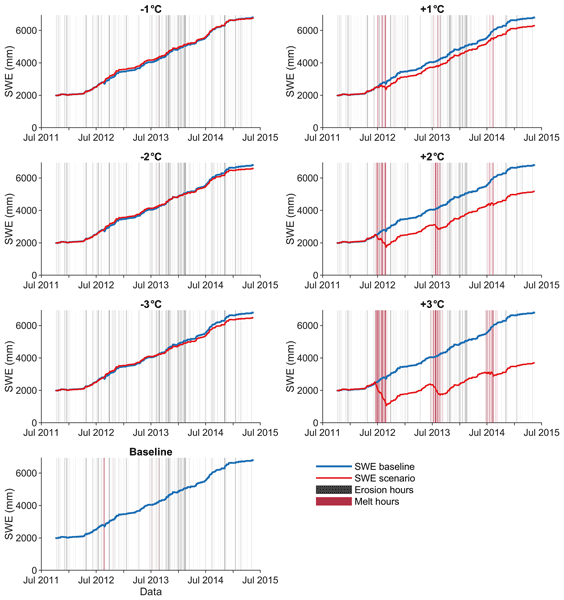
Tiziana Lazzarina Zendrini, Luca Carturan, Michael Lehning, Mathias Bavay, Federico Cazorzi, Paolo Gabrielli, Nander Wever, and Giancarlo Dalla Fontana
The Cryosphere, 20, 5199–5224, https://doi.org/10.5194/tc-20-5199-2026, https://doi.org/10.5194/tc-20-5199-2026, 2026
Short summary
Short summary
By combining in situ mass balance data with a physics‐based snow model at Mt. Ortles, in the Italian Alps, we investigate snow accumulation, erosion and melt processes, and their sensitivity to air temperature. We found that wind erosion is currently the major ablation process at this high-elevation site, whereas melt plays a minor role. Quickly rising air temperature is affecting this partitioning and suggests a future shift from an erosion-dominated to a melt-dominated mass balance regime.
Noah Liguori-Bills, Catherine E. Scott, Ken S. Carslaw, Natalie Kehrwald, Stijn Hantson, Susan Kaspari, Carlo Barbante, Elena Barbaro, Paolo Gabrielli, Roberta Zangrando, Lonnie G. Thompson, and Douglas S. Hamilton
EGUsphere, https://doi.org/10.5194/egusphere-2026-2728, https://doi.org/10.5194/egusphere-2026-2728, 2026
Short summary
Short summary
Ice cores preserve changes in landscape fires and human-caused combustion. In this study, we compared ice core data from every continent, except Oceania, to computer model simulations of fire. We found a large disagreement in the 1850 CE to 1980 CE black carbon ratio. After exploring changes in emissions, transport, and aerosol microphysical processes as potential reasons for this disagreement, our results suggested that fire emission input datasets for climate models are the primary cause.
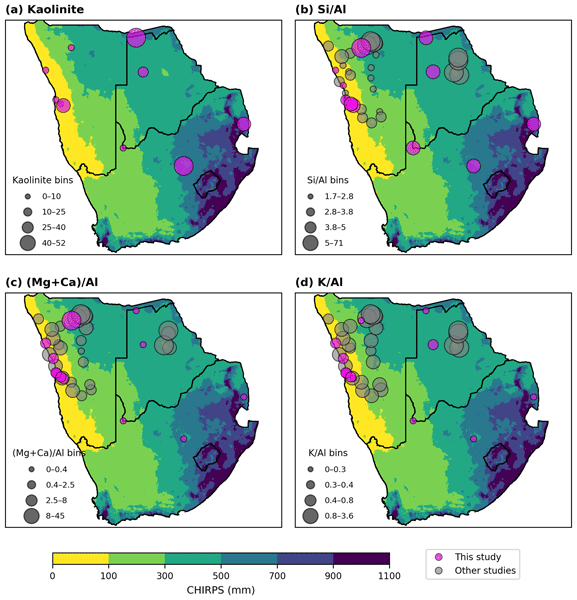
Clarissa Baldo, Servanne Chevaillier, Sophie Nowak, Gael Noyalet, Sandra Lafon, Claudia Di Biagio, Amelie Chaput, James King, Mathieu Cazaunau, Edouard Pangui, Jean-Francois Doussin, Remi Stanus, Nadine Mattielli, Heleen C. Vos, Gregory S. Okin, Brigitte Language, Tjaart Van Der Walt, Stuart Piketh, Karine Desboeufs, Akinori Ito, Silvia Becagli, Eugene Marais, Laurie Barrier, Stéphane Jacquemoud, and Paola Formenti
Atmos. Chem. Phys., 26, 10727–10749, https://doi.org/10.5194/acp-26-10727-2026, https://doi.org/10.5194/acp-26-10727-2026, 2026
Short summary
Short summary
Our results show that crustal element ratios and clay contents distinguish dust aerosols from arid western coastal areas and humid eastern inland regions in Southern Africa. This dust contains key micronutrients that can become bioaccessible during atmospheric transport to nearby and remote marine ecosystems. It is also enriched in carbonates and K-feldspar, serving as a source of cloud condensation and ice nuclei, with potential implications ranging from regional to sub-hemispheric scales.
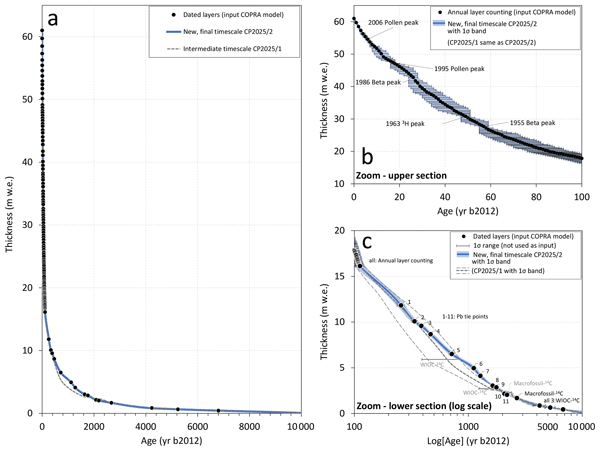
Paolo Gabrielli, Theo M. Jenk, Michele Bertó, Giuliano Dreossi, Daniela Festi, Werner Kofler, Mai Winstrup, Klaus Oeggl, Margit Schwikowski, Barbara Stenni, and Carlo Barbante
Clim. Past, 22, 1037–1055, https://doi.org/10.5194/cp-22-1037-2026, https://doi.org/10.5194/cp-22-1037-2026, 2026
Short summary
Short summary
A low latitude-high altitude Alpine ice core record was obtained in 2011 from the glacier Alto dell’Ortles (Eastern Alps, Italy) and provided evidence of one of the oldest Alpine ice core records spanning the last ~7000 years, back to the last Northern Hemisphere Climatic Optimum. Here we provide a new Alto dell’Ortles chronology of improved accuracy that will allow to constrain Holocene climatic and environmental histories emerging from this high-altitude glacial archive of Central Europe.
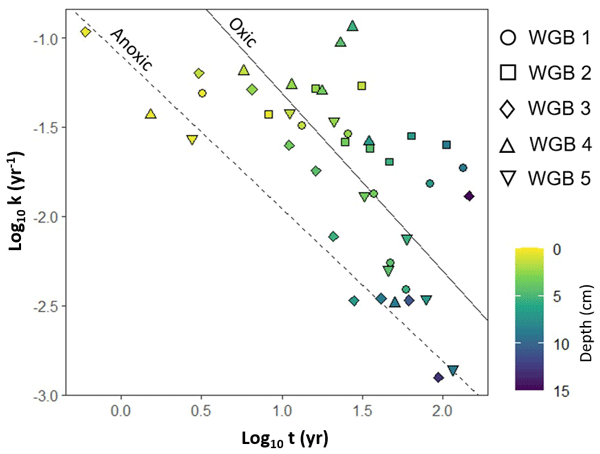
Silvia Placitu, Sebastiaan J. van de Velde, Astrid Hylén, Mats Eriksson, Per O. J. Hall, and Steeve Bonneville
Biogeosciences, 22, 8065–8076, https://doi.org/10.5194/bg-22-8065-2025, https://doi.org/10.5194/bg-22-8065-2025, 2025
Short summary
Short summary
Marine sediments store organic carbon and help regulate climate. Oxygen-depleted waters are thought to enhance this, however Western Gotland Basin sediments show low carbon despite such conditions. We studied the role of mineral protection, which can shield carbon from microbes, and found it limited. This suggests that without physical protection, carbon remains accessible and gets degraded, making mineral protection a key factor in carbon preservation.
Manon Maisonnier, Maoyuan Feng, David Bastviken, Sandra Arndt, Ronny Lauerwald, Aidin Jabbari, Goulven Gildas Laruelle, Murray D. MacKay, Zeli Tan, Wim Thiery, and Pierre Regnier
Earth Syst. Dynam., 16, 1779–1808, https://doi.org/10.5194/esd-16-1779-2025, https://doi.org/10.5194/esd-16-1779-2025, 2025
Short summary
Short summary
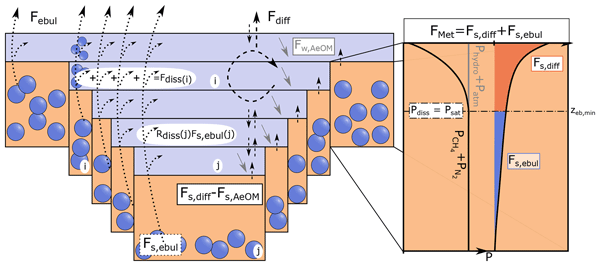
A new process-based modelling framework, FLaMe-v1.0 (Fluxes of Lake Methane version 1.0), is developed to simulate methane (CH4) emissions from lakes at large scales. FLaMe couples the dynamics of organic carbon, oxygen and methane in lakes and rests on an innovative, computationally efficient lake clustering approach for the simulation of CH4 emissions across a large number of lakes. The model evaluation suggests that FLaMe captures the sub-annual and spatial variability of CH4 emissions well.
Luca Carturan, Alexander C. Ihle, Federico Cazorzi, Tiziana Lazzarina Zendrini, Fabrizio De Blasi, Giancarlo Dalla Fontana, Giuliano Dreossi, Daniela Festi, Bryan Mark, Klaus Dieter Oeggl, Roberto Seppi, Barbara Stenni, and Paolo Gabrielli
The Cryosphere, 19, 3443–3458, https://doi.org/10.5194/tc-19-3443-2025, https://doi.org/10.5194/tc-19-3443-2025, 2025
Short summary
Short summary
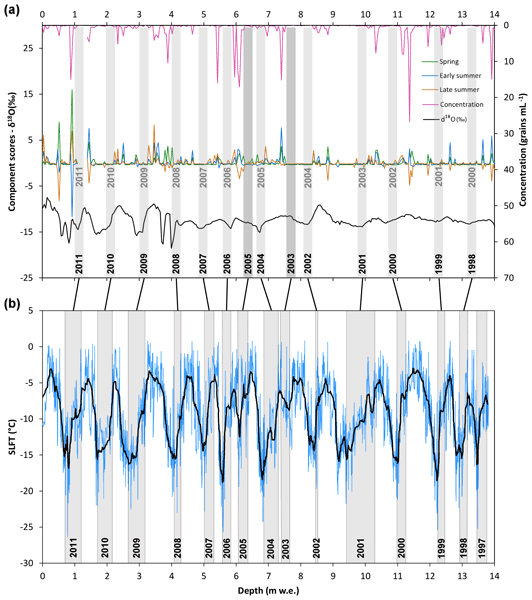
Paleoclimatic glacial archives in low-latitude mountains are increasingly affected by melt, causing heavy percolation and removing snow and firn accumulated across months, seasons, or even years. Here we present a proxy system model that explicitly accounts for melt in ice and firn cores. Compared to traditional annual layer counting, the model significantly improved the interpretation and annual dating of the Mt Ortles firn core, in the Italian Alps, which includes the very warm summer of 2003.
Nicolás J. Cosentino, Gabriela Torre, Fabrice Lambert, Samuel Albani, François De Vleeschouwer, and Aloys J.-M. Bory
Earth Syst. Sci. Data, 16, 941–959, https://doi.org/10.5194/essd-16-941-2024, https://doi.org/10.5194/essd-16-941-2024, 2024
Short summary
Short summary
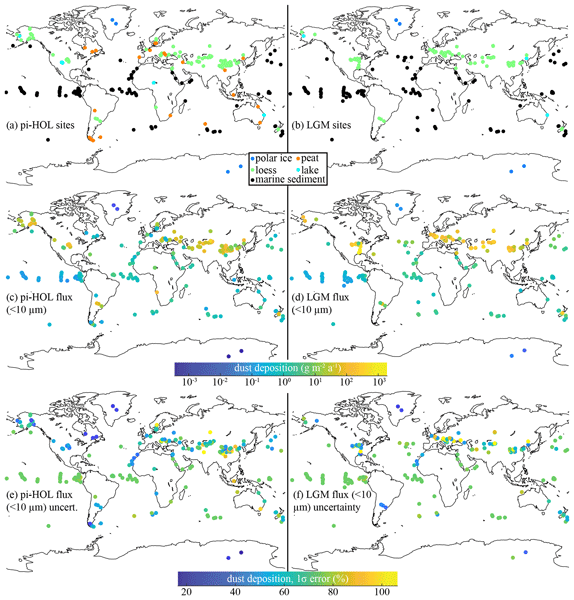
One of the main uncertainties related to future climate change has to do with how aerosols interact with climate. Dust is the most abundant aerosol in the atmosphere by mass. In order to better understand the links between dust and climate, we can turn to geological archives of ancient dust. Paleo±Dust is a compilation of measured values of the paleo-dust deposition rate. We can use this compilation to guide climate models so that they better represent dust–climate interactions.
Alizée Roobaert, Pierre Regnier, Peter Landschützer, and Goulven G. Laruelle
Earth Syst. Sci. Data, 16, 421–441, https://doi.org/10.5194/essd-16-421-2024, https://doi.org/10.5194/essd-16-421-2024, 2024
Short summary
Short summary
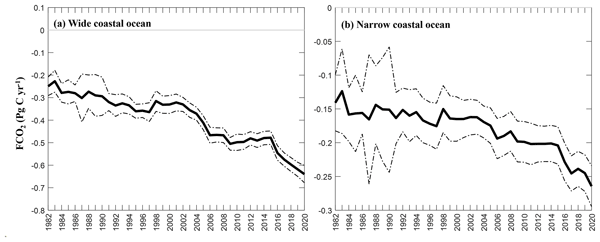
The quantification of the coastal air–sea CO2 exchange (FCO2) has improved in recent years, but its multiannual variability remains unclear. This study, based on interpolated observations, reconstructs the longest global time series of coastal FCO2 (1982–2020). Results show the coastal ocean acts as a CO2 sink, with increasing intensity over time. This new coastal FCO2-product allows establishing regional carbon budgets and provides new constraints for closing the global carbon cycle.
Luca Carturan, Fabrizio De Blasi, Roberto Dinale, Gianfranco Dragà, Paolo Gabrielli, Volkmar Mair, Roberto Seppi, David Tonidandel, Thomas Zanoner, Tiziana Lazzarina Zendrini, and Giancarlo Dalla Fontana
Earth Syst. Sci. Data, 15, 4661–4688, https://doi.org/10.5194/essd-15-4661-2023, https://doi.org/10.5194/essd-15-4661-2023, 2023
Short summary
Short summary
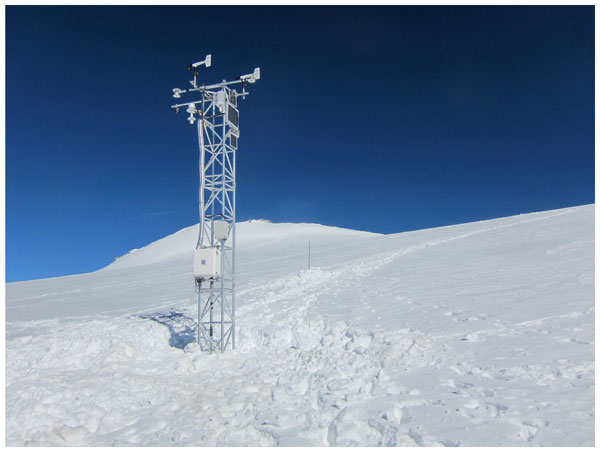
This paper presents a new dataset of air, englacial, soil surface and rock wall temperatures collected between 2010 and 2016 on Mt Ortles, which is the highest summit of South Tyrol, Italy. Details are provided on instrument type and characteristics, field methods, and data quality control and assessment. The obtained data series are available through an open data repository. This is a rare dataset from a summit area lacking observations on permafrost and glaciers and their climatic response.
Paolo Gabrielli, Theo Manuel Jenk, Michele Bertó, Giuliano Dreossi, Daniela Festi, Werner Kofler, Mai Winstrup, Klaus Oeggl, Margit Schwikowski, Barbara Stenni, and Carlo Barbante
Clim. Past Discuss., https://doi.org/10.5194/cp-2022-20, https://doi.org/10.5194/cp-2022-20, 2022
Revised manuscript not accepted
Short summary
Short summary
We present a methodology that reduces the chronological uncertainty of an Alpine ice core record from the glacier Alto dell’Ortles, Italy. This chronology will allow the constraint of the Holocene climatic and environmental histories emerging from this archive of Central Europe. This method will allow to obtain accurate chronologies also from other ice cores from-low latitude/high-altitude glaciers that typically suffer from larger dating uncertainties compared with well dated polar records.
Xi Wei, Josette Garnier, Vincent Thieu, Paul Passy, Romain Le Gendre, Gilles Billen, Maia Akopian, and Goulven Gildas Laruelle
Biogeosciences, 19, 931–955, https://doi.org/10.5194/bg-19-931-2022, https://doi.org/10.5194/bg-19-931-2022, 2022
Short summary
Short summary
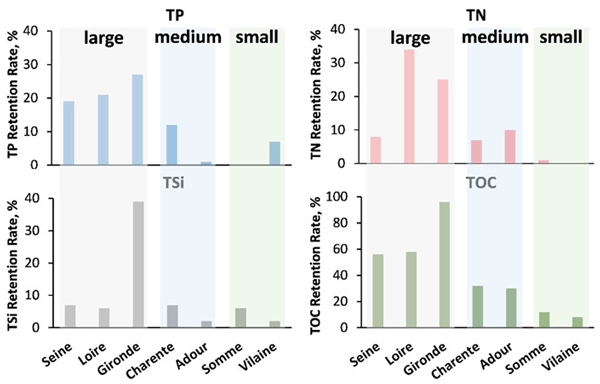
Estuaries are key reactive ecosystems along the land–ocean aquatic continuum and are often strongly impacted by anthropogenic activities. We calculated nutrient in and out fluxes by using a 1-D transient model for seven estuaries along the French Atlantic coast. Among these, large estuaries with high residence times showed higher retention rates than medium and small ones. All reveal coastal eutrophication due to the excess of diffused nitrogen from intensive agricultural river basins.
Alizée Roobaert, Laure Resplandy, Goulven G. Laruelle, Enhui Liao, and Pierre Regnier
Ocean Sci., 18, 67–88, https://doi.org/10.5194/os-18-67-2022, https://doi.org/10.5194/os-18-67-2022, 2022
Short summary
Short summary
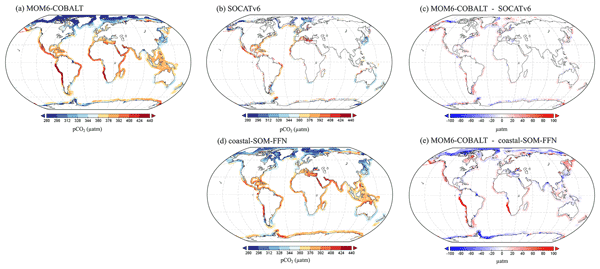
This study uses a global oceanic model to investigate the seasonal dynamics of the sea surface partial pressure of CO2 (pCO2) in the global coastal ocean. Our method quantifies the respective effects of thermal changes, biological activity, ocean circulation and freshwater fluxes on the temporal pCO2 variations. The performance of our model is also evaluated against a data product derived from observations to identify coastal regions where our approach is most robust.

Amanda R. Fay, Luke Gregor, Peter Landschützer, Galen A. McKinley, Nicolas Gruber, Marion Gehlen, Yosuke Iida, Goulven G. Laruelle, Christian Rödenbeck, Alizée Roobaert, and Jiye Zeng
Earth Syst. Sci. Data, 13, 4693–4710, https://doi.org/10.5194/essd-13-4693-2021, https://doi.org/10.5194/essd-13-4693-2021, 2021
Short summary
Short summary
The movement of carbon dioxide from the atmosphere to the ocean is estimated using surface ocean carbon (pCO2) measurements and an equation including variables such as temperature and wind speed; the choices of these variables lead to uncertainties. We introduce the SeaFlux ensemble which provides carbon flux maps calculated in a consistent manner, thus reducing uncertainty by using common choices for wind speed and a set definition of "global" coverage.
Cited articles
Albani, S., Delmonte, B., Maggi, V., Baroni, C., Petit, J.-R., Stenni, B., Mazzola, C., and Frezzotti, M.: Interpreting last glacial to Holocene dust changes at Talos Dome (East Antarctica): implications for atmospheric variations from regional to hemispheric scales, Clim. Past, 8, 741–750, https://doi.org/10.5194/cp-8-741-2012, 2012.
Baldwin, M. P. and Dunkerton, T. J.: Stratospheric Harbingers of Anomalous Weather Regimes, Science, 294, 581–584, https://doi.org/10.1126/science.1063315, 2001.
Basile, I., Grousset, F. E., Revel, M., Petit, J. R., Biscaye, P. E., and Barkov, N. I.: Patagonian origin of glacial dust deposited in East Antarctica (Vostok and Dome C) during glacial stages 2, 4 and 6, Earth Planet. Sc. Lett., 146, 573–589, https://doi.org/10.1016/S0012-821X(96)00255-5, 1997.
Bianchi, C. and Gersonde, R.: Climate evolution at the last deglaciation: the role of the Southern Ocean, Earth Planet. Sc. Lett., 228, 407–424, https://doi.org/10.1016/j.epsl.2004.10.003, 2004.
Blakowski, M. A., Aciego, S. M., Delmonte, B., Baroni, C., Salvatore, M. C., and Sims, K. W. W.: A Sr-Nd-Hf isotope characterization of dust source areas in Victoria Land and the McMurdo Sound sector of Antarctica, Quaternary Sci. Rev., 141, 26–37, https://doi.org/10.1016/j.quascirev.2016.03.023, 2016.
Blard, P.-H., Sylvestre, F., Tripati, A. K., Claude, C., Causse, C., Coudrain, A., Condom, T., Seidel, J.-L., Vimeux, F., Moreau, C., Dumoulin, J.-P., and Lavé, J.: Lake highstands on the Altiplano (Tropical Andes) contemporaneous with Heinrich 1 and the Younger Dryas: new insights from 14C, U–Th dating and δ18O of carbonates, Quaternary Sci. Rev., 30, 3973–3989, https://doi.org/10.1016/j.quascirev.2011.11.001, 2011.
Bory, A., Wolff, E., Mulvaney, R., Jagoutz, E., Wegner, A., Ruth, U., and Elderfield, H.: Multiple sources supply eolian mineral dust to the Atlantic sector of coastal Antarctica: Evidence from recent snow layers at the top of Berkner Island ice sheet, Earth Planet. Sc. Lett., 291, 138–148, https://doi.org/10.1016/j.epsl.2010.01.006, 2010.
Bullard, J. E. and McTainsh, G. H.: Aeolian-fluvial interactions in dryland environments: examples, concepts and Australia case study, Progress in Physical Geography: Earth and Environment, 27, 471–501, https://doi.org/10.1191/0309133303pp386ra, 2003.
Bullard, J. E., Baddock, M., Bradwell, T., Crusius, J., Darlington, E., Gaiero, D., Gassó, S., Gisladottir, G., Hodgkins, R., McCulloch, R., McKenna‐Neuman, C., Mockford, T., Stewart, H., and Thorsteinsson, T.: High‐latitude dust in the Earth system, Rev. Geophys., 54, 447–485, https://doi.org/10.1002/2016RG000518, 2016.
Caldenius, C. C.: Las Glaciaciones Cuaternarias en la Patagonia y Tierra del Fuego, Geografiska Annaler, 14, 1–164, https://doi.org/10.1080/20014422.1932.11880545, 1932.
Condom, T., Coudrain, A., Dezetter, A., Brunstein, D., Delclaux, F., and Jean-Emmanuel, S.: Transient modelling of lacustrine regressions: two case studies from the Andean Altiplano, Hydrol. Process., 18, 2395–2408, https://doi.org/10.1002/hyp.1470, 2004.
Coppo, R., Cosentino, N. J., Torre, G., Del Rio, I., Sawakuchi, A. O., Berman, A. L., Koester, E., Delmonte, B., and Gaiero, D. M.: Coeval minimum south American and maximum Antarctic last glacial maximum dust deposition: A causal link, Quaternary Sci. Rev., 295, 107768, https://doi.org/10.1016/j.quascirev.2022.107768, 2022.
Davies, B. J., Darvill, C. M., Lovell, H., Bendle, J. M., Dowdeswell, J. A., Fabel, D., García, J.-L., Geiger, A., Glasser, N. F., Gheorghiu, D. M., Harrison, S., Hein, A. S., Kaplan, M. R., Martin, J. R. V., Mendelova, M., Palmer, A., Pelto, M., Rodés, Á., Sagredo, E. A., Smedley, R. K., Smellie, J. L., and Thorndycraft, V. R.: The evolution of the Patagonian Ice Sheet from 35 ka to the present day (PATICE), Earth-Sci. Rev., 204, 103152, https://doi.org/10.1016/j.earscirev.2020.103152, 2020.
De Deckker, P.: An evaluation of Australia as a major source of dust, Earth-Sci. Rev., 194, 536–567, https://doi.org/10.1016/j.earscirev.2019.01.008, 2019.
De Deckker, P.: Airborne dust traffic from Australia in modern and Late Quaternary times, Global Planet. Change, 184, 103056, https://doi.org/10.1016/j.gloplacha.2019.103056, 2020.
De Deckker, P., Norman, M., Goodwin, I. D., Wain, A., and Gingele, F. X.: Lead isotopic evidence for an Australian source of aeolian dust to Antarctica at times over the last 170,000 years, Palaeogeogr. Palaeocl., 285, 205–223, https://doi.org/10.1016/j.palaeo.2009.11.013, 2010.
De Deckker, P., Munday, C. I., Brocks, J., O'Loingsigh, T., Allison, G. E., Hope, J., Norman, M., Stuut, J.-B. W., Tapper, N. J., and van der Kaars, S.: Characterisation of the major dust storm that traversed over eastern Australia in September 2009; a multidisciplinary approach, Aeolian Res., 15, 133–149, https://doi.org/10.1016/j.aeolia.2014.07.003, 2014.
Delmonte, B., Basile-Doelsch, I., Petit, J.-R., Maggi, V., Revel-Rolland, M., Michard, A., Jagoutz, E., and Grousset, F.: Comparing the Epica and Vostok dust records during the last 220,000 years: stratigraphical correlation and provenance in glacial periods, Earth-Sci. Rev., 66, 63–87, https://doi.org/10.1016/j.earscirev.2003.10.004, 2004a.
Delmonte, B., Petit, J. R., Andersen, K. K., Basile-Doelsch, I., Maggi, V., and Ya Lipenkov, V.: Dust size evidence for opposite regional atmospheric circulation changes over east Antarctica during the last climatic transition, Clim. Dynam., 23, 427–438, https://doi.org/10.1007/s00382-004-0450-9, 2004b.
Delmonte, B., Petit, J. R., Basile-Doelsch, I., Jagoutz, E., and Maggi, V.: 6. Late quaternary interglacials in East Antarctica from ice-core dust records, in: The Climate of Past Interglacials, vol. 7, edited by: Sirocko, F., Claussen, M., Goñi, M. F. S., and Litt, T., Elsevier, 53–73, https://doi.org/10.1016/S1571-0866(07)80031-5, 2007.
Delmonte, B., Andersson, P. S., Hansson, M., Schöberg, H., Petit, J. R., Basile-Doelsch, I., and Maggi, V.: Aeolian dust in East Antarctica (EPICA-Dome C and Vostok): Provenance during glacial ages over the last 800 kyr: Aeolian Dust in East Antarctica, Geophys. Res. Lett., 35, L07703, https://doi.org/10.1029/2008GL033382, 2008.
Delmonte, B., Andersson, P. S., Schöberg, H., Hansson, M., Petit, J. R., Delmas, R., Gaiero, D. M., Maggi, V., and Frezzotti, M.: Geographic provenance of aeolian dust in East Antarctica during Pleistocene glaciations: preliminary results from Talos Dome and comparison with East Antarctic and new Andean ice core data, Quaternary Sci. Rev., 29, 256–264, https://doi.org/10.1016/j.quascirev.2009.05.010, 2010.
Delmonte, B., Baroni, C., Andersson, P. S., Narcisi, B., Salvatore, M. C., Petit, J. R., Scarchilli, C., Frezzotti, M., Albani, S., and Maggi, V.: Modern and Holocene aeolian dust variability from Talos Dome (Northern Victoria Land) to the interior of the Antarctic ice sheet, Quaternary Sci. Rev., 64, 76–89, https://doi.org/10.1016/j.quascirev.2012.11.033, 2013.
Delmonte, B., Paleari, C. I., Andò, S., Garzanti, E., Andersson, P. S., Petit, J. R., Crosta, X., Narcisi, B., Baroni, C., Salvatore, M. C., Baccolo, G., and Maggi, V.: Causes of dust size variability in central East Antarctica (Dome B): Atmospheric transport from expanded South American sources during Marine Isotope Stage 2, Quaternary Sci. Rev., 168, 55–68, https://doi.org/10.1016/j.quascirev.2017.05.009, 2017.
Delmonte, B., Winton, H., Baroni, M., Baccolo, G., Hansson, M., Andersson, P., Baroni, C., Salvatore, M. C., Lanci, L., and Maggi, V.: Holocene dust in East Antarctica: Provenance and variability in time and space, The Holocene, 30, 546–558, https://doi.org/10.1177/0959683619875188, 2020.
Diaz, M. A., Welch, S. A., Sheets, J. M., Welch, K. A., Khan, A. L., Adams, B. J., McKnight, D. M., Cary, S. C., and Lyons, W. B.: Geochemistry of aeolian material from the McMurdo Dry Valleys, Antarctica: Insights into Southern Hemisphere dust sources, Earth Planet. Sc. Lett., 547, 116460, https://doi.org/10.1016/j.epsl.2020.116460, 2020.
Ding, Q., Steig, E. J., Battisti, D. S., and Küttel, M.: Winter warming in West Antarctica caused by central tropical Pacific warming, Nat. Geosci., 4, 398–403, https://doi.org/10.1038/ngeo1129, 2011.
Dukes, D., Gonzales, H. B., Ravi, S., Grandstaff, D. E., Van Pelt, R. S., Li, J., Wang, G., and Sankey, J. B.: Quantifying Postfire Aeolian Sediment Transport Using Rare Earth Element Tracers, J. Geophys. Res.-Biogeo., 123, 288–299, https://doi.org/10.1002/2017JG004284, 2018.
EPICA Community Members: One-to-one coupling of glacial climate variability in Greenland and Antarctica, Nature, 444, 195–198, https://doi.org/10.1038/nature05301, 2006.
Fischer, H., Fundel, F., Ruth, U., Twarloh, B., Wegner, A., Udisti, R., Becagli, S., Castellano, E., Morganti, A., Severi, M., Wolff, E., Littot, G., Röthlisberger, R., Mulvaney, R., Hutterli, M. A., Kaufmann, P., Federer, U., Lambert, F., Bigler, M., Hansson, M., Jonsell, U., De Angelis, M., Boutron, C., Siggaard-Andersen, M.-L., Steffensen, J. P., Barbante, C., Gaspari, V., Gabrielli, P., and Wagenbach, D.: Reconstruction of millennial changes in dust emission, transport and regional sea ice coverage using the deep EPICA ice cores from the Atlantic and Indian Ocean sector of Antarctica, Earth Planet. Sc. Lett., 260, 340–354, https://doi.org/10.1016/j.epsl.2007.06.014, 2007.
Fletcher, M.-S. and Moreno, P. I.: Zonally symmetric changes in the strength and position of the Southern Westerlies drove atmospheric CO2 variations over the past 14 k.y., Geology, 39, 419–422, https://doi.org/10.1130/G31807.1, 2011.
Gabrielli, P., Barbante, C., Turetta, C., Marteel, A., Boutron, C., Cozzi, G., Cairns, W., Ferrari, C., and Cescon, P.: Direct determination of rare earth elements at the subpicogram per gram level in antarctic ice by ICP-SFMS using a desolvation system, Analytical chemistry, 78, 1883–1889, https://doi.org/10.1021/ac0518957, 2006.
Gabrielli, P., Wegner, A., Petit, J. R., Delmonte, B., De Deckker, P., Gaspari, V., Fischer, H., Ruth, U., Kriews, M., Boutron, C., Cescon, P., and Barbante, C.: A major glacial-interglacial change in aeolian dust composition inferred from Rare Earth Elements in Antarctic ice, Quaternary Sci. Rev., 29, 265–273, https://doi.org/10.1016/j.quascirev.2009.09.002, 2010.
Gaiero, D. M.: Dust provenance in Antarctic ice during glacial periods: From where in southern South America?, Geophys. Res. Lett., 34, L17707, https://doi.org/10.1029/2007GL030520, 2007.
Gaiero, D. M., Probst, J.-L., Depetris, P. J., Bidart, S. M., and Leleyter, L.: Iron and other transition metals in Patagonian riverborne and windborne materials: geochemical control and transport to the southern South Atlantic Ocean, Geochim. Cosmochim. Ac., 67, 3603–3623, https://doi.org/10.1016/S0016-7037(03)00211-4, 2003.
Gaiero, D. M., Depetris, P. J., Probst, J.-L., Bidart, S. M., and Leleyter, L.: The signature of river- and wind-borne materials exported from Patagonia to the southern latitudes: a view from REEs and implications for paleoclimatic interpretations, Earth Planet. Sc. Lett., 219, 357–376, https://doi.org/10.1016/S0012-821X(03)00686-1, 2004.
Gaiero, D. M., Simonella, L., Gassó, S., Gili, S., Stein, A. F., Sosa, P., Becchio, R., Arce, J., and Marelli, H.: Ground/satellite observations and atmospheric modeling of dust storms originating in the high Puna-Altiplano deserts (South America): Implications for the interpretation of paleo-climatic archives: Dust storms from Puna-Altiplano deserts, J. Geophys. Res.-Atmos., 118, 3817–3831, https://doi.org/10.1002/jgrd.50036, 2013.
Gili, S., Gaiero, D. M., Goldstein, S. L., Chemale Jr., F., Koester, E., Jweda, J., Vallelonga, P., and Kaplan, M. R.: Provenance of dust to Antarctica: A lead isotopic perspective: Pb isotopic signature in Antarctic dust, Geophys. Res. Lett., 43, 2291–2298, https://doi.org/10.1002/2016GL068244, 2016.
Gili, S., Gaiero, D. M., Goldstein, S. L., Chemale, F., Jweda, J., Kaplan, M. R., Becchio, R. A., and Koester, E.: Glacial/interglacial changes of Southern Hemisphere wind circulation from the geochemistry of South American dust, Earth Planet. Sc. Lett., 469, 98–109, https://doi.org/10.1016/j.epsl.2017.04.007, 2017.
Gili, S., Vanderstraeten, A., Chaput, A., King, J., Gaiero, D. M., Delmonte, B., Vallelonga, P., Formenti, P., Di Biagio, C., Cazanau, M., Pangui, E., Doussin, J.-F., and Mattielli, N.: South African dust contribution to the high southern latitudes and East Antarctica during interglacial stages, Commun. Earth Environ., 3, 129, https://doi.org/10.1038/s43247-022-00464-z, 2022.
Gingele, F., De Deckker, P., and Norman, M.: Late Pleistocene and Holocene climate of SE Australia reconstructed from dust and river loads deposited offshore the River Murray Mouth, Earth Planet. Sc. Lett., 255, 257–272, https://doi.org/10.1016/j.epsl.2006.12.019, 2007.
Gingele, F. X. and De Deckker, P.: Clay mineral, geochemical and Sr–Nd isotopic fingerprinting of sediments in the Murray–Darling fluvial system, southeast Australia, Aust. J. Earth Sci., 52, 965–974, https://doi.org/10.1080/08120090500302301, 2005.
Grousset, F. E. and Biscaye, P. E.: Tracing dust sources and transport patterns using Sr, Nd and Pb isotopes, Chem. Geol., 222, 149–167, https://doi.org/10.1016/j.chemgeo.2005.05.006, 2005.
Grousset, F. E., Biscaye, P. E., Revel, M., Petit, J.-R., Pye, K., Joussaume, S., and Jouzel, J.: Antarctic (Dome C) ice-core dust at 18 k.y. B.P.: Isotopic constraints on origins, Earth Planet. Sc. Lett., 111, 175–182, https://doi.org/10.1016/0012-821X(92)90177-W, 1992.
Kilian, R. and Lamy, F.: A review of Glacial and Holocene paleoclimate records from southernmost Patagonia (49–55° S), Quaternary Sci. Rev., 53, 1–23, https://doi.org/10.1016/j.quascirev.2012.07.017, 2012.
Koffman, B. G., Goldstein, S. L., Winckler, G., Borunda, A., Kaplan, M. R., Bolge, L., Cai, Y., Recasens, C., Koffman, T. N. B., and Vallelonga, P.: New Zealand as a source of mineral dust to the atmosphere and ocean, Quaternary Sci. Rev., 251, 106659, https://doi.org/10.1016/j.quascirev.2020.106659, 2021.
Kok, J. F., Adebiyi, A. A., Albani, S., Balkanski, Y., Checa-Garcia, R., Chin, M., Colarco, P. R., Hamilton, D. S., Huang, Y., Ito, A., Klose, M., Li, L., Mahowald, N. M., Miller, R. L., Obiso, V., Pérez García-Pando, C., Rocha-Lima, A., and Wan, J. S.: Contribution of the world's main dust source regions to the global cycle of desert dust, Atmos. Chem. Phys., 21, 8169–8193, https://doi.org/10.5194/acp-21-8169-2021, 2021.
Krätschmer, S., van der Does, M., Lamy, F., Lohmann, G., Völker, C., and Werner, M.: Simulating glacial dust changes in the Southern Hemisphere using ECHAM6.3-HAM2.3, Clim. Past, 18, 67–87, https://doi.org/10.5194/cp-18-67-2022, 2022.
Krinner, G., Petit, J.-R., and Delmonte, B.: Altitude of atmospheric tracer transport towards Antarctica in present and glacial climate, Quaternary Sci. Rev., 29, 274–284, https://doi.org/10.1016/j.quascirev.2009.06.020, 2010.
Lamb, P. J., Leslie, L. M., Timmer, R. P., and Speer, M. S.: Multidecadal variability of Eastern Australian dust and Northern New Zealand sunshine: Associations with Pacific climate system, J. Geophys. Res., 114, D09106, https://doi.org/10.1029/2008JD011184, 2009.
Lambert, F., Delmonte, B., Petit, J. R., Bigler, M., Kaufmann, P. R., Hutterli, M. A., Stocker, T. F., Ruth, U., Steffensen, J. P., and Maggi, V.: Dust-climate couplings over the past 800,000 years from the EPICA Dome C ice core, Nature, 452, 616–619, https://doi.org/10.1038/nature06763, 2008.
Lambert, F., Tagliabue, A., Shaffer, G., Lamy, F., Winckler, G., Farias, L., Gallardo, L., and De Pol‐Holz, R.: Dust fluxes and iron fertilization in Holocene and Last Glacial Maximum climates, Geophys. Res. Lett., 42, 6014–6023, https://doi.org/10.1002/2015GL064250, 2015.
Lambert, F., Opazo, N., Ridgwell, A., Winckler, G., Lamy, F., Shaffer, G., Kohfeld, K., Ohgaito, R., Albani, S., and Abe-Ouchi, A.: Regional patterns and temporal evolution of ocean iron fertilization and CO2 drawdown during the last glacial termination, Earth Planet. Sc. Lett., 554, 116675, https://doi.org/10.1016/j.epsl.2020.116675, 2021.
Li, C., Sonke, J. E., Le Roux, G., Van der Putten, N., Piotrowska, N., Jeandel, C., Mattielli, N., Benoit, M., Wiggs, G. F. S., and De Vleeschouwer, F.: Holocene dynamics of the southern westerly winds over the Indian Ocean inferred from a peat dust deposition record, Quaternary Sci. Rev., 231, 106169, https://doi.org/10.1016/j.quascirev.2020.106169, 2020.
Li, F., Ginoux, P., and Ramaswamy, V.: Distribution, transport, and deposition of mineral dust in the Southern Ocean and Antarctica: Contribution of major sources, J. Geophys. Res., 113, D10207, https://doi.org/10.1029/2007JD009190, 2008.
Lisé-Pronovost, A., St-Onge, G., Gogorza, C., Haberzettl, T., Jouve, G., Francus, P., Ohlendorf, C., Gebhardt, C., and Zolitschka, B.: Rock-magnetic proxies of wind intensity and dust since 51,200 cal BP from lacustrine sediments of Laguna Potrok Aike, southeastern Patagonia, Earth Planet. Sc. Lett., 411, 72–86, https://doi.org/10.1016/j.epsl.2014.11.007, 2015.
Magee, J. W., Miller, G. H., Spooner, N. A., and Questiaux, D.: Continuous 150 k.y. monsoon record from Lake Eyre, Australia: Insolation-forcing implications and unexpected Holocene failure, Geology, 32, 885–888, https://doi.org/10.1130/G20672.1, 2004.
Marino, F., Castellano, E., Nava, S., Chiari, M., Ruth, U., Wegner, A., Lucarelli, F., Udisti, R., Delmonte, B., and Maggi, V.: Coherent composition of glacial dust on opposite sides of the East Antarctic Plateau inferred from the deep EPICA ice cores, Geophys. Res. Lett., 36, L23703, https://doi.org/10.1029/2009GL040732, 2009.
Markgraf, V., Whitlock, C., and Haberle, S.: Vegetation and fire history during the last 18,000 cal yr B.P. in Southern Patagonia: Mallín Pollux, Coyhaique, Province Aisén (45°41′30′′ S, 71°50′30′′ W, 640 m elevation), Palaeogeogr. Palaeocl., 254, 492–507, https://doi.org/10.1016/j.palaeo.2007.07.008, 2007.
Markle, B. R., Steig, E. J., Roe, G. H., Winckler, G., and McConnell, J. R.: Concomitant variability in high-latitude aerosols, water isotopes and the hydrologic cycle, Nat. Geosci., 11, 853–859, https://doi.org/10.1038/s41561-018-0210-9, 2018.
Martínez-García, A., Sigman, D. M., Ren, H., Anderson, R. F., Straub, M., Hodell, D. A., Jaccard, S. L., Eglinton, T. I., and Haug, G. H.: Iron Fertilization of the Subantarctic Ocean During the Last Ice Age, Science, 343, 1347–1350, https://doi.org/10.1126/science.1246848, 2014.
Masson, V., Vimeux, F., Jouzel, J., Morgan, V., Delmotte, M., Ciais, P., Hammer, C., Johnsen, S., Lipenkov, V. Ya., Mosley-Thompson, E., Petit, J.-R., Steig, E. J., Stievenard, M., and Vaikmae, R.: Holocene Climate Variability in Antarctica Based on 11 Ice-Core Isotopic Records, Quaternary Res., 54, 348–358, https://doi.org/10.1006/qres.2000.2172, 2000.
Moreno, P. I., Francois, J. P., Moy, C. M., and Villa-Martínez, R.: Covariability of the Southern Westerlies and atmospheric CO2 during the Holocene, Geology, 38, 727–730, https://doi.org/10.1130/G30962.1, 2010.
Moreno, P. I., Henríquez, W. I., Pesce, O. H., Henríquez, C. A., Fletcher, M. S., Garreaud, R. D., and Villa-Martínez, R. P.: An early Holocene westerly minimum in the southern mid-latitudes, Quaternary Sci. Rev., 251, 106730, https://doi.org/10.1016/j.quascirev.2020.106730, 2021.
Neff, P. D. and Bertler, N. A. N.: Trajectory modeling of modern dust transport to the Southern Ocean and Antarctica, J. Geophys. Res.-Atmos., 120, 9303–9322, https://doi.org/10.1002/2015JD023304, 2015.
Nguyen, H. D., Riley, M., Leys, J., and Salter, D.: Dust Storm Event of February 2019 in Central and East Coast of Australia and Evidence of Long-Range Transport to New Zealand and Antarctica, Atmosphere, 10, 653, https://doi.org/10.3390/atmos10110653, 2019.
Parrenin, F., Barnola, J.-M., Beer, J., Blunier, T., Castellano, E., Chappellaz, J., Dreyfus, G., Fischer, H., Fujita, S., Jouzel, J., Kawamura, K., Lemieux-Dudon, B., Loulergue, L., Masson-Delmotte, V., Narcisi, B., Petit, J.-R., Raisbeck, G., Raynaud, D., Ruth, U., Schwander, J., Severi, M., Spahni, R., Steffensen, J. P., Svensson, A., Udisti, R., Waelbroeck, C., and Wolff, E.: The EDC3 chronology for the EPICA Dome C ice core, Clim. Past, 3, 485–497, https://doi.org/10.5194/cp-3-485-2007, 2007.
Placzek, C., Quade, J., and Patchett, P. J.: Geochronology and stratigraphy of late Pleistocene lake cycles on the southern Bolivian Altiplano: Implications for causes of tropical climate change, GSA Bulletin, 118, 515–532, https://doi.org/10.1130/B25770.1, 2006.
Power, M. J., Marlon, J., Ortiz, N., Bartlein, P. J., Harrison, S. P., Mayle, F. E., Ballouche, A., Bradshaw, R. H. W., Carcaillet, C., Cordova, C., Mooney, S., Moreno, P. I., Prentice, I. C., Thonicke, K., Tinner, W., Whitlock, C., Zhang, Y., Zhao, Y., Ali, A. A., Anderson, R. S., Beer, R., Behling, H., Briles, C., Brown, K. J., Brunelle, A., Bush, M., Camill, P., Chu, G. Q., Clark, J., Colombaroli, D., Connor, S., Daniau, A.-L., Daniels, M., Dodson, J., Doughty, E., Edwards, M. E., Finsinger, W., Foster, D., Frechette, J., Gaillard, M.-J., Gavin, D. G., Gobet, E., Haberle, S., Hallett, D. J., Higuera, P., Hope, G., Horn, S., Inoue, J., Kaltenrieder, P., Kennedy, L., Kong, Z. C., Larsen, C., Long, C. J., Lynch, J., Lynch, E. A., McGlone, M., Meeks, S., Mensing, S., Meyer, G., Minckley, T., Mohr, J., Nelson, D. M., New, J., Newnham, R., Noti, R., Oswald, W., Pierce, J., Richard, P. J. H., Rowe, C., Sanchez Goñi, M. F., Shuman, B. N., Takahara, H., Toney, J., Turney, C., Urrego-Sanchez, D. H., Umbanhowar, C., Vandergoes, M., Vanniere, B., Vescovi, E., Walsh, M., Wang, X., Williams, N., Wilmshurst, J., and Zhang, J. H.: Changes in fire regimes since the Last Glacial Maximum: an assessment based on a global synthesis and analysis of charcoal data, Clim. Dynam., 30, 887–907, https://doi.org/10.1007/s00382-007-0334-x, 2008.
Prospero, J. M., Ginoux, P., Torres, O., Nicholson, S. E., and Gill, T. E.: Environmental characterization of global sources of atmospheric soil dust identified with the Nimbus 7 total ozone mapping spectrometer (TOMS) absorbing aerosol product, Rev. Geophys., 40, https://doi.org/10.1029/2000RG000095, 2002.
Pullen, A., Barbeau, D. L., Leier, A. L., Abell, J. T., Ward, M., Bruner, A., and Fidler, M. K.: A westerly wind dominated Puna Plateau during deposition of upper Pleistocene loessic sediments in the subtropical Andes, South America, Nat. Commun., 13, 3411, https://doi.org/10.1038/s41467-022-31118-5, 2022.
Quade, J. and Kaplan, M. R.: Lake-level stratigraphy and geochronology revisited at Lago (Lake) Cardiel, Argentina, and changes in the Southern Hemispheric Westerlies over the last 25 ka, Quaternary Sci. Rev., 177, 173–188, https://doi.org/10.1016/j.quascirev.2017.10.006, 2017.
Revel-Rolland, M., De Deckker, P., Delmonte, B., Hesse, P., Magee, J., Basiledoelsch, I., Grousset, F., and Bosch, D.: Eastern Australia: A possible source of dust in East Antarctica interglacial ice, Earth Planet. Sc. Lett., 249, 1–13, https://doi.org/10.1016/j.epsl.2006.06.028, 2006.
Rudnick, R. L. and Gao, S.: 3.01 Composition of the Continental Crust, in: Treatise on Geochemistry, Vol. 03, edited by: Holland, H. D. and Turekian, K. K., Pergamon, Oxford, 1–64, https://doi.org/10.1016/B0-08-043751-6/03016-4, 2003.
Saunders, K. M., Roberts, S. J., Perren, B., Butz, C., Sime, L., Davies, S., Van Nieuwenhuyze, W., Grosjean, M., and Hodgson, D. A.: Holocene dynamics of the Southern Hemisphere westerly winds and possible links to CO2 outgassing, Nat. Geosci., 11, 650–655, https://doi.org/10.1038/s41561-018-0186-5, 2018.
Singh, G. and Luly, J.: Changes in vegetation and seasonal climate since the last full glacial at Lake Frome, South Australia, Palaeogeogr. Palaeocl., 84, 75–86, https://doi.org/10.1016/0031-0182(91)90036-Q, 1991.
Skirrow, G. K., Smedley, R. K., Chiverrell, R. C., and Hooke, J. M.: Planform change of the Río Chubut (∼ 42° S, ∼ 70° W, Argentina) in response to climate drivers in the southern Andes, Geomorphology, 393, 107924, https://doi.org/10.1016/j.geomorph.2021.107924, 2021.
Stanley, S. and De Deckker, P. D.: A Holocene record of allochthonous, aeolian mineral grains in an Australian alpine lake; implications for the history of climate change in southeastern Australia, J. Paleolimnol., 27, 207–219, https://doi.org/10.1023/A:1014249404845, 2002.
Stenni, B., Masson-Delmotte, V., Selmo, E., Oerter, H., Meyer, H., Röthlisberger, R., Jouzel, J., Cattani, O., Falourd, S., Fischer, H., Hoffmann, G., Iacumin, P., Johnsen, S. J., Minster, B., and Udisti, R.: The deuterium excess records of EPICA Dome C and Dronning Maud Land ice cores (East Antarctica), Quaternary Sci. Rev. 29, 146–159, https://doi.org/10.1016/j.quascirev.2009.10.009, 2010.
Stone, A. E. C., Thomas, D. S. G., and Viles, H. A.: Late Quaternary palaeohydrological changes in the northern Namib Sand Sea: New chronologies using OSL dating of interdigitated aeolian and water-lain interdune deposits, Palaeogeogr. Palaeocl., 288, 35–53, https://doi.org/10.1016/j.palaeo.2010.01.032, 2010.
Stuut, J.-B. W., Prins, M. A., Schneider, R. R., Weltje, G. J., Jansen, J. H. F., and Postma, G.: A 300-kyr record of aridity and wind strength in southwestern Africa: inferences from grain-size distributions of sediments on Walvis Ridge, SE Atlantic, Mar. Geol., 180, 221–233, https://doi.org/10.1016/S0025-3227(01)00215-8, 2002.
Sugden, D. E., McCulloch, R. D., Bory, A. J.-M., and Hein, A. S.: Influence of Patagonian glaciers on Antarctic dust deposition during the last glacial period, Nat. Geosci., 2, 281–285, https://doi.org/10.1038/ngeo474, 2009.
Thorndycraft, V. R., Bendle, J. M., Benito, G., Davies, B. J., Sancho, C., Palmer, A. P., Fabel, D., Medialdea, A., and Martin, J. R. V.: Glacial lake evolution and Atlantic-Pacific drainage reversals during deglaciation of the Patagonian Ice Sheet, Quaternary Sci. Rev., 203, 102–127, https://doi.org/10.1016/j.quascirev.2018.10.036, 2019.
Vallelonga, P., Van de Velde, K., Candelone, J.-P., Morgan, V. I., Boutron, C. F., and Rosman, K. J. R.: The lead pollution history of Law Dome, Antarctica, from isotopic measurements on ice cores: 1500 AD to 1989 AD, Earth Planet. Sc. Lett., 204, 291–306, https://doi.org/10.1016/S0012-821X(02)00983-4, 2002.
Vanderstraeten, A., Mattielli, N., Laruelle, G. G., Gili, S., Bory, A., Gabrielli, P., Boxho, S., Tison, J.-L., and Bonneville, S.: Identifying the provenance and quantifying the contribution of dust sources in EPICA Dronning Maud Land ice core (Antarctica) over the last deglaciation (7–27 kyr BP): A high-resolution, quantitative record from a new Rare Earth Element mixing model, Sci. Total Environ., 881, 163450, https://doi.org/10.1016/j.scitotenv.2023.163450, 2023.
Veres, D., Bazin, L., Landais, A., Toyé Mahamadou Kele, H., Lemieux-Dudon, B., Parrenin, F., Martinerie, P., Blayo, E., Blunier, T., Capron, E., Chappellaz, J., Rasmussen, S. O., Severi, M., Svensson, A., Vinther, B., and Wolff, E. W.: The Antarctic ice core chronology (AICC2012): an optimized multi-parameter and multi-site dating approach for the last 120 thousand years, Clim. Past, 9, 1733–1748, https://doi.org/10.5194/cp-9-1733-2013, 2013.
Wagner, R., Schepanski, K., and Klose, M.: The Dust Emission Potential of Agricultural‐Like Fires-Theoretical Estimates From Two Conceptually Different Dust Emission Parameterizations, J. Geophys. Res.-Atmos., 126, e2020JD034355, https://doi.org/10.1029/2020JD034355, 2021.
Weber, M. E., Clark, P. U., Kuhn, G., Timmermann, A., Sprenk, D., Gladstone, R., Zhang, X., Lohmann, G., Menviel, L., Chikamoto, M. O., Friedrich, T., and Ohlwein, C.: Millennial-scale variability in Antarctic ice-sheet discharge during the last deglaciation, Nature, 510, 134–138, https://doi.org/10.1038/nature13397, 2014.
Weber, M. E., Bailey, I., Hemming, S. R., Martos, Y. M., Reilly, B. T., Ronge, T. A., Brachfeld, S., Williams, T., Raymo, M., Belt, S. T., Smik, L., Vogel, H., Peck, V. L., Armbrecht, L., Cage, A., Cardillo, F. G., Du, Z., Fauth, G., Fogwill, C. J., Garcia, M., Garnsworthy, M., Glüder, A., Guitard, M., Gutjahr, M., Hernández-Almeida, I., Hoem, F. S., Hwang, J.-H., Iizuka, M., Kato, Y., Kenlee, B., OConnell, S., Pérez, L. F., Seki, O., Stevens, L., Tauxe, L., Tripathi, S., Warnock, J., and Zheng, X.: Antiphased dust deposition and productivity in the Antarctic Zone over 1.5 million years, Nat. Commun., 13, 2044, https://doi.org/10.1038/s41467-022-29642-5, 2022.
Wegner, A., Gabrielli, P., Wilhelms-Dick, D., Ruth, U., Kriews, M., De Deckker, P., Barbante, C., Cozzi, G., Delmonte, B., and Fischer, H.: Change in dust variability in the Atlantic sector of Antarctica at the end of the last deglaciation, Clim. Past, 8, 135–147, https://doi.org/10.5194/cp-8-135-2012, 2012.
Wiggs, G. F. S., Baddock, M. C., Thomas, D. S. G., Washington, R., Nield, J. M., Engelstaedter, S., Bryant, R. G., Eckardt, F. D., Von Holdt, J. R. C., and Kötting, S.: Quantifying Mechanisms of Aeolian Dust Emission: Field Measurements at Etosha Pan, Namibia, J. Geophys. Res.-Earth, 127, e2022JF006675, https://doi.org/10.1029/2022JF006675, 2022.
Williams, P. W., McGlone, M., Neil, H., and Zhao, J.-X.: A review of New Zealand palaeoclimate from the Last Interglacial to the global Last Glacial Maximum, Quaternary Sci. Rev., 110, 92–106, https://doi.org/10.1016/j.quascirev.2014.12.017, 2015.
Woollings, T., Li, C., Drouard, M., Dunn-Sigouin, E., Elmestekawy, K. A., Hell, M., Hoskins, B., Mbengue, C., Patterson, M., and Spengler, T.: The role of Rossby waves in polar weather and climate, Weather Clim. Dynam., 4, 61–80, https://doi.org/10.5194/wcd-4-61-2023, 2023.
Yamamoto, A., Abe-Ouchi, A., Ohgaito, R., Ito, A., and Oka, A.: Glacial CO2 decrease and deep-water deoxygenation by iron fertilization from glaciogenic dust, Clim. Past, 15, 981–996, https://doi.org/10.5194/cp-15-981-2019, 2019.
Yang, Y., Carey-Smith, T., and Turner, R.: The merged and superposed sub-tropical jet and polar-front jet in the southwest Pacific: A case study, Atmos. Sci. Lett., 25, e1203, https://doi.org/10.1002/asl.1203, 2024.
Short summary
We present a high-resolution, quantitative reconstruction of dust provenance in the EPICA Dome C ice core (33.7–2.8 kyr BP) using Rare Earth Elements (REE). Dust was mainly sourced from Patagonia during glacial periods, shifting toward Australia, Southern Africa, and the Puna-Altiplano after 14.5 kyr BP due to sea-level rise and hydrological rearrangement in Patagonia. These changes also reflect major reorganizations of Southern Hemisphere atmospheric circulation.
We present a high-resolution, quantitative reconstruction of dust provenance in the EPICA Dome C...


