
Articles | Volume 22, issue 7
https://doi.org/10.5194/cp-22-1363-2026
© Author(s) 2026. This work is distributed under
the Creative Commons Attribution 4.0 License.
the Creative Commons Attribution 4.0 License.
https://doi.org/10.5194/cp-22-1363-2026
© Author(s) 2026. This work is distributed under
the Creative Commons Attribution 4.0 License.
the Creative Commons Attribution 4.0 License.
Research article
| 
27 Jul 2026
Research article |
| 27 Jul 2026
| 27 Jul 2026
Riukojietna, a small low-altitude ice cap that may have persisted through the Holocene: evidence from combining cosmogenic multi-nuclide dating and lacustrine sediment records
Arjen P. Stroeven
CORRESPONDING AUTHOR
Department of Physical Geography, Stockholm University, 106 91 Stockholm, Sweden
Bolin Centre for Climate Research, Stockholm University, 106 91 Stockholm, Sweden
Gunhild C. Rosqvist
Department of Physical Geography, Stockholm University, 106 91 Stockholm, Sweden
Bolin Centre for Climate Research, Stockholm University, 106 91 Stockholm, Sweden
Alexandria J. Koester
Department of Earth, Atmospheric, and Planetary Sciences, Purdue University, West Lafayette, IN 47907, USA
Jane L. Andersen
Department of Physical Geography, Stockholm University, 106 91 Stockholm, Sweden
Research Centre for the Built Environment, Energy, Climate, and Water Technology, VIA University College, 8700 Horsens, Denmark
Carl-Anton Wahlström
IKNI AS, P.O. Box 6646, 0129 Oslo, Norway
Nathaniel A. Lifton
Department of Earth, Atmospheric, and Planetary Sciences, Purdue University, West Lafayette, IN 47907, USA
Purdue Rare Isotope Measurement Laboratory (PRIME Lab), Department of Physics and Astronomy, Purdue University, West Lafayette, IN 47907, USA
Related authors
Karlijn Ploeg and Arjen P. Stroeven
The Cryosphere, 19, 347–373, https://doi.org/10.5194/tc-19-347-2025, https://doi.org/10.5194/tc-19-347-2025, 2025
Short summary
Short summary
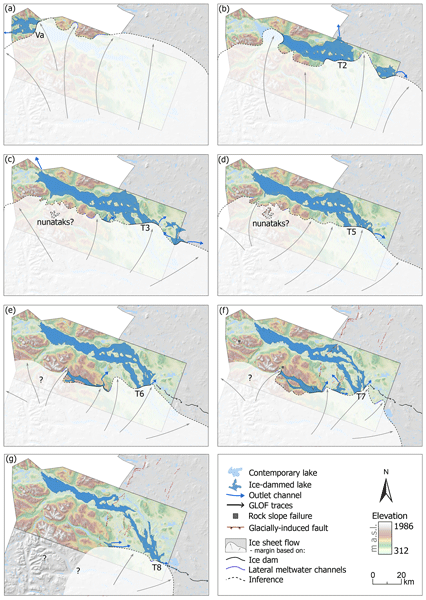
Mapping of glacial landforms using lidar data shows that the retreating margin of the Fennoscandian Ice Sheet dammed a series of lakes in the Torneträsk Basin during deglaciation. These lakes were more extensive than previously thought and produced outburst floods. We show that sections of the Pärvie Fault, the longest glacially activated fault of Sweden, ruptured multiple times and during the existence of ice-dammed lake Torneträsk.
Bradley W. Goodfellow, Marc W. Caffee, Greg Chmiel, Ruben Fritzon, Alasdair Skelton, and Arjen P. Stroeven
Solid Earth, 15, 1343–1363, https://doi.org/10.5194/se-15-1343-2024, https://doi.org/10.5194/se-15-1343-2024, 2024
Short summary
Short summary
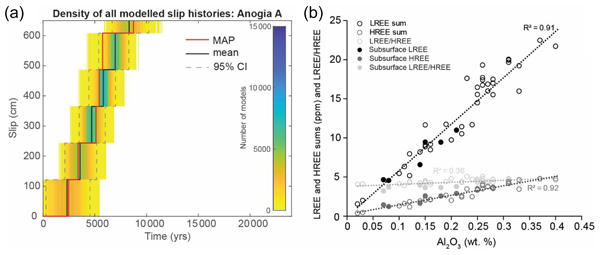
Reconstructions of past earthquakes are useful to assess earthquake hazard risk. We assess a limestone scarp exposed by earthquakes along the Sparta Fault, Greece, using 36Cl and rare-earth elements and yttrium (REE-Y). Our analyses indicate an increase in the average scarp slip rate from 0.8–0.9 mm yr-1 at 6.5–7.7 kyr ago to 1.1–1.2 mm yr-1 up to the devastating 464 BCE earthquake. REE-Y indicate clays in the fault scarp; their potential use in palaeoseismicity would benefit from further study.
Bradley W. Goodfellow, Arjen P. Stroeven, Nathaniel A. Lifton, Jakob Heyman, Alexander Lewerentz, Kristina Hippe, Jens-Ove Näslund, and Marc W. Caffee
Geochronology, 6, 291–302, https://doi.org/10.5194/gchron-6-291-2024, https://doi.org/10.5194/gchron-6-291-2024, 2024
Short summary
Short summary
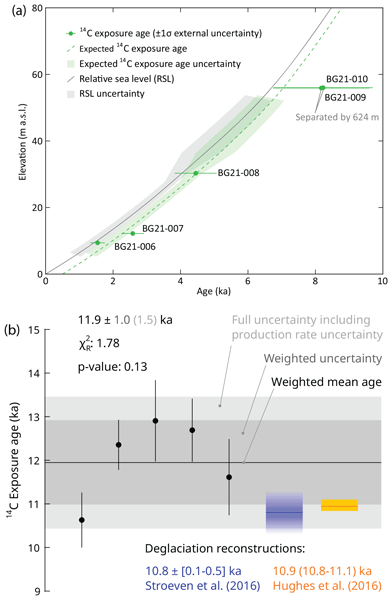
Carbon-14 produced in quartz (half-life of 5700 ± 30 years) provides a new tool to date exposure of bedrock surfaces. Samples from 10 exposed bedrock surfaces in east-central Sweden give dates consistent with the timing of both landscape emergence above sea level through postglacial rebound and retreat of the last ice sheet shown in previous reconstructions. Carbon-14 in quartz can therefore be used for dating in landscapes where isotopes with longer half-lives give complex exposure results.

Martim Mas e Braga, Richard Selwyn Jones, Jennifer C. H. Newall, Irina Rogozhina, Jane L. Andersen, Nathaniel A. Lifton, and Arjen P. Stroeven
The Cryosphere, 15, 4929–4947, https://doi.org/10.5194/tc-15-4929-2021, https://doi.org/10.5194/tc-15-4929-2021, 2021
Short summary
Short summary
Mountains higher than the ice surface are sampled to know when the ice reached the sampled elevation, which can be used to guide numerical models. This is important to understand how much ice will be lost by ice sheets in the future. We use a simple model to understand how ice flow around mountains affects the ice surface topography and show how much this influences results from field samples. We also show that models need a finer resolution over mountainous areas to better match field samples.
Karlijn Ploeg and Arjen P. Stroeven
The Cryosphere, 19, 347–373, https://doi.org/10.5194/tc-19-347-2025, https://doi.org/10.5194/tc-19-347-2025, 2025
Short summary
Short summary
Mapping of glacial landforms using lidar data shows that the retreating margin of the Fennoscandian Ice Sheet dammed a series of lakes in the Torneträsk Basin during deglaciation. These lakes were more extensive than previously thought and produced outburst floods. We show that sections of the Pärvie Fault, the longest glacially activated fault of Sweden, ruptured multiple times and during the existence of ice-dammed lake Torneträsk.
Bradley W. Goodfellow, Marc W. Caffee, Greg Chmiel, Ruben Fritzon, Alasdair Skelton, and Arjen P. Stroeven
Solid Earth, 15, 1343–1363, https://doi.org/10.5194/se-15-1343-2024, https://doi.org/10.5194/se-15-1343-2024, 2024
Short summary
Short summary
Reconstructions of past earthquakes are useful to assess earthquake hazard risk. We assess a limestone scarp exposed by earthquakes along the Sparta Fault, Greece, using 36Cl and rare-earth elements and yttrium (REE-Y). Our analyses indicate an increase in the average scarp slip rate from 0.8–0.9 mm yr-1 at 6.5–7.7 kyr ago to 1.1–1.2 mm yr-1 up to the devastating 464 BCE earthquake. REE-Y indicate clays in the fault scarp; their potential use in palaeoseismicity would benefit from further study.
Bradley W. Goodfellow, Arjen P. Stroeven, Nathaniel A. Lifton, Jakob Heyman, Alexander Lewerentz, Kristina Hippe, Jens-Ove Näslund, and Marc W. Caffee
Geochronology, 6, 291–302, https://doi.org/10.5194/gchron-6-291-2024, https://doi.org/10.5194/gchron-6-291-2024, 2024
Short summary
Short summary
Carbon-14 produced in quartz (half-life of 5700 ± 30 years) provides a new tool to date exposure of bedrock surfaces. Samples from 10 exposed bedrock surfaces in east-central Sweden give dates consistent with the timing of both landscape emergence above sea level through postglacial rebound and retreat of the last ice sheet shown in previous reconstructions. Carbon-14 in quartz can therefore be used for dating in landscapes where isotopes with longer half-lives give complex exposure results.
Gustav Jungdal-Olesen, Jane Lund Andersen, Andreas Born, and Vivi Kathrine Pedersen
The Cryosphere, 18, 1517–1532, https://doi.org/10.5194/tc-18-1517-2024, https://doi.org/10.5194/tc-18-1517-2024, 2024
Short summary
Short summary
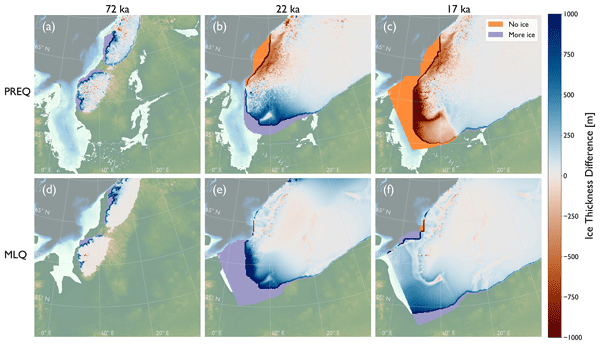
We explore how the shape of the land and underwater features in Scandinavia affected the former Scandinavian ice sheet over time. Using a computer model, we simulate how the ice sheet evolved during different stages of landscape development. We discovered that early glaciations were limited in size by underwater landforms, but as these changed, the ice sheet expanded more rapidly. Our findings highlight the importance of considering landscape changes when studying ice-sheet history.
Nathaniel Lifton, Jim Wilson, and Allie Koester
Geochronology, 5, 361–375, https://doi.org/10.5194/gchron-5-361-2023, https://doi.org/10.5194/gchron-5-361-2023, 2023
Short summary
Short summary
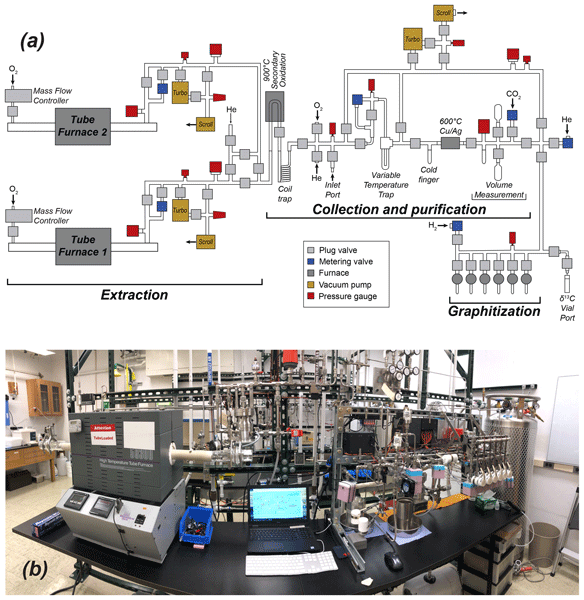
We describe a new, fully automated extraction system for in situ 14C at PRIME Lab that incorporates more reliable components and designs than our original systems. We use a LiBO2 flux to dissolve a quartz sample in oxygen after removing contaminant 14C with a lower-temperature combustion step. Experiments with new Pt/Rh sample boats demonstrated reduced procedural blanks, and analyses of well-characterized intercomparison materials tested the effects of process variables on 14C yields.
Paul A. Carling, John D. Jansen, Teng Su, Jane Lund Andersen, and Mads Faurschou Knudsen
Earth Surf. Dynam., 11, 817–833, https://doi.org/10.5194/esurf-11-817-2023, https://doi.org/10.5194/esurf-11-817-2023, 2023
Short summary
Short summary
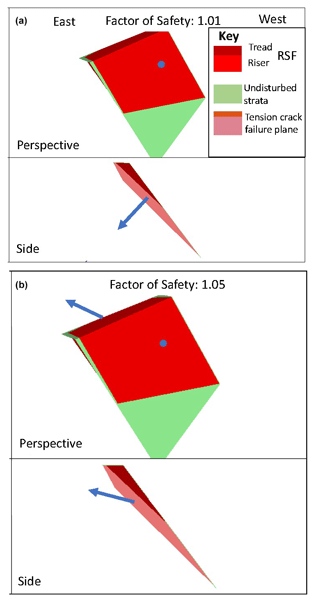
Many steep glaciated rock walls collapsed when the Ice Age ended. How ice supports a steep rock wall until the ice decays is poorly understood. A collapsed rock wall was surveyed in the field and numerically modelled. Cosmogenic exposure dates show it collapsed and became ice-free ca. 18 ka ago. The model showed that the rock wall failed very slowly because ice was buttressing the slope. Dating other collapsed rock walls can improve understanding of how and when the last Ice Age ended.
Alexandria J. Koester and Nathaniel A. Lifton
Geochronology, 5, 21–33, https://doi.org/10.5194/gchron-5-21-2023, https://doi.org/10.5194/gchron-5-21-2023, 2023
Short summary
Short summary
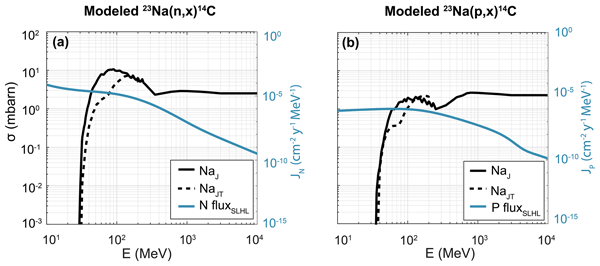
In situ 14C’s short half-life (5.7 kyr) is unique among cosmogenic nuclides, making it sensitive to complex exposure and burial histories since 25 ka. Current extraction methods focus on quartz, but the ability to extract it from other minerals would expand applications. We developed MATLAB® scripts to calculate in situ 14C production rates from a broad range of mineral compositions. Results confirm O, Si, Al, and Mg as key targets but also find significant production from Na for the first time.
Martim Mas e Braga, Richard Selwyn Jones, Jennifer C. H. Newall, Irina Rogozhina, Jane L. Andersen, Nathaniel A. Lifton, and Arjen P. Stroeven
The Cryosphere, 15, 4929–4947, https://doi.org/10.5194/tc-15-4929-2021, https://doi.org/10.5194/tc-15-4929-2021, 2021
Short summary
Short summary
Mountains higher than the ice surface are sampled to know when the ice reached the sampled elevation, which can be used to guide numerical models. This is important to understand how much ice will be lost by ice sheets in the future. We use a simple model to understand how ice flow around mountains affects the ice surface topography and show how much this influences results from field samples. We also show that models need a finer resolution over mountainous areas to better match field samples.
Cited articles
Aa, A. R. and Sønstegaard, E.: Early-Holocene glacier fluctuations of northern Grovabreen, western Norway, Holocene, 29, 187–196, https://doi.org/10.1177/0959683618810392, 2019.
Andersen, J. L. and Lifton, N.: Riukojietna: Codes to calculate cosmogenic nuclide production and decay with ice cover and erosion, Zenodo [software], https://doi.org/10.5281/zenodo.20616442, 2026.
Andersen, J. L., Newall, J. C., Blomdin, R., Sams, S. E., Fabel, D., Koester, A. J., Lifton, N. A., Fredin, O., Caffee, M. W., Glasser, N. F., Rogozhina, I., Suganuma, Y., Harbor, J. M., and Stroeven, A. P.: Ice surface changes during recent glacial cycles along the Jutulstraumen and Penck Trough ice streams in western Dronning Maud Land, East Antarctica, Quaternary Sci. Rev., 249, 106636, https://doi.org/10.1016/j.quascirev.2020.106636, 2020.
Andreassen, L. M., Elvehøy, H., Kjøllmoen, B., and Belart, J. M. C.: Glacier change in Norway since the 1960s – an overview of mass balance, area, length and surface elevation changes, J. Glaciol., 66, 313–328, https://doi.org/10.1017/jog.2020.10, 2020.
Andréasson, P. G. and Gee, D. G.: Bedrock geology and morphology of the Tarfala area, Kebnekaise Mts., Swedish Caledonides, Geogr. Ann. A, 71, 235–239, https://doi.org/10.1080/04353676.1989.11880290, 1989.
Bakke, J., Dahl, S. O., Paasche, Ø., Løvlie, R., and Nesje, A.: Glacier fluctuations, equilibrium-line altitudes and palaeoclimate in Lyngen, northern Norway, during the Lateglacial and Holocene, Holocene, 15, 518–540, https://doi.org/10.1191/0959683605hl815rp, 2005.
Bakke, J., Dahl, S. O., Paasche, Ø., Simonsen, J. R., Kvisvik, B., Bakke, K., and Nesje, A.: A complete record of Holocene glacier variability at Austre Okstindbreen, northern Norway: an integrated approach, Quaternary Sci. Rev., 29, 1246–1262, https://doi.org/10.1016/j.quascirev.2010.02.012, 2010.
Balco, G.: Production rate calculations for cosmic-ray-muon-produced 10Be and 26Al benchmarked against geological calibration data, Quat. Geochronol., 39, 150–173, https://doi.org/10.1016/j.quageo.2017.02.001, 2017.
Balco, G., Stone, J. O., Lifton, N. A., and Dunai, T. J.: A complete and easily accessible means of calculating surface exposure ages or erosion rates from 10Be and 26Al measurements, Quat. Geochronol., 3, 174–195, https://doi.org/10.1016/j.quageo.2007.12.001, 2008.
Balco, G., Brown, N., Nichols, K., Venturelli, R. A., Adams, J., Braddock, S., Campbell, S., Goehring, B., Johnson, J. S., Rood, D. H., Wilcken, K., Hall, B., and Woodward, J.: Reversible ice sheet thinning in the Amundsen Sea Embayment during the Late Holocene, The Cryosphere, 17, 1787–1801, https://doi.org/10.5194/tc-17-1787-2023, 2023.
Barnekow, L.: Holocene regional and local vegetation history and lake-level changes in the Torneträsk area, northern Sweden, J. Paleolimnol., 23, 399–420, https://doi.org/10.1023/A:1008171418429, 2000.
Benn, D. I. and Hulton, N. R. J.: An ExcelTM spreadsheet program for reconstructing the surface profile of former mountain glaciers and ice caps, Comput. Geosci., 36, 605–610, https://doi.org/10.1016/j.cageo.2009.09.016, 2010.
Bergman, S., Stephens, M. B., Andersson, J., Kathol, B., and Bergman, T.: Bedrock map of Sweden, Scale 1:1 million, Sveriges geologiska undersökning, K 423, ISBN 978-91-7403-185-0, 2012.
Bevington, P. R. and Robinson, D. K.: Data Reduction and Error Analysis for the Physical Sciences, McGraw-Hill, New York, 320 p., ISBN 0-07-247227-8, 2003.
Binnie, S. A., Dewald, A., Heinze, S., Voronina, E., Hein, A., Wittmann, H., von Blanckenburg, F., Hetzel, R., Christl, M., Schaller, M., Léanni, L., ASTER Team, Hippe, K., Vockenhuber, C., Ivy-Ochs, S., Maden, C., Fülöp, R. H., Fink, D., Wilcken, K. M., Fujioka, T., Fabel, D., Freeman, S. P. H. T., Xu, S., Fifield, L. K., Akçar, N., Spiegel, C., and Dunai, T. J.: Preliminary results of CoQtz-N: A quartz reference material for terrestrial in-situ cosmogenic 10Be and 26Al measurements, Nucl. Instrum. Meth. B, 456, 203–212, https://doi.org/10.1016/j.nimb.2019.04.073, 2019.
Bjune, A. E., Bakke, J., Nesje, A., and Birks, H. J. B.: Holocene mean July temperature and winter precipitation in western Norway inferred from palynological and glaciological lake-sediment proxies, Holocene, 15, 177–189, https://doi.org/10.1191/0959683605hl798rp, 2005.
Blaauw, M. and Christen, J. A.: Flexible paleoclimate age-depth models using an autoregressive gamma process, Bayesian Anal., 6, 457–474, https://doi.org/10.1214/11-BA618, 2011.
Borchers, B., Marrero, S., Balco, G., Caffee, M., Goehring, B., Lifton, N., Nishiizumi, K., Phillips, F., Schaefer, J., and Stone, J.: Geological calibration of spallation production rates in the CRONUS-Earth project, Quat. Geochronol., 31, 188–198, https://doi.org/10.1016/j.quageo.2015.01.009, 2016.
Briner, J. P., Lifton, N. A., Miller, G. H., Refsnider, K., Anderson, R., and Finkel, R.: Using in situ cosmogenic 10Be, 14C, and 26Al to decipher the history of polythermal ice sheets on Baffin Island, Arctic Canada, Quat. Geochronol., 19, 4–13, https://doi.org/10.1016/j.quageo.2012.11.005, 2014.
Chmeleff, J., von Blanckenburg, F., Kossert, K., and Jakob, D.: Determination of the 10Be half-life by multicollector ICP-MS and liquid scintillation counting, Nucl. Instrum. Meth. B, 268, 192–199, https://doi.org/10.1016/j.nimb.2009.09.012, 2010.
Dunai, T. J.: Cosmogenic Nuclides: Principles, Concepts and Applications in the Earth Surface Sciences, Cambridge University Press, 187 pp., https://doi.org/10.1017/CBO9780511804519, 2010.
Dussaillant, I., Hugonnet, R., Huss, M., Berthier, E., Bannwart, J., Paul, F., and Zemp, M.: Annual mass change of the world's glaciers from 1976 to 2024 by temporal downscaling of satellite data with in situ observations, Earth Syst. Sci. Data, 17, 1977–2006, https://doi.org/10.5194/essd-17-1977-2025, 2025.
Fabel, D., Stroeven, A. P., Harbor, J., Kleman, J., Elmore, D., and Fink, D.: Landscape preservation under Fennoscandian ice sheets determined from in situ produced 10Be and 26Al, Earth Planet. Sc. Lett., 201, 397–406, https://doi.org/10.1016/S0012-821X(02)00714-8, 2002.
Goehring, B. M., Schaefer, J. M., Schluechter, C., Lifton, N. A., Finkel, R. C., Jull, A. J. T., Akçar, N., and Alley, R. B.: The Rhone Glacier was smaller than today for most of the Holocene, Geology, 39, 679–682, https://doi.org/10.1130/G32145.1, 2011.
Gosse, J. C. and Phillips, F. M.: Terrestrial in situ cosmogenic nuclides: theory and application, Quaternary Sci. Rev., 20, 1475–1560, https://doi.org/10.1016/S0277-3791(00)00171-2, 2001.
Grove, J. M.: The Little Ice Age, 2nd Edition, Routledge, London, https://doi.org/10.4324/9780203505205, 2004.
Hippe, K. and Lifton, N. A.: Calculating isotope ratios and nuclide concentrations for in situ cosmogenic 14C analyses, Radiocarbon, 56, 1167–1174, https://doi.org/10.2458/56.17917, 2014.
Hock, R., Rasul, G., Adler, C., Cáceres, B., Gruber, S., Hirabayashi, Y., Jackson, M., Kääb, A., Kang, S., Kutuzov, S., Milner, A., Molau, U., Morin, S., Orlove, B., and Steltzer, H.: High Mountain Areas, In Pörtner, H.-O., Roberts, D. C., Masson-Delmotte, V., Zhai, P., Tignor, M., Poloczanska, E., Mintenbeck, K., Alegría, A., Nicolai, M., Okem, A., Petzold, J., Rama, B., and Weyer, N. M. (Eds.): IPCC Special Report on the Ocean and Cryosphere in a Changing Climate, 131–202, https://doi.org/10.1017/9781009157964.004, 2019.
Hugonnet, R., McNabb, R., Berthier, E., Menounos, B., Nuth, C., Girod, L., Farinotti, D., Huss, M., Dusaillant, I., Brun, F., and Kääb, A.: Accelerated global glacier mass loss in the early twenty-first century, Nature, 592, 726–731, https://doi.org/10.1038/s41586-021-03436-z, 2021.
Jansen, H. L., Simonsen, J. R., Dahl, S. O., Bakke, J., and Nielsen, P. R.: Holocene glacier and climate fluctuations of the maritime ice cap Høgtuvbreen, northern Norway, Holocene, 26, 736–755, https://doi.org/10.1177/0959683615618265, 2016.
Jansson, P., Rosqvist, G., and Schneider, T.: Glacier fluctuations, suspended sediment flux and glacio-lacustrine sediments, Geogr. Ann. A, 87, 37–50, https://doi.org/10.1111/j.0435-3676.2005.00243.x, 2005.
Johnson, J. S., Nichols, K. A., Goehring, B. M., Balco, G., and Schaefer, J. M.: Abrupt mid-Holocene ice loss in the western Weddell Sea Embayment of Antarctica, Earth Planet. Sc. Lett., 518, 127–135, https://doi.org/10.1016/j.epsl.2019.05.002, 2019.
Karlén, W.: Holocene glacier and climatic variations, Kebnekaise Mountains, Swedish Lapland, Geogr. Ann. A, 55, 29–63, https://doi.org/10.1080/04353676.1973.11879879, 1973.
Karlén, W.: Lacustrine sediments and tree-limit variations as indicators of Holocene climatic fluctuations in Lappland, northern Sweden, Geogr. Ann. A, 58, 1–34, https://doi.org/10.1080/04353676.1976.11879921, 1976.
Karlén, W.: Lacustrine sediment studies: A technique to obtain a continuous record of Holocene glacier variations, Geogr. Ann. A, 63, 273–281, https://doi.org/10.1080/04353676.1981.11880042, 1981.
Karlén, W.: Scandinavian glacial and climate fluctuations during the Holocene, Quaternary Sci. Rev., 7, 199–209, https://doi.org/10.1016/0277-3791(88)90006-6, 1988.
Karlén, W. and Denton, G. H.: Holocene glacial variations in Sarek National Park, northern Sweden, Boreas, 5, 25–56, https://doi.org/10.1111/j.1502-3885.1976.tb00329.x, 1976.
Karlén, W., Bodin, A., Kuylenstierna, J., and Naslund, J.-O.: Climate of northern Sweden during the Holocene, J. Coastal Res. Spec. Issue, 17, 49–54, 1995.
Kaufman, D. S., Schneider, D. P., McKay, N. P., Ammann, C. M., Bradley, R. S., Briffa, K. R., Miller, G. H., Otto-Bliesner, B. L., Overpeck, J. T., Vinther, B. M., Arctic Lakes 2K Project Members, Abbott, M., Axford, Y., Bird, B., Birks, H. J. B., Bjune, A. E., Briner, J., Cook, T., Chipman, M., Francus, P., Gajewski, K., Geirsdóttir, Á., Hu, F. S., Kutchko, B., Lamoureux, S., Loso, M., MacDonald, G., Peros, M., Porinchu, D., Schiff, C., Seppä, H., and Thomas, E.: Recent warming reverses long-term Arctic cooling, Science, 325, 1236–1239, https://doi.org/10.1126/science.1173983, 2009.
Knudsen, M. F., Egholm, D. L., and Jansen, J. D.: Time-integrating cosmogenic nuclide inventories under the influence of variable erosion, exposure, and sediment mixing, Quat. Geochronol., 51, 110–119, https://doi.org/10.1016/j.quageo.2019.02.005, 2019.
Koester, A. J.: Applications of in situ 14C to glacial landscapes in Sweden and Antarctica, PhD dissertation, Purdue University, 186 pp., Geochronology, 2023.
Koester, A. J. and Lifton, N. A.: Technical note: A software framework for calculating compositionally dependent in situ 14C production rates, Geochronology, 5, 21–33, https://doi.org/10.5194/gchron-5-21-2023, 2023.
Koester, A. J. and Lifton, N. A.: Corrigendum to “Technical note: A software framework for calculating compositionally dependent in situ 14C production rates” published in Geochronology, 5, 21–33, 2023, Geochronology, https://doi.org/10.5194/gchron-5-21-2023-corrigendum, 2024.
Kohl, C. P. and Nishiizumi, K.: Chemical isolation of quartz for measurement of in-situ-produced cosmogenic nuclides, Geochim. Cosmochim. Ac., 56, 3583–3587, https://doi.org/10.1016/0016-7037(92)90401-4, 1992.
Korschinek, G., Bergmaier, A., Faestermann, T., Gerstmann, U. C., Knie, K., Rugel, G., Wallner, A., Dillmann, I., Dollinger, G., Lierse von Gostomski, Ch., Kossert, K., Maiti, M., Poutivtsev, M., and Remmert, A.: A new value for the half-life of 10Be by Heavy-Ion Elastic Recoil Detection and liquid scintillation counting, Nucl. Instrum. Meth. B, 268, 187–191, https://doi.org/10.1016/j.nimb.2009.09.020, 2010.
Kullman, L. and Öberg, L.: New aspects of high-mountain palaeobiogeography: A synthesis of data from forefields of receding glaciers and ice patches in the Tärna and Kebnekaise mountains, Swedish Lapland, ARCTIC, 68, 141–152, https://doi.org/10.14430/arctic4480, 2015.
Larocca, L. J. and Axford, Y.: Arctic glaciers and ice caps through the Holocene:a circumpolar synthesis of lake-based reconstructions, Clim. Past, 18, 579–606, https://doi.org/10.5194/cp-18-579-2022, 2022.
Leonard, E. M.: Use of lacustrine sedimentary sequences as indicators of Holocene glacial history, Banff National Park, Alberta, Canada, Quaternary Res., 26, 218–231, https://doi.org/10.1016/0033-5894(86)90106-7, 1986.
Lifton, N., Sato, T., and Dunai, T. J.: Scaling in situ cosmogenic nuclide production rates using analytical approximations to atmospheric cosmic-ray fluxes, Earth Planet. Sc. Lett., 386, 149–160, https://doi.org/10.1016/j.epsl.2013.10.052, 2014.
Lifton, N. A., Phillips, F. M., and Cerling, T. E.: Using Lake Bonneville features to calibrate in situ cosmogenic nuclide production rates, Developments in Earth Surface Processes, 20, 165–183, https://doi.org/10.1016/B978-0-444-63590-7.00009-3, 2016.
Lifton, N., Wilson, J., and Koester, A.: Technical note: Studying lithium metaborate fluxes and extraction protocols with a new, fully automated in situ cosmogenic 14C processing system at PRIME Lab, Geochronology, 5, 361–375, https://doi.org/10.5194/gchron-5-361-2023, 2023.
Matthews, J. A. and Briffa, K. R.: The 'Little Ice Age': Re-evaluation of an evolving concept, Geogr. Ann. A, 87, 17–36, https://doi.org/10.1111/j.0435-3676.2005.00242.x, 2005.
Matthews, J. A. and Dresser, P. Q.: Holocene glacier variation chronology of the Smørstabbtindan massif, Jotunheimen, southern Norway, and the recognition of century- to millennial-scale European Neoglacial Events, Holocene, 18, 181–201, https://doi.org/10.1177/0959683607085608, 2008.
Nesje, A.: Latest Pleistocene and Holocene alpine glacier fluctuations in Scandinavia, Quaternary Sci. Rev., 28, 2119–2136, https://doi.org/10.1016/j.quascirev.2008.12.016, 2009.
Nesje, A., Dahl, S. O., Andersson, C., and Matthews, J. A.: The lacustrine sedimentary sequence in Sygneskardvatnet, western Norway: A continuous, high-resolution record of the Jostedalsbreen ice cap during the Holocene, Quaternary Sci. Rev., 19, 1047–1065, https://doi.org/10.1016/S0277-3791(99)00090-6, 2000.
Nesje, A., Bakke, J., Dahl, S. O., Lie, Ø., and Matthews, J. A.: Norwegian mountain glaciers in the past, present and future, Global Planet. Change, 60, 10–27, https://doi.org/10.1016/j.gloplacha.2006.08.004, 2008.
Nichols, K. A. and Goehring, B. M.: Isolation of quartz for cosmogenic in situ 14C analysis, Geochronology, 1, 43–52, https://doi.org/10.5194/gchron-1-43-2019, 2019.
Nichols, K. A., Goehring, B. M., Balco, G., Johnson, J. S., Hein, A. S., and Todd, C.: New Last Glacial Maximum ice thickness constraints for the Weddell Sea Embayment, Antarctica, The Cryosphere, 13, 2935–2951, https://doi.org/10.5194/tc-13-2935-2019, 2019.
Nielsen, P. R., Balascio, N. L., Dahl, S. O., Jansen, H. L., Støren, E. W. N., and Bradley, R. S.: A high-resolution 1200-year lacustrine record of glacier and climate fluctuations in Lofoten, northern Norway, Holocene, 26, 917–934, https://doi.org/10.1177/0959683615622551, 2016.
Nishiizumi, K.: Preparation of 26Al AMS standards, Nucl. Instrum. Meth. B, 223–224, 388–392, https://doi.org/10.1016/j.nimb.2004.04.075, 2004.
Oerlemans, J.: Extracting a climate signal from 169 glacier records, Science, 308, 675–677, https://doi.org/10.1126/science.1107046, 2005.
Oerlemans, J. and Fortuin, J. P. F.: Sensitivity of glaciers and small ice caps to greenhouse warming, Science, 258, 115–118, https://doi.org/10.1126/science.258.5079.115, 1992.
Oerlemans, J., Anderson, B., Hubbard, A., Huybrechts, P., Jóhannesson, T., Knap, W. H., Schmeits, M., Stroeven, A. P., van de Wal, R. S. W., Wallinga, J., and Zuo, Z.: Modelling the response of glaciers to climate warming, Clim. Dynam., 14, 267–274, https://doi.org/10.1007/s003820050222, 1998.
Phillips, F. M., Argento, D. C., Balco, G., Caffee, M. W., Clem, J., Dunai, T. J., Finkel, R., Goehring, B., Gosse, J. C., Hudson, A. M., Jull, A. J. T., Kelly, M. A., Kurz, M., Lal, D., Lifton, N., Marrero, S. M., Nishiizumi, K., Reedy, R. C., Schaefer, J., Stone, J. O. H., Swanson, T., and Zreda, M. G.: The CRONUS-Earth Project: A synthesis, Quat. Geochronol., 31, 119–154, https://doi.org/10.1016/j.quageo.2015.09.006, 2016.
Ploeg, K. and Stroeven, A. P.: History and dynamics of Fennoscandian Ice Sheet retreat, contemporary ice-dammed lake evolution, and faulting in the Torneträsk area, northwestern Sweden, The Cryosphere, 19, 347–373, https://doi.org/10.5194/tc-19-347-2025, 2025.
Pohjola, V. A., Cole-Dai, J., Rosqvist, G., Stroeven, A. P., and Thompson, L. G.: Potential to recover climatic information from Scandinavian ice cores: An example from the small ice cap Riukojietna, Geogr. Ann. A, 87, 259–270, https://doi.org/10.1111/j.0435-3676.2005.00257.x, 2005.
Rand, C. and Goehring, B. M.: The distribution and magnitude of subglacial erosion on millennial timescales at Engabreen, Norway, Ann. Glaciol., 60, 73–81, https://doi.org/10.1017/aog.2019.42, 2019.
Reimer, P. J., Austin, W. E. N., Bard, E., Bayliss, A., Blackwell, P. G., Bronk Ramsey, C., Butzin, M., Cheng, H., Edwards, R. L., Friedrich, M., Grootes, P. M., Guilderson, T. P., Hajdas, I., Heaton, T. J., Hogg, A. G., Hughen, K. A., Kromer, B., Manning, S. W., Muscheler, R., Palmer, J. G., Pearson, C., van der Plicht, J., Reimer, R. W., Richards, D. A., Scott, E. M., Southon, J. R., Turney, C. S. M., Wacker, L., Adolphi, F., Büntgen, U., Capano, M., Fahrni, S. M., Fogtmann-Schulz, A., Friedrich, R., Köhler, P., Kudsk, S., Miyake, F., Olsen, J., Reinig, F., Sakamoto, M., Sookdeo, A., and Talamo, S.: The IntCal20 Northern Hemisphere radiocarbon age calibration curve (0–55 cal kBP), Radiocarbon, 62, 725–757, https://doi.org/10.1017/RDC.2020.41, 2020.
Rosqvist, G. and Østrem, G.: The sensitivity of a small icecap to climatic fluctuations, Geogr. Ann. A, 71, 99–103, https://doi.org/10.1080/04353676.1989.11880277, 1989.
Rosqvist, G., Jonsson, C., Yam, R., Karlén, W., and Shemesh, A.: Diatom oxygen isotopes in pro-glacial lake sediments from northern Sweden: A 5000 year record of atmospheric circulation, Quaternary Sci. Rev., 23, 851–859, https://doi.org/10.1016/j.quascirev.2003.06.009, 2004.
Rosqvist, G., Leng, M., and Jonsson, C.: North Atlantic region atmospheric circulation dynamics inferred from a late-Holocene lacustrine carbonate isotope record, northern Swedish Lapland, Holocene, 17, 867–873, https://doi.org/10.1177/0959683607080508, 2007.
Røthe, T. O., Bakke, J., and Støren, E. W. N.: Glacier outburst floods reconstructed from lake sediments and their implications for Holocene variations of the plateau glacier Folgefonna in western Norway, Boreas, 48, 616–634, https://doi.org/10.1111/bor.12388, 2019.
Rounce, D. R., Hock, R., Maussion, F., Hugonnet, R., Kochtitzky, W., Huss, M., Berthier, E., Brinkerhoff, D., Compagno, L., Copland, L., Farinotti, D., Menounos, B., and McNabb, R. W.: Global glacier change in the 21st century: every increase in temperature matters, Science, 379, 78–83, https://doi.org/10.1126/science.abo1324, 2023.
Rubensdotter, L. and Rosqvist, G.: The effect of geomorphological setting on Holocene lake sediment variability, northern Swedish Lapland, J. Quaternary Sci., 18, 757–767, https://doi.org/10.1002/jqs.800, 2003.
Santos, G. M., Southon, J. R., Druffel-Rodriguez, K. C., Griffin, S., and Mazon, M.: Magnesium Perchlorate as an alternative water trap in AMS graphite sample preparation: A report on sample preparation at KCCAMS at the University of California, Irvine, Radiocarbon, 46, 165–174, https://doi.org/10.1017/S0033822200039485, 2004.
Santos, G. M., Moore, R. B., Southon, J. R., Griffin, S., Hinger, E., and Zhang, D.: AMS 14C sample preparation at the KCCAMS/UCI Facility: Status report and performance of small samples, Radiocarbon, 49, 255–269, https://doi.org/10.1017/S0033822200042181, 2007.
Schimmelpfennig, I., Schaefer, J. M., Lamp, J., Godard, V., Schwartz, R., Bard, E., Tuna, T., Akçar, N., Schlüchter, C., Zimmerman, S., and ASTER Team: Glacier response to Holocene warmth inferred from in situ 10Be and 14C bedrock analyses in Steingletscher's forefield (central Swiss Alps), Clim. Past, 18, 23–44, https://doi.org/10.5194/cp-18-23-2022, 2022.
Schneider, T. and Bronge, C.: Suspended sediment transport in the Storglaciären drainage basin, Geogr. Ann. A, 78, 155–161, https://doi.org/10.1080/04353676.1996.11880461, 1996.
Seppä, H. and Birks, H. J. B.: July mean temperature and annual precipitation trends during the Holocene in the Fennoscandian tree-line area: pollen-based climate reconstructions, Holocene, 11, 527–539, https://doi.org/10.1191/095968301680223486, 2001.
Seppä, H. and Hammarlund, D.: Pollen-stratigraphical evidence of Holocene hydrological change in northern Fennoscandia supported by independent isotopic data, J. Paleolimnol., 24, 69–79, https://doi.org/10.1023/A:1008169800682, 2000.
Seppä, H., Hammarlund, D., and Antonsson, K.: Low-frequency and high-frequency changes in temperature and effective humidity during the Holocene in south-central Sweden: Implications for atmospheric and oceanic forcings of climate, Clim. Dynam., 25, 285–297, https://doi.org/10.1007/s00382-005-0024-5, 2005.
Shemesh, A., Rosqvist, G., Rietti-Shati, M., Rubensdotter, L., Bigler, C., Yam, R., and Karlén, W.: Holocene climatic change in Swedish Lapland inferred from an oxygen-isotope record of lacustrine biogenic silica, Holocene, 11, 447–454, https://doi.org/10.1191/095968301678302887, 2001.
Sjögren, P. and Damm, C.: Holocene vegetation change in northernmost Fennoscandia and the impact on prehistoric foragers 12 000–2000 cal. a BP – A review, Boreas, 48, 20–35, https://doi.org/10.1111/bor.12344, 2019.
Sjögren, P. J. E.: An overview of Holocene climate reconstructions in northernmost Fennoscandia, Septentrio Reports, 3, 31 p. https://doi.org/10.7557/7.5747, 2021.
Solomina, O. N., Bradley, R. S., Jomelli, V., Geirsdottir, A., Kaufman, D. S., Koch, J., McKay, N. P., Masiokas, M., Miller, G., Nesje, A., Nicolussi, K., Owen, L. A., Putnam, A. E., Wanner, H., Wiles, G., and Yang, B.: Glacier fluctuations during the past 2000 years, Quaternary Sci. Rev., 149, 61–90, https://doi.org/10.1016/j.quascirev.2016.04.008, 2016.
Stroeven, A. P.: The robustness of one-dimensional time dependent ice-flow models: A case study from Storglaciären, northern Sweden, Geogr. Ann. A, 78, 133–146, https://doi.org/10.1080/04353676.1996.11880459, 1996.
Stroeven, A. P., Fabel, D., Harbor, J., Hättestrand, C., and Kleman, J.: Quantifying the erosional impact of the Fennoscandian ice sheet in the Torneträsk–Narvik corridor, northern Sweden, based on cosmogenic radionuclide data, Geogr. Ann. A, 84, 275–287, https://doi.org/10.1111/j.0435-3676.2002.00182.x, 2002.
Stroeven, A. P., Hättestrand, C., Kleman, J., Heyman, J., Fabel, D., Fredin, O., Goodfellow, B. W., Harbor, J. M., Jansen, J. D., Olsen, L., Caffee, M. W., Fink, D., Lundqvist, J., Rosqvist, G. C., Strömberg, B., and Jansson, K. N.: Deglaciation of Fennoscandia, Quaternary Sci. Rev., 147, 91–121, https://doi.org/10.1016/j.quascirev.2015.09.016, 2016.
Stuiver, M. and Reimer, P. J.: Extended 14C data base and revised CALIB 3.0 14C age calibration program, Radiocarbon, 35, 215–230, https://doi.org/10.1017/S0033822200013904, 1993.
Svenonius, F.: Studien über den Kårso- und die Kebnegletscher nebst Notizen über andere Gletscher im Jukkasjärvigebirge, Part 1 of Die Gletscher Schwedens im Jahre 1908, Sveriges geologiska undersökning, serie Ca, 5, 1910.
Thomas, E. K., Castañeda, I. S., McKay, N. P., Briner, J. P., Salacup, J. M., Nguyen, K. Q., and Schweinsberg, A. D.: A wetter Arctic coincident with hemispheric warming 8,000 years ago, Geophys. Res. Lett., 45, 10637–10647, https://doi.org/10.1029/2018GL079517, 2018.
Wastegård, S.: The Holocene of Sweden – a review, GFF, 144, 126–149, https://doi.org/10.1080/11035897.2022.2086290, 2022.
WGMS (World Glacier Monitoring Service): Fluctuations of Glacier (FoG) Database, WGMS, Zurich, Switzerland, https://doi.org/10.5904/wgms-fog-2025-02b, 2025.
Wirsig, C., Ivy-Ochs, S., Akçar, N., Lupker, M., Hippe, K., Wacker, L., Vockenhuber, C., and Schlüchter, C.: Combined cosmogenic 10Be, in situ 14C and 36Cl concentrations constrain Holocene history and erosion depth of Grueben glacier (CH), Swiss J. Geosci., 109, 379–388, https://doi.org/10.1007/s00015-016-0227-2, 2016.
Wittmeier, H. E., Bakke, J., Vasskog, K., and Trachsel, M.: Reconstructing Holocene glacier activity at Langfjordjøkelen, Arctic Norway, using multi-proxy fingerprinting of distal glacier-fed lake sediments, Quaternary Sci. Rev., 114, 78–99, https://doi.org/10.1016/j.quascirev.2015.02.007, 2015.
Young, N. E., Schaefer, J. M., Goehring, B., Lifton, N., Schimmelpfennig, I., and Briner, J. P.: West Greenland and global in situ 14C production-rate calibrations, J. Quaternary Sci., 29, 401–406, https://doi.org/10.1002/jqs.2717, 2014.
Young, N. E., Lesnek, A. J., Cuzzone, J. K., Briner, J. P., Badgeley, J. A., Balter-Kennedy, A., Graham, B. L., Cluett, A., Lamp, J. L., Schwartz, R., Tuna, T., Bard, E., Caffee, M. W., Zimmerman, S. R. H., and Schaefer, J. M.: In situ cosmogenic 10Be–14C–26Al measurements from recently deglaciated bedrock as a new tool to decipher changes in Greenland Ice Sheet size, Clim. Past, 17, 419–450, https://doi.org/10.5194/cp-17-419-2021, 2021.
Short summary
Did Scandinavian glaciers survive the warmer conditions of the early Holocene? Ice thickness measurements, proglacial lake sediment, and cosmogenic nuclides in bedrock alongside Riukojietna, a small low-elevation ice cap in northern Sweden, all combine to constrain a glacier advance and retreat history since 9.8 thousand years ago. Riukojietna was small but persisted through the early Holocene, illustrating that other but higher-elevation valley glaciers in the region may also have done so.
Did Scandinavian glaciers survive the warmer conditions of the early Holocene? Ice thickness...


