
the Creative Commons Attribution 4.0 License.
the Creative Commons Attribution 4.0 License.
 | 06 Jul 2026
Climate variability in Poland (Central Europe) in the 16th century based on multiproxy data
Piotr Oliński
Marcin Koprowski
Waldemar Chorążyczewski
Elżbieta Szychowska-Krąpiec
Marek Krąpiec
The article includes an overview of the current state of knowledge regarding climate in Poland (Central Europe) in the 16th century and its changes. For this purpose, we utilised all previously published reconstructions and five new quantitative reconstructions incorporating dendrochronological data and documentary evidence. New dendrochronological data were used to reconstruct the mean winter or late winter–early spring temperatures, while documentary evidence enabled the reconstruction of mean winter (DJF) and summer (JJA) temperatures. The climate of Poland in the 16th century, as reconstructed from documentary evidence, was colder than it is today (1991–2020), particularly in winter (by 3.6 °C). In summer, it was only 0.7 °C colder than today. Compared to the average for the entire 20th century, however, the summer average in the 16th century was 0.3 °C warmer, whereas the winter average was 2.5 °C colder. In both dendrochronological reconstructions of the temperature of south-eastern Poland, the temperatures in the 16th century were generally lower than those recorded today (1951–2000), particularly in the case of the reconstruction based on the fir chronology (December–March). Anomalies, however, both positive and negative, were usually of less than one standard deviation from the long-term mean. On the other hand, in northern Poland, the February–March temperatures in the 16th century were, on average, comparable to those of the present. Most available temperature reconstructions for Poland reveal cooling over the last few decades of the 16th century, particularly during the winter half-year. The climate in the 16th century was more continental than it is today.
- Article
(2777 KB) - Full-text XML
-
Supplement
(868 KB) - BibTeX
- EndNote


This paper is a continuation of the work of an interdisciplinary team of researchers who aim to present the current state of knowledge about the climate of the last millennium in Poland. We have already published an article presenting the variability and changes in climate during the medieval period (1001–1500) (Przybylak et al., 2023). In the present article, we present the current state of knowledge about the climate of Poland limited to the 16th century because, according to our earlier studies, that century is significantly distinguished by its variability of weather and climatic conditions, having been greater than other, earlier and later centuries (e.g., Przybylak et al., 2005; Przybylak, 2011, 2016). This variability likely also motivated other European researchers who studied in detail the climate changes of the 16th century in Europe as part of a special issue published in the journal Climatic Change (1999). Another motivating factor was that in the 16th century (particularly around the middle part), many parts of Europe underwent a significant climate change (from warm/dry to cold/wet conditions) (e.g., Bradley and Jones, 1993 and references therein; Brázdil, 1994; Pfister and Brázdil, 1999; van Engelen et al., 2001; Glaser, 2001; Bradley et al., 2003; Luterbacher et al., 2004, 2016; Xoplaki et al., 2005; Brázdil et al., 2010; Esper et al., 2016 ). The mid-16th century is therefore most often accepted by the international community as the beginning of the Little Ice Age (LIA) (Grove, 1988; Hughes and Diaz, 1994; White et al., 2018, and references therein). However, as is often the case, evidence of the LIA's onset is not always clear and unambiguous everywhere. The scope of the beginning of the LIA varies significantly; first of all, for many places in Europe (and around the world) it is placed earlier than the mid-16th century mentioned here (for details, see, e.g., Lamb, 1977, 1984; Grove, 1988, 2001; Bradley and Jones, 1993; Pfister and Brázdil, 1999; Brázdil et al., 2005).
To date, the climate of Poland in the 16th century has never been analysed in detail as a separate study, apart from in a recent analysis regarding floods (Ghazi et al., 2023). A small amount of data from Poland was used in a cycle of journal papers that analysed the climate in Europe (see Glaser et al., 1999; Pfister et al., 1999a). In those papers, the only data used were daily data from Kraków (Eng. Cracow) based on Biem's weather records and encompassing only 17 years within the period 1502–1540. Moreover, the reconstruction of the 16th-century European climate based on documentary evidence did not include the area of Poland (see Pfister et al., 1999b). However, several studies have used this kind of proxy data to analyse weather or climate in Poland in short periods (e.g., Bokwa and Limanówka, 2000; Bokwa et al., 2001; Limanówka, 2001; Nowosad and Oliński, 2000; Oliński, 2022; Związek et al., 2022). Most describe climatic conditions in general terms, typically based on the frequency of seasons – most often winter and summer – characterised by extreme weather such as cold, heat, dryness, or wetness. The only more detailed analysis employing such proxy data was that of Limanówka (2001), who undertook a qualitative reconstruction of air temperature and precipitation for Kraków for three short periods: 1502–1507, 1527–1531 and 1535–1540.
Some information about weather and climate in Poland in the 16th century is also available in papers analysing more extended periods covering a few centuries (e.g., Maruszczak, 1988, 1991; Sadowski, 1991; Wójcik et al., 2000; Przybylak et al., 2001, 2004, 2005, 2020, 2025; Majorowicz et al., 2004; Szychowska-Krąpiec, 2010; Zielski et al., 2010; Przybylak, 2011, 2016; Koprowski et al., 2012; Hernández-Almeida et al., 2015, 2017; Balanzategui et al., 2018; Opała-Owczarek et al., 2021; Ghazi et al., 2025). Most reconstructions concern air temperature during the winter half-year, and significantly less information about summer temperature is available. The opposite case holds for other parts of Europe, where most reconstructions address the warm half-year (for details, see, e.g., Bradley and Jones, 1993; Moberg et al., 2005; Ljungqvist, 2010; Luterbacher et al., 2016). This fact means that reconstructions from Poland can significantly enhance our knowledge of the European climate, especially its central part, particularly in light of the finding of Luterbacher et al. (2010) that winter temperatures in Poland correlate closely with those in almost all of Europe. Regarding precipitation in Poland in the 16th century, little is known. The number of precipitation reconstructions is limited, generally comprising descriptive information or, at best, indices (Maruszczak, 1991; Przybylak et al., 2004; Przybylak, 2011, 2016). The only exception is the aforementioned quantitative precipitation reconstruction for Kraków (Limanówka, 2001).
New historical sources, together with dendrochronological data collected under the NCN research project entitled The occurrence of extreme weather, climate and water events in Poland from the 11th to 18th centuries in the light of multiproxy data, enable a new analysis of the weather and climate changes in Poland in the 16th century (https://extremeweather.umk.pl/pages/funding/?lang=en, last access: 20 February 2026). The collected multiproxy data were used to develop new reconstructions of mean air temperature in late winter and early spring, with a yearly resolution (dendrochronological data), and 10-year means of winter (DJF) and summer (JJA) air temperatures (documentary evidence). On the other hand, the documentary evidence allowed for indexing thermal and precipitation conditions for the remaining seasons, i.e., spring and autumn.
In this paper, we present an updated comprehensive analysis that is the first to address Poland's climate in the 16th century using a multiproxy approach (mainly documentary evidence and dendrochronological data). The new knowledge presented here is more reliable and accurate than that which previously existed (Przybylak et al., 2005; Przybylak, 2011, 2016), which should enable us to confirm whether, in Poland as in most European regions, a climatic deterioration occurred in the second half of the century. Another advantage we expect is an improved understanding of the potential causes of climate variability in that century, particularly those underlying climate deterioration.
2.1 Area
In the 16th century, Poland (then known as the Polish-Lithuanian Commonwealth) was one of the largest countries in Europe, alongside Russia and the Ottoman Empire, with an area of approximately 800 000 to 815 000 km2 and a population of 7 to 8 million (Wyczański, 1965; Topolski, 2015). Poland was a considerable political, military and economic power at that time. It supplied timber and agricultural products to Western Europe (earning it the moniker of “the granary of Europe”). The contemporary area of Poland (Fig. 1), for which we present the analysis, is about one-third the size and covers only the western part of the Commonwealth.
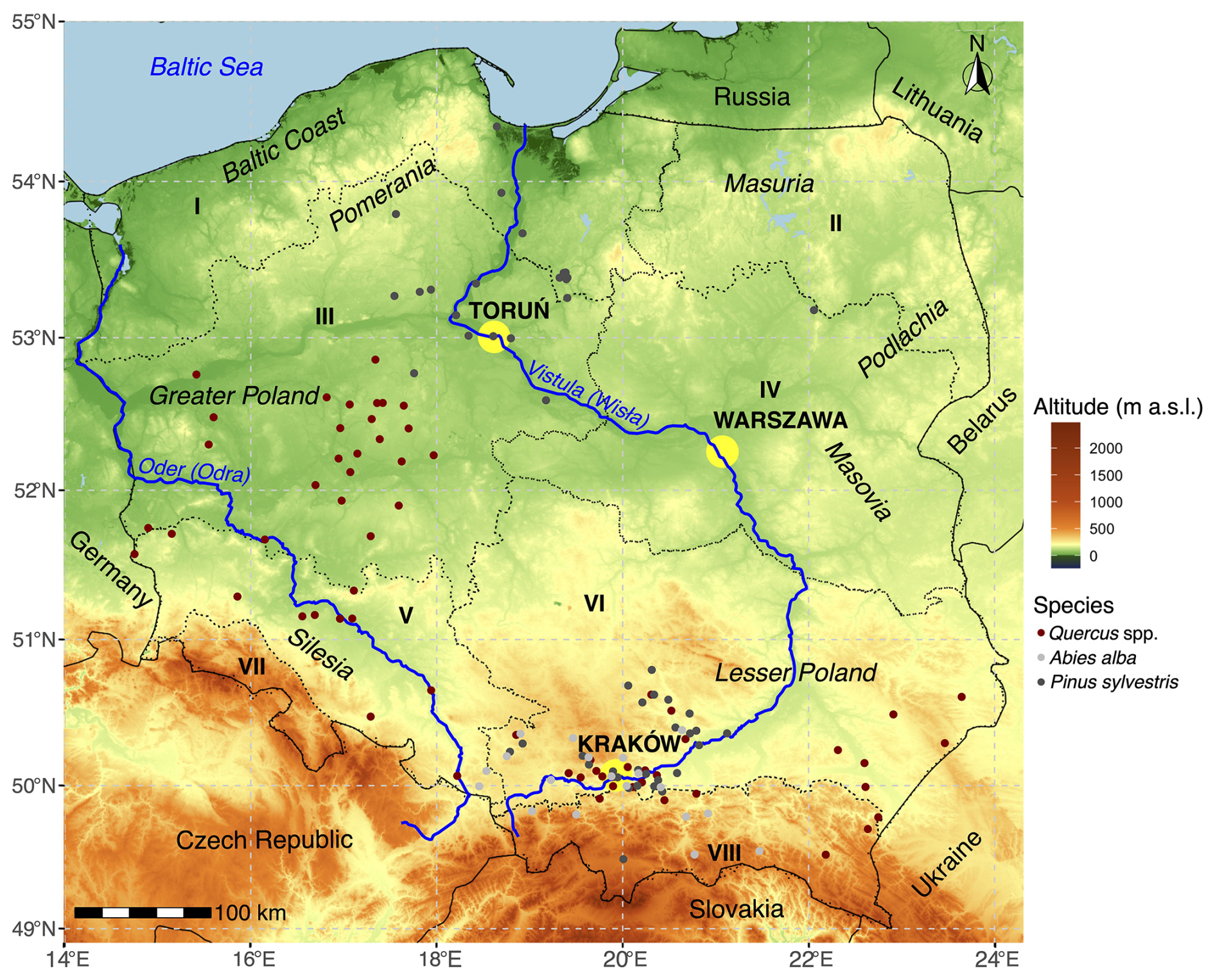
Figure 1Study area with historical and natural-forest regionalisation and location of materials used for research. Natural-Forest Provinces (Zielony and Kliczkowska, 2012): I – Baltic Coast province, II – Masuria–Podlachia province, III – Greater Poland–Pomerania province, IV – Masovia–Podlachia province, V – Silesia province, VI – Lesser Poland province, VII – Sudetia province, VIII – Carpathia province. Dendrochronological sites: blue dots – pine, brown dots – oak, grey dots – fir. Yellow dots – meteorological stations.
Zielony and Kliczkowska (2012) distinguished eight Natural-Forest Provinces in Poland (Fig. 1). Figure 1 also presents the locations of dendrochronological sites and the historical regions covered by the available documentary evidence. For historical regions that differ from their modern boundaries, sources written outside contemporary Poland were considered.
2.2 Data and methods
2.2.1 Documentary evidence
The article attempts to utilise the widest and most diverse sources possible. Narrative sources predominated, including chronicles, annals, memoirs, diaries, and the like. Sources from two Polish regions, namely Silesia and Pomerania, dominated this group, followed by slightly fewer sources from Lesser Poland. They were most often written in urban environments and monasteries, and less frequently at the courts of rulers. Examples of such urban sources include the chronicles of Christoph Beyer, Die ältere Danziger Chronik, and Friedrich Schwarz, Chronica oder Handbüchlein Danziger Geschichte (both written in Gdańsk), as well as Nicolaus Pol's Jahrbücher der Stadt Breslau, written in Wrocław, and Wenceslaus Thommendor's Schweidnitzer Chronik, written in Świdnica. Examples of monastic chronicles include the chronicles of the Cistercian monasteries in Oliwa and Pelplin in Pomerania, as well as Catalogus abbatum Saganensium from the Augustinian monastery in Żagań.
The second important group of sources comprises administrative sources produced by rulers, administrators and various offices. These included correspondence requesting the waiving or reduction of taxes due to natural disasters, as well as requests for repairs to buildings damaged by floods, storms and strong winds, along with accounting records documenting such damage. These were published in collections such as the Acta Tomiciana, though a significant portion remains (unpublished) in archives and requires archival research to obtain the information.
A new type of source for the 16th century is printed multi-year calendars, the oldest of which in Polish collections was published in Ulm in 1499. These reached members of the intellectual elite, becoming an essential contribution to their intellectual work. Due to the nature of the source, calendars precisely determine the date of a weather phenomenon. Determining the location to which a record refers can be problematic, however, especially when the author led an active economic and political life, owned estates scattered across a vast country and travelled to parliaments, regional councils and tribunals held in various cities. Fortunately, for the 16th century, almost all calendars containing meteorological observations were created by professors at the University of Kraków. Consequently, we have the largest number of records and the longest sequences for Kraków. The level of education of the authors of the calendar entries, their daily scientific activities and their interests combine to guarantee a high degree of reliability of weather observations. These sources appear in the form of handwritten supplements in old prints (e.g., BJ Cim. 5521; BJ Cim. 5526; BJ Cim. 5527; BJ Cim. 5528; BJ Incun. 2697). Only a few of them were published: (1) Jan Musceniusz, Jan Krzysztoporski, Stanisław Krzysztoporski, Dzienniki z XVI w. w druku BJ Cim.8421 [Diaries from the 16th century in print BJ Cim.8421], eds. Jacek Partyka and Marian Malicki, Poznań 2009; (2) Mikołaj z Szadka and Marcin Glicjusz z Pilzna, Diariusze profesorów Uniwersytetu Krakowskiego z lat 1555–1591 BJ Cim. 8420 [Diaries of professors at the University of Kraków from the years 1555–91 BJ Cim. 8420], eds. Dawid Machaj and Maciej Zdanek, Kraków 2024.
Information was also obtained from later publications (including various 17th- and 18th-century studies, as well as 19th-century monographs) when these were the only sources of information about a weather event. Attempts were made to assess the likely missing source and the reliability of such information.
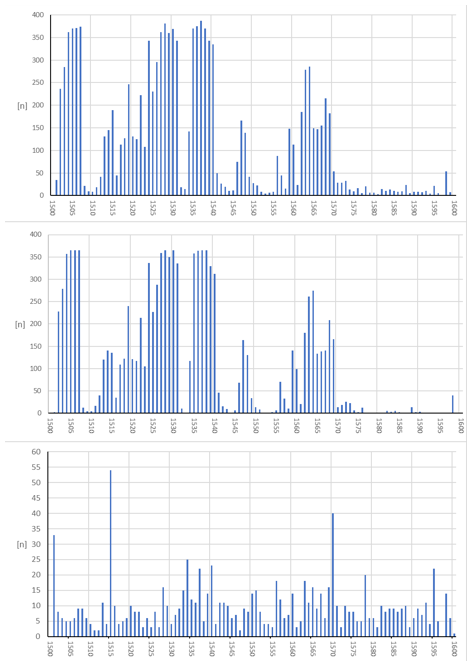
Figure 2Annual number of weather-related notes and excerpts (n) for Poland available in 16th-century historical sources. Key: upper figure: all weather notices; middle figure: number of weather notices made by professors of the Jagiellonian University (Limanówka, 2001); lower figure: number of weather notices in narrative and administrative sources.
We analysed a total of 11 863 weather records, but the majority (10 906) are daily weather notes produced by professors at the Jagiellonian University (Fig. 2, see also Limanówka, 2001). The others are weather notices that we found in narrative and administrative sources (Table S1 in the Supplement, Fig. 2). Examples are listed in Table S2 and shown in Fig. S1. On the other hand, a list of the documentary sources used is provided in Table S3.
Within the study period, the sub-period with the most abundant weather records is 1501–1540 (Fig. 2), when the yearly number of weather notes often exceeds 350. Conversely, the final three decades of the 16th century exhibited the lowest abundance, when the annual number was below 50, except for one year (1598) (Fig. 2). However, notably, when daily weather notes produced by professors of the Jagiellonian University are removed (Fig. 2c), the number of weather notes is distributed approximately evenly throughout the century and rarely exceeds 20 per year; nevertheless, three years are particularly abundant in weather notes. These are 1515, 1570 and 1501, when the number of weather notes reached 54, 44 and 33, respectively. The number of weather notes was greatest for summer (384 notes), followed by spring (210), winter (207) and autumn (148) (see Table S1).
For the entire 16th century, two new sets of thermal and precipitation indices with seasonal resolution were independently created by two of the authors of the present paper (a climatologist and a historian). For this purpose, the information derived from the historical source types presented above was supplemented by previous catalogues (Walawender, 1932; Girguś and Strupczewski, 1965; database of natural disasters: https://pth.net.pl/projekty/bazy-danych/kleski-elementarne/do-1795, last access: 15 June 2025; Euroclimlist database: https://www.euroclimhist.unibe.ch/datenbanksuche/index_ger.html, last access 14 March 2025, and, finally, on our unpublished database constructed during previous projects). In the event of discrepancies in the assessment of thermal or precipitation conditions, a reanalysis of the weather notes was performed to establish a uniform indexation. The indexation was made using a seven-degree scale, as described by Pfister et al. (1994). He proposed that index values of +3 and −3 indicate air temperature anomalies exceeding 2.0 standard deviations (SD) from the long-term mean, while +2/−2 and +1/−1 correspond to less extreme anomalies of 1.41–2.00 SD and 0.7–1.4 SD, respectively; a value of 0 (> −0.7 SD to < 0.7 SD) denotes the average climate of the long-term period or missing data. We slightly modified these SD criteria to account for the specificity of the Polish climate, which differs from that of Switzerland, for which the SD limit values were established by Pfister. For more details on the procedure used, see Przybylak et al. (2023).
The updated indices were used to reconstruct 10-year mean winter and summer temperatures for the 16th century, as previously presented by Przybylak (2011). The method employed for this reconstruction is described in Przybylak et al. (2005) and is therefore not repeated here. On the other hand, the strengths and weaknesses of reconstruction based on documentary evidence are discussed by Przybylak et al. (2023) and Brázdil et al. (2005).
The climate continentality of Poland was calculated using Gorczyński's index of thermal continentality according to the following formula (Gorczynski, 1920; Kożuchowski and Marciniak, 1985):
where K is the continentality index in %, A is the annual temperature amplitude, and ϕ is the geographical latitude. Annual temperature amplitude was calculated using mean summer and winter temperatures, as only seasonal temperatures were reconstructed for the 16th century. Also, Warsaw's latitude (52.23° N) was used for calculations.
A comparative analysis of climatically extreme years, distinguished using historical sources (indices) and dendrochronological data (pointer years), was also undertaken.
2.2.2 Dendrochronological data
The regional tree-ring chronologies employed in this research were developed by Zielski (1997), Krąpiec (1998), Zielski and Krąpiec (2004) and Szychowska-Krąpiec (2010). Wood material was collected from 40 natural forest stands, as well as from historical buildings and archaeological sites (Fig. 1). Tree cores were collected from living trees at around 1.5 m above ground using 5 mm-diameter increment borers, subsequently air-dried and affixed to wooden mounts according to standard dendrochronological techniques (Cook and Kairiukstis, 1990). For historic structures, samples were obtained as either 15 mm-diameter cores or cross-sectional discs. Measurement paths were prepared along two or three radii of each core. Annual ring widths were measured with a precision of 0.01 mm. All dated series were examined for potential measurement inaccuracies and missing rings using the COFECHA program (Holmes, 1983). Subsequently, mean ring-width series from both living trees and historical timbers were merged to construct a single regional chronology.
To eliminate age-related growth trends from the raw ring-width data, the approach outlined by Melvin and Briffa (2008) was implemented using the RCSigFree 45_v2b software (Cook et al., 2014). Variance stabilisation was achieved through an Rbar-weighted adjustment that accounted for fluctuations in sample depth (Osborn et al., 1997; Frank et al., 2007). A robust bi-weight mean was then applied to produce the final standardised chronology (Cook, 1985; Cook and Kairiukstis, 1990).
The running Rbar and Expressed Population Signal (EPS) statistics were calculated using 21-year moving windows with a 10-year step. These parameters served to evaluate the coherence and temporal consistency of the common signal among individual tree-ring series, as well as to define the reliable temporal extent of the chronology used for climate reconstruction. Rbar quantifies the proportion of variance shared among individual series, with higher values reflecting stronger common variability (Briffa, 1995). EPS estimates how effectively a finite sample represents an idealised infinite population (Wigley et al., 1984). Periods with EPS values exceeding 0.85 were considered to exhibit a sufficiently strong common signal in ring-width variability (Table 1).
Table 1Statistics overview of chronology and climate reconstructions (after Przybylak et al., 2023).

Long-term records of mean monthly air temperature and monthly precipitation from the Kraków and Toruń meteorological stations were used to assess the climatic sensitivity of the developed tree-ring chronologies (Fig. 1), applying the methodology described by Fritts (1976). Once the most robust and temporally stable relationships between ring width and climate variables were identified, a linear regression-based transfer function was constructed, with the tree-ring chronology serving as the predictor. The robustness of the regression model was evaluated through calibration and verification procedures conducted over different time intervals, depending on the overlap between climatic observations and the tree-ring record (Table 1). All analyses were conducted in the R environment (R Core Team, 2022) utilising the dplR package (Bunn, 2008) and the treeclim package (Zang and Biondi, 2015).
Moon rings (MR), sometimes referred to as “included sapwood”, represent a reliable proxy for severe winter temperature conditions and are characteristic features in the wood of European oak species (Quercus robur and Quercus petraea). In cross-section, they appear as light, halo-like bands within the darker heartwood. Wood containing MRs is distinguished by a reduced abundance or complete absence of tyloses within the vessels, as well as by a diminished concentration of heartwood extractives (Dujesiefken and Bauch, 1987; Dzbeński and Krutul, 1994). The formation of moon rings is linked to disruptions in carbohydrate (starch) allocation that interfere with normal heartwood development (Dujesiefken and Bauch, 1987). Such disturbances are particularly associated with episodes of exceptionally cold winters (Bolychevtsev, 1970; Dujesiefken and Liese, 1986; Krąpiec, 1998).
Specimens exhibiting moon rings were identified within a dataset comprising approximately 2500 oak discs and cores derived from Holocene alluvial sediments in southern Poland, archaeological sites, and timber from historical constructions. The presence and extent of MR zones were examined on prepared transverse surfaces using a binocular magnifier. For each locality, correlation charts were constructed showing tree-ring series for which the MR-affected increments were clearly indicated. Because a portion of the material originated from the basal sections of trunks – where moon ring development is less pronounced (Dujesiefken and Liese, 1986; Krąpiec, 1999) – the calendar year assigned to the outermost ring of an MR zone may lag the true year of moon ring formation by approximately 2–5 years.
Two complementary methods were applied to reconstruct past climate conditions. The first is based on the identification of pointer years across all available chronologies, including both oak and conifer series (Table S4, see also https://marcin-koprowski.shinyapps.io/app-2/, last access: 10 February 2026). The second approach relies on linear regression models developed for pine chronologies from the Kuyavia–Pomeranian region, as well as for pine and oak chronologies from Lesser Poland.
Pointer years, as originally defined by Huber and Giertz-Siebenlist (1969), are calendar years in which climatic anomalies cause the majority of trees to form annual rings that are either unusually narrow or unusually wide relative to the preceding year. Such years may result from a range of environmental drivers, encompassing short-lived events (e.g., late spring frosts occurring over a single night) and prolonged climatic stresses, including droughts, harsh winters or extended cold periods (Schweingruber, 1992). Although the specific meteorological causes of individual pointer years are not always straightforward to interpret, their value for dendrochronological dating and climate variability studies is well established. In this study, a year was classified as a pointer year when at least 90 % agreement was observed among a minimum of ten tree-ring series.
Earlier studies have demonstrated that temperature conditions strongly control tree-ring width variability in Scots pine from both northern Poland (Zielski, 1997; Zielski et al., 2010; Koprowski et al., 2012; Waszak et al., 2021) and southern Poland (Szychowska-Krąpiec, 2010). Comparable temperature-driven growth responses have also been documented for fir in southern Poland (Szychowska-Krąpiec, 2010). Based on these well-established relationships, temperature was selected as the target variable for the climate reconstruction presented in this study. Following evaluation of the regression models, the earlier segment of the instrumental record was adopted as the calibration period for three study sites (Table 1). The strongest model performance was obtained for fir from Lesser Poland, with correlation coefficients of 0.57 during the calibration interval and 0.49 when considering the full data span. The results of the RE and CE validation statistics indicated satisfactory model reliability, and the root mean square error (RMSE) values were particularly low.
3.1 Documentary evidence
As shown in Fig. 2, the number of weather notes collected for Poland in the 16th century, excluding daily weather notes, is evenly distributed over time. However, they vary significantly in number as regards their reporting on weather conditions in the four particular seasons (DJF, MAM, etc.). The greatest differences were noted between summer and other seasons, particularly autumn (see Table S1). Weather notes were slightly more abundant for the first half of the century (493) than the second (464).
The available weather notes for Poland for the 16th century allowed 87/38 winters, 39/50 springs, 57/78 summers and 41/43 autumns to be indexed in terms of thermal/precipitation conditions. In total, as expected, slightly more seasons were indexed for air temperature (224, i.e., 56 %) than for precipitation (209, 52 %). Contrary to expectations, however, regarding thermal and precipitation conditions, more seasons were indexed for summer (135) than for winter (125). This is primarily due to the limited amount of information available for winter precipitation conditions (the least of all seasons), which allowed only 38 winters to be indexed, compared to as many as 78 summers.
Table 2Number of extremely and very warm and cold (T) and wet and dry (P) seasons (DJF, MAM, etc.) in Poland in the 16th century.
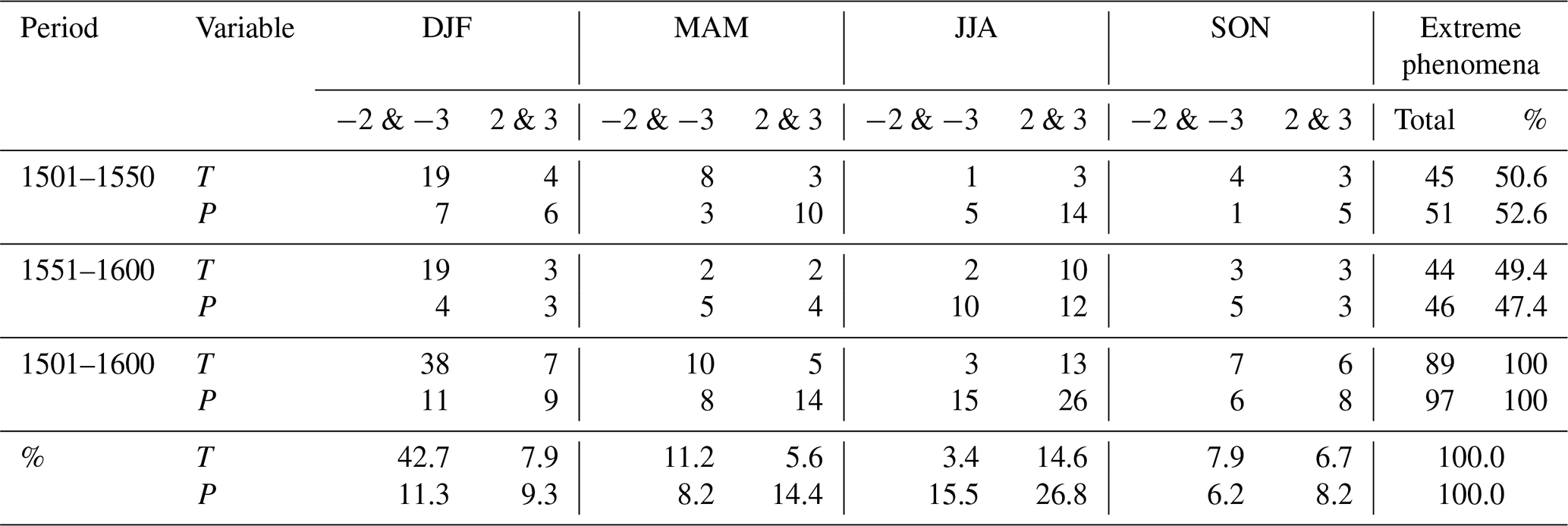
Table 2 presents synthesised information on the frequency of seasons in Poland, which experienced either extremely warm and wet conditions or extremely cold and dry conditions in the first and second halves of the 16th century and across the century as a whole. This table shows that extreme events were distributed relatively evenly throughout the 16th century. However, they were slightly more frequent in the first half of the century than in the second. Similarly, extreme events were slightly more frequent for precipitation than for thermal conditions. The most commonly described thermal extremes in the historical sources were extremely cold and very cold winters (indices −3 and −2) and extremely warm and very warm summers (3 and 2). Their frequency reached 42.7 % and 14.6 %, respectively (see Table 2). On the other hand, precipitation extremes were most frequent in summer, with both wet (26.8 %) and dry (15.5 %) conditions. Thermal and precipitation extremes were less frequent in autumn.
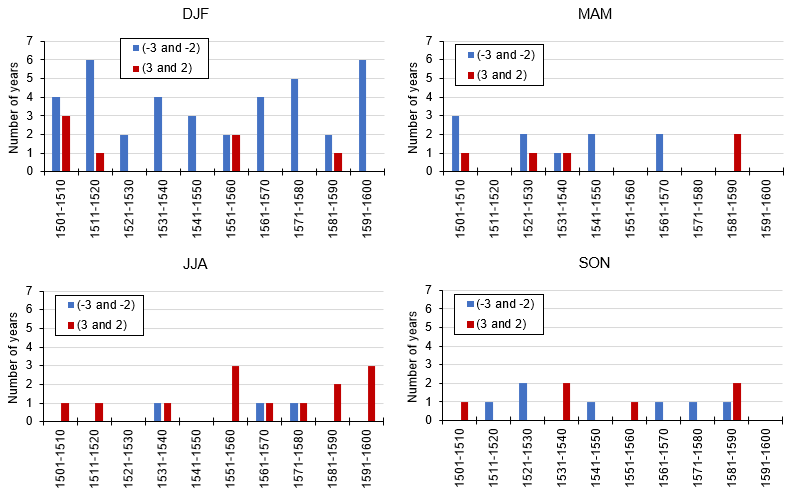
Figure 3Decadal number of years of extreme winters (DJF), springs (MAM), summers (JJA), and autumns (SON) in 16th-century Poland, categorised as extremely cold and very cold (indices −3 and −2) and extremely warm and very warm (indices 2 and 3).
Changes in 10-year frequencies of extremely cold and very cold, as well as extremely warm and very warm seasons in Poland during the 16th century are shown in Fig. 3. The frequency of occurrence of extremely cold and very cold winters was highest in the decades 1511–1520 and 1591–1600 (6 cases each) and lowest (only 2 cases) in the decades 1521–1530, 1551–1560 and 1581–1590. It is worth noting, however, that they occurred in each decade, whereas extremely warm and very warm winters occurred in only four decades, at a lower frequency than that of the mentioned cold extremes. The opposite relation is noted for summer, when extremely warm and very warm summers dominate over cold ones (Fig. 3). They were particularly frequent in the second half of the 16th century (occurring in 10 separate years). As with winters, extremely cold and very cold springs (10 cases) were clearly more frequent than extremely warm and very warm springs (5) and were most common in the first half of the 16th century (8 cases, Fig. 3). Both extremely cold and extremely warm autumns were evenly distributed throughout the study period, but the former were slightly more frequent.
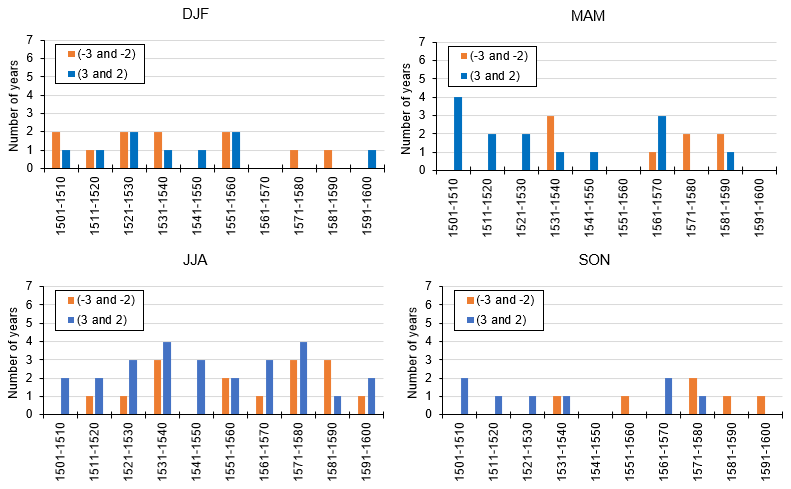
Figure 4Decadal number of years of extreme winters (DJF), springs (MAM), summers (JJA), and autumns (SON) in 16th-century Poland, categorised as extremely dry and very dry (indices −3 and −2) and extremely wet and very wet (indices 3 and 2).
The analysis of extremely wet/dry and very wet/dry seasons, as shown in Fig. 4, reveals that they were most abundant in summer and least in autumn. Summer exhibits two maxima in the occurrence of the 10-year greatest frequencies, for both wet and dry extremes (1531–1540 and 1571–1580). In both decades, as many as four extremely wet and very wet summers occurred, and three extremely dry and very dry summers (Fig. 4). The frequency of such summers was lowest in the first two decades and the last decade. A large number of extreme seasons was noted for spring, being even greater than for winter (Fig. 4). Extremely wet and very wet springs were particularly frequent in the first three decades (8 cases), whereas extremely dry and very dry springs dominated in the second half of the century. The same pattern of changes in the occurrence of spring extremes is also evident in autumn extremes (Fig. 4). In turn, the historical sources report that winters were extremely dry and very dry more frequently than they were extremely wet and very wet. In contrast to all other seasons, the analysed dry winters were more frequent in the first half of the 16th century than in the second half.
For extremely cold and very cold winters, less than half (42 %) of the information on humidity is available. The analysis showed that most extremely cold and very cold winters were either very wet (snowy) (37.5 %) or very dry (25 %). The remaining winters were slightly wet (25 %, index 1) or normal (12.5 %, index 0). The thermal and precipitation relationships for extremely warm and very warm summers were far less ambiguous. In the 13 such years identified (see Fig. 3), information on their humidity was also available in 11 cases (84.6 %). Such extremely hot summers were almost always accompanied by dry (18.2 %) or very dry and extremely dry (72.7 %) summer conditions. Only once (9.1 %) was the summer defined as normal.
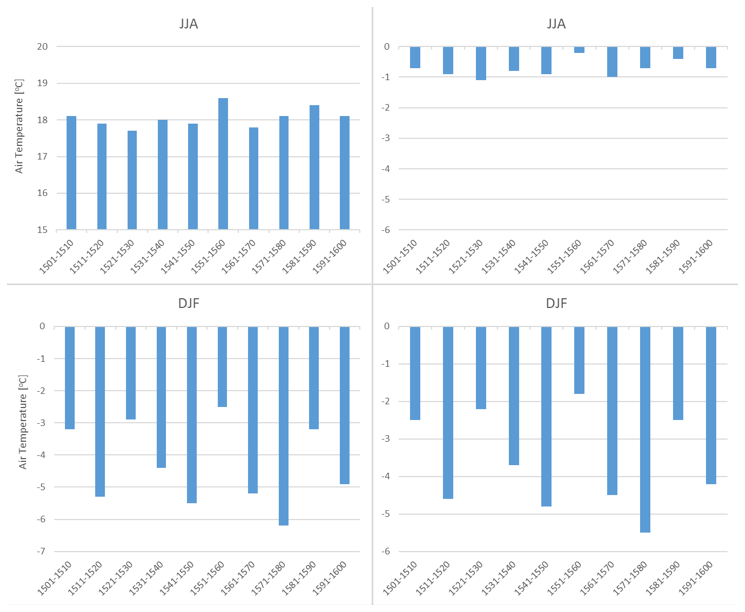
Figure 5Reconstructed 10-year mean winter (DJF) and summer (JJA) air temperatures in Poland during the 16th century (left panel); anomalies relative to the 1991–2020 reference period, based on data from Warsaw (Lorenc, 2000, updated) (right panel).
Figure 5 presents an updated version of air temperature reconstructions for Poland for the 16th century, which differs from the earlier version presented by Przybylak et al. (2005) and Przybylak (2011). The significant improvement in quality and reliability of the present reconstructions is due to the greater number of historical sources available to us. Analysis shows that, in Poland, the climate was colder in the 16th century than today (1991–2020), particularly in winter. On average, winter was 3.6 °C colder, but there was a large range between the warmest decade (1551–1560, anomaly −1.8 °C) and the coldest (1571–1580, −5.5 °C). The weather in summer during the study period was only slightly colder than today, by an average of 0.7 °C. The range of variability of anomalies in mean decadal summer temperatures in relation to present conditions was also clearly smaller than in winter and ranged between −0.2 °C (the warmest decade being 1551–1560) and −1.1 °C (the coldest decade being 1521–1530). We can therefore conclude that, because both winter and summer were warmest in the decade 1551–1560, it is likely that this decade was also the warmest in terms of annual values. It is also interesting to compare the temperature averaged for both the 16th century and the 20th century. Calculations indicate that summers were 0.3 °C warmer in the 16th century than in the 20th century, whereas winters were 2.5 °C colder. The annual temperature range (summer minus winter) in Poland in the 16th century was significantly greater (by about 3 °C) than it is at present, indicating that climate continentality was also greater. According to Gorczyński's index of thermal continentality, that difference reached about 6 %. The deterioration of the climate in the last decades of the 16th century is seen only in winter and not in summer.
3.2 Dendrochronology
3.2.1 Pointer years and moon rings
Oak chronologies for Greater Poland, Lower Silesia, and Lesser Poland encompassed the full analysed period from AD 1501 to 1600. Tree-ring sequences from the regional chronologies were employed to determine pointer years in Lesser Poland, Greater Poland, and Lower Silesia (see https://marcin-koprowski.shinyapps.io/app-2/, Table S4, and Figs. 6 and 7). During the study period, only two positive pointer years (1521 and 1533) were shared across all three regions. Overall, between 1501 and 1600, 14 pointer years were identified in Lower Silesia, ten in Lesser Poland, and nine in Greater Poland (Figs. 6 and 7).
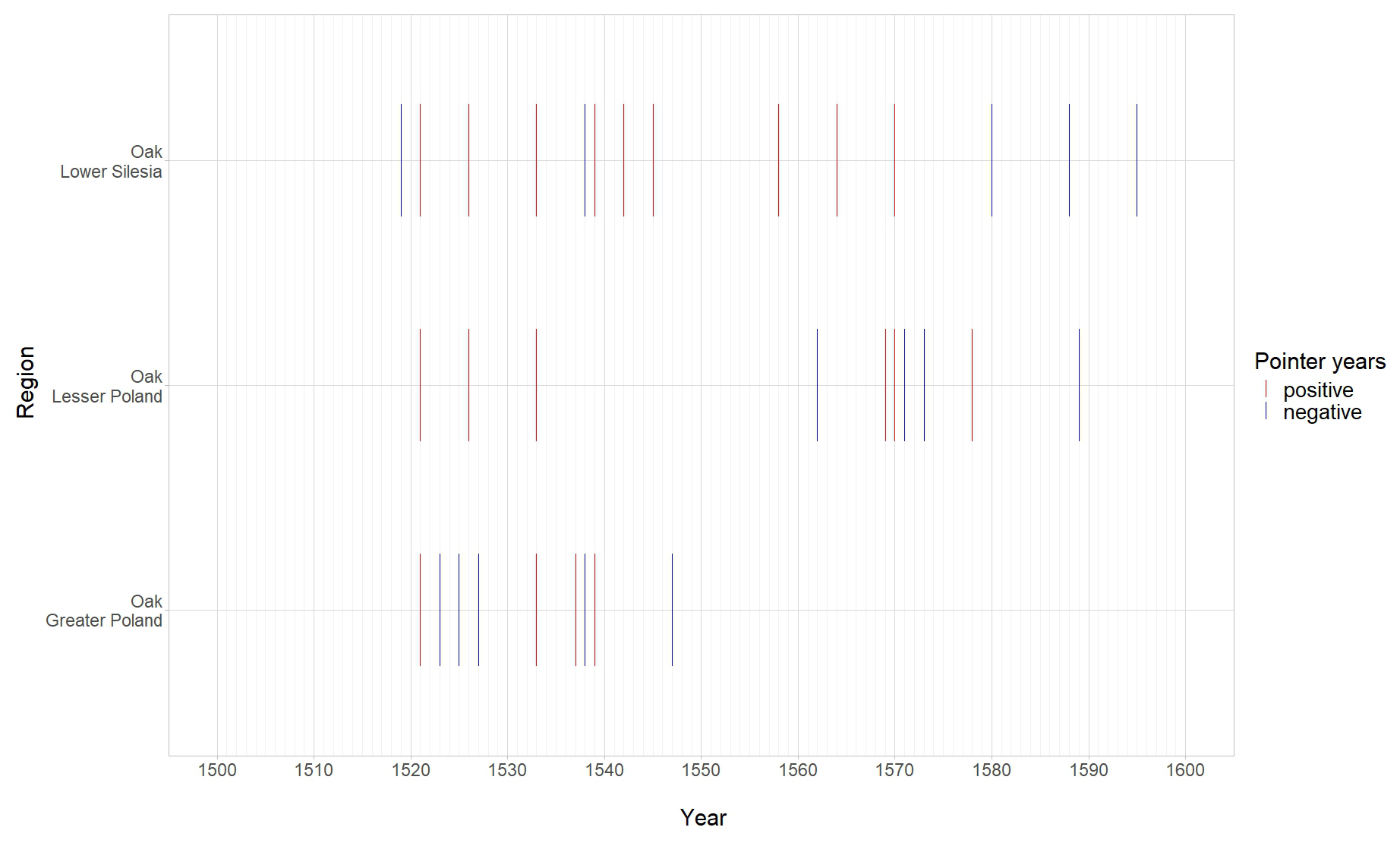
Figure 6Oak pointer years identified in Greater Poland, Lower Silesia, and Lesser Poland, 1501–1600.
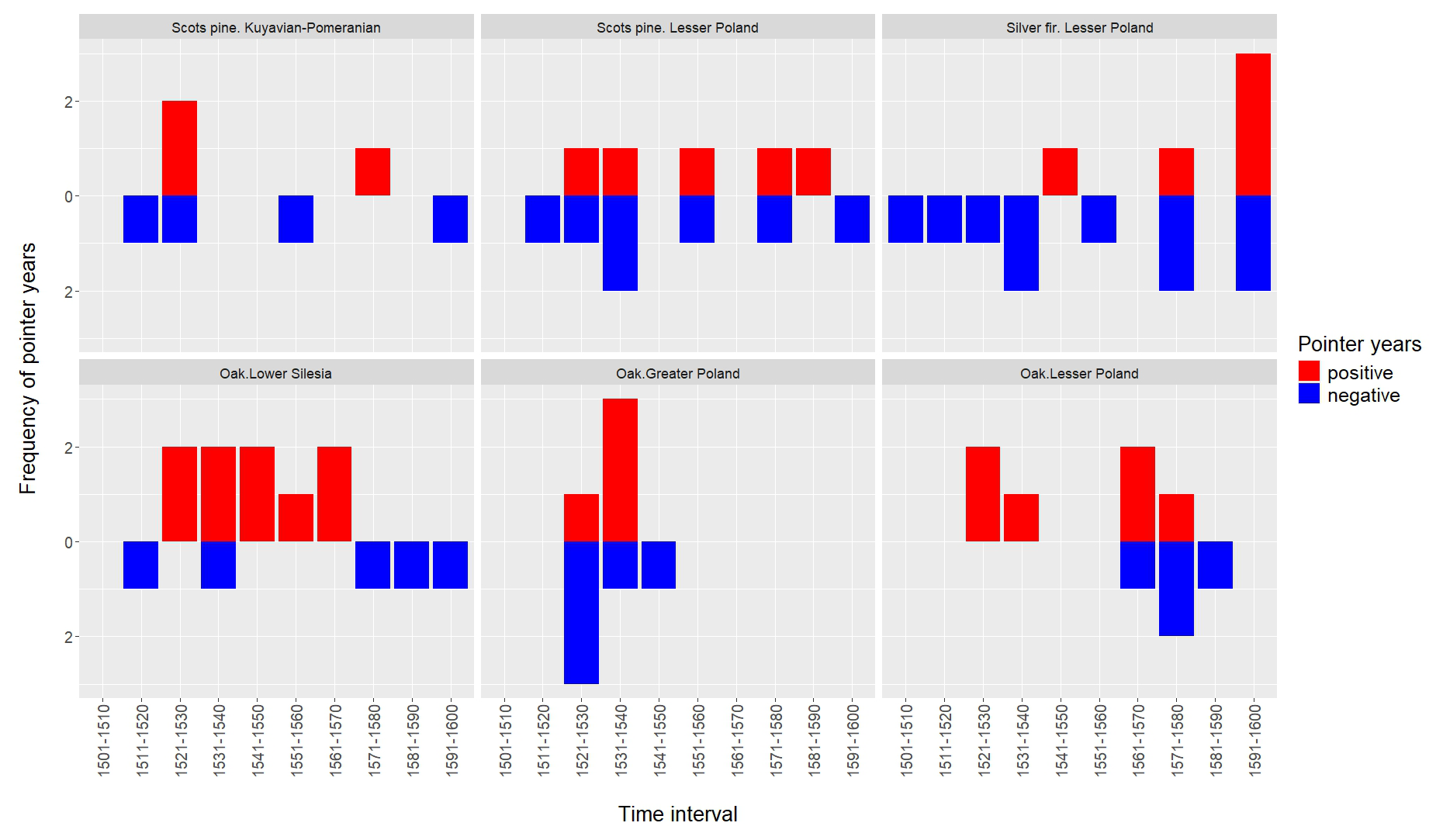
Figure 7Decadal frequency of pointer years in Scots pine, silver fir, and oak in Poland, 1501–1600.
Fifteen pointer years were identified in the Lesser Poland silver fir chronology for the period 1501–1600 (Table S4, Figs. 7 and 8), of which as many as ten were negative pointer years. This was comparable to Lesser Poland's Scots pine chronology (1501–1600), where 12 pointer years were found (Table S4, Figs. 7 and 8). In the case of Scots pine from Kuyavia-Pomerania for the years 1501–1600, only seven pointer years were identified, of which four are negative (Table S4, Figs. 7 and 8).
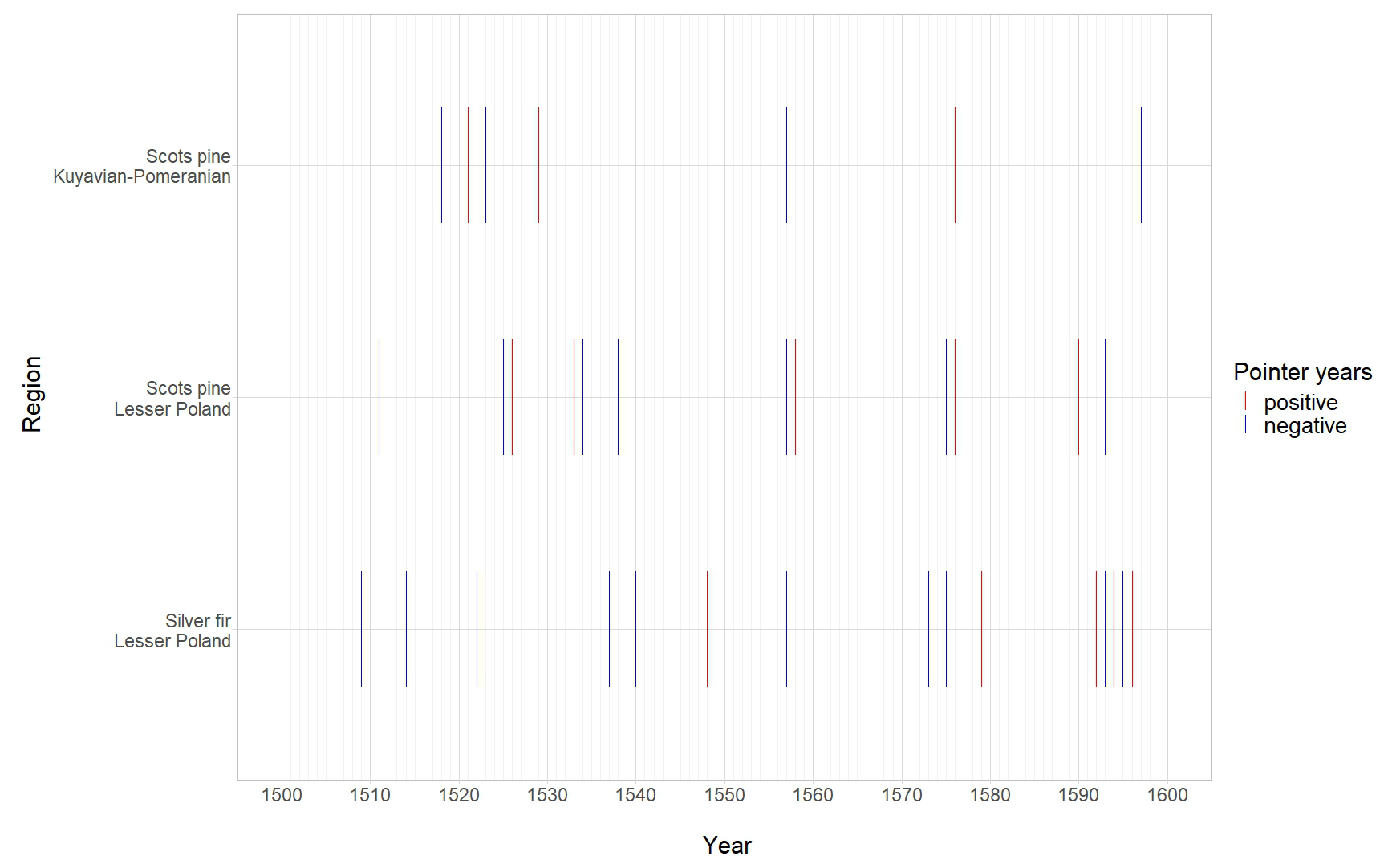
Figure 8Scots pine and silver fir pointer years in Kuyavia-Pomerania and Lesser Poland, 1501–1600.
During the period 1501–1600, MRs were found only for the winter of 1555/56. However, according to historical sources, this winter was very warm in south-western Poland, whereas three coniferous dendrochronologies representing almost the entirety of Poland did not indicate the occurrence of any kind of pointer year, suggesting a rather normal winter.
Negative/positive pointer years (roughly representing extremely cold/extremely warm winters, respectively) found in two pine and one fir dendrochronology from Poland, were compared against thermally extreme winters selected from historical sources. The resultant correspondence was very good; 75 % (18 cases) of the pointer years distinguished in these dendrochronologies were consistent with the occurrence of extreme winters estimated based on historical sources. For 40 % of cases of extreme winters identified based on historical sources, pointer years were not found. Conversely, for 11 % of the pointer years, we were unable to find historical weather information. The good correspondence established between dendrochronological pointer years and historically documented extreme winters therefore reasonably warrants the inclusion of dendrochronological data to supplement the database of extreme winters compiled from historical records.
3.2.2 Regression model
Temperature reconstructions for the winter months based on the three constructed chronologies are presented in Fig. 9 and in a more general form in Fig. 10A–C. For the years AD 1501–1600, the average temperature of February–March (Fig. 9b) was reconstructed using the residual pine chronology, whereas the average temperature of December–March was reconstructed (Fig. 9c) using the residual fir chronology as a predictor. In both reconstructions, the temperatures during the study period were generally lower than those recorded today, particularly in the case of the reconstruction based on the fir chronology (December to March) (Fig. 9c). However, anomalies (both positive and negative) were usually of less than 1 SD from the long-term (1951–2000) mean. On the other hand, in northern Poland, all anomalies were smaller (see Fig. 9a). In this area, also the February–March temperature in the 16th century was, on average, close to the present. The deterioration of the climate in the last decades of the 16th century is most evident in southern Poland, as indicated particularly by the reconstruction of February–March temperatures (Fig. 9b).
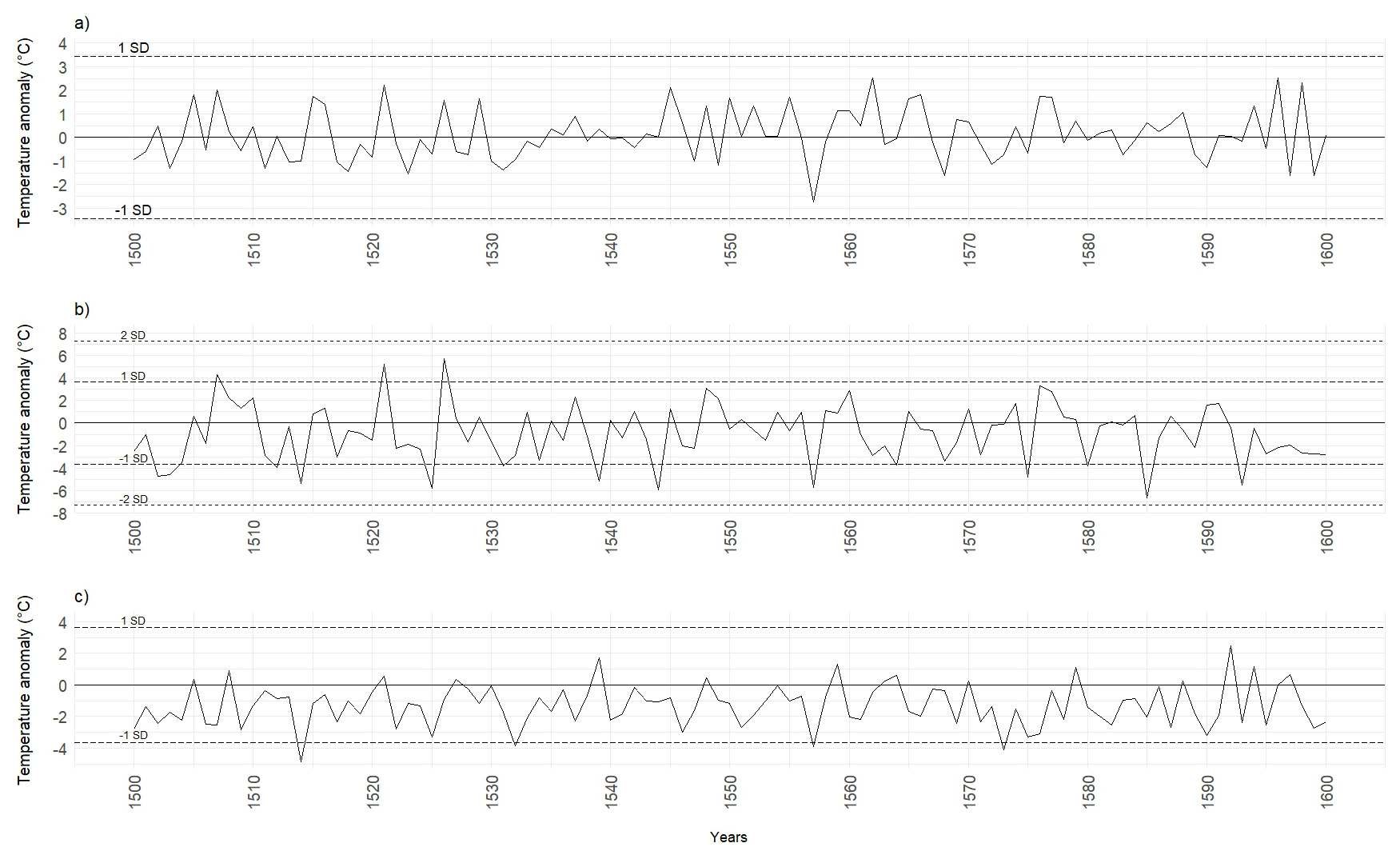
Figure 9Reconstructed average air temperatures (°C) in the 16th century: (a) February–March in northern Poland and (b) February–March in southern Poland, derived from pine-ring widths; (c) December–March in southern Poland, derived from fir-ring widths. Anomalies are shown relative to the 1951–2000 reference period, with standard deviations calculated from the same period.
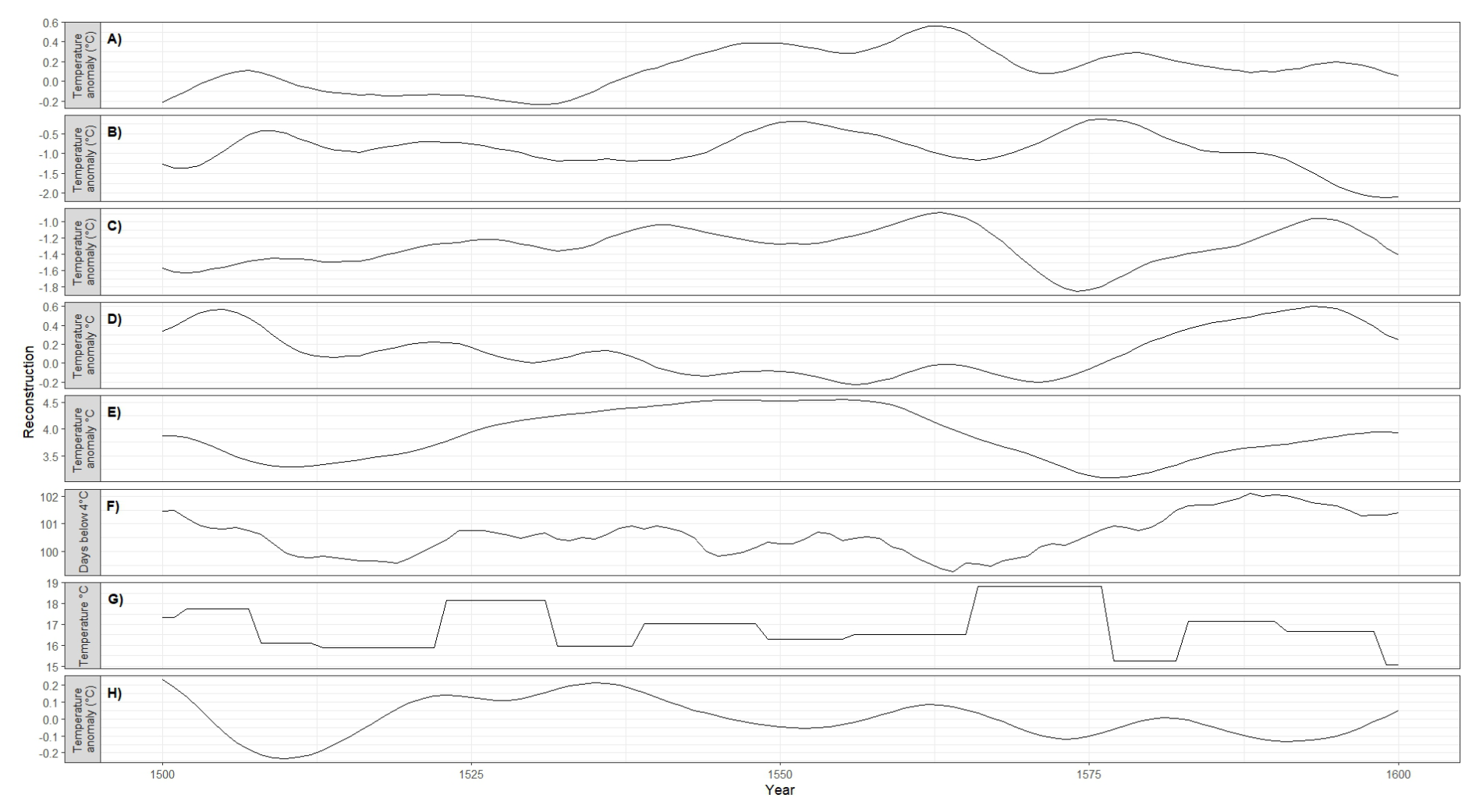
Figure 10Reconstruction of 16th-century air temperatures in Poland using moving-window analysis: Panels (A)–(E) depict temperature anomalies calculated with a Gaussian 20-year moving window for the specified periods and region: (A) February–March for Kuyavia-Pomerania; (B) February–March for Lesser Poland; (C) December–March for Lesser Poland; (D) February–March for Kuyavia-Pomerania (modified after Koprowski et al., 2012); (E) November–April for northern Poland (modified after Balanzategui et al., 2018). (F) Chrysophyte-based reconstruction of the number of days below 4 °C (Hernández-Almeida et al., 2015). (G) Chironomid-based reconstruction of August temperature (Hernández-Almeida et al., 2017). (H) A Gaussian 20-year moving window for reconstruction of spring and summer temperature in NE Poland, reconstructed based on the Ca Ti ratio (modified after Zander et al., 2024). Temperature anomalies are expressed relative to the 1951–2000 reference period.
The currently intensifying pace of climate change underscores the urgent need for a precise understanding of the natural mechanisms controlling climate change across every large and small region of the Earth, particularly over the past few centuries. Such knowledge allows for a more reliable assessment of the magnitude of human impact on current and future climate change. These goals have guided researchers for decades as they reconstruct the climate prior to the period of instrumental meteorological observations, i.e., usually before 1850 (Brönnimann et al., 2019). The 16th century, as the brief overview presented in the Introduction shows, has been the subject of research by many authors. There is a significant number of reconstructions, primarily of the most important climatic element in the temperate and polar zones, which is air temperature (e.g., Bradley and Jones, 1993; Brázdil, 1994; van Engelen et al., 2001; Glaser, 2001; Bradley et al., 2003; Jones and Mann, 2004; Luterbacher et al., 2004, 2016; Xoplaki et al., 2005; Glaser and Rieman, 2009; Ljungqvist, 2010; Lee and Zhang, 2015; Esper et al., 2016; Pfister, 2018). However, the available reconstructions presented in these works for small areas (e.g., the Alpine region, Czech Lands, Scandinavia, Germany, and the Low Countries) or large areas (e.g., above 20° N) are most often limited to air temperature during the warm period of the year, mainly the summer. In this article, we present quantitative reconstructions of air temperature for Poland based on both documentary evidence and dendrochronological data for the cold half-year, which significantly enhances our understanding of air temperature changes not only in Poland but also across Europe. As Luterbacher et al. (2010) demonstrated, winter temperatures in Poland are highly and statistically correlated with temperatures across Europe. As Przybylak et al. (2023) concluded, in Poland, winter temperature is the best proxy for estimating the mean annual temperature. Thus, it seems very probable that the winter temperature should also be used to represent annual temperature in some parts of Europe, particularly central Europe, instead of the more usual use of summer temperature for this purpose (see Ljungqvist, 2010).
In this paper, we present, for the first time, five new reconstructions of air temperature (Figs. 5 and 9), two based on documentary evidence (for winter and summer) and three based on dendrochronological data (for the cold half-year). As we mentioned in the introduction, one of our primary objectives was to determine whether the 16th-century climate deterioration also occurred in Poland, as it did in many European regions. Analysis of these reconstructions reveals a decrease in winter temperature, particularly in the last three to four decades in southern Poland (see Figs. 9 and 10) and throughout Poland (Fig. 5). On the other hand, in the Kuyavia-Pomerania region (northern Poland), this change of temperature is less marked (Figs. 9a and 10A). This finding is nonetheless in good correspondence with the spatial distribution of air temperature anomalies relative to the 1951–2000 mean presented in Fig. S2. Additionally, there is no evidence to suggest that a marked decrease in summer temperatures occurred in Poland (Fig. 5). This conclusion is in line with results presented for summer for the entire Europe by Luterbacher et al. (2004).
Let us check other available temperature reconstructions for Poland for this period based on biological or chemical proxies (Fig. 10). Chrysophyte-based reconstruction of the number of days below 4 °C (Hernández-Almeida et al., 2015), representing the cold-half-year temperature, shows clearly that the lowest values occurred in the final two decades (Fig. 10F). Also, November–April temperature in northern Poland reconstructed based on dendrochronological data (after Balanzategui et al., 2018) confirms this cooling, although here the deterioration of climate started a little earlier, being most intense at the end of the 1570s (see Fig. 10E). It must be noted, however, that temperature here was very high in the period 1530–1560, and after that dropped sharply until the late 1570s by about 1.3 °C. Relatively cold temperatures were also observed in the first two decades of the 16th century, as noted in our new reconstructions (see Fig. 9a, c). For the warm half-year, we have only two reconstructions available, for August (Fig. 10G) and the spring–summer period (Fig. 10H). In August, the temperature in the entire 16th century fluctuated around 17 °C. However, some signs of cooling are observed in the late 1570s and at the end of the century. Slightly smaller but longer cooling periods are observed in the first half of the 16th century, mainly in the second decade. The mean temperature for spring and summer is clearly lower in the second half of the 16th century, although the strongest (but short-term) cooling occurred around the 1510s (see Fig. 10H). We conclude that most of the presented temperature reconstruction reveals a cooling trend in Poland over the last few decades of the 16th century, particularly in the winter half-year. A slightly smaller cooling than at the end of the 16th century also occurred in its second decade, whereas evidently the warmest period was in the middle of that century. This is in good agreement with reconstructions based on documentary evidence (Fig. 5), which indicate that the warmest decade was 1551–1560, for both winter and summer.
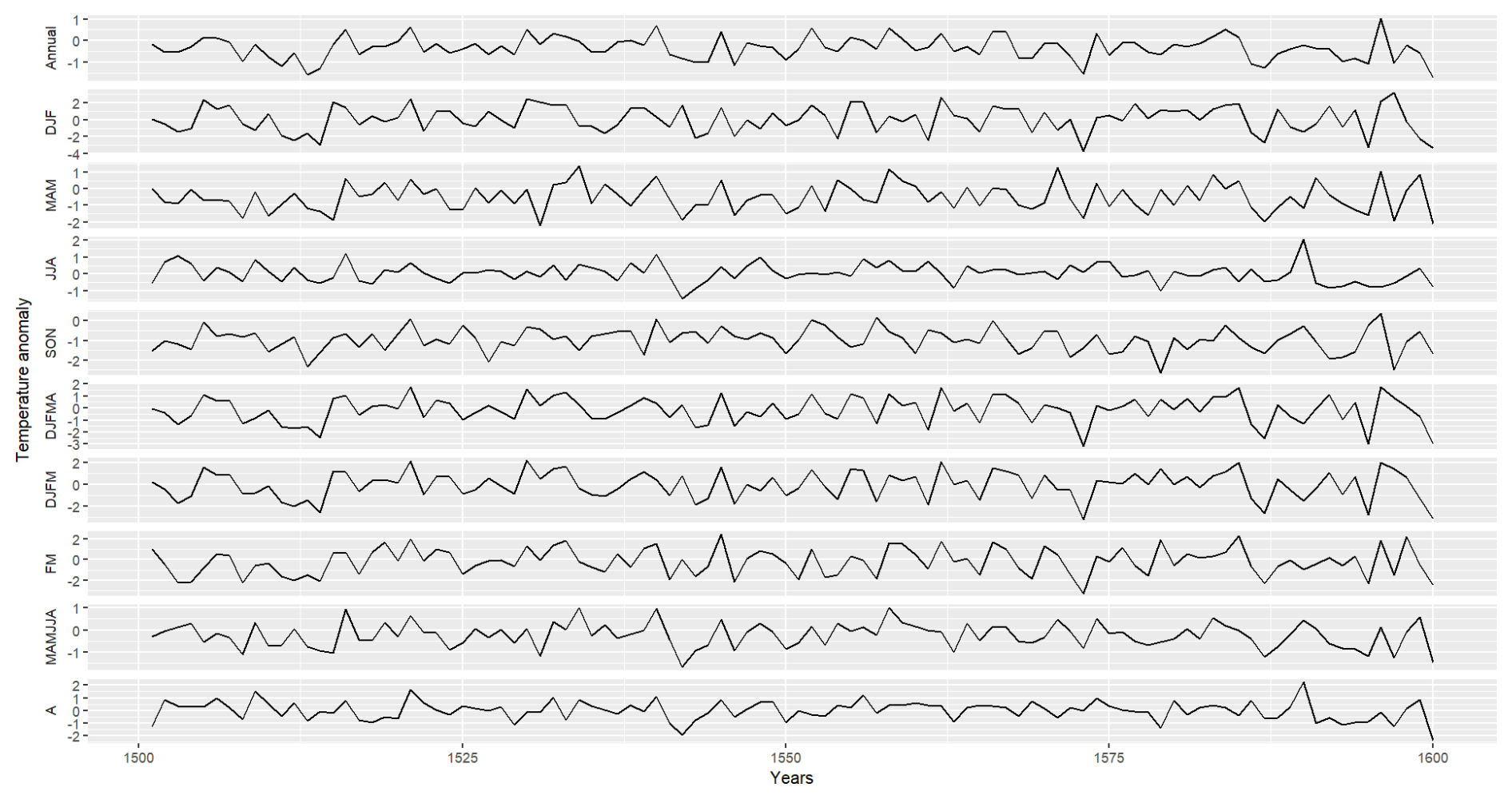
Figure 11Reconstruction of air temperature in Poland in the 16th century according to ModE-RA data (Valler et al., 2024) for different periods of the year, including periods for which temperature reconstructions exist, constructed based on different multiproxy data (see Fig. 10). Temperature anomalies are shown in relation to the 1961–90 reference period, which for Poland well represents the entire 20th century.
Recently, a global monthly palaeo-reanalysis of the modern era 1421–2008 (ModE-RA) was published (Valler et al., 2024). The temperature reconstructions averaged for the Polish area for the 16th century, drawn based on data taken from this palaeoreanalysis, are shown in Fig. 11 (entire century) and Fig. S2 (1586–1600). It is possible to roughly assess how well they reconstruct the temperature in Poland by comparing their results against the reconstructions presented in the present paper in Figs. 5 and 10. As shown in Fig. 3 of Valler et al. (2024) for Poland for the 16th century, they used only limited documentary evidence for climate reconstruction, primarily from areas neighbouring Poland, which means that the data presented for Poland are obtained from model simulations. Additionally, all reconstructions presented in Fig. 10 represent only a portion of Poland. Only documentary-based reconstructions (Fig. 5) represent the entire area of Poland. Therefore, comparisons of air temperature values may be burdened with a significant error, due to their large spatial variation in Poland, e.g., up to about 2 °C/4 °C in annual/winter mean (1951–2018), respectively, between the north-east and south-west parts of Poland (see Fig. 11.1 in Ustrnul et al., 2021). One of the most important reasons for this variability is the increasing continentalization of the climate in Poland, which is progressing from west to east (Kożuchowski and Marciniak, 1985) and is caused by the decreasing influence of oceanic masses flowing eastwards from the Atlantic, particularly in winter. The influence of the Baltic Sea on the climate of Poland extends only several dozen kilometres inland, mainly along the coast in north-western Poland. The mentioned maritime air masses bring warming to Poland in winter and cooling in summer. It seems, however, that the course of air temperature changes in the 16th century can be compared without any significant error, as the temperatures of Polish regions are strongly intercorrelated (Przybylak et al., 2014; Ustrnul et al., 2021; Ptak et al., 2025). Analysis of results shown in Figs. 5, 10 and 11 confirmed good coherence between the presented changes in air temperature reconstructions for Poland during the 16th century. Reconstructions based on ModE-RA data also revealed two main cooling periods: one around 1510 and a second, more important, in the last 25–30 years, but particularly in the last 15 years of the century (Figs. 11 and S2). For example, the average temperature during the period 1586–1600 was approximately 0.5 °C lower than the average for the entire 16th century during winter (DJF) and the winter-to-early-spring periods (DJFM and DJFMA). A slightly smaller difference than in the mentioned periods occurred in the FM period (−0.36 °C), whereas the smallest difference of all analysed periods occurred in autumn (SON), being of only −0.16 °C (Fig. 11). Note, however, that the mid-16th-century warm phase identified in the majority of reconstructions presented in Figs. 5 and 10 is not seen in the data taken from the ModE-RA (Fig. 11). Furthermore, at this time, almost the same degree of cooling occurred as in the late 16th century, in particular in the 1540s. However, we must note that the cooling in this decade is also evident in reconstructions based on documentary evidence, particularly in winter (Fig. 5).
The significant temperature decrease in the last decades of the 16th century in Poland is consistent with many temperature reconstructions for various areas of the globe, e.g. Central Europe (e.g., Pfister and Brázdil, 1999; Glaser and Riemann, 2009; Brázdil et al., 2010; Dobrovolný et al., 2010; Niedźwiedź et al., 2015) and the whole of Europe (e.g., Guiot, 1992; Bradley and Jones, 1993; Luterbacher et al., 2004, 2016; Brázdil et al., 2005 [for a review]; Xoplaki et al., 2005; Esper et al., 2016), Asia and North America (Bradley and Jones, 1993; Esper et al., 2016) and, finally, the Northern Hemisphere (e.g., Bradley and Jones, 1993; Jones et al., 1998, 2001; Mann et al., 1999; Crowley and Lowery, 2000; Briffa et al., 2001; Bradley et al., 2003; Jones and Mann, 2004; Moberg et al., 2005; Mann et al., 2008, 2009; Ljungqvist, 2010; Lee and Zhang, 2015).
It is worth checking whether the same consistency among reconstructions applies to the beginning of the 16th century (the clear cold phase) and the period around the middle of the century (the warming period). Accordingly, a review of the results of available reconstructions (e.g., Bradley and Jones, 1993; Luterbacher et al., 2004; Brázdil et al., 2005, 2010; Xoplaki et al., 2005; Niedźwiedź et al., 2015) shows that, in the first five to seven decades of the 16th century, the course of temperature fluctuations in Poland very often differs from that in other areas of the globe. However, the occurrence of a cold phase during the first two decades of the 16th century agrees with, for example, the course of average temperature for some areas of Europe, e.g. Central Europe (average from Switzerland, southern Germany and the Czech Republic, see Fig. 7 in Pfister and Brázdil, 1999); North America (see Fig. 6 in Bradley and Jones, 1993), including the Canadian Arctic (Fig. 2 in Bradley and Jones, 1993); or JFMA Stockholm temperature (see Fig. 3 in Brázdil et al., 2010) and summer (JJA) temperature in Scandinavia reconstructed by Büntgen et al. (2011). However, in turn, there is no agreement for the western part of Europe (De Bilt series, Brázdil et al., 2005), Europe as a whole, western Russia, China, the mean for the Northern Hemisphere, and many other regions, as shown by Bradley and Jones (1993). But the newest air temperature reconstructions of the extra-tropical Northern Hemisphere (30–90° N) (see Fig. 3 in Ljungqvist, 2010) or of the entire Northern Hemisphere (see Fig. 14.2 in Lee and Zhang, 2015) clearly show both the cooling at the beginning of the 16th century and the warm phase in the middle of this century. A similar trend of averaged annual temperatures for both the Northern and Southern Hemispheres, as well as for the entire Earth, is also observed in Fig. 5 presented by Jones and Mann (2004). On the other hand, reconstructions of seasonal temperatures for Europe (Luterbacher et al., 2004; Xoplaki et al., 2005) reveal cooling at the beginning of the 16th century, whereas mid-century warming occurred only in summer.
Thus, we can say that changes in air temperature in Poland during the 16th century were consistent not only on a regional scale, but also on a large (and even hemispheric) scale. The presented results allow us to conclude that, particularly in the late 16th century, cooling was widespread and significant globally. As Pfister and Brázdil (1999) noted, the deterioration of the climate at this time was already registered by Kuhn (1787), who wrote that it caused “alpine glaciers to grow beyond their usual limitations and to extend into cultivated areas”. The most probable reasons for the climate deterioration in Poland over the last decades of the 16th century were the increase in volcanic activity (Toohey and Sigl, 2017) and the decrease in the NAO index (see Fig. 2 in Ortega et al., 2015). The latter, i.e., a negative index of NAO, according to the investigation by Przybylak et al. (2003) for the period 1500–1990, caused severe winters in Poland.
The principal results of this paper can be summarised as follows:
- i.
The new presented versions of air temperature reconstructions based on the documentary evidence revealed that the climate of the entirety of Poland in the 16th century was colder than it is today (1991–2020), particularly in winter (Fig. 5). On average, winter was 3.6 °C colder, but there was a large range between the warmest decade (1551–1560, anomaly −1.8 °C) and the coldest (1571–1580, −5.5 °C). The weather in summer during the study period was only slightly colder than today, on average by 0.7 °C.
- ii.
The average 16th-century summer temperature was 0.3 °C warmer, whereas winters were 2.5 °C colder than the average 20th-century value.
- iii.
Dendrochronological reconstructions of the temperature in south-eastern Poland show that the 16th-century climate was generally colder than that occurring today (1951–2000), particularly in the case of the reconstruction based on the fir chronology (December to March). However, anomalies (both positive and negative) are usually of less than 1 SD from the long-term mean (Fig. 9a, b). On the other hand, in northern Poland, the February–March temperatures in the 16th century were, on average, comparable to those of today (Fig. 9c).
- iv.
The deterioration of the climate in the last decades of the 16th century is, as shown in three new dendrochronological reconstructions presented in this study, mainly evident in south-eastern Poland (see Figs. 9 and 10A–C). Additionally, the reconstruction of winter temperatures based on documentary evidence confirms this finding (Fig. 5). Additionally, most other available temperature reconstructions for Poland (Fig. 10) reveal a cooling in Poland over the last few decades of the 16th century, particularly during the winter half-year, but also in mean spring–summer temperature (Fig. 10H). Reconstructions based on ModE-RA data also revealed a cooling in the last 25–30 years of the century, but particularly in the last 15 years (Figs. 11 and S2). On the other hand, summer temperature reconstructions are ambiguous (Hernández-Almeida et al., 2017; Valler et al., 2024). A reconstruction based on documentary evidence does not indicate a temperature drop in the second half of the 16th century, except for the decade 1561–1570 (Fig. 5), whereas a chironomid-based reconstruction of August temperature does (Fig. 10G). Additionally, a global palaeo-reanalysis reveals cooling at this time, except in north-western Poland, in particular along the Baltic coast (Fig. 11 and S2). The lower accuracy of information on weather conditions in historical sources for the last three decades of the 16th century, compared to the earlier period (Fig. 2), may be one of the reasons for the uncertainty of summer temperature reconstruction based on the documentary evidence.
- v.
Temperature changes in Poland during the 16th century, particularly the marked decrease observed in the final decades of the study period, are consistent with many reconstructions for various areas of the globe, such as Central Europe, the whole of Europe, Asia, North America, and even the Northern Hemisphere.
The new temperature reconstructions based on documentary evidence cover the entire territory of present-day Poland, whereas the dendrochronological reconstructions cover only parts of it, specifically the south and the north. This may be one of the significant reasons for the observed differences, which have been generally confirmed by air temperature reconstructions based on ModE-RA data for this period (see Fig. S2). Another important area of uncertainty is the variation in temperature reconstructions across different periods of the year. The same types of uncertainty also apply to all temperature reconstructions for Poland presented in this paper, which use different proxy data as predictors. Finally, uncertainties are also associated with the reconstruction methods used, as well as inaccuracies inherent in the predictors themselves.
The tree-ring chronologies underlying the findings of this study can be obtained from Elżbieta Szychowska-Krąpiec, Marcin Koprowski, and Marek Krąpiec upon request. On the other hand, the list of all pointer years is available at: https://marcin-koprowski.shinyapps.io/app-2/.
The supplement related to this article is available online at https://doi.org/10.5194/cp-22-1255-2026-supplement.
Conceptualisation: RP, PO, MKo; methodology: RP, PO, WCh, MKo, MKr, ESK; validation: RP, PO, MKo, MKr, ESK; formal analysis: RP, PO, MKo, MKr; investigation: RP, PO, WCh, MKo, MKr, ESK, AP; resources: RP, WCH, PO, MKo, MKr, ESK, AP; data curation: RP, PO, MKo, MKr, ESK, AP; writing – original draft: RP, PO, MKo, WCH; writing – review and editing: RP with all co-authors; visualisation: RP, PO, MKo, AP; project administration: RP; funding acquisition: RP, ESK, MKr.
The contact author has declared that none of the authors has any competing interests.
Publisher's note: Copernicus Publications remains neutral with regard to jurisdictional claims made in the text, published maps, institutional affiliations, or any other geographical representation in this paper. The authors bear the ultimate responsibility for providing appropriate place names. Views expressed in the text are those of the authors and do not necessarily reflect the views of the publisher.
The authors gratefully acknowledge the National Science Centre, Poland, for grant support, Daniel Balanzategui for providing data for Fig. 10E, and Radosław Puchałka for drawing Fig. 1. Furthermore, we would like to thank Olivier Planchon and the anonymous reviewer for their valuable comments and suggestions, which have significantly improved our manuscript.
The research work of Waldemar Chorążyczewski, Marcin Koprowski, Piotr Oliński, Aleksandra Pospieszyńska, and Rajmund Przybylak was supported by grants funded by the National Science Centre, Poland (2020/37/B/ST10/00710). Support for Elżbieta Szychowska-Krąpiec and Marek Krąpiec was provided by a grant from the Faculty of Geology, Geophysics, and Environmental Protection, AGH University of Kraków (grant no. 16.16.140.315).
This paper was edited by Jürg Luterbacher and reviewed by Olivier Planchon and one anonymous referee.
Balanzategui, D., Knorr, A., Heussner, K.-U., Wazny, T., Beck, W., Słowiński, M., Helle, G., Buras, A., Wilmking, M., Van Der Maaten, E., Scharnweber, T., Dorado-Liñán, I., and Heinrich, I.: An 810-year history of cold season temperature variability for northern Poland, Boreas, 47, 443–453, https://doi.org/10.1111/bor.12274, 2018.
Bokwa, A. and Limanówka, D.: Weather observations carried by Michałof Wiślica in Cracow in the years 1527–1551, Prace Geograficzne, 105, 9–17, 2000.
Bokwa, A., Limanówka, D., and Wibig, J.: Pre-instrumental weather observations in Poland in the 16th and 17th centuries, in: History and Climate, Memories of the Future, edited by: Jones, P. D., Ogilvie, A. E. J., Davies, T. D., and Briffa, K. R., Kluwer Academic Publishers, 9–28, https://doi.org/10.1007/978-1-4757-3365-5_2, 2001.
Bolychevtsev, V. G.: Godnichnyje sloi u duba kak pokazatel' vekovykh ciklov kolebanij klimata (Annual ring of oak as evidence of secular climatic cycles), Lesovedenie, 1, 15–23, 1970.
Bradley, R. S. and Jones, P. D.: “Little Ice Age” summer temperature variations: their nature and relevance to recent global warming trends, Holocene, 3, 367–376, 1993.
Bradley, R. S., Hughes, M. K., and Diaz, H. F.: Climate in Medieval time, Science, 302, 404–405, 2003.
Brázdil, R.: Climatic fluctuations in the Czech lands during the Last Millennium, GeoJournal, 32, 199–205, 1994.
Brázdil, R., Pfister, C., Wanner, H., von Storch, H., and Luterbacher, J.: Historical climatology in Europe – the state of the art, Clim. Change, 70, 363–430, https://doi.org/10.1007/s10584-005-5924-1, 2005.
Brázdil, R., Dobrovolný, P., Luterbacher, J., Moberg, A., Pfister, C., Wheeler, D., and Zorita, E.: European climate of the past 500 years: new challenges for historical climatology, Climatic Change, 101, 7–40, https://doi.org/10.1007/s10584-009-9783-z, 2010.
Briffa, K. R.: Interpreting high-resolution proxy climate data – the example of dendroclimatology, in: Analysis of Climate Variability, edited by: von Storch, H. and Navarra, A., Springer, Berlin, Heidelberg, 77–94, https://doi.org/10.1007/978-3-662-03167-4_5, 1995.
Briffa, K. R., Osborn, T. J., Schweingruber, F. H., Harris, I. C., Jones, P. D., Shiyatov, S. G., and Vaganov, E. A.: Low-frequency temperature variations from a northern tree ring density network, J. Geophys. Res., 106D, 2929–2941, 2001.
Brönnimann, S., Allan, R., Ashcroft, L., Baer, S., Barriendos, M., Brázdil, R., Brugnara, Y., Brunet, M., Brunetti, M., Chimani, B., Cornes, R., Domínguez-Castro, F., Filipiak, J., Founda, D., Herrera, R. D., Gergis, J., Grab, S., Hannak, L., Huhtamaa, H., Jacobsen, K. S., Jones, P., Jourdain, S., Kiss, A., Lin, K. E., Lorrey, A., Lundstad, E., Luterbacher, J., Mauelshagen, F., Maugeri, M., Maughan, N., Moberg, A., Neukom, R., Nicholson, S., Noone, S., Nordli, Ø., Ólafsdóttir, K. B., Pearce, P. R., Pfister, L., Pribyl, K., Przybylak, R., Pudmenzky, C., Rasol, D., Reichenbach, D., Řezníčková, L., Rodrigo, F. S., Rohr, C., Skrynyk, O., Slonosky, V., Thorne, P., Valente, M. A., Vaquero, J. M., Westcott, N. E., Williamson, F., and Wyszyński, P: Unlocking pre-1850 instrumental meteorological records: A global inventory, Bull. Am. Meteorol. Soc., 100, ES389–ES413, https://doi.org/10.1175/BAMS-D-19-0040.1, 2019.
Bunn, A. G.: A dendrochronology program library in R (dplR), Dendrochronologia, 26, 115–124, https://doi.org/10.1016/j.dendro.2008.01.002, 2008.
Büntgen, U., Raible, C., Frank, D., Helama, S., Cunningham, L., Hofer, D., Nievergelt, D., Verstege, A., Stenseth, N., and Esper, J.: Causes and consequences of past and projected Scandinavian summer temperatures, 500–2100 AD, PLoS ONE, 6, e25133, https://doi.org/10.1371/journal.pone.0025133, 2011.
Cook, E. and Kairiukstis, L.: Methods of dendrochronology. Applications in the environmental sciences, Springer, Dordrecht, 351 pp., https://doi.org/10.1007/978-94-015-7879-0, 1990.
Cook, E., Krusic, P., and Melvin, T. M.: Program RCSigFree, Lamont-Doherty Earth Observatory, Columbia University, Palisades, https://lamont.columbia.edu/ (last access: 10 June 2024), 2014.
Cook, E. R.: A Time Series Analysis Approach to Tree-ring Standardization, The University of Arizona, Tucson, 170 pp., https://ltrr.arizona.edu/sites/ltrr.arizona.edu/files/bibliodocs/CookER-Dissertation.pdf (last access: 17 November 2023), 1985.
Crowley, T. J. and Lowery, T. S.: How warm was the Medieval Warm Period?, Ambio, 29, 51–54, 2000.
Dobrovolný, P., Moberg, A., Brázdil, R., Pfister, C., Glaser, R., Wilson, R., van Engelen, A., Limanówka, D., Kiss, A., Halíčková, M., Macková, J., Riemann, D., Luterbacher, J., and Böhm, R.: Monthly, seasonal and annual temperature reconstructions for Central Europe derived from documentary evidence and instrumental records since AD 1500, Climatic Change, 101, 69–107, 2010.
Dujesiefken, D. and Bauch, J.: Biologische Charakterisierung von Eichenholz mit Mondringen, Holz Roh. Werkst., 45, 365–370, 1987.
Dujesiefken, D. and Liese W.: Vorkommen und Entstehung der mondringe (Quercus spp.), Forstwiss. Centralbl., 105, 137–155, 1986.
Dzbeński, W. and Krutul, D.: Fizyko-chemiczne właściwości drewna dębowego z wewnętrznym bielem, Materiały XVII Sympozjum “Ochrona drewna”, 127–134, 1994.
Esper, J., Krusic, P. J., Ljungqvist, F. C., Luterbacher, J. Carrer, M., Cook, E., Davi, N. K., Hartl-Meier, C., Kirdyanov, A., Konter, O., Myglan, V., Timonen, M., Treydte, K., Trouet, V., Villalba, R., Yang, B., and Büntgen, U.: Ranking of tree-ring based temperature reconstructions of the past millennium, Quaternary Sci. Rev., 145, 134–151, https://doi.org/10.1016/j.quascirev.2016.05.009, 2016.
Frank, D., Esper, J., and Cook, E.: Adjustment for proxy number and coherence in a large-scale temperature reconstruction, Geophys. Res. Lett., 34, L16709, https://doi.org/10.1029/2007GL030571, 2007.
Fritts, H. C.: Tree-ring and climate, Academic Press, London, New York, San Francisko, 567 pp., ISBN 978-1930665392, 1976.
Ghazi, B., Przybylak, R., Oliński, P., Chorążyczewski, W., and Pospieszyńska, A.: An assessment of flood occurrences in Poland in the 16th century, Journal of Hydrology: Regional Studies, 50, 101597, https://doi.org/10.1016/j.ejrh.2023.101597, 2023.
Ghazi, B., Przybylak, R., Oliński, P., and Pospieszyńska, A.: Flood occurrences and characteristics in Poland (Central Europe) in the last millennium, Global Planet. Change, 246, 104706, https://doi.org/10.1016/j.gloplacha.2025.104706, 2025.
Girguś, R. and Strupczewski, W.: Wyjątki ze źródeł historycznych o nadzwyczajnych zjawiskach hydrologiczno-meteorologicznych na ziemiach polskich w wiekach od X do XVI. Wydawnictwa Komunikacji i Łączności, Warszawa, https://tezeusz.pl/wyjatki-ze-zrodel-historycznych-o-nadzwyczajnych-zjawiskach-hydrologiczno-meteorologicznych-na-ziemiach-polskich-w-wiekach-od-x-do-xvi-r-girgus-oprac-7234885 (last access: 2 July 2026), 1965.
Glaser, R.: Klimageschichte Mitteleuropas: 1000 Jahre Wetter, Klima, Katastrophen, Primus Verlag, Darmstadt, 227 pp., ISBN 978-3-89678-405-6, 2001.
Glaser, R. and Riemann, D.: A thousand-year record of temperature variations for Germany and Central Europe based on documentary data, J. Quaternary Sci., 24, 437–449, https://doi.org/10.1002/jqs.1302, 2009.
Glaser, R., Brázdil, R., Pfister, C., Dobrovolný, P., Barriendos Vallvé, M., Bokwa, A., Camuffo, D., Kotyza, O., Limanówka, D., Rácz, L., and Rodrigo, F. S.: Seasonal temperature and precipitation fluctuations in selected parts of Europe during the sixteenth century, Clim. Change, 43, 169–200, 1999.
Gorczynski, L.: Sur le calcul du degré du continentalisme et son application dans la climatologie, Geogr. Ann., 2, 324–331, 1920.
Grove, J.: The onset of the Little Ice Age, in: History and Climate: Memories of the Future?, edited by: Jones, P. D., Ogilvie, A. E. J., Davies, T. D., and Briffa, K. R., Kluwer Academic/Plenum Publishers, New York, Boston, Dordrecht, London, Moscow, 153–185, ISBN 9781475733655, 2001.
Grove, J. M.: The Little Ice Age, Methuen & Co., London, 498 pp., ISBN 0-416-31540-2, 1988.
Guiot, J.: The combination of historical documents and biological data in the reconstruction of climate variations in space and time, in: European Climate Reconstructed from Documentary Data: Methods and Results, edited by: Frenzel, B., Pfister, C., and Gläser, B. Gustav Fischer Verlag, Stuttgart, Jena, New York, 93–104, ISBN 9781560813613, 1992.
Hernández-Almeida, I., Grosjean, M., Przybylak, R., and Tylmann, W.: A chrysophyte-based quantitative reconstruction of winter severity from varved lake sediments in NE Poland during the past millennium and its relationship to natural climate variability, Quat. Sci. Rev., 122, 74–88, https://doi.org/10.1016/j.quascirev.2015.05.029, 2015.
Hernández-Almeida, I., Grosjean, M., Gómez-Navarro, J. J., Larocque-Tobler, I., Bonk, A., Enters, D., Ustrzycka, A., Piotrowska, N., Przybylak, R., Wacnik, A., Witak, M., and Tylmann, W.: Resilience, rapid transitions and regime shifts: Fingerprinting the responses of Lake Żabińskie (NE Poland) to climate variability and human disturbance since AD 1000, Holocene, 27, 258–270, https://doi.org/10.1177/0959683616658529, 2017.
Holmes, R. L.: Computer-assisted quality control in tree-ring dating and measurement, Tree-Ring Bull., 43, 69–78, 1983.
Huber, B. and Giertz-Siebenlist, V.: Unsere tausendjährige Eichen-Jahrringchronologie durchschnittlich 57 (10–150) – fach belegt, Sitzungsberichte Österreichische Akad. der Wissenschaften, Math. Klasse, 57, 37–42, 1969.
Hughes, M. K. and Diaz, H. F. (Eds.): The Medieval Warm Period, Springer Netherlands, Dordrecht, https://doi.org/10.1007/978-94-011-1186-7, 1994.
Jones, P. D. and Mann, M. E.: Climate over past millennia, Rev. Geophys., 42, RG2002, https://doi.org/10.1029/2003RG000143, 2004.
Jones, P. D., Briffa, K. R., Barnett, T. P., and Tett, S. F. B.: High resolution palaeoclimatic records for the last millennium: interpretation, integration and comparison with General Circulation Model control-run temperatures, Holocene, 8, 455–471, 1998.
Jones, P. D., Osborn, T. J., and Briffa, K. R.: The evolution of climate over the last millennium, Science, 292, 662–667, https://doi.org/10.1126/science.1059126, 2001.
Koprowski, M., Przybylak, R., Zielski, A., and Pospieszyńska, A.: Tree rings of Scots pine (Pinus sylvestris L.) as a source of information about past climate in northern Poland, Int. J. Biometeorol., 56, 1–10, https://doi.org/10.1007/s00484-010-0390-5, 2012.
Kożuchowski, K. and Marciniak, K.: Zmiany kontynentalizmu termicznego klimatu Polski, Wiadomości IMGW, 1985.
Krąpiec, M.: Oak Dendrochronology of the Neoholocene in Poland, Folia Quarteria, 69, 5–133, 1998.
Krąpiec, M.: Occurrence of Moon Rings in Oak from Poland During the Holocene, in: Tree Ring Analysis, Biological, Methodological and Environmental Aspects, edited by: Wimmer, R. and Vetter, R., CAB Int., 193–203, ISBN 978-0851993126, 1999.
Kuhn, B. F.: Versuch für den Mechanismus der Gletscher, Hopfners Magazin, 1, 119–136, 1787.
Lamb, H.: Climate: Present, Past and Future, in: vol. 2: Climatic History and the Future, Methuen, London, 835 pp., ISBN 9780415682237, 1977.
Lamb, H.: Climate in the last thousand years: Natural climatic fluctuations and change, in: The Climate of Europe: Past, Present and Future, edited by: Flohn, H. and Fantechi, R., D. Reidel Publishing Company, Dordrecht, Boston, Lancaster, 25–64, ISBN 9027717451, 1984.
Lee, H. F. and Zhang, D. D.: Quantitative analysis of climate change and human crises in history, in: Space-Time Integration in Geography and GIScience, edited by: Richardson, K. M.-P., Wang, D., and Zhou, C., Springer Science+Business Media Dordrecht, 235–267, https://doi.org/10.1007/978-94-017-9205-9_14, 2015.
Limanówka, D.: Rekonstrukcja warunków klimatycznych Krakowa w pierwszej polowie XVI wieku, Instytut Meteorologii i Gospodarki Wodnej, Warszawa, Materiały Badawcze IMGW, Ser. Meteorologia, 33, 176 pp., ISBN 0239-6262, 2001.
Ljungqvist, F. C.: A new reconstruction of temperature variability in the extra-tropical Northern Hemisphere during the last two millennia, Geogr. Ann. Ser. A, Phys. Geogr., 92, 339–351, 2010.
Lorenc, H.: Studia nad 220-letnia (1779–1998) seria temperatury powietrza w Warszawie oraz ocena jej wiekowych tendencji (Studies on 220-year-old (1779–1998) series of air temperature in Warsaw and assessment of its tendencies), Materiały Badawcze IMGW, seria: Meteorologia, 31, 1–104, https://books.google.com/books/about/Studia_nad_220_letni%C4%85_1779_1998_seri%C4%85.html?id=wrAZHAAACAAJ (last access: 2 July 2026), 2000.
Luterbacher, J., Dietrich, D., Xoplaki, E., Grosjean, M., and Wanner, H.: European seasonal and annual temperature variability, trends and extremes since 1500, Science, 303, 1499–1503, https://doi.org/10.1126/science.1093877, 2004.
Luterbacher, J., Xoplaki, E., Kilttel, M., Zorita, E., Gonzalez-Rouco, J. F., Jones, P. D., Stossel, M., Rutishauser, T., Wanner, H., Wibig, J., and Przybylak, R.: Climate Change in Poland in the Past Centuries and Its Relationship to European Climate: Evidence From Reconstructions and Coupled Climate Models, in: The Polish Climate in the European Context: An Historical Overview, edited by: Przybylak, R., Majorowicz, J., Brázdil, R., and Kejna, M., Springer, Berlin, Heidelberg, New York, 3–39, https://doi.org/10.1007/978-90-481-3167-9, 2010.
Luterbacher, J., Werner, J. P., Smerdon, J. E., Fernández-Donado, L., González-Rouco, F. J., Barriopedro, D., Ljungqvist, F. C., Büntgen, U., Zorita, E., Wagner, S., Esper, J., McCarroll, D., Toreti, A., Frank, D., Jungclaus, J. H., Barriendos, M., Bertolin, C., Bothe, O., Brázdil, R., Camuffo, D., Dobrovolný, P., Gagen, M., García-Bustamante, E., Ge, Q., Gómez-Navarro, J. J., Guiot, J., Hao, Z., Hegerl, G. C., Holmgren, K., Klimenko, V. V, Martín-Chivelet, J., Pfister, C., Roberts, N., Schindler, A Schurer, A., Solomina, O., von Gunten, L., Wahl, E., Wanner, H., Wetter, O., Xoplaki, E., Yuan, N., Zanchettin, D., Zhang, H., and Zerefos, C.: European summer temperatures since Roman times, Environ. Res. Lett., 11, 24001, https://doi.org/10.1088/1748-9326/11/2/024001, 2016.
Majorowicz, J., Šafanda, J., Przybylak, R., and Wójcik, G.: Ground surface temperature history in Poland in the 16th–20th centuries derived from the inversion of geothermal profiles, Pure Appl. Geophys. 161, 351–363, 2004.
Mann, M. E., Bradley, R. S., and Hughes, M. K.: Northern hemisphere temperatures during the past millennium: Inferences, uncertainties, and limitations, Geophys. Res. Lett., 26, 759–762, https://doi.org/10.1029/1999GL900070, 1999.
Mann, M. E., Zhang, Z., Hughes, M. K., Bradley, R. S., Miller, S. K., Rutherford, S., and Ni, F.: Proxy-based reconstructions of hemispheric and global surface temperature variations over the past two millennia, P. Natl. Acad. Sci. USA, 105, 13252–13257, https://doi.org/10.1073/pnas.0805721105, 2008.
Mann, M. E., Zhang, Z., Rutherford, S., Bradley, R. S., Hughes, M. K., Shindell, D., Ammann, C., Faluvegi, G., and Ni, F.: Global signatures and dynamical origins of the Little Ice Age and medieval climate anomaly, Science, 326, 1256–1260, https://doi.org/10.1126/science.1177303, 2009.
Maruszczak, H.: Zmiany środowiska przyrodniczego kraju w czasach historycznych, in: Przemiany środowiska geograficznego, edited by Starkel, L., Wszechnica PAN, Ossolineum, 109–135, ISBN 8304027887, 1988.
Maruszczak, H.: Tendencje do zmian klimatu w ostatnim tysiącleciu, in: Geografia Polski – środowisko przyrodnicze, edited by: Starkel, L., PWN, Warszawa, 182–190, ISBN 83-01-09621-7, 1991.
Melvin, T. and Briffa, K.: A “signal-free” approach to dendroclimatic standardisation, Dendrochronologia, 26, 71–86, https://doi.org/10.1016/j.dendro.2007.12.001, 2008.
Moberg, A., Sonechkin, D. M., Holmgren, K., Datsenko, N. M., and Karlen, W.: Highly variable Northern Hemisphere temperatures reconstructed from low- and high-resolution proxy data, Nature, 433, 613–617, https://doi.org/10.1038/nature03265, 2005.
Niedźwiedź, T., Glaser, R., Hansson, D., Helama, S., Klimenko, V., Łupikasza, E., Małarzewski, Ł., Nordli, Ø., Przybylak, R., Riemann, D., and Solomina, O.: The historical time frame (past 1000 years), in: Second assessment of climate change for the Baltic Sea Basin, edited by: BACC_II_Author_Team, Springer, Berlin, Germany, 51–65, https://doi.org/10.1007/978-3-319-16006-1, 2015.
Nowosad, W. and Oliński, P.: The extreme year of 1540 in terms of climate variation from the perspective of historical sources derived from the Polish and Baltic territories, in: The dance of death in Late Medieval and Renaissance Europe, environmental stress, mortality and social response, edited by: Kiss, A. and Pribyl, K., Routledge, London, 146–155, ISBN 9780429956836, 2020.
Oliński, P.: Pogoda i klimat regionów południowobałtyckich od końca XIV wieku do początków XVI w. w źródłach narracyjnych, Wydawnictwo Naukowe Uniwersytetu Mikołaja Kopernika, 299 pp., ISBN 978-83-231-4935-4, https://doi.org/10.12775/978-83-231-4936-1, 2022.
Opała-Owczarek, M., Niedźwiedź, T., Przybylak, R., and Tylmann, W.: Climate Change Before Instrumental Measurements, in: Climate Change in Poland, edited by: Falarz, M., Springer, 71–119, https://doi.org/10.1007/978-3-030-70328-8_5, 2021.
Ortega, P., Lehner, F., Swingedouw, D., Masson-Delmotte, V., Raible, C., Casado, M., and Yiou, P.: A model-tested North Atlantic Oscillation reconstruction for the past millennium, Nature, 523, 71–74, https://doi.org/10.1038/nature14518, 2015.
Osborn, T. J., Briffa, K. R., and Jones, P. D.: Adjusting variance for sample-size in tree-ring chronologies and other regional-mean time series, Dendrochronologia, 15, 88–99, 1997.
Pfister, C.: The “Black Swan” of 1540: Aspects of a European Megadrought, in: Climatic Change and Cultural Transition in Europe, edited by: Leggewie, C. and Mauelshagen, F., Brill, Leiden, 156–193, https://doi.org/10.1163/9789004356825_007, 2018.
Pfister, C. and Brázdil, R.: Climatic variability in sixteenth-century Europe and its societal dimension: A synthesis, Climatic Change, 43, 5–53, https://doi.org/10.1023/A:1005585931899, 1999.
Pfister, C., Kington, J., Kleinlogel, G., Schule, H., and Siffert, E.: High resolution spatio-temporal reconstructions of past climate from direct meteorological observations and proxy-data, in: Climatic Trends and Anomalies in Europe 1675–1715, edited by: Frenzel, B. and Pfister, C., Gustav Fisher Verlag, Stuttgart, 329–375, ISBN 3437307746, 1994.
Pfister, C., Brázdil, R., Glaser, R., Bokwa, A., Holawe, F., Limanówka, D., Kotyza, O., Munzar, J., Rácz, L., Strömmer, E., and Schwarz-Zanetti,G.: Daily weather observations in sixteenth-century Europe, Clim. Change, 43, 111–150, https://doi.org/10.1023/A:1005505113244, 1999a.
Pfister, C., Brázdil, R., Glaser, R., Barriendos, M., Camuffo, D., Deutsch, M., Dobrovolný, P., Enzi, S., Guidoboni, E., Kotyza, O., Militzer, S., Rácz, L., and Rodrigo, F. S.: Documentary evidence on climate in sixteenth-century Europe, Clim. Change, 43, 55–110, https://doi.org/10.1023/A:1005540707792, 1999b.
Przybylak, R.: Changes in Poland's climate over the last millennium, Czas. Geogr., 82, 23–48, 2011.
Przybylak, R.: Poland's Climate in the Last Millennium, in: Oxford Research Encyclopedia, Climate Science, Oxford University Press, USA, https://doi.org/10.1093/acrefore/9780190228620.013.2, 2016.
Przybylak, R., Majorowicz, J., and Wójcik, G.: Changes of air temperature and atmospheric precipitation in Poland from the 16th to the 20th century, Prace i Stud. Geogr., 29, 79–92, 2001.
Przybylak, R., Wójcik, G., and Marciniak, K.: Wpływ Oscylacji Północnoatlantyckiej i Arktycznej na warunki termiczne chłodnej pory roku w Polsce w XVI-XX wiekach (The influence of the North Atlantic oscillation and Arctic oscillation on thermal conditions in the cold season in Poland from the 16th to 20th centuries), Przegląd Geofizyczny, XLVIII, 61–74, https://ptgeof.pl/wp-content/uploads/2024/01/PG-2003_1-2.pdf (last access: 2 July 2026), 2003.
Przybylak, R., Wójcik, G., Marciniak, K., Chorążyczewski, W., Nowosad, W., Oliński, P., and Syta, K.: Zmienność warunków termiczno-opadowych w Polsce w okresie 1501–1840 w świetle danych historycznych (Variability of thermal and precipitation conditions in Poland in the period 1501–1840 in the light of historical data), Przegląd Geograficzny, 76, 5–31, 2004.
Przybylak, R., Majorowicz, J., Wójcik, G., Zielski, A., Chorążyczewski, W., Marciniak, K., Nowosad, W., Oliński, P., and Syta, K.: Temperature changes in Poland from the 16th to the 20th centuries, Int. J. Climatol., 25, 773–791, https://doi.org/10.1002/joc.1149, 2005.
Przybylak, R., Pospieszyńska, A., Wyszyński, P., and Nowakowski, M.: Air temperature changes in Zagan (Poland) in the period from 1781 to 1792, Int. J. Climatol., 34, 2408–2426, 2014.
Przybylak, R., Oliński, P., Koprowski, M., Filipiak, J., Pospieszyńska, A., Chorążyczewski, W., Puchałka, R., and Dąbrowski, H. P.: Droughts in the area of Poland in recent centuries in the light of multi-proxy data, Clim. Past, 16, 627–661, https://doi.org/10.5194/cp-16-627-2020, 2020.
Przybylak, R., Oliński, P., Koprowski, M., Szychowska-Krąpiec, E., Krąpiec, M., Pospieszyńska, A., and Puchałka, R.: The climate in Poland (central Europe) in the first half of the last millennium, revisited, Clim. Past, 19, 2389–2408, https://doi.org/10.5194/cp-19-2389-2023, 2023.
Przybylak, R., Araźny, A., Filipiak, J., Oliński, P., Wyszyński, P., and Szwaba, A.: Strong wind occurrence in Poland from the 13th to 16th centuries based on documentary evidence, Clim. Past, 21, 1501–1519, https://doi.org/10.5194/cp-21-1501-2025, 2025.
Ptak, M., Przybylak, R., Wyszyński, P., and Sojka, M.: Twentieth Century Reanalysis version 3 as a source of information on long-term trends (1806–2022) in lake surface water temperature changes in Central Europe (Poland), Sci. Rep., 15, 43833, https://doi.org/10.1038/s41598-025-28581-7, 2025.
R CoreTeam: R: A language and environment for statistical computing, R Foundation for Statistical Computing, Vienna, Austria, http://www.R-project.org/ (last access: 17 November 2023), 2022.
Sadowski, M.: Variability of extreme climatic events in Central Europe since the 13th century, Z. Meteorol., 41, 350–356, 1991.
Schweingruber, F. H.: Event years and pointer years, Lundqua Rep., 34, 288–292, 1992.
Szychowska-Krąpiec, E.: Long-term chronologies of pine (Pinus sylvestris L.) and fir (Abies alba Mill.) from the Małopolska region and their palaeoclimatic interpretation, Folia Quat., 79, 1–124, 2010.
Toohey, M. and Sigl, M.: Reconstructed volcanic stratospheric sulfur injections and aerosol optical depth, 500 BCE to 1900 CE, version 2, World Data Center for Climate (WDCC) at DKRZ, https://doi.org/10.1594/WDCC/eVolv2k_v2, 2017.
Topolski, J.: Historia Polski, Wydawnictwo Poznańskie, Poznań, 384 pp., ISBN 978-83-7976-269-9, 2015.
Ustrnul, Z., Wypych, A., and Czekierda, D.: Air Temperature change, in: Climate Change in Poland: Past, Present, Future, edited by: Falarz, M., Springer, 275–330, https://doi.org/10.1007/978-3-030-70328-8_11, 2021.
Valler, V., Franke, J., Brugnara, Y., Samakinwa, E., Hand, R., Lundstad, E., Burgdorf, A.-M., Lipfert, L., Friedman, A. R., and Brönnimann S.: ModE-RA: a global monthly paleoreanalysis of the modern era 1421 to 2008, Sci. Data, 11, 36, https://doi.org/10.1038/s41597-023-02733-8, 2024.
van Engelen, A. F., Buisman, V. J., and Ijnsen, F.: A millennium of weather, winds and water in the Low Countries, in: History and Climate, edited by: Jones, P. D. and Ogilvie, A., Kluwer Academic/Plenum Publishers, 101–124, https://doi.org/10.1007/978-1-4757-3365-5_6, 2001.
Walawender, A.: Kronika klęsk elementarnych w Polsce i w krajach sąsiednich w l. 1450–1586, Kasa im. Rektora J. Mianowskiego – Instytut Popierania Polskiej Twórczości Naukowej, Lwów, Warszawa, https://kpbc.umk.pl/dlibra/publication/265489/edition/262862?language=en (last access: 2 July 2026), 1932.
Waszak, N., Robertson, I., Puchałka, R., Przybylak, R., Pospieszyńska, A., and Koprowski, M.: Investigating the Climate – Growth Response of Scots Pine (Pinus sylvestris L.) in Northern Poland, Atmosphere, 12, 1690, https://doi.org/10.3390/atmos12121690, 2021.
White, S., Pfister, C., and Mauelshagen, F. (Eds.): The Palgrave Handbook of Climate History, Palgrave Macmillan, London, ISBN 978-1-137-43019-9, https://doi.org/10.1057/978-1-137-43020-5, 2018.
Wigley, T., Briffa, K., and Jones, P.: On the average value of correlated time series, with applications in dendroclimatology and hydrometeorology, J. Clim. Appl. Meteorol., 23, 201–213, 1984.
Wójcik, G., Majorowicz, J., Marciniak, K., Przybylak, R., Šafanda, J., and Zielski, A.: The last millennium climate change in northern Poland derived from well temperature profiles, tree-rings and instrumental data, Przegląd. Geograficzny, 107, 137–148, 2000.
Wyczański, A.: Polska – Rzeczą Pospolitą Szlachecką 1454-1764, Państwowe Wydawnictwo Naukowe, Warszawa, 452 pp., ISBN 83-01-10044-3, 1965.
Xoplaki, E., Luterbacher, J., Paeth, H., Dietrich, D., Steiner N., Grosjean, M., and Wanner, H.: European spring and autumn temperature variability and change of extremes over the last half millennium, Geophys. Res. Lett., 32, L15713, https://doi.org/10.1029/2005GL023424, 2005.
Zang, C. and Biondi, F.: treeclim: an R package for the numerical calibration of proxy-climate relationships, Ecography, 38, 431–436, https://doi.org/10.1111/ecog.01335, 2015.
Zander, P. D., Żarczyński, M., Tylmann, W., Vogel, H., and Grosjean, M.: Subdecadal Holocene warm-season temperature variability in Central Europe recorded by biochemical varves, Geophys. Res. Lett., 51, e2024GL110871, https://doi.org/10.1029/2024GL110871, 2024.
Zielony, R. and Kliczkowska A.: Regionalizacja przyrodniczo-leśna Polski, Centrum Informacyjne Lasów Państwowych, Warszawa, ISBN 978-83-61633-62-4, 2012.
Zielski, A.: Uwarunkowania środowiskowe przyrostów radialnych sosny zwyczajnej (Pinus sylvestris L.) w Polsce północnej na podstawie wielowiekowej chronologii, Wydawnictwo UMK, 127 pp., ISBN 83-231-0930-6, 1997.
Zielski, A. and Krąpiec, M.: Dendrochronologia, PWN, Warszawa, 328 pp., ISBN 978-83-01-14226-1, 2004.
Zielski, A., Krąpiec, M., and Koprowski, M.: Dendrochronological Data, in: The Polish Climate in the European Context: An Historical Overview, edited by: Przybylak, R., Majorowicz, J., Brázdil, R., and Kejna, M., Springer, Dordrecht, 191–217, https://doi.org/10.1007/978-90-481-3167-9_7, 2010.
Związek, T., Guzowski, P., Poniat, R., Radomski, M. T., Kozłowska-Szyc, M., Panecki, T., Słowińska, S., Kruczkowska, B., Targowski, M., and Adamska, D.: On the economic impact of droughts in central Europe: the decade from 1531 to 1540 from the Polish perspective, Clim. Past, 18, 1541–1561, https://doi.org/10.5194/cp-18-1541-2022, 2022.
The paper provides an updated analysis of Poland's climate, focusing on the 16th century using a multiproxy approach (documentary evidence and dendrochronological data). Newly gathered historical sources and dendrochronological data helped reconstruct five updated mean air temperature series: decadal winter and summer means from documentary evidence, and annual means for winter and late winter–early spring derived from dendrochronological data.
The paper provides an updated analysis of Poland's climate, focusing on the 16th century using a...