Articles | Volume 21, issue 9
https://doi.org/10.5194/cp-21-1595-2025
Research article
 | 
11 Sep 2025
Research article |  | 11 Sep 2025

A new 1500-year-long varve thickness record from Labrador, Canada, uncovers significant insights into large-scale climate variability in the Atlantic

François Lapointe, Antoine Gagnon-Poiré, Pierre Francus, Patrick Lajeunesse, and Clarence Gagnon

Related authors

Arctic coastal reactors: Lateral and vertical organic matter dynamics in permafrost lagoons of the western Canadian Arctic
George Tanski, Michael Fritz, Jorien E. Vonk, Jens Strauss, Léo Chassiot, Vladislav Carnero-Bravo, Jade Falardeau, Kostantin Klein, Parick Lajeunesse, Hugues Lantuit, Niek J. Speetjens, Anne de Vernal, Dustin Whalen, and Anna M. Irrgang
EGUsphere, https://doi.org/10.5194/egusphere-2026-2314,https://doi.org/10.5194/egusphere-2026-2314, 2026
This preprint is open for discussion and under review for Biogeosciences (BG).
Short summary
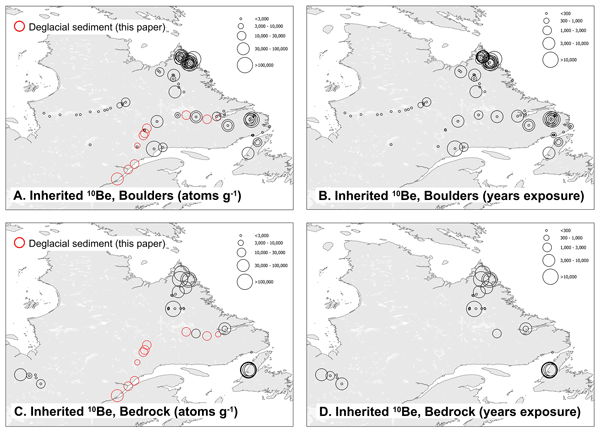
In situ cosmogenic 10Be and 26Al reveal the complex exposure and erosion history of the landscape once covered by the Quebec-Labrador Ice Dome
Peyton M. Cavnar, Paul R. Bierman, Jeremy D. Shakun, Lee B. Corbett, Danielle LeBlanc, Gillian L. Galford, Pierre-Olivier Couette, Jean-Francois Ghienne, Patrick Lajeunesse, Jérôme van der Woerd, and Marc Caffee
Geochronology, 8, 119–141, https://doi.org/10.5194/gchron-8-119-2026,https://doi.org/10.5194/gchron-8-119-2026, 2026
Short summary
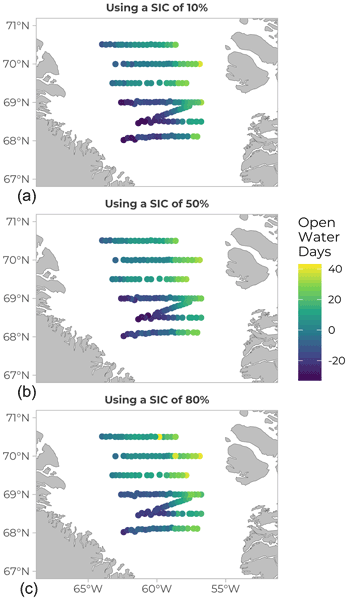
Assessing the contribution of extratropical cyclones to river floods that caused property damage in Quebec, Canada
Clarence Gagnon, Daniel F. Nadeau, Alejandro Di Luca, Benoit Brault, Romane Hamon, Nicolas L. Roy, Marc-André Bourgault, and François Anctil
EGUsphere, https://doi.org/10.5194/egusphere-2025-6192,https://doi.org/10.5194/egusphere-2025-6192, 2026
Short summary
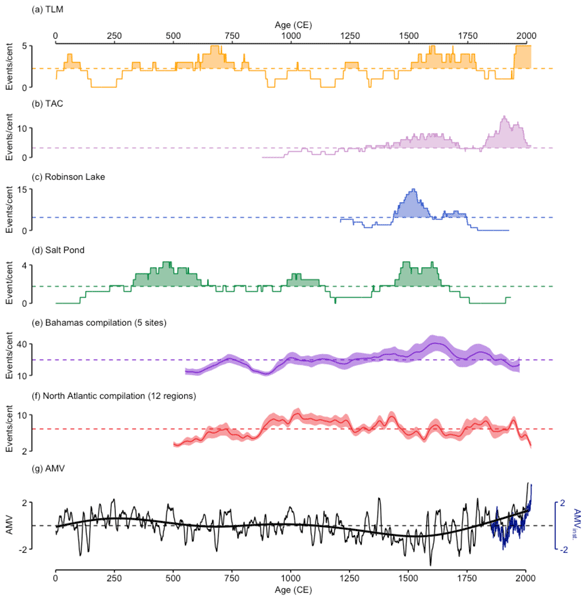
High-resolution paleo-storm reconstructions from Eastern Canada align with late Holocene northwestern Atlantic hurricane records
Antoine Lachance, Matthew C. Peros, Jeannine-Marie St-Jacques, Pierre Francus, and Nicole K. Sanderson
Clim. Past, 21, 2407–2439, https://doi.org/10.5194/cp-21-2407-2025,https://doi.org/10.5194/cp-21-2407-2025, 2025
Short summary
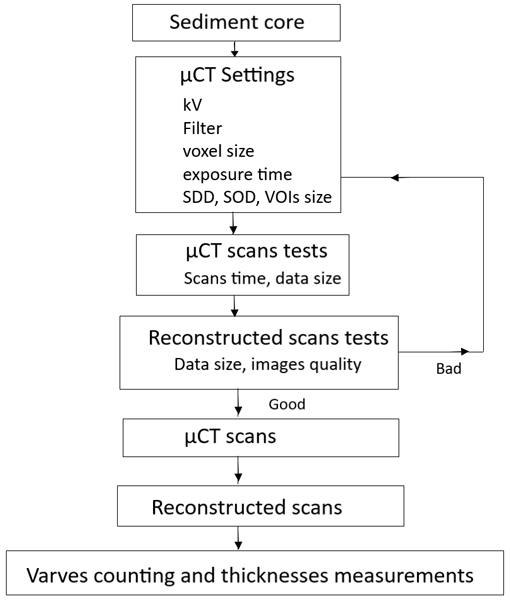
Measuring varve thickness using micro-computed tomography (µCT): a comparison with thin section
Marie-Eugénie Meusseunan Pascale Jamba, Pierre Francus, Antoine Gagnon-Poiré, and Guillaume St-Onge
Geochronology, 7, 83–111, https://doi.org/10.5194/gchron-7-83-2025,https://doi.org/10.5194/gchron-7-83-2025, 2025
Short summary

Cited articles

Banfield, C. E. and Jacobs, J. D.: Regional patterns of temperature and precipitation for Newfoundland and Labrador during the past century, Can. Geogr.–Geogr. Can., 42, 354–364, https://doi.org/10.1111/j.1541-0064.1998.tb01351.x, 1998. 
Blaauw, M.: Methods and code for “classical” age-modelling of radiocarbon sequences, Quat. Geochronol., 5, 512–518, https://doi.org/10.1016/j.quageo.2010.01.002, 2010. 
Bonsal, B. and Shabbar, A.: Impacts of Large-Scale Circulation Variability on Low Streamflows over Canada: A Review, Can. Water Resour. J., 33, 137–154, https://doi.org/10.4296/cwrj3302137, 2008. 
Bonsal, B. R., Peters, D. L., Seglenieks, F., Rivera, A., and Berg, A.: Changes in freshwater availability across Canada, Chap. 6 in Canada's Changing Climate Report, edited by: Bush, E. and Lemmen, D. S., Government of Canada, Ottawa, Ontario, 261–342, https://natural-resources.canada.ca/sites/www.nrcan.gc.ca/files/energy/Climate-change/pdf/CCCR-Chapter6-ChangesInFreshwaterAvailabilityAcrossCanada.pdf, 2019. 
Boucher, E., Nicault, A., Arseneault, D., Begin, Y., and Karami, M. P.: Decadal Variations in Eastern Canada's Taiga Wood Biomass Production Forced by Ocean-Atmosphere Interactions, Sci. Rep., 7, 2457, https://doi.org/10.1038/s41598-017-02580-9, 2017. 
Download
Short summary
A new 1500-year-long sediment record made of annual laminations (varves) from Grand Lake, Labrador, reveals past hydroclimatic conditions. The Medieval Climate Anomaly (~1050–1225 CE) had thicker varves indicating more precipitation, while the Little Ice Age (1400–1875 CE) had thinner varves, suggesting a dryer climate. Teleconnections show that Grand Lake is influenced by winter North Atlantic Oscillation (NAO), hence making this record a promising candidate for future NAO reconstructions.
Share