
Articles | Volume 22, issue 5
https://doi.org/10.5194/cp-22-975-2026
© Author(s) 2026. This work is distributed under
the Creative Commons Attribution 4.0 License.
the Creative Commons Attribution 4.0 License.
https://doi.org/10.5194/cp-22-975-2026
© Author(s) 2026. This work is distributed under
the Creative Commons Attribution 4.0 License.
the Creative Commons Attribution 4.0 License.
Research article
| Highlight paper
| 
12 May 2026
Research article | Highlight paper |
| 12 May 2026
| 12 May 2026
Climate change drove Late Miocene to Pliocene rise and fall of C4 vegetation at the crossroads of Africa and Eurasia (Anatolia, Türkiye)
Maud J. M. Meijers
CORRESPONDING AUTHOR
Department of Earth Sciences, NAWI Graz Geocenter, University of Graz, Heinrichstraße 26, 8010 Graz, Austria
Senckenberg Biodiversity and Climate Research Centre, Senckenberganlage 25, 60325 Frankfurt am Main, Germany
Tamás Mikes
Senckenberg Biodiversity and Climate Research Centre, Senckenberganlage 25, 60325 Frankfurt am Main, Germany
Independent geological consultant, Arnljot Gellines vei 35, 0657 Oslo, Norway
deceased
Bora Rojay
Department of Geological Engineering, Middle East Technical University, 06800 Çankaya, Ankara, Türkiye
H. Evren Çubukçu
Department of Geological Engineering, Hacettepe University, Beytepe Campus, 06800 Ankara, Türkiye
Erkan Aydar
Department of Geological Engineering, Hacettepe University, Beytepe Campus, 06800 Ankara, Türkiye
Laboratoire Magmas et Volcans, CNRS, IRD, OPGC, Université Clermont Auvergne, 63000 Clermont-Ferrand, France
Tina Lüdecke
Senckenberg Biodiversity and Climate Research Centre, Senckenberganlage 25, 60325 Frankfurt am Main, Germany
Emmy Noether Group for Hominin Meat Consumption, Max Planck Institute for Chemistry, Hahn-Meitner-Weg 1, 55128 Mainz, Germany
Andreas Mulch
Senckenberg Biodiversity and Climate Research Centre, Senckenberganlage 25, 60325 Frankfurt am Main, Germany
Institute of Geosciences, Goethe University Frankfurt, Altenhöferallee 1, 60438 Frankfurt am Main, Germany
Related authors
Armelle Ballian, Maud J. M. Meijers, Isabelle Cojan, Damien Huyghe, Miguel Bernecker, Katharina Methner, Mattia Tagliavento, Jens Fiebig, and Andreas Mulch
Clim. Past, 21, 841–856, https://doi.org/10.5194/cp-21-841-2025, https://doi.org/10.5194/cp-21-841-2025, 2025
Short summary
Short summary
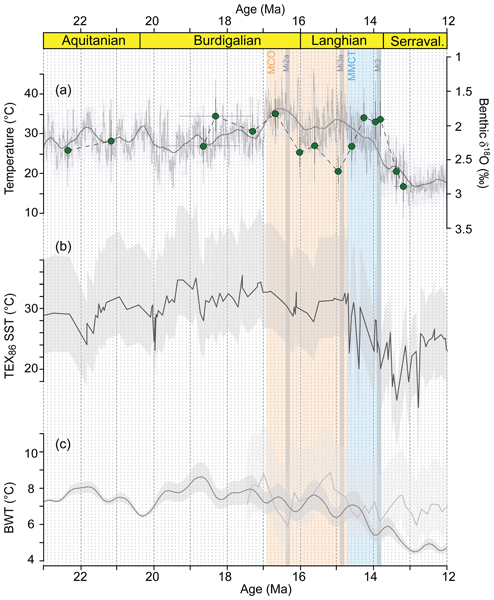
During the Middle Miocene, the Earth transitioned from a warm to a colder period, significantly impacting ecosystems and climate. We present a 23–13 Ma climate record of soil carbonates from a northern Mediterranean basin. We propose that rapid temperature shifts in our data result from changes in atmospheric circulation patterns. Our climate record aligns well with contemporaneous terrestrial European and global marine records, enhancing our understanding of Miocene climate dynamics.
Daniel Boateng, Sebastian G. Mutz, Armelle Ballian, Maud J. M. Meijers, Katharina Methner, Svetlana Botsyun, Andreas Mulch, and Todd A. Ehlers
Earth Syst. Dynam., 14, 1183–1210, https://doi.org/10.5194/esd-14-1183-2023, https://doi.org/10.5194/esd-14-1183-2023, 2023
Short summary
Short summary
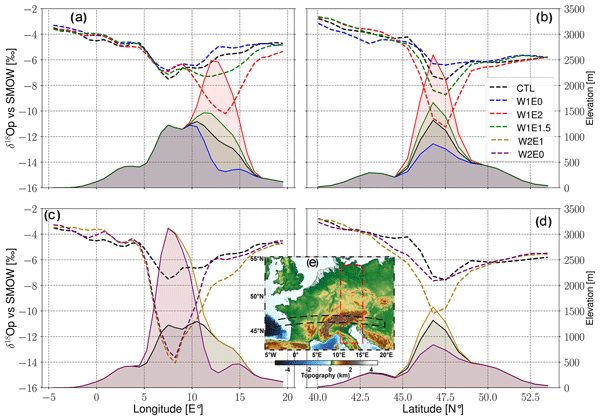
We present model-based topographic sensitivity experiments that provide valuable constraints for interpreting past proxies and records of climate and tectonic processes. The study uses a climate model to quantify the response of regional climate and oxygen isotopic composition of precipitation to diachronous surface uplift scenarios across the European Alps. The results suggest that isotopic signal changes can be measured in geologic archives using stable isotope paleoaltimetry.
Armelle Ballian, Maud J. M. Meijers, Isabelle Cojan, Damien Huyghe, Miguel Bernecker, Katharina Methner, Mattia Tagliavento, Jens Fiebig, and Andreas Mulch
Clim. Past, 21, 841–856, https://doi.org/10.5194/cp-21-841-2025, https://doi.org/10.5194/cp-21-841-2025, 2025
Short summary
Short summary
During the Middle Miocene, the Earth transitioned from a warm to a colder period, significantly impacting ecosystems and climate. We present a 23–13 Ma climate record of soil carbonates from a northern Mediterranean basin. We propose that rapid temperature shifts in our data result from changes in atmospheric circulation patterns. Our climate record aligns well with contemporaneous terrestrial European and global marine records, enhancing our understanding of Miocene climate dynamics.
Veronica Peverelli, Alfons Berger, Martin Wille, Thomas Pettke, Benita Putlitz, Andreas Mulch, Edwin Gnos, and Marco Herwegh
Eur. J. Mineral., 36, 879–898, https://doi.org/10.5194/ejm-36-879-2024, https://doi.org/10.5194/ejm-36-879-2024, 2024
Short summary
Short summary
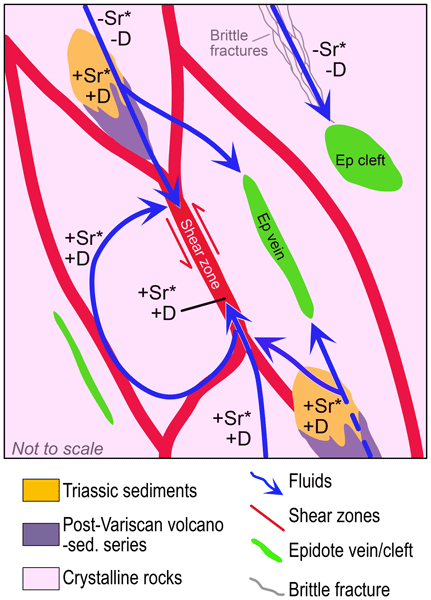
We used U–Pb dating and Pb–Sr–O–H isotopes of hydrothermal epidote to characterize fluid circulation in the Aar Massif (central Swiss Alps). Our data support the hypothesis that Permian fluids exploited syn-rift extensional faults. In the Miocene during the Alpine orogeny, fluid sources were meteoric, sedimentary, and/or metamorphic water. Likely, Miocene shear zones were exploited for fluid circulation, with implications for the Sr isotope budget of the granitoids.
Konstantina Agiadi, Iuliana Vasiliev, Geanina Butiseacă, George Kontakiotis, Danae Thivaiou, Evangelia Besiou, Stergios Zarkogiannis, Efterpi Koskeridou, Assimina Antonarakou, and Andreas Mulch
Biogeosciences, 21, 3869–3881, https://doi.org/10.5194/bg-21-3869-2024, https://doi.org/10.5194/bg-21-3869-2024, 2024
Short summary
Short summary
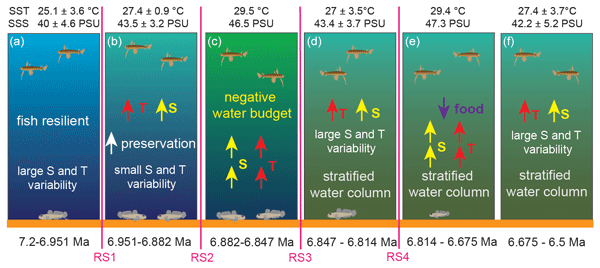
Seven million years ago, the marine gateway connecting the Mediterranean Sea with the Atlantic Ocean started to close, and, as a result, water circulation ceased. To find out how this phenomenon affected the fish living in the Mediterranean Sea, we examined the changes in the isotopic composition of otoliths of two common fish species. Although the species living at the surface fared pretty well, the bottom-water fish starved and eventually became extinct in the Mediterranean.
Daniel Boateng, Sebastian G. Mutz, Armelle Ballian, Maud J. M. Meijers, Katharina Methner, Svetlana Botsyun, Andreas Mulch, and Todd A. Ehlers
Earth Syst. Dynam., 14, 1183–1210, https://doi.org/10.5194/esd-14-1183-2023, https://doi.org/10.5194/esd-14-1183-2023, 2023
Short summary
Short summary
We present model-based topographic sensitivity experiments that provide valuable constraints for interpreting past proxies and records of climate and tectonic processes. The study uses a climate model to quantify the response of regional climate and oxygen isotopic composition of precipitation to diachronous surface uplift scenarios across the European Alps. The results suggest that isotopic signal changes can be measured in geologic archives using stable isotope paleoaltimetry.
Olaf Klaus Lenz, Mara Montag, Volker Wilde, Katharina Methner, Walter Riegel, and Andreas Mulch
Clim. Past, 18, 2231–2254, https://doi.org/10.5194/cp-18-2231-2022, https://doi.org/10.5194/cp-18-2231-2022, 2022
Short summary
Short summary
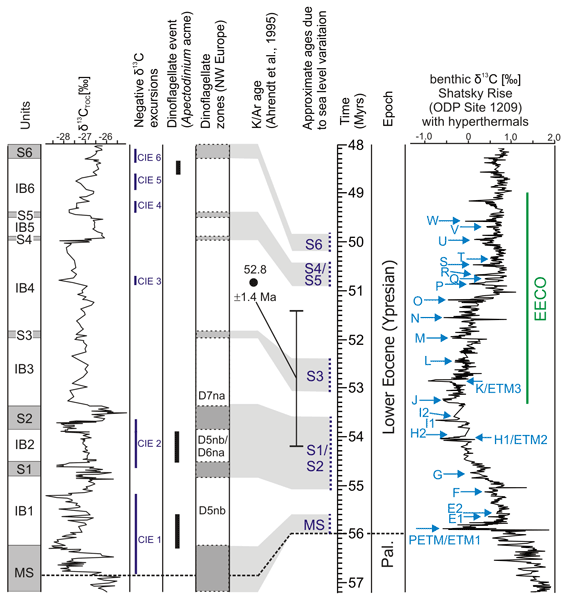
We describe different carbon isotope excursions (CIEs) in an upper Paleocene to lower Eocene lignite succession (Schöningen, DE). The combination with a new stratigraphic framework allows for a correlation of distinct CIEs with long- and short-term thermal events of the last natural greenhouse period on Earth. Furthermore, changes in the peat-forming wetland vegetation are correlated with a CIE that can be can be related to the Paleocene–Eocene Thermal Maximum (PETM).
Emilija Krsnik, Katharina Methner, Marion Campani, Svetlana Botsyun, Sebastian G. Mutz, Todd A. Ehlers, Oliver Kempf, Jens Fiebig, Fritz Schlunegger, and Andreas Mulch
Solid Earth, 12, 2615–2631, https://doi.org/10.5194/se-12-2615-2021, https://doi.org/10.5194/se-12-2615-2021, 2021
Short summary
Short summary
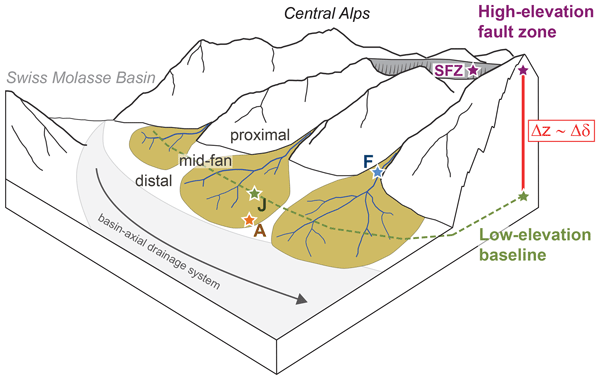
Here we present new surface elevation constraints for the middle Miocene Central Alps based on stable and clumped isotope geochemical analyses. Our reconstructed paleoelevation estimate is supported by isotope-enabled paleoclimate simulations and indicates that the Miocene Central Alps were characterized by a heterogeneous and spatially transient topography with high elevations locally exceeding 4000 m.
Cited articles
An, Z., Huang, Y., Liu, W., Guo, Z., Clemens, S., Li, L., Prell, W., Ning, Y., Cai, Y., Zhou, W., Lin, B., Zhang, Q., Cao, Y., Qiang, X., Chang, H., and Wu, Z.: Multiple expansions of C4 plant biomass in East Asia since 7 Ma coupled with strengthened monsoon circulation, Geology, 33, 705–708, https://doi.org/10.1130/G21423.1, 2005.
Aronson, J., Hailemichael, M., and Savin, S.: Hominid environments at Hadar from paleosol studies in a framework of Ethiopian climate change, J. Hum. Evol., 55, 532–550, https://doi.org/10.1016/j.jhevol.2008.04.004, 2008.
Aydar, E., Schmitt, A. K., Çubukçu, H. E., Akin, L., Ersoy, O., Sen, E., Duncan, R. A., and Atici, G.: Correlation of ignimbrites in the central Anatolian volcanic province using zircon and plagioclase ages and zircon compositions, J. Volcanol. Geoth. Res., 213–214, 83–97, https://doi.org/10.1016/j.jvolgeores.2011.11.005, 2012.
Badgley, C., Barry, J. C., Le, M., Morgan, E., Nelson, S. V, Behrensmeyer, A. K., Cerling, T. E., and Pilbeam, D.: Ecological changes in Miocene mammalian record show impact of prolonged climatic forcing, P. Natl. Acad. Sci. USA 105, 12145–12149, https://doi.org/10.1073/pnas.0805592105, 2008.
Behrensmeyer, A. K., Quade, J., Cerling, T. E., Kappelman, J., Khan, I. A., Copeland, P., Roe, L., Hicks, J., Stubblefield, P., Willis, B. J., and Latorre, C.: The structure and rate of late Miocene expansion of C4 plants: Evidence from lateral variation in stable isotopes in paleosols of the Siwalik Group, northern Pakistan, Bull. Geol. Soc. Am., 119, 1486–1505, https://doi.org/10.1130/B26064.1, 2007.
Bernor, R. L., Mirzaie Ataabadi, M., Meshida, K., and Wolf, D.: The Maragheh hipparions, late Miocene of Azarbaijan, Iran, Paleobiodivers. Paleoenviron., 96, 453–488, https://doi.org/10.1007/s12549-016-0235-2, 2016.
Bestland, E. A. and Krull, E. S.: Palaeoenvironments of Early Miocene Kisingiri volcano Proconsul sites: evidence from carbon isotopes, palaeosols and hydromagmatic deposits, J. Geol. Soc. London, 156, 965–976, https://doi.org/10.1144/gsjgs.156.5.0965, 1999.
Biasatti, D., Bernor, R. L., and Cooper, L. W.: Insights on Late Miocene climate change and regional uplift in Maragheh Basin, eastern Azerbaijan Province, northwest Iran revealed by stable carbon and oxygen isotope analyses of fossil horse tooth enamel, in: 75th Annual Meeting, Society of Vertebrate Paleontology, 89–89, 2015.
Böhme, M., Spassov, N., Ebner, M., Geraads, D., Hristova, L., Kirscher, U., Kötter, S., Linnemann, U., Prieto, J., Roussiakis, S., Theodorou, G., Uhlig, G., and Winklhofer, M.: Messinian age & savannah environment of the possible hominin Graecopithecus from Europe, PLoS One, 12, https://doi.org/10.1371/journal.pone.0177347, 2017.
Böhme, M., Spassov, N., Majidifard, M. R., Gärtner, A., Kirscher, U., Marks, M., Dietzel, C., Uhlig, G., El Atfy, H., Begun, D. R., and Winklhofer, M.: Neogene hyperaridity in Arabia drove the directions of mammalian dispersal between Africa and Eurasia, Commun. Earth Environ., 2, 85, https://doi.org/10.1038/s43247-021-00158-y, 2021.
Brocard, G. Y., Meijers, M. J. M., Cosca, M. A., Salles, T., Willenbring, J., Teyssier, C., and Whitney, D. L.: Fast Pliocene integration of the Central Anatolian Plateau drainage: Evidence, processes, and driving forces, Geosphere, 17, 739–765, https://doi.org/10.1130/GES02247.1, 2021.
Butiseacă, G. A., van der Meer, M. T. J., Kontakiotis, G., Agiadi, K., Thivaiou, D., Besiou, E., Antonarakou, A., Mulch, A., and Vasiliev, I.: Multiple crises preceded the Mediterranean Salinity Crisis: Aridification and vegetation changes revealed by biomarkers and stable isotopes, Glob. Planet Change, 217, https://doi.org/10.1016/j.gloplacha.2022.103951, 2022.
Caves, J. K., Moragne, D. Y., Ibarra, D. E., Bayshashov, B. U., Gao, Y., Jones, M. M., Zhamangara, A., Arzhannikova, A. V., Arzhannikov, S. G., and Chamberlain, C. P.: The Neogene de-greening of Central Asia, Geology, 44, 887–890, https://doi.org/10.1130/G38267.1, 2016.
Cerling, T. E.: The stable isotopic composition of modern soil carbonate and its relationship to climate, Earth Planet Sc. Lett., 71, 229–240, https://doi.org/10.1016/0012-821X(84)90089-X, 1984.
Cerling, T. E. and Hay, R. L.: An Isotopic Study of Paleosol Carbonates from Olduvai Gorge, Quat. Res., 25, 63–78, https://doi.org/10.1016/0033-5894(86)90044-X, 1986.
Cerling, T. E. and Quade, J.: Stable Carbon and Oxygen Isotopes in Soil Carbonates, Geophysical. Monograph., 78, 217–231, https://doi.org/10.1029/GM078p0217, 1993.
Cerling, T. E., Bowman, J. R., and O'Neil, J. R.: An isotopic study of a fluvial-lacustrine sequence: The Plio-Pleistocene koobi fora sequence, East Africa, Palaeogeogr. Palaeoclimatol. Palaeoecol., 63, 335–356, https://doi.org/10.1016/0031-0182(88)90104-6, 1988.
Cerling, T. E., Quade, J., Ambrose, S. H., and Sikes, N. E.: Fossil soils, grasses, and carbon isotopes from Fort Ternan, Kenya: grassland or woodland?, J. Hum. Evol., 21, 295–306, https://doi.org/10.1016/0047-2484(91)90110-H, 1991.
Cerling, T. E., Harris, J. M., MacFadden, B. J., Leakey, M. G., Quadek, J., Eisenmann, V., and Ehleringer, J. R.: Global vegetation change through the Miocene/Pliocene boundary, Nature, 389, 153–158, https://doi.org/10.1038/38229, 1997.
Cerling, T. E., Harris, J. M., and Leakey, M. G.: 12.2. Isotope Paleoecology of the Nawata and Nachukui Formations at Lothagam, Turkana Basin, Kenya, in: Lothagam, Columbia University Press, 605–624, https://doi.org/10.7312/leak11870-024, 2003.
Cerling, T. E., Wynn, J. G., Andanje, S. A., Bird, M. I., Korir, D. K., Levin, N. E., Mace, W., Macharia, A. N., Quade, J., and Remien, C. H.: Woody cover and hominin environments in the past 6 million years, Nature, 476, 51–56, https://doi.org/10.1038/nature10306, 2011.
Crocker, A. J., Naafs, B. D. A., Westerhold, T., James, R. H., Cooper, M. J., Röhl, U., Pancost, R. D., Xuan, C., Osborne, C. P., Beerling, D. J., and Wilson, P. A.: Astronomically controlled aridity in the Sahara since at least 11 million years ago, Nat. Geosci., 15, 671–676, https://doi.org/10.1038/s41561-022-00990-7, 2022.
Denk, T., Güner, T. H., and Grimm, G. W.: From mesic to arid: Leaf epidermal features suggest preadaptation in Miocene dragon trees (Dracaena), Rev. Palaeobot. Palynol., 200, 211–228, https://doi.org/10.1016/j.revpalbo.2013.09.009, 2014.
Denk, T., Zohner, C. M., Grimm, G. W., and Renner, S. S.: Plant fossils reveal major biomes occupied by the late Miocene Old-World Pikermian fauna, Nat. Ecol. Evol., 2, 1864–1870, https://doi.org/10.1038/s41559-018-0695-z, 2018.
Ding, Z. L. and Yang, S. L.: C3/C4 vegetation evolution over the last 7.0 Myr in the Chinese Loess Plateau: evidence from pedogenic carbonate δ13C, Palaeogeogr. Palaeoclimatol. Palaeoecol., 160, 291–299, https://doi.org/10.1016/S0031-0182(00)00076-6, 2000.
Edwards, E. J., Osborne, C. P., Strömberg, C. A. E., Smith, S. A., Bond, W. J., Christin, P. A., Cousins, A. B., Duvall, M. R., Fox, D. L., Freckleton, R. P., Ghannoum, O., Hartwell, J., Huang, Y., Janis, C. M., Keeley, J. E., Kellogg, E. A., Knapp, A. K., Leakey, A. D. B., Nelson, D. M., Saarela, J. M., Sage, R. F., Sala, O. E., Salamin, N., Still, C. J., and Tipple, B.: The origins of C4 Grasslands: Integrating evolutionary and ecosystem science, Science, 328, 587–591, https://doi.org/10.1126/science.1177216, 2010.
Eronen, J. T., Ataabadi, M. M., Micheels, A., Karme, A., Bernor, R. L., and Fortelius, M.: Distribution history and climatic controls of the Late Miocene Pikermian chronofauna, P. Natl. Acad. Sci. USA, 106, 11867–11871, https://doi.org/10.1073/pnas.0902598106, 2009.
Feakins, S. J., Levin, N. E., Liddy, H. M., Sieracki, A., Eglinton, T. I., and Bonnefille, R.: Northeast african vegetation change over 12 m.y, Geology, 41, 295–298, https://doi.org/10.1130/G33845.1, 2013.
Feurdean, A. and Vasiliev, I.: The contribution of fire to the late Miocene spread of grasslands in eastern Eurasia (Black Sea region), Sci. Rep., 9, https://doi.org/10.1038/s41598-019-43094-w, 2019.
Fortelius, M., Bibi, F., Tang, H., Žliobaitė, I., Eronen, J. T., and Kaya, F.: The nature of the Old World savannah palaeobiome, Nat. Ecol. Evol., 3, 504, https://doi.org/10.1038/s41559-019-0857-7, 2019.
Fox, D. L., Pau, S., Taylor, L., Strömberg, C. A. E., Osborne, C. P., Bradshaw, C., Conn, S., Beerling, D. J., and Still, C. J.: Climatic Controls on C4 Grassland Distributions During the Neogene: A Model-Data Comparison, Front. Ecol. Evol., 6, https://doi.org/10.3389/fevo.2018.00147, 2018.
Ghosh, P., Padia, J. T., and Mohindra, R.: Stable isotopic studies of palaeosol sediment from Upper Siwalik of Himachal Himalaya: Evidence for high monsoonal intensity during late Miocene?, Palaeogeogr. Palaeoclimatol. Palaeoecol., 206, 103–114, https://doi.org/10.1016/j.palaeo.2004.01.014, 2004.
Haug, G. H. and Tiedemann, R.: Effect of the formation of the Isthmus of Panama on Atlantic Ocean thermohaline circulation, Nature, 393, 673–676, https://doi.org/10.1038/31447, 1998.
Herbert, T. D., Lawrence, K. T., Tzanova, A., Peterson, L. C., Caballero-Gill, R., and Kelly, C. S.: Late Miocene global cooling and the rise of modern ecosystems, Nat. Geosci., 9, 843–847, https://doi.org/10.1038/ngeo2813, 2016.
Holbourn, A. E., Kuhnt, W., Clemens, S. C., Kochhann, K. G. D., Jöhnck, J., Lübbers, J., and Andersen, N.: Late Miocene climate cooling and intensification of southeast Asian winter monsoon, Nat. Commun., 9, 1584, https://doi.org/10.1038/s41467-018-03950-1, 2018.
Huang, S., Meijers, M. J. M., Eyres, A., Mulch, A., and Fritz, S. A.: Unravelling the history of biodiversity in mountain ranges through integrating geology and biogeography, J. Biogeogr., 46, 1777–1791, https://doi.org/10.1111/jbi.13622, 2019.
Huang, Y., Clemens, S. C., Liu, W., Wang, Y., and Prell, W. L.: Large-scale hydrological change drove the late Miocene C4 plant expansion in the Himalayan foreland and Arabian Peninsula, Geology, 35, 531, https://doi.org/10.1130/G23666A.1, 2007.
Kaakinen, A., Sonninen, E., and Lunkka, J. P.: Stable isotope record in paleosol carbonates from the Chinese Loess Plateau: Implications for late Neogene paleoclimate and paleovegetation, Palaeogeogr. Palaeoclimatol. Palaeoecol., 237, 359–369, https://doi.org/10.1016/j.palaeo.2005.12.011, 2006.
Karas, C., Nürnberg, D., Bahr, A., Groeneveld, J., Herrle, J. O., Tiedemann, R., and Demenocal, P. B.: Pliocene oceanic seaways and global climate, Sci. Rep., 7, https://doi.org/10.1038/srep39842, 2017.
Kaya, F., Bibi, F., Žliobaite, I., Eronen, J. T., Hui, T., and Fortelius, M.: The rise and fall of the Old World savannah fauna and the origins of the African savannah biome, Nat. Ecol. Evol., 2, 241–246, https://doi.org/10.1038/s41559-017-0414-1, 2018.
Kayseri-Özer, M. S.: Cenozoic vegetation and climate change in Anatolia – A study based on the IPR-vegetation analysis, Palaeogeogr. Palaeoclimatol. Palaeoecol., 467, 37–68, https://doi.org/10.1016/j.palaeo.2016.10.001, 2017.
Kayseri-Özer, M. S., Karadenizli, L., Akgün, F., Oyal, N., Saraç, G., Şen, Ş., Tunoğlu, C., and Tuncer, A.: Palaeoclimatic and palaeoenvironmental interpretations of the Late Oligocene, Late Miocene–Early Pliocene in the Çankırı-Çorum Basin, Palaeogeogr. Palaeoclimatol. Palaeoecol., 467, 16–36, https://doi.org/10.1016/j.palaeo.2016.05.022, 2017.
Kingston, J.: Stable isotopic evidence for hominid paleoenvironments in East Africa, PhD thesis, Harvard University, 1–162, ISBN 9798641957470, 1992.
Knapp, A. K., Chen, A., Griffin-Nolan, R. J., Baur, L. E., Carroll, C. J. W., Gray, J. E., Hoffman, A. M., Li, X., Post, A. K., Slette, I. J., Collins, S. L., Luo, Y., and Smith, M. D.: Resolving the Dust Bowl paradox of grassland responses to extreme drought, P. Natl. Acad. Sci. USA, 117, 22249–22255, https://doi.org/10.1073/pnas.1922030117, 2020.
Kohn, M. J.: Carbon isotope compositions of terrestrial C3 plants as indicators of (paleo)ecology and (paleo)climate, Proceedings of the National Academy of Sciences, 107, 19691–19695, https://doi.org/10.1073/pnas.1004933107, 2010.
Kovar-Eder, J.: Vegetation dynamics in Europe during the Neogene, in: Distribution and Migration of Tertiary Mammals in Eurasia. A volume in Honour of Hans de Bruijn, edited by: Reumer, J. W. F. and Wessels, W., DEINSEA, Rotterdam, 373–392, ISSN: 0923-9308, 2003.
Lepetit, P.: Kohlenstoff-Isotopie miozäner Calcretes in Kappadokien (Türkei), PhD thesis, Friedrich-Schiller-Universität Jena, Jena, 1–218, https://www.db-thueringen.de/receive/dbt_mods_00017261 (last access: 29 April 2026), 2010.
Levin, N. E., Quade, J., Simpson, S. W., Semaw, S., and Rogers, M.: Isotopic evidence for Plio–Pleistocene environmental change at Gona, Ethiopia, Earth Planet Sci. Lett., 219, 93–110, https://doi.org/10.1016/S0012-821X(03)00707-6, 2004.
Levin, N. E., Brown, F. H., Behrensmeyer, A. K., Bobe, R., and Cerling, T. E.: Paleosol carbonates from the Omo Group: Isotopic records of local and regional environmental change in East Africa, Palaeogeogr. Palaeoclimatol. Palaeoecol., 307, 75–89, https://doi.org/10.1016/j.palaeo.2011.04.026, 2011.
Licht, A., Dupont-Nivet, G., Meijer, N., Caves Rugenstein, J., Schauer, A., Fiebig, J., Mulch, A., Hoorn, C., Barbolini, N., and Guo, Z.: Decline of soil respiration in northeastern Tibet through the transition into the Oligocene icehouse, Palaeogeogr. Palaeoclimatol. Palaeoecol., 560, https://doi.org/10.1016/j.palaeo.2020.110016, 2020.
Lüdecke, T., Schrenk, F., Thiemeyer, H., Kullmer, O., Bromage, T. G., Sandrock, O., Fiebig, J., and Mulch, A.: Persistent C3 vegetation accompanied Plio-Pleistocene hominin evolution in the Malawi Rift (Chiwondo Beds, Malawi), J. Hum. Evol., 90, 163–175, https://doi.org/10.1016/j.jhevol.2015.10.014, 2016.
Mayser, J. P., Flecker, R., Marzocchi, A., Kouwenhoven, T. J., Lunt, D. J., and Pancost, R. D.: Precession driven changes in terrestrial organic matter input to the Eastern Mediterranean leading up to the Messinian Salinity Crisis, Earth Planet Sci. Lett., 462, 199–211, https://doi.org/10.1016/j.epsl.2017.01.029, 2017.
Meijers, M. J. M., Brocard, G. Y., Cosca, M. A., Lüdecke, T., Teyssier, C., Whitney, D. L., and Mulch, A.: Rapid late Miocene surface uplift of the Central Anatolian Plateau margin, Earth Planet Sci. Lett., 497, 29–41, https://doi.org/10.1016/j.epsl.2018.05.040, 2018.
Meijers, M. J. M., Brocard, G. Y., Whitney, D. L., and Mulch, A.: Paleoenvironmental conditions and drainage evolution of the central Anatolian lake system (Turkey) during Late Miocene to Pliocene surface uplift, Geosphere, 16, 490–509, https://doi.org/10.1130/GES02135.1, 2020.
Meijers, M. J. M., Mikes, T., Rojay, B., Aydar, E., Çubukçu, H. E., Wagner, T., Lüdecke, T., Krsnik, E., Fiebig, J., and Mulch, A.: Miocene decoupling of surface uplift of the Central Anatolian Plateau interior (Türkiye) and its modern mountainous margins, Earth Planet. Sci. Lett., 663, 119414, https://doi.org/10.1016/j.epsl.2025.119414, 2025.
Mosbrugger, V. and Utescher, T.: The coexistence approach – a method for quantitative reconstructions of Tertiary terrestrial palaeoclimate data using plant fossils, Palaeogeogr. Palaeoclimatol. Palaeoecol., 134, 61–86, https://doi.org/10.1016/S0031-0182(96)00154-X, 1997.
Mosbrugger, V., Utescher, T., and Dilcher, D. L.: Cenozoic continental climatic evolution of Central Europe, P. Natl. Acad. Sci. USA, 102, 14964–14969, https://doi.org/10.1073/pnas.0505267102, 2005.
Özsayin, E., Çiner, T. A., Rojay, F. B., Dirik, R. K., Melnick, D., Fernandez-Blanco, D., Bertotti, G., Schildgen, T. F., Garcin, Y., Strecker, M. R., and Sudo, M.: Plio-Quaternary extensional tectonics of the Central Anatolian Plateau: a case study from the Tuz Gölü Basin, Turkey, Turk. J. Earth Sci., https://doi.org/10.3906/yer-1210-5, 2013.
Passey, B. H., Ayliffe, L. K., Kaakinen, A., Zhang, Z., Eronen, J. T., Zhu, Y., Zhou, L., Cerling, T. E., and Fortelius, M.: Strengthened East Asian summer monsoons during a period of high-latitude warmth? Isotopic evidence from Mio-Pliocene fossil mammals and soil carbonates from northern China, Earth Planet Sci. Lett., 277, 443–452, https://doi.org/10.1016/j.epsl.2008.11.008, 2009.
Peppe, D. J., Cote, S. M., Deino, A. L., Fox, D. L., Kingston, J. D., Kinyanjui, R. N., Lukens, W. E., MacLatchy, L. M., Novello, A., Strömberg, C. A. E., Driese, S. G., Garrett, N. D., Hillis, K. R., Jacobs, B. F., Jenkins, K. E. H., Kityo, R. M., Lehmann, T., Manthi, F. K., Mbua, E. N., Michel, L. A., Miller, E. R., Mugume, A. A. T., Muteti, S. N., Nengo, I. O., Oginga, K. O., Phelps, S. R., Polissar, P., Rossie, J. B., Stevens, N. J., Uno, K. T., and McNulty, K. P.: Oldest evidence of abundant C4 grasses and habitat heterogeneity in eastern Africa, Science, 380, 173–177, https://doi.org/10.1126/science.abq2834, 2023.
Plummer, T., Bishop, L. C., Ditchfield, P., and Hicks, J.: Research on Late Pliocene Oldowan Sites at Kanjera South, Kenya, J. Hum. Evol., 36, 151–170, https://doi.org/10.1006/jhev.1998.0256, 1999.
Plummer, T. W., Ditchfield, P. W., Bishop, L. C., Kingston, J. D., Ferraro, J. V., Braun, D. R., Hertel, F., and Potts, R.: Oldest Evidence of Toolmaking Hominins in a Grassland-Dominated Ecosystem, PLoS One, 4, e7199, https://doi.org/10.1371/journal.pone.0007199, 2009.
Polissar, P. J., Rose, C., Uno, K. T., Phelps, S. R., and deMenocal, P.: Synchronous rise of African C4 ecosystems 10 million years ago in the absence of aridification, Nat. Geosci., 12, 657–660, https://doi.org/10.1038/s41561-019-0399-2, 2019.
Quade, J. and Cerling, T. E.: Expansion of C4 grasses in the Late Miocene of Northern Pakistan: evidence from stable isotopes in paleosols, Palaeogeogr. Palaeoclimatol. Palaeoecol., 115, 91–116, https://doi.org/10.1016/0031-0182(94)00108-K, 1995.
Quade, J., Solounias, N., and Cerling, T. E.: Stable isotopic evidence from paleosol carbonates and fossil teeth in Greece for forest or woodlands over the past 11 Ma, Palaeogeogr. Palaeoclimatol. Palaeoecol., 108, 41–53, https://doi.org/10.1016/0031-0182(94)90021-3, 1994.
Quade, J., Levin, N., Semaw, S., Stout, D., Renne, P., Rogers, M., and Simpson, S.: Paleoenvironments of the earliest stone toolmakers, Gona, Ethiopia, Geol. Soc. Am. Bull., 116, 1529–1544, https://doi.org/10.1130/B25358.1, 2004.
Quan, C., Liu, Y. S. C., Tang, H., and Utescher, T.: Miocene shift of European atmospheric circulation from trade wind to westerlies, Sci. Rep., 4, https://doi.org/10.1038/srep05660, 2014.
Quinn, R. L., Lepre, C. J., Wright, J. D., and Feibel, C. S.: Paleogeographic variations of pedogenic carbonate δ13C values from Koobi Fora, Kenya: implications for floral compositions of Plio-Pleistocene hominin environments, J. Hum. Evol., 53, 560–573, https://doi.org/10.1016/j.jhevol.2007.01.013, 2007.
Rey, K., Amiot, R., Lécuyer, C., Koufos, G. D., Martineau, F., Fourel, F., Kostopoulos, D. S., and Merceron, G.: Late Miocene climatic and environmental variations in northern Greece inferred from stable isotope compositions (δ18O, δ13C) of equid teeth apatite, Palaeogeogr. Palaeoclimatol. Palaeoecol., 388, 48–57, https://doi.org/10.1016/j.palaeo.2013.07.021, 2013.
Roveri, M., Flecker, R., Krijgsman, W., Lofi, J., Lugli, S., Manzi, V., Sierro, F. J., Bertini, A., Camerlenghi, A., De Lange, G., Govers, R., Hilgen, F. J., Hübscher, C., Meijer, P. T., and Stoica, M.: The Messinian Salinity Crisis: Past and future of a great challenge for marine sciences, Mar. Geol., 352, 25–58, https://doi.org/10.1016/j.margeo.2014.02.002, 2014.
Sage, R. F.: The evolution of C4 photosynthesis, New Phytol., 161, 341–370, https://doi.org/10.1111/j.1469-8137.2004.00974.x, 2004.
Sahnouni, M., Van der Made, J., and Everett, M.: Ecological background to Plio-Pleistocene hominin occupation in North Africa: the vertebrate faunas from Ain Boucherit, Ain Hanech and El-Kherba, and paleosol stable-carbon-isotope studies from El-Kherba, Algeria, Quat. Sci. Rev., 30, 1303–1317, https://doi.org/10.1016/j.quascirev.2010.01.002, 2011.
Sanyal, P., Bhattacharya, S. K., Kumar, R., Ghosh, S. K., and Sangode, S. J.: Mio-Pliocene monsoonal record from Himalayan foreland basin (Indian Siwalik) and its relation to vegetational change, Palaeogeogr. Palaeoclimatol. Palaeoecol., 205, 23–41, https://doi.org/10.1016/j.palaeo.2003.11.013, 2004.
Schemmel, F., Mikes, T., Rojay, B., and Mulch, A.: The impact of topography on isotopes in precipitation across the central Anatolian plateau (Turkey), Am. J. Sci., 313, 61–80, https://doi.org/10.2475/02.2013.01, 2013.
Sikes, N. E.: Early hominid habitat preferences in East Africa: Paleosol carbon isotopic evidence, J. Hum. Evol., 27, 25–45, https://doi.org/10.1006/jhev.1994.1034, 1994.
Sikes, N. E. and Ashley, G. M.: Stable isotopes of pedogenic carbonates as indicators of paleoecology in the Plio-Pleistocene (upper Bed I), western margin of the Olduvai Basin, Tanzania, J. Hum. Evol., 53, 574–594, https://doi.org/10.1016/j.jhevol.2006.12.008, 2007.
Sikes, N. E., Potts, R., and Behrensmeyer, A. K.: Early Pleistocene habitat in Member 1 Olorgesailie based on paleosol stable isotopes, J. Hum. Evol., 37, 721–746, https://doi.org/10.1006/jhev.1999.0343, 1999.
Spötl, C. and Vennemann, T. W.: Continuous-flow isotope ratio mass spectrometric analysis of carbonate minerals, Rapid Commun. Mass Sp., 17, 1004–1006, https://doi.org/10.1002/rcm.1010, 2003.
Still, C. J., Berry, J. A., Collatz, G. J., and DeFries, R. S.: Global distribution of C3 and C4 vegetation: Carbon cycle implications, Global Biogeochem. Cycles, 17, https://doi.org/10.1029/2001gb001807, 2003.
Strömberg, C. A. E.: Evolution of grasses and grassland ecosystems, Annu. Rev. Earth Planet Sci., 39, 517–544, https://doi.org/10.1146/annurev-earth-040809-152402, 2011.
Strömberg, C. A. E., Werdelin, L., Friis, E. M., and Saraç, G.: The spread of grass-dominated habitats in Turkey and surrounding areas during the Cenozoic: Phytolith evidence, Palaeogeogr. Palaeoclimatol. Palaeoecol., 250, 18–49, https://doi.org/10.1016/j.palaeo.2007.02.012, 2007.
Tauxe, L. and Feakins, S. J.: A Reassessment of the Chronostratigraphy of Late Miocene C3–C4 Transitions, Palaeogeogr. Palaeoclimatol., 35, https://doi.org/10.1029/2020PA003857, 2020.
Tipple, B. J. and Pagani, M.: The early origins of terrestrial C4 photosynthesis, Annu. Rev. Earth Planet Sci., 35, 435–461, https://doi.org/10.1146/annurev.earth.35.031306.140150, 2007.
Türkeş, M. and Erlat, E.: Climatological responses of winter precipitation in Turkey to variability of the North Atlantic Oscillation during the period 1930–2001, Theor. Appl. Climatol., 81, 45–69, https://doi.org/10.1007/s00704-004-0084-1, 2005.
Ulu, Ü.: 1 : 500 000 Geological Map of Turkey (Adana), General Directorate of Mining Research and Exploration (MTA), 2002
Uno, K. T., Cerling, T. E., Harris, J. M., Kunimatsu, Y., Leakey, M. G., Nakatsukasa, M., and Nakaya, H.: Late Miocene to Pliocene carbon isotope record of differential diet change among East African herbivores, P. Natl. Acad. Sci. USA, 108, 6509–6514, https://doi.org/10.1073/pnas.1018435108, 2011.
Urban, M. A., Nelson, D. M., Jimenez-Moreno, G., Chateauneuf, J.-J., Pearson, A., and Hu, F. S.: Isotopic evidence of C4 grasses in southwestern Europe during the Early Oligocene-Middle Miocene, Geology, 38, 1091–1094, https://doi.org/10.1130/G31117.1, 2010.
Velitzelos, D., Bouchal, J. M., and Denk, T.: Review of the Cenozoic floras and vegetation of Greece, Rev. Palaeobot. Palyno., 204, 56–117, https://doi.org/10.1016/j.revpalbo.2014.02.006, 2014.
Wen, Y., Zhang, L., Holbourn, A. E., Zhu, C., Huntington, K. W., Jin, T., Li, Y., and Wang, C.: CO2-forced Late Miocene cooling and ecosystem reorganizations in East Asia, P. Natl. Acad. Sci. USA, 120, https://doi.org/10.1073/pnas.2214655120, 2023.
Westerhold, T., Marwan, N., Drury, A. J., Liebrand, D., Agnini, C., Anagnostou, E., Barnet, J. S. K., Bohaty, S. M., De Vleeschouwer, D., Florindo, F., Frederichs, T., Hodell, D. A., Holbourn, A. E., Kroon, D., Lauretano, V., Littler, K., Lourens, L. J., Lyle, M., Pälike, H., Röhl, U., Tian, J., Wilkens, R. H., Wilson, P. A., and Zachos, J. C.: An astronomically dated record of Earth's climate and its predictability over the last 66 million years, Science, 369, 1383–1387, https://doi.org/10.1126/science.aba6853, 2020.
WoldeGabriel, G., Ambrose, S. H., Barboni, D., Bonnefille, R., Bremond, L., Currie, B., DeGusta, D., Hart, W. K., Murray, A. M., Renne, P. R., Jolly-Saad, M. C., Stewart, K. M., and White, T. D.: The Geological, Isotopic, Botanical, Invertebrate, and Lower Vertebrate Surroundings of Ardipithecus ramidus, Science, 326, 65, https://doi.org/10.1126/science.1175817, 2009.
Wynn, J. G.: Paleosols, stable carbon isotopes, and paleoenvironmental interpretation of Kanapoi, Northern Kenya, J. Hum. Evol., 39, 411–432, https://doi.org/10.1006/jhev.2000.0431, 2000.
Wynn, J. G.: Influence of Plio-Pleistocene aridification on human evolution: Evidence from paleosols of the Turkana Basin, Kenya, Am. J. Phys. Anthropol., 123, 106–118, https://doi.org/10.1002/ajpa.10317, 2004.
Wynn, J. G., Alemseged, Z., Bobe, R., Geraads, D., Reed, D., and Roman, D. C.: Geological and palaeontological context of a Pliocene juvenile hominin at Dikika, Ethiopia, Nature, 443, 332–336, https://doi.org/10.1038/nature05048, 2006.
Yao, Z., Xiao, G., Wu, H., Liu, W., and Chen, Y.: Plio-Pleistocene vegetation changes in the North China Plain: Magnetostratigraphy, oxygen and carbon isotopic composition of pedogenic carbonates, Palaeogeogr. Palaeoclimatol. Palaeoecol., 297, 502–510, https://doi.org/10.1016/j.palaeo.2010.09.003, 2010.
Zamanian, K., Pustovoytov, K., and Kuzyakov, Y.: Pedogenic carbonates: Forms and formation processes, Earth-Sci. Rev., 157, 1–17, https://doi.org/10.1016/j.earscirev.2016.03.003, 2016.
Zhuang, G., Hourigan, J. K., Koch, P. L., Ritts, B. D., and Kent-Corson, M. L.: Isotopic constraints on intensified aridity in Central Asia around 12Ma, Earth Planet Sci. Lett., 312, 152–163, https://doi.org/10.1016/j.epsl.2011.10.005, 2011.
Editorial statement
The goal of the paper presented by M. Meijers et al. is to present a new, large data set of stable carbon isotope analyses performed on carbonates from late Miocene to Holocene sites in Anatolia. By combining their analyses with previously published carbonate d13C data, as well as published paleoclimate estimates from the region, the authors demonstrate secular changes and restructuring of paleofloral communities since ~10 Ma. Despite being a hotspot of projected anthropogenic climatic change, the evolutionary and climatic processes that shaped terrestrial ecosystems in the northeastern Mediterranean over the last 10 million years remain largely elusive. Whereas the expansion of C4 grasslands is well documented in regions such as eastern Africa and southern Asia, the dynamics in western Eurasia remain poorly understood. This gap in knowledge is critical for our understanding of how terrestrial ecosystems respond to large climatic shifts over geological timescales. In this manuscript, we present the first comprehensive stable carbon isotope record of pedogenic carbonates from Anatolia (Türkiye), spanning the last ten million years. Our results reveal that C4 grasslands in this region emerged during Late Miocene Global Cooling, simultaneously with southern Asian localities. Our study offers a unique perspective on a striking and largely unexpected feature: the permanent return to C3-dominated vegetation during the Early Pliocene – a phenomenon not observed elsewhere. We propose that this reversal to C3 vegetation was driven by regional hydroclimatic changes, in particular by a transition in rainfall seasonality, from a summer-dominated precipitation regime to a Mediterranean-style winter precipitation regime.
The goal of the paper presented by M. Meijers et al. is to present a new, large data set of...
Short summary
We present a new stable carbon isotope dataset from Anatolian Late Miocene to Holocene soil carbonates, which reveals that C4 grasslands emerged during Late Miocene Cooling. Uniquely, Anatolia saw a persistent return to C3 vegetation in the Early Pliocene, which impacted mammal populations. We link the return to C3 vegetation to changes in rainfall seasonality, thereby tying ecosystem responses to climatic shifts in a hotspot of projected anthropogenic climatic change.
We present a new stable carbon isotope dataset from Anatolian Late Miocene to Holocene soil...


