
Articles | Volume 22, issue 3
https://doi.org/10.5194/cp-22-709-2026
© Author(s) 2026. This work is distributed under
the Creative Commons Attribution 4.0 License.
the Creative Commons Attribution 4.0 License.
https://doi.org/10.5194/cp-22-709-2026
© Author(s) 2026. This work is distributed under
the Creative Commons Attribution 4.0 License.
the Creative Commons Attribution 4.0 License.
Research article
| 
31 Mar 2026
Research article |
| 31 Mar 2026
| 31 Mar 2026
Silicate weathering in the semi-arid Southern Pyrenees during the PETM: lithium isotope evidence
Rocio Jaimes-Gutierrez
CORRESPONDING AUTHOR

Department of Earth Sciences, University of Geneva, Rue des Maraîchers 13, 1205, Geneva, Switzerland
Marine Prieur
Department of Earth Sciences, University of Geneva, Rue des Maraîchers 13, 1205, Geneva, Switzerland
David J. Wilson
London Geochemistry and Isotope Centre (LOGIC), Institute of Earth and Planetary Sciences, University College London and Birkbeck, University of London, Gower Street, London WC1E 6BT, UK
Philip A. E. Pogge von Strandmann
London Geochemistry and Isotope Centre (LOGIC), Institute of Earth and Planetary Sciences, University College London and Birkbeck, University of London, Gower Street, London WC1E 6BT, UK
Institute of Geosciences, Johannes Gutenberg University Mainz, Mainz, Germany
Emmanuelle Pucéat
Biogéosciences Dijon, Université Bourgogne Franche – Comté, UMR CNRS 6282, Dijon, France
Thierry Adatte
Institute of Earth Sciences, Géopolis, University of Lausanne, 1015 Lausanne, Switzerland
Jorge E. Spangenberg
Institute of Earth Surface Dynamics, Géopolis, University of Lausanne, 1015 Lausanne, Switzerland
Sébastien Castelltort
Department of Earth Sciences, University of Geneva, Rue des Maraîchers 13, 1205, Geneva, Switzerland
Related authors
No articles found.
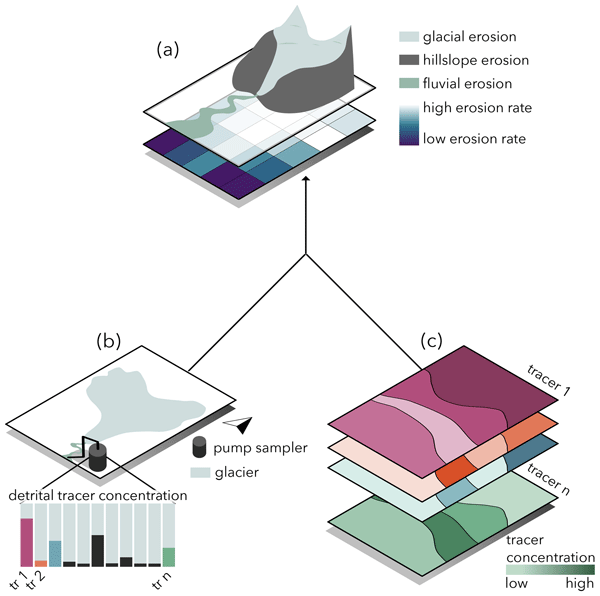
Fien De Doncker, Frédéric Herman, Bruno Belotti, and Thierry Adatte
Earth Surf. Dynam., 14, 443–467, https://doi.org/10.5194/esurf-14-443-2026, https://doi.org/10.5194/esurf-14-443-2026, 2026
Short summary
Short summary
Sediments carried by rivers can damage infrastructure, affect ecosystems, and alter landscapes, yet it is often unclear where these sediments come from, especially in regions hidden beneath ice. We developed a simple way to trace their origins by shining X-rays on crushed rocks and sediments. The resulting X-ray signals act like fingerprints that can be matched to source rocks, revealing where sediments come from and allowing us to map erosion across landscapes.
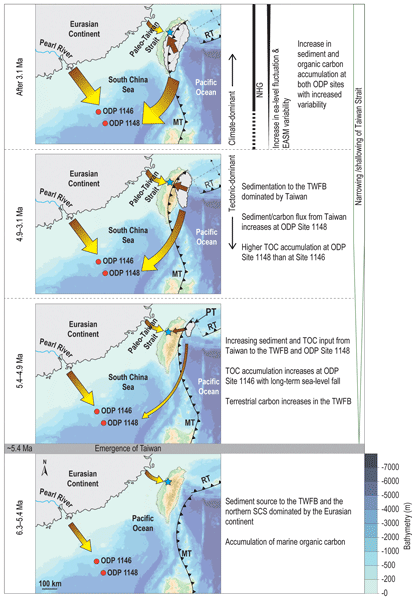
Amy I. Hsieh, Thierry Adatte, Shraddha Band, Li Lo, Romain Vaucher, Brahimsamba Bomou, Laszlo Kocsis, Pei-Ling Wang, and Samuel Jaccard
Clim. Past, 22, 227–246, https://doi.org/10.5194/cp-22-227-2026, https://doi.org/10.5194/cp-22-227-2026, 2026
Short summary
Short summary
Our study of late Miocene–early Pleistocene sedimentary records from the Taiwan Western Foreland Basin and the northern South China Sea found that physical erosion of tropical mountain belts by intense monsoon and tropical cyclone precipitation influences carbon burial by: 1) erosion and burial of organic carbon from land, and 2) supplying nutrients that enhance marine photosynthesis. This work links mountain building and erosion in tropical regions directly to carbon storage in nearby oceans.
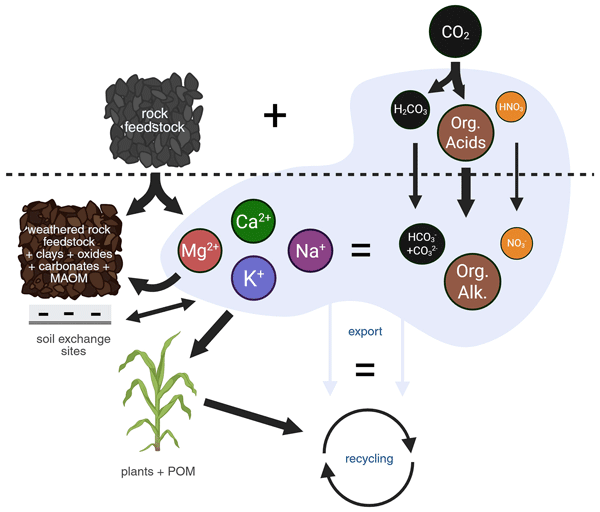
Jelle Bijma, Mathilde Hagens, Jens S. Hammes, Noah Planavsky, Philip A. E. Pogge von Strandmann, Tom Reershemius, Christopher T. Reinhard, Phil Renforth, Tim J. Suhrhoff, Sara Vicca, Arthur Vienne, and Dieter Wolf-Gladrow
Biogeosciences, 23, 53–75, https://doi.org/10.5194/bg-23-53-2026, https://doi.org/10.5194/bg-23-53-2026, 2026
Short summary
Short summary
Enhanced rock weathering is a nature based negative emission technology, that permanently stores CO2. It requires rock-flour to be added to arable land with the help of farmers. To be eligible for carbon credits calls for a simple but scientifically solid, so called, Monitoring, Reporting & Verification” (MRV). We demonstrate that the commonly used carbon-based accounting is ill-suited to close the balance in open systems such as arable land, and argue for cation-based accounting strategy.
Jens S. Hammes, Jens Hartmann, Johannes A. C. Barth, Tobias Linke, Ingrid Smet, Mathilde Hagens, Philip A. E. Pogge von Strandmann, Tom Reershemius, Bruno Casimiro, Arthur Vienne, Anna A. Stoeckel, Ralf Steffens, and Dirk Paessler
EGUsphere, https://doi.org/10.5194/egusphere-2025-5402, https://doi.org/10.5194/egusphere-2025-5402, 2025
Short summary
Short summary
To test enhanced weathering's efficacy, we ran a two-year greenhouse study under warm, wet conditions, comparing several rock additives across farm soils. We tracked alkalinity and cation soil pools. Soil type was decisive: acidic, low-buffer soils exported more additional alkalinity, while alkaline or pH neutral soils retained it in cation pools. The results point to where enhanced weathering can deliver durable carbon removal and underscore the need for long, well-controlled trials.
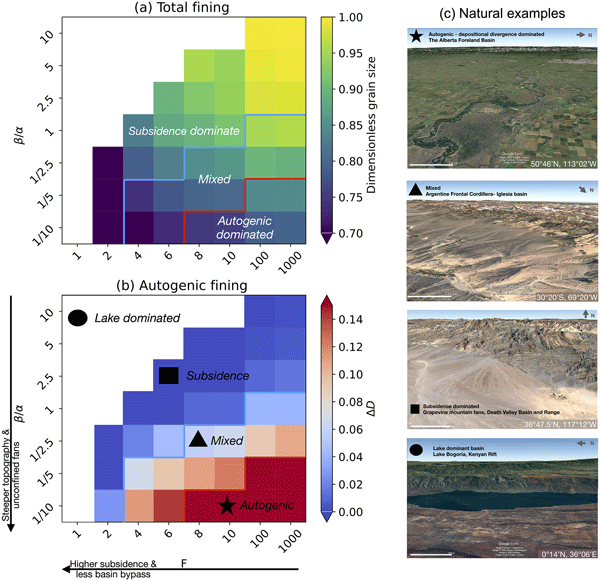
Amanda Lily Wild, Jean Braun, Alexander C. Whittaker, and Sebastien Castelltort
Earth Surf. Dynam., 13, 875–887, https://doi.org/10.5194/esurf-13-875-2025, https://doi.org/10.5194/esurf-13-875-2025, 2025
Short summary
Short summary
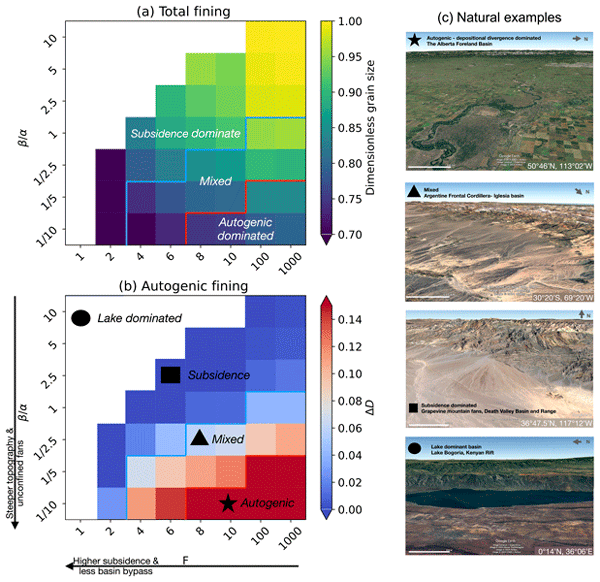
Sediments deposited within river channels form the stratigraphic record, which has been used to interpret tectonic events, basin subsidence, and changes in precipitation long after ancient mountain chains have eroded away. Our work combines methods for estimating gravel fining with a landscape evolution model in order to analyze the grain size preserved within the stratigraphic record with greater complexity (e.g. considering topography and channel dynamics) than past approaches.
Amanda Lily Wild, Jean Braun, Alexander C. Whittaker, and Sebastien Castelltort
Earth Surf. Dynam., 13, 907–922, https://doi.org/10.5194/esurf-13-907-2025, https://doi.org/10.5194/esurf-13-907-2025, 2025
Short summary
Short summary
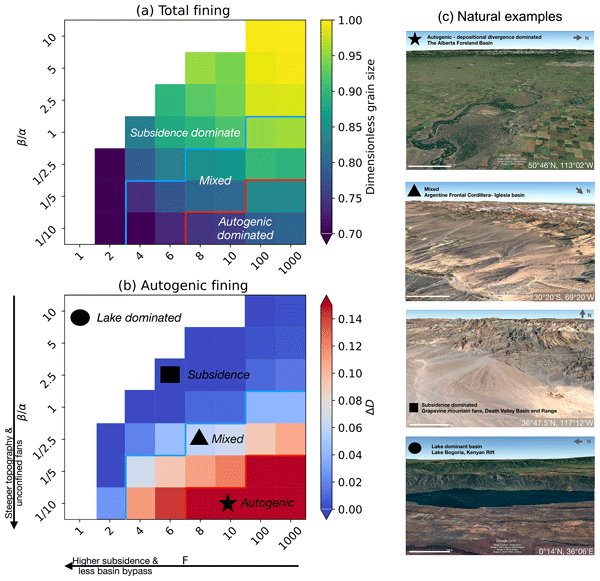
Sediments deposited within river channels form the stratigraphic record, which has been used to interpret tectonic events, basin subsidence, and changes in precipitation long after ancient mountain chains have eroded away. Our work combines methods for estimating gravel fining with a landscape evolution model in order to analyze the grain size preserved within the stratigraphic record with greater complexity (e.g. considering topography and channel dynamics) than past approaches.
Amanda Lily Wild, Jean Braun, Alexander C. Whittaker, Marine Prieur, and Sebastien Castelltort
Earth Surf. Dynam., 13, 889–905, https://doi.org/10.5194/esurf-13-889-2025, https://doi.org/10.5194/esurf-13-889-2025, 2025
Short summary
Short summary
Sediments deposited within river channels form the stratigraphic record, which has been used to interpret tectonic events, basin subsidence, and changes in precipitation long after ancient mountain chains have eroded away. Our work combines methods for estimating gravel fining with a Landscape Evolution Model in order to analyze the grain size preserved within the stratigraphic record with greater complexity (e.g. considering topography and channel dynamics) than past approaches.
Florian Franziskakis, Christian Vérard, Sébastien Castelltort, and Grégory Giuliani
Int. Arch. Photogramm. Remote Sens. Spatial Inf. Sci., XLVIII-4-W13-2025, 111–118, https://doi.org/10.5194/isprs-archives-XLVIII-4-W13-2025-111-2025, https://doi.org/10.5194/isprs-archives-XLVIII-4-W13-2025-111-2025, 2025
Sune G. Nielsen, Frieder Klein, Horst R. Marschall, Philip A. E. Pogge von Strandmann, and Maureen Auro
Solid Earth, 15, 1143–1154, https://doi.org/10.5194/se-15-1143-2024, https://doi.org/10.5194/se-15-1143-2024, 2024
Short summary
Short summary
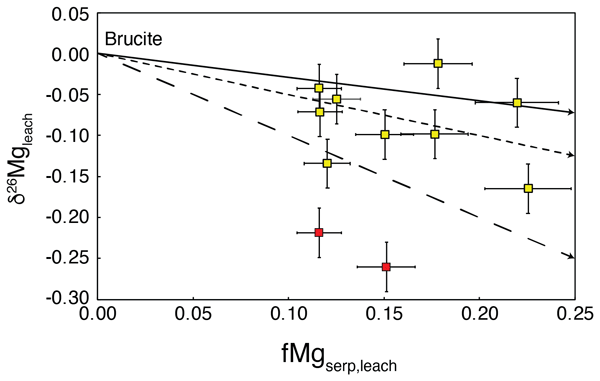
Magnesium isotope ratios of arc lavas have been proposed as a proxy for serpentinite subduction, but uncertainties remain regarding their utility. Here we show that bulk serpentinite Mg isotope ratios are identical to the mantle, whereas the serpentinite mineral brucite is enriched in heavy Mg isotopes. Thus, Mg isotope ratios may only be used as serpentinite subduction proxies if brucite is preferentially mobilized from the slab at pressures and temperatures within the arc magma source region.
Nikhil Sharma, Jorge E. Spangenberg, Thierry Adatte, Torsten Vennemann, László Kocsis, Jean Vérité, Luis Valero, and Sébastien Castelltort
Clim. Past, 20, 935–949, https://doi.org/10.5194/cp-20-935-2024, https://doi.org/10.5194/cp-20-935-2024, 2024
Short summary
Short summary
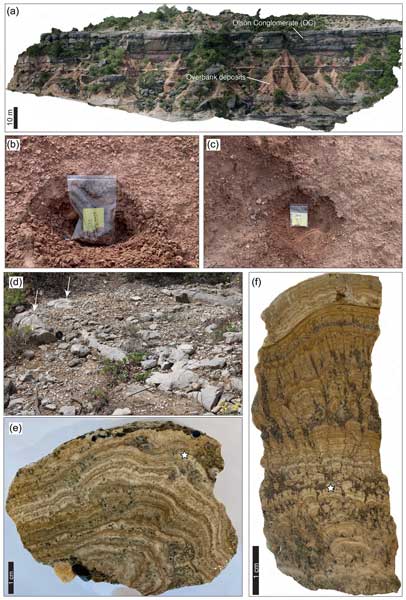
The Middle Eocene Climatic Optimum (MECO) is an enigmatic global warming event with scarce terrestrial records. To contribute, this study presents a new comprehensive geochemical record of the MECO in the fluvial Escanilla Formation, Spain. In addition to identifying the regional preservation of the MECO, results demonstrate continental sedimentary successions, as key archives of past climate and stable isotopes, to be a powerful tool in correlating difficult-to-date fluvial successions.
Cécile Charles, Nora Khelidj, Lucia Mottet, Bao Ngan Tu, Thierry Adatte, Brahimsamba Bomou, Micaela Faria, Laetitia Monbaron, Olivier Reubi, Natasha de Vere, Stéphanie Grand, and Gianalberto Losapio
EGUsphere, https://doi.org/10.5194/egusphere-2024-991, https://doi.org/10.5194/egusphere-2024-991, 2024
Preprint archived
Short summary
Short summary
We found that novel ecosystems created by glacier retreat are first characterized by an increase in plant diversity that is driven by a shift in soil texture. Plant diversity in turn increases soil organic matter and nutrient. Soils gradually acidifies and leads to a final stage where a dominance of few plant species reduces plant diversity. Understanding plant–soil interactions is crucial to anticipate how glacier retreat shapes biodiversity and landscapes.
Ariel Henrique do Prado, David Mair, Philippos Garefalakis, Chantal Schmidt, Alexander Whittaker, Sebastien Castelltort, and Fritz Schlunegger
Hydrol. Earth Syst. Sci., 28, 1173–1190, https://doi.org/10.5194/hess-28-1173-2024, https://doi.org/10.5194/hess-28-1173-2024, 2024
Short summary
Short summary
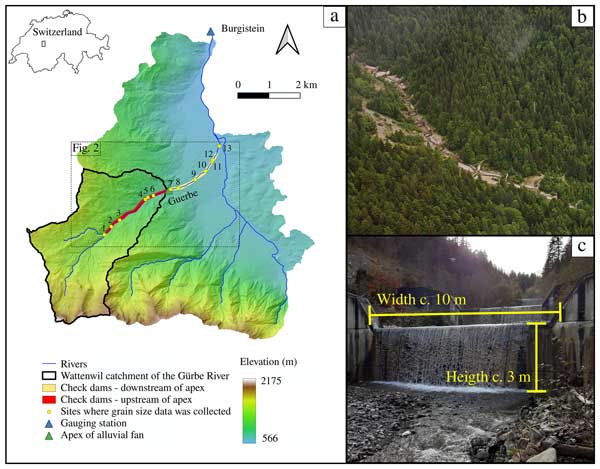
Engineering structures known as check dams are built with the intention of managing streams. The effectiveness of such structures can be expressed by quantifying the reduction of the sediment flux after their implementation. In this contribution, we estimate and compare the volumes of sediment transported in a mountain stream for engineered and non-engineered conditions. We found that without check dams the mean sediment flux would be ca. 10 times larger in comparison with the current situation.
Axelle Gardin, Emmanuelle Pucéat, Géraldine Garcia, Jean-Renaud Boisserie, Adélaïde Euriat, Michael M. Joachimski, Alexis Nutz, Mathieu Schuster, and Olga Otero
Biogeosciences, 21, 437–454, https://doi.org/10.5194/bg-21-437-2024, https://doi.org/10.5194/bg-21-437-2024, 2024
Short summary
Short summary
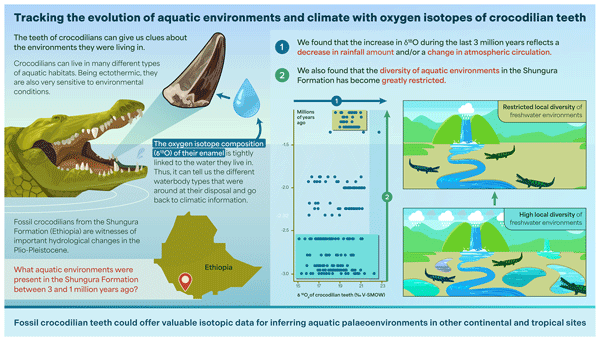
We introduce a novel approach using stable oxygen isotopes from crocodilian fossil teeth to unravel palaeohydrological changes in past continental contexts. Applying it to the Plio-Pleistocene Ethiopian Shungura Formation, we found a significant increase in δ18O in the last 3 million years, likely due to monsoonal shifts and reduced rainfall, and that the local diversity of waterbodies (lakes, rivers, ponds) became restricted.
Morgan T. Jones, Ella W. Stokke, Alan D. Rooney, Joost Frieling, Philip A. E. Pogge von Strandmann, David J. Wilson, Henrik H. Svensen, Sverre Planke, Thierry Adatte, Nicolas Thibault, Madeleine L. Vickers, Tamsin A. Mather, Christian Tegner, Valentin Zuchuat, and Bo P. Schultz
Clim. Past, 19, 1623–1652, https://doi.org/10.5194/cp-19-1623-2023, https://doi.org/10.5194/cp-19-1623-2023, 2023
Short summary
Short summary
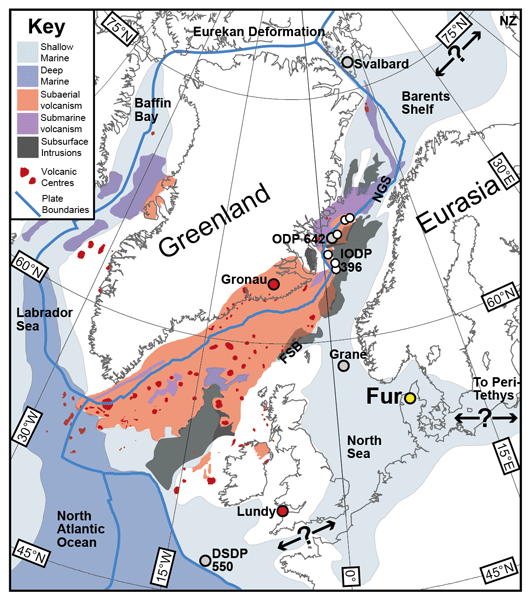
There are periods in Earth’s history when huge volumes of magma are erupted at the Earth’s surface. The gases released from volcanic eruptions and from sediments heated by the magma are believed to have caused severe climate changes in the geological past. We use a variety of volcanic and climatic tracers to assess how the North Atlantic Igneous Province (56–54 Ma) affected the oceans and atmosphere during a period of extreme global warming.
Sabí Peris Cabré, Luis Valero, Jorge E. Spangenberg, Andreu Vinyoles, Jean Verité, Thierry Adatte, Maxime Tremblin, Stephen Watkins, Nikhil Sharma, Miguel Garcés, Cai Puigdefàbregas, and Sébastien Castelltort
Clim. Past, 19, 533–554, https://doi.org/10.5194/cp-19-533-2023, https://doi.org/10.5194/cp-19-533-2023, 2023
Short summary
Short summary
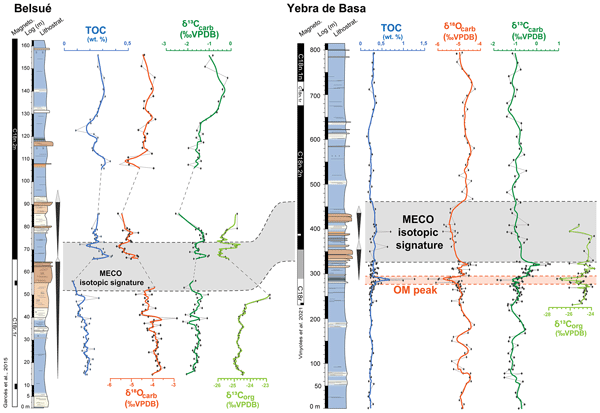
The Middle Eocene Climatic Optimum (MECO) was a global warming event that took place 40 Myr ago and lasted ca. 500 kyr, inducing physical, chemical, and biotic changes on the Earth. We use stable isotopes to identify the MECO in the Eocene deltaic deposits of the Southern Pyrenees. Our findings reveal enhanced deltaic progradation during the MECO, pointing to the important impact of global warming on fluvial sediment transport with implications for the consequences of current climate change.
Robin Fentimen, Eline Feenstra, Andres Rüggeberg, Efraim Hall, Valentin Rime, Torsten Vennemann, Irka Hajdas, Antonietta Rosso, David Van Rooij, Thierry Adatte, Hendrik Vogel, Norbert Frank, and Anneleen Foubert
Clim. Past, 18, 1915–1945, https://doi.org/10.5194/cp-18-1915-2022, https://doi.org/10.5194/cp-18-1915-2022, 2022
Short summary
Short summary
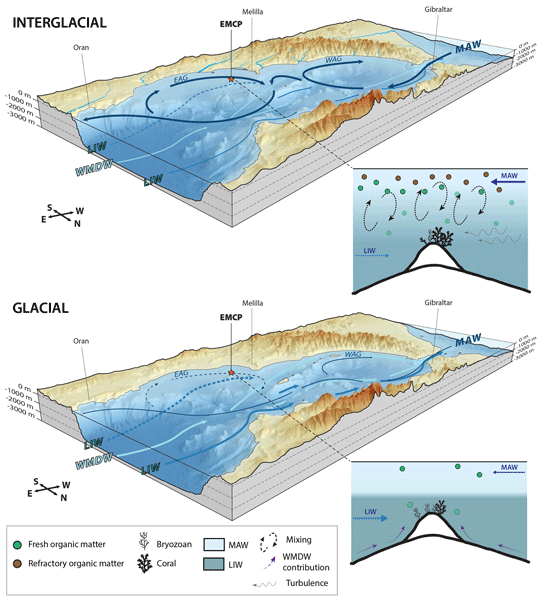
The investigation of a 9 m long sediment core recovered at ca. 300 m water depth demonstrates that cold-water coral mound build-up within the East Melilla Coral Province (southeastern Alboran Sea) took place during both interglacial and glacial periods. Based on the combination of different analytical methods (e.g. radiometric dating, micropaleontology), we propose that corals never thrived but rather developed under stressful environmental conditions.
Moussa Moustapha, Loris Deirmendjian, David Sebag, Jean-Jacques Braun, Stéphane Audry, Henriette Ateba Bessa, Thierry Adatte, Carole Causserand, Ibrahima Adamou, Benjamin Ngounou Ngatcha, and Frédéric Guérin
Biogeosciences, 19, 137–163, https://doi.org/10.5194/bg-19-137-2022, https://doi.org/10.5194/bg-19-137-2022, 2022
Short summary
Short summary
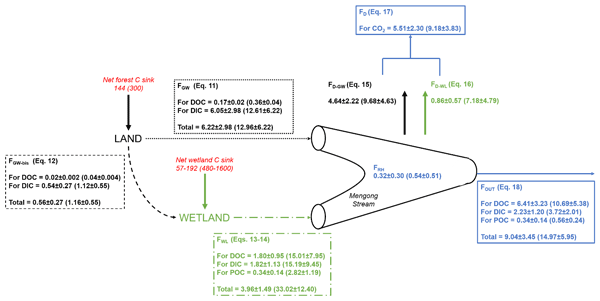
We monitor the spatio-temporal variability of organic and inorganic carbon (C) species in the tropical Nyong River (Cameroon), across groundwater and increasing stream orders. We show the significant contribution of wetland as a C source for tropical rivers. Thus, ignoring the river–wetland connectivity might lead to the misrepresentation of C dynamics in tropical watersheds. Finally, total fluvial carbon losses might offset ~10 % of the net C sink estimated for the whole Nyong watershed.
Cited articles
Adatte, T., Stinnesbeck, W., and Keller, G.: Lithostratigraphic and mineralogic correlations of near K/T boundary clastic sediments in northeastern Mexico: Implications for origin and nature of deposition, in: The Cretaceous-Tertiary Event and Other Catastrophes in Earth History, Geological Society of America, https://doi.org/10.1130/0-8137-2307-8.211, 1996.
Anderson, S. P., von Blanckenburg, F., and White, A. F.: Physical and chemical controls on the critical zone, Elements, 3, 315–319, https://doi.org/10.2113/gselements.3.5.315, 2007.
Baceta, J. I., Pujalte, V., and Bernaola, G.: Paleocene coralgal reefs of the western Pyrenean basin, northern Spain: New evidence supporting an earliest Paleogene recovery of reefal ecosystems, Palaeogeogr. Palaeocl., 224, 117–143, https://doi.org/10.1016/j.palaeo.2005.03.033, 2005.
Baceta, J., Pujalte, V., Wright, V. P. and Schmitz, B.: Carbonate platform models, sea-level changes and extreme climatic events during the Paleocene-early Eocene greenhouse interval: a basin-platform-coastal plain transect across the southern Pyrenean basin, in: Pree-Meeting Field trips Guidebook, 28th IAS Meeting, Zaragoza, edited by: Arenas, C., Pomar L., and Colombo, F., Sociedad Geológica de España, Geo-Guías, 7, 151–198, 2011.
Barefoot, E. A., Nittrouer, J. A., Foreman, B. Z., Hajek, E. A., Dickens, G. R., Baisden, T., and Toms, L.: Evidence for enhanced fluvial channel mobility and fine sediment export due to precipitation seasonality during the Paleocene-Eocene thermal maximum, Geology, 50, 116–120, https://doi.org/10.1130/G49149.1, 2022.
Basilici, G., Colombera, L., Soares, M. V. T., Arévalo, O. J., Mountney, N. P., Lorenzoni, P., de Souza Filho, C. R., Mesquita, Á. F., and Janočko, J.: Variations from dry to aquic conditions in Vertisols (Esplugafreda Formation, Eastern Pyrenees, Spain): Implications for late Paleocene climate change, Palaeogeogr. Palaeocl., 595, 110972, https://doi.org/10.1016/j.palaeo.2022.110972, 2022.
Bauer, K. K., Vennemann, T. W., and Gilg, H. A.: Stable isotope composition of bentonites from the Swiss and Bavarian Freshwater Molasse as a proxy for paleoprecipitation, Palaeogeogr. Palaeocl., 455, 53–64, https://doi.org/10.1016/j.palaeo.2016.02.002, 2016.
Bayon, G., German, C. R., Boella, R. M., Milton, J. A., Taylor, R. N., and Nesbitt, R. W.: An improved method for extracting marine sediment fractions and its application to Sr and Nd isotopic analysis, Chem. Geol., 187, 179–199, https://doi.org/10.1016/S0009-2541(01)00416-8, 2002.
Bayon, G., Burton, K. W., Soulet, G., Vigier, N., Dennielou, B., Etoubleau, J., Ponzevera, E., German, C. R., and Nesbitt, R. W.: Hf and Nd isotopes in marine sediments: Constraints on global silicate weathering, Earth Planet. Sc. Lett., 277, 318–326, https://doi.org/10.1016/j.epsl.2008.10.028, 2009.
Behar, F., Beaumont, V., and Penteado, H. L. De B.: Rock-Eval 6 technology: performances and developments, Oil Gas Sci. Technol., 56, 111–134, https://doi.org/10.2516/ogst:2001013, 2001.
Bernhardt, A., Oelze, M., Bouchez, J., von Blanckenburg, F., Mohtadi, M., Christl, M., and Wittmann, H.: 10Be/9Be ratios reveal marine authigenic clay formation, Geophys. Res. Lett., 47, e2019GL086061, https://doi.org/10.1029/2019GL086061, 2020.
Bolle, M.-P. and Adatte, T.: Palaeocene–early Eocene climatic evolution in the Tethyan realm: clay mineral evidence, Clay Miner., 36, 249–261, https://doi.org/10.1180/000985501750177979, 2001.
Bouchez, J., von Blanckenburg, F., and Schuessler, J. A.: Modeling novel stable isotope ratios in the weathering zone, Am. J. Sci., 313, 267–308, https://doi.org/10.2475/04.2013.01, 2013.
Bouvier, A., Vervoort, J. D., and Patchett, P. J.: The Lu–Hf and Sm–Nd isotopic composition of CHUR: Constraints from unequilibrated chondrites and implications for the bulk composition of terrestrial planets, Earth Planet. Sc. Lett., 273, 48–57, https://doi.org/10.1016/j.epsl.2008.06.010, 2008.
Bowen, G. J., Beerling, D. J., Koch, P. L., Zachos, J. C., and Quattlebaum, T.: A humid climate state during the Palaeocene/Eocene thermal maximum, Nature, 432, 495–499, https://doi.org/10.1038/nature03115, 2004.
Bufe, A., Hovius, N., Emberson, R., Rugenstein, J. K. C., Galy, A., Hassenruck-Gudipati, H. J., and Chang, J.-M.: Co-variation of silicate, carbonate and sulfide weathering drives CO2 release with erosion, Nat. Geosci., 14, 211–216, https://doi.org/10.1038/s41561-021-00714-3, 2021.
Bufe, A., Rugenstein, J. K. C., and Hovius, N.: CO2 drawdown from weathering is maximized at moderate erosion rates, Science, 383, 1075–1080, https://doi.org/10.1126/science.adk0957, 2024.
Carmichael, M. J., Inglis, G. N., Badger, M. P. S., Naafs, B. D. A., Behrooz, L., Remmelzwaal, S., Monteiro, F. M., Rohrssen, M., Farnsworth, A., Buss, H. L., Dickson, A. J., Valdes, P. J., Lunt, D. J., and Pancost, R. D.: Hydrological and associated biogeochemical consequences of rapid global warming during the Paleocene-Eocene Thermal Maximum, Global Planet. Change, 157, 114–138, https://doi.org/10.1016/j.gloplacha.2017.07.014, 2017.
Caves, J. K., Jost, A. B., Lau, K. V., and Maher, K.: Cenozoic carbon cycle imbalances and a variable weathering feedback, Earth Planet. Sc. Lett., 450, 152–163, https://doi.org/10.1016/j.epsl.2016.06.035, 2016.
Caves Rugenstein, J. K., Ibarra, D. E., and von Blanckenburg, F.: Neogene cooling driven by land surface reactivity rather than increased weathering fluxes, Nature, 571, 99–102, https://doi.org/10.1038/s41586-019-1332-y, 2019.
Chamley, H.: Clay sedimentology, Springer, Berlin, https://doi.org/10.1007/978-3-642-85916-8, 1989.
Chen, C., Guerit, L., Foreman, B. Z., Hassenruck-Gudipati, H. J., Adatte, T., Honegger, L., Perret, M., Sluijs, A., and Castelltort, S.: Estimating regional flood discharge during Palaeocene-Eocene global warming, Sci. Rep., 8, 13391, https://doi.org/10.1038/s41598-018-31076-3, 2018.
Chen, Z., Ding, Z., Yang, S., Sun, J., Zhu, M., Xiao, Y., Tong, F., and Liang, Y.: Strong coupling between carbon cycle, climate, and weathering during the Paleocene-Eocene Thermal Maximum, Geophys. Res. Lett., 50, e2023GL102897, https://doi.org/10.1029/2023GL102897, 2023.
Colombera, L., Arévalo, O. J., and Mountney, N. P.: Fluvial-system response to climate change: The Paleocene-Eocene Tremp Group, Pyrenees, Spain, Global Planet. Change, 157, 1–17, https://doi.org/10.1016/j.gloplacha.2017.08.011, 2017.
Cotton, J. M., Sheldon, N. D., Hren, M. T., and Gallagher, T. M.: Positive feedback drives carbon release from soils to atmosphere during Paleocene/Eocene warming, Am. J. Sci., 315, 337–361, https://doi.org/10.2475/04.2015.03, 2015.
Dellinger, M., Gaillardet, J., Bouchez, J., Calmels, D., Louvat, P., Dosseto, A., Gorge, C., Alanoca, L., and Maurice, L.: Riverine Li isotope fractionation in the Amazon River basin controlled by the weathering regimes, Geochim. Cosmochim. Ac., 164, 71–93, https://doi.org/10.1016/j.gca.2015.04.042, 2015.
Dellinger, M., Bouchez, J., Gaillardet, J., Faure, L., and Moureau, J.: Tracing weathering regimes using the lithium isotope composition of detrital sediments, Geology, 45, 411–414, https://doi.org/10.1130/G38671.1, 2017.
Dessert, C., Dupré, B., Gaillardet, J., François, L. M., and Allègre, C. J.: Basalt weathering laws and the impact of basalt weathering on the global carbon cycle, Chem. Geol., 202, 257–273, https://doi.org/10.1016/j.chemgeo.2002.10.001, 2003.
Dickens, G. R., O'Neil, J. R., Rea, D. K., and Owen, R. M.: Dissociation of oceanic methane hydrate as a cause of the carbon isotope excursion at the end of the Paleocene, Paleoceanography, 10, 965–971, https://doi.org/10.1029/95PA02087, 1995.
Domingo, L., López-Martínez, N., Leng, M. J., and Grimes, S. T.: The Paleocene–Eocene Thermal Maximum record in the organic matter of the Claret and Tendruy continental sections (South-central Pyrenees, Lleida, Spain), Earth Planet. Sc. Lett., 281, 226–237, https://doi.org/10.1016/j.epsl.2009.02.025, 2009.
Dreyer, T.: Quantified fluvial architecture in ephemeral stream deposits of the Esplugafreda Formation (Palaeocene), Tremp-Graus Basin, Northern Spain, in: Alluvial Sedimentation, edited by: Marzo, M. and Puigdefábregas, C., Wiley, 337–362, https://doi.org/10.1002/9781444303995.ch23, 1993.
Duller, R. A., Armitage, J. J., Manners, H. R., Grimes, S., and Jones, T. D.: Delayed sedimentary response to abrupt climate change at the Paleocene-Eocene boundary, northern Spain, Geology, 47, 159–162, https://doi.org/10.1130/G45631.1, 2019.
Eichenseer, H.: Facies geology of Late Maastrichtian to Early Eocene coastal and shallow marine sediments (Tremp-Graus Basin, Northeastern Spain), thesis, University of Tuebingen, Tuebingen, 270 pp., 1988.
Eichenseer, H. and Luterbacher, H.: The marine Paleogene of the Tremp region (NE Spain)-depositional sequences, facies history, biostratigraphy and controlling factors, Facies, 27, 119–151, https://doi.org/10.1007/BF02536808, 1992.
Espitalie, J., Deroo, G., and Marquis, F.: La pyrolyse Rock-Eval et ses applications, Deuxième partie, Rev. Inst. Fr. Pet. Ann., 40, 755–784, https://doi.org/10.2516/ogst:1985045, 1985.
Fagel, N.: Chapter four clay minerals, deep circulation and climate, in: Developments in Marine Geology, 1, Elsevier, 139–184, https://doi.org/10.1016/S1572-5480(07)01009-3, 2007.
Foreman, B. Z., Heller, P. L., and Clementz, M. T.: Fluvial response to abrupt global warming at the Palaeocene/Eocene boundary, Nature, 491, 92–95, https://doi.org/10.1038/nature11513, 2012.
Frings, P. J.: Palaeoweathering: How do weathering rates vary with climate?, Elements, 15, 259–265, https://doi.org/10.2138/gselements.15.4.259, 2019.
Gaillardet, J., Dupré, B., and Allègre, C. J.: Geochemistry of large river suspended sediments: silicate weathering or recycling tracer?, Geochim. Cosmochim. Ac., 63, 4037–4051, https://doi.org/10.1016/S0016-7037(99)00307-5, 1999.
Gaitan, C. E., Pucéat, E., Pellenard, P., Blondet, J., Bayon, G., Adatte, T., Israel, C., Robin, C., and Guillocheau, F.: Late Cretaceous erosion and chemical weathering record in the offshore Cape Basin: Source-to-sink system from Hf–Nd isotopes and clay mineralogy, Mar. Geol., 466, 107187, https://doi.org/10.1016/j.margeo.2023.107187, 2023.
Gallagher, T. M., Cacciatore, C. G., and Breecker, D. O.: Interpreting the difference in magnitudes of PETM carbon isotope excursions in paleosol carbonate and organic matter: oxidation of methane in soils versus elevated soil respiration rates, Paleoceanogr. Paleocl., 34, 2113–2128, https://doi.org/10.1029/2019PA003596, 2019.
Gawenda, P., Winkler, W., Schmitz, B., and Adatte, T.: Climate and bioproductivity control on carbonate turbidite sedimentation (Paleocene to earliest Eocene, Gulf of Biscay, Zumaia, Spain), J. Sediment. Res., 69, 1253–1261, https://doi.org/10.2110/jsr.69.1253, 1999.
Gibbs, R. J.: Clay mineral segregation in the marine environment, SEPM J. Sediment. Res., 47, 237–243, https://doi.org/10.1306/212F713A-2B24-11D7-8648000102C1865D, 1977.
Goddéris, Y., Donnadieu, Y., Tombozafy, M., and Dessert, C.: Shield effect on continental weathering: Implication for climatic evolution of the Earth at the geological timescale, Geoderma, 145, 439–448, https://doi.org/10.1016/j.geoderma.2008.01.020, 2008.
Gómez-Gras, D., Roigé, M., Fondevilla, V., Oms, O., Boya, S., and Remacha, E.: Provenance constraints on the Tremp Formation paleogeography (Southern Pyrenees): Ebro Massif VS Pyrenees sources, Cretaceous Res., 57, 414–427, https://doi.org/10.1016/j.cretres.2015.09.010, 2016.
Gutjahr, M., Frank, M., Stirling, C. H., Klemm, V., van de Flierdt, T., and Halliday, A. N.: Reliable extraction of a deepwater trace metal isotope signal from Fe–Mn oxyhydroxide coatings of marine sediments, Chem. Geol., 242, 351–370, https://doi.org/10.1016/j.chemgeo.2007.03.021, 2007.
Hessler, A. M., Zhang, J., Covault, J., and Ambrose, W.: Continental weathering coupled to Paleogene climate changes in North America, Geology, 45, 911–914, https://doi.org/10.1130/G39245.1, 2017.
Hilton, R. G.: Earth's persistent thermostat, Science, 379, 329–330, https://doi.org/10.1126/science.adf3379, 2023.
Jaimes-Gutierrez, R., Adatte, T., Pucéat, E., Vennemann, T., Prieur, M., Wild, A. L., Khozyem, H., Vaucher, R., and Castelltort, S.: Deciphering Paleocene-Eocene Thermal Maximum Climatic Dynamics: Insights From Oxygen and Hydrogen Isotopes in Clay Minerals of Paleosols From the Southern Pyrenees, Paleoceanogr. Paleocl., 39, e2024PA004858, https://doi.org/10.1029/2024PA004858, 2024.
Jaimes-Gutierrez, R., Vimpere, L., Wilson, D. J., Blaser, P., Pogge von Strandmann, P. A. E., Adatte, T., Sahoo, S., and Castelltort, S.: Lithium isotopes reveal enhanced weathering fluxes in North America during the Paleocene–Eocene Thermal Maximum, Geology, 54, 205–209, https://doi.org/10.1130/G53708.1, 2025.
Jaimes-Gutierrez, R., Prieur, M., Wilson, D. J., Pogge von Strandmann, P. A. E., Pucéat, E., Adatte, T., Spangenberg, J. E., and Castelltort, S.: Supplementary Material: “Silicate weathering in the semi-arid Southern Pyrenees during the PETM: lithium isotope evidence”, Zenodo [data set], https://doi.org/10.5281/zenodo.18877422, 2026.
Jones, M. T., Stokke, E. W., Rooney, A. D., Frieling, J., Pogge von Strandmann, P. A. E., Wilson, D. J., Svensen, H. H., Planke, S., Adatte, T., Thibault, N., Vickers, M. L., Mather, T. A., Tegner, C., Zuchuat, V., and Schultz, B. P.: Tracing North Atlantic volcanism and seaway connectivity across the Paleocene–Eocene Thermal Maximum (PETM), Clim. Past, 19, 1623–1652, https://doi.org/10.5194/cp-19-1623-2023, 2023.
Kennett, J. P. and Stott, L. D.: Abrupt deep-sea warming, palaeoceanographic changes and benthic extinctions at the end of the Palaeocene, Nature, 353, 225–229, https://doi.org/10.1038/353225a0, 1991.
Khozyem, H. M. A.: Sedimentology, geochemistry and mineralogy of the Paleocene Eocene Thermal Maximum (PETM): Sediment records from Egypt, India and Spain, Doctoral Dissertation, thesis, Université de Lausanne, Lausanne, 195 pp., 2013.
Kısakűrek, B., James, R. H., and Harris, N. B. W.: Li and δ7Li in Himalayan rivers: proxies for silicate weathering?, Earth Planet. Sc. Lett., 237, 387–401, https://doi.org/10.1016/j.epsl.2005.07.019, 2005.
Krause, A. J., Sluijs, A., van der Ploeg, R., Lenton, T. M., and Pogge von Strandmann, P. A. E.: Enhanced clay formation key in sustaining the Middle Eocene Climatic Optimum, Nat. Geosci., 16, 730–738, https://doi.org/10.1038/s41561-023-01234-y, 2023.
Kump, L. R. and Arthur, M. A.: Global chemical erosion during the Cenozoic: weatherability balances the budgets, in: Tectonic Uplift and Climate Change, edited by: Ruddiman, W. F., Springer US, Boston, MA, 399–426, https://doi.org/10.1007/978-1-4615-5935-1_18, 1997.
Kump, L. R., Brantley, S. L., and Arthur, M. A.: Chemical weathering, atmospheric CO2, and climate, Annu. Rev. Earth Pl. Sc., 28, 611–667, https://doi.org/10.1146/annurev.earth.28.1.611, 2000.
Li, G. and West, A. J.: Evolution of Cenozoic seawater lithium isotopes: Coupling of global denudation regime and shifting seawater sinks, Earth Planet. Sc. Lett., 401, 284–293, https://doi.org/10.1016/j.epsl.2014.06.011, 2014.
Liu, C.-Y., Wilson, D. J., Hathorne, E. C., Xu, A., and Pogge von Strandmann, P. A. E.: The influence of river-derived particles on estuarine and marine elemental cycles: Evidence from lithium isotopes, Geochim. Cosmochim. Ac., 361, 183–199, https://doi.org/10.1016/j.gca.2023.08.015, 2023.
Lugmair, G. W. and Marti, K.: Lunar initial
Maffre, P., Goddéris, Y., Vigier, N., Moquet, J.-S., and Carretier, S.: Modelling the riverine δ7Li variability throughout the Amazon Basin, Chem. Geol., 532, 119336, https://doi.org/10.1016/j.chemgeo.2019.119336, 2020.
Maher, K. and von Blanckenburg, F.: The circular nutrient economy of terrestrial ecosystems and the consequences for rock weathering, Front. Environ. Sci., 10, 1066959, https://doi.org/10.3389/fenvs.2022.1066959, 2023.
Mattauer, M. and Henry, J.: Pyrenees, Geological Society Spec. Publ., 4, no. 1, 3–21, https://doi.org/10.1144/GSL.SP.2005.004.01.01, 1974.
McInerney, F. A. and Wing, S. L.: The Paleocene-Eocene Thermal Maximum: a perturbation of carbon cycle, climate, and biosphere with implications for the future, Annu. Rev. Earth Pl. Sc., 39, 489–516, https://doi.org/10.1146/annurev-earth-040610-133431, 2011.
Meunier, A.: Clays, Springer, Berlin, New York, 472 pp., https://doi.org/10.1007/b138672, 2005.
Misra, S. and Froelich, P. N.: Lithium isotope history of Cenozoic seawater: changes in silicate weathering and reverse weathering, Science, 335, 818–823, https://doi.org/10.1126/science.1214697, 2012.
Moore, D. M. and Reynolds, R. C.: X-ray diffraction and the identification and analysis of clay minerals, 2nd Edition, Oxford University Press, New York, 401 pp., ISBN 978-0-19-508713-0, 1997.
Moulton, K. L., West, J., and Berner, R. A.: Solute flux and mineral mass balance approaches to the quantification of plant effects on silicate weathering, Am. J. Sci., 300, 539–570, 2000.
Muñoz, J. A.: Evolution of a continental collision belt: ECORS-Pyrenees crustal balanced cross-section, in: Thrust Tectonics, edited by: McClay, K. R., Springer Netherlands, Dordrecht, 235–246, https://doi.org/10.1007/978-94-011-3066-0_21, 1992.
Murray, J. and Jagoutz, O.: Palaeozoic cooling modulated by ophiolite weathering through organic carbon preservation, Nat. Geosci., 17, 88–93, https://doi.org/10.1038/s41561-023-01342-9, 2024.
Pistiner, J. S. and Henderson, G. M.: Lithium-isotope fractionation during continental weathering processes, Earth Planet. Sc. Lett., 214, 327–339, https://doi.org/10.1016/S0012-821X(03)00348-0, 2003.
Pogge von Strandmann, P. A. E., Jenkyns, H. C., and Woodfine, R. G.: Lithium isotope evidence for enhanced weathering during Oceanic Anoxic Event 2, Nat. Geosci., 6, 668–672, https://doi.org/10.1038/ngeo1875, 2013.
Pogge von Strandmann, P. A. E., Fraser, W. T., Hammond, S. J., Tarbuck, G., Wood, I. G., Oelkers, E. H., and Murphy, M. J.: Experimental determination of Li isotope behaviour during basalt weathering, Chem. Geol., 517, 34–43, https://doi.org/10.1016/j.chemgeo.2019.04.020, 2019.
Pogge von Strandmann, P. A. E., Kasemann, S. A., and Wimpenny, J. B.: Lithium and lithium isotopes in Earth's surface cycles, Elements, 16, 253–258, https://doi.org/10.2138/gselements.16.4.253, 2020.
Pogge von Strandmann, P. A. E., Jones, M. T., West, A. J., Murphy, M. J., Stokke, E. W., Tarbuck, G., Wilson, D. J., Pearce, C. R., and Schmidt, D. N.: Lithium isotope evidence for enhanced weathering and erosion during the Paleocene-Eocene Thermal Maximum, Sci. Adv., 7, eabh4224, https://doi.org/10.1126/sciadv.abh4224, 2021a.
Pogge von Strandmann, P. A. E., Cosford, L. R., Liu, C.-Y., Liu, X., Krause, A. J., Wilson, D. J., He, X., McCoy-West, A. J., Gislason, S. R., and Burton, K. W.: Assessing hydrological controls on the lithium isotope weathering tracer, Chem. Geol., 642, 121801, https://doi.org/10.1016/j.chemgeo.2023.121801, 2023.
Pogge von Strandmann, P. A. E., Dellinger, M., and West, A. J.: Lithium isotopes: a tracer of past and present silicate weathering, 1st ed., Cambridge University Press, https://doi.org/10.1017/9781108990752, 2021b.
Porder, S.: How plants enhance weathering and how weathering is important to plants, Elements, 15, 241–246, https://doi.org/10.2138/gselements.15.4.241, 2019.
Presti, M. and Michalopoulos, P.: Estimating the contribution of the authigenic mineral component to the long-term reactive silica accumulation on the western shelf of the Mississippi River Delta, Cont. Shelf Res., 28, 823–838, https://doi.org/10.1016/j.csr.2007.12.015, 2008.
Prieur, M., Whittaker, A. C., Nuriel, P., Jaimes-Gutierrez, R., Garzanti, E., Roigé, M., Sømme, T. O., Schlunegger, F., and Castelltort, S.: Fingerprinting enhanced floodplain reworking during the Paleocene–Eocene Thermal Maximum in the Southern Pyrenees (Spain): Implications for channel dynamics and carbon burial, Geology, 52, 651–655, https://doi.org/10.1130/G52180.1, 2024.
Prieur, M., Robin, C., Braun, J., Vaucher, R., Whittaker, A. C., Jaimes-Gutierrez, R., Wild, A., McLeod, J. S., Malatesta, L., Fillon, C., Schlunegger, F., Sømme, T. O., and Castelltort, S.: Climate control on erosion: evolution of sediment flux from mountainous catchments during a global warming event, PETM, Southern Pyrenees, Spain, Geophys. Res. Lett., 52, e2024GL112404, https://doi.org/10.1029/2024GL112404, 2025.
Puigdefàbregas, C. and Souquet, P.: Tecto-sedimentary cycles and depositional sequences of the Mesozoic and Tertiary from the Pyrenees, Tectonophysics, 129, 173–203, 1986.
Pujalte, V. and Schmitz, B.: Revisión de la estratigrafía del Grupo Tremp (“Garumniense”, Cuenca de Tremp-Graus, Pirineos meridionales), Geogaceta, 38, 79–82, 2005.
Pujalte, V., Schmitz, B., Baceta, J. I., Orue-Etxebarria, X., Bernaola, G., Dinarès-Turell, J., Payros, A., Apellaniz, E., and Caballero, F.: Correlation of the Thanetian-Ilerdian turnover of larger foraminifera and the Paleocene-Eocene Thermal Maximum: confirming evidence from the Campo area (Pyrenees, Spain), Geol. Acta, 7, 161–175, 2009.
Pujalte, V., Schmitz, B., and Baceta, J. I.: Sea-level changes across the Paleocene–Eocene interval in the Spanish Pyrenees, and their possible relationship with North Atlantic magmatism, Palaeogeogr. Palaeocl., 393, 45–60, https://doi.org/10.1016/j.palaeo.2013.10.016, 2014.
Pujalte, V., Baceta, J. I., and Schmitz, B.: A massive input of coarse-grained siliciclastics in the Pyrenean Basin during the PETM: the missing ingredient in a coeval abrupt change in hydrological regime, Clim. Past, 11, 1653–1672, https://doi.org/10.5194/cp-11-1653-2015, 2015.
Pujalte, V., Robador, A., Aitor Payros, and Samsó, J. M.: A siliciclastic braid delta within a lower Paleogene carbonate platform (Ordesa-Monte Perdido National Park, Southern Pyrenees, Spain): Record of the Paleocene–Eocene Thermal Maximum perturbation, Palaeogeogr. Palaeocl., 459, 453–470, https://doi.org/10.1016/j.palaeo.2016.07.029, 2016.
Ramos, E. J., Breecker, D. O., Barnes, J. D., Li, F., Gingerich, P. D., Loewy, S. L., Satkoski, A. M., Baczynski, A. A., Wing, S. L., Miller, N. R., and Lassiter, J. C.: Swift weathering response on floodplains during the Paleocene-Eocene Thermal Maximum, Geophys. Res. Lett., 49, 1–10, https://doi.org/10.1029/2021GL097436, 2022.
Ramos, E. J., Larsen, W. J., Hou, Y., Muñoz, S., Kemeny, P. C., Scheingross, J. S., Repasch, M. N., Hovius, N., Sachse, D., Ibarra, D. E., and Torres, M. A.: Competition or collaboration: clay formation sets the relationship between silicate weathering and organic carbon burial in soil, Earth Planet. Sc. Lett., 628, 118584, https://doi.org/10.1016/j.epsl.2024.118584, 2024.
Raymo, M. E. and Ruddiman, W. F.: Tectonic forcing of late Cenozoic climate, Nature, 359, 117–122, https://doi.org/10.1038/359117a0, 1992.
Riebe, C. S., Kirchner, J. W., and Finkel, R. C.: Erosional and climatic effects on long-term chemical weathering rates in granitic landscapes spanning diverse climate regimes, Earth Planet. Sc. Lett., 224, 547–562, https://doi.org/10.1016/j.epsl.2004.05.019, 2004.
Roest, W. R. and Srivastava, S. P.: Kinematics of the plate boundaries between Eurasia, Iberia, and Africa in the North Atlantic from the Late Cretaceous to the present, Geology, 19, 613–616, https://doi.org/10.1130/0091-7613(1991)019<0613:KOTPBB>2.3.CO;2, 1991.
Rosenbaum, G., Lister, G. S., and Duboz, C.: Reconstruction of the tectonic evolution of the western Mediterranean since the Oligocene, J. Virtual Explor., 08, 107–130, https://doi.org/10.3809/jvirtex.2002.00053, 2002.
Roure, F., Choukroune, P., Berastegui, X., Munoz, J. A., Villien, A., Matheron, P., Bareyt, M., Seguret, M., Camara, P., and Deramond, J.: Ecors deep seismic data and balanced cross sections: Geometric constraints on the evolution of the Pyrenees, Tectonics, 8, 41–50, https://doi.org/10.1029/TC008i001p00041, 1989.
Rush, W., Zachos, J., Blackburn, T., and Pogge von Strandmann, P. A. E.: Continuous sediment sourcing and changes in weathering during the PETM in the Salisbury Embayment, Paleoceanogr. Paleocl., 40, e2025PA005116, https://doi.org/10.1029/2025PA005116, 2025.
Rush, W. D., Kiehl, J. T., Shields, C. A., and Zachos, J. C.: Increased frequency of extreme precipitation events in the North Atlantic during the PETM: Observations and theory, Palaeogeogr. Palaeocl., 568, 110289, https://doi.org/10.1016/j.palaeo.2021.110289, 2021.
Schmitz, B. and Pujalte, V.: Sea-level, humidity, and land-erosion records across the initial Eocene thermal maximum from a continental-marine transect in northern Spain, Geology, 31, 689, https://doi.org/10.1130/G19527.1, 2003.
Schmitz, B. and Pujalte, V.: Abrupt increase in seasonal extreme precipitation at the Paleocene-Eocene boundary, Geology, 35, 215, https://doi.org/10.1130/G23261A.1, 2007.
Schmitz, B., Pujalte, V., and Nunhez-Betelu, K.: Climate and sea-level perturbations during the Initial Eocene Thermal Maximum: evidence from siliciclastic units in the Basque Basin (Ermua, Zumaia and Trabakua Pass), northern Spain, Palaeogeogr. Palaeocl., 165, 299–320, 2001.
Spangenberg, J. E.: Hydrocarbon biomarkers in the Topla-Mezica zinc-lead deposits, Northern Karavanke/Drau Range, Slovenia: paleoenvironment at the site of ore formation, Econ. Geol., 101, 997–1021, 2006.
Spangenberg, J. E. and Zufferey, V.: Carbon isotope compositions of whole wine, wine solid residue, and wine ethanol, determined by EA/IRMS and GC/C/IRMS, can record the vine water status – a comparative reappraisal, Anal. Bioanal. Chem., 411, 2031–2043, https://doi.org/10.1007/s00216-019-01625-4, 2019.
Środoń, J.: Quantitative X-Ray Diffraction Analysis of Clay-Bearing Rocks from Random Preparations, Clay. Clay Miner., 49, 514–528, https://doi.org/10.1346/CCMN.2001.0490604, 2001.
Tanaka, T., Togashi, S., Kamioka, H., Amakawa, H., Kagami, H., Hamamoto, T., Yuhara, M., Orihashi, Y., Yoneda, S., Shimizu, H., Kunimaru, T., Takahashi, K., Yanagi, T., Nakano, T., Fujimaki, H., Shinjo, R., Asahara, Y., Tanimizu, M., and Dragusanu, C.: JNdi-1: a neodymium isotopic reference in consistency with LaJolla neodymium, Chem. Geol., 168, 279–281, https://doi.org/10.1016/S0009-2541(00)00198-4, 2000.
Teixell, A., Labaume, P., and Lagabrielle, Y.: The crustal evolution of the west-central Pyrenees revisited: Inferences from a new kinematic scenario, C. R. Geosci., 348, 257–267, https://doi.org/10.1016/j.crte.2015.10.010, 2016.
Thiry, M.: Palaeoclimatic interpretation of clay minerals in marine deposits: an outlook from the continental origin, Earth-Sci. Rev., 49, 201–221, https://doi.org/10.1016/S0012-8252(99)00054-9, 2000.
Tofelde, S., Bernhardt, A., Guerit, L., and Romans, B. W.: Times associated with source-to-sink propagation of environmental signals during landscape transience, Front. Earth Sci., 9, 628315, https://doi.org/10.3389/feart.2021.628315, 2021.
Tremblin, M., Khozyem, H., Adatte, T., Spangenberg, J. E., Fillon, C., Grauls, A., Hunger, T., Nowak, A., Läuchli, C., Lasseur, E., Roig, J.-Y., Serrano, O., Calassou, S., Guillocheau, F., and Castelltort, S.: Mercury enrichments of the Pyrenean foreland basins sediments support enhanced volcanism during the Paleocene-Eocene thermal maximum (PETM), Global Planet. Change, 212, 103794, https://doi.org/10.1016/j.gloplacha.2022.103794, 2022.
Velde, B. and Meunier, A.: The origin of clay minerals in soils and weathered rocks, Springer Berlin Heidelberg, Berlin, Heidelberg, https://doi.org/10.1007/978-3-540-75634-7, 2008.
Vigier, N., Decarreau, A., Millot, R., Carignan, J., Petit, S., and France-Lanord, C.: Quantifying Li isotope fractionation during smectite formation and implications for the Li cycle, Geochim. Cosmochim. Ac., 72, 780–792, https://doi.org/10.1016/j.gca.2007.11.011, 2008.
Vimpere, L., Spangenberg, J. E., Roigé, M., Adatte, T., De Kaenel, E., Fildani, A., Clark, J., Sahoo, S., Bowman, A., Sternai, P., and Castelltort, S.: Carbon isotope and biostratigraphic evidence for an expanded Paleocene–Eocene Thermal Maximum sedimentary record in the deep Gulf of Mexico, Geology, 51, 334–339, https://doi.org/10.1130/G50641.1, 2023.
Walker, J. C. G., Hays, P. B., and Kasting, J. F.: A negative feedback mechanism for the long-term stabilization of Earth's surface temperature, J. Geophys. Res.-Oceans, 86, 9776–9782, https://doi.org/10.1029/JC086iC10p09776, 1981.
Wei, G.-Y., Pohl, A., Jiang, S., Zhang, H., Wang, W., Pogge von Strandmann, P. A. E., Maffre, P., Xiong, G., Shen, S., and Zhang, F.: Changes in continental weathering regimes inhibited global marine deoxygenation during the Paleocene-Eocene thermal maximum, Nat. Commun., 16, 9163, https://doi.org/10.1038/s41467-025-64217-0, 2025.
Weis, D., Kieffer, B., Maerschalk, C., Pretorius, W., and Barling, J.: High-precision Pb-Sr-Nd-Hf isotopic characterization of USGS BHVO-1 and BHVO-2 reference materials, Geochem. Geophy. Geosy., 6, 2004GC000852, https://doi.org/10.1029/2004GC000852, 2005.
West, A., Galy, A., and Bickle, M.: Tectonic and climatic controls on silicate weathering, Earth Planet. Sc. Lett., 235, 211–228, https://doi.org/10.1016/j.epsl.2005.03.020, 2005.
Westerhold, T., Röhl, U., McCarren, H. K., and Zachos, J. C.: Latest on the absolute age of the Paleocene–Eocene Thermal Maximum (PETM): New insights from exact stratigraphic position of key ash layers +19 and −17, Earth Planet. Sc. Lett., 287, 412–419, https://doi.org/10.1016/j.epsl.2009.08.027, 2009.
Wilson, D. J., Pogge von Strandmann, P. A. E., White, J., Tarbuck, G., Marca, A. D., Atkinson, T. C., and Hopley, P. J.: Seasonal variability in silicate weathering signatures recorded by Li isotopes in cave drip-waters, Geochim. Cosmochim. Ac., 312, 194–216, https://doi.org/10.1016/j.gca.2021.07.006, 2021.
Winnick, M. J., Druhan, J. L., and Maher, K.: Weathering intensity and lithium isotopes: A reactive transport perspective, Am. J. Sci., 322, 647–682, https://doi.org/10.2475/05.2022.01, 2022.
Wise, S. W., Smellie, J., Aghib, F., Jarrard, R., and Krissek, L.: Authigenic smectite clay coats in CRP-3 drillcore, Victoria Land Basin, Antarctica, as a possible indicator of fluid flow: a progress report, Terra Antartica, 8, 281–298, 2001.
Xu, Z., Li, T., Li, G., Hedding, D. W., Wang, Y., Gou, L.-F., Zhao, L., and Chen, J.: Lithium isotopic composition of soil pore water: Responses to evapotranspiration, Geology, 50, 194–198, https://doi.org/10.1130/G49366.1, 2022.
Zachos, J. C., Wara, M. W., Bohaty, S., Delaney, M. L., Petrizzo, M. R., Brill, A., Bralower, T. J., and Premoli-Silva, I.: A transient rise in tropical sea surface temperature during the Paleocene-Eocene Thermal Maximum, Science, 302, 1551–1554, https://doi.org/10.1126/science.1090110, 2003.
Zachos, J. C., Dickens, G. R., and Zeebe, R. E.: An early Cenozoic perspective on greenhouse warming and carbon-cycle dynamics, Nature, 451, 279–283, https://doi.org/10.1038/nature06588, 2008.
Zeebe, R. E., Ridgwell, A., and Zachos, J. C.: Anthropogenic carbon release rate unprecedented during the past 66 million years, Nat. Geosci., 9, 325–329, https://doi.org/10.1038/ngeo2681, 2016.
Zhang, F., Dellinger, M., Hilton, R. G., Yu, J., Allen, M. B., Densmore, A. L., Sun, H., and Jin, Z.: Hydrological control of river and seawater lithium isotopes, Nat. Commun., 13, 3359, https://doi.org/10.1038/s41467-022-31076-y, 2022.
Short summary
How do semi-arid landscapes respond to rapid global warming? During the Palaeocene-Eocene Thermal Maximum – an extreme warming event 56 Ma ago – global lithium isotope records show a negative δ7Li excursion, suggesting an increase in weathering fluxes. In the Southern Pyrenees, we find the opposite behaviour: clay δ7Li values became ~1‰ heavier, indicating enhanced clay formation. These results suggest that regional hydroclimatic conditions can decouple regional signals from global averages.
How do semi-arid landscapes respond to rapid global warming? During the Palaeocene-Eocene...


