
Articles | Volume 22, issue 3
https://doi.org/10.5194/cp-22-625-2026
© Author(s) 2026. This work is distributed under
the Creative Commons Attribution 4.0 License.
the Creative Commons Attribution 4.0 License.
https://doi.org/10.5194/cp-22-625-2026
© Author(s) 2026. This work is distributed under
the Creative Commons Attribution 4.0 License.
the Creative Commons Attribution 4.0 License.
Research article
| 
20 Mar 2026
Research article |
| 20 Mar 2026
| 20 Mar 2026
Exploring the Mid-Pleistocene transition with a simple physical model

Geosciences Institute (IGEO, CSIC-UCM), Madrid, Spain
Complutense University of Madrid (UCM), Department of Earth Physics and Astrophysics, Madrid, Spain
Jorge Alvarez-Solas
CORRESPONDING AUTHOR
Geosciences Institute (IGEO, CSIC-UCM), Madrid, Spain
Complutense University of Madrid (UCM), Department of Earth Physics and Astrophysics, Madrid, Spain
Jan Swierczek-Jereczek
Complutense University of Madrid (UCM), Department of Earth Physics and Astrophysics, Madrid, Spain
Daniel Moreno-Parada
Université Libre de Bruxelles (ULB), Laboratoire de Glaciologie, Brussels, Belgium
Alexander Robinson
Alfred Wegener Institute, Helmholtz Centre for Polar and Marine Research, Potsdam, Germany
Marisa Montoya
Geosciences Institute (IGEO, CSIC-UCM), Madrid, Spain
Complutense University of Madrid (UCM), Department of Earth Physics and Astrophysics, Madrid, Spain
Related authors
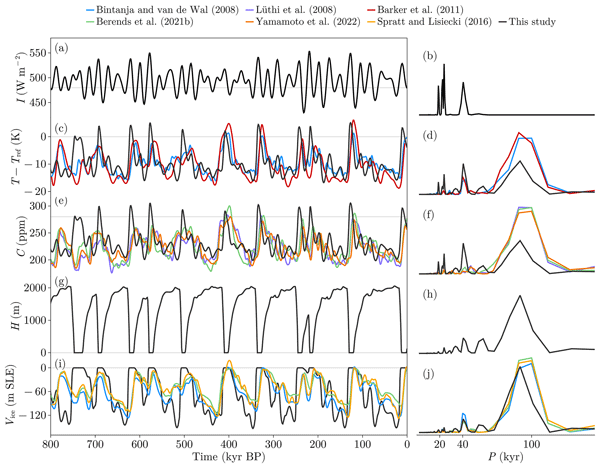
Sergio Pérez-Montero, Jorge Alvarez-Solas, Jan Swierczek-Jereczek, Daniel Moreno-Parada, Alexander Robinson, and Marisa Montoya
Earth Syst. Dynam., 16, 915–937, https://doi.org/10.5194/esd-16-915-2025, https://doi.org/10.5194/esd-16-915-2025, 2025
Short summary
Short summary
The climate of the last 3 Myr has varied between cold and warm periods. Numerous independent mechanisms have been proposed to explain this; however, no effort has been made to study their competing effects. Here we present a simple but physically motivated model that includes these mechanisms in a modular way. We identify ice-sheet dynamics and lithosphere displacement as main triggers, but reproducing the climate records additionally requires the natural darkening of ice.
Lucía Gutiérrez-González, Ilaria Tabone, Alexander Robinson, Jorge Álvarez-Solas, Jan Swierczek-Jereczek, Britta Grusdt, and Marisa Montoya
EGUsphere, https://doi.org/10.5194/egusphere-2026-3331, https://doi.org/10.5194/egusphere-2026-3331, 2026
This preprint is open for discussion and under review for Climate of the Past (CP).
Short summary
Short summary
The last deglaciation offers insights into ice-climate interactions, as paleoclimatic records document the retreat of ice sheets through a period of major climate changes. However, current ice-sheet models have difficulties reproducing key aspects of the Greenland Ice Sheet evolution. We present a new reconstruction based on an ensemble of 3000 simulations evaluated against observational constraints, improving upon previous studies, and we identify the parameters controlling model performance.
Britta Grusdt, Mahé Perrette, and Alexander Robinson
EGUsphere, https://doi.org/10.5194/egusphere-2026-2320, https://doi.org/10.5194/egusphere-2026-2320, 2026
Short summary
Short summary
We provide practical guidelines for producing weighted ensembles of climate models. We distinguish between two approaches, the individual- and the ensemble performance weighting approach, and formulate both in probabilistic terms, making the underlying assumptions transparent. Using constructed examples, we show the advantage of the ensemble weighting approach to account for model co-dependencies and examine how methodological choices affect the climate projections of the weighted ensemble.
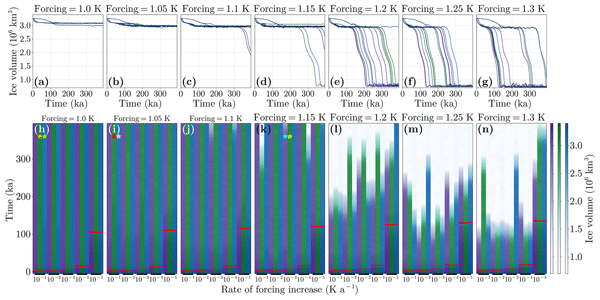
Kolja Kypke, Marisa Montoya, Alexander Robinson, Jorge Alvarez-Solas, Jan Swierczek-Jereczek, and Peter Ditlevsen
Earth Syst. Dynam., 17, 769–794, https://doi.org/10.5194/esd-17-769-2026, https://doi.org/10.5194/esd-17-769-2026, 2026
Short summary
Short summary
This model study sets out to investigate how the collapse of the Greenland ice sheet to a virtually ice-free state due to increasing temperatures depends on the rate of this increase. We find oscillations in ice volume on millennial timescales that impact the time it takes before the ice sheet collapses, concluding that there is a mode of deterministic chaos internal to the ice sheet dynamics.
Jan Swierczek-Jereczek, Erica M. Lucas, Natalya Gomez, Andrew J. Lloyd, Konstantin Latychev, and Jerry X. Mitrovica
EGUsphere, https://doi.org/10.5194/egusphere-2026-2640, https://doi.org/10.5194/egusphere-2026-2640, 2026
Short summary
Short summary
Projections of Antarctic ice loss and associated sea level contributions over the coming centuries are linked to glacial isostatic adjustment, a process by which changing ice sheets deform the solid Earth and sea surface. We show that FastIsostasy, a computationally efficient glacial isostatic adjustment model, offers a viable approach for ice sheet modellers to accurately capture solid Earth – ice sheet feedbacks at multi-century timescales.
James R. Jordan, Frank Pattyn, Daniel Abele, Torsten Albrecht, Jorge Alvarez-Solas, Jowan M. Barnes, Tijn Berends, Jorge A. Bernales, Javier Blasco, Gong Cheng, Youngmin Choi, Stephen L. Cornford, Cruz Garcia-Molina, Fabien Gillet-Chaulet, G. Hilmar Gudmundsson, Angelika Humbert, Gunter R. Leguy, William H. Lipscomb, Marisa Montoya, Daniel Moreno-Parada, Mathieu Morlighem, Tyler Pelle, Alexander Robinson, Martin Rückamp, Hélène Seroussi, Yanmei Tian, Luisa Wagner, Roderick S. W. van de Wal, Liyun Zhao, and Thomas Zwinger
EGUsphere, https://doi.org/10.5194/egusphere-2026-1962, https://doi.org/10.5194/egusphere-2026-1962, 2026
Short summary
Short summary
Ice calving is a recent inclusion in ice sheet models and there has not been a systematic test of how well it has been implemented. We show that models can accurately represent a given rate of ice calving, properties at the ice front evolve smoothly during calving, and that there are no consistent differences in ice behaviour between various approaches to representing calving in numerical ice models. This gives us confidence in their ability for use in sea level rise prediction simulations.
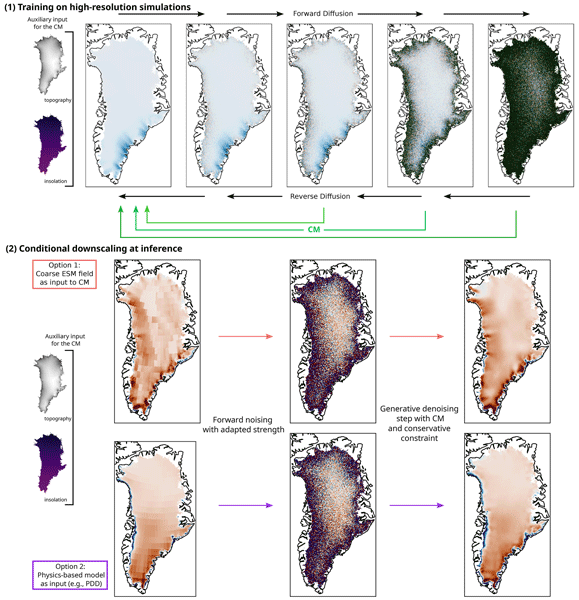
Nils Bochow, Philipp Hess, and Alexander Robinson
The Cryosphere, 20, 1841–1866, https://doi.org/10.5194/tc-20-1841-2026, https://doi.org/10.5194/tc-20-1841-2026, 2026
Short summary
Short summary
This study presents a fast, physics-guided machine-learning method that downscales coarse climate fields to fine resolution while enforcing conservation of large-scale totals. Trained on regional climate simulations and driven by Earth system model output, it handles extremes and outperforms linear interpolation, providing realistic, high-resolution forcing for ice-sheet models and improving projections of Greenland’s sea-level contribution.
Antonio Juarez-Martinez, Alexander Robinson, Jan Swierczek-Jereczek, Javier Blasco, Jorge Alvarez-Solas, and Marisa Montoya
EGUsphere, https://doi.org/10.5194/egusphere-2026-248, https://doi.org/10.5194/egusphere-2026-248, 2026
Short summary
Short summary
Tidal-water intrusions can cause warm ocean water to extend beneath grounded Antarctic ice, increasing submarine melting beyond the grounding line. Here, a new parameterization representing this effect is introduced and tested in the Yelmo ice-sheet model, revealing that tides could amplify ice loss and sea-level rise. This new parameterization shows good agreement with inferred grounding zones.

Lucía Gutiérrez-González, Alexander Robinson, Jorge Alvarez-Solas, Ilaria Tabone, Jan Swierczek-Jereczek, Daniel Moreno-Parada, and Marisa Montoya
The Cryosphere, 20, 1139–1162, https://doi.org/10.5194/tc-20-1139-2026, https://doi.org/10.5194/tc-20-1139-2026, 2026
Short summary
Short summary
The Greenland ice sheet is considered a tipping element: if temperatures exceed its threshold, it would transition to a virtually ice-free state and the ice losses could be irreversible on very long timescales. We study its stability across the full range of glacial-interglacial temperatures, as well as those expected in coming centuries. We find a future critical threshold between 1.5-2ºC of global warming, another under colder climates, and persistent hysteresis across the full range of study.
Jan Swierczek-Jereczek, Jorge Alvarez-Solas, Alexander Robinson, Lucía Gutiérrez-González, and Marisa Montoya
EGUsphere, https://doi.org/10.5194/egusphere-2025-6566, https://doi.org/10.5194/egusphere-2025-6566, 2026
Short summary
Short summary
The Antarctic Ice Sheet is subject to hysteresis, i.e. if ice is lost due to warming, a comparatively larger cooling is needed to recover the original state. Here, we show that this effect might be larger than previously assumed, with volume differences of as much as 35 metres of sea-level equivalent between retreat and regrowth. Due to the large population density along the coasts, this stresses the importance of mitigating future sea-level rise, since adapting to it will likely be much harder.
Johanna Beckmann, Ronja Reese, Felicity S. McCormack, Sue Cook, Lawrence Bird, Dawid Gwyther, Daniel Richards, Matthias Scheiter, Yu Wang, Hélène Seroussi, Ayako Abe‐Ouchi, Torsten Albrecht, Jorge Alvarez‐Solas, Xylar S. Asay‐Davis, Jean‐Baptiste Barre, Constantijn J. Berends, Jorge Bernales, Javier Blasco, Justine Caillet, David M. Chandler, Violaine Coulon, Richard Cullather, Christophe Dumas, Benjamin K. Galton‐Fenzi, Julius Garbe, Fabien Gillet‐Chaulet, Rupert Gladstone, Heiko Goelzer, Nicholas R. Golledge, Ralf Greve, G. Hilmar Gudmundsson, Holly Kyeore Han, Trevor R. Hillebrand, Matthew J. Hoffman, Philippe Huybrechts, Nicolas C. Jourdain, Ann Kristin Klose, Petra M. Langebroek, Gunter R. Leguy, William H. Lipscomb, Daniel P. Lowry, Pierre Mathiot, Marisa Montoya, Mathieu Morlighem, Sophie Nowicki, Frank Pattyn, Antony J. Payne, Tyler Pelle, Aurélien Quiquet, Alexander Robinson, Leopekka Saraste, Erika G. Simon, Sainan Sun, Jake P. Twarog, Luke D. Trusel, Benoit Urruty, Jonas Van Breedam, Roderik S. W. van de Wal, Chen Zhao, and Thomas Zwinger
EGUsphere, https://doi.org/10.5194/egusphere-2025-4069, https://doi.org/10.5194/egusphere-2025-4069, 2025
Short summary
Short summary
Antarctica holds enough ice to raise sea levels by many meters, but its future is uncertain. Warm ocean water melts ice shelves from below, letting inland ice flow faster into the sea. By 2300, Antarctica could add 0.6–4.4 m to sea levels. Our study identifies two key factors—how strongly shelves melt and how the ice responds. These explain much of the range, and refining them in models may improve future predictions.
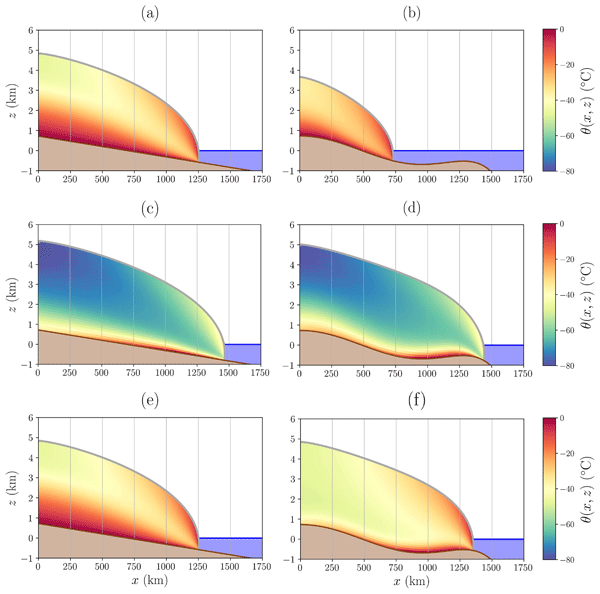
Daniel Moreno-Parada, Alexander Robinson, Marisa Montoya, and Jorge Alvarez-Solas
Geosci. Model Dev., 18, 3895–3919, https://doi.org/10.5194/gmd-18-3895-2025, https://doi.org/10.5194/gmd-18-3895-2025, 2025
Short summary
Short summary
We introduce Nix, an ice-sheet model designed for understanding how large masses of ice behave. Nix is a computer programme that simulates the movement and temperature evolution in ice sheets. It helps us study how ice sheets respond to changes in the atmosphere and ocean. We found that ice temperatures play an essential role in determining the motion and stability of ice sheets. Nix is a useful tool for learning how climate change affects polar ice sheets.
Sergio Pérez-Montero, Jorge Alvarez-Solas, Jan Swierczek-Jereczek, Daniel Moreno-Parada, Alexander Robinson, and Marisa Montoya
Earth Syst. Dynam., 16, 915–937, https://doi.org/10.5194/esd-16-915-2025, https://doi.org/10.5194/esd-16-915-2025, 2025
Short summary
Short summary
The climate of the last 3 Myr has varied between cold and warm periods. Numerous independent mechanisms have been proposed to explain this; however, no effort has been made to study their competing effects. Here we present a simple but physically motivated model that includes these mechanisms in a modular way. We identify ice-sheet dynamics and lithosphere displacement as main triggers, but reproducing the climate records additionally requires the natural darkening of ice.
Ricarda Winkelmann, Donovan P. Dennis, Jonathan F. Donges, Sina Loriani, Ann Kristin Klose, Jesse F. Abrams, Jorge Alvarez-Solas, Torsten Albrecht, David Armstrong McKay, Sebastian Bathiany, Javier Blasco Navarro, Victor Brovkin, Eleanor Burke, Gokhan Danabasoglu, Reik V. Donner, Markus Drüke, Goran Georgievski, Heiko Goelzer, Anna B. Harper, Gabriele Hegerl, Marina Hirota, Aixue Hu, Laura C. Jackson, Colin Jones, Hyungjun Kim, Torben Koenigk, Peter Lawrence, Timothy M. Lenton, Hannah Liddy, José Licón-Saláiz, Maxence Menthon, Marisa Montoya, Jan Nitzbon, Sophie Nowicki, Bette Otto-Bliesner, Francesco Pausata, Stefan Rahmstorf, Karoline Ramin, Alexander Robinson, Johan Rockström, Anastasia Romanou, Boris Sakschewski, Christina Schädel, Steven Sherwood, Robin S. Smith, Norman J. Steinert, Didier Swingedouw, Matteo Willeit, Wilbert Weijer, Richard Wood, Klaus Wyser, and Shuting Yang
EGUsphere, https://doi.org/10.5194/egusphere-2025-1899, https://doi.org/10.5194/egusphere-2025-1899, 2025
Short summary
Short summary
The Tipping Points Modelling Intercomparison Project (TIPMIP) is an international collaborative effort to systematically assess tipping point risks in the Earth system using state-of-the-art coupled and stand-alone domain models. TIPMIP will provide a first global atlas of potential tipping dynamics, respective critical thresholds and key uncertainties, generating an important building block towards a comprehensive scientific basis for policy- and decision-making.
Therese Rieckh, Andreas Born, Alexander Robinson, Robert Law, and Gerrit Gülle
Geosci. Model Dev., 17, 6987–7000, https://doi.org/10.5194/gmd-17-6987-2024, https://doi.org/10.5194/gmd-17-6987-2024, 2024
Short summary
Short summary
We present the open-source model ELSA, which simulates the internal age structure of large ice sheets. It creates layers of snow accumulation at fixed times during the simulation, which are used to model the internal stratification of the ice sheet. Together with reconstructed isochrones from radiostratigraphy data, ELSA can be used to assess ice sheet models and to improve their parameterization. ELSA can be used coupled to an ice sheet model or forced with its output.
Antonio Juarez-Martinez, Javier Blasco, Alexander Robinson, Marisa Montoya, and Jorge Alvarez-Solas
The Cryosphere, 18, 4257–4283, https://doi.org/10.5194/tc-18-4257-2024, https://doi.org/10.5194/tc-18-4257-2024, 2024
Short summary
Short summary
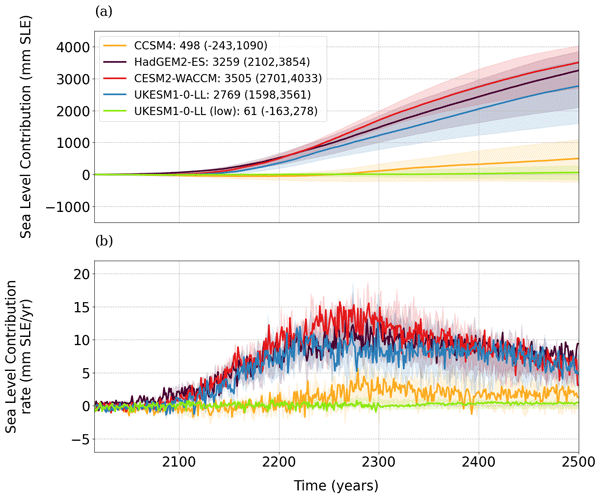
We present sea level projections for Antarctica in the context of ISMIP6-2300 with several forcings but extend the simulations to 2500, showing that more than 3 m of sea level contribution could be reached. We also test the sensitivity on a basal melting parameter and determine the timing of the loss of ice in the west region. All the simulations were carried out with the ice sheet model Yelmo.
Daniel Moreno-Parada, Alexander Robinson, Marisa Montoya, and Jorge Alvarez-Solas
The Cryosphere, 18, 4215–4232, https://doi.org/10.5194/tc-18-4215-2024, https://doi.org/10.5194/tc-18-4215-2024, 2024
Short summary
Short summary
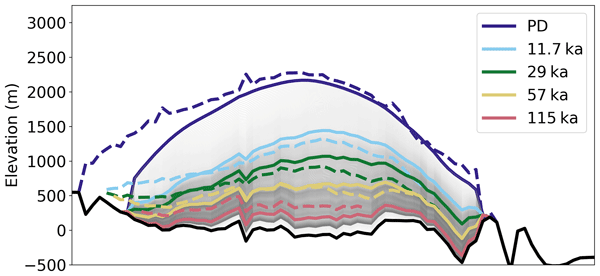
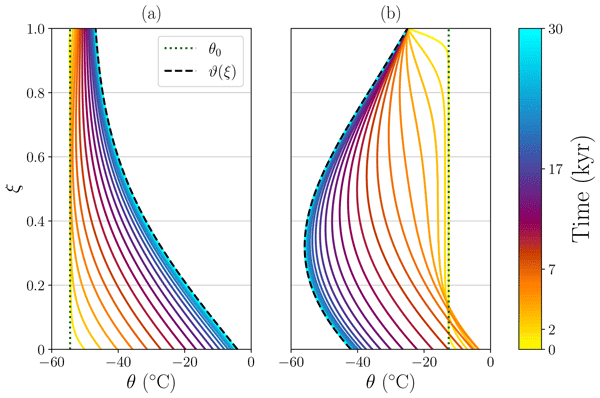
Our study tries to understand how the ice temperature evolves in a large mass as in the case of Antarctica. We found a relation that tells us the ice temperature at any point. These results are important because they also determine how the ice moves. In general, ice moves due to slow deformation (as if pouring honey from a jar). Nevertheless, in some regions the ice base warms enough and melts. The liquid water then serves as lubricant and the ice slides and its velocity increases rapidly.
Javier Blasco, Ilaria Tabone, Daniel Moreno-Parada, Alexander Robinson, Jorge Alvarez-Solas, Frank Pattyn, and Marisa Montoya
Clim. Past, 20, 1919–1938, https://doi.org/10.5194/cp-20-1919-2024, https://doi.org/10.5194/cp-20-1919-2024, 2024
Short summary
Short summary
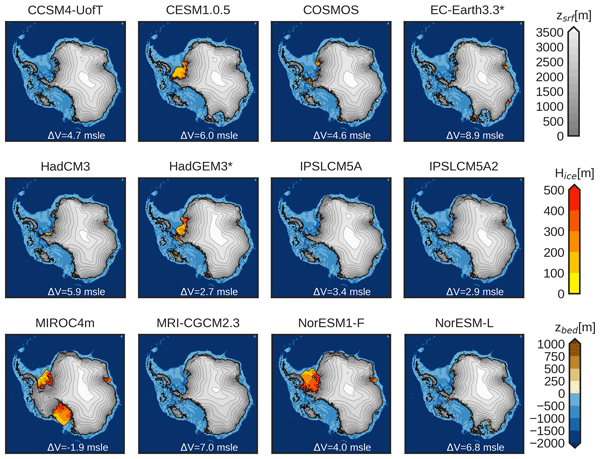
In this study, we assess Antarctic tipping points which may had been crossed during the mid-Pliocene Warm Period. For this, we use data from the PlioMIP2 ensemble. Additionally, we investigate various sources of uncertainty, like ice dynamics and bedrock configuration. Our research significantly enhances our comprehension of Antarctica's response to a warming climate, shedding light on potential future tipping points that may be surpassed.
Jan Swierczek-Jereczek, Marisa Montoya, Konstantin Latychev, Alexander Robinson, Jorge Alvarez-Solas, and Jerry Mitrovica
Geosci. Model Dev., 17, 5263–5290, https://doi.org/10.5194/gmd-17-5263-2024, https://doi.org/10.5194/gmd-17-5263-2024, 2024
Short summary
Short summary
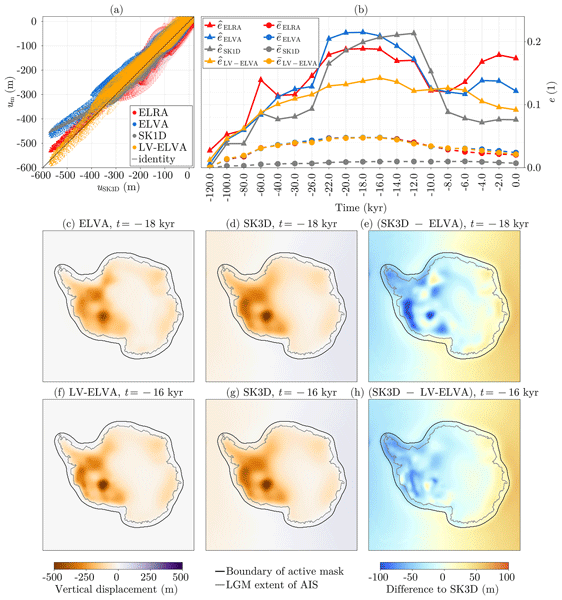
Ice sheets present a thickness of a few kilometres, leading to a vertical deformation of the crust of up to a kilometre. This process depends on properties of the solid Earth, which can be regionally very different. We propose a model that accounts for this often-ignored heterogeneity and run 100 000 simulation years in minutes. Thus, the evolution of ice sheets is modeled with better accuracy, which is critical for a good mitigation of climate change and, in particular, sea-level rise.
Daniel Moreno-Parada, Jorge Alvarez-Solas, Javier Blasco, Marisa Montoya, and Alexander Robinson
The Cryosphere, 17, 2139–2156, https://doi.org/10.5194/tc-17-2139-2023, https://doi.org/10.5194/tc-17-2139-2023, 2023
Short summary
Short summary
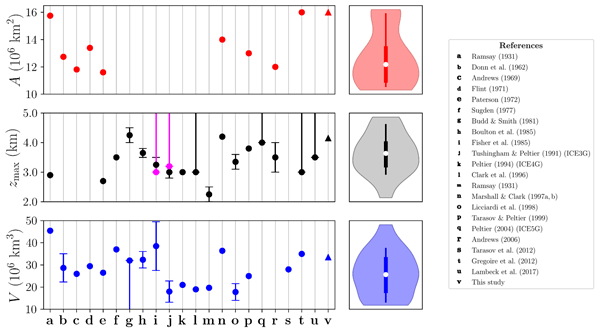
We have reconstructed the Laurentide Ice Sheet, located in North America during the Last Glacial Maximum (21 000 years ago). The absence of direct measurements raises a number of uncertainties. Here we study the impact of different physical laws that describe the friction as the ice slides over its base. We found that the Laurentide Ice Sheet is closest to prior reconstructions when the basal friction takes into account whether the base is frozen or thawed during its motion.
Matteo Willeit, Andrey Ganopolski, Alexander Robinson, and Neil R. Edwards
Geosci. Model Dev., 15, 5905–5948, https://doi.org/10.5194/gmd-15-5905-2022, https://doi.org/10.5194/gmd-15-5905-2022, 2022
Short summary
Short summary
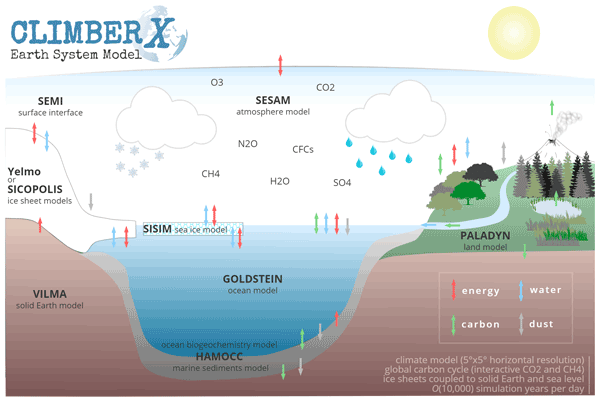
In this paper we present the climate component of the newly developed fast Earth system model CLIMBER-X. It has a horizontal resolution of 5°x5° and is designed to simulate the evolution of the Earth system on temporal scales ranging from decades to >100 000 years. CLIMBER-X is available as open-source code and is expected to be a useful tool for studying past climate changes and for the investigation of the long-term future evolution of the climate.
Alexander Robinson, Daniel Goldberg, and William H. Lipscomb
The Cryosphere, 16, 689–709, https://doi.org/10.5194/tc-16-689-2022, https://doi.org/10.5194/tc-16-689-2022, 2022
Short summary
Short summary
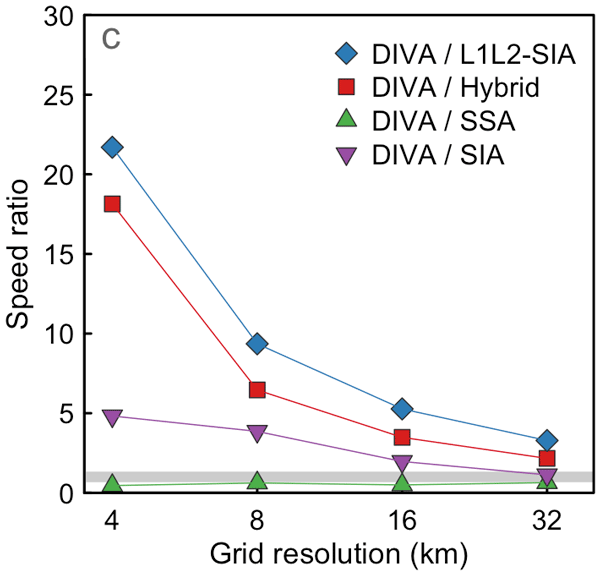
Here we investigate the numerical stability of several commonly used methods in order to determine which of them are capable of resolving the complex physics of the ice flow and are also computationally efficient. We find that the so-called DIVA solver outperforms the others. Its representation of the physics is consistent with more complex methods, while it remains computationally efficient at high resolution.
Andreas Born and Alexander Robinson
The Cryosphere, 15, 4539–4556, https://doi.org/10.5194/tc-15-4539-2021, https://doi.org/10.5194/tc-15-4539-2021, 2021
Short summary
Short summary
Ice penetrating radar reflections from the Greenland ice sheet are the best available record of past accumulation and how these layers have been deformed over time by the flow of ice. Direct simulations of this archive hold great promise for improving our models and for uncovering details of ice sheet dynamics that neither models nor data could achieve alone. We present the first three-dimensional ice sheet model that explicitly simulates individual layers of accumulation and how they deform.
Cited articles
Abe-Ouchi, A., Saito, F., Kawamura, K., Raymo, M. E., Okuno, J., Takahashi, K., and Blatter, H.: Insolation-driven 100 000-year glacial cycles and hysteresis of ice-sheet volume, Nature, 500, 190–193, 2013. a
Adhémar, J.: Révolution des mers, Déluges périodiques, Première édition: Carilian-Goeury et V, Dalmont, Paris, Seconde édition: Lacroix-Comon, Hachette et Cie, Dalmont et Dunod, Paris, 1842. a
Agassiz, L.: Études sur les glaciers, privately published, Neuchatel, 1840. a
Ahn, S., Khider, D., Lisiecki, L. E., and Lawrence, C. E.: A probabilistic Pliocene–Pleistocene stack of benthic δ18O using a profile hidden Markov model, Dynamics and Statistics of the Climate System, 2, dzx002, https://doi.org/10.1093/climsys/dzx002, 2017. a, b
Barker, S., Knorr, G., Edwards, R. L., Parrenin, F., Putnam, A. E., Skinner, L. C., Wolff, E., and Ziegler, M.: 800 000 years of abrupt climate variability, Science, 334, 347–351, https://doi.org/10.1126/science.1203580, 2011. a, b
Bates, R. and Jackson, J.: American Geological Institute Glossary of Geology, Alexandria Virginia, ISBN-10: 0913312894, ISBN-13: 978-0913312896, 1987. a
Benn, D. I., Fowler, A. C., Hewitt, I., and Sevestre, H.: A general theory of glacier surges, J. Glaciol., 65, 701–716, https://doi.org/10.1017/jog.2019.62, 2019. a, b, c
Berends, C. J., Köhler, P., Lourens, L. J., and van de Wal, R. S. W.: On the Cause of the Mid-Pleistocene Transition, Rev. Geophys., 59, https://doi.org/10.1029/2020RG000727, 2021a. a, b, c
Berends, C. J., de Boer, B., and van de Wal, R. S. W.: Reconstructing the evolution of ice sheets, sea level, and atmospheric CO2 during the past 3.6 million years, Clim. Past, 17, 361–377, https://doi.org/10.5194/cp-17-361-2021, 2021b. a
Berger, A.: Milankovitch theory and climate, Rev. Geophys., 26, 624–657, https://doi.org/10.1029/RG026i004p00624, 1988. a
Berger, W. H. and Jansen, E.: Mid-Pleistocene climate shift-the Nansen connection, Geoph. Monog. Series, 85, 295–311, https://doi.org/10.1029/GM085p0295, 1994. a, b
Broecker, W. S. and Van Donk, J.: Insolation changes, ice volumes, and the O18 record in deep-sea cores, Rev. Geophys., 8, 169–198, https://doi.org/10.1029/RG008i001p00169, 1970. a
Carrillo, J., Mann, M. E., Larson, C. J., Christiansen, S., Willeit, M., Ganopolski, A., Li, X., and Murphy, J. G.: Path-dependence of the Plio–Pleistocene glacial/interglacial cycles, P. Natl. Acad. Sci. USA, 121, e2322926121, https://doi.org/10.1073/pnas.2322926121, 2024. a, b, c
Chalk, T. B., Hain, M. P., Foster, G. L., Rohling, E. J., Sexton, P. F., Badger, M. P., Cherry, S. G., Hasenfratz, A. P., Haug, G. H., Jaccard, S. L., Martínez-García, A., Pälike, H., Pancost, R. D., and Wilson, P. A.: Causes of ice age intensification across the Mid-Pleistocene Transition, P. Natl. Acad. Sci. USA, 114, 13114–13119, https://doi.org/10.1073/pnas.1702143114, 2017. a, b, c
Clark, P. U., Alley, R. B., and Pollard, D.: Northern Hemisphere ice-sheet influences on global climate change, Science, 286, 1104–1111, 1999. a
Clark, P. U., Archer, D., Pollard, D., Blum, J. D., Rial, J. A., Brovkin, V., Mix, A. C., Pisias, N. G., and Roy, M.: The middle Pleistocene transition: characteristics, mechanisms, and implications for long-term changes in atmospheric pCO2, Quaternary Sci. Rev., 25, 3150–3184, https://doi.org/10.1016/j.quascirev.2006.07.008, 2006. a, b, c, d, e, f, g, h, i, j, k, l, m, n, o
Clark, P. U., Shakun, J. D., Rosenthal, Y., Köhler, P., and Bartlein, P. J.: Global and regional temperature change over the past 4.5 million years, Science, 383, 884–890, https://doi.org/10.1126/science.adi1908, 2024. a, b, c, d
Clark, P. U., Shakun, J. D., Rosenthal, Y., Pollard, D., Hostetler, S. W., Köhler, P., Bartlein, P. J., Gregory, J. M., Zhu, C., Schrag, D. P., Liu, Z., and Pisias, N. G.: Global mean sea level over the past 4.5 million years, Science, 390, eadv8389, https://doi.org/10.1126/science.adv8389, 2025. a, b, c, d, e, f, g
Cook, S. J., Swift, D. A., Kirkbride, M. P., Knight, P. G., and Waller, R. I.: The empirical basis for modelling glacial erosion rates, Nat. Commun., 11, 759, https://doi.org/10.1038/s41467-020-14583-8, 2020. a, b
Cuffey, K. M. and Paterson, W. S. B.: The physics of glaciers, Academic Press, https://doi.org/10.3189/002214311796405906, 2010. a, b, c
Delunel, R., Schlunegger, F., Valla, P. G., Dixon, J., Glotzbach, C., Hippe, K., Kober, F., Molliex, S., Norton, K. P., Salcher, B., Wittmann, H., Akçar, N., and Christl, M.: Late-Pleistocene catchment-wide denudation patterns across the European Alps, Earth-Sci. Rev., 211, 103407, https://doi.org/10.1016/j.earscirev.2020.103407, 2020. a
Esmark, J.: Bidrag til vor jordklodes historie, Magazin for Naturvidenskaberne, 2, 28–49, 1824. a
Esmark, J.: Remarks tending to explain the geological history of the Earth, The Edinburgh New Philosophical Journal, 2, 107–121, 1826. a
Ganopolski, A. and Calov, R.: The role of orbital forcing, carbon dioxide and regolith in 100 kyr glacial cycles, Clim. Past, 7, 1415–1425, https://doi.org/10.5194/cp-7-1415-2011, 2011. a, b, c, d
Gildor, H. and Tziperman, E.: A sea ice climate switch mechanism for the 100-kyr glacial cycles, J. Geophys. Res.-Oceans, 106, 9117–9133, https://doi.org/10.1029/1999JC000120, 2001. a
Golledge, N. R., Levy, R. H., McKay, R. M., Fogwill, C. J., White, D. A., Graham, A. G., Smith, J. A., Hillenbrand, C.-D., Licht, K. J., Denton, G. H., Ackert, R. P., Maas, S. M., and Hall, B. L.: Glaciology and geological signature of the Last Glacial Maximum Antarctic ice sheet, Quaternary Sci. Rev., 78, 225–247, https://doi.org/10.1016/j.quascirev.2013.08.011, 2013. a, b, c
Goss, G. and Rooney, A.: Variations in Mid-Pleistocene glacial cycles: New insights from osmium isotopes, Quaternary Sci. Rev., 321, 108357, https://doi.org/10.1016/j.quascirev.2023.108357, 2023. a
Herbert, T. D., Lawrence, K. T., Tzanova, A., Peterson, L. C., Caballero-Gill, R., and Kelly, C. S.: Late Miocene global cooling and the rise of modern ecosystems, Nat. Geosci., 9, 843–847, https://doi.org/10.1038/ngeo2813, 2016. a, b
Hodell, D. A. and Channell, J. E. T.: Mode transitions in Northern Hemisphere glaciation: co-evolution of millennial and orbital variability in Quaternary climate, Clim. Past, 12, 1805–1828, https://doi.org/10.5194/cp-12-1805-2016, 2016. a, b
Hodell, D. A. and Venz-Curtis, K. A.: Late Neogene history of deepwater ventilation in the Southern Ocean, Geochem. Geophy. Geosy., 7, https://doi.org/10.1029/2005GC001211, 2006. a
Hodell, D. A., Channell, J. E., Curtis, J. H., Romero, O. E., and Röhl, U.: Onset of “Hudson Strait” Heinrich events in the eastern North Atlantic at the end of the middle Pleistocene transition (∼ 640 ka)?, Paleoceanography, 23, PA4218, https://doi.org/10.1029/2008PA001591, 2008. a
Hodell, D. A., Crowhurst, S. J., Lourens, L., Margari, V., Nicolson, J., Rolfe, J. E., Skinner, L. C., Thomas, N. C., Tzedakis, P. C., Mleneck-Vautravers, M. J., and Wolff, E. W.: A 1.5-million-year record of orbital and millennial climate variability in the North Atlantic, Clim. Past, 19, 607–636, https://doi.org/10.5194/cp-19-607-2023, 2023. a, b, c
Huybers, P.: Early Pleistocene glacial cycles and the integrated summer insolation forcing, Science, 313, 508–511, https://doi.org/10.1126/science.1125249, 2006. a, b
Jamieson, S. S., Hulton, N. R., and Hagdorn, M.: Modelling landscape evolution under ice sheets, Geomorphology, 97, 91–108, https://doi.org/10.1016/j.geomorph.2007.02.047, 2008. a, b
Le Meur, E. and Huybrechts, P.: A comparison of different ways of dealing with isostasy: examples from modelling the Antarctic ice sheet during the last glacial cycle, Ann. Glaciol., 23, 309–317, https://doi.org/10.3189/S0260305500013586, 1996. a
Lebedeva, M. I., Fletcher, R., and Brantley, S.: A mathematical model for steady-state regolith production at constant erosion rate, Earth Surf. Proc. Land., 35, 508–524, https://doi.org/10.1002/esp.1954, 2010. a
Legrain, E., Parrenin, F., and Capron, E.: A gradual change is more likely to have caused the Mid-Pleistocene Transition than an abrupt event, Communications Earth & Environment, 4, 90, https://doi.org/10.1038/s43247-023-00754-0, 2023. a
Lisiecki, L. E. and Raymo, M. E.: A Pliocene-Pleistocene stack of 57 globally distributed benthic δ18O records, Paleoceanography, 20, https://doi.org/10.1029/2004PA001071, 2005. a, b, c, d
Lüthi, D., Le Floch, M., Bereiter, B., Blunier, T., Barnola, J.-M., Siegenthaler, U., Raynaud, D., Jouzel, J., Fischer, H., Kawamura, K., and Stocker, T. F.: High-resolution carbon dioxide concentration record 650 000–800 000 years before present, Nature, 453, 379–382, https://doi.org/10.1038/nature06949, 2008. a, b
Margold, M., Stokes, C. R., and Clark, C. D.: Ice streams in the Laurentide Ice Sheet: Identification, characteristics and comparison to modern ice sheets, Earth-Sci. Rev., 143, 117–146, https://doi.org/10.1016/j.earscirev.2015.01.011, 2015. a, b, c
Martin, J. R. W., Pedro, J. B., and Vance, T. R.: Predicting trends in atmospheric CO2 across the Mid-Pleistocene Transition using existing climate archives, Clim. Past, 20, 2487–2497, https://doi.org/10.5194/cp-20-2487-2024, 2024. a
McKeague, J., Grant, D., Kodama, H., Beke, G., and Wang, C.: Properties and genesis of a soil and the underlying gibbsite-bearing saprolite, Cape Breton Island, Canada, Can. J. Earth Sci., 20, 37–48, https://doi.org/10.1139/e83-004, 1983. a
Mooney, W. D., Barrera-Lopez, C., Suárez, M. G., and Castelblanco, M. A.: Earth Crustal Model 1 (ECM1): A 1°×1° Global Seismic and Density Model, Earth-Sci. Rev., 243, 104493, https://doi.org/10.1016/j.earscirev.2023.104493, 2023. a
Murphy, J. J.: The glacial climate and the polar ice-cap, Q. J. Geol. Soc. London, 32, 400–406, 1876. a
Myhre, G., Highwood, E. J., Shine, K. P., and Stordal, F.: New estimates of radiative forcing due to well mixed greenhouse gases, Geophys. Res. Lett., 25, 2715–2718, https://doi.org/10.1029/98GL01908, 1998. a
Paillard, D.: The timing of Pleistocene glaciations from a simple multiple-state climate model, Nature, 391, 378–381, https://doi.org/10.1038/34891, 1998. a
Paillard, D.: Glacial cycles: toward a new paradigm, Rev. Geophys., 39, 325–346, https://doi.org/10.1029/2000RG000091, 2001. a, b
Paillard, D.: Quaternary glaciations: from observations to theories, Quaternary Sci. Rev., 107, 11–24, https://doi.org/10.1016/j.quascirev.2014.10.002, 2015. a
Paillard, D. and Parrenin, F.: The Antarctic ice sheet and the triggering of deglaciations, Earth Planet. Sc. Lett., 227, 263–271, https://doi.org/10.1016/j.epsl.2004.08.023, 2004. a
Parrenin, F. and Paillard, D.: Amplitude and phase of glacial cycles from a conceptual model, Earth Planet. Sc. Lett., 214, 243–250, 2003. a
Pérez-Montero, S.: sperezmont/Pacco.jl: v1.0.0-rc2.1, Version v1.0.0-rc2.1, Zenodo [code], https://doi.org/10.5281/zenodo.14534680, 2024. a
Pérez-Montero, S.: sperezmont/Perez-Montero-etal_2026_CP: v3.0.0-rc1.1, Zenodo [code], https://doi.org/10.5281/zenodo.14891899, 2026. a
Pisias, N. G. and Moore Jr., T.: The evolution of Pleistocene climate: a time series approach, Earth Planet. Sc. Lett., 52, 450–458, https://doi.org/10.1016/0012-821X(81)90197-7, 1981. a, b
Pollard, D. and DeConto, R. M.: Description of a hybrid ice sheet-shelf model, and application to Antarctica, Geosci. Model Dev., 5, 1273–1295, https://doi.org/10.5194/gmd-5-1273-2012, 2012. a, b
Raymo, M., Ruddiman, W., Backman, J., Clement, B., and Martinson, D.: Late Pliocene variation in Northern Hemisphere ice sheets and North Atlantic deep water circulation, Paleoceanography, 4, 413–446, https://doi.org/10.1029/PA004i004p00413, 1989. a, b
Raymo, M., Oppo, D., and Curry, W.: The mid-Pleistocene climate transition: A deep sea carbon isotopic perspective, Paleoceanography, 12, 546–559, https://doi.org/10.1029/97PA01019, 1997. a
Raymo, M. E. and Nisancioglu, K. H.: The 41 kyr world: Milankovitch's other unsolved mystery, Paleoceanography, 18, https://doi.org/10.1029/2002PA000791, 2003. a, b
Raymo, M. E., Lisiecki, L., and Nisancioglu, K. H.: Plio-Pleistocene ice volume, Antarctic climate, and the global δ18O record, Science, 313, 492–495, https://doi.org/10.1126/science.1123296, 2006. a, b, c
Rohling, E., Foster, G. L., Grant, K., Marino, G., Roberts, A., Tamisiea, M. E., and Williams, F.: Sea-level and deep-sea-temperature variability over the past 5.3 million years, Nature, 508, 477–482, https://doi.org/10.1038/nature13230, 2014. a, b
Roy, K. and Peltier, W.: Relative sea level in the Western Mediterranean basin: A regional test of the ICE-7G_NA (VM7) model and a constraint on late Holocene Antarctic deglaciation, Quaternary Sci. Rev., 183, 76–87, https://doi.org/10.1016/j.quascirev.2017.12.021, 2018. a
Scherrenberg, M. D. W., Berends, C. J., and van de Wal, R. S. W.: CO2 and summer insolation as drivers for the Mid-Pleistocene Transition, Clim. Past, 21, 1061–1077, https://doi.org/10.5194/cp-21-1061-2025, 2025. a
Setterholm, D. R. and Morey, G. B.: An extensive pre-Cretaceous weathering profile in east-central and southwestern Minnesota, 1989, US Department of the Interior, US Geological Survey, https://doi.org/10.3133/b1989H, 1995. a, b, c
Shackleton, N.: Oxygen isotopes, ice volume and sea level, Quaternary Sci. Rev., 6, 183–190, 1987. a
Sosdian, S. and Rosenthal, Y.: Deep-sea temperature and ice volume changes across the Pliocene-Pleistocene climate transitions, Science, 325, 306–310, https://doi.org/10.1126/science.1169938, 2009. a, b
Spratt, R. M. and Lisiecki, L. E.: A Late Pleistocene sea level stack, Clim. Past, 12, 1079–1092, https://doi.org/10.5194/cp-12-1079-2016, 2016. a, b, c
Strunk, A., Knudsen, M. F., Egholm, D. L., Jansen, J. D., Levy, L. B., Jacobsen, B. H., and Larsen, N. K.: One million years of glaciation and denudation history in west Greenland, Nat. Commun., 8, 14199, https://doi.org/10.1038/ncomms14199, 2017. a
Svendsen, J. I., Mangerud, J., and Miller, G. H.: Denudation rates in the Arctic estimated from lake sediments on Spitsbergen, Svalbard, Palaeogeogr. Palaeocl., 76, 153–168, https://doi.org/10.1016/0031-0182(89)90108-9, 1989. a
Tzedakis, P., Crucifix, M., Mitsui, T., and Wolff, E. W.: A simple rule to determine which insolation cycles lead to interglacials, Nature, 542, 427–432, https://doi.org/10.1038/nature21364, 2017. a
Tziperman, E. and Gildor, H.: On the mid-Pleistocene transition to 100-kyr glacial cycles and the asymmetry between glaciation and deglaciation times, Paleoceanography, 18, 1–1, https://doi.org/10.1029/2001pa000627, 2003. a
van de Wal, R. S. W., de Boer, B., Lourens, L. J., Köhler, P., and Bintanja, R.: Reconstruction of a continuous high-resolution CO2 record over the past 20 million years, Clim. Past, 7, 1459–1469, https://doi.org/10.5194/cp-7-1459-2011, 2011. a
Wang, C., Ross, G., and Rees, H.: Characteristics of residual and colluvial soils developed on granite and of the associated pre-Wisconsin landforms in north-central New Brunswick, Can. J. Earth Sci., 18, 487–494, https://doi.org/10.1139/e81-042, 1981. a
Willeit, M. and Ganopolski, A.: The importance of snow albedo for ice sheet evolution over the last glacial cycle, Clim. Past, 14, 697–707, https://doi.org/10.5194/cp-14-697-2018, 2018. a, b
Willeit, M., Ganopolski, A., Calov, R., Robinson, A., and Maslin, M.: The role of CO2 decline for the onset of Northern Hemisphere glaciation, Quaternary Sci. Rev., 119, 22–34, https://doi.org/10.1016/j.quascirev.2015.04.015, 2015. a
Short summary
Almost 3 million years ago, the planet began to experience a succession of cold and warm periods every 40,000 years. However, about 1 million years ago, they began to occur every 100,000 years. In this paper we explore how the change in the basal velocity of the ice sheets could have produced this change in behavior. On the other hand, we also see that in our model, decreasing in time the sensitivity of snowfall to temperature is also an effective mechanism with which to reproduce the records.
Almost 3 million years ago, the planet began to experience a succession of cold and warm periods...


