
Articles | Volume 22, issue 3
https://doi.org/10.5194/cp-22-483-2026
© Author(s) 2026. This work is distributed under
the Creative Commons Attribution 4.0 License.
the Creative Commons Attribution 4.0 License.
https://doi.org/10.5194/cp-22-483-2026
© Author(s) 2026. This work is distributed under
the Creative Commons Attribution 4.0 License.
the Creative Commons Attribution 4.0 License.
Research article
| 
04 Mar 2026
Research article |
| 04 Mar 2026
| 04 Mar 2026
The oxygen valve on hydrogen escape since the great oxidation event

Institute of Astronomy, University of Cambridge, Cambridge, CB3 0HA, UK
Dan Marsh
School of Physics and Astronomy, University of Leeds, Leeds, LS2 9JT, UK
Catherine Walsh
CORRESPONDING AUTHOR
School of Physics and Astronomy, University of Leeds, Leeds, LS2 9JT, UK
Felix Sainsbury-Martinez
School of Physics and Astronomy, University of Leeds, Leeds, LS2 9JT, UK
Marrick Braam
Center for Space and Habitability, University of Bern, Gesellschaftsstrasse 6, 3012 Bern, Switzerland
Related authors
No articles found.
Miriam Sinnhuber, Christina Arras, Stefan Bender, Bernd Funke, Hanli Liu, Daniel R. Marsh, Thomas Reddmann, Eugene Rozanov, Timofei Sukhodolov, Monika E. Szelag, and Jan Maik Wissing
Atmos. Chem. Phys., 25, 14719–14734, https://doi.org/10.5194/acp-25-14719-2025, https://doi.org/10.5194/acp-25-14719-2025, 2025
Short summary
Short summary
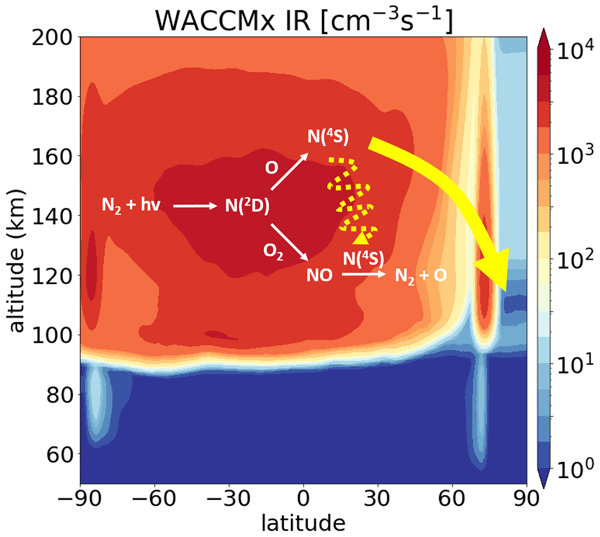
Nitric oxide in the upper atmosphere varies with solar activity. Observations show that this starts a chain of processes affecting the ozone layer and climate system. This is often underestimated in models. We compare five models which show large differences in simulated NO. Analysis of these discrepancies identify two processes which interact with each other: the balance between atomic and molecular oxygen in the thermosphere, and a poleward - downward transport in the winter thermosphere.
Weiyu Zhang, Kwinten Van Weverberg, Cyril J. Morcrette, Wuhu Feng, Kalli Furtado, Paul R. Field, Chih-Chieh Chen, Andrew Gettelman, Piers M. Forster, Daniel R. Marsh, and Alexandru Rap
Atmos. Chem. Phys., 25, 473–489, https://doi.org/10.5194/acp-25-473-2025, https://doi.org/10.5194/acp-25-473-2025, 2025
Short summary
Short summary
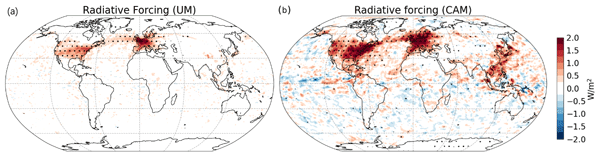
Contrail cirrus is the largest, but also most uncertain, contribution of aviation to global warming. We evaluate, for the first time, the impact of the host climate model on contrail cirrus properties. Substantial differences exist between contrail cirrus formation, persistence, and radiative effects in the host climate models. Reliable contrail cirrus simulations require advanced representation of cloud optical properties and microphysics, which should be better constrained by observations.
Jianfei Wu, Wuhu Feng, Xianghui Xue, Daniel Robert Marsh, and John Maurice Campbell Plane
Atmos. Chem. Phys., 24, 12133–12141, https://doi.org/10.5194/acp-24-12133-2024, https://doi.org/10.5194/acp-24-12133-2024, 2024
Short summary
Short summary
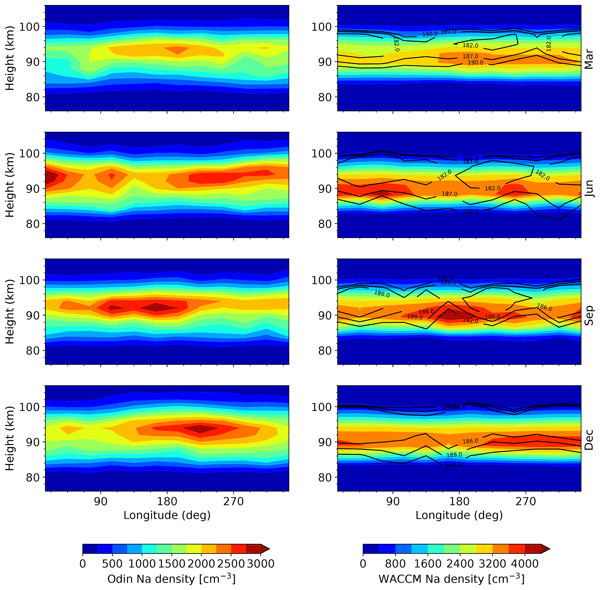
Metal layers occur in the mesosphere and lower thermosphere region 80–120 km from the ablation of cosmic dust. Nonmigrating diurnal tides are persistent global oscillations. We investigate nonmigrating diurnal tidal variations in metal layers using satellite observations and global climate model simulations; these have not been studied previously due to the limitations of measurements. The nonmigrating diurnal tides in temperature are strongly linked to the corresponding change in metal layers.
Connor J. Clayton, Daniel R. Marsh, Steven T. Turnock, Ailish M. Graham, Kirsty J. Pringle, Carly L. Reddington, Rajesh Kumar, and James B. McQuaid
Atmos. Chem. Phys., 24, 10717–10740, https://doi.org/10.5194/acp-24-10717-2024, https://doi.org/10.5194/acp-24-10717-2024, 2024
Short summary
Short summary
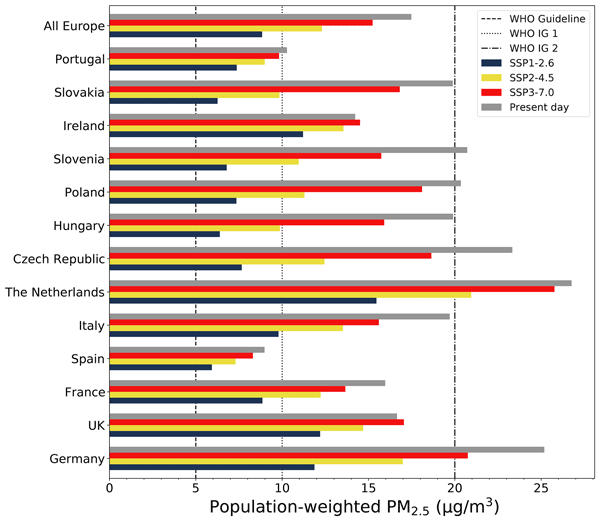
We demonstrate that strong climate mitigation could improve air quality in Europe; however, less ambitious mitigation does not result in these co-benefits. We use a high-resolution atmospheric chemistry model. This allows us to demonstrate how this varies across European countries and analyse the underlying chemistry. This may help policy-facing researchers understand which sectors and regions need to be prioritised to achieve strong air quality co-benefits of climate mitigation.
Manuel López-Puertas, Federico Fabiano, Victor Fomichev, Bernd Funke, and Daniel R. Marsh
Geosci. Model Dev., 17, 4401–4432, https://doi.org/10.5194/gmd-17-4401-2024, https://doi.org/10.5194/gmd-17-4401-2024, 2024
Short summary
Short summary
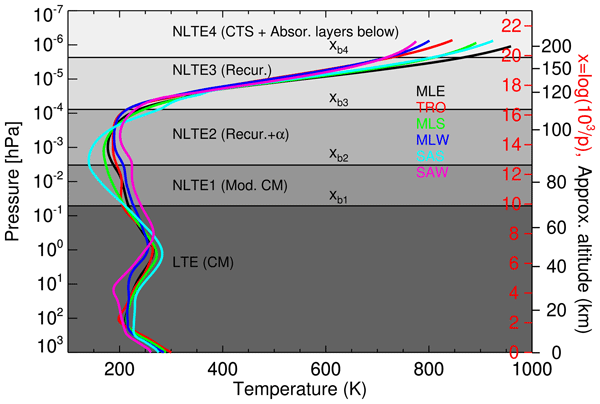
The radiative infrared cooling of CO2 in the middle atmosphere is crucial for computing its thermal structure. It requires one however to include non-local thermodynamic equilibrium processes which are computationally very expensive, which cannot be afforded by climate models. In this work, we present an updated, efficient, accurate and very fast (~50 µs) parameterization of that cooling able to cope with CO2 abundances from half the pre-industrial values to 10 times the current abundance.
Bernd Funke, Thierry Dudok de Wit, Ilaria Ermolli, Margit Haberreiter, Doug Kinnison, Daniel Marsh, Hilde Nesse, Annika Seppälä, Miriam Sinnhuber, and Ilya Usoskin
Geosci. Model Dev., 17, 1217–1227, https://doi.org/10.5194/gmd-17-1217-2024, https://doi.org/10.5194/gmd-17-1217-2024, 2024
Short summary
Short summary
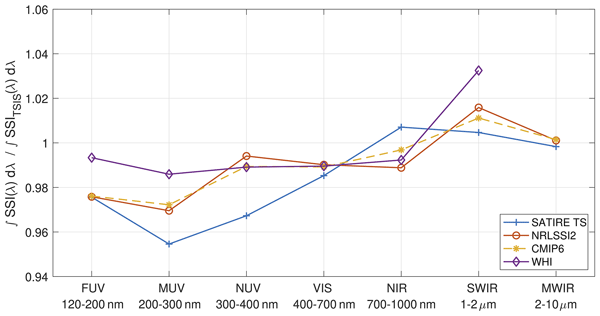
We outline a road map for the preparation of a solar forcing dataset for the upcoming Phase 7 of the Coupled Model Intercomparison Project (CMIP7), considering the latest scientific advances made in the reconstruction of solar forcing and in the understanding of climate response while also addressing the issues that were raised during CMIP6.
John M. C. Plane, Jörg Gumbel, Konstantinos S. Kalogerakis, Daniel R. Marsh, and Christian von Savigny
Atmos. Chem. Phys., 23, 13255–13282, https://doi.org/10.5194/acp-23-13255-2023, https://doi.org/10.5194/acp-23-13255-2023, 2023
Short summary
Short summary
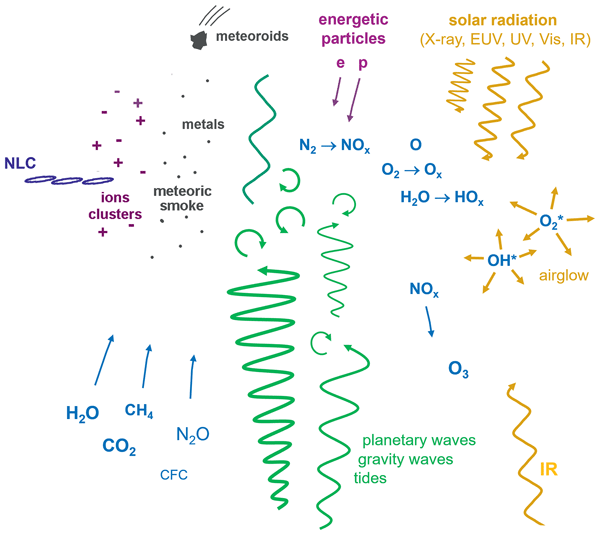
The mesosphere or lower thermosphere region of the atmosphere borders the edge of space. It is subject to extreme ultraviolet photons and charged particles from the Sun and atmospheric gravity waves from below, which tend to break in this region. The pressure is very low, which facilitates chemistry involving species in excited states, and this is also the region where cosmic dust ablates and injects various metals. The result is a unique and exotic chemistry.
Bingkun Yu, Xianghui Xue, Christopher J. Scott, Mingjiao Jia, Wuhu Feng, John M. C. Plane, Daniel R. Marsh, Jonas Hedin, Jörg Gumbel, and Xiankang Dou
Atmos. Chem. Phys., 22, 11485–11504, https://doi.org/10.5194/acp-22-11485-2022, https://doi.org/10.5194/acp-22-11485-2022, 2022
Short summary
Short summary
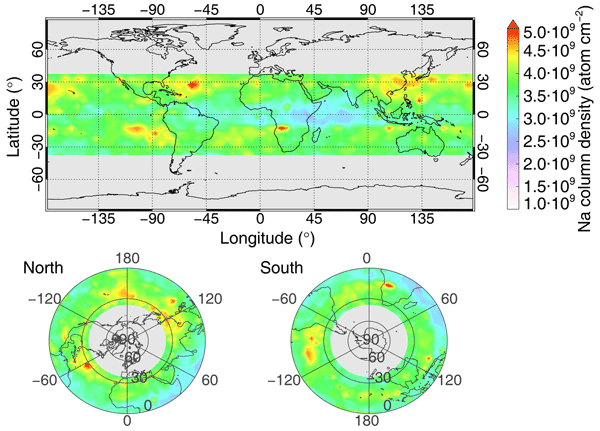
We present a study on the climatology of the metal sodium layer in the upper atmosphere from the ground-based measurements obtained from a lidar network, the Odin satellite measurements, and a global model of meteoric sodium in the atmosphere. Comprehensively, comparisons show good agreement and some discrepancies between ground-based observations, satellite measurements, and global model simulations.
Ioannis A. Daglis, Loren C. Chang, Sergio Dasso, Nat Gopalswamy, Olga V. Khabarova, Emilia Kilpua, Ramon Lopez, Daniel Marsh, Katja Matthes, Dibyendu Nandy, Annika Seppälä, Kazuo Shiokawa, Rémi Thiéblemont, and Qiugang Zong
Ann. Geophys., 39, 1013–1035, https://doi.org/10.5194/angeo-39-1013-2021, https://doi.org/10.5194/angeo-39-1013-2021, 2021
Short summary
Short summary
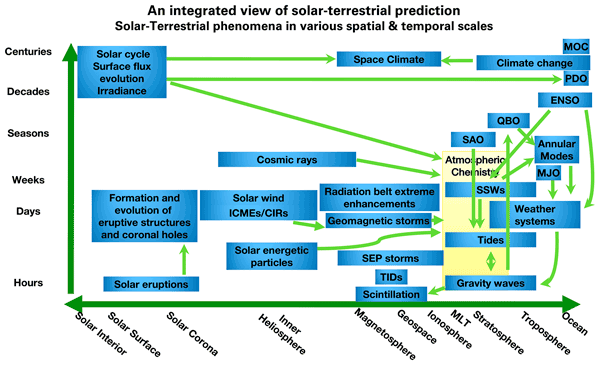
We present a detailed account of the science programme PRESTO (PREdictability of the variable Solar–Terrestrial cOupling), covering the period 2020 to 2024. PRESTO was defined by a dedicated committee established by SCOSTEP (Scientific Committee on Solar-Terrestrial Physics). We review the current state of the art and discuss future studies required for the most effective development of solar–terrestrial physics.

Jianfei Wu, Wuhu Feng, Han-Li Liu, Xianghui Xue, Daniel Robert Marsh, and John Maurice Campbell Plane
Atmos. Chem. Phys., 21, 15619–15630, https://doi.org/10.5194/acp-21-15619-2021, https://doi.org/10.5194/acp-21-15619-2021, 2021
Short summary
Short summary
Metal layers occur in the MLT region (80–120 km) from the ablation of cosmic dust. The latest lidar observations show these metals can reach a height approaching 200 km, which is challenging to explain. We have developed the first global simulation incorporating the full life cycle of metal atoms and ions. The model results compare well with lidar and satellite observations of the seasonal and diurnal variation of the metals and demonstrate the importance of ion mass and ion-neutral coupling.
Cited articles
Alcott, L. J., Walton, C., Planavsky, N. J., Shorttle, O., and Mills, B. J. W.: Crustal carbonate build-up as a driver for Earth's oxygenation, Nat. Geosci., 17, 458–464, https://doi.org/10.1038/s41561-024-01417-1, 2024. a
Anders, E. and Owen, T.: Mars and Earth: Origin and Abundance of Volatiles, Science, 198, 453–465, https://doi.org/10.1126/science.198.4316.453, 1977. a
Avice, G., Marty, B., Burgess, R., Hofmann, A., Philippot, P., Zahnle, K., and Zakharov, D.: Evolution of atmospheric xenon and other noble gases inferred from Archean to Paleoproterozoic rocks, Geochim. Cosmochim. Ac., 232, 82–100, https://doi.org/10.1016/j.gca.2018.04.018, 2018. a
Bahcall, J. N., Pinsonneault, M., and Basu, S.: Solar models: Current epoch and time dependences, neutrinos, and helioseismological properties, Astrophys. J., 555, 990–1012, https://doi.org/10.1086/321493, 2001. a
Banks, P. and Kockarts, G.: Aeronomy, 2, 263 pp., https://doi.org/10.1016/C2013-0-10329-7, 1973. a
Bartlett, B. C. and Stevenson, D. J.: Analysis of a Precambrian resonance-stabilized day length, Geophys. Res. Lett., 43, 5716–5724, https://doi.org/10.1002/2016GL068912, 2016. a
Beerling, D., Berner, R. A., Mackenzie, F. T., Harfoot, M. B., and Pyle, J. A.: Methane and the CH4 related greenhouse effect over the past 400 million years, Am. J. Sci., 309, 97–113, 2009. a
Boutle, I. A., Mayne, N. J., Drummond, B., Manners, J., Goyal, J., Hugo Lambert, F., Acreman, D. M., and Earnshaw, P. D.: Exploring the climate of Proxima B with the Met Office Unified Model, Astron. Astrophys., 601, A120, https://doi.org/10.1051/0004-6361/201630020, 2017. a
Braam, M., Palmer, P. I., Decin, L., Ridgway, R. J., Zamyatina, M., Mayne, N. J., Sergeev, D. E., and Abraham, N. L.: Lightning-induced chemistry on tidally-locked Earth-like exoplanets, Mon. Not. R. Astron. Soc., 517, 2383–2402, https://doi.org/10.1093/mnras/stac2722, 2022. a
Braam, M., Palmer, P. I., Decin, L., Mayne, N. J., Manners, J., and Rugheimer, S.: Earth-like Exoplanets in Spin-Orbit Resonances: Climate Dynamics, 3D Atmospheric Chemistry, and Observational Signatures, Planet. Sci. J., 6, 5, https://doi.org/10.3847/PSJ/ad9565, 2025. a
Brewer, A. W.: Evidence for a world circulation provided by the measurements of helium and water vapour distribution in the stratosphere, Q. J. Roy. Meteor. Soc., 75, 351–363, https://doi.org/10.1002/qj.49707532603, 1949. a, b, c
Butchart, N.: The Brewer-Dobson circulation, Rev. Geophys., 52, 157–184, https://doi.org/10.1002/2013RG000448, 2014. a, b
Cadeau, P., Jézéquel, D., Leboulanger, C., Fouilland, E., Le Floc’h, E., Chaduteau, C., Milesi, V., Guélard, J., Sarazin, G., Katz, A., et al.: Carbon isotope evidence for large methane emissions to the Proterozoic atmosphere, Sci. Rep., 10, 18186, https://doi.org/10.1038/s41598-020-75100-x, 2020. a
Caldeira, K. and Kasting, J. F.: The life span of the biosphere revisited, Nature, 360, 721–723, https://doi.org/10.1038/360721a0, 1992. a, b
Charette, M. A. and Smith, W. H.: The volume of Earth's ocean, Oceanography, 23, 112–114, 2010. a
Charnay, B., Wolf, E. T., Marty, B., and Forget, F.: Is the Faint Young Sun Problem for Earth Solved?, Springer, 216, 90, https://doi.org/10.1007/s11214-020-00711-9, 2020. a, b
Chen, H., Zhan, Z., Youngblood, A., Wolf, E. T., Feinstein, A. D., and Horton, D. E.: Persistence of flare-driven atmospheric chemistry on rocky habitable zone worlds, Nature Astronomy, 5, 298–310, https://doi.org/10.1038/s41550-020-01264-1, 2021. a, b
Cohen, M., Bollasina, M. A., Palmer, P. I., Sergeev, D. E., Boutle, I. A., Mayne, N. J., and Manners, J.: Longitudinally Asymmetric Stratospheric Oscillation on a Tidally Locked Exoplanet, Astrophys. J., 930, 152, https://doi.org/10.3847/1538-4357/ac625d, 2022. a
Cole, D. B., Mills, D. B., Erwin, D. H., Sperling, E. A., Porter, S. M., Reinhard, C. T., and Planavsky, N. J.: On the co-evolution of surface oxygen levels and animals, Geobiology, 18, 260–281, https://doi.org/10.1111/gbi.12382, 2020. a
Constantinou, T., Shorttle, O., and Rimmer, P. B.: A dry Venusian interior constrained by atmospheric chemistry, Nature Astronomy, https://doi.org/10.1038/s41550-024-02414-5, 2024. a
Cooke, G. and Cooke, G. J.: exo-cesm/CESM2.1.3: CESM2.1.3 edits for oxygenated Earth WACCM6 simulations (Version V1), Zenodo [code], https://doi.org/10.5281/zenodo.18837600, 2026. a
Cooke, G., Marsh, D., Walsh, C., Black, B., and Lamarque, J.-F.: Varied oxygen simulations with WACCM6 (Proterozoic to pre-industrial atmosphere), Dryad [data set], https://doi.org/10.5061/dryad.ncjsxksvn, 2021. a
Cowan, N. B. and Agol, E.: The Statistics of Albedo and Heat Recirculation on Hot Exoplanets, Astrophys. J., 729, 54, https://doi.org/10.1088/0004-637X/729/1/54, 2011. a
Daines, S. J. and Lenton, T. M.: The effect of widespread early aerobic marine ecosystems on methane cycling and the Great Oxidation, Earth Planet. Sc. Lett., 434, 42–51, https://doi.org/10.1016/j.epsl.2015.11.021, 2016. a
Danielsen, E. F.: A dehydration mechanism for the stratosphere, Geophys. Res. Lett., 9, 605–608, https://doi.org/10.1029/GL009i006p00605, 1982. a
Danielson, R. E., Caldwell, J. J., and Larach, D. R.: An Inversion in the Atmosphere of Titan, Icarus, 20, 437–443, https://doi.org/10.1016/0019-1035(73)90016-X, 1973. a
Dauphas, N., Robert, F., and Marty, B.: The Late Asteroidal and Cometary Bombardment of Earth as Recorded in Water Deuterium to Protium Ratio, Icarus, 148, 508–512, https://doi.org/10.1006/icar.2000.6489, 2000. a
De Luca, P., Braam, M., Komacek, T. D., and Hochman, A.: The impact of ozone on Earth-like exoplanet climate dynamics: the case of Proxima Centauri b, Mon. Not. R. Astron. Soc., 531, 1471–1482, https://doi.org/10.1093/mnras/stae1199, 2024. a
Deitrick, R. and Goldblatt, C.: Effects of ozone levels on climate through Earth history, Clim. Past, 19, 1201–1218, https://doi.org/10.5194/cp-19-1201-2023, 2023. a
Del Genio, A. D., Kiang, N. Y., Way, M. J., Amundsen, D. S., Sohl, L. E., Fujii, Y., Chandler, M., Aleinov, I., Colose, C. M., Guzewich, S. D., and Kelley, M.: Albedos, Equilibrium Temperatures, and Surface Temperatures of Habitable Planets, Astrophys. J., 884, 75, https://doi.org/10.3847/1538-4357/ab3be8, 2019a. a
Del Genio, A. D., Way, M. J., Amundsen, D. S., Aleinov, I., Kelley, M., Kiang, N. Y., and Clune, T. L.: Habitable Climate Scenarios for Proxima Centauri b with a Dynamic Ocean, Astrobiology, 19, 99–125, https://doi.org/10.1089/ast.2017.1760, 2019b. a
Dessler, A. E.: A reexamination of the “stratospheric fountain” hypothesis, Geophys. Res. Lett., 25, 4165–4168, https://doi.org/10.1029/1998GL900120, 1998. a
di Achille, G. and Hynek, B. M.: Ancient ocean on Mars supported by global distribution of deltas and valleys, Nat. Geosci., 3, 459–463, https://doi.org/10.1038/ngeo891, 2010. a
Dobson, G. M. B. and Harrison, D. N.: Measurements of the Amount of Ozone in the Earth's Atmosphere and Its Relation to Other Geophysical Conditions, Proc. R. Soc. Lon. Ser.-A, 110, 660–693, https://doi.org/10.1098/rspa.1926.0040, 1926. a, b
Dong, C., Jin, M., Lingam, M., Airapetian, V. S., Ma, Y., and van der Holst, B.: Atmospheric escape from the TRAPPIST-1 planets and implications for habitability, P. Natl. Acad. Sci. USA, 115, 260–265, https://doi.org/10.1073/pnas.1708010115, 2018. a
Dong, J., Fischer, R. A., Stixrude, L. P., and Lithgow-Bertelloni, C. R.: Constraining the Volume of Earth's Early Oceans With a Temperature Dependent Mantle Water Storage Capacity Model, AGU Advances, 2, e2020AV000323, https://doi.org/10.1029/2020AV000323, 2021. a
Dong, W. H., Lin, Y. L., Zhang, M. H., and Huang, X. M.: Footprint of Tropical Mesoscale Convective System Variability on Stratospheric Water Vapor, Geophys. Res. Lett., 47, e86320, https://doi.org/10.1029/2019GL086320, 2020. a
Dunn, C. W.: Evolution: out of the ocean, Curr. Biol., 23, R241–R243, 2013. a
Eager-Nash, J. K., Reichelt, D. J., Mayne, N. J., Hugo Lambert, F., Sergeev, D. E., Ridgway, R. J., Manners, J., Boutle, I. A., Lenton, T. M., and Kohary, K.: Implications of different stellar spectra for the climate of tidally locked Earth-like exoplanets, Astron. Astrophys., 639, A99, https://doi.org/10.1051/0004-6361/202038089, 2020. a
Emmons, L. K., Schwantes, R. H., Orlando, J. J., Tyndall, G., Kinnison, D., Lamarque, J.-F., Marsh, D., Mills, M. J., Tilmes, S., Bardeen, C., Buchholz, R. R., Conley, A., Gettelman, A., Garcia, R., Simpson, I., Blake, D. R., Meinardi, S., and Pétron, G.: The Chemistry Mechanism in the Community Earth System Model Version 2 (CESM2), J. Adv. Model. Earth Sy., 12, e2019MS001882, https://doi.org/10.1029/2019MS001882, 2020. a
Fahey, D., Newman, P. A., Pyle, J. A., Safari, B., Chipperfield, M. P., Karoly, D., Kinnison, D. E., Ko, M., Santee, M., and Doherty, S. J.: Scientific Assessment of Ozone Depletion: 2018, Global Ozone Research and Monitoring Project – Report No. 58, 588 pp., WMO (World Meteorological Organization), Geneva, Switzerland, 2018. a
Fakhraee, M. and Planavsky, N.: Insights from a dynamical system approach into the history of atmospheric oxygenation, Nat. Commun., 15, 6794, https://doi.org/10.1038/s41467-024-51042-0, 2024. a
Farquhar, J., Bao, H., and Thiemens, M.: Atmospheric Influence of Earth's Earliest Sulfur Cycle, Science, 289, 756–759, https://doi.org/10.1126/science.289.5480.756, 2000. a
Feulner, G.: The faint young Sun problem, Rev. Geophys., 50, RG2006, https://doi.org/10.1029/2011RG000375, 2012. a, b, c, d
Fiorella, R. P. and Sheldon, N. D.: Equable end Mesoproterozoic climate in the absence of high CO2, Geology, 45, 231–234, https://doi.org/10.1130/G38682.1, 2017. a, b
Forget, F. and Leconte, J.: Possible climates on terrestrial exoplanets, Philos. T. R. Soc. Lond., 372, 20130084, https://doi.org/10.1098/rsta.2013.0084, 2014. a
Forster, P. M., Bodeker, G., Schofield, R., Solomon, S., and Thompson, D.: Effects of ozone cooling in the tropical lower stratosphere and upper troposphere, Geophys. Res. Lett., 34, L23813, https://doi.org/10.1029/2007GL031994, 2007. a, b
Franck, S., Block, A., Von Bloh, W., Bounama, C., Schellnhuber, H. J., and Svirezhev, Y.: Reduction of biosphere life span as a consequence of geodynamics, Tellus B, 52, 94–107, https://doi.org/10.3402/tellusb.v52i1.16085, 2000. a
Fueglistaler, S., Dessler, A. E., Dunkerton, T. J., Folkins, I., Fu, Q., and Mote, P. W.: Tropical tropopause layer, Rev. Geophys., 47, RG1004, https://doi.org/10.1029/2008RG000267, 2009. a, b, c, d
Garcia, V., Smith, C. M., Chavas, D. R., and Komacek, T. D.: Tropical Cyclones on Tidally Locked Rocky Planets: Dependence on Rotation Period, Astrophys. J., 965, 5, https://doi.org/10.3847/1538-4357/ad2ea5, 2024. a
Gardner, J. V., Armstrong, A. A., Calder, B. R., and Beaudoin, J.: So, how deep is the Mariana Trench?, Mar. Geod., 37, 1–13, 2014. a
Garfinkel, C. I., Waugh, D. W., Oman, L. D., Wang, L., and Hurwitz, M. M.: Temperature trends in the tropical upper troposphere and lower stratosphere: Connections with sea surface temperatures and implications for water vapor and ozone, J. Geophys. Res.-Atmos., 118, 9658–9672, https://doi.org/10.1002/jgrd.50772, 2013. a
Gebauer, S., Grenfell, J. L., Lehmann, R., and Rauer, H.: Evolution of Earth-like Planetary Atmospheres around M Dwarf Stars: Assessing the Atmospheres and Biospheres with a Coupled Atmosphere Biogeochemical Model, Astrobiology, 18, 856–872, https://doi.org/10.1089/ast.2017.1723, 2018. a
Genda, H. and Ikoma, M.: Origin of the ocean on the Earth: Early evolution of water D/H in a hydrogen-rich atmosphere, Icarus, 194, 42–52, https://doi.org/10.1016/j.icarus.2007.09.007, 2008. a
Gettelman, A., Mills, M. J., Kinnison, D. E., Garcia, R. R., Smith, A. K., Marsh, D. R., Tilmes, S., Vitt, F., Bardeen, C. G., McInerny, J., Liu, H. L., Solomon, S. C., Polvani, L. M., Emmons, L. K., Lamarque, J. F., Richter, J. H., Glanville, A. S., Bacmeister, J. T., Phillips, A. S., Neale, R. B., Simpson, I. R., DuVivier, A. K., Hodzic, A., and Randel, W. J.: The Whole Atmosphere Community Climate Model Version 6 (WACCM6), J. Geophys. Res.-Atmos., 124, 12380–12403, https://doi.org/10.1029/2019JD030943, 2019. a, b, c
Glanville, A. A. and Birner, T.: Role of vertical and horizontal mixing in the tape recorder signal near the tropical tropopause, Atmos. Chem. Phys., 17, 4337–4353, https://doi.org/10.5194/acp-17-4337-2017, 2017. a, b, c
Godolt, M., Grenfell, J. L., Hamann-Reinus, A., Kitzmann, D., Kunze, M., Langematz, U., von Paris, P., Patzer, A. B. C., Rauer, H., and Stracke, B.: 3D climate modeling of Earth-like extrasolar planets orbiting different types of host stars, Planet. Space Sci., 111, 62–76, https://doi.org/10.1016/j.pss.2015.03.010, 2015. a
Goldblatt, C., McDonald, V. L., and McCusker, K. E.: Earth's long-term climate stabilized by clouds, Nat. Geosci., 14, 143–150, https://doi.org/10.1038/s41561-021-00691-7, 2021. a
Goldblatt, C., McDonald, V. L., and McCusker, K. E.: Earth’s long-term climate stabilized by clouds, Nat. Geosci., 14, 143–150, 2021. a
Graham, R. J., Shaw, T. A., and Abbot, D. S.: The Snowball Stratosphere, J. Geophys. Res.-Atmos., 124, 11819–11836, https://doi.org/10.1029/2019JD031361, 2019. a
Graham, R. J., Halevy, I., and Abbot, D.: Substantial Extension of the Lifetime of the Terrestrial Biosphere, Planet. Sci. J., 5, 255, https://doi.org/10.3847/PSJ/ad7856, 2024. a, b
Gronoff, G., Arras, P., Baraka, S., Bell, J. M., Cessateur, G., Cohen, O., Curry, S. M., Drake, J. J., Elrod, M., Erwin, J., Garcia-Sage, K., Garraffo, C., Glocer, A., Heavens, N. G., Lovato, K., Maggiolo, R., Parkinson, C. D., Simon Wedlund, C., Weimer, D. R., and Moore, W. B.: Atmospheric Escape Processes and Planetary Atmospheric Evolution, J. Geophys. Res., 125, e27639, https://doi.org/10.1029/2019JA02763910.1002/essoar.10502458.1, 2020. a
Gu, H., Cui, J., Wu, X., Huang, X., Wu, S., Li, W., Zhao, J., Lu, H., and Li, L.: Hydrogen Loss on Venus Driven by Photochemistry, Astrophys. J. Lett., 988, L31, https://doi.org/10.3847/2041-8213/adec90, 2025. a
Gumsley, A. P., Chamberlain, K. R., Bleeker, W., Söderlund, U., de Kock, M. O., Larsson, E. R., and Bekker, A.: Timing and tempo of the Great Oxidation Event, P. Natl. Acad. Sci. USA, 114, 1811–1816, https://doi.org/10.1073/pnas.1608824114, 2017. a
Hallis, L. J., Huss, G. R., Nagashima, K., Taylor, G. J., Halldórsson, S. A., Hilton, D. R., Mottl, M. J., and Meech, K. J.: Evidence for primordial water in Earth's deep mantle, Science, 350, 795–797, https://doi.org/10.1126/science.aac4834, 2015. a
Hayes, L. A., O'Hara, O. S. D., Murray, S. A., and Gallagher, P. T.: Solar Flare Effects on the Earth's Lower Ionosphere, Sprimger, 296, 157, https://doi.org/10.1007/s11207-021-01898-y, 2021. a
Hodgskiss, M. S. W., Crockford, P. W., Peng, Y., Wing, B. A., and Horner, T. J.: A productivity collapse to end Earth's Great Oxidation, P. Natl. Acad. Sci. USA, 116, 17207–17212, https://doi.org/10.1073/pnas.1900325116, 2019. a
Holland, H. D.: Volcanic gases, black smokers, and the great oxidation event, Geochim. Cosmochim. Ac., 66, 3811–3826, https://doi.org/10.1016/S0016-7037(02)00950-X, 2002. a
Hunten, D. M.: The Escape of Light Gases from Planetary Atmospheres, J. Atmos. Sci., 30, 1481–1494, https://doi.org/10.1175/1520-0469(1973)030<1481:TEOLGF>2.0.CO;2, 1973. a, b, c
Hunten, D. M. and Donahue, T. M.: Hydrogen Loss from the Terrestrial Planets, Annu. Rev. Earth Pl. Sc., 4, 265, https://doi.org/10.1146/annurev.ea.04.050176.001405, 1976. a
Ingersoll, A. P.: The Runaway Greenhouse: A History of Water on Venus., J. Atmos. Sci., 26, 1191–1198, https://doi.org/10.1175/1520-0469(1969)026<1191:TRGAHO>2.0.CO;2, 1969. a
Ivanciu, I., Matthes, K., Biastoch, A., Wahl, S., and Harlaß, J.: Twenty-first-century Southern Hemisphere impacts of ozone recovery and climate change from the stratosphere to the ocean, Weather Clim. Dynam., 3, 139–171, https://doi.org/10.5194/wcd-3-139-2022, 2022. a
Izidoro, A., de Souza Torres, K., Winter, O. C., and Haghighipour, N.: A Compound Model for the Origin of Earth's Water, Astrophys. J., 767, 54, https://doi.org/10.1088/0004-637X/767/1/54, 2013. a
Ji, A., Kasting, J. F., Cooke, G. J., Marsh, D. R., and Tsigaridis, K.: Comparison between ozone column depths and methane lifetimes computed by one- and three-dimensional models at different atmospheric O2 levels, Roy. Soc. Open Sci., 10, 230056, https://doi.org/10.1098/rsos.230056, 2023. a, b
Ji, A., Tomazzeli, O. G., Palancar, G. G., Chaverot, G., Barker, M., Fernández, R. P., Minschwaner, K., and Kasting, J. F.: A Correlated-K Parameterization for O2 Photolysis in the Schumann-Runge Bands, J. Geophys. Res.-Atmos., 129, e2023JD040610, https://doi.org/10.1029/2023JD040610, 2024. a, b, c, d, e
Johnson, R. E.: Thermally Driven Atmospheric Escape, Astrophys. J., 716, 1573–1578, https://doi.org/10.1088/0004-637X/716/2/1573, 2010. a
Kadoya, S. and Catling, D. C.: Constraints on hydrogen levels in the Archean atmosphere based on detrital magnetite, Geochim. Cosmochim. Ac., 262, 207–219, https://doi.org/10.1016/j.gca.2019.07.041, 2019. a
Kaltenegger, L., Lin, Z., and Rugheimer, S.: Finding Signs of Life on Transiting Earthlike Planets: High-resolution Transmission Spectra of Earth through Time around FGKM Host Stars, Astrophys. J., 904, 10, https://doi.org/10.3847/1538-4357/abb9b2, 2020. a
Kane, S. R., Arney, G., Crisp, D., Domagal-Goldman, S., Glaze, L. S., Goldblatt, C., Grinspoon, D., Head, J. W., Lenardic, A., Unterborn, C., Way, M. J., and Zahnle, K. J.: Venus as a Laboratory for Exoplanetary Science, J. Geophys. Res.-Planet., 124, 2015–2028, https://doi.org/10.1029/2019JE005939, 2019. a
Kang, W.: Wetter Stratospheres on High-obliquity Planets, Astrophys. J. Lett., 877, L6, https://doi.org/10.3847/2041-8213/ab1f79, 2019. a
Kanzaki, Y. and Murakami, T.: Estimates of atmospheric CO2 in the Neoarchean–Paleoproterozoic from paleosols, Geochim. Cosmochim. Ac., 159, 190–219, 2015. a
Kasting, J. F.: Runaway and moist greenhouse atmospheres and the evolution of Earth and Venus, Icarus, 74, 472–494, https://doi.org/10.1016/0019-1035(88)90116-9, 1988. a
Kasting, J. F. and Catling, D.: Evolution of a Habitable Planet, Annu. Rev. Astron. Astr., 41, 429–463, https://doi.org/10.1146/annurev.astro.41.071601.170049, 2003. a, b, c
Kasting, J. F. and Ji, A.: Atmospheric oxygen and methane on the early Earth, Philosophical Transactions B, 380, 20240093, https://doi.org/10.1098/rstb.2024.0093, 2025. a
Kasting, J. F., Pollack, J. B., and Ackerman, T. P.: Response of Earth's atmosphere to increases in solar flux and implications for loss of water from Venus, Icarus, 57, 335–355, https://doi.org/10.1016/0019-1035(84)90122-2, 1984. a
Kasting, J. F., Holland, H. D., and Pinto, J. P.: Oxidant abundances in rainwater and the evolution of atmospheric oxygen, J. Geophys. Res.-Atmos., 90, 10497–10510, 1985. a
Kasting, J. F., Pavlov, A. A., and Siefert, J. L.: A Coupled Ecosystem-Climate Model for Predicting the Methane Concentration in the Archean Atmosphere, Origins Life Evol. B, 31, 271–285, https://doi.org/10.1023/A:1010600401718, 2001. a
Kasting, J. F., Chen, H., and Kopparapu, R. K.: Stratospheric Temperatures and Water Loss from Moist Greenhouse Atmospheres of Earth-like Planets, Astrophys. J. Lett., 813, L3, https://doi.org/10.1088/2041-8205/813/1/L3, 2015. a
Kharecha, P., Kasting, J., and Siefert, J.: A coupled atmosphere–ecosystem model of the early Archean Earth, Geobiology, 3, 53–76, 2005. a
Kodama, T., Takasuka, D., Sherriff-Tadano, S., Kuroda, T., Miyakawa, T., Abe-Ouchi, A., and Satoh, M.: Climate of High-obliquity Exoterrestrial Planets with a Three-dimensional Cloud System Resolving Climate Model, Astrophys. J., 940, 87, https://doi.org/10.3847/1538-4357/ac98ae, 2022. a
Korenaga, J., Planavsky, N. J., and Evans, D. A. D.: Global water cycle and the coevolution of the Earth's interior and surface environment, Philos. T. R. Soc. Lond., 375, 20150393, https://doi.org/10.1098/rsta.2015.0393, 2017. a
Kozakis, T., Mendonça, J. M., and Buchhave, L. A.: Is ozone a reliable proxy for molecular oxygen?. I. The O2-O3 relationship for Earth-like atmospheres, Astron. Astrophys., 665, A156, https://doi.org/10.1051/0004-6361/202244164, 2022. a
Krause, A. J., Mills, B. J., Merdith, A. S., Lenton, T. M., and Poulton, S. W.: Extreme variability in atmospheric oxygen levels in the late Precambrian, Sci. Adv., 8, eabm8191, https://doi.org/10.1126/sciadv.abm8191, 2022. a
Krissansen-Totton, J. and Fortney, J. J.: Predictions for Observable Atmospheres of Trappist-1 Planets from a Fully Coupled Atmosphere-Interior Evolution Model, Astrophys. J., 933, 115, https://doi.org/10.3847/1538-4357/ac69cb, 2022. a
Krissansen-Totton, J., Fortney, J. J., Nimmo, F., and Wogan, N.: Oxygen False Positives on Habitable Zone Planets Around Sun-Like Stars, AGU Advances, 2, e00294, https://doi.org/10.1029/2020AV000294, 2021. a
Kulikov, Y. N., Lammer, H., Lichtenegger, H. I. M., Terada, N., Ribas, I., Kolb, C., Langmayr, D., Lundin, R., Guinan, E. F., Barabash, S., and Biernat, H. K.: Atmospheric and water loss from early Venus, Planet. Space Sci., 54, 1425–1444, https://doi.org/10.1016/j.pss.2006.04.021, 2006. a
Kurokawa, H., Foriel, J., Laneuville, M., Houser, C., and Usui, T.: Subduction and atmospheric escape of Earth's seawater constrained by hydrogen isotopes, Earth Planet. Sc. Lett., 497, 149–160, https://doi.org/10.1016/j.epsl.2018.06.016, 2018. a
Laakso, T. A. and Schrag, D. P.: Methane in the Precambrian atmosphere, Earth Planet. Sc. Lett., 522, 48–54, https://doi.org/10.1016/j.epsl.2019.06.022, 2019. a, b, c
Large, R. R., Mukherjee, I., Gregory, D., Steadman, J., Corkrey, R., and Danyushevsky, L. V.: Atmosphere oxygen cycling through the Proterozoic and Phanerozoic, Miner. Deposita, 54, 485–506, https://doi.org/10.1007/s00126-019-00873-9, 2019. a
Laskar, J., Farhat, M., Lantink, M. L., Auclair-Desrotour, P., Boué, G., and Sinnesael, M.: Did atmospheric thermal tides cause a daylength locking in the Precambrian? A review on recent results, arXiv [preprint], https://doi.org/10.48550/arXiv.2309.11479, 2023. a
Lauro, S. E., Pettinelli, E., Caprarelli, G., Guallini, L., Rossi, A. P., Mattei, E., Cosciotti, B., Cicchetti, A., Soldovieri, F., Cartacci, M., Di Paolo, F., Noschese, R., and Orosei, R.: Multiple subglacial water bodies below the south pole of Mars unveiled by new MARSIS data, Nature Astronomy, 5, 63–70, https://doi.org/10.1038/s41550-020-1200-6, 2021. a
Lefèvre, M., Turbet, M., and Pierrehumbert, R.: 3D Convection-resolving Model of Temperate, Tidally Locked Exoplanets, Astrophys. J., 913, 101, https://doi.org/10.3847/1538-4357/abf2c1, 2021. a
Lehmer, O. R. and Catling, D. C.: Rocky Worlds Limited to ∼1.8 Earth Radii by Atmospheric Escape during a Star's Extreme UV Saturation, Astrophys. J., 845, 130, https://doi.org/10.3847/1538-4357/aa8137, 2017. a
Leonovich, L. A. and Tashchilin, A. V.: Variations in ionospheric parameters during solar flares, Geomagn. Aeronomy, 49, 983–989, https://doi.org/10.1134/S001679320907024X, 2009. a
Lewis, N. T., Lambert, F. H., Boutle, I. A., Mayne, N. J., Manners, J., and Acreman, D. M.: The Influence of a Substellar Continent on the Climate of a Tidally Locked Exoplanet, Astrophys. J., 854, 171, https://doi.org/10.3847/1538-4357/aaad0a, 2018. a
Lin, J. and Emanuel, K.: Why the lower stratosphere cools when the troposphere warms, P. Natl. Acad. Sci. USA, 121, e2319228121, https://doi.org/10.1073/pnas.2319228121, 2024. a
Lin, P., Paynter, D., Ming, Y., and Ramaswamy, V.: Changes of the Tropical Tropopause Layer under Global Warming, J. Climate, 30, 1245–1258, https://doi.org/10.1175/JCLI-D-16-0457.1, 2017. a
Liu, B., Marsh, D. R., Walsh, C., and Cooke, G.: Higher water loss on Earth-like exoplanets in eccentric orbits, Mon. Not. R. Astron. Soc., 524, 1491–1502, https://doi.org/10.1093/mnras/stad1828, 2023. a, b, c
Liu, C., Zipser, E., Garrett, T., Jiang, J. H., and Su, H.: How do the water vapor and carbon monoxide “tape recorders” start near the tropical tropopause?, Geophys. Res. Lett., 34, L09804, https://doi.org/10.1029/2006GL029234, 2007. a, b
Liu, H.-L., Bardeen, C. G., Foster, B. T., Lauritzen, P., Liu, J., Lu, G., Marsh, D. R., Maute, A., McInerney, J. M., Pedatella, N. M., Qian, L., Richmond, A. D., Roble, R. G., Solomon, S. C., Vitt, F. M., and Wang, W.: Development and Validation of the Whole Atmosphere Community Climate Model With Thermosphere and Ionosphere Extension (WACCM-X 2.0), J. Adv. Model. Earth Sy., 10, 381–402, https://doi.org/10.1002/2017MS001232, 2018. a
Lovelock, J. E. and Whitfield, M.: Life span of the biosphere, Nature, 296, 561–563, https://doi.org/10.1038/296561a0, 1982. a, b
Lu, J., Xie, F., Tian, H., and Luo, J.: Impacts of Ozone Changes in the Tropopause Layer on Stratospheric Water Vapor, Atmosphere, 12, 291, https://doi.org/10.3390/atmos12030291, 2021. a
Lundin, R., Lammer, H., and Ribas, I.: Planetary Magnetic Fields and Solar Forcing: Implications for Atmospheric Evolution, Springer, 129, 245–278, https://doi.org/10.1007/s11214-007-9176-4, 2007. a
Luo, A., Sun, G., Grasby, S. E., and Yin, R.: Large igneous provinces played a major role in oceanic oxygenation events during the mid-Proterozoic, Commun. Earth Environ., 5, 609, https://doi.org/10.1038/s43247-024-01780-2, 2024. a
Lyons, T. W., Reinhard, C. T., and Planavsky, N. J.: The rise of oxygen in Earth's early ocean and atmosphere, Nature, 506, 307–315, https://doi.org/10.1038/nature13068, 2014. a, b
Macdonald, E., Paradise, A., Menou, K., and Lee, C.: Climate uncertainties caused by unknown land distribution on habitable M-Earths, Mon. Not. R. Astron. Soc., 513, 2761–2769, https://doi.org/10.1093/mnras/stac1040, 2022. a
Madden, J. and Kaltenegger, L.: How surfaces shape the climate of habitable exoplanets, Mon. Not. R. Astron. Soc., 495, 1–11, https://doi.org/10.1093/mnras/staa387, 2020. a
Maliniemi, V., Nesse Tyssøy, H., Smith-Johnsen, C., Arsenovic, P., and Marsh, D. R.: Effects of enhanced downwelling of NOx on Antarctic upper-stratospheric ozone in the 21st century, Atmos. Chem. Phys., 21, 11041–11052, https://doi.org/10.5194/acp-21-11041-2021, 2021. a
Mello, F. D. S. and Friaça, A. C. S.: Planetary geodynamics and age constraints on circumstellar habitable zones around main sequence stars, Int. J. Astrobiol., 22, 272–316, https://doi.org/10.1017/S1473550423000083, 2023. a
Mendillo, M.: The ionospheres of planets and exoplanets, Astron. Geophys., 60, 1.25–1.30, https://doi.org/10.1093/astrogeo/atz047, 2019. a
Mendillo, M., Withers, P., and Dalba, P. A.: Atomic oxygen ions as ionospheric biomarkers on exoplanets, Nature Astronomy, 2, 287–291, https://doi.org/10.1038/s41550-017-0375-y, 2018. a
Mills, B. J. W., Krause, A. J., Jarvis, I., and Cramer, B. D.: Evolution of Atmospheric O2 Through the Phanerozoic, Revisited, Annu. Rev. Earth Pl. Sc., 51, 253–276, https://doi.org/10.1146/annurev-earth-032320-095425, 2023. a
Mitchell, R. N., Zhang, N., Salminen, J., Liu, Y., Spencer, C. J., Steinberger, B., Murphy, J. B., and Li, Z.-X.: The supercontinent cycle, Nat. Rev. Earth Environ., 2, 358–374, https://doi.org/10.1038/s43017-021-00160-0, 2021. a
Mote, P. W., Rosenlof, K. H., Holton, J. R., Harwood, R. S., and Waters, J. W.: Seasonal variations of water vapor in the tropical lower stratosphere, Geophys. Res. Lett., 22, 1093–1096, https://doi.org/10.1029/95GL01234, 1995. a
Murphy, D. M. and Koop, T.: Review of the vapour pressures of ice and supercooled water for atmospheric applications, Q. J. Roy. Meteor. Soc., 131, 1539–1565, 2005. a
Olson, S., Jansen, M. F., Abbot, D. S., Halevy, I., and Goldblatt, C.: The Effect of Ocean Salinity on Climate and Its Implications for Earth's Habitability, Geophys. Res. Lett., 49, e95748, https://doi.org/10.1029/2021GL095748, 2022. a
Olson, S. L., Reinhard, C. T., and Lyons, T. W.: Limited role for methane in the mid-Proterozoic greenhouse, P. Natl. Acad. Sci. USA, 113, 11447–11452, https://doi.org/10.1073/pnas.1608549113, 2016. a
Olson, S. L., Schwieterman, E. W., Reinhard, C. T., and Lyons, T. W.: Earth: Atmospheric Evolution of a Habitable Planet, in: Handbook of Exoplanets, edited by: Deeg, H. J. and Belmonte, J. A., p. 189, Springer, https://doi.org/10.1007/978-3-319-55333-7_189, 2018a. a, b
Olson, S. L., Schwieterman, E. W., Reinhard, C. T., Ridgwell, A., Kane, S. R., Meadows, V. S., and Lyons, T. W.: Atmospheric Seasonality as an Exoplanet Biosignature, Astrophys. J. Lett., 858, L14, https://doi.org/10.3847/2041-8213/aac171, 2018b. a
Orosei, R., Lauro, S. E., Pettinelli, E., Cicchetti, A., Coradini, M., Cosciotti, B., Di Paolo, F., Flamini, E., Mattei, E., Pajola, M., Soldovieri, F., Cartacci, M., Cassenti, F., Frigeri, A., Giuppi, S., Martufi, R., Masdea, A., Mitri, G., Nenna, C., Noschese, R., Restano, M., and Seu, R.: Radar evidence of subglacial liquid water on Mars, Science, 361, 490–493, https://doi.org/10.1126/science.aar7268, 2018. a
Owen, J. E. and Alvarez, M. A.: UV Driven Evaporation of Close-in Planets: Energy-limited, Recombination-limited, and Photon-limited Flows, Astrophys. J., 816, 34, https://doi.org/10.3847/0004-637X/816/1/34, 2016. a
Paulik, L. C. and Birner, T.: Quantifying the deep convective temperature signal within the tropical tropopause layer (TTL), Atmos. Chem. Phys., 12, 12183–12195, https://doi.org/10.5194/acp-12-12183-2012, 2012. a
Pavlov, A. A., Hurtgen, M. T., Kasting, J. F., and Arthur, M. A.: Methane-rich Proterozoic atmosphere?, Geology, 31, 87, https://doi.org/10.1130/0091-7613(2003)031<0087:MRPA>2.0.CO;2, 2003. a, b
Pilch Kedzierski, R., Matthes, K., and Bumke, K.: The tropical tropopause inversion layer: variability and modulation by equatorial waves, Atmos. Chem. Phys., 16, 11617–11633, https://doi.org/10.5194/acp-16-11617-2016, 2016. a
Planavsky, N. J., Reinhard, C. T., Isson, T. T., Ozaki, K., and Crockford, P. W.: Large Mass-Independent Oxygen Isotope Fractionations in Mid-Proterozoic Sediments: Evidence for a Low-Oxygen Atmosphere?, Astrobiology, 20, 628–636, https://doi.org/10.1089/ast.2019.2060, 2020. a
Pommereau, J.-P. and Held, G.: Is there a stratospheric fountain?, Atmos. Chem. Phys. Discuss., 7, 8933–8950, https://doi.org/10.5194/acpd-7-8933-2007, 2007. a
Pope, E. C., Bird, D. K., and Rosing, M. T.: Isotope composition and volume of Earth's early oceans, P. Natl. Acad. Sci. USA, 109, 4371–4376, https://doi.org/10.1073/pnas.1115705109, 2012. a
Pumphrey, H. C., Boone, C., Walker, K. A., Bernath, P., and Livesey, N. J.: Tropical tape recorder observed in HCN, Geophys. Res. Lett., 35, L05801, https://doi.org/10.1029/2007GL032137, 2008. a
Randel, W. J. and Jensen, E. J.: Physical processes in the tropical tropopause layer and their roles in a changing climate, Nat. Geosci., 6, 169–176, https://doi.org/10.1038/ngeo1733, 2013. a
Ridgway, R. J., Zamyatina, M., Mayne, N. J., Manners, J., Lambert, F. H., Braam, M., Drummond, B., Hébrard, E., Palmer, P. I., and Kohary, K.: 3D modelling of the impact of stellar activity on tidally locked terrestrial exoplanets: atmospheric composition and habitability, Mon. Not. R. Astron. Soc., 518, 2472–2496, https://doi.org/10.1093/mnras/stac3105, 2023. a, b
Rogers, J. J. W. and Santosh, M.: Configuration of Columbia, a Mesoproterozoic Supercontinent, Gondwana Res., 5, 5–22, https://doi.org/10.1016/S1342-937X(05)70883-2, 2002. a
Rosenfield, J. E., Douglass, A. R., and Considine, D. B.: The impact of increasing carbon dioxide on ozone recovery, J. Geophys. Res.-Atmos., 107, 4049, https://doi.org/10.1029/2001JD000824, 2002. a
Rugheimer, S. and Kaltenegger, L.: Spectra of Earth-like Planets through Geological Evolution around FGKM Stars, Astrophys. J., 854, 19, https://doi.org/10.3847/1538-4357/aaa47a, 2018. a
Rugheimer, S., Segura, A., Kaltenegger, L., and Sasselov, D.: UV Surface Environment of Earth-like Planets Orbiting FGKM Stars through Geological Evolution, Astrophys. J., 806, 137, https://doi.org/10.1088/0004-637X/806/1/137, 2015. a
Rushby, A. J., Johnson, M., Mills, B. J. W., Watson, A. J., and Claire, M. W.: Long-Term Planetary Habitability and the Carbonate-Silicate Cycle, Astrobiology, 18, 469–480, https://doi.org/10.1089/ast.2017.1693, 2018. a
Salz, M., Schneider, P. C., Czesla, S., and Schmitt, J. H. M. M.: Energy-limited escape revised. The transition from strong planetary winds to stable thermospheres, Astron. Astrophys., 585, L2, https://doi.org/10.1051/0004-6361/201527042, 2016. a
Sandu, A., Verwer, J., Van Loon, M., Carmichael, G., Potra, F., Dabdub, D., and Seinfeld, J.: Benchmarking stiff ode solvers for atmospheric chemistry problems – I. implicit vs explicit, Atmos. Environ., 31, 3151–3166, 1997. a
Saunois, M., Martinez, A., Poulter, B., Zhang, Z., Raymond, P. A., Regnier, P., Canadell, J. G., Jackson, R. B., Patra, P. K., Bousquet, P., Ciais, P., Dlugokencky, E. J., Lan, X., Allen, G. H., Bastviken, D., Beerling, D. J., Belikov, D. A., Blake, D. R., Castaldi, S., Crippa, M., Deemer, B. R., Dennison, F., Etiope, G., Gedney, N., Höglund-Isaksson, L., Holgerson, M. A., Hopcroft, P. O., Hugelius, G., Ito, A., Jain, A. K., Janardanan, R., Johnson, M. S., Kleinen, T., Krummel, P. B., Lauerwald, R., Li, T., Liu, X., McDonald, K. C., Melton, J. R., Mühle, J., Müller, J., Murguia-Flores, F., Niwa, Y., Noce, S., Pan, S., Parker, R. J., Peng, C., Ramonet, M., Riley, W. J., Rocher-Ros, G., Rosentreter, J. A., Sasakawa, M., Segers, A., Smith, S. J., Stanley, E. H., Thanwerdas, J., Tian, H., Tsuruta, A., Tubiello, F. N., Weber, T. S., van der Werf, G. R., Worthy, D. E. J., Xi, Y., Yoshida, Y., Zhang, W., Zheng, B., Zhu, Q., Zhu, Q., and Zhuang, Q.: Global Methane Budget 2000–2020, Earth Syst. Sci. Data, 17, 1873–1958, https://doi.org/10.5194/essd-17-1873-2025, 2025. a
Sauterey, B., Charnay, B., Affholder, A., Mazevet, S., and Ferrière, R.: Early Mars habitability and global cooling by H2-based methanogens, Nature Astronomy, 6, 1263–1271, https://doi.org/10.1038/s41550-022-01786-w, 2022. a
Scheller, E. L., Ehlmann, B. L., Hu, R., Adams, D. J., and Yung, Y. L.: Long-term drying of Mars by sequestration of ocean-scale volumes of water in the crust, Science, 372, 56–62, https://doi.org/10.1126/science.abc7717, 2021. a
Schillings, A., Nilsson, H., Slapak, R., Wintoft, P., Yamauchi, M., Wik, M., Dandouras, I., and Carr, C. M.: O+ Escape During the Extreme Space Weather Event of 4–10 September 2017, Space Weather, 16, 1363–1376, https://doi.org/10.1029/2018SW001881, 2018. a
Schoeberl, M. R., Duncan, B. N., Douglass, A. R., Waters, J., Livesey, N., Read, W., and Filipiak, M.: The carbon monoxide tape recorder, Geophys. Res. Lett., 33, L12811, https://doi.org/10.1029/2006GL026178, 2006. a
Schulik, M. and Booth, R. A.: AIOLOS - A multipurpose 1D hydrodynamics code for planetary atmospheres, Mon. Not. R. Astron. Soc., 523, 286–304, https://doi.org/10.1093/mnras/stad1251, 2023. a
Segura, A., Krelove, K., Kasting, J. F., Sommerlatt, D., Meadows, V., Crisp, D., Cohen, M., and Mlawer, E.: Ozone Concentrations and Ultraviolet Fluxes on Earth-Like Planets Around Other Stars, Astrobiology, 3, 689–708, https://doi.org/10.1089/153110703322736024, 2003. a, b
Segura, A., Meadows, V. S., Kasting, J. F., Crisp, D., and Cohen, M.: Abiotic formation of O2 and O3 in high-CO2 terrestrial atmospheres, Astron. Astrophys., 472, 665–679, https://doi.org/10.1051/0004-6361:20066663, 2007. a
Segura, A., Walkowicz, L. M., Meadows, V., Kasting, J., and Hawley, S.: The Effect of a Strong Stellar Flare on the Atmospheric Chemistry of an Earth-like Planet Orbiting an M Dwarf, Astrobiology, 10, 751–771, https://doi.org/10.1089/ast.2009.0376, 2010. a
Sergeev, D. E., Lambert, F. H., Mayne, N. J., Boutle, I. A., Manners, J., and Kohary, K.: Atmospheric Convection Plays a Key Role in the Climate of Tidally Locked Terrestrial Exoplanets: Insights from High-resolution Simulations, Astrophys. J., 894, 84, https://doi.org/10.3847/1538-4357/ab8882, 2020. a
Sergeev, D. E., Mayne, N. J., Bendall, T., Boutle, I. A., Brown, A., Kavčič, I., Kent, J., Kohary, K., Manners, J., Melvin, T., Olivier, E., Ragta, L. K., Shipway, B., Wakelin, J., Wood, N., and Zerroukat, M.: Simulations of idealised 3D atmospheric flows on terrestrial planets using LFRic-Atmosphere, Geosci. Model Dev., 16, 5601–5626, https://doi.org/10.5194/gmd-16-5601-2023, 2023. a
Sergeev, D. E., Boutle, I. A., Lambert, F. H., Mayne, N. J., Bendall, T., Kohary, K., Olivier, E., and Shipway, B.: The Impact of the Explicit Representation of Convection on the Climate of a Tidally Locked Planet in Global Stretched-mesh Simulations, Astrophys. J., 970, 7, https://doi.org/10.3847/1538-4357/ad4ecd, 2024. a
Sheldon, N. D.: Precambrian paleosols and atmospheric CO2 levels, Precambrian Res., 147, 148–155, https://doi.org/10.1016/j.precamres.2006.02.004, 2006. a
Sheldon, N. D.: Causes and consequences of low atmospheric pCO2 in the Late Mesoproterozoic, Chem. Geol., 362, 224–231, https://doi.org/10.1016/j.chemgeo.2013.09.006, 2013. a
Shematovich, V. I. and Marov, M. Y.: Escape of planetary atmospheres: physical processes and numerical models, Physics Uspekhi, 61, 217, https://doi.org/10.3367/UFNe.2017.09.038212, 2018. a
Song, Q., Yang, J., Luo, H., Li, C., and Fu, S.: Idealized 2D Cloud-resolving Simulations for Tidally Locked Habitable Planets, Astrophys. J., 934, 149, https://doi.org/10.3847/1538-4357/ac7879, 2022. a
Steadman, J. A., Large, R. R., Blamey, N. J., Mukherjee, I., Corkrey, R., Danyushevsky, L. V., Maslennikov, V., Hollings, P., Garven, G., Brand, U., and Lécuyer, C.: Evidence for elevated and variable atmospheric oxygen in the Precambrian, Precambrian Res., 343, 105 722, https://doi.org/10.1016/j.precamres.2020.105722, 2020. a, b, c
Stockey, R. G., Cole, D. B., Farrell, U. C., Agić, H., Boag, T. H., Brocks, J. J., Canfield, D. E., Cheng, M., Crockford, P. W., Cui, H., Dahl, T. W., Del Mouro, L., Dewing, K., Dornbos, S. Q., Emmings, J. F., Gaines, R. R., Gibson, T. M., Gill, B. C., Gilleaudeau, G. J., Goldberg, K., Guilbaud, R., Halverson, G., Hammarlund, E. U., Hantsoo, K., Henderson, M. A., Henderson, C. M., Hodgskiss, M. S. W., Jarrett, A. J. M., Johnston, D. T., Kabanov, P., Kimmig, J., Knoll, A. H., Kunzmann, M., LeRoy, M. A., Li, C., Loydell, D. K., Macdonald, F. A., Magnall, J. M., Mills, N. T., Och, L. M., O'Connell, B., Pagès, A., Peters, S. E., Porter, S. M., Poulton, S. W., Ritzer, S. R., Rooney, A. D., Schoepfer, S., Smith, E. F., Strauss, J. V., Uhlein, G. J., White, T., Wood, R. A., Woltz, C. R., Yurchenko, I., Planavsky, N. J., and Sperling, E. A.: Sustained increases in atmospheric oxygen and marine productivity in the Neoproterozoic and Palaeozoic eras, Nat. Geosci., 17, 667–674, https://doi.org/10.1038/s41561-024-01479-1, 2024. a
Tegtmeier, S., Anstey, J., Davis, S., Ivanciu, I., Jia, Y., McPhee, D., and Pilch Kedzierski, R.: Zonal Asymmetry of the QBO Temperature Signal in the Tropical Tropopause Region, Geophys. Res. Lett., 47, e89533, https://doi.org/10.1029/2020GL089533, 2020. a
Tian, F., Toon, O. B., Pavlov, A. A., and De Sterck, H.: A Hydrogen-Rich Early Earth Atmosphere, Science, 308, 1014–1017, https://doi.org/10.1126/science.1106983, 2005. a
Tilley, M. A., Segura, A., Meadows, V., Hawley, S., and Davenport, J.: Modeling Repeated M Dwarf Flaring at an Earth-like Planet in the Habitable Zone: Atmospheric Effects for an Unmagnetized Planet, Astrobiology, 19, 64–86, https://doi.org/10.1089/ast.2017.1794, 2019. a
Turbet, M., Leconte, J., Selsis, F., Bolmont, E., Forget, F., Ribas, I., Raymond, S. N., and Anglada-Escudé, G.: The habitability of Proxima Centauri b. II. Possible climates and observability, Astron. Astrophys., 596, A112, https://doi.org/10.1051/0004-6361/201629577, 2016. a
Turbet, M., Bolmont, E., Chaverot, G., Ehrenreich, D., Leconte, J., and Marcq, E.: Day-night cloud asymmetry prevents early oceans on Venus but not on Earth, Nature, 598, 276–280, https://doi.org/10.1038/s41586-021-03873-w, 2021. a
Von Bloh, W., Franck, S., Bounama, C., and Schellnhuber, H.-J.: Biogenic enhancement of weathering and the stability of the ecosphere, Geomicrobiol. J., 20, 501–511, 2003. a
Walker, J. C. G.: Evolution of the atmosphere, Macmillan, ISBN: 0028543904, 1977. a
Wang, T. and Dessler, A. E.: Analysis of cirrus in the tropical tropopause layer from CALIPSO and MLS data: A water perspective, J. Geophys. Res.-Atmos., 117, D04211, https://doi.org/10.1029/2011JD016442, 2012. a
Warke, M. R., Di Rocco, T., Zerkle, A. L., Lepland, A., Prave, A. R., Martin, A. P., Ueno, Y., Condon, D. J., and Claire, M. W.: The Great Oxidation Event preceded a Paleoproterozoic “snowball Earth”, P. Natl. Acad. Sci. USA, 117, 13314–13320, https://doi.org/10.1073/pnas.2003090117, 2020. a, b
Warren, A. O. and Kite, E. S.: Narrow range of early habitable Venus scenarios permitted by modeling of oxygen loss and radiogenic argon degassing, P. Natl. Acad. Sci. USA, 120, e2209751120, https://doi.org/10.1073/pnas.2209751120, 2023. a
Way, M. J., Aleinov, I., Amundsen, D. S., Chandler, M. A., Clune, T. L., Del Genio, A. D., Fujii, Y., Kelley, M., Kiang, N. Y., Sohl, L., and Tsigaridis, K.: Resolving Orbital and Climate Keys of Earth and Extraterrestrial Environments with Dynamics (ROCKE-3D) 1.0: A General Circulation Model for Simulating the Climates of Rocky Planets, Astrophys. J., 231, 12, https://doi.org/10.3847/1538-4365/aa7a06, 2017. a, b
Wolf, E. T. and Toon, O. B.: Delayed onset of runaway and moist greenhouse climates for Earth, Geophys. Res. Lett., 41, 167–172, https://doi.org/10.1002/2013GL058376, 2014. a
Wordsworth, R. and Pierrehumbert, R.: Abiotic Oxygen-dominated Atmospheres on Terrestrial Habitable Zone Planets, Astrophys. J. Lett., 785, L20, https://doi.org/10.1088/2041-8205/785/2/L20, 2014. a
Wright, V., Morzfeld, M., and Manga, M.: Liquid water in the Martian mid-crust, P. Natl. Acad. Sci. USA, 121, e2409983121, https://doi.org/10.1073/pnas.2409983121, 2024. a
Xie, B., Zhu, J.-m., Wang, X., Xu, D., Zhou, L., Zhou, X., Shi, X., and Tang, D.: Mesoproterozoic oxygenation event: From shallow marine to atmosphere, Geol. Soc. Am. Bull., 135, 753–766, https://doi.org/10.1130/B36407.1, 2023. a
Xie, F., Tian, W., and Chipperfield, M. P.: Radiative effect of ozone change on stratosphere-troposphere exchange, J. Geophys. Res.-Atmos., 113, D00B09, https://doi.org/10.1029/2008JD009829, 2008. a, b
Yang, J., Zhang, Y., Fu, Z., Yan, M., Song, X., Wei, M., Liu, J., Ding, F., and Tan, Z.: Cloud behaviour on tidally locked rocky planets from global high-resolution modelling, Nature Astronomy, 7, 1070–1080, https://doi.org/10.1038/s41550-023-02015-8, 2023. a
Yierpan, A., König, S., Labidi, J., and Schoenberg, R.: Recycled selenium in hot spot–influenced lavas records ocean-atmosphere oxygenation, Sci. Adv., 6, eabb6179, https://doi.org/10.1126/sciadv.abb6179, 2020. a
Young, G. M.: Precambrian supercontinents, glaciations, atmospheric oxygenation, metazoan evolution and an impact that may have changed the second half of Earth history, Geosci. Front., 4, 247–261, 2013. a
Zahnle, K. and Walker, J. C. G.: A constant daylength during the precambrian era?, Precambrian Res., 37, 95–105, https://doi.org/10.1016/0301-9268(87)90073-8, 1987. a
Zahnle, K. J., Gacesa, M., and Catling, D. C.: Strange messenger: A new history of hydrogen on Earth, as told by Xenon, Geochim. Cosmochim. Ac., 244, 56–85, https://doi.org/10.1016/j.gca.2018.09.017, 2019. a, b, c, d
Zhao, M., Reinhard, C. T., and Planavsky, N.: Terrestrial methane fluxes and Proterozoic climate, Geology, 46, 139–142, https://doi.org/10.1130/G39502.1, 2018. a
Zhao, Z., Liu, Y., Li, W., Liu, H., and Man, K.: Climate Change of over 20 °C Induced by Continental Movement on a Synchronously Rotating Exoplanet, Astrophys. J. Lett., 910, L8, https://doi.org/10.3847/2041-8213/abebe6, 2021. a
Zheng, N., Ding, C., Su, Y., and Orosei, R.: Water Ice Resources on the Shallow Subsurface of Mars: Indications to Rover-Mounted Radar Observation, Remote Sensing, 16, 824, https://doi.org/10.3390/rs16050824, 2024. a
Zhou, L., Xia, Y., and Zhao, C.: Influence of Stratospheric Ozone Changes on Stratospheric Temperature Trends in Recent Decades, Remote Sensing, 14, 5364, https://doi.org/10.3390/rs14215364, 2022. a
Zhu, Q., Jung, D. Y., Oganov, A. R., Glass, C. W., Gatti, C., and Lyakhov, A. O.: Stability of xenon oxides at high pressures, Nat. Chem., 5, 61–65, https://doi.org/10.1038/nchem.1497, 2013. a
Zilinskas, M., Miguel, Y., Lyu, Y., and Bax, M.: Temperature inversions on hot super-Earths: the case of CN in nitrogen-rich atmospheres, Mon. Not. R. Astron. Soc., 500, 2197–2208, https://doi.org/10.1093/mnras/staa3415, 2021. a
Zolghadrshojaee, M., Tegtmeier, S., Davis, S. M., and Pilch Kedzierski, R.: Variability and long-term changes in tropical cold-point temperature and water vapor, Atmos. Chem. Phys., 24, 7405–7419, https://doi.org/10.5194/acp-24-7405-2024, 2024. a
Zou, L., Hoffmann, L., Müller, R., and Spang, R.: Variability and trends of the tropical tropopause derived from a 1980–2021 multi-reanalysis assessment, Front. Earth Sci., 11, 1177502, https://doi.org/10.3389/feart.2023.1177502, 2023. a
Short summary
During the Archean eon (4–2.4 Gyr ago), Earth's atmosphere lacked oxygen (O2) but contained nitrogen, carbon dioxide, and methane. As cyanobacteria evolved, they produced O2, while hydrogen (H) escaped, making Earth more oxidized. Around 2.4 billion years ago, O2 levels rose, limiting hydrogen loss. Using 3D computer simulations, we found that atmospheric O2 concentrations affect the upward diffusion of water vapor (H2O). We therefore quantify the rate of hydrogen escape as O2 changes.
During the Archean eon (4–2.4 Gyr ago), Earth's atmosphere lacked oxygen (O2) but contained...


