
Articles | Volume 22, issue 11
https://doi.org/10.5194/cp-22-1941-2026
© Author(s) 2026. This work is distributed under
the Creative Commons Attribution 4.0 License.
the Creative Commons Attribution 4.0 License.
https://doi.org/10.5194/cp-22-1941-2026
© Author(s) 2026. This work is distributed under
the Creative Commons Attribution 4.0 License.
the Creative Commons Attribution 4.0 License.
Research article
| 
05 Nov 2026
Research article |
| 05 Nov 2026
| 05 Nov 2026
Can multi-glacier moraine analysis constrain paleoclimate reconstructions? Evidence from 3D glacier modeling in the Cordillera Real, Bolivia

Aix Marseille Université, CEREGE, CNRS, Aix-en-Provence, France
Léo Martin
Aix Marseille Université, CEREGE, CNRS, Aix-en-Provence, France
Adrien Gilbert
Université Grenoble Alpes, CNRS, IRD, INRAE, Grenoble-INP, Institut des Géosciences de l'Environnement, Grenoble, France
Vincent Jomelli
Aix Marseille Université, CEREGE, CNRS, Aix-en-Provence, France
Antoine Rabatel
Université Grenoble Alpes, CNRS, IRD, INRAE, Grenoble-INP, Institut des Géosciences de l'Environnement, Grenoble, France
Simon Filhol
Department of Geosciences, University of Oslo, Oslo, Norway
Météo-France, CNRS, Université Grenoble Alpes, Université Toulouse, CNRM, Centre d’Études de la Neige, 38000 Grenoble, France
Deborah Verfaillie
Aix Marseille Université, CEREGE, CNRS, Aix-en-Provence, France
Pierre-Henri Blard
Université de Lorraine, CRPG, CNRS, Nancy, France
Laboratoire de glaciologie, Département Géosciences, Environnement et Société–Institut des Géosciences, Université Libre de Bruxelles, Brussels, Belgium
Jérôme Lavé
Université de Lorraine, CRPG, CNRS, Nancy, France
Related authors

Nicolás Acuña Reyes, Elwin van't Wout, Shaun Lovejoy, and Fabrice Lambert
Clim. Past, 20, 1579–1594, https://doi.org/10.5194/cp-20-1579-2024, https://doi.org/10.5194/cp-20-1579-2024, 2024
Short summary
Short summary
This study employs Haar fluctuations to analyse global atmospheric variability over the Last Glacial Cycle, revealing a latitudinal dependency in the transition from macroweather to climate regimes. Findings indicate faster synchronisation between poles and lower latitudes, supporting the pivotal role of poles as climate change drivers.
Marin Kneib, Patrick Wagnon, Laurent Arnaud, Louise Balmas, Olivier Laarman, Bruno Jourdain, Amaury Dehecq, Emmanuel Lemeur, Fanny Brun, Andrea Kneib-Walter, Ilaria Santin, Laurane Charrier, Thierry Faug, Giulia Mazzotti, Antoine Rabatel, Delphine Six, and Daniel Farinotti
The Cryosphere, 20, 5327–5344, https://doi.org/10.5194/tc-20-5327-2026, https://doi.org/10.5194/tc-20-5327-2026, 2026
Short summary
Short summary
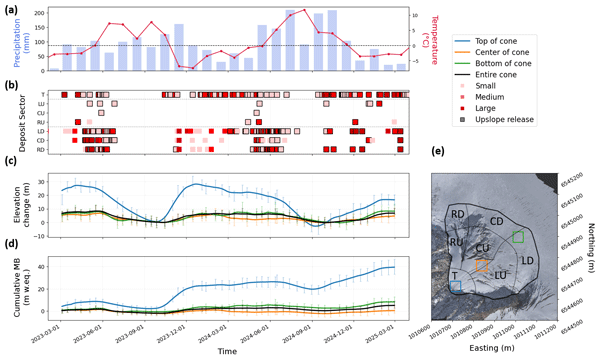
Avalanches are vital for glacier survival, yet their impact is difficult to quantify. We used low-cost cameras and drones to monitor an avalanche cone in the French Alps for two years. By accounting for ice flow, we found that avalanches can deposit 30 meters of snow annually – 50 times more than normal snowfall. This high-frequency data reveals that these cones fill until reaching a specific steepness, after which new snow slides further down to the base.
Cyrille Mosbeux, Peter Råback, Adrien Gilbert, Julien Brondex, Fabien Gillet-Chaulet, Nicolas C. Jourdain, Mondher Chekki, Olivier Gagliardini, and Gaël Durand
Geosci. Model Dev., 19, 8269–8288, https://doi.org/10.5194/gmd-19-8269-2026, https://doi.org/10.5194/gmd-19-8269-2026, 2026
Short summary
Short summary
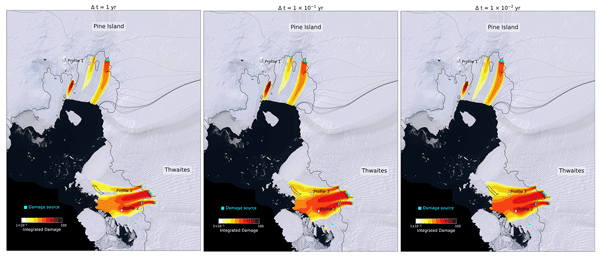
Transport processes like rocks carried by ice flow and damage evolution – a proxy for crevasses – are key in ice sheet modeling and should occur without diffusion. Yet, standard numerical methods often blur these features. We explore a particle-based Semi-Lagrangian approach, comparing it to a Discontinuous Galerkin method, and show it can accurately simulate such transport when run at high enough resolution.
Adrien Gilbert, Fabrizio Troilo, Olivier Gagliardini, Christian Vincent, Paolo Perret, Luca Mondardini, Luc Piard, Olivier Laarman, and Emmanuel Le Meur
EGUsphere, https://doi.org/10.5194/egusphere-2026-4058, https://doi.org/10.5194/egusphere-2026-4058, 2026
Short summary
Short summary
This study reports on long-term temperature changes observed on the Whymper hanging glacier in Italy from 1997 to 2021, which are interpreted using a numerical modeling approach. Our results show that recent surface warming, driven by increased melting, has raised the glacier's basal temperature significantly, which could reach its melting point by 2050. However, this warming is partially offset by cooling from the mountain's cold north face, which may keep the glacier frozen and stable.
Gabriel Fénisse, Manuel Chevalier, Odile Peyron, David Vincent Bekaert, and Pierre-Henri Blard
Clim. Past, 22, 1507–1536, https://doi.org/10.5194/cp-22-1507-2026, https://doi.org/10.5194/cp-22-1507-2026, 2026
Short summary
Short summary
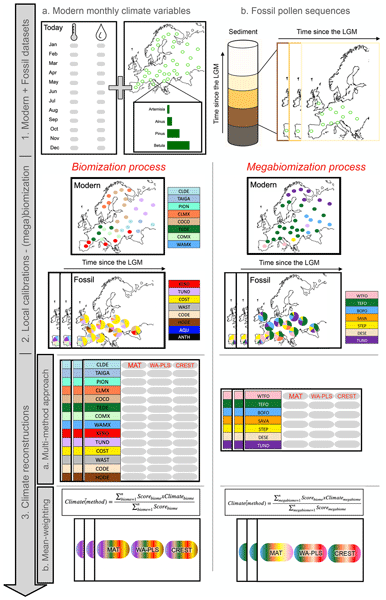
Fossil pollen offers insights into past climates, yet results differ depending on reconstruction methods. By comparing multiple approaches across Europe during the Last Glacial Maximum, we highlight how method choice influences outcomes. Our work introduces a new methodological framework that reduces biases and improves the reliability of climate reconstructions.
Christian Torres, Deniz Bozkurt, Vincent Favier, Victoire Buffet, Claudio Bravo, Xavier Fettweis, Thomas Dethinne, Antoine Rabatel, Maximiliano Viale, Sang-Jong Park, and Jorge Arigony-Neto
EGUsphere, https://doi.org/10.5194/egusphere-2026-3508, https://doi.org/10.5194/egusphere-2026-3508, 2026
Short summary
Short summary
We investigated periods when unusually warm conditions in Patagonia occurred at the same time as precipitation events on the Antarctic Peninsula. By combining observations and simulations, we identified 127 such events between 1980 and 2022. These events increased ice melt in Patagonia while enhancing accumulation on the Antarctic Peninsula, highlighting how large-scale weather patterns can simultaneously affect ice-covered regions in different ways.
Gabriel Fénisse, Aurélien Quiquet, Masa Kageyama, Pierre-Henri Blard, and David Vincent Bekaert
EGUsphere, https://doi.org/10.5194/egusphere-2026-3988, https://doi.org/10.5194/egusphere-2026-3988, 2026
Short summary
Short summary
We study how European temperatures changed since the Last Glacial Maximum using climate models. We compare several global models and a simplified model. Results show that winter temperature changes, together with sensitivity experiments on greenhouse gases, ice-sheet properties, ocean circulation, vegetation, and radiative processes, explain most model differences. The largest disagreements occur near former ice sheets. This highlights key uncertainties in past climate estimates.
Anuar Togaibekov, Adrien Gilbert, Florent Gimbert, and Andrea Walpersdorf
The Cryosphere, 20, 3257–3270, https://doi.org/10.5194/tc-20-3257-2026, https://doi.org/10.5194/tc-20-3257-2026, 2026
Short summary
Short summary
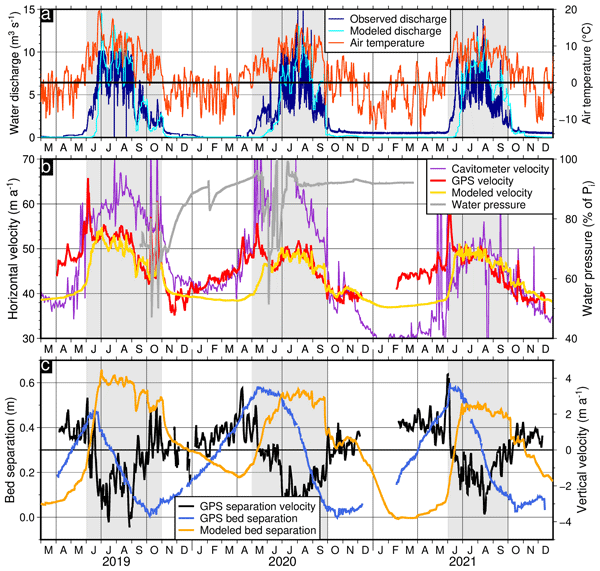
Changes in water reaching the base of glaciers strongly affect their sliding speed by altering water pressure beneath the ice. High water pressure is often thought to develop during summer melt, enlarging cavities at the glacier base and increasing sliding speed. Our observations show instead that the cavities mainly grow during winter, when water pressure builds up in isolated cavities. As the cavities become connected during the melt season, water pressure decreases and the glacier slows down.
Nicolas Harrichhausen, Léo Marconato, Laurence Audin, Pierre Lacan, Stéphane Baize, Hervé Jomard, Alexandra Alvarado, James Hollingsworth, Pierre-Henri Blard, Patricia Ann Mothes, Frédérique Rolandone, and Iván Dario Ortiz Martin
Solid Earth, 17, 763–787, https://doi.org/10.5194/se-17-763-2026, https://doi.org/10.5194/se-17-763-2026, 2026
Short summary
Short summary
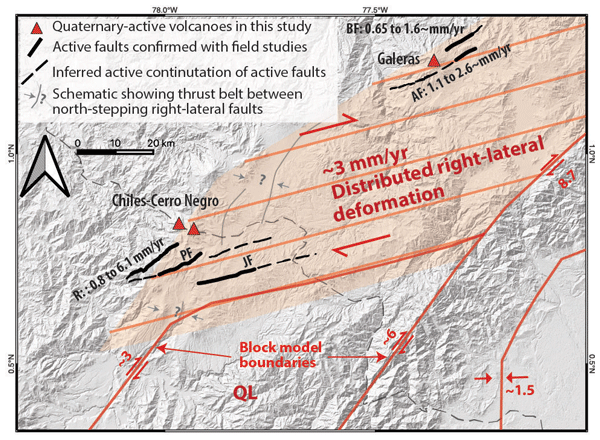
Tectonic plates can be broken into smaller blocks with deformation concentrated at their boundaries. We use remote sensing and field studies to investigate how faulting accommodates deformation at the northern boundary of the Quito-Latacunga microblock (Ecuador & Colombia). We show this boundary is a wide zone characterized by several parallel faults capable of hosting moderate to large (<M7) earthquakes, such as the one in 2022, and which may be influenced by nearby volcanism.
Julien Brondex, Olivier Gagliardini, Adrien Gilbert, and Emmanuel Thibert
The Cryosphere, 20, 1655–1677, https://doi.org/10.5194/tc-20-1655-2026, https://doi.org/10.5194/tc-20-1655-2026, 2026
Short summary
Short summary
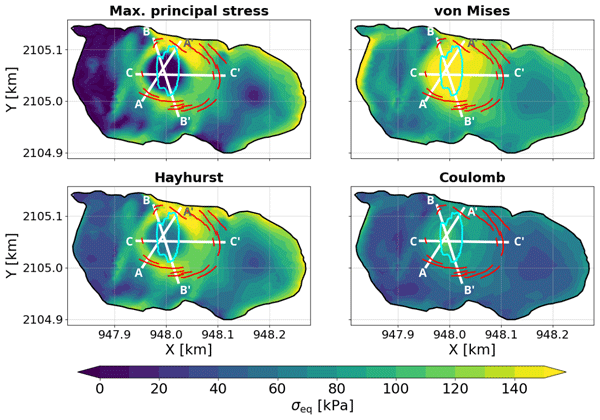
We investigate crevasse initiation by analyzing the artificial drainage of a water-filled cavity at Tête Rousse Glacier (Mont Blanc, France). Using a numerical model, we compute stress fields in response to water level variations in the cavity and compare them to observed crevasse patterns. Results show that a non-linear viscous rheology and a maximum principal stress criterion (with a stress threshold of 100–130 kPa) best predict crevasse occurrence.
Andrew Nolan, Gwenn E. Flowers, Andy Aschwanden, and Adrien Gilbert
EGUsphere, https://doi.org/10.5194/egusphere-2026-913, https://doi.org/10.5194/egusphere-2026-913, 2026
Short summary
Short summary
We used a computer model to study the effects of glacier "surges", or unusual fast-flow events, on the distribution of ice temperature in a glacier. The purpose of the study was to examine feedbacks that might influence the form and flow of these glaciers in a stable climate. We found surging glaciers to be smaller and colder than their ordinary counterparts, while strong regular surges induced an oscillation in glacier temperature and flow speed much longer than the interval between surges.
Gabriela Quispe, Carlos Cárdenas, Pablo Fuchs, Alvaro Soruco, and Antoine Rabatel
ISPRS Ann. Photogramm. Remote Sens. Spatial Inf. Sci., X-3-W4-2025, 307–312, https://doi.org/10.5194/isprs-annals-X-3-W4-2025-307-2026, https://doi.org/10.5194/isprs-annals-X-3-W4-2025-307-2026, 2026
Simon Filhol, Clément Misset, Noélie Bontemps, Diego Cusicanqui, Emmanuel Paquet, Marie Dumont, Olivier Gagliardini, Pascal Lacroix, Simon Gascoin, Guillaume Thirel, Julien Brondex, Pascal Hagenmuller, Eric Larose, Philipp Schoeneich, Denis Roy, Emmanuel Thibert, Nicolas Eckert, Félix de Montety, Robin Mainieri, Alexandre Hauet, Frédéric Gottardi, Johan Berthet, Alexandre Baratier, Frédéric Liébault, Małgorzata Chmiel, Guillaume Piton, Guillaume Chambon, Guillaume James, Philippe Frey, Philip Deline, Laurent Astrade, Christian Vincent, Dominique Laigle, Alain Recking, Fatima Karbou, Adrien Mauss, Mylène Bonnefoy-Demongeot, Firmin Fontaine, Mickael Langlais, Etienne Berthier, and Antoine Blanc
EGUsphere, https://doi.org/10.5194/egusphere-2026-971, https://doi.org/10.5194/egusphere-2026-971, 2026
Short summary
Short summary
On June 21 2024, the village of La Bérarde, in the French Alps, was devastated by a flood destroying centuries old buildings. This study is an interdisciplinary work to decipher the causes and chronology of the event. The flood started with decadal rain falling on a thick snowpack. A lake observed on top of a glacier few days prior, had drained post event. With climate change, should we expect more similar compound events for alpine communities?
Laurane Charrier, Nathan Lioret, Fanny Brun, Amaury Dehecq, Romain Millan, Anuar Togaibekov, Andrea Walpersdorf, Diego Cusicanqui, and Antoine Rabatel
EGUsphere, https://doi.org/10.5194/egusphere-2026-946, https://doi.org/10.5194/egusphere-2026-946, 2026
Short summary
Short summary
Sub-annual glacier surface velocity derived from remote sensing images are receiving increasing attention. In the meantime, systematic seasonal errors (i.e. biases) have been reported in time series derived from optical images on various landforms, such as landslides or dunes. The extent to which such biases affect glacier velocity maps remains poorly investigated. Here, we propose characterizing the amplitude and spatial distribution of these seasonal biases.
Lisa Ardoin, Catherine Larose, Jean-Louis Tison, Christoph Keuschnig, Vasileios Gkinis, Saïda El Amri, Pierre-Henry Blard, Paul Bierman, Thomas Blunier, Dorthe Dahl-Jensen, Charlotte Maistriau, Jørgen-Peder Steffensen, Thomas Röckmann, and François Fripiat
EGUsphere, https://doi.org/10.5194/egusphere-2025-6204, https://doi.org/10.5194/egusphere-2025-6204, 2026
Short summary
Short summary
We investigated gas dynamics at the ice–bed interface of two Greenland ice cores to assess methane and carbon dioxide behaviour beneath ice sheets. At Camp Century, methane diffuses into the ice and is partly oxidized. At GRIP, methane remains preserved despite oxygen. These contrasts suggest that methane oxidation is controlled by local basal conditions, including ice thickness and substrate availability.
Thomas Chauve, Florent Gimbert, Adrien Gilbert, Olivier Gagliardini, Luc Piard, Arnaud Reboud, Olivier Laarman, Paolo Perret, William Boffelli, Pietro Di Sopra, Luca Mondardini, and Fabrizio Troilo
EGUsphere, https://doi.org/10.5194/egusphere-2025-5714, https://doi.org/10.5194/egusphere-2025-5714, 2025
Short summary
Short summary
A field campaign on the Planpincieux Glacier investigated how hidden heterogeneities inside the ice affect its deformation. A borehole logged with optical and acoustic tools and equipped with tilt sensors revealed that these heterogeneities cause strong deformation localization. Such weak zones significantly influence glacier motion, showing that internal structure is key to understanding how glaciers flow.
Léon Roussel, Marie Dumont, Marion Réveillet, Delphine Six, Marin Kneib, Pierre Nabat, Kévin Fourteau, Diego Monteiro, Simon Gascoin, Emmanuel Thibert, Antoine Rabatel, Jean-Emmanuel Sicart, Mylène Bonnefoy, Luc Piard, Olivier Laarman, Bruno Jourdain, Mathieu Fructus, Matthieu Vernay, and Matthieu Lafaysse
The Cryosphere, 19, 5201–5230, https://doi.org/10.5194/tc-19-5201-2025, https://doi.org/10.5194/tc-19-5201-2025, 2025
Short summary
Short summary
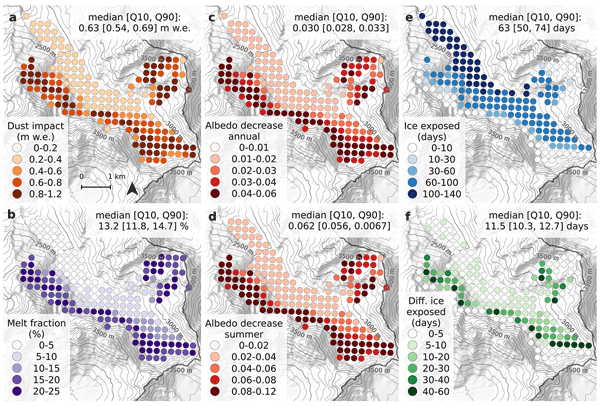
Saharan dust deposits frequently turn alpine glaciers orange. Mineral dust reduces snow albedo and increases snow and glaciers melt rate. Using physical modeling, we quantified the impact of dust on the Argentière Glacier over the period 2019–2022. We found that the contribution of mineral dust to the melt represents between 8 % and 16 % of Argentière Glacier summer melt. At specific locations, the impact of dust over one year can rise to an equivalent of 1.2 m of melted ice.
Florian Sauerland, Pierre-Vincent Huot, Sylvain Marchi, Thierry Fichefet, Hugues Goosse, Konstanze Haubner, François Klein, François Massonnet, Bianca Mezzina, Eduardo Moreno-Chamarro, Pablo Ortega, Frank Pattyn, Charles Pelletier, Deborah Verfaillie, Lars Zipf, and Nicole van Lipzig
EGUsphere, https://doi.org/10.5194/egusphere-2025-2889, https://doi.org/10.5194/egusphere-2025-2889, 2025
Short summary
Short summary
We simulated the Antarctic climate from 1985 to 2014. Our model is driven using the ERA-5 reanalysis for one simulation and the EC-Earth global climate model for three others. Most of the simulated trends, such as sea ice extent and precipitation over land, have opposite signs for the two drivers, but agree between the three EC-Earth driven simulations. We conclude that these opposing trends must be due to the different drivers, and that the climate over land is less predictable than over sea.
Catherine M. Collins, Nicolas Perdrial, Pierre-Henri Blard, Nynke Keulen, William C. Mahaney, Halley Mastro, Juliana Souza, Donna M. Rizzo, Yves Marrocchi, Paul C. Knutz, and Paul R. Bierman
Clim. Past, 21, 1359–1381, https://doi.org/10.5194/cp-21-1359-2025, https://doi.org/10.5194/cp-21-1359-2025, 2025
Short summary
Short summary
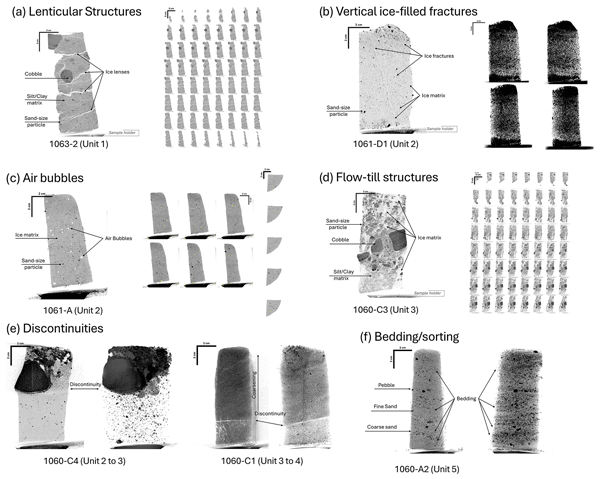
The Camp Century subglacial core stores information about past climates and glacial and interglacial processes in northwestern Greenland. In this study, we investigated the core archive, making large-scale observations using computed tomography (CT) scans and micron-scale observations observing physical and chemical characteristics of individual grains. We find evidence of past ice-free conditions, weathering processes during warmer periods, and past glaciations.
Etienne Ducasse, Romain Millan, Jonas Kvist Andersen, and Antoine Rabatel
The Cryosphere, 19, 911–917, https://doi.org/10.5194/tc-19-911-2025, https://doi.org/10.5194/tc-19-911-2025, 2025
Short summary
Short summary
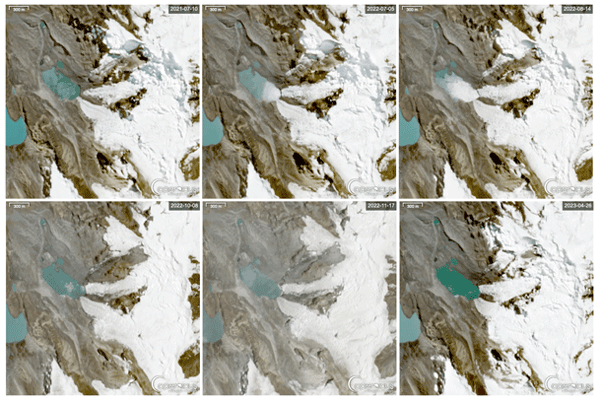
Our study examines glacier movement in the tropical Andes from 2013 to 2022 using satellite data. Despite challenges like small glacier size and frequent cloud cover, we tracked annual speeds and seasonal changes. We found stable annual speeds but significant shifts between wet and dry seasons, likely due to changes in meltwater production and glacier–bedrock conditions. This research enhances understanding of how tropical glaciers react to climate change.
Nilo Lima-Quispe, Denis Ruelland, Antoine Rabatel, Waldo Lavado-Casimiro, and Thomas Condom
Hydrol. Earth Syst. Sci., 29, 655–682, https://doi.org/10.5194/hess-29-655-2025, https://doi.org/10.5194/hess-29-655-2025, 2025
Short summary
Short summary
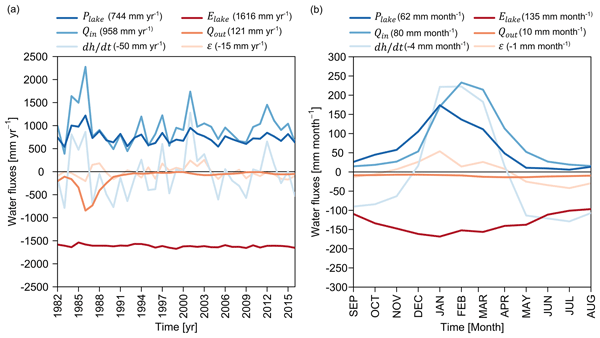
This study estimated the water balance of Lake Titicaca using an integrated modeling framework that considers natural hydrological processes and net irrigation consumption. The proposed approach was implemented at a daily scale for a period of 35 years. This framework is able to simulate lake water levels with good accuracy over a wide range of hydroclimatic conditions. The findings demonstrate that a simple representation of hydrological processes is suitable for use in poorly gauged regions.
Juan-Pedro Roldán-Blasco, Adrien Gilbert, Luc Piard, Florent Gimbert, Christian Vincent, Olivier Gagliardini, Anuar Togaibekov, Andrea Walpersdorf, and Nathan Maier
The Cryosphere, 19, 267–282, https://doi.org/10.5194/tc-19-267-2025, https://doi.org/10.5194/tc-19-267-2025, 2025
Short summary
Short summary
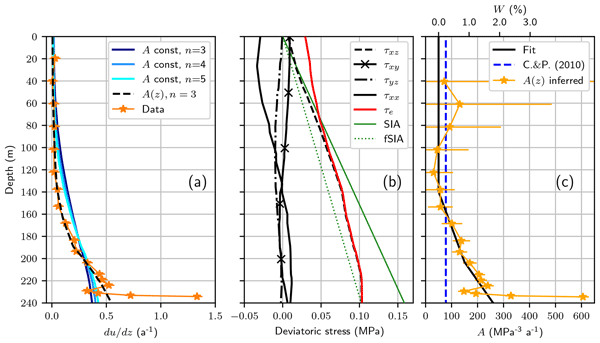
The flow of glaciers and ice sheets results from ice deformation and basal sliding driven by gravitational forces. Quantifying the rate at which ice deforms under its own weight is critical for assessing glacier evolution. This study uses borehole instrumentation in an Alpine glacier to quantify ice deformation and constrain ice viscosity in a natural setting. Our results show that the viscosity of ice at 0 °C is largely influenced by interstitial liquid water, which enhances ice deformation.
Marin Kneib, Amaury Dehecq, Adrien Gilbert, Auguste Basset, Evan S. Miles, Guillaume Jouvet, Bruno Jourdain, Etienne Ducasse, Luc Beraud, Antoine Rabatel, Jérémie Mouginot, Guillem Carcanade, Olivier Laarman, Fanny Brun, and Delphine Six
The Cryosphere, 18, 5965–5983, https://doi.org/10.5194/tc-18-5965-2024, https://doi.org/10.5194/tc-18-5965-2024, 2024
Short summary
Short summary
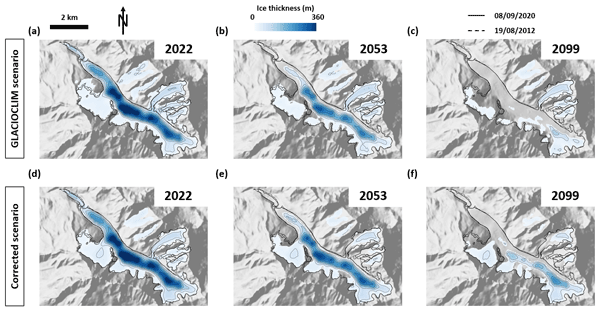
Avalanches contribute to increasing the accumulation on mountain glaciers by redistributing snow from surrounding mountains slopes. Here we quantified the contribution of avalanches to the mass balance of Argentière Glacier in the French Alps, by combining satellite and field observations to model the glacier dynamics. We show that the contribution of avalanches locally increases the accumulation by 60–70 % and that accounting for this effect results in less ice loss by the end of the century.
Paul R. Bierman, Andrew J. Christ, Catherine M. Collins, Halley M. Mastro, Juliana Souza, Pierre-Henri Blard, Stefanie Brachfeld, Zoe R. Courville, Tammy M. Rittenour, Elizabeth K. Thomas, Jean-Louis Tison, and François Fripiat
The Cryosphere, 18, 4029–4052, https://doi.org/10.5194/tc-18-4029-2024, https://doi.org/10.5194/tc-18-4029-2024, 2024
Short summary
Short summary
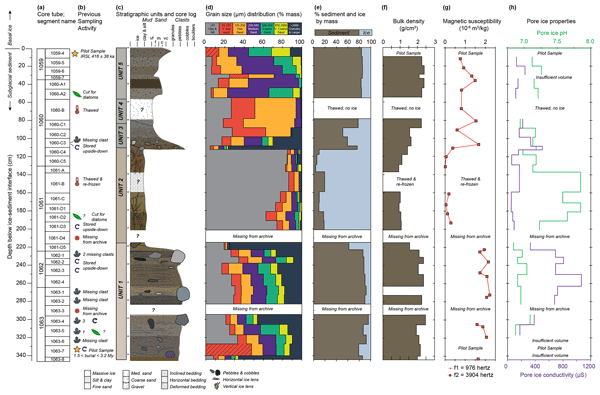
In 1966, the U.S. Army drilled through the Greenland Ice Sheet at Camp Century, Greenland; they recovered 3.44 m of frozen material. Here, we decipher the material’s history. Water, flowing during a warm interglacial when the ice sheet melted from northwest Greenland, deposited the upper material which contains fossil plant and insect parts. The lower material, separated by more than a meter of ice with some sediment, is till, deposited by the ice sheet during a prior cold period.
Nicolás Acuña Reyes, Elwin van't Wout, Shaun Lovejoy, and Fabrice Lambert
Clim. Past, 20, 1579–1594, https://doi.org/10.5194/cp-20-1579-2024, https://doi.org/10.5194/cp-20-1579-2024, 2024
Short summary
Short summary
This study employs Haar fluctuations to analyse global atmospheric variability over the Last Glacial Cycle, revealing a latitudinal dependency in the transition from macroweather to climate regimes. Findings indicate faster synchronisation between poles and lower latitudes, supporting the pivotal role of poles as climate change drivers.
Pedro Doll, Shaun Robert Eaves, Ben Matthew Kennedy, Pierre-Henri Blard, Alexander Robert Lee Nichols, Graham Sloan Leonard, Dougal Bruce Townsend, Jim William Cole, Chris Edward Conway, Sacha Baldwin, Gabriel Fénisse, Laurent Zimmermann, and Bouchaïb Tibari
Geochronology, 6, 365–395, https://doi.org/10.5194/gchron-6-365-2024, https://doi.org/10.5194/gchron-6-365-2024, 2024
Short summary
Short summary
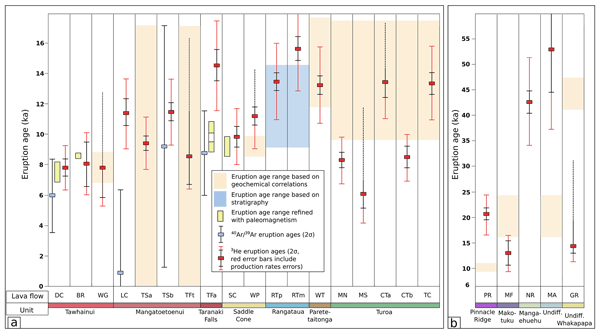
In this study, we use cosmogenic-sourced 3He to determine the eruption ages of 23 lava flows at Mt Ruapehu, Aotearoa New Zealand, and we show how this method can help overcome challenges associated with traditional dating methods in young lavas. Comparison with other methods demonstrates the accuracy of our data and the method's reliability. The new eruption ages allowed us to identify periods of quasi-simultaneous activity from different volcanic vents during the last 20 000 years.
Alexis Caro, Thomas Condom, Antoine Rabatel, Nicolas Champollion, Nicolás García, and Freddy Saavedra
The Cryosphere, 18, 2487–2507, https://doi.org/10.5194/tc-18-2487-2024, https://doi.org/10.5194/tc-18-2487-2024, 2024
Short summary
Short summary
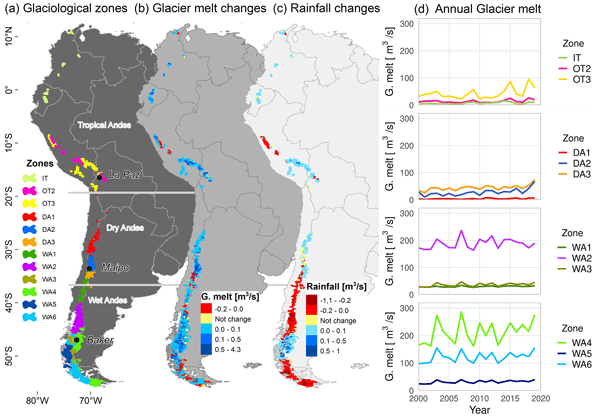
The glacier runoff changes are still unknown in most of the Andean catchments, thereby increasing uncertainties in estimating water availability, especially during the dry season. Here, we simulate glacier evolution and related glacier runoff changes across the Andes between 2000 and 2019. Our results indicate a glacier reduction in 93 % of the catchments, leading to a 12 % increase in glacier melt. These results can be downloaded and integrated with discharge measurements in each catchment.
Susanne Preunkert, Pascal Bohleber, Michel Legrand, Adrien Gilbert, Tobias Erhardt, Roland Purtschert, Lars Zipf, Astrid Waldner, Joseph R. McConnell, and Hubertus Fischer
The Cryosphere, 18, 2177–2194, https://doi.org/10.5194/tc-18-2177-2024, https://doi.org/10.5194/tc-18-2177-2024, 2024
Short summary
Short summary
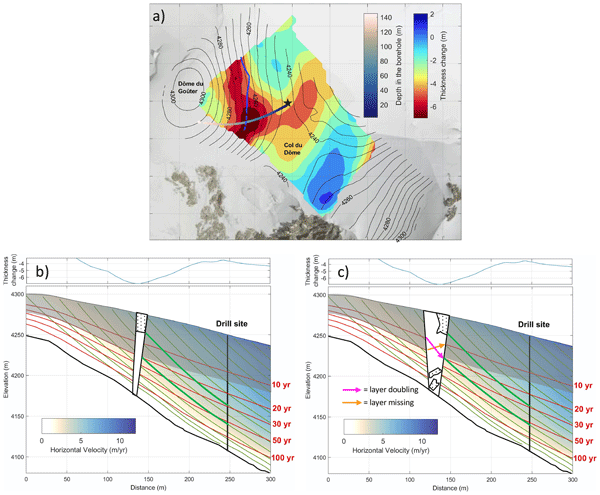
Ice cores from high-elevation Alpine glaciers are an important tool to reconstruct the past atmosphere. However, since crevasses are common at these glacier sites, rigorous investigations of glaciological conditions upstream of drill sites are needed before interpreting such ice cores. On the basis of three ice cores extracted at Col du Dôme (4250 m a.s.l; French Alps), an overall picture of a dynamic crevasse formation is drawn, which disturbs the depth–age relation of two of the three cores.
Arthur Bayle, Bradley Z. Carlson, Anaïs Zimmer, Sophie Vallée, Antoine Rabatel, Edoardo Cremonese, Gianluca Filippa, Cédric Dentant, Christophe Randin, Andrea Mainetti, Erwan Roussel, Simon Gascoin, Dov Corenblit, and Philippe Choler
Biogeosciences, 20, 1649–1669, https://doi.org/10.5194/bg-20-1649-2023, https://doi.org/10.5194/bg-20-1649-2023, 2023
Short summary
Short summary
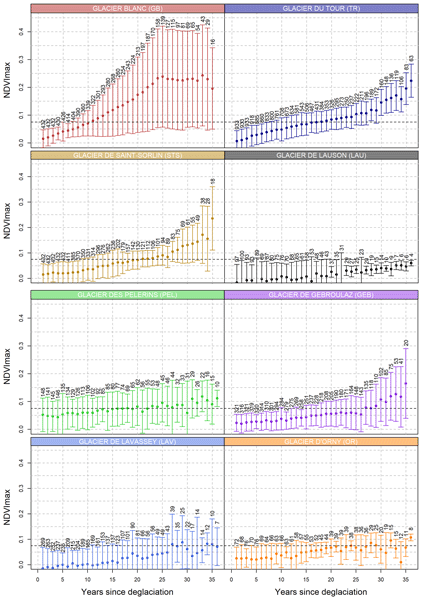
Glacier forefields have long provided ecologists with a model to study patterns of plant succession following glacier retreat. We used remote sensing approaches to study early succession dynamics as it allows to analyze the deglaciation, colonization, and vegetation growth within a single framework. We found that the heterogeneity of early succession dynamics is deterministic and can be explained well by local environmental context. This work has been done by an international consortium.
Rubén Basantes-Serrano, Antoine Rabatel, Bernard Francou, Christian Vincent, Alvaro Soruco, Thomas Condom, and Jean Carlo Ruíz
The Cryosphere, 16, 4659–4677, https://doi.org/10.5194/tc-16-4659-2022, https://doi.org/10.5194/tc-16-4659-2022, 2022
Short summary
Short summary
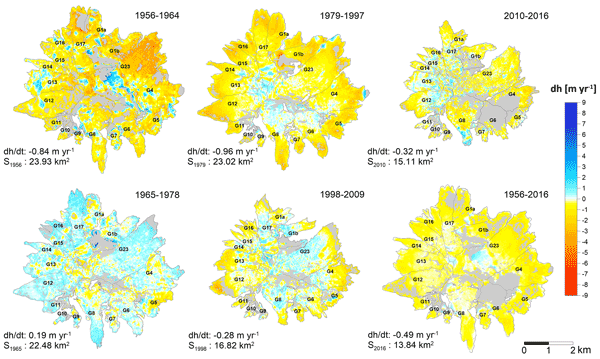
We assessed the volume variation of 17 glaciers on the Antisana ice cap, near the Equator. We used aerial and satellite images for the period 1956–2016. We highlight very negative changes in 1956–1964 and 1979–1997 and slightly negative or even positive conditions in 1965–1978 and 1997–2016, the latter despite the recent increase in temperatures. Glaciers react according to regional climate variability, while local humidity and topography influence the specific behaviour of each glacier.
Agathe Defourny, Pierre-Henri Blard, Laurent Zimmermann, Patrick Jobé, Arnaud Collignon, Frédéric Nguyen, and Alain Dassargues
Hydrol. Earth Syst. Sci., 26, 2637–2648, https://doi.org/10.5194/hess-26-2637-2022, https://doi.org/10.5194/hess-26-2637-2022, 2022
Short summary
Short summary
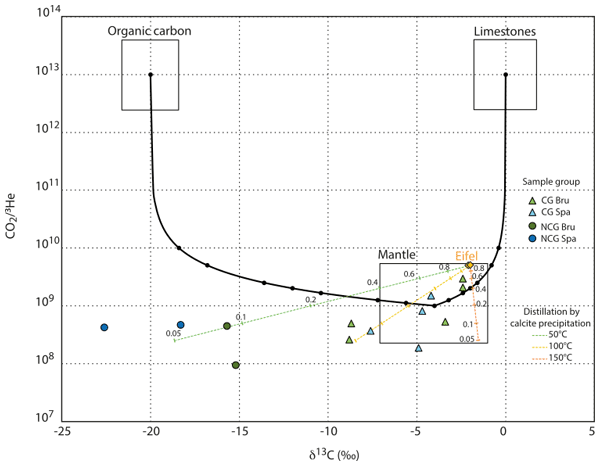
The Belgian city of Spa is known worldwide for its ferruginous and naturally sparkling groundwater springs that gave their name to the bathing tradition commonly called
spa. However, the origin of the dissolved CO2 they contain was still a matter of debate. Thanks to new analysis on groundwater samples, particularly carbon and helium isotopes together with dissolved gases, this study has demonstrated that the volcanic origin of the CO2 is presumably from the neighboring Eifel volcanic fields.
Cited articles
Autin, P., Sicart, J. E., Rabatel, A., Soruco, A., and Hock, R.: Climate Controls on the Interseasonal and Interannual Variability of the Surface Mass and Energy Balances of a Tropical Glacier (Zongo Glacier, Bolivia, 16° S): New Insights From the Multi-Year Application of a Distributed Energy Balance Model, J. Geophys. Res.-Atmos., 127, https://doi.org/10.1029/2021JD035410, 2022. a, b, c
Barr, I. D. and Lovell, H.: A review of topographic controls on moraine distribution, Geomorphology, 226, 44–64, https://doi.org/10.1016/j.geomorph.2014.07.030, 2014. a
Benn, D. and Evans, D. J. A.: Glaciers and Glaciation, Routledge, 2nd edn., https://doi.org/10.4324/9780203785010, 2010. a
Benn, D. I. and Ballantyne, C. K.: Palaeoclimatic reconstruction from Loch Lomond Readvance glaciers in the West Drumochter Hills, Scotland, J. Quaternary Sci., 20, 577–592, https://doi.org/10.1002/jqs.925, 2005. a
Benn, D. I. and Hulton, N. R.: An ExcelTM spreadsheet program for reconstructing the surface profile of former mountain glaciers and ice caps, Comput. Geosci., 36, 605–610, https://doi.org/10.1016/j.cageo.2009.09.016, 2010. a
Bennett, M. R. and Glasser, N. F.: Glacial Geology: Ice Sheets and Landforms, 2nd edn., John Wiley & Sons, Chichester, ISBN 978-0-470-51690-4, 2009. a
Blard, P.-H., Lavé, J., Farley, K., Fornari, M., Jiménez, N., and Ramirez, V.: Late local glacial maximum in the Central Altiplano triggered by cold and locally-wet conditions during the paleolake Tauca episode (17–15 ka, Heinrich 1), Quaternary Sci. Rev., 28, 3414–3427, https://doi.org/10.1016/j.quascirev.2009.09.025, 2009. a
Cannon, A. J., Sobie, S. R., and Murdock, T. Q.: Bias Correction of GCM Precipitation by Quantile Mapping: How Well Do Methods Preserve Changes in Quantiles and Extremes?, J. Climate, 28, 6938–6959, https://doi.org/10.1175/JCLI-D-14-00754.1, 2015. a
Clauzel, L., Ménégoz, M., Gilbert, A., Gagliardini, O., Six, D., Gastineau, G., and Vincent, C.: Sensitivity of Glaciers in the European Alps to Anthropogenic Atmospheric Forcings: Case Study of the Argentière Glacier, Geophys. Res. Lett., 50, https://doi.org/10.1029/2022GL100363, 2023. a
Condom, T., Coudrain, A., Sicart, J. E., and Théry, S.: Computation of the space and time evolution of equilibrium-line altitudes on Andean glaciers (10° N–55° S), Global Planet. Change, 59, 189–202, https://doi.org/10.1016/j.gloplacha.2006.11.021, 2007. a
Cuffey, K. M. and Paterson, W. S. B.: The physics of glaciers, Academic Press, Amsterdam, 4th edn., ISBN 978-0-12-369461-4, 2010. a
Doughty, A. M., Mackintosh, A. N., Anderson, B. M., Dadic, R., Putnam, A. E., Barrell, D. J., Denton, G. H., Chinn, T. J., and Schaefer, J. M.: An exercise in glacier length modeling: Interannual climatic variability alone cannot explain Holocene glacier fluctuations in New Zealand, Earth Planet. Sci. Lett., 470, 48–53, https://doi.org/10.1016/j.epsl.2017.04.032, 2017. a
Ehret, U., Zehe, E., Wulfmeyer, V., Warrach-Sagi, K., and Liebert, J.: HESS Opinions “Should we apply bias correction to global and regional climate model data?”, Hydrol. Earth Syst. Sci., 16, 3391–3404, https://doi.org/10.5194/hess-16-3391-2012, 2012. a
Eis, J., van der Laan, L., Maussion, F., and Marzeion, B.: Reconstruction of Past Glacier Changes with an Ice-Flow Glacier Model: Proof of Concept and Validation, Front. Earth Sci., 9, https://doi.org/10.3389/feart.2021.595755, 2021. a
Favier, V., Wagnon, P., and Ribstein, P.: Glaciers of the outer and inner tropics: A different behaviour but a common response to climatic forcing, Geophys. Res. Lett., 31, https://doi.org/10.1029/2004GL020654, 2004. a
Fiddes, J. and Gruber, S.: TopoSCALE v.1.0: downscaling gridded climate data in complex terrain, Geosci. Model Dev., 7, 387–405, https://doi.org/10.5194/gmd-7-387-2014, 2014. a
Filhol, S., Fiddes, J., and Aalstad, K.: TopoPyScale: A Python Package for Hillslope Climate Downscaling, Journal of Open Source Software, 8, 5059, https://doi.org/10.21105/joss.05059, 2023. a, b
Gagliardini, O., Zwinger, T., Gillet-Chaulet, F., Durand, G., Favier, L., de Fleurian, B., Greve, R., Malinen, M., Martín, C., Råback, P., Ruokolainen, J., Sacchettini, M., Schäfer, M., Seddik, H., and Thies, J.: Capabilities and performance of Elmer/Ice, a new-generation ice sheet model, Geosci. Model Dev., 6, 1299–1318, https://doi.org/10.5194/gmd-6-1299-2013, 2013. a, b, c, d
Gilbert, A., Sinisalo, A., Gurung, T. R., Fujita, K., Maharjan, S. B., Sherpa, T. C., and Fukuda, T.: The influence of water percolation through crevasses on the thermal regime of a Himalayan mountain glacier, The Cryosphere, 14, 1273–1288, https://doi.org/10.5194/tc-14-1273-2020, 2020. a
Gilbert, A., Gimbert, F., Gagliardini, O., and Vincent, C.: Inferring the Basal Friction Law From Long Term Changes of Glacier Length, Thickness and Velocity on an Alpine Glacier, Geophys. Res. Lett., 50, https://doi.org/10.1029/2023GL104503, 2023. a, b
Golledge, N. R., Hubbard, A., and Sugden, D. E.: High-resolution numerical simulation of Younger Dryas glaciation in Scotland, Quaternary Sci. Rev., 27, 888–904, https://doi.org/10.1016/j.quascirev.2008.01.019, 2008. a
Golledge, N. R., Mackintosh, A. N., Anderson, B. M., Buckley, K. M., Doughty, A. M., Barrell, D. J., Denton, G. H., Vandergoes, M. J., Andersen, B. G., and Schaefer, J. M.: Last Glacial Maximum climate in New Zealand inferred from a modelled Southern Alps icefield, Quaternary Sci. Rev., 46, 30–45, https://doi.org/10.1016/j.quascirev.2012.05.004, 2012. a
Hersbach, H., Bell, B., and Berrisford, P.: The ERA5 global reanalysis, Q. J. Roy. Meteor. Soc., 146, 1999–2049, https://doi.org/10.1002/qj.3803, 2020. a
Hock, R.: A distributed temperature-index ice- and snowmelt model including potential direct solar radiation, J. Glaciol., 45, 101–111, https://doi.org/10.3189/S0022143000003087, 1999. a, b, c, d
Hock, R. and Holmgren, B.: A distributed surface energy-balance model for complex topography and its application to Storglaciären, Sweden, J. Glaciol., 51, 25–36, https://doi.org/10.3189/172756505781829566, 2005. a
Jennings, K. S., Winchell, T. S., Livneh, B., and Molotch, N. P.: Spatial variation of the rain–snow temperature threshold across the Northern Hemisphere, Nat. Commun., 9, 1148, https://doi.org/10.1038/s41467-018-03629-7, 2018. a
Jomelli, V., Grancher, D., Naveau, P., Cooley, D., and Brunstein, D.: Assessment study of lichenometric methods for dating surfaces, Geomorphology, 86, 131–143, https://doi.org/10.1016/j.geomorph.2006.08.010, 2007. a
Jomelli, V., Khodri, M., Favier, V., Brunstein, D., Ledru, M.-P., Wagnon, P., Blard, P.-H., Sicart, J.-E., Braucher, R., Grancher, D., Bourlès, D. L., Braconnot, P., and Vuille, M.: Irregular tropical glacier retreat over the Holocene epoch driven by progressive warming, Nature, 474, 196–199, https://doi.org/10.1038/nature10150, 2011. a, b, c, d, e, f, g, h
Jomelli, V., Swingedouw, D., Vuille, M., Favier, V., Goehring, B., Shakun, J., Braucher, R., Schimmelpfennig, I., Menviel, L., Rabatel, A., Martin, L., Blard, P.-H., Condom, T., Lupker, M., Christl, M., He, Z., Verfaillie, D., Gorin, A., Aumaître, G., Bourles, D., and Keddadouche, K.: In-phase millennial-scale glacier changes in the tropics and North Atlantic regions during the Holocene, Nat. Commun., 401, 108125, https://doi.org/10.1038/s41467-022-28939-9, 2022. a, b
Kaser, G. and Georges, C.: On the Mass Balance of Low Latitude Glaciers with Particular Consideration of the Peruvian Cordillera Blanca, Geogr. Ann. A, 81, 643–651, https://api.semanticscholar.org/CorpusID:129156833 (last access: 3 November 2026), 1999. a
Kurop, A. and Lukas, S.: Reconstruction of the glacier dynamics and Holocene chronology of retreat of Helagsglaciären in Central Sweden, Geogr. Ann. A, 106, 96–120, https://doi.org/10.1080/04353676.2025.2521180, 2024. a
Le Meur, E., Gagliardini, O., Zwinger, T., and Ruokolainen, J.: Glacier flow modelling: a comparison of the Shallow Ice Approximation and the full-Stokes solution, C. R. Phys., 5, 709–722, https://doi.org/10.1016/j.crhy.2004.10.001, 2004. a
Leonard, E. M., Laabs, B. J., Plummer, M. A., Kroner, R. K., Brugger, K. A., Spiess, V. M., Refsnider, K. A., Xia, Y., and Caffee, M. W.: Late Pleistocene glaciation and deglaciation in the Crestone Peaks area, Colorado Sangre de Cristo Mountains, USA – chronology and paleoclimate, Quaternary Sci. Rev., 158, 127–144, https://doi.org/10.1016/j.quascirev.2016.11.024, 2017. a
Liu, Z., Zhu, J., Rosenthal, Y., Zhang, X., Otto-Bliesner, B. L., Timmermann, A., Smith, R. S., Lohmann, G., Zheng, W., and Timm, O. E.: The Holocene temperature conundrum, P. Natl. Acad. Sci., 111, E3501–E3505, https://doi.org/10.1073/pnas.1407229111, 2014. a
Mackintosh, A. N., Anderson, B. M., and Pierrehumbert, R. T.: Reconstructing Climate from Glaciers, Annu. Rev. Earth Pl. Sc., 45, 649–680, https://doi.org/10.1146/annurev-earth-063016-020643, 2017. a
Malone, A. G., Pierrehumbert, R. T., Lowell, T. V., Kelly, M. A., and Stroup, J. S.: Constraints on southern hemisphere tropical climate change during the Little Ice Age and Younger Dryas based on glacier modeling of the Quelccaya Ice Cap, Peru, Quaternary Sci. Rev., 125, 106–116, https://doi.org/10.1016/j.quascirev.2015.08.001, 2015. a
Martin, L., Blard, P.-H., Lavé, J., Jomelli, V., Charreau, J., Condom, T., Lupker, M., Arnold, M., Aumaître, G., Bourlès, D., and Keddadouche, K.: Antarctic-like temperature variations in the Tropical Andes recorded by glaciers and lakes during the last deglaciation, Quaternary Sci. Rev., 247, 106542, https://doi.org/10.1016/j.quascirev.2020.106542, 2020. a, b, c, d, e, f, g, h, i, j, k
Martin, L. C. P., Blard, P.-H., Lavé, J., Condom, T., Prémaillon, M., Jomelli, V., Brunstein, D., Lupker, M., Charreau, J., Mariotti, V., Tibari, B., Team, A., and Davy, E.: Lake Tauca highstand (Heinrich Stadial 1a) driven by a southward shift of the Bolivian High, Sci. Adv., 4, https://doi.org/10.1126/sciadv.aar2514, 2018. a
Mey, J., D'Arcy, M. K., Schildgen, T. F., Egholm, D. L., Wittmann, H., and Strecker, M. R.: Temperature and precipitation in the southern Central Andes during the last glacial maximum, Heinrich Stadial 1, and the Younger Dryas, Quaternary Sci. Rev., 248, 106592, https://doi.org/10.1016/j.quascirev.2020.106592, 2020. a
Morales, M. S., Christie, D. A., Villalba, R., Argollo, J., Pacajes, J., Silva, J. S., Alvarez, C. A., Llancabure, J. C., and Soliz Gamboa, C. C.: Precipitation changes in the South American Altiplano since 1300 AD reconstructed by tree-rings, Clim. Past, 8, 653–666, https://doi.org/10.5194/cp-8-653-2012, 2012. a, b
Naveau, P., Jomelli, V., Cooley, D., Grancher, D., and Rabatel, A.: Modeling Uncertainties in Lichenometry Studies, Arct. Antarct. Alp. Res., 39, 277–285, https://doi.org/10.1657/1523-0430(2007)39[277:MUILS]2.0.CO;2, 2007. a
Neal, J. and Hawker, L.: FABDEM V1-2, University of Bristol, Research Data Repository [data set], https://doi.org/10.5523/bris.s5hqmjcdj8yo2ibzi9b4ew3sn, 2023. a, b
Neukom, R., Barboza, L. A., Erb, M. P., Shi, F., Emile-Geay, J., Evans, M. N., Franke, J., Kaufman, D. S., Lücke, L., Rehfeld, K., Schurer, A., Zhu, F., Brönnimann, S., Hakim, G. J., Henley, B. J., Ljungqvist, F. C., McKay, N., Valler, V., von Gunten, L., and PAGES 2k Consortium: Consistent multidecadal variability in global temperature reconstructions and simulations over the Common Era, Nat. Geosci., 12, 643–649, https://doi.org/10.1038/s41561-019-0400-0, 2019. a
Oerlemans, J.: Holocene glacier fluctuations: is the current rate of retreat exceptional?, Ann. Glaciol., 31, 39–44, https://doi.org/10.3189/172756400781820246, 2000. a
Plummer, M. A. and Phillips, F. M.: A 2-D numerical model of snow/ice energy balance and ice flow for paleoclimatic interpretation of glacial geomorphic features, Quaternary Sci. Rev., 22, 1389–1406, https://doi.org/10.1016/S0277-3791(03)00081-7, 2003. a
Pratt-Sitaula, B., Burbank, D. W., Heimsath, A. M., Humphrey, N. F., Oskin, M., and Putkonen, J.: Topographic control of asynchronous glacial advances: A case study from Annapurna, Nepal, Geophys. Res. Lett., 38, https://doi.org/10.1029/2011GL049940, 2011. a, b
Putnam, A. E., Schaefer, J. M., Denton, G. H., Barrell, D. J. A., Finkel, R. C., Andersen, B. G., Schwartz, R., Chinn, T. J. H., and Doughty, A. M.: Regional climate control of glaciers in New Zealand and Europe during the pre-industrial Holocene, Nat. Geosci., 5, 627–630, https://doi.org/10.1038/ngeo1548, 2012. a
Putnam, A. E., Schaefer, J. M., Denton, G. H., Barrell, D. J., Birkel, S. D., Andersen, B. G., Kaplan, M. R., Finkel, R. C., Schwartz, R., and Doughty, A. M.: The Last Glacial Maximum at 44° S documented by a 10 Be moraine chronology at Lake Ohau, Southern Alps of New Zealand, Quaternary Sci. Rev., 62, 114–141, https://doi.org/10.1016/j.quascirev.2012.10.034, 2013. a
Quirk, B. J., Moore, J. R., Laabs, B. J., Caffee, M. W., and Plummer, M. A.: Termination II, Last Glacial Maximum, and Lateglacial chronologies and paleoclimate from Big Cottonwood Canyon, Wasatch Mountains, Utah, GSA Bulletin, 130, 1889–1902, https://doi.org/10.1130/B31967.1, 2018. a
Rabatel, A.: Chronologie et interprétation paléoclimatique des fluctuations des glaciers dans les Andes de Bolivie (16° S) depuis le maximum du Petit Âge Glaciaire (17ème siècle), Phd thesis, Université Joseph Fourier, Grenoble, France, https://theses.hal.science/tel-00012124 (last access: 3 November 2026), 2005. a, b
Rabatel, A., Jomelli, V., Naveau, P., Francou, B., and Grancher, D.: Dating of Little Ice Age glacier fluctuations in the tropical Andes: Charquini glaciers, Bolivia, 16° S, C. R. Geosci., 337, 1311–1322, https://doi.org/10.1016/j.crte.2005.07.009, 2005. a, b
Rabatel, A., Francou, B., Jomelli, V., Naveau, P., and Grancher, D.: A chronology of the Little Ice Age in the tropical Andes of Bolivia (16° S) and its implications for climate reconstruction, Quaternary Res., 70, 198–212, https://doi.org/10.1016/j.yqres.2008.02.012, 2008. a, b, c, d, e, f, g, h, i
Réveillet, M., Rabatel, A., Gillet-Chaulet, F., and Soruco, A.: Simulations of changes to Glaciar Zongo, Bolivia (16° S), over the 21st century using a 3-D full-Stokes model and CMIP5 climate projections, A. Glaciol., 56, 89–97, https://doi.org/10.3189/2015AoG70A113, 2015. a, b, c
Roe, G. H.: What do glaciers tell us about climate variability and climate change?, J. Glaciol., 57, 567–578, https://doi.org/10.3189/002214311796905640, 2011. a
Roe, G. H. and O'Neal, M. A.: The response of glaciers to intrinsic climate variability: observations and models of late-Holocene variations in the Pacific Northwest, J. Glaciol., 55, 839–854, https://doi.org/10.3189/002214309790152438, 2009. a
Rowan, A. V., Brocklehurst, S. H., Schultz, D. M., Plummer, M. A., Anderson, L. S., and Glasser, N. F.: Late Quaternary glacier sensitivity to temperature and precipitation distribution in the Southern Alps of New Zealand, J. Geophys. Res.-Earth Surface, 119, 1064–1081, https://doi.org/10.1002/2013JF003009, 2014. a
Seguinot, J., Rogozhina, I., Stroeven, A. P., Margold, M., and Kleman, J.: Numerical simulations of the Cordilleran ice sheet through the last glacial cycle, The Cryosphere, 10, 639–664, https://doi.org/10.5194/tc-10-639-2016, 2016. a
Serra, E., Magrani, F., Valla, P. G., Gribenski, N., Carcaillet, J., and Lundbek Egholm, D.: Lateglacial paleoglacier and paleoclimate reconstructions in the north-western Italian Alps, Quaternary Sci. Rev., 298, 107822, https://doi.org/10.1016/j.quascirev.2022.107822, 2022. a
Soruco, A., Vincent, C., Francou, B., Ribstein, P., Berger, T., Sicart, J., Wagnon, P., Arnaud, Y., Favier, V., and Lejeune, Y.: Mass balance of Glaciar Zongo, Bolivia, between 1956 and 2006, using glaciological, hydrological and geodetic methods, Ann. Glaciol., 50, 1–8, https://doi.org/10.3189/172756409787769799, 2009. a, b, c
Soruco, A., Vincent, C., Rabatel, A., Francou, B., Thibert, E., Sicart, J. E., and Condom, T.: Contribution of glacier runoff to water resources of La Paz city, Bolivia (16° S), Ann. Glaciol., 56, 147–154, 2015. a
Tielidze, L. G., Mackintosh, A. N., Gavashelishvili, A., Gadrani, L., Nadaraia, A., and Elashvili, M.: Post-Little Ice Age Equilibrium-Line Altitude and Temperature Changes in the Greater Caucasus Based on Small Glaciers, Remote Sens., 17, https://doi.org/10.3390/rs17091486, 2025. a
Vergara, W., Deeb, A., Valencia, A., Bradley, R., Francou, B., Zarzar, A., Grünwaldt, A., and Haeussling, S.: Economic impacts of rapid glacier retreat in the Andes, Eos, Transactions American Geophysical Union, 88, 261–264, https://doi.org/10.1029/2007EO250001, 2007. a
Višnjević, V., Herman, F., and Podladchikov, Y.: Reconstructing spatially variable mass balances from past ice extents by inverse modeling, J. Glaciol., 64, 957–968, https://doi.org/10.1017/jog.2018.82, 2018. a
Wagnon, P., Ribstein, P., Kaser, G., and Berton, P.: Energy balance and runoff seasonality of a Bolivian glacier, Global Planet. Change, 22, 49–58, https://doi.org/10.1016/S0921-8181(99)00025-9, 1999. a
Weertman, J.: On the Sliding of Glaciers, J. Glaciol., 3, 33–38, https://doi.org/10.3189/S0022143000024709, 1957. a
White, R. H. and Toumi, R.: The limitations of bias correcting regional climate model inputs, Geophys. Res. Lett., 40, 2907–2912, https://doi.org/10.1002/grl.50612, 2013. a
Short summary
Glacier deposits are used to reconstruct past climate, but the same glacier size can result from different mixes of temperature and snowfall. Using numerical glacier simulations in the Bolivian Andes, we explored how to overcome this ambiguity. We show that combining several neighboring glaciers with independent rainfall records partly resolves it, giving temperatures 0.8°C and 1.3°C lower during the Little Ice Age and Early Holocene (~10,000 years ago), respectively.
Glacier deposits are used to reconstruct past climate, but the same glacier size can result from...


Altmetrics
Final-revised paper
Preprint