
Articles | Volume 22, issue 1
https://doi.org/10.5194/cp-22-187-2026
© Author(s) 2026. This work is distributed under
the Creative Commons Attribution 4.0 License.
the Creative Commons Attribution 4.0 License.
https://doi.org/10.5194/cp-22-187-2026
© Author(s) 2026. This work is distributed under
the Creative Commons Attribution 4.0 License.
the Creative Commons Attribution 4.0 License.
Research article
| 
22 Jan 2026
Research article |
| 22 Jan 2026
| 22 Jan 2026
Holocene sea ice and paleoenvironment conditions in the Beaufort Sea (Canadian Arctic) reconstructed with lipid biomarkers
Madeleine Santos
Department of Earth and Planetary Sciences, ETHZ, 8092 Zurich, Switzerland
Department of Environmental Science, University of Basel, 4056 Basel, Switzerland
Lisa Bröder
Department of Earth and Planetary Sciences, ETHZ, 8092 Zurich, Switzerland
Matt O'Regan
Department of Geological Sciences, Stockholm University, Stockholm, 106 91, Sweden
Bolin Centre for Climate Research, – Stockholm University, Stockholm, 106 91, Sweden
Iván Hernández-Almeida
Department of Earth and Planetary Sciences, ETHZ, 8092 Zurich, Switzerland
Past Global Changes, University of Bern, 3012 Bern, Switzerland
Tommaso Tesi
Institute of Polar Sciences (ISP), Bologna, 40129, Bologna 40128, Italy
Lukas Bigler
Department of Earth and Planetary Sciences, ETHZ, 8092 Zurich, Switzerland
Department of Environmental Science, Stockholm University, Stockholm, 106 91, Sweden
Negar Haghipour
Department of Earth and Planetary Sciences, ETHZ, 8092 Zurich, Switzerland
Laboratory of Ion Beam Physics, ETHZ, 8092 Zurich, Switzerland
Daniel B. Nelson
Department of Environmental Science, University of Basel, 4056 Basel, Switzerland
Michael Fritz
Alfred Wegener Institute, Helmholtz Centre for Polar and Marine Research, 14473 Potsdam, Germany
Department of Earth and Planetary Sciences, ETHZ, 8092 Zurich, Switzerland
Department of Environmental Science, University of Basel, 4056 Basel, Switzerland
Department of Environmental Science, Stockholm University, Stockholm, 106 91, Sweden
Related authors
No articles found.
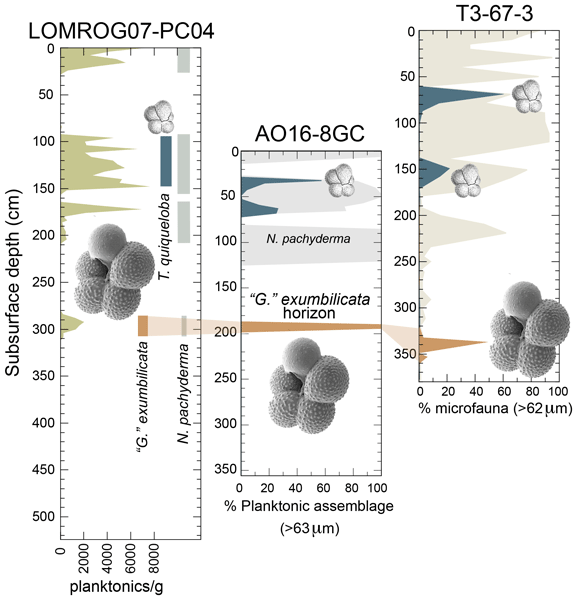
Helen K. Coxall, Thomas M. Cronin, Kate Darling, Katrine Husum, Tamara Handl, Brian T. Huber, Megh M. Kanvinde, Mohammad Razmjooei, Flor Vermassen, Antje H. L. Voelker, Tirza M. Weitkamp, and Matt O'Regan
J. Micropalaeontol., 45, 581–622, https://doi.org/10.5194/jm-45-581-2026, https://doi.org/10.5194/jm-45-581-2026, 2026
Short summary
Short summary
Today’s sea-ice-covered Arctic Ocean hosts only one species of calcifying planktonic foraminifera, unlike warmer oceans with diverse communities. Fossils show that other species once inhabited the Arctic, but their identities and environmental significance remain uncertain. Using detailed microscopy and hundreds of shell measurements, we resolve these fossil species and establish a new taxonomic framework providing the foundation for improved reconstructions of Quaternary Arctic climate history.
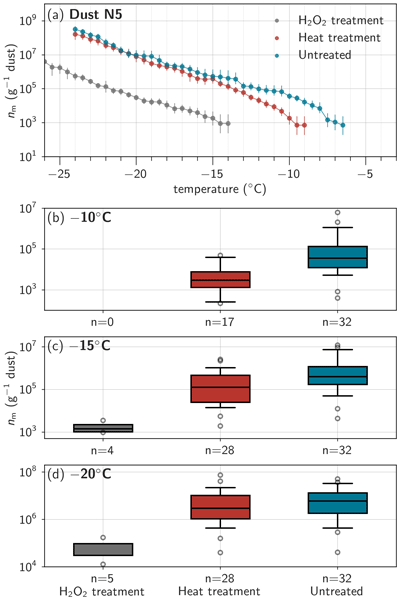
Nora Bergner, Grace Marsh, Kevin Barry, Larissa Lacher, Alexander Böhmländer, Joanna Alden, Carina Ahlqvist, Ianina Altshuler, Lisa Bröder, Daniel Farinotti, Lionel Favre, Coline Guillosson, Benjamin Heutte, Kristina Höhler, Roman Pohorsky, Julian Weng, and Julia Schmale
Atmos. Chem. Phys., 26, 10557–10585, https://doi.org/10.5194/acp-26-10557-2026, https://doi.org/10.5194/acp-26-10557-2026, 2026
Short summary
Short summary
Dust from Greenlandic glacial outwash plains can form ice in clouds, a process relevant for climate. Its ice-nucleating activity varies strongly and is largely controlled by small amounts of biological material. During summer, the influence on atmospheric ice-nucleating particles is mostly local. Lower activity compared to other high-latitude dust sources highlights the need to account for regional differences in Arctic dust.
Francesco Paladini de Mendoza, Leonardo Langone, Alice Cavaliere, Gianmarco Ingrosso, Lorenzo Pasculli, Chiara Ripa, Mauro Mazzola, Manuel Bensi, Federico Giglio, Stefano Miserocchi, Tommaso Tesi, and Patrizia Giordano
Earth Syst. Sci. Data Discuss., https://doi.org/10.5194/essd-2026-501, https://doi.org/10.5194/essd-2026-501, 2026
Preprint under review for ESSD
Short summary
Short summary
This paper presents 5-years of continuous ocean observations from Arctic fjords and nearby deep waters around Svalbard. The dataset reveals strong seasonal changes, recurring inflows of warm Atlantic waters, and differences between glacier-influenced coastal areas and offshore environments. By providing openly accessible, high-quality measurements, the study supports research on climate change, ocean dynamics, glacier–ocean interactions, in a rapidly changing Arctic.
Thomas Tanner, Ivan Hernandez-Almeida, Reto Wijker, Andrea K. Manirajan, Madeleine Santos, Peter Bijl, Tim van Peer, and Heather Stoll
EGUsphere, https://doi.org/10.5194/egusphere-2026-3415, https://doi.org/10.5194/egusphere-2026-3415, 2026
This preprint is open for discussion and under review for Climate of the Past (CP).
Short summary
Short summary
In this study, we examined the relationship between surface ocean temperature in the midlatitudes in both the Northern and Southern Hemispheres over a period of major Antarctic ice expansion 24 to 22 million years ago, a period when Antarctica was the only polar ice sheet. We find consistent cooling of the surface ocean in both hemispheres as ice was expanding, indicating a close coupling of global climate and polar ice caps.
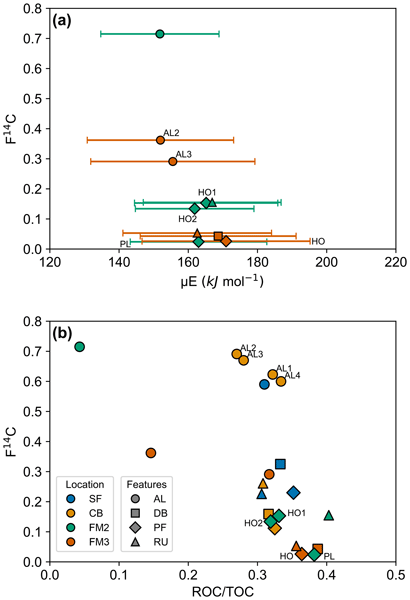
Marco A. Bolandini, Jordon D. Hemingway, Negar Haghipour, Kirsi H. Keskitalo, Jorien E. Vonk, Timothy I. Eglinton, and Lisa Bröder
Biogeosciences, 23, 4447–4462, https://doi.org/10.5194/bg-23-4447-2026, https://doi.org/10.5194/bg-23-4447-2026, 2026
Short summary
Short summary
Abrupt permafrost thaw mobilizes ancient organic matter, which could fuel further warming, yet its fate remains uncertain. We studied thaw slumps in Arctic Canada using thermal, radiocarbon, and molecular analyses. Recently thawed debris and runoff exiting the slumps contained old, thermally stable organic matter, compositionally similar to surrounding permafrost. This suggests that much of the thaw-mobilised carbon survives initial transport and may be processed or sequestered downstream.
George Tanski, Michael Fritz, Jorien E. Vonk, Jens Strauss, Léo Chassiot, Vladislav Carnero-Bravo, Jade Falardeau, Kostantin Klein, Parick Lajeunesse, Hugues Lantuit, Niek J. Speetjens, Anne de Vernal, Dustin Whalen, and Anna M. Irrgang
EGUsphere, https://doi.org/10.5194/egusphere-2026-2314, https://doi.org/10.5194/egusphere-2026-2314, 2026
Short summary
Short summary
As the Arctic warms, permafrost coasts erode rapidly, flushing carbon from frozen ground into the sea. We studied a lagoon in the western Canadian Arctic, collecting sediments and analyzing organic carbon content, stable isotopes, and grain size, alongside satellite imagery. Carbon content fell by over 50 % from land to open ocean, while erosion rates quintupled since the 1950s. Arctic lagoons bury, degrade, and export terrestrial carbon, acting as coastal reactors whose role will grow.
Albin Eriksson, Junjie Wu, Matt O'Regan, and Örjan Gustafsson
EGUsphere, https://doi.org/10.5194/egusphere-2026-2414, https://doi.org/10.5194/egusphere-2026-2414, 2026
Short summary
Short summary
Sea ice is an important regulator of the Arctic climate systems. Records of sea ice past instrumental records are necessary to understand how sea ice is altered during past periods of abrupt climate change, and what consequences such changes have on the polar climates. Here, we reconstructed the sea ice cover of the East Siberian Arctic and found that the sea ice extent likely was linked to protecting/eroding permafrost coastlines during the last deglaciation.
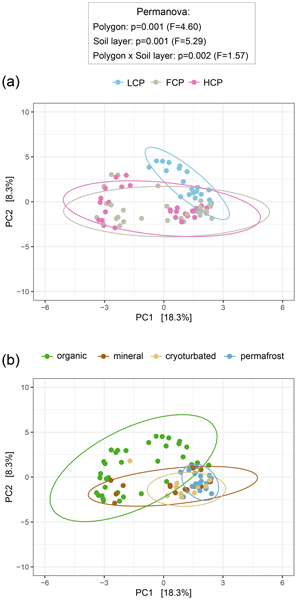
Victoria Martin, Cornelia Rottensteiner, Hannes Schmidt, Moritz Mohrlok, Julia Horak, Carolina Urbina-Malo, Julia Wagner, Willeke A'Campo, Luca Durstewitz, Niek Jesse Speetjens, Rachele Lodi, Bela Hausmann, Michael Fritz, Gustaf Hugelius, and Andreas Richter
Biogeosciences, 23, 2761–2785, https://doi.org/10.5194/bg-23-2761-2026, https://doi.org/10.5194/bg-23-2761-2026, 2026
Short summary
Short summary
We asked how organic matter pools and microbial communities vary across polygon types and soil layers in Arctic lowland tundra. Low-center polygons had lower microbial abundance, enzyme potential, and organic matter bioavailability. Organic topsoils were microbial hotspots, but thaw may also rapidly mobilize carbon from upper permafrost. Patterns consistently followed gradients in organic matter and redox conditions, offering a practical framework for scaling landscape-scale soil carbon changes.
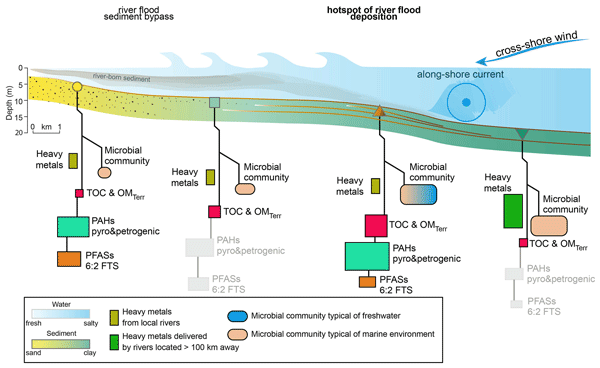
Claudio Pellegrini, Marco Basili, Irene Sammartino, Tommaso Tesi, Emanuela Frapiccini, Grazia Marina Quero, Sarah Pizzini, Roberta Zangrando, Gian Marco Luna, Sara Catena, Bruno Campo, Naomi Massaccesi, Fabio Trincardi, Andrea Gallerani, and Jacopo Chiggiato
Biogeosciences, 23, 2389–2412, https://doi.org/10.5194/bg-23-2389-2026, https://doi.org/10.5194/bg-23-2389-2026, 2026
Short summary
Short summary
The September 2022 flood in central Italy left a short-lived yet significant imprint offshore, with patchy sediment deposition, pollutant hotspots (Polycyclic Aromatic Hydrocarbons (PAHs), Poly- and Perfluorinated alkyl substances (PFASs)) and shifts in benthic microbial communities. These findings reveal how extreme events, though transient, can reshape coastal systems, stressing the need for event-based monitoring and improved understanding of flood-driven sediment, contaminant, and ecosystem dynamics.
Annabeth McCall, Martin Hieronymi, P. Paul Overduin, Lisa Bröder, Julie Lattaud, Rüdiger Röttgers, Irina Overeem, Anne Morgenstern, Guido Grosse, and Bennet Juhls
EGUsphere, https://doi.org/10.5194/egusphere-2026-997, https://doi.org/10.5194/egusphere-2026-997, 2026
Short summary
Short summary
This study examines how organic carbon and sediments move from the Mackenzie River through its delta to the Beaufort Sea. Using data from 2009–2024, we show that dissolved and particulate carbon decline offshore, with major changes in low-salinity mixing zones. As water optical properties also shift, satellite carbon estimates require tailored methods. These findings improve understanding of Arctic carbon fluxes and their influence on CO₂ exchange and the greater Arctic Ocean carbon budget.
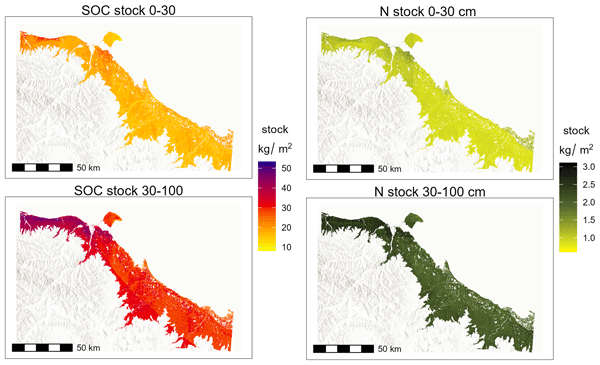
Julia Wagner, Juliane Wolter, Justine Ramage, Victoria Martin, Andreas Richter, Niek Jesse Speetjens, Jorien E. Vonk, Rachele Lodi, Annett Bartsch, Michael Fritz, Hugues Lantuit, and Gustaf Hugelius
SOIL, 12, 113–132, https://doi.org/10.5194/soil-12-113-2026, https://doi.org/10.5194/soil-12-113-2026, 2026
Short summary
Short summary
Permafrost soils store vast amounts of organic carbon, key to understanding climate change. This study uses machine learning and combines existing data with new field data to create detailed regional maps of soil carbon and nitrogen stocks for the Yukon coastal plain. The results show how soil properties vary across the landscape highlighting the importance of data selection for accurate predictions. These findings improve carbon storage estimates and may aid regional carbon budget assessments.

Luisa I. Minich, Dylan Geissbühler, Stefan Tobler, Annegret Udke, Alexander S. Brunmayr, Margaux Moreno Duborgel, Ciriaco McMackin, Lukas Wacker, Philip Gautschi, Negar Haghipour, Markus Egli, Ansgar Kahmen, Jens Leifeld, Timothy I. Eglinton, and Frank Hagedorn
Biogeosciences, 23, 811–829, https://doi.org/10.5194/bg-23-811-2026, https://doi.org/10.5194/bg-23-811-2026, 2026
Short summary
Short summary
We developed a conceptual framework using rates and 14C-derived ages of soil-respired CO2 and its sources (autotrophic, heterotrophic) to identify carbon cycling pathways in different land-use types. Rates, ages and sources of respired CO2 varied across forests, grasslands, croplands, and managed peatlands. Our results suggest that the relationship between rates and ages of respired CO2 serves as a robust indicator of carbon retention and loss from natural to disturbed systems.
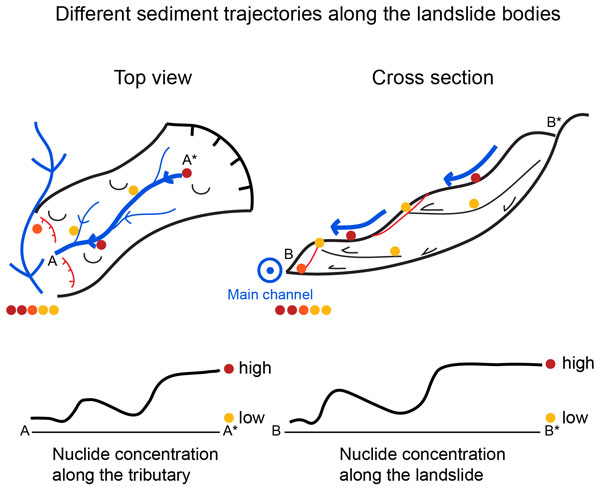
Chantal Schmidt, David Mair, Naki Akçar, Marcus Christl, Negar Haghipour, Christof Vockenhuber, Philip Gautschi, Brian McArdell, and Fritz Schlunegger
Earth Surf. Dynam., 14, 33–53, https://doi.org/10.5194/esurf-14-33-2026, https://doi.org/10.5194/esurf-14-33-2026, 2026
Short summary
Short summary
Our study examines erosion in a small, pre-Alpine basin by using cosmogenic nuclides in river sediments. Based on a dense measuring network we were able to distinguish two main zones: an upper zone with slow erosion of surface material, and a steeper, lower zone where faster erosion is driven by landslides. The data suggests that sediment has been constantly produced over thousands of years, indicating a stable, long-term balance between contrasting erosion processes.
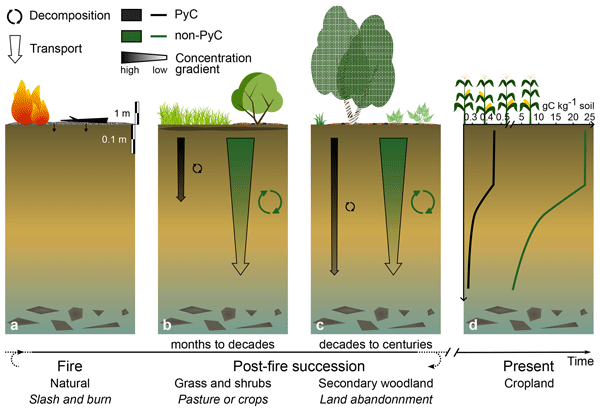
Johanne Lebrun Thauront, Philippa Ascough, Sebastian Doetterl, Negar Haghipour, Pierre Barré, Christian Walter, and Samuel Abiven
Biogeosciences, 23, 155–179, https://doi.org/10.5194/bg-23-155-2026, https://doi.org/10.5194/bg-23-155-2026, 2026
Short summary
Short summary
Fire-derived carbon is a form of organic carbon that has a long persistence in soils. However, its persistence at the landscape scale may be underestimated due to lateral and vertical redistribution. We measured fire-derived carbon in soils of a hilly agricultural watershed to identify the result of transport processes on the centennial time-scale. We show that the subsoil stores a large amount of fire-derived carbon and that erosion can redistribute it to localized accumulation zones.
Arnaud Nicolas, Jens Hefter, Hendrik Grotheer, Tommaso Tesi, Ruediger Stein, Alessio Nogarotto, Eduardo Queiroz Alves, and Gesine Mollenhauer
Clim. Past, 21, 2579–2599, https://doi.org/10.5194/cp-21-2579-2025, https://doi.org/10.5194/cp-21-2579-2025, 2025
Short summary
Short summary
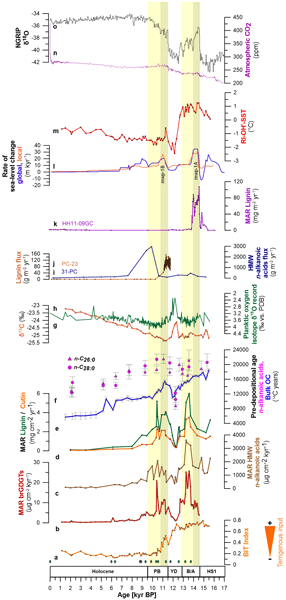
We analyzed a high-resolution marine sediment record from the Laptev Sea to reconstruct deglacial permafrost thaw events during the last 16 kyr. Using biomarkers and radiocarbon dating, we found that peaks in pre-aged terrigenous material coincided with rapid sea-level rise, indicating coastal erosion as the main mobilization mechanism. This research provides insights into past permafrost carbon release, informing predictions of future climate-permafrost feedback in a warming world.
Benedict V. A. Mittelbach, Margot E. White, Timo M. Y. Rhyner, Negar Haghipour, Marie-Elodie Perga, Nathalie Dubois, and Timothy I. Eglinton
Biogeosciences, 22, 6749–6763, https://doi.org/10.5194/bg-22-6749-2025, https://doi.org/10.5194/bg-22-6749-2025, 2025
Short summary
Short summary
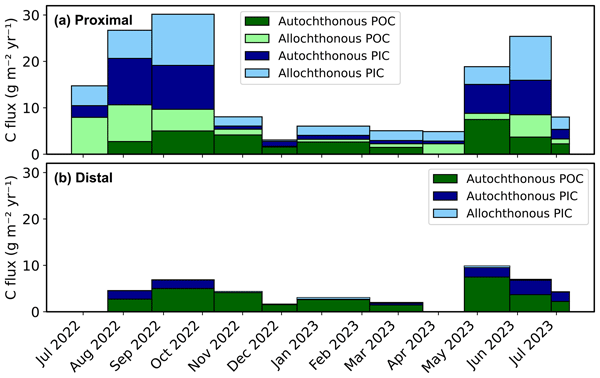
Lakes can emit carbon dioxide but also store carbon in their sediments. In hardwater lakes like Lake Geneva, calcite precipitates in the water column, releasing CO2 to the atmosphere, but upon sinking these particles also transport carbon to the sediment. Using sediment traps and radiocarbon isotopes, we show that much of the precipitated calcite is buried, highlighting an overlooked carbon sink that partly offsets the CO2 outgassing and should be included in lake carbon budgets.
Sarah Paradis, Hannah Gies, Davide Moccia, Julie Lattaud, Lisa Bröder, Negar Haghipour, Antonio Pusceddu, Albert Palanques, Pere Puig, Claudio Lo Iacono, and Timothy I. Eglinton
Biogeosciences, 22, 5921–5941, https://doi.org/10.5194/bg-22-5921-2025, https://doi.org/10.5194/bg-22-5921-2025, 2025
Short summary
Short summary
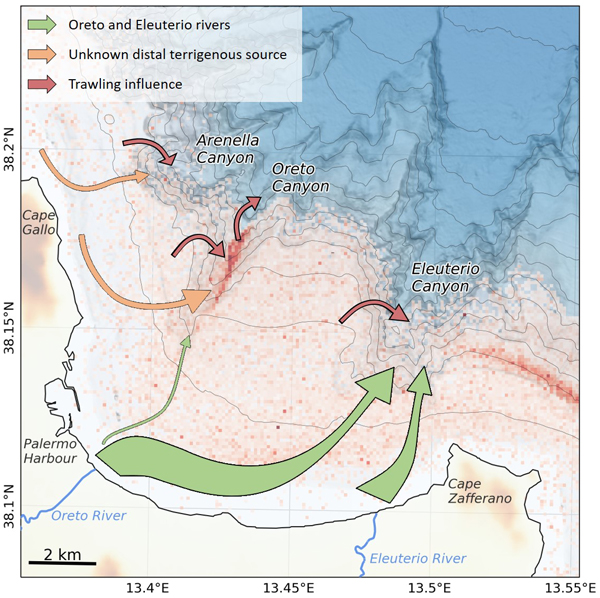
The Gulf of Palermo features several submarine canyons, where 50–70 % of the organic carbon deposited in them is terrigenous (OC-terr). The contribution of OC-terr generally decreases offshore and across canyons. Rivers deliver OC-terr, which is redistributed by regional currents and intercepted by the farthest down-current canyon, while the other submarine canyons receive terrigenous organic carbon from more distal sources. Bottom trawling also contributes to the transfer of OC-terr down-canyon.
Jamie Barnett, Felicity A. Holmes, Joshua Cuzzone, Henning Åkesson, Mathieu Morlighem, Matt O'Regan, Johan Nilsson, Nina Kirchner, and Martin Jakobsson
The Cryosphere, 19, 3631–3653, https://doi.org/10.5194/tc-19-3631-2025, https://doi.org/10.5194/tc-19-3631-2025, 2025
Short summary
Short summary
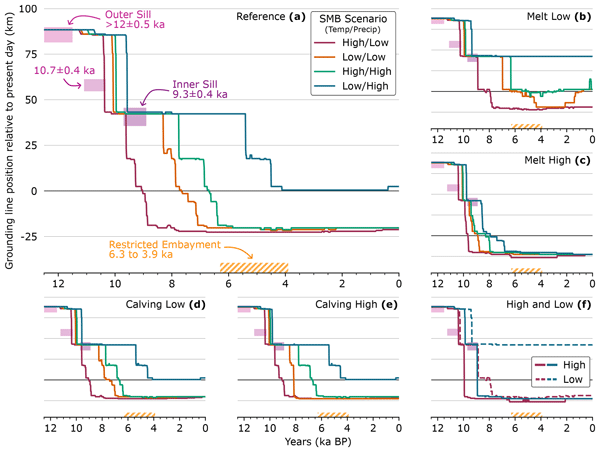
Understanding how ice sheets have changed in the past can allow us to make better predictions for the future. By running a state-of-the-art model of Ryder Glacier, North Greenland, over the past 12 000 years we find that both a warming atmosphere and the ocean play a key role in the evolution of the glacier. Our conclusions stress that accurately quantifying the ice sheet’s interactions with the ocean is required to predict future changes and reliable sea level rise estimates.
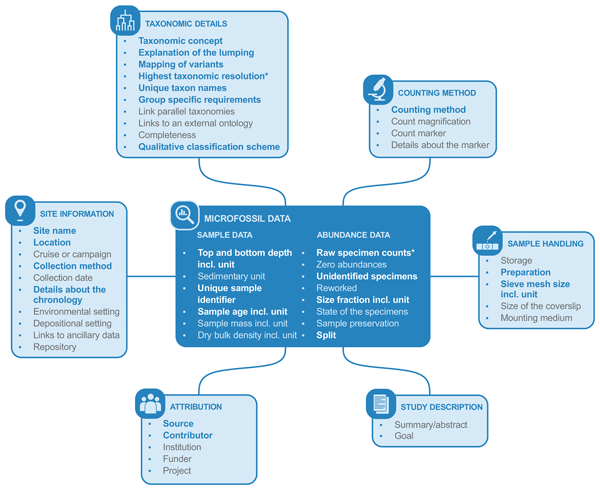
Lukas Jonkers, Tonke Strack, Montserrat Alonso-Garcia, Simon D'haenens, Robert Huber, Michal Kucera, Iván Hernández-Almeida, Chloe L. C. Jones, Brett Metcalfe, Rajeev Saraswat, Lóránd Silye, Sanjay K. Verma, Muhamad Naim Abd Malek, Gerald Auer, Cátia F. Barbosa, Maria A. Barcena, Karl-Heinz Baumann, Flavia Boscolo-Galazzo, Joeven Austine S. Calvelo, Lucilla Capotondi, Martina Caratelli, Jorge Cardich, Humberto Carvajal-Chitty, Markéta Chroustová, Helen K. Coxall, Renata M. de Mello, Anne de Vernal, Paula Diz, Kirsty M. Edgar, Helena L. Filipsson, Ángela Fraguas, Heather L. Furlong, Giacomo Galli, Natalia L. García Chapori, Robyn Granger, Jeroen Groeneveld, Adil Imam, Rebecca Jackson, David Lazarus, Julie Meilland, Marína Molčan Matejová, Raphael Morard, Caterina Morigi, Sven N. Nielsen, Diana Ochoa, Maria Rose Petrizzo, Andrés S. Rigual-Hernández, Marina C. Rillo, Matthew L. Staitis, Gamze Tanık, Raúl Tapia, Nishant Vats, Bridget S. Wade, and Anna E. Weinmann
J. Micropalaeontol., 44, 145–168, https://doi.org/10.5194/jm-44-145-2025, https://doi.org/10.5194/jm-44-145-2025, 2025
Short summary
Short summary
Our study provides guidelines improving the reuse of marine microfossil assemblage data, which are valuable for understanding past ecosystems and environmental change. Based on a survey of 113 researchers, we identified key data attributes required for effective reuse. Analysis of a selection of datasets available online reveals a gap between the attributes scientists consider essential and the data currently available, highlighting the need for clearer data documentation and sharing practices.
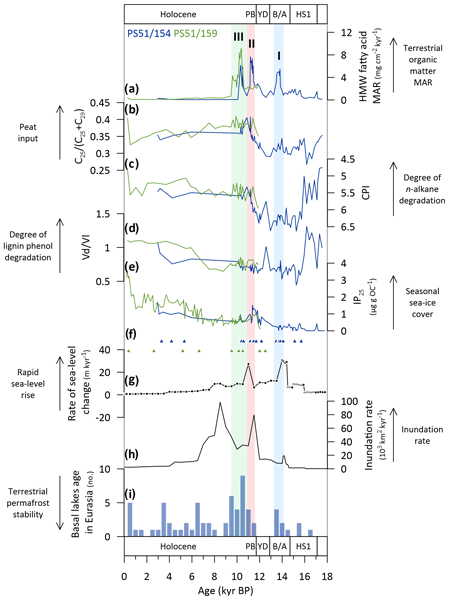
Tsai-Wen Lin, Tommaso Tesi, Jens Hefter, Hendrik Grotheer, Jutta Wollenburg, Florian Adolphi, Henning A. Bauch, Alessio Nogarotto, Juliane Müller, and Gesine Mollenhauer
Clim. Past, 21, 753–772, https://doi.org/10.5194/cp-21-753-2025, https://doi.org/10.5194/cp-21-753-2025, 2025
Short summary
Short summary
In order to understand the mechanisms governing permafrost organic matter remobilization, we investigated organic matter composition during past intervals of rapid sea-level rise, of inland warming, and of dense sea-ice cover in the Laptev Sea. We find that sea-level rise resulted in widespread erosion and transport of permafrost materials to the ocean but that erosion is mitigated by regional dense sea-ice cover. Factors like inland warming or floods increase permafrost mobilization locally.
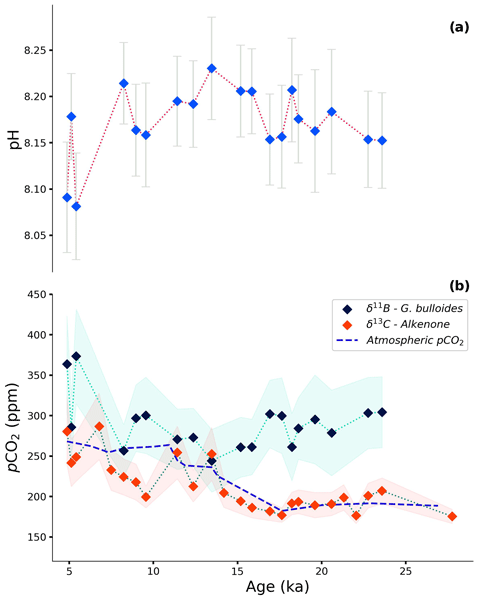
Szabina Karancz, Lennart J. de Nooijer, Bas van der Wagt, Marcel T. J. van der Meer, Sambuddha Misra, Rick Hennekam, Zeynep Erdem, Julie Lattaud, Negar Haghipour, Stefan Schouten, and Gert-Jan Reichart
Clim. Past, 21, 679–704, https://doi.org/10.5194/cp-21-679-2025, https://doi.org/10.5194/cp-21-679-2025, 2025
Short summary
Short summary
Changes in upwelling intensity of the Benguela upwelling region during the last glacial motivated us to investigate the local CO2 history during the last glacial-to-interglacial transition. Using various geochemical tracers on archives from both subsurface and surface waters reveals enhanced storage of carbon at depth during the Last Glacial Maximum. An efficient biological pump likely prevented outgassing of CO2 from intermediate depth to the atmosphere.
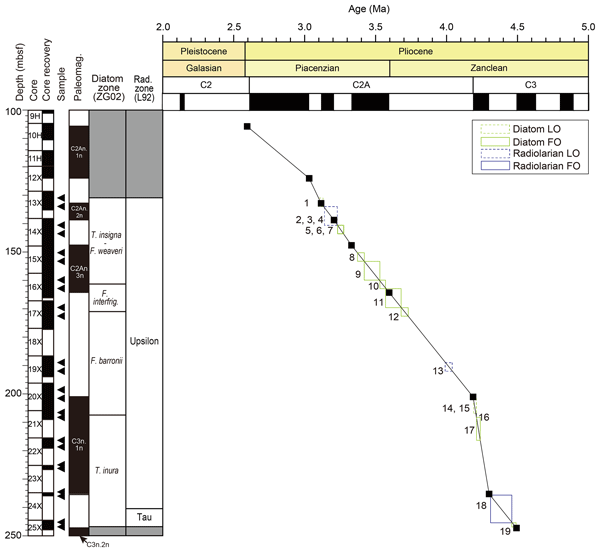
Yuji Kato, Iván Hernández-Almeida, and Lara F. Pérez
J. Micropalaeontol., 43, 93–119, https://doi.org/10.5194/jm-43-93-2024, https://doi.org/10.5194/jm-43-93-2024, 2024
Short summary
Short summary
In this study, we propose an age framework for an interval of 4.8–3.1 million years ago, using fossil records of marine plankton such as diatoms and radiolarians derived from a sediment core collected in the Southern Ocean. Specifically, a total of 19 bioevents (i.e., extinction/appearance events of selected age marker species) were detected, and their precise ages were calculated. The updated biostratigraphy will contribute to future paleoceanographic work in the Southern Ocean.
Allison P. Lepp, Lauren E. Miller, John B. Anderson, Matt O'Regan, Monica C. M. Winsborrow, James A. Smith, Claus-Dieter Hillenbrand, Julia S. Wellner, Lindsay O. Prothro, and Evgeny A. Podolskiy
The Cryosphere, 18, 2297–2319, https://doi.org/10.5194/tc-18-2297-2024, https://doi.org/10.5194/tc-18-2297-2024, 2024
Short summary
Short summary
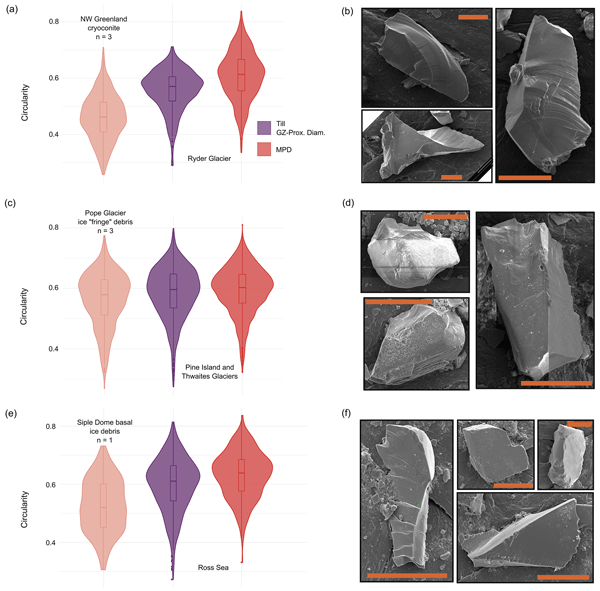
Shape and surface texture of silt-sized grains are measured to connect marine sediment records with subglacial water flow. We find that grain shape alteration is greatest in glaciers where high-energy drainage events and abundant melting of surface ice are inferred and that the surfaces of silt-sized sediments preserve evidence of glacial transport. Our results suggest grain shape and texture may reveal whether glaciers previously experienced temperate conditions with more abundant meltwater.
Lara F. Pérez, Paul C. Knutz, John R. Hopper, Marit-Solveig Seidenkrantz, Matt O'Regan, and Stephen Jones
Sci. Dril., 33, 33–46, https://doi.org/10.5194/sd-33-33-2024, https://doi.org/10.5194/sd-33-33-2024, 2024
Short summary
Short summary
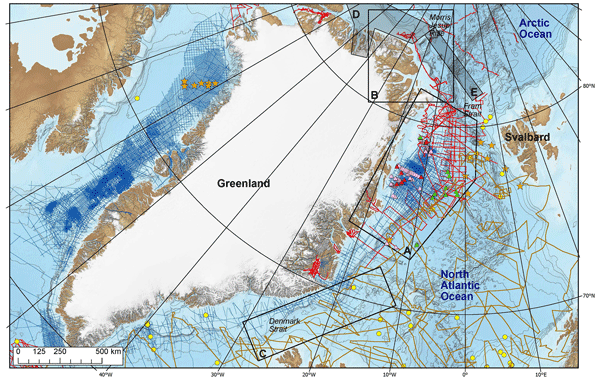
The Greenland ice sheet is highly sensitive to global warming and a major contributor to sea level rise. In Northeast Greenland, ice–ocean–tectonic interactions are readily observable today, but geological records that illuminate long-term trends are lacking. NorthGreen aims to promote scientific drilling proposals to resolve key scientific questions on past changes in the Northeast Greenland margin that further affected the broader Earth system.
Kirsi H. Keskitalo, Lisa Bröder, Tommaso Tesi, Paul J. Mann, Dirk J. Jong, Sergio Bulte Garcia, Anna Davydova, Sergei Davydov, Nikita Zimov, Negar Haghipour, Timothy I. Eglinton, and Jorien E. Vonk
Biogeosciences, 21, 357–379, https://doi.org/10.5194/bg-21-357-2024, https://doi.org/10.5194/bg-21-357-2024, 2024
Short summary
Short summary
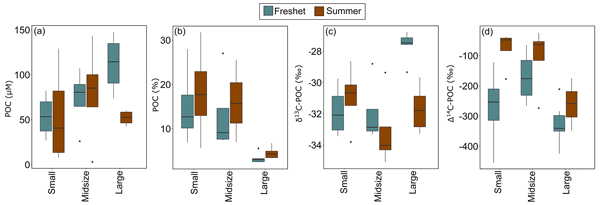
Permafrost thaw releases organic carbon into waterways. Decomposition of this carbon pool emits greenhouse gases into the atmosphere, enhancing climate warming. We show that Arctic river carbon and water chemistry are different between the spring ice breakup and summer and that primary production is initiated in small Arctic rivers right after ice breakup, in contrast to in large rivers. This may have implications for fluvial carbon dynamics and greenhouse gas uptake and emission balance.
Eduardo Queiroz Alves, Wanyee Wong, Jens Hefter, Hendrik Grotheer, Tommaso Tesi, Torben Gentz, Karin Zonneveld, and Gesine Mollenhauer
Clim. Past, 20, 121–136, https://doi.org/10.5194/cp-20-121-2024, https://doi.org/10.5194/cp-20-121-2024, 2024
Short summary
Short summary
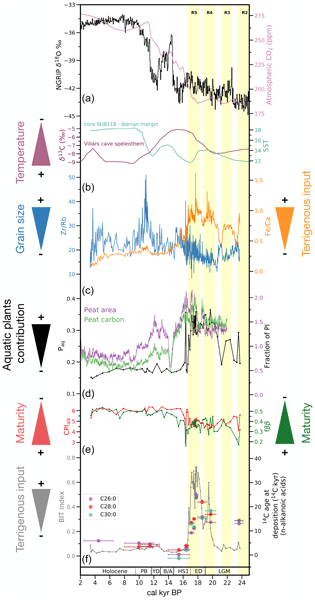
Our study reveals a previously unknown peat source for the massive influx of terrestrial organic matter that was exported from the European continent to the ocean during the last deglaciation. Our findings shed light on ancient terrestrial organic carbon mobilization, providing insights that are crucial for refining climate models.
Heather M. Stoll, Leopoldo D. Pena, Ivan Hernandez-Almeida, José Guitián, Thomas Tanner, and Heiko Pälike
Clim. Past, 20, 25–36, https://doi.org/10.5194/cp-20-25-2024, https://doi.org/10.5194/cp-20-25-2024, 2024
Short summary
Short summary
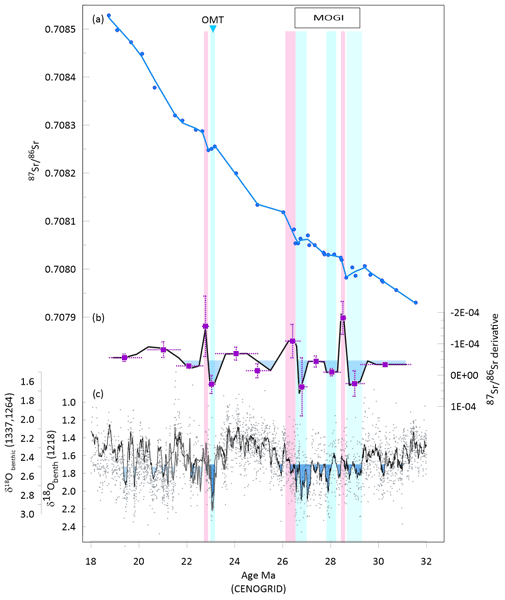
The Oligocene and early Miocene periods featured dynamic glacial cycles on Antarctica. In this paper, we use Sr isotopes in marine carbonate sediments to document a change in the location and intensity of continental weathering during short periods of very intense Antarctic glaciation. Potentially, the weathering intensity of old continental rocks on Antarctica was reduced during glaciation. We also show improved age models for correlation of Southern Ocean and North Atlantic sediments.
Sarah Paradis, Kai Nakajima, Tessa S. Van der Voort, Hannah Gies, Aline Wildberger, Thomas M. Blattmann, Lisa Bröder, and Timothy I. Eglinton
Earth Syst. Sci. Data, 15, 4105–4125, https://doi.org/10.5194/essd-15-4105-2023, https://doi.org/10.5194/essd-15-4105-2023, 2023
Short summary
Short summary
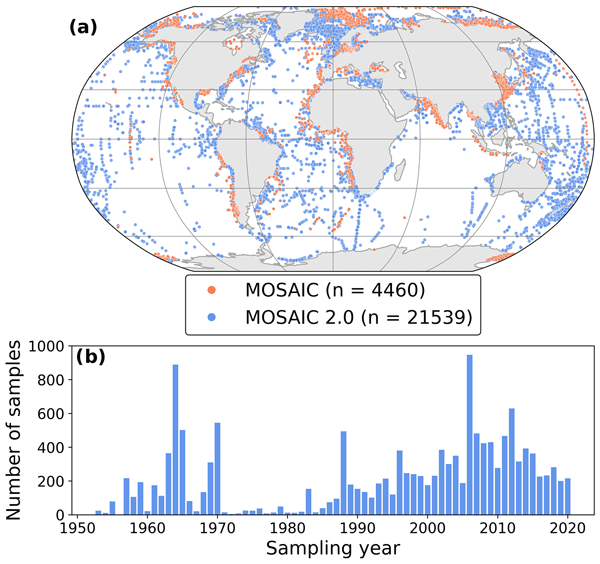
MOSAIC is a database of global organic carbon in marine sediments. This new version holds more than 21 000 sediment cores and includes new variables to interpret organic carbon distribution, such as sedimentological parameters and biomarker signatures. MOSAIC also stores data from specific sediment and molecular fractions to better understand organic carbon degradation and ageing. This database is continuously expanding, and version control will allow reproducible research outputs.
Giacomo Galli, Caterina Morigi, Romana Melis, Alessio Di Roberto, Tommaso Tesi, Fiorenza Torricella, Leonardo Langone, Patrizia Giordano, Ester Colizza, Lucilla Capotondi, Andrea Gallerani, and Karen Gariboldi
J. Micropalaeontol., 42, 95–115, https://doi.org/10.5194/jm-42-95-2023, https://doi.org/10.5194/jm-42-95-2023, 2023
Short summary
Short summary
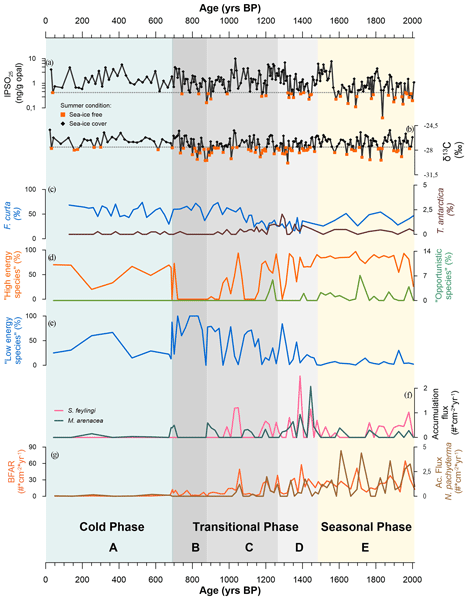
A sediment core was analysed, focusing over the 2000 years, in Edisto Inlet. Benthic and planktic foraminifera were picked and used to determine changes in the faunal composition. Using other nearby cores, by comparing different proxies, we were able to identify a succession of three different environmental phases over the studied period: a seasonal-cycle phase (from 2000 to around 1500 years BP), a transitional phase (from 1500 to 700 years BP) and a cold phase (from 700 years to present).
Johan Nilsson, Eef van Dongen, Martin Jakobsson, Matt O'Regan, and Christian Stranne
The Cryosphere, 17, 2455–2476, https://doi.org/10.5194/tc-17-2455-2023, https://doi.org/10.5194/tc-17-2455-2023, 2023
Short summary
Short summary
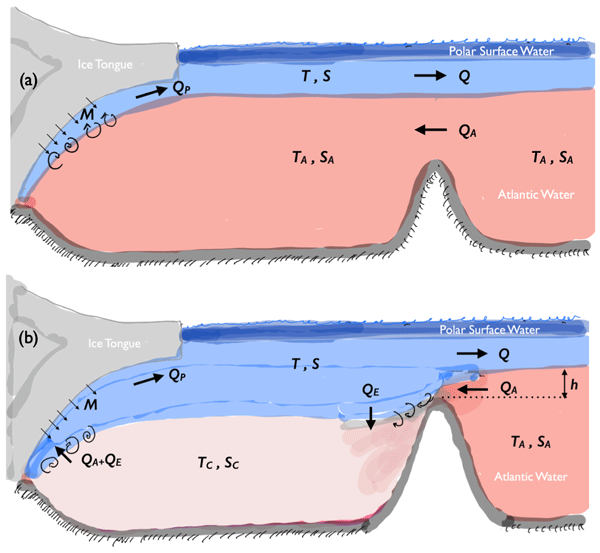
We investigate how topographical sills suppress basal glacier melt in Greenlandic fjords. The basal melt drives an exchange flow over the sill, but there is an upper flow limit set by the Atlantic Water features outside the fjord. If this limit is reached, the flow enters a new regime where the melt is suppressed and its sensitivity to the Atlantic Water temperature is reduced.
Gabriel West, Darrell S. Kaufman, Martin Jakobsson, and Matt O'Regan
Geochronology, 5, 285–299, https://doi.org/10.5194/gchron-5-285-2023, https://doi.org/10.5194/gchron-5-285-2023, 2023
Short summary
Short summary
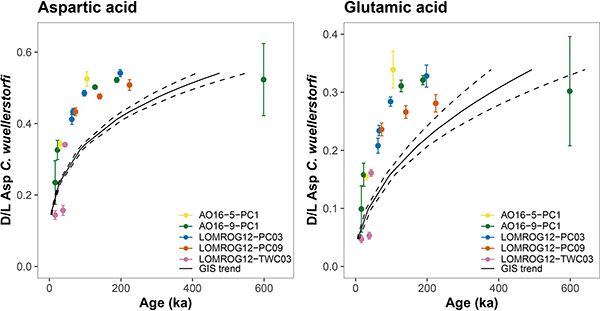
We report aspartic and glutamic acid racemization analyses on Neogloboquadrina pachyderma and Cibicidoides wuellerstorfi from the Arctic Ocean (AO). The rates of racemization in the species are compared. Calibrating the rate of racemization in C. wuellerstorfi for the past 400 ka allows the estimation of sample ages from the central AO. Estimated ages are older than existing age assignments (as previously observed for N. pachyderma), confirming that differences are not due to taxonomic effects.
Amanda Gerotto, Hongrui Zhang, Renata Hanae Nagai, Heather M. Stoll, Rubens César Lopes Figueira, Chuanlian Liu, and Iván Hernández-Almeida
Biogeosciences, 20, 1725–1739, https://doi.org/10.5194/bg-20-1725-2023, https://doi.org/10.5194/bg-20-1725-2023, 2023
Short summary
Short summary
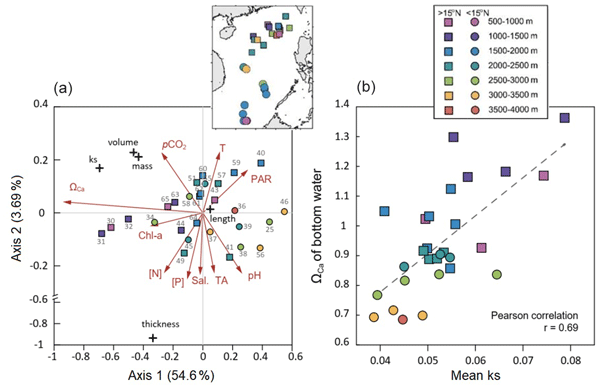
Based on the analysis of the response of coccolithophores’ morphological attributes in a laboratory dissolution experiment and surface sediment samples from the South China Sea, we proposed that the thickness shape (ks) factor of fossil coccoliths together with the normalized ks variation, which is the ratio of the standard deviation of ks (σ) over the mean ks (σ/ks), is a robust and novel proxy to reconstruct past changes in deep ocean carbon chemistry.
Martine Lizotte, Bennet Juhls, Atsushi Matsuoka, Philippe Massicotte, Gaëlle Mével, David Obie James Anikina, Sofia Antonova, Guislain Bécu, Marine Béguin, Simon Bélanger, Thomas Bossé-Demers, Lisa Bröder, Flavienne Bruyant, Gwénaëlle Chaillou, Jérôme Comte, Raoul-Marie Couture, Emmanuel Devred, Gabrièle Deslongchamps, Thibaud Dezutter, Miles Dillon, David Doxaran, Aude Flamand, Frank Fell, Joannie Ferland, Marie-Hélène Forget, Michael Fritz, Thomas J. Gordon, Caroline Guilmette, Andrea Hilborn, Rachel Hussherr, Charlotte Irish, Fabien Joux, Lauren Kipp, Audrey Laberge-Carignan, Hugues Lantuit, Edouard Leymarie, Antonio Mannino, Juliette Maury, Paul Overduin, Laurent Oziel, Colin Stedmon, Crystal Thomas, Lucas Tisserand, Jean-Éric Tremblay, Jorien Vonk, Dustin Whalen, and Marcel Babin
Earth Syst. Sci. Data, 15, 1617–1653, https://doi.org/10.5194/essd-15-1617-2023, https://doi.org/10.5194/essd-15-1617-2023, 2023
Short summary
Short summary
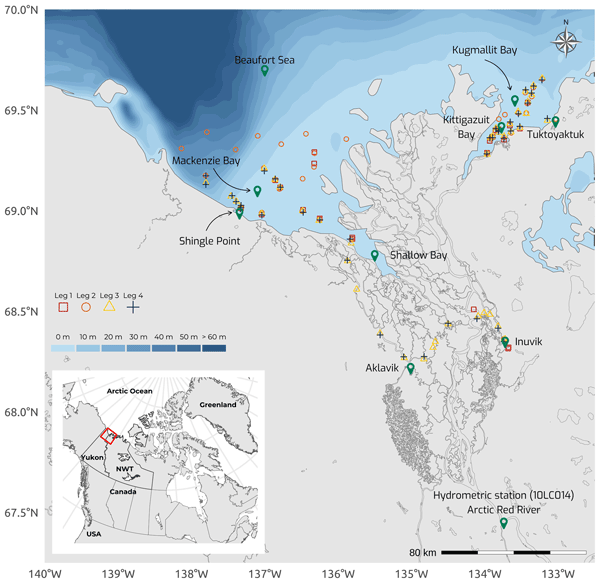
Permafrost thaw in the Mackenzie Delta region results in the release of organic matter into the coastal marine environment. What happens to this carbon-rich organic matter as it transits along the fresh to salty aquatic environments is still underdocumented. Four expeditions were conducted from April to September 2019 in the coastal area of the Beaufort Sea to study the fate of organic matter. This paper describes a rich set of data characterizing the composition and sources of organic matter.
Jesse R. Farmer, Katherine J. Keller, Robert K. Poirier, Gary S. Dwyer, Morgan F. Schaller, Helen K. Coxall, Matt O'Regan, and Thomas M. Cronin
Clim. Past, 19, 555–578, https://doi.org/10.5194/cp-19-555-2023, https://doi.org/10.5194/cp-19-555-2023, 2023
Short summary
Short summary
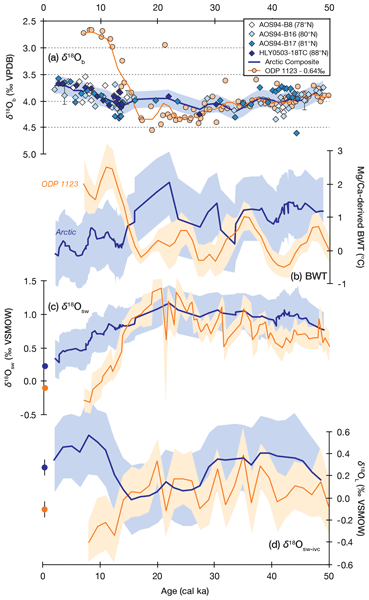
Oxygen isotopes are used to date marine sediments via similar large-scale ocean patterns over glacial cycles. However, the Arctic Ocean exhibits a different isotope pattern, creating uncertainty in the timing of past Arctic climate change. We find that the Arctic Ocean experienced large local oxygen isotope changes over glacial cycles. We attribute this to a breakdown of stratification during ice ages that allowed for a unique low isotope value to characterize the ice age Arctic Ocean.
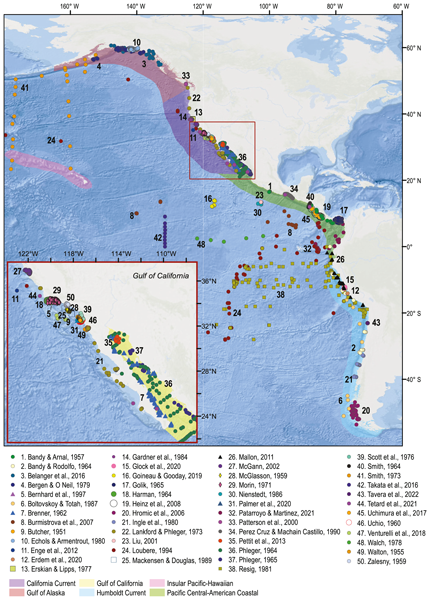
Paula Diz, Víctor González-Guitián, Rita González-Villanueva, Aida Ovejero, and Iván Hernández-Almeida
Earth Syst. Sci. Data, 15, 697–722, https://doi.org/10.5194/essd-15-697-2023, https://doi.org/10.5194/essd-15-697-2023, 2023
Short summary
Short summary
Benthic foraminifera are key components of the ocean benthos and marine sediments. Determining their geographic distribution is highly relevant for improving our understanding of the recent and past ocean benthic ecosystem and establishing adequate conservation strategies. Here, we contribute to this knowledge by generating an open-access database of previously documented quantitative data of benthic foraminifera species from surface sediments of the eastern Pacific (BENFEP).
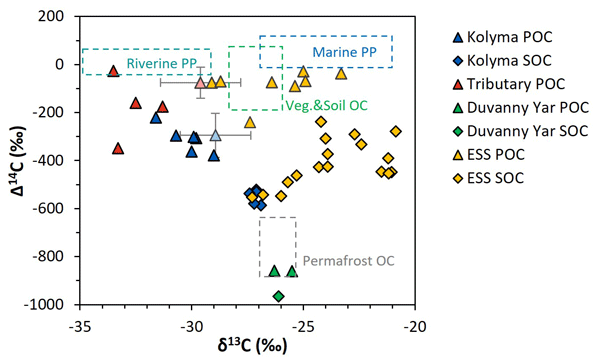
Dirk Jong, Lisa Bröder, Tommaso Tesi, Kirsi H. Keskitalo, Nikita Zimov, Anna Davydova, Philip Pika, Negar Haghipour, Timothy I. Eglinton, and Jorien E. Vonk
Biogeosciences, 20, 271–294, https://doi.org/10.5194/bg-20-271-2023, https://doi.org/10.5194/bg-20-271-2023, 2023
Short summary
Short summary
With this study, we want to highlight the importance of studying both land and ocean together, and water and sediment together, as these systems function as a continuum, and determine how organic carbon derived from permafrost is broken down and its effect on global warming. Although on the one hand it appears that organic carbon is removed from sediments along the pathway of transport from river to ocean, it also appears to remain relatively ‘fresh’, despite this removal and its very old age.
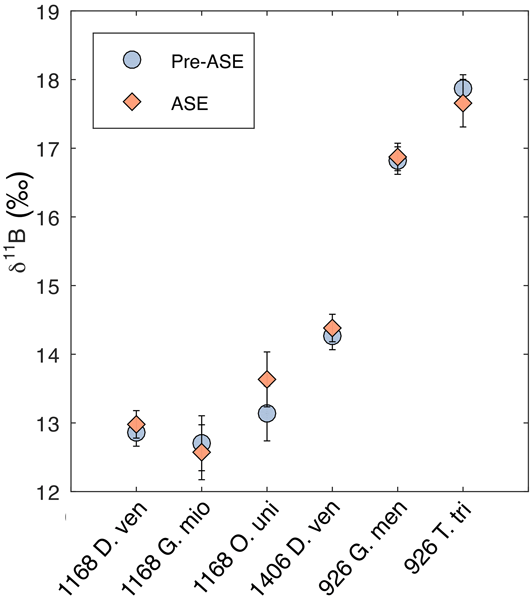
Jessica G. M. Crumpton-Banks, Thomas Tanner, Ivan Hernández Almeida, James W. B. Rae, and Heather Stoll
Biogeosciences, 19, 5633–5644, https://doi.org/10.5194/bg-19-5633-2022, https://doi.org/10.5194/bg-19-5633-2022, 2022
Short summary
Short summary
Past ocean carbon is reconstructed using proxies, but it is unknown whether preparing ocean sediment for one proxy might damage the data given by another. We have tested whether the extraction of an organic proxy archive from sediment samples impacts the geochemistry of tiny shells also within the sediment. We find no difference in shell geochemistry between samples which come from treated and untreated sediment. This will help us to maximize scientific return from valuable sediment samples.
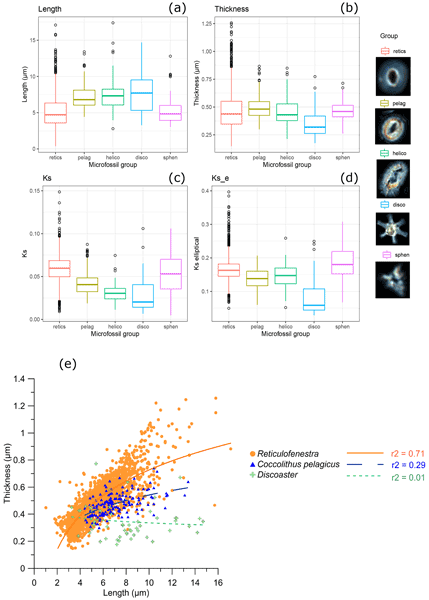
José Guitián, Miguel Ángel Fuertes, José-Abel Flores, Iván Hernández-Almeida, and Heather Stoll
Biogeosciences, 19, 5007–5019, https://doi.org/10.5194/bg-19-5007-2022, https://doi.org/10.5194/bg-19-5007-2022, 2022
Short summary
Short summary
The effect of environmental conditions on the degree of calcification of marine phytoplankton remains unclear. This study implements a new microscopic approach to quantify the calcification of ancient coccolithophores, using North Atlantic sediments. Results show significant differences in the thickness and shape factor of coccoliths for samples with minimum dissolution, providing the first evaluation of phytoplankton physiology adaptation to million-year-scale variable environmental conditions.

Raisa Alatarvas, Matt O'Regan, and Kari Strand
Clim. Past, 18, 1867–1881, https://doi.org/10.5194/cp-18-1867-2022, https://doi.org/10.5194/cp-18-1867-2022, 2022
Short summary
Short summary
This research contributes to efforts solving research questions related to the history of ice sheet decay in the Northern Hemisphere. The East Siberian continental margin sediments provide ideal material for identifying the mineralogical signature of ice sheet derived material. Heavy mineral analysis from marine glacial sediments from the De Long Trough and Lomonosov Ridge was used in interpreting the activity of the East Siberian Ice Sheet in the Arctic region.

Gabriella M. Weiss, Julie Lattaud, Marcel T. J. van der Meer, and Timothy I. Eglinton
Clim. Past, 18, 233–248, https://doi.org/10.5194/cp-18-233-2022, https://doi.org/10.5194/cp-18-233-2022, 2022
Short summary
Short summary
Here we study the elemental signatures of plant wax compounds as well as molecules from algae and bacteria to understand how water sources changed over the last 11 000 years in the northeastern part of Europe surrounding the Baltic Sea. Our results show diversity in plant and aquatic microorganisms following the melting of the large ice sheet that covered northern Europe as the regional climate continued to warm. A shift in water source from ice melt to rain also occurred around the same time.
Nele Manon Vollmar, Karl-Heinz Baumann, Mariem Saavedra-Pellitero, and Iván Hernández-Almeida
Biogeosciences, 19, 585–612, https://doi.org/10.5194/bg-19-585-2022, https://doi.org/10.5194/bg-19-585-2022, 2022
Short summary
Short summary
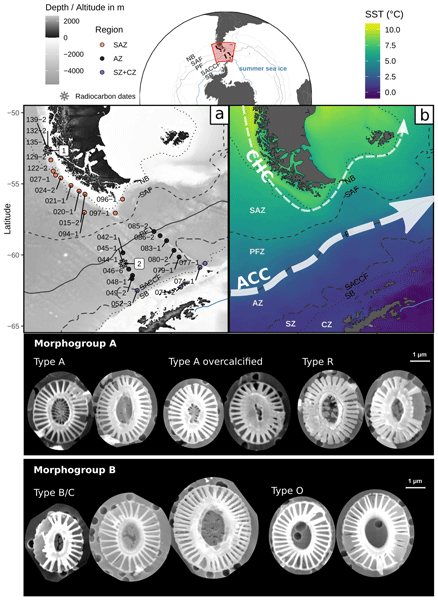
We studied recent (sub-)fossil remains of a type of algae (coccolithophores) off southernmost Chile and across the Drake Passage, adding to the scarce knowledge that exists in the Southern Ocean, a rapidly changing environment. We found that those can be used to reconstruct the surface ocean conditions in the north but not in the south. We also found variations in shape in the dominant species Emiliania huxleyi depending on the location, indicating subtle adaptations to environmental conditions.
Michael Fritz, Sebastian Wetterich, Joel McAlister, and Hanno Meyer
Earth Syst. Sci. Data, 14, 57–63, https://doi.org/10.5194/essd-14-57-2022, https://doi.org/10.5194/essd-14-57-2022, 2022
Short summary
Short summary
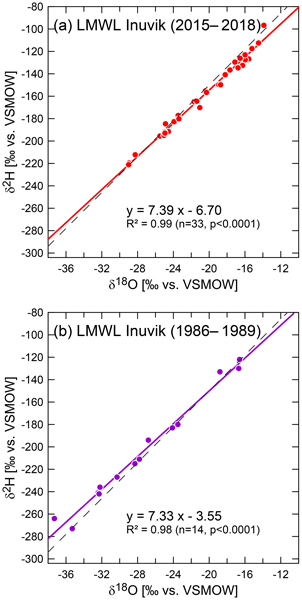
From 2015 to 2018 we collected rain and snow samples in Inuvik, Canada. We measured the stable water isotope composition of oxygen (δ18O) and hydrogen (δ2H) with a mass spectrometer. This data will be of interest for other scientists who work in the Arctic. They will be able to compare our modern data with their own isotope data in old ice, for example in glaciers, and in permafrost. This will help to correctly interpret the climate signals of the environmental history of the Earth.
Henrieka Detlef, Brendan Reilly, Anne Jennings, Mads Mørk Jensen, Matt O'Regan, Marianne Glasius, Jesper Olsen, Martin Jakobsson, and Christof Pearce
The Cryosphere, 15, 4357–4380, https://doi.org/10.5194/tc-15-4357-2021, https://doi.org/10.5194/tc-15-4357-2021, 2021
Short summary
Short summary
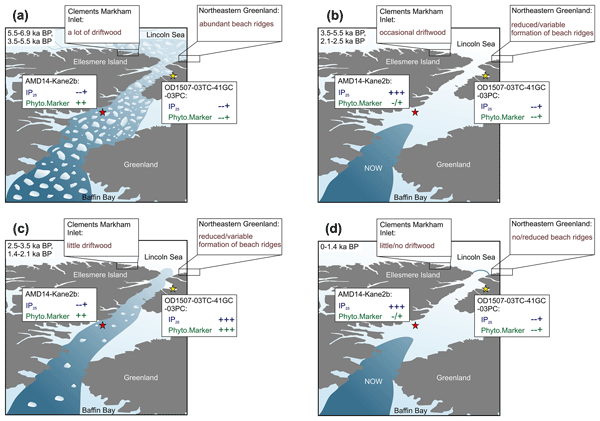
Here we examine the Nares Strait sea ice dynamics over the last 7000 years and their implications for the late Holocene readvance of the floating part of Petermann Glacier. We propose that the historically observed sea ice dynamics are a relatively recent feature, while most of the mid-Holocene was marked by variable sea ice conditions in Nares Strait. Nonetheless, major advances of the Petermann ice tongue were preceded by a shift towards harsher sea ice conditions in Nares Strait.
Matt O'Regan, Thomas M. Cronin, Brendan Reilly, Aage Kristian Olsen Alstrup, Laura Gemery, Anna Golub, Larry A. Mayer, Mathieu Morlighem, Matthias Moros, Ole L. Munk, Johan Nilsson, Christof Pearce, Henrieka Detlef, Christian Stranne, Flor Vermassen, Gabriel West, and Martin Jakobsson
The Cryosphere, 15, 4073–4097, https://doi.org/10.5194/tc-15-4073-2021, https://doi.org/10.5194/tc-15-4073-2021, 2021
Short summary
Short summary
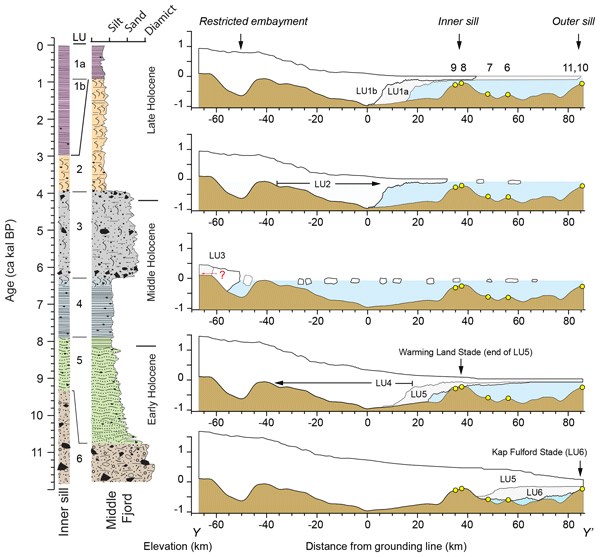
Ryder Glacier is a marine-terminating glacier in north Greenland discharging ice into the Lincoln Sea. Here we use marine sediment cores to reconstruct its retreat and advance behavior through the Holocene. We show that while Sherard Osborn Fjord has a physiography conducive to glacier and ice tongue stability, Ryder still retreated more than 40 km inland from its current position by the Middle Holocene. This highlights the sensitivity of north Greenland's marine glaciers to climate change.
Cited articles
Allan, E., Douglas, P. M. J., de Vernal, A., Gélinas, Y., and Mucci, A. O.: Palmitic Acid Is Not a Proper Salinity Proxy in Baffin Bay and the Labrador Sea but Reflects the Variability in Organic Matter Sources Modulated by Sea Ice Coverage, Geochem. Geophys. Geosystems, 24, e2022GC010837, https://doi.org/10.1029/2022GC010837, 2023.
Barrientos, N., Lear, C. H., Jakobsson, M., Stranne, C., O'Regan, M., Cronin, T. M., Gukov, A. Y., and Coxall, H. K.: Arctic Ocean benthic foraminifera Mg
Belt, S. T., Massé, G., Rowland, S. J., Poulin, M., Michel, C., and LeBlanc, B.: A novel chemical fossil of palaeo sea ice: IP25, Org. Geochem., 38, 16–27, https://doi.org/10.1016/j.orggeochem.2006.09.013, 2007.
Belt, S. T., Vare, L. L., Massé, G., Manners, H. R., Price, J. C., MacLachlan, S. E., Andrews, J. T., and Schmidt, S.: Striking similarities in temporal changes to spring sea ice occurrence across the central Canadian Arctic Archipelago over the last 7000 years, Quat. Sci. Rev., 29, 3489–3504, https://doi.org/10.1016/j.quascirev.2010.06.041, 2010.
Belt, S. T., Brown, T. A., Ampel, L., Cabedo-Sanz, P., Fahl, K., Kocis, J. J., Massé, G., Navarro-Rodriguez, A., Ruan, J., and Xu, Y.: An inter-laboratory investigation of the Arctic sea ice biomarker proxy IP25 in marine sediments: key outcomes and recommendations, Clim. Past, 10, 155–166, https://doi.org/10.5194/cp-10-155-2014, 2014.
Belt, S. T., Cabedo-Sanz, P., Smik, L., Navarro-Rodriguez, A., Berben, S. M. P., Knies, J., and Husum, K.: Identification of paleo Arctic winter sea ice limits and the marginal ice zone: Optimised biomarker-based reconstructions of late Quaternary Arctic sea ice, Earth Planet. Sci. Lett., 431, 127–139, https://doi.org/10.1016/j.epsl.2015.09.020, 2015.
Blaauw, M. and Christen, J. A.: Flexible paleoclimate age-depth models using an autoregressive gamma process, Bayesian Anal., 6, 457–474, https://doi.org/10.1214/11-BA618, 2011.
Bröder, L., O'Regan, M., Fritz, M., Juhls, B., Priest, T., Lattaud, J., Whalen, D., Matsuoka, A., Pellerin, A., Bossé-Demers, T., Rudbäck, D., Eulenburg, A., Carson, T., Rodriguez-Cuicas, M.-E., Overduin, P., and Vonk, J. E.: The Permafrost Carbon in the Beaufort Sea (PeCaBeau) Expedition of the Research Vessel CCGS AMUNDSEN (AMD2104) in 2021, Berichte Zur Polar-Meeresforsch. Rep. Polar Mar. Res., 759, https://doi.org/10.48433/BzPM_0759_2022, 2022.
Broecker, W. S., Kennett, J. P., Flower, B. P., Teller, J. T., Trumbore, S., Bonani, G., and Wolfli, W.: Routing of meltwater from the Laurentide Ice Sheet during the Younger Dryas cold episode, Nature, 341, 318–321, https://doi.org/10.1038/341318a0, 1989.
Carmack, E., Polyakov, I., Padman, L., Fer, I., Hunke, E., Hutchings, J., Jackson, J., Kelley, D., Kwok, R., Layton, C., Melling, H., Perovich, D., Persson, O., Ruddick, B., Timmermans, M.-L., Toole, J., Ross, T., Vavrus, S., and Winsor, P.: Toward Quantifying the Increasing Role of Oceanic Heat in Sea Ice Loss in the New Arctic, Bull. Am. Meteorol. Soc., 96, 2079–2105, https://doi.org/10.1175/BAMS-D-13-00177.1, 2015.
Carmack, E. C., Macdonald, R. W., and Jasper, S.: Phytoplankton productivity on the Canadian Shelf of the Beaufort Sea, Mar. Ecol. Prog. Ser., 277, 37–50, https://doi.org/10.3354/meps277037, 2004.
Clemens, S. C., Prell, W. L., and Sun, Y.: Orbital-scale timing and mechanisms driving Late Pleistocene Indo-Asian summer monsoons: Reinterpreting cave speleothem δ18O, Paleoceanography, 25, https://doi.org/10.1029/2010PA001926, 2010.
Comiso, J. C., Parkinson, C. L., Gersten, R., and Stock, L.: Accelerated decline in the Arctic sea ice cover, Geophys. Res. Lett., 35, 2007GL031972, https://doi.org/10.1029/2007GL031972, 2008.
Detlef, H., O'Regan, M., Stranne, C., Jensen, M. M., Glasius, M., Cronin, T. M., Jakobsson, M., and Pearce, C.: Seasonal sea-ice in the Arctic's last ice area during the Early Holocene, Commun. Earth Environ., 4, 1–11, https://doi.org/10.1038/s43247-023-00720-w, 2023.
de Vernal, A., Hillaire-Marcel, C., Rochon, A., Fréchette, B., Henry, M., Solignac, S., and Bonnet, S.: Dinocyst-based reconstructions of sea ice cover concentration during the Holocene in the Arctic Ocean, the northern North Atlantic Ocean and its adjacent seas, Quat. Sci. Rev., 79, 111–121, https://doi.org/10.1016/j.quascirev.2013.07.006, 2013.
Dong, J., Shi, X., Gong, X., Astakhov, A. S., Hu, L., Liu, X., Yang, G., Wang, Y., Vasilenko, Y., Qiao, S., Bosin, A., and Lohmann, G.: Enhanced Arctic sea ice melting controlled by larger heat discharge of mid-Holocene rivers, Nat. Commun., 13, 5368, https://doi.org/10.1038/s41467-022-33106-1, 2022.
Fahl, K. and Stein, R.: Modern seasonal variability and deglacial/Holocene change of central Arctic Ocean sea-ice cover: New insights from biomarker proxy records, Earth Planet. Sci. Lett., 351–352, 123–133, https://doi.org/10.1016/j.epsl.2012.07.009, 2012.
Fu, C. Y., Osman, M. B., and Aquino-López, M. A.: Bayesian Calibration for the Arctic Sea Ice Biomarker IP25, Paleoceanogr. Paleoclimatology, 40, e2024PA005048, https://doi.org/10.1029/2024PA005048, 2025.
Harning, D. J. and Sepúlveda, J.: Impact of non-thermal variables on hydroxylated GDGT distributions around Iceland, Front. Earth Sci., 12, https://doi.org/10.3389/feart.2024.1430441, 2024.
Heaton, T. J., Köhler, P., Butzin, M., Bard, E., Reimer, R. W., Austin, W. E. N., Bronk Ramsey, C., Grootes, P. M., Hughen, K. A., Kromer, B., Reimer, P. J., Adkins, J., Burke, A., Cook, M. S., Olsen, J., and Skinner, L. C.: Marine20 – The Marine Radiocarbon Age Calibration Curve (0–55 000 cal BP), Radiocarbon, 62, 779–820, https://doi.org/10.1017/rdc.2020.68, 2020.
Hill, P. R., Hequette, A., and Ruz, M. H.: Holocene sea-level history of the Canadian Beaufort shelf, Can. J. Earth Sci., 30, 103–108, https://doi.org/10.1139/e93-009, 1993.
Holmes, R. M., McClelland, J. W., Peterson, B. J., Tank, S. E., Bulygina, E., Eglinton, T. I., Gordeev, V. V., Gurtovaya, T. Y., Raymond, P. A., Repeta, D. J., Staples, R., Striegl, R. G., Zhulidov, A. V., and Zimov, S. A.: Seasonal and Annual Fluxes of Nutrients and Organic Matter from Large Rivers to the Arctic Ocean and Surrounding Seas, Estuaries Coasts, 35, 369–382, https://doi.org/10.1007/s12237-011-9386-6, 2012.
Hopmans, E. C., Weijers, J. W. H., Schefuß, E., Herfort, L., Sinninghe Damsté, J. S., and Schouten, S.: A novel proxy for terrestrial organic matter in sediments based on branched and isoprenoid tetraether lipids, Earth Planet. Sci. Lett., 224, 107–116, https://doi.org/10.1016/j.epsl.2004.05.012, 2004.
Hopmans, E. C., Schouten, S., and Sinninghe Damsté, J. S.: The effect of improved chromatography on GDGT-based palaeoproxies, Org. Geochem., 93, 1–6, https://doi.org/10.1016/j.orggeochem.2015.12.006, 2016.
Hörner, T., Stein, R., Fahl, K., and Birgel, D.: Post-glacial variability of sea ice cover, river run-off and biological production in the western Laptev Sea (Arctic Ocean) – A high-resolution biomarker study, Quat. Sci. Rev., 143, 133–149, https://doi.org/10.1016/j.quascirev.2016.04.011, 2016.
Hörner, T., Stein, R., and Fahl, K.: Paleo-sea ice distribution and polynya variability on the Kara Sea shelf during the last 12 ka, Arktos, 4, 1–16, https://doi.org/10.1007/s41063-018-0040-4, 2018.
Huguet, C., Hopmans, E. C., Febo-Ayala, W., Thompson, D. H., Sinninghe Damsté, J. S., and Schouten, S.: An improved method to determine the absolute abundance of glycerol dibiphytanyl glycerol tetraether lipids, Org. Geochem., 37, 1036–1041, https://doi.org/10.1016/j.orggeochem.2006.05.008, 2006.
Jakobsson, M., Mohammad, R., Karlsson, M., Salas-Romero, S., Vacek, F., Heinze, F., Bringensparr, C., Castro, C. F., Johnson, P., Kinney, J., Cardigos, S., Bogonko, M., Accettella, D., Amblas, D., An, L., Bohan, A., Brandt, A., Bünz, S., Canals, M., Casamor, J. L., Coakley, B., Cornish, N., Danielson, S., Demarte, M., Di Franco, D., Dickson, M.-L., Dorschel, B., Dowdeswell, J. A., Dreutter, S., Fremand, A. C., Hall, J. K., Hally, B., Holland, D., Hong, J. K., Ivaldi, R., Knutz, P. C., Krawczyk, D. W., Kristofferson, Y., Lastras, G., Leck, C., Lucchi, R. G., Masetti, G., Morlighem, M., Muchowski, J., Nielsen, T., Noormets, R., Plaza-Faverola, A., Prescott, M. M., Purser, A., Rasmussen, T. L., Rebesco, M., Rignot, E., Rysgaard, S., Silyakova, A., Snoeijs-Leijonmalm, P., Sørensen, A., Straneo, F., Sutherland, D. A., Tate, A. J., Travaglini, P., Trenholm, N., van Wijk, E., Wallace, L., Willis, J. K., Wood, M., Zimmermann, M., Zinglersen, K. B., and Mayer, L.: The International Bathymetric Chart of the Arctic Ocean Version 5.0, Sci. Data, 11, 1420, https://doi.org/10.1038/s41597-024-04278-w, 2024.
Kashiwase, H., Ohshima, K. I., Nihashi, S., and Eicken, H.: Evidence for ice-ocean albedo feedback in the Arctic Ocean shifting to a seasonal ice zone, Sci. Rep., 7, 8170, https://doi.org/10.1038/s41598-017-08467-z, 2017.
Kaufman, D. S., Ager, T. A., Anderson, N. J., Anderson, P. M., Andrews, J. T., Bartlein, P. J., Brubaker, L. B., Coats, L. L., Cwynar, L. C., Duvall, M. L., Dyke, A. S., Edwards, M. E., Eisner, W. R., Gajewski, K., Geirsdóttir, A., Hu, F. S., Jennings, A. E., Kaplan, M. R., Kerwin, M. W., Lozhkin, A. V., MacDonald, G. M., Miller, G. H., Mock, C. J., Oswald, W. W., Otto-Bliesner, B. L., Porinchu, D. F., Rühland, K., Smol, J. P., Steig, E. J., and Wolfe, B. B.: Holocene thermal maximum in the western Arctic (0–180° W), Quat. Sci. Rev., 23, 529–560, https://doi.org/10.1016/j.quascirev.2003.09.007, 2004.
Keigwin, L. D., Klotsko, S., Zhao, N., Reilly, B., Giosan, L., and Driscoll, N. W.: Deglacial floods in the Beaufort Sea preceded Younger Dryas cooling, Nat. Geosci., 11, 599–604, https://doi.org/10.1038/s41561-018-0169-6, 2018.
Klotsko, S., Driscoll, N., and Keigwin, L.: Multiple meltwater discharge and ice rafting events recorded in the deglacial sediments along the Beaufort Margin, Arctic Ocean, Quat. Sci. Rev., 203, 185–208, https://doi.org/10.1016/j.quascirev.2018.11.014, 2019.
Kolling, H. M., Stein, R., Fahl, K., Sadatzki, H., de Vernal, A., and Xiao, X.: Biomarker Distributions in (Sub)-Arctic Surface Sediments and Their Potential for Sea Ice Reconstructions, Geochem. Geophys. Geosystems, 21, e2019GC008629, https://doi.org/10.1029/2019GC008629, 2020.
Köseoğlu, D., Belt, S. T., Smik, L., Yao, H., Panieri, G., and Knies, J.: Complementary biomarker-based methods for characterising Arctic sea ice conditions: A case study comparison between multivariate analysis and the PIP25 index, Geochim. Cosmochim. Acta, 222, 406–420, https://doi.org/10.1016/j.gca.2017.11.001, 2018.
Kristjánsdóttir, G. B., Lea, D. W., Jennings, A. E., Pak, D. K., and Belanger, C.: New spatial Mg
Lake, R. A.: Heat exchange between water and ice in the Arctic Ocean, Arch. Meteorol. Geophys. Bioklimatol. Ser. A, 16, 242–259, https://doi.org/10.1007/BF02246401, 1967.
Lambeck, K., Rouby, H., Purcell, A., Sun, Y., and Sambridge, M.: Sea level and global ice volumes from the Last Glacial Maximum to the Holocene, Proc. Natl. Acad. Sci., 111, 15296–15303, https://doi.org/10.1073/pnas.1411762111, 2014.
Lannuzel, D., Tedesco, L., van Leeuwe, M., Campbell, K., Flores, H., Delille, B., Miller, L., Stefels, J., Assmy, P., Bowman, J., Brown, K., Castellani, G., Chierici, M., Crabeck, O., Damm, E., Else, B., Fransson, A., Fripiat, F., Geilfus, N.-X., Jacques, C., Jones, E., Kaartokallio, H., Kotovitch, M., Meiners, K., Moreau, S., Nomura, D., Peeken, I., Rintala, J.-M., Steiner, N., Tison, J.-L., Vancoppenolle, M., Van der Linden, F., Vichi, M., and Wongpan, P.: The future of Arctic sea-ice biogeochemistry and ice-associated ecosystems, Nat. Clim. Change, 10, 983–992, https://doi.org/10.1038/s41558-020-00940-4, 2020.
Laskar, J., Robutel, P., Joutel, F., Gastineau, M., Correia, A. C. M., and Levrard, B.: A long-term numerical solution for the insolation quantities of the Earth, Astron. Astrophys., 428, 261–285, https://doi.org/10.1051/0004-6361:20041335, 2004.
Lattaud, J., Erdem, Z., Weiss, G. M., Rush, D., Balzano, S., Chivall, D., Meer, M. T. J. V. D., Hopmans, E. C., Sinninghe, J. S., Schouten, S., van der Meer, M. T. J., Hopmans, E. C., Sinninghe Damsté, J. S., and Schouten, S.: Hydrogen isotopic ratios of long-chain diols reflect salinity, Org. Geochem., 137, 103904, https://doi.org/10.1016/j.orggeochem.2019.103904, 2019.
Lattaud, J., Bröder, L., Haghipour, N., Rickli, J., Giosan, L., and Eglinton, T. I.: Influence of Hydraulic Connectivity on Carbon Burial Efficiency in Mackenzie Delta Lake Sediments, J. Geophys. Res. Biogeosciences, 126, https://doi.org/10.1029/2020jg006054, 2021a.
Lattaud, J., De Jonge, C., Elling, F. J., Pearson, A., and Eglinton, T. I.: Microbial lipid signatures in Arctic deltaic sediments – Insights into methane cycling and climate variability, Org. Geochem., 157, https://doi.org/10.1016/j.orggeochem.2021.104242, 2021b.
Lattaud, J., Santos, M., Bröder, L., and Bigler, L.: Beaufort Sea surface sediment hydrogen isotope ratios from expeditions AMD2104 and SKQ2022-15s, 2021 and 2022, Dataset version 1, Bolin Centre Database [data set], https://doi.org/10.17043/lattaud-2025-sediment-beaufort-surface-1, 2025a.
Lattaud, J., Santos, M., Bröder, L., Hernandez, I., and O'Regan, M.: Sediment properties of Beaufort Sea sediment cores PCB09 and PCB11 – foraminifera counts and biomarkers, Dataset version 1, Bolin Centre Database [data set], https://doi.org/10.17043/lattaud-2025-sediment-beaufort-1, 2025b.
Lin, T.-W., Tesi, T., Hefter, J., Grotheer, H., Wollenburg, J., Adolphi, F., Bauch, H. A., Nogarotto, A., Müller, J., and Mollenhauer, G.: Environmental controls of rapid terrestrial organic matter mobilization to the western Laptev Sea since the Last Deglaciation, Clim. Past, 21, 753–772, https://doi.org/10.5194/cp-21-753-2025, 2025.
Liu, X.-L., Lipp, J. S., Simpson, J. H., Lin, Y.-S., Summons, R. E., and Hinrichs, K.-U.: Mono- and dihydroxyl glycerol dibiphytanyl glycerol tetraethers in marine sediments: Identification of both core and intact polar lipid forms, Geochim. Cosmochim. Acta, 89, 102–115, https://doi.org/10.1016/j.gca.2012.04.053, 2012.
Locarnini, R. A., Mishonov, A. V., Baranova, O. K., Reagan, J. R., Boyer, T. P., Seidov, D., Wang, Z., Garcia, H. E., Bouchard, C., Cross, S. L., Paver, C. R., and Dukhovskoy, D.: World Ocean Atlas 2023, Volume 1: Temperature, https://doi.org/10.25923/54BH-1613, 2024.
Lü, X., Liu, X.-L., Elling, F. J., Yang, H., Xie, S., Song, J., Li, X., Yuan, H., Li, N., and Hinrichs, K.-U.: Hydroxylated isoprenoid GDGTs in Chinese coastal seas and their potential as a paleotemperature proxy for mid-to-low latitude marginal seas, Org. Geochem., 89–90, 31–43, https://doi.org/10.1016/j.orggeochem.2015.10.004, 2015.
Mann, M. E., Zhang, Z., Rutherford, S., Bradley, R. S., Hughes, M. K., Shindell, D., Ammann, C., Faluvegi, G., and Ni, F.: Global Signatures and Dynamical Origins of the Little Ice Age and Medieval Climate Anomaly, Science, 326, 1256–1260, https://doi.org/10.1126/science.1177303, 2009.
Matsuoka, A., Bricaud, A., Benner, R., Para, J., Sempéré, R., Prieur, L., Bélanger, S., and Babin, M.: Tracing the transport of colored dissolved organic matter in water masses of the Southern Beaufort Sea: relationship with hydrographic characteristics, Biogeosciences, 9, 925–940, https://doi.org/10.5194/bg-9-925-2012, 2012.
Meier, W., Markus, T., and Comiso, J.: AMSR-E/AMSR2 Unified L3 Daily 12.5 km Brightness Temperatures, Sea Ice Concentration, Motion & Snow Depth Polar Grids, Version 1, National Snow and Ice Data Center, https://doi.org/10.5067/RA1MIJOYPK3P, 2018.
Missiaen, L., Wacker, L., Lougheed, B. C., Skinner, L., Hajdas, I., Nouet, J., Pichat, S., and Waelbroeck, C.: Radiocarbon Dating of Small-sized Foraminifer Samples: Insights into Marine sediment Mixing, Radiocarbon, 62, 313–333, https://doi.org/10.1017/RDC.2020.13, 2020.
Moran, J. M. and Bryson, R. A.: The Contribution of Laurentide Ice Wastage to the Eustatic Rise of Sea Level: 10,000 to 6,000 BP, Arct. Alp. Res., 1, 97–104, https://doi.org/10.1080/00040851.1969.12003527, 1969.
Müller, J., Wagner, A., Fahl, K., Stein, R., Prange, M., and Lohmann, G.: Towards quantitative sea ice reconstructions in the northern North Atlantic: A combined biomarker and numerical modelling approach, Earth Planet. Sci. Lett., 306, 137–148, https://doi.org/10.1016/j.epsl.2011.04.011, 2011.
Murton, J. B., Bateman, M. D., Dallimore, S. R., Teller, J. T., and Yang, Z.: Identification of Younger Dryas outburst flood path from Lake Agassiz to the Arctic Ocean, Nature, 464, 740–743, https://doi.org/10.1038/nature08954, 2010.
Omstedt, A., Carmack, E. C., and Macdonald, R. W.: Modeling the seasonal cycle of salinity in the Mackenzie shelf/estuary, J. Geophys. Res. Oceans, 99, 10011–10021, https://doi.org/10.1029/94JC00201, 1994.
Park, H.-S., Kim, S.-J., Seo, K.-H., Stewart, A. L., Kim, S.-Y., and Son, S.-W.: The impact of Arctic sea ice loss on mid-Holocene climate, Nat. Commun., 9, 4571, https://doi.org/10.1038/s41467-018-07068-2, 2018.
Peltier, W. R., Argus, D. F., and Drummond, R.: Space geodesy constrains ice age terminal deglaciation: The global ICE-6G_C (VM5a) model, J. Geophys. Res. Solid Earth, 120, 450–487, https://doi.org/10.1002/2014JB011176, 2015.
Peterse, F., Kim, J.-H., Schouten, S., Kristensen, D. K., Koç, N., and Damsté, J. S. S.: Constraints on the application of the MBT/CBT palaeothermometer at high latitude environments (Svalbard, Norway), Org. Geochem., 40, 692–699, https://doi.org/10.1016/j.orggeochem.2009.03.004, 2009.
Pickart, R. S.: Shelfbreak circulation in the Alaskan Beaufort Sea: Mean structure and variability, J. Geophys. Res. Oceans, 109, 2003JC001912, https://doi.org/10.1029/2003JC001912, 2004.
Richerol, T., Rochon, A., Blasco, S., Scott, D. B., Schell, T. M., and Bennett, R. J.: Evolution of paleo sea-surface conditions over the last 600 years in the Mackenzie Trough, Beaufort Sea (Canada), Mar. Micropaleontol., 68, 6–20, https://doi.org/10.1016/j.marmicro.2008.03.003, 2008.
Ruan, J., Huang, Y., Shi, X., Liu, Y., Xiao, W., and Xu, Y.: Holocene variability in sea surface temperature and sea ice extent in the northern Bering Sea: A multiple biomarker study, Org. Geochem., 113, 1–9, https://doi.org/10.1016/j.orggeochem.2017.08.006, 2017.
Sachs, J. P., Stein, R., Maloney, A. E., and Wolhowe, M.: An Arctic Ocean paleosalinity proxy from δ2H of palmitic acid provides evidence for deglacial Mackenzie River flood events An Arctic Ocean paleosalinity proxy from d 2 H of palmitic acid provides evidence for deglacial Mackenzie River fl ood events, Quat. Sci. Rev., 198, 76–90, https://doi.org/10.1016/j.quascirev.2018.08.025, 2018.
Schlitzer, R.: Ocean Data VIew, https://odv.awi.de (last access: 1 May 2025), 2025.
Schouten, S., Hopmans, E. C., Damsté, J. S. S., and Sinninghe Damsté, J. S.: The organic geochemistry of glycerol dialkyl glycerol tetraether lipids: A review, Org. Geochem., 54, 19–61, https://doi.org/10.1016/j.orggeochem.2012.09.006, 2013.
Schulze, L. M. and Pickart, R. S.: Seasonal variation of upwelling in the Alaskan Beaufort Sea: Impact of sea ice cover, J. Geophys. Res. Oceans, 117, https://doi.org/10.1029/2012JC007985, 2012.
Serreze, M. C., Barrett, A. P., Slater, A. G., Woodgate, R. A., Aagaard, K., Lammers, R. B., Steele, M., Moritz, R., Meredith, M., and Lee, C. M.: The large-scale freshwater cycle of the Arctic, J. Geophys. Res. Oceans, 111, https://doi.org/10.1029/2005JC003424, 2006.
Sinninghe Damsté, J. S.: Spatial heterogeneity of sources of branched tetraethers in shelf systems: The geochemistry of tetraethers in the Berau River delta (Kalimantan, Indonesia), Geochim. Cosmochim. Acta, 186, 13–31, https://doi.org/10.1016/j.gca.2016.04.033, 2016.
Smik, L., Cabedo-Sanz, P., and Belt, S. T.: Semi-quantitative estimates of paleo Arctic sea ice concentration based on source-specific highly branched isoprenoid alkenes: A further development of the PIP25 index, Org. Geochem., 92, 63–69, https://doi.org/10.1016/j.orggeochem.2015.12.007, 2016.
Stein, R. and Fahl, K.: A first souther Lomonosov Ridge (Arctic Ocean) 60 ka IP25 sea-ice record, Polarforschung, 82, 83–86, 2012.
Stein, R., Macdonald, R. W., Naidu, A. S., Yunker, M. B., Gobeil, C., Cooper, L. W., Grebmeier, J. M., Whitledge, T. E., Hameedi, M. J., Petrova, V. I., Batova, G. I., Zinchenko, A. G., Kursheva, A. V., Narkevskiy, E. V., Fahl, K., Vetrov, A., Romankevich, E. A., Birgel, D., Schubert, C., Harvey, H. R., and Weiel, D.: Organic Carbon in Arctic Ocean Sediments: Sources, Variability, Burial, and Paleoenvironmental Significance, in: The Organic Carbon Cycle in the Arctic Ocean, edited by: Stein, R. and MacDonald, R. W., Springer Berlin Heidelberg, Berlin, Heidelberg, 169–314, https://doi.org/10.1007/978-3-642-18912-8_7, 2004.
Stein, R., Fahl, K., Schade, I., Manerung, A., Wassmuth, S., Niessen, F., and Nam, S.-I.: Holocene variability in sea ice cover, primary production, and Pacific-Water inflow and climate change in the Chukchi and East Siberian Seas (Arctic Ocean), J. Quat. Sci., 32, 362–379, https://doi.org/10.1002/jqs.2929, 2017.
Stranne, C., Jakobsson, M., and Björk, G.: Arctic Ocean perennial sea ice breakdown during the Early Holocene Insolation Maximum, Quat. Sci. Rev., 92, 123–132, https://doi.org/10.1016/j.quascirev.2013.10.022, 2014.
Stroeve, J. C., Serreze, M. C., Holland, M. M., Kay, J. E., Malanik, J., and Barrett, A. P.: The Arctic's rapidly shrinking sea ice cover: a research synthesis, Clim. Change, 110, 1005–1027, https://doi.org/10.1007/s10584-011-0101-1, 2012.
Swärd, H., Andersson, P., Hilton, R., Vogt, C., and O'Regan, M.: Mineral and isotopic (Nd, Sr) signature of fine-grained deglacial and Holocene sediments from the Mackenzie Trough, Arctic Canada, Arct. Antarct. Alp. Res., 54, 346–367, 2022.
Vare, L. L., Massé, G., Gregory, T. R., Smart, C. W., and Belt, S. T.: Sea ice variations in the central Canadian Arctic Archipelago during the Holocene, Quat. Sci. Rev., 28, 1354–1366, https://doi.org/10.1016/j.quascirev.2009.01.013, 2009.
Varma, D., Hopmans, E. C., van Kemenade, Z. R., Kusch, S., Berg, S., Bale, N. J., Sangiorgi, F., Reichart, G.-J., Sinninghe Damsté, J. S., and Schouten, S.: Evaluating isoprenoidal hydroxylated GDGT-based temperature proxies in surface sediments from the global ocean, Geochim. Cosmochim. Acta, 370, 113–127, https://doi.org/10.1016/j.gca.2023.12.019, 2024.
Varma, D., Yedema, Y. W., Peterse, F., Reichart, G.-J., Sinninghe Damsté, J. S., and Schouten, S.: Impact of terrestrial organic matter input on distributions of hydroxylated isoprenoidal GDGTs in marine sediments: Implications for OH-isoGDGT-based temperature proxies, Org. Geochem., 206, 105010, https://doi.org/10.1016/j.orggeochem.2025.105010, 2025.
Vilks, G.: Ecology of Recent Foraminifera on the Canadian Continental Shelf of the Arctic Ocean, in: The Arctic Seas: Climatology, Oceanography, Geology, and Biology, edited by: Herman, Y., Springer US, Boston, MA, 497–569, https://doi.org/10.1007/978-1-4613-0677-1_21, 1989.
Wang, Y., Hendy, I. L., and Thunell, R.: Local and Remote Forcing of Denitrification in the Northeast Pacific for the Last 2000 Years, Paleoceanogr. Paleoclimatology, 34, 1517–1533, https://doi.org/10.1029/2019PA003577, 2019.
Wegner, C., Bennett, K. E., de Vernal, A., Forwick, M., Fritz, M., Heikkilä, M., Łacka, M., Lantuit, H., Laska, M., Moskalik, M., O'Regan, M., Pawłowska, J., Promińska, A., Rachold, V., Vonk, J. E., and Werner, K.: Variability in transport of terrigenous material on the shelves and the deep Arctic Ocean during the Holocene, Polar Res., https://doi.org/10.3402/polar.v34.24964, 2015.
Weiss, G. M., Schouten, S., Sinninghe Damsté, J. S., and van der Meer, M. T. J.: Constraining the application of hydrogen isotopic composition of alkenones as a salinity proxy using marine surface sediments, Geochim. Cosmochim. Acta, 250, 34–48, https://doi.org/10.1016/j.gca.2019.01.038, 2019.
West, G., Nilsson, A., Geels, A., Jakobsson, M., Moros, M., Muschitiello, F., Pearce, C., Snowball, I., and O'Regan, M.: Late Holocene Paleomagnetic Secular Variation in the Chukchi Sea, Arctic Ocean, Geochem. Geophys. Geosystems, 23, e2021GC010187, https://doi.org/10.1029/2021GC010187, 2022.
Williams, T., Korosov, A., Rampal, P., and Ólason, E.: Presentation and evaluation of the Arctic sea ice forecasting system neXtSIM-F, The Cryosphere, 15, 3207–3227, https://doi.org/10.5194/tc-15-3207-2021, 2021.
Wollenburg, J. E., Matthiessen, J., Vogt, C., Nehrke, G., Grotheer, H., Wilhelms-Dick, D., Geibert, W., and Mollenhauer, G.: Omnipresent authigenic calcite distorts Arctic radiocarbon chronology, Commun. Earth Environ., 4, 136, https://doi.org/10.1038/s43247-023-00802-9, 2023.
Wu, J., Stein, R., Fahl, K., Mollenhauer, G., Geibert, W., Syring, N., and Nam, S.: Deglacial to Holocene variability in surface water characteristics and major floods in the Beaufort Sea, Commun. Earth Environ., 1, 1–12, https://doi.org/10.1038/s43247-020-00028-z, 2020a.
Wu, J., Stein, R., Sachs, J. P., Wolhowe, M., Fahl, K., and You, D.: Quantitative Estimates of Younger Dryas Freshening From Lipid δ2H Analysis in the Beaufort Sea, Geophys. Res. Lett., 52, e2024GL112485, https://doi.org/10.1029/2024GL112485, 2025.
Wu, L., Wilson, D. J., Wang, R., Yin, X., Chen, Z., Xiao, W., and Huang, M.: Evaluating Zr
Short summary
Our study examined how sea ice in the Beaufort Sea has changed over the past 13 000 years to better understand today's rapid losses. By analyzing chemical tracers preserved in seafloor sediments, we found that the Early Holocene was largely ice-free, with warmer waters and lower salinity. Seasonal ice began forming about 7000 years ago and expanded as the climate cooled. These long-term patterns show that continued warming could return the region to mostly ice-free conditions.
Our study examined how sea ice in the Beaufort Sea has changed over the past 13 000 years to...


