
Articles | Volume 22, issue 9
https://doi.org/10.5194/cp-22-1711-2026
© Author(s) 2026. This work is distributed under
the Creative Commons Attribution 4.0 License.
the Creative Commons Attribution 4.0 License.
https://doi.org/10.5194/cp-22-1711-2026
© Author(s) 2026. This work is distributed under
the Creative Commons Attribution 4.0 License.
the Creative Commons Attribution 4.0 License.
Research article
| 
22 Sep 2026
Research article |
| 22 Sep 2026
| 22 Sep 2026
Muted orbital-scale monsoon variability over the Korean Peninsula
Nitesh Sinha
CORRESPONDING AUTHOR

Center for Climate Physics, Institute for Basic Science, Busan, Republic of Korea
Pusan National University, Busan, Republic of Korea
Axel Timmermann
Center for Climate Physics, Institute for Basic Science, Busan, Republic of Korea
Pusan National University, Busan, Republic of Korea
Sun-Seon Lee
Center for Climate Physics, Institute for Basic Science, Busan, Republic of Korea
Pusan National University, Busan, Republic of Korea
Kyoung-Nam Jo
Department of Geology, Kangwon National University, Chuncheon, Gangwon-do, Republic of Korea
Jasper A. Wassenburg
Center for Climate Physics, Institute for Basic Science, Busan, Republic of Korea
Pusan National University, Busan, Republic of Korea
Daniel M. Cleary
Center for Climate Physics, Institute for Basic Science, Busan, Republic of Korea
Pusan National University, Busan, Republic of Korea
Department of Climate Geochemistry, Max-Planck Institute for Chemistry, Mainz, Germany
Kyung-Sook Yun
Center for Climate Physics, Institute for Basic Science, Busan, Republic of Korea
Pusan National University, Busan, Republic of Korea
Related authors
No articles found.
Christian Wirths, Kyung-Sook Yun, Axel Timmermann, Hubertus Fischer, Thomas F. Stocker, and Johannes C. R. Sutter
EGUsphere, https://doi.org/10.5194/egusphere-2026-4275, https://doi.org/10.5194/egusphere-2026-4275, 2026
Short summary
Short summary
Ice drilled from deep inside Antarctica reveals how climate changed over hundreds of thousands of years. However, the ice sheet itself rises and sinks over time, which can distort temperatures read from the ice. Using three computer simulations covering the last two million years, we show that drilling sites rose and sank by up to 240 metres and their summits shifted by up to 120 kilometres, and we estimate how this biases climate records, including potential for the oldest ice.
Sun-Seon Lee, Sahil Sharma, Nan Rosenbloom, Keith B. Rodgers, Ji-Eun Kim, Eun Young Kwon, Christian L. E. Franzke, In-Won Kim, Mohanan Geethalekshmi Sreeush, and Karl Stein
Earth Syst. Dynam., 16, 1427–1451, https://doi.org/10.5194/esd-16-1427-2025, https://doi.org/10.5194/esd-16-1427-2025, 2025
Short summary
Short summary
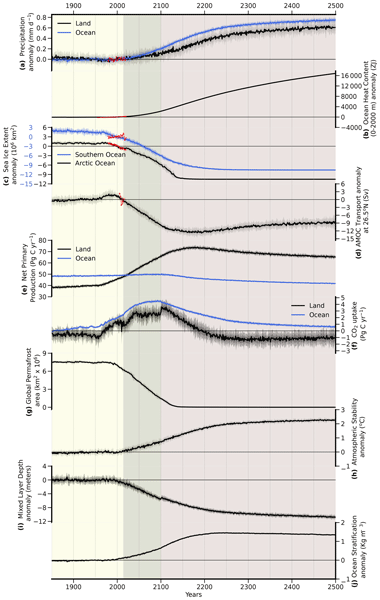
A new 10-member ensemble simulation with the state-of-the-art Earth system model was employed to study the long-term climate response to sustained greenhouse warming through to the year 2500. The findings show that the projected changes in the forced mean state and internal variability during 2101–2500 differ substantially from the 21st-century projections, emphasizing the importance of multi-century perspectives for understanding future climate change and informing effective mitigation strategies.
Ja-Yeon Moon, Jan Streffing, Sun-Seon Lee, Tido Semmler, Miguel Andrés-Martínez, Jiao Chen, Eun-Byeoul Cho, Jung-Eun Chu, Christian L. E. Franzke, Jan P. Gärtner, Rohit Ghosh, Jan Hegewald, Songyee Hong, Dae-Won Kim, Nikolay Koldunov, June-Yi Lee, Zihao Lin, Chao Liu, Svetlana N. Loza, Wonsun Park, Woncheol Roh, Dmitry V. Sein, Sahil Sharma, Dmitry Sidorenko, Jun-Hyeok Son, Malte F. Stuecker, Qiang Wang, Gyuseok Yi, Martina Zapponini, Thomas Jung, and Axel Timmermann
Earth Syst. Dynam., 16, 1103–1134, https://doi.org/10.5194/esd-16-1103-2025, https://doi.org/10.5194/esd-16-1103-2025, 2025
Short summary
Short summary
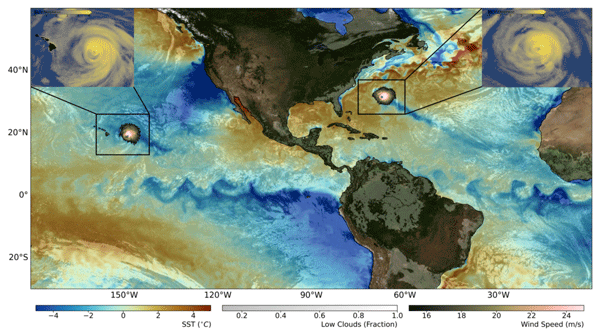
Based on a series of storm-resolving greenhouse warming simulations conducted with the AWI-CM3 model at 9 km global atmosphere and 4–25 km ocean resolution, we present new projections of regional climate change, modes of climate variability, and extreme events. The 10-year-long high-resolution simulations for the 2000s, 2030s, 2060s, and 2090s were initialized from a coarser-resolution transient run (31 km atmosphere) which follows the SSP5-8.5 greenhouse gas emission scenario from 1950–2100 CE.
Kyung-Sook Yun, Axel Timmermann, Sun-Seon Lee, Matteo Willeit, Andrey Ganopolski, and Jyoti Jadhav
Clim. Past, 19, 1951–1974, https://doi.org/10.5194/cp-19-1951-2023, https://doi.org/10.5194/cp-19-1951-2023, 2023
Short summary
Short summary
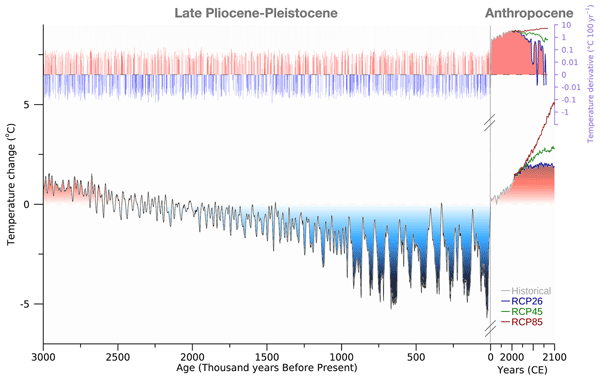
To quantify the sensitivity of the earth system to orbital-scale forcings, we conducted an unprecedented quasi-continuous coupled general climate model simulation with the Community Earth System Model, which covers the climatic history of the past 3 million years. This study could stimulate future transient paleo-climate model simulations and perspectives to further highlight and document the effect of anthropogenic CO2 emissions in the broader paleo-climatic context.
Keith B. Rodgers, Sun-Seon Lee, Nan Rosenbloom, Axel Timmermann, Gokhan Danabasoglu, Clara Deser, Jim Edwards, Ji-Eun Kim, Isla R. Simpson, Karl Stein, Malte F. Stuecker, Ryohei Yamaguchi, Tamás Bódai, Eui-Seok Chung, Lei Huang, Who M. Kim, Jean-François Lamarque, Danica L. Lombardozzi, William R. Wieder, and Stephen G. Yeager
Earth Syst. Dynam., 12, 1393–1411, https://doi.org/10.5194/esd-12-1393-2021, https://doi.org/10.5194/esd-12-1393-2021, 2021
Short summary
Short summary
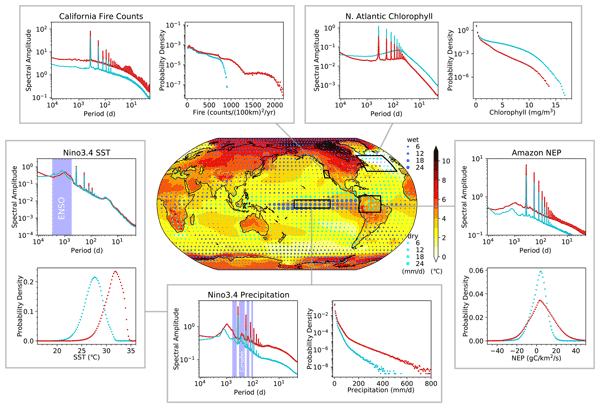
A large ensemble of simulations with 100 members has been conducted with the state-of-the-art CESM2 Earth system model, using historical and SSP3-7.0 forcing. Our main finding is that there are significant changes in the variance of the Earth system in response to anthropogenic forcing, with these changes spanning a broad range of variables important to impacts for human populations and ecosystems.
Cited articles
Araguás-Araguás, L., Froehlich, K., and Rozanski, K.: Stable isotope composition of precipitation over southeast Asia, J. Geophys. Res., 103, 28721–28742, https://doi.org/10.1029/98JD02582, 1998.
Araguás-Araguás, L., Froehlich, K., and Rozanski, K.: Deuterium and oxygen-18 isotope composition of precipitation and atmospheric moisture, Hydrol. Process., 14, 1341–1355, https://doi.org/10.1002/1099-1085(20000615)14:8<1341::AID-HYP983>3.0.CO;2-Z, 2000.
Battisti, D. S., Ding, Q., and Roe, G. H.: Coherent pan-Asian climatic and isotopic response to orbital forcing of tropical insolation, J. Geophys. Res.-Atmos., 119, 11997–12020, https://doi.org/10.1002/2014JD021960, 2014.
Beck, J. W., Zhou, W., Li, C., Wu, Z., White, L., Xian, F., Kong, X., and An, Z.: A 550,000-year record of East Asian monsoon rainfall from 10Be in loess, Science, 360, 877–881, https://doi.org/10.1126/science.aam5825, 2018.
Berger, A. and Loutre, M. F.: Insolation values for the climate of the last 10 million years, Quaternary Sci. Rev., 10, 297–317, https://doi.org/10.1016/0277-3791(91)90033-Q, 1991.
Bosmans, J. H. C., Erb, M. P., Dolan, A. M., Drijfhout, S. S., Tuenter, E., Hilgen, F. J., Edge, D., Pope, J. O., and Lourens, L. J.: Response of the Asian summer monsoons to idealized precession and obliquity forcing in a set of GCMs, Quaternary Sci. Rev., 188, 121–135, https://doi.org/10.1016/j.quascirev.2018.03.025, 2018.
Brady, E., Stevenson, S., Bailey, D., Liu, Z., Noone, D., Nusbaumer, J., Otto‐Bliesner, B. L., Tabor, C., Tomas, R., Wong, T., Zhang, J., and Zhu, J.: The Connected Isotopic Water Cycle in the Community Earth System Model Version 1, J. Adv. Model. Earth Sy., 11, 2547–2566, https://doi.org/10.1029/2019MS001663, 2019.
Braun, K., Nehme, C., Pickering, R., Rogerson, M., and Scroxton, N.: A Window into Africa's Past Hydroclimates: The SISAL_v1 Database Contribution, Quaternary, 2, 4, https://doi.org/10.3390/quat2010004, 2019.
Cai, Y., Fung, I. Y., Edwards, R. L., An, Z., Cheng, H., Lee, J.-E., Tan, L., Shen, C.-C., Wang, X., Day, J. A., Zhou, W., Kelly, M. J., and Chiang, J. C. H.: Variability of stalagmite-inferred Indian monsoon precipitation over the past 252,000 y, P. Natl. Acad. Sci. USA, 112, 2954–2959, https://doi.org/10.1073/pnas.1424035112, 2015.
Chen, T.-J. G. and Chang, C.-P.: The Structure and Vorticity Budget of an Early Summer Monsoon Trough (Mei-Yu) over Southeastern China and Japan, Mon. Weather Rev., 108, 942–953, https://doi.org/10.1175/1520-0493(1980)108<0942:TSAVBO>2.0.CO;2, 1980.
Cheng, H., Edwards, R. L., Broecker, W. S., Denton, G. H., Kong, X., Wang, Y., Zhang, R., and Wang, X.: Ice Age Terminations, Science, 326, 248–252, https://doi.org/10.1126/science.1177840, 2009.
Cheng, H., Edwards, R. L., Sinha, A., Spötl, C., Yi, L., Chen, S., Kelly, M., Kathayat, G., Wang, X., Li, X., Kong, X., Wang, Y., Ning, Y., and Zhang, H.: The Asian monsoon over the past 640,000 years and ice age terminations, Nature, 534, 640–646, https://doi.org/10.1038/nature18591, 2016.
Cheng, H., Zhang, H., Zhao, J., Li, H., Ning, Y., and Kathayat, G.: Chinese stalagmite paleoclimate researches: A review and perspective, Sci. China Earth Sci., 62, 1489–1513, https://doi.org/10.1007/s11430-019-9478-3, 2019.
Cheng, H., Zhang, H., Cai, Y., Shi, Z., Yi, L., Deng, C., Hao, Q., Peng, Y., Sinha, A., Li, H., Zhao, J., Tian, Y., Baker, J., and Perez-Mejías, C.: Orbital-scale Asian summer monsoon variations: Paradox and exploration, Sci. China Earth Sci., 64, 529–544, https://doi.org/10.1007/s11430-020-9720-y, 2021.
Chiang, J. C. H., Fung, I. Y., Wu, C.-H., Cai, Y., Edman, J. P., Liu, Y., Day, J. A., Bhattacharya, T., Mondal, Y., and Labrousse, C. A.: Role of seasonal transitions and westerly jets in East Asian paleoclimate, Quaternary Sci. Rev., 108, 111–129, https://doi.org/10.1016/j.quascirev.2014.11.009, 2015.
Chiang, J. C. H., Swenson, L. M., and Kong, W.: Role of seasonal transitions and the westerlies in the interannual variability of the East Asian summer monsoon precipitation, Geophys. Res. Lett., 44, 3788–3795, https://doi.org/10.1002/2017GL072739, 2017.
Chu, J.-E., Lee, S.-S., Timmermann, A., Wengel, C., Stuecker, M. F., and Yamaguchi, R.: Reduced tropical cyclone densities and ocean effects due to anthropogenic greenhouse warming, Sci. Adv., 6, eabd5109, https://doi.org/10.1126/sciadv.abd5109, 2020.
Clemens, S. C., Holbourn, A., Kubota, Y., Lee, K. E., Liu, Z., Chen, G., Nelson, A., and Fox-Kemper, B.: Precession-band variance missing from East Asian monsoon runoff, Nat. Commun., 9, 3364, https://doi.org/10.1038/s41467-018-05814-0, 2018.
Clement, A. C., Hall, A., and Broccoli, A. J.: The importance of precessional signals in the tropical climate, Clim. Dynam., 22, 327–341, https://doi.org/10.1007/s00382-003-0375-8, 2004.
Craig, H. and Gordon, L. I.: Deuterium and oxygen-18 variations in the ocean and the marine atmosphere, in: Stable Isotopes in Oceanographic Studies and Paleotemperatures, edited by: Tongiorgi, E., Cons. Naz. Ric., Lab. Geol. Nucl, Pisa, Italy, 9–72, 1965.
Dai, G., Zhang, Z., Otterå, O. H., Langebroek, P. M., Yan, Q., and Zhang, R.: A Modeling Study of the Tripole Pattern of East China Precipitation Over the Past 425 ka, J. Geophys. Res.-Atmos., 126, e2020JD033513, https://doi.org/10.1029/2020JD033513, 2021.
Dansgaard, W.: Stable isotopes in precipitation, Tellus, 16, 436–468, https://doi.org/10.1111/j.2153-3490.1964.tb00181.x, 1964.
Ding, Y.: Seasonal March of The East-Asian Summer Monsoon, in: World Scientific Series on Asia-Pacific Weather and Climate, World Scientific, 02, 3–53, https://doi.org/10.1142/9789812701411_0001, 2004.
Gasse, F., Vidal, L., Develle, A.-L., and Van Campo, E.: Hydrological variability in the Northern Levant: a 250 ka multi-proxy record from the Yammoûneh (Lebanon) sedimentary sequence, Clim. Past, 7, 1261–1284, https://doi.org/10.5194/cp-7-1261-2011, 2011.
Gat, J. R.: Oxygen and hydrogen isotopes in the hydrologic cycle, Annu. Rev. Earth Pl. Sc., 24, 225–262, https://doi.org/10.1146/annurev.earth.24.1.225, 1996.
Gat, J. R., Bowser, C. J., and Kendall, C.: The contribution of evaporation from the Great Lakes to the continental atmosphere: estimate based on stable isotope data, Geophys. Res. Lett., 21, 557–560, https://doi.org/10.1029/94GL00069, 1994.
Ha, K., Heo, K., Lee, S., Yun, K., and Jhun, J.: Variability in the East Asian Monsoon: a review, Meteorol. Appl., 19, 200–215, https://doi.org/10.1002/met.1320, 2012.
Hayashi, R., Takahara, H., Inouchi, Y., Takemura, K., and Igarashi, Y.: Vegetation and endemic tree response to orbital-scale climate changes in the Japanese archipelago during the last glacial–interglacial cycle based on pollen records from Lake Biwa, western Japan, Rev. Palaeobot. Palyno., 241, 85–97, https://doi.org/10.1016/j.revpalbo.2017.02.008, 2017.
Hayashi, R., Sagawa, T., Irino, T., and Tada, R.: Orbital-scale vegetation-ocean-atmosphere linkages in western Japan during the last 550 ka based on a pollen record from the IODP site U1427 in the Japan Sea, Quaternary Sci. Rev., 267, 107103, https://doi.org/10.1016/j.quascirev.2021.107103, 2021.
He, C., Liu, Z., Otto-Bliesner, B. L., Brady, E. C., Zhu, C., Tomas, R., Clark, P. U., Zhu, J., Jahn, A., Gu, S., Zhang, J., Nusbaumer, J., Noone, D., Cheng, H., Wang, Y., Yan, M., and Bao, Y.: Hydroclimate footprint of pan-Asian monsoon water isotope during the last deglaciation, Sci. Adv., 7, eabe2611, https://doi.org/10.1126/sciadv.abe2611, 2021.
Held, F., Cheng, H., Edwards, R. L., Kipfer, T., Tüysüz, O., Koç, K., Affolter, S., and Fleitmann, D.: Hydrological variability in the Black Sea region during the last 670,000 years recorded in multi-proxy speleothem records from northern Türkiye, Quaternary Sci. Rev., 367, 109534, https://doi.org/10.1016/j.quascirev.2025.109534, 2025.
Hu, J., Emile‐Geay, J., Tabor, C., Nusbaumer, J., and Partin, J.: Deciphering Oxygen Isotope Records From Chinese Speleothems With an Isotope‐Enabled Climate Model, Paleoceanography and Paleoclimatology, 34, 2098–2112, https://doi.org/10.1029/2019PA003741, 2019.
Huang, L., Lee, S., and Timmermann, A.: Caspian Sea and Black Sea Response to Greenhouse Warming in a High‐Resolution Global Climate Model, Geophys. Res. Lett., 48, https://doi.org/10.1029/2020GL090270, 2021.
Igarashi, Y. and Oba, T.: Fluctuations in the East Asian monsoon over the last 144 ka in the northwest Pacific based on a high-resolution pollen analysis of IMAGES core MD01-2421, Quaternary Sci. Rev., 25, 1447–1459, https://doi.org/10.1016/j.quascirev.2005.11.011, 2006.
Iwamoto, N. and Inouchi, Y.: Reconstruction of millennial-scale variations in the East Asian summer monsoon over the past 300 ka based on the total carbon content of sediment from Lake Biwa, Japan, Environ. Geol., 52, 1607–1616, https://doi.org/10.1007/s00254-006-0606-5, 2007.
Jo, K., Woo, K. S., Cheng, H., Edwards, L. R., Wang, Y., Kim, R., and Jiang, X.: Textural and carbon isotopic evidence of monsoonal changes recorded in a composite-type speleothem from Korea since MIS 5a, Quaternary Res., 74, 100–112, https://doi.org/10.1016/j.yqres.2010.04.005, 2010.
Jo, K., Woo, K. S., Lim, H. S., Cheng, H., Edwards, R. L., Wang, Y., Jiang, X., Kim, R., Lee, J. I., Yoon, H. I., and Yoo, K.-C.: Holocene and Eemian climatic optima in the Korean Peninsula based on textural and carbon isotopic records from the stalagmite of the Daeya Cave, South Korea, Quaternary Sci. Rev., 30, 1218–1231, https://doi.org/10.1016/j.quascirev.2011.02.012, 2011.
Jo, K., Woo, K. S., Yi, S., Yang, D. Y., Lim, H. S., Wang, Y., Cheng, H., and Edwards, R. L.: Mid-latitude interhemispheric hydrologic seesaw over the past 550,000 years, Nature, 508, 378–382, https://doi.org/10.1038/nature13076, 2014.
Jo, K., Yi, S., Lee, J.-Y., Woo, K. S., Cheng, H., Edwards, L. R., and Kim, S.-T.: 1000-Year Quasi-Periodicity of Weak Monsoon Events in Temperate Northeast Asia since the Mid-Holocene, Scientific Reports, 7, 15196, https://doi.org/10.1038/s41598-017-15566-4, 2017.
Jo, K. N., Woo, K. S., Kim, J. C., Yang, D. Y., Lawrence, E. R., Cheng, H., and Wang, Y.: Paleoclimatic implications recorded in the late Pleistocene stalagmite, Eden Cave, Danyang, Korea, Journal of the Geological Society of Korea, 42, 127–142, https://doi.org/10.14770/jgsk.2006.42.1.127, 2006.
Jouzel, J., Delaygue, G., Landais, A., Masson-Delmotte, V., Risi, C., and Vimeux, F.: Water isotopes as tools to document oceanic sources of precipitation: Water Isotopes and Precipitation Origin, Water Resour. Res., 49, 7469–7486, https://doi.org/10.1002/2013WR013508, 2013.
Jung, Y.-Y., Shin, W.-J., Seo, K.-H., Koh, D.-C., Ko, K.-S., and Lee, K.-S.: Spatial distributions of oxygen and hydrogen isotopes in multi-level groundwater across South Korea: A case study of mountainous regions, Sci. Total Environ., 812, 151428, https://doi.org/10.1016/j.scitotenv.2021.151428, 2022.
Kathayat, G., Cheng, H., Sinha, A., Spötl, C., Edwards, R. L., Zhang, H., Li, X., Yi, L., Ning, Y., Cai, Y., Lui, W. L., and Breitenbach, S. F. M.: Indian monsoon variability on millennial-orbital timescales, Sci. Rep., 6, 24374, https://doi.org/10.1038/srep24374, 2016.
Kato, H., Amekawa, S., Hori, M., Shen, C.-C., Kuwahara, Y., Senda, R., and Kano, A.: “Influences of temperature and the meteoric water δ18O value on a stalagmite record in the last deglacial to middle Holocene period from southwestern Japan”, Quaternary Sci. Rev., 253, 106746, https://doi.org/10.1016/j.quascirev.2020.106746, 2021.
Kim, S., Han, Y., Hur, S. D., Yoshimura, K., and Lee, J.: Relating Moisture Transport to Stable Water Vapor Isotopic Variations of Ambient Wintertime along the Western Coast of Korea, Atmosphere, 10, 806, https://doi.org/10.3390/atmos10120806, 2019.
Lachniet, M. S.: Climatic and environmental controls on speleothem oxygen-isotope values, Quaternary Sci. Rev., 28, 412–432, https://doi.org/10.1016/j.quascirev.2008.10.021, 2009.
Lee, J., Fox‐Kemper, B., Horvat, C., and Ming, Y.: The Response of East Asian Monsoon to the Precessional Cycle: A New Study Using the Geophysical Fluid Dynamics Laboratory Model, Geophys. Res. Lett., 46, 11388–11396, https://doi.org/10.1029/2019GL082661, 2019.
Lee, K.S., Woo, N.C., and Kim, K.: Factors controlling stable isotope composition of precipitation in Northeast Asia, Journal of the Geological Society of Korea, 37, 183–192, 2001.
Li, X., Zhou, Y., Han, Z., Yuan, X., Yi, S., Zeng, Y., Qin, L., Lu, M., and Lu, H.: Loess deposits in the low latitudes of East Asia reveal the ∼20-kyr precipitation cycle, Nat. Commun., 15, 1023, https://doi.org/10.1038/s41467-024-45379-9, 2024.
Lin, F., Zhang, Q., Sinha, A., Wang, Z., Axelsson, J., Chen, L., Wang, T., and Tan, L.: Seasonal to decadal variations of precipitation oxygen isotopes in northern China linked to the moisture source, npj Clim. Atmos. Sci., 7, 14, https://doi.org/10.1038/s41612-024-00564-x, 2024.
Liu, X., Xie, X., Guo, Z., Yin, Z.-Y., and Chen, G.: Model-based orbital-scale precipitation δ18O variations and distinct mechanisms in Asian monsoon and arid regions, Natl. Sci. Rev., 9, nwac182, https://doi.org/10.1093/nsr/nwac182, 2022.
Liu, Z., Wen, X., Brady, E. C., Otto-Bliesner, B., Yu, G., Lu, H., Cheng, H., Wang, Y., Zheng, W., Ding, Y., Edwards, R. L., Cheng, J., Liu, W., and Yang, H.: Chinese cave records and the East Asia Summer Monsoon, Quaternary Sci. Rev., 83, 115–128, https://doi.org/10.1016/j.quascirev.2013.10.021, 2014.
Lorenz, S. J. and Lohmann, G.: Acceleration technique for Milankovitch type forcing in a coupled atmosphere-ocean circulation model: method and application for the Holocene, Clim. Dynam., 23, 727–743, https://doi.org/10.1007/s00382-004-0469-y, 2004.
Maher, B. A. and Thompson, R.: Oxygen isotopes from Chinese caves: records not of monsoon rainfall but of circulation regime, J. Quaternary Sci., 27, 615–624, https://doi.org/10.1002/jqs.2553, 2012.
Masson-Delmotte, V., Jouzel, J., Landais, A., Stievenard, M., Johnsen, S. J., White, J. W. C., Werner, M., Sveinbjornsdottir, A., and Fuhrer, K.: GRIP Deuterium Excess Reveals Rapid and Orbital-Scale Changes in Greenland Moisture Origin, Science, 309, 118–121, https://doi.org/10.1126/science.1108575, 2005.
Matthews, A., Affek, H. P., Ayalon, A., Vonhof, H. B., and Bar-Matthews, M.: Eastern Mediterranean climate change deduced from the Soreq Cave fluid inclusion stable isotopes and carbonate clumped isotopes record of the last 160 ka, Quaternary Sci. Rev., 272, 107223, https://doi.org/10.1016/j.quascirev.2021.107223, 2021.
Merlivat, L. and Jouzel, J.: Global climatic interpretation of the deuterium-oxygen 18 relationship for precipitation, J. Geophys. Res., 84, 5029, https://doi.org/10.1029/JC084iC08p05029, 1979.
Mori, T., Kashiwagi, K., Amekawa, S., Kato, H., Okumura, T., Takashima, C., Wu, C.-C., Shen, C.-C., Quade, J., and Kano, A.: Temperature and seawater isotopic controls on two stalagmite records since 83 ka from maritime Japan, Quaternary Sci. Rev., 192, 47–58, https://doi.org/10.1016/j.quascirev.2018.05.024, 2018.
Park, Y., Lee, K.S., and Yu, J.Y.: Seasonal variations of dissolved ions and oxygen and hydrogen isotopic compositions of precipitation in Chuncheon, Korea, Journal of the Geological Society of Korea, 42, 283–292, 2006.
Pausata, F. S. R., Battisti, D. S., Nisancioglu, K. H., and Bitz, C. M.: Chinese stalagmite δ18O controlled by changes in the Indian monsoon during a simulated Heinrich event, Nat. Geosci., 4, 474–480, https://doi.org/10.1038/ngeo1169, 2011.
Pfahl, S. and Sodemann, H.: What controls deuterium excess in global precipitation?, Clim. Past, 10, 771–781, https://doi.org/10.5194/cp-10-771-2014, 2014.
Raavi, P. H., Chu, J.-E., Timmermann, A., Lee, S.-S., and Walsh, K. J. E.: Moisture control of tropical cyclones in high-resolution simulations of paleoclimate and future climate, Nat. Commun., 14, 6426, https://doi.org/10.1038/s41467-023-42033-8, 2023.
Risi, C., Bony, S., and Vimeux, F.: Influence of convective processes on the isotopic composition (δ18O and δD) of precipitation and water vapor in the tropics: 2. Physical interpretation of the amount effect, J. Geophys. Res., 113, 2008JD009943, https://doi.org/10.1029/2008JD009943, 2008.
Sha, L., Mahata, S., Duan, P., Luz, B., Zhang, P., Baker, J., Zong, B., Ning, Y., Brahim, Y. A., Zhang, H., Edwards, R. L., and Cheng, H.: A novel application of triple oxygen isotope ratios of speleothems, Geochim. Cosmochim. Ac., 270, 360–378, https://doi.org/10.1016/j.gca.2019.12.003, 2020.
Sha, L., Wassenburg, J. A., Sha, L., Li, Y., Zhou, S., Liang, Q., Zhao, J., Ruan, J., Li, H., Zhao, X., Duan, P., Wang, J., Lu, J., Zhang, H., Kathayat, G., Mahata, S., Ban, F., Li, T.-Y., and Cheng, H.: Variations in triple oxygen isotope of speleothems from the Asian monsoon region reveal moisture sources over the past 300 years, Commun. Earth Environ., 4, 384, https://doi.org/10.1038/s43247-023-01043-6, 2023.
Sinha, N., Chakraborty, S., and Mohan, P. M.: Modern rain-isotope data from Indian island and the mainland on the daily scale for the summer monsoon season, Data in Brief, 23, 103793, https://doi.org/10.1016/j.dib.2019.103793, 2019.
Stewart, M. K.: Stable isotope fractionation due to evaporation and isotopic exchange of falling waterdrops: Applications to atmospheric processes and evaporation of lakes, J. Geophys. Res., 80, 1133–1146, https://doi.org/10.1029/JC080i009p01133, 1975.
Sun, J. and Huang, X.: Half-precessional cycles recorded in Chinese loess: response to low-latitude insolation forcing during the Last Interglaciation, Quaternary Sci. Rev., 25, 1065–1072, https://doi.org/10.1016/j.quascirev.2005.08.004, 2006.
Sun, Y., Clemens, S. C., An, Z., and Yu, Z.: Astronomical timescale and palaeoclimatic implication of stacked 3.6-Myr monsoon records from the Chinese Loess Plateau, Quaternary Sci. Rev., 25, 33–48, https://doi.org/10.1016/j.quascirev.2005.07.005, 2006.
Tabor, C. R., Otto‐Bliesner, B. L., Brady, E. C., Nusbaumer, J., Zhu, J., Erb, M. P., Wong, T. E., Liu, Z., and Noone, D.: Interpreting Precession‐Driven δ18O Variability in the South Asian Monsoon Region, J. Geophys. Res.-Atmos., 123, 5927–5946, https://doi.org/10.1029/2018JD028424, 2018.
Tarasov, P. E., Nakagawa, T., Demske, D., Österle, H., Igarashi, Y., Kitagawa, J., Mokhova, L., Bazarova, V., Okuda, M., Gotanda, K., Miyoshi, N., Fujiki, T., Takemura, K., Yonenobu, H., and Fleck, A.: Progress in the reconstruction of Quaternary climate dynamics in the Northwest Pacific: A new modern analogue reference dataset and its application to the 430-kyr pollen record from Lake Biwa, Earth-Sci. Rev., 108, 64–79, https://doi.org/10.1016/j.earscirev.2011.06.002, 2011.
Timmermann, A., Lorenz, S. J., An, S.-I., Clement, A., and Xie, S.-P.: The Effect of Orbital Forcing on the Mean Climate and Variability of the Tropical Pacific, J. Climate, 20, 4147–4159, https://doi.org/10.1175/JCLI4240.1, 2007.
Timmermann, A., Yun, K.-S., Raia, P., Ruan, J., Mondanaro, A., Zeller, E., Zollikofer, C., Ponce de León, M., Lemmon, D., Willeit, M., and Ganopolski, A.: Climate effects on archaic human habitats and species successions, Nature, 604, 495–501, https://doi.org/10.1038/s41586-022-04600-9, 2022.
Uemura, R., Matsui, Y., Yoshimura, K., Motoyama, H., and Yoshida, N.: Evidence of deuterium excess in water vapor as an indicator of ocean surface conditions, J. Geophys. Res., 113, D19114, https://doi.org/10.1029/2008JD010209, 2008.
Volonté, A., Turner, A. G., Schiemann, R., Vidale, P. L., and Klingaman, N. P.: Characterising the interaction of tropical and extratropical air masses controlling East Asian summer monsoon progression using a novel frontal detection approach, Weather Clim. Dynam., 3, 575–599, https://doi.org/10.5194/wcd-3-575-2022, 2022.
Wang, B. and LinHo: Rainy Season of the Asian–Pacific Summer Monsoon, J. Climate, 15, 386–398, https://doi.org/10.1175/1520-0442(2002)015<0386:RSOTAP>2.0.CO;2, 2002.
Wang, B., Wu, Z., Li, J., Liu, J., Chang, C.-P., Ding, Y., and Wu, G.: How to Measure the Strength of the East Asian Summer Monsoon, J. Climate, 21, 4449–4463, https://doi.org/10.1175/2008JCLI2183.1, 2008.
Wang, Y. J., Cheng, H., Edwards, R. L., An, Z. S., Wu, J. Y., Shen, C.-C., and Dorale, J. A.: A High-Resolution Absolute-Dated Late Pleistocene Monsoon Record from Hulu Cave, China, Science, 294, 2345–2348, https://doi.org/10.1126/science.1064618, 2001.
Wen, Q., Liu, Z., Jing, Z., Clemens, S. C., Wang, Y., Yan, M., Ning, L., and Liu, J.: Grand dipole response of Asian summer monsoon to orbital forcing, npj Clim. Atmos. Sci., 7, 202, https://doi.org/10.1038/s41612-024-00749-4, 2024.
Wengel, C., Lee, S.-S., Stuecker, M. F., Timmermann, A., Chu, J.-E., and Schloesser, F.: Future high-resolution El Niño/Southern Oscillation dynamics, Nat. Clim. Change, 11, 758–765, https://doi.org/10.1038/s41558-021-01132-4, 2021.
Wu, C.-H., Lee, S.-Y., and Chiang, J. C. H.: Relative influence of precession and obliquity in the early Holocene: Topographic modulation of subtropical seasonality during the Asian summer monsoon, Quaternary Sci. Rev., 191, 238–255, https://doi.org/10.1016/j.quascirev.2018.05.021, 2018.
Xia, Z., Surma, J., and Winnick, M. J.: The response and sensitivity of deuterium and 17O excess parameters in precipitation to hydroclimate processes, Earth-Sci. Rev., 242, 104432, https://doi.org/10.1016/j.earscirev.2023.104432, 2023.
Xue, G., Cai, Y., Zheng, Y., Zhang, H., Han, T., Huang, S., Cheng, X., Ma, L., Liu, C., Edwards, R. L., Cheng, H., and Yan, H.: Western Pacific Subtropical High Modulates Regional Hydroclimate Changes on Multiple Timescales Over Central China, J. Geophys. Res.-Atmos., 130, e2024JD042735, https://doi.org/10.1029/2024JD042735, 2025.
Yang, H., Chou, Y.-M., Jiang, X., Zheng, W., He, Y., Banerjee, Y., Shen, C.-C., Yu, T.-L., Zhong, Y., Humbert, F., and Liu, Q.: Chinese stalagmite δ18O records reveal the diverse moisture trajectories during the middle to late last glacial period, Geol. Mag., 161, 1–13, https://doi.org/10.1017/S0016756824000013, 2024.
Yoshimura, K. and Ichiyanagi, K.: A reconsideration of Seasonal Variation in Precipitation Deuterium Excess Over East Asia, Journal of the Japanese Society of Hydrology and Water Resources, 22, 262–276, https://doi.org/10.3178/jjshwr.22.262, 2009.
Yoshimura, K., Kanamitsu, M., Noone, D., and Oki, T.: Historical isotope simulation using Reanalysis atmospheric data, J. Geophys. Res., 113, D19108, https://doi.org/10.1029/2008JD010074, 2008.
Yun, K.-S., Timmermann, A., Lee, S.-S., Willeit, M., Ganopolski, A., and Jadhav, J.: A transient coupled general circulation model (CGCM) simulation of the past 3 million years, Clim. Past, 19, 1951–1974, https://doi.org/10.5194/cp-19-1951-2023, 2023.
Zhang, H., Griffiths, M. L., Chiang, J. C. H., Kong, W., Wu, S., Atwood, A., Huang, J., Cheng, H., Ning, Y., and Xie, S.: East Asian hydroclimate modulated by the position of the westerlies during Termination I, Science, 362, 580–583, https://doi.org/10.1126/science.aat9393, 2018.
Zhao, L., Xiao, H., Zhou, M., Cheng, G., Wang, L., Yin, L., and Ren, J.: Factors controlling spatial and seasonal distributions of precipitation δ18O in China, Hydrol. Process., 26, 143–152, https://doi.org/10.1002/hyp.8118, 2012.
Zheng, Y., Liu, H., Yang, H., Wang, H., Zhao, W., Zhang, Z., Huang, M., and Liu, W.: Decoupled Asian monsoon intensity and precipitation during glacial-interglacial transitions on the Chinese Loess Plateau, Nat. Commun., 13, 5397, https://doi.org/10.1038/s41467-022-33105-2, 2022.
Zhu, H., Zhu, L., Luo, L., and Li, J.: Seasonal Variations of Modern Precipitation Stable Isotopes over the North Tibetan Plateau and Their Influencing Factors, Water, 16, 150, https://doi.org/10.3390/w16010150, 2023.
Short summary
A longstanding conundrum regarding the stable oxygen isotope (δ18O) proxy for hydroclimate in speleothems from the Korean Peninsula, which, unlike records from East Asia (e.g., China), do not exhibit isotopic shifts in response to precession forcing. Using Korean speleothem records spanning several orbital-scale segments of the last ~550,000 years and paleoclimate simulations, the present study proposes a plausible role of the oceanic and continental moisture mixing in suppressing δ18O signals.
A longstanding conundrum regarding the stable oxygen isotope (δ18O) proxy for hydroclimate in...


