Articles | Volume 22, issue 1
https://doi.org/10.5194/cp-22-17-2026
© Author(s) 2026. This work is distributed under
the Creative Commons Attribution 4.0 License.
https://doi.org/10.5194/cp-22-17-2026
© Author(s) 2026. This work is distributed under
the Creative Commons Attribution 4.0 License.
Rapid communication: Middle Pleistocene Transition as a phenomenon of orbitally enabled sensitivity to initial values
Mikhail Y. Verbitsky
CORRESPONDING AUTHOR
Gen5 Group, LLC, Newton, MA, USA
Earth and Life Institute, UCLouvain, Louvain-la-Neuve, Belgium
Anne Willem Omta
Department of Earth, Environmental, and Planetary Sciences, Case Western Reserve University, Cleveland, OH, USA
Related authors
Mikhail Y. Verbitsky and Dmitry Volobuev
Earth Syst. Dynam., 16, 1989–2002, https://doi.org/10.5194/esd-16-1989-2025, https://doi.org/10.5194/esd-16-1989-2025, 2025
Short summary
Short summary
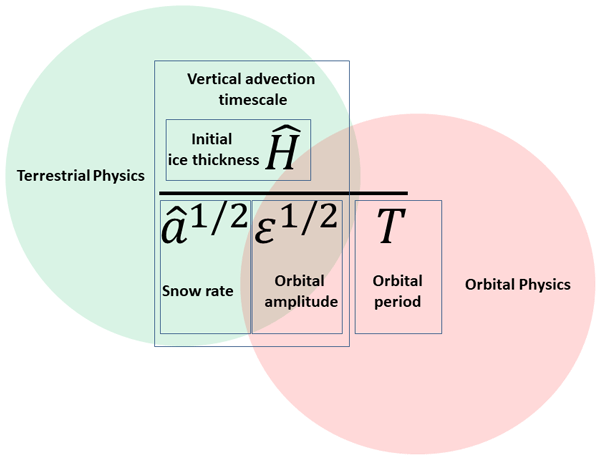
We describe a so far unrecognized physical phenomenon of orbital forcing modifying the terrestrial physics in such a way that instead of erasing the memory of initial conditions this memory is extended and initial values become major governing parameters.
Mikhail Y. Verbitsky, Michael E. Mann, and Dmitry Volobuev
Earth Syst. Dynam., 15, 1015–1017, https://doi.org/10.5194/esd-15-1015-2024, https://doi.org/10.5194/esd-15-1015-2024, 2024
Short summary
Short summary
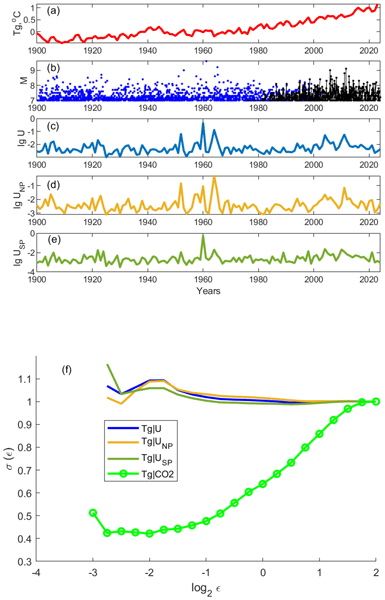
It was recently suggested that global warming can be explained by the non-anthropogenic factor of seismic activity. If that is the case, it would have profound implications. We have assessed the validity of the claim by using a statistical technique that evaluates the existence of causal connections between variables, finding no evidence for any causal relationship between seismic activity and global warming.
Mikhail Y. Verbitsky and Michel Crucifix
Clim. Past, 19, 1793–1803, https://doi.org/10.5194/cp-19-1793-2023, https://doi.org/10.5194/cp-19-1793-2023, 2023
Short summary
Short summary
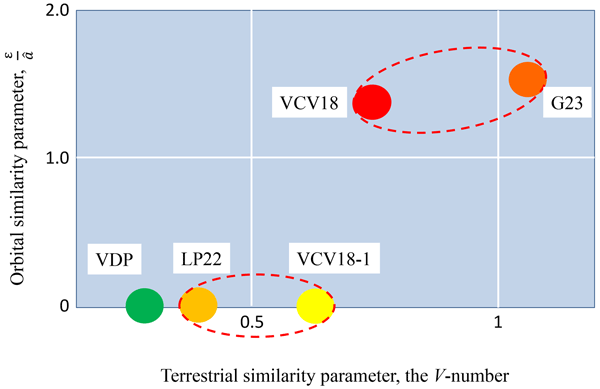
Are phenomenological dynamical paleoclimate models physically similar to Nature? We demonstrated that though they may be very accurate in reproducing empirical time series, this is not sufficient to claim physical similarity with Nature until similarity parameters are considered. We suggest that the diagnostics of physical similarity should become a standard procedure before a phenomenological model can be utilized for interpretations of historical records or future predictions.
Mikhail Verbitsky
EGUsphere, https://doi.org/10.5194/egusphere-2022-758, https://doi.org/10.5194/egusphere-2022-758, 2022
Preprint archived
Short summary
Short summary
Phenomenological models may be impressive in reproducing empirical time series but this is not sufficient to claim physical similarity with nature until comparison of similarity parameters is performed. We illustrated such a process of diagnostics of physical similarity by comparing a phenomenological dynamical paleoclimate model with a more physically explicit dynamical model.
Mikhail Y. Verbitsky
Earth Syst. Dynam., 13, 879–884, https://doi.org/10.5194/esd-13-879-2022, https://doi.org/10.5194/esd-13-879-2022, 2022
Short summary
Short summary
Reconstruction and explanation of past climate evolution using proxy records is the essence of paleoclimatology. In this study, we use dimensional analysis of a dynamical model on orbital timescales to recognize theoretical limits of such forensic inquiries. Specifically, we demonstrate that major past events could have been produced by physically dissimilar processes making the task of paleo-record attribution to a particular phenomenon fundamentally difficult if not impossible.
Mikhail Verbitsky and Michael Mann
Earth Syst. Dynam. Discuss., https://doi.org/10.5194/esd-2021-87, https://doi.org/10.5194/esd-2021-87, 2021
Revised manuscript not accepted
Short summary
Short summary
In this study, we highlight a component of global warming variability, a scaling law that is based purely on fundamental physical properties of the climate system.
Mikhail Y. Verbitsky and Michel Crucifix
Earth Syst. Dynam., 12, 63–67, https://doi.org/10.5194/esd-12-63-2021, https://doi.org/10.5194/esd-12-63-2021, 2021
Short summary
Short summary
We demonstrate here that a single physical phenomenon, specifically, a naturally changing balance between intensities of temperature advection and diffusion in the viscous ice media, may influence the entire spectrum of the Pleistocene variability from orbital to millennial timescales.
Mikhail Y. Verbitsky and Dmitry Volobuev
Earth Syst. Dynam., 16, 1989–2002, https://doi.org/10.5194/esd-16-1989-2025, https://doi.org/10.5194/esd-16-1989-2025, 2025
Short summary
Short summary
We describe a so far unrecognized physical phenomenon of orbital forcing modifying the terrestrial physics in such a way that instead of erasing the memory of initial conditions this memory is extended and initial values become major governing parameters.
Mikhail Y. Verbitsky, Michael E. Mann, and Dmitry Volobuev
Earth Syst. Dynam., 15, 1015–1017, https://doi.org/10.5194/esd-15-1015-2024, https://doi.org/10.5194/esd-15-1015-2024, 2024
Short summary
Short summary
It was recently suggested that global warming can be explained by the non-anthropogenic factor of seismic activity. If that is the case, it would have profound implications. We have assessed the validity of the claim by using a statistical technique that evaluates the existence of causal connections between variables, finding no evidence for any causal relationship between seismic activity and global warming.
David Talmy, Eric Carr, Harshana Rajakaruna, Selina Våge, and Anne Willem Omta
Biogeosciences, 21, 2493–2507, https://doi.org/10.5194/bg-21-2493-2024, https://doi.org/10.5194/bg-21-2493-2024, 2024
Short summary
Short summary
The structure of plankton communities is central to global cycles of carbon, nitrogen, and other elements. This study explored the sensitivity of different assumptions about highest-predator mortality in ecosystem models with contrasting food web structures. In the context of environmental data, we find support for models assuming a density-dependent mortality of the highest predator, irrespective of assumed food web structure.
Mikhail Y. Verbitsky and Michel Crucifix
Clim. Past, 19, 1793–1803, https://doi.org/10.5194/cp-19-1793-2023, https://doi.org/10.5194/cp-19-1793-2023, 2023
Short summary
Short summary
Are phenomenological dynamical paleoclimate models physically similar to Nature? We demonstrated that though they may be very accurate in reproducing empirical time series, this is not sufficient to claim physical similarity with Nature until similarity parameters are considered. We suggest that the diagnostics of physical similarity should become a standard procedure before a phenomenological model can be utilized for interpretations of historical records or future predictions.
Mikhail Verbitsky
EGUsphere, https://doi.org/10.5194/egusphere-2022-758, https://doi.org/10.5194/egusphere-2022-758, 2022
Preprint archived
Short summary
Short summary
Phenomenological models may be impressive in reproducing empirical time series but this is not sufficient to claim physical similarity with nature until comparison of similarity parameters is performed. We illustrated such a process of diagnostics of physical similarity by comparing a phenomenological dynamical paleoclimate model with a more physically explicit dynamical model.
Mikhail Y. Verbitsky
Earth Syst. Dynam., 13, 879–884, https://doi.org/10.5194/esd-13-879-2022, https://doi.org/10.5194/esd-13-879-2022, 2022
Short summary
Short summary
Reconstruction and explanation of past climate evolution using proxy records is the essence of paleoclimatology. In this study, we use dimensional analysis of a dynamical model on orbital timescales to recognize theoretical limits of such forensic inquiries. Specifically, we demonstrate that major past events could have been produced by physically dissimilar processes making the task of paleo-record attribution to a particular phenomenon fundamentally difficult if not impossible.
Mikhail Verbitsky and Michael Mann
Earth Syst. Dynam. Discuss., https://doi.org/10.5194/esd-2021-87, https://doi.org/10.5194/esd-2021-87, 2021
Revised manuscript not accepted
Short summary
Short summary
In this study, we highlight a component of global warming variability, a scaling law that is based purely on fundamental physical properties of the climate system.
Mikhail Y. Verbitsky and Michel Crucifix
Earth Syst. Dynam., 12, 63–67, https://doi.org/10.5194/esd-12-63-2021, https://doi.org/10.5194/esd-12-63-2021, 2021
Short summary
Short summary
We demonstrate here that a single physical phenomenon, specifically, a naturally changing balance between intensities of temperature advection and diffusion in the viscous ice media, may influence the entire spectrum of the Pleistocene variability from orbital to millennial timescales.
Cited articles
Abe-Ouchi, A., Saito, F., Kawamura, K., Raymo, M. E., Okuno, J., Takahashi, K., and Blatter, H.: Insolation-driven 100 000-year glacial cycles and hysteresis of ice-sheet volume, Nature, 500, 190–193, https://doi.org/10.1038/nature12374, 2013.
Archer, D. E.: An atlas of the distribution of calcium carbonate in sediments of the deep sea, Global Biogeochem. Cycles, 10, 159–174, 1996.
Ashwin, P. and Ditlevsen, P. D.: The middle Pleistocene transition as a generic bifurcation on a slow manifold, Clim. Dynam., 45, 2683–2695, https://doi.org/10.1007/s00382-015-2501-9, 2015.
Barenblatt, G. I.: Scaling, Cambridge University Press, Cambridge, UK, ISBN 0521533945, 2003.
Barker, S., Lisiecki, L. E., Knorr, G., Nuber, S., and Tzedakis, P. C.: Distinct roles for precession, obliquity, and eccentricity in Pleistocene 100-kyrglacial cycles. Science, 387, eadp3491, https://doi.org/10.1126/science.adp3491, 2025.
Beaufort, L., Lancelot, Y., Camberlin, P., Cayre, O., Vincent, E., Bassinot, F., and Labeyrie, L.: Insolation cycles as a major control of Equatorial Indian Ocean primary production, Science, 278, 1451–1454, 1997.
Berger, A. and Loutre, M. F.: Insolation values for the climate of the last 10 million years, Quaternary Sci. Rev., 10, 297–317, 1991.
Bintanja, R. and Van de Wal, R. S. W.: North American ice-sheet dynamics and the onset of 100,000-year glacial cycles, Nature, 454, 869–872, https://doi.org/10.1038/nature07158, 2008.
Broecker, W. S. and Peng, T. H.: Tracers in the Sea, Lamont-Doherty Geological Observatory, Palisades, NY, USA, ISBN 9780961751104, 1982.
Buckingham, E.: On physically similar systems; illustrations of the use of dimensional equations, Phys. Rev., 4, 345–376, 1914.
Carrillo, J., Mann, M. E., Marinov, I., Christiansen, S. A., Willeit, M., and Ganopolski, A.: Sensitivity of simulations of Plio–Pleistocene climate with the CLIMBER-2 Earth System Model to details of the global carbon cycle, Proceedings of the National Academy of Sciences, 122, e2427236122, https://doi.org/10.1073/pnas.2427236122, 2025.
Clark, P. U. and Pollard, D.: Origin of the middle Pleistocene transition by ice sheet erosion of regolith, Paleoceanography, 13, 1–9, 1998.
Clark, P. U., Shakun, J. D., Rosenthal, Y., Pollard, D., Hostetler, S. W., Köhler, P., Bartlein, P. J., Gregory, J. M., Zhu, C., Schrag, D. P., and Liu, Z.: Global mean sea level over the past 4.5 million years, Science, 390, eadv8389, https://doi.org/10.1126/science.adv8389, 2025.
Crucifix, M.: Why could ice ages be unpredictable?, Clim. Past, 9, 2253–2267, https://doi.org/10.5194/cp-9-2253-2013, 2013.
Gough, D. O.: Solar Interior Structure and Luminosity Variations, Sol. Phys. 74, 21–34, https://doi.org/10.1007/BF00151270, 1981.
Herbert, T.: A long marine history of carbon cycle modulation by orbital-climatic changes, Proc. Natl. Acad. Sci., 94, 8362–8369, 1997.
Lisiecki, L. E. and Raymo, M. E.: A Pliocene-Pleistocene stack of 57 globally distributed benthic δ18O records, Paleoceanography, 20, PA1003, https://doi.org/10.1029/2004PA001071, 2005.
Lüthi, D., Le Floch, M., Bereiter, B., Blunier, T., Barnola, J. M., Siegenthaler, U., Raynaud, D., Jouzel, J., Fischer, H., Kawamura, K., and Stocker, T. F.: High-resolution carbon dioxide concentration record 650 000–800 000 years before present, Nature, 453, 379–382, https://doi.org/10.1038/nature06949, 2008.
Ma, X., Yang, M., Sun, Y., Dang, H., Ma, W., Tian, J., Jiang, Q., Liu, L., Jin, X., and Jin, Z.: The potential role of insolation in the long-term climate evolution since the early Pleistocene, Global and Planetary Change, 240, 104526, https://doi.org/10.1016/j.gloplacha.2024.104526, 2024.
Milliman, J. D., Troy, P. J., Balch, W. M., Adams, A. K., Li, Y. H., and Mackenzie, F. T.: Biologically mediated dissolution of calcium carbonate above the chemical lysocline?, Deep Sea Res. Part I, 46, 1653–1669, 1999.
Mitsui, T. and Aihara, K.: Dynamics between order and chaos in conceptual models of glacial cycles, Clim. Dynam., 42, 3087–3099, 2014.
Nyman, K. H. M. and Ditlevsen, P. D.: The Middle Pleistocene Transition by frequency locking and slow ramping of internal period, Clim. Dynam., 53, 3023–3038, https://doi.org/10.1007/s00382-019-04679-3, 2019.
Omta, A. W.: Supplementary code to Climate of the Past article “Rapid communication: Middle Pleistocene Transition as a phenomenon of orbitally enabled sensitivity to initial values” by M.Y. Verbitsky and A.W. Omta, Zenodo, https://doi.org/10.5281/zenodo.17978802, 2025.
Omta, A. W., Van Voorn, G. A. K., Rickaby, R. E. M., and Follows, M. J.: On the potential role of marine calcifiers in glacial–interglacial dynamics, Global Biogeochem. Cycles, 27, 692–704, https://doi.org/10.1002/gbc.20060, 2013.
Omta, A. W., Kooi, B. W., Van Voorn, G. A. K., Rickaby, R. E. M., and Follows, M. J.: Inherent characteristics of sawtooth cycles can explain different glacial periodicities, Clim. Dynam., 46, 557–569, https://doi.org/10.1007/s00382-015-2598-x, 2016.
Paillard, D.: Quaternary glaciations: from observations to theories, Quaternary Sci. Rev., 107, 11–24, https://doi.org/10.1016/j.quascirev.2014.10.002, 2015.
Peacock, S., Lane, E., and Restrepo, J. M.: A possible sequence of events for the generalized glacial-interglacial cycle, Global Biogeochem. Cycles, 20, GB2010, https://doi.org/10.1029/2005GB002448, 2006.
Pérez-Montero, S., Alvarez-Solas, J., Swierczek-Jereczek, J., Moreno-Parada, D., Robinson, A., and Montoya, M.: Understanding the Mid-Pleistocene transition with a simple physical model, EGUsphere [preprint], https://doi.org/10.5194/egusphere-2025-2467, 2025.
Rackauckas, C. and Nie, Q.: Differential equations.jl – A performant and feature-rich ecosystem for solving differential equations in Julia, J. Open Res. Softw., 5, 15, https://doi.org/10.5334/jors.151, 2017.
Raymo, M. E., Lisiecki, L. E., and Nisancioglu, K. H.: Plio-Pleistocene Ice Volume, Antarctic Climate, and the Global δ18O Record, Science, 313, 492–495, https://doi.org/10.1126/science.1123296, 2006.
Rial, J. A., Oh, J., and Reischmann, E.: Synchronization of the climate system to eccentricity forcing and the 100 000-year problem, Nature Geosci., 6, 289–293, https://doi.org/10.1038/ngeo1756, 2013.
Riechers, K., Mitsui, T., Boers, N., and Ghil, M.: Orbital insolation variations, intrinsic climate variability, and Quaternary glaciations, Clim. Past, 18, 863–893, https://doi.org/10.5194/cp-18-863-2022, 2022.
Saltzman, B. and Verbitsky, M. Y.: Multiple instabilities and modes of glacial rhythmicity in the Plio-Pleistocene: a general theory of late Cenozoic climatic change, Clim. Dynam., 9, 1–15, 1993.
Scherrenberg, M. D. W., Berends, C. J., and van de Wal, R. S. W.: CO2 and summer insolation as drivers for the Mid-Pleistocene Transition, Clim. Past, 21, 1061–1077, https://doi.org/10.5194/cp-21-1061-2025, 2025.
Shackleton, J. D., Follows, M. J., Thomas P. J., and Omta, A. W.: The Mid-Pleistocene Transition: a delayed response to an increasing positive feedback?, Clim. Dynam., 60, 4083–4098, https://doi.org/10.1007/s00382-022-06544-2, 2023.
Tzedakis, P. C., Crucifix, M., Mitsui, T., and Wolff, E. W.: A simple rule to determine which insolation cycles lead to interglacials, Nature, 542, 427–432, https://doi.org/10.1038/nature21364, 2017.
Tziperman, E., Raymo, M. E., Huybers, P., and Wunsch, C.: Consequences of pacing the Pleistocene 100 kyr ice ages by nonlinear phase locking to Milankovitch forcing, Paleoceanography, 21, PA4206, https://doi.org/10.1029/2005PA001241, 2006.
Verbitsky, M. Y. and Crucifix, M.: π-theorem generalization of the ice-age theory, Earth Syst. Dynam., 11, 281–289, https://doi.org/10.5194/esd-11-281-2020, 2020.
Verbitsky, M. Y. and Crucifix, M.: ESD Ideas: The Peclet number is a cornerstone of the orbital and millennial Pleistocene variability, Earth Syst. Dynam., 12, 63–67, https://doi.org/10.5194/esd-12-63-2021, 2021.
Verbitsky, M. Y. and Volobuev, D.: Milankovitch theory “as an initial value problem”: Implications of the long memory of ice advection, Earth Syst. Dynam., 16, 1989–2002, https://doi.org/10.5194/esd-16-1989-2025, 2025.
Verbitsky, M. Y., Crucifix, M., and Volobuev, D. M.: A theory of Pleistocene glacial rhythmicity, Earth Syst. Dynam., 9, 1025–1043, https://doi.org/10.5194/esd-9-1025-2018, 2018.
Willeit, M., Ganopolski, A., Calov, A., and Brovkin, V.: Mid-Pleistocene transition in glacial cycles explained by declining CO2 and regolith removal, Science Advances 5, 4, https://doi.org/10.1126/sciadv.aav7337, 2019.
Williams, R. G. and Follows, M. J.: Ocean dynamics and the carbon cycle, Cambridge University Press, Cambridge, UK, ISBN 9780521843690, 2011.
Zeebe, R. E. and Wolf-Gladrow, D.A.: CO2 in seawater: Equilibrium, kinetics, isotopes, Elsevier, Amsterdam, the Netherlands, ISBN 9780444509468, 2001.
Short summary
The cause of the Middle Pleistocene Transition (MPT) period shift is generally thought to be a change within the Earth System, since the orbital insolation forcing does not change its pattern through the event. Here we propose that the MPT could be a dominant-period relaxation process that may be strongly dependent on the initial state of the system and this sensitivity to the initial state is enabled by the orbital forcing.
The cause of the Middle Pleistocene Transition (MPT) period shift is generally thought to be a...