
Articles | Volume 21, issue 12
https://doi.org/10.5194/cp-21-2579-2025
© Author(s) 2025. This work is distributed under
the Creative Commons Attribution 4.0 License.
the Creative Commons Attribution 4.0 License.
https://doi.org/10.5194/cp-21-2579-2025
© Author(s) 2025. This work is distributed under
the Creative Commons Attribution 4.0 License.
the Creative Commons Attribution 4.0 License.
Research article
| 
12 Dec 2025
Research article |
| 12 Dec 2025
| 12 Dec 2025
Delivery of aged terrestrial organic matter to the Laptev Sea during the last deglaciation
Arnaud Nicolas
CORRESPONDING AUTHOR

Alfred Wegener Institute, Helmholtz Centre for Polar and Marine Research, Bremerhaven, Germany
Department of Geosciences, University of Bremen, Bremen, Germany
Jens Hefter
Alfred Wegener Institute, Helmholtz Centre for Polar and Marine Research, Bremerhaven, Germany
Hendrik Grotheer
Alfred Wegener Institute, Helmholtz Centre for Polar and Marine Research, Bremerhaven, Germany
Tommaso Tesi
Institute of Polar Sciences, National Research Council, Bologna, Italy
Ruediger Stein
Alfred Wegener Institute, Helmholtz Centre for Polar and Marine Research, Bremerhaven, Germany
Department of Geosciences, University of Bremen, Bremen, Germany
MARUM – Center for Marine Environmental Sciences, University of Bremen, Bremen, Germany
Key Laboratory of Marine Chemistry Theory and Technology, Ocean University of China, Qingdao, China
Alessio Nogarotto
Institute of Polar Sciences, National Research Council, Bologna, Italy
Eduardo Queiroz Alves
Alfred Wegener Institute, Helmholtz Centre for Polar and Marine Research, Bremerhaven, Germany
Gesine Mollenhauer
CORRESPONDING AUTHOR
Alfred Wegener Institute, Helmholtz Centre for Polar and Marine Research, Bremerhaven, Germany
Department of Geosciences, University of Bremen, Bremen, Germany
MARUM – Center for Marine Environmental Sciences, University of Bremen, Bremen, Germany
Related authors
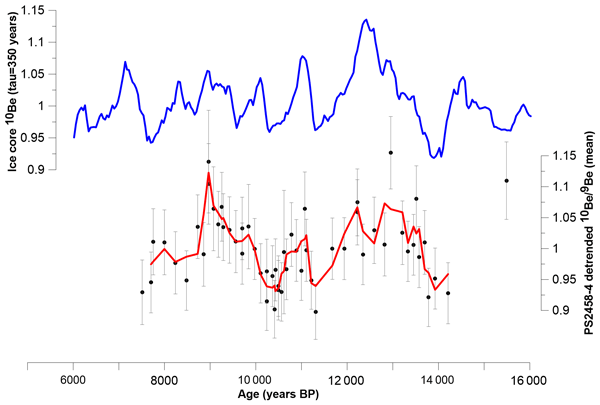
Arnaud Nicolas, Gesine Mollenhauer, Johannes Lachner, Konstanze Stübner, Maylin Malter, Jutta Wollenburg, Hendrik Grotheer, and Florian Adolphi
Clim. Past, 20, 2617–2628, https://doi.org/10.5194/cp-20-2617-2024, https://doi.org/10.5194/cp-20-2617-2024, 2024
Short summary
Short summary
We use the authigenic 10Be/9Be record of a Laptev Sea sediment core for the period 8–14 kyr BP and synchronize it with the 10Be records from absolutely dated ice cores. We employed a likelihood function to calculate the ΔR values. A benthic ΔR value of +345±60 14C years was estimated, which corresponds to a marine reservoir age of 848±90 14C years. This new ΔR value was used to refine the age–depth model for core PS2458-4, establishing it as a potential reference chronology for the Laptev Sea.
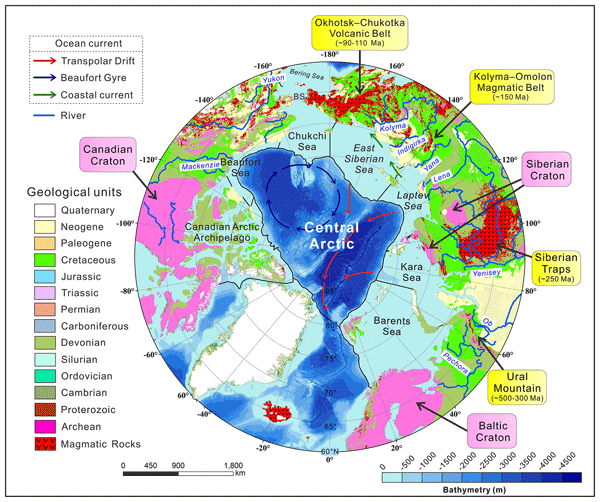
Zhengquan Yao, Han Feng, Ruediger Stein, Yanguang Liu, Xuefa Shi, Yuri Vasilenko, Seung-Il Nam, Linsen Dong, Fengdeng Shi, Kunshan Wang, Zhihua Chen, Shuqing Qiao, Qiuling Li, Song Zhao, Xinyue Pei, Huiyu Guo, and Yaru Liu
Earth Syst. Sci. Data, 18, 6649–6665, https://doi.org/10.5194/essd-18-6649-2026, https://doi.org/10.5194/essd-18-6649-2026, 2026
Short summary
Short summary
We present an open-access compilation of mineralogical and geochemical provenance data for surface sediments across the Arctic Ocean. The Circum-Arctic Sediment PROvenance Database (CASPROD) integrates four provenance proxies, including bulk sediment Sr–Nd isotopes, detrital zircon U–Pb ages, clay mineral assemblages, and detrital mineral compositions, from more than 4000 stations in the Arctic Ocean. All datasets are standardized with consistent metadata and are provided in multiple machine-readable formats.
Tsai-Wen Lin, Florian Adolphi, Hendrik Grotheer, Jens Hefter, Tommaso Tesi, Johannes Lachner, Stella Winkler, Junjie Wu, Eduardo Queiroz Alves, and Gesine Mollenhauer
EGUsphere, https://doi.org/10.5194/egusphere-2026-4726, https://doi.org/10.5194/egusphere-2026-4726, 2026
This preprint is open for discussion and under review for Climate of the Past (CP).
Short summary
Short summary
We refined the age-depth models of marine sediment cores from the western Laptev Sea shelf using authigenic 10Be/9Be ratios. Pre-depositional 14C ages of terrigenous biomarkers in the cores revealed distinct transport pathways. n-C28:0 fatty acids exhibited varied sources/transport mechanisms between periods strongly influenced by coastal erosion and river discharge, whereas n-alkanes suggested aged permafrost as the dominant source.
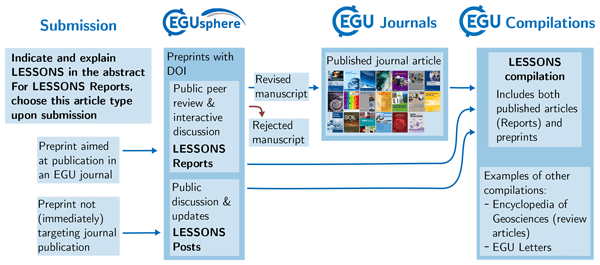
Ulrike Proske, John Hillier, Stefan Gaillard, Theresa Blume, Eduardo Queiroz Alves, Susanne Buiter, Ken S. Carslaw, Kirsten von Elverfeldt, Tim H. M. van Emmerik, Barbara Ervens, Rolf Hut, Sam Illingworth, Daniel Klotz, and Jonas Pyschik
Geosci. Commun., 9, 371–383, https://doi.org/10.5194/gc-9-371-2026, https://doi.org/10.5194/gc-9-371-2026, 2026
Short summary
Short summary
We explain a new article type that is being introduced in participating EGU publications. "LESSONS" articles describe the Limitations, Errors, Surprises, Shortcomings and Opportunities for New Science emerging from the scientific process. The publication of non-positive results and associated learnings aims to complete an unbiased record of the research effort, contributes to open and transparent science, allows the authors and others to learn, and may open opportunities for new science.
Francesco Paladini de Mendoza, Leonardo Langone, Alice Cavaliere, Gianmarco Ingrosso, Lorenzo Pasculli, Chiara Ripa, Mauro Mazzola, Manuel Bensi, Federico Giglio, Stefano Miserocchi, Tommaso Tesi, and Patrizia Giordano
Earth Syst. Sci. Data Discuss., https://doi.org/10.5194/essd-2026-501, https://doi.org/10.5194/essd-2026-501, 2026
Preprint under review for ESSD
Short summary
Short summary
This paper presents 5-years of continuous ocean observations from Arctic fjords and nearby deep waters around Svalbard. The dataset reveals strong seasonal changes, recurring inflows of warm Atlantic waters, and differences between glacier-influenced coastal areas and offshore environments. By providing openly accessible, high-quality measurements, the study supports research on climate change, ocean dynamics, glacier–ocean interactions, in a rapidly changing Arctic.
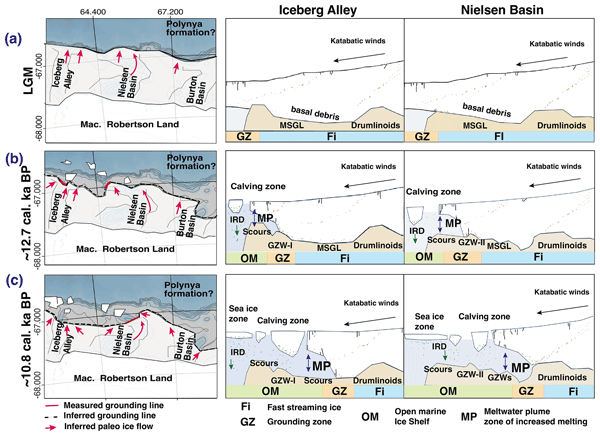
Janina Güntzel, Juliane Müller, Ralf Tiedemann, Gesine Mollenhauer, Lester Lembke-Jene, Estella Weigelt, Lasse Schopen, Niklas Wesch, Laura Kattein, Andrew N. Mackintosh, and Johann P. Klages
The Cryosphere, 20, 3739–3758, https://doi.org/10.5194/tc-20-3739-2026, https://doi.org/10.5194/tc-20-3739-2026, 2026
Short summary
Short summary
Combined multi-proxy sediment core analyses and bathymetry data reveal the deglaciation along the Mac. Robertson Shelf, a yet insufficiently studied sector of the East Antarctic margin. Grounding line extent towards the continental shelf break prior to ~12.7 cal. ka BP and subsequent episodic mid-shelf retreat until the early Holocene prevented Dense Shelf Water formation in its current form, hence suggesting a different formation mechanism under such full glacial conditions.
Claudio Pellegrini, Marco Basili, Irene Sammartino, Tommaso Tesi, Emanuela Frapiccini, Grazia Marina Quero, Sarah Pizzini, Roberta Zangrando, Gian Marco Luna, Sara Catena, Bruno Campo, Naomi Massaccesi, Fabio Trincardi, Andrea Gallerani, and Jacopo Chiggiato
Biogeosciences, 23, 2389–2412, https://doi.org/10.5194/bg-23-2389-2026, https://doi.org/10.5194/bg-23-2389-2026, 2026
Short summary
Short summary
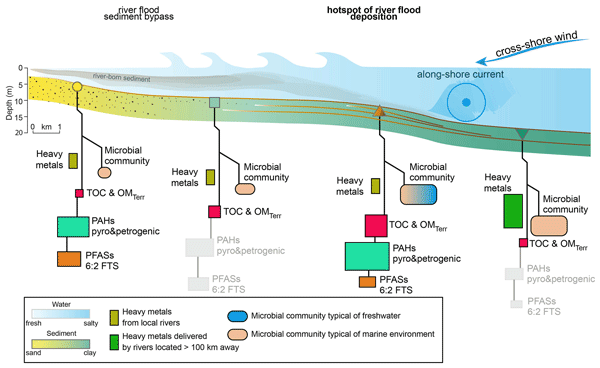
The September 2022 flood in central Italy left a short-lived yet significant imprint offshore, with patchy sediment deposition, pollutant hotspots (Polycyclic Aromatic Hydrocarbons (PAHs), Poly- and Perfluorinated alkyl substances (PFASs)) and shifts in benthic microbial communities. These findings reveal how extreme events, though transient, can reshape coastal systems, stressing the need for event-based monitoring and improved understanding of flood-driven sediment, contaminant, and ecosystem dynamics.
Madeleine Santos, Lisa Bröder, Matt O'Regan, Iván Hernández-Almeida, Tommaso Tesi, Lukas Bigler, Negar Haghipour, Daniel B. Nelson, Michael Fritz, and Julie Lattaud
Clim. Past, 22, 187–203, https://doi.org/10.5194/cp-22-187-2026, https://doi.org/10.5194/cp-22-187-2026, 2026
Short summary
Short summary
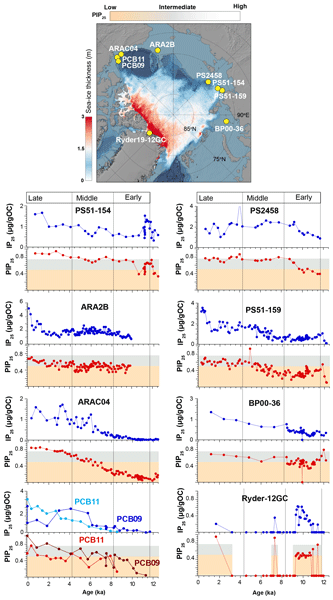
Our study examined how sea ice in the Beaufort Sea has changed over the past 13 000 years to better understand today's rapid losses. By analyzing chemical tracers preserved in seafloor sediments, we found that the Early Holocene was largely ice-free, with warmer waters and lower salinity. Seasonal ice began forming about 7000 years ago and expanded as the climate cooled. These long-term patterns show that continued warming could return the region to mostly ice-free conditions.
Wanyee Wong, Bjørg Risebrobakken, Malin Ödalen, Amandine Aline Tisserand, Kirsten Fahl, Ruediger Stein, and Eystein Jansen
Clim. Past, 21, 2225–2242, https://doi.org/10.5194/cp-21-2225-2025, https://doi.org/10.5194/cp-21-2225-2025, 2025
Short summary
Short summary
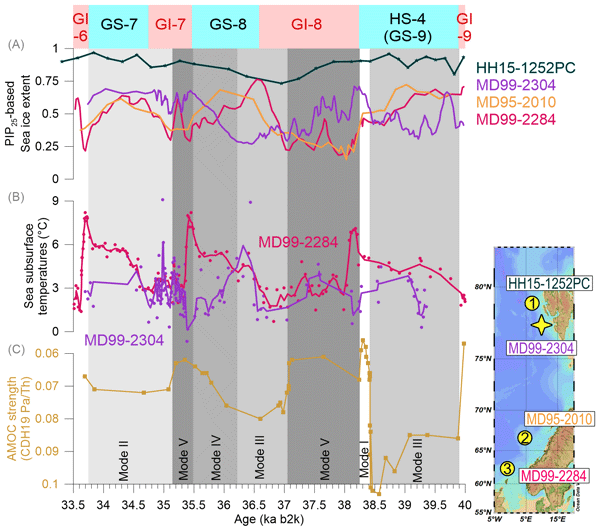
Sea ice variability in the eastern Fram Strait between, and within, individual Greenland Stadials and Interstadials is documented by high-resolution proxy reconstructions. Unlike the southeastern Nordic Seas and North Atlantic, these changes were less linked to Greenland climate oscillations. Instead, they were driven by ocean heat transport, regulated by the interplay between the Atlantic Meridional Overturning Circulation strength and sea ice cover in the southeastern Nordic Seas.
Tsai-Wen Lin, Tommaso Tesi, Jens Hefter, Hendrik Grotheer, Jutta Wollenburg, Florian Adolphi, Henning A. Bauch, Alessio Nogarotto, Juliane Müller, and Gesine Mollenhauer
Clim. Past, 21, 753–772, https://doi.org/10.5194/cp-21-753-2025, https://doi.org/10.5194/cp-21-753-2025, 2025
Short summary
Short summary
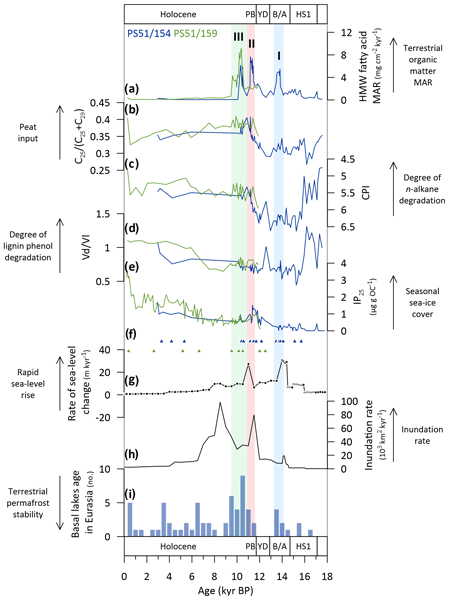
In order to understand the mechanisms governing permafrost organic matter remobilization, we investigated organic matter composition during past intervals of rapid sea-level rise, of inland warming, and of dense sea-ice cover in the Laptev Sea. We find that sea-level rise resulted in widespread erosion and transport of permafrost materials to the ocean but that erosion is mitigated by regional dense sea-ice cover. Factors like inland warming or floods increase permafrost mobilization locally.
Wee Wei Khoo, Juliane Müller, Oliver Esper, Wenshen Xiao, Christian Stepanek, Paul Gierz, Gerrit Lohmann, Walter Geibert, Jens Hefter, and Gesine Mollenhauer
Clim. Past, 21, 299–326, https://doi.org/10.5194/cp-21-299-2025, https://doi.org/10.5194/cp-21-299-2025, 2025
Short summary
Short summary
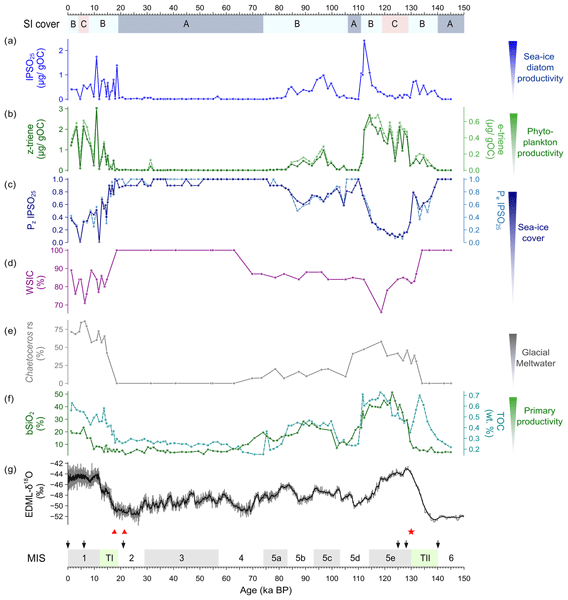
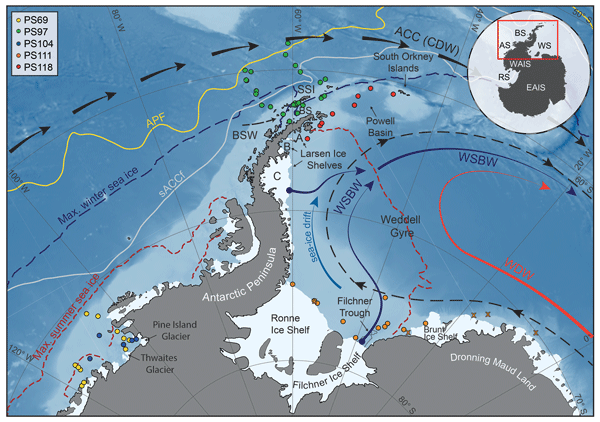
Using a multiproxy approach, we analyzed biomarkers and diatom assemblages from a marine sediment core from the Powell Basin, Weddell Sea. The results reveal the first continuous coastal Antarctic sea ice record since the Last Penultimate Glacial. Our findings contribute valuable insights into past glacial–interglacial sea ice responses to a changing climate and enhance our understanding of ocean–sea ice–ice shelf interactions and dynamics.
Bennet Juhls, Anne Morgenstern, Jens Hölemann, Antje Eulenburg, Birgit Heim, Frederieke Miesner, Hendrik Grotheer, Gesine Mollenhauer, Hanno Meyer, Ephraim Erkens, Felica Yara Gehde, Sofia Antonova, Sergey Chalov, Maria Tereshina, Oxana Erina, Evgeniya Fingert, Ekaterina Abramova, Tina Sanders, Liudmila Lebedeva, Nikolai Torgovkin, Georgii Maksimov, Vasily Povazhnyi, Rafael Gonçalves-Araujo, Urban Wünsch, Antonina Chetverova, Sophie Opfergelt, and Pier Paul Overduin
Earth Syst. Sci. Data, 17, 1–28, https://doi.org/10.5194/essd-17-1-2025, https://doi.org/10.5194/essd-17-1-2025, 2025
Short summary
Short summary
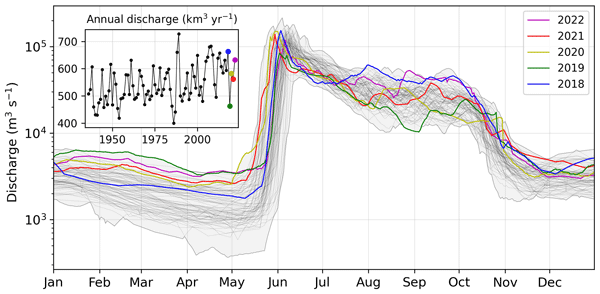
The Siberian Arctic is warming fast: permafrost is thawing, river chemistry is changing, and coastal ecosystems are affected. We aimed to understand changes in the Lena River, a major Arctic river flowing to the Arctic Ocean, by collecting 4.5 years of detailed water data, including temperature and carbon and nutrient contents. This dataset records current conditions and helps us to detect future changes. Explore it at https://doi.org/10.1594/PANGAEA.913197 and https://lena-monitoring.awi.de/.
Arnaud Nicolas, Gesine Mollenhauer, Johannes Lachner, Konstanze Stübner, Maylin Malter, Jutta Wollenburg, Hendrik Grotheer, and Florian Adolphi
Clim. Past, 20, 2617–2628, https://doi.org/10.5194/cp-20-2617-2024, https://doi.org/10.5194/cp-20-2617-2024, 2024
Short summary
Short summary
We use the authigenic 10Be/9Be record of a Laptev Sea sediment core for the period 8–14 kyr BP and synchronize it with the 10Be records from absolutely dated ice cores. We employed a likelihood function to calculate the ΔR values. A benthic ΔR value of +345±60 14C years was estimated, which corresponds to a marine reservoir age of 848±90 14C years. This new ΔR value was used to refine the age–depth model for core PS2458-4, establishing it as a potential reference chronology for the Laptev Sea.
Joanna Davies, Kirsten Fahl, Matthias Moros, Alice Carter-Champion, Henrieka Detlef, Ruediger Stein, Christof Pearce, and Marit-Solveig Seidenkrantz
The Cryosphere, 18, 3415–3431, https://doi.org/10.5194/tc-18-3415-2024, https://doi.org/10.5194/tc-18-3415-2024, 2024
Short summary
Short summary
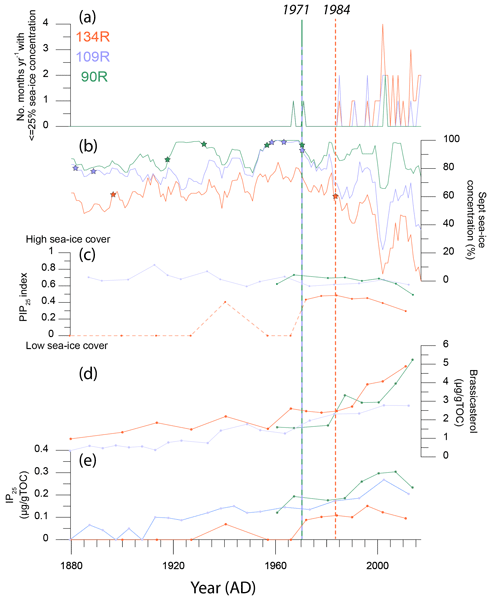
Here, we evaluate the use of biomarkers for reconstructing sea ice between 1880 and 2017 from three sediment cores located in a transect across the Northeast Greenland continental shelf. We find that key changes, specifically the decline in sea-ice cover identified in observational records between 1971 and 1984, align with our biomarker reconstructions. This outcome supports the use of biomarkers for longer reconstructions of sea-ice cover in this region.
Vera Dorothee Meyer, Jürgen Pätzold, Gesine Mollenhauer, Isla S. Castañeda, Stefan Schouten, and Enno Schefuß
Clim. Past, 20, 523–546, https://doi.org/10.5194/cp-20-523-2024, https://doi.org/10.5194/cp-20-523-2024, 2024
Short summary
Short summary
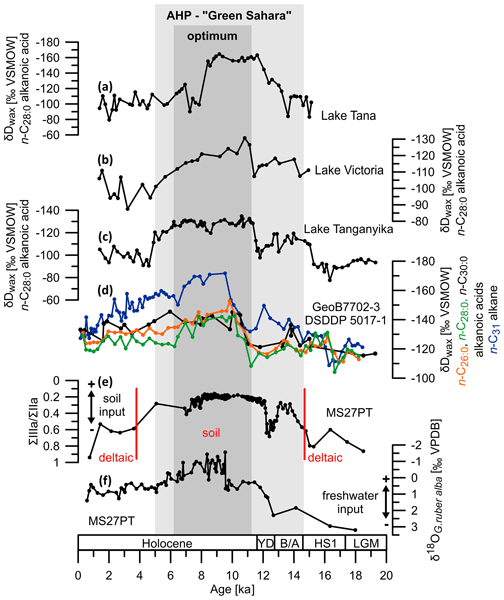
The climatic factors sustaining vegetation in the Sahara during the African humid period (AHP) are still not fully understood. Using biomarkers in a marine sediment core from the eastern Mediterranean, we infer variations in Mediterranean (winter) and monsoonal (summer) rainfall in the Nile river watershed around the AHP. We find that winter and summer rain enhanced during the AHP, suggesting that Mediterranean moisture supported the monsoon in sustaining the “green Sahara”.
Kirsi H. Keskitalo, Lisa Bröder, Tommaso Tesi, Paul J. Mann, Dirk J. Jong, Sergio Bulte Garcia, Anna Davydova, Sergei Davydov, Nikita Zimov, Negar Haghipour, Timothy I. Eglinton, and Jorien E. Vonk
Biogeosciences, 21, 357–379, https://doi.org/10.5194/bg-21-357-2024, https://doi.org/10.5194/bg-21-357-2024, 2024
Short summary
Short summary
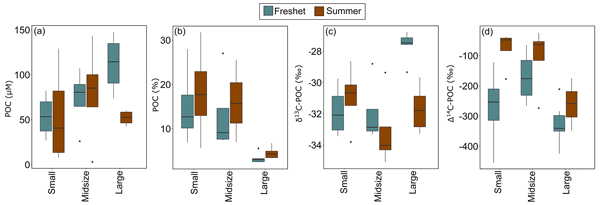
Permafrost thaw releases organic carbon into waterways. Decomposition of this carbon pool emits greenhouse gases into the atmosphere, enhancing climate warming. We show that Arctic river carbon and water chemistry are different between the spring ice breakup and summer and that primary production is initiated in small Arctic rivers right after ice breakup, in contrast to in large rivers. This may have implications for fluvial carbon dynamics and greenhouse gas uptake and emission balance.
Eduardo Queiroz Alves, Wanyee Wong, Jens Hefter, Hendrik Grotheer, Tommaso Tesi, Torben Gentz, Karin Zonneveld, and Gesine Mollenhauer
Clim. Past, 20, 121–136, https://doi.org/10.5194/cp-20-121-2024, https://doi.org/10.5194/cp-20-121-2024, 2024
Short summary
Short summary
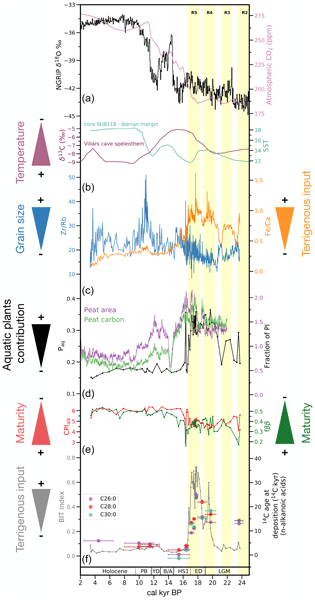
Our study reveals a previously unknown peat source for the massive influx of terrestrial organic matter that was exported from the European continent to the ocean during the last deglaciation. Our findings shed light on ancient terrestrial organic carbon mobilization, providing insights that are crucial for refining climate models.
Julia Rieke Hagemann, Lester Lembke-Jene, Frank Lamy, Maria-Elena Vorrath, Jérôme Kaiser, Juliane Müller, Helge W. Arz, Jens Hefter, Andrea Jaeschke, Nicoletta Ruggieri, and Ralf Tiedemann
Clim. Past, 19, 1825–1845, https://doi.org/10.5194/cp-19-1825-2023, https://doi.org/10.5194/cp-19-1825-2023, 2023
Short summary
Short summary
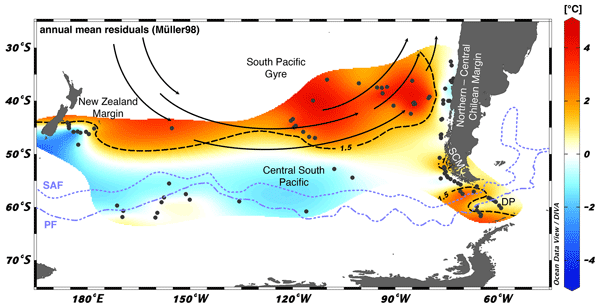
Alkenones and glycerol dialkyl glycerol tetraether lipids (GDGTs) are common biomarkers for past water temperatures. In high latitudes, determining temperature reliably is challenging. We analyzed 33 Southern Ocean sediment surface samples and evaluated widely used global calibrations for both biomarkers. For GDGT-based temperatures, previously used calibrations best reflect temperatures >5° C; (sub)polar temperature bias necessitates a new calibration which better aligns with modern values.
Giacomo Galli, Caterina Morigi, Romana Melis, Alessio Di Roberto, Tommaso Tesi, Fiorenza Torricella, Leonardo Langone, Patrizia Giordano, Ester Colizza, Lucilla Capotondi, Andrea Gallerani, and Karen Gariboldi
J. Micropalaeontol., 42, 95–115, https://doi.org/10.5194/jm-42-95-2023, https://doi.org/10.5194/jm-42-95-2023, 2023
Short summary
Short summary
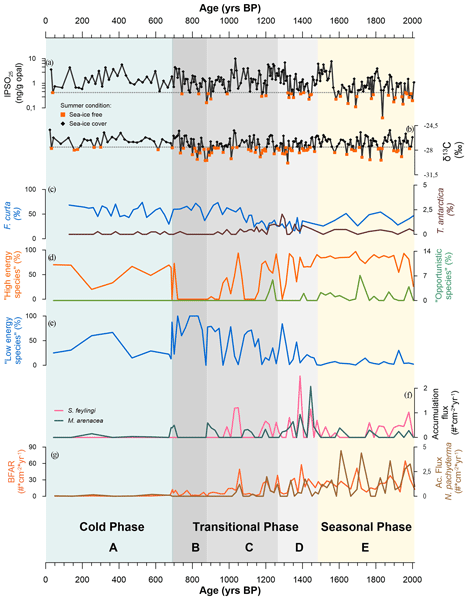
A sediment core was analysed, focusing over the 2000 years, in Edisto Inlet. Benthic and planktic foraminifera were picked and used to determine changes in the faunal composition. Using other nearby cores, by comparing different proxies, we were able to identify a succession of three different environmental phases over the studied period: a seasonal-cycle phase (from 2000 to around 1500 years BP), a transitional phase (from 1500 to 700 years BP) and a cold phase (from 700 years to present).
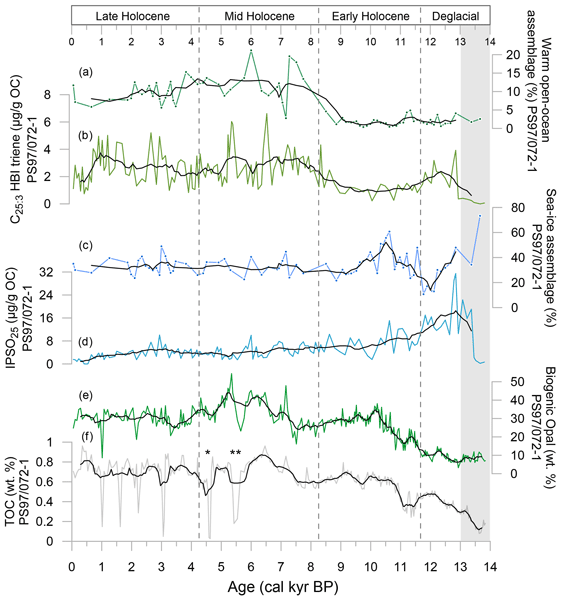
Maria-Elena Vorrath, Juliane Müller, Paola Cárdenas, Thomas Opel, Sebastian Mieruch, Oliver Esper, Lester Lembke-Jene, Johan Etourneau, Andrea Vieth-Hillebrand, Niko Lahajnar, Carina B. Lange, Amy Leventer, Dimitris Evangelinos, Carlota Escutia, and Gesine Mollenhauer
Clim. Past, 19, 1061–1079, https://doi.org/10.5194/cp-19-1061-2023, https://doi.org/10.5194/cp-19-1061-2023, 2023
Short summary
Short summary
Sea ice is important to stabilize the ice sheet in Antarctica. To understand how the global climate and sea ice were related in the past we looked at ancient molecules (IPSO25) from sea-ice algae and other species whose dead cells accumulated on the ocean floor over time. With chemical analyses we could reconstruct the history of sea ice and ocean temperatures of the past 14 000 years. We found out that sea ice became less as the ocean warmed, and more phytoplankton grew towards today's level.
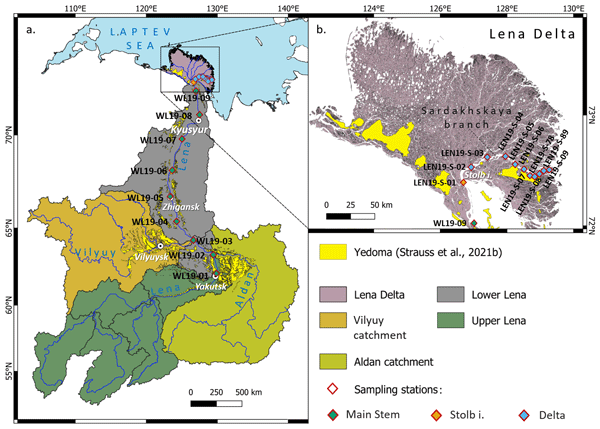
Olga Ogneva, Gesine Mollenhauer, Bennet Juhls, Tina Sanders, Juri Palmtag, Matthias Fuchs, Hendrik Grotheer, Paul J. Mann, and Jens Strauss
Biogeosciences, 20, 1423–1441, https://doi.org/10.5194/bg-20-1423-2023, https://doi.org/10.5194/bg-20-1423-2023, 2023
Short summary
Short summary
Arctic warming accelerates permafrost thaw and release of terrestrial organic matter (OM) via rivers to the Arctic Ocean. We compared particulate organic carbon (POC), total suspended matter, and C isotopes (δ13C and Δ14C of POC) in the Lena delta and Lena River along a ~1600 km transect. We show that the Lena delta, as an interface between the Lena River and the Arctic Ocean, plays a crucial role in determining the qualitative and quantitative composition of OM discharged into the Arctic Ocean.
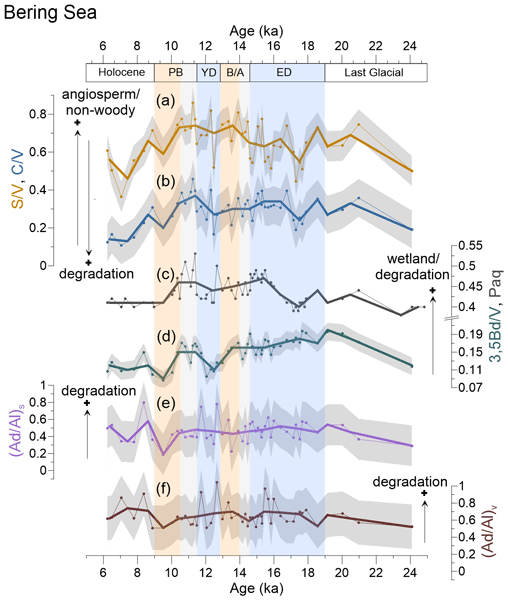
Mengli Cao, Jens Hefter, Ralf Tiedemann, Lester Lembke-Jene, Vera D. Meyer, and Gesine Mollenhauer
Clim. Past, 19, 159–178, https://doi.org/10.5194/cp-19-159-2023, https://doi.org/10.5194/cp-19-159-2023, 2023
Short summary
Short summary
We use sediment records of lignin to reconstruct deglacial vegetation change and permafrost mobilization, which occurred earlier in the Yukon than in the Amur river basin. Sea ice extent or surface temperatures of adjacent oceans might have had a strong influence on the timing of permafrost mobilization. In contrast to previous evidence, our records imply that during glacial peaks of permafrost decomposition, lipids and lignin might have been delivered to the ocean by identical processes.
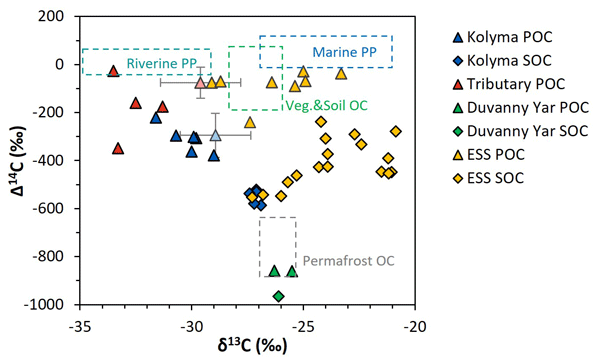
Dirk Jong, Lisa Bröder, Tommaso Tesi, Kirsi H. Keskitalo, Nikita Zimov, Anna Davydova, Philip Pika, Negar Haghipour, Timothy I. Eglinton, and Jorien E. Vonk
Biogeosciences, 20, 271–294, https://doi.org/10.5194/bg-20-271-2023, https://doi.org/10.5194/bg-20-271-2023, 2023
Short summary
Short summary
With this study, we want to highlight the importance of studying both land and ocean together, and water and sediment together, as these systems function as a continuum, and determine how organic carbon derived from permafrost is broken down and its effect on global warming. Although on the one hand it appears that organic carbon is removed from sediments along the pathway of transport from river to ocean, it also appears to remain relatively ‘fresh’, despite this removal and its very old age.
Stefan Mulitza, Torsten Bickert, Helen C. Bostock, Cristiano M. Chiessi, Barbara Donner, Aline Govin, Naomi Harada, Enqing Huang, Heather Johnstone, Henning Kuhnert, Michael Langner, Frank Lamy, Lester Lembke-Jene, Lorraine Lisiecki, Jean Lynch-Stieglitz, Lars Max, Mahyar Mohtadi, Gesine Mollenhauer, Juan Muglia, Dirk Nürnberg, André Paul, Carsten Rühlemann, Janne Repschläger, Rajeev Saraswat, Andreas Schmittner, Elisabeth L. Sikes, Robert F. Spielhagen, and Ralf Tiedemann
Earth Syst. Sci. Data, 14, 2553–2611, https://doi.org/10.5194/essd-14-2553-2022, https://doi.org/10.5194/essd-14-2553-2022, 2022
Short summary
Short summary
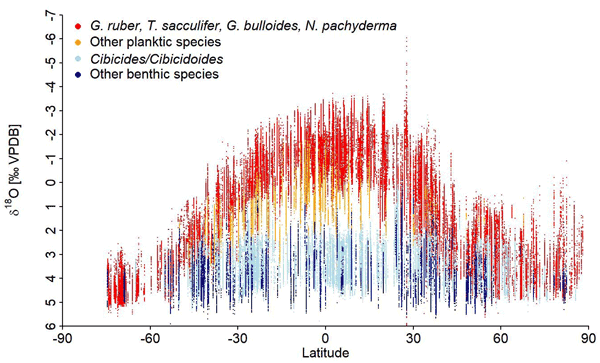
Stable isotope ratios of foraminiferal shells from deep-sea sediments preserve key information on the variability of ocean circulation and ice volume. We present the first global atlas of harmonized raw downcore oxygen and carbon isotope ratios of various planktonic and benthic foraminiferal species. The atlas is a foundation for the analyses of the history of Earth system components, for finding future coring sites, and for teaching marine stratigraphy and paleoceanography.

Charlotte Haugk, Loeka L. Jongejans, Kai Mangelsdorf, Matthias Fuchs, Olga Ogneva, Juri Palmtag, Gesine Mollenhauer, Paul J. Mann, P. Paul Overduin, Guido Grosse, Tina Sanders, Robyn E. Tuerena, Lutz Schirrmeister, Sebastian Wetterich, Alexander Kizyakov, Cornelia Karger, and Jens Strauss
Biogeosciences, 19, 2079–2094, https://doi.org/10.5194/bg-19-2079-2022, https://doi.org/10.5194/bg-19-2079-2022, 2022
Short summary
Short summary
Buried animal and plant remains (carbon) from the last ice age were freeze-locked in permafrost. At an extremely fast eroding permafrost cliff in the Lena Delta (Siberia), we found this formerly frozen carbon well preserved. Our results show that ongoing degradation releases substantial amounts of this carbon, making it available for future carbon emissions. This mobilisation at the studied cliff and also similarly eroding sites bear the potential to affect rivers and oceans negatively.
Gerard J. M. Versteegh, Karin A. F. Zonneveld, Jens Hefter, Oscar E. Romero, Gerhard Fischer, and Gesine Mollenhauer
Biogeosciences, 19, 1587–1610, https://doi.org/10.5194/bg-19-1587-2022, https://doi.org/10.5194/bg-19-1587-2022, 2022
Short summary
Short summary
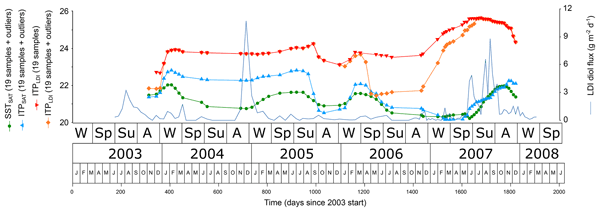
A 5-year record of long-chain mid-chain diol export flux and composition is presented with a 1- to 3-week resolution sediment trap CBeu (in the NW African upwelling). All environmental parameters as well as the diol composition are dominated by the seasonal cycle, albeit with different phase relations for temperature and upwelling. Most diol-based proxies are dominated by upwelling. The long-chain diol index reflects temperatures of the oligotrophic summer sea surface.
Nele Lamping, Juliane Müller, Jens Hefter, Gesine Mollenhauer, Christian Haas, Xiaoxu Shi, Maria-Elena Vorrath, Gerrit Lohmann, and Claus-Dieter Hillenbrand
Clim. Past, 17, 2305–2326, https://doi.org/10.5194/cp-17-2305-2021, https://doi.org/10.5194/cp-17-2305-2021, 2021
Short summary
Short summary
We analysed biomarker concentrations on surface sediment samples from the Antarctic continental margin. Highly branched isoprenoids and GDGTs are used for reconstructing recent sea-ice distribution patterns and ocean temperatures respectively. We compared our biomarker-based results with data obtained from satellite observations and estimated from a numerical model and find reasonable agreements. Further, we address caveats and provide recommendations for future investigations.
Cited articles
Amon, R. M. W., Rinehart, A. J., Duan, S., Louchouarn, P., Prokushkin, A., Guggenberger, G., Bauch, D., Stedmon, C., Raymond, P. A., Holmes, R. M., McClelland, J. W., Peterson, B. J., Walker, S. A., and Zhulidov, A. V.: Dissolved organic matter sources in large Arctic rivers, Geochim. Cosmochim. Acta, 94, https://doi.org/10.1016/j.gca.2012.07.015, 2012.
Andersen, K. K., Azuma, N., Barnola, J. M., Bigler, M., Biscaye, P., Caillon, N., Chappellaz, J., Clausen, H. B., Dahl-Jensen, D., Fischer, H., Flückiger, J., Fritzsche, D., Fujii, Y., Goto-Azuma, K., Grønvold, K., Gundestrup, N. S., Hansson, M., Huber, C., Hvidberg, C. S., Johnsen, S. J., Jonsell, U., Jouzel, J., Kipfstuhl, S., Landais, A., Leuenberger, M., Lorrain, R., Masson-Delmotte, V., Miller, H., Motoyama, H., Narita, H., Popp, T., Rasmussen, S. O., Raynaud, D., Rothlisberger, R., Ruth, U., Samyn, D., Schwander, J., Shoji, H., Siggard-Andersen, M. L., Steffensen, J. P., Stocker, T., Sveinbjörnsdóttir, A. E., Svensson, A., Takata, M., Tison, J. L., Thorsteinsson, T., Watanabe, O., Wilhelms, F., and White, J. W. C.: High-resolution record of Northern Hemisphere climate extending into the last interglacial period, Nature, 431, 147–151, https://doi.org/10.1038/nature02805, 2004.
Anderson, P. M., Edwards, M. E., and Brubaker, L. B.: Results and paleoclimate implications of 35 years of paleoecological research in Alaska, Developments in Quaternary Science, 1, 427–440, https://doi.org/10.1016/S1571-0866(03)01019-4, 2003.
Bale, N. J., Palatinszky, M., Rijpstra, W. I. C., Herbold, C. W., Wagner, M., and Damsté, J. S. S.: Membrane lipid composition of the moderately thermophilic ammonia-oxidizing archaeon “Candidatus Nitrosotenuis uzonensis” at different growth temperatures, Appl. Environ. Microbiol., 85, https://doi.org/10.1128/AEM.01332-19, 2019.
Bard, E., Hamelin, B., Arnold, M., Montaggioni, L., Cabloch, G., Faure, G., and Rougerie, F.: Deglacial sea-level record from Tahiti corals and the timing of global meltwater discharge, Nature, 382, https://doi.org/10.1038/382241a0, 1996.
Bauch, H. A., Kassens, H., Erlenkeuser, H., Grootes, P. M., and Thiede, J.: Depositional environment of the Laptev Sea (Arctic Siberia) during the Holocene, Boreas, 28, 194–204, https://doi.org/10.1111/j.1502-3885.1999.tb00214.x, 1999.
Bauch, H. A., Mueller-Lupp, T., Taldenkova, E., Spielhagen, R. F., Kassens, H., Grootes, P. M., Thiede, J., Heinemeier, J., and Petryashov, V. V.: Chronology of the holocene transgression at the north siberian margin, Glob. Planet Change, 31, 125–139, https://doi.org/10.1016/S0921-8181(01)00116-3, 2001.
Besseling, M. A., Hopmans, E. C., Bale, N. J., Schouten, S., Damsté, J. S. S., and Villanueva, L.: The absence of intact polar lipid-derived GDGTs in marine waters dominated by Marine Group II: Implications for lipid biosynthesis in Archaea, Sci. Rep., 10, https://doi.org/10.1038/s41598-019-57035-0, 2020.
Bianchi, T. S. and Canuel, E. A.: Chemical biomarkers in aquatic ecosystems, Princeton University Press, Princeton, https://doi.org/10.2138/am.2012.592, 2011.
Binney, H. A., Willis, K. J., Edwards, M. E., Bhagwat, S. A., Anderson, P. M., Andreev, A. A., Blaauw, M., Damblon, F., Haesaerts, P., Kienast, F., Kremenetski, K. V., Krivonogov, S. K., Lozhkin, A. V., MacDonald, G. M., Novenko, E. Y., Oksanen, P., Sapelko, T. V., Väliranta, M., and Vazhenina, L.: The distribution of late-Quaternary woody taxa in northern Eurasia: evidence from a new macrofossil database, Quat. Sci. Rev., 28, 2445–2464, https://doi.org/10.1016/j.quascirev.2009.04.016, 2009.
Biskaborn, B. K., Herzschuh, U., Bolshiyanov, D., Savelieva, L., and Diekmann, B.: Environmental variability in northeastern Siberia during the last ∼13,300 yr inferred from lake diatoms and sediment-geochemical parameters, Palaeogeogr. Palaeoclimatol. Palaeoecol., 329–330, 22–36, https://doi.org/10.1016/j.palaeo.2012.02.003, 2012.
Boucsein, B., Fahl, K., and Stein, R.: Variability of river discharge and Atlantic-water inflow at the Laptev Sea continental margin during the past 15,000 years: Implications from maceral and biomarker products, International Journal of Earth Sciences, 89, 578–591, https://doi.org/10.1007/s005310000111, 2000.
Boucsein, B., Knies, J., and Stein, R.: Organic matter deposition along the Kara and Laptev Seas continental margin (eastern Arctic Ocean) during last deglaciation and Holocene: Evidence from organic-geochemical and petrographical data, Mar. Geol., 183, 67–87, https://doi.org/10.1016/S0025-3227(01)00249-3, 2002.
Brendryen, J., Haflidason, H., Yokoyama, Y., Haaga, K. A., and Hannisdal, B.: Eurasian Ice Sheet collapse was a major source of Meltwater Pulse 1A 14,600 years ago, Nat. Geosci., 13, https://doi.org/10.1038/s41561-020-0567-4, 2020.
Bröder, L., Tesi, T., Salvadó, J. A., Semiletov, I. P., Dudarev, O. V., and Gustafsson, Ö.: Fate of terrigenous organic matter across the Laptev Sea from the mouth of the Lena River to the deep sea of the Arctic interior, Biogeosciences, 13, 5003–5019, https://doi.org/10.5194/bg-13-5003-2016, 2016.
Bröder, L., Tesi, T., Andersson, A., Semiletov, I., and Gustafsson, Ö.: Bounding cross-shelf transport time and degradation in Siberian-Arctic land-ocean carbon transfer, Nat. Commun., 9, 806, https://doi.org/10.1038/s41467-018-03192-1, 2018.
Broecker, W. S.: Was the Younger Dryas triggered by a flood?, Science, https://doi.org/10.1126/science.1123253, 2006.
Broecker, W. S., Peteet, D. M., and Rind, D.: Does the ocean-atmosphere system have more than one stable mode of operation?, Nature, 315, 21–26, https://doi.org/10.1038/315021a0, 1985.
Bruhn, A. D., Stedmon, C. A., Comte, J., Matsuoka, A., Speetjens, N. J., Tanski, G., Vonk, J. E., and Sjöstedt, J.: Terrestrial Dissolved Organic Matter Mobilized From Eroding Permafrost Controls Microbial Community Composition and Growth in Arctic Coastal Zones, Front. Earth Sci. (Lausanne), 9, 1–20, https://doi.org/10.3389/feart.2021.640580, 2021.
Cabedo-Sanz, P., Belt, S. T., Knies, J., and Husum, K.: Identification of contrasting seasonal sea ice conditions during the Younger Dryas, Quat. Sci. Rev., 79, 74–86, https://doi.org/10.1016/j.quascirev.2012.10.028, 2013.
Cao, M., Hefter, J., Tiedemann, R., Lembke-Jene, L., Meyer, V. D., and Mollenhauer, G.: Deglacial records of terrigenous organic matter accumulation off the Yukon and Amur rivers based on lignin phenols and long-chain n-alkanes, Clim. Past, 19, 159–178, https://doi.org/10.5194/cp-19-159-2023, 2023.
Ciais, P., Tagliabue, A., Cuntz, M., Bopp, L., Scholze, M., Hoffmann, G., Lourantou, A., Harrison, S. P., Prentice, I. C., Kelley, D. I., Koven, C., and Piao, S. L.: Large inert carbon pool in the terrestrial biosphere during the Last Glacial Maximum, Nat. Geosci., 5, 74–79, https://doi.org/10.1038/ngeo1324, 2012.
Couture, N. J., Irrgang, A., Pollard, W., Lantuit, H., and Fritz, M.: Coastal Erosion of Permafrost Soils Along the Yukon Coastal Plain and Fluxes of Organic Carbon to the Canadian Beaufort Sea, J. Geophys. Res.-Biogeosci., 123, 406–422, https://doi.org/10.1002/2017JG004166, 2018.
De Jonge, C., Stadnitskaia, A., Hopmans, E. C., Cherkashov, G., Fedotov, A., and Sinninghe Damsté, J. S.: In situ produced branched glycerol dialkyl glycerol tetraethers in suspended particulate matter from the Yenisei River, Eastern Siberia, Geochim. Cosmochim. Acta, 125, https://doi.org/10.1016/j.gca.2013.10.031, 2014.
De Jonge, C., Stadnitskaia, A., Hopmans, E. C., Cherkashov, G., Fedotov, A., Streletskaya, I. D., Vasiliev, A. A., and Sinninghe Damsté, J. S.: Drastic changes in the distribution of branched tetraether lipids in suspended matter and sediments from the Yenisei River and Kara Sea (Siberia): Implications for the use of brGDGT-based proxies in coastal marine sediments, Geochim. Cosmochim. Acta, 165, 200–225, https://doi.org/10.1016/j.gca.2015.05.044, 2015.
Deschamps, P., Durand, N., Bard, E., Hamelin, B., Camoin, G., Thomas, A. L., Henderson, G. M., Okuno, J., and Yokoyama, Y.: Ice-sheet collapse and sea-level rise at the Bølling warming 14,600 years ago, Nature, 483, 559–564, https://doi.org/10.1038/nature10902, 2012.
Eglinton, G. and Hamilton, R. J.: Leaf epicuticular waxes, Science (1979), 156, 1322–1335, https://doi.org/10.1126/science.156.3780.1322, 1967.
Eglinton, T. I., Aluwihare, L. I., Bauer, J. E., Druffel, E. R. M., and McNichol, A. P.: Gas chromatographic isolation of individual compounds from complex matrices for radiocarbon dating, Anal. Chem., 68, 904–912, https://doi.org/10.1021/ac9508513, 1996.
Ertel, J. R. and Hedges, J. I.: The lignin component of humic substances: Distribution among soil and sedimentary humic, fulvic, and base-insoluble fractions, Geochim. Cosmochim. Acta, 48, 2065–2074, https://doi.org/10.1016/0016-7037(84)90387-9, 1984.
Fahl, K. and Stein, R.: Biomarkers as organic-carbon-source and environmental indicators in the late quaternary Arctic Ocean: Problems and perspectives, Mar. Chem., 63, 293–309, https://doi.org/10.1016/S0304-4203(98)00068-1, 1999.
Fahl, K. and Stein, R.: Modern seasonal variability and deglacial/Holocene change of central Arctic Ocean sea-ice cover: New insights from biomarker proxy records, Earth Planet. Sci. Lett., 351–352, 123–133, https://doi.org/10.1016/j.epsl.2012.07.009, 2012.
Fahl, K., Cremer, H., Erlenkeuser, H., Hanssen, H., Hölemann, J., Kassens, H., Knickmeier, K., Kosobokova, K., Kunz-Pirrung, M., Lindemann, F., Markhaseva, E., Lischka, S., Petryashov, V., Piepenburg, D., Schmid, M., Spindler, M., Stein, R., and Tuschling, K.: Sources and pathways of organic carbon in the modern Laptev Sea (Arctic Ocean): Implications from biological, geochemical and geological data, Polarforschung, 69, 193–205, 1999.
Fairbanks, R. G.: A 17,000-year glacio-eustatic sea level record: Influence of glacial melting rates on the Younger Dryas event and deep-ocean circulation, Nature, 342, 637–642, https://doi.org/10.1038/342637a0, 1989.
Feng, X., Vonk, J. E., Van Dongen, B. E., Gustafsson, Ö., Semiletov, I. P., Dudarev, O. V., Wang, Z., Montluçon, D. B., Wacker, L., and Eglinton, T. I.: Differential mobilization of terrestrial carbon pools in Eurasian Arctic river basins, Proc. Natl. Acad. Sci. USA, 110, 14168–14173, https://doi.org/10.1073/pnas.1307031110, 2013.
Feng, X., Gustafsson, Ö., Holmes, R. M., Vonk, J. E., van Dongen, B. E., Semiletov, I. P., Dudarev, O. V., Yunker, M. B., Macdonald, R. W., Montluçon, D. B., and Eglinton, T. I.: Multi-molecular tracers of terrestrial carbon transfer across the pan-Arctic: comparison of hydrolyzable components with plant wax lipids and lignin phenols, Biogeosciences, 12, 4841–4860, https://doi.org/10.5194/bg-12-4841-2015, 2015.
Fütterer, D. K.: The expedition ARCTIC'93, Leg ARK-IX/4 of RV Polarstern 1993. Reports on Polar Research 149, Berichte zur Polarforschung, 244 pp., https://doi.org/10.2312/BzP_0149_1994, 1993.
Goñi, M. A. and Hedges, J. I.: The diagenetic behavior of cutin acids in buried conifer needles and sediments from a coastal marine environment, Geochim. Cosmochim. Acta, 54, 3083–3093, https://doi.org/10.1016/0016-7037(90)90124-4, 1990.
Goñi, M. A. and Montgomery, S.: Alkaline CuO oxidation with a microwave digestion system: Lignin analyses of geochemical samples, Anal. Chem., 72, 3116–3121, https://doi.org/10.1021/ac991316w, 2000.
Goñi, M. A., Yunker, M. B., MacDonald, R. W., and Eglinton, T. I.: Distribution and sources of organic biomarkers in arctic sediments from the Mackenzie River and Beaufort Shelf, Mar. Chem., 71, 23–51, https://doi.org/10.1016/S0304-4203(00)00037-2, 2000.
Gutjahr, M., Frank, M., Stirling, C. H., Klemm, V., van de Flierdt, T., and Halliday, A. N.: Reliable extraction of a deepwater trace metal isotope signal from Fe-Mn oxyhydroxide coatings of marine sediments, Chem. Geol., 242, 351–370, https://doi.org/10.1016/j.chemgeo.2007.03.021, 2007.
Heaton, T. J., Köhler, P., Butzin, M., Bard, E., Reimer, R. W., Austin, W. E. N., Bronk Ramsey, C., Grootes, P. M., Hughen, K. A., Kromer, B., Reimer, P. J., Adkins, J., Burke, A., Cook, M. S., Olsen, J., and Skinner, L. C.: Marine20 – The Marine Radiocarbon Age Calibration Curve (0–55,000 cal BP), Radiocarbon, 62, 779–820, https://doi.org/10.1017/RDC.2020.68, 2020.
Hedges, J. I. and Mann, D. C.: The characterization of plant tissues by their lignin oxidation products, Geochim. Cosmochim. Acta, 43, 1803–1807, https://doi.org/10.1016/0016-7037(79)90028-0, 1979.
Hedges, J. I., Blanchette, R. A., Weliky, K., and Devol, A. H.: Effects of fungal degradation on the CuO oxidation products of lignin: A controlled laboratory study, Geochim. Cosmochim. Acta, 52, 2717–2726, https://doi.org/10.1016/0016-7037(88)90040-3, 1988.
Hiyama, T., Park, H., Kobayashi, K., Lebedeva, L., and Gustafsson, D.: Contribution of summer net precipitation to winter river discharge in permafrost zone of the Lena River basin, J. Hydrol. (Amst), 616, 128797, https://doi.org/10.1016/j.jhydrol.2022.128797, 2023.
Holmes, M. L. and Creager, J. S.: Holocene History of the Laptev Sea Continental Shelf, in: Marine Geology and Oceanography of the Arctic Seas, 211–229, https://doi.org/10.1007/978-3-642-87411-6_9, 1974.
Holmes, R. M., McClelland, J. W., Peterson, B. J., Tank, S. E., Bulygina, E., Eglinton, T. I., Gordeev, V. V., Gurtovaya, T. Y., Raymond, P. A., Repeta, D. J., Staples, R., Striegl, R. G., Zhulidov, A. V., and Zimov, S. A.: Seasonal and Annual Fluxes of Nutrients and Organic Matter from Large Rivers to the Arctic Ocean and Surrounding Seas, Estuaries and Coasts, 35, 369–382, https://doi.org/10.1007/s12237-011-9386-6, 2012.
Hopmans, E. C., Weijers, J. W. H., Schefuß, E., Herfort, L., Sinninghe Damsté, J. S., and Schouten, S.: A novel proxy for terrestrial organic matter in sediments based on branched and isoprenoid tetraether lipids, Earth Planet. Sci. Lett., 224, 107–116, https://doi.org/10.1016/j.epsl.2004.05.012, 2004.
Hopmans, E. C., Schouten, S., and Sinninghe Damsté, J. S.: The effect of improved chromatography on GDGT-based palaeoproxies, Org. Geochem., 93, 1–6, https://doi.org/10.1016/j.orggeochem.2015.12.006, 2016.
Hörner, T., Stein, R., Fahl, K., and Birgel, D.: Post-glacial variability of sea ice cover, river run-off and biological production in the western Laptev Sea (Arctic Ocean) – A high-resolution biomarker study, Quat. Sci. Rev., 143, 133–149, https://doi.org/10.1016/j.quascirev.2016.04.011, 2016.
Houel, S., Louchouarn, P., Lucotte, M., Canuel, R., and Ghaleb, B.: Translocation of soil organic matter following reservoir impoundment in boreal systems: Implications for in situ productivity, Limnol. Oceanogr., 51, 1497–1513, https://doi.org/10.4319/lo.2006.51.3.1497, 2006.
Hugelius, G., Strauss, J., Zubrzycki, S., Harden, J. W., Schuur, E. A. G., Ping, C.-L., Schirrmeister, L., Grosse, G., Michaelson, G. J., Koven, C. D., O'Donnell, J. A., Elberling, B., Mishra, U., Camill, P., Yu, Z., Palmtag, J., and Kuhry, P.: Estimated stocks of circumpolar permafrost carbon with quantified uncertainty ranges and identified data gaps, Biogeosciences, 11, 6573–6593, https://doi.org/10.5194/bg-11-6573-2014, 2014.
Irrgang, A. M., Bendixen, M., Farquharson, L. M., Baranskaya, A. V., Erikson, L. H., Gibbs, A. E., Ogorodov, S. A., Overduin, P. P., Lantuit, H., Grigoriev, M. N., and Jones, B. M.: Drivers, dynamics and impacts of changing Arctic coasts, Nat. Rev. Earth Environ., 3, 39–54, https://doi.org/10.1038/s43017-021-00232-1, 2022.
Jorgenson, M. T. and Grosse, G.: Remote Sensing of Landscape Change in Permafrost Regions, in: Permafrost and Periglacial Processes, 324–338, https://doi.org/10.1002/ppp.1914, 2016.
Keigwin, L. D., Klotsko, S., Zhao, N., Reilly, B., Giosan, L., and Driscoll, N. W.: Deglacial floods in the Beaufort Sea preceded Younger Dryas cooling, Nat. Geosci., 11, 599–604, https://doi.org/10.1038/s41561-018-0169-6, 2018.
Keskitalo, K., Tesi, T., Bröder, L., Andersson, A., Pearce, C., Sköld, M., Semiletov, I. P., Dudarev, O. V., and Gustafsson, Ö.: Sources and characteristics of terrestrial carbon in Holocene-scale sediments of the East Siberian Sea, Clim. Past, 13, 1213–1226, https://doi.org/10.5194/cp-13-1213-2017, 2017.
Kleiber, H. P. and Niessen, F.: Late Pleistocene Paleoriver Channels on the Laptev Sea Shelf – Implications from Sub-Bottom Profiling, in: Land-Ocean Systems in the Siberian Arctic, 657–665, https://doi.org/10.1007/978-3-642-60134-7_ 49, 1999.
Klemann, V., Heim, B., Bauch, H. A., Wetterich, S., and Opel, T.: Sea-level evolution of the Laptev Sea and the East Siberian Sea since the last glacial maximum, Arktos, 1, 1–8, https://doi.org/10.1007/s41063-015-0004-x, 2015.
Knies, J.: Climate-induced changes in sedimentary regimes for organic matter supply on the continental shelf off northern Norway, Geochim. Cosmochim. Acta, 69, 4631–4647, https://doi.org/10.1016/j.gca.2005.05.014, 2005.
Köhler, P., Knorr, G., and Bard, E.: Permafrost thawing as a possible source of abrupt carbon release at the onset of the Bølling/Allerød, Nat. Commun., 5, 5520, https://doi.org/10.1038/ncomms6520, 2014.
Köhler, P., Nehrbass-Ahles, C., Schmitt, J., Stocker, T. F., and Fischer, H.: A 156 kyr smoothed history of the atmospheric greenhouse gases CO2, CH4, and N2O and their radiative forcing, Earth Syst. Sci. Data, 9, 363–387, https://doi.org/10.5194/essd-9-363-2017, 2017.
Kusch, S., Rethemeyer, J., Schefuß, E., and Mollenhauer, G.: Controls on the age of vascular plant biomarkers in Black Sea sediments, Geochim. Cosmochim. Acta, 74, 7031–7047, https://doi.org/10.1016/j.gca.2010.09.005, 2010.
Lambeck, K., Rouby, H., Purcell, A., Sun, Y., and Sambridge, M.: Sea level and global ice volumes from the Last Glacial Maximum to the Holocene, Proc. Natl. Acad. Sci. USA, 111, 15296–15303, https://doi.org/10.1073/pnas.1411762111, 2014.
Lin, T.-W., Tesi, T., Hefter, J., Grotheer, H., Wollenburg, J., Adolphi, F., Bauch, H. A., Nogarotto, A., Müller, J., and Mollenhauer, G.: Environmental controls of rapid terrestrial organic matter mobilization to the western Laptev Sea since the Last Deglaciation, Clim. Past, 21, 753–772, https://doi.org/10.5194/cp-21-753-2025, 2025.
Lindgren, A., Hugelius, G., Kuhry, P., Christensen, T. R., and Vandenberghe, J.: GIS-based Maps and Area Estimates of Northern Hemisphere Permafrost Extent during the Last Glacial Maximum, Permafr. Periglac. Process., 27, 6–16, https://doi.org/10.1002/ppp.1851, 2016.
Lindgren, A., Hugelius, G., and Kuhry, P.: Extensive loss of past permafrost carbon but a net accumulation into present-day soils, Nature, 560, 219–222, https://doi.org/10.1038/s41586-018-0371-0, 2018.
Lobbes, J. M., Fitznar, H. P., and Kattner, G.: Biogeochemical characteristics of dissolved and particulate organic matter in Russian rivers entering the Arctic Ocean, Geochim. Cosmochim. Acta, 64, 2973–2983, https://doi.org/10.1016/S0016-7037(00)00409-9, 2000.
Lowell, T. V., Fisher, T. G., Comer, G. C., Hajdas, I., Waterson, N., Glover, K., Loope, H. M., Schaefer, J. M., Rinterknecht, V., Broecker, W., Denton, G., and Teller, J. T.: Testing the Lake Agassiz meltwater trigger for the Younger Dryas, Eos, Trans. Am. Geophys. Union, 86, 365–373, https://doi.org/10.1029/2005EO400001, 2005.
Lü, X., Liu, X. L., Elling, F. J., Yang, H., Xie, S., Song, J., Li, X., Yuan, H., Li, N., and Hinrichs, K. U.: Hydroxylated isoprenoid GDGTs in Chinese coastal seas and their potential as a paleotemperature proxy for mid-to-low latitude marginal seas, Org. Geochem., 89–90, 31–43, https://doi.org/10.1016/j.orggeochem.2015.10.004, 2015.
Mann, P. J., Strauss, J., Palmtag, J., Dowdy, K., Ogneva, O., Fuchs, M., Bedington, M., Torres, R., Polimene, L., Overduin, P., Mollenhauer, G., Grosse, G., Rachold, V., Sobczak, W. V., Spencer, R. G. M., and Juhls, B.: Degrading permafrost river catchments and their impact on Arctic Ocean nearshore processes, Ambio, 51, 439–455, https://doi.org/10.1007/s13280-021-01666-z, 2022.
Marcott, S. A., Bauska, T. K., Buizert, C., Steig, E. J., Rosen, J. L., Cuffey, K. M., Fudge, T. J., Severinghaus, J. P., Ahn, J., Kalk, M. L., McConnell, J. R., Sowers, T., Taylor, K. C., White, J. W. C., and Brook, E. J.: Centennial-scale changes in the global carbon cycle during the last deglaciation, Nature, 514, 616–619, https://doi.org/10.1038/nature13799, 2014.
Martens, J., Wild, B., Pearce, C., Tesi, T., Andersson, A., Bröder, L., O'Regan, M., Jakobsson, M., Sköld, M., Gemery, L., Cronin, T. M., Semiletov, I., Dudarev, O. V., and Gustafsson, Ö.: Remobilization of Old Permafrost Carbon to Chukchi Sea Sediments During the End of the Last Deglaciation, Global Biogeochem. Cycles, 33, 2–14, https://doi.org/10.1029/2018GB005969, 2019.
Martens, J., Wild, B., Muschitiello, F., O'Regan, M., Jakobsson, M., Semiletov, I., Dudarev, O. V., and Gustafsson, Ö.: Remobilization of dormant carbon from Siberian-Arctic permafrost during three past warming events, Sci. Adv., 6, 6546–6562, https://doi.org/10.1126/sciadv.abb6546, 2020.
Meyer, H., Schirrmeister, L., Yoshikawa, K., Opel, T., Wetterich, S., Hubberten, H. W., and Brown, J.: Permafrost evidence for severe winter cooling during the Younger Dryas in northern Alaska, Geophys. Res. Lett., 37, L03501, https://doi.org/10.1029/2009GL041013, 2010.
Meyer, V. D., Hefter, J., Köhler, P., Tiedemann, R., Gersonde, R., Wacker, L., and Mollenhauer, G.: Permafrost-carbon mobilization in Beringia caused by deglacial meltwater runoff, sea-level rise and warming, Environmental Research Letters, 14, 085003, https://doi.org/10.1088/1748-9326/ab2653, 2019.
Mollenhauer, G., Grotheer, H., Gentz, T., Bonk, E., and Hefter, J.: Standard operation procedures and performance of the MICADAS radiocarbon laboratory at Alfred Wegener Institute (AWI), Germany, Nucl. Instrum. Methods Phys. Res. B, 496, 45–51, https://doi.org/10.1016/j.nimb.2021.03.016, 2021.
Müller, J. and Stein, R.: High-resolution record of late glacial and deglacial sea ice changes in Fram Strait corroborates ice-ocean interactions during abrupt climate shifts, Earth Planet Sci. Lett., 403, 446–455, https://doi.org/10.1016/j.epsl.2014.07.016, 2014.
Nicolas, A., Mollenhauer, G., Lachner, J., Stübner, K., Malter, M., Wollenburg, J., Grotheer, H., and Adolphi, F.: Precise dating of deglacial Laptev Sea sediments via 14C and authigenic 10Be/9Be – assessing local 14C reservoir ages, Clim. Past, 20, 2617–2628, https://doi.org/10.5194/cp-20-2617-2024, 2024.
Nicolas, A., Hefter, J.,Grotheer, H., Tesi, T., Wollenburg, J. E., and Mollenhauer, G.: Foraminifera radiocarbon ages, bulk organic carbon and compound specific radiocarbon analysis F14C data, biomarkers and δ13C data from core PS2458-4, Laptev Sea, Arctic Ocean. PANGAEA [data set], https://doi.org/10.1594/PANGAEA.986657, in review, 2025.
Nogarotto, A., Noormets, R., Chauhan, T., Mollenhauer, G., Hefter, J., Grotheer, H., Belt, S. T., Colleoni, F., Muschitiello, F., Capotondi, L., Pellegrini, C., and Tesi, T.: Coastal permafrost was massively eroded during the Bølling-Allerød warm period, Commun. Earth Environ., 4, 350, https://doi.org/10.1038/s43247-023-01013-y, 2023.
Norris, S. L., Garcia-Castellanos, D., Jansen, J. D., Carling, P. A., Margold, M., Woywitka, R. J., and Froese, D. G.: Catastrophic Drainage From the Northwestern Outlet of Glacial Lake Agassiz During the Younger Dryas, Geophys. Res. Lett., 48, e2021GL093919, https://doi.org/10.1029/2021GL093919, 2021.
Otto, A. and Simpson, M. J.: Evaluation of CuO oxidation parameters for determining the source and stage of lignin degradation in soil, Biogeochemistry, 80, 121–142, https://doi.org/10.1007/s10533-006-9014-x, 2006.
Queiroz Alves, E., Wong, W., Hefter, J., Grotheer, H., Tesi, T., Gentz, T., Zonneveld, K., and Mollenhauer, G.: Deglacial export of pre-aged terrigenous carbon to the Bay of Biscay, Clim. Past, 20, 121–136, https://doi.org/10.5194/cp-20-121-2024, 2024.
Ramsey, C. B.: Bayesian analysis of radiocarbon dates, Radiocarbon, 51, 337–360, https://doi.org/10.1017/s0033822200033865, 2009.
Rantanen, M., Karpechko, A. Y., Lipponen, A., Nordling, K., Hyvärinen, O., Ruosteenoja, K., Vihma, T., and Laaksonen, A.: The Arctic has warmed nearly four times faster than the globe since 1979, Commun. Earth Environ., 3, 168, https://doi.org/10.1038/s43247-022-00498-3, 2022.
Rasmussen, S. O., Andersen, K. K., Svensson, A. M., Steffensen, J. P., Vinther, B. M., Clausen, H. B., Siggaard-Andersen, M. L., Johnsen, S. J., Larsen, L. B., Dahl-Jensen, D., Bigler, M., Röthlisberger, R., Fischer, H., Goto-Azuma, K., Hansson, M. E., and Ruth, U.: A new Greenland ice core chronology for the last glacial termination, Journal of Geophysical Research Atmospheres, 111, D06102, https://doi.org/10.1029/2005JD006079, 2006.
Reimer, P. J., Austin, W. E. N., Bard, E., Bayliss, A., Blackwell, P. G., Bronk Ramsey, C., Butzin, M., Cheng, H., Edwards, R. L., Friedrich, M., Grootes, P. M., Guilderson, T. P., Hajdas, I., Heaton, T. J., Hogg, A. G., Hughen, K. A., Kromer, B., Manning, S. W., Muscheler, R., Palmer, J. G., Pearson, C., Van Der Plicht, J., Reimer, R. W., Richards, D. A., Scott, E. M., Southon, J. R., Turney, C. S. M., Wacker, L., Adolphi, F., Büntgen, U., Capano, M., Fahrni, S. M., Fogtmann-Schulz, A., Friedrich, R., Köhler, P., Kudsk, S., Miyake, F., Olsen, J., Reinig, F., Sakamoto, M., Sookdeo, A., and Talamo, S.: The IntCal20 Northern Hemisphere Radiocarbon Age Calibration Curve (0–55 cal kBP), Radiocarbon, 62, 725–757, https://doi.org/10.1017/RDC.2020.41, 2020.
Renssen, H., Mairesse, A., Goosse, H., Mathiot, P., Heiri, O., Roche, D. M., Nisancioglu, K. H., and Valdes, P. J.: Multiple causes of the Younger Dryas cold period, Nat. Geosci., 8, 946–949, https://doi.org/10.1038/ngeo2557, 2015.
Romanovskii, N. N., Hubberten, H. W., Gavrilov, A. V., Tumskoy, V. E., Tipenko, G. S., Grigoriev, M. N., and Siegert, C.: Thermokarst and land-ocean interactions, Laptev Sea region, Russia, Permafr. Periglac. Process., 11, 137–152, https://doi.org/10.1002/1099-1530(200004/06)11:2<137::AID-PPP345>3.0.CO;2-L, 2000.
Sabino, M., Gustafsson, Wild, B., Semiletov, I. P., Dudarev, O. V., Ingrosso, G., and Tesi, T.: Feedbacks From Young Permafrost Carbon Remobilization to the Deglacial Methane Rise, Global Biogeochem. Cycles, 38, e2024GB008164, https://doi.org/10.1029/2024GB008164, 2024.
Sachs, J. P., Stein, R., Maloney, A. E., Wolhowe, M., Fahl, K., and Nam, S. il: An Arctic Ocean paleosalinity proxy from δ2H of palmitic acid provides evidence for deglacial Mackenzie River flood events, Quat. Sci. Rev., 198, 76–90, https://doi.org/10.1016/j.quascirev.2018.08.025, 2018.
Salvadó, J. A., Tesi, T., Sundbom, M., Karlsson, E., Kruså, M., Semiletov, I. P., Panova, E., and Gustafsson, Ö.: Contrasting composition of terrigenous organic matter in the dissolved, particulate and sedimentary organic carbon pools on the outer East Siberian Arctic Shelf, Biogeosciences, 13, 6121–6138, https://doi.org/10.5194/bg-13-6121-2016, 2016.
Schefuß, E., Eglinton, T. I., Spencer-Jones, C. L., Rullkötter, J., De Pol-Holz, R., Talbot, H. M., Grootes, P. M., and Schneider, R. R.: Hydrologic control of carbon cycling and aged carbon discharge in the Congo River basin, Nat. Geosci., 9, 687–690, https://doi.org/10.1038/ngeo2778, 2016.
Schirrmeister, L., Siegert, C., Kuznetsova, T., Kuzmina, S., Andreev, A., Kienast, F., Meyer, H., and Bobrov, A.: Paleoenvironmental and paleoclimatic records from permafrost deposits in the Arctic region of Northern Siberia, Quaternary International, 89, 97–118, https://doi.org/10.1016/S1040-6182(01)00083-0, 2002.
Schirrmeister, L., Froese, D., Tumskoy, V., Grosse, G., and Wetterich, S.: Yedoma: Late Pleistocene Ice-Rich Syngenetic Permafrost of Beringia, in: Encyclopedia of Quaternary Science: Second Edition, 542–552, https://doi.org/10.1016/B978-0-444-53643-3.00106-0, 2013.
Schlitzer, R.: Ocean Data View, Alfred Wegener Institute, https://odv.awi.de (last access: 10 September 2024), 2016.
Schouten, S., Huguet, C., Hopmans, E. C., Kienhuis, M. V. M., and Sinninghe Damsté, J. S.: Analytical methodology for TEX86 paleothermometry by high-performance liquid chromatography/atmospheric pressure chemical ionization-mass spectrometry, Anal. Chem., 79, 2940–2944, https://doi.org/10.1021/ac062339v, 2007.
Schuur, E. A. G., Bockheim, J., Canadell, J. G., Euskirchen, E., Field, C. B., Goryachkin, S. V., Hagemann, S., Kuhry, P., Lafleur, P. M., Lee, H., Mazhitova, G., Nelson, F. E., Rinke, A., Romanovsky, V. E., Shiklomanov, N., Tarnocai, C., Venevsky, S., Vogel, J. G., and Zimov, S. A.: Vulnerability of permafrost carbon to climate change: Implications for the global carbon cycle, Bioscience, 58, 701–714, https://doi.org/10.1641/B580807, 2008.
Schuur, E. A. G., Vogel, J. G., Crummer, K. G., Lee, H., Sickman, J. O., and Osterkamp, T. E.: The effect of permafrost thaw on old carbon release and net carbon exchange from tundra, Nature, 459, 556–559, https://doi.org/10.1038/nature08031, 2009.
Schuur, E. A. G., McGuire, A. D., Schädel, C., Grosse, G., Harden, J. W., Hayes, D. J., Hugelius, G., Koven, C. D., Kuhry, P., Lawrence, D. M., Natali, S. M., Olefeldt, D., Romanovsky, V. E., Schaefer, K., Turetsky, M. R., Treat, C. C., and Vonk, J. E.: Climate change and the permafrost carbon feedback, Nature, 520, 171–179, https://doi.org/10.1038/nature14338, 2015.
Schuur, E. A. G., Abbott, B. W., Commane, R., Ernakovich, J., Euskirchen, E., Hugelius, G., Grosse, G., Jones, M., Koven, C., Leshyk, V., Lawrence, D., Loranty, M. M., Mauritz, M., Olefeldt, D., Natali, S., Rodenhizer, H., Salmon, V., Schädel, C., Strauss, J., Treat, C., and Turetsky, M.: Permafrost and Climate Change: Carbon Cycle Feedbacks From the Warming Arctic, Annu. Rev. Environ. Resour., 47, 343–371, https://doi.org/10.1146/annurev-environ-012220-011847, 2022.
Shakun, J. D., Clark, P. U., He, F., Marcott, S. A., Mix, A. C., Liu, Z., Otto-Bliesner, B., Schmittner, A., and Bard, E.: Global warming preceded by increasing carbon dioxide concentrations during the last deglaciation, Nature, 484, 49–54, https://doi.org/10.1038/nature10915, 2012.
Simmons, C. T., Matthews, H. D., and Mysak, L. A.: Deglacial climate, carbon cycle and ocean chemistry changes in response to a terrestrial carbon release, Clim. Dyn., 46, 1287–1299, https://doi.org/10.1007/s00382-015-2646-6, 2016.
Sinninghe Damsté, J. S.: Spatial heterogeneity of sources of branched tetraethers in shelf systems: The geochemistry of tetraethers in the Berau River delta (Kalimantan, Indonesia), Geochim. Cosmochim. Acta, 186, 13–31, https://doi.org/10.1016/j.gca.2016.04.033, 2016.
Sinninghe Damsté, J. S., Schouten, S., Hopmans, E. C., Van Duin, A. C. T., and Geenevasen, J. A. J.: Crenarchaeol: The characteristic core glycerol dibiphytanyl glycerol tetraether membrane lipid of cosmopolitan pelagic crenarchaeota, J. Lipid Res., 43, https://doi.org/10.1194/jlr.M200148-JLR200, 2002.
Sinninghe Damsté, J. S., Ossebaar, J., Abbas, B., Schouten, S., and Verschuren, D.: Fluxes and distribution of tetraether lipids in an equatorial African lake: Constraints on the application of the TEX86 palaeothermometer and BIT index in lacustrine settings, Geochim. Cosmochim. Acta, 73, https://doi.org/10.1016/j.gca.2009.04.022, 2009.
Ślubowska-Woldengen, M., Koç, N., Rasmussen, T. L., Klitgaard-Kristensen, D., Hald, M., and Jennings, A. E.: Time-slice reconstructions of ocean circulation changes on the continental shelf in the Nordic and Barents Seas during the last 16,000 cal yr B.P., Quat. Sci. Rev., 27, 1476–1492, https://doi.org/10.1016/j.quascirev.2008.04.015, 2008.
Spielhagen, R. F., Erlenkeuser, H., and Siegert, C.: History of freshwater runoff across the Laptev Sea (Arctic) during the last deglaciation, Glob Planet Change, 48, 187–207, https://doi.org/10.1016/j.gloplacha.2004.12.013, 2005.
Stein, R. and Fahl, K.: Holocene accumulation of organic carbon at the Laptev Sea continental margin (Arctic Ocean): Sources, pathways, and sinks, Geo-Marine Letters, 20, 27–36, https://doi.org/10.1007/s003670000028, 2000.
Stein, R. and Fahl, K.: The Laptev Sea: Distribution, Sources, Variability and Burial of Organic Carbon, in: The Organic Carbon Cycle in the Arctic Ocean, edited by: Stein, R. and Macdonals, R. W., Springer‐Verlag, Berlin, 213–236, https://doi.org/10.1007/978-3-642-18912-8, 2004.
Stein, R., Boucsein, B., Fahl, K., Garcia de Oteyza, T., Knies, J., and Niessen, F.: Accumulation of particulate organic carbon at the Eurasian continental margin during late Quaternary times: Controlling mechanisms and paleoenvironmental significance, Glob. Planet Change, 31, 87–104, https://doi.org/10.1016/S0921-8181(01)00114-X, 2001.
Stein, R., Fahl, K., and Müller, J.: Proxy reconstruction of Cenozoic Arctic Ocean sea-ice history - From IRD to IP25-, Polarforschung, 82, 37–71, 2012.
Strauss, J., Schirrmeister, L., Grosse, G., Fortier, D., Hugelius, G., Knoblauch, C., Romanovsky, V., Schädel, C., Schneider von Deimling, T., Schuur, E. A. G., Shmelev, D., Ulrich, M., and Veremeeva, A.: Deep Yedoma permafrost: A synthesis of depositional characteristics and carbon vulnerability, Earth. Sci. Rev., 172, 75–86, https://doi.org/10.1016/j.earscirev.2017.07.007, 2017.
Sun, S., Meyer, V. D., Dolman, A. M., Winterfeld, M., Hefter, J., Dummann, W., McIntyre, C., Montluçon, D. B., Haghipour, N., Wacker, L., Gentz, T., Van Der Voort, T. S., Eglinton, T. I., and Mollenhauer, G.: 14C Blank Assessment in Small-Scale Compound-Specific Radiocarbon Analysis of Lipid Biomarkers and Lignin Phenols, Radiocarbon, 62, 207–218, https://doi.org/10.1017/RDC.2019.108, 2020.
Synal, H. A., Stocker, M., and Suter, M.: MICADAS: A new compact radiocarbon AMS system, Nucl. Instrum. Methods Phys. Res. B, 259, 7–13, https://doi.org/10.1016/j.nimb.2007.01.138, 2007.
Taldenkova, E., Bauch, H. A., Stepanova, A., Dem'yankov, S., and Ovsepyan, A.: Last postglacial environmental evolution of the Laptev Sea shelf as reflected in molluscan, ostracodal, and foraminiferal faunas, Glob. Planet Change, 48, 223–251, https://doi.org/10.1016/j.gloplacha.2004.12.015, 2005.
Tesi, T., Semiletov, I., Hugelius, G., Dudarev, O., Kuhry, P., and Gustafsson, Ö.: Composition and fate of terrigenous organic matter along the Arctic land-ocean continuum in East Siberia: Insights from biomarkers and carbon isotopes, Geochim. Cosmochim. Acta, 133, 235–256, https://doi.org/10.1016/j.gca.2014.02.045, 2014.
Tesi, T., Muschitiello, F., Smittenberg, R. H., Jakobsson, M., Vonk, J. E., Hill, P., Andersson, A., Kirchner, N., Noormets, R., Dudarev, O., Semiletov, I., and Gustafsson: Massive remobilization of permafrost carbon during post-glacial warming, Nat. Commun., 7, 13653, https://doi.org/10.1038/ncomms13653, 2016.
Tesi, T., Belt, S. T., Gariboldi, K., Muschitiello, F., Smik, L., Finocchiaro, F., Giglio, F., Colizza, E., Gazzurra, G., Giordano, P., Morigi, C., Capotondi, L., Nogarotto, A., Köseoğlu, D., Di Roberto, A., Gallerani, A., and Langone, L.: Resolving sea ice dynamics in the north-western Ross Sea during the last 2.6 ka: From seasonal to millennial timescales, Quat. Sci. Rev., 237, 106299, https://doi.org/10.1016/j.quascirev.2020.106299, 2020.
Vandenberghe, J., French, H. M., Gorbunov, A., Marchenko, S., Velichko, A. A., Jin, H., Cui, Z., Zhang, T., and Wan, X.: The Last Permafrost Maximum (LPM) map of the Northern Hemisphere: Permafrost extent and mean annual air temperatures, 25–17 ka BP, Boreas, 43, 652–666, https://doi.org/10.1111/bor.12070, 2014.
Vonk, J. E. and Gustafsson, Ö.: Permafrost-carbon complexities, Nat. Geosci., 6, 675–676, https://doi.org/10.1038/ngeo1937, 2013.
Vonk, J. E., Sanchez-Garca, L., Van Dongen, B. E., Alling, V., Kosmach, D., Charkin, A., Semiletov, I. P., Dudarev, O. V., Shakhova, N., Roos, P., Eglinton, T. I., Andersson, A., and Gustafsson, A.: Activation of old carbon by erosion of coastal and subsea permafrost in Arctic Siberia, Nature, 489, 137–140, https://doi.org/10.1038/nature11392, 2012.
Vonk, J. E., Semiletov, I. P., Dudarev, O. V., Eglinton, T. I., Andersson, A., Shakhova, N., Charkin, A., Heim, B., and Gustafsson, Ö.: Preferential burial of permafrost-derived organic carbon in Siberian-Arctic shelf waters, J. Geophys. Res. Oceans, 119, 8410–8421, https://doi.org/10.1002/2014JC010261, 2014.
Wacker, L., Němec, M., and Bourquin, J.: A revolutionary graphitisation system: Fully automated, compact and simple, Nucl. Instrum. Methods Phys. Res. B, 268, 931–934, https://doi.org/10.1016/j.nimb.2009.10.067, 2010a.
Wacker, L., Christl, M., and Synal, H. A.: Bats: A new tool for AMS data reduction, Nucl. Instrum. Methods Phys. Res. B, 268, 976–979, https://doi.org/10.1016/j.nimb.2009.10.078, 2010b.
Wacker, L., Bonani, G., Friedrich, M., Hajdas, I., Kromer, B., Němec, M., Ruff, M., Suter, M., Synal, H. A., and Vockenhuber, C.: Micadas: Routine and high-precision radiocarbon dating, Radiocarbon, 52, 252–262, https://doi.org/10.1017/S0033822200045288, 2010c.
Weijers, J. W. H., Schouten, S., Spaargaren, O. C., and Sinninghe Damsté, J. S.: Occurrence and distribution of tetraether membrane lipids in soils: Implications for the use of the TEX86 proxy and the BIT index, Org. Geochem., 37, 1680–1693, https://doi.org/10.1016/j.orggeochem.2006.07.018, 2006.
Wild, B., Shakhova, N., Dudarev, O., Ruban, A., Kosmach, D., Tumskoy, V., Tesi, T., Grimm, H., Nybom, I., Matsubara, F., Alexanderson, H., Jakobsson, M., Mazurov, A., Semiletov, I., and Gustafsson, Ö.: Organic matter composition and greenhouse gas production of thawing subsea permafrost in the Laptev Sea, Nat. Commun., 13, 5057, https://doi.org/10.1038/s41467-022-32696-0, 2022.
Winterfeld, M., Goñi, M. A., Just, J., Hefter, J., and Mollenhauer, G.: Characterization of particulate organic matter in the Lena River delta and adjacent nearshore zone, NE Siberia – Part 2: Lignin-derived phenol compositions, Biogeosciences, 12, 2261–2283, https://doi.org/10.5194/bg-12-2261-2015, 2015.
Winterfeld, M., Mollenhauer, G., Dummann, W., Köhler, P., Lembke-Jene, L., Meyer, V. D., Hefter, J., McIntyre, C., Wacker, L., Kokfelt, U., and Tiedemann, R.: Deglacial mobilization of pre-aged terrestrial carbon from degrading permafrost, Nat. Commun., 9, 3666, https://doi.org/10.1038/s41467-018-06080-w, 2018.
Wu, J., Stein, R., Fahl, K., Syring, N., Nam, S. Il, Hefter, J., Mollenhauer, G., and Geibert, W.: Deglacial to Holocene variability in surface water characteristics and major floods in the Beaufort Sea, Commun. Earth Environ., 1, 27, https://doi.org/10.1038/s43247-020-00028-z, 2020.
Wu, J., Mollenhauer, G., Stein, R., Köhler, P., Hefter, J., Fahl, K., Grotheer, H., Wei, B., and Nam, S. Il: Deglacial release of petrogenic and permafrost carbon from the Canadian Arctic impacting the carbon cycle, Nat. Commun., 13, 7172, https://doi.org/10.1038/s41467-022-34725-4, 2022.
Wu, J., Stein, R., Sachs, J. P., Wolhowe, M., Fahl, K., and You, D.: Quantitative Estimates of Younger Dryas Freshening From Lipid δ2H Analysis in the Beaufort Sea, Geophys. Res. Lett., 52, e2024GL112485, https://doi.org/10.1029/2024GL112485, 2025.
Zeng, Z., Liu, X. L., Farley, K. R., Wei, J. H., Metcalf, W. W., Summons, R. E., and Welander, P. V.: GDGT cyclization proteins identify the dominant archaeal sources of tetraether lipids in the ocean, Proc. Natl. Acad. Sci. USA, 116, https://doi.org/10.1073/pnas.1909306116, 2019.
Zimov, N. S., Zimov, S. A., Zimová, A. E., Zimová, G. M., Chuprynin, V. I., and Chapin, F. S.: Carbon storage in permafrost and soils of the mammoth tundra-steppe biome: Role in the global carbon budget, Geophys. Res. Lett., 36, L02502, https://doi.org/10.1029/2008GL036332, 2009.
Short summary
We analyzed a high-resolution marine sediment record from the Laptev Sea to reconstruct deglacial permafrost thaw events during the last 16 kyr. Using biomarkers and radiocarbon dating, we found that peaks in pre-aged terrigenous material coincided with rapid sea-level rise, indicating coastal erosion as the main mobilization mechanism. This research provides insights into past permafrost carbon release, informing predictions of future climate-permafrost feedback in a warming world.
We analyzed a high-resolution marine sediment record from the Laptev Sea to reconstruct...


