
Articles | Volume 22, issue 1
https://doi.org/10.5194/cp-22-49-2026
© Author(s) 2026. This work is distributed under
the Creative Commons Attribution 4.0 License.
the Creative Commons Attribution 4.0 License.
https://doi.org/10.5194/cp-22-49-2026
© Author(s) 2026. This work is distributed under
the Creative Commons Attribution 4.0 License.
the Creative Commons Attribution 4.0 License.
Research article
| 
12 Jan 2026
Research article |
| 12 Jan 2026
| 12 Jan 2026
15th century climate in the Czech Lands and its Central European context
Rudolf Brázdil
CORRESPONDING AUTHOR
Institute of Geography, Masaryk University, Brno, Czech Republic
Global Change Research Institute, Czech Academy of Sciences, Brno, Czech Republic
Petr Dobrovolný
Institute of Geography, Masaryk University, Brno, Czech Republic
Global Change Research Institute, Czech Academy of Sciences, Brno, Czech Republic
Max Carl Arne Torbenson
Global Change Research Institute, Czech Academy of Sciences, Brno, Czech Republic
Department of Geography, Johannes Gutenberg University, Mainz, Germany
Lukáš Dolák
Institute of Geography, Masaryk University, Brno, Czech Republic
Global Change Research Institute, Czech Academy of Sciences, Brno, Czech Republic
Kateřina Chromá
Global Change Research Institute, Czech Academy of Sciences, Brno, Czech Republic
Related authors
Rudolf Brázdil, Kateřina Chromá, Miloslav Müller, Jan Lhoták, and Kateřina Skripniková
Nat. Hazards Earth Syst. Sci., 26, 1889–1912, https://doi.org/10.5194/nhess-26-1889-2026, https://doi.org/10.5194/nhess-26-1889-2026, 2026
Short summary
Short summary
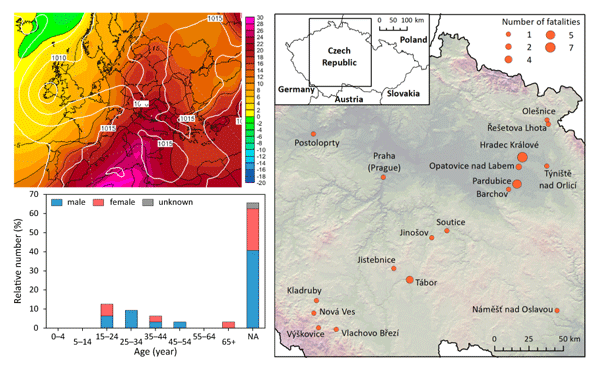
This paper presents the sudden weather-related events with the highest numbers of fatalities (≥ 20) over the territory of the Czech Lands (now the Czech Republic) in the 1851–2025 CE period, which were connected to or influenced by floods, windstorms, convective storms, thunderstorms, snow, and fog. For each of the 13 selected events, meteorological conditions, their course, accompanying circumstances, and selected fatality characteristics such as sex and age are described in detail.
Christian Pfister, Stefan Brönnimann, Laurent Litzenburger, Peter Thejll, Andres Altwegg, Rudolf Brázdil, Andrea Kiss, Erich Landsteiner, Fredrik Charpentier Ljungqvist, and Thomas Pliemon
Clim. Past, 22, 541–559, https://doi.org/10.5194/cp-22-541-2026, https://doi.org/10.5194/cp-22-541-2026, 2026
Short summary
Short summary
Narrative historical records of wine production in Central Europe date back to 1200. A study of taxes paid to authorities in the French-Luxembourg Moselle region, Germany, and the Swiss Plateau over the last few centuries shows that wine yields provide indirect indications of summer temperatures when the impact of heavy frosts is taken into account. This enables climate reconstructions based on tree rings to be refined and confirmed. Occasionally, poor harvests gave rise to witch hunts.
Rudolf Brázdil, Jan Lhoták, Kateřina Chromá, and Laurent Litzenburger
Clim. Past, 21, 1961–1979, https://doi.org/10.5194/cp-21-1961-2025, https://doi.org/10.5194/cp-21-1961-2025, 2025
Short summary
Short summary
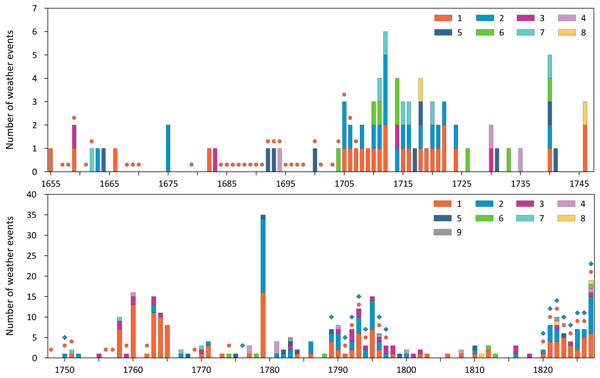
The tax relief data connected with weather damage to farmers' yields from the Prácheň Region (southwestern Bohemia) in the period 1655–1827 were used to identify frequency, severity and impacts of damaging weather events presented in the context of other documentary data. Tax relief data used represent the very rarely used source of administrative records for historical-climatological research.
Jan Řehoř, Rudolf Brázdil, Oldřich Rakovec, Martin Hanel, Milan Fischer, Rohini Kumar, Jan Balek, Markéta Poděbradská, Vojtěch Moravec, Luis Samaniego, Yannis Markonis, and Miroslav Trnka
Hydrol. Earth Syst. Sci., 29, 3341–3358, https://doi.org/10.5194/hess-29-3341-2025, https://doi.org/10.5194/hess-29-3341-2025, 2025
Short summary
Short summary
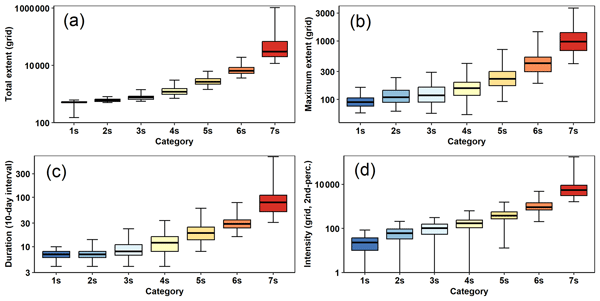
We present a robust method for identification and classification of global land drought events (GLDEs) based on soil moisture. Two models were used to calculate soil moisture and delimit soil drought over global land from 1980–2022, with clusters of 775 and 630 GLDEs. Using four spatiotemporal and three motion-related characteristics, we categorized GLDEs into seven severity and seven dynamic categories. The frequency of GLDEs has generally increased in recent decades.
Rudolf Brázdil, Jan Lhoták, Kateřina Chromá, Dominik Collet, Petr Dobrovolný, and Heli Huhtamaa
Clim. Past, 21, 547–570, https://doi.org/10.5194/cp-21-547-2025, https://doi.org/10.5194/cp-21-547-2025, 2025
Short summary
Short summary
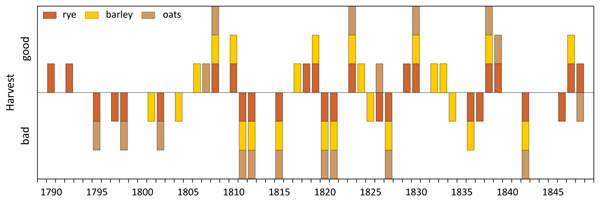
Public granaries served as key infrastructure to improve food security in agrarian societies. Granary data from 15 domains at the Sušice region (southwestern Bohemia) in the period 1789–1849 CE are used here to identify years with bad and good grain harvests, which have been further analysed using documentary data and climatic reconstructions. The data used represent a new source of proxy data for historical–climatological research.
Rudolf Brázdil, Dominika Faturová, Monika Šulc Michalková, Jan Řehoř, Martin Caletka, and Pavel Zahradníček
Nat. Hazards Earth Syst. Sci., 24, 3663–3682, https://doi.org/10.5194/nhess-24-3663-2024, https://doi.org/10.5194/nhess-24-3663-2024, 2024
Short summary
Short summary
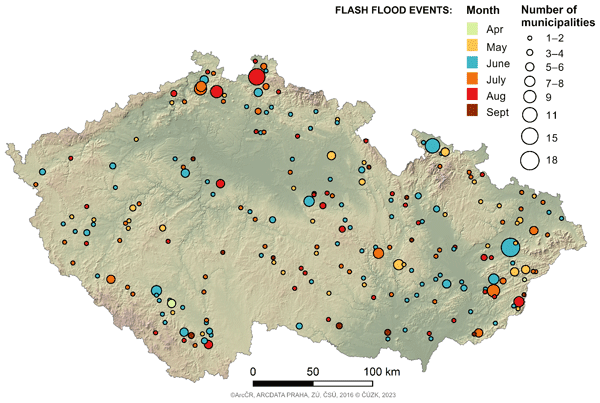
Flash floods belong to natural hazards that can be enhanced in frequency, intensity, and impact during recent climate change. This paper presents a complex analysis of spatiotemporal variability and human impacts (including material damage and fatalities) of flash floods in the Czech Republic for the 2001–2023 period. The analysis generally shows no statistically significant trends in the characteristics analyzed.
Christian Pfister, Stefan Brönnimann, Andres Altwegg, Rudolf Brázdil, Laurent Litzenburger, Daniele Lorusso, and Thomas Pliemon
Clim. Past, 20, 1387–1399, https://doi.org/10.5194/cp-20-1387-2024, https://doi.org/10.5194/cp-20-1387-2024, 2024
Short summary
Short summary
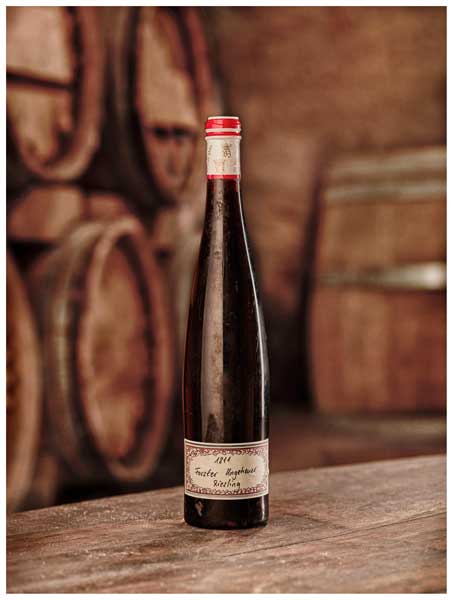
This bottle of Riesling from the traditional Bassermann Jordan winery in Deidesheim (Germany) is a relic of the premium wine harvested in 1811. It was named “Comet Wine” after the bright comet that year. The study shows that wine quality can be used to infer summer weather conditions over the past 600 years. After rainy summers with cold winds, wines turned sour, while long periods of high pressure led to excellent qualities. Since 1990, only good wines have been produced due to rapid warming.
Rudolf Brázdil, Jan Lhoták, Kateřina Chromá, and Petr Dobrovolný
Clim. Past, 20, 1017–1037, https://doi.org/10.5194/cp-20-1017-2024, https://doi.org/10.5194/cp-20-1017-2024, 2024
Short summary
Short summary
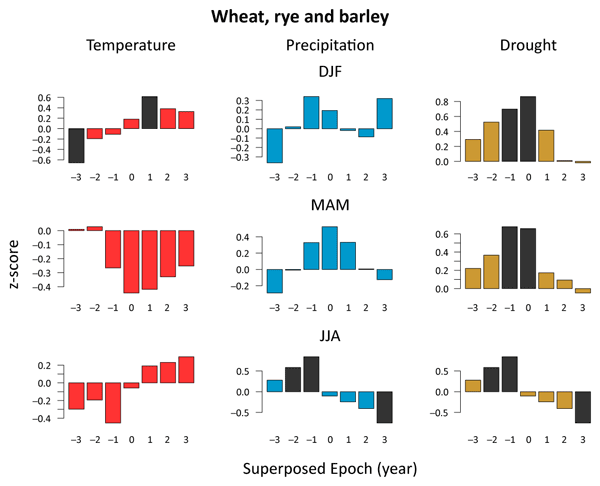
The newly developed series of wheat, rye, barley, and oats prices from Sušice (southwestern Bohemia) for the period 1725–1824 CE is used to demonstrate effects of weather, climate, socio-economic, and societal factors on their fluctuations, with particular attention paid to years with extremely high prices. Cold spring temperatures and wet conditions from winter to summer were reflected in very high grain prices.
Rudolf Brázdil, Kateřina Chromá, and Pavel Zahradníček
Nat. Hazards Earth Syst. Sci., 24, 1437–1457, https://doi.org/10.5194/nhess-24-1437-2024, https://doi.org/10.5194/nhess-24-1437-2024, 2024
Short summary
Short summary
The official mortality data in the Czech Republic in 1919–2022 are used to show long-term fluctuations in the number of fatalities caused by excessive natural cold and heat, lightning, natural disasters, and falls on ice/snow, as well as the sex and age of the deceased, based on certain meteorological, historical, and socioeconomic factors that strongly influence changes in the number and structure of such fatalities. Knowledge obtained is usable in risk management for the preservation of lives.
Rudolf Brázdil, Petr Dobrovolný, Christian Pfister, Katrin Kleemann, Kateřina Chromá, Péter Szabó, and Piotr Olinski
Clim. Past, 19, 1863–1890, https://doi.org/10.5194/cp-19-1863-2023, https://doi.org/10.5194/cp-19-1863-2023, 2023
Short summary
Short summary
The Thirty Years' War (from 1618 to 1648 CE), an armed military conflict in Europe, brought extensive devastation to Europe. The paper analyses annual and seasonal temperature, precipitation, and drought patterns, as well as severe weather extremes, based particularly on documentary data, during this event in central Europe to demonstrate their broad impacts on human society and human responses in coincidence with weather and climate during this period of hardship.
Rudolf Brázdil, Petr Zahradník, Péter Szabó, Kateřina Chromá, Petr Dobrovolný, Lukáš Dolák, Miroslav Trnka, Jan Řehoř, and Silvie Suchánková
Clim. Past, 18, 2155–2180, https://doi.org/10.5194/cp-18-2155-2022, https://doi.org/10.5194/cp-18-2155-2022, 2022
Short summary
Short summary
Bark beetle outbreaks are important disturbances to Norway spruce forests. Their meteorological and climatological triggers are analysed for the main oubreaks over the territory of the Czech Republic based on newly created series of such outbreaks, covering the 1781–2021 CE period. The paper demonstrates the shift from windstorms as the main meteorological triggers of past outbreaks to effects of high temperatures and droughts together with windstorms in past decades.
Rudolf Brázdil, Petr Dobrovolný, Jiří Mikšovský, Petr Pišoft, Miroslav Trnka, Martin Možný, and Jan Balek
Clim. Past, 18, 935–959, https://doi.org/10.5194/cp-18-935-2022, https://doi.org/10.5194/cp-18-935-2022, 2022
Short summary
Short summary
The paper deals with 520-year series (1501–2020 CE) of temperature, precipitation, and four drought indices reconstructed from documentary evidence and instrumental observations for the Czech Lands. Basic features of their fluctuations, long-term trends, and periodicities as well as attribution to changes in external forcings and climate variability modes are analysed. Representativeness of Czech reconstructions at European scale is evaluated. The paper shows extreme character of past decades.
Gerard van der Schrier, Richard P. Allan, Albert Ossó, Pedro M. Sousa, Hans Van de Vyver, Bert Van Schaeybroeck, Roberto Coscarelli, Angela A. Pasqua, Olga Petrucci, Mary Curley, Mirosław Mietus, Janusz Filipiak, Petr Štěpánek, Pavel Zahradníček, Rudolf Brázdil, Ladislava Řezníčková, Else J. M. van den Besselaar, Ricardo Trigo, and Enric Aguilar
Clim. Past, 17, 2201–2221, https://doi.org/10.5194/cp-17-2201-2021, https://doi.org/10.5194/cp-17-2201-2021, 2021
Short summary
Short summary
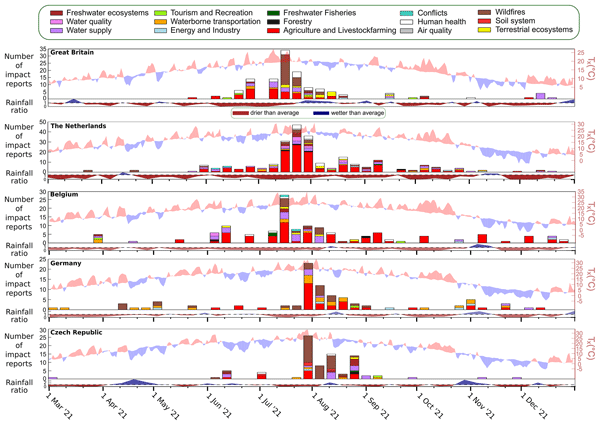
The 1921 drought was the most severe drought to hit Europe since the start of the 20th century. Here the climatological description of the drought is coupled to an overview of its impacts, sourced from newspapers, and an analysis of its drivers. The area from Ireland to the Ukraine was affected but hardest hit was the triangle between Brussels, Paris and Lyon. The drought impacts lingered on until well into autumn and winter, affecting water supply and agriculture and livestock farming.
Rudolf Brázdil, Kateřina Chromá, Miloslav Müller, Jan Lhoták, and Kateřina Skripniková
Nat. Hazards Earth Syst. Sci., 26, 1889–1912, https://doi.org/10.5194/nhess-26-1889-2026, https://doi.org/10.5194/nhess-26-1889-2026, 2026
Short summary
Short summary
This paper presents the sudden weather-related events with the highest numbers of fatalities (≥ 20) over the territory of the Czech Lands (now the Czech Republic) in the 1851–2025 CE period, which were connected to or influenced by floods, windstorms, convective storms, thunderstorms, snow, and fog. For each of the 13 selected events, meteorological conditions, their course, accompanying circumstances, and selected fatality characteristics such as sex and age are described in detail.
Christian Pfister, Stefan Brönnimann, Laurent Litzenburger, Peter Thejll, Andres Altwegg, Rudolf Brázdil, Andrea Kiss, Erich Landsteiner, Fredrik Charpentier Ljungqvist, and Thomas Pliemon
Clim. Past, 22, 541–559, https://doi.org/10.5194/cp-22-541-2026, https://doi.org/10.5194/cp-22-541-2026, 2026
Short summary
Short summary
Narrative historical records of wine production in Central Europe date back to 1200. A study of taxes paid to authorities in the French-Luxembourg Moselle region, Germany, and the Swiss Plateau over the last few centuries shows that wine yields provide indirect indications of summer temperatures when the impact of heavy frosts is taken into account. This enables climate reconstructions based on tree rings to be refined and confirmed. Occasionally, poor harvests gave rise to witch hunts.
Rudolf Brázdil, Jan Lhoták, Kateřina Chromá, and Laurent Litzenburger
Clim. Past, 21, 1961–1979, https://doi.org/10.5194/cp-21-1961-2025, https://doi.org/10.5194/cp-21-1961-2025, 2025
Short summary
Short summary
The tax relief data connected with weather damage to farmers' yields from the Prácheň Region (southwestern Bohemia) in the period 1655–1827 were used to identify frequency, severity and impacts of damaging weather events presented in the context of other documentary data. Tax relief data used represent the very rarely used source of administrative records for historical-climatological research.
Alba Sanmiguel-Vallelado, Max C. A. Torbenson, Jan Esper, Gabriel Sangüesa-Barreda, Carlos Prado-López, and José Miguel Olano
EGUsphere, https://doi.org/10.5194/egusphere-2025-4494, https://doi.org/10.5194/egusphere-2025-4494, 2025
Short summary
Short summary
We studied centuries-old, traditionally pollarded oak trees in Spanish open woodlands to see if they record past rainfall. By analyzing tree rings from 102 trees, we reconstructed 375 years of precipitation. The trees captured long wet and dry periods, including extreme droughts in historical records, providing reliable, high-resolution climate information for the previously overlooked Mediterranean lowlands.
Jan Řehoř, Rudolf Brázdil, Oldřich Rakovec, Martin Hanel, Milan Fischer, Rohini Kumar, Jan Balek, Markéta Poděbradská, Vojtěch Moravec, Luis Samaniego, Yannis Markonis, and Miroslav Trnka
Hydrol. Earth Syst. Sci., 29, 3341–3358, https://doi.org/10.5194/hess-29-3341-2025, https://doi.org/10.5194/hess-29-3341-2025, 2025
Short summary
Short summary
We present a robust method for identification and classification of global land drought events (GLDEs) based on soil moisture. Two models were used to calculate soil moisture and delimit soil drought over global land from 1980–2022, with clusters of 775 and 630 GLDEs. Using four spatiotemporal and three motion-related characteristics, we categorized GLDEs into seven severity and seven dynamic categories. The frequency of GLDEs has generally increased in recent decades.
Rudolf Brázdil, Jan Lhoták, Kateřina Chromá, Dominik Collet, Petr Dobrovolný, and Heli Huhtamaa
Clim. Past, 21, 547–570, https://doi.org/10.5194/cp-21-547-2025, https://doi.org/10.5194/cp-21-547-2025, 2025
Short summary
Short summary
Public granaries served as key infrastructure to improve food security in agrarian societies. Granary data from 15 domains at the Sušice region (southwestern Bohemia) in the period 1789–1849 CE are used here to identify years with bad and good grain harvests, which have been further analysed using documentary data and climatic reconstructions. The data used represent a new source of proxy data for historical–climatological research.
Rudolf Brázdil, Dominika Faturová, Monika Šulc Michalková, Jan Řehoř, Martin Caletka, and Pavel Zahradníček
Nat. Hazards Earth Syst. Sci., 24, 3663–3682, https://doi.org/10.5194/nhess-24-3663-2024, https://doi.org/10.5194/nhess-24-3663-2024, 2024
Short summary
Short summary
Flash floods belong to natural hazards that can be enhanced in frequency, intensity, and impact during recent climate change. This paper presents a complex analysis of spatiotemporal variability and human impacts (including material damage and fatalities) of flash floods in the Czech Republic for the 2001–2023 period. The analysis generally shows no statistically significant trends in the characteristics analyzed.
Zdeněk Stachoň, Petr Kubíček, Lukáš Dolák, Radim Štampach, and Jan Řehoř
Abstr. Int. Cartogr. Assoc., 7, 163, https://doi.org/10.5194/ica-abs-7-163-2024, https://doi.org/10.5194/ica-abs-7-163-2024, 2024
Christian Pfister, Stefan Brönnimann, Andres Altwegg, Rudolf Brázdil, Laurent Litzenburger, Daniele Lorusso, and Thomas Pliemon
Clim. Past, 20, 1387–1399, https://doi.org/10.5194/cp-20-1387-2024, https://doi.org/10.5194/cp-20-1387-2024, 2024
Short summary
Short summary
This bottle of Riesling from the traditional Bassermann Jordan winery in Deidesheim (Germany) is a relic of the premium wine harvested in 1811. It was named “Comet Wine” after the bright comet that year. The study shows that wine quality can be used to infer summer weather conditions over the past 600 years. After rainy summers with cold winds, wines turned sour, while long periods of high pressure led to excellent qualities. Since 1990, only good wines have been produced due to rapid warming.
Rudolf Brázdil, Jan Lhoták, Kateřina Chromá, and Petr Dobrovolný
Clim. Past, 20, 1017–1037, https://doi.org/10.5194/cp-20-1017-2024, https://doi.org/10.5194/cp-20-1017-2024, 2024
Short summary
Short summary
The newly developed series of wheat, rye, barley, and oats prices from Sušice (southwestern Bohemia) for the period 1725–1824 CE is used to demonstrate effects of weather, climate, socio-economic, and societal factors on their fluctuations, with particular attention paid to years with extremely high prices. Cold spring temperatures and wet conditions from winter to summer were reflected in very high grain prices.
Rudolf Brázdil, Kateřina Chromá, and Pavel Zahradníček
Nat. Hazards Earth Syst. Sci., 24, 1437–1457, https://doi.org/10.5194/nhess-24-1437-2024, https://doi.org/10.5194/nhess-24-1437-2024, 2024
Short summary
Short summary
The official mortality data in the Czech Republic in 1919–2022 are used to show long-term fluctuations in the number of fatalities caused by excessive natural cold and heat, lightning, natural disasters, and falls on ice/snow, as well as the sex and age of the deceased, based on certain meteorological, historical, and socioeconomic factors that strongly influence changes in the number and structure of such fatalities. Knowledge obtained is usable in risk management for the preservation of lives.
Rudolf Brázdil, Petr Dobrovolný, Christian Pfister, Katrin Kleemann, Kateřina Chromá, Péter Szabó, and Piotr Olinski
Clim. Past, 19, 1863–1890, https://doi.org/10.5194/cp-19-1863-2023, https://doi.org/10.5194/cp-19-1863-2023, 2023
Short summary
Short summary
The Thirty Years' War (from 1618 to 1648 CE), an armed military conflict in Europe, brought extensive devastation to Europe. The paper analyses annual and seasonal temperature, precipitation, and drought patterns, as well as severe weather extremes, based particularly on documentary data, during this event in central Europe to demonstrate their broad impacts on human society and human responses in coincidence with weather and climate during this period of hardship.
Rudolf Brázdil, Petr Zahradník, Péter Szabó, Kateřina Chromá, Petr Dobrovolný, Lukáš Dolák, Miroslav Trnka, Jan Řehoř, and Silvie Suchánková
Clim. Past, 18, 2155–2180, https://doi.org/10.5194/cp-18-2155-2022, https://doi.org/10.5194/cp-18-2155-2022, 2022
Short summary
Short summary
Bark beetle outbreaks are important disturbances to Norway spruce forests. Their meteorological and climatological triggers are analysed for the main oubreaks over the territory of the Czech Republic based on newly created series of such outbreaks, covering the 1781–2021 CE period. The paper demonstrates the shift from windstorms as the main meteorological triggers of past outbreaks to effects of high temperatures and droughts together with windstorms in past decades.
Rudolf Brázdil, Petr Dobrovolný, Jiří Mikšovský, Petr Pišoft, Miroslav Trnka, Martin Možný, and Jan Balek
Clim. Past, 18, 935–959, https://doi.org/10.5194/cp-18-935-2022, https://doi.org/10.5194/cp-18-935-2022, 2022
Short summary
Short summary
The paper deals with 520-year series (1501–2020 CE) of temperature, precipitation, and four drought indices reconstructed from documentary evidence and instrumental observations for the Czech Lands. Basic features of their fluctuations, long-term trends, and periodicities as well as attribution to changes in external forcings and climate variability modes are analysed. Representativeness of Czech reconstructions at European scale is evaluated. The paper shows extreme character of past decades.
Gerard van der Schrier, Richard P. Allan, Albert Ossó, Pedro M. Sousa, Hans Van de Vyver, Bert Van Schaeybroeck, Roberto Coscarelli, Angela A. Pasqua, Olga Petrucci, Mary Curley, Mirosław Mietus, Janusz Filipiak, Petr Štěpánek, Pavel Zahradníček, Rudolf Brázdil, Ladislava Řezníčková, Else J. M. van den Besselaar, Ricardo Trigo, and Enric Aguilar
Clim. Past, 17, 2201–2221, https://doi.org/10.5194/cp-17-2201-2021, https://doi.org/10.5194/cp-17-2201-2021, 2021
Short summary
Short summary
The 1921 drought was the most severe drought to hit Europe since the start of the 20th century. Here the climatological description of the drought is coupled to an overview of its impacts, sourced from newspapers, and an analysis of its drivers. The area from Ireland to the Ukraine was affected but hardest hit was the triangle between Brussels, Paris and Lyon. The drought impacts lingered on until well into autumn and winter, affecting water supply and agriculture and livestock farming.
Michal Bíl, Pavel Raška, Lukáš Dolák, and Jan Kubeček
Nat. Hazards Earth Syst. Sci., 21, 2581–2596, https://doi.org/10.5194/nhess-21-2581-2021, https://doi.org/10.5194/nhess-21-2581-2021, 2021
Short summary
Short summary
The online landslide database CHILDA (Czech Historical Landslide Database) summarises information about landslides which occurred in the area of Czechia (the Czech Republic). The database is freely accessible via the https://childa.cz/ website. It includes 699 records (spanning the period of 1132–1989). Overall, 55 % of all recorded landslide events occurred only within 15 years of the extreme landslide incidence.
Cited articles
Abbott, P. M., Plunkett, G., Corona, C., Chellman, N. J., McConnell, J. R., Pilcher, J. R., Stoffel, M., and Sigl, M.: Cryptotephra from the Icelandic Veiðivötn 1477 CE eruption in a Greenland ice core: confirming the dating of volcanic events in the 1450s CE and assessing the eruption's climatic impact, Clim. Past, 17, 565–585, https://doi.org/10.5194/cp-17-565-2021, 2021.
Alexandre, P.: Le climat en Europe au Moyen Age. Contribution à l'historie des variations climatiques de 1000 à 1425, d'après les sources narratives de l'Europe occidentale, École des Hautes Études en Sciences Sociales, Paris, France, 556 pp., ISBN 2-7132-0852-1, 1987.
Ballard, C., Bedford, S., Cronin, S. J., and Stern, S.: Evidence at source for the mid-fifteenth century eruption of Kuwae, Vanuatu, J. Appl. Volcanol., 12, 12, https://doi.org/10.1186/s13617-023-00138-1, 2023.
Bauch, M.: The Day the Sun Turned Blue: A Volcanic Eruption in the Early 1460s and Its Possible Climatic Impact – A Natural Disaster Perceived Globally in the Late Middle Ages?, in: Historical Disaster Experiences, edited by: Schenk, G., Transcultural Research – Heidelberg Studies on Asia and Europe in a Global Context, Springer, Cham, Switzerland, 107–138, https://doi.org/10.1007/978-3-319-49163-9_6, 2017.
Brázdil, R. and Kotyza, O.: History of Weather and Climate in the Czech Lands I.: Period 1000–1500, Zürcher Geographische Schriften 62, Geographisches Institut ETH, Zürich, Switzerland, 260 pp., ISBN 3-906148-10-6, 1995.
Brázdil, R. and Kotyza, O.: Kolísání klimatu v českých zemích v první polovině našeho tisíciletí (Climate fluctuations in the Czech Lands in the first half of the millennium), Archeol. Rozhl., 49, 663–699, 1997.
Brázdil, R. and Kotyza, O.: History of Weather and Climate in the Czech Lands IV: Utilisation of Economic Sources for the Study of Climate Fluctuations in the Louny Region in the Fifteenth-Seventeenth Centuries, Masaryk University, Brno, Czech Republic, 349 pp., ISBN 80-210-2384-8, 2000.
Brázdil, R., Štěpánková, P., Kyncl, T., and Kyncl, J.: Fir tree-ring reconstruction of March–July precipitation in southern Moravia (Czech Republic), 1376–1996, Clim. Res., 20, 223–239, https://doi.org/10.3354/cr020223, 2002.
Brázdil, R., Pfister, C., Wanner, H., Luterbacher, J., and von Storch, H.: Historical climatology in Europe – The state of the art, Clim. Change, 70, 363–430, https://doi.org/10.1007/s10584-005-5924-1, 2005.
Brázdil, R., Kotyza, O., and Dobrovolný, P.: July 1432 and August 2002 – two millennial floods in Bohemia?, Hydrol. Sci. J., 51, 848–863, https://doi.org/10.1623/hysj.51.5.848, 2006.
Brázdil, R., Dobrovolný, P., Luterbacher, J., Moberg, A., Pfister, C., Wheeler, D., and Zorita, E.: European climate of the past 500 years: new challenges for historical climatology, Clim. Change, 101, 7–40, https://doi.org/10.1007/s10584-009-9783-z, 2010.
Brázdil, R., Řezníčková, L., Valášek, H., Kiss, A., and Kotyza, O.: Past locust outbreaks in the Czech Lands: do they indicate particular climatic patterns?, Theor. Appl. Climatol., 116, 343–357, https://doi.org/10.1007/s00704-013-0950-9, 2014.
Brázdil, R., Dobrovolný, P., Trnka, M., Büntgen, U., Řezníčková, L., Kotyza, O., Valášek, H., and Štěpánek, P.: Documentary and instrumental-based drought indices for the Czech Lands back to AD 1501, Clim. Res., 70, 103−117, https://doi.org/10.3354/cr01380, 2016.
Brázdil, R., Kotyza, O., and Bauch, M.: Climate and famines in the Czech Lands prior to AD 1500: Possible interconnections in a European context, in: Famines During the “Little Ice Age” (1300–1800), Socionatural Entanglements in Premodern Societies, edited by: Collet, D. and Schuh, M., Springer International Publishing AG, Cham, Switzerland, 91–114, ISBN 978-3-319-54337-6, 2017a.
Brázdil, R., Řezníčková, L., Valášek, H., Dolák, L., and Kotyza, O.: Climatic and other responses to the Lakagígar 1783 and Tambora 1815 volcanic eruptions in the Czech Lands, Geografie, 122, 147–168, https://doi.org/10.37040/geografie2017122020147, 2017b.
Brázdil, R., Možný, M., Klír, T., Řezníčková, L., Trnka, M., Dobrovolný, P., and Kotyza, O.: Climate variability and changes in the agricultural cycle in the Czech Lands from the sixteenth century to the present, Theor. Appl. Climatol., 136, 553–573, https://doi.org/10.1007/s00704-018-2508-3, 2019.
Brázdil, R., Dobrovolný, P., Mikšovský, J., Pišoft, P., Trnka, M., Možný, M., and Balek, J.: Documentary-based climate reconstructions in the Czech Lands 1501–2020 CE and their European context, Clim. Past, 18, 935–959, https://doi.org/10.5194/cp-18-935-2022, 2022a.
Brázdil, R., Zahradníček, P., Dobrovolný, P., Řehoř, J., Trnka, M., Lhotka, O., and Štěpánek, P.: Circulation and climate variability in the Czech Republic between 1961 and 2020: A comparison of changes for two “normal” periods, Atmosphere, 13, 137, https://doi.org/10.3390/atmos13010137, 2022b.
Brázdil, R., Dobrovolný, P., Torbenson, M. C. A, Dolák, L., and Chromá, K.: 15th century climate in the Czech Lands and its Central European context, Zenodo [data set], https://doi.org/10.5281/zenodo.16268128, 2025.
Büntgen, U., Kolář, T., Rybníček, M., Koňasová, E., Trnka, M., Ač, A., Krusic, P. J., Esper, J., Treydte, K., Reinig, F., Kirdyanov, A., Herzig, F., and Urban, O.: No age trends in oak stable isotopes, Paleoceanogr. Paleoclimatol., 35, e2019PA003831, https://doi.org/10.1029/2019PA003831, 2020.
Büntgen, U., Urban, O., Krusic, P. J., Rybníček, M., Kolář, T., Kyncl, T., Ač, A., Koňasová, E., Čáslavský, J., Esper, J., Wagner, S., Saurer, M., Tegel, W., Dobrovolný, P., Cherubini, P., Reinig, F., and Trnka, M.: Recent European drought extremes beyond Common Era background variability, Nat. Geosci., 14, 190–196, https://doi.org/10.1038/s41561-021-00698-0, 2021.
Burke, A., Innes, H. M., Crick, L., Anchukaitis, K. J., Byrne, M. P., Hutchison, W., McConnell, J. R., Moore, K. A., Rae, J. W. B., Sigl, M., and Wilson, R.: High sensitivity of summer temperatures to stratospheric sulfur loading from volcanoes in the Northern Hemisphere, Proc. Natl. Acad. Sci. USA, https://doi.org/10.1073/pnas.2221810120, 2023.
Camenisch, C.: Endless cold: a seasonal reconstruction of temperature and precipitation in the Burgundian Low Countries during the 15th century based on documentary evidence, Clim. Past, 11, 1049–1066, https://doi.org/10.5194/cp-11-1049-2015, 2015.
Camenisch, C.: Two decades of crisis: Famine and dearth during the 1480s and 1490s in Western and Central Europe, in: Famines During the “Little Ice Age” (1300–1800), Socionatural Entanglements in Premodern Societies, edited by: Collet, D. and Schuh, M., Springer International Publishing AG, Cham, Switzerland, 69–90, ISBN 978-3-319-54337-6, 2017.
Camenisch, C., Keller, K. M., Salvisberg, M., Amann, B., Bauch, M., Blumer, S., Brázdil, R., Brönnimann, S., Büntgen, U., Campbell, B. M. S., Fernández-Donado, L., Fleitmann, D., Glaser, R., González-Rouco, F., Grosjean, M., Hoffmann, R. C., Huhtamaa, H., Joos, F., Kiss, A., Kotyza, O., Lehner, F., Luterbacher, J., Maughan, N., Neukom, R., Novy, T., Pribyl, K., Raible, C. C., Riemann, D., Schuh, M., Slavin, P., Werner, J. P., and Wetter, O.: The 1430s: a cold period of extraordinary internal climate variability during the early Spörer Minimum with social and economic impacts in north-western and central Europe, Clim. Past, 12, 2107–2126, https://doi.org/10.5194/cp-12-2107-2016, 2016.
Camenisch, C., Brázdil, R., Kiss, A., Pfister, C., Wetter, O., Rohr, C., Contino, A., and Retsö, D.: Extreme heat and drought in 1473 and their impacts in Europe in the context of the early 1470s, Reg. Environ. Change, 20, 19, https://doi.org/10.1007/s10113-020-01601-0, 2020.
Čechura, J.: České země v letech 1437–1526, I. díl, Mezi Zikmundem a Jiřím z Poděbrad (1437–1471) (Czech Lands in the Years 1437–1526, Part I, Between Zikmund and Jiří of Poděbrady (1437–1471)), Libri, Praha, Czech Republic, 294 pp., ISBN 978-80-7277-447-0, 2010.
Černá, A. M., Čornej, P., and Klosová, M.: Staré letopisy české (texty nejstarší vrstvy) (Fates of the Old Czech Annals – Texts of the Oldest Period), Fontes rerum Bohemicarum – Series nova II, Centrum medievistických studií, Praha, Czech Republic, 368 pp., ISBN 80-7007-184-2, 2003.
Černá, A. M., Čornej, P., and Klosová, M.: Staré letopisy české (Východočeská větev a některé související texty) (Fates of the Old Czech Annals – East Bohemian Branch and Some Related Texts), Fontes rerum Bohemicarum, Series nova II, Filosofia, Praha, Czech Republic, 731 pp., ISBN 978-80-7007-555-5, 2018.
Cook, E., Kushnir, Y., Smerdon, J., Williams, A., Anchukaitis, K., and Wahl, E.: A Euro-Mediterranean tree-ring reconstruction of the winter NAO index since 910 C.E., Clim. Dyn., 53, 1567–1580, https://doi.org/10.1007/s00382-019-04696-2, 2019.
Čornej, P.: Staré letopisy české ve vývoji pozdně středověké historiografie (Fates of the Old Czech Annals in the development of late medieval historiography), Acta Universitatis Carolinae – Philosophica et Historica, 32, 33–59, 1988.
Čornej, P.: Velké dějiny zemí Koruny české, Svazek V, 1402–1437 (The Great History of Lands of the Bohemian Crown, Volume V, 1402–1437), Paseka, Praha, Litomyšl, Czech Republic, 796 pp., ISBN 80-7185-296-1, 2000.
Čornej, P.: Dějiny zemí Koruny české I, Od příchodu Slovanů do roku 1740 (History of Lands of the Bohemian Crown I, Since the Arrival of the Slavs to 1740), Paseka, Praha, Czech Republic, 315 pp., ISBN 80-7185-605-3, 2003.
De Kraker, A. M. J.: Storminess in the Low Countries, 1390–1725, Environ. Hist., 19, 149–171, https://doi.org/10.3197/096734013X13642082568570, 2013.
d'Elvert, C.: Chronik der königlichen Stadt Iglau (1402–1617) von Iglauer Stadtschreiber Martin Leupold von Löwenthal, A. Nitsch, Brünn, Moravia, 326 pp., 1861.
Dobrovolný, P., Moberg, A., Brázdil, R., Pfister, C., Glaser, R., Wilson, R., van Engelen, A., Limanówka, D., Kiss, A., Halíčková, M., Macková, J., Riemann, D., Luterbacher, J., and Böhm, R.: Monthly, seasonal and annual temperature reconstructions for Central Europe derived from documentary evidence and instrumental records since AD 1500, Clim. Change, 101, 69–107, https://doi.org/10.1007/s10584-009-9724-x, 2010.
Dobrovolný, P., Brázdil, R., Trnka, M., Kotyza, O., and Valášek, H.: Precipitation reconstruction for the Czech Lands, AD 1501–2010, Int. J. Climatol., 35, 1–14, https://doi.org/10.1002/joc.3957, 2015.
Dobrovolný, P., Rybníček, M., Kolář, T., Brázdil, R., Trnka, M., and Büntgen, U.: May–July precipitation reconstruction from oak tree-rings for Bohemia (Czech Republic) since AD 1040, Int. J. Climatol., 38, 1910–1924, https://doi.org/10.1002/joc.5305, 2018.
Dušek, L.: Benedicti Minoritae dicti Chronica et eius continuatio, in: Zakony Franciszkańskie w Polsce, Tom I, edited by: Kloczowski, J., Wydawnictwo Ojców Francizskanów, Kraków, Poland, 323–434, 1993.
Eddy, J. A.: The Maunder Minimum, Science, 192, 1189–1202, https://doi.org/10.1126/science.192.4245.1189, 1976.
Efron, B. and Tibshirani, R. J.: An Introduction to the Bootstrap, Chapman and Hall/CRC, Boca Raton, London, New York, Washington, D.C., UK and USA, 436 pp., ISBN 9780429246593, 1994.
Esper, J., Büntgen, U., Hartl-Meier, C., Oppenheimer, C., and Schneider, L.: Northern Hemisphere temperature anomalies during the 1450s period of ambiguous volcanic forcing, Bull. Volcanol., 79, 41, https://doi.org/10.1007/s00445-017-1125-9, 2017.
Fialová, L.: Dějiny obyvatelstva českých zemí (History of the Population of the Czech Lands), Mladá fronta, Praha, Czech Republic, 399 pp., ISBN 80-204-0283-7, 1996.
Frímann, J.: A short history of volcano eruptions in Iceland, https://icelandgeology.net/?page_id=8046 (last access: 23 June 2025), 2011.
Gao, C., Robock, A., Self, S., Witter, J. B., Steffenson, J. P., Clausen, H. B., Siggaard-Andersen, M.-L., Johnsen, S., Mayewski, P. A., and Ammann, C.: The 1452 or 1453 A.D. Kuwae eruption signal derived from multiple ice core records: Greatest volcanic sulfate event of the past 700 years, J. Geophys. Res., 111, D12107, https://doi.org/10.1029/2005JD006710, 2006.
Ghazi, B., Przybylak, R., Oliński, P., Bogdańska, K., and Pospieszyńska, A.: The frequency, intensity, and origin of floods in Poland in the 11th–15th centuries based on documentary evidence, J. Hydrol., 623, 129778, https://doi.org/10.1016/j.jhydrol.2023.129778, 2023.
Glaser, R.: Klimageschichte Mitteleuropas, 1200 Jahre Wetter, Klima, Katastrophen: Mit Prognosen für das 21. Jahrhundert, Primus, Darmstadt, Germany, 264 pp., ISBN 9783896786043, 2008.
Glaser, R. and Riemann, D.: A thousand-year record of temperature variations for Germany and Central Europe based on documentary data, J. Quat. Sci., 24, 437–449, https://doi.org/10.1002/jqs.1302, 2009.
Goll, J.: Kronika Bartoška z Drahonic (Chronicon Bartossek de Drahonicz) (Chronicle of Bartošek from Drahonice), in: Fontes rerum Bohemicarum, Tomus V – Prameny dějin českých, edited by: Emler, J., Gebauer, J., and Goll, J., Nákladem nadání Františka Palackého, Praha, Bohemia, 591–628, 1893.
Gradl, H.: Die Chroniken der Stadt Eger, in: Deutsche Chroniken aus Böhmen, Band III, Im Auftrage des Vereins für Geschichte der Deutschen in Böhmen, Prag, Bohemia, 495 pp., 1884.
Hájek, V.: Kronika Česká Cum gracia et Privilegio Regie Maiestatis, Vytištěno v Menším Městě Pražském prací a mistrovstvím opatrných mužuov Severýna Mladšího měštěnína Starého Města Pražského u Ondřeje Kubše z Ziepuov, Bohemia, 474 pp., 1541.
Hand, R., Samakinwa, E., Lipfert, L., and Brönnimann, S.: ModE-Sim – a medium-sized atmospheric general circulation model (AGCM) ensemble to study climate variability during the modern era (1420 to 2009), Geosci. Model Dev., 16, 4853–4866, https://doi.org/10.5194/gmd-16-4853-2023, 2023.
Harvey-Fishenden, A. and Macdonald, N.: Evaluating the utility of qualitative personal diaries in precipitation reconstruction in the eighteenth and nineteenth centuries, Clim. Past, 17, 133–149, https://doi.org/10.5194/cp-17-133-2021, 2021.
Höfler, K.: Chronicon Treboniense, in: Fontes Rerum Austriacarum, Erste Abtheilung, Scriptores, II. Band, Theil 1, Aus der kaiserlich-königlichen Hof- und Staatsdruckerei, Wien, Austria, 50–65, 1856.
Höfler, K.: Chronicae Boemine H, in: Fontes Rerum Austriacarum, Erste Abtheilung, Scriptores, VI. Band, Theil 2, Aus der kaiserlich-königlichen Hof- und Staatsdruckerei, Wien, Austria, 67–68, 1865a.
Höfler, K.: Chronicon Rosenbergicum (addendum), in: Fontes Rerum Austriacarum, Erste Abtheilung, Scriptores, VI. Band, Theil 2, Aus der kaiserlich-königlichen Hof- und Staatsdruckerei, Wien, Austria, 77–78, 1865b.
Horčička, A.: Ein “Chronicon breve regni Bohemiae saec. XV”, Mitteilungen des Vereins für Geschichte der Deutschen in Böhmen, 37, 454–467, 1899.
Jiang, Y. and Xu, Z.: On the Spörer Minimum, Astrophys. Space Sci., 118, 159–162, https://doi.org/10.1007/BF00651121, 1986.
Kiss, A.: Droughts and low water levels in late medieval Hungary II 1361: 1439, 1443–4, 1455, 1473, 1480, 1482(?), 1502–3, 1506: documentary versus tree-ring (OWDA) evidence, J. Environ. Geogr., 10, 43–56, https://doi.org/10.1515/jengeo-2017-0012, 2017.
Kiss, A.: Weather and weather-related hazard in medieval Hungary IV: Documentary evidence from 1401–1450, Economic- and Ecohistory, 16, 9–54, 2020.
Kiss, A. and Nikolić, Z.: Droughts, dry spells and low water levels in medieval Hungary (and Croatia) I: The great droughts of 1362, 1474, 1479, 1494 and 1507, J. Environ. Geogr., 8, 11–22, https://doi.org/10.1515/jengeo-2015-0002, 2015.
Klemm, F.: Die Entwicklung der meteorologischen Beobachtungen in Österreich einschliesslich Böhmen und Mähren bis zum Jahr 1700, Ann. Meteorol. (NF) 21, Deutscher Wetterdienst, Offenbach am Main, 48 pp., ISBN 3881482083, 1983.
Labbé, T., Pfister, C., Brönnimann, S., Rousseau, D., Franke, J., and Bois, B.: The longest homogeneous series of grape harvest dates, Beaune 1354–2018, and its significance for the understanding of past and present climate, Clim. Past, 15, 1485–1501, https://doi.org/10.5194/cp-15-1485-2019, 2019.
Lean, J. L.: Estimating solar irradiance since 850 CE, Earth Space Sci., 5, 133–149, https://doi.org/10.1002/2017EA000357, 2018.
Levene, H.: Robust tests for equality of variances, in: Contributions to Probability and Statistics, Essays in Honor of Harold Hotelling, edited by: Olkin, J., Churye, S. G., Hoeffding, W., Madow, W. G., and Mann, H. B., Stanford University Press, Stanford, USA, 278–292, ISBN 9780804705967, 1960.
Litzenburger, L.: Une Ville face au climat: Metz à la fin du Moyen Âge (1400–1530), Presses Universitaires de Nancy – Éditions Universitaires de Lorraine, Nancy, France, 487 pp., ISBN 978-2814302259, 2015.
Luterbacher, J., Werner, J. P., Smerdon, J. E., Fernández-Donado, I., Gonzáles-Rouco, F. J., Barriopedro, D., Ljungquist, F. C., Büntgen, U., Zorita, E., Wagner, S., Esper, J., McCarroll, D., Toreti, A., Frank, D., Jungclaus, J. H., Barriendos, M., Bertolin, C., Bothe, O., Brázdil, R., Camuffo, D., Dobrovolný, P., Gagen, M., Garcia-Bustamante, E., Ge, Q., Gómez-Navarro, J. J., Guiot, J., Hao, Z., Hegerl, G. C., Holmgren, K., Klimenko, V. V., Martín-Chivelet, J., Pfister, C., Roberts, N., Schindler, A., Schurer, A., Solomina, O., von Gunten, I., Wahl, E., Wanner, H., Wetter, O., Xoplaki, E., Yuan, N., Zanchettin, D., Zhang, H., and Zerefos, C.: European summer temperatures since Roman times, Environ. Res. Lett., 11, 024001, https://doi.org/10.1088/1748-9326/11/2/024001, 2016.
Lyakhov, M. E.: Klimatitcheskiye extremumy v tsentralnoy tchasti yevropeyskoy territorii SSSR v XIII–XX vv (Climatic extremes in the central part of the European USSR in the 13th to the 20th centuries), Izvestiya Akad. Nauk SSSR – Ser. Geogr., 6, 68–74, 1984.
Macek, J.: Jagellonský věk v českých zemích 1, 2 (The Jagiellonian Age in the Czech Lands 1, 2), Academia, Praha, Czech Republic, 562 pp., ISBN 80-200-0895-0, 2001.
McCarroll, D., Young, G., and Loader, N.: Measuring the skill of variance-scaled climate reconstructions and a test for the capture of extremes, Holocene, 25, 618–626, https://doi.org/10.1177/0959683614565956, 2015.
Miller, G. H., Geirsdóttir, Á., Zhong, Z., Larsen, D. J., Otto-Bliesner, B. L., Holland, M. M., Bailey, D. A., Refsnider, K. A., Lehman, S. J., Southon, J. R., Anderson, C., Björnsson, H., and Thordarson, T.: Abrupt onset of the Little Ice Age triggered by volcanism and sustained by sea-ice/ocean feedbacks, Geophys. Res. Lett., 39, L02708, https://doi.org/10.1029/2011GL050168, 2012.
Možný, M., Brázdil, R., Dobrovolný, P., and Trnka, M.: Cereal harvest dates in the Czech Republic between 1501 and 2008 as a proxy for March–June temperature reconstruction, Clim. Change, 110, 801–821, https://doi.org/10.1007/s10584-011-0075-z, 2012.
Možný, M., Brázdil, R., Dobrovolný, P., and Trnka, M.: April–August temperatures in the Czech Lands, 1499–2015, reconstructed from grape-harvest dates, Clim. Past, 12, 1421–1434, https://doi.org/10.5194/cp-12-1421-2016, 2016a.
Možný, M., Brázdil, R., Dobrovolný, P., Trnka, M., Potopová, V., Hlavinka, P., Bartošová, L., Zahradníček, P., and Žalud, Z.: Drought reconstruction based on grape harvest dates for the Czech Lands, 1499–2012, Clim. Res., 70, 119–132, https://doi.org/10.3354/cr01423, 2016b.
Ortega, P., Lehner, F., Swingedouw, D., Masson-Delmotte, V., Raible, C., Casado, M., and Yiou, P.: A model-tested North Atlantic Oscillation reconstruction for the past millennium, Nature, 523, 71–74, https://doi.org/10.1038/nature14518, 2015.
Palacký, F., Charvát, J., and Krčma, F.: Dílo Františka Palackého, Staří letopisové čeští od roku 1378 do 1527, čili pokračování v kronikách Přibíka Pulkavy a Beneše z Hořovic z rukopisů starých vydané (The Work of František Palacký, Fates of the Old Czech Annals from 1378 to 1527, or Continuation in the Chronicles of Přibík Pulkava and Beneš of Hořovice from Old Manuscripts Published), L. Mazáč, Praha, Bohemia, 470 pp., 1941.
Petrů, E. and Pražák, E.: Prostopravda, Paměti, Mikuláš Dačický z Heslova (The Plain Truth, Memoirs, Mikuláš Dačický from Heslov), Státní nakladatelství krásné literatury, hudby a umění, Praha, Czechoslovakia, 826 pp., 1955.
Pfister, C.: Monthly temperature and precipitation in central Europe 1525–1979: quantifying documentary evidence on weather and its effects, in: Climate Since A.D. 1500, edited by: Bradley, R. S. and Jones, P. D., Routledge, London, New York, UK, USA, 118–142, ISBN 9780415120302, 1992.
Pfister, C. and Wanner, H.: Climate and Society in Europe, The Last Thousand Years, Haupt, Bern, Switzerland, 397 pp., ISBN 978-3-258-08234-9, 2021.
Pfister, C., Brönnimann, S., Altwegg, A., Brázdil, R., Litzenburger, L., Lorusso, D., and Pliemon, T.: 600 years of wine must quality and April to August temperatures in western Europe 1420–2019, Clim. Past, 20, 1387–1399, https://doi.org/10.5194/cp-20-1387-2024, 2024.
Pfister, C., Brönnimann, S., Litzenburger, L., Thejll, P., Altwegg, A., Brázdil, R., Kiss, A., Landsteiner, E., Ljungqvist, F. C., and Pliemon, T.: Wine must yields as indicators of May to July climate in Europe, 1416–1988, EGUsphere [preprint], https://doi.org/10.5194/egusphere-2025-3242, 2025.
Písek, J. and Brázdil, R.: Responses of large volcanic eruptions in the instrumental and documentary climatic data over Central Europe, Int. J. Climatol., 26, 439–459, https://doi.org/10.1002/joc.1249, 2006.
Pribyl, K. and Kiss, A. (Eds.): The Dance of Death in Late Medieval and Renaissance Europe, Environmental Stress, Mortality and Social Response, Routledge, London, New York, UK, USA, 256 pp., ISBN 9781032083391, 2020.
Pribyl, K., Cornes, R. C., and Pfister, C.: Reconstructing medieval April–July mean temperatures in East Anglia, 1256–1431, Clim. Change, 113, 393–412, https://doi.org/10.1007/s10584-011-0327-y, 2012.
Przybylak, R., Oliński, P., Koprowski, M., Szychowska-Krąpiec, E., Krąpiec, M., Pospieszyńska, A., and Puchałka, R.: The climate in Poland (central Europe) in the first half of the last millennium, revisited, Clim. Past, 19, 2389–2408, https://doi.org/10.5194/cp-19-2389-2023, 2023.
Retsö, D. and Söderberg, J.: Winter severity in medieval Sweden: the documentary evidence, in: The Dance of Death in Late Medieval and Renaissance Europe, Environmental Stress, Mortality and Social Response, edited by: Pribyl, K. and Kiss, A., Routledge, London, New York, UK, USA, 24–45, ISBN 9781032083391, 2020.
Ro, S., Hur, S. D., Ekaykin, A., Han, Y., Ro, C.-U., Hong, S.-B., Lee, M. J., Chang, C., Lee, S., Moon, J., Jung, H., Veres, A., Lee, A., and Hong, S.: Origin of the 1458/59 CE volcanic eruption revealed through analysis of glass shards in the firn core from Antarctic Vostok station, Commun. Earth Environ., 6, 828, https://doi.org/10.1038/s43247-025-02797-x, 2025.
Rohr, C.: Extreme Naturereignisse im Ostalpen, Naturerfahrung im Spätmittelalter und am Beginn der Neuzeit, Böhlau Verlag, Köln, Weimar, Wien, Germany and Austria, 640 pp., ISBN 9783412200428, 2007.
Shabalova, M. V. and van Engelen, A. F. V.: Evaluation of a reconstruction of winter and summer temperatures in the Low Countries, AD 764–1998, Clim. Change, 58, 219–242, https://doi.org/10.1023/A:1023474032539, 2003.
Simard, R. and L'Ecuyer, P.: Computing the two-sided Kolmogorov-Smirnov distribution, J. Stat. Softw., 39, 1–18, https://doi.org/10.18637/jss.v039.i11, 2011.
Šimek, F.: Staré letopisy české z vratislavského rukopisu novočeským pravopisem (Fates of the Old Czech Annals from the Wrocław Manuscript in Modern Czech Spelling), Nákladem historického spolku a společnosti Husova musea, Praha, Czechoslovakia, 179 pp., 1937.
Šimek, F. and Kaňák, M.: Staré letopisy české z rukopisu Křižovnického (Fates of the Old Czech Annals from the Křižovnický Manuscript), Státní nakladatelství krásné literatury, hudby a umění, Praha, Czechoslovakia, 499 pp., 1959.
Stothers, R. B.: The great dry fog of 1783, Clim. Change, 32, 79–89, https://doi.org/10.1007/BF00141279, 1996.
Telelis, I.: Climatic fluctuations in the Eastern Mediterranean and the Middle East AD 300–1500 from Byzantine documentary and proxy physical paleoclimatic evidence – a comparison, Jahrbuch der Österreichischen Byzantinistik, 58, 167–208, https://doi.org/10.1553/joeb58s167, 2008.
Toohey, M. and Sigl, M.: Reconstructed volcanic stratospheric sulfur injections and aerosol optical depth, 500 BCE to 1900 CE, version 2, World Data Center for Climate (WDCC) at DKRZ, https://doi.org/10.1594/WDCC/eVolv2k_v2, 2017.
Torbenson, M. C. A., Büntgen, U., Esper, J., Urban, O., Balek, J., Reinig, F., Krusic, P. J., Martinez del Castillo, E., Brázdil, R., Semerádová, D., Štěpánek, P., Pernicová, N., Kolář, T., Rybníček, M., Koňasová, E., Arbelaez, J., and Trnka, M.: Central European agroclimate over the past 2000 years, J. Climate, 36, 4429–4441, https://doi.org/10.1175/JCLI-D-22-0831.1, 2023.
Torbenson, M. C. A., Esper, J., Brázdil, R., Büntgen, U., Olesen, J. E., Semerádová, D., Vlach, M., Urban, O., Balek, J., Kolář, T., Rybníček, M., Pernicová, N., Reinig, F., Martinez del Castillo, E., Jones, P. D., and Trnka, M.: Past and future climate-driven changes of agricultural land in central Europe, Geophys. Res. Lett., 51, e2024GL112363, https://doi.org/10.1029/2024GL112363, 2024.
Trigo, R., Osborn, T., and Corte-Real, J.: The North Atlantic Oscillation influence on Europe: Climate impacts and associated physical mechanisms, Clim. Res., 20, 9–17, https://doi.org/10.3354/cr020009, 2002.
Valler, V., Franke, J., Brugnara, Y., Samakinwa, E., Hand, R., Lundstad, E., Burgdorf, A. M., Lipfert, L., Friedman, A. M., and Brönnimann, S.: ModE-RA: a global monthly paleo-reanalysis of the modern era 1421 to 2008, Sci. Data, 11, 36, https://doi.org/10.1038/s41597-023-02733-8, 2024.
van Engelen, A. F. V., Buisman, J., and IJnsen, F.: A millennium of weather, winds and water in the Low Countries, in: History and Climate, Memories of the Future?, edited by: Jones, P. D., Ogilvie, A. E. J., Davies, T. D., and Briffa, K. R., Springer, New York, NY, USA, 101–124, ISBN 978-0-306-46589-5, 2001.
van Engelen, A. F. V., Ijnsen, F., Buisman, J., and van der Schrier, G.: Precipitation indices Low Countries, in: Poster Abstracts of the Millennium Milestone Meeting 3, edited by: Young, G. and McCarroll, D., Cala Millor, Mallorca, 62–63, 2009.
Vaniš, J.: Kniha počtů královského města Loun z let 1450–1472 a 1490–1491 (Liber rationum regalis civitatis Lunae ad annos 1450–1472 et 1490–1491 pertinens) (Book of Counts of the Royal Town of Louny from 1450–1472 and 1490–1491), Academia, Praha, Czechoslovakia, 966 pp., 1979.
Vaniš, J.: Historická geografie Lounska v druhé polovině 15. století. (Pokus o mikrohistorickogeografickou studii) (Historical geography of the Louny region in the second half of the 15th century – an attempt of a microhistorical geographical study), Hist. Geogr., 20, 127–186, 1982.
von Storch, H. and Zwiers. F. W.: Statistical Analysis in Climate Research, Cambridge University Press, Cambridge, UK, 484 pp., ISBN 0521450713, 1999.
Wanner, H., Pfister, C., and Neukom, R.: The variable European Little Ice Age, Quat. Sci. Rev., 287, 107531, https://doi.org/10.1016/j.quascirev.2022.107531, 2022.
Warren, R., Bartlome, N. E., Wellinger, N., Franke, J., Hand, R., Brönnimann, S., and Huhtamaa, H.: ClimeApp: data processing tool for monthly, global climate data from the ModE-RA palaeo-reanalysis, 1422 to 2008 CE, Clim. Past, 20, 2645–2662, https://doi.org/10.5194/cp-20-2645-2024, 2024.
Wattenbach, W.: Continuatio Mellicensis, in: Monumenta Germaniae Historica, Scriptorum, 9, Impensis Bibliopolii Avlici Hahniani, Hannoverae, Germany, 501–535, 1851.
Wetter, O. and Pfister, C.: Spring-summer temperatures reconstructed for northern Switzerland and southwestern Germany from winter rye harvest dates, 1454–1970, Clim. Past, 7, 1307–1326, https://doi.org/10.5194/cp-7-1307-2011, 2011.
White, S., Pfister, C., and Mauelshagen, F. (Eds.): The Palgrave Handbook of Climate History, Palgrave Macmillan, London, UK, 681 pp., ISBN 978-1137430199, 2018.
Wolkan, R.: Der Briefwechsel des Eneas Silvius Piccolomini, in: Fontes Rerum Austriacarum, Zweite Abteilung, Diplomataria and Acta, LXVIII. Band, Teil IV, Alfred Hölder, Wien, Austria, 22–57, 1912.
Short summary
Documentary data about weather and climate are used to reconstruct temperature and precipitation patterns as well as hydrometeorological extremes in the Czech Lands for the 15th century. These data significantly complement existing knowledge of climatic patterns in Central Europe during this century and coincide well with other climate reconstructions from this area based on different proxies.
Documentary data about weather and climate are used to reconstruct temperature and precipitation...


