
Articles | Volume 22, issue 2
https://doi.org/10.5194/cp-22-405-2026
© Author(s) 2026. This work is distributed under
the Creative Commons Attribution 4.0 License.
the Creative Commons Attribution 4.0 License.
https://doi.org/10.5194/cp-22-405-2026
© Author(s) 2026. This work is distributed under
the Creative Commons Attribution 4.0 License.
the Creative Commons Attribution 4.0 License.
Research article
| 
27 Feb 2026
Research article |
| 27 Feb 2026
| 27 Feb 2026
Geochronological reconstruction of the glacial evolution in the Ésera valley (Central Pyrenees) during the Late Pleistocene and Holocene

Instituto Pirenaico de Ecología, Consejo Superior de Investigaciones Científicas (IPE-CSIC), Zaragoza, Spain
Toshiyuki Fujioka
Centro Nacional de Investigación sobre la Evolución Humana (CENIEH), Burgos, Spain
Juan Ignacio López-Moreno
Instituto Pirenaico de Ecología, Consejo Superior de Investigaciones Científicas (IPE-CSIC), Zaragoza, Spain
Ana Moreno
Instituto Pirenaico de Ecología, Consejo Superior de Investigaciones Científicas (IPE-CSIC), Zaragoza, Spain
A full list of authors appears at the end of the paper.
Related authors
César Deschamps-Berger, Nahia Carretero Roque, Jesús Revuelto, Francisco Rojas-Heredia, Ixeia Vidaller, Aina Alvarez, Alba López-Varela, Olatz Fernández, Sara Palacio, Juan Ignacio Lopez-Moreno, and Pablo Tejero Ibarra
EGUsphere, https://doi.org/10.5194/egusphere-2026-527, https://doi.org/10.5194/egusphere-2026-527, 2026
Short summary
Short summary
The shrinking of glacier frees large areas worldwide in alpine environment which are progressively colonized by the vegetation. Monitoring this process often relies on in situ botanical observations which are challenging to obtain. Here, we quantify accurately the uncertainty of the vegetation cover measured by optical images from Unmanned Aerial Vehicles. We find that, despite biases, this increasingly used technology extend and complete the data collected during such field campaign.
Ixeia Vidaller, Eñaut Izagirre, Luis Mariano del Rio, Esteban Alonso-González, Francisco Rojas-Heredia, Enrique Serrano, Ana Moreno, Juan Ignacio López-Moreno, and Jesús Revuelto
The Cryosphere, 17, 3177–3192, https://doi.org/10.5194/tc-17-3177-2023, https://doi.org/10.5194/tc-17-3177-2023, 2023
Short summary
Short summary
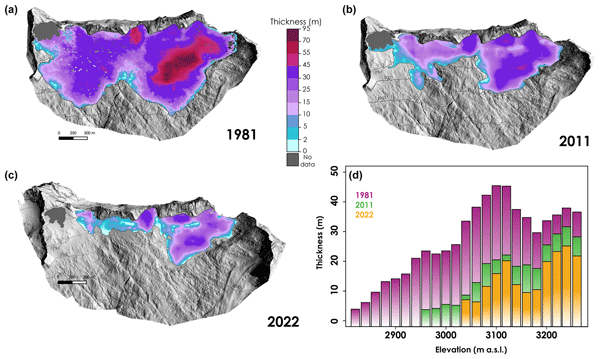
The Aneto glacier, the largest glacier in the Pyrenees, has shown continuous surface and ice thickness losses in the last decades. In this study, we examine changes in its surface and ice thickness for 1981–2022 and the remaining ice thickness in 2020. During these 41 years, the glacier has shrunk by 64.7 %, and the ice thickness has decreased by 30.5 m on average. The mean ice thickness in 2022 was 11.9 m, compared to 32.9 m in 1981. The results highlight the critical situation of the glacier.
Irene Julián-Posada, Graciela Gil-Romera, Ana Moreno, Bérangère Leys, Blas Valero-Garcés, and Penélope González-Sampériz
Biogeosciences, 23, 7411–7446, https://doi.org/10.5194/bg-23-7411-2026, https://doi.org/10.5194/bg-23-7411-2026, 2026
Short summary
Short summary
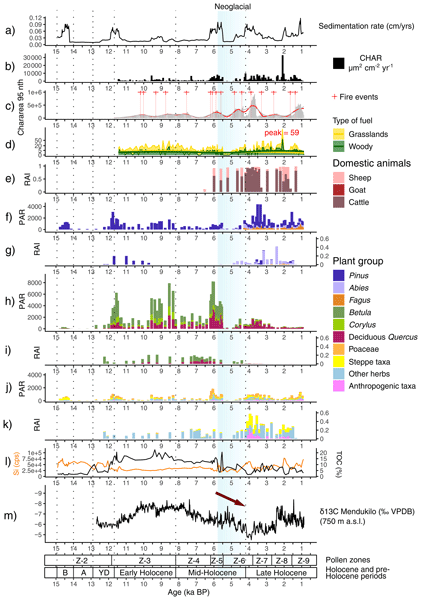
The subalpine belt of the Pyrenees, once forested, is now a mosaic of forest patches and open landscapes with pastures. We reconstruct the palaeoenvironmental history using sedimentary ancient DNA, pollen and charcoal. We show that Neoglacial cooling initially opened the forest, and pastoralism through fire and grazing maintained it. These landscapes result not from climate or humans alone, but from their long-term synergy, implying that conservation must emulate traditional herding practices.
Javier Bandrés, Jorge Pey, Esteban Alonso-González, Pablo Domínguez-Aguilar, Jesús Revuelto, Eñaut Izagirre, Francisco Rojas-Heredia, Eric Allan Sproles, and Juan Ignacio López-Moreno
EGUsphere, https://doi.org/10.5194/egusphere-2026-4306, https://doi.org/10.5194/egusphere-2026-4306, 2026
This preprint is open for discussion and under review for The Cryosphere (TC).
Short summary
Short summary
Snow in the Pyrenees is increasingly affected by African dust and black carbon, which darken the snow surface and accelerate melting. We developed a simple field experiment to measure how realistic amounts of these particles change snow properties and melt. Mineral dust consistently produced stronger effects than black carbon, showing that even common dust events can substantially shorten snow cover and improve estimates of snowmelt in mountain regions.
Pablo Domínguez-Aguilar, Jesús Revuelto, Simon Gascoin, and Juan I. López-Moreno
Biogeosciences, 23, 3793–3806, https://doi.org/10.5194/bg-23-3793-2026, https://doi.org/10.5194/bg-23-3793-2026, 2026
Short summary
Short summary
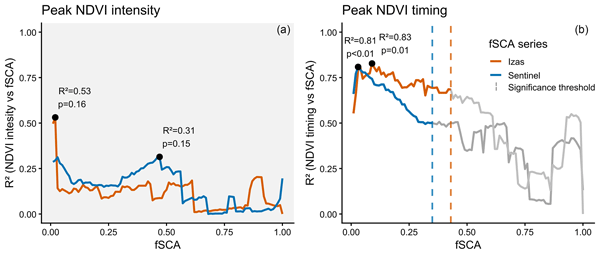
We studied how the timing of snowmelt shapes the growth of mountain grasslands in the western Spanish Pyrenees. Using satellite images and weather data, we found that grasslands start growing as soon as the snow disappears. However their maximum growth, occurring during summer, depends more on temperature and rainfall than on snowmelt timing. Stable patterns of productive areas suggest a strong influence of local soil and microclimate in shaping the distribution of vegetation and its growth.
César Deschamps-Berger, Nahia Carretero Roque, Jesús Revuelto, Francisco Rojas-Heredia, Ixeia Vidaller, Aina Alvarez, Alba López-Varela, Olatz Fernández, Sara Palacio, Juan Ignacio Lopez-Moreno, and Pablo Tejero Ibarra
EGUsphere, https://doi.org/10.5194/egusphere-2026-527, https://doi.org/10.5194/egusphere-2026-527, 2026
Short summary
Short summary
The shrinking of glacier frees large areas worldwide in alpine environment which are progressively colonized by the vegetation. Monitoring this process often relies on in situ botanical observations which are challenging to obtain. Here, we quantify accurately the uncertainty of the vegetation cover measured by optical images from Unmanned Aerial Vehicles. We find that, despite biases, this increasingly used technology extend and complete the data collected during such field campaign.
Carlos Sancho, Ánchel Belmonte, Maria Leunda, Marc Luetscher, Christoph Spötl, Juan Ignacio López-Moreno, Belén Oliva-Urcia, Jerónimo López-Martínez, Ana Moreno, and Miguel Bartolomé
The Cryosphere, 19, 6283–6300, https://doi.org/10.5194/tc-19-6283-2025, https://doi.org/10.5194/tc-19-6283-2025, 2025
Short summary
Short summary
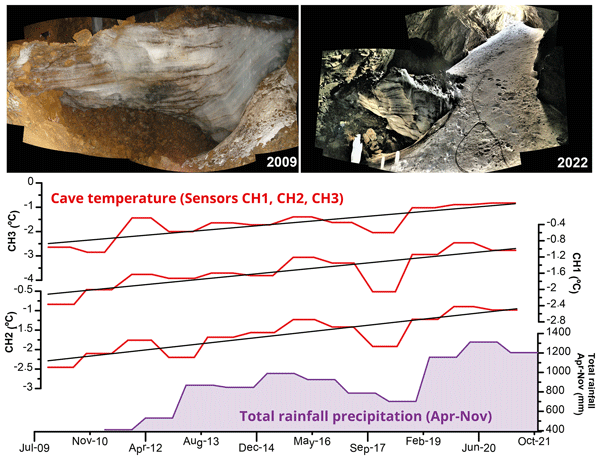
Ice caves, vital for paleoclimate studies, face rapid ice loss due to global warming. A294 cave, home to the oldest firn deposit (6100 years BP), shows rising air temperatures (1.07–1.56 °C in 12 years), fewer freezing days, and melting rates (15–192 cm/year). Key factors include warmer winters, increased rainfall, and reduced snowfall. This study highlights the urgency of recovering data from these unique ice archives before they vanish forever.
Juan Luis Bernal-Wormull, Ana Moreno, Yuri Dublyansky, Christoph Spötl, Reyes Giménez, Carlos Pérez-Mejías, Miguel Bartolomé, Martin Arriolabengoa, Eneko Iriarte, Isabel Cacho, Richard Lawrence Edwards, and Hai Cheng
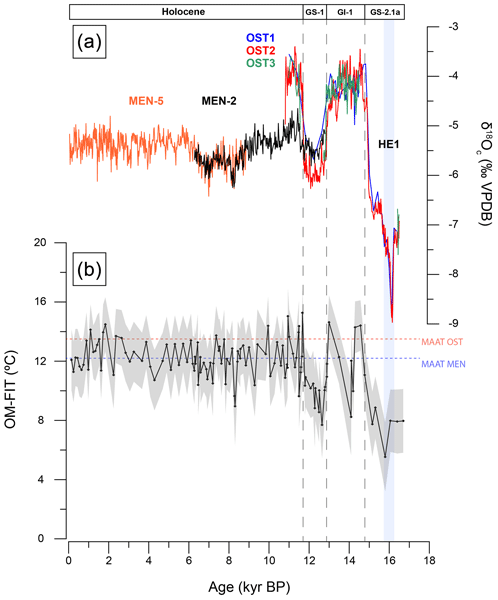
Clim. Past, 21, 1235–1261, https://doi.org/10.5194/cp-21-1235-2025, https://doi.org/10.5194/cp-21-1235-2025, 2025
Short summary
Short summary
In this paper we present a record of temperature changes during the last deglaciation and the Holocene using isotopes of fluid inclusions in stalagmites from the northeastern region of the Iberian Peninsula. This innovative climate proxy for this study region provides a quantitative understanding of the abrupt temperature changes in southern Europe in the last 16 500 years before present.
Josep Bonsoms, Marc Oliva, Juan Ignacio López-Moreno, and Guillaume Jouvet
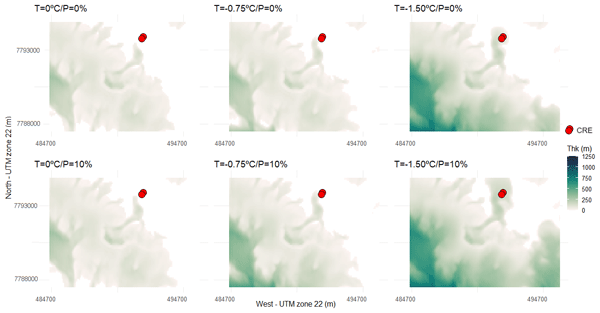
The Cryosphere, 19, 1973–1993, https://doi.org/10.5194/tc-19-1973-2025, https://doi.org/10.5194/tc-19-1973-2025, 2025
Short summary
Short summary
The extent to which Greenland's peripheral glaciers and ice caps current and future ice loss rates are unprecedented within the Holocene is poorly understood. This study connects the maximum ice extent of the Late Holocene with present and future glacier evolution in the Nuussuaq Peninsula (central western Greenland). By > 2050 glacier mass loss may have doubled in rate compared to the Late Holocene to the present, highlighting significant impacts of anthropogenic climate change.
Helen Flynn, J. Julio Camarero, Alba Sanmiguel-Vallelado, Francisco Rojas Heredia, Pablo Domínguez Aguilar, Jesús Revuelto, and Juan Ignacio López-Moreno
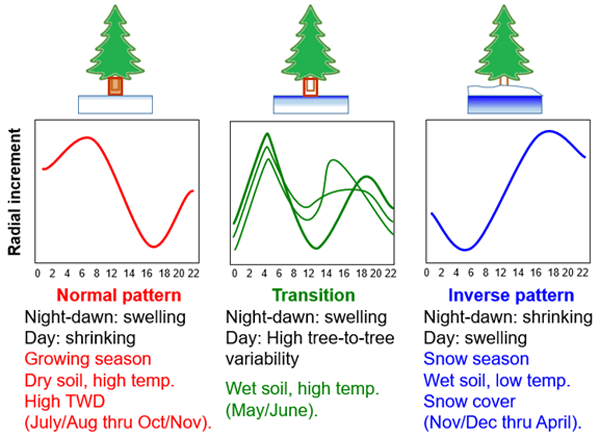
Biogeosciences, 22, 1135–1147, https://doi.org/10.5194/bg-22-1135-2025, https://doi.org/10.5194/bg-22-1135-2025, 2025
Short summary
Short summary
In the Spanish Pyrenees, changing snow seasons and warmer growing seasons could impact tree growth in the montane evergreen forests. We used automatic sensors that measure tree growth to monitor and analyze the interactions between the climate, snow, and tree growth at the study site. We found a transition in the daily growth cycle that is triggered by the presence of snow. Additionally, warmer February and May temperatures enhanced tree growth.
Judit Torner, Isabel Cacho, Heather Stoll, Ana Moreno, Joan O. Grimalt, Francisco J. Sierro, Joan J. Fornós, Hai Cheng, and R. Lawrence Edwards
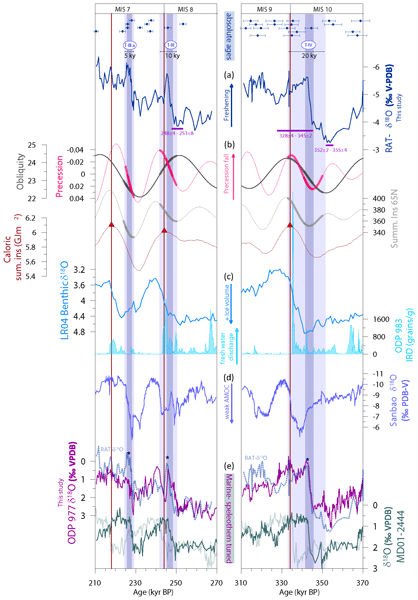
Clim. Past, 21, 465–487, https://doi.org/10.5194/cp-21-465-2025, https://doi.org/10.5194/cp-21-465-2025, 2025
Short summary
Short summary
We offer a clearer view of the timing of three relevant past glacial terminations. By analyzing the climatic signal recorded in stalagmite and linking it with marine records, we revealed differences in the intensity and duration of the ice melting associated with these three key deglaciations. This study shows that some deglaciations began earlier than previously thought; this improves our understanding of natural climate processes, helping us to contextualize current climate change.
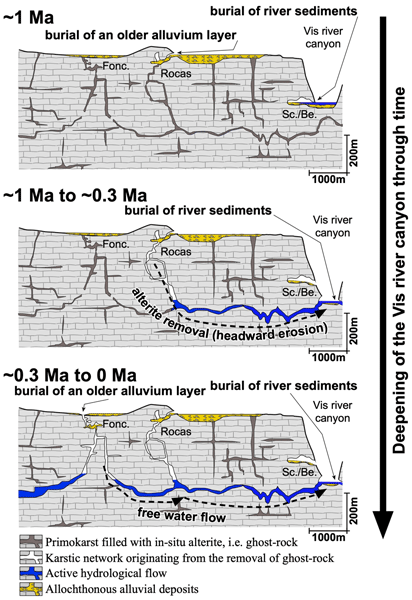
Oswald Malcles, Philippe Vernant, David Fink, Gaël Cazes, Jean-François Ritz, Toshiyuki Fujioka, and Jean Chéry
Earth Surf. Dynam., 12, 679–690, https://doi.org/10.5194/esurf-12-679-2024, https://doi.org/10.5194/esurf-12-679-2024, 2024
Short summary
Short summary
In the Grands Causses area (Southern France), we study the relationship between the evolution of the river, its incision through time, and the location of the nearby caves. It is commonly accepted that horizontal caves are formed during a period of river stability (no incision) at the elevation of the river. Our original results show that it is wrong in our case study. Therefore, another model of cave formation is proposed that does not rely on direct river control over cave locations.
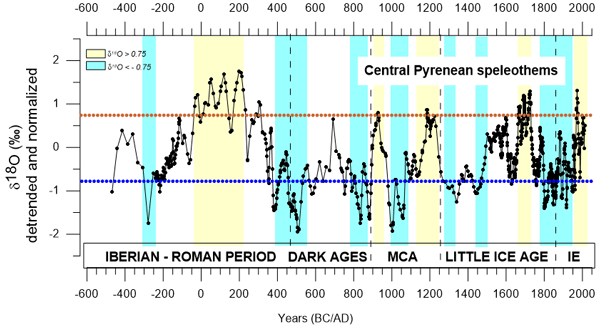
Miguel Bartolomé, Ana Moreno, Carlos Sancho, Isabel Cacho, Heather Stoll, Negar Haghipour, Ánchel Belmonte, Christoph Spötl, John Hellstrom, R. Lawrence Edwards, and Hai Cheng
Clim. Past, 20, 467–494, https://doi.org/10.5194/cp-20-467-2024, https://doi.org/10.5194/cp-20-467-2024, 2024
Short summary
Short summary
Reconstructing past temperatures at regional scales during the Common Era is necessary to place the current warming in the context of natural climate variability. We present a climate reconstruction based on eight stalagmites from four caves in the Pyrenees, NE Spain. These stalagmites were dated precisely and analysed for their oxygen isotopes, which appear dominated by temperature changes. Solar variability and major volcanic eruptions are the two main drivers of observed climate variability.
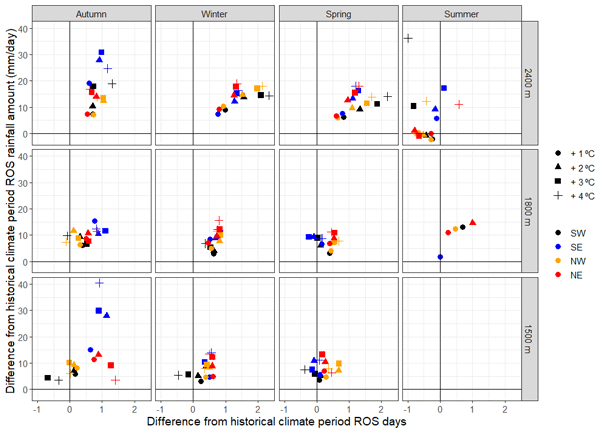
Josep Bonsoms, Juan I. López-Moreno, Esteban Alonso-González, César Deschamps-Berger, and Marc Oliva
Nat. Hazards Earth Syst. Sci., 24, 245–264, https://doi.org/10.5194/nhess-24-245-2024, https://doi.org/10.5194/nhess-24-245-2024, 2024
Short summary
Short summary
Climate warming is changing mountain snowpack patterns, leading in some cases to rain-on-snow (ROS) events. Here we analyzed near-present ROS and its sensitivity to climate warming across the Pyrenees. ROS increases during the coldest months of the year but decreases in the warmest months and areas under severe warming due to snow cover depletion. Faster snow ablation is anticipated in the coldest and northern slopes of the range. Relevant implications in mountain ecosystem are anticipated.
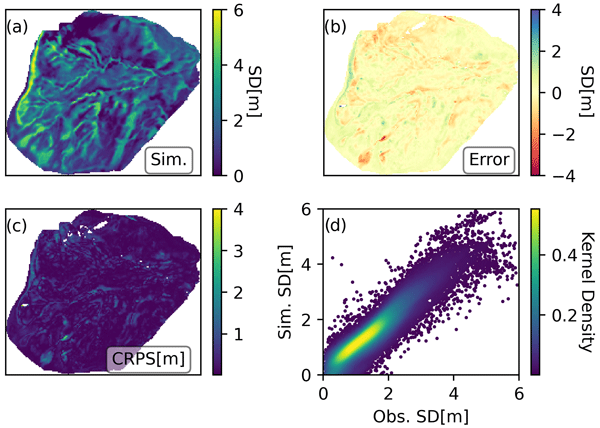
Esteban Alonso-González, Kristoffer Aalstad, Norbert Pirk, Marco Mazzolini, Désirée Treichler, Paul Leclercq, Sebastian Westermann, Juan Ignacio López-Moreno, and Simon Gascoin
Hydrol. Earth Syst. Sci., 27, 4637–4659, https://doi.org/10.5194/hess-27-4637-2023, https://doi.org/10.5194/hess-27-4637-2023, 2023
Short summary
Short summary
Here we explore how to improve hyper-resolution (5 m) distributed snowpack simulations using sparse observations, which do not provide information from all the areas of the simulation domain. We propose a new way of propagating information throughout the simulations adapted to the hyper-resolution, which could also be used to improve simulations of other nature. The method has been implemented in an open-source data assimilation tool that is readily accessible to everyone.
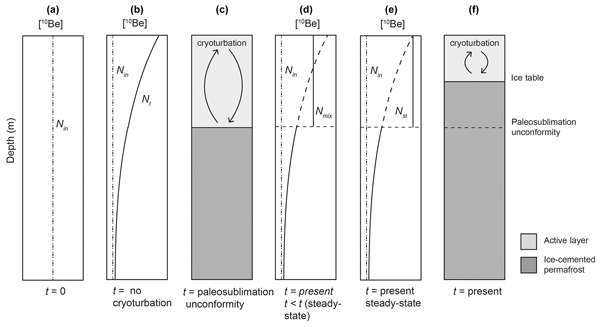
Jacob T. H. Anderson, Toshiyuki Fujioka, David Fink, Alan J. Hidy, Gary S. Wilson, Klaus Wilcken, Andrey Abramov, and Nikita Demidov
The Cryosphere, 17, 4917–4936, https://doi.org/10.5194/tc-17-4917-2023, https://doi.org/10.5194/tc-17-4917-2023, 2023
Short summary
Short summary
Antarctic permafrost processes are not widely studied or understood in the McMurdo Dry Valleys. Our data show that near-surface permafrost sediments were deposited ~180 000 years ago in Pearse Valley, while in lower Wright Valley sediments are either vertically mixed after deposition or were deposited < 25 000 years ago. Our data also record Taylor Glacier retreat from Pearse Valley ~65 000–74 000 years ago and support antiphase dynamics between alpine glaciers and sea ice in the Ross Sea.
Ixeia Vidaller, Eñaut Izagirre, Luis Mariano del Rio, Esteban Alonso-González, Francisco Rojas-Heredia, Enrique Serrano, Ana Moreno, Juan Ignacio López-Moreno, and Jesús Revuelto
The Cryosphere, 17, 3177–3192, https://doi.org/10.5194/tc-17-3177-2023, https://doi.org/10.5194/tc-17-3177-2023, 2023
Short summary
Short summary
The Aneto glacier, the largest glacier in the Pyrenees, has shown continuous surface and ice thickness losses in the last decades. In this study, we examine changes in its surface and ice thickness for 1981–2022 and the remaining ice thickness in 2020. During these 41 years, the glacier has shrunk by 64.7 %, and the ice thickness has decreased by 30.5 m on average. The mean ice thickness in 2022 was 11.9 m, compared to 32.9 m in 1981. The results highlight the critical situation of the glacier.
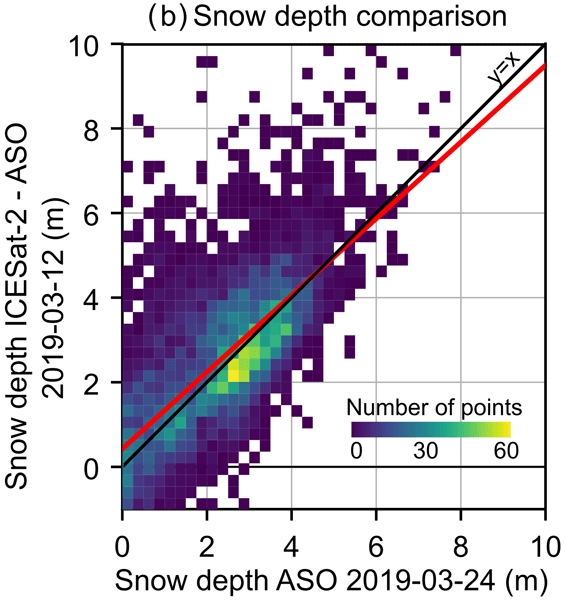
César Deschamps-Berger, Simon Gascoin, David Shean, Hannah Besso, Ambroise Guiot, and Juan Ignacio López-Moreno
The Cryosphere, 17, 2779–2792, https://doi.org/10.5194/tc-17-2779-2023, https://doi.org/10.5194/tc-17-2779-2023, 2023
Short summary
Short summary
The estimation of the snow depth in mountains is hard, despite the importance of the snowpack for human societies and ecosystems. We measured the snow depth in mountains by comparing the elevation of points measured with snow from the high-precision altimetric satellite ICESat-2 to the elevation without snow from various sources. Snow depths derived only from ICESat-2 were too sparse, but using external airborne/satellite products results in spatially richer and sufficiently precise snow depths.

Josep Bonsoms, Juan Ignacio López-Moreno, and Esteban Alonso-González
The Cryosphere, 17, 1307–1326, https://doi.org/10.5194/tc-17-1307-2023, https://doi.org/10.5194/tc-17-1307-2023, 2023
Short summary
Short summary
This work analyzes the snow response to temperature and precipitation in the Pyrenees. During warm and wet seasons, seasonal snow depth is expected to be reduced by −37 %, −34 %, and −27 % per degree Celsius at low-, mid-, and high-elevation areas, respectively. The largest snow reductions are anticipated at low elevations of the eastern Pyrenees. Results anticipate important impacts on the nearby ecological and socioeconomic systems.
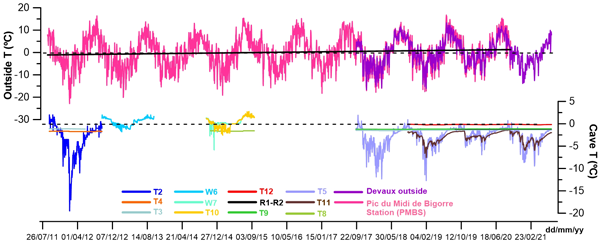
Miguel Bartolomé, Gérard Cazenave, Marc Luetscher, Christoph Spötl, Fernando Gázquez, Ánchel Belmonte, Alexandra V. Turchyn, Juan Ignacio López-Moreno, and Ana Moreno
The Cryosphere, 17, 477–497, https://doi.org/10.5194/tc-17-477-2023, https://doi.org/10.5194/tc-17-477-2023, 2023
Short summary
Short summary
In this work we study the microclimate and the geomorphological features of Devaux ice cave in the Central Pyrenees. The research is based on cave monitoring, geomorphology, and geochemical analyses. We infer two different thermal regimes. The cave is impacted by flooding in late winter/early spring when the main outlets freeze, damming the water inside. Rock temperatures below 0°C and the absence of drip water indicate frozen rock, while relict ice formations record past damming events.
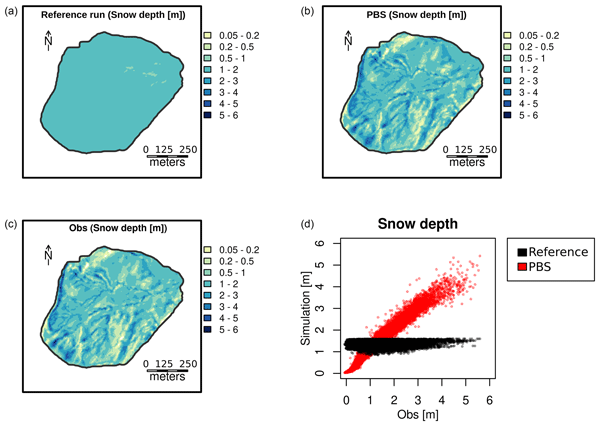
Esteban Alonso-González, Kristoffer Aalstad, Mohamed Wassim Baba, Jesús Revuelto, Juan Ignacio López-Moreno, Joel Fiddes, Richard Essery, and Simon Gascoin
Geosci. Model Dev., 15, 9127–9155, https://doi.org/10.5194/gmd-15-9127-2022, https://doi.org/10.5194/gmd-15-9127-2022, 2022
Short summary
Short summary
Snow cover plays an important role in many processes, but its monitoring is a challenging task. The alternative is usually to simulate the snowpack, and to improve these simulations one of the most promising options is to fuse simulations with available observations (data assimilation). In this paper we present MuSA, a data assimilation tool which facilitates the implementation of snow monitoring initiatives, allowing the assimilation of a wide variety of remotely sensed snow cover information.
Cited articles
Allard, J. L., Hughes, P. D., and Woodward, J. C.: Heinrich Stadial aridity forced Mediterranean-wide glacier retreat in the last cold stage, Nat. Geosci., 14, 197–205, https://doi.org/10.1038/s41561-021-00703-6, 2021.
Andrés, N., Gómez-Ortiz, A., Fernández-Fernández, J. M., Tanarro, L. M., Salvador-Franch, F., Oliva, M., and Palacios, D.: Timing of deglaciation and rock glacier origin in the southeastern Pyrenees: a review and new data, Boreas, 47, 1050–1071, https://doi.org/10.1111/bor.12324, 2018.
Arnold, M., Merchel, S., Bourlès, D., Braucher, R., Benedetti, L., Finkel, R., Aumaître, G., Gottdang, A., and Klein, M.: The French accelerator mass spectrometry facility ASTER: Improved performance and developments, Nucl. Instrum. Methods Phys. Res. B, 268, 1954–1959, https://doi.org/10.1016/j.nimb.2010.02.107, 2010.
Arnold, M., Aumaître, G., Bourlès, D., Keddadouche, K., Braucher, R., Finkel, R., Nottoli, E., Benedetti, L., and Merchel, S.: The French accelerator mass spectrometry facility ASTER after 4 years: Status and recent developments on 36Cl and 129I, Nucl. Instrum. Methods Phys. Res. B, 294, 24–28, https://doi.org/10.1016/j.nimb.2012.01.049, 2013.
Balco, G.: Glacier Change and Paleoclimate Applications of Cosmogenic-Nuclide Exposure Dating, Annu. Rev. Earth Planet. Sci., 48, 21–48, https://doi.org/10.1146/annurev-earth-081619-052609, 2020.
Balco, G., Stone, J. O., Lifton, N. A., and Dunai, T. J.: A complete and easily accessible means of calculating surface exposure ages or erosion rates from 10Be and 26Al measurements, Quat. Geochronol., 3, 174–195, https://doi.org/10.1016/j.quageo.2007.12.001, 2008.
Barr, I. D., Bingham, R. G., Oien, R. P., Rea, B. R., and Spagnolo, M.: Testing the area–altitude balance ratio (AABR) and accumulation–area ratio (AAR) methods of calculating glacier equilibrium-line altitudes, Journal of Glaciology, 68, 357–368, https://doi.org/10.1017/jog.2021.100, 2022.
Bartolomé, M., Sancho, C., Benito, G., Medialdea, A., Calle, M., Moreno, A., Leunda, M., Luetscher, M., Muñoz, A., Bastida, J., Cheng, H., and Edwards, R. L.: Effects of glaciation on karst hydrology and sedimentology during the Last Glacial Cycle: The case of Granito cave, Central Pyrenees (Spain), Catena, 206, 105252, https://doi.org/10.1016/j.catena.2021.105252, 2021.
Batbaatar, J., Gillespie, A. R., Fink, D., Matmon, A., and Fujioka, T.: Asynchronous glaciations in arid continental climate, Quat. Sci. Rev., 182, 1–19, https://doi.org/10.1016/j.quascirev.2017.12.001, 2018.
Beniston, M., Farinotti, D., Stoffel, M., Andreassen, L. M., Coppola, E., Eckert, N., Fantini, A., Giacona, F., Hauck, C., Huss, M., Huwald, H., Lehning, M., López-Moreno, J.-I., Magnusson, J., Marty, C., Morán-Tejéda, E., Morin, S., Naaim, M., Provenzale, A., Rabatel, A., Six, D., Stötter, J., Strasser, U., Terzago, S., and Vincent, C.: The European mountain cryosphere: a review of its current state, trends, and future challenges, The Cryosphere, 12, 759–794, https://doi.org/10.5194/tc-12-759-2018, 2018.
Benn, D. I., Owen, L. A., Osmaston, H. A., Seltzer, G. O., Porter, S. C., and Mark, B.: Reconstruction of equilibrium-line altitudes for tropical and sub-tropical glaciers, Quaternary International, 138–139, 8–21, https://doi.org/10.1016/j.quaint.2005.02.003, 2005.
Bernal-Wormull, J. L., Moreno, A., Pérez-Mejías, C., Bartolomé, M., Aranburu, A., Arriolabengoa, M., Iriarte, E., Cacho, I., Spötl, C., Edwards, R. L., and Cheng, H.: Immediate temperature response in northern Iberia to last deglacial changes in the North Atlantic, Geology, 49, 999–1003, https://doi.org/10.1130/G48660.1, 2021.
Bernal-Wormull, J. L., Moreno, A., Dublyansky, Y., Spötl, C., Giménez, R., Pérez-Mejías, C., Bartolomé, M., Arriolabengoa, M., Iriarte, E., Cacho, I., Edwards, R. L., and Cheng, H.: Temperature variability in southern Europe over the past 16 500 years constrained by speleothem fluid inclusion water isotopes, Clim. Past, 21, 1235–1261, https://doi.org/10.5194/cp-21-1235-2025, 2025.
Bordonau, J.: Els complexos glacio-lacustres relacionats amb el darrer cicle glacial als Pirineus, Universitat de Barcelona, Thesis, Universitat de Barcelona, Departament de Geologia Dinamica, Geofisica i Paleontologia, 1992.
Bordonau, J.: The Upper Pleistocene ice-lateral till complex of Cerler (Esera valley, central Southern Pyrenees: Spain), Quaternary International, 18, 5–14, https://doi.org/10.1016/1040-6182(93)90048-K, 1993.
Braithwaite, R. J. and Hughes, P. D.: Regional Geography of Glacier Mass Balance Variability Over Seven Decades 1946–2015, Frontiers in Earth Science, 8, 302, https://doi.org/10.3389/feart.2020.00302, 2020.
Braucher, R., Guillou, V., Bourlès, D. L., Arnold, M., Aumaître, G., Keddadouche, K., and Nottoli, E.: Preparation of ASTER in-house 10Be/9Be standard solutions, Nucl. Instrum. Methods Phys. Res. B, 361, 335–340, https://doi.org/10.1016/j.nimb.2015.06.012, 2015.
Buoncristiani, J.-F. and Campy, M.: Quaternary glaciations in the French Alps and Jura, in: Developments in quaternary sciences, Elsevier, 15, 117–126, https://doi.org/10.1016/B978-0-444-53447-7.00010-6, 2011.
Cacho, I., Grimalt, J. O., Pelejero, C., Canals, M., Sierro, F. J., Flores, J. A., and Shackleton, N.: Dansgaard-Oeschger and Heinrich event imprints in Alboran Sea paleotemperatures, Paleoceanography, 14, 698–705, https://doi.org/10.1029/1999PA900044, 1999.
Cacho, I., Grimalt, J. O., Canals, M., Sbaffi, L., Shackleton, N. J., Schönfeld, J., and Zahn, R.: Variability of the western Mediterranean Sea surface temperature during the last 25 000 years and its connection with the Northern Hemisphere climatic changes, Paleoceanography, 16, 40–52, https://doi.org/10.1029/2000PA000502, 2001.
Calvet, M., Delmas, M., Gunnell, Y., Braucher, R., and Bourlès, D.: Recent advances in research on quaternary glaciations in the pyrenees, Developments in Quaternary Science, 15, 127–139, https://doi.org/10.1016/B978-0-444-53447-7.00011-8, 2011.
Campos, N., Alcalá-Reygosa, J., Watson, S. C., Kougkoulos, I., Quesada-Román, A., and Grima, N.: Modeling the retreat of the Aneto Glacier (Spanish Pyrenees) since the Little Ice Age, and its accelerated shrinkage over recent decades, Holocene, 31, 1315–1326, https://doi.org/10.1177/09596836211011678, 2021.
Carrivick, J. L. and Tweed, F. S.: Proglacial lakes: character, behaviour and geological importance, Quat. Sci. Rev., 78, 34–52, https://doi.org/10.1016/j.quascirev.2013.07.028, 2013.
Chueca-Cía, J. and Julián-Andrés, A.: Geomorphological map of the alta ribagorza (central pyrenees, spain), J. Maps, 4, 235–247, https://doi.org/10.4113/jom.2008.1006, 2008.
Clark, P. U., Shakun, J. D., Baker, P. A., Bartlein, P. J., Brewer, S., Brook, E., Carlson, A. E., Cheng, H., Kaufman, D. S., Liu, Z., Marchitto, T. M., Mix, A. C., Morrill, C., Otto-Bliesner, B. L., Pahnke, K., Russell, J. M., Whitlock, C., Adkins, J. F., Blois, J. L., Clark, J., Colman, S. M., Curry, W. B., Flower, B. P., He, F., Johnson, T. C., Lynch-Stieglitz, J., Markgraf, V., McManus, J., Mitrovica, J. X., Moreno, P. I., and Williams, J. W.: Global climate evolution during the last deglaciation, Proceedings of the National Academy of Sciences, 109, E1134–E1142, https://doi.org/10.1073/pnas.1116619109, 2012.
Copons, R. and Bordonau, J.: El último ciclo glaciar (Pleistoceno Superior – Holoceno) en el macizo de la Madaleta (Pirineos Centrales), Revista de La Sociedad Geológica de España, 10, 55–66, 1997.
Copons, R., Parés, J. M., Dinarès-Turell, J., and Bordonau, J.: Sampling induced AMS in soft sediments: A case study in Holocene glaciolacustrine rhythmites from Lake Barrancs (Central Pyrenees, Spain), Physics and Chemistry of the Earth, 22, 137–141, https://doi.org/10.1016/s0079-1946(97)00091-8, 1997.
Crest, Y., Delmas, M., Braucher, R., Gunnell, Y., and Calvet, M.: Cirques have growth spurts during deglacial and interglacial periods: Evidence from 10Be and 26Al nuclide inventories in the central and eastern Pyrenees, Geomorphology, 278, 60–77, https://doi.org/10.1016/j.geomorph.2016.10.035, 2017.
Cuadrat, J. M., Saz Sánchez, M. A., and Vicente Serrano, S. M.: Atlas climático de Aragón, Departamento de Medio Ambiente, Gobierno de Aragón, ISBN 978-84-8380-071-3, 2007.
Cutler, K. B., Edwards, R. L., Taylor, F. W., Cheng, H., Adkins, J., Gallup, C. D., Cutler, P. M., Burr, G. S., and Bloom, A. L.: Rapid sea-level fall and deep-ocean temperature change since the last interglacial period, Earth and Planetary Science Letters, 206, 253–271, https://doi.org/10.1016/S0012-821X(02)01107-X, 2003.
Dahl, S. O. and Nesje, A.: Paleoclimatic implications based on equilibrium-line altitude depressions of reconstructed Younger Dryas and Holocene cirque glaciers in inner Nordfjord, western Norway, Palaeogeogr. Palaeoclimatol. Palaeoecol., 94, 87–97, https://doi.org/10.1016/0031-0182(92)90114-K, 1992.
Dansgaard, W., Johnsen, S. J., Clausen, H. B., Dahl-Jensen, D., Gundestrup, N. S., Hammer, C. U., Hvidberg, C. S., Steffensen, J. P., Sveinbjörnsdottir, A. E., Jouzel, J., and Bond, G.: Evidence for general instability of past climate from a 250-kyr ice-core record, Nature, 364, 218–220, https://doi.org/10.1038/364218a0, 1993.
Darnault, R., Rolland, Y., Braucher, R., Bourlès, D., Revel, M., Sanchez, G., and Bouissou, S.: Timing of the last deglaciation revealed by receding glaciers at the Alpine-scale: impact on mountain geomorphology, Quat. Sci. Rev., 31, 127–142, https://doi.org/10.1016/j.quascirev.2011.10.019, 2012.
Delmas, M.: The last maximum ice extent and subsequent deglaciation of the Pyrenees: an overview of recent research, Cuadernos de Investigación Geográfica, 41, 359, https://doi.org/10.18172/cig.2708, 2015.
Delmas, M., Gunnell, Y., Braucher, R., Calvet, M., and Bourlès, D.: Exposure age chronology of the last glaciation in the eastern Pyrenees, Quat. Res., 69, 231–241, 2008.
Delmas, M., Calvet, M., Gunnell, Y., Braucher, R., and Bourlès, D.: Palaeogeography and 10Be exposure-age chronology of Middle and Late Pleistocene glacier systems in the northern Pyrenees: Implications for reconstructing regional palaeoclimates, Palaeogeogr. Palaeoclimatol. Palaeoecol., 305, 109–122, https://doi.org/10.1016/j.palaeo.2011.02.025, 2011.
Delmas, M., Calvet, M., Gunnell, Y., Braucher, R., and Bourlès, D.: Les glaciations quaternaires dans les Pyrénées ariègeoises: approche historiographique, données paléogéographiques et chronologiques nouvelles, Quaternaire, 23, 61–85, https://doi.org/10.4000/quaternaire.6091, 2012.
Delmas, M., Gunnell, Y., Calvet, M., Reixach, T., and Oliva, M.: Chapter 59 – The Pyrenees: glacial landforms from the Last Glacial Maximum, in: European Glacial Landscapes, edited by: Palacios, D., Hughes, P. D., García-Ruiz, J. M., and Andrés, N., Elsevier, 461–472, https://doi.org/10.1016/B978-0-12-823498-3.00035-2, 2022.
Delmas, M., Oliva, M., Gunnell, Y., Fernandes, M., Reixach, T., Fernández-Fernández, J. M., and Calvet, M.: Chapter 38 – The Pyrenees: glacial landforms from the Bølling–Allerød Interstadial (14.6–12.9 ka), in: European Glacial Landscapes, edited by: Palacios, D., Hughes, P. D., García-Ruiz, J. M., and Andrés, N., Elsevier, 361–368, https://doi.org/10.1016/B978-0-323-91899-2.00050-4, 2023.
Dyurgerov, M. B. and Meier, M. F.: Twentieth century climate change: evidence from small glaciers, Proc. Natl. Acad. Sci. USA, 97, 1406–1411, https://doi.org/10.1073/pnas.97.4.1406, 2000.
Fletcher, W. J., Sánchez Goñi, M. F., Allen, J. R. M., Cheddadi, R., Combourieu-Nebout, N., Huntley, B., Lawson, I., Londeix, L., Magri, D., Margari, V., Müller, U. C., Naughton, F., Novenko, E., Roucoux, K., and Tzedakis, P. C.: Millennial-scale variability during the last glacial in vegetation records from Europe, Quat. Sci. Rev., 29, 2839–2864, https://doi.org/10.1016/j.quascirev.2009.11.015, 2010.
Florineth, D. and Schlüchter, C.: Alpine Evidence for Atmospheric Circulation Patterns in Europe during the Last Glacial Maximum, Quaternary Research, 54, 295–308, https://doi.org/10.1006/qres.2000.2169, 2000.
Fujioka, T., Benito-Calvo, A., Mora, R., McHenry, L., Njau, J. K., and de la Torre, I.: Direct cosmogenic nuclide isochron burial dating of early Acheulian stone tools at the T69 Complex (FLK West, Olduvai Bed II, Tanzania), J. Hum. Evol., 165, 103155, https://doi.org/10.1016/j.jhevol.2022.103155, 2022.
García-Ruiz, J. M., Bordonau, J., Martinez de Pison, E., and Vilaplana, J. M.: Mapa Geomorfológico, Benasque (Huesca), Escala 1 : 50 000, Geoforma Ediciones, ISBN 978-84-87779-08-4, 1992.
García-Ruiz, J. M., Valero-Garcés, B. L., Martí-Bono, C., and González-Sampériz, P.: Asynchroneity of maximum glacier advances in the central Spanish Pyrenees, J. Quat. Sci., 18, 61–72, https://doi.org/10.1002/jqs.715, 2003.
García-Ruiz, J. M., Martí-Bono, C., Peña-Monné, J. L., Sancho, C., Rhodes, E. J., Valero-Garcés, B., González-Sampériz, P., and Moreno, A.: Glacial and Fluvial Deposits in the Aragón Valley, Central-Western Pyrenees: Chronology of the Pyrenean Late Pleistocene Glaciers, Geografiska Annaler, Series A: Physical Geography, 95, 15–32, https://doi.org/10.1111/j.1468-0459.2012.00478.x, 2013.
García-Ruiz, J. M., López-Moreno, J. I., Martínez, T. L., Serrano, S. M. V., González-Sampériz, P., Valero-Garcés, B. L., Sanjuán, Y., Beguería, S., Nadal-Romero, E., Lana-Renault, N., and Gómez-Villar, A.: Los efectos geoecológicos del cambio global en el Pirineo Central español: una revisión a distintas escalas espaciales y temporales, Pirineos, 170, https://doi.org/10.3989/Pirineos.2015.170005, 2015.
García-Ruiz, J. M., Palacios, D., Andrés, N., and López-Moreno, J. I.: Neoglaciation in the Spanish Pyrenees: a multiproxy challenge, Mediterranean Geoscience Reviews, 2, 21–36, https://doi.org/10.1007/s42990-020-00022-9, 2020.
García-Ruiz, J. M., Arnáez, J., Lasanta, T., Nadal-Romero, E., and López-Moreno, J. I.: The Climate of the Mountains, Originality and Spatial Variability, in: Mountain Environments: Changes and Impacts: Natural Landscapes and Human Adaptations to Diversity, edited by: García-Ruiz, J. M., Arnáez, J., Lasanta, T., Nadal-Romero, E., and López- Moreno, J. I., Springer Nature Switzerland, Cham, 95–116, https://doi.org/10.1007/978-3-031-51955-0_5, 2024.
García-Sansegundo, J., Ramírez-Merino, J. I., Rodríguez-Santisteban, R., and Leyva, F.: Mapa Geológico de España, Escala 1 : 50 000, Hoja 148, Vielha, Instituto Geológico y Minero de España, ISBN 978-84-7840-906-8, 2013.
González-Sampériz, P., Valero-Garcés, B. L., Moreno, A., Jalut, G., García-Ruiz, J. M., Martí-Bono, C., Delgado-Huertas, A., Navas, A., Otto, T., and Dedoubat, J. J.: Climate variability in the Spanish Pyrenees during the last 30 000 yr revealed by the El Portalet sequence, Quat. Res., 66, 38–52, https://doi.org/10.1016/j.yqres.2006.02.004, 2006.
González-Sampériz, P., Gil-Romera, G., García-Prieto, E., Aranbarri, J., Moreno, A., Morellón, M., Sevilla-Callejo, M., Leunda, M., Santos, L., Franco-Múgica, F., Andrade, A., Carrión, J. S., and Valero-Garcés, B. L.: Strong continentality and effective moisture drove unforeseen vegetation dynamics since the last interglacial at inland Mediterranean areas: The Villarquemado sequence in NE Iberia, Quat. Sci. Rev., 242, 106425, https://doi.org/10.1016/j.quascirev.2020.106425, 2020.
Gosse, J. C. and Phillips, F. M.: Terrestrial in situ cosmogenic nuclides: theory and application, Quat. Sci. Rev., 20, 1475–1560, https://doi.org/10.1016/S0277-3791(00)00171-2, 2001.
Grove, J. M.: Little ice ages: Ancient and modern, Routledge, London, 1–718, https://doi.org/10.4324/9780203505205, 2004.
Grunewald, K. and Scheithauer, J.: Europe's southernmost glaciers: response and adaptation to climate change, Journal of Glaciology, 56, 129–142, https://doi.org/10.3189/002214310791190947, 2010.
Hughes, P. D., Gibbard, P. L., and Ehlers, J.: Timing of glaciation during the last glacial cycle: evaluating the concept of a global “Last Glacial Maximum” (LGM), Earth. Sci. Rev., 125, 171–198, https://doi.org/10.1016/j.earscirev.2013.07.003, 2013.
Huss, M. and Fischer, M.: Sensitivity of Very Small Glaciers in the Swiss Alps to Future Climate Change, Frontiers in Earth Science, 4, 34, https://doi.org/10.3389/feart.2016.00034, 2016.
Ilyashuk, E. A., Koinig, K. A., Heiri, O., Ilyashuk, B. P., and Psenner, R.: Holocene temperature variations at a high-altitude site in the Eastern Alps: a chironomid record from Schwarzsee ob Sölden, Austria, Quat. Sci. Rev., 30, 176–191, https://doi.org/10.1016/j.quascirev.2010.10.008, 2011.
Ivy-Ochs, S. and Briner, J. P.: Dating Disappearing Ice with Cosmogenic Nuclides, Elements, 10, 351–356, https://doi.org/10.2113/gselements.10.5.351, 2014.
Ivy-Ochs, S., Kerschner, H., Kubik, P. W., and Schlüchter, C.: Glacier response in the European Alps to Heinrich Event 1 cooling: the Gschnitz stadial, J. Quat. Sci., 21, 115–130, https://doi.org/10.1002/jqs.955, 2006.
Ivy-Ochs, S., Kerschner, H., Reuther, A., Preusser, F., Heine, K., Maisch, M. A. X., Kubik, P. W., and Schlu, C.: Chronology of the last glacial cycle in the European Alps, Journal of Quaternary Science, 23, https://doi.org/10.1002/jqs.1202, 2008.
Jalut, G., Delibrias, G., Dagnac, J., Mardones, M., and Bouhours, M.: A palaeoecological approach to the last 21 000 years in the pyrenees: The peat bog of Freychinede (alt. 1350 m, Ariege, South France), Palaeogeogr. Palaeoclimatol. Palaeoecol., 40, 321–359, https://doi.org/10.1016/0031-0182(82)90033-5, 1982.
Jiménez-Vaquero, C.: Cartografiado de la morfología subglaciar de La Maladeta y Aneto mediante georradar, Universitat Politècnica de València, https://doi.org/10.4995/Thesis/10251/62211, 2016.
Joerin, U. E., Nicolussi, K., Fischer, A., Stocker, T. F., and Schlüchter, C.: Holocene optimum events inferred from subglacial sediments at Tschierva Glacier, Eastern Swiss Alps, Quat. Sci. Rev., 27, 337–350, https://doi.org/10.1016/j.quascirev.2007.10.016, 2008.
Jomelli, V., Chapron, E., Favier, V., Rinterknecht, V., Braucher, R., Tournier, N., Gascoin, S., Marti, R., Galop, D., Binet, S., Deschamps-Berger, C., Tissoux, H., Aumaitre, G., Bourlès, D. L., and Keddadouche, K.: Glacier fluctuations during the Late Glacial and Holocene on the Ariège valley, northern slope of the Pyrenees and reconstructed climatic conditions, Mediterranean Geoscience Reviews, 2, 37–51, https://doi.org/10.1007/s42990-020-00018-5, 2020.
Kerschner, H. and Ivy-Ochs, S.: Palaeoclimate from glaciers: Examples from the Eastern Alps during the Alpine Lateglacial and early Holocene, Glob. Planet. Change, 60, 58–71, https://doi.org/10.1016/j.gloplacha.2006.07.034, 2008.
Kohl, C. P. and Nishiizumi, K.: Chemical isolation of quartz for measurement of in-situ-produced cosmogenic nuclides, Geochim. Cosmochim. Acta, 56, 3583–3587, https://doi.org/10.1016/0016-7037(92)90401-4, 1992.
Leonard, E. M. and Reasoner, M. A.: A Continuous Holocene Glacial Record Inferred from Proglacial Lake Sediments in Banff National Park, Alberta, Canada, Quat. Res., 51, 1–13, https://doi.org/10.1006/qres.1998.2009, 1999.
Leunda, M., González-Sampériz, P., Gil-Romera, G., Aranbarri, J., Moreno, A., Oliva-Urcia, B., Sevilla-Callejo, M., and Valero-Garcés, B.: The Late-Glacial and Holocene Marboré Lake sequence (2612 m a.s.l., Central Pyrenees, Spain): Testing high altitude sites sensitivity to millennial scale vegetation and climate variability, Glob. Planet. Change, 157, 214–231, https://doi.org/10.1016/j.gloplacha.2017.08.008, 2017.
Lewis, C. J., McDonald, E. V., Sancho, C., Peña, J. L., and Rhodes, E. J.: Climatic implications of correlated Upper Pleistocene glacial and fluvial deposits on the Cinca and Gállego Rivers (NE Spain) based on OSL dating and soil stratigraphy, Glob. Planet. Change, 67, 141–152, https://doi.org/10.1016/j.gloplacha.2009.01.001, 2009.
Lifton, N., Sato, T., and Dunai, T.: Scaling in situ cosmogenic nuclide production rates using analytical approximations to atmospheric cosmic-ray fluxes, Earth Planet. Sci. Lett., 386, 149–160, https://doi.org/10.1016/j.epsl.2013.10.052, 2014.
Livingstone, S. J., Piotrowski, J. A., Bateman, M. D., Ely, J. C., and Clark, C. D.: Discriminating between subglacial and proglacial lake sediments: an example from the Dänischer Wohld Peninsula, northern Germany, Quat. Sci. Rev., 112, 86–108, https://doi.org/10.1016/j.quascirev.2015.01.030, 2015.
López-Moreno, J. I.: Los glaciares del alto Valle del Gállego (Pirineo Central) desde la Pequeña Edad de Hielo: Implicaciones en la evolución de la temperatura, University of Zaragoza, 77 pp., 2000.
Martínez de Pisón, E.: Morfologia glaciar del valle de Benasque, Eria, 51–64, 1989.
Martínez de Pisón, E.: Morfoestructuras del valle de Benasque (Pirineo Aragonés), Anales de geografía de la Universidad Complutense, 121–148, 1990.
Martrat, B., Grimalt, J. O., Shackleton, N. J., de Abreu, L., Hutterli, M. A., and Stocker, T. F.: Four Climate Cycles of Recurring Deep and Surface Water Destabilizations on the Iberian Margin, Science, 317, 502–507, https://doi.org/10.1126/science.1139994, 2007.
Matthews, J. A. and Briffa, K. R.: The “Little Ice Age”: Re-evaluation of an evolving concept, Geografiska Annaler: Series A, Physical Geography, 87, 17–36, https://doi.org/10.1111/j.0435-3676.2005.00242.x, 2005.
Merchel, S. and Bremser, W.: First international 26Al interlaboratory comparison – Part I, Nucl. Instrum. Methods Phys. Res. B, 223–224, 393–400, https://doi.org/10.1016/j.nimb.2004.04.076, 2004.
Mix, A. C., Bard, E., and Schneider, R.: Environmental processes of the ice age: land, oceans, glaciers (EPILOG), Quat. Sci. Rev., 20, 627–657, https://doi.org/10.1016/S0277-3791(00)00145-1, 2001.
Montserrat-Martí, J. M.: Evolución glaciar y postglaciar del clima y la vegetación en la vertiente sur del Pirineo: estudio palinológico, Consejo Superior de Investigaciones Científicas (España), ISBN 8460080692, 1992.
Mora, J., Arenillas, M., Cobos, G., and Navarro, J.: Evolution récente des glaciers des Pyrénées espagnoles, La Houille Blanche, 92, 65–70, https://doi.org/10.1051/lhb:200603010, 2006.
Morellón, M., Valero-Garcés, B., Vegas-Vilarrúbia, T., González-Sampériz, P., Romero, Ó., Delgado-Huertas, A., Mata, P., Moreno, A., Rico, M., and Corella, J. P.: Lateglacial and Holocene palaeohydrology in the western Mediterranean region: The Lake Estanya record (NE Spain), Quat. Sci. Rev., 28, 2582–2599, https://doi.org/10.1016/j.quascirev.2009.05.014, 2009.
Moreno, A., Valero-Garcés, B. L., Jiménez-Sánchez, M., Domínguez-Cuesta, M. J., Mata, M. P., Navas, A., González-Sampériz, P., Stoll, H., Farias, P., Morellón, M., Corella, J. P., and Rico, M.: The last deglaciation in the Picos de Europa National Park (Cantabrian Mountains, northern Spain), J. Quat. Sci., 22, 1076–1091, https://doi.org/10.1002/jqs.1265, 2010.
Ohlendorf, C., Sturm, M., and Hausmann, S.: Natural environmental changes and human impact reflected in sediments of a high alpine lake in Switzerland, J. Paleolimnol., 30, 297–306, https://doi.org/10.1023/A:1026032829150, 2003.
Oliva, M., Ruiz-Fernández, J., Barriendos, M., Benito, G., Cuadrat, J. M., Domínguez-Castro, F., García-Ruiz, J. M., Giralt, S., Gómez-Ortiz, A., Hernández, A., López-Costas, O., López-Moreno, J. I., López-Sáez, J. A., Martínez-Cortizas, A., Moreno, A., Prohom, M., Saz, M. A., Serrano, E., Tejedor, E., Trigo, R., Valero-Garcés, B., and Vicente-Serrano, S. M.: The Little Ice Age in Iberian mountains, Earth Sci. Rev., 177, 175–208, https://doi.org/10.1016/j.earscirev.2017.11.010, 2018a.
Oliva, M., Ruiz-Fernández, J., Barriendos, M., Benito, G., Cuadrat, J. M., Domínguez-Castro, F., García-Ruiz, J. M., Giralt, S., Gómez-Ortiz, A., Hernández, A., López-Costas, O., López-Moreno, J. I., López-Sáez, J. A., Martínez-Cortizas, A., Moreno, A., Prohom, M., Saz, M. A., Serrano, E., Tejedor, E., Trigo, R., Valero-Garcés, B., and Vicente-Serrano, S. M.: The Little Ice Age in Iberian mountains, Earth Sci. Rev., 177, 175–208, https://doi.org/10.1016/j.earscirev.2017.11.010, 2018b.
Oliva, M., Palacios, D., Fernández-Fernández, J. M., Rodríguez-Rodríguez, L., García-Ruiz, J. M., Andrés, N., Carrasco, R. M., Pedraza, J., Pérez-Alberti, A., Valcárcel, M., and Hughes, P. D.: Late Quaternary glacial phases in the Iberian Peninsula, Earth Sci. Rev., 192, 564–600, https://doi.org/10.1016/j.earscirev.2019.03.015, 2019.
Oliva, M., Fernandes, M., Palacios, D., Fernández-Fernández, J.-M., Schimmelpfennig, I., Antoniades, D., Aumaître, G., Bourlès, D., and Keddadouche, K.: Rapid deglaciation during the Bølling-Allerød Interstadial in the Central Pyrenees and associated glacial and periglacial landforms, Geomorphology, 385, 107735, https://doi.org/10.1016/j.geomorph.2021.107735, 2021.
Osmaston, H.: Estimates of glacier equilibrium line altitudes by the Area X Altitude, the Area X Altitude Balance Ratio and the Area X Altitude Balance Index methods and their validation, Quaternary International, 138, 22–31, https://doi.org/10.1016/j.quaint.2005.02.004, 2005.
Otto, J.-C.: Proglacial Lakes in High Mountain Environments, in: Geomorphology of Proglacial Systems, edited by: Heckmann, T., Springer, Cham, 231–247, https://doi.org/10.1007/978-3-319-94184-4_14, 2019.
Palacios, D., de Marcos, J., and Vázquez-Selem, L.: Last Glacial Maximum and deglaciation of Sierra de Gredos, central Iberian Peninsula, Quaternary International, 233, 16–26, https://doi.org/10.1016/j.quaint.2010.04.029, 2011.
Palacios, D., de Andrés, N., de Marcos, J., and Vázquez-Selem, L.: Glacial landforms and their paleoclimatic significance in Sierra de Guadarrama, Central Iberian Peninsula, Geomorphology, 139–140, 67–78, https://doi.org/10.1016/j.geomorph.2011.10.003, 2012.
Palacios, D., de Andrés, N., López-Moreno, J. I., and García-Ruiz, J. M.: Late Pleistocene deglaciation in the upper Gállego Valley, central Pyrenees, Quat. Res., 83, 397–414, https://doi.org/10.1016/j.yqres.2015.01.010, 2015a.
Palacios, D., Gómez-Ortiz, A., Andrés, N., Vázquez-Selem, L., Salvador-Franch, F., and Oliva, M.: Maximum extent of Late Pleistocene glaciers and last deglaciation of La Cerdanya mountains, Southeastern Pyrenees, Geomorphology, 231, 116–129, https://doi.org/10.1016/j.geomorph.2014.10.037, 2015b.
Palacios, D., Gómez-Ortiz, A., Andrés, N., Salvador, F., and Oliva, M.: Timing and new geomorphologic evidence of the last deglaciation stages in Sierra Nevada (southern Spain), Quat. Sci. Rev., 150, 110–129, https://doi.org/10.1016/j.quascirev.2016.08.012, 2016.
Palacios, D., García-Ruiz, J. M., Andrés, N., Schimmelpfennig, I., Campos, N., Léanni, L., Aumaître, G., Bourlès, D. L., and Keddadouche, K.: Deglaciation in the central Pyrenees during the Pleistocene–Holocene transition: Timing and geomorphological significance, Quat. Sci. Rev., 162, 111–127, https://doi.org/10.1016/j.quascirev.2017.03.007, 2017a.
Palacios, D., de Andrés, N., Gómez-Ortiz, A., and García-Ruiz, J. M.: Evidence of glacial activity during the Oldest Dryas in the mountains of Spain, Geological Society, London, Special Publications, 433, 87–110, https://doi.org/10.1144/SP433.10, 2017b.
Pallàs, R., Rodés, Á., Braucher, R., Carcaillet, J., Ortuño, M., Bordonau, J., Bourlès, D., Vilaplana, J. M., Masana, E., and Santanach, P.: Late Pleistocene and Holocene glaciation in the Pyrenees: a critical review and new evidence from 10Be exposure ages, south-central Pyrenees, Quat. Sci. Rev., 25, 2937–2963, https://doi.org/10.1016/j.quascirev.2006.04.004, 2006.
Pallàs, R., Rodés, Á., Braucher, R., Bourlès, D., Delmas, M., Calvet, M., and Gunnell, Y.: Small, isolated glacial catchments as priority targets for cosmogenic surface exposure dating of pleistocene climate fluctuations, southeastern Pyrenees, Geology, 38, 891–894, https://doi.org/10.1130/G31164.1, 2010.
Palmer, A. P., Rose, J., Lowe, J. J., and Walker, M. J. C.: Annually laminated Late Pleistocene sediments from Llangorse Lake, South Wales, UK: a chronology for the pattern of ice wastage, Proceedings of the Geologists' Association, 119, 245–258, https://doi.org/10.1016/S0016-7878(08)80304-5, 2008.
Pastor Argüello, F.: Determinación del balance anual de masa y mocimiento del hielo en egl glaciar de la Maladeta, Año hidrológico 2012–2013, Government of Spain, 68, 2013.
Pellitero, R., Rea, B., Spagnolo, M., Bakke, J., Ivy-Ochs, S., Hughes, P., Lukas, S., and Ribolini, A.: A GIS tool for automatic calculation of glacier equilibrium-line altitudes, Comput. Geosci., 82, https://doi.org/10.1016/j.cageo.2015.05.005, 2015.
Pellitero, R., Fernández-Fernández, J. M., Campos, N., Serrano, E., and Pisabarro, A.: Late Pleistocene climate of the northern Iberian Peninsula: New insights from palaeoglaciers at Fuentes Carrionas (Cantabrian Mountains), J. Quat. Sci., 34, 342–354, https://doi.org/10.1002/jqs.3106, 2019.
Peña, J. L., Sancho, C., Lewis, C., McDonald, E., and Rhodes, E.: Datos cronológicos de las morrenas terminales del glaciar del Gállego y su relación con las terrazas fluvioglaciares (Pirineo de Huesca), Geografía Física de Aragón. Aspectos generales y temáticos, 2004.
Pérez-Mejías, C., Moreno, A., Bernal Wormull, J., Cacho, I., Osácar, M. C., Edwards, R., and Cheng, H.: Oldest Dryas hydroclimate reorganization in the eastern Iberian Peninsula after the iceberg discharges of Heinrich Event 1, Quat. Res., 101, 1–17, https://doi.org/10.1017/qua.2020.112, 2021.
Pérez-Zanón, N., Sigró, J., and Ashcroft, L.: Temperature and precipitation regional climate series over the central Pyrenees during 1910–2013, International Journal of Climatology, 37, 1922–1937, https://doi.org/10.1002/joc.4823, 2017.
Quesada-Román, A., Campos, N., Alcalá-Reygosa, J., and Granados-Bolaños, S.: Equilibrium-line altitude and temperature reconstructions during the Last Glacial Maximum in Chirripó National Park, Costa Rica, J. South Am. Earth Sci., 100, 102576, https://doi.org/10.1016/j.jsames.2020.102576, 2020.
Rasmussen, S. O., Bigler, M., Blockley, S. P., Blunier, T., Buchardt, S. L., Clausen, H. B., Cvijanovic, I., Dahl-Jensen, D., Johnsen, S. J., Fischer, H., Gkinis, V., Guillevic, M., Hoek, W. Z., Lowe, J. J., Pedro, J. B., Popp, T., Seierstad, I. K., Steffensen, J. P., Svensson, A. M., Vallelonga, P., Vinther, B. M., Walker, M. J. C., Wheatley, J. J., and Winstrup, M.: A stratigraphic framework for abrupt climatic changes during the Last Glacial period based on three synchronized Greenland ice-core records: refining and extending the INTIMATE event stratigraphy, Quat. Sci. Rev., 106, 14–28, https://doi.org/10.1016/j.quascirev.2014.09.007, 2014.
Reixach, T.: Chronologie des fluctuations glaciaires dans les Pyrénées au cours du Pléistocène supérieur – implications paléoclimatiques, Universite de Perpignan Via Domitia, Perpignan, 1–386 pp., 2022.
Reixach, T., Delmas, M., Braucher, R., Gunnell, Y., Mahé, C., and Calvet, M.: Climatic conditions between 19 and 12 ka in the eastern Pyrenees, and wider implications for atmospheric circulation patterns in Europe, Quat. Sci. Rev., 260, 106923, https://doi.org/10.1016/j.quascirev.2021.106923, 2021.
Rettig, L., Kamleitner, S., Mozzi, P., Ribolini, A., Ivy-Ochs, S., Rea, B. R., Monegato, G., Christl, M., and Spagnolo, M.: Responses of small mountain glaciers in the Maritime Alps (south-western European Alps) to climatic changes during the Last Glacial Maximum, Quat. Sci. Rev., 325, 108484, https://doi.org/10.1016/j.quascirev.2023.108484, 2024.
Rico, I., Izagirre, E., Serrano, E., and López-Moreno, J. I.: Superficie glaciar actual en los Pirineos: Una actualización para 2016, Pirineos, 172, e029, https://doi.org/10.3989/Pirineos.2017.172004, 2017.
Ringberg, B. and Erlström, M.: Micromorphology and petrography of Late Weichselian glaciolacustrine varves in southeastern Sweden, Catena, 35, 147–177, https://doi.org/10.1016/S0341-8162(98)00098-8, 1999.
Ríos-Aragüés, L. M., Galera Fernández, J. M., Barettino Fraile, D., and Charlet, J. M.: Mapa Geológico de Epaña, Escala 1 : 50 000, Hoja 180, Benasque, Instituto Geológico y Minero de España, ISBN 84-7840-432-5, 2002.
Rodes, A., Pallàs, R., Braucher, R., and Bourlès, D.: La última deglaciación en los Pirineos a partir de la datación de superficies de exposición mediante 10Be [The last deglaciation in the Pyrenees dated from 10Be exposure ages], Geo-Temas [Geo-Themes], 10, 755–758, 2008.
Sagredo, E. A., Rupper, S., and Lowell, T. V: Sensitivities of the equilibrium line altitude to temperature and precipitation changes along the Andes, Quat. Res., 81, 355–366, https://doi.org/10.1016/j.yqres.2014.01.008, 2014.
Samartin, S., Heiri, O., Vescovi, E., Brooks, S. J., and Tinner, W.: Lateglacial and early Holocene summer temperatures in the southern Swiss Alps reconstructed using fossil chironomids, J. Quat. Sci., 27, 279–289, https://doi.org/10.1002/jqs.1542, 2012.
Sancho, C., Arenas, C., Pardo, G., Peña-Monné, J. L., Rhodes, E. J., Bartolomé, M., García-Ruiz, J. M., and Martí-Bono, C.: Glaciolacustrine deposits formed in an ice-dammed tributary valley in the south-central Pyrenees: New evidence for late Pleistocene climate, Sediment Geol., 366, 47–66, https://doi.org/10.1016/j.sedgeo.2018.01.008, 2018.
Serra, E., Valla, P. G., Gribenski, N., Carcaillet, J., and Deline, P.: Post-LGM glacial and geomorphic evolution of the Dora Baltea valley (western Italian Alps), Quat. Sci. Rev., 282, 107446, https://doi.org/10.1016/j.quascirev.2022.107446, 2022.
Serrano, A., Salazar, Á., Nozal, F., and Suárez Rodríguez, A.: Mapa Geomorfológico de España, Escala 1 : 50 000, Guía para su elaboración, Instituto Geológico y Minero de España, ISBN 84-7840-562-3, 2004.
Serrano, E. and Martín-Moreno, R.: Surge glaciers during the Little Ice Age in the Pyrenees, Cuadernos de Investigación Geográfica, 44, 213–244, https://doi.org/10.18172/cig.3399, 2018.
Serrano, E., González-Trueba, J. J., and González-García, M.: Mountain glaciation and paleoclimate reconstruction in the Picos de Europa (Iberian Peninsula, SW Europe), Quat. Res., 78, 303–314, https://doi.org/10.1016/j.yqres.2012.05.016, 2012.
Serrano-Cañadas, E. and González-Trueba, J. J.: El método AAR para la determinación de paleo-ELAs: Análisis metodológico y aplicación en el macizo de Valdecebollas (Cordillera Cantábrica), Cuadernos de Investigación Geográfica, 30, 7–34, 2004.
Shakun, J., Clark, P., He, F., Marcott, S., Mix, A., Liu, Z., Otto-Bliesner, B., Schmittner, A., and Bard, E.: Global Warming Preceded by Increasing Carbon Dioxide Concentrations during the Last Deglaciation, Nature, 484, 49–54, https://doi.org/10.1038/nature10915, 2012.
Sissons, J. B. and Sutherland, D. G.: Climatic Inferences from Former Glaciers in the South-East Grampian Highlands, Scotland, Journal of Glaciology, 17, 325–346, https://doi.org/10.3189/S0022143000013617, 1976.
Smith, A. M., Woodward, J., Ross, N., Bentley, M. J., Hodgson, D. A., Siegert, M. J., and King, E. C.: Evidence for the long-term sedimentary environment in an Antarctic subglacial lake, Earth and Planetary Science Letters, 504, 139–151, https://doi.org/10.1016/j.epsl.2018.10.011, 2018.
Smith, N. D. and Ashley, G.: Proglacial Lacustrine Environment, in: Glacial Sedimentary Environments, vol. 16, SEPM Society for Sedimentary Geology, https://doi.org/10.2110/scn.85.02.0135, 1985.
Snyder, C. W.: Evolution of global temperature over the past two million years, Nature, 538, 226–228, https://doi.org/10.1038/nature19798, 2016.
Solomina, O. N., Bradley, R. S., Jomelli, V., Geirsdottir, A., Kaufman, D. S., Koch, J., McKay, N. P., Masiokas, M., Miller, G., Nesje, A., Nicolussi, K., Owen, L. A., Putnam, A. E., Wanner, H., Wiles, G., and Yang, B.: Glacier fluctuations during the past 2000 years, Quaternary Science Reviews, 149, 61–90, https://doi.org/10.1016/j.quascirev.2016.04.008, 2016.
Sutherland, D. G.: Modern glacier characteristics as a basis for inferring former climates with particular reference to the Loch Lomond Stadial, Quat. Sci. Rev., 3, 291–309, https://doi.org/10.1016/0277-3791(84)90010-6, 1984.
Tarrats, P., Heiri, O., Valero-Garcés, B., Cañedo-Argüelles, M., Prat, N., Rieradevall, M., and González-Sampériz, P.: Chironomid-inferred Holocene temperature reconstruction in Basa de la Mora Lake (Central Pyrenees), Holocene, 28, 1685–1696, https://doi.org/10.1177/0959683618788662, 2018.
Toucanne, S., Landais, A., Naughton, F., Rodrigues, T., Vázquez Riveiros, N., and Sánchez Goñi, M. F.: Chapter 26 – The Global Last Glacial Maximum: the Eastern North Atlantic (marine sediments) and the Greenland Ice Sheet climatic signal, in: European Glacial Landscapes, edited by: Palacios, D., Hughes, P. D., García-Ruiz, J. M., and Andrés, N., Elsevier, 189–194, https://doi.org/10.1016/B978-0-12-823498-3.00052-2, 2022.
Vidaller, I.: Geomorfología del macizo de Eriste: cálculo de paleoELAs y consideraciones paleoambientales, Degree Thesis, University of Zaragoza, 26 pp., https://zaguan.unizar.es/record/77933 (last access: October 2024), 2018.
Vidaller, I., Revuelto, J., Izagirre, E., Rojas-Heredia, F., Alonso-González, E., Gascoin, S., René, P., Berthier, E., Rico, I., Moreno, A., Serrano, E., Serreta, A., and López-Moreno, J. I.: Toward an Ice-Free Mountain Range: Demise of Pyrenean Glaciers During 2011–2020, Geophys. Res. Lett., 48, https://doi.org/10.1029/2021GL094339, 2021.
Vidaller, I., Izagirre, E., del Rio, L. M., Alonso-González, E., Rojas-Heredia, F., Serrano, E., Moreno, A., López-Moreno, J. I., and Revuelto, J.: The Aneto glacier's (Central Pyrenees) evolution from 1981 to 2022: ice loss observed from historic aerial image photogrammetry and remote sensing techniques, The Cryosphere, 17, 3177–3192, https://doi.org/10.5194/tc-17-3177-2023, 2023.
Vidaller, I., Moreno, A., Izagirre, E., Belmonte-Ribas, Á., Carcavilla, L., and López-Moreno, J. I.: Geomorphology of the Maladeta massif (Central Pyrenees): the traces of the last remaining glaciers, J. Maps, 20, 2347896, https://doi.org/10.1080/17445647.2024.2347896, 2024a.
Vidaller, I., Moreno, A., González-Sampériz, P., Pla-Rabés, S., Medialdea, A., del Val, M., López-Moreno, J. I., and Valero-Garcés, B.: The last deglaciation in the central Pyrenees: The 47 ka Pllan d'Están paleolake record (Ésera valley), Catena, 241, 108059, https://doi.org/10.1016/j.catena.2024.108059, 2024b.
Vidaller, I., Fujioka, T., Lopez-Moreno, I., and Moreno, A.: The evolution of the Ésera glacier (Central Pyrenees) during the Late Pleistocene and Holocene, Zenodo [data set], https://doi.org/10.5281/zenodo.18757710, 2026.
Zemp, M., Hoelzle, M., and Haeberli, W.: Distributed modelling of the regional climatic equilibrium line altitude of glaciers in the European Alps, Glob. Planet. Change, 56, 83–100, https://doi.org/10.1016/j.gloplacha.2006.07.002, 2007.
Zemp, M., Frey, H., Gärtner-Roer, I., Nussbaumer, S. U., Hoelzle, M., Paul, F., Haeberli, W., Denzinger, F., Ahlstrøm, A. P., Anderson, B., Bajracharya, S., Baroni, C., Braun, L. N., Càceres, B. E., Casassa, G., Cobos, G., Dàvila, L. R., Delgado Granados, H., Demuth, M. N., Espizua, L., Fischer, A., Fujita, K., Gadek, B., Ghazanfar, A., Hagen, J. O., Holmlund, P., Karimi, N., Li, Z., Pelto, M., Pitte, P., Popovnin, V. V., Portocarrero, C. A., Prinz, R., Sangewar, C. V., Severskiy, I., Sigurdsson, O., Soruco, A., Usubaliev, R., and Vincent, C.: Historically unprecedented global glacier decline in the early 21st century, Journal of Glaciology, 61, 745–762, https://doi.org/10.3189/2015JoG15J017, 2015.
Zweck, C., Zreda, M., and Desilets, D.: Snow shielding factors for cosmogenic nuclide dating inferred from Monte Carlo neutron transport simulations, Earth and Planetary Science Letters, 379, 64–71, https://doi.org/10.1016/j.epsl.2013.07.023, 2013.
Short summary
Since the Pyrenean Last Glacial Maximum (75 ka), the deglaciation of the Ésera glacier (central Pyrenees) was characterized by complex dynamics, with advances and rapid retreats. Cosmogenic dates of moraines along the headwaters of the valley and lacustrine sediments analyses allowed to reconstruct evolutionary history of the Ésera glacier and the associated environmental implications during the last deglaciation and calculate the Equilibrium Line Altitude to determine changes in temperature.
Since the Pyrenean Last Glacial Maximum (75 ka), the deglaciation of the Ésera glacier (central...


