
Articles | Volume 22, issue 2
https://doi.org/10.5194/cp-22-227-2026
© Author(s) 2026. This work is distributed under
the Creative Commons Attribution 4.0 License.
the Creative Commons Attribution 4.0 License.
https://doi.org/10.5194/cp-22-227-2026
© Author(s) 2026. This work is distributed under
the Creative Commons Attribution 4.0 License.
the Creative Commons Attribution 4.0 License.
Research article
| 
04 Feb 2026
Research article |
| 04 Feb 2026
| 04 Feb 2026
Carbon export and burial pathways driven by a low-latitude arc-continent collision

Institute of Earth Sciences, University of Lausanne, Lausanne, 1015, Switzerland
Thierry Adatte
Institute of Earth Sciences, University of Lausanne, Lausanne, 1015, Switzerland
Shraddha Band
Biodiversity Research Center, Academia Sinica, Taipei, 115, Taiwan
Department of Geosciences, National Taiwan University, Taipei, 106, Taiwan
Romain Vaucher
College of Science and Engineering, James Cook University, Townsville, 4814, Australia
Brahimsamba Bomou
Institute of Earth Sciences, University of Lausanne, Lausanne, 1015, Switzerland
Laszlo Kocsis
Institute of Earth Surface Dynamics, University of Lausanne, Lausanne, 1015, Switzerland
Pei-Ling Wang
Institute of Oceanography, National Taiwan University, Taipei, 106, Taiwan
Samuel Jaccard
Institute of Earth Sciences, University of Lausanne, Lausanne, 1015, Switzerland
Related authors
No articles found.
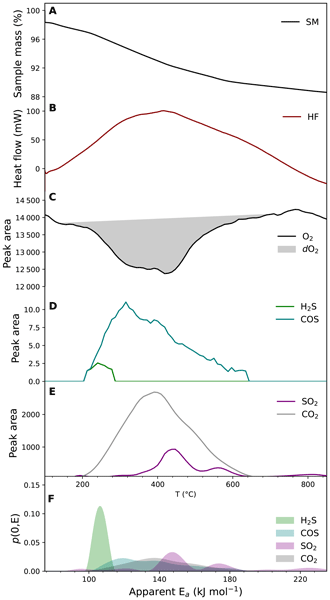
Shuzhuang Wu, Samuel L. Jaccard, and Matthieu E. Galvez
Biogeosciences, 23, 4859–4872, https://doi.org/10.5194/bg-23-4859-2026, https://doi.org/10.5194/bg-23-4859-2026, 2026
Short summary
Short summary
We present a novel analytical system that simultaneously measures mass loss, heat flow, gas emissions, and oxygen consumption during controlled heating. The method reveals how carbon, oxygen, and sulfur are stored, transformed, and recycled in geological materials. By providing high-resolution insights into thermal reactivity and redox processes, it helps identify hidden environmental changes and offers a powerful new tool for studying biogeochemical cycles and Earth’s environmental evolution.
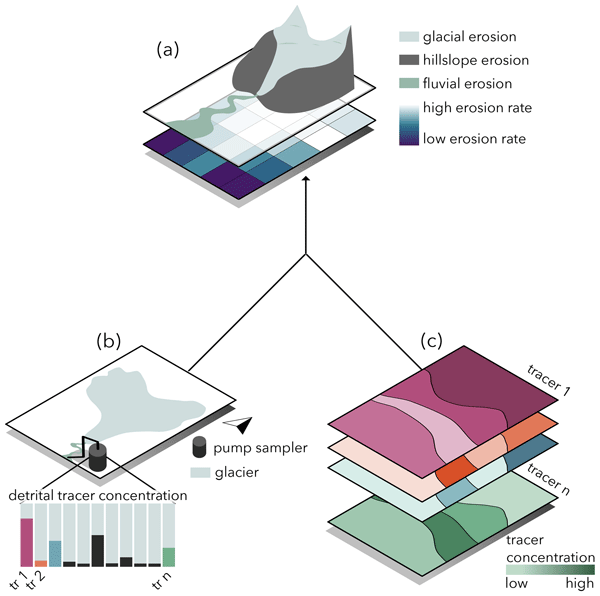
Fien De Doncker, Frédéric Herman, Bruno Belotti, and Thierry Adatte
Earth Surf. Dynam., 14, 443–467, https://doi.org/10.5194/esurf-14-443-2026, https://doi.org/10.5194/esurf-14-443-2026, 2026
Short summary
Short summary
Sediments carried by rivers can damage infrastructure, affect ecosystems, and alter landscapes, yet it is often unclear where these sediments come from, especially in regions hidden beneath ice. We developed a simple way to trace their origins by shining X-rays on crushed rocks and sediments. The resulting X-ray signals act like fingerprints that can be matched to source rocks, revealing where sediments come from and allowing us to map erosion across landscapes.
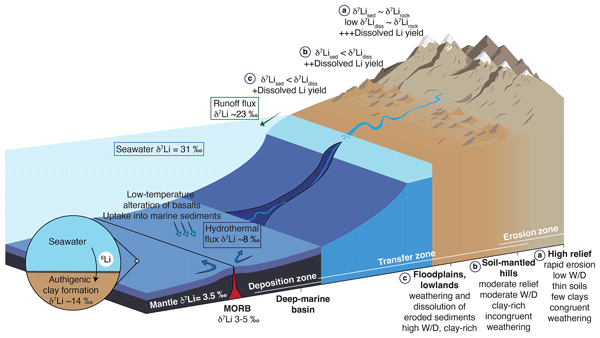
Rocio Jaimes-Gutierrez, Marine Prieur, David J. Wilson, Philip A. E. Pogge von Strandmann, Emmanuelle Pucéat, Thierry Adatte, Jorge E. Spangenberg, and Sébastien Castelltort
Clim. Past, 22, 709–727, https://doi.org/10.5194/cp-22-709-2026, https://doi.org/10.5194/cp-22-709-2026, 2026
Short summary
Short summary
How do semi-arid landscapes respond to rapid global warming? During the Palaeocene-Eocene Thermal Maximum – an extreme warming event 56 Ma ago – global lithium isotope records show a negative δ7Li excursion, suggesting an increase in weathering fluxes. In the Southern Pyrenees, we find the opposite behaviour: clay δ7Li values became ~1‰ heavier, indicating enhanced clay formation. These results suggest that regional hydroclimatic conditions can decouple regional signals from global averages.
Jhen-Nien Chen, Pei-En Chen, Yu-Shiang Yen, Tzu-Hsuan Tu, Lu-Yu Wang, Wan-Yin Lien, Yueh-Ting Lin, and Pei-Ling Wang
EGUsphere, https://doi.org/10.5194/egusphere-2025-5904, https://doi.org/10.5194/egusphere-2025-5904, 2025
Short summary
Short summary
Mountain rivers drain thirty percent of global runoff yet remain understudied in carbon cycling research. Using carbon-labeled tracers, this study revealed that microbial activity was higher during wet seasons, primarily breaking down organic matter rather than consuming carbon dioxide. These processes contribute several percent to total river carbon dioxide emissions, adding to emissions from rock weathering. Our results reveal that mountain river ecosystems actively influence carbon cycling.
Zanna Chase, Karen E. Kohfeld, Amy Leventer, David Lund, Xavier Crosta, Laurie Menviel, Helen C. Bostock, Matthew Chadwick, Samuel L. Jaccard, Jacob Jones, Alice Marzocchi, Katrin J. Meissner, Elisabeth Sikes, Louise C. Sime, and Luke Skinner
EGUsphere, https://doi.org/10.5194/egusphere-2025-3504, https://doi.org/10.5194/egusphere-2025-3504, 2025
Short summary
Short summary
The impact of recent dramatic declines in Antarctic sea ice on the Earth system are uncertain. We reviewed how sea ice affects ocean circulation, ice sheets, winds, and the carbon cycle by considering theory and modern observations alongside paleo-proxy reconstructions. We found evidence for connections between sea ice and these systems but also conflicting results, which point to missing knowledge. Our work highlights the complex role of sea ice in the Earth system.
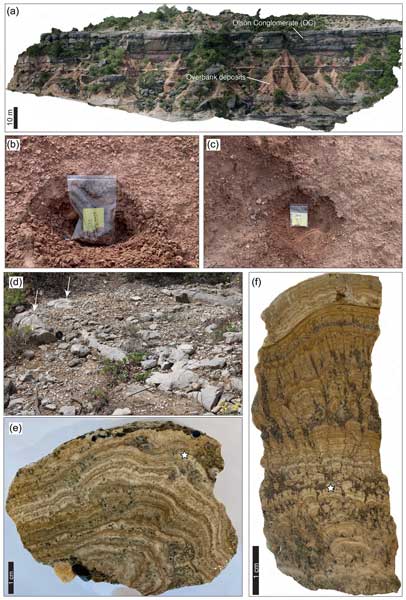
Nikhil Sharma, Jorge E. Spangenberg, Thierry Adatte, Torsten Vennemann, László Kocsis, Jean Vérité, Luis Valero, and Sébastien Castelltort
Clim. Past, 20, 935–949, https://doi.org/10.5194/cp-20-935-2024, https://doi.org/10.5194/cp-20-935-2024, 2024
Short summary
Short summary
The Middle Eocene Climatic Optimum (MECO) is an enigmatic global warming event with scarce terrestrial records. To contribute, this study presents a new comprehensive geochemical record of the MECO in the fluvial Escanilla Formation, Spain. In addition to identifying the regional preservation of the MECO, results demonstrate continental sedimentary successions, as key archives of past climate and stable isotopes, to be a powerful tool in correlating difficult-to-date fluvial successions.
Chueh-Chen Tung, Yu-Shih Lin, Jian-Xiang Liao, Tzu-Hsuan Tu, James T. Liu, Li-Hung Lin, Pei-Ling Wang, and Chih-Lin Wei
Biogeosciences, 21, 1729–1756, https://doi.org/10.5194/bg-21-1729-2024, https://doi.org/10.5194/bg-21-1729-2024, 2024
Short summary
Short summary
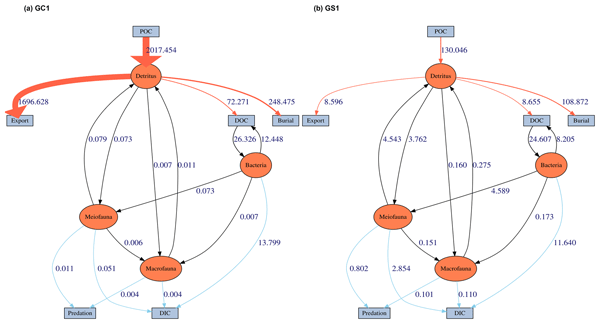
This study contrasts seabed food webs between a river-fed, high-energy canyon and the nearby slope. We show higher organic carbon (OC) flows through the canyon than the slope. Bacteria dominated the canyon, while seabed fauna contributed more to the slope food web. Due to frequent perturbation, the canyon had a lower faunal stock and OC recycling. Only 4 % of the seabed OC flux enters the canyon food web, suggesting a significant role of the river-fed canyon in transporting OC to the deep sea.
Cécile Charles, Nora Khelidj, Lucia Mottet, Bao Ngan Tu, Thierry Adatte, Brahimsamba Bomou, Micaela Faria, Laetitia Monbaron, Olivier Reubi, Natasha de Vere, Stéphanie Grand, and Gianalberto Losapio
EGUsphere, https://doi.org/10.5194/egusphere-2024-991, https://doi.org/10.5194/egusphere-2024-991, 2024
Preprint archived
Short summary
Short summary
We found that novel ecosystems created by glacier retreat are first characterized by an increase in plant diversity that is driven by a shift in soil texture. Plant diversity in turn increases soil organic matter and nutrient. Soils gradually acidifies and leads to a final stage where a dominance of few plant species reduces plant diversity. Understanding plant–soil interactions is crucial to anticipate how glacier retreat shapes biodiversity and landscapes.
Morgan T. Jones, Ella W. Stokke, Alan D. Rooney, Joost Frieling, Philip A. E. Pogge von Strandmann, David J. Wilson, Henrik H. Svensen, Sverre Planke, Thierry Adatte, Nicolas Thibault, Madeleine L. Vickers, Tamsin A. Mather, Christian Tegner, Valentin Zuchuat, and Bo P. Schultz
Clim. Past, 19, 1623–1652, https://doi.org/10.5194/cp-19-1623-2023, https://doi.org/10.5194/cp-19-1623-2023, 2023
Short summary
Short summary
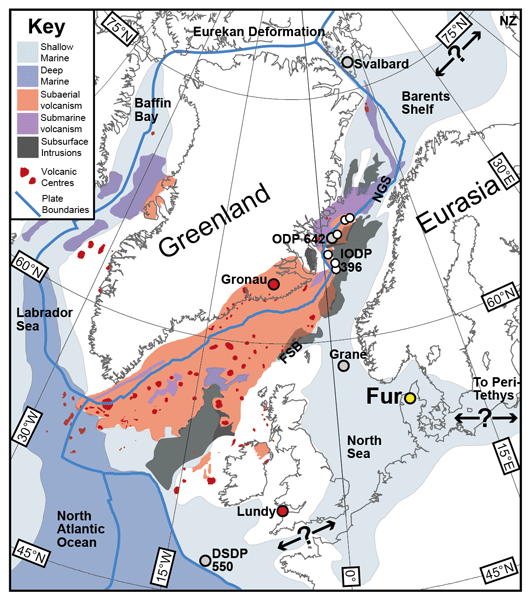
There are periods in Earth’s history when huge volumes of magma are erupted at the Earth’s surface. The gases released from volcanic eruptions and from sediments heated by the magma are believed to have caused severe climate changes in the geological past. We use a variety of volcanic and climatic tracers to assess how the North Atlantic Igneous Province (56–54 Ma) affected the oceans and atmosphere during a period of extreme global warming.
Sabí Peris Cabré, Luis Valero, Jorge E. Spangenberg, Andreu Vinyoles, Jean Verité, Thierry Adatte, Maxime Tremblin, Stephen Watkins, Nikhil Sharma, Miguel Garcés, Cai Puigdefàbregas, and Sébastien Castelltort
Clim. Past, 19, 533–554, https://doi.org/10.5194/cp-19-533-2023, https://doi.org/10.5194/cp-19-533-2023, 2023
Short summary
Short summary
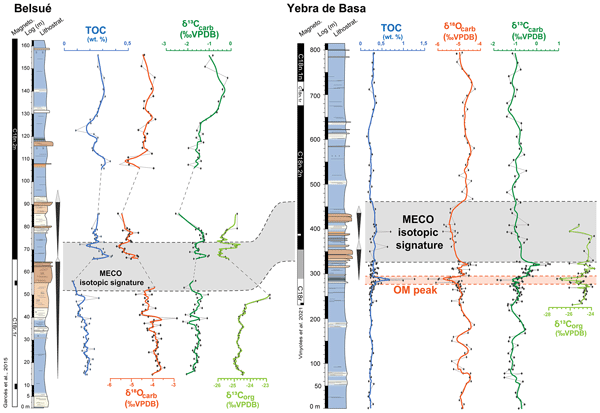
The Middle Eocene Climatic Optimum (MECO) was a global warming event that took place 40 Myr ago and lasted ca. 500 kyr, inducing physical, chemical, and biotic changes on the Earth. We use stable isotopes to identify the MECO in the Eocene deltaic deposits of the Southern Pyrenees. Our findings reveal enhanced deltaic progradation during the MECO, pointing to the important impact of global warming on fluvial sediment transport with implications for the consequences of current climate change.
Robin Fentimen, Eline Feenstra, Andres Rüggeberg, Efraim Hall, Valentin Rime, Torsten Vennemann, Irka Hajdas, Antonietta Rosso, David Van Rooij, Thierry Adatte, Hendrik Vogel, Norbert Frank, and Anneleen Foubert
Clim. Past, 18, 1915–1945, https://doi.org/10.5194/cp-18-1915-2022, https://doi.org/10.5194/cp-18-1915-2022, 2022
Short summary
Short summary
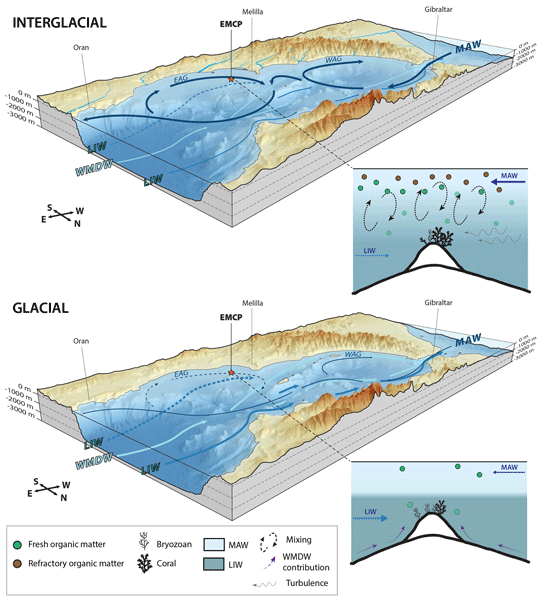
The investigation of a 9 m long sediment core recovered at ca. 300 m water depth demonstrates that cold-water coral mound build-up within the East Melilla Coral Province (southeastern Alboran Sea) took place during both interglacial and glacial periods. Based on the combination of different analytical methods (e.g. radiometric dating, micropaleontology), we propose that corals never thrived but rather developed under stressful environmental conditions.
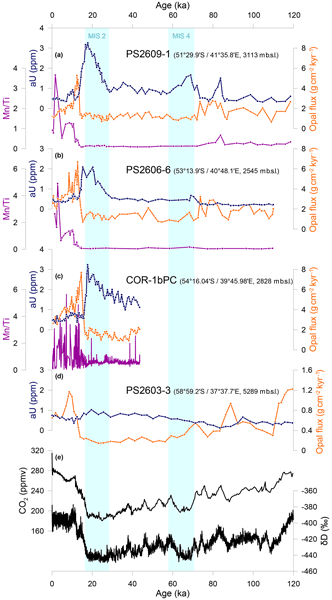
Helen Eri Amsler, Lena Mareike Thöle, Ingrid Stimac, Walter Geibert, Minoru Ikehara, Gerhard Kuhn, Oliver Esper, and Samuel Laurent Jaccard
Clim. Past, 18, 1797–1813, https://doi.org/10.5194/cp-18-1797-2022, https://doi.org/10.5194/cp-18-1797-2022, 2022
Short summary
Short summary
We present sedimentary redox-sensitive trace metal records from five sediment cores retrieved from the SW Indian Ocean. These records are indicative of oxygen-depleted conditions during cold periods and enhanced oxygenation during interstadials. Our results thus suggest that deep-ocean oxygenation changes were mainly controlled by ocean ventilation and that a generally more sluggish circulation contributed to sequestering remineralized carbon away from the atmosphere during glacial periods.
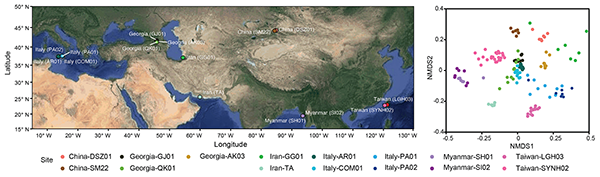
Tzu-Hsuan Tu, Li-Ling Chen, Yi-Ping Chiu, Li-Hung Lin, Li-Wei Wu, Francesco Italiano, J. Bruce H. Shyu, Seyed Naser Raisossadat, and Pei-Ling Wang
Biogeosciences, 19, 831–843, https://doi.org/10.5194/bg-19-831-2022, https://doi.org/10.5194/bg-19-831-2022, 2022
Short summary
Short summary
This investigation of microbial biogeography in terrestrial mud volcanoes (MVs) covers study sites over a geographic distance of up to 10 000 km across the Eurasian continent. It compares microbial community compositions' coupling with geochemical data across a 3D space. We demonstrate that stochastic processes operating at continental scales and environmental filtering at local scales drive the formation of patchy habitats and the pattern of diversification for microbes in terrestrial MVs.
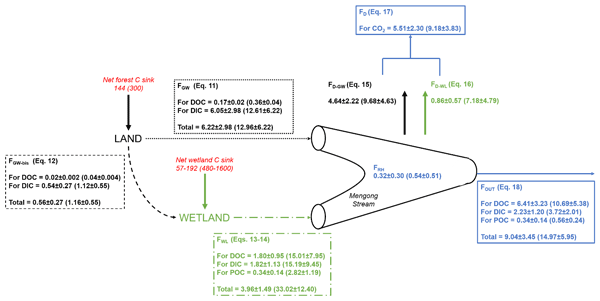
Moussa Moustapha, Loris Deirmendjian, David Sebag, Jean-Jacques Braun, Stéphane Audry, Henriette Ateba Bessa, Thierry Adatte, Carole Causserand, Ibrahima Adamou, Benjamin Ngounou Ngatcha, and Frédéric Guérin
Biogeosciences, 19, 137–163, https://doi.org/10.5194/bg-19-137-2022, https://doi.org/10.5194/bg-19-137-2022, 2022
Short summary
Short summary
We monitor the spatio-temporal variability of organic and inorganic carbon (C) species in the tropical Nyong River (Cameroon), across groundwater and increasing stream orders. We show the significant contribution of wetland as a C source for tropical rivers. Thus, ignoring the river–wetland connectivity might lead to the misrepresentation of C dynamics in tropical watersheds. Finally, total fluvial carbon losses might offset ~10 % of the net C sink estimated for the whole Nyong watershed.
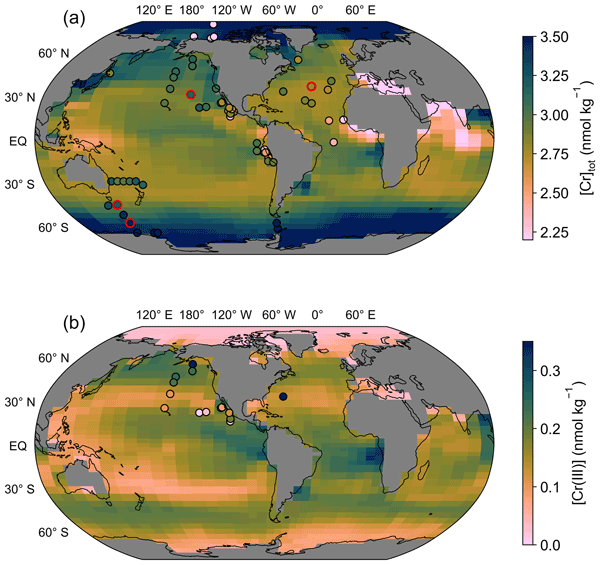
Frerk Pöppelmeier, David J. Janssen, Samuel L. Jaccard, and Thomas F. Stocker
Biogeosciences, 18, 5447–5463, https://doi.org/10.5194/bg-18-5447-2021, https://doi.org/10.5194/bg-18-5447-2021, 2021
Short summary
Short summary
Chromium (Cr) is a redox-sensitive element that holds promise as a tracer of ocean oxygenation and biological activity. We here implemented the oxidation states Cr(III) and Cr(VI) in the Bern3D model to investigate the processes that shape the global Cr distribution. We find a Cr ocean residence time of 5–8 kyr and that the benthic source dominates the tracer budget. Further, regional model–data mismatches suggest strong Cr removal in oxygen minimum zones and a spatially variable benthic source.
Cited articles
Aumont, O., Orr, J. C., Monfray, P., Ludwig, W., Amiotte-Suchet, P., and Probst, J.-L.: Riverine-driven interhemispheric transport of carbon, Global Biogeochem. Cy., 15, 393-405, https://doi.org/10.1029/1999GB001238, 2001.
Bayon, G., Patriat, M., Godderis, Y., Trinquier, A., De Deckker, P., Kulhanek, D. K., Holbourn, A., and Rosenthal, Y.: Accelerated mafic weathering in Southeast Asia linked to late Neogene cooling, Sci. Adv., 9, eadf3141, https://doi.org/10.1126/sciadv.adf3141, 2023.
Behar, F., Beaumont, V., and De B. Penteado, H. L.: Rock-Eval 6 Technology: Performances and Developments, Oil Gas Sci. Technol.-Rev. IFP, 56, 111–134, https://doi.org/10.2516/ogst:2001013, 2001.
Berends, C. J., de Boer, B., and van de Wal, R. S. W.: Reconstructing the evolution of ice sheets, sea level, and atmospheric CO2 during the past 3.6 million years, Clim. Past, 17, 361–377, https://doi.org/10.5194/cp-17-361-2021, 2021.
Berner, R. A.: The long-term carbon cycle, fossil fuels and atmospheric composition, Nature, 426, 323–326, https://doi.org/10.1038/nature02131, 2003.
Bertaz, J., Liu, Z., Colin, C., Dapoigny, A., Lin, A. T.-S., Li, Y., and Jian, Z.: Climatic and Environmental Impacts on the Sedimentation of the SW Taiwan Margin Since the Last Deglaciation: Geochemical and Mineralogical Investigations, Paleoceanogr. Paleocl., 39, e2023PA004745, https://doi.org/10.1029/2023PA004745, 2024.
Beusen, A. H. W., Bouwman, A. F., Van Beek, L. P. H., Mogollón, J. M., and Middelburg, J. J.: Global riverine N and P transport to ocean increased during the 20th century despite increased retention along the aquatic continuum, Biogeosciences, 13, 2441–2451, https://doi.org/10.5194/bg-13-2441-2016, 2016.
Boulay, S., Colin, C., Trentesaux, A., Frank, N., and Liu, Z.: Sediment sources and East Asian monsoon intensity over the last 450 ky. Mineralogical and geochemical investigations on South China Sea sediments, Palaeogeogr. Palaeocl., 228, 260–277, https://doi.org/10.1016/j.palaeo.2005.06.005, 2005.
Burke, K. D., Williams, J. W., Chandler, M. A., Haywood, A. M., Lunt, D. J., and Otto-Bliesner, B. L.: Pliocene and Eocene provide best analogs for near-future climates, P. Natl. Acad. Sci. USA, 115, 13288–13293, https://doi.org/10.1073/pnas.1809600115, 2018.
Canadell, J. G., Monteiro, P. M. S., Costa, M. H., Cotrim da Cunha, L., Cox, P. M., Eliseev, A. V., Henson, S., Ishii, M., Jaccard, S., Koven, C., Lohila, A., Patra, P. K., Piao, S., Rogelj, J., Syampungani, S., Zaehle, S., and Zickfeld, K.: 5 – Global Carbon and Other Biogeochemical Cycles and Feedbacks, in: Climate Change 2021: The Physical Science Basis. Contribution of Working Group I to the Sixth Assessment Report of the Intergovernmental Panel on Climate Change, edited by: Masson-Delmotte, V., Zhai, P., Pirani, A., Connors, S. L., Péan, C., Berger, S., Caud, N., Chen, Y., Goldfarb, L., Gomis, M. I., Huang, M., Leitzell, K., Lonnoy, E., Matthews, J. B. R., Maycock, T. K., Waterfield, T., Yelekçi, O., Yu, R., and Zhou, B., Cambridge University Press, Cambridge, United Kingdom and New York, NY, USA, 673–816, https://doi.org/10.1017/9781009157896.007, 2021.
Castelltort, S., Nagel, S., Mouthereau, F., Lin, A. T.-S., Wetzel, A., Kaus, B., Willett, S., Chiang, S.-P., and Chiu, W.-Y.: Sedimentology of early Pliocene sandstones in the south-western Taiwan foreland: Implications for basin physiography in the early stages of collision, J. Asian Earth Sci., 40, 52-71, https://doi.org/10.1016/j.jseaes.2010.09.005, 2011.
Caves, J. K., Jost, A. B., Lau, K. V., and Maher, K.: Cenozoic carbon cycle imbalances and a variable weathering feedback, Earth Planet. Sc. Lett., 450, 152–163, https://doi.org/10.1016/j.epsl.2016.06.035, 2016.
Chen, C.-W., Oguchi, T., Hayakawa, Y. S., Saito, H., Chen, H., Lin, G.-W., Wei, L.-W., and Chao, Y.-C.: Sediment yield during typhoon events in relation to landslides, rainfall, and catchment areas in Taiwan, Geomorphology, 303, 540–548, https://doi.org/10.1016/j.geomorph.2017.11.007, 2018.
Chen, J.-M., Li, T., and Shih, C.-F.: Tropical cyclone- and monsoon-induced rainfall variability in Taiwan, J. Climate, 23, 4107–4120, https://doi.org/10.1175/2010jcli3355.1, 2010.
Chen, W.-S.: An Introduction to the Geology of Taiwan, Geologic Society of Taiwan, Taipei, Taiwan, 2016.
Cheng, X., Zhao, Q., Wang, J., Jian, Z., Xia, P., Huang, B., Fang, D., Xu, J., Zhou, Z., and Wang, P.: Data Report: Stable Isotopes from Sites 1147 and 1148, in: Proc. ODP, edited by: Prell, W. L., Wang, P., Blum, P., Rea, D. K., and Clemens, S. C., Sci. Results, 184, https://doi.org/10.2973/odp.proc.sr.184.223.2004, 2004.
Chien, F.-C. and Kuo, H.-C.: On the extreme rainfall of Typhoon Morakot (2009), J. Geophys. Res., 116, D05104, https://doi.org/10.1029/2010jd015092, 2011.
Chmura, G. L. and Aharon, P.: Stable carbon isotope signatures of sedimentary carbon in coastal wetlands as indicators of salinity regime, J. Coastal. Res., 11, 124–135, 1995.
Cleveland, W. S., Grosse, E., and Shyu, W. M.: Local Regression Models, in: Statistical Models in S, 1st edn., Routledge, New York, https://doi.org/10.1201/9780203738535, 1992.
Clift, P. D.: Controls on the erosion of Cenozoic Asia and the flux of clastic sediment to the ocean, Earth Planet. Sc. Lett., 241, 571–580, https://doi.org/10.1016/j.epsl.2005.11.028, 2006.
Clift, P. D.: Variations in aridity across the Asia–Australia region during the Neogene and their impact on vegetation, Geol. Soc. Lond. Spec. Pub., 549, 157–178, https://doi.org/10.1144/SP549-2023-58, 2025.
Clift, P. D. and Jonell, T. N.: Himalayan-Tibetan Erosion Is Not the Cause of Neogene Global Cooling, Geophys. Res. Lett., 48, e2020GL087742, https://doi.org/10.1029/2020GL087742, 2021.
Clift, P. D., Wan, S., and Blusztajn, J.: Reconstructing chemical weathering, physical erosion and monsoon intensity since 25Ma in the northern South China Sea: A review of competing proxies, Earth-Sci. Rev., 130, 86–102, https://doi.org/10.1016/j.earscirev.2014.01.002, 2014.
Clift, P. D., Jonell, T. N., Du, Y., and Bornholdt, T.: The impact of Himalayan-Tibetan erosion on silicate weathering and organic carbon burial, Chem. Geol., 656, 122106, https://doi.org/10.1016/j.chemgeo.2024.122106, 2024a.
Clift, P. D., Lee, J. I., Clark, M. K., and Blusztajn, J.: Erosional response of South China to arc rifting and monsoonal strengthening; a record from the South China Sea, Mar. Geol., 184, 207–226, https://doi.org/10.1016/S0025-3227(01)00301-2, 2002.
Clift, P. D., Du, Y., Mohtadi, M., Pahnke, K., Sutorius, M., and Böning, P.: The erosional and weathering response to arc–continent collision in New Guinea, J. Geol. Soc., 181, jgs2023-2207, https://doi.org/10.1144/jgs2023-207, 2024b.
Clift, P. D., Betzler, C., Clemens, S. C., Christensen, B., Eberli, G. P., France-Lanord, C., Gallagher, S., Holbourn, A., Kuhnt, W., Murray, R. W., Rosenthal, Y., Tada, R., and Wan, S.: A synthesis of monsoon exploration in the Asian marginal seas, Sci. Dril., 31, 1–29, https://doi.org/10.5194/sd-31-1-2022, 2022.
Covey, M.: The evolution of foreland basins to steady state: Evidence from the western Taiwan foreland basin, in: Foreland Basins, edited by: Allen, P. A. and Homewood, P., Blackwell Publishing Ltd., 77–90, https://doi.org/10.1002/9781444303810.ch4, 1986.
Dadson, S. J., Hovius, N., Chen, H., Dade, W. B., Lin, J.-C., Hsu, M.-L., Lin, C.-W., Horng, M.-J., Chen, T.-C., Milliman, J., and Stark, C. P.: Earthquake-triggered increase in sediment delivery from an active mountain belt, Geology, 32, https://doi.org/10.1130/g20639.1, 2004.
Dadson, S. J., Hovius, N., Chen, H., Dade, W. B., Hsieh, M.-L., Willett, S. D., Hu, J.-C., Horng, M.-J., Chen, M.-C., Stark, C. P., Lague, D., and Lin, J.-C.: Links between erosion, runoff variability and seismicity in the Taiwan orogen, Nature, 426, 648–651, https://doi.org/10.1038/nature02150, 2003.
Dagg, M., Benner, R., Lohrenz, S., and Lawrence, D.: Transformation of dissolved and particulate materials on continental shelves influenced by large rivers: plume processes, Cont. Shelf Res., 24, 833–858, https://doi.org/10.1016/j.csr.2004.02.003, 2004.
Dashtgard, S. E., Löwemark, L., Wang, P.-L., Setiaji, R. A., and Vaucher, R.: Geochemical evidence of tropical cyclone controls on shallow-marine sedimentation (Pliocene, Taiwan), Geology, 49, 566–570, https://doi.org/10.1130/g48586.1, 2021.
Dowsett, H. J.: The PRISM palaeoclimate reconstruction and Pliocene sea-surface temperature, in: Deep-Time Perspectives on Climate Change: Marrying the Signal from Computer Models and Biological Proxies, edited by: Williams, M., Haywood, A. M., Gregory, F. J., and Schmidt, D. N., Geological Society of London, Vol. 2, https://doi.org/10.1144/tms002.21, 2007.
Dürr, H. H., Meybeck, M., Hartmann, J., Laruelle, G. G., and Roubeix, V.: Global spatial distribution of natural riverine silica inputs to the coastal zone, Biogeosciences, 8, 597–620, https://doi.org/10.5194/bg-8-597-2011, 2011.
Espitalie, J., Deroo, G., and Marquis, F.: La pyrolyse Rock-Eval et ses applications. Première partie, Oil Gas Sci. Technol.-Rev. IFP, 40, 563–579, https://doi.org/10.2516/ogst:1985035, 1985.
Fedorov, A. V., Brierley, C. M., and Emanuel, K.: Tropical cyclones and permanent El Niño in the early Pliocene epoch, Nature, 463, 1066–1070, https://doi.org/10.1038/nature08831, 2010.
Fedorov, A. V., Brierley, C. M., Lawrence, K. T., Liu, Z., Dekens, P. S., and Ravelo, A. C.: Patterns and mechanisms of early Pliocene warmth, Nature, 496, 43–49, https://doi.org/10.1038/nature12003, 2013.
Froelich, P. N.: Kinetic control of dissolved phosphate in natural rivers and estuaries: A primer on the phosphate buffer mechanism, Limnol. Oceanogr., 33, 649–668, https://doi.org/10.4319/lo.1988.33.4part2.0649, 1988.
Galewsky, J., Stark, C. P., Dadson, S., Wu, C. C., Sobel, A. H., and Horng, M. J.: Tropical cyclone triggering of sediment discharge in Taiwan, J. Geophys. Res., 111, F03014, https://doi.org/10.1029/2005JF000428, 2006.
Galy, V., France-Lanord, C., Beyssac, O., Faure, P., Kudrass, H., and Palhol, F.: Efficient organic carbon burial in the Bengal fan sustained by the Himalayan erosional system, Nature, 450, 407–410, https://doi.org/10.1038/nature06273, 2007.
Ge, J., Torres, R., Chen, C., Liu, J., Xu, Y., Bellerby, R., Shen, F., Bruggeman, J., and Ding, P.: Influence of suspended sediment front on nutrients and phytoplankton dynamics off the Changjiang Estuary: A FVCOM-ERSEM coupled model experiment, J. Marine Syst., 204, 103292, https://doi.org/10.1016/j.jmarsys.2019.103292, 2020.
GEBCO Bathymetric Compilation Group: The GEBCO_2025 Grid – a continuous terrain model for oceans and land at 15 arc-second intervals, NERC EDS British Oceanographic Data Centre NOC [data set], https://doi.org/10.5285/37c52e96-24ea-67ce-e063-7086abc05f29, 2025.
Green, W. G. and Fearon, R. E.: Well logging by radioactivity, Geophysics, 5, 272–283, 1940.
Haq, B. U. and Ogg, J. G.: Retraversing the Highs and Lows of Cenozoic Sea Levels, GSA Today, 34, 4–11, https://doi.org/10.1130/GSATGG593A.1, 2024.
Haq, B. U., Hardenbol, J., and Vail, P. R.: Chronology of Fluctuating Sea Levels Since the Triassic, Science, 235, 1156–1167, https://doi.org/10.1126/science.235.4793.1156, 1987.
Hilton, R. G. and West, A. J.: Mountains, erosion and the carbon cycle, Nature Reviews Earth & Environment, 1, 284–299, https://doi.org/10.1038/s43017-020-0058-6, 2020.
Hilton, R. G., Galy, A., Hovius, N., Horng, M.-J., and Chen, H.: The isotopic composition of particulate organic carbon in mountain rivers of Taiwan, Geochim. Cosmochim. Acta, 74, 3164–3181, https://doi.org/10.1016/j.gca.2010.03.004, 2010.
Hilton, R. G., Galy, A., Hovius, N., Horng, M.-J., and Chen, H.: Efficient transport of fossil organic carbon to the ocean by steep mountain rivers: An orogenic carbon sequestration mechanism, Geology, 39, 71–74, https://doi.org/10.1130/g31352.1, 2011.
Hoang, L. V., Clift, P. D., Schwab, A. M., Huuse, M., Nguyen, D. A., and Zhen, S.: Large-scale erosional response of SE Asia to monsoon evolution reconstructed from sedimentary records of the Song Hong-Yinggehai and Qiongdongnan basins, South China Sea, Geol. Soc. Lond. Spec. Pub., 342, 219–244, https://doi.org/10.1144/SP342.13, 2010.
Holbourn, A., Kuhnt, W., Clemens, S. C., and Heslop, D.: A ∼ 12 Myr Miocene record of East Asian Monsoon variability from the South China Sea, Paleoceanogr. Paleoclimatol., 36, https://doi.org/10.1029/2021pa004267, 2021.
Holbourn, A., Kuhnt, W., Schulz, M., and Erlenkeuser, H.: Impacts of orbital forcing and atmospheric carbon dioxide on Miocene ice-sheet expansion, Nature, 438, 483–487, https://doi.org/10.1038/nature04123, 2005.
Holbourn, A., Kuhnt, W., Schulz, M., Flores, J.-A., and Andersen, N.: Orbitally-paced climate evolution during the middle Miocene “Monterey” carbon-isotope excursion, Earth Planet. Sc. Lett., 261, 534–550, https://doi.org/10.1016/j.epsl.2007.07.026, 2007.
Horng, C.-S.: Age of the Tananwan Formation in Northern Taiwan: A reexamination of the magnetostratigraphy and calcareous nannofossil biostratigraphy, Terr. Atmos. Ocean Sci., 25, 137–147, https://doi.org/10.3319/TAO.2013.11.05.01(TT), 2014.
Horng, C.-S. and Huh, C.-A.: Magnetic properties as tracers for source-to-sink dispersal of sediments: A case study in the Taiwan Strait, Earth Planet. Sci. Lett., 309, 141–152, https://doi.org/10.1016/j.epsl.2011.07.002, 2011.
Hoshiba, Y. and Yamanaka, Y.: Along-coast shifts of plankton blooms driven by riverine inputs of nutrients and fresh water onto the coastal shelf: a model simulation, J. Oceanogr., 69, 753–767, https://doi.org/10.1007/s10872-013-0206-4, 2013.
Houghton, R. A.: Why are estimates of the terrestrial carbon balance so different?, Glob. Change Biol., 9, 500–509, https://doi.org/10.1046/j.1365-2486.2003.00620.x, 2003.
Hsieh, A. I. J.: Organic carbon and nitrogen geochemistry of Taiwan and the northern South China Sea, Version v1, Zenodo [data set], https://doi.org/10.5281/zenodo.18397150, 2026.
Hsieh, A. I., Vaucher, R., Löwemark, L., Dashtgard, S. E., Horng, C. S., Lin, A. T.-S., and Zeeden, C.: Influence of a rapidly uplifting orogen on the preservation of climate oscillations, Paleoceanogr. Paleoclimatol., 38, e2022PA004586, https://doi.org/10.1029/2022PA004586, 2023a.
Hsieh, A. I., Dashtgard, S. E., Wang, P. L., Horng, C. S., Su, C. C., Lin, A. T., Vaucher, R., and Löwemark, L.: Multi-proxy evidence for rapidly shifting sediment sources to the Taiwan Western Foreland Basin at the Miocene–Pliocene transition, Basin Res., 35, 932–948, https://doi.org/10.1111/bre.12741, 2023b.
Hsieh, A. I., Dashtgard, S. E., Clift, P. D., Lo, L., Vaucher, R., and Löwemark, L.: Competing influence of the Taiwan orogen and East Asian Summer Monsoon on South China Sea paleoenvironmental proxy records, Palaeogeogr. Palaeoclimatol. Palaeoecol., 635, 111933, https://doi.org/10.1016/j.palaeo.2023.111933, 2024.
Hsieh, A. I., Vaucher, R., MacEachern, J. A., Zeeden, C., Huang, C., Lin, A. T., Löwemark, L., and Dashtgard, S. E.: Resolving allogenic forcings on shallow-marine sedimentary archives of the Taiwan Western Foreland Basin, Sedimentology, 72, 1755–1785, https://doi.org/10.1111/sed.70020, 2025.
Hu, D., Böning, P., Köhler, C. M., Hillier, S., Pressling, N., Wan, S., Brumsack, H. J., and Clift, P. D.: Deep sea records of the continental weathering and erosion response to East Asian monsoon intensification since 14 ka in the South China Sea, Chem. Geol., 326–327, 1–18, https://doi.org/10.1016/j.chemgeo.2012.07.024, 2012.
Hu, J., Kawamura, H., Li, C., Hong, H., and Jiang, Y.: Review on current and seawater volume transport through the Taiwan Strait, J. Oceanogr., 66, 591–610, https://doi.org/10.1007/s10872-010-0049-1, 2010.
Hu, Z., Huang, B., Geng, L., and Wang, N.: Sediment provenance in the Northern South China Sea since the Late Miocene, Open Geosci., 14, 454, https://doi.org/10.1515/geo-2022-0454, 2022.
Huang, T.-H., Chen, C.-T. A., Bai, Y., and He, X.: Elevated primary productivity triggered by mixing in the quasi-cul-de-sac Taiwan Strait during the NE monsoon, Sci. Rep., 10, 7846, https://doi.org/10.1038/s41598-020-64580-6, 2020.
Jagoutz, O., Macdonald, F. A., and Royden, L.: Low-latitude arc–continent collision as a driver for global cooling, P. Natl. Acad. Sci. USA, 113, 4935–4940, https://doi.org/10.1073/pnas.1523667113, 2016.
Jakob, K. A., Wilson, P. A., Pross, J., Ezard, T. H. G., Fiebig, J., Repschläger, J., and Friedrich, O.: A new sea-level record for the Neogene/Quaternary boundary reveals transition to a more stable East Antarctic Ice Sheet, P. Natl. Acad. Sci. USA, 117, 30980–30987, https://doi.org/10.1073/pnas.2004209117, 2020.
Janapati, J., Seela, B. K., Lin, P.-L., Wang, P. K., and Kumar, U.: An assessment of tropical cyclones rainfall erosivity for Taiwan, Sci. Rep., 9, 15862, https://doi.org/10.1038/s41598-019-52028-5, 2019.
Jin, L., Shan, X., Vaucher, R., Qiao, S., Wang, C., Liu, S., Wang, H., Fang, X., Bai, Y., Zhu, A., and Shi, X.: Sea-level changes control coastal organic carbon burial in the East China Sea during the late MIS 3, Earth Planet. Sc. Lett., 229, 104225, https://doi.org/10.1016/j.gloplacha.2023.104225, 2023.
Kämpf, N. and Schwertmann, U.: Goethite and hematite in a climosequence in southern Brazil and their application in classification of kaolinitic soils, Geoderma, 29, 27–39, https://doi.org/10.1016/0016-7061(83)90028-9, 1983.
Kao, S.-J., Shiah, F.-K., Wang, C.-H., and Liu, K.-K.: Efficient trapping of organic carbon in sediments on the continental margin with high fluvial sediment input off southwestern Taiwan, Cont. Shelf Res., 26, 2520–2537, https://doi.org/10.1016/j.csr.2006.07.030, 2006.
Kao, S. J. and Milliman, J. D.: Water and sediment discharge from small mountainous rivers, Taiwan: The roles of lithology, episodic events, and human activities, J. Geol., 116, 431–448, https://doi.org/10.1086/590921, 2008.
Kissel, C., Liu, Z., Li, J., and Wandres, C.: Magnetic minerals in three Asian rivers draining into the South China Sea: Pearl, Red, and Mekong Rivers, Geochem. Geophy. Geosy., 17, 1678–1693, https://doi.org/10.1002/2016GC006283, 2016.
Kissel, C., Liu, Z., Li, J., and Wandres, C.: Magnetic signature of river sediments drained into the southern and eastern part of the South China Sea (Malay Peninsula, Sumatra, Borneo, Luzon and Taiwan), Sediment. Geol., 347, 10–20, https://doi.org/10.1016/j.sedgeo.2016.11.007, 2017.
Krumins, V., Gehlen, M., Arndt, S., Van Cappellen, P., and Regnier, P.: Dissolved inorganic carbon and alkalinity fluxes from coastal marine sediments: model estimates for different shelf environments and sensitivity to global change, Biogeosciences, 10, 371–398, https://doi.org/10.5194/bg-10-371-2013, 2013.
Lee, T.-Y., Huang, J.-C., Lee, J.-Y., Jien, S.-H., Zehetner, F., and Kao, S.-J.: Magnified sediment export of small mountainous rivers in Taiwan: Chain reactions from increased rainfall intensity under global warming, PLoS One, 10, e0138283, https://doi.org/10.1371/journal.pone.0138283, 2015.
Li, B., Wang, J., Huang, B., Li, Q., Jian, Z., Zhao, Q., Su, X., and Wang, P.: South China Sea surface water evolution over the last 12 Myr: A south-north comparison from Ocean Drilling Program Sites 1143 and 1146, Paleoceanography, 19, PA1009, https://doi.org/10.1029/2003PA000906, 2004.
Li, L., Li, Q., Tian, J., Wang, P., Wang, H., and Liu, Z.: A 4-Ma record of thermal evolution in the tropical western Pacific and its implications on climate change, Earth Planet. Sc. Lett., 309, 10–20, https://doi.org/10.1016/j.epsl.2011.04.016, 2011.
Li, M., Wan, S., Colin, C., Jin, H., Zhao, D., Pei, W., Jiao, W., Tang, Y., Tan, Y., Shi, X., and Li, A.: Expansion of C4 plants in South China and evolution of East Asian monsoon since 35 Ma: Black carbon records in the northern South China Sea, Global Planet. Change, 223, 104079, https://doi.org/10.1016/j.gloplacha.2023.104079, 2023.
Li, X.-h., Wei, G., Shao, L., Liu, Y., Liang, X., Jian, Z., Sun, M., and Wang, P.: Geochemical and Nd isotopic variations in sediments of the South China Sea: a response to Cenozoic tectonism in SE Asia, Earth Planet. Sc. Lett., 211, 207–220, https://doi.org/10.1016/S0012-821X(03)00229-2, 2003.
Lin, A. T.-S. and Watts, A. B.: Origin of the West Taiwan basin by orogenic loading and flexure of a rifted continental margin, J. Geophys. Res.-Sol. Ea., 107, ETG 2-1–ETG 2-19, https://doi.org/10.1029/2001jb000669, 2002.
Lin, H.-T., Yang, J.-I., Wu, Y.-T., Shiau, Y.-J., Lo, L., and Yang, S.-H.: The spatiotemporal variations of marine nematode populations may serve as indicators of changes in marine ecosystems, Mar. Pollut. Bull., 211, 117373, https://doi.org/10.1016/j.marpolbul.2024.117373, 2025.
Lisiecki, L. E. and Raymo, M. E.: A Pliocene-Pleistocene stack of 57 globally distributed benthic δ18O records, Paleoceanography, 20, PA1003, https://doi.org/10.1029/2004pa001071, 2005.
Liu, J., Chen, Z., Chen, M., Yan, W., Xiang, R., and Tang, X.: Magnetic susceptibility variations and provenance of surface sediments in the South China Sea, Sediment. Geol., 230, 77–85, https://doi.org/10.1016/j.sedgeo.2010.07.001, 2010a.
Liu, J. P., Liu, C. S., Xu, K. H., Milliman, J. D., Chiu, J. K., Kao, S. J., and Lin, S. W.: Flux and fate of small mountainous rivers derived sediments into the Taiwan Strait, Mar. Geol., 256, 65–76, https://doi.org/10.1016/j.margeo.2008.09.007, 2008.
Liu, J. P., Xue, Z., Ross, K., Wang, H. J., Yang, Z. S., Li, A. C., and Gao, S.: Fate of sediments delivered to the sea by Asian large rivers: Long-distance transport and formation of remote alongshore clinothems, The Sedimentary Record, 7, 4–9, https://doi.org/10.2110/sedred.2009.4.4, 2009a.
Liu, J. T., Hung, J.-J., Lin, H.-L., Huh, C.-A., Lee, C.-L., Hsu, R. T., Huang, Y.-W., and Chu, J. C.: From suspended particles to strata: The fate of terrestrial substances in the Gaoping (Kaoping) submarine canyon, J. Marine Syst., 76, 417–432, https://doi.org/10.1016/j.jmarsys.2008.01.010, 2009b.
Liu, J. T., Wang, Y.-H., Yang, R. J., Hsu, R. T., Kao, S.-J., Lin, H.-L., and Kuo, F. H.: Cyclone-induced hyperpycnal turbidity currents in a submarine canyon, J. Geophys. Res.-Oceans, 117, C04033, https://doi.org/10.1029/2011jc007630, 2012.
Liu, J. T., Kao, S. J., Huh, C. A., and Hung, C. C.: Gravity flows associated with flood events and carbon burial: Taiwan as instructional source area, Annu. Rev. Mar. Sci., 5, 47–68, https://doi.org/10.1146/annurev-marine-121211-172307, 2013.
Liu, Z., Alain, T., Clemens, S. C., and Wang, P.: Quaternary clay mineralogy in the northern South China Sea (ODP Site 1146), Sci. China Ser. D, 46, 1223–1235, https://doi.org/10.1360/02yd0107, 2003.
Liu, Z., Colin, C., Huang, W., Le, K. P., Tong, S., Chen, Z., and Trentesaux, A.: Climatic and tectonic controls on weathering in south China and Indochina Peninsula: Clay mineralogical and geochemical investigations from the Pearl, Red, and Mekong drainage basins, Geochem. Geophy. Geosy., 8, Q05005, https://doi.org/10.1029/2006gc001490, 2007.
Liu, Z., Zhao, Y., Colin, C., Siringan, F. P., and Wu, Q.: Chemical weathering in Luzon, Philippines from clay mineralogy and major-element geochemistry of river sediments, Appl. Geochem., 24, 2195–2205, https://doi.org/10.1016/j.apgeochem.2009.09.025, 2009c.
Liu, Z., Colin, C., Li, X., Zhao, Y., Tuo, S., Chen, Z., Siringan, F. P., Liu, J. T., Huang, C.-Y., You, C.-F., and Huang, K.-F.: Clay mineral distribution in surface sediments of the northeastern South China Sea and surrounding fluvial drainage basins: Source and transport, Mar. Geol., 277, 48–60, https://doi.org/10.1016/j.margeo.2010.08.010, 2010b.
Liu, Z., Zhao, Y., Colin, C., Stattegger, K., Wiesner, M. G., Huh, C.-A., Zhang, Y., Li, X., Sompongchaiyakul, P., You, C.-F., Huang, C.-Y., Liu, J. T., Siringan, F. P., Le, K. P., Sathiamurthy, E., Hantoro, W. S., Liu, J., Tuo, S., Zhao, S., Zhou, S., He, Z., Wang, Y., Bunsomboonsakul, S., and Li, Y.: Source-to-sink transport processes of fluvial sediments in the South China Sea, Earth-Sci. Rev., 153, 238–273, https://doi.org/10.1016/j.earscirev.2015.08.005, 2016.
Lüdmann, T., Wong, H. K., and Berglar, K.: Upward flow of North Pacific Deep Water in the northern South China Sea as deduced from the occurrence of drift sediments, Geophys. Res. Lett., 32, 1–4, https://doi.org/10.1029/2004GL021967, 2005.
Luo, X., Zhou, H., Satriawan, T. W., Tian, J., Zhao, R., Keenan, T. F., Griffith, D. M., Sitch, S., Smith, N. G., and Still, C. J.: Mapping the global distribution of C4 vegetation using observations and optimality theory, Nat. Commun., 15, 1219, https://doi.org/10.1038/s41467-024-45606-3, 2024.
Lurcock, P. C. and Wilson, G. S.: PuffinPlot: A versatile, user-friendly program for paleomagnetic analysis, Geochem. Geophy. Geosy., 13, Q06Z45, https://doi.org/10.1029/2012GC004098, 2012.
Macdonald, F. A., Swanson-Hysell, N. L., Park, Y., Lisiecki, L., and Jagoutz, O.: Arc-continent collisions in the tropics set Earth's climate state, Science, 364, 181–184, https://doi.org/10.1126/science.aav5300, 2019.
Maher, B. A.: Characterisation of soils by mineral magnetic measurements, Phys. Earth Planet. In., 42, 76–92, https://doi.org/10.1016/S0031-9201(86)80010-3, 1986.
Martiny, A. C., Pham, C. T. A., Primeau, F. W., Vrugt, J. A., Moore, J. K., Levin, S. A., and Lomas, M. W.: Strong latitudinal patterns in the elemental ratios of marine plankton and organic matter, Nat. Geosci., 6, 279–283, https://doi.org/10.1038/ngeo1757, 2013.
Miller, K. G., Browning, J. V., Schmelz, W. J., Kopp, R. E., Mountain, G. S., and Wright, J. D.: Cenozoic sea-level and cryospheric evolution from deep-sea geochemical and continental margin records, Sci. Adv., 6, eaaz1346, https://doi.org/10.1126/sciadv.aaz1346, 2020.
Milliman, J. D. and Kao, S.-J.: Hyperpycnal discharge of fluvial sediment to the ocean: Impact of super-typhoon Herb (1996) on Taiwanese rivers, J. Geol., 113, 503–516, https://doi.org/10.1086/431906, 2005.
Milliman, J. D. and Syvitski, J. P. M.: Geomorphic/tectonic control of sediment discharge to the ocean: The importance of small mountainous rivers, J. Geol., 100, 525–544, https://doi.org/10.1086/629606, 1992.
Milliman, J. D., Lee, T. Y., Huang, J. C., and Kao, S. J.: Impact of catastrophic events on small mountainous rivers: Temporal and spatial variations in suspended- and dissolved-solid fluxes along the Choshui River, central western Taiwan, during typhoon Mindulle, July 2–6, 2004, Geochim. Cosmochim. Ac., 205, 272–294, https://doi.org/10.1016/j.gca.2017.02.015, 2017.
Nagel, S., Granjeon, D., Willett, S., Lin, A. T.-S., and Castelltort, S.: Stratigraphic modeling of the Western Taiwan foreland basin: Sediment flux from a growing mountain range and tectonic implications, Mar. Petrol. Geol., 96, 331–347, https://doi.org/10.1016/j.marpetgeo.2018.05.034, 2018.
Nagel, S., Castelltort, S., Wetzel, A., Willett, S. D., Mouthereau, F., and Lin, A. T.: Sedimentology and foreland basin paleogeography during Taiwan arc continent collision, J. Asian Earth Sci., 62, 180–204, https://doi.org/10.1016/j.jseaes.2012.09.001, 2013.
Nie, J., Stevens, T., Song, Y., King, J. W., Zhang, R., Ji, S., Gong, L., and Cares, D.: Pacific freshening drives Pliocene cooling and Asian monsoon intensification, Sci. Rep., 4, 5474, https://doi.org/10.1038/srep05474, 2014.
Pan, T.-Y., Lin, A. T.-S., and Chi, W.-R.: Paleoenvironments of the evolving Pliocene to early Pleistocene foreland basin in northwestern Taiwan: An example from the Dahan River section, Isl. Arc, 24, 317–341, https://doi.org/10.1111/iar.12113, 2015.
Peterson, B. J. and Fry, B.: Stable isotopes in ecosystem studies, Annu. Rev. Ecol. Evol. S., 18, 293–320, https://doi.org/10.1146/annurev.es.18.110187.001453, 1987.
Raymo, M. E. and Ruddiman, W. F.: Tectonic forcing of late Cenozoic climate, Nature, 359, 117–122, https://doi.org/10.1038/359117a0, 1992.
Robinson, M. M., Dowsett, H. J., and Chandler, M. A.: Pliocene role in assessing future climate impacts, Eos, 89, 501–502, https://doi.org/10.1029/2008EO490001, 2008.
Rohling, E. J., Foster, G. L., Grant, K. M., Marino, G., Roberts, A. P., Tamisiea, M. E., and Williams, F.: Sea-level and deep-sea-temperature variability over the past 5.3 million years, Nature, 508, 477–482, https://doi.org/10.1038/nature13230, 2014.
Schlumberger: Log Interpretation Principles/Applications, Schlumberger, Houston, 233 pp., 1989.
Shea, K.-S. and Huang, T.: Tertiary stratigraphy in Taiwan, The Taiwan Mining Industry, 55, 17–32, 2003.
Shih, Y.-Y., Lin, H.-H., Li, D., Hsieh, H.-H., Hung, C.-C., and Chen, C.-T. A.: Elevated carbon flux in deep waters of the South China Sea, Sci. Rep., 9, 1496, https://doi.org/10.1038/s41598-018-37726-w, 2019.
Spangenberg, J. E.: Bulk C, H, O, and fatty acid C stable isotope analyses for purity assessment of vegetable oils from the southern and northern hemispheres, Rapid Commun. Mass Sp., 30, 2447–2461, https://doi.org/10.1002/rcm.7734, 2016.
Stepanauskas, R., JØrgensen, N. O. G., Eigaard, O. R., Žvikas, A., Tranvik, L. J., and Leonardson, L.: Summer inputs of riverine nutrients to the Baltic Sea: Bioavailability and eutrophication relevance, Ecol. Monogr., 72, 579–597, https://doi.org/10.1890/0012-9615(2002)072[0579:SIORNT]2.0.CO;2, 2002.
Still, C., Berry, J., Collatz, G., and Defries, R.: Global distribution of C3 and C4 vegetation: Carbon cycle implications, Global Biogeochem. Cy., 17, 6-1–6.14, https://doi.org/10.1029/2001GB001807, 2003.
Teng, L. S., Wang, Y., Tang, C.-H., Huang, C.-Y., Huang, T.-C., Yu, M.-S., and Ke, A.: Tectonic aspects of the Paleogene depositional basin of northern Taiwan, Proc. Geol. Soc. China, 34, 313–336, 1991.
Thunell, R. C., Qingmin, M., Calvert, S. E., and Pedersen, T. F.: Glacial-Holocene Biogenic Sedimentation Patterns in the South China Sea: Productivity Variations and Surface Water pCO2, Paleoceanography, 7, 143–162, https://doi.org/10.1029/92PA00278, 1992.
Tian, J., Wang, P., Cheng, X., and Li, Q.: Establishment of the Plio-Pleistocene as-tronomical timescale of ODP site 1143, Southern South China Sea, J. China Univ. Geosci., 30, 31–39, 2005.
Tian, J., Xie, X., Ma, W., Jin, H., and Wang, P.: X-ray fluorescence core scanning records of chemical weathering and monsoon evolution over the past 5 Myr in the southern South China Sea, Paleoceanography, 26, https://doi.org/10.1029/2010PA002045, 2011.
Tian, J., Zhao, Q., Wang, P., Li, Q., and Cheng, X.: Astronomically modulated Neogene sediment records from the South China Sea, Paleoceanography, 23, https://doi.org/10.1029/2007PA001552, 2008.
Tierney, J. E., Haywood, A. M., Feng, R., Bhattacharya, T., and Otto-Bliesner, B. L.: Pliocene warmth consistent with greenhouse gas forcing, Geophys. Res. Lett., 46, 9136–9144, https://doi.org/10.1029/2019gl083802, 2019.
Tory, K. J. and Frank, W. M.: Tropical Cyclone Formation, in: Global Perspectives on Tropical Cyclones, edited by: Kepert, J. D. and Chan, J. C. L., World Scientific Series on Asia-Pacific Weather and Climate, 4, 55–91, https://doi.org/10.1142/9789814293488_0002, 2010.
Van Oost, K., Verstraeten, G., Doetterl, S., Notebaert, B., Wiaux, F., Broothaerts, N., and Six, J.: Legacy of human-induced C erosion and burial on soil–atmosphere C exchange, P. Natl. Acad. Sci. USA, 109, 19492–19497, https://doi.org/10.1073/pnas.1211162109, 2012.
Vaucher, R., Dillinger, A., Hsieh, A. I., Chi, W.-R., Löwemark, L., and Dashtgard, S. E.: Storm-flood-dominated delta succession in the Pleistocene Taiwan Strait, The Depositional Record, 9, 820–843, https://doi.org/10.1002/dep2.231, 2023a.
Vaucher, R., Zeeden, C., Hsieh, A. I., Kaboth-Bahr, S., Lin, A. T., Horng, C.-S., and Dashtgard, S. E.: Hydroclimate dynamics during the Plio-Pleistocene transition in the northwest Pacific realm, Global Planet. Change, 223, 104088, https://doi.org/10.1016/j.gloplacha.2023.104088, 2023b.
Vaucher, R., Dashtgard, S. E., Horng, C. S., Zeeden, C., Dillinger, A., Pan, Y. Y., Setiaji, R. A., Chi, W. R., and Lowemark, L.: Insolation-paced sea level and sediment flux during the early Pleistocene in Southeast Asia, Sci. Rep., 11, 16707, https://doi.org/10.1038/s41598-021-96372-x, 2021.
Walker, J. C. G., Hays, P. B., and Kasting, J. F.: A negative feedback mechanism for the long-term stabilization of Earth's surface temperature, J. Geophys. Res.-Oceans, 86, 9776–9782, https://doi.org/10.1029/JC086iC10p09776, 1981.
Wan, S., Li, A., Clift, P. D., and Jiang, H.: Development of the East Asian summer monsoon: Evidence from the sediment record in the South China Sea since 8.5 Ma, Palaeogeogr. Palaeocl., 241, 139–159, https://doi.org/10.1016/j.palaeo.2006.06.013, 2006.
Wan, S., Li, A., Clift, P. D., and Stuut, J.-B. W.: Development of the East Asian monsoon: Mineralogical and sedimentologic records in the northern South China Sea since 20 Ma, Palaeogeogr. Palaeocl., 254, 561–582, https://doi.org/10.1016/j.palaeo.2007.07.009, 2007a.
Wan, S., Clift, P. D., Li, A., Li, T., and Yin, X.: Geochemical records in the South China Sea: implications for East Asian summer monsoon evolution over the last 20 Ma, Geol. Soc. Lond. Spec. Pub., 342, 245–263, https://doi.org/10.1144/SP342.14, 2010a.
Wan, S., Tian, J., Steinke, S., Li, A., and Li, T.: Evolution and variability of the East Asian summer monsoon during the Pliocene: Evidence from clay mineral records of the South China Sea, Palaeogeogr. Palaeocl., 293, 237–247, https://doi.org/10.1016/j.palaeo.2010.05.025, 2010b.
Wan, S., Li, A., Clift, P. D., Wu, S., Xu, K., and Li, T.: Increased contribution of terrigenous supply from Taiwan to the northern South China Sea since 3 Ma, Mar. Geol., 278, 115–121, https://doi.org/10.1016/j.margeo.2010.09.008, 2010c.
Wan, S. M., Li, A. C., Jan-Berend, W. S., and Xu, F. J.: Grain-size records at ODP site 1146 from the northern South China Sea: Implications on the East Asian monsoon evolution since 20 Ma, Sci. China Ser. D, 50, 1536–1547, https://doi.org/10.1007/s11430-007-0082-0, 2007b.
Wang, H., Lu, H., Zhao, L., Zhang, H., Lei, F., and Wang, Y.: Asian monsoon rainfall variation during the Pliocene forced by global temperature change, Nat. Commun., 10, 5272, https://doi.org/10.1038/s41467-019-13338-4, 2019.
Wang, P., Prell, W. L., Blum, P., and Party, S. S.: Site 1146, in: Proc. ODP, College Station, TX (Ocean Drilling Program), Initial Reports, 184, 1–101, https://doi.org/10.2973/odp.proc.ir.184.108.2000, 2000a.
Wang, P., Prell, W. L., Blum, P., and Party, S. S.: Site 1148, in: Proc. ODP, College Station, TX (Ocean Drilling Program), Initial Reports, 184, 1–121, https://doi.org/10.2973/odp.proc.ir.184.109.2000, 2000b.
Wang, P., Clemens, S., Beaufort, L., Braconnot, P., Ganssen, G., Jian, Z., Kershaw, P., and Sarnthein, M.: Evolution and variability of the Asian monsoon system: state of the art and outstanding issues, Quaternary Sci. Rev., 24, 595–629, https://doi.org/10.1016/j.quascirev.2004.10.002, 2005a.
Wang, P., Prell, W. L., Blum, P., and Shipboard Scientific, P.: Magnetic susceptibility on ODP Hole 184-1146C, PANGAEA [dataset], https://doi.org/10.1594/PANGAEA.266354, 2005b.
Wang, R. and Ma, L.: Climate-driven C4 plant distributions in China: divergence in C4 taxa, Sci. Rep., 6, 27977, https://doi.org/10.1038/srep27977, 2016.
Westerhold, T., Marwan, N., Drury, A. J., Liebrand, D., Agnini, C., Anagnostou, E., Barnet, J. S. K., Bohaty, S. M., De Vleeschouwer, D., Florindo, F., Frederichs, T., Hodell, D. A., Holbourn, A. E., Kroon, D., Lauretano, V., Littler, K., Lourens, L. J., Lyle, M., Pälike, H., Röhl, U., Tian, J., Wilkens, R. H., Wilson, P. A., and Zachos, J. C.: An astronomically dated record of Earth's climate and its predictability over the last 66 million years, Science, 369, 1383–1388, https://doi.org/10.1126/science.aba6853, 2020.
Wilkens, R. H., Westerhold, T., Drury, A. J., Lyle, M., Gorgas, T., and Tian, J.: Revisiting the Ceara Rise, equatorial Atlantic Ocean: isotope stratigraphy of ODP Leg 154 from 0 to 5 Ma, Clim. Past, 13, 779–793, https://doi.org/10.5194/cp-13-779-2017, 2017.
Xin, S., Shen, J., Zhang, W., Sun, W., and Xiao, X.: East Asian winter monsoon evolution since the late Pliocene based on a pollen record from Lake Xingkai, northeast Asia, Quaternary Res., 93, 40–59, https://doi.org/10.1017/qua.2019.45, 2020.
Xue, J., Chen, J., Li, Y., Huo, J., Zhao, Z., Liu, Y., and Chen, M.: Expansion of C4 plants in the tropical Leizhou Peninsula during the Last Glacial Maximum: Modulating effect of regional sea-level change, Sci. Total Environ., 952, 175897, https://doi.org/10.1016/j.scitotenv.2024.175897, 2024.
Yan, Q., Wei, T., Korty, R. L., Kossin, J. P., Zhang, Z., and Wang, H.: Enhanced intensity of global tropical cyclones during the mid-Pliocene warm period, P. Natl. Acad. Sci. USA, 113, 12963–12967, https://doi.org/10.1073/pnas.1608950113, 2016.
Yan, Q., Zhang, Z., and Zhang, R.: Investigating sensitivity of East Asian monsoon to orbital forcing during the late Pliocene Warm Period, J. Geophys. Res.-Atmos., 123, 7161–7178, https://doi.org/10.1029/2017jd027646, 2018.
Yan, Q., Wei, T., Zhang, Z., and Jiang, N.: Orbitally induced variation of tropical cyclone genesis potential over the western North Pacific during the mid-Piacenzian Warm Period: A modeling perspective, Paleoceanogr. Paleoclimatol., 34, 902–916, https://doi.org/10.1029/2018pa003535, 2019.
Yang, S., Ding, Z., Feng, S., Jiang, W., Huang, X., and Guo, L.: A strengthened East Asian Summer Monsoon during Pliocene warmth: Evidence from 'red clay' sediments at Pianguan, northern China, J. Asian Earth Sci., 155, 124–133, https://doi.org/10.1016/j.jseaes.2017.10.020, 2018.
Yin, S., Hernández-Molina, F. J., Lin, L., He, M., Gao, J., and Li, J.: Plate convergence controls long-term full-depth circulation of the South China Sea, Mar. Geol., 459, 107050, https://doi.org/10.1016/j.margeo.2023.107050, 2023.
Yu, H.-S., Chiang, C.-S., and Shen, S.-M.: Tectonically active sediment dispersal system in SW Taiwan margin with emphasis on the Gaoping (Kaoping) Submarine Canyon, J. Marine Syst., 76, 369–382, https://doi.org/10.1016/j.jmarsys.2007.07.010, 2009.
Zhang, Y., Liu, Z., Zhao, Y., Wang, W., Li, J., and Xu, J.: Mesoscale eddies transport deep-sea sediments, Sci. Rep., 4, 5937–5937, https://doi.org/10.1038/srep05937, 2014.
Zhang, Y. G., Ji, J., Balsam, W., Liu, L., and Chen, J.: Mid-Pliocene Asian monsoon intensification and the onset of Northern Hemisphere glaciation, Geology, 37, 599–602, https://doi.org/10.1130/g25670a.1, 2009.
Zhao, Y., Liu, Z., Zhang, Y., Li, J., Wang, M., Wang, W., and Xu, J.: In situ observation of contour currents in the northern South China Sea: Applications for deepwater sediment transport, Earth Planet. Sc. Lett., 430, 477–485, https://doi.org/10.1016/j.epsl.2015.09.008, 2015.
Zheng, L.-W., Ding, X., Liu, J. T., Li, D., Lee, T.-Y., Zheng, X., Zheng, Z., Xu, M. N., Dai, M., and Kao, S.-J.: Isotopic evidence for the influence of typhoons and submarine canyons on the sourcing and transport behavior of biospheric organic carbon to the deep sea, Earth Planet. Sc. Lett., 465, 103–111, https://doi.org/10.1016/j.epsl.2017.02.037, 2017.
Short summary
Our study of late Miocene–early Pleistocene sedimentary records from the Taiwan Western Foreland Basin and the northern South China Sea found that physical erosion of tropical mountain belts by intense monsoon and tropical cyclone precipitation influences carbon burial by: 1) erosion and burial of organic carbon from land, and 2) supplying nutrients that enhance marine photosynthesis. This work links mountain building and erosion in tropical regions directly to carbon storage in nearby oceans.
Our study of late Miocene–early Pleistocene sedimentary records from the Taiwan Western Foreland...


