
Articles | Volume 22, issue 11
https://doi.org/10.5194/cp-22-2111-2026
© Author(s) 2026. This work is distributed under
the Creative Commons Attribution 4.0 License.
the Creative Commons Attribution 4.0 License.
https://doi.org/10.5194/cp-22-2111-2026
© Author(s) 2026. This work is distributed under
the Creative Commons Attribution 4.0 License.
the Creative Commons Attribution 4.0 License.
Research article
| 
20 Nov 2026
Research article |
| 20 Nov 2026
| 20 Nov 2026
Exploring the Cenozoic Earth system with extraterrestrial 3He

Department of Earth and Environmental Sciences, Lehigh University, Bethlehem, PA 18015, USA
Lehigh Oceans Research Center, Bethlehem, PA 18015, USA
Frank J. Pavia
School of Oceanography, University of Washington, Seattle, WA 98195, USA
Jennifer L. Middleton
Lamont-Doherty Earth Observatory, Columbia University, Palisades, NY 10964, USA
Gisela Winckler
Lamont-Doherty Earth Observatory, Columbia University, Palisades, NY 10964, USA
Columbia Climate School, Columbia University, New York, NY 10027, USA
Related authors
Honbing Edmond Duong, Heather L. Ford, Yong Sun, Julia Tindall, Alan Haywood, Taylor Deneau, Clay Tabor, Ran Feng, Natalie Burls, Sze Ling Ho, Erin L. McClymont, Sarah Greene, Pam Vervoort, Jordan T. Abell, Montserrat Alonso-Garcia, Pallavi Anand, Melissa Berke, Anya Crocker, Friso de Graaf, Stijn De Schepper, Cyrus Karas, Kate Littler, Benjamin Petrick, Amila Sandaruwan Ratnayake, Bjørg Risebrobakken, George E. A. Swann, Christian Stepanek, Deborah Tangunan, Kaustubh Thirumalai, and Antje H. L. Voelker
EGUsphere, https://doi.org/10.5194/egusphere-2026-6464, https://doi.org/10.5194/egusphere-2026-6464, 2026
This preprint is open for discussion and under review for Climate of the Past (CP).
Short summary
Short summary
Deep circulation in the Atlantic helps regulate climate by moving heat and carbon around the globe. Using fossil evidence from a warm period 3 million years ago, this study found that North Atlantic Deep Water was more widespread than climate models suggest. Disagreements between the fossil data and climate models highlight uncertainties in the fossil data and climate models and how the deep ocean responds to warming, limiting predictions of future deep ocean changes.
Natalie Mahowald, Hannah Liddy, Jennifer Marlon, Kostas Tsigaridis, Gisela Winckler, Douglas Hamilton, Jasper Kok, Michael Sigl, Jordan Abell, Adwoa Aboagye-Okyere, Joe Adabouk Amooli, Samuel Albani, Susanne Bauer, Emilie Beaudon, Hunter Brown, Nathan Chellman, Nicolás Cosentino, Nathalie Goodkin, Christopher Guiterman, Stijn Hantson, Chengfei He, Aviva Intveld, Jed Kaplan, Jeremy Klavans, Fabrice Lambert, Haobo Liu, Marie-France Loutre, Joe McConnell, Zachary McGraw, Keren Mezuman, Ron Miller, Nicholas O’Mara, Maria Rosabelle Ong, Gavin Schmidt, Richard Vachula, Lily Wu, and Bingqing Zhang
EGUsphere, https://doi.org/10.5194/egusphere-2026-4532, https://doi.org/10.5194/egusphere-2026-4532, 2026
Short summary
Short summary
Aerosols are poorly known in past climates, and yet it is very important to understand how aerosols are changing in different climates. In this paper we review available proxy data and modeling approaches to characterize aerosols in past climates. In addition, we propose future studies that can help improve our understanding.
Honbing Edmond Duong, Heather L. Ford, Yong Sun, Julia Tindall, Alan Haywood, Taylor Deneau, Clay Tabor, Ran Feng, Natalie Burls, Sze Ling Ho, Erin L. McClymont, Sarah Greene, Pam Vervoort, Jordan T. Abell, Montserrat Alonso-Garcia, Pallavi Anand, Melissa Berke, Anya Crocker, Friso de Graaf, Stijn De Schepper, Cyrus Karas, Kate Littler, Benjamin Petrick, Amila Sandaruwan Ratnayake, Bjørg Risebrobakken, George E. A. Swann, Christian Stepanek, Deborah Tangunan, Kaustubh Thirumalai, and Antje H. L. Voelker
EGUsphere, https://doi.org/10.5194/egusphere-2026-6464, https://doi.org/10.5194/egusphere-2026-6464, 2026
This preprint is open for discussion and under review for Climate of the Past (CP).
Short summary
Short summary
Deep circulation in the Atlantic helps regulate climate by moving heat and carbon around the globe. Using fossil evidence from a warm period 3 million years ago, this study found that North Atlantic Deep Water was more widespread than climate models suggest. Disagreements between the fossil data and climate models highlight uncertainties in the fossil data and climate models and how the deep ocean responds to warming, limiting predictions of future deep ocean changes.
Joanna Davies, Jennifer Middleton, David Harning, Peter Washam, William D'Andrea, and Brendan Reilly
EGUsphere, https://doi.org/10.5194/egusphere-2026-5321, https://doi.org/10.5194/egusphere-2026-5321, 2026
This preprint is open for discussion and under review for The Cryosphere (TC).
Short summary
Short summary
We evaluate the use of organic (sea-ice biomarkers and phytoplankton sterols) and inorganic (10Be, 230Th) proxies from sediment cores in Petermann Fjord to investigate oceanic advection and glacial dynamics. We find that that lateral advection, enhanced by buoyant subglacial melt, plays an important role in transporting these proxies beneath the ice shelf, highlighting the potential to use a multi-proxy approach to reconstruct advective heat flux patterns in basal-melt-dominated environments.
Natalie Mahowald, Hannah Liddy, Jennifer Marlon, Kostas Tsigaridis, Gisela Winckler, Douglas Hamilton, Jasper Kok, Michael Sigl, Jordan Abell, Adwoa Aboagye-Okyere, Joe Adabouk Amooli, Samuel Albani, Susanne Bauer, Emilie Beaudon, Hunter Brown, Nathan Chellman, Nicolás Cosentino, Nathalie Goodkin, Christopher Guiterman, Stijn Hantson, Chengfei He, Aviva Intveld, Jed Kaplan, Jeremy Klavans, Fabrice Lambert, Haobo Liu, Marie-France Loutre, Joe McConnell, Zachary McGraw, Keren Mezuman, Ron Miller, Nicholas O’Mara, Maria Rosabelle Ong, Gavin Schmidt, Richard Vachula, Lily Wu, and Bingqing Zhang
EGUsphere, https://doi.org/10.5194/egusphere-2026-4532, https://doi.org/10.5194/egusphere-2026-4532, 2026
Short summary
Short summary
Aerosols are poorly known in past climates, and yet it is very important to understand how aerosols are changing in different climates. In this paper we review available proxy data and modeling approaches to characterize aerosols in past climates. In addition, we propose future studies that can help improve our understanding.
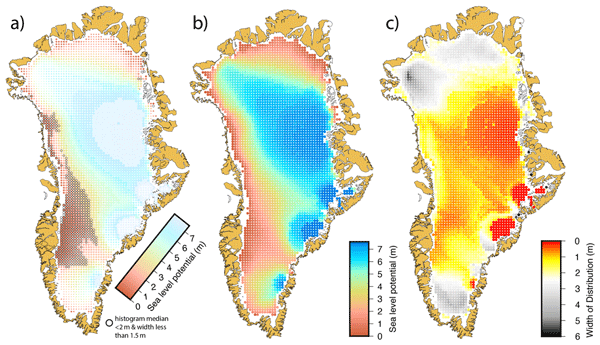
Benjamin A. Keisling, Joerg M. Schaefer, Robert M. DeConto, Jason P. Briner, Nicolás E. Young, Caleb K. Walcott-George, Gisela Winckler, Allie Balter-Kennedy, and Sridhar Anandakrishnan
The Cryosphere, 20, 2961–2976, https://doi.org/10.5194/tc-20-2961-2026, https://doi.org/10.5194/tc-20-2961-2026, 2026
Short summary
Short summary
Understanding how much the Greenland ice sheet melted in response to past warmth helps better predicting future sea-level change. Here we present a framework called sea-level potential for using numerical ice-sheet model simulations to provide constraints on how much mass the ice sheet loses before different areas become ice-free. As observations from subglacial archives become more abundant, this framework can guide future subglacial sampling efforts.
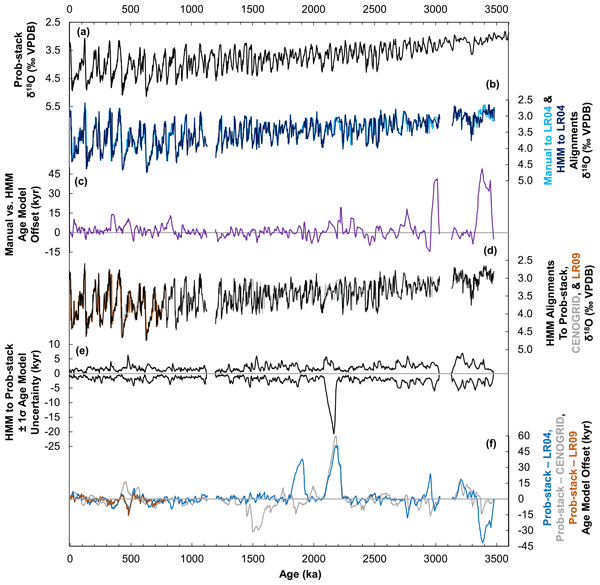
Jennifer L. Middleton, Julia Gottschalk, Gisela Winckler, Jean Hanley, Carol Knudson, Jesse R. Farmer, Frank Lamy, Lorraine E. Lisiecki, and Expedition 383 Scientists
Geochronology, 6, 125–145, https://doi.org/10.5194/gchron-6-125-2024, https://doi.org/10.5194/gchron-6-125-2024, 2024
Short summary
Short summary
We present oxygen isotope data for a new sediment core from the South Pacific and assign ages to our record by aligning distinct patterns in observed oxygen isotope changes to independently dated target records with the same patterns. We examine the age uncertainties associated with this approach caused by human vs. automated alignment and the sensitivity of outcomes to the choice of alignment target. These efforts help us understand the timing of past climate changes.
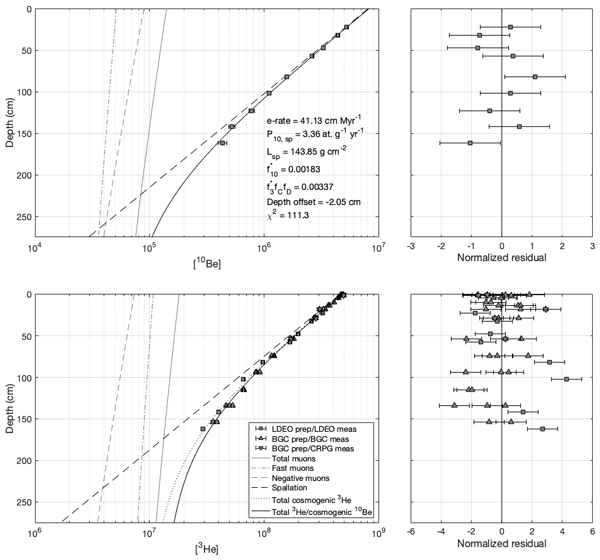
Allie Balter-Kennedy, Joerg M. Schaefer, Roseanne Schwartz, Jennifer L. Lamp, Laura Penrose, Jennifer Middleton, Jean Hanley, Bouchaïb Tibari, Pierre-Henri Blard, Gisela Winckler, Alan J. Hidy, and Greg Balco
Geochronology, 5, 301–321, https://doi.org/10.5194/gchron-5-301-2023, https://doi.org/10.5194/gchron-5-301-2023, 2023
Short summary
Short summary
Cosmogenic nuclides like 10Be are rare isotopes created in rocks exposed at the Earth’s surface and can be used to understand glacier histories and landscape evolution. 10Be is usually measured in the mineral quartz. Here, we show that 10Be can be reliably measured in the mineral pyroxene. We use the measurements to determine exposure ages and understand landscape processes in rocks from Antarctica that do not have quartz, expanding the use of this method to new rock types.

María H. Toyos, Gisela Winckler, Helge W. Arz, Lester Lembke-Jene, Carina B. Lange, Gerhard Kuhn, and Frank Lamy
Clim. Past, 18, 147–166, https://doi.org/10.5194/cp-18-147-2022, https://doi.org/10.5194/cp-18-147-2022, 2022
Short summary
Short summary
Past export production in the southeast Pacific and its link to Patagonian ice dynamics is unknown. We reconstruct biological productivity changes at the Pacific entrance to the Drake Passage, covering the past 400 000 years. We show that glacial–interglacial variability in export production responds to glaciogenic Fe supply from Patagonia and silica availability due to shifts in oceanic fronts, whereas dust, as a source of lithogenic material, plays a minor role.
Cited articles
Abell, J. T.: Published data and code files used in “Abell et al. Exploring the Cenozoic Earth system with extraterrestrial 3He”, figshare [data set], https://doi.org/10.6084/m9.figshare.31813906, 2026.
Abell, J. T. and Winckler, G.: Long-Term Variability in Pliocene North Pacific Ocean Export Production and Its Implications for Ocean Circulation in a Warmer World, AGU Advances, 4, e2022AV000853, https://doi.org/10.1029/2022AV000853, 2023.
Abell, J. T., Winckler, G., Anderson, R. F., and Herbert, T. D.: Poleward and weakened westerlies during Pliocene warmth, Nature, 589, 70–75, 2021.
Abell, J. T., Winckler, G., Pullen, A., Kinsley, C. W., Kapp, P. A., Middleton, J. L., Pavia, F. J., McGee, D., Ford, H. L., and Raymo, M. E.: Evaluating the Drivers of Quaternary Dust Fluxes to the Western North Pacific: East Asian Dustiness and Northern Hemisphere Gustiness, Paleoceanog. Paleoclimatol., 38, e2022PA004571, https://doi.org/10.1029/2022PA004571, 2023.
Adkins, J. F.: The role of deep ocean circulation in setting glacial climates, Paleoceanography, 28, 539–561, https://doi.org/10.1002/palo.20046, 2013.
Anchukaitis, K. J.: Tree rings reveal climate change past, present, and future, P. Am. Philos. Soc., 161, 244–263, 2017.
Anderson, R. F. and Winckler, G.: Problems with paleoproductivity proxies, Paleoceanography, 20, https://doi.org/10.1029/2004PA001107, 2005.
Arnold, E., Leinen, M., and King, J.: Paleoenvironmental variation based on the mineralogy and rock-magnetic properties of sediment from Sites 885 and 886, in: Proceedings of the Ocean Drilling Program, Scientific results, Ocean Drilling Program, vol. 145, 231–245, https://doi.org/10.2973/odp.proc.sr.145.113.1995, 1995.
Bacon, M. P.: Glacial to interglacial changes in carbonate and clay sedimentation in the Atlantic Ocean estimated from 230Th measurements, Chem. Geol., 46, 97–111, https://doi.org/10.1016/0009-2541(84)90183-9, 1984.
Bailey, I., Liu, Q., Swann, G. E., Jiang, Z., Sun, Y., Zhao, X., and Roberts, A. P.: Iron fertilisation and biogeochemical cycles in the sub-Arctic northwest Pacific during the late Pliocene intensification of northern hemisphere glaciation, Earth Planet. Sc. Lett., 307, 253–265, 2011.
Bains, S., Norris, R. D., Corfield, R. M., and Faul, K. L.: Termination of global warmth at the Palaeocene/Eocene boundary through productivity feedback, Nature, 407, 171–174, https://doi.org/10.1038/35025035, 2000.
Barron, J. A.: Late Neogene changes in diatom sedimentation in the North Pacific, J. Asian Earth Sci., 16, 85–95, https://doi.org/10.1016/S0743-9547(97)00046-9, 1998.
Becker, K.: Chapter 1 – Major Scientific Achievements of the Integrated Ocean Drilling Program: Overview and Highlights, in: Developments in Marine Geology, edited by: Stein, R., Blackman, D. K., Inagaki, F., and Larsen, H.-C., Elsevier, vol. 7, 1–36, https://doi.org/10.1016/B978-0-444-62617-2.00001-3, 2014.
Becker, K., Austin, J. A., Exon, N., Humphris, S., Kastner, M., McKenzie, J. A., Miller, K. G., Suyehiro, K., and Taira, A.: 50 Years of Scientific Ocean Drilling, Oceanography, 32, 17–21, 2019.
Bird, A., Millar, I., Rodenburg, T., Stevens, T., Rittner, M., Vermeesch, P., and Lu, H.: A constant Chinese Loess Plateau dust source since the late Miocene, Quaternary Sci. Rev., 227, 106042, https://doi.org/10.1016/j.quascirev.2019.106042, 2020.
Blard, P.-H., Sucheras-Marx, B., Suan, G., Godet, B., Tibari, B., Dutilleul, J., Mezine, T., and Adatte, T.: Are marl-limestone alternations mainly driven by CaCO3 variations at the astronomical timescale? New insights from extraterrestrial 3He, Earth Planet. Sc. Lett., 614, 118173, https://doi.org/10.1016/j.epsl.2023.118173, 2023.
Brook, E. J. and Buizert, C.: Antarctic and global climate history viewed from ice cores, Nature, 558, 200–208, https://doi.org/10.1038/s41586-018-0172-5, 2018.
Brook, E. J., Kurz, M. D., Curtice, J., and Cowburn, S.: Accretion of interplanetary dust in polar ice, Geophys. Res. Lett., 27, 3145–3148, https://doi.org/10.1029/2000GL011813, 2000.
Brook, E. J., Kurz, M. D., and Curtice, J.: Flux and size fractionation of 3He in interplanetary dust from Antarctic ice core samples, Earth Planet. Sc. Lett., 286, 565–569, https://doi.org/10.1016/j.epsl.2009.07.024, 2009.
Burke, K. D., Williams, J. W., Chandler, M. A., Haywood, A. M., Lunt, D. J., and Otto-Bliesner, B. L.: Pliocene and Eocene provide best analogs for near-future climates, P. Natl. Acad. Sci. USA, 115, 13288–13293, https://doi.org/10.1073/pnas.1809600115, 2018.
Burls, N. J., Fedorov, A. V., Sigman, D. M., Jaccard, S. L., Tiedemann, R., and Haug, G. H.: Active Pacific meridional overturning circulation (PMOC) during the warm Pliocene, Sci. Adv., 3, e1700156, https://doi.org/10.1126/sciadv.1700156, 2017.
Caves Rugenstein, J. K. and Chamberlain, C. P.: The evolution of hydroclimate in Asia over the Cenozoic: A stable-isotope perspective, Earth-Sci. Rev., 185, 1129–1156, https://doi.org/10.1016/j.earscirev.2018.09.003, 2018.
Chen, T., Liu, Q., Ao, H., and Ryves, D. B.: Temperature modulation of Northern Mid-Latitude Westerly winds intensity and displacement across the warm Pliocene, Global Planet. Change, 240, 104531, https://doi.org/10.1016/j.gloplacha.2024.104531, 2024.
Cheng, H., Lawrence Edwards, R., Shen, C.-C., Polyak, V. J., Asmerom, Y., Woodhead, J., Hellstrom, J., Wang, Y., Kong, X., Spötl, C., Wang, X., and Calvin Alexander, E.: Improvements in 230Th dating, 230Th and 234U half-life values, and U–Th isotopic measurements by multi-collector inductively coupled plasma mass spectrometry, Earth Planet. Sc. Lett., 371–372, 82–91, https://doi.org/10.1016/j.epsl.2013.04.006, 2013.
Cohen, A. S., Du, A., Rowan, J., Yost, C. L., Billingsley, A. L., Campisano, C. J., Brown, E. T., Deino, A. L., Feibel, C. S., Grant, K., Kingston, J. D., Lupien, R. L., Muiruri, V., Owen, R. B., Reed, K. E., Russell, J., and Stockhecke, M.: Plio-Pleistocene environmental variability in Africa and its implications for mammalian evolution, P. Natl. Acad. Sci. USA, 119, e2107393119, https://doi.org/10.1073/pnas.2107393119, 2022.
Costa, K. M., Hayes, C. T., Anderson, R. F., Pavia, F. J., Bausch, A., Deng, F., Dutay, J., Geibert, W., Heinze, C., Henderson, G., Hillaire-Marcel, C., Hoffmann, S., Jaccard, S. L., Jacobel, A. W., Kienast, S. S., Kipp, L., Lerner, P., Lippold, J., Lund, D., Marcantonio, F., McGee, D., McManus, J. F., Mekik, F., Middleton, J. L., Missiaen, L., Not, C., Pichat, S., Robinson, L. F., Rowland, G. H., Roy-Barman, M., Tagliabue, A., Torfstein, A., Winckler, G., and Zhou, Y.: 230Th Normalization: New Insights on an Essential Tool for Quantifying Sedimentary Fluxes in the Modern and Quaternary Ocean, Paleoceanog. Paleoclimatol., 35, e2019PA003820, https://doi.org/10.1029/2019PA003820, 2020.
Crocker, A. J., Naafs, B. D. A., Westerhold, T., James, R. H., Cooper, M. J., Röhl, U., Pancost, R. D., Xuan, C., Osborne, C. P., and Beerling, D. J.: Astronomically controlled aridity in the Sahara since at least 11 million years ago, Nat. Geosci., 15, 671–676, 2022.
Darrah, T. H. and Poreda, R. J.: Evaluating the accretion of meteoritic debris and interplanetary dust particles in the GPC-3 sediment core using noble gas and mineralogical tracers, Geochim. Cosmochim. Ac., 84, 329–352, https://doi.org/10.1016/j.gca.2012.01.030, 2012.
Deutsch, C. and Weber, T.: Nutrient Ratios as a Tracer and Driver of Ocean Biogeochemistry, Annu. Rev. Mar. Sci., 4, 113–141, https://doi.org/10.1146/annurev-marine-120709-142821, 2012.
Dickens, G. R. and Barron, J. A.: A rapidly deposited pennate diatom ooze in Upper Miocene-Lower Pliocene sediment beneath the North Pacific polar front, Mar. Micropaleontol., 31, 177–182, https://doi.org/10.1016/S0377-8398(97)00003-0, 1997.
Dickens, G. R. and Owen, R. M.: Sediment geochemical evidence for an early-middle Gilbert (early Pliocene) productivity peak in the North Pacific Red Clay Province, Mar. Micropaleontol., 27, 107–120, https://doi.org/10.1016/0377-8398(95)00054-2, 1996.
Dickens, G. R., Snoeckx, H., Arnold, E., Morley, J. J., Owen, R. M., Rea, D. K., and Ingram, L.: Composite Depth Scale And Stratigraphy For Sites 885/886, in: Proceedings of the Ocean Drilling Program: Scientific Results, Ocean Drilling Program, vol. 145, 205, https://doi.org/10.2973/odp.proc.sr.145.144.1995, 1995.
Ding, Z. L., Derbyshire, E., Yang, S. L., Yu, Z. W., Xiong, S. F., and Liu, T. S.: Stacked 2.6-Ma grain size record from the Chinese loess based on five sections and correlation with the deep-sea δ18O record, Paleoceanography, 17, 5-1–5-21, https://doi.org/10.1029/2001PA000725, 2002.
Doh, S.-J., King, J. W., and Leinen, M.: A rock-magnetic study of giant piston core LL44-GPC3 from the central North Pacific and its paleoceanographic implications, Paleoceanography, 3, 89–111, https://doi.org/10.1029/PA003i001p00089, 1988.
Dott, R. H.: Episodic sedimentation; how normal is average? How rare is rare? Does it matter?, J. Sediment. Res., 53, 5–23, https://doi.org/10.1306/212F8148-2B24-11D7-8648000102C1865D, 1983.
Doyle, P. S. and Riedel, W. R.: Cretaceous to Neogene ichthyoliths in a giant piston core from the central North Pacific, Micropaleontology, 337–364, https://doi.org/10.2307/1485427, 1979.
Dubois, N. and Mitchell, N. C.: Large-scale sediment redistribution on the equatorial Pacific seafloor, Deep-Sea Res. Pt. I, 69, 51–61, https://doi.org/10.1016/j.dsr.2012.07.006, 2012.
Farley, K. A.: Cenozoic variations in the flux of interplanetary dust recorded by 3He in a deep-sea sediment, Nature, 376, 153–156, https://doi.org/10.1038/376153a0, 1995.
Farley, K. A. and Eltgroth, S. F.: An alternative age model for the Paleocene–Eocene thermal maximum using extraterrestrial 3He, Earth Planet. Sc. Lett., 208, 135–148, https://doi.org/10.1016/S0012-821X(03)00017-7, 2003.
Farley, K. A. and Patterson, D. B.: A 100-kyr periodicity in the flux of extraterrestrial 3He to the sea floor, Nature, 378, 600–603, https://doi.org/10.1038/378600a0, 1995.
Farley, K. A., Love, S. G., and Patterson, D. B.: Atmospheric entry heating and helium retentivity of interplanetary dust particles, Geochim. Cosmochim. Ac., 61, 2309–2316, https://doi.org/10.1016/S0016-7037(97)00068-9, 1997.
Farley, K. A., Vokrouhlický, D., Bottke, W. F., and Nesvorný, D.: A late Miocene dust shower from the break-up of an asteroid in the main belt, Nature, 439, 295–297, https://doi.org/10.1038/nature04391, 2006.
Farley, K. A., Taylor, S., Treffkorn, J., Lever, J. H., and Gow, A. L.: 3He flux obtained from South Pole air and snow-ice and its connection to interplanetary dust particles, Meteorit. Planet. Sci., 56, 1988–2001, https://doi.org/10.1111/maps.13759, 2021.
Felis, T. and Pätzold, J.: Climate Records from Corals, in: Marine Science Frontiers for Europe, edited by: Wefer, G., Lamy, F., and Mantoura, F., Springer Berlin Heidelberg, Berlin, Heidelberg, 11–27, https://doi.org/10.1007/978-3-642-55862-7_2, 2003.
Fénisse, G., Bekaert, D. V., Blard, P.-H., Duprat, J., Mattia, I., Genge, M., Suttle, M. D., Barres, O., Engrand, C., and Marrocchi, Y.: The extraterrestrial dust accretion rate on Earth at Dome C, Antarctica: a fresh look with 3He, Earth Planet. Sc. Lett., 663, 119396, https://doi.org/10.1016/j.epsl.2025.119396, 2025.
Francois, R., Frank, M., Rutgers Van Der Loeff, M. M., and Bacon, M. P.: 230 Th normalization: An essential tool for interpreting sedimentary fluxes during the late Quaternary, Paleoceanography, 19, 2003PA000939, https://doi.org/10.1029/2003PA000939, 2004.
Frank, M.: Radiogenic Isotopes: Tracers of Past Ocean Circulation and Erosional Input, Rev. Geophys., 40, 1-1–1-38, https://doi.org/10.1029/2000RG000094, 2002.
Frank, M., Gersonde, R., and Mangini, A.: Sediment Redistribution, 230Thex- Normalization and Implications for the Reconstruction of Particle Flux and Export Paleoproductivity, in: Use of Proxies in Paleoceanography: Examples from the South Atlantic, edited by: Fischer, G. and Wefer, G., Springer, Berlin, Heidelberg, 409–426, https://doi.org/10.1007/978-3-642-58646-0_16, 1999.
Frank, M., Rutgers van der Loeff, M. M., Kubik, P. W., and Mangini, A.: Quasi-conservative behaviour of 10Be in deep waters of the Weddell Sea and the Atlantic sector of the Antarctic Circumpolar Current, Earth Planet. Sc. Lett., 201, 171–186, https://doi.org/10.1016/S0012-821X(02)00688-X, 2002.
Fukumoto, H., Nagao, K., and Matsuda, J.: Noble gas studies on the host phase of high 3He4He ratios in deep-sea sediments, Geochim. Cosmochim. Ac., 50, 2245–2253, https://doi.org/10.1016/0016-7037(86)90079-7, 1986.
Graham, D. W. and Konrad, K.: Supernova versus cosmic ray origin for exotic nuclides in geomaterials: A test using 3He with 60Fe in marine sediments, Geochim. Cosmochim. Ac., 336, 177–187, https://doi.org/10.1016/j.gca.2022.09.016, 2022.
Guo, Z. T., Ruddiman, W. F., Hao, Q. Z., Wu, H. B., Qiao, Y. S., Zhu, R. X., Peng, S. Z., Wei, J. J., Yuan, B. Y., and Liu, T. S.: Onset of Asian desertification by 22 Myr ago inferred from loess deposits in China, Nature, 416, 159–163, https://doi.org/10.1038/416159a, 2002.
Harmon, R. S., Schwarcz, H. P., Gascoyne, M., Hess, J. W., and Ford, D. C.: Paleoclimate Information from Speleothems: The Present as a Guide to the Past, in: Studies of Cave Sediments, Springer, 199–226, https://doi.org/10.1007/978-1-4419-9118-8_11, 2004.
Higgins, S. M., Anderson, R. F., Marcantonio, F., Schlosser, P., and Stute, M.: Sediment focusing creates 100-ka cycles in interplanetary dust accumulation on the Ontong Java Plateau, Earth Planet. Sc. Lett., 203, 383–397, https://doi.org/10.1016/S0012-821X(02)00864-6, 2002.
Johnson, D. A. and Johnson, T. C.: Sediment redistribution by bottom currents in the central Pacific, Deep Sea Research and Oceanographic Abstracts, 17, 157–169, https://doi.org/10.1016/0011-7471(70)90094-X, 1970.
Jouzel, J. and Masson-Delmotte, V.: Paleoclimates: what do we learn from deep ice cores?, WIREs Climate Change, 1, 654–669, https://doi.org/10.1002/wcc.72, 2010.
Jull, A. J. T., Lal, D., Taylor, S., Wieler, R., Grimberg, A., Vacher, L., McHargue, L. R., Freeman, S. P. H. T., Maden, C., Schnabel, C., Xu, S., Finkel, R. C., Kim, K. J., and Marti, K.: 3He, 20,21,22Ne, 14C, 10Be, 26Al, and 36Cl in magnetic fractions of cosmic dust from Greenland and Antarctica, Meteorit. Planet. Sci., 42, 1831–1840, https://doi.org/10.1111/j.1945-5100.2007.tb00541.x, 2007.
Kiessling, W.: Paleoclimatic significance of Phanerozoic reefs, Geology, 29, 751–754, https://doi.org/10.1130/0091-7613(2001)029<0751:PSOPR>2.0.CO;2, 2001.
Kretschmer, S., Geibert, W., Rutgers van der Loeff, M. M., and Mollenhauer, G.: Grain size effects on 230Thxs inventories in opal-rich and carbonate-rich marine sediments, Earth Planet. Sc. Lett., 294, 131–142, https://doi.org/10.1016/j.epsl.2010.03.021, 2010.
Lal, D. and Jull, A. J. T.: On the fluxes and fates of 3He accreted by the Earth with extraterrestrial particles, Earth Planet. Sc. Lett., 235, 375–390, https://doi.org/10.1016/j.epsl.2005.04.011, 2005.
Li, Y. H. and Schoonmaker, J. E.: Chemical Composition and Mineralogy of Marine Sediments, in: Treatise on Geochemistry, edited by: Holland, H. D. and Turekian, K. K., Pergamon, Oxford, 7, 1–35, https://doi.org/10.1016/B0-08-043751-6/07088-2, 2003.
Lough, J. M.: Climate records from corals, WIREs Climate Change, 1, 318–331, https://doi.org/10.1002/wcc.39, 2010.
Lucas, J. R., Batenburg, S. J., Hillegonds, D. J., Mabry, J. C., Jenkyns, H. C., Ballentine, C. J., and Robinson, S. A.: Helium-isotope constraints on palaeoceanographic change and sedimentation rates during precession cycles (Cenomanian Scaglia Bianca Formation, central Italy), Sedimentology, 71, 1895–1921, https://doi.org/10.1111/sed.13197, 2024.
Lyle, M., Mitchell, N., Pisias, N., Mix, A., Martinez, J. I., and Paytan, A.: Do geochemical estimates of sediment focusing pass the sediment test in the equatorial Pacific?, Paleoceanography, 20, https://doi.org/10.1029/2004PA001019, 2005.
Lyle, M., Marcantonio, F., Moore, W. S., Murray, R. W., Huh, C., Finney, B. P., Murray, D. W., and Mix, A. C.: Sediment size fractionation and focusing in the equatorial Pacific: Effect on230 Th normalization and paleoflux measurements, Paleoceanography, 29, 747–763, https://doi.org/10.1002/2014PA002616, 2014.
Ma, Z., Gray, E., Thomas, E., Murphy, B., Zachos, J., and Paytan, A.: Carbon sequestration during the Palaeocene–Eocene Thermal Maximum by an efficient biological pump, Nat. Geosci., 7, 382–388, https://doi.org/10.1038/ngeo2139, 2014.
Maher, B. A.: Palaeoclimatic records of the loess/palaeosol sequences of the Chinese Loess Plateau, Quaternary Sci. Rev., 154, 23–84, https://doi.org/10.1016/j.quascirev.2016.08.004, 2016.
Marcantonio, F., Kumar, N., Stute, M., Anderson, R. F., Seidl, M. A., Schlosser, P., and Mix, A.: A comparative study of accumulation rates derived by He and Th isotope analysis of marine sediments, Earth Planet. Sc. Lett., 133, 549–555, 1995.
Marcantonio, F., Anderson, R. F., Stute, M., Kumar, N., Schlosser, P., and Mix, A.: Extraterrestrial 3He as a tracer of marine sediment transport and accumulation, Nature, 383, 705–707, 1996.
Marcantonio, F., Higgins, S., Anderson, R. F., Stute, M., Schlosser, P., and Rasbury, E. T.: Terrigenous helium in deep-sea sediments, Geochim. Cosmochim. Ac., 62, 1535–1543, 1998.
Marcantonio, F., Turekian, K. K., Higgins, S., Anderson, R. F., Stute, M., and Schlosser, P.: The accretion rate of extraterrestrial 3He based on oceanic 230Th flux and the relation to Os isotope variation over the past 200 000 years in an Indian Ocean core, Earth Planet. Sc. Lett., 170, 157–168, https://doi.org/10.1016/S0012-821X(99)00100-4, 1999.
Marcantonio, F., Thomas, D. J., Woodard, S., McGee, D., and Winckler, G.: Extraterrestrial 3He in Paleocene sediments from Shatsky Rise: Constraints on sedimentation rate variability, Earth Planet. Sc. Lett., 287, 24–30, 2009.
Marcantonio, F., Lyle, M., and Ibrahim, R.: Particle sorting during sediment redistribution processes and the effect on 230Th-normalized mass accumulation rates, Geophys. Res. Lett., 41, 5547–5554, https://doi.org/10.1002/2014GL060477, 2014.
Matsuda, J., Murota, M., and Nagao, K.: He and Ne isotopic studies on the extraterrestrial material in deep-sea sediments, J. Geophys. Res.-Sol. Ea., 95, 7111–7117, https://doi.org/10.1029/JB095iB05p07111, 1990.
McDermott, F.: Palaeo-climate reconstruction from stable isotope variations in speleothems: a review, Quaternary Sci. Rev., 23, 901–918, https://doi.org/10.1016/j.quascirev.2003.06.021, 2004.
McGee, D. and Mukhopadhyay, S.: Extraterrestrial He in Sediments: From Recorder of Asteroid Collisions to Timekeeper of Global Environmental Changes, in: The Noble Gases as Geochemical Tracers, edited by: Burnard, P., Springer Berlin Heidelberg, Berlin, Heidelberg, 155–176, https://doi.org/10.1007/978-3-642-28836-4_7, 2013.
McGee, D., Marcantonio, F., McManus, J. F., and Winckler, G.: The response of excess 230Th and extraterrestrial 3He to sediment redistribution at the Blake Ridge, western North Atlantic, Earth Planet. Sc. Lett., 299, 138–149, 2010.
McGee, D., Winckler, G., Borunda, A., Serno, S., Anderson, R. F., Recasens, C., Bory, A., Gaiero, D., Jaccard, S. L., Kaplan, M., McManus, J. F., Revel, M., and Sun, Y.: Tracking eolian dust with helium and thorium: Impacts of grain size and provenance, Geochim. Cosmochim. Ac., 175, 47–67, https://doi.org/10.1016/j.gca.2015.11.023, 2016.
McInerney, F. A. and Wing, S. L.: The Paleocene-Eocene Thermal Maximum: A Perturbation of Carbon Cycle, Climate, and Biosphere with Implications for the Future, Annu. Rev. Earth Pl. Sc., 39, 489–516, https://doi.org/10.1146/annurev-earth-040610-133431, 2011.
Merrihue, C.: Rare gas evidence for cosmic dust in modern Pacific red clay, Ann. N. Y. Acad. Sci., 119, 351–367, 1964.
Middleton, J. L., Langmuir, C. H., Mukhopadhyay, S., McManus, J. F., and Mitrovica, J. X.: Hydrothermal iron flux variability following rapid sea level changes, Geophys. Res. Lett., 43, 3848–3856, https://doi.org/10.1002/2016GL068408, 2016.
Middleton, J. L., Mukhopadhyay, S., Costa, K. M., Pavia, F. J., Winckler, G., McManus, J. F., D'Almeida, M., Langmuir, C. H., and Huybers, P. J.: The spatial footprint of hydrothermal scavenging on 230ThXS-derived mass accumulation rates, Geochim. Cosmochim. Ac., 272, 218–234, https://doi.org/10.1016/j.gca.2020.01.007, 2020.
Middleton, J. L., Pavia, F. J., Anderson, R. F., Schwartz, R., Fleisher, M. Q., Lao, Y., Zhao, Y., Kinsley, C. W., Schaefer, J. M., Frank, M., and Winckler, G.: Oceanographic and climatic controls of meteoric 10Be fluxes to seafloor sediments: A global synthesis, Quaternary Sci. Rev., https://doi.org/10.1016/j.quascirev.2026.109922, 2026.
Molnar, P.: Late Cenozoic Increase in Accumulation Rates of Terrestrial Sediment: How might climate change have affected erosion rates, Annu. Rev. Earth Planet. Sci, 32, 67–89, 2004.
Molnar, P. and England, P.: Late Cenozoic uplift of mountain ranges and global climate change: chicken or egg?, Nature, 346, 29–34, https://doi.org/10.1038/346029a0, 1990.
Montanari, A., Farley, K., Claeys, P., De Vleeschouwer, D., de Winter, N., Vansteenberge, S., Sinnesael, M., and Koeberl, C.: Stratigraphic record of the asteroidal Veritas breakup in the Tortonian Monte dei Corvi section (Ancona, Italy), GSA Bulletin, 129, 1357–1376, https://doi.org/10.1130/B31476.1, 2017.
Morley, J. J. and Nigrini, C.: Miocene to Pleistocene radiolarian biostratigraphy of North Pacific Sites 881, 884, 885, 886, and 887, in: Proceedings of the Ocean Drilling Program. Scientific results, Ocean Drilling Program, vol. 145, 55–91, https://doi.org/10.2973/odp.proc.sr.145.107.1995, 1995.
Mudelsee, M., Bickert, T., Lear, C. H., and Lohmann, G.: Cenozoic climate changes: A review based on time series analysis of marine benthic δ18 O records, Rev. Geophys., 52, 333–374, https://doi.org/10.1002/2013RG000440, 2014.
Mukhopadhyay, S. and Farley, K. A.: New insights into the carrier phase(s) of extraterrestrial 3He in geologically old sediments, Geochim. Cosmochim. Ac., 70, 5061–5073, https://doi.org/10.1016/j.gca.2006.06.1566, 2006.
Mukhopadhyay, S., Farley, K. A., and Montanari, A.: A 35 Myr record of helium in pelagic limestones from Italy: implications for interplanetary dust accretion from the early Maastrichtian to the middle Eocene, Geochim. Cosmochim. Ac., 65, 653–669, https://doi.org/10.1016/S0016-7037(00)00555-X, 2001a.
Mukhopadhyay, S., Farley, K. A., and Montanari, A.: A Short Duration of the Cretaceous-Tertiary Boundary Event: Evidence from Extraterrestrial Helium-3, Science, 291, 1952–1955, https://doi.org/10.1126/science.291.5510.1952, 2001b.
Murphy, B. H., Farley, K. A., and Zachos, J. C.: An extraterrestrial 3He-based timescale for the Paleocene–Eocene thermal maximum (PETM) from Walvis Ridge, IODP Site 1266, Geochim. Cosmochim. Ac., 74, 5098–5108, https://doi.org/10.1016/j.gca.2010.03.039, 2010.
Normile, D. and Kerr, R. A.: A Sea Change in Ocean Drilling, Science, 300, 410–412, https://doi.org/10.1126/science.300.5618.410, 2003.
Novak, J. B., Caballero-Gill, R. P., Rose, R. M., Herbert, T. D., and Dowsett, H. J.: Isotopic evidence against North Pacific Deep Water formation during late Pliocene warmth, Nat. Geosci., 17, 795–802, 2024.
Ocean Sciences Board: Scientific ocean drilling: accomplishments and challenges, National Academies Press, https://doi.org/10.17226/13232, 2011.
O'Mara, N. A., Skonieczny, C., McGee, D., Winckler, G., Bory, A. J.-M., Bradtmiller, L. I., Malaizé, B., and Polissar, P. J.: Pleistocene drivers of Northwest African hydroclimate and vegetation, Nat. Commun., 13, 3552, https://doi.org/10.1038/s41467-022-31120-x, 2022.
O'Mara, N. A., Skonieczny, C., McGee, D., Winckler, G., Bory, A. J. -M., Bradtmiller, L. I., Malaizé, B., and Polissar, P. J.: Constraining Plio-Pleistocene Shifts in Northwest African Hydroclimate, Ecosystem Distributions, and Marine Productivity: New Paleo-Records Across the Mid-Pleistocene Transition, Paleoceanog. Paleoclimatol., 39, e2023PA004777, https://doi.org/10.1029/2023PA004777, 2024.
Owens, S. A., Buesseler, K. O., and Sims, K. W. W.: Re-evaluating the 238U-salinity relationship in seawater: Implications for the 238U–234Th disequilibrium method, Mar. Chem., 127, 31–39, https://doi.org/10.1016/j.marchem.2011.07.005, 2011.
Ozima, M., Takayanagi, M., Zashu, S., and Amari, S.: High 3He/4He ratio in ocean sediments, Nature, 311, 448–450, https://doi.org/10.1038/311448a0, 1984.
Papadomanolaki, N. M., Sluijs, A., and Slomp, C. P.: Eutrophication and Deoxygenation Forcing of Marginal Marine Organic Carbon Burial During the PETM, Paleoceanog. Paleoclimatol., 37, e2021PA004232, https://doi.org/10.1029/2021PA004232, 2022.
Patterson, D. B. and Farley, K. A.: Extraterrestrial 3He in seafloor sediments: evidence for correlated 100 kyr periodicity in the accretion rate of interplanetary dust, orbital parameters, and Quaternary climate, Geochim. Cosmochim. Ac., 62, 3669–3682, https://doi.org/10.1016/S0016-7037(98)00263-4, 1998.
Patterson, D. B., Farley, K. A., and Schmitz, B.: Preservation of extraterrestrial 3He in 480-Ma-old marine limestones, Earth Planet. Sc. Lett., 163, 315–325, https://doi.org/10.1016/S0012-821X(98)00197-6, 1998.
Pavia, F. J., Abell, J. T., Middleton, J. L., Leal, A., Vivancos, S. M., Fleisher, M. Q., Winckler, G., and Anderson, R. F.: Discrepant mass accumulation rates of sediments in the South Pacific Ocean from 230Th and 3He measurements, Geochim. Cosmochim. Ac., 365, 215–228, 2024.
Pavia, F. J., Farmer, J. R., Gemery, L., Cronin, T. M., Treffkorn, J., and Farley, K. A.: Cosmic dust reveals dynamic shifts in central Arctic sea-ice coverage over the past 30 000 years, Science, 390, 628–632, https://doi.org/10.1126/science.adv5767, 2025.
Pettke, T., Halliday, A. N., Hall, C. M., and Rea, D. K.: Dust production and deposition in Asia and the north Pacific Ocean over the past 12 Myr, Earth Planet. Sc. Lett., 178, 397–413, 2000.
Peucker-Ehrenbrink, B., Ravizza, G., and Winckler, G.: Geochemical Tracers of Extraterrestrial Matter in Sediments, Elements, 12, 191–196, https://doi.org/10.2113/gselements.12.3.191, 2016.
Prince, R. A., Heath, G. R., and Kominz, M.: Paleomagnetic Studies of Central North Pacific Sediment Cores: Stratigraphy, Sedimentation Rates, and the Origin of Magnetic Instability, GSA Bulletin, 91, 1789–1835, https://doi.org/10.1130/GSAB-P2-91-1789, 1980.
Ravizza, G. E. and Zachos, J. C.: Records of Cenozoic ocean chemistry, in: Treatise on geochemistry, edited by: Holland, H. D. and Turekian, K. K., Elsevier, 6, 551–581, https://doi.org/10.1016/B0-08-043751-6/06121-1, 2003.
Rea, D. K.: The paleoclimatic record provided by eolian deposition in the deep sea: The geologic history of wind, Rev. Geophys., 32, 159–195, 1994.
Rea, D. K., Basov, I., and Janecek, T.: Cenozoic paleoceanography of the North Pacific ocean: Results of ODP leg 145, the North Pacific transect, in: Proceedings of the Ocean Drilling Program. Scientific Results, Ocean Drilling Program, vol. 145, https://doi.org/10.2973/odp.proc.sr.145.146.1995, 1993.
Rea, D. K., Snoeckx, H., and Joseph, L. H.: Late Cenozoic eolian deposition in the North Pacific: Asian drying, Tibetan uplift, and cooling of the northern hemisphere, Paleoceanography, 13, 215–224, 1998.
Robinson, R. S., Tikoo, S., and Fulton, P.: Sea changes for scientific ocean drilling, Phys. Today, 77, 28–34, https://doi.org/10.1063/pt.onot.yjak, 2024.
Sadler, P. M.: Sediment Accumulation Rates and the Completeness of Stratigraphic Sections, J. Geol., 89, 569–584, https://doi.org/10.1086/628623, 1981.
Sadler, P. M.: The influence of hiatuses on sediment accumulation rates, in: GeoResearch Forum, Trans Tech Publications, Switzerland, 15–40, 1999.
Savranskaia, T., Egli, R., Simon, Q., Valet, J.-P., Bassinot, F., and Thouveny, N.: Removing Climatic Overprints in Sedimentary Cosmogenic Beryllium Records: Potentials and Limits, Geochem. Geophy. Geosy., 25, e2024GC011761, https://doi.org/10.1029/2024GC011761, 2024.
Schlosser, P. and Winckler, G.: Noble gases in ocean waters and sediments, Rev. Mineral. Geochem., 47, 701–730, 2002.
Schoepfer, S. D., Shen, J., Wei, H., Tyson, R. V., Ingall, E., and Algeo, T. J.: Total organic carbon, organic phosphorus, and biogenic barium fluxes as proxies for paleomarine productivity, Earth-Sci. Rev., 149, 23–52, 2015.
Smith, D. K., Exon, N., Barriga, F. J. A. S., and Tatsumi, Y.: Ocean Drilling: Forty Years of International Collaboration, Eos, Transactions American Geophysical Union, 91, 393–394, https://doi.org/10.1029/2010EO430001, 2010.
Snoeckx, H., Rea, D. K., Jones, C. E., and Ingram, B. L.: Eolian And Silica Deposition In The Central North Pacific: Results From Sites 885/886, in: Proceedings of the Ocean Drilling Program Initital Reports, Ocean Drilling Program, vol. 145, https://doi.org/10.2973/odp.proc.sr.145.123.1995, 1995.
Stoll, H. M., Shimizu, N., Archer, D., and Ziveri, P.: Coccolithophore productivity response to greenhouse event of the Paleocene–Eocene Thermal Maximum, Earth Planet. Sc. Lett., 258, 192–206, https://doi.org/10.1016/j.epsl.2007.03.037, 2007.
Stuart, F. M. and Lee, M. R.: Micrometeorites and extraterrestrial He in a ferromanganese crust from the Pacific Ocean, Chem. Geol., 322–323, 209–214, https://doi.org/10.1016/j.chemgeo.2012.07.002, 2012.
Stuart, F. M., Harrop, P. J., Knott, S., and Turner, G.: Laser extraction of helium isotopes from Antarctic micrometeorites: source of He and implications for the flux of extraterrestrial 3He to earth, Geochim. Cosmochim. Ac., 63, 2653–2665, https://doi.org/10.1016/S0016-7037(99)00161-1, 1999.
Suman, D. O. and Bacon, M. P.: Variations in Holocene sedimentation in the North American Basin determined from 230Th measurements, Deep-Sea Res. Pt. I, 36, 869–878, https://doi.org/10.1016/0198-0149(89)90033-2, 1989.
Tagliabue, A., Bowie, A. R., Boyd, P. W., Buck, K. N., Johnson, K. S., and Saito, M. A.: The integral role of iron in ocean biogeochemistry, Nature, 543, 51–59, https://doi.org/10.1038/nature21058, 2017.
Taylor, S., Messenger, S., and Folco, L.: Cosmic Dust: Finding a Needle in a Haystack, Elements, 12, 171–176, https://doi.org/10.2113/gselements.12.3.171, 2016.
Thompson, D. M.: Environmental records from coral skeletons: A decade of novel insights and innovation, WIREs Climate Change, 13, e745, https://doi.org/10.1002/wcc.745, 2022.
Tierney, J. E., Poulsen, C. J., Montañez, I. P., Bhattacharya, T., Feng, R., Ford, H. L., Hönisch, B., Inglis, G. N., Petersen, S. V., Sagoo, N., Tabor, C. R., Thirumalai, K., Zhu, J., Burls, N. J., Foster, G. L., Goddéris, Y., Huber, B. T., Ivany, L. C., Kirtland Turner, S., Lunt, D. J., McElwain, J. C., Mills, B. J. W., Otto-Bliesner, B. L., Ridgwell, A., and Zhang, Y. G.: Past climates inform our future, Science, 370, eaay3701, https://doi.org/10.1126/science.aay3701, 2020.
Tomchovska, I., Pavia, F. J., Adkins, J. F., Berelson, W. M., Quinan, M. P., and Farley, K. A.: Fractionation during sediment winnowing drives divergent mass accumulation rates derived from 230Th and 3He on the Cocos Ridge, Geochim. Cosmochim. Ac., https://doi.org/10.1016/j.gca.2025.02.021, 2025.
Torfstein, A.: Size fractionation, reproducibility and provenance of helium isotopes in north-equatorial pacific pelagic clays, Earth Planet. Sc. Lett., 339–340, 151–163, https://doi.org/10.1016/j.epsl.2012.05.030, 2012.
Torfstein, A., Winckler, G., and Tripati, A.: Productivity feedback did not terminate the Paleocene-Eocene Thermal Maximum (PETM), Clim. Past, 6, 265–272, https://doi.org/10.5194/cp-6-265-2010, 2010.
Tyson, R. V.: Sedimentation rate, dilution, preservation and total organic carbon: some results of a modelling study, Org. Geochem., 32, 333–339, https://doi.org/10.1016/S0146-6380(00)00161-3, 2001.
Watkins, N. D. and Kennett, J. P.: Erosion of Deep-Sea Sediments in the Southern Ocean Between Longitudes 70° E and 190° E and Contrasts in Manganese Nodule Development, in: Developments in Sedimentology, vol. 23, edited by: Heezen, B. C., Elsevier, 103–111, https://doi.org/10.1016/S0070-4571(08)70553-3, 1977.
Westerhold, T., Marwan, N., Drury, A. J., Liebrand, D., Agnini, C., Anagnostou, E., Barnet, J. S. K., Bohaty, S. M., De Vleeschouwer, D., Florindo, F., Frederichs, T., Hodell, D. A., Holbourn, A. E., Kroon, D., Lauretano, V., Littler, K., Lourens, L. J., Lyle, M., Pälike, H., Röhl, U., Tian, J., Wilkens, R. H., Wilson, P. A., and Zachos, J. C.: An astronomically dated record of Earth's climate and its predictability over the last 66 million years, Science, 369, 1383–1387, https://doi.org/10.1126/science.aba6853, 2020.
White, W. B.: Cave sediments and paleoclimate, J. Cave Karst Stud., 69, 76–93, 2007.
Williams, D. F., Peck, J., Karabanov, E. B., Prokopenko, A. A., Kravchinsky, V., King, J., and Kuzmin, M. I.: Lake Baikal Record of Continental Climate Response to Orbital Insolation During the Past 5 Million Years, Science, 278, 1114–1117, https://doi.org/10.1126/science.278.5340.1114, 1997.
Winckler, G. and Fischer, H.: 30 000 Years of Cosmic Dust in Antarctic Ice, Science, 313, 491–491, https://doi.org/10.1126/science.1127469, 2006.
Winckler, G., Anderson, R. F., Stute, M., and Schlosser, P.: Does interplanetary dust control 100 kyr glacial cycles?, Quaternary Sci. Rev., 23, 1873–1878, https://doi.org/10.1016/j.quascirev.2004.05.007, 2004.
Winckler, G., Anderson, R. F., and Schlosser, P.: Equatorial Pacific productivity and dust flux during the mid-Pleistocene climate transition, Paleoceanography, 20, https://doi.org/10.1029/2005PA001177, 2005.
Wong, C. I. and Breecker, D. O.: Advancements in the use of speleothems as climate archives, Quaternary Sci. Rev., 127, 1–18, https://doi.org/10.1016/j.quascirev.2015.07.019, 2015.
Zhang, Q., Liu, Q., Li, J., and Sun, Y.: An integrated study of the eolian dust in pelagic sediments from the North Pacific Ocean based on environmental magnetism, transmission electron microscopy, and diffuse reflectance spectroscopy, J. Geophys. Res.-Sol. Ea., 123, 3358–3376, 2018.
Zhang, Q., Liu, Q., Roberts, A. P., Larrasoaña, J. C., Shi, X., and Jin, C.: Mechanism for enhanced eolian dust flux recorded in North Pacific Ocean sediments since 4.0 Ma: Aridity or humidity at dust source areas in the Asian interior?, Geology, 48, 77–81, 2020.
Zhang, Q., Liu, Q., Roberts, A. P., Yu, J., Liu, Y., and Li, J.: Magnetotactic bacterial activity in the North Pacific Ocean and its relationship to Asian dust inputs and primary productivity since 8.0 Ma, Geophys. Res. Lett., 48, e2021GL094687, https://doi.org/10.1029/2021GL094687, 2021.
Short summary
Marine sediments provide a unique window into Earth's past, preserving material derived from deserts, volcanoes, rivers, ocean life, and even space. Quantifying how quickly these materials accumulate over time can reveal changes in past environments. Traditional methods for calculating accumulation rates can be unreliable, but another approach that uses minute space dust particles offers a more accurate way to track long-term changes in the Earth system.
Marine sediments provide a unique window into Earth's past, preserving material derived from...


Altmetrics
Final-revised paper
Preprint