
Articles | Volume 22, issue 11
https://doi.org/10.5194/cp-22-2031-2026
© Author(s) 2026. This work is distributed under
the Creative Commons Attribution 4.0 License.
the Creative Commons Attribution 4.0 License.
https://doi.org/10.5194/cp-22-2031-2026
© Author(s) 2026. This work is distributed under
the Creative Commons Attribution 4.0 License.
the Creative Commons Attribution 4.0 License.
Research article
| 
13 Nov 2026
Research article |
| 13 Nov 2026
| 13 Nov 2026
Sea ice variability and links to East Siberian permafrost carbon remobilization during the last glacial-interglacial transition

Department of Environmental Science, Stockholm University, Stockholm, 11418, Sweden
Bolin Centre for Climate Research, Stockholm University, Stockholm, 10691, Sweden
Department of Environmental Science, Stockholm University, Stockholm, 11418, Sweden
Bolin Centre for Climate Research, Stockholm University, Stockholm, 10691, Sweden
Alfred Wegener Institute, Heimholtz Centre for Polar and Marine Research, Marine Geochemistry, 27570 Bremerhaven, Germany
Matt O'Regan
Bolin Centre for Climate Research, Stockholm University, Stockholm, 10691, Sweden
Department of Geological Sciences, Stockholm University, Stockholm, 10691, Sweden
Örjan Gustafsson
CORRESPONDING AUTHOR
Department of Environmental Science, Stockholm University, Stockholm, 11418, Sweden
Bolin Centre for Climate Research, Stockholm University, Stockholm, 10691, Sweden
Related authors
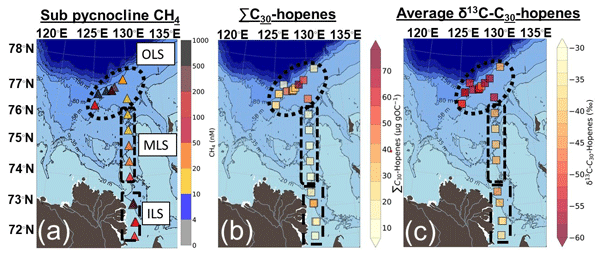
Albin Eriksson, Birgit Wild, Wei-Li Hong, Henry Holmstrand, Francisco J. A. Nascimento, Stefano Bonaglia, Denis Kosmach, Igor Semiletov, Natalia Shakhova, and Örjan Gustafsson
Biogeosciences, 23, 1459–1475, https://doi.org/10.5194/bg-23-1459-2026, https://doi.org/10.5194/bg-23-1459-2026, 2026
Short summary
Short summary
Thawing subsea permafrost in the East Siberian Arctic Seas releases methane, a potent greenhouse gas. Using molecular fossils in sediments, we traced aerobic methane oxidation as a proxy of enhanced methane cycling across the Laptev Sea, including in regions once thought low in emissions. This approach captures long-term patterns of methane cycling over years-decades , overcoming limits of short-term seawater measurements and highlights the importance of the Laptev Sea in Arctic methane cycling.
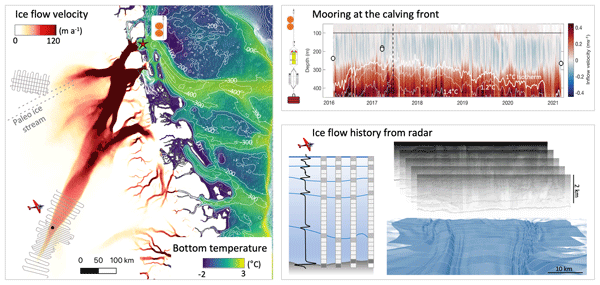
Gerrit Lohmann, Almut Brunner, Gesine Mollenhauer, Christian Haas, Thomas Laepple, Torsten Kanzow, Ilka Weikusat, Monica Ionita, Olaf Eisen, Florian Adolphi, Vera S. N. Schlindwein, Angelika Humbert, Karsten Gohl, Juliane Müller, Klaus Grosfeld, Johann P. Klages, Frank Lamy, Lu Niu, Gregor Knorr, Walter Geibert, Maria Hoerhold, Ingo Sasgen, Daniela Jansen, Rebecca McPherson, Junjie Wu, Xinyue Li, Thomas Krumpen, Hanna Knahl, Helge Goessling, Renate Treffeisen, Peter Köhler, and Thomas Jung
Polarforschung, 94, 69–95, https://doi.org/10.5194/polf-94-69-2026, https://doi.org/10.5194/polf-94-69-2026, 2026
Short summary
Short summary
This paper reviews how the Alfred Wegener Institute studies changes in the ocean and the polar ice regions under climate warming. We bring together results from field observations, laboratory work, and computer models to show how melting ice and changing seas affect global climate and sea level. By combining many approaches, we identify key advances, remaining gaps, and future priorities. Integrating these methods improves our ability to project future climate change and guide decision-making.
Tsai-Wen Lin, Florian Adolphi, Hendrik Grotheer, Jens Hefter, Tommaso Tesi, Johannes Lachner, Stella Winkler, Junjie Wu, Eduardo Queiroz Alves, and Gesine Mollenhauer
EGUsphere, https://doi.org/10.5194/egusphere-2026-4726, https://doi.org/10.5194/egusphere-2026-4726, 2026
This preprint is open for discussion and under review for Climate of the Past (CP).
Short summary
Short summary
We refined the age-depth models of marine sediment cores from the western Laptev Sea shelf using authigenic 10Be/9Be ratios. Pre-depositional 14C ages of terrigenous biomarkers in the cores revealed distinct transport pathways. n-C28:0 fatty acids exhibited varied sources/transport mechanisms between periods strongly influenced by coastal erosion and river discharge, whereas n-alkanes suggested aged permafrost as the dominant source.
Piotr Markuszewski, Mikołaj Mazurkiewicz, Kinga Stawiarz, Małgorzata Śmiszek, Patrycja Jutrzenka-Trzebiatowska, Luca Ferrero, Krishnakant Budhavant, Mateusz Zawadzki, Anna Waleczek, Przemysław Makuch, Douglas Nilsson, Örjan Gustafsson, and Sophie L. Haslett
EGUsphere, https://doi.org/10.5194/egusphere-2026-4321, https://doi.org/10.5194/egusphere-2026-4321, 2026
Short summary
Short summary
We investigated the occurrence and transport of microplastics in air and coastal waters around the Maldives using air and seawater sampling and particle identification. Microplastics occurred in both environments, but their size distributions and composition differed markedly. Airborne concentrations were more closely associated with polluted air transported from South Asia than with local ocean emissions, indicating that regional atmospheric transport delivers microplastics to remote islands.
Krishnakant Babanrao Budhavant, Ahmed Muslim, Joakim Romson, Sreedharan Krishnakumari Satheesh, and Örjan Gustafsson
EGUsphere, https://doi.org/10.5194/egusphere-2026-4276, https://doi.org/10.5194/egusphere-2026-4276, 2026
Short summary
Short summary
Seasonal monsoon winds transport aerosol particles across the equatorial Indian Ocean. Measurements in the Maldives show that the northeast monsoon carries polluted air from South and Southeast Asia, whereas the southwest monsoon brings cleaner marine air from the southern Indian Ocean. These observations improve our understanding of long-range pollution transport and help improve climate and air-quality models.
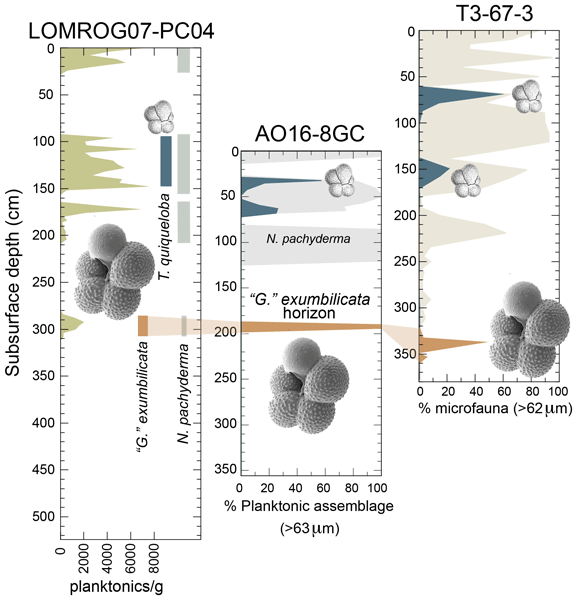
Helen K. Coxall, Thomas M. Cronin, Kate Darling, Katrine Husum, Tamara Handl, Brian T. Huber, Megh M. Kanvinde, Mohammad Razmjooei, Flor Vermassen, Antje H. L. Voelker, Tirza M. Weitkamp, and Matt O'Regan
J. Micropalaeontol., 45, 581–622, https://doi.org/10.5194/jm-45-581-2026, https://doi.org/10.5194/jm-45-581-2026, 2026
Short summary
Short summary
Today’s sea-ice-covered Arctic Ocean hosts only one species of calcifying planktonic foraminifera, unlike warmer oceans with diverse communities. Fossils show that other species once inhabited the Arctic, but their identities and environmental significance remain uncertain. Using detailed microscopy and hundreds of shell measurements, we resolve these fossil species and establish a new taxonomic framework providing the foundation for improved reconstructions of Quaternary Arctic climate history.
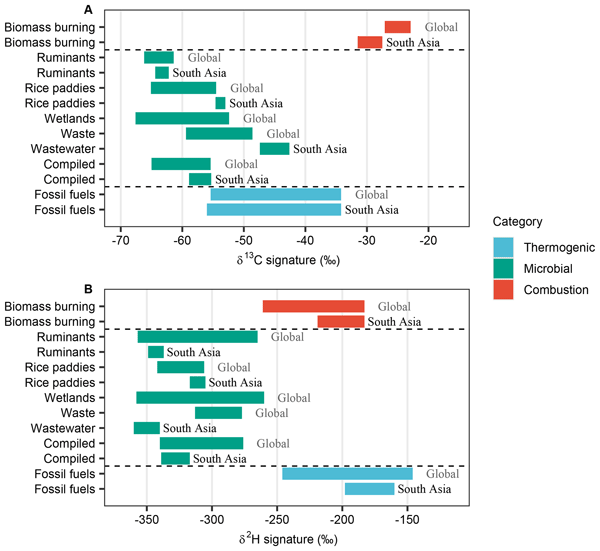
Peng Yao, Katja Belec, Henry Holmstrand, Josh Balacky, Abdus Salam, Krishnakant Budhavant, Mohanan Remani Manoj, Khaled Shaifullah Joy, Md. Alamin Hossain, Atinderpal Singh, Anil Patel, Neeraj Rastogi, Chinmay Mallik, Kirpa Ram, Gyanesh Kumar Singh, and Örjan Gustafsson
Atmos. Chem. Phys., 26, 7765–7787, https://doi.org/10.5194/acp-26-7765-2026, https://doi.org/10.5194/acp-26-7765-2026, 2026
Short summary
Short summary
Methane is a powerful greenhouse gas, but its sources remain uncertain in many regions. The isotope fingerprints of methane are diagnostic of its sources, yet their source end-members are poorly constrained for South Asia. Here we determined the methane isotope signal for major sources in South Asia and found these to differ from global averages. Improved regional-specific isotope source fingerprints will help to improve top-down assessments of methane budgets and climate mitigation strategies.
Sean Clarke, Henry Holmstrand, Krishnakant Budhavant, Manoj Remani, Sophie Haslett, Katerina Rodiouchkina, Ellen Kooijman, and Örjan Gustafsson
Atmos. Chem. Phys., 26, 5333–5343, https://doi.org/10.5194/acp-26-5333-2026, https://doi.org/10.5194/acp-26-5333-2026, 2026
Short summary
Short summary
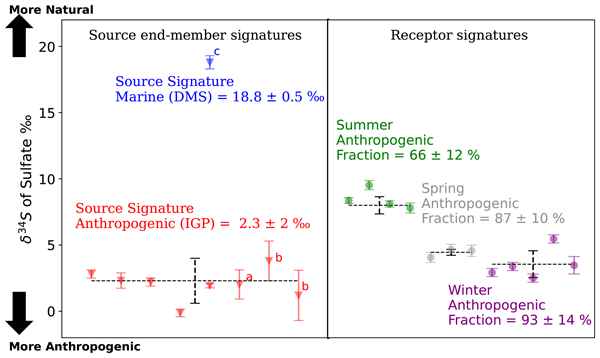
South Asia has the world's highest loadings of sulfate, scattering sunlight, altering clouds and masking greenhouse warming, yet there are large uncertainties regarding the relative contributions of natural and anthropogenic sources to the receptor atmosphere. Here we use δ34S isotopes to distinguish natural versus anthropogenic sulfate sources, revealing strong seasonal contrasts and quantifying the dominance of anthropogenic contributions.
Albin Eriksson, Birgit Wild, Wei-Li Hong, Henry Holmstrand, Francisco J. A. Nascimento, Stefano Bonaglia, Denis Kosmach, Igor Semiletov, Natalia Shakhova, and Örjan Gustafsson
Biogeosciences, 23, 1459–1475, https://doi.org/10.5194/bg-23-1459-2026, https://doi.org/10.5194/bg-23-1459-2026, 2026
Short summary
Short summary
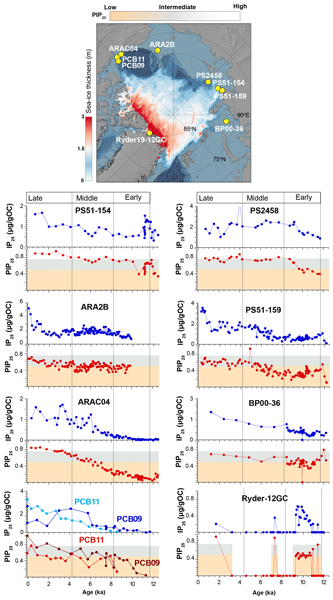
Thawing subsea permafrost in the East Siberian Arctic Seas releases methane, a potent greenhouse gas. Using molecular fossils in sediments, we traced aerobic methane oxidation as a proxy of enhanced methane cycling across the Laptev Sea, including in regions once thought low in emissions. This approach captures long-term patterns of methane cycling over years-decades , overcoming limits of short-term seawater measurements and highlights the importance of the Laptev Sea in Arctic methane cycling.
Madeleine Santos, Lisa Bröder, Matt O'Regan, Iván Hernández-Almeida, Tommaso Tesi, Lukas Bigler, Negar Haghipour, Daniel B. Nelson, Michael Fritz, and Julie Lattaud
Clim. Past, 22, 187–203, https://doi.org/10.5194/cp-22-187-2026, https://doi.org/10.5194/cp-22-187-2026, 2026
Short summary
Short summary
Our study examined how sea ice in the Beaufort Sea has changed over the past 13 000 years to better understand today's rapid losses. By analyzing chemical tracers preserved in seafloor sediments, we found that the Early Holocene was largely ice-free, with warmer waters and lower salinity. Seasonal ice began forming about 7000 years ago and expanded as the climate cooled. These long-term patterns show that continued warming could return the region to mostly ice-free conditions.
Jamie Barnett, Felicity A. Holmes, Joshua Cuzzone, Henning Åkesson, Mathieu Morlighem, Matt O'Regan, Johan Nilsson, Nina Kirchner, and Martin Jakobsson
The Cryosphere, 19, 3631–3653, https://doi.org/10.5194/tc-19-3631-2025, https://doi.org/10.5194/tc-19-3631-2025, 2025
Short summary
Short summary
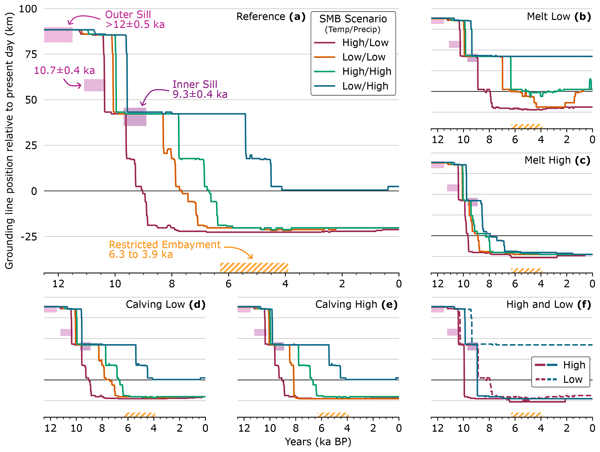
Understanding how ice sheets have changed in the past can allow us to make better predictions for the future. By running a state-of-the-art model of Ryder Glacier, North Greenland, over the past 12 000 years we find that both a warming atmosphere and the ocean play a key role in the evolution of the glacier. Our conclusions stress that accurately quantifying the ice sheet’s interactions with the ocean is required to predict future changes and reliable sea level rise estimates.
Krishnakant Budhavant, Mohanan Remani Manoj, Hari Ram Chandrika Rajendran Nair, Samuel Mwaniki Gaita, Henry Holmstrand, Abdus Salam, Ahmed Muslim, Sreedharan Krishnakumari Satheesh, and Örjan Gustafsson
Atmos. Chem. Phys., 24, 11911–11925, https://doi.org/10.5194/acp-24-11911-2024, https://doi.org/10.5194/acp-24-11911-2024, 2024
Short summary
Short summary
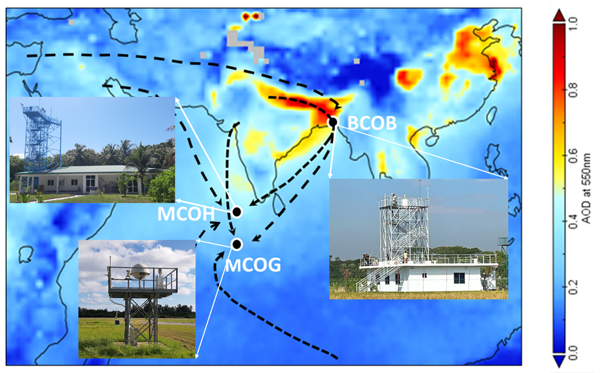
The South Asian Pollution Experiment 2018 used access to three strategically located receptor observatories. Observational constraints revealed opposing trends in the mass absorption cross sections of black carbon (BC MAC) and brown carbon (BrC MAC) during long-range transport. Models estimating the climate effects of BC aerosols may have underestimated the ambient BC MAC over distant receptor areas, leading to discrepancies in aerosol absorption predicted by observation-constrained models.
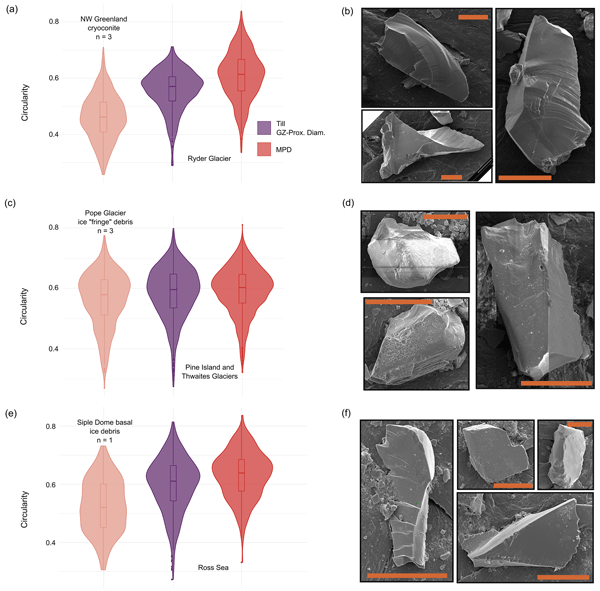
Allison P. Lepp, Lauren E. Miller, John B. Anderson, Matt O'Regan, Monica C. M. Winsborrow, James A. Smith, Claus-Dieter Hillenbrand, Julia S. Wellner, Lindsay O. Prothro, and Evgeny A. Podolskiy
The Cryosphere, 18, 2297–2319, https://doi.org/10.5194/tc-18-2297-2024, https://doi.org/10.5194/tc-18-2297-2024, 2024
Short summary
Short summary
Shape and surface texture of silt-sized grains are measured to connect marine sediment records with subglacial water flow. We find that grain shape alteration is greatest in glaciers where high-energy drainage events and abundant melting of surface ice are inferred and that the surfaces of silt-sized sediments preserve evidence of glacial transport. Our results suggest grain shape and texture may reveal whether glaciers previously experienced temperate conditions with more abundant meltwater.
Lara F. Pérez, Paul C. Knutz, John R. Hopper, Marit-Solveig Seidenkrantz, Matt O'Regan, and Stephen Jones
Sci. Dril., 33, 33–46, https://doi.org/10.5194/sd-33-33-2024, https://doi.org/10.5194/sd-33-33-2024, 2024
Short summary
Short summary
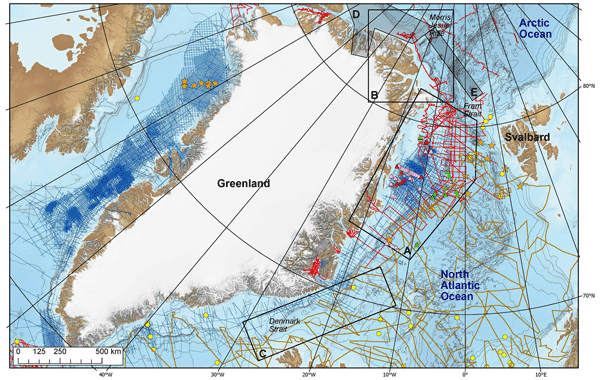
The Greenland ice sheet is highly sensitive to global warming and a major contributor to sea level rise. In Northeast Greenland, ice–ocean–tectonic interactions are readily observable today, but geological records that illuminate long-term trends are lacking. NorthGreen aims to promote scientific drilling proposals to resolve key scientific questions on past changes in the Northeast Greenland margin that further affected the broader Earth system.
Leonard Kirago, Örjan Gustafsson, Samuel Mwaniki Gaita, Sophie L. Haslett, Michael J. Gatari, Maria Elena Popa, Thomas Röckmann, Christoph Zellweger, Martin Steinbacher, Jörg Klausen, Christian Félix, David Njiru, and August Andersson
Atmos. Chem. Phys., 23, 14349–14357, https://doi.org/10.5194/acp-23-14349-2023, https://doi.org/10.5194/acp-23-14349-2023, 2023
Short summary
Short summary
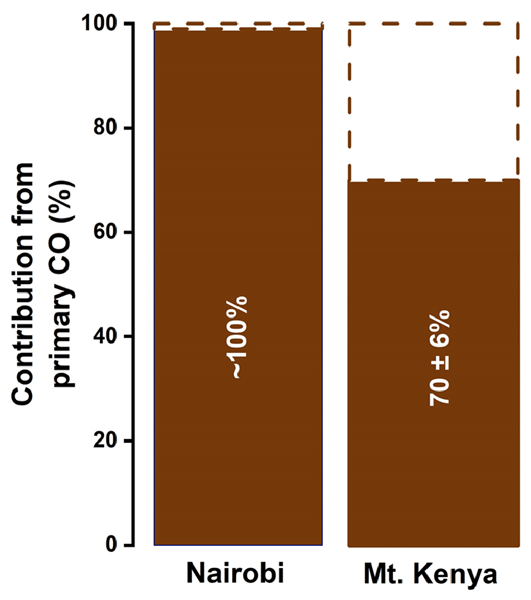
This study provides ground-observational evidence that supports earlier suggestions that savanna fires are the main emitters and modulators of carbon monoxide gas in Africa. Using isotope-based techniques, the study has shown that about two-thirds of this gas is emitted from savanna fires, while for urban areas, in this case Nairobi, primary sources approach 100 %. The latter has implications for air quality policy, suggesting primary emissions such as traffic should be targeted.
Christoph Heinze, Thorsten Blenckner, Peter Brown, Friederike Fröb, Anne Morée, Adrian L. New, Cara Nissen, Stefanie Rynders, Isabel Seguro, Yevgeny Aksenov, Yuri Artioli, Timothée Bourgeois, Friedrich Burger, Jonathan Buzan, B. B. Cael, Veli Çağlar Yumruktepe, Melissa Chierici, Christopher Danek, Ulf Dieckmann, Agneta Fransson, Thomas Frölicher, Giovanni Galli, Marion Gehlen, Aridane G. González, Melchor Gonzalez-Davila, Nicolas Gruber, Örjan Gustafsson, Judith Hauck, Mikko Heino, Stephanie Henson, Jenny Hieronymus, I. Emma Huertas, Fatma Jebri, Aurich Jeltsch-Thömmes, Fortunat Joos, Jaideep Joshi, Stephen Kelly, Nandini Menon, Precious Mongwe, Laurent Oziel, Sólveig Ólafsdottir, Julien Palmieri, Fiz F. Pérez, Rajamohanan Pillai Ranith, Juliano Ramanantsoa, Tilla Roy, Dagmara Rusiecka, J. Magdalena Santana Casiano, Yeray Santana-Falcón, Jörg Schwinger, Roland Séférian, Miriam Seifert, Anna Shchiptsova, Bablu Sinha, Christopher Somes, Reiner Steinfeldt, Dandan Tao, Jerry Tjiputra, Adam Ulfsbo, Christoph Völker, Tsuyoshi Wakamatsu, and Ying Ye
Biogeosciences Discuss., https://doi.org/10.5194/bg-2023-182, https://doi.org/10.5194/bg-2023-182, 2023
Revised manuscript not accepted
Short summary
Short summary
For assessing the consequences of human-induced climate change for the marine realm, it is necessary to not only look at gradual changes but also at abrupt changes of environmental conditions. We summarise abrupt changes in ocean warming, acidification, and oxygen concentration as the key environmental factors for ecosystems. Taking these abrupt changes into account requires greenhouse gas emissions to be reduced to a larger extent than previously thought to limit respective damage.
Johan Nilsson, Eef van Dongen, Martin Jakobsson, Matt O'Regan, and Christian Stranne
The Cryosphere, 17, 2455–2476, https://doi.org/10.5194/tc-17-2455-2023, https://doi.org/10.5194/tc-17-2455-2023, 2023
Short summary
Short summary
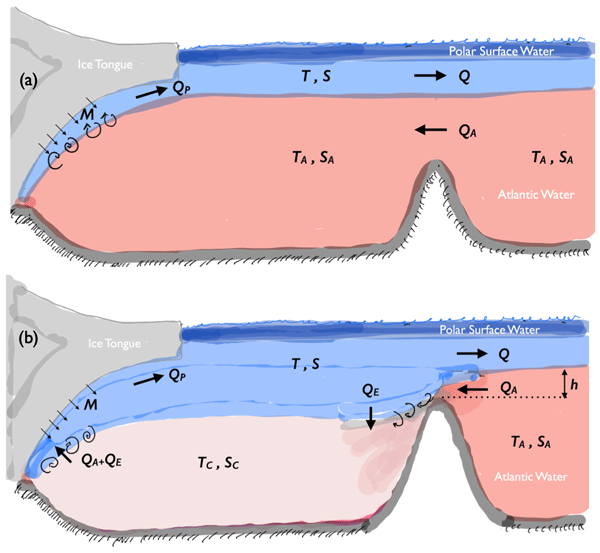
We investigate how topographical sills suppress basal glacier melt in Greenlandic fjords. The basal melt drives an exchange flow over the sill, but there is an upper flow limit set by the Atlantic Water features outside the fjord. If this limit is reached, the flow enters a new regime where the melt is suppressed and its sensitivity to the Atlantic Water temperature is reduced.
Gabriel West, Darrell S. Kaufman, Martin Jakobsson, and Matt O'Regan
Geochronology, 5, 285–299, https://doi.org/10.5194/gchron-5-285-2023, https://doi.org/10.5194/gchron-5-285-2023, 2023
Short summary
Short summary
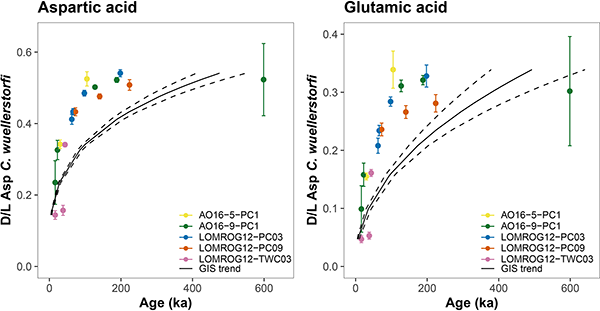
We report aspartic and glutamic acid racemization analyses on Neogloboquadrina pachyderma and Cibicidoides wuellerstorfi from the Arctic Ocean (AO). The rates of racemization in the species are compared. Calibrating the rate of racemization in C. wuellerstorfi for the past 400 ka allows the estimation of sample ages from the central AO. Estimated ages are older than existing age assignments (as previously observed for N. pachyderma), confirming that differences are not due to taxonomic effects.
Jesse R. Farmer, Katherine J. Keller, Robert K. Poirier, Gary S. Dwyer, Morgan F. Schaller, Helen K. Coxall, Matt O'Regan, and Thomas M. Cronin
Clim. Past, 19, 555–578, https://doi.org/10.5194/cp-19-555-2023, https://doi.org/10.5194/cp-19-555-2023, 2023
Short summary
Short summary
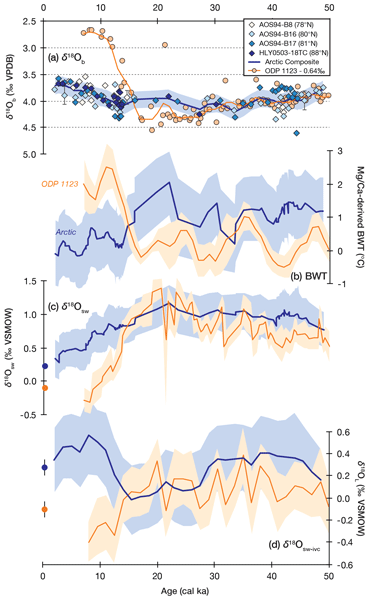
Oxygen isotopes are used to date marine sediments via similar large-scale ocean patterns over glacial cycles. However, the Arctic Ocean exhibits a different isotope pattern, creating uncertainty in the timing of past Arctic climate change. We find that the Arctic Ocean experienced large local oxygen isotope changes over glacial cycles. We attribute this to a breakdown of stratification during ice ages that allowed for a unique low isotope value to characterize the ice age Arctic Ocean.

Raisa Alatarvas, Matt O'Regan, and Kari Strand
Clim. Past, 18, 1867–1881, https://doi.org/10.5194/cp-18-1867-2022, https://doi.org/10.5194/cp-18-1867-2022, 2022
Short summary
Short summary
This research contributes to efforts solving research questions related to the history of ice sheet decay in the Northern Hemisphere. The East Siberian continental margin sediments provide ideal material for identifying the mineralogical signature of ice sheet derived material. Heavy mineral analysis from marine glacial sediments from the De Long Trough and Lomonosov Ridge was used in interpreting the activity of the East Siberian Ice Sheet in the Arctic region.
Cited articles
Barnhart, K. R., Overeem, I., and Anderson, R. S.: The effect of changing sea ice on the physical vulnerability of Arctic coasts, The Cryosphere, 8, 1777–1799, https://doi.org/10.5194/tc-8-1777-2014, 2014.
Bauch, H. A., Mueller-Lupp, T., Taldenkova, E., Spielhagen, R. F., Kassens, H., Grootes, P. M., Thiede, J., Heinemeier, J., and Petryashov, V. V.: Chronology of the Holocene transgression at the North Siberian margin, Global Planet. Change, 31, 125–139, https://doi.org/10.1016/S0921-8181(01)00116-3, 2001.
Belt, S.: Source-specific biomarkers as proxies for Arctic and Antarctic sea ice, Org. Geochem., 125, 277–298, https://doi.org/10.1016/j.orggeochem.2018.10.002, 2018.
Belt, S. T., Massé, G., Rowland, S. J., Poulin, M., Michel, C., and LeBlanc, B.: A novel chemical fossil of palaeo sea ice: IP25, Org. Geochem., 38, 16–27, https://doi.org/10.1016/j.orggeochem.2006.09.013, 2007.
Belt, S. T., Brown, T. A., Navarro Rodriguez, A., Cabedo Sanz, P., Tonkin, A., and Ingle, R.: A reproducible method for the extraction, identification, and quantification of the Arctic sea ice proxy IP25 from marine sediments, Anal. Methods, 4, 705–713, https://doi.org/10.1039/C2AY05728J, 2012.
Bradley, R. S. and England, J. H.: The Younger Dryas and the Sea of Ancient Ice, Quaternary Res., 70, 1–10, https://doi.org/10.1016/j.yqres.2008.03.002, 2008.
Bröder, L., Tesi, T., Andersson, A., Semiletov, I., and Gustafsson, Ö.: Bounding cross-shelf transport time and degradation in Siberian-Arctic land-ocean carbon transfer, Nat. Comm, 9, 806, https://doi.org/10.1038/s41467-018-03192-1, 2018.
Dansgaard, W., Johnsen, S. J., Clausen, H. B., Dahl-Jensen, D., Gundestrup, N. S., Hammer, C. U., Hvidberg, C. S., Steffensen, J. P., Sveinbjörnsdottir, A. E., Jouzel, J., and Bond, G.: Evidence for general instability of past climate from a 250-kyr ice-core record, Nature, 364, 218–220, https://doi.org/10.1038/364218a0, 1993.
Dong, J., Shi, X., Gong, X., Astakhov, A.S., Hu, L., Liu, X., Yang, G., Wang, Y., Vasilenko, Y., Qiao, S., Bosin, A., and Lohmann, G.: Enhanced Arctic sea ice melting controlled by larger heat discharge of mid-Holocene rivers, Nat. Commun., 13, 5368, https://doi.org/10.1038/s41467-022-33106-1, 2022.
Duan, L., Cao, L., and Caldeira, K.: Estimating Contributions of Sea Ice and Land Snow to Climate Feedback, Atmospheres, 124, 199–208, https://doi.org/10.1029/2018JD029093, 2019.
Eriksson, A., Wu, J., O'Regan, M., and Gustafsson, Ö.: Sea ice, phytoplankton and terrestrial biomarker fluxes/concentrations in sediment core 31-PC, Bolin Centre Database [data set], https://doi.org/10.17043/eriksson-2026-31pc-biomarker-1, 2026.
Fahl, K. and Stein, R.: Modern seasonal variability and deglacial/Holocene change of central Arctic Ocean sea-ice cover: New insights from biomarker proxy records, Earth Planet. Sci. Lett., 351–352, 123–133, https://doi.org/10.1016/j.epsl.2012.07.009, 2012.
Gustafsson, Ö., van Dongen, B. E., Vonk, J. E., Dudarev, O. V., and Semiletov, I. P.: Widespread release of old carbon across the Siberian Arctic echoed by its large rivers, Biogeosciences, 8, 1737–1743, https://doi.org/10.5194/bg-8-1737-2011, 2011.
Hörner, T., Stein, R., Fahl, K., and Birgel, D.: Post-glacial variability of sea ice cover, river run-off and biological production in the western Laptev Sea (Arctic Ocean) – A highresolution biomarker study, Quaternary Sci. Rev., 143, 133–149, https://doi.org/10.1016/j.quascirev.2016.04.011, 2016.
Hörner, T., Stein, R., and Fahl, K.: Paleo-sea ice distribution and polynya variability on the Kara Sea shelf during the last 12 ka, Arktos, 4, 11–16, https://doi.org/10.1007/s41063-018-0040-4, 2018.
Jakobsson, M., Mayer, L. A., Bringensparr, C., Castro, C. F., Mohammad, R., Johnson, P., Ketter, T., Accettella, D., Amblas, D., An, L., Arndt, J. E., Canals, M., Casamor, J. L., Chauché, N., Coakley, B., Danielson, S., Demarte, M., Dickson, M.-L., Dorschel, B., Dowdeswell, J. A., Dreutter, S., Fremand, A. C., Gallant, D., Hall, J. K., Hehemann, L., Hodnesdal, H., Hong, J., Ivaldi, R., Kane, E., Klaucke, I., Krawczyk, D. W., Kristoffersen, Y., Kuipers, B. R., Millan, R., Masetti, G., Morlighem, M., Noormets, R., Prescott, M. M., Rebesco, M., Rignot, E., Semiletov, I., Tate, A. J., Travaglini, P., Velicogna, I., Weatherall, P., Weinrebe, W., Willis, J. K., Wood, M., Zarayskaya, Y., Zhang, T., Zimmermann, M., and Zinglersen, K. B.: The International Bathymetric Chart of the Arctic Ocean Version 4.2., Sci. Data, 7, 176, https://doi.org/10.1038/s41597-020-0520-9, 2022.
Jensen, M. F., Nummelin, A., Nielsen, S. B., Sadatzki, H., Sessford, E., Risebrobakken, B., Andersson, C., Voelker, A., Roberts, W. H. G., Pedro, J., and Born, A.: A spatiotemporal reconstruction of sea-surface temperatures in the North Atlantic during Dansgaard–Oeschger events 5–8, Clim. Past, 14, 901–922, https://doi.org/10.5194/cp-14-901-2018, 2018.
Karlsson, E., Gelting, J., Tesi, T., van Dongen, B., Andersson, A., Semiletov, I., Charkin, A., Dudarev, O., and Gustafsson, Ö.: Different sources and degradation state of dissolved, particulate, and sedimentary organic matter along the Eurasian Arctic coastal margin, Global Biogeochem. Cy., 30, 898–919, https://doi.org/10.1002/2015GB005307, 2016.
Keskitalo, K., Tesi, T., Bröder, L., Andersson, A., Pearce, C., Sköld, M., Semiletov, I. P., Dudarev, O. V., and Gustafsson, Ö.: Sources and characteristics of terrestrial carbon in Holocene-scale sediments of the East Siberian Sea, Clim. Past, 13, 1213–1226, https://doi.org/10.5194/cp-13-1213-2017, 2017.
Kremer, A., Stein, R., Fahl, K., Bauch, H., Mackensen, A., and Niessen, F.: A 190-ka biomarker record revealing interactions between sea ice, Atlantic Water inflow and ice sheet activity in eastern Fram Strait, Arktos, 4, 11–17, https://doi.org/10.1007/s41063-018-0052-0, 2018.
Köhler, P., Knorr, G., and Bard, E.: Permafrost thawing as a possible source of abrupt carbon release at the onset of the Bølling/Allerød, Nat. Commun., 5, 5520, https://doi.org/10.1038/ncomms6520, 2014.
Lambeck, K., Rouby, H., Purcell, A., Sun, Y., and Sambridge, M.: Sea level and global ice volumes from the Last Glacial Maximum to the Holocene, P. Natl. Acad. Sci. USA, 111, 15296–15303, https://doi.org/10.1073/pnas.1411762111, 2014.
Laskar, J., Robutel, P., Joutel, F., Gastineau, M., Correia, A.C.M., and Levrard, B.: A long-term numerical solution for the insolation quantities of the Earth, Astron. Astrophys., 428, 261–285, https://doi.org/10.1051/0004-6361:20041335, 2004.
Lin, T.-W., Tesi, T., Hefter, J., Grotheer, H., Wollenburg, J., Adolphi, F., Bauch, H. A., Nogarotto, A., Müller, J., and Mollenhauer, G.: Environmental controls of rapid terrestrial organic matter mobilization to the western Laptev Sea since the Last Deglaciation, Clim. Past, 21, 753–772, https://doi.org/10.5194/cp-21-753-2025, 2025.
Martens, J., Wild, B., Pearce, C., Tesi, T., Andersson, A., Bröder, L., O'Regan, M., Jakobsson, M., Sköld, M., Gemery, L., Cronin, T. M., Semiletov, I., Dudarev, O. V., and Gustafsson, Ö.: Remobilization of Old Permafrost Carbon to Chukchi Sea Sediments During the End of the Last Deglaciation, Global Biogeochem. Cy., 33, 2–14, https://doi.org/10.1029/2018GB005969, 2019.
Martens, J., Wild, B., Muschitiello, F., O'Regan, M., Jakobsson, M., Semiletov, I., Dudarev, O.V., and Gustafsson, Ö.: Remobilization of dormant carbon from Siberian-Arctic permafrost during three past warming events, Sci. Adv., 6, eabb6546, https://doi.org/10.1126/sciadv.abb6546, 2020.
Martens, J., Romankevich, E., Semiletov, I., Wild, B., van Dongen, B., Vonk, J., Tesi, T., Shakhova, N., Dudarev, O. V., Kosmach, D., Vetrov, A., Lobkovsky, L., Belyaev, N., Macdonald, R. W., Pieńkowski, A. J., Eglinton, T. I., Haghipour, N., Dahle, S., Carroll, M. L., Åström, E. K. L., Grebmeier, J. M., Cooper, L. W., Possnert, G., and Gustafsson, Ö.: CASCADE – The Circum-Arctic Sediment CArbon DatabasE, Earth Syst. Sci. Data, 13, 2561–2572, https://doi.org/10.5194/essd-13-2561-2021, 2021.
Martens, J., Wild, B., Semiletov, I., Dudarev, O.V., and Gustafsson, Ö.: Circum-Arctic release of terrestrial carbon varies between regions and sources, Nat. Commun., 13, 5858, https://doi.org/10.1038/s41467-022-33541-0, 2022.
Matsubara, F., Wild, B., Martens, J., Andersson, A., Wennström, R., Bröder, L., Dudarev, O.V., Semiletov, I., and Gustafsson, Ö.: Molecular-Multiproxy Assessment of Land-Derived Organic Matter Degradation Over Extensive Scales of the East Siberian Arctic Shelf Seas, Global Biogeochem. Cy., 36, e2022GB007428, https://doi.org/10.1029/2022GB007428, 2022.
Meyer, V., Hefter, J., Köhler, P., Tiedemann, R., Gersonde, R., Wacker, L., and Mollenhauer, G.: Permafrost-carbon mobilization in Beringia caused by deglacial meltwater runoff, sea-level rise and warming, 14, 085003, Environ. Res. Lett., https://doi.org/10.1088/1748-9326/ab2653, 2019.
Müller, J., Wagner, A., Fahl, K., Stein, R., Prange, M., and Lohmann, G.: Towards quantitative sea ice reconstructions in the northern North Atlantic: A combined biomarker and numerical modelling approach, Earth Planet. Sc. Lett., 306, 137–148, https://doi.org/10.1016/j.epsl.2011.04.011, 2011.
Muschitiello, F., O'Regan, M., Martens, J., West, G., Gustafsson, Ö., and Jakobsson, M.: A new 30 000-year chronology for rapidly deposited sediments on the Lomonosov Ridge using bulk radiocarbon dating and probabilistic stratigraphic alignment, Geochronology, 2, 81–91, https://doi.org/10.5194/gchron-2-81-2020, 2020.
Nicolas, A., Hefter, J., Grotheer, H., Tesi, T., Stein, R., Nogarotto, A., Alves, E. Q., and Mollenhauer, G.: Delivery of aged terrestrial organic matter to the Laptev Sea during the last deglaciation, Clim. Past, 21, 2579–2599, https://doi.org/10.5194/cp-21-2579-2025, 2025.
Nielsen, D. M., Dobrynin, M., Baehr, J., Razumov, S., and Grigoriev, M.: Coastal Erosion Variability at the Southern Laptev Sea Linked to Winter Sea Ice and the Arctic Oscillation, Geophys. Res. Lett., 47, e2019GL086876, https://doi.org/10.1029/2019GL086876, 2020.
Nielsen, D. M., Chegini, F., Maerz, J., Brune, S., Mathis, M., Dobrynin, M., Baehr, J., Brovkin, V., and Ilyina, T.: Reduced Arctic Ocean CO2 uptake due to coastal permafrost erosion, Nat. Clim. Change, https://doi.org/10.1038/s41558-024-02074-3, 2024.
Overduin, P. P., Schneider von Deimling, T., Meisner, F., Grigoriev, M. N., Ruppel, C., Vasilev, A., Lantuit, H., Juhls, H., and Westermann, S.: Submarine Permafrost Map in the Arctic Modeled Using1-D Transient Heat Flux (SuPerMAP), J. Geophys. Res.-Oceans, 124, 3487–3507, https://doi.org/10.1029/2018JC014675, 2019.
Overeem, I., Anderson, R. S., Wobus, C. W., Clow, G. D., Urban, F. E., and Matell, N.: Sea ice loss enhances wave action at the Arctic coast, Geophys. Res. Lett., 38, L17503, https://doi.org/10.1029/2011GL048681, 2011.
Pavia, F. J., Farmer, J. R., Gemery, L., Cronin, T. M., Treffkorn, J., and Farley, K. A.: Cosmic dust reveals dynamic shifts in central Arctic sea-ice cover-age over the past 30,000 years, Science, 390, 628–632, https://doi.org/10.1126/science.adv5767, 2025.
Reimer, P. J., Austin, W. E. N., Bard, E., Bayliss, A., Blackwell, P. G., Bronk Ramsey, C., Butzin, M., Cheng, H., Edwards, R. L., Friedrich, M., Grootes, P. M., Guilderson, T. P., Hajdas, I., Heaton, T. J., Hogg, A. G., Hughen, K. A., Kromer, B., Manning, S. W., Muscheler, R., Palmer, J. G., Pearson, C., van der Plicht, J., Reimer, R. W., Richards, D. A., Scott, E. M., Southon, J. R., Turney, C. S. M., Wacker, L., Adolphi, F., Büntgen, U., Capano, M., Fahrni, S. M., Fogtmann-Schulz, A., Friedrich, R., Köhler, P., Kudsk, S., Miyake, F., Olsen, J., Reinig, F., Sakamoto, M., Sookdeo, A., and Talamo, S.: The IntCal20 Northern Hemisphere Radiocarbon Age Calibration Curve (0-55 kBP), Radiocarbon, 62, 725–757, https://doi.org/10.1017/RDC.2020.41, 2020.
Semiletov, I., Dudarev, O., Luchin, V., Charkin, A., Shin, K. H., and Tanaka, N.: The East Siberian Sea as a transition zone between Pacific-derived waters and Arctic shelf waters, Geophys. Res. Lett., 32, L10614, https://doi.org/10.1029/2005GL022490, 2005.
Sévellec, F., Fedorov, A. V., and Liu, W.: Arctic sea-ice decline weakens the Atlantic Meridional Overturning Circulation, Nat. Clim. Change, 7, 604–610, https://doi.org/10.1038/nclimate3353, 2017.
Shakun, J. D., Clark, P. U., He, F., Marcot, S. A., Mix, A. C., Zhengyu, L., Otto-Bliesner, B., Schmittner, A., and Bard, E.: Global warming preceded by increasing carbon dioxide concentrations during the last deglaciation, Nature, 484, 49–54, https://doi.org/10.1038/nature10915, 2012.
Schefuß, E., Eglinton, T. I., Spencer-Jones, C. L., Rullkötter, J., De Pol-Holz, R., Talbot, H. M., Grootes, P. M., and Schneider, R. R.: Hydrologic control of carbon cycling and aged carbon discharge in the Congo River basin, Nat. Geosci., 9, 687–690, https://doi.org/10.1038/ngeo2778, 2016.
Solomon, A.: Impact of latent heat release on polar climate, Geophys. Res. Lette., 33, https://doi.org/10.1029/2005GL025607, 2006.
Stein, R., Fahl, K., Schade, I., Manerung, A., Wassmuth, S., Niessen, F., and Nam, S.: Holocene variability in sea ice cover, primary production, and Pacific-Water inflow and climate change in the Chukchi and East Siberian Seas (Arctic Ocean), J. Quaternary Sci., 32, 362–379, https://doi.org/10.1002/jqs.2929, 2017.
Stranne, C., Jakobsson, M., and Björk, G.: Arctic Ocean perennial sea ice breakdown during the Early Holocene Insolation Maximum, Quaternary Sci. Rev., 92, 123–132, https://doi.org/10.1016/j.quascirev.2013.10.022, 2014.
Strauss, J., Schirrmesiter, L., Grosse, G., Fortier, D., Hugelius, G., Knoblauch, C., Romanovsky, V., Schädel, C., Schneider von Deimling, T., Schuur, E. A. G., Shmelev, D., Ulrich, M., and Veremeeva, A.: Deep Yedoma permafrost: A synthesis of depositional characteristics and carbon vulnerability, Earth Sci. Rev., 172, 75–86, https://doi.org/10.1016/j.earscirev.2017.07.007, 2017.
Strauss, J., Laboor, S., Schirrmeister, L., Fedorov, A. N., Fortier, D., Froese, D. G., Fuchs, M., Günther, F., Grigoriev, M. N., Harden, J. W., Hugelius, G., Jongejans, L. L., Kanevskiy, M. Z., Kholodov, A. L., Kunitsky, V., Kraev, G., Lozhkin, A. V., Rivkina, E., Shur, Y., Siegert, C., Spektor, V., Streletskaya, I., Ulrich, M., Vartanyan, S. L., Veremeeva, A., Walter A. K., Wetterich, S., Zimov, N. S., and Grosse, G.: Database of Ice-Rich Yedoma Permafrost Version 2 (IRYP v2), PANGAEA, https://doi.org/10.1594/PANGAEA.940078, 2022.
Taldenkova, E., Bauch, H. A., Stepanova, A., Ovsepyan, Y., Pogodina, I., Klyuvitkina, T., and Nikolaev, S.: Reprint of: Benthic and planktic community changes at the North Siberian margin in response to Atlantic water mass variability since last deglacial times, Mar. Micropaleontol., 99, 29–44, https://doi.org/10.1016/j.marmicro.2012.06.007, 2013.
Taylor, P. C., Cai, M., Hu, A., Meehl, J., Washington, W., and Zhang, G. J.: A Decomposition of Feedback Contributions to Polar Warming Amplification, J. Climate, 26, 7023–7043, https://doi.org/10.1175/JCLI-D-12-00696.1, 2013.
Tesi, T., Muschitiello, F., Smittenberg, R. H., Jakobsson, M., Vonk, J. E., Hill, P., Andersson, A., Kirchner, N., Noormets, R., Dudarev, O., Semiletov, I., and Gustafsson, Ö.: Massive remobilization of permafrost carbon during post-glacial warming, Nat. Commun., 7, 13653, https://doi.org/10.1038/ncomms13653, 2016.
Vaks, A., Mason, A. J., Breitenbach, S. F. M., Kononov, A. M., Osinzev, A. V., Rosensaft, M., Morshevsky, A., Gutareva, O. S., and Henderson, G. M.: Palaeoclimate evidence of vulnerable permafrost during times of low sea ice, Nature, 577, 221–225, https://doi.org/10.1038/s41586-019-1880-1, 2020.
Vandenberghe, J., Renssen, H., Roche, D. M., Goosse, H., Velichko, A. A., Gorbunov, A., and Levavasseur, G.: Eurasion permafrost instability constrained by reduced sea-ice cover, Quaternary Sci. Rev., 34, 16–23, https://doi.org/10.1016/j.quascirev.2011.12.001, 2012.
Vonk, J. E., Sánchez-Garcia, L., van Dongen, B. E., Alling, V., Kosmach, D., Charkin, A., Semiletov, I. P., Dudarev, O. V., Shakhova, N., Roos, P., Eglinton, T. I., Andersson, A., and Gustafsson, Ö.: Activation of old carbon by erosion of coastal and subsea permafrost in Arctic Siberia, Nature, 489, 137–140, https://doi.org/10.1038/nature11392, 2012.
Vonk, J. E., Fritz, M., Speetjens, N. J., Babin, M., Bartsch, A., Basso, L. S., Bröder, L., Göckede, M., Gustafsson, Ö., Hugelius, G., Irrgang, A. M., Juhls, B., Kuhn, M. A., Lantuit, H., Manizza, M., Martens, J., O'Regan, M., Suslova, A., Tank, S. E., Terhaar, J., and Zolkos, S.: The land-ocean Arctic carbon cycle, Nat. Rev. Earth Environ., 6, 86–105, https://doi.org/10.1038/s43017-024-00627-w, 2025.
Wild, B., Andersson, A., Bröder, L., Vonk, J., Hugelius, G., McClelland, J. W., Song, W., Raymond, P. A., and Gustafsson, Ö.: Rivers across the Siberian Arctic unearth the patterns of carbon release from thawing permafrost, P. Natl. Acad. Sci. USA, 116, 10280–10285, https://doi.org/10.1073/pnas.1811797116, 2019.
Winterfeld, M., Mollenhauer, G., Dummann, W., Köhler, P., Lembke-Jene, L., Hefter, J., McIntyre, C., Wacker, L., Kokfelt, U., and Tiedemann, R.: Deglacial mobilization of pre-aged terrestrial carbon from degrading permafrost, Nat. Commun., 9, 3666, https://doi.org/10.1038/s41467-018-06080-w, 2018.
Wu, J., Stein, R., Fahl, K., Syring, N., Seung-Il, N., Hefter, J., Mollenhauer, G., and Gilbert, W.: Deglacial to Holocene variability in surface water characteristics and major floods in the Beaufort Sea, Commun. Earth Environ., 1, 27, https://doi.org/10.1038/s43247-020-00028-z, 2020.
Wu, J., Mollenhauer, G., Stein, R., Köhler, P., Hefter, J., Fahl, K., Grotheer, H., Wei, B., and Nam, S.: Deglacial release of petrogenic and permafrost carbon from the Canadian Arctic impacting the carbon cycle, Nat. Commun., 13, 7172, https://doi.org/10.1038/s41467-022-34725-4, 2022.
Wu, J., Matsubara, F., Mollenhauer, G., Stein, R., Wei, B., Fahl, K., Xiao, X., and Gustafsson, Ö.: Geospatial patterns in terrestrial organic matter reactivity across four shelf seas spanning the Eurasian Arctic, Sci. Adv., 11, eadt6806, https://doi.org/10.1126/sciadv.adt6806, 2025.
Xiao, X., Fahl, K., and Stein, R.: Biomarker distributions in surface sediments from the Kara and Laptev seas (Arctic Ocean): indicators for organic-carbon sources and sea-ice coverage, Quaternary Sci. Rev., 79, 40–52, https://doi.org/10.1016/j.quascirev.2012.11.028, 2013.
Xiao, X., Stein, R., and Fahl, K.: MIS 3 to MIS 1 temporal and LGM spatial variability in Arctic Ocean sea ice cover: Reconstruction from biomarkers, Paleooceanogr. Paleocl., 30, 969–983, https://doi.org/10.1002/2015PA002814, 2015.
Short summary
Sea ice is an important regulator of the Arctic climate systems. Records of sea ice past instrumental records are necessary to understand how sea ice is altered during past periods of abrupt climate change, and what consequences such changes have on the polar climates. Here, we reconstructed the sea ice cover of the East Siberian Arctic and found that the sea ice extent likely was linked to protecting/eroding permafrost coastlines during the last deglaciation.
Sea ice is an important regulator of the Arctic climate systems. Records of sea ice past...


Altmetrics
Final-revised paper
Preprint