
Articles | Volume 22, issue 5
https://doi.org/10.5194/cp-22-1085-2026
© Author(s) 2026. This work is distributed under
the Creative Commons Attribution 4.0 License.
the Creative Commons Attribution 4.0 License.
https://doi.org/10.5194/cp-22-1085-2026
© Author(s) 2026. This work is distributed under
the Creative Commons Attribution 4.0 License.
the Creative Commons Attribution 4.0 License.
Research article
| 
29 May 2026
Research article |
| 29 May 2026
| 29 May 2026
Glacial-interglacial shifts in dominant climate forcing over the last 33 ka in the northern South China Sea

Shanghai Frontiers Research Center of the Hadal Biosphere, College of Oceanography and Ecological Science, Shanghai Ocean University, Shanghai 201306, China
Shengjie Ye
Shanghai Frontiers Research Center of the Hadal Biosphere, College of Oceanography and Ecological Science, Shanghai Ocean University, Shanghai 201306, China
Jiahui Yao
Shanghai Frontiers Research Center of the Hadal Biosphere, College of Oceanography and Ecological Science, Shanghai Ocean University, Shanghai 201306, China
Michael E. Meadows
School of Geography and Ocean Sciences, Nanjing University, Nanjing 210023, China
Department of Environmental & Geographical Science, University of Cape Town, Cape Town 7701, South Africa
Chengyu Weng
State Key Laboratory of Marine Geology, Tongji University, Shanghai, China
Yasong Wang
Shanghai Frontiers Research Center of the Hadal Biosphere, College of Oceanography and Ecological Science, Shanghai Ocean University, Shanghai 201306, China
Mingxing Zhang
Shanghai Frontiers Research Center of the Hadal Biosphere, College of Oceanography and Ecological Science, Shanghai Ocean University, Shanghai 201306, China
Yunping Xu
Shanghai Frontiers Research Center of the Hadal Biosphere, College of Oceanography and Ecological Science, Shanghai Ocean University, Shanghai 201306, China
Related authors
No articles found.
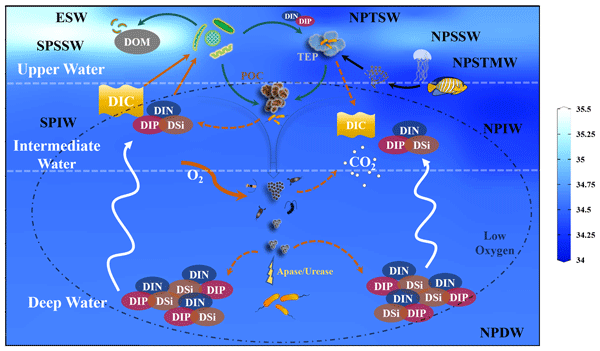
Detong Tian, Xuegang Li, Jinming Song, Yunping Xu, Feng Zhao, Jun Ma, Shanshan Liu, Muhammad Inayat Ullah Khan, and Weichao Wu
Biogeosciences, 23, 6431–6445, https://doi.org/10.5194/bg-23-6431-2026, https://doi.org/10.5194/bg-23-6431-2026, 2026
Short summary
Short summary
In the tropical Northwest Pacific, a region of warm and nutrient‑poor ocean water, we investigated why oxygen consumption does not match the expected release of nutrients like nitrogen and phosphorus. We sampled from the surface to 2000 m and found that layering limits mixing, traps nutrients at depth, and leaves surface waters nutrient poor. Under these conditions, algae and bacteria recycle materials in ways that decouple carbon breakdown from nitrogen and phosphorus release.
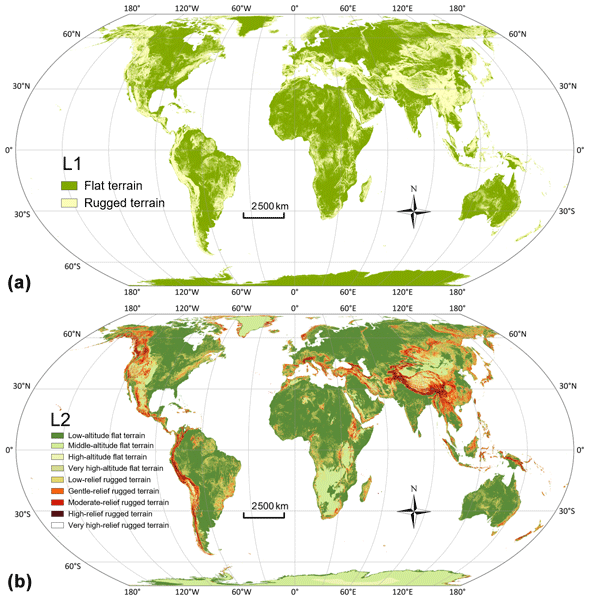
Xin Yang, Sijin Li, Junfei Ma, Yang Chen, Xingyu Zhou, Fayuan Li, Liyang Xiong, Chenghu Zhou, Guoan Tang, and Michael E. Meadows
Earth Syst. Sci. Data, 17, 4331–4350, https://doi.org/10.5194/essd-17-4331-2025, https://doi.org/10.5194/essd-17-4331-2025, 2025
Short summary
Short summary
Surveys of global relief classes are important for understanding the morphology and land processes of Earth's surface. This study proposes a novel framework integrating the accumulated slope and a new surface relief index for global relief classification (GRC) with 1 arcsec resolution. This dataset can provide abundant and detailed land surface information for the field of Earth sciences.
Cited articles
An, Z.: The history and variability of the East Asian paleomonsoon climate, Quat. Sci. Rev., 19, 171–187, https://doi.org/10.1016/S0277-3791(99)00060-8, 2000.
An, Z., Porter, S. C., Kutzbach, J. E., Xihao, W., Suming, W., Xiaodong, L., Xiaoqiang, L., and Weijian, Z.: Asynchronous Holocene optimum of the East Asian monsoon, Quat. Sci. Rev., 19, 743–762, https://doi.org/10.1016/S0277-3791(99)00031-1, 2000.
Bandara, G., Luo, C. X., Chen, C. X., Xiang, R., Herath, D. B., Yang, Z. J., and Thilakanayaka, V.: Sedimental pollen records in the northern South China Sea and their paleoenvironmental significance, J. Asian Earth Sci., 241, 105457, https://doi.org/10.1016/j.jseaes.2022.105457, 2023.
Barker, S., Greaves, M., and Elderfield, H.: A study of cleaning procedures used for foraminiferal Mg
Blaauw, M. and Christen, J. A.: Flexible paleoclimate age-depth models using an autoregressive gamma process, Bayesian Anal., 6, 457–474, https://doi.org/10.1214/11-BA618, 2011.
Cartapanis, O., Bianchi, D., Jaccard, S. L., and Galbraith, E. D.: Global pulses of organic carbon burial in deep-sea sediments during glacial maxima, Nat. Commun., 7, 10796, https://doi.org/10.1038/ncomms10796, 2016.
Chao, S., Shaw, P., and Wang, J.: Wind relaxation as possible cause of the South China Sea Warm Current, J. Oceanogr., 51, 111–132, https://doi.org/10.1007/BF02235940, 1995.
Chen, C. A. and Huang, M.: A mid-depth front separating the South China Sea water and the Philippine sea water, J. Oceanogr., 52, 17–25, https://doi.org/10.1007/BF02236530, 1996.
Chen, Y., Huang, E., Schefuß, E., Mohtadi, M., Steinke, S., Liu, J., Martínez-Méndez, G., and Tian, J.: Wetland expansion on the continental shelf of the northern South China Sea during deglacial sea level rise, Quat. Sci. Rev., 231, 106202, https://doi.org/10.1016/j.quascirev.2020.106202, 2020.
Cheng, H., Edwards, R. L., Sinha, A., Spötl, C., Yi, L., Chen, S., Kelly, M., Kathayat, G., Wang, X., Li, X., Kong, X., Wang, Y., Ning, Y., and Zhang, H.: The Asian monsoon over the past 640 000 years and ice age terminations, Nature, 534, 640–646, https://doi.org/10.1038/nature18591, 2016.
Cheng, L., Abraham, J., Hausfather, Z., and Trenberth, K. E.: How fast are the oceans warming?, Science, 363, 128–129, https://doi.org/10.1126/science.aav7619, 2019.
Cheng, Z., Wu, J., Luo, C., Liu, Z., Huang, E., Zhao, H., Dai, L., and Weng, C.: Coexistence of savanna and rainforest on the ice-age Sunda Shelf revealed by pollen records from southern South China Sea, Quat. Sci. Rev., 301, 107947, https://doi.org/10.1016/j.quascirev.2022.107947, 2023.
Clark, P. U., Shakun, J. D., Baker, P. A., Bartlein, P. J., Brewer, S., Brook, E., Carlson, A. E., Cheng, H., Kaufman, D. S., Liu, Z., Marchitto, T. M., Mix, A. C., Morrill, C., Otto-Bliesner, B. L., Pahnke, K., Russell, J. M., Whitlock, C., Adkins, J. F., Blois, J. L., Clark, J., Colman, S. M., Curry, W. B., Flower, B. P., He, F., Johnson, T. C., Lynch-Stieglitz, J., Markgraf, V., McManus, J., Mitrovica, J. X., Moreno, P. I., and Williams, J. W.: Global climate evolution during the last deglaciation, P. Natl. Acad. Sci. USA, 109, E1134–E1142, https://doi.org/10.1073/pnas.1116619109, 2012.
Clift, P. D., Hodges, K. V., Heslop, D., Hannigan, R., Van Long, H., and Calves, G.: Correlation of Himalayan exhumation rates and Asian monsoon intensity, Nat. Geosci., 1, 875–880, https://doi.org/10.1038/ngeo351, 2008.
Conedera, M., Tinner, W., Neff, C., Meurer, M., Dickens, A. F., and Krebs, P.: Reconstructing past fire regimes: methods, applications, and relevance to fire management and conservation, Quat. Sci. Rev., 28, 555–576, https://doi.org/10.1016/j.quascirev.2008.11.005, 2009.
Dai, L. and Weng, C.: A survey on pollen dispersal in the western Pacific Ocean and its paleoclimatological significance as a proxy for variation of the Asian winter monsoon, Sci. China Earth Sci, 54, 249–258, https://doi.org/10.1007/s11430-010-4027-7, 2011.
Dai, L. and Weng, C.: Marine palynological record for tropical climate variations since the late last glacial maximum in the northern South China Sea, Deep-Sea. Res. Pt II, 122, 153–162, https://doi.org/10.1016/j.dsr2.2015.06.011, 2015.
Dai, L., Weng, C., and Mao, L.: Patterns of vegetation and climate change in the northern South China Sea during the last glaciation inferred from marine palynological records, Palaeogeogr. Palaeoclimatol. Palaeoecol., 440, 249–258, https://doi.org/10.1016/j.palaeo.2015.08.041, 2015.
Dale, B.: Dinoflagellate cyst ecology: modeling and geological applications, in: Palynology: principles and applications, edited by: Jansonius, J. and McGregor, D. C., American Association of Stratigraphic Palynologists Foundation, vol. 3, 1249–1275, ISBN 9780931871030, 1996.
Denton, G., Broecker, W., and Alley, R.: The mystery interval 17.5 to 14.5 kyrs ago, PAGES News, 14, 14–16, https://doi.org/10.22498/pages.14.2.14, 2006.
Ding, Z., Yu, Z., Rutter, N. W., and Liu, T.: Towards an orbital time scale for chinese loess deposits, Quat. Sci. Rev., 13, 39–70, https://doi.org/10.1016/0277-3791(94)90124-4, 1994.
Fang, G., Fang, W. D., and Wang, K.: A survey ofthe study of the South China Sea upper ocean circulation. Acta Oceanog. Tai., 37, 1–16, 1998.
Felden, J., Möller, L., Schindler, U., Huber, R., Schumacher, S., Koppe, R., Diepenbroek, M., and Glöckner, F. O.: PANGAEA – Data Publisher for Earth & Environmental Science, Sci. Data, 10, 347, https://doi.org/10.1038/s41597-023-02269-x, 2023.
Govin, A., Holzwarth, U., Heslop, D., Ford Keeling, L., Zabel, M., Mulitza, S., Collins, J. A., and Chiessi, C. M.: Distribution of major elements in Atlantic surface sediments (36° N–49° S): Imprint of terrigenous input and continental weathering, Geochem. Geophys. Geosyst., 13, https://doi.org/10.1029/2011GC003785, 2012.
Grimm, E.: Tilia and TGView 19 version 2.0. 41, software, Illinois State Museum, Research and Collection Center, Springfield, USA, https://www.neotomadb.org/apps/tilia (last access: 28 May 2026), 2015.
Hanebuth, T., Stattegger, K., and Grootes, P. M.: Rapid flooding of the Sunda Shelf: A late-glacial sea-level record, Science, 288, 1033–1035, https://doi.org/10.1126/science.288.5468.1033, 2000.
Haynes, J. R.: Foraminifera, Palgrave Macmillan London, https://doi.org/10.1007/978-1-349-05397-1, 1981.
Holzwarth, U., Esper, O., and Zonneveld, K.: Distribution of organic-walled dinoflagellate cysts in shelf surface sediments of the Benguela upwelling system in relationship to environmental conditions, Mar. Micropaleontol., 64, 91–119, https://doi.org/10.1016/j.marmicro.2007.04.001, 2007.
Hu, D., Clift, P. D., Böning, P., Hannigan, R., Hillier, S., Blusztajn, J., Wan, S., and Fuller, D. Q.: Holocene evolution in weathering and erosion patterns in the Pearl River delta, Geochem. Geophys. Geosyst., 14, 2349–2368, https://doi.org/10.1002/ggge.20166, 2013.
Hu, J., Kawamura, H., Hong, H., and Qi, Y.: A review on the currents in the South China Sea: Seasonal circulation, South China Sea warm current and Kuroshio intrusion, J. Oceanogr., 56, 607–624, https://doi.org/10.1023/A:1011117531252, 2000.
Huang, C., Wu, L., Cheng, J., Qu, X., Luo, Y., Zhang, H., Ye, F., and Wei, G.: Sedimentary responses to climatic variations and Kuroshio intrusion into the northern South China Sea since the last deglaciation, Global Planet. Change, 245, 104671, https://doi.org/10.1016/j.gloplacha.2024.104671, 2025.
Huang, K., You, C., Lin, H., and Shieh, Y.: In situ calibration of Mg
Hughen, K. A., Baillie, M. G. L., Bard, E., Warren Beck, J., Bertrand, C. J. H., Blackwell, P. G., Buck, C. E., Burr, G. S., Cutler, K. B., Damon, P. E., Edwards, R. L., Fairbanks, R. G., Friedrich, M., Guilderson, T. P., Kromer, B., McCormac, G., Manning, S., Bronk Ramsey, C., Reimer, P. J., Reimer, R. W., Remmele, S., Southon, J. R., Stuiver, M., Talamo, S., Taylor, F. W., Van der Plicht, J., and Weyhenmeyer, C. E.: Marine04 marine radiocarbon age calibration, 0–26 cal kyr BP, Radiocarbon, 46, 1059–1086, https://doi.org/10.1017/S0033822200033002, 2004.
Jiwarungrueangkul, T. and Liu, Z.: East Asian monsoon and sea-level controls on clay mineral variations in the southern South China Sea since the Last Glacial Maximum, Quat. Int., 592, 1–11, https://doi.org/10.1016/j.quaint.2021.04.033, 2021.
Kaars, S. V. D., Wang, X., Kershaw, P., Guichard, F., and Setiabudi, D. A.: A Late Quaternary palaeoecological record from the Banda Sea, Indonesia: patterns of vegetation, climate and biomass burning in Indonesia and northern Australia, Palaeogeogr. Palaeoclimatol. Palaeoecol., 155, 135–153, https://doi.org/10.1016/S0031-0182(99)00098-X, 2000.
Kissel, C., Laj, C., Jian, Z., Wang, P., Wandres, C., and Rebolledo-Vieyra, M.: Past environmental and circulation changes in the South China Sea: Input from the magnetic properties of deep-sea sediments, Quat. Sci. Rev., 236, 106263, https://doi.org/10.1016/j.quascirev.2020.106263, 2020.
Lambeck, K., Rouby, H., Purcell, A., Sun, Y., and Sambridge, M.: Sea level and global ice volumes from the Last Glacial Maximum to the Holocene, P. Natl. Acad. Sci. USA, 111, 15296–15303, https://doi.org/10.1073/pnas.1411762111, 2014.
Laskar, J., Robutel, P., Joutel, F., Gastineau, M., Correia, A. C. M., and Levrard, B.: A long-term numerical solution for the insolation quantities of the Earth, Astron. Astrophys., 428, 261–285, https://doi.org/10.1051/0004-6361:20041335, 2004.
Lee, C. M., van Geel, B., and Gosling, W. D.: On the use of spores of coprophilous fungi preserved in sediments to indicate past herbivore presence, Quaternary, 5, 30, https://doi.org/10.3390/quat5030030, 2022.
Li, C., Li, Y., Zheng, Y., Yu, S., Tang, L., Li, B., and Cui, Q.: A high-resolution pollen record from East China reveals large climate variability near the Northgrippian-Meghalayan boundary (around 42 years ago) exerted societal influence, Palaeogeogr. Palaeoclimatol. Palaeoecol., 512, 156–165, https://doi.org/10.1016/j.palaeo.2018.07.031, 2018a.
Li, M., Ouyang, T., Tian, C., Zhu, Z., Peng, S., Tang, Z., Qiu, Y., Zhong, H., and Peng, X.: Sedimentary responses to the East Asian monsoon and sea level variations recorded in the northern South China Sea over the past 3 kyr, J. Asian Earth Sci., 171, 213–224, https://doi.org/10.1016/j.jseaes.2018.01.001, 2019.
Li, Z., Pospelova, V., Liu, L., Zhou, R., and Song, B.: High-resolution palynological record of Holocene climatic and oceanographic changes in the northern South China Sea, Palaeogeogr. Palaeoclimatol. Palaeoecol., 483, 94–124, https://doi.org/10.1016/j.palaeo.2017.03.009, 2017.
Li, Z., Pospelova, V., Lin, H.-L., Liu, L., Song, B., and Gong, W.: Seasonal dinoflagellate cyst production and terrestrial palynomorph deposition in the East Asian Monsoon influenced South China Sea: A sediment trap study from the Southwest Taiwan waters, Rev. Palaeobot. Palynol., 257, 117–139, https://doi.org/10.1016/j.revpalbo.2018.07.007, 2018b.
Li, Z., Pospelova, V., Kawamura, H., Luo, C., Mertens, K. N., Hernández-Almeida, I., Yin, K., Wu, Y., Wu, H., and Xiang, R.: Dinoflagellate cyst distribution in surface sediments from the South China Sea in relation to hydrographic conditions and primary productivity, Mar. Micropaleontol., 159, 101815, https://doi.org/10.1016/j.marmicro.2019.101815, 2020.
Li, Z., Pospelova, V., Liu, L., Francois, R., Wu, Y., Mertens, K. N., Saito, Y., Zhou, R., Song, B., and Xie, X.: High-resolution reconstructions of Holocene sea-surface conditions from dinoflagellate cyst assemblages in the northern South China Sea, Mar. Geol., 438, 106528, https://doi.org/10.1016/j.margeo.2021.106528, 2021.
Li, Z., Pospelova, V., Mertens, K. N., Liu, L., Wu, Y., Li, C., and Gu, H.: Evaluation of organic-walled dinoflagellate cyst distributions in coastal surface sediments of the China Seas in relation with hydrographic conditions for paleoceanographic reconstruction, Quat. Int., 661, 60–75, https://doi.org/10.1016/j.quaint.2023.03.007, 2023.
Lin, D., Chen, M., Yamamoto, M., and Yokoyama, Y.: Millennial-scale alkenone sea surface temperature changes in the northern South China Sea during the past 45 000 years (MD972146), Quat. Int., 333, 207–215, https://doi.org/10.1016/j.quaint.2014.03.062, 2014.
Liu, J., Xiang, R., Chen, Z., Chen, M., Yan, W., Zhang, L., and Chen, H.: Sources, transport and deposition of surface sediments from the South China Sea, Deep-Sea Res. Pt. I, 71, 92–102, https://doi.org/10.1016/j.dsr.2012.09.006, 2013.
Liu, J., Xiang, R., Kao, S. J., Fu, S., and Zhou, L.: Sedimentary responses to sea-level rise and Kuroshio Current intrusion since the Last Glacial Maximum: Grain size and clay mineral evidence from the northern South China Sea slope, Palaeogeogr. Palaeoclimatol. Palaeoecol., 450, 111–121, https://doi.org/10.1016/j.palaeo.2016.03.002, 2016a.
Liu, K., Chao, S., Shaw, P., Gong, G., Chen, C., and Tang, T.: Monsoon-forced chlorophyll distribution and primary production in the South China Sea: observations and a numerical study, Deep-Sea Res. Pt. I, 49, 1387–1412, https://doi.org/10.1016/S0967-0637(02)00035-3, 2002.
Liu, L., Guan, H., Feng, J., Xu, L., Mao, S., and Liu, L.: Composition of glycerol dibiphytanyl glycerol tetraethers (GDGTs) and its responses to paleotemperature and monsoon changes since 31 ka in northern South China Sea, Mar. Geol. & Qua. Geol., 40, 144–159, https://doi.org/10.16562/j.cnki.0256-1492.2020021101, 2020.
Liu, Z., Trentesaux, A., Clemens, S. C., Colin, C., Wang, P., Huang, B., and Boulay, S.: Clay mineral assemblages in the northern South China Sea: implications for East Asian monsoon evolution over the past 2 million years, Mar. Geol., 201, 133–146, https://doi.org/10.1016/S0025-3227(03)00213-5, 2003.
Liu, Z., Colin, C., Li, X., Zhao, Y., Tuo, S., Chen, Z., Siringan, F. P., Liu, J. T., Huang, C.-Y., You, C.-F., and Huang, K.-F.: Clay mineral distribution in surface sediments of the northeastern South China Sea and surrounding fluvial drainage basins: Source and transport, Mar. Geol., 277, 48–60, https://doi.org/10.1016/j.margeo.2010.08.010, 2010.
Liu, Z., Zhao, Y., Colin, C., Stattegger, K., Wiesner, M. G., Huh, C., Zhang, Y., Li, X., Sompongchaiyakul, P., You, C., Huang, C., Liu, J. T., Siringan, F. P., Le, K. P., Sathiamurthy, E., Hantoro, W. S., Liu, J., Tuo, S., Zhao, S., Zhou, S., He, Z., Wang, Y., Bunsomboonsakul, S., and Li, Y.: Source-to-sink transport processes of fluvial sediments in the South China Sea, Earth-Sci. Rev., 153, 238–273, https://doi.org/10.1016/j.earscirev.2015.08.005, 2016b.
Luo, C., Chen, M., Xiang, R., Liu, J., Zhang, L., and Lu, J.: Comparison of modern pollen distribution between the northern and southern parts of the South China Sea, Int. J. Biometeorol., 59, 397–415, https://doi.org/10.1007/s00484-014-0852-2, 2015.
Luo, C., Jiang, C., Yang, M., Chen, M., Xiang, R., Zhang, L., Liu, J., and Pan, A.: Transportation modes of pollen in surface waters in the South China Sea and their environmental significance, Rev. Palaeobot. Palynol., 225, 95–105, https://doi.org/10.1016/j.revpalbo.2015.11.004, 2016.
Luo, C., Chen, C., Xiang, R., Jiang, W., Liu, J., Lu, J., Su, X., Zhang, Q., Yang, Y., and Yang, M.: Study of modern pollen distribution in the northeastern Indian Ocean and their application to paleoenvironment reconstruction, Rev. Palaeobot. Palynol., 256, 50–62, https://doi.org/10.1016/j.revpalbo.2018.05.007, 2018.
Luo, Y. and Sun, X.: Vegetation evolution and millennial-scale climatic fluctuations since Last Glacial Maximum in pollen record from northern South China Sea, Chin. Sci. Bull., 50, 793–799, https://doi.org/10.1007/BF03183681, 2005.
Luo, Y. and Sun, X.: Vegetation evolution and its response to climatic change during 3.15–0.67 Ma in deep-sea pollen record from northern South China Sea, Chin. Sci. Bull., 58, 364–372, https://doi.org/10.1007/s11434-012-5374-x, 2013.
Maher, L. J.: Nomograms for computing 0.95 confidence limits of pollen data, Rev. Palaeobot. Palynol., 13, 85–93, https://doi.org/10.1016/0034-6667(72)90038-3, 1972.
Marret, F. and Zonneveld, K. A. F.: Atlas of modern organic-walled dinoflagellate cyst distribution, Rev. Palaeobot. Palynol., 125, 1–200, https://doi.org/10.1016/S0034-6667(02)00229-4, 2003.
Matsuoka, K.: Dinoflagellate cysts and pollen in pelagic sediments of the northern part of the Philippin Sea, Bull. Faculty of Liberal Arts, Nagasaki University (Natural Science), 21, 59–70, https://fileserver-az.core.ac.uk/download/483769045.pdf (last access: 28 May 2026), 1981.
Meyers, P. A.: Organic geochemical proxies of paleoceanographic, paleolimnologic, and paleoclimatic processes. Org. Geochem., 27, 213–250, https://doi.org/10.1016/S0146-6380(97)00049-1, 1997.
Milliman, J. D. and Syvitski, J. P. M.: Geomorphic/tectonic control of sediment discharge to the ocean: The importance of small mountainous rivers, J. Geol., 100, 525–544, https://doi.org/10.1086/629606, 1992.
Mooney, S. D. and Tinner, W.: The analysis of charcoal in peat and organic sediments, Mires Peat, 7, https://doi.org/10.19189/001c.128417, 2011.
North Greenland Ice Core Project members: High-resolution record of Northern Hemisphere climate extending into the last interglacial period, Nature, 431, 147–151, https://doi.org/10.1038/nature02805, 2004.
Oppo, D. W. and Sun, Y.: Amplitude and timing of sea-surface temperature change in the northern South China Sea: Dynamic link to the East Asian monsoon, Geology, 33, 785–788, https://doi.org/10.1130/G21867.1, 2005.
Reagan, J. R., Garcia, H. E., Boyer, T. P., Baranova, O. K., Bouchard, C., Cross, S. L., Dukhovskoy, D., Grodsky, A. I., Locarnini, R. A., Mishonov, A. V., Paver, C. R., Seidov, D., and Wang, Z.: World Ocean Atlas 2023: Product Documentation, edited by: Mishonov, A., https://doi.org/10.25923/a78k-gq49, 2023.
Sanchez Goñi, M. F. and Harrison, S. P.: Millennial-scale climate variability and vegetation changes during the Last Glacial: Concepts and terminology, Quat. Sci. Rev., 29, 2823–2827, https://doi.org/10.1016/j.quascirev.2009.11.014, 2010.
Schönfeld, J., Alve, E., Geslin, E., Jorissen, F., Korsun, S., and Spezzaferri, S.: The FOBIMO (FOraminiferal BIo-MOnitoring) initiative – Towards a standardised protocol for soft-bottom benthic foraminiferal monitoring studies, Mar. Micropaleontol., 94–95, 1–13, https://doi.org/10.1016/j.marmicro.2012.06.001, 2012.
Smayda, T. J. and Trainer, V. L.: Dinoflagellate blooms in upwelling systems: Seeding, variability, and contrasts with diatom bloom behaviour, Prog. Oceanogr., 85, 92–107, https://doi.org/10.1016/j.pocean.2010.02.006, 2010.
Stibig, H.-J., Belward, A. S., Roy, P. S., Rosalina-Wasrin, U., Agrawal, S., Joshi, P. K., Beuchle, R., Fritz, S., Mubareka, S., and Giri, C.: A land-cover map for South and Southeast Asia derived from SPOT-VEGETATION data, J. Biogeogr., 34, 625–637, https://doi.org/10.1111/j.1365-2699.2006.01637.x, 2007.
Stuiver, M. and Reimer, P. J.: Extended 14C Data Base and Revised CALIB 3.0 14C Age Calibration Program, Radiocarbon, 35, 215–230, https://doi.org/10.1017/S0033822200013904, 1993.
Sun, X. and Luo, Y.: Pollen record of the last 280 ka from deep sea sediments of the northern South China Sea, Sci. China Ser. D-Earth Sci., 44, 879–888, https://doi.org/10.1007/BF02907079, 2001.
Sun, X., Li, X., and Beug, H.-J.: Pollen distribution in hemipelagic surface sediments of the South China Sea and its relation to modern vegetation distribution, Mar. Geol., 156, 211–226, https://doi.org/10.1016/S0025-3227(98)00180-7, 1999.
Sun, X., Li, X., and Chen, H.: Evidence for natural fire and climate history since 37 ka BP in the northern part of the South China Sea, Sci. China Ser. D-Earth Sci., 43, 487–493, https://doi.org/10.1007/bf02875310, 2000a.
Sun, X., Li, X., Luo, Y., and Chen, X.: The vegetation and climate at the last glaciation on the emerged continental shelf of the South China Sea, Palaeogeogr. Palaeoclimatol. Palaeoecol., 160, 301–316, https://doi.org/10.1016/S0031-0182(00)00078-X, 2000b.
Sun, X., Luo, Y., Huang, F., Tian, J., and Wang, P.: Deep-sea pollen from the South China Sea: Pleistocene indicators of East Asian monsoon, Mar. Geol., 201, 97–118, https://doi.org/10.1016/S0025-3227(03)00211-1, 2003.
Tang, L., Mao, L., Shu, J., Li, C., Shen, C., and Zhou, Z.: Atlas of Quaternary pollen and spores in China. Science Press and Springer Nature Singapore Pte Ltd, https://doi.org/10.1007/978-981-13-7103-5, 2020.
ter Braak, C. J. F. and Smilauer, P.: Canoco reference manual and user's guide: software for ordination, version 5.0. Microcomputer Power, Ithaca, NY, USA, https://www.canoco5.com (last access: 28 May 2026), 2012.
Tian, J., Wang, P. X., and Cheng, X. R.: Responses of foraminiferal isotopic variations at ODP Site 1143 in the southern South China Sea to orbital forcing, Sci. China Ser. D-Earth Sci., 47, 943–953, https://doi.org/10.1360/03yd0129, 2004.
Tian, J., Huang, E., and Pak, D. K.: East Asian winter monsoon variability over the last glacial cycle: Insights from a latitudinal sea-surface temperature gradient across the South China Sea, Palaeogeogr. Palaeoclimatol. Palaeoecol., 292, 319–324, https://doi.org/10.1016/j.palaeo.2010.04.005, 2010.
Tian, J., Xie, X., Ma, W., Jin, H., and Wang, P.: X-ray fluorescence core scanning records of chemical weathering and monsoon evolution over the past 5 Myr in the southern South China Sea, Paleoceanography, 26, https://doi.org/10.1029/2010PA002045, 2011.
Tyszka, J., Godos, K., Goleń, J., and Radmacher, W.: Foraminiferal organic linings: Functional and phylogenetic challenges, Earth-Sci. Rev., 220, 103726, https://doi.org/10.1016/j.earscirev.2021.103726, 2021.
Wan, S. and Jian, Z.: Deep water exchanges between the South China Sea and the Pacific since the last glacial period, Paleoceanography, 29, 1162–1178, https://doi.org/10.1002/2013PA002578, 2014.
Wan, S., Li, A., Clift, P. D., and Stuut, J.-B. W.: Development of the East Asian monsoon: Mineralogical and sedimentologic records in the northern South China Sea since 20 Ma, Palaeogeogr. Palaeoclimatol. Palaeoecol., 254, 561–582, https://doi.org/10.1016/j.palaeo.2007.07.009, 2007.
Wang, C.: The forests of China. Maria Moors Cabot Foundation No. 5, Harvard University, Cambridge Mass, USA, 717 pp., https://catalog.libraries.psu.edu/catalog/781778 (last access: 28 May 2026), 1961.
Wang, L., Sarnthein, M., Erlenkeuser, H., Grootes, P. M., Grimalt, J. O., Pelejero, C., and Linck, G.: Holocene variations in Asian monsoon moisture: A bidecadal sediment record from the South China Sea, Geophys. Res. Lett., 26, 2889–2892, https://doi.org/10.1029/1999GL900443, 1999.
Wang, P. and Sun, X.: Last glacial maximum in China: comparison between land and sea, Catena, 23, 341–353, https://doi.org/10.1016/0341-8162(94)90077-9, 1994.
Wang, P., Li, Q., and Tian, J.: Pleistocene paleoceanography of the South China Sea: Progress over the past 20 years, Mar. Geol., 352, 381–396, https://doi.org/10.1016/j.margeo.2014.03.003, 2014.
Wang, P., Wang, B., Cheng, H., Fasullo, J., Guo, Z., Kiefer, T., and Liu, Z.: The global monsoon across time scales: Mechanisms and outstanding issues, Earth-Sci. Rev., 174, 84–121, https://doi.org/10.1016/j.earscirev.2017.07.006, 2017.
Wang, X., Sun, X., Wang, P., and Stattegger, K.: Vegetation on the Sunda Shelf, South China Sea, during the Last Glacial Maximum, Palaeogeogr. Palaeoclimatol. Palaeoecol., 278, 88–97, https://doi.org/10.1016/j.palaeo.2009.04.008, 2009.
Wang, Y. J., Cheng, H., Edwards, R. L., An, Z. S., Wu, J. Y., Shen, C.-C., and Dorale, J. A.: A high-resolution absolute-dated late Pleistocene monsoon record from Hulu Cave, China, Science, 294, 2345–2348, https://doi.org/10.1126/science.1064618, 2001.
Wei, G., Liu, Y., Li, X., Shao, L., and Fang, D.: Major and trace element variations of the sediments at ODP Site 1144, South China Sea, during the last 230 ka and their paleoclimate implications, Palaeogeogr. Palaeoclimatol. Palaeoecol., 212, 331–342, https://doi.org/10.1016/j.palaeo.2004.06.011, 2004.
Whitmore, T. C.: Rain forests: Tropical rain forests of the far east, Science, 228, 874-,875, https://doi.org/10.1126/science.228.4701.874, 1985.
Williams, G. L., Fensome, R. A., and MacRae, R. A.: The Lentin and Williams index of fossil dinoflagellates 2017 edition. AASP Contributions Series, 48, https://palynology.org/wp-content/uploads/2017/01/AASP-Contribution-Series-No.48.pdf (last access: 28 May 2026), 2017.
Xie, S.-P., Deser, C., Vecchi, G. A., Ma, J., Teng, H., and Wittenberg, A. T.: Global Warming Pattern Formation: Sea Surface Temperature and Rainfall, J. Clim., 23, 966–986, https://doi.org/10.1175/2009JCLI3329.1, 2010.
Xie, X., Zheng, H.-B., and Qiao, P.-J.: Millennial climate changes since MIS 3 revealed by element records in deep-sea sediments from northern South China Sea, Chin. Sci. Bull., 59, 776–784, https://doi.org/10.1007/s11434-014-0117-9, 2014.
Xu, D., Lu, H., Wu, N., Liu, Z., Li, T., Shen, C., and Wang, L.: Asynchronous marine-terrestrial signals of the last deglacial warming in East Asia associated with low- and high-latitude climate changes, P. Natl. Acad. Sci. USA, 110, 9657–9662, https://doi.org/10.1073/pnas.1300025110, 2013.
Xu, Y., Li, B.-H., and Cui, Q.: Orbital forcing on paleo-productivity in the northern South China sea during the late Pleistocene, Quat. Sci. Rev., 350, 109170, https://doi.org/10.1016/j.quascirev.2024.109170, 2025.
Yu, S., Zheng, Z., Chen, F., Jing, X., Kershaw, P., Moss, P., Peng, X., Zhang, X., Chen, C., Zhou, Y., Huang, K., and Gan, H.: A last glacial and deglacial pollen record from the northern South China Sea: New insight into coastal-shelf paleoenvironment, Quat. Sci. Rev., 157, 114–128, https://doi.org/10.1016/j.quascirev.2016.12.012, 2017.
Yuan, Y. C., Bu, X. W., Liao, G. H., Lou, R. Y., Su, J. L., and Wang, K. S.: Diagnostic calculation of the upper-layer circulation in the South China Sea during the winter of 1998, Acta Oceanol. Sin., 23, 187–199, 2004.
Zanzarini, V., Andersen, A. N., and Fidelis, A.: Flammability in tropical savannas: Variation among growth forms and seasons in Cerrado, Biotropica, 54, 979–987, https://doi.org/10.1111/btp.13121, 2022.
Zhang, H., Liu, C., Jin, X., Shi, J., Zhao, S., and Jian, Z.: Dynamics of primary productivity in the northern South China Sea over the past 24 000 years, Geochem. Geophys. Geosyst., 17, 4878–4891, https://doi.org/10.1002/2016GC006602, 2016.
Zhao, X.: Pollen analysis of marine sediment core SCS_GC-1, PANGAEA [data set], https://doi.org/10.1594/PANGAEA.987882, 2026a.
Zhao, X.: Microcharcoal data of marine sediment core SCS_GC-1, PANGAEA [data set], https://doi.org/10.1594/PANGAEA.987870, 2026b.
Zhao, X. and Yao, J.: Organic-walled dinoflagellate cyst data of marine sediment core SCS_GC-1, PANGAEA [data set], https://doi.org/10.1594/PANGAEA.987861, 2026.
Zhao, X., Dupont, L., Schefuß, E., Bouimetarhan, I., and Wefer, G.: Palynological evidence for Holocene climatic and oceanographic changes off western South Africa, Quat. Sci. Rev., 165, 88–101, https://doi.org/10.1016/j.quascirev.2017.04.022, 2017.
Zhao, X., Ye, S., Yao, J., Meadows, M. E., Weng, C., Wang, Y., Zhang, M., and Xu, Y.: Carbon and nitrogen content of marine sediment core SCS GC-1, PANGAEA [data set], https://doi.org/10.1594/PANGAEA.989845, 2026a.
Zhao, X., Ye, S., Yao, J., Meadows, M. E., Weng, C., Wang, Y., Zhang, M., and Xu, Y.: Foraminifera stable isotopes of marine sediment core SCS GC-1, PANGAEA [data set], https://doi.org/10.1594/PANGAEA.989928, 2026b.
Zhao, X., Ye, S., Yao, J., Meadows, M. E., Weng, C., Wang, Y., Zhang, M., and Xu, Y.: X-ray fluorescence (XRF) scanning of marine sediment core SCS GC-1, PANGAEA [data set], https://doi.org/10.1594/PANGAEA.989846, 2026c.
Zheng, Z. and Lei, Z. Q.: A 400 000 year record of vegetational and climatic changes from a volcanic basin, Leizhou Peninsula, southern China, Palaeogeogr. Palaeoclimatol. Palaeoecol., 145, 339–362, https://doi.org/10.1016/S0031-0182(98)00107-2, 1999.
Zhong, Y., Chen, Z., Li, L., Liu, J., Li, G., Zheng, X., Wang, S., and Mo, A.: Bottom water hydrodynamic provinces and transport patterns of the northern South China Sea: Evidence from grain size of the terrigenous sediments, Cont. Shelf Res., 140, 11–26, https://doi.org/10.1016/j.csr.2017.01.023, 2017.
Zhou, B., Zheng, H., Yang, W., Taylor, D., Lu, Y., Wei, G., Li, L., and Wang, H.: Climate and vegetation variations since the LGM recorded by biomarkers from a sediment core in the northern South China Sea, J. Quat. Sci., 27, 948–955, https://doi.org/10.1002/jqs.2588, 2012.
Zonneveld, K. A. F. and Pospelova, V.: A determination key for modern dinoflagellate cysts, Palynology, 39, 387–409, https://doi.org/10.1080/01916122.2014.990115, 2015.
Zonneveld, K. A. F., Versteegh, G., and Kodrans-Nsiah, M.: Preservation and organic chemistry of Late Cenozoic organic-walled dinoflagellate cysts: A review, Mar. Micropaleontol., 68, 179–197, https://doi.org/10.1016/j.marmicro.2008.01.015, 2008.
Zonneveld, K. A. F., Marret, F., Versteegh, G. J. M., Bogus, K., Bonnet, S., Bouimetarhan, I., Crouch, E., de Vernal, A., Elshanawany, R., Edwards, L., Esper, O., Forke, S., Grøsfjeld, K., Henry, M., Holzwarth, U., Kielt, J. F., Kim, S., Ladouceur, S., Ledu, D., Chen, L., Limoges, A., Londeix, L., Lu, S. H., Mahmoud, M. S., Marino, G., Matsouka, K., Matthiessen, J., Mildenhal, D. C., Mudie, P., Neil, H. L., Pospelova, V., Qi, Y., Radi, T., Richerol, T., Rochon, A., Sangiorgi, F., Solignac, S., Turon, J. L., Verleye, T., Wang, Y., Wang, Z., and Young, M.: Atlas of modern dinoflagellate cyst distribution based on 2405 data points, Rev. Palaeobot. Palynol., 191, 1–197, https://doi.org/10.1016/j.revpalbo.2012.08.003, 2013.
Zonneveld, K. A. F., Harper, K., Klügel, A., Chen, L., De Lange, G., and Versteegh, G. J. M.: Climate change, society, and pandemic disease in Roman Italy between 200 BCE and 600 CE, Sci. Adv., 10, eadk1033, https://doi.org/10.1126/sciadv.adk1033, 2024.
Short summary
What can the history of the South China Sea teach us about the great seasonal rains in East Asia? By studying a sediment core, we discovered how the region's climate transformed after the last ice age. The pivotal change was not started on land, but in the tropical ocean. Its early warming altered weather patterns, leading to forest expansion and fewer wildfires on land. This finding reveals that a warming tropical ocean can be a powerful trigger for major global climate shifts.
What can the history of the South China Sea teach us about the great seasonal rains in East...


