
Articles | Volume 21, issue 12
https://doi.org/10.5194/cp-21-2541-2025
© Author(s) 2025. This work is distributed under
the Creative Commons Attribution 4.0 License.
the Creative Commons Attribution 4.0 License.
https://doi.org/10.5194/cp-21-2541-2025
© Author(s) 2025. This work is distributed under
the Creative Commons Attribution 4.0 License.
the Creative Commons Attribution 4.0 License.
Research article
| 
05 Dec 2025
Research article |
| 05 Dec 2025
| 05 Dec 2025
Photic zone niche partitioning, stratification, and carbon cycling in the tropical Indian Ocean during the Piacenzian

School of Earth and Environmental Sciences, Cardiff University, Cardiff, United Kingdom
Department of Earth Sciences, University College London, London, United Kingdom
Ian R. Hall
School of Earth and Environmental Sciences, Cardiff University, Cardiff, United Kingdom
Luc Beaufort
CNRS-CEREGE, BP 80, 13545 Aix-en-Provence CEDEX 04, France
Melissa A. Berke
Department of Civil and Environmental Engineering and Earth Sciences, University of Notre Dame, Notre Dame, IN, USA
Alexandra Nederbragt
School of Earth and Environmental Sciences, Cardiff University, Cardiff, United Kingdom
Paul R. Bown
Department of Earth Sciences, University College London, London, United Kingdom
Related authors
No articles found.
Luc Beaufort, Denis Dollfus, Yves Gally, Nicolas Barbarin, Martin Tetard, Baptiste Sucheras-Marx, Alexander Nistor, and Mathieu Biaut
EGUsphere, https://doi.org/10.5194/egusphere-2026-3901, https://doi.org/10.5194/egusphere-2026-3901, 2026
This preprint is open for discussion and under review for Biogeosciences (BG).
Short summary
Short summary
Microscopic marine algae produce much of the calcium carbonate that sinks to the deep ocean and plays an important role in the carbon cycle. We describe how thirty years of advances in automated microscopy and artificial intelligence have improved the analysis of these tiny fossils. Using the same samples studied decades ago, the new approach provides more detailed information, helping scientists better understand changes in marine ecosystems and the carbon cycle through time.
Claire Marie Routledge, Paul R. Bown, Samantha Gibbs, Cherry Newsam, and Sarah Alvarez
EGUsphere, https://doi.org/10.5194/egusphere-2026-3455, https://doi.org/10.5194/egusphere-2026-3455, 2026
This preprint is open for discussion and under review for Biogeosciences (BG).
Short summary
Short summary
Calcareous nannoplankton form the foundation of the ocean food web and are among the most abundant calcifying organisms in the surface ocean. By studying their fossilised remains, we reconstruct 44 million years of ocean ecosystem change across some of Earth's most dramatic climate shifts to understand how these organisms respond to rapid climate change, and what this means for ocean ecosystems today.
Guillaume Lassus, Luc Beaufort, Martine Couapel, and David Mendels
EGUsphere, https://doi.org/10.5194/egusphere-2026-3055, https://doi.org/10.5194/egusphere-2026-3055, 2026
This preprint is open for discussion and under review for Biogeosciences (BG).
Short summary
Short summary
We combined automated imaging and calcite measurement to assess how coccolithophores species contribute to calcium carbonate production across the South Pacific, from nutrient-poor open ocean waters to productive upwelling regions. Carbonate production was highest in nutrient-rich areas but remained significant in the oligotrophic gyre, where deeper communities played an important role. The study shows that different species contribute very differently to ocean carbonate cycling.

Yi Zhang, Jeremy R. Young, Paul R. Bown, Chengshan Wang, and Xi Chen
J. Micropalaeontol., 45, 147–157, https://doi.org/10.5194/jm-45-147-2026, https://doi.org/10.5194/jm-45-147-2026, 2026
Short summary
Short summary
We developed a new global database of microscopic fossil algae, known as calcareous nannoplankton, from Cretaceous ocean sediments to improve the understanding of ancient oceans and climate change. By integrating data from numerous published studies and standardising species names and ages, we created the Uneptune database with about 175 000 fossil records. Hosted on the Nannotax website, it provides visualisation tools that help scientists explore global marine ecosystems during the Cretaceous.
Anne L. Kruijt, Robin van Dijk, Olivier Sulpis, Luc Beaufort, Guillaume Lassus, Geert-Jan Brummer, A. Daniëlle van der Burg, Ben A. Cala, Yasmina Ourradi, Katja T. C. A. Peijnenburg, Matthew P. Humphreys, Sonia Chaabane, Appy Sluijs, and Jack J. Middelburg
Biogeosciences, 23, 531–563, https://doi.org/10.5194/bg-23-531-2026, https://doi.org/10.5194/bg-23-531-2026, 2026
Short summary
Short summary
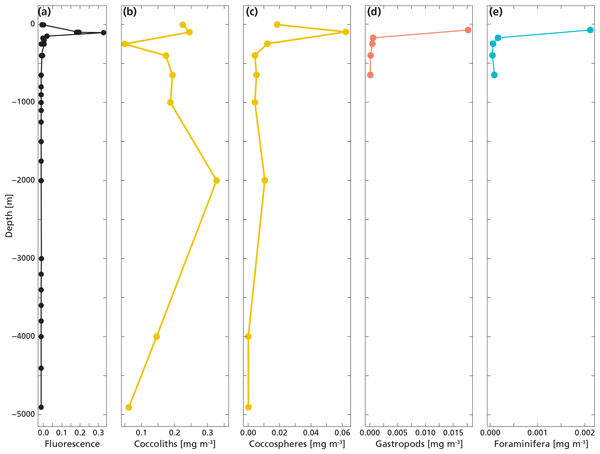
We measured the three main types of plankton that produce calcium carbonate in the ocean, at the same time and location. While coccolithophores were the biggest contributors, we found that planktonic gastropods, not foraminifera, were the second largest contributor. This challenges the current view and improves our understanding of how these organisms influence oceans’ carbon cycling.
Pauline Cornuault, Luc Beaufort, Heiko Pälike, Torsten Bickert, Karl-Heinz Baumann, and Michal Kucera
Biogeosciences, 22, 7973–7984, https://doi.org/10.5194/bg-22-7973-2025, https://doi.org/10.5194/bg-22-7973-2025, 2025
Short summary
Short summary
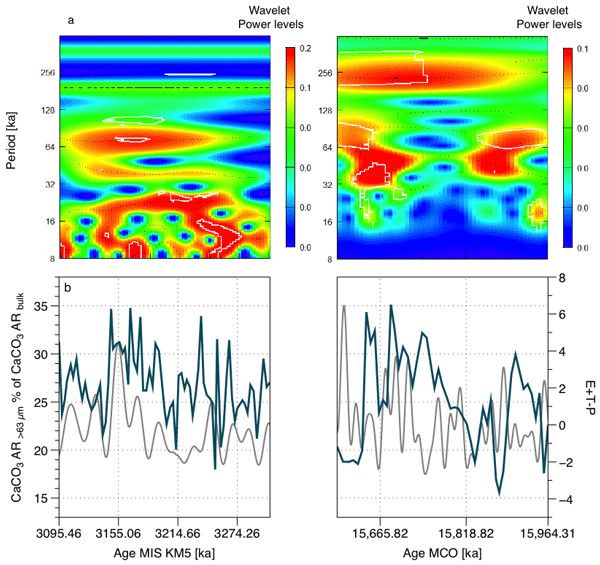
We present new high-resolution data of the relative contribution of the two main pelagic carbonate producers (coccoliths and foraminifera) to the total pelagic carbonate production from the tropical Atlantic in past warm periods since the Miocene. Our findings suggests that the two groups responded differently to orbital forcing and oceanic changes in tropical ocean, but their proportion changes did not drive the changes in overall pelagic carbonate deposition.
Medhavi Srivastava, Clara T. Bolton, Luc Beaufort, Franck Bassinot, and Katarína Holcová
J. Micropalaeontol., 44, 555–571, https://doi.org/10.5194/jm-44-555-2025, https://doi.org/10.5194/jm-44-555-2025, 2025
Short summary
Short summary
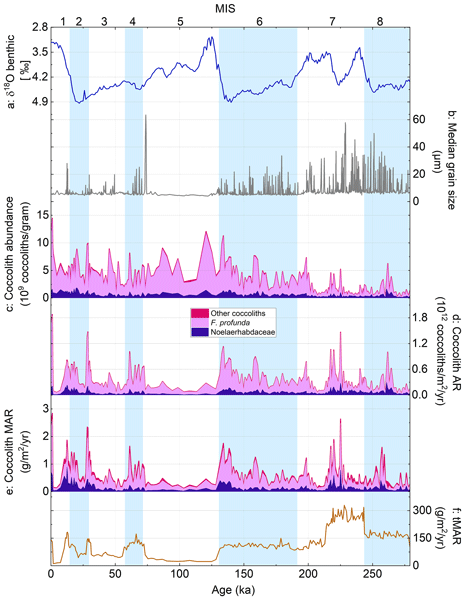
The Bay of Bengal is a unique region influenced by the Asian monsoon. We present a record of past ocean productivity and carbonate flux based on the fossil remains of calcifying algae over the last 279 000 years from a core in the northern Bay of Bengal. We used AI microscopy to count and measure plankton fossils and identify species. Results show that coccolith export, including of the species Florisphaera profunda, is highest when the monsoon is weak and the water column is more mixed.
Peter K. Bijl, Kasia K. Śliwińska, Bella Duncan, Arnaud Huguet, Sebastian Naeher, Ronnakrit Rattanasriampaipong, Claudia Sosa-Montes de Oca, Alexandra Auderset, Melissa A. Berke, Bum Soo Kim, Nina Davtian, Tom Dunkley Jones, Desmond D. Eefting, Felix J. Elling, Pierrick Fenies, Gordon N. Inglis, Lauren O'Connor, Richard D. Pancost, Francien Peterse, Addison Rice, Appy Sluijs, Devika Varma, Wenjie Xiao, and Yi Ge Zhang
Biogeosciences, 22, 6465–6508, https://doi.org/10.5194/bg-22-6465-2025, https://doi.org/10.5194/bg-22-6465-2025, 2025
Short summary
Short summary
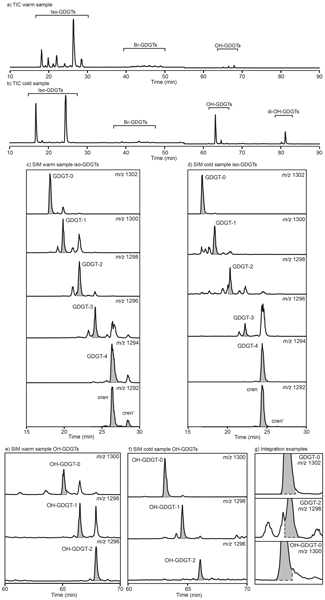
Many academic laboratories worldwide process environmental samples for analysis of membrane lipid molecules of archaea, for the reconstruction of past environmental conditions. However, the sample workup scheme involves many steps, each of which has a risk of contamination or bias, affecting the results. This paper reviews steps involved in sampling, extraction and analysis of lipids, interpretation and archiving of the data. This ensures reproducible, reusable, comparable and consistent data.
Catherine C. Beck, Melissa Berke, Craig S. Feibel, Verena Foerster, Lydia Olaka, Helen M. Roberts, Christopher A. Scholz, Kat Cantner, Anders Noren, Geoffery Mibei Kiptoo, James Muirhead, and the Deep Drilling in the Turkana Basin (DDTB) project team
Sci. Dril., 33, 93–108, https://doi.org/10.5194/sd-33-93-2024, https://doi.org/10.5194/sd-33-93-2024, 2024
Short summary
Short summary
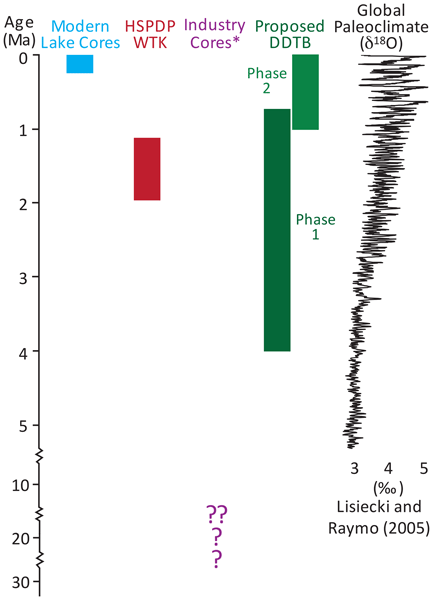
The Deep Drilling in the Turkana Basin project seeks to determine the relative impacts of tectonics and climate on eastern African ecosystems. To organize goals for coring, we hosted a workshop in Nairobi, Kenya, which focused on how a 4 Myr sedimentary core from Turkana will uniquely address research objectives related to basin evolution, past climates and environments, and modern resources. We concluded that a Pliocene to modern record is best accomplished through a two-phase drilling project.
Luc Beaufort and Anta-Clarisse Sarr
Clim. Past, 20, 1283–1301, https://doi.org/10.5194/cp-20-1283-2024, https://doi.org/10.5194/cp-20-1283-2024, 2024
Short summary
Short summary
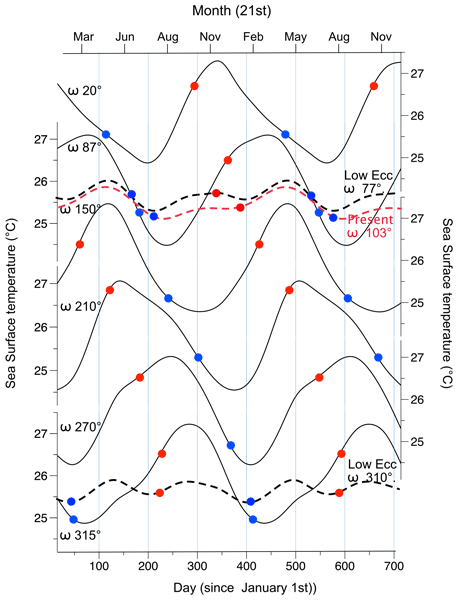
At present, under low eccentricity, the tropical ocean experiences a limited seasonality. Based on eight climate simulations of sea surface temperature and primary production, we show that, during high-eccentricity times, significant seasons existed in the tropics due to annual changes in the Earth–Sun distance. Those tropical seasons are slowly shifting in the calendar year to be distinct from classical seasons. Their past dynamics should have influenced phenomena like ENSO and monsoons.
Melissa A. Berke, Daniel J. Peppe, and the LVDP team
Sci. Dril., 33, 21–31, https://doi.org/10.5194/sd-33-21-2024, https://doi.org/10.5194/sd-33-21-2024, 2024
Short summary
Short summary
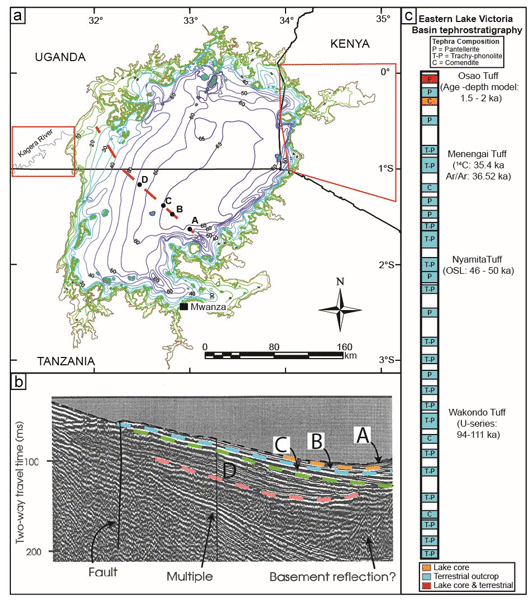
Lake Victoria is home to the largest human population surrounding any lake in the world and provides critical resources across eastern Africa. It is vital to understand the connection between the lake and climate and how it has changed through its history, but to do so we need a complete archive of the sedimentary record. To evaluate the Lake Victoria basin as a potential drilling target, ~50 scientists met in Dar es Salaam, Tanzania, in July 2022 for the Lake Victoria Drilling Project workshop.
Celina Rebeca Valença, Luc Beaufort, Gustaaf Marinus Hallegraeff, and Marius Nils Müller
Biogeosciences, 21, 1601–1611, https://doi.org/10.5194/bg-21-1601-2024, https://doi.org/10.5194/bg-21-1601-2024, 2024
Short summary
Short summary
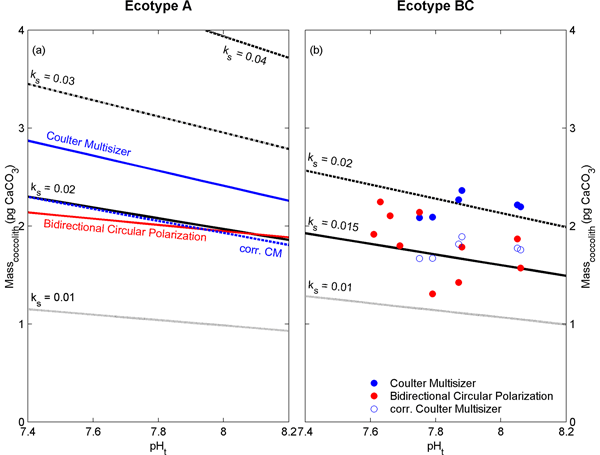
Coccolithophores contribute to the global carbon cycle and their calcite structures (coccoliths) are used as a palaeoproxy to understand past oceanographic conditions. Here, we compared three frequently used methods to estimate coccolith mass from the model species Emiliania huxleyi and the results allow for a high level of comparability between the methods, facilitating future comparisons and consolidation of mass changes observed from ecophysiological and biogeochemical studies.
Cited articles
Acker, J. G. and Leptoukh, G.: Online Analysis Enhances Use of NASA Earth Science Data, Eos Transactions American Geophysical Union, 88, 14–17, 2007.
Andersson, C., Warnke, D. A., Channell, J. E. T., Stoner, J., and Jansen, E.: The mid-Pliocene (4.3–2.6 Ma) benthic stable isotope record of the Southern Ocean: ODP Sites 1092 and 704, Meteor Rise, Palaeogeogr. Palaeocl., 182, 165–181, https://doi.org/10.1016/s0031-0182(01)00494-1, 2002.
Bartoli, G., Hönisch, B., and Zeebe, R. E.: Atmospheric CO2 decline during the Pliocene intensification of Northern Hemisphere glaciations, Paleoceanography, 26, PA4213, https://doi.org/10.1029/2010pa002055, 2011.
Beal, L. M., De Ruijter, W. P. M., Biastoch, A., Zahn, R., and SCOR/WCRP/IAPSO Working Group 136: On the role of the Agulhas system in ocean circulation and climate, Nature, 472, 429–436, https://doi.org/10.1038/nature09983, 2011.
Beaufort, L., Barbarin, N., and Gally, Y.: Optical measurements to determine the thickness of calcite crystals and the mass of thin carbonate particles such as coccoliths, Nat. Protoc., 9, 633–642, 2014.
Beaufort, L., de Garidel-Thoron, T., Mix, A. C., and Pisias, N. G.: ENSO-like forcing on oceanic primary production during the Late Pleistocene, Science, 293, 2440–2444, https://doi.org/10.1126/science.293.5539.2440, 2001.
Beaufort, L., Lancelot, Y., Camberlin, P. C., Cayre, O., Vincent, E., Bassinot, F. C., and Labeyrie, L.: Insolation cycles as a major control of equatorial Indian Ocean primary production, Science, 278, 1451–1454, https://doi.org/10.1126/science.278.5342.1451, 1997.
Bell, D. B., Jung, S. J., Kroon, D., Hodell, D. A., Lourens, L. J., and Raymo, M. E.: Atlantic Deep-water Response to the Early Pliocene Shoaling of the Central American Seaway, Sci. Rep., 5, 12252, https://doi.org/10.1038/srep12252, 2015.
Biastoch, A., Böning, C. W., Schwarzkopf, F. U., and Lutjeharms, J.: Increase in Agulhas leakage due to poleward shift of Southern Hemisphere westerlies, Nature, 462, 495–498, 2009.
Bijma, J., Spero, H. J., and Lea, D. W.: Reassessing Foraminiferal Stable Isotope Geochemistry: Impact of the Oceanic Carbonate System (Experimental Results), in: Use of Proxies in Paleoceanography, edited by: Fischer, G. and Wefer, G., Springer, Berlin/Heidelberg, 489–512, https://doi.org/10.1007/978-3-642-58646-0_20, 1999.
Bolton, C. T., Stoll, H. M., and Mendez-Vicente, A.: Vital effects in coccolith calcite: Cenozoic climate-pCO2 drove the diversity of carbon acquisition strategies in coccolithophores?, Paleoceanography, 27, https://doi.org/10.1029/2012pa002339, 2012.
Boscolo-Galazzo, F., Crichton, K. A., Ridgwell, A., Mawbey, E. M., Wade, B. S., and Pearson, P. N.: Temperature controls carbon cycling and biological evolution in the ocean twilight zone, Science, 371, 1148–1152, https://doi.org/10.1126/science.abb6643, 2021.
Braaten, A. H., Jakob, K. A., Ho, S. L., Friedrich, O., Galaasen, E. V., De Schepper, S., Wilson, P. A., and Meckler, A. N.: Limited exchange between the deep Pacific and Atlantic oceans during the warm mid-Pliocene and Marine Isotope Stage M2 “glaciation”, Clim. Past, 19, 2109–2125, https://doi.org/10.5194/cp-19-2109-2023, 2023.
Brierley, C. M. and Fedorov, A. V.: Comparing the impacts of Miocene–Pliocene changes in inter-ocean gateways on climate: Central American Seaway, Bering Strait, and Indonesia, Earth Planet. Sc. Lett., 444, 116–130, https://doi.org/10.1016/j.epsl.2016.03.010, 2016.
Brierley, C. M., Fedorov, A. V., Liu, Z., Herbert, T. D., Lawrence, K. T., and Lariviere, J. P.: Greatly expanded tropical warm pool and weakened Hadley circulation in the early Pliocene, Science, 323, 1714–1718, https://doi.org/10.1126/science.1167625, 2009.
Broecker, W. S. and Maier-Reimer, E.: The influence of air and sea exchange on the carbon isotope distribution in the sea, Global Biogeochem. Cy., 6, 315–320, https://doi.org/10.1029/92gb01672, 2012.
Chandan, D. and Peltier, W. R.: On the mechanisms of warming the mid-Pliocene and the inference of a hierarchy of climate sensitivities with relevance to the understanding of climate futures, Clim. Past, 14, 825–856, https://doi.org/10.5194/cp-14-825-2018, 2018.
Clemens, S., Prell, W., Murray, D., Shimmield, G., and Weedon, G.: Forcing Mechanisms of the Indian-Ocean Monsoon, Nature 353, 720–725, https://doi.org/10.1038/353720a0, 1991.
Crichton, K. A., Wilson, J. D., Ridgwell, A., Boscolo-Galazzo, F., John, E. H., Wade, B. S., and Pearson, P. N.: What the geological past can tell us about the future of the ocean's twilight zone, Nat. Commun., 14, 2376, https://doi.org/10.1038/s41467-023-37781-6, 2023.
de Boer, B., Stocchi, P., and van de Wal, R. S. W.: A fully coupled 3-D ice-sheet–sea-level model: algorithm and applications, Geosci. Model Dev., 7, 2141–2156, https://doi.org/10.5194/gmd-7-2141-2014, 2014.
de la Vega, E., Chalk, T. B., Wilson, P. A., Bysani, R. P., and Foster, G. L.: Atmospheric CO2 during the Mid-Piacenzian Warm Period and the M2 glaciation, Sci. Rep., 10, 11002, https://doi.org/10.1038/s41598-020-67154-8, 2020.
de Ruijter, W. P. M., Ridderinkhof, H., Lutjeharms, J. R. E., Schouten, M. W., and Veth, C.: Observations of the flow in the Mozambique Channel, Geophys. Res. Lett., 29, 140-1–140-3, https://doi.org/10.1029/2001gl013714, 2002.
De Schepper, S., Head, M. J., and Groeneveld, J.: North Atlantic Current variability through marine isotope stage M2 (circa 3.3 Ma) during the mid-Pliocene, Paleoceanography, 24, PA4206, https://doi.org/10.1029/2008pa001725, 2009.
De Schepper, S., Gibbard, P. L., Salzmann, U., and Ehlers, J.: A global synthesis of the marine and terrestrial evidence for glaciation during the Pliocene Epoch, Earth-Sci. Rev., 135, 83–102, https://doi.org/10.1016/j.earscirev.2014.04.003, 2014.
Dolan, A. M., Haywood, A. M., Hill, D. J., Dowsett, H. J., Hunter, S. J., Lunt, D. J., and Pickering, S. J.: Sensitivity of Pliocene ice sheets to orbital forcing, Palaeogeography, Palaeoclimatology, Palaeoecology, 309, 98–110, https://doi.org/10.1016/j.palaeo.2011.03.030, 2011.
Dolan, A. M., Haywood, A. M., Hunter, S. J., Tindall, J. C., Dowsett, H. J., Hill, D. J., and Pickering, S. J.: Modelling the enigmatic Late Pliocene Glacial Event – Marine Isotope Stage M2, Global Planet. Change, 128, 47–60, https://doi.org/10.1016/j.gloplacha.2015.02.001, 2015.
Dowsett, H., Dolan, A., Rowley, D., Moucha, R., Forte, A. M., Mitrovica, J. X., Pound, M., Salzmann, U., Robinson, M., Chandler, M., Foley, K., and Haywood, A.: The PRISM4 (mid-Piacenzian) paleoenvironmental reconstruction, Clim. Past, 12, 1519–1538, https://doi.org/10.5194/cp-12-1519-2016, 2016.
Dowsett, H. J., Foley, K. M., Stoll, D. K., Chandler, M. A., Sohl, L. E., Bentsen, M., Otto-Bliesner, B. L., Bragg, F. J., Chan, W. L., Contoux, C., Dolan, A. M., Haywood, A. M., Jonas, J. A., Jost, A., Kamae, Y., Lohmann, G., Lunt, D. J., Nisancioglu, K. H., Abe-Ouchi, A., Ramstein, G., Riesselman, C. R., Robinson, M. M., Rosenbloom, N. A., Salzmann, U., Stepanek, C., Strother, S. L., Ueda, H., Yan, Q., and Zhang, Z.: Sea surface temperature of the mid-Piacenzian ocean: a data-model comparison, Sci. Rep., 3, 2013, https://doi.org/10.1038/srep02013, 2013.
Dupont, L. M., Donner, B., Vidal, L., Pérez, E. M., and Wefer, G.: Linking desert evolution and coastal upwelling: Pliocene climate change in Namibia, Geology, 33, 461–464, https://doi.org/10.1130/g21401.1, 2005.
Faul, K. L., Ravelo, C., and Delaney, M. L.: Reconstructions of Upwelling, Productivity, and Photic Zone Depth in the Eastern Equatorial Pacific Ocean Using Planktonic Foraminiferal Stable Isotopes and Abundances, J. Foramin. Res., 30, 110–125, https://doi.org/10.2113/0300110, 2000.
Fedorov, A. V., Brierley, C. M., Lawrence, K. T., Liu, Z., Dekens, P. S., and Ravelo, A. C.: Patterns and mechanisms of early Pliocene warmth, Nature, 496, 43–49, https://doi.org/10.1038/nature12003, 2013.
Feng, R., Otto-Bliesner, B. L., Brady, E. C., and Rosenbloom, N.: Increased Climate Response and Earth System Sensitivity From CCSM4 to CESM2 in Mid-Pliocene Simulations, J. Adv. Model. Earth Sy., 12, e2019MS002033, https://doi.org/10.1029/2019ms002033, 2020.
Ford, H. L., Burls, N. J., Jacobs, P., Jahn, A., Caballero-Gill, R. P., Hodell, D. A., and Fedorov, A. V.: Sustained mid-Pliocene warmth led to deep water formation in the North Pacific, Nat. Geosci., 15, 658–663, https://doi.org/10.1038/s41561-022-00978-3, 2022.
Ford, H. L., Wrye, N., Wofford, A., Burls, N., Bhattacharya, T., Fedorov, A., Lakhani, K., Lyle, M., Lynch-Stieglitz, J., and Ravelo, A. C.: Warm equatorial upper ocean thermal structure during the mid-Pliocene warm period: A data-model comparison, Geophys. Res. Lett., 52, e2025GL114749, https://doi.org/10.1029/2025GL114749, 2025.
Guo, Y. and Timmermans, M. L.: The Role of Ocean Mesoscale Variability in Air-Sea CO2 Exchange: A Global Perspective, Geophys. Res. Lett., 51, e2024GL108373, https://doi.org/10.1029/2024gl108373, 2024.
Hall, I. R., Hemming, S. R., LeVay, L. J., Barker, S., Berke, M. A., Brentegani, L., Caley, T., Cartagena-Sierra, A., Charles, C. D., Coenen, J. J., Crespin, J. G., Franzese, A. M., Gruetzner, J., Han, X., Hines, S. K. V., Jimenez Espejo, F. J., Just, J., Koutsodendris, A., Kubota, K., Lathika, N., Norris, R. D., Periera dos Santos, T., Robinson, R., Rolinson, J. M., Simon, M., Tangunan, D., van der Lubbe, J. J. L., Yamane, M., and Zhang, H.: Site U1476, in: South African Climates (Agulhas LGM Density Profile), edited by: Hall, I. R., Hemming, S. R., LeVay, L.J., and the Expedition 361 Scientists, International Ocean Discovery Program, College Station, TX https://doi.org/10.14379/iodp.proc.361.105.2017, 2017.
Hammer, Ø., Harper, D. A. T., and Ryan, P. D.: PAST: Paleontological statistics software package for education and data analysis, Palaeontol. Electron., 4, 1–9, http://palaeo-electronica.org/2001_1/past/issue1_01.htm (last access: 4 April 2025), 2001.
Haywood, A. M., Valdes, P. J., Hill, D. J., and Williams, M.: The mid-Pliocene warm period: a test-bed for integrating data and models, in: Deep-time perspectives on climate change: marrying the signal from computer models and biological proxies, edited by: Williams, M., Haywood, A. M., Gregory, F. J., and Schmidt, D. N., The Geological Society, London, 443–458, 2007.
Haywood, A. M., Tindall, J. C., Dowsett, H. J., Dolan, A. M., Foley, K. M., Hunter, S. J., Hill, D. J., Chan, W.-L., Abe-Ouchi, A., Stepanek, C., Lohmann, G., Chandan, D., Peltier, W. R., Tan, N., Contoux, C., Ramstein, G., Li, X., Zhang, Z., Guo, C., Nisancioglu, K. H., Zhang, Q., Li, Q., Kamae, Y., Chandler, M. A., Sohl, L. E., Otto-Bliesner, B. L., Feng, R., Brady, E. C., von der Heydt, A. S., Baatsen, M. L. J., and Lunt, D. J.: The Pliocene Model Intercomparison Project Phase 2: large-scale climate features and climate sensitivity, Clim. Past, 16, 2095–2123, https://doi.org/10.5194/cp-16-2095-2020, 2020.
Herbert, T. D., Lawrence, K. T., Tzanova, A., Peterson, L. C., Caballero-Gill, R., and Kelly, C. S.: Late Miocene global cooling and the rise of modern ecosystems, Nat. Geosci., 9, 843–847, https://doi.org/10.1038/ngeo2813, 2016.
Hermoso, M., Godbillot, C., and Minoletti, F.: Enhancing Our Palaeoceanographic Toolbox Using Paired Foraminiferal and Coccolith Calcite Measurements From Pelagic Sequences, Frontiers in Earth Science, 8, 38, https://doi.org/10.3389/feart.2020.00038, 2020.
Hermoso, M., Chan, I. Z. X., McClelland, H. L. O., Heureux, A. M. C., and Rickaby, R. E. M.: Vanishing coccolith vital effects with alleviated carbon limitation, Biogeosciences, 13, 301-312, https://doi.org/10.5194/bg-13-301-2016, 2016.
Hodell, D. A. and Venz-Curtis, K. A.: Late Neogene history of deepwater ventilation in the Southern Ocean, Geochem. Geophy. Geosy., 7, Q09001, https://doi.org/10.1029/2005gc001211, 2006.
Hodell, D. A. and Venz, K. A.: Toward a high-resolution stable isotopic record of the Southern Ocean during the Pliocene-Pleistocene (4.8 to 0.8 MA), in: The Antarctic Paleoenvironment: A Perspective on Global Change, edited by: Kennett, J. P. and Warnke, D. A., Antarct. Res. Ser., vol. 56, Am. Geophys. Union, Washington, D.C., 265–310, https://doi.org/10.1029/AR056p0265, 1992.
Honisch, B., Hemming, N. G., Archer, D., Siddall, M., and McManus, J. F.: Atmospheric carbon dioxide concentration across the mid-Pleistocene transition, Science, 324, 1551–1554, https://doi.org/10.1126/science.1171477, 2009.
Howell, F. W., Haywood, A. M., Dolan, A. M., Dowsett, H. J., Francis, J. E., Hill, D. J., Pickering, S. J., Pope, J. O., Salzmann, U., and Wade, B. S.: Can uncertainties in sea ice albedo reconcile patterns of data-model discord for the Pliocene and 20th/21st centuries?, Geophys. Res. Lett., 41, 2011–2018, https://doi.org/10.1002/2013gl058872, 2014.
IPCC (Intergovernmental Panel on Climate Change) (Ed.): Contribution of Working Group II to the Sixth Assessment Report of the Intergovernmental Panel on Climate Change, IPCC: Climate Change 2022: Impacts, Adaptation, and Vulnerability, Cambridge University Press, Cambridge, UK and New York, NY, USA, 3056 pp., https://doi.org/10.1017/9781009325844, 2023.
Jonkers, L. and Kučera, M.: Quantifying the effect of seasonal and vertical habitat tracking on planktonic foraminifera proxies, Clim. Past, 13, 573–586, https://doi.org/10.5194/cp-13-573-2017, 2017.
Karas, C., Nürnberg, D., Gupta, A. K., Tiedemann, R., Mohan, K., and Bickert, T.: Mid-Pliocene climate change amplified by a switch in Indonesian subsurface throughflow, Nat. Geosci., 2, 434–438, https://doi.org/10.1038/ngeo520, 2009.
Kotov, S. and Pälike, H.: QAnalySeries – a cross-platform time series tuning and analysis tool, AGU Fall Meeting Abstracts, PP53D-1230, https://doi.org/10.1002/essoar.10500226.1, 2018.
Kroopnick, P. M.: The distribution of 13C of ΣCO2 in the world oceans, Deep-Sea Res., 32, 57–84, https://doi.org/10.1016/0198-0149(85)90017-2, 1985.
Lang, D. C., Bailey, I., Wilson, P. A., Chalk, T. B., Foster, G. L., and Gutjahr, M.: Incursions of southern-sourced water into the deep North Atlantic during late Pliocene glacial intensification, Nat. Geosci., 9, 375–379, https://doi.org/10.1038/ngeo2688, 2016.
Larina, E., Woodhouse, A., Swain, A., Lowery, C. M., Martindale, R. C., and Myers, C. E.: Regional restructuring in planktic foraminifera communities through Pliocene-early Pleistocene climate variability, Nat. Commun., 16, 5056, https://doi.org/10.1038/s41467-025-60362-8, 2025.
Laskar, J., Fienga, A., Gastineau, M., and Manche, H.: La2010: a new orbital solution for the long-term motion of the Earth, Astron. Astrophys., 532, A89, https://doi.org/10.1051/0004-6361/201116836, 2011.
Lawrence, K. T., Liu, Z., and Herbert, T. D.: Evolution of the eastern tropical Pacific through Plio-Pleistocene glaciation, Science, 312, 79–83, https://doi.org/10.1126/science.1120395, 2006.
Li, M., Hinnov, L., and Kump, L.: Acycle: Time-series analysis software for paleoclimate research and education, Comput. Geosci., 127, 12–22, https://doi.org/10.1016/j.cageo.2019.02.011, 2019.
Lisiecki, L. E. and Raymo, M. E.: A Pliocene-Pleistocene stack of 57 globally distributed benthic δ18O records, Paleoceanography, 20, PA1003, https://doi.org/10.1029/2004pa001071, 2005.
Martínez-Méndez, G., Zahn, R., Hall, I. R., Peeters, F. J. C., Pena, L. D., Cacho, I., and Negre, C.: Contrasting multiproxy reconstructions of surface ocean hydrography in the Agulhas Corridor and implications for the Agulhas Leakage during the last 345,000 years, Paleoceanography, 25, PA4227, https://doi.org/10.1029/2009pa001879, 2010.
McClymont, E. L., Ho, S. L., Ford, H. L., Bailey, I., Berke, M. A., Bolton, C. T., De Schepper, S., Grant, G. R., Groeneveld, J., Inglis, G. N., Karas, C., Patterson, M. O., Swann, G. E. A., Thirumalai, K., White, S. M., Alonso-Garcia, M., Anand, P., Hoogakker, B. A. A., Littler, K., Petrick, B. F., Risebrobakken, B., Abell, J. T., Crocker, A. J., de Graaf, F., Feakins, S. J., Hargreaves, J. C., Jones, C. L., Markowska, M., Ratnayake, A. S., Stepanek, C., and Tangunan, D.: Climate Evolution Through the Onset and Intensification of Northern Hemisphere Glaciation, Rev. Geophys., 61, e2022RG000793, https://doi.org/10.1029/2022rg000793, 2023.
McClymont, E. L., Ford, H. L., Ho, S. L., Tindall, J. C., Haywood, A. M., Alonso-Garcia, M., Bailey, I., Berke, M. A., Littler, K., Patterson, M. O., Petrick, B., Peterse, F., Ravelo, A. C., Risebrobakken, B., De Schepper, S., Swann, G. E. A., Thirumalai, K., Tierney, J. E., van der Weijst, C., White, S., Abe-Ouchi, A., Baatsen, M. L. J., Brady, E. C., Chan, W.-L., Chandan, D., Feng, R., Guo, C., von der Heydt, A. S., Hunter, S., Li, X., Lohmann, G., Nisancioglu, K. H., Otto-Bliesner, B. L., Peltier, W. R., Stepanek, C., and Zhang, Z.: Lessons from a high-CO2 world: an ocean view from ∼ 3 million years ago, Clim. Past, 16, 1599–1615, https://doi.org/10.5194/cp-16-1599-2020, 2020.
Meyers, S.: Astrochron: An R package for astrochronology, CRAN, https://cran.r-project.org/package=astrochron (last access: 17 December 2024), 2014.
Mohtadi, M., Oppo, D. W., Lückge, A., DePol-Holz, R., Steinke, S., Groeneveld, J., Hemme, N., and Hebbeln, D.: Reconstructing the thermal structure of the upper ocean: Insights from planktic foraminifera shell chemistry and alkenones in modern sediments of the tropical eastern Indian Ocean, Paleoceanography, 26, PA3219, https://doi.org/10.1029/2011pa002132, 2011.
Molfino, B. and McIntyre, A.: Precessional forcing of nutricline dynamics in the equatorial atlantic, Science, 249, 766–769, https://doi.org/10.1126/science.249.4970.766, 1990.
Novak, J. B., Caballero-Gill, R. P., Rose, R. M., Herbert, T. D., and Dowsett, H. J.: Isotopic evidence against North Pacific Deep Water formation during late Pliocene warmth, Nat. Geosci., 17, 795–802, https://doi.org/10.1038/s41561-024-01500-7, 2024.
Pagani, M., Liu, Z., LaRiviere, J., and Ravelo, A. C.: High Earth-system climate sensitivity determined from Pliocene carbon dioxide concentrations, Nat. Geosci., 3, 27–30, https://doi.org/10.1038/ngeo724, 2009.
Poulton, A. J., Holligan, P. M., Charalampopoulou, A., and Adey, T. R.: Coccolithophore ecology in the tropical and subtropical Atlantic Ocean: New perspectives from the Atlantic meridional transect (AMT) programme, Prog. Oceanogr., 158, 150–170, https://doi.org/10.1016/j.pocean.2017.01.003, 2017.
Raymo, M. E., Grant, B., Horowitz, M., and Rau, G. H.: Mid-Pliocene warmth: stronger greenhouse and stronger conveyor, Mar. Micropaleontol., 27, 313–326, https://doi.org/10.1016/0377-8398(95)00048-8, 1996.
Rost, B. and Riebesell, U.: Coccolithophores and the biological pump: Responses to environmental changes, in: Coccolithophores: From Molecular Processes to Global Impact, edited by: Thierstein, H. R. and Young, J. R., Springer, Berlin/Heidelberg, 99–125, https://doi.org/10.1007/978-3-662-06278-4_5, 2004.
Salzmann, U., Williams, M., Haywood, A. M., Johnson, A. L. A., Kender, S., and Zalasiewicz, J.: Climate and environment of a Pliocene warm world, Palaeogeogr. Palaeocl., 309, 1–8, https://doi.org/10.1016/j.palaeo.2011.05.044, 2011.
Saraswat, R., Suokhrie, T., Naik, D. K., Singh, D. P., Saalim, S. M., Salman, M., Kumar, G., Bhadra, S. R., Mohtadi, M., Kurtarkar, S. R., and Maurya, A. S.: Large freshwater-influx-induced salinity gradient and diagenetic changes in the northern Indian Ocean dominate the stable oxygen isotopic variation in Globigerinoides ruber, Earth Syst. Sci. Data, 15, 171–187, https://doi.org/10.5194/essd-15-171-2023, 2023.
Sarmiento, J. L. and Gruber, N.: Ocean biogeochemical dynamics, Princeton University Press, Princeton, https://doi.org/10.2307/j.ctt3fgxqx, 2013.
Schott, F. A., Xie, S. P., and McCreary, J. P.: Indian Ocean circulation and climate variability, Rev. Geophys., 47, RG1002, https://doi.org/10.1029/2007rg000245, 2009.
Schouten, M. W., de Ruijter, W. P. M., van Leeuwen, P. J., and Ridderinkhof, H.: Eddies and variability in the Mozambique Channel, Deep-Sea Res. Pt. II, 50, 1987–2003, https://doi.org/10.1016/S0967-0645(03)00042-0, 2003.
Seki, O., Foster, G. L., Schmidt, D. N., Mackensen, A., Kawamura, K., and Pancost, R. D.: Alkenone and boron-based Pliocene pCO2 records, Earth Planet. Sc. Lett., 292, 201–211, https://doi.org/10.1016/j.epsl.2010.01.037, 2010.
Shackleton, N. J. and Opdyke, N. D.: Oxygen Isotope and Palaeomagnetic Stratigraphy of Equatorial Pacific Core V28-238: Oxygen Isotope Temperatures and Ice Volumes on a 105 Year and 106 Year Scale, Quaternary Res., 3, 39–55, https://doi.org/10.1016/0033-5894(73)90052-5, 1973.
Sigman, D. M. and Boyle, E. A.: Glacial/interglacial variations in atmospheric carbon dioxide, Nature, 407, 859–869, https://doi.org/10.1038/35038000, 2000.
Simpson, E. and Schlich, R.: Initial reports of the Deep Sea Drilling Project, vol. 25, US Government Printing Office, Washington, DC, https://doi.org/10.2973/dsdp.proc.25.105.1974, 1974.
Stirnimann, L., Bornman, T. G., Verheye, H. M., and Fawcett, S. E.: Seasonal trends in Subantarctic plankton δ13C and δ15N are driven by phytoplankton dynamics and nutrient preference, Limnol. Oceanogr., 69, 2547–2563, https://doi.org/10.1002/lno.12685, 2024.
Stoll, H., Shimizu, N., Arevalos, A., Matell, N., Banasiak, A., and Zeren, S.: Insights on coccolith chemistry from a new ion probe method for analysis of individually picked coccoliths, Geochem. Geophys. Geosy., 8, Q06020, https://doi.org/10.1029/2006gc001546, 2007a.
Stoll, H. M.: Limited range of interspecific vital effects in coccolith stable isotopic records during the Paleocene-Eocene thermal maximum, Paleoceanography, 20, PA1007, https://doi.org/10.1029/2004pa001046, 2005.
Stoll, H. M., Shimizu, N., Archer, D., and Ziveri, P.: Coccolithophore productivity response to greenhouse event of the Paleocene–Eocene Thermal Maximum, Earth Planet. Sc. Lett., 258, 192–206, https://doi.org/10.1016/j.epsl.2007.03.037, 2007b.
Stoll, H. M., Ziveri, P., Geisen, M., Probert, I., and Young, J. R.: Potential and limitations of Sr/Ca ratios in coccolith carbonate: new perspectives from cultures and monospecific samples from sediments, Philos. Trans. A Math. Phys. Eng. Sci., 360, 719–747, https://doi.org/10.1098/rsta.2001.0966, 2002.
Takahashi, T., Sutherland, S. C., Wanninkhof, R., Sweeney, C., Feely, R. A., Chipman, D. W., Hales, B., Friederich, G., Chavez, F., Sabine, C., Watson, A., Bakker, D. C. E., Schuster, U., Metzl, N., Yoshikawa-Inoue, H., Ishii, M., Midorikawa, T., Nojiri, Y., Körtzinger, A., Steinhoff, T., Hoppema, M., Olafsson, J., Arnarson, T. S., Tilbrook, B., Johannessen, T., Olsen, A., Bellerby, R., Wong, C. S., Delille, B., Bates, N. R., and de Baar, H. J. W.: Climatological mean and decadal change in surface ocean pCO2, and net sea–air CO2 flux over the global oceans, Deep-Sea Res. Pt. II, 56, 554-577, https://doi.org/10.1016/j.dsr2.2008.12.009, 2009.
Tangunan, D., Hall, I. R., Beaufort, L., Berke, M. A., Nederbragt, A., and Bown, P. R.: Benthic foraminifera δ13C and δ18O records from IODP Site U1476 during the Piacenzian, Version v1, Zenodo [data set], https://doi.org/10.5281/zenodo.16045490, 2025a.
Tangunan, D., Hall, I. R., Beaufort, L., Berke, M. A., Nederbragt, A., and Bown, P. R.: Coccolith calcium carbonate at IODP Site U1476 during the Piacenzian, Version v1, Zenodo [data set], https://doi.org/10.5281/zenodo.16043902, 2025b.
Tangunan, D., Hall, I. R., Beaufort, L., Berke, M. A., Nederbragt, A., and Bown, P. R.: Coccolith δ13C and δ18O records from IODP Site U1476 during the Piacenzian, Version v1, Zenodo [data set], https://doi.org/10.5281/zenodo.16044840, 2025c.
Tangunan, D., Hall, I. R., Beaufort, L., Berke, M. A., Nederbragt, A., and Bown, P. R.: Coccolith mass data from IODP Site U1476 during the Piacenzian, Version v1, Zenodo [data set], https://doi.org/10.5281/zenodo.16044410, 2025d.
Tangunan, D., Hall, I. R., Beaufort, L., Berke, M. A., Nederbragt, A., and Bown, P. R.: Planktic foraminifera δ13C and δ18O records (G. ruber) from IODP Site U1476 during the Piacenzian, Version v1, Zenodo [data set], https://doi.org/10.5281/zenodo.16045237, 2025e.
Tangunan, D., Hall, I. R., Beaufort, L., Berke, M. A., Nederbragt, A., and Bown, P. R.: Relative abundances of coccolithophores at IODP Site U1476 during the Piacenzian, Version v1, Zenodo [data set], https://doi.org/10.5281/zenodo.16043101, 2025f.
Tangunan, D., Baumann, K.-H., Pätzold, J., Henrich, R., Kucera, M., De Pol-Holz, R., and Groeneveld, J.: Insolation forcing of coccolithophore productivity in the western tropical Indian Ocean over the last two glacial-interglacial cycles, Paleoceanography, 32, 692–709, https://doi.org/10.1002/2017pa003102, 2017.
Tierney, J. E., Poulsen, C. J., Montanez, I. P., Bhattacharya, T., Feng, R., Ford, H. L., Honisch, B., Inglis, G. N., Petersen, S. V., Sagoo, N., Tabor, C. R., Thirumalai, K., Zhu, J., Burls, N. J., Foster, G. L., Godderis, Y., Huber, B. T., Ivany, L. C., Kirtland Turner, S., Lunt, D. J., McElwain, J. C., Mills, B. J. W., Otto-Bliesner, B. L., Ridgwell, A., and Zhang, Y. G.: Past climates inform our future, Science, 370, eaay3701, https://doi.org/10.1126/science.aay3701, 2020.
Toggweiler, J. R., Russell, J. L., and Carson, S. R.: Midlatitude westerlies, atmospheric CO2, and climate change during the ice ages, Paleoceanography, 21, PA2005, https://doi.org/10.1029/2005pa001154, 2006.
van der Lubbe, H. J. L., Hall, I. R., Barker, S., Hemming, S. R., Baars, T. F., Starr, A., Just, J., Backeberg, B. C., and Joordens, J. C. A.: Indo-Pacific Walker circulation drove Pleistocene African aridification, Nature, 598, 618–623, https://doi.org/10.1038/s41586-021-03896-3, 2021.
Weiffenbach, J. E., Baatsen, M. L. J., Dijkstra, H. A., von der Heydt, A. S., Abe-Ouchi, A., Brady, E. C., Chan, W.-L., Chandan, D., Chandler, M. A., Contoux, C., Feng, R., Guo, C., Han, Z., Haywood, A. M., Li, Q., Li, X., Lohmann, G., Lunt, D. J., Nisancioglu, K. H., Otto-Bliesner, B. L., Peltier, W. R., Ramstein, G., Sohl, L. E., Stepanek, C., Tan, N., Tindall, J. C., Williams, C. J. R., Zhang, Q., and Zhang, Z.: Unraveling the mechanisms and implications of a stronger mid-Pliocene Atlantic Meridional Overturning Circulation (AMOC) in PlioMIP2, Clim. Past, 19, 61–85, https://doi.org/10.5194/cp-19-61-2023, 2023.
Westall, F. and Fenner, J.: Pliocene-Holocene polar front zone in the South Atlantic changes in its position and sediment-accumulation rates from holes 699A, 710C, and 704B, in: Proc ODP, Sci. Results, 114, 609–646, 1991.
Winter, A., Jordan, R. W., and Roth, P. H.: Biogeography of living coccolithophores in ocean waters, in: Coccolithophores, edited by: Winter, A. and Siesser, W. G., Cambridge University Press, New York, 1611–1774, ISBN 0-521-03169-9, 1994.
Zachos, J., Pagani, M., Sloan, L., Thomas, E., and Billups, K.: Trends, rhythms, and aberrations in global climate 65 Ma to present, Science, 292, 686–693, 2001.
Zachos, J. C., Dickens, G. R., and Zeebe, R. E.: An early Cenozoic perspective on greenhouse warming and carbon-cycle dynamics, Nature, 451, 279–283, https://doi.org/10.1038/nature06588, 2008.
Zahn, R., Winn, K., and Sarnthein, M.: Benthic foraminiferal δ13C and accumulation rates of organic carbon: Uvigerina peregrina group and Cibicidoides wuellerstorfi, Paleoceanography, 1, 27–42, https://doi.org/10.1029/PA001i001p00027, 1986.
Zhang, R. and Jiang, D.: Impact of vegetation feedback on the mid-Pliocene warm climate, Adv. Atmos. Sci., 31, 1407–1416, https://doi.org/10.1007/s00376-014-4015-5, 2014.
Zhang, Z., Li, X., Guo, C., Otterå, O. H., Nisancioglu, K. H., Tan, N., Contoux, C., Ramstein, G., Feng, R., Otto-Bliesner, B. L., Brady, E., Chandan, D., Peltier, W. R., Baatsen, M. L. J., von der Heydt, A. S., Weiffenbach, J. E., Stepanek, C., Lohmann, G., Zhang, Q., Li, Q., Chandler, M. A., Sohl, L. E., Haywood, A. M., Hunter, S. J., Tindall, J. C., Williams, C., Lunt, D. J., Chan, W.-L., and Abe-Ouchi, A.: Mid-Pliocene Atlantic Meridional Overturning Circulation simulated in PlioMIP2, Clim. Past, 17, 529–543, https://doi.org/10.5194/cp-17-529-2021, 2021.
Ziveri, P., de Bernardi, B., Baumann, K.-H., Stoll, H. M., and Mortyn, P. G.: Sinking of coccolith carbonate and potential contribution to organic carbon ballasting in the deep ocean, Deep-Sea Res. Pt. II, 54, 659–675, https://doi.org/10.1016/j.dsr2.2007.01.006, 2007.
Ziveri, P., Stoll, H., Probert, I., Klaas, C., Geisen, M., Ganssen, G., and Young, J.: Stable isotope 'vital effects' in coccolith calcite, Earth Planet. Sc. Lett., 210, 137–149, https://doi.org/10.1016/s0012-821x(03)00101-8, 2003.
Short summary
We investigated sediments from the tropical Indian Ocean to study water column structure and carbon cycling during the mid-Piacenzian Warm Period, about 3 million years ago, when atmospheric carbon dioxide levels were similar to today. Our findings reveal persistent upper ocean stratification and niche separation among plankton groups, which limited nutrient mixing and carbon export to the deep ocean. These results highlight how ocean layering can influence climate feedback in a warmer world.
We investigated sediments from the tropical Indian Ocean to study water column structure and...


